

The DOI matches its Crossref record; 30 of the 30 references it cites were found in a registry or an index.
Evinacumab in severe hypertriglyceridemia with or without lipoprotein lipase pathway mutations: a phase 2 randomized trial
Open accessAbstract
Abstract Severe hypertriglyceridemia (sHTG) is an established risk factor for acute pancreatitis. Current therapeutic approaches for sHTG are often insufficient to reduce triglycerides and prevent acute pancreatitis. This phase 2 trial ( NCT03452228 ) evaluated evinacumab (angiopoietin-like 3 inhibitor) in three cohorts of patients with sHTG: cohort 1, familial chylomicronemia syndrome with bi-allelic loss-of-function lipoprotein lipase (LPL) pathway mutations ( n = 17); cohort 2, multifactorial chylomicronemia syndrome with heterozygous loss-of-function LPL pathway mutations ( n = 15); and cohort 3, multifactorial chylomicronemia syndrome without LPL pathway mutations ( n = 19). Fifty-one patients (males, n = 27; females, n = 24) with a history of hospitalization for acute pancreatitis were randomized 2:1 to intravenous evinacumab 15 mg kg −1 or placebo every 4 weeks over a 12-week double-blind treatment period, followed by a 12-week single-blind treatment period. The primary end point was the mean percent reduction in triglycerides from baseline after 12 weeks of evinacumab exposure in cohort 3. Evinacumab reduced triglycerides in cohort 3 by a mean (s.e.m.) of −27.1% (37.4) (95% confidence interval −71.2 to 84.6), but the prespecified primary end point was not met. No notable differences in adverse events between evinacumab and placebo treatment groups were seen during the double-blind treatment period. Although the primary end point of a reduction in triglycerides did not meet the prespecified significance level, the observed safety and changes in lipid and lipoprotein levels support the further evaluation of evinacumab in larger trials of patients with sHTG. Trial registration number: ClinicalTrials.gov NCT03452228 .
Overview
The claims and statistics of this paper haven’t been checked yet.
Run the check — free, no account needed. It reads the open-access text and checks the sources it cites.
Integrity signals
Registry
Cites
Statistics
Figures
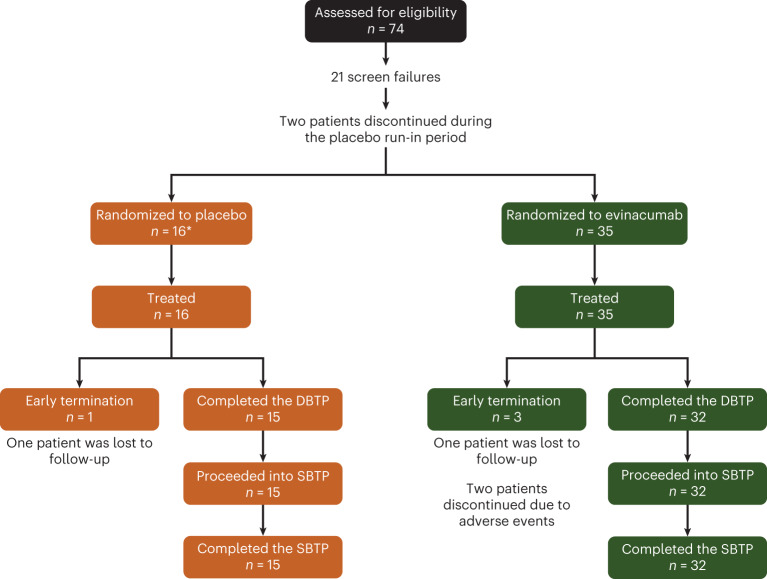
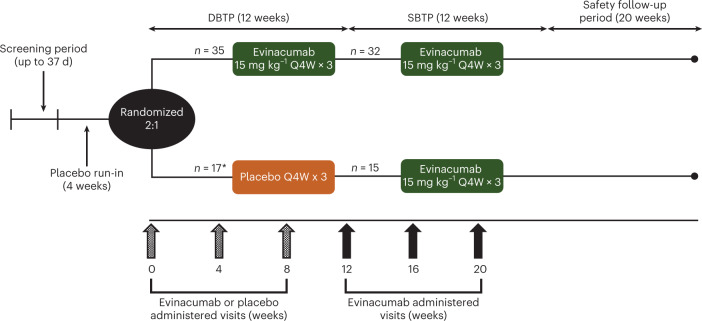
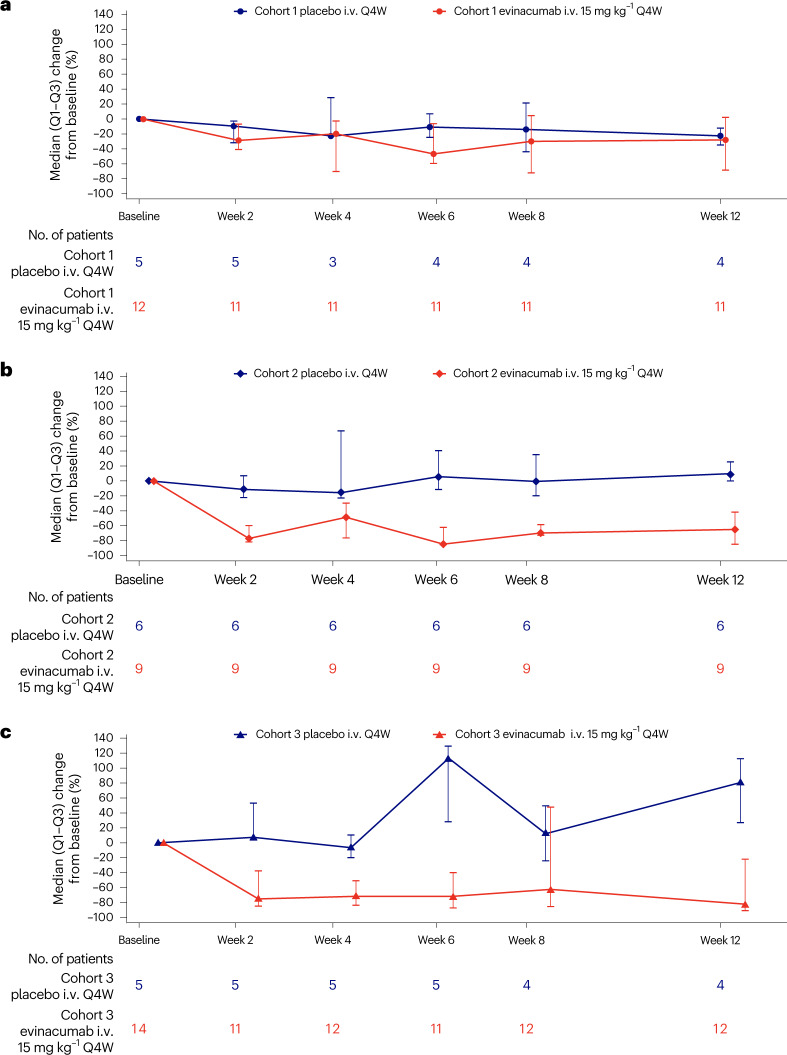
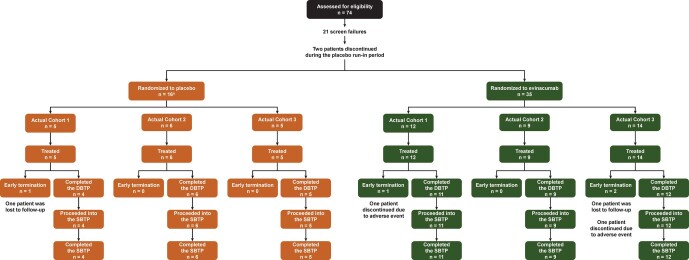
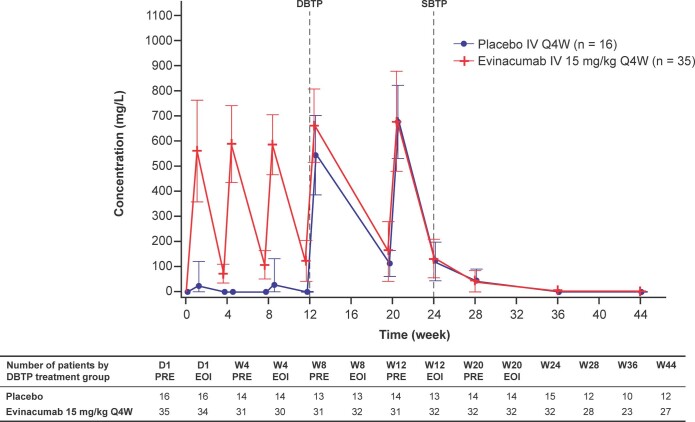
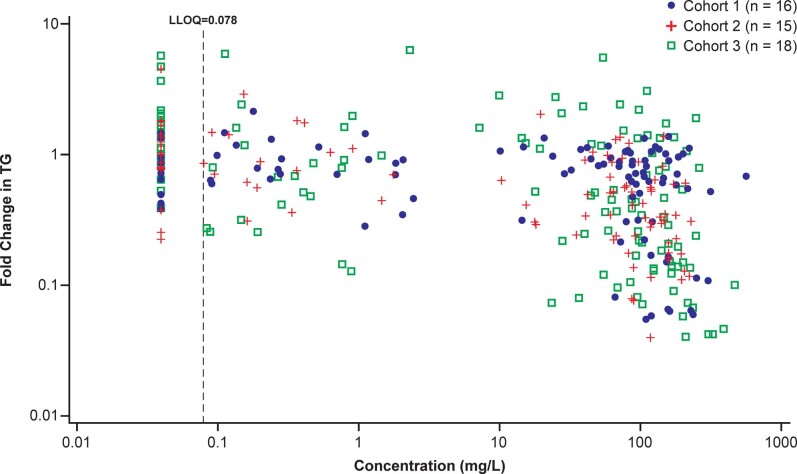
Verification
Claims the paper makes
The claims and statistics of this paper haven’t been checked yet.
Run the check — free, no account needed. It reads the open-access text and checks the sources it cites.
Claims other papers make about this one
Each is checked against this paper’s own text: does it say what the citing paper says it does?
The source backs part of the claim, not all of it — or backs it for a different population, condition or comparison.
In the citing paper
“Notably, ANGPTL3 inhibition is also associated with reductions in HDL-C levels, an effect whose clinical significance is uncertain; whether this translates into any impact on cardiovascular outcomes remains to be determined [54].”
From Targeting Triglycerides in Cardiovascular Disease Prevention: Evidence, Mechanisms, and Emerging Therapies (2026) · cites this paper as [54]
Experimental — accuracy not yet measuredThe source backs part of the claim, not all of it — or backs it for a different population, condition or comparison.
In the citing paper
“Evinacumab also reduces triglyceride levels, with observed reductions ranging from 50 to 70% in early-phase trials involving patients with severe or refractory HTG [54–56].”
From Targeting Triglycerides in Cardiovascular Disease Prevention: Evidence, Mechanisms, and Emerging Therapies (2026) · cites this paper as [54]
Experimental — accuracy not yet measuredThe source backs part of the claim, not all of it — or backs it for a different population, condition or comparison.
In the citing paper
“In a phase 2 trial (NCT03452228) [108], intravenous evinacumab 15 mg/kg every 4 weeks resulted in highly variable, but sometimes marked TG reductions, up to 70–80%, in patients with multifactorial chylomicronemia without LPL loss-of-function variants, whereas modest effect was observed in those with complete LPL deficiency.”
From Targeting triglycerides for cardiovascular risk reduction (2026) · cites this paper as [108]
Experimental — accuracy not yet measuredThe cited source says what the claim attributes to it.
In the citing paper
“By enhancing LPL-mediated lipolysis and remnant clearance, evinacumab and related agents may reduce the burden of TRLs and their atherogenic remnants, making them attractive candidates for addressing residual CVD risk [54, 55].”
From Targeting Triglycerides in Cardiovascular Disease Prevention: Evidence, Mechanisms, and Emerging Therapies (2026) · cites this paper as [54]
Self-check
Percentages, sums and reported differences re-computed from the paper’s own numbers.
The self-check needs the paper’s full text.
Citations
Cites
Mach, F., Baigent, C., Catapano, A. L., Koskinas, K. C., Casula, M., Badimon, L., Chapman, M. J., De Backer, G. G., Delgado, V., Ference, B. A., et al. (2020) · European Heart Journal · doi:10.1093/eurheartj/ehz455 · Cited by 8,961
Banks, P. A., Bollen, T. L., Dervenis, C., Gooszen, H. G., Johnson, C. D., Sarr, M. G., Tsiotos, G. G., & Vege, S. S. (2013) · Gut · doi:10.1136/gutjnl-2012-302779 · Cited by 7,187
Grundy, S. M., Stone, N. J., Bailey, A. L., Beam, C., Birtcher, K. K., Blumenthal, R. S., Braun, L. T., de Ferranti, S., Faiella-Tommasino, J., Forman, D. E., et al. (2019) · Circulation · doi:10.1161/cir.0000000000000625 · Cited by 6,185
Mach, F., Baigent, C., Catapano, A. L., Koskinas, K. C., Casula, M., Badimon, L., Chapman, M. J., De Backer, G. G., Delgado, V., Ference, B. A., et al. (2019) · Atherosclerosis · doi:10.1016/j.atherosclerosis.2019.08.014 · Cited by 4,854
Genetic and Pharmacologic Inactivation of ANGPTL3 and Cardiovascular Disease
Dewey, F. E., Gusarova, V., Dunbar, R. L., O’Dushlaine, C., Schurmann, C., Gottesman, O., McCarthy, S., Van Hout, C. V., Bruse, S., Dansky, H. M., et al. (2017) · New England Journal of Medicine · doi:10.1056/nejmoa1612790 · Cited by 885
Self-citationEvinacumab for Homozygous Familial Hypercholesterolemia
Raal, F. J., Rosenson, R. S., Reeskamp, L. F., Hovingh, G. K., Kastelein, J. J. P., Rubba, P., Ali, S., Banerjee, P., Chan, K.-C., Gipe, D. A., et al. (2020) · New England Journal of Medicine · doi:10.1056/nejmoa2004215 · Cited by 793
Self-citationJacobson, T. A., Ito, M. K., Maki, K. C., Orringer, C. E., Bays, H. E., Jones, P. H., McKenney, J. M., Grundy, S. M., Gill, E. A., Wild, R. A., et al. (2015) · Journal of clinical lipidology · doi:10.1016/j.jacl.2015.02.003 · Cited by 781
Exome Sequencing, ANGPTL3 Mutations, and Familial Combined Hypolipidemia
Musunuru, K., Pirruccello, J. P., Do, R., Peloso, G. M., Guiducci, C., Sougnez, C., Garimella, K. V., Fisher, S., Abreu, J., Barry, A. J., et al. (2010) · New England Journal of Medicine · doi:10.1056/nejmoa1002926 · Cited by 754
Clinical review on triglycerides
Laufs, U., Parhofer, K. G., Ginsberg, H. N., & Hegele, R. A. (2020) · European Heart Journal · doi:10.1093/eurheartj/ehz785 · Cited by 544
ANGPTL3 deficiency and protection against coronary artery disease
Stitziel, N. O., Khera, A. V., Wang, X., Bierhals, A. J., Vourakis, A. C., Sperry, A. E., Natarajan, P., Klarin, D., Emdin, C. A., Zekavat, S. M., et al. (2017) · Journal of the American College of Cardiology · doi:10.1016/j.jacc.2017.02.030 · Cited by 467
Self-citation
Cited by
Sorted by citations
Items 101–140 of 140
Russian extreme hypertriglyceridemia registy (REGGI): a call to action
Чубыкина, У. В., Владиславович, Е. М., Sokolov, A. A., Vasiluev, P. A., Ivanova, O. N., & Zakharova, E. Y. (2024) · Rational Pharmacotherapy in Cardiology · doi:10.20996/1819-6446-2024-3098 · Cited by 1
Pediatric Hypertriglyceridemia: Lipoprotein Metabolism, Etiology, and Management
Moriyama, H., & Ham, J. N. (2025) · Current Pediatrics Reports · doi:10.1007/s40124-025-00349-7 · Cited by 2
Antibody-Based Therapeutics for Hypercholesterolemia
Tomlinson, B., & Chan, P. (2025) · Biologics · doi:10.2147/btt.s500456 · Cited by 1
The 2025 ESC/EAS Dyslipidaemia Focused Update: Clinical Interpretation and Practical Implications
Bonanni, L., Cutolo, A., & Ferri, N. (2026) · Cardiovascular Drugs and Therapy · doi:10.1007/s10557-026-07855-w · Cited by 1
Hypertriglyceridemia: updates from clinical trials of new agents and real-world registries
Haseef, M., Li, S. C. H., Gaitt, T., Chan, D. C., Pang, J., & Watts, G. F. (2026) · Current Opinion in Endocrinology Diabetes and Obesity · doi:10.1097/med.0000000000000955 · Cited by 1
Vitali, C., Banerjee, P., Pordy, R. C., Ehmann, P. J., Rosenson, R. S., & Rader, D. J. (2026) · Journal of Lipid Research · doi:10.1016/j.jlr.2026.101020 · Cited by 1
Self-citationThe evaluation of plozasiran for the treatment of familial chylomicronemia syndrome
Hang, S., & Hegele, R. A. (2026) · Expert Review of Endocrinology & Metabolism · doi:10.1080/17446651.2026.2646166 · Cited by 2
Promise of ANGPTL3 as a therapeutic target for controlling cholesterol levels
Hegele, R. A. (2026) · Expert Opinion on Therapeutic Targets · doi:10.1080/14728222.2026.2671686 · Cited by 1
Remnant cholesterol — The transition from biomarker to risk factor
Rosenson, R. S., Velamuri, D. N., Muntner, P., & Goonewardena, S. N. (2026) · Atherosclerosis · doi:10.1016/j.atherosclerosis.2026.120755 · Cited by 3
Self-citationTranslating Lipoprotein Genetics Into New Therapies
Hegele, R. A. (2026) · Circulation Research · doi:10.1161/circresaha.126.328828 · Cited by 1
Biologics for cardiovascular diseases: from bench to bedside
Sun, X., Wang, X., Jia, R., Tang, J., Zeng, X. Y., Zhao, F., Zeng, F., Huang, N., Li, J., & Cui, K. (2026) · Signal Transduction and Targeted Therapy · doi:10.1038/s41392-026-02673-w · Cited by 2
Conquering cholesterol: a report from the front lines
Libby, P., Pinkosky, S. L., & Nissen, S. E. (2023) · Cardiovascular Research · doi:10.1093/cvr/cvad152 · Cited by 1
Critelli, B., Hassan, A., Lahooti, I., Noh, L., Park, J. S., Tong, K., Lahooti, A., Matzko, N., Adams, J. N., Liß, L., et al. (2024) · medRxiv · doi:10.1101/2024.06.26.24309389 · Cited by 1
Remnant cholesterol: a promising target besides LDL-C for cardiovascular risk reduction?
Valéro, R., Gallo, A., & Béliard, S. (2025) · European Journal of Preventive Cardiology · doi:10.1093/eurjpc/zwaf506 · Cited by 1
Targeting triglycerides for cardiovascular risk reduction
Maiorca, C., Tramontano, D., Di Costanzo, A., & D’Erasmo, L. (2026) · Internal and Emergency Medicine · doi:10.1007/s11739-026-04383-1
Larouche, M., & Gaudet, D. (2024) · Archives des Maladies du Coeur et des Vaisseaux - Pratique · doi:10.1016/j.amcp.2024.01.009
Self-citationAPOC3 inhibitors and their effects to hypertriglyceridemia and atherosclerosis
Plengpanich, W. (2024) · Chulalongkorn Medical Journal · doi:10.56808/2673-060x.5391
Inhibitors ANGPTL3 and their effects to hyperlipidemia and atherosclerosis
Plengpanich, W. (2024) · Chulalongkorn Medical Journal · doi:10.56808/2673-060x.5385
Managing Hypertriglyceridaemia-Associated Acute Pancreatitis
Huang, W., & Xia, Q. (2024) · Springer eBooks · doi:10.1007/978-981-97-3132-9_14
Kontush, A. (2024) · doi:10.1002/9781394158393.ch21b
Leveraging drug-target Mendelian randomization for tailored lipoprotein-lipid lowering
Gagnon, É., & Arsenault, B. J. (2025) · Current Opinion in Lipidology · doi:10.1097/mol.0000000000000977
Duell, P. B. (2025) · International Journal of Clinical and Translational Medicine · doi:10.53941/ijctm.2025.100008
Rangwala, H. S., Fatima, H., Ali, M., Shafique, M. A., Rangwala, B. S., Virwani, V., Kumar, A., Arsal, S. A., Raja, A., Raja, S., et al. (2026) · American Journal of Cardiovascular Drugs · doi:10.1007/s40256-025-00779-0
Rosenson, R. S. (2026) · Journal of clinical lipidology · doi:10.1016/j.jacl.2026.01.009
Self-citationWulff, A. B., Varbo, A., Nordestgaard, A. G., & Nordestgaard, B. G. (2026) · Expert Opinion on Therapeutic Targets · doi:10.1080/14728222.2026.2639678 · Cited by 2
Tomlinson, B. (2026) · Expert Opinion on Pharmacotherapy · doi:10.1080/14656566.2026.2642210 · Cited by 1
Progress and Prospects of APOC3-Targeted siRNA Drugs in Coronary Artery Disease Research
黄, 林. (2026) · Advances in Clinical Medicine · doi:10.12677/acm.2026.1631183
Clinical identification of familial chylomicronemia syndrome and novel therapeutic options
Hang, S., & Hegele, R. A. (2026) · Expert Review of Cardiovascular Therapy · doi:10.1080/14779072.2026.2661212
Xie, S., Galimberti, F., Olmastroni, E., Catapano, A. L., & Casula, M. (2026) · European Journal of Preventive Cardiology · doi:10.1093/eurjpc/zwag230
Majchrowicz, G., Jońca, M., Kurys, N., Piekarska, W., & Litke, S. (2026) · International Journal of Innovative Technologies in Social Science · doi:10.31435/ijitss.2(50).2026.5095
Kounatidis, D. C., Vallianou, N. G., Panagopoulos, F., Bampiolakis, A., Stamatopoulos, V., Dalamaga, Μ., Mourouzis, I. S., & Pantos, C. I. (2026) · Biomolecules · doi:10.3390/biom16060831
Mourre, F., & Béliard, S. (2026) · Cahiers de Nutrition et de Diététique · doi:10.1016/j.cnd.2026.05.002
Treatment of severe hypertriglyceridemia: a new era dawns
Larouche, M., & Gaudet, D. (2026) · The Journal of Clinical Endocrinology & Metabolism · doi:10.1210/clinem/dgag280
Self-citationLonger-term efficacy and safety of zodasiran in patients with mixed hyperlipidaemia
Rosenson, R. S., Gaudet, D., Ballantyne, C. M., Nicholls, S. J., Lucas, K. J., Leeper, N. J., Zhou, R., Aiyer, L., Hellawell, J. L., & Watts, G. F. (2026) · European Journal of Preventive Cardiology · doi:10.1093/eurjpc/zwag376 · Cited by 1
Self-citationEvinacumab Across Different Lipid Phenotypes: A Systematic Review and Meta-Analysis
Masson, W. M., Lobo, M., MANSUR, M., Solís, C., & Nogueira, J. P. (2026) · Advances in Therapy · doi:10.1007/s12325-026-03783-1
Chooklin, S., & Chuklin, S. S. (2026) · Gastroenterology report · doi:10.1093/gastro/goag107
Hypertriglyceridemia: Causes, Consequences, Diagnosis, and Management
Qi, S., Chen, W., Chen, K., Yang, S., Wang, S., Ni, T., Xu, D., Mao, E., Chen, E., & Chen, Y. (2026) · MedComm · doi:10.1002/mco2.70956
Vince, L., Thouzeau, A., Ayer, A., Cariou, B., Rimbert, A., & May, C. L. (2026) · bioRxiv (Cold Spring Harbor Laboratory) · doi:10.64898/2026.09.28.754893
Zhang, Z., Peng, G., Zhou, Y., Lu, Y., 陶福林, & Xu, C. (2026) · Journal of clinical lipidology · doi:10.1016/j.jacl.2026.10.013
Shahid, R. S., Habib, S. M., Awan, M., Usman, M. A., & Mushtaq, M. (2026) · Journal of clinical lipidology · doi:10.1016/j.jacl.2026.10.011
Metadata
- Authors
- Rosenson, R. S., Gaudet, D., Ballantyne, C. M., Baum, S. J., Bergeron, J., Kershaw, E. E., Moriarty, P. M., Rubba, P., Whitcomb, D. C., Banerjee, P., Gewitz, A., Gonzaga-Jauregui, C., McGinniss, J., Ponda, M. P., Pordy, R., Zhao, J., & Rader, D. J.
- Affiliations
- Icahn School of Medicine at Mount Sinai (US)
- Université de Montréal (CA)
- Baylor College of Medicine (US)
- Florida Atlantic University (US)
- Centre hospitalier universitaire de Québec (CA)
- University of Pittsburgh (US)
- University of Kansas Medical Center (US)
- Federico II University Hospital (IT)
- Regeneron (United States) (US)
- University of Pennsylvania (US)
- Corresponding author
- Rosenson, Robert S.
- ORCID
- Venue
- Nature Medicine
- Published
- 2023-03
- Volume
- 29
- Issue
- 3
- Pages
- 729-737
- ISSN
- 1078-8956 (ISSN-L)
- 1546-170X
- PMC
- PMC10033404
- OpenAlex
- W4323320185
- Cited by
- 140
- References
- 30
- Citations by year
- 2026: 38 · 2025: 47 · 2024: 40 · 2023: 15
- FWCI
- 27.55
- Type
- journal article
- Language
- en
- Open access
- hybrid
- doi.org
- Locations
- Nature Medicine (publishedVersion, cc-by)
- PubMed Central (publishedVersion, cc-by)
- PubMed (publishedVersion)
- Funders
- Regeneron Pharmaceuticals
- Topics
- Health Sciences › Medicine › Cardiology and Cardiovascular Medicine › Lipid metabolism and disorders
- Health Sciences › Medicine › Surgery › Pancreatitis Pathology and Treatment
- Health Sciences › Medicine › Cardiology and Cardiovascular Medicine › Lipoproteins and Cardiovascular Health
- Keywords
- evinacumab, severe hypertriglyceridemia, ANGPTL3, familial chylomicronemia syndrome, triglyceride lowering, acute pancreatitis, lipoprotein lipase, chylomicronemia
- MeSH terms
- Acute Disease, Antibodies, Monoclonal, Female, Humans, Lipoprotein Lipase, Hyperlipoproteinemia Type I, Male, Mutation, Pancreatitis, Triglycerides, Hypertriglyceridemia, Single-Blind Method
About these checks
Registry, retraction, Cites and statistics results are computed, not judged, with one exception: a printed reference that no index lists is read once by a model before it counts as a citation error. Claims are extracted by a model and kept only when their quote appears verbatim in the text; each cited source is then checked, with a model’s help, for whether it says what the claim relies on. Those verdicts can be wrong — read the claim’s quote and the cited source before relying on one.
Statistics and arithmetic are recomputed, not judged.
Confidence bands are shown only for fields calibrated on our annotated test set. None is calibrated yet, so no band is shown.
What counts as a claim ›How we measure confidence ›How we check this ›
Are you an author, or do you see a problem with this page? Request a review
