

Heterogeneity and predictors of the effects of AI assistance on radiologists
Open accessThe DOI matches its Crossref record; 49 of the 49 references it cites were found in a registry or an index.
Abstract
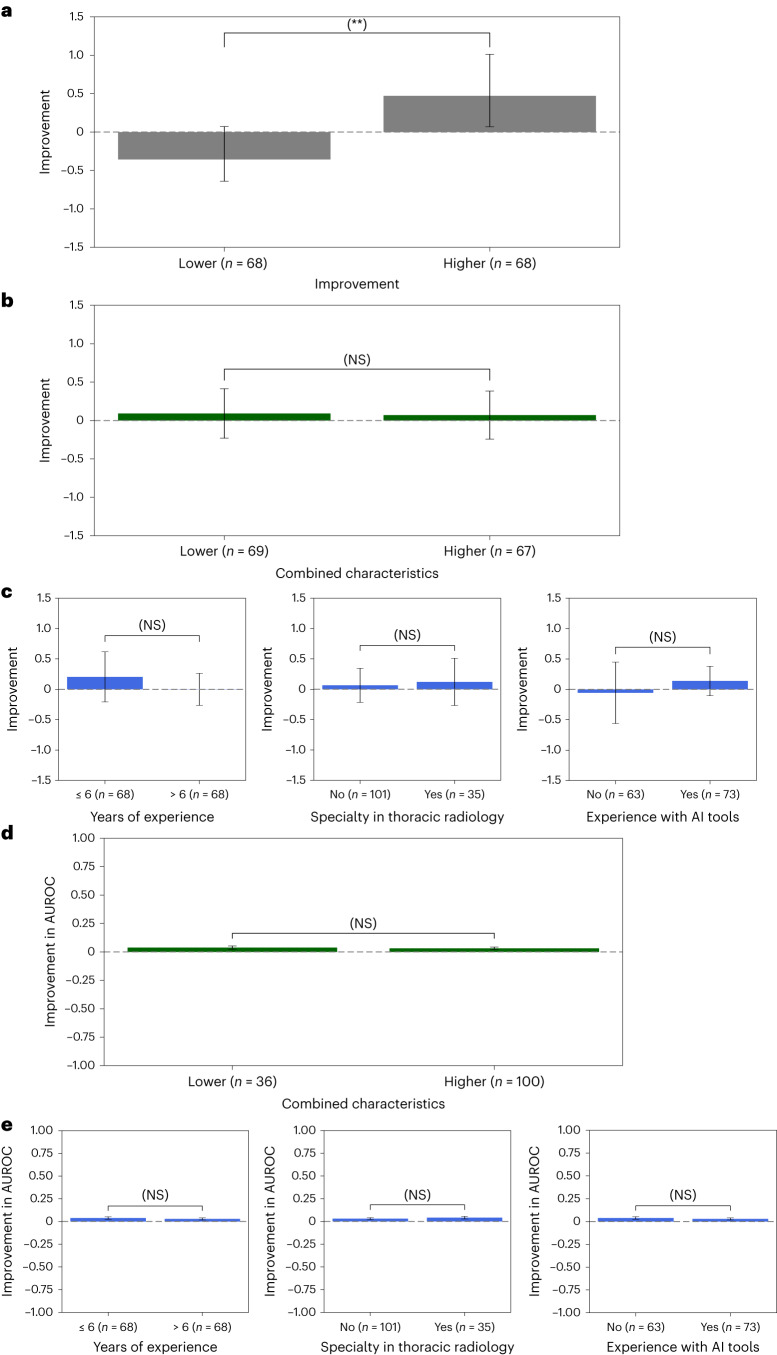
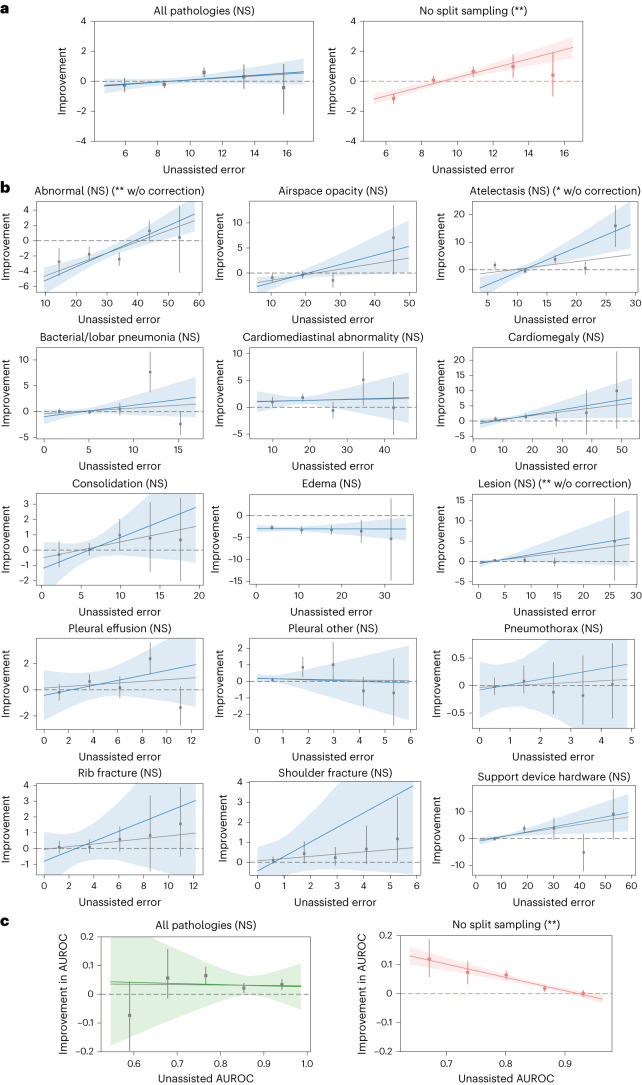
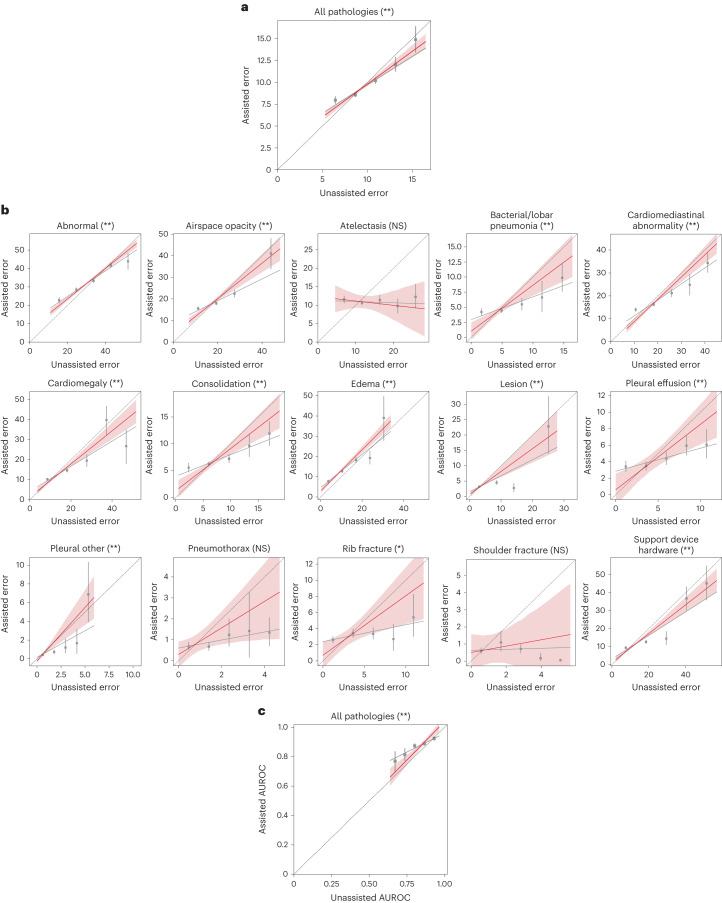
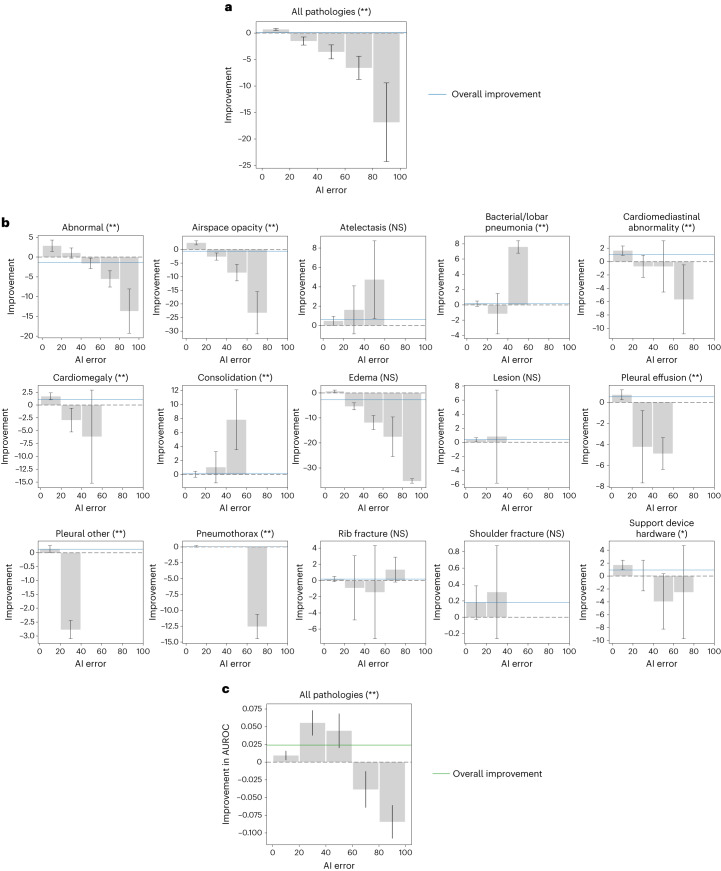
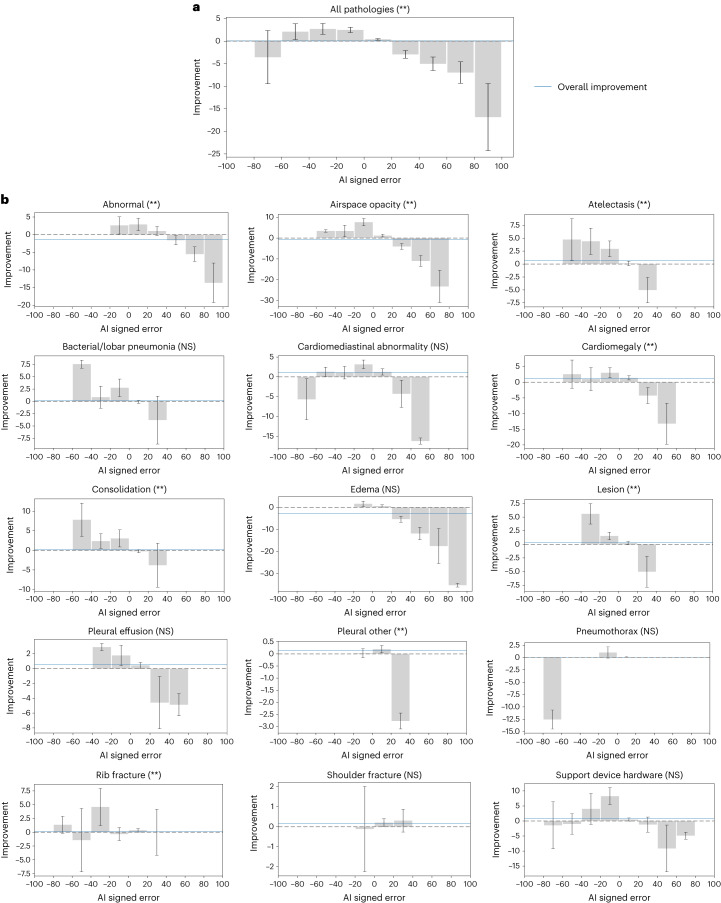
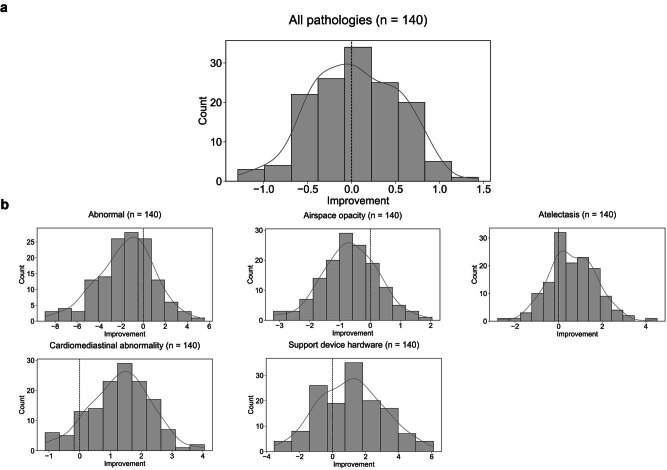
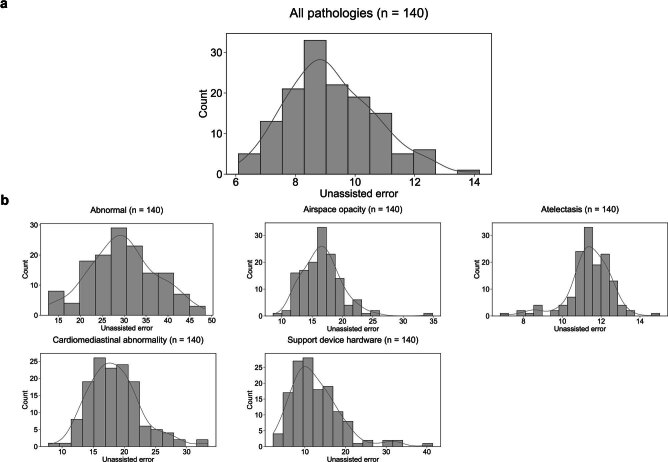
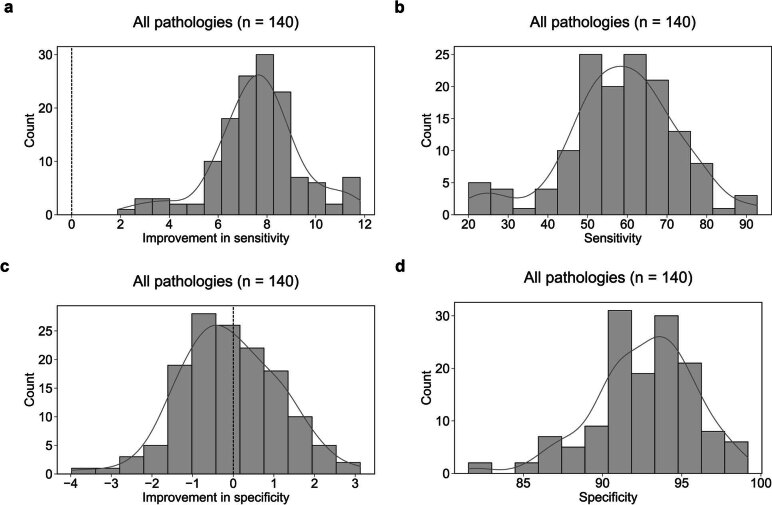
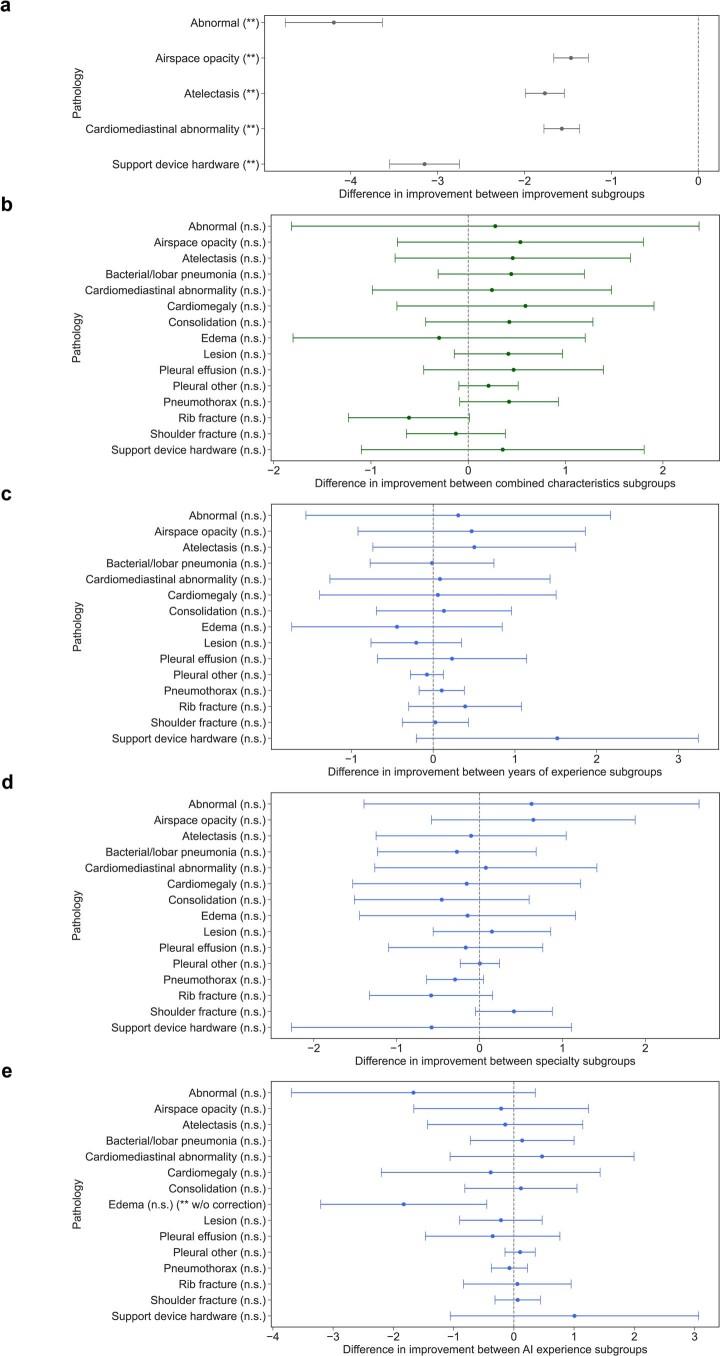
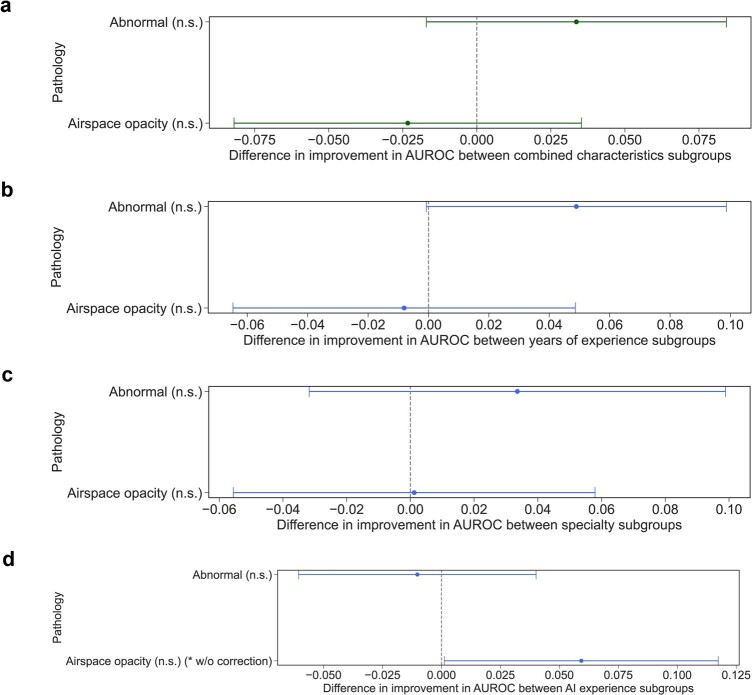
The integration of artificial intelligence (AI) in medical image interpretation requires effective collaboration between clinicians and AI algorithms. Although previous studies demonstrated the potential of AI assistance in improving overall clinician performance, the individual impact on clinicians remains unclear. This large-scale study examined the heterogeneous effects of AI assistance on 140 radiologists across 15 chest X-ray diagnostic tasks and identified predictors of these effects. Surprisingly, conventional experience-based factors, such as years of experience, subspecialty and familiarity with AI tools, fail to reliably predict the impact of AI assistance. Additionally, lower-performing radiologists do not consistently benefit more from AI assistance, challenging prevailing assumptions. Instead, we found that the occurrence of AI errors strongly influences treatment outcomes, with inaccurate AI predictions adversely affecting radiologist performance on the aggregate of all pathologies and on half of the individual pathologies investigated. Our findings highlight the importance of personalized approaches to clinician–AI collaboration and the importance of accurate AI models. By understanding the factors that shape the effectiveness of AI assistance, this study provides valuable insights for targeted implementation of AI, enabling maximum benefits for individual clinicians in clinical practice.
Overview
The claims and statistics of this paper haven’t been checked yet.
Free: it reads the open-access text and checks the first 5 claims that cite a source we can check. Create a free account to check every claim.
Integrity signals
Registry
Cites
Statistics
Figures
Verification
Claims the paper makes
The claims and statistics of this paper haven’t been checked yet.
Free: it reads the open-access text and checks the first 5 claims that cite a source we can check. Create a free account to check every claim.
Claims other papers make about this one
Each is checked against this paper’s own text: does it say what the citing paper says it does?
The source backs part of the claim, not all of it — or backs it for a different population, condition or comparison.
In the citing paper
“Prior studies using traditional AI models have documented the effects of cognitive biases,22-27 with inaccurate predictions impairing radiologist performance and erroneous suggestions prompting pathology experts to overturn correct diagnoses in 7% of cases.22, 23”
From Automation Bias in Large Language Model Assisted Diagnostic Reasoning Among AI-Trained Physicians (2025) · cites this paper as [22]
Experimental — accuracy not yet measuredThe source backs part of the claim, not all of it — or backs it for a different population, condition or comparison.
In the citing paper
“Studies27,29,30,42 provide empirical evidence that GenAI tools can significantly improve clinical accuracy, workflow efficiency, and decision-support capacity when implemented under structured supervision.”
From Generative Artificial Intelligence in Healthcare: Automation Bias, Deskilling, and Cognitive Implications – A Systematic Review (2026) · cites this paper as [27]
Experimental — accuracy not yet measuredThe source backs part of the claim, not all of it — or backs it for a different population, condition or comparison.
In the citing paper
“Empirical evidence27,29,42 indicated that clinician performance is optimized when AI outputs are analyzed rather than uncritically accepted.”
From Generative Artificial Intelligence in Healthcare: Automation Bias, Deskilling, and Cognitive Implications – A Systematic Review (2026) · cites this paper as [27]
Experimental — accuracy not yet measuredThe source backs part of the claim, not all of it — or backs it for a different population, condition or comparison.
In the citing paper
“For example, radiologists in one study found it challenging to determine the correctness of AI predictions, leading to poor decisions when inaccurate predictions were provided [78].”
From To Recommend or Not to Recommend: Designing and Evaluating AI-Enabled Decision Support for Time-Critical Medical Events (2025) · cites this paper as [78]
Experimental — accuracy not yet measured
Self-check
Percentages, sums and reported differences re-computed from the paper’s own numbers.
The self-check needs the paper’s full text.
Citations
Cites
Densely Connected Convolutional Networks
Huang, G., Liu, Z., Van Der Maaten, L., & Weinberger, K. Q. (2017) · 2017 IEEE Conference on Computer Vision and Pattern Recognition (CVPR) · doi:10.1109/cvpr.2017.243 · Cited by 48,566
Mostly Harmless Econometrics: An Empiricist's Companion
Angrist, J. D., & Pischke, J.-S. (2009) · doi:10.1515/9781400829828 · Cited by 9,467
Mostly Harmless Econometrics: An Empiricist's Companion
Angrist, J. D., & Pischke, J.-S. (2008) · doi:10.2307/j.ctvcm4j72 · Cited by 5,051
A Practitioner’s Guide to Cluster-Robust Inference
Colin Cameron, A., & Miller, D. L. (2015) · Journal of Human Resources · doi:10.3368/jhr.50.2.317 · Cited by 5,037
Fleischner Society: Glossary of Terms for Thoracic Imaging
Hansell, D. M., Bankier, A. A., MacMahon, H., McLoud, T. C., Müller, N. L., & Remy, J. (2008) · Radiology · doi:10.1148/radiol.2462070712 · Cited by 4,198
International evaluation of an AI system for breast cancer screening
McKinney, S. M., Sieniek, M., Godbole, V., Godwin, J., Antropova, N., Ashrafian, H., Back, T., Chesus, M., Corrado, G. S., Darzi, A., et al. (2020) · Nature · doi:10.1038/s41586-019-1799-6 · Cited by 3,287
Rajpurkar, P., Chen, E., Banerjee, O., & Topol, E. J. (2022) · Nature Medicine · doi:10.1038/s41591-021-01614-0 · Cited by 3,212
Self-citationKey challenges for delivering clinical impact with artificial intelligence
Kelly, C. J., Karthikesalingam, A., Suleyman, M., Corrado, G., & King, D. (2019) · BMC Medicine · doi:10.1186/s12916-019-1426-2 · Cited by 3,136
MIMIC-CXR, a de-identified publicly available database of chest radiographs with free-text reports
Johnson, A. E. W., Pollard, T. J., Berkowitz, S. J., Greenbaum, N. R., Lungren, M. P., Deng, C.-Y., Mark, R. G., & Horng, S. (2019) · Scientific Data · doi:10.1038/s41597-019-0322-0 · Cited by 1,816
Experimental methods: Between-subject and within-subject design
Charness, G., Gneezy, U., & Kuhn, M. A. (2012) · Journal of Economic Behavior & Organization · doi:10.1016/j.jebo.2011.08.009 · Cited by 1,469
Research works printed but not linked: 3
- Norden, J. G. & Shah, N. R. What AI in health care can learn from the long road to autonomous vehicles. NEJM Catalyst https://catalyst.nejm.org/doi/full/10.1056/CAT.21.0458 (2022). · doi:10.1056/cat.21.0458
- Mozannar, H. et al. Who Should Predict? Exact Algorithms For Learning to Defer to Humans. in International Conference on Artificial Intelligence and Statistics 10520–10545 (PMLR, 2023).
- Endo, M., Krishnan, R., Krishna, V., Ng, A. Y. & Rajpurkar, P. Retrieval-based chest X-ray report generation using a pre-trained contrastive language-image model. in Proc. ofMachine Learning for Health 209–219 (PMLR, 2021).
Cited by
Educational Strategies for Clinical Supervision of Artificial Intelligence Use
Abdulnour, R.-E. E., Gin, B., & Boscardin, C. K. (2025) · New England Journal of Medicine · doi:10.1056/nejmra2503232 · Cited by 209
Performance of a large language model on the reasoning tasks of a physician
Brodeur, P. G., Buckley, T. A., Kanjee, Z., Goh, E., Ling, E., Jain, P., Cabral, S., Abdulnour, R.-E. E., Haimovich, A. D., Freed, J. A., et al. (2026) · Science · doi:10.1126/science.adz4433 · Cited by 231
The generative era of medical AI
Fahrner, J., Chen, E., Topol, E. J., & Rajpurkar, P. (2025) · Cell · doi:10.1016/j.cell.2025.05.018 · Cited by 145
Self-citationMultinational Attitudes Toward AI in Health Care and Diagnostics Among Hospital Patients
Busch, F., Hoffmann, L., Xu, L., Zhang, L. J., Hu, B., García-Juárez, I., Toapanta-Yanchapaxi, L. N., Gorelik, N., Gorelik, V., Rodriguez-Granillo, G. A., et al. (2025) · JAMA Network Open · doi:10.1001/jamanetworkopen.2025.14452 · Cited by 124
Efficiency and Quality of Generative AI–Assisted Radiograph Reporting
Huang, J., Wittbrodt, M. T., Teague, C. N., Karl, E., Galal, G., Thompson, M., Chapa, A. R., Chiu, M.-L., Herynk, B. A., Linchangco, R., et al. (2025) · JAMA Network Open · doi:10.1001/jamanetworkopen.2025.13921 · Cited by 72
From human-centered to symbiotic artificial intelligence: a focus on medical applications
Desolda, G., Esposito, A., Lanzilotti, R., Piccinno, A., & Costabile, M. F. (2024) · Multimedia Tools and Applications · doi:10.1007/s11042-024-20414-5 · Cited by 69
Sivakumar, R., Lue, B., & Kundu, S. (2025) · JAMA Network Open · doi:10.1001/jamanetworkopen.2025.42338 · Cited by 62
Ong, J. C. L., Jin, L., Elangovan, K., Lim, G. Y. S., Lim, D. Y. Z., Sng, G. G. R., Ke, Y. H., Tung, J. Y. M., Zhong, R. J., Koh, C. M. Y., et al. (2025) · Cell Reports Medicine · doi:10.1016/j.xcrm.2025.102323 · Cited by 58
“34 The impact of AI-based decision support tools on user performance has been shown to be heterogeneous, suggesting a need for personalized approaches in the design of clinician-AI interfaces.”
Examining human-AI interaction in real-world healthcare beyond the laboratory
Wekenborg, M., Gilbert, S., & Kather, J. N. (2025) · npj Digital Medicine · doi:10.1038/s41746-025-01559-5 · Cited by 62
“A number of studies have put forth formalized quantitative toolkits to measure task performance in human-AI interactions in medicine 20 .”
Cheah, B. C. J., Vicente, C. R., & Chan, K. R. (2025) · Viruses · doi:10.3390/v17070882 · Cited by 64
“The low interpretability of some models does not improve the performance of junior clinicians, who should be the primary beneficiaries of such systems due to less clinical experience [169].”
Qazi, I. A., Ali, A., Khawaja, A. U., Akhtar, M. J., Sheikh, A. Z., & Alizai, M. H. (2026) · NEJM AI · doi:10.1056/aioa2501001 · Cited by 80
Statistical Tests for Replacing Human Decision Makers with Algorithms
Feng, K., HONG, H. P., Tang, K., & Wang, J. (2025) · Management Science · doi:10.1287/mnsc.2023.01845 · Cited by 55
Nicolson, A., Bradburn, E., Gal, Y., Papageorghiou, A. T., & Noble, J. A. (2025) · npj Digital Medicine · doi:10.1038/s41746-025-02023-0 · Cited by 57
Strotzer, Q., Nieberle, F., Kupke, L. S., Napodano, G., Muertz, A. K., Meiler, S., Einspieler, I., Rennert, J., STROTZER, M., Wiesinger, I., et al. (2024) · Radiology · doi:10.1148/radiol.240955 · Cited by 54
“A recent study showed that errors in AI models can affect even trained radiolo-gists’ performance in chest radiograph interpretation (21).”
Artificial intelligence for direct-to-physician reporting of ambulatory electrocardiography
Johnson, L., Zadrozniak, P., Jasina, G., Grotek, A., Andrade, J. G., Svennberg, E., Diederichsen, S. Z., McIntyre, W. F., Stavrakis, S., Benezet‐Mazuecos, J., et al. (2025) · Nature Medicine · doi:10.1038/s41591-025-03516-x · Cited by 57
“…been predicted that artificial intelligence (AI) will replace humans in some areas 19 , the nearest examples in health-care are in mammography, where AI can replace a second physician reader for mammograms 20–23 , and in pathology, where AI tools improve pathologist accuracy and efficiency 24,25 .”
Artificial intelligence and infectious disease diagnostics: state of the art and future perspectives
Miglietta, L., Rawson, T. M., Galiwango, R. M., Tasker, A. J., Ming, D. K. Y., Akogo, D., Ferreyra, C., Aboagye, E. O., Gordon, N. C., García‐Vidal, C., et al. (2025) · The Lancet Infectious Diseases · doi:10.1016/s1473-3099(25)00354-8 · Cited by 54
Blackman, J. T., & Veerapen, R. J. (2025) · BMC Medical Informatics and Decision Making · doi:10.1186/s12911-025-02891-2 · Cited by 48
“…the prevailing assumption that clinicians will correct errors made by AI when given output explanations is challenged by the recent findings that clinicians “struggle to consistently distinguish between accurate and inaccurate AI predictions and can be misled by inaccurate AI predictions” [35].”
Compared with What? Measuring AI against the Health Care We Have
Kohane, I. S. (2024) · New England Journal of Medicine · doi:10.1056/nejmp2404691 · Cited by 40
Sosna, J., Joskowicz, L., & Saban, M. (2025) · Radiology · doi:10.1148/radiol.240982 · Cited by 42
Recognising errors in AI implementation in radiology: A narrative review
Stogiannos, N., Cuocolo, R., D’Antonoli, T. A., dos Santos, D. P., Harvey, H., Huisman, M., Koçak, B., Kotter, E., Lekadir, K., Shelmerdine, S. C., et al. (2025) · European Journal of Radiology · doi:10.1016/j.ejrad.2025.112311 · Cited by 43
Evaluation and Regulation of Artificial Intelligence Medical Devices for Clinical Decision Support
Weissman, G. E. (2025) · Annual Review of Biomedical Data Science · doi:10.1146/annurev-biodatasci-103123-095824 · Cited by 38
Brejnebøl, M. W., Lenskjold, A., Ziegeler, K., Ruitenbeek, H., Müller, F. C., Nybing, J. D., Visser, J. J., Schiphouwer, L. M., Jasper, J., Bashian, B., et al. (2024) · Radiology · doi:10.1148/radiol.233341 · Cited by 34
Artificial intelligence in primary care: innovation at a crossroads
Laranjo, L., Car, L. T., Payne, R. E., Neves, A. L., Kidd, M. R., & Miranda, J. J. (2025) · The Lancet Primary Care · doi:10.1016/j.lanprc.2025.100078 · Cited by 36
Morey, D. A., Rayo, M. F., & Woods, D. D. (2025) · npj Digital Medicine · doi:10.1038/s41746-025-01784-y · Cited by 36
“However,ifthebene fi ts of AI augmentation are not immediately actualized or correlated with domain experience 23 ,deploymentsofaugmentativeAItechnologiesinsafety-critical settings might ironically increase requirements for training and human expertise 65,66 .”
InfluentialSavardi, M., Signoroni, A., Benini, S., Vaccher, F., Alberti, M., Ciolli, P., Di Meo, N., Falcone, T., Ramanzin, M., Romano, B., et al. (2025) · Insights into Imaging · doi:10.1186/s13244-024-01893-4 · Cited by 30
Kitaoka, Y., Uchihashi, T., Kawata, S., Nishiura, A., Yamamoto, T., Hiraoka, S.-I., Yokota, Y., Isomura, E. T., Kogo, M., Tanaka, S., et al. (2025) · International Journal of Molecular Sciences · doi:10.3390/ijms26094346 · Cited by 31
“Therefore, ensuring the accuracy of AI models and understanding their effects on clinical decision-making is critical [140–142].”
Human-AI teaming in healthcare: 1 + 1 > 2?
Liu, P., Zhang, J., Chen, S., & Chen, S. (2025) · npj Artificial Intelligence · doi:10.1038/s44387-025-00052-4 · Cited by 40
“For example, years of expertise were identi fi ed as a poor predictor of AI ’ s assistive impact in chest X-ray diagnostic tasks 65 and knee osteoarthritis diagnostic tasks 66 .”
Bashir, Z., Lin, M., Feragen, A., Mikolaj, K. W., Taksøe‐Vester, C., Christensen, A. N., Svendsen, M. B. S., Fabricius, M. H., Andreasen, L. A., Nielsen, M., et al. (2025) · Scientific Reports · doi:10.1038/s41598-025-86536-4 · Cited by 29
Beyond Assistance: The Case for Role Separation in AI-Human Radiology Workflows
Rajpurkar, P., & Topol, E. J. (2025) · Radiology · doi:10.1148/radiol.250477 · Cited by 32
Self-citationA concept-based interpretable model for the diagnosis of choroid neoplasias using multimodal data
Wu, Y., Liu, Y., Yang, Y., Yao, M. S., Yang, W., Shi, X., Yang, L., Li, D., Liu, Y., Yin, S., et al. (2025) · Nature Communications · doi:10.1038/s41467-025-58801-7 · Cited by 34
“…cases of any particular rare disease given their low prevalence, making it essential for analytical tools to not only provide accurate predictions but also produce interpretable explanations in alignment with the insights of experienced specialists to support comprehensive clinical management 17 .”
Negash, S., Gundlack, J., Buch, C., Apfelbacher, T., Schildmann, J., Frese, T., Christoph, J., & Mikolajczyk, R. (2025) · Frontiers in Digital Health · doi:10.3389/fdgth.2025.1616827 · Cited by 28
The artificial intelligence revolution in gastric cancer management: clinical applications
Li, R., Li, J., Wang, Y., Liu, X., Xu, W., Sun, R., Xue, B., Zhang, X., Ai, Y., Du, Y., et al. (2025) · Cancer Cell International · doi:10.1186/s12935-025-03756-4 · Cited by 27
“The integration of artificial intelligence in the medical field is revolutionizing the conventional approach to diagnosis and treatment, aiding clinicians in disease diagnosis, enhancing diagnostic precision, and achieving superior performance [41].”
Generative Artificial Intelligence in Clinical Medicine and Impact on Gastroenterology
Soroush, A., Giuffrè, M., Chung, S., & Shung, D. L. (2025) · Gastroenterology · doi:10.1053/j.gastro.2025.03.038 · Cited by 27
Ashworth, E., Allan, E., Pauling, C., Laidlow-Singh, H., Arthurs, O. J., & Shelmerdine, S. C. (2025) · European Radiology · doi:10.1007/s00330-025-11449-9 · Cited by 27
“Differential bene fi t from AI assistance between healthcare professionals of varying clinical experience is becoming better acknowledged [37] and could affect how AI should be implemented in clinical pathways and a possible role of AI as a “ trainer ”— although studies addressing this have not…”
Best Practices for the Safe Use of Large Language Models and Other Generative AI in Radiology
Yi, P. H., Haver, H. L., Jeudy, J. J., Kim, W., Kitamura, F., Oluyemi, E. T., Smith, A. D., Moy, L. P., & Parekh, V. S. (2025) · Radiology · doi:10.1148/radiol.241516 · Cited by 25
Scaling medical AI across clinical contexts
Li, M. M., Reis, B. Y., Rodman, A. M., Cai, T., Dagan, N., Balicer, R. D., Loscalzo, J., Kohane, I. S., & Žitnik, M. (2026) · Nature Medicine · doi:10.1038/s41591-025-04184-7 · Cited by 32
“However, even when models perform well in isolation, they may not work effectively when used alongside clinicians 11,45 .”
Rademakers, F. E., Biasin, E., Bruining, N., Caiani, E. G., Davies, R. H., Gilbert, S., Kamenjašević, E., McGauran, G., O’Connor, G., Rouffet, J.-B., et al. (2025) · npj Digital Medicine · doi:10.1038/s41746-025-01459-8 · Cited by 25
Seeing the Unseen: Advancing Generative AI Research in Radiology
Kim, W. (2024) · Radiology · doi:10.1148/radiol.240935 · Cited by 22
Applications of Artificial Intelligence and Machine Learning in Spine MRI
Lee, A., Ong, W., Makmur, A., Ting, Y. H., Tan, W. C., Lim, S. W. D., Low, X. Z., Tan, J. J. H., Kumar, N., & Hallinan, J. T. P. D. (2024) · Bioengineering · doi:10.3390/bioengineering11090894 · Cited by 22
“The authors found that the impact of AI assistance on radiologist performance was variable, and that AI errors significantly impacted treatment outcomes [110].”
Machine Learning for Predictive Modeling in Nanomedicine‐Based Cancer Drug Delivery
Sahu, R. C., Arora, S., Kumar, D. K., & Agrawal, A. K. (2025) · Med Research · doi:10.1002/mdr2.70043 · Cited by 33
Micro-Nano Convergence-Driven Radiotheranostic Revolution in Hepatocellular Carcinoma
Peng, Y., Liu, H., Miao, M., Xu, C., Chen, S., Yan, K., Mu, J., Cheng, H., & Liu, G. (2025) · ACS Applied Materials & Interfaces · doi:10.1021/acsami.5c05525 · Cited by 17
Automation Bias in Large Language Model Assisted Diagnostic Reasoning Among AI-Trained Physicians
Qazi, I. A., Ali, A., Khawaja, A. U., Akhtar, M. J., Sheikh, A. Z., & Alizai, M. H. (2025) · medRxiv · doi:10.1101/2025.08.23.25334280 · Cited by 16
“22, 23 However, LLMs represent a fundamentally different paradigm that may mitigate these concerns.”
Mabit, L., Lepoittevin, M., Valls, M., Thomas, C. P., Guillevin, R., & Herpe, G. (2025) · Journal of Clinical Medicine · doi:10.3390/jcm14134403 · Cited by 17
Jackson, N. J., Brown, K. E., Rn, M., Murrow, M., Cauley, M. R., Collins, B. X., Novak, L. L., Benda, N. C., & Ancker, J. S. (2026) · Journal of the American Medical Informatics Association · doi:10.1093/jamia/ocag002 · Cited by 19
“11,31,32,34,35,63,66,68,69 However, participants showed some resilience to this as incorrect advice decreased users’ trust 53 in the AI-CDS and decreased their confidence in their decisions 63,69 (with 1 exception 66 ).”
Guo, G., Deng, L., Tandon, A. A., Endert, A., & Kwon, B. C. (2024) · ACM Conference on Fairness, Accountability, and Transparency (FAccT) · doi:10.1145/3630106.3659011 · Cited by 19
“In radiology, for example, it has been found that “the occurrence of AI errors strongly influences treatment outcomes” regardless of the experience of the radiologist or their familiarity with AI tools [72].”
BackgroundThe effect of medical explanations from large language models on diagnostic accuracy in radiology
Spitzer, P., Hendriks, D., Rudolph, J., Schlaeger, S., Ricke, J., Kühl, N., Hoppe, B. F., & Feuerriegel, S. (2026) · npj Digital Medicine · doi:10.1038/s41746-026-02619-0 · Cited by 21
“On the other hand, explanations can also mislead physicians 21 – 23 .”
Bernasconi, A., Gill, R. S., & Bernasconi, N. (2024) · Epilepsia · doi:10.1111/epi.17989 · Cited by 15
“64 Finally, because AI systems that recurrently learn from new data 65 do not fit the conventional regulatory mold of fixed-code software- as- a-medical device, the U.S Food and Drug Administration (FDA) has suggested a framework for adaptive systems.”
Differences between human and artificial/augmented intelligence in medicine
Monteith, S., Glenn, T., Geddes, J. R., Achtyes, E. D., Whybrow, P. C., & Bauer, M. (2024) · Computers in Human Behavior Artificial Humans · doi:10.1016/j.chbah.2024.100084 · Cited by 21
Prince, E. W., Mirsky, D. M., Hankinson, T. C., & Görg, C. (2025) · Frontiers in Radiology · doi:10.3389/fradi.2024.1433457 · Cited by 16
An Update of AI and Radiomics in Precision Oncology: Insights from Liver Tumors as Case Models
Granata, V., Fusco, R., Setola, S. V., Santorsola, M., Ottaiano, A., Cerrone, M., Pizza, N., Ferrara, G., Zerunian, M., Caruso, D., et al. (2025) · Technology in Cancer Research & Treatment · doi:10.1177/15330338251387928 · Cited by 16
“74 Secondly, limited access to high-quality imaging and molecular diagnostics in low-resource or underserved settings raises concerns regarding the equitable distribution of AI bene fi ts. AI models developed and validated in high-income environments may not translate well to contexts with lower…”
Pavlik, E. J., Land, J. M., Lawton, F., Swiecki‐Sikora, A. L., Ramaiah, D., & Rives, T. A. (2025) · Diagnostics · doi:10.3390/diagnostics15060735 · Cited by 13
“A report on lower-performing radiologists challenged the notion that AI assistance would increase their performance, finding that AI errors adversely influenced radiologist performance and treat-ment outcomes [61].”
Agha-Mir-Salim, L., Alberto, I. R. I., Alberto, N. R. I., Celi, L. A., Alfonso, P. G., Hicklen, R., Legaspi, K. E. Y., Menghrajani, R. H., Ng, F. Y. C., Pile, P. T., et al. (2025) · Journal of Medical Internet Research · doi:10.2196/70358 · Cited by 12
“For instance, a recent study showed large heterogeneity as to which radiologists benefit from the use of AI assistance [1].”
Personality pairing improves human–AI collaboration
Ju, H., & Aral, S. (2026) · Proceedings of the National Academy of Sciences · doi:10.1073/pnas.2530627123 · Cited by 14
A promptable CT foundation model for solid tumor evaluation
Machado, L., Alberge, L., Philippe, H., Ferreres, É., Khlaut, J., Dupuis, J., Floch, K. L., Gatenyo, D. H., Roux, P., Grégory, J., et al. (2025) · npj Precision Oncology · doi:10.1038/s41698-025-00903-y · Cited by 16
Howard, J. P., Zhang, Q., Salih, A. M., Petersen, S. E., Lekadir, K., & Raisi‐Estabragh, Z. (2025) · Heart · doi:10.1136/heartjnl-2024-324612 · Cited by 14
The artificial intelligence (AI) competence paradox: how AI reshapes clinical expertise
Nilsson, C. (2025) · Transforming Government People Process and Policy · doi:10.1108/tg-02-2025-0048 · Cited by 16
Deep learning applications in digital pathology
Boor, P. (2024) · Nature Reviews Nephrology · doi:10.1038/s41581-024-00870-w · Cited by 11
“Initial studies in radiology revealed potential adverse effects of DL assistance on patient outcomes, highlighting a need for improved accuracy and considerations of human–DL interface interactions 5 .”
Using deep learning to enhance reporting efficiency and accuracy in degenerative cervical spine MRI
Lee, A., Wu, J., Liu, C., Makmur, A., Ting, Y. H., Lee, S., Chan, M. D. Z., Lim, D. S. W., Khoo, V. M. H., Sng, W. J., et al. (2025) · The Spine Journal · doi:10.1016/j.spinee.2025.03.009 · Cited by 10
Parikh, R. B., Kolla, L., Beothy, E. A., Ferrell, W. J., Laventure, B., Guido, M., Girard, A., Li, Y., Dosoky, K. E. M., Tarabishy, K., et al. (2026) · Nature Communications · doi:10.1038/s41467-026-68873-8 · Cited by 11
“Equally important, our findings highlight workflow tradeoffs such as automation bias, providing critical insight into the contexts where AI can safely augment human decision-making and where stronger human oversight is required.”
Park, S. H., Dean, G., Ortiz, E. M., & Choi, J. (2025) · Korean Journal of Radiology · doi:10.3348/kjr.2025.0257 · Cited by 10
“Although qualified clinicians with ample clinical knowledge and experience are likely to be better equipped to handle these issues than those without clinical expertise, there is no guarantee that they will always do so effectively [8].”
Wenzheng, H., Agyemang, E. F., Srivastav, S. K., Shaffer, J. G., & Kakraba, S. (2025) · JMIR Aging · doi:10.2196/70272 · Cited by 12
A Survey of the Application of Explainable Artificial Intelligence in Biomedical Informatics
Eshkiki, H., Tanhaei, F., Caraffini, F., & Mora, B. (2025) · Applied Sciences · doi:10.3390/app152412934 · Cited by 13
Artificial intelligence in radiology: where are we going?
Toruner, M. D., Wang, Y., Jiao, Z., & Bai, H. X. (2024) · EBioMedicine · doi:10.1016/j.ebiom.2024.105435 · Cited by 14
AI-based EEG analysis: new technology and the path to clinical adoption
Rutkowski, J., & Saab, M. (2025) · Clinical Neurophysiology · doi:10.1016/j.clinph.2025.2110994 · Cited by 8
An Explainable Deep Learning Model for Focal Liver Lesion Diagnosis Using Multiparametric MRI
Shen, Z., Chen, L., Wang, L., Dong, S., Wang, F., Pan, Y., Zhou, J., Wang, Y., Xu, X., Chong, H., et al. (2025) · Radiology Artificial Intelligence · doi:10.1148/ryai.240531 · Cited by 8
Alghaihab, A., Moretti, A. J., Reside, J. M., Tuzova, L. N., & Tyndall, D. A. (2025) · Diagnostics · doi:10.3390/diagnostics15040467 · Cited by 8
“Thus, understanding the nuances of AI’s impact and ensuring appropriate training and guidelines are crucial to harnessing its benefits while mitigating potential drawbacks in clinical settings [29].”
Shoorgashti, R., Alimohammadi, M., Baghizadeh, S., Radmard, B., Ebrahimi, H., & Lesan, S. (2025) · Health Science Reports · doi:10.1002/hsr2.70614 · Cited by 9
“AI's ability to handle routine cases efficiently, particularly those with well ‐ defined radiographic characteristics, enables it to reduce the burden on clinicians [45, 54 – 56].”
Efficacy of a deep learning-based software for chest X-ray analysis in an emergency department
Selvam, S., Peyrony, O., Elezi, A., Bragança, A., Zagdanski, A., Biard, L., Assouline, J., Chassagnon, G., Mulier, G., & de Margerie‐Mellon, C. (2025) · Diagnostic and Interventional Imaging · doi:10.1016/j.diii.2025.03.007 · Cited by 9
Pavlik, E. J., Land Woodward, J., Lawton, F., Swiecki-Sikora, A. L., Ramaiah, D. D., & Rives, T. A. (2025) · doi:10.20944/preprints202502.0521.v1 · Cited by 8
Controversies in Artificial Intelligence in Neurosurgery
Yilmaz, R., Browd, S. R., & Donoho, D. A. (2024) · Neurosurgery Clinics of North America · doi:10.1016/j.nec.2024.08.008 · Cited by 7
Al-Anezi, F. M. (2026) · Journal of Healthcare Leadership · doi:10.2147/jhl.s590498 · Cited by 6
“Studies 27,29,30,42 provide empirical evidence that GenAI tools can significantly improve clinical accuracy, workflow efficiency, and decision-support capacity when implemented under structured supervision.”
InfluentialMastrianni, A., Kim, M. S., Sullivan, T. M., Sippel, G. J., Burd, R. S., Gajos, K. Z., & Sarcevic, A. (2025) · Proceedings of the ACM on Human-Computer Interaction · doi:10.1145/3757512 · Cited by 6
Goh, S. S. N., Du, H. Y., Tan, L. Y., Seah, E., Lau, W. K., Ng, A. H. Z., Lim, D. S. W., Ong, H. Y., Lau, S., Tan, Y. L., et al. (2025) · JMIR Formative Research · doi:10.2196/66931 · Cited by 7
“…be explained by the “regression to the mean” effect, where extreme performances (eg, by junior radiologists with less experience) tend to improve with intervention (AI assistance), while those with already higher baseline performance (experienced consultants) see more modest improvements [29].”
Clinical fluorescent probes: mechanisms, advantages and inspirations
Liang, Q., Fan, B., 靳文芳, Liu, Y., Su, D., Chen, P., Yoon, J., Tang, B., & Chen, G. (2026) · Chemical Science · doi:10.1039/d6sc02520j · Cited by 7
Fussell, D. A., Tang, C. C., Sternhagen, J., Marrey, V. V., Roman, K. M., Johnson, J. B., Head, M. J., Troutt, H. R., Li, C. H., Chang, P., et al. (2024) · American Journal of Neuroradiology · doi:10.3174/ajnr.a8387 · Cited by 8
Deploying AI in the ICU: learning from successes and failures
Komorowski, M., & Cecconi, M. (2025) · Intensive Care Medicine · doi:10.1007/s00134-025-08131-5 · Cited by 6
“AI risks include performance degradation and direct patient harm [11, 12].”
Beyond models: a paradigm shift toward human-centered AI system design
Hussein, N. S. A., Lopez, M. D. P. A., Marshall, D. C., Mullins, C. D., Mwavu, R., Oliver, S., Sadrolashrafi, M., Sim, D., & Komorowski, M. (2025) · Critical Care · doi:10.1186/s13054-025-05714-y · Cited by 6
Content-based image retrieval assists radiologists in diagnosing eye and orbital mass lesions in MRI
Rumberger, J. L., Lim, W., Wildfeuer, B., Sodemann, E. B., Lecler, A., Stemplinger, S., Issever, A. S., Sepahdari, A. R., Langner, S., Kainmueller, D., et al. (2025) · Scientific Reports · doi:10.1038/s41598-025-94634-6 · Cited by 7
“In our study, the low number of cases per participant allowed us to include 36 participants with considerable differences in experience and tenure, which better accounts for the heterogenous effects that AI assistance can have on radiologists 19 .”
Golkarieh, A., Siadat, M.-R., & Soltanian-Zadeh, H. (2026) · SPIE Medical Imaging: Computer-Aided Diagnosis · doi:10.1117/12.3087938 · Cited by 8
Cooke, L. H., Jung, M., Brendel, J. M., Kerkovits, N. M., Foldyna, B., Lu, M. T., & Raghu, V. K. (2026) · npj Digital Medicine · doi:10.1038/s41746-026-02497-6 · Cited by 11
A DeepSeek-powered AI system for automated chest radiograph interpretation in clinical practice
Bai, Y., Zhang, R., Lei, Y., Duan, X., Yao, J., Ju, S., Wang, C., Yao, W., Guo, Y., Zhang, G., et al. (2026) · Nature Communications · doi:10.1038/s41467-026-72680-6 · Cited by 6
“This con fi dence boost is closely linked to the diagnostic capabilities and clinical experience of junior radiologists 33 .”
Savage, C. H., Sulam, J., Huang, C., & Yi, P. H. (2026) · American Journal of Roentgenology · doi:10.2214/ajr.26.34829 · Cited by 6
The effect of medical explanations from large language models on diagnostic decisions in radiologyPreprint
Spitzer, P., Hendriks, D., Rudolph, J., Schlaeger, S., Ricke, J., Kühl, N., Hoppe, B. F., & Feuerriegel, S. (2025) · medRxiv · doi:10.1101/2025.03.04.25323357 · Cited by 10
Ahmadzade, M., Rouientan, H., Abdi, N., Norouzi, M., Hakimi, M., Bahrambeigi, M., Pouya, E. K., Bahmanyar, F., Haghi, S., Abbasi, F., et al. (2025) · Scientific Reports · doi:10.1038/s41598-025-31065-3 · Cited by 6
“Reports suggest that the effectiveness of AI can vary based on radiologist experience, highlighting the importance of harmonizing human expertise with machine intelligence 11 .”
You, H., Xiao, T., Dong, Z., Li, Y., Huang, L., Li, J., Du, H., Deng, M., Wu, Z., Tan, X., et al. (2025) · Surgical Endoscopy · doi:10.1007/s00464-025-12410-z · Cited by 4
“AI assistance can compensate for this limitation, leading to a more efficient clinical workflow [24, 25].”
Li, Z., Wang, H., Wei, G., Geng, X., Lu, Y., Xia, W., & Ni, C. (2026) · Insights into Imaging · doi:10.1186/s13244-026-02271-y · Cited by 5
Sumner, J., Ali, J. M., Motani, M., Ang, A. A., Ho, D., & Mukhopadhyay, A. (2025) · BMJ Health & Care Informatics · doi:10.1136/bmjhci-2025-101461 · Cited by 6
“20 21 Similar patterns may arise with AI dosing tools; thus, evaluating these systems in real-world scenarios is paramount.”
Schöder, H. M. (2024) · Journal of Clinical Oncology · doi:10.1200/jco.24.00675 · Cited by 4
Artificial Intelligence interpretation of chest radiographs in intensive care. Ready for prime time?
Joskowicz, L., Beil, M., & Sviri, S. (2024) · Intensive Care Medicine · doi:10.1007/s00134-024-07725-9 · Cited by 4
Rethinking Human-AI Collaboration in Radiology
Shirangi, A., Pittinsky, T. L., & Gichoya, J. W. (2026) · Radiology · doi:10.1148/radiol.252760 · Cited by 5
Sorantin, E., Grasser, M. G., Hemmelmayr, A., & Heinze, S. (2024) · Pediatric Radiology · doi:10.1007/s00247-024-06034-z · Cited by 3
Guérendel, C., Petrychenko, L., Chupetlovska, K., Bodalal, Z., Beets‐Tan, R. G. H., & Benson, S. (2024) · European Radiology · doi:10.1007/s00330-024-11321-2 · Cited by 3
Takayama, T., Sado, K., Suda, K., Tamura, H., Ueda‐Arakawa, N., Ishihara, K., Ueda, Y., Okamoto, K., Santos, L. H. O., Oshika, T., et al. (2026) · PLOS Digital Health · doi:10.1101/2025.10.06.25337211 · Cited by 5
Qunaibi, E. A., Al‐Qaaneh, A. M., Ismail, B. F., Muhidat, H. I., Rageh, F. S., Musallam, N. A., & Fawzy, A. K. (2026) · JMIR Medical Education · doi:10.2196/75534 · Cited by 6
“In contrast, a large-scale study by Yu et al [26] involving 140 radiologists and including training on AI use reported heterogeneous effects of AI assistance across 15 chest X-ray diagnostic tasks.”
InfluentialFarahani, S., Ieva, A. D., Coiera, E. W., & Liu, S. (2026) · European Journal of Radiology Artificial Intelligence · doi:10.1016/j.ejrai.2026.100092 · Cited by 4
Zahlan, A., Soh, P. H., & Clarysse, B. (2026) · npj Digital Medicine · doi:10.1038/s41746-026-02595-5 · Cited by 3
“Next, imaging and diagnostics demonstrates a signi fi cant association with high complexity, re fl ecting the advanced capabilities required to analyze unstructured data such as medical images 12 .”
Song, J., Jeong, W. G., Han, D. H., Ko, H., Yoon, S. H., Kim, H., Naruetook, P., Leong, W. L., Kim, S. S., Moon, H. M., et al. (2026) · Radiology · doi:10.1148/radiol.253397 · Cited by 4
Sengupta, P. P., & Chandrashekhar, Y. (2025) · JACC. Cardiovascular imaging · doi:10.1016/j.jcmg.2024.12.001 · Cited by 3
Woite, N. L., Gameiro, R. R., Leite, M. G. H. S. J., Hammond, A., Cobanaj, M., & Celi, L. A. (2025) · Critical Care Science · doi:10.62675/2965-2774.20250380 · Cited by 7
“(75)”
Utility of artificial intelligence in dermatology: Challenges and perspectives
Sachdev, S. S., Tafti, F., Thorat, R., Kshirsagar, M. M., Pinge, S., & Sawant, S. S. (2025) · IP Indian Journal of Clinical and Experimental Dermatology · doi:10.18231/j.ijced.2025.001 · Cited by 3
Metadata
- Authors
- Yu, F., Moehring, A., Banerjee, O., Salz, T., Agarwal, N., & Rajpurkar, P.
- Affiliations
- Harvard University (US)
- Massachusetts Institute of Technology (US)
- Corresponding author
- Rajpurkar, Pranav
- Venue
- Nature Medicine
- Published
- 2024-03
- Volume
- 30
- Issue
- 3
- Pages
- 837-849
- ISSN
- 1078-8956 (ISSN-L)
- 1546-170X
- PMC
- PMC10957478
- OpenAlex
- W4392956046
- Cited by
- 200
- References
- 44
- Citations by year
- 2026: 81 · 2025: 97 · 2024: 21
- FWCI
- 18.60
- Type
- journal article
- Language
- en
- Open access
- hybrid
- doi.org
- Licence
- cc-by
- creativecommons.org/licenses/by/4.0 (tdm)
- creativecommons.org/licenses/by/4.0 (vor, 18 d)
- Locations
- Nature Medicine (publishedVersion, cc-by)
- PubMed Central (publishedVersion, cc-by)
- PubMed (publishedVersion)
- Funders
- Alfred P. Sloan Foundation (2022-17182)
- Topics
- Health Sciences › Medicine › Health Informatics › Artificial Intelligence in Healthcare and Education
- Health Sciences › Medicine › Radiology, Nuclear Medicine and Imaging › Radiology practices and education
- Physical Sciences › Computer Science › Artificial Intelligence › AI in cancer detection
- Keywords
- radiologists, chest X-ray interpretation, clinician-AI collaboration, treatment effect heterogeneity, AI errors, radiologist performance, diagnostic accuracy
- MeSH terms
- Radiologists, Algorithms, Artificial Intelligence, Humans
About these checks
Registry, retraction, Cites and statistics results are computed, not judged, with one exception: a printed reference that no index lists is read once by a model before it counts as a citation error. Claims are extracted by a model and kept only when their quote appears verbatim in the text; each cited source is then checked, with a model’s help, for whether it says what the claim relies on. Those verdicts can be wrong — read the claim’s quote and the cited source before relying on one.
Statistics and arithmetic are recomputed, not judged.
Confidence bands are shown only for fields calibrated on our annotated test set. None is calibrated yet, so no band is shown.
What counts as a claim ›How we measure confidence ›How we check this ›
Are you an author, or do you see a problem with this page? Request a review
Data sources
Bibliographic data: Semantic Scholar, OpenAlex, Crossref.
Contains information from the Semantic Scholar Academic Graph Datasets, made available under the ODC Attribution License (ODC-BY 1.0).
Semantic Scholar’s data is described in: Kinney, R., et al. (2023). The Semantic Scholar Open Data Platform. arXiv:2301.10140.
