

Heterogeneity and predictors of the effects of AI assistance on radiologists
Open accessThe DOI matches its Crossref record; 49 of the 49 references it cites were found in a registry or an index.
Abstract
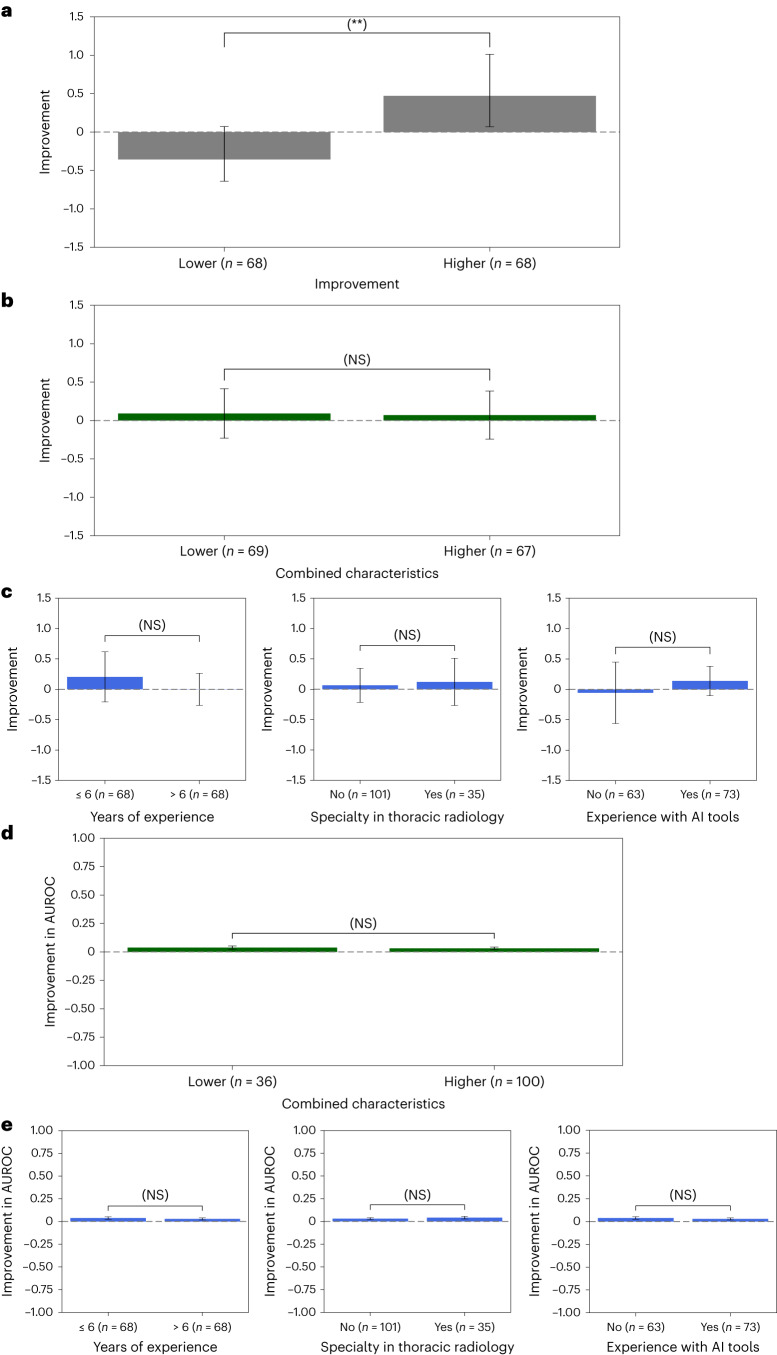
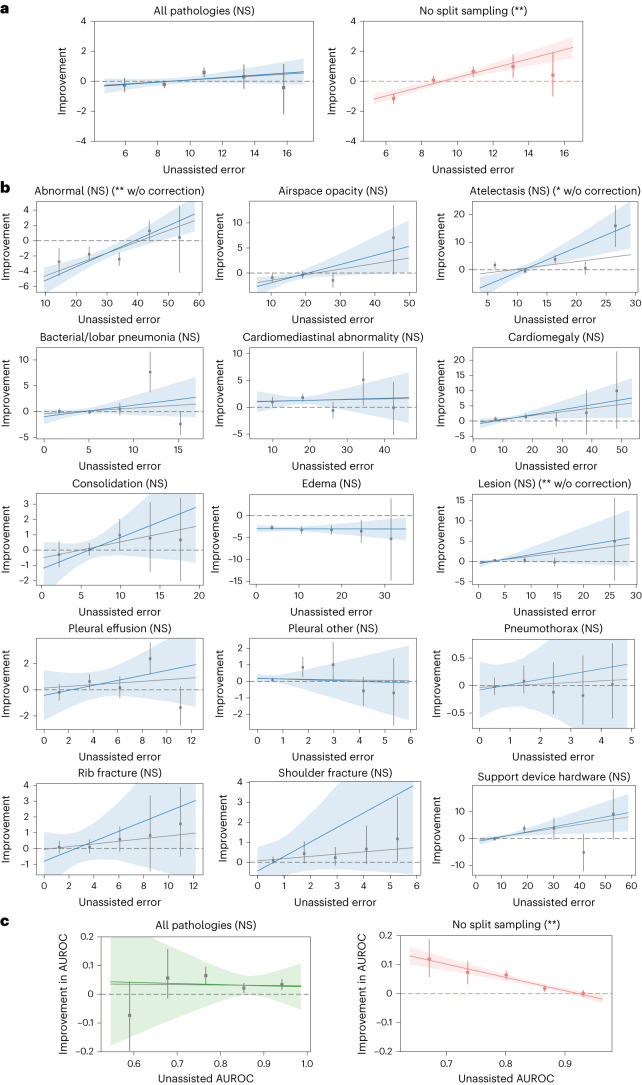
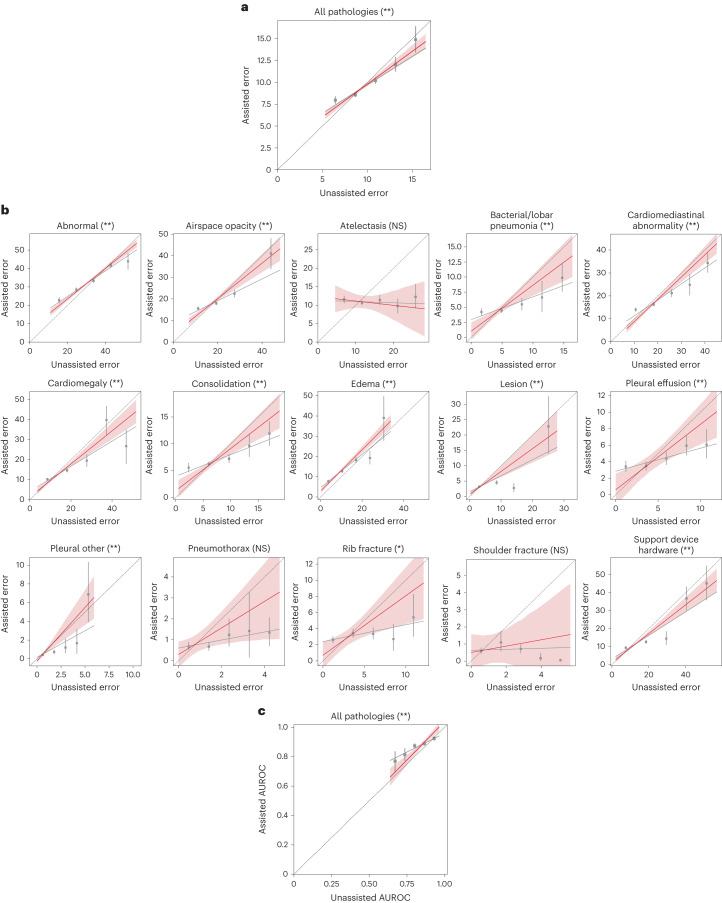
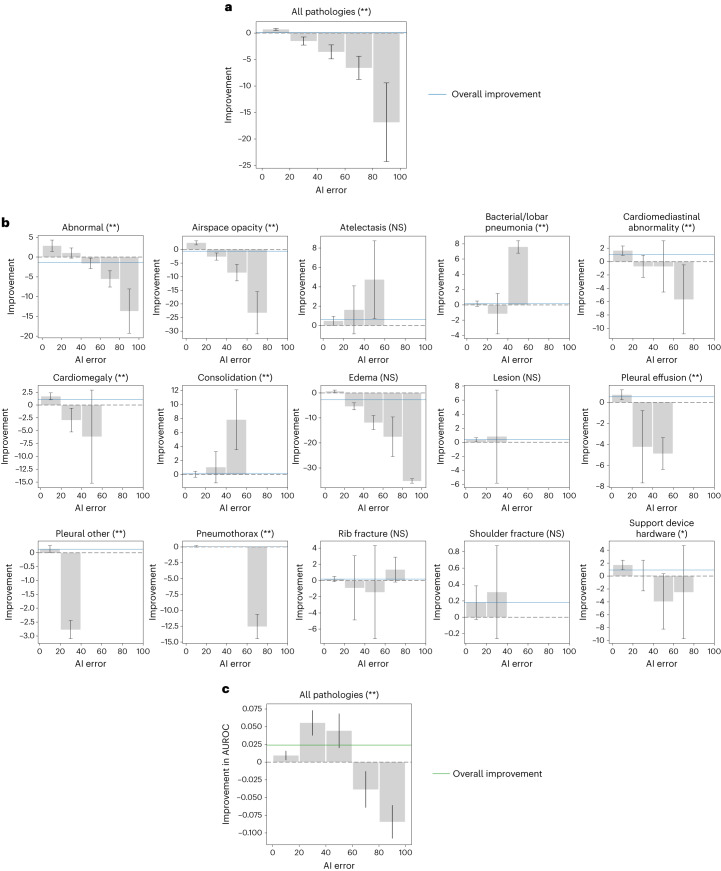
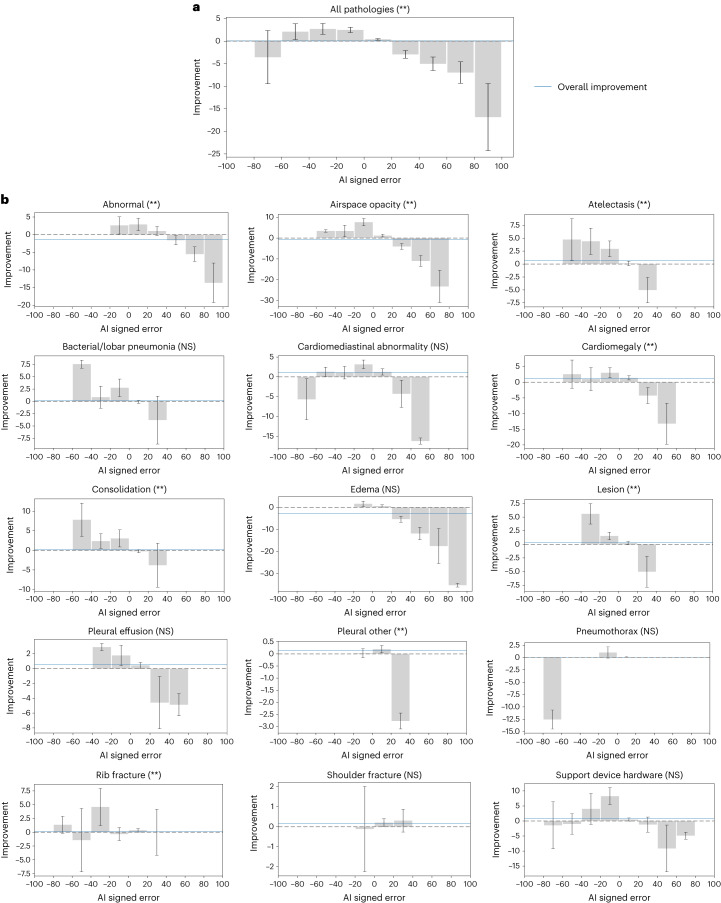
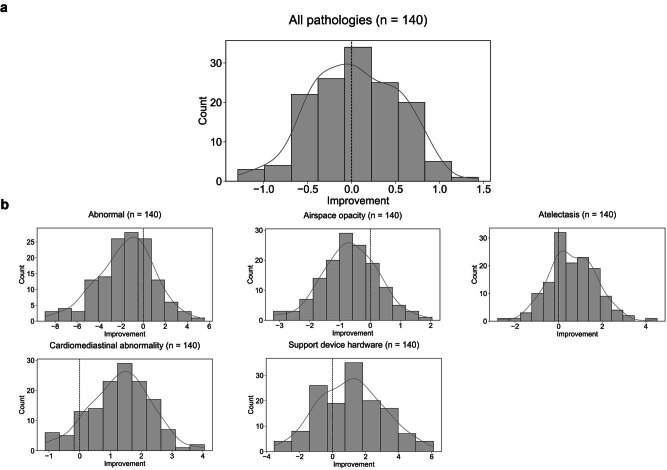
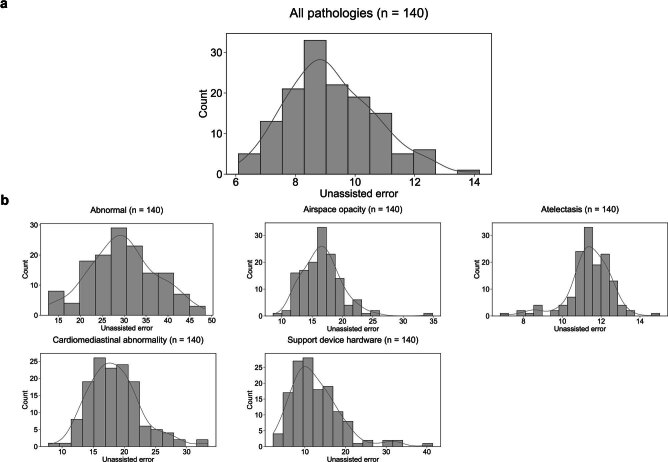
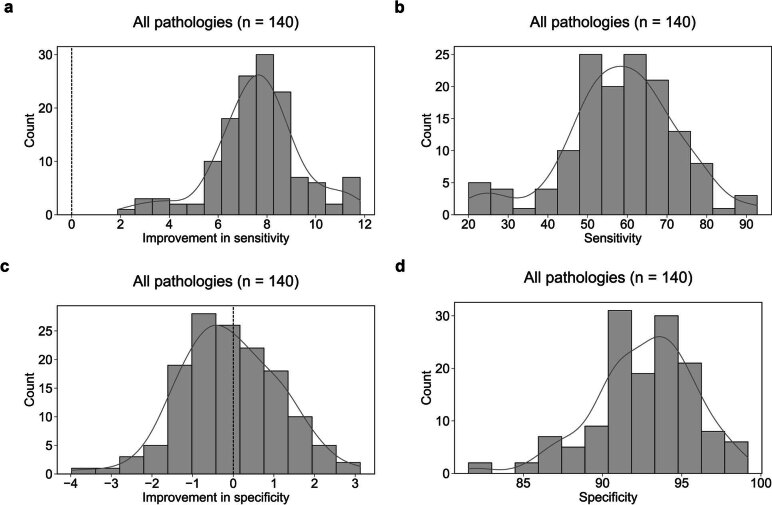
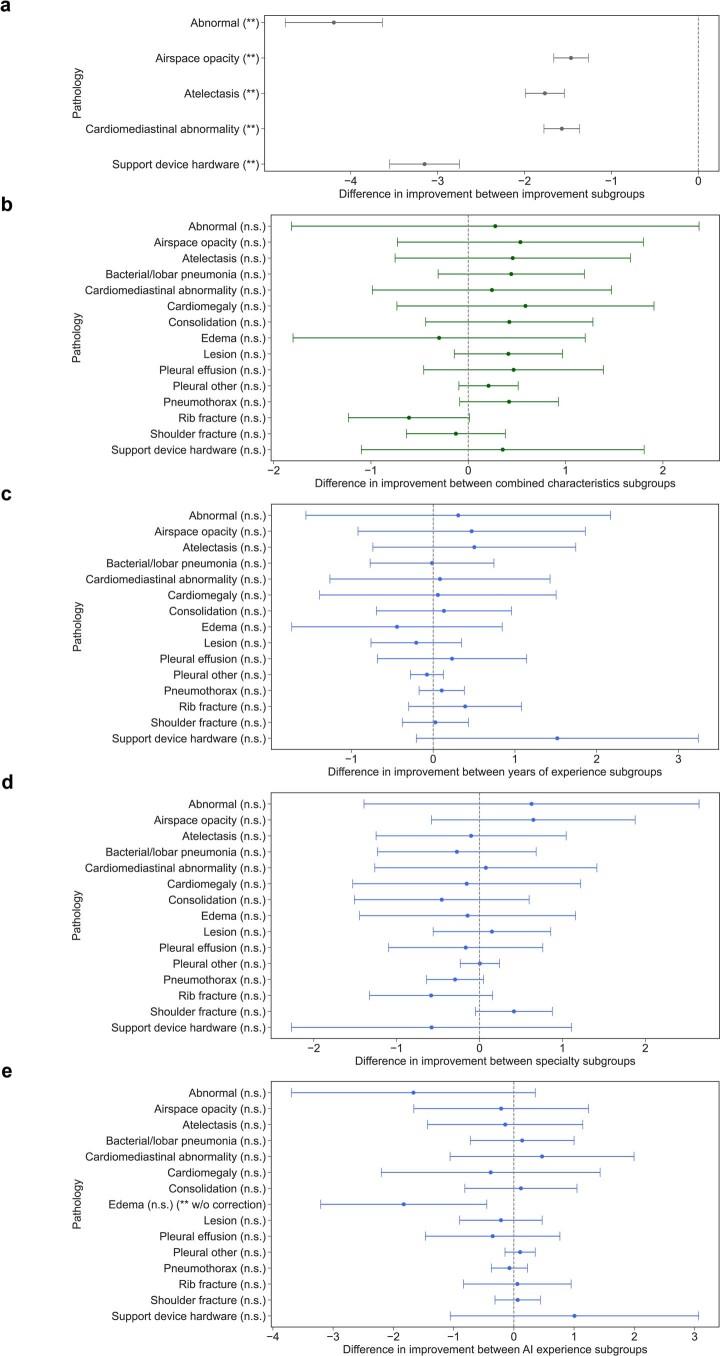
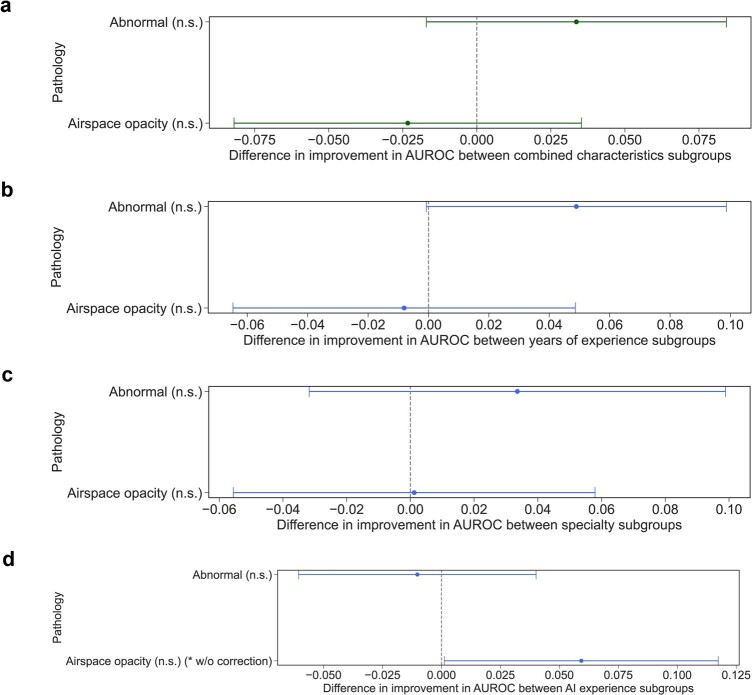
The integration of artificial intelligence (AI) in medical image interpretation requires effective collaboration between clinicians and AI algorithms. Although previous studies demonstrated the potential of AI assistance in improving overall clinician performance, the individual impact on clinicians remains unclear. This large-scale study examined the heterogeneous effects of AI assistance on 140 radiologists across 15 chest X-ray diagnostic tasks and identified predictors of these effects. Surprisingly, conventional experience-based factors, such as years of experience, subspecialty and familiarity with AI tools, fail to reliably predict the impact of AI assistance. Additionally, lower-performing radiologists do not consistently benefit more from AI assistance, challenging prevailing assumptions. Instead, we found that the occurrence of AI errors strongly influences treatment outcomes, with inaccurate AI predictions adversely affecting radiologist performance on the aggregate of all pathologies and on half of the individual pathologies investigated. Our findings highlight the importance of personalized approaches to clinician–AI collaboration and the importance of accurate AI models. By understanding the factors that shape the effectiveness of AI assistance, this study provides valuable insights for targeted implementation of AI, enabling maximum benefits for individual clinicians in clinical practice.
Overview
The claims and statistics of this paper haven’t been checked yet.
Free: it reads the open-access text and checks the first 5 claims that cite a source we can check. Create a free account to check every claim.
Integrity signals
Registry
Cites
Statistics
Figures
Verification
Claims the paper makes
The claims and statistics of this paper haven’t been checked yet.
Free: it reads the open-access text and checks the first 5 claims that cite a source we can check. Create a free account to check every claim.
Claims other papers make about this one
Each is checked against this paper’s own text: does it say what the citing paper says it does?
The source backs part of the claim, not all of it — or backs it for a different population, condition or comparison.
In the citing paper
“Prior studies using traditional AI models have documented the effects of cognitive biases,22-27 with inaccurate predictions impairing radiologist performance and erroneous suggestions prompting pathology experts to overturn correct diagnoses in 7% of cases.22, 23”
From Automation Bias in Large Language Model Assisted Diagnostic Reasoning Among AI-Trained Physicians (2025) · cites this paper as [22]
Experimental — accuracy not yet measuredThe source backs part of the claim, not all of it — or backs it for a different population, condition or comparison.
In the citing paper
“Studies27,29,30,42 provide empirical evidence that GenAI tools can significantly improve clinical accuracy, workflow efficiency, and decision-support capacity when implemented under structured supervision.”
From Generative Artificial Intelligence in Healthcare: Automation Bias, Deskilling, and Cognitive Implications – A Systematic Review (2026) · cites this paper as [27]
Experimental — accuracy not yet measuredThe source backs part of the claim, not all of it — or backs it for a different population, condition or comparison.
In the citing paper
“Empirical evidence27,29,42 indicated that clinician performance is optimized when AI outputs are analyzed rather than uncritically accepted.”
From Generative Artificial Intelligence in Healthcare: Automation Bias, Deskilling, and Cognitive Implications – A Systematic Review (2026) · cites this paper as [27]
Experimental — accuracy not yet measuredThe source backs part of the claim, not all of it — or backs it for a different population, condition or comparison.
In the citing paper
“For example, radiologists in one study found it challenging to determine the correctness of AI predictions, leading to poor decisions when inaccurate predictions were provided [78].”
From To Recommend or Not to Recommend: Designing and Evaluating AI-Enabled Decision Support for Time-Critical Medical Events (2025) · cites this paper as [78]
Experimental — accuracy not yet measured
Self-check
Percentages, sums and reported differences re-computed from the paper’s own numbers.
The self-check needs the paper’s full text.
Citations
Cites
Densely Connected Convolutional Networks
Huang, G., Liu, Z., Van Der Maaten, L., & Weinberger, K. Q. (2017) · 2017 IEEE Conference on Computer Vision and Pattern Recognition (CVPR) · doi:10.1109/cvpr.2017.243 · Cited by 48,566
Mostly Harmless Econometrics: An Empiricist's Companion
Angrist, J. D., & Pischke, J.-S. (2009) · doi:10.1515/9781400829828 · Cited by 9,467
Mostly Harmless Econometrics: An Empiricist's Companion
Angrist, J. D., & Pischke, J.-S. (2008) · doi:10.2307/j.ctvcm4j72 · Cited by 5,051
A Practitioner’s Guide to Cluster-Robust Inference
Colin Cameron, A., & Miller, D. L. (2015) · Journal of Human Resources · doi:10.3368/jhr.50.2.317 · Cited by 5,037
Fleischner Society: Glossary of Terms for Thoracic Imaging
Hansell, D. M., Bankier, A. A., MacMahon, H., McLoud, T. C., Müller, N. L., & Remy, J. (2008) · Radiology · doi:10.1148/radiol.2462070712 · Cited by 4,198
International evaluation of an AI system for breast cancer screening
McKinney, S. M., Sieniek, M., Godbole, V., Godwin, J., Antropova, N., Ashrafian, H., Back, T., Chesus, M., Corrado, G. S., Darzi, A., et al. (2020) · Nature · doi:10.1038/s41586-019-1799-6 · Cited by 3,287
Rajpurkar, P., Chen, E., Banerjee, O., & Topol, E. J. (2022) · Nature Medicine · doi:10.1038/s41591-021-01614-0 · Cited by 3,212
Self-citationKey challenges for delivering clinical impact with artificial intelligence
Kelly, C. J., Karthikesalingam, A., Suleyman, M., Corrado, G., & King, D. (2019) · BMC Medicine · doi:10.1186/s12916-019-1426-2 · Cited by 3,136
MIMIC-CXR, a de-identified publicly available database of chest radiographs with free-text reports
Johnson, A. E. W., Pollard, T. J., Berkowitz, S. J., Greenbaum, N. R., Lungren, M. P., Deng, C.-Y., Mark, R. G., & Horng, S. (2019) · Scientific Data · doi:10.1038/s41597-019-0322-0 · Cited by 1,816
Experimental methods: Between-subject and within-subject design
Charness, G., Gneezy, U., & Kuhn, M. A. (2012) · Journal of Economic Behavior & Organization · doi:10.1016/j.jebo.2011.08.009 · Cited by 1,469
Research works printed but not linked: 3
- Norden, J. G. & Shah, N. R. What AI in health care can learn from the long road to autonomous vehicles. NEJM Catalyst https://catalyst.nejm.org/doi/full/10.1056/CAT.21.0458 (2022). · doi:10.1056/cat.21.0458
- Mozannar, H. et al. Who Should Predict? Exact Algorithms For Learning to Defer to Humans. in International Conference on Artificial Intelligence and Statistics 10520–10545 (PMLR, 2023).
- Endo, M., Krishnan, R., Krishna, V., Ng, A. Y. & Rajpurkar, P. Retrieval-based chest X-ray report generation using a pre-trained contrastive language-image model. in Proc. ofMachine Learning for Health 209–219 (PMLR, 2021).
Cited by
Items 101–200 of 236
Statistical Tests for Replacing Human Decision Makers with AlgorithmsPreprint
Feng, K., HONG, H. P., Tang, K., & Wang, J. (2020) · SSRN Electronic Journal · doi:10.2139/ssrn.3508224 · Cited by 3
Are we really ready to use radiomics and deep learning for clinical decision support in radiology?
Chassagnon, G. (2025) · Diagnostic and Interventional Imaging · doi:10.1016/j.diii.2025.07.004 · Cited by 3
Educational Strategies for Clinical Supervision of Artificial Intelligence Use
Firoz, F., Srivastava, J., & Anwar, F. (2025) · New England Journal of Medicine · doi:10.1056/nejmc2513937 · Cited by 3
Are we sleepwalking into a fully automated medical imaging service?
Gale, N. (2025) · Journal of medical imaging and radiation sciences · doi:10.1016/j.jmir.2025.101969 · Cited by 3
Parikh, R. B., Ferrell, W. J., Girard, A., White, J. M. B., Fang, S., Bekelman, J. E., & Schapira, M. M. (2025) · Medical Decision Making · doi:10.1177/0272989x251349489 · Cited by 5
“33 Related work suggests that in some radiology cases, radiologists overprioritize their own intuition above accurate AI—so called ‘‘own-information’’ bias.”
Sheng, K., Ingala, S., Brandt, A. H., Grundtvig, N., Jakubauskaite, R., Dahl, R. H., Abdolalizadeh, B., Nimpong, E., Larsen, K., Lundgren, L., et al. (2025) · European Journal of Radiology · doi:10.1016/j.ejrad.2025.112365 · Cited by 2
Lu, J., Xu, X., Zhang, Y., Zhuang, K., Fang, T., Zhang, C., Chen, K., Huang, X., & Li, Y. (2025) · Clinical Breast Cancer · doi:10.1016/j.clbc.2025.08.013 · Cited by 3
Patnaik, S., Priyadarshini, S. B. B., & Pattanaik, P. (2026) · Smart sensors, measurement and instrumentation · doi:10.1007/978-3-032-05507-1_11 · Cited by 2
Magomedova, Z. M., Pershina, E. S., Daneshvar, K., Nöldge, G., & Frank, M. (2026) · Swiss Journal of Radiology and Nuclear Medicine · doi:10.59667/sjoranm.v27i1.14 · Cited by 2
Ishibayashi, K., Inaki, N., Ikeda, J., Doden, K., Takeuchi, M., Hayashi, K., Matsui, R., Matsuda, S., Tsuji, T., Kinoshita, J., et al. (2026) · Gastric Cancer · doi:10.1007/s10120-026-01756-5 · Cited by 2
“When AI accuracy is limited, surgeons must allocate additional cognitive resources to verify AI outputs before acting upon them [ 30 ].”
Why do experts miss AI’s errors? Evidence from a randomized labeling experiment
Goulas, S., Megalokonomou, R., & Sotirakopoulos, P. (2026) · PNAS Nexus · doi:10.1093/pnasnexus/pgag146 · Cited by 5
A clinical multimodal vision language foundation model with fine-grain explainability
Bai, Y., Cheng, H., Zhou, Y., Zhou, J., Thirunavukarasu, A. J., Ke, Y., Yao, J., Fukutsu, K., Quek, C. W. N., Hong, A. S. Y., et al. (2026) · Nature Medicine · doi:10.1038/s41591-026-04655-5 · Cited by 2
Moy, L. P., Vargas, H. A., Gichoya, J. W., Lungren, M. P., Martí‐Bonmatí, L., Hess, C. P., Bredella, M. A., & Schnall, M. D. (2026) · Radiology · doi:10.1148/radiol.253974 · Cited by 2
Tang, R., Guo, Y., Liang, H., He, J., Lizhu, Y., Liu, Y., & Xu, F. (2025) · Patterns · doi:10.1016/j.patter.2025.101294 · Cited by 2
AI for Cardiac Function Assessment
Sengupta, P. P., & Chandrashekhar, Y. (2024) · JACC. Cardiovascular imaging · doi:10.1016/j.jcmg.2024.06.001 · Cited by 2
Underreliance Harms Human-AI Collaboration More Than Overreliance in Medical ImagingPreprint
Gaube, S., Jussupow, E., Kokje, E., Khan, J., Bondi, E., Schicho, A., Kitamura, F., Koch, T. K., Ezer, T., Mottok, J., et al. (2025) · OSF Preprints (OSF Preprints) · doi:10.31219/osf.io/4wv8j_v2 · Cited by 3
Optimal Human AI Coordination in Decision Workflows: Collaboration Paradox and Automation CliffsPreprint
Gu, W., Li, M. L., & Zhu, S. (2026) · SSRN Electronic Journal · doi:10.2139/ssrn.6417798 · Cited by 2
Qazi, I. A., Ali, A., Khawaja, A. U., Akhtar, M. J., Sheikh, A. Z., & Alizai, M. H. (2026) · medRxiv · doi:10.64898/2026.06.01.26354596 · Cited by 2
Li, W., liu, Z. H., Cheng, M., Huang, B., Hou, C., Luo, Y., Yang, K., Lu, M., Chen, X., & Wang, W. (2025) · La radiologia medica · doi:10.1007/s11547-025-02132-6 · Cited by 1
“High-quality AI models and comprehensive assessments of multiple factors will be essential to optimize the implementation of AI assistance in clinical medicine [22].”
Reframing AI evaluation: From performance metrics to clinical impact
Farahani, S., & Liu, S. (2025) · European Journal of Radiology Artificial Intelligence · doi:10.1016/j.ejrai.2025.100051 · Cited by 1
Talabard, M.-P., Durteste, M., Hamid, A., Vingtrinier, G., Quilliet, R., Feydy, A., Guermazi, A., Ventre, J., Lassalle, L., & Regnard, N.-E. (2025) · European Journal of Radiology · doi:10.1016/j.ejrad.2025.112516 · Cited by 1
Parkar, A. P., Offiah, A. C., Ene, M.-A., Gheonea, I.-A., & European Society of Radiology (ESR) (2025) · Insights into Imaging · doi:10.1186/s13244-025-02144-w · Cited by 1
“This is important because it has been shown that incorrect AI causes radiologists to make incorrect decisions, for example, in mammography [67], in the detection of lung nodules [68], and interpretation of various chest radiographic fi ndings [69].”
Gaube, S., Jussupow, E., Kokje, E., Koch, T. K., Khan, J., Bondi, E., Schicho, A., Kitamura, F., Ezer, T., Mottok, J., et al. (2026) · The Lancet Digital Health · doi:10.1016/j.landig.2026.101050 · Cited by 1
Paolini, E., Menegaz, G., Tamilia, E., & Storti, S. F. (2026) · IEEE Transactions on Artificial Intelligence · doi:10.1109/tai.2026.3653713 · Cited by 1
“Nevertheless, achieving this level of reliability requires large, diverse test cohorts, clinician-centered evaluation workflows, and regulatory frameworks supporting explainability and interpretability [154], [155].”
Matsumoto, D., Kikuchi, T., Takagi, Y., Kojima, S., Kobayashi, R., Ueda, D., Yamamoto, K., Kawabe, S., & Mori, H. (2026) · European Journal of Radiology Open · doi:10.1016/j.ejro.2026.100731 · Cited by 2
“Attention to inter-reader variability is also important, as recent studies have shown heterogeneous impacts of AI-assistance across radiologists and tasks, and even experienced readers may remain susceptible to AI-driven influences such as automation bias [15,16].”
Belde, D., Kapaj, A., Fabrikant, S. I., Reichenbacher, T., Frauenfelder, T., Nguyen‐Kim, T. D. L., Euler, A., Kettner, M., Thali, M. J., Huch, R., et al. (2026) · Investigative Radiology · doi:10.1097/rli.0000000000001289 · Cited by 1
Tohyama, T., Sakamoto, K., Nagayama, T., Yokoyama, H., Watanabe, T., Mukai, Y., Kawai, S., Yakabe, D., Mannoji, H., Nagaoka, K., et al. (2026) · European Heart Journal - Digital Health · doi:10.1093/ehjdh/ztag054 · Cited by 1
“32,33 The interaction between AI guidance and operator expertise must therefore be carefully considered.”
Four Aspirations for Evaluating AI-Infused Technologies: A Narrative Review
Morey, D. A., Jalaeian, M., Reynolds, M. E., McGeorge, N., Oldham, H. K., & Rayo, M. F. (2026) · Journal of Cognitive Engineering and Decision Making · doi:10.1177/15553434261443032 · Cited by 1
“For example, some studies include the magnitude of AI error as an independent variable for analyzing human-AI performance, thereby revealing mixed helpful and harmful impacts of AI assistance (Morey et al., 2025; Yu et al., 2024).”
InfluentialZhu, Z., Hu, G., Tan, W., Gao, K., Sun, C. F., Zhou, Z. ‐., Xu, K., Han, W., Shang, M., Qiu, X., et al. (2026) · Nature Cancer · doi:10.1038/s43018-026-01147-w · Cited by 2
“Further analysis revealed that this limitation was unrelated to the reader’s expe rience, personality or attitude toward AI but was instead influenced by deceptive nodule characteristics 32 , such as benign nodules with malignantlooking radiological features.”
The ‘Hippocratic Oath’ for AI-based clinical decision support systems
Bracey, S., Ainsworth, B., Alderman, J. E., Banerji, C. R. S., Chakraborti, T., Cresswell, K. M., Davies, A. R., Hellon, V., Harbron, C. G., Nash, J., et al. (2026) · BMC Medical Informatics and Decision Making · doi:10.1186/s12911-026-03474-5 · Cited by 1
“Research has shown that there is no one-size-fits-all approach and has highlighted the need for personalised strategies to support diverse user needs [42].”
Deep Learning for Cardiac Image Analysis
van der Zande, J. L., Alvarez-Florez, L., Volleberg, R. H. J. A., Brás, C., Karkalousos, D., Nijveldt, R., van Royen, N., Leiner, T., Khalili, N., Litjens, G., et al. (2026) · JACC. Cardiovascular imaging · doi:10.1016/j.jcmg.2026.03.007 · Cited by 2
Ruisong, W. A. N. G., Ding, X., Zhang, W., & Tieliu, S. (2026) · Pediatric Investigation · doi:10.1002/ped4.70061 · Cited by 2
“53 Concept-based explanations represent a more recent development, expressing model reasoning in terms of high-level clinical concepts rather than raw features—potentially valuable in pediatrics where explaining predictions through recognizable clinical entities aligns more naturally with clinical…”
Tariq, B., Vernooij, M. W., Redekop, K., Bos, D., & Visser, J. J. (2026) · European Radiology · doi:10.1007/s00330-026-12670-w · Cited by 1
“A longer adaptation period may have reduced variability related to individual learning curves and SDP usage [27].”
Moturu, A., Komolafe, O. O., Joshi, S. D., Doria, A. S., & Goldenberg, A. (2026) · JMIR Human Factors · doi:10.2196/81066 · Cited by 1
“Yu et al [14] further support the complexity of human-AI collaboration in diagnostic settings and indicate significant variability in how radiologists respond to AI assistance.”
Ong, V., Marini, R., Borie, R., de Margerie‐Mellon, C., Léderlin, M., Boussouar, S., Chalhoub, N., Sahraoui, S., Gatenyo, D. H., Billet, N., et al. (2026) · Diagnostic and Interventional Imaging · doi:10.1016/j.diii.2026.06.005 · Cited by 1
Li, Y., Chen, S., Chen, G., Ren, B., 胡仕兵, Zong, M., Jia, Z., Xue, T., Feng, G., & Li, D. (2026) · Frontiers in Cardiovascular Medicine · doi:10.3389/fcvm.2026.1864916 · Cited by 1
Individual Differences in Generative AI Effectiveness: An Empirical Puzzle for HRD Research
Lovett, N. (2026) · New Horizons in Adult Education and Human Resource Development · doi:10.1177/19394225261472792 · Cited by 1
Wong, M. Y. H., Li, H., Langlotz, C. P., & Sheng, B. (2026) · Journal of Imaging Informatics in Medicine · doi:10.1007/s10278-026-02150-4 · Cited by 2
Xu, Y., Veillard, J. H. M., & Kong, J. D. (2026) · Journal of Medical Internet Research · doi:10.2196/95157 · Cited by 1
“When AI tools fail, the cause is often the clinical environment, not the algorithm [59].”
Radiology Is not a Task: AI and the Epistemic System of Radiology
Ertürk, Ş. M. (2026) · Academic Radiology · doi:10.1016/j.acra.2026.08.107 · Cited by 1
Intelligence artificielle et imagerie opportuniste – enjeux et points de vigilance
Adamsbaum, C., Isabelle Bloch, A., Champsaur, P., Luciani, A., Monnier, H., Pommier, R., & Rayapoullé, A. V. (2025) · Journal d imagerie diagnostique et interventionnelle · doi:10.1016/j.jidi.2025.01.003 · Cited by 1
Artificial intelligence and ultrasound in fetal medicine
Taksøe‐Vester, C., Bashir, Z., Sejer, E. P. F., Ngo, M. L., Pedersen, L. H., Friis, M. L., Petersen, O. B., Feragen, A., Nielsen, M., Christensen, A. N., et al. (2025) · Ugeskrift for Læger · doi:10.61409/v10240748 · Cited by 2
Balancing Artificial Intelligence Risks and Benefits in an Evolving Legal Environment
Karwaki, T. E. (2025) · Journal of the American College of Radiology · doi:10.1016/j.jacr.2025.07.019 · Cited by 1
E pluribus unum: The diagnostician
Sala, E., & Goyen, M. (2025) · European Journal of Radiology Artificial Intelligence · doi:10.1016/j.ejrai.2025.100045 · Cited by 2
Sutton, C., Prowse, J., Elshehaly, M., & Randell, R. (2025) · medRxiv · doi:10.1101/2025.07.24.25332132 · Cited by 2
Socialising artificial intelligence in diagnostic cellular pathology
Johnston, P. W. (2025) · BMJ Digital Health & AI · doi:10.1136/bmjdhai-2025-000231 · Cited by 1
Advancing multimodal neuroimaging: Explainable and responsible AI for early dementia detection
Arco, J. E., Alizadehsani, R., Atzmueller, M., Barakova, E., Bloch, L., Bologna, G., Bonomini, P., Cho, S.-B., Cortes, J. M., Elazab, A., et al. (2026) · NeuroImage · doi:10.1016/j.neuroimage.2026.122142 · Cited by 1
Human-AI Collaboration in Radiology: The Blind Spots
Kim, S. H., Adams, L. C., Wiestler, B., & Hedderich, D. M. (2026) · Radiology Artificial Intelligence · doi:10.1148/ryai.260325 · Cited by 4
Beyond the AJR: Unpredictably Unequal Effects of Artificial Intelligence Augmentation
Udongwo, A., & Dako, F. (2024) · American Journal of Roentgenology · doi:10.2214/ajr.24.31465
Overcoming “Fear of AI” Bias: Insights from the Technology Acceptance Model
Herpe, G., d’Assignies, G., & Tang, A. (2024) · Radiographics · doi:10.1148/rg.240167
Guth, S. (2024) · The American Journal of Bioethics · doi:10.1080/15265161.2024.2377141
“One study found that AI that underestimated its confidence lead to greater improvement in clinician diagnoses (Yu et al. 2024).”
Marwick, T. H., & Chandrashekhar, Y. (2025) · JACC. Cardiovascular imaging · doi:10.1016/j.jcmg.2025.01.001
Role of Artificial Intelligence in Emergency Radiology
Jani, K., Mattay, G. S., & Mintz, A. J. (2025) · Springer eBooks · doi:10.1007/978-3-030-44092-3_2-2
The Need for Human-AI Collaborative Methods for Conducting Audits of Machine Learning Models
Rong, Y., & Unhelkar, V. V. (2025) · Proceedings of the AAAI Symposium Series · doi:10.1609/aaaiss.v5i1.35567
“Similarly, in healthcare, errors in diagnostic models may endanger patient safety (Sheliemina et al. 2024; Yu et al. 2024).”
Tsaga, I. (2025) · Forum Dienstleistungsmanagement · doi:10.1007/978-3-658-48325-8_18
Becoming An Artificial Intelligence Native: Preparing Tomorrow’s Radiologists
Kleinschmidt, K., Chrisler, B., & Moritz, M. L. (2025) · Journal of the American College of Radiology · doi:10.1016/j.jacr.2025.07.002
Meningoencephalitis Diagnosis Using Contemporary Diagnostic Advancements
Parveen, A., Karak, P., & Acharya, M. (2025) · Neurology India · doi:10.4103/neurol-india.neurol-india-d-24-00891
Role of Artificial Intelligence in Emergency Radiology
Jani, K., Mattay, G. S., & Mintz, A. J. (2025) · Springer eBooks · doi:10.1007/978-3-031-78916-8_2
The radiology office and medical imaging
Morris, R. J. T. (2025) · Elsevier eBooks · doi:10.1016/b978-0-443-28969-9.00014-5
Intelligent, Human-Centric Delivery Is Needed to Maximize AI
Pugh, C. M., Alikhani, M., & Rodman, A. M. (2025) · JAMA Surgery · doi:10.1001/jamasurg.2025.2550 · Cited by 1
Gillette, J. J., Lu, M. M., & Heston, T. F. (2025) · Cureus · doi:10.7759/cureus.92596 · Cited by 4
“Even if these LLMs are used with radiologist supervision, previous studies have shown that AI predictions with significant errors can lead to adverse treatment effects, with radiologists struggling to differentiate accurate and inaccurate outputs [18].”
Radiomics knowledge-driven deep learning framework for breast cancer ultrasound video diagnosis
Guo, D., Xue, Z., Chen, D., Lu, C., Fu, J., Yuan, J., & Huang, Y. (2025) · Expert Systems with Applications · doi:10.1016/j.eswa.2025.129800 · Cited by 3
From screening to subtyping in a single glance
Pati, S. (2025) · Patterns · doi:10.1016/j.patter.2025.101391
Adams, L. C., & Bressem, K. K. (2025) · Radiology Artificial Intelligence · doi:10.1148/ryai.250806
Jha, N. K. (2025) · International Journal For Multidisciplinary Research · doi:10.36948/ijfmr.2025.v07i06.59135
“(Yu et al., 2024).”
Will Machines Take Over? Algorithms for Human-Machine Collaborative Decision Making in HealthcarePreprint
Ahsen, M. E., Ayvaci, M., & Mookerjee, R. V. (2025) · SSRN Electronic Journal · doi:10.2139/ssrn.5744362
Low, X. Z., Furqan, M. S., Ng, K. W., Makmur, A., Lim, D. S. W., Kuah, T., Lee, A., Lee, Y. J., Liu, R. W., Wang, S., et al. (2025) · AI · doi:10.3390/ai6120318
“Evidence from prior research is inconclusive, and the effects of deep learning augmentation on the performance of readers with varying levels of experience are inconsistent and heterogeneous [32].”
Learning Patient Similarity from Genomics for Precision OncologyPreprint
Shady, M., Reardon, B. M., Jiang, S., Pimenta, E. M., O’Meara, T. A., Park, J., Kehl, K. L., Elmarakeby, H., Sunyaev, S. R., & Allen, E. M. V. (2025) · medRxiv · doi:10.64898/2025.12.17.25342480
“As studies on AI integration into clinical workflows underscore the risk of over-reliance on erroneous model outputs 73,74 , using AI to highlight relevant information, rather than generate predictions, may facilitate adoption while preserving clinician agency.”
Intelligence artificielle et imagerie thoracique
Chassagnon, G. (2025) · Encyclopédie médico-chirurgicale. Pneumologie · doi:10.1016/s1155-195x(24)46306-8
Ruffle, J. K., Mohinta, S., Pombo, G., Biswas, A., Campbell, A. D., Davagnanam, I., Doig, D., Hammam, A., Hyare, H., Jabeen, F., et al. (2025) · arXiv (Cornell University) · doi:10.48550/arxiv.2512.19707 · Cited by 1
“…reporting for simple diagnostic assessments, such as pleural effusion, lung consolidation, and pneumothorax, which were employed in the comparator study, all of which are taught early in both medical school and non-medical allied health professional courses (e.g. nursing, radiography) 19 .”
InfluentialArtificial Intelligence: Implications for Emergency Nursing Practice
Rose, J., & Valdez, A. M. (2026) · Journal of Emergency Nursing · doi:10.1016/j.jen.2025.11.001
Schulz, C., Zwaan, L., Wakkee, M., & Staal, J. (2026) · doi:10.2196/preprints.91512
Beyond the Hype: Risks, Realism, and Responsibilities in Digital Twins for Alzheimer’s Disease
Guttmann-Flury, E., Zhao, J., & Sawan, M. (2026) · Artificial intelligence · doi:10.5772/intechopen.1014167
The evolution of autonomous diagnostic workflows in cancer imaging
Truhn, D. (2026) · Annals of Oncology · doi:10.1016/j.annonc.2026.01.014
Lee, J. S., Hwang, E., Jin, C., Lee, K. J., Choi, Y. R., & Choi, S. I. (2026) · Diagnostics · doi:10.3390/diagnostics16040524
“This distinction is particularly relevant given the clinical importance of reliably minimizing diagnostic ambiguity, especially for less experienced readers [31].”
Almeida, G. G., Belde, D., Guldimann, M., Engelberger, S., Euler, A., KNÖPFLI, F., Huch, R., Thali, M. J., & Niemann, T. (2026) · In Vivo · doi:10.21873/invivo.14266
Can AI Match Human Experts? Evaluating LLM-Generated Feedback on Resident Scholarly ProjectsPreprint
van Allen, Z., Forgues-Martel, S., Venables, M. J., Ghanney, Y., Villeneuve, A., Dongmo, J. B., Ahmed, M., Archibald, D., & Jolin‐Dahel, K. (2026) · medRxiv · doi:10.64898/2026.03.04.26346878 · Cited by 1
Will machines take over? Algorithms for human–machine collaborative decision making in healthcare
Ahsen, M. E., Mookerjee, R. V., & Ayvaci, M. (2026) · Production and Operations Management · doi:10.1177/10591478261443194 · Cited by 2
Tan, J., Woon, T. K., Ganguly, R., & Tang, P. H. (2026) · medRxiv · doi:10.64898/2026.04.10.26347909
Artificial Intelligence in Lung Cancer: From Early Detection to Personalized Therapy
Fu, D., Sritharan, D. V., D'Souza, R., Chadha, S., Hager, T., & Aneja, S. (2026) · Current Oncology Reports · doi:10.1007/s11912-026-01782-7
An improved statistical framework for the HeTerogeneity Average (HTA) Index
Fallahpour, R., Sun, L., Shi, X., Stafford, J., & Tyrrell, P. N. (2026) · Spatial Statistics · doi:10.1016/j.spasta.2026.100985
Alshamrani, A., Treacy, S., Rowan, W., O’Flaherty, B., & England, A. (2026) · Journal of Decision System · doi:10.1080/12460125.2026.2664010
The Future of Surgical Decision-Making in Critical Care
Fowler, M. J., Lee, A., Nobuhara, C. K., Nassar, A. K., Hindin, D. I., & Hameed, S. M. (2026) · Current Emergency and Hospital Medicine Reports · doi:10.1007/s40138-026-00346-0
“…clinician decision-making, team coordination, and patient outcomes when embedded within real-world critical care and emergency surgical environments Likewise, emerging evidence suggests that AI assistance does not yet uniformly benefit all clinicians despite its technological possibilities [46–48].”
Kim, T., Gong, H., Park, H., & Yoon, Y. D. (2026) · Diagnostics · doi:10.3390/diagnostics16111589
“A 2-week washout period was used between CT-only and CT interpretation augmented with ˆ T -MRI to reduce recall bias, consistent with prior imaging reader studies [23–25].”
Zachariadis, C. B., Patrikakis, C. Z., Georgoudis, G., & Leligou, H. C. (2026) · Journal of Cultural Analysis and Social Change · doi:10.64753/jcasc.v11i2.4872
Pandey, D. (2025) · IEEE MIT Undergraduate Research Technology Conference (URTC) · doi:10.1109/urtc68753.2025.11533150
“High-quality AI assistance (absolute error under 20) improved radiologist performance by 0.679, while poor AI assistance (error above 80) harmed performance by -16.845 [7].”
InfluentialAI home monitoring for behavioral markers of cerebrovascular disease
Baek, J., Cho, K.-H., Lim, L., & Chong, J. W. (2026) · npj Digital Medicine · doi:10.1038/s41746-026-02836-7
“To account for correlations among repeated observations within subjects, we estimated cluster-robust standard errors with clustering at the subjectlevelforallinferencesunlessotherwisespeci fi ed 59 – 61 .”
Trofimov, Y. V., Аверкин, А. Н., Лопатин, М. А., Трусов, И. А., Муравьев, И. П., Ильин, А. С., & Шевченко, А. Л. (2026) · Herald of Tver State University Series Applied Mathematics · doi:10.26456/vtpmk773
Artificial intelligence for gastric cancer: Advances and current status in diagnosis and therapy
Chi, Z.-C. (2026) · World Chinese Journal of Digestology · doi:10.11569/wcjd.v34.i5.345
From 911 to Hospital: Challenges and Opportunities for AI Integration in Emergency Medical Services
Hou, E., Gonzalez, M., Kun, A. L., Mokryn, O., & Shaer, O. (2026) · Annual Symposium on Human-Computer Interaction for Work (CHIWORK) · doi:10.1145/3808045.3808066 · Cited by 1
Jin, Y., Yuan, T., & Chen, Z. (2026) · Journal of Medical Internet Research · doi:10.2196/85360
“As radiologist-level benchmarking is crucial for clinical adoption, future studies should directly compare AI tools against radiologists across different levels of expertise [81].”
AI for Radiology: A Primer Part II. Interacting with AI Results
Tejani, A. S., Kohli, M. D., Rauschecker, A. M., Andriole, K. P., Cook, T. S., Hussain, M., Hutson, K., Kitamura, F., Magudia, K. A., O'Donnell, K., et al. (2026) · Radiology · doi:10.1148/radiol.252702
Beyond the algorithm: nursing as a core foundation for ethical and equitable AI in healthcare
Sun, Y., Li, Y. D., Liu, Y., & Yu, S. (2026) · Cognition Technology & Work · doi:10.1007/s10111-026-00886-1
Jiang, C., Jiang, Z., Teng, Y., Lai, R., Zhou, Y., Zhang, Z., Huang, H., Liu, Y., Xie, Z., Jiang, M., et al. (2026) · European Journal of Nuclear Medicine and Molecular Imaging · doi:10.1007/s00259-026-08061-4
“These observations are consistent with prior human-AI collabora - tion studies in medical imaging [18–21].”
Margondai, A., Rader, J., Rader, E., Willox, S., & Mouloua, M. (2026) · arXiv (Cornell University) · doi:10.48550/arxiv.2607.12125
Who's responsible anyway? Contextualising governance innovation in the age of AI
Ganesh, B. (2026) · ERA · doi:10.7488/era/7465
Pozzessere, C., & Si-Mohamed, S. A. (2026) · Diagnostic and Interventional Imaging · doi:10.1016/j.diii.2026.07.004
Beger, J., Korchi, A., & Agten, C. A. (2026) · European Journal of Radiology Artificial Intelligence · doi:10.1016/j.ejrai.2026.100118
“…across 15 chest radiograph pathologies found substantial heterogeneity in treatment effects: some radiologists performed meaningfully worse with AI than without it, and conventional proxies such as years of experience, subspecialty, and prior AI familiarity did not predict who would benefit [14].”
Parmeggiani, D., Amabile, G., Cece, A., Surfaro, S., Moccia, G., Miele, F., Luongo, P., Miccio, M., Sperlongano, R., Fernicola, A., et al. (2026) · Journal of Clinical Medicine · doi:10.3390/jcm15156031
“…clinical, 3D ultrasound, miRNA, and histopathological datasets within a computational framework yielded a proof-of-concept model for response stratification (AUC = 0.81), though its current role remains an analytical research tool rather than an automated clinical decision system [32–34].”
InfluentialThe Scaling Paradox in Human-AI CollaborationPreprint
Qi, A., & Wang, M. (2026) · SSRN Electronic Journal · doi:10.2139/ssrn.7207559
Metadata
- Authors
- Yu, F., Moehring, A., Banerjee, O., Salz, T., Agarwal, N., & Rajpurkar, P.
- Affiliations
- Harvard University (US)
- Massachusetts Institute of Technology (US)
- Corresponding author
- Rajpurkar, Pranav
- Venue
- Nature Medicine
- Published
- 2024-03
- Volume
- 30
- Issue
- 3
- Pages
- 837-849
- ISSN
- 1078-8956 (ISSN-L)
- 1546-170X
- PMC
- PMC10957478
- OpenAlex
- W4392956046
- Cited by
- 200
- References
- 44
- Citations by year
- 2026: 81 · 2025: 97 · 2024: 21
- FWCI
- 18.60
- Type
- journal article
- Language
- en
- Open access
- hybrid
- doi.org
- Licence
- cc-by
- creativecommons.org/licenses/by/4.0 (tdm)
- creativecommons.org/licenses/by/4.0 (vor, 18 d)
- Locations
- Nature Medicine (publishedVersion, cc-by)
- PubMed Central (publishedVersion, cc-by)
- PubMed (publishedVersion)
- Funders
- Alfred P. Sloan Foundation (2022-17182)
- Topics
- Health Sciences › Medicine › Health Informatics › Artificial Intelligence in Healthcare and Education
- Health Sciences › Medicine › Radiology, Nuclear Medicine and Imaging › Radiology practices and education
- Physical Sciences › Computer Science › Artificial Intelligence › AI in cancer detection
- Keywords
- radiologists, chest X-ray interpretation, clinician-AI collaboration, treatment effect heterogeneity, AI errors, radiologist performance, diagnostic accuracy
- MeSH terms
- Radiologists, Algorithms, Artificial Intelligence, Humans
About these checks
Registry, retraction, Cites and statistics results are computed, not judged, with one exception: a printed reference that no index lists is read once by a model before it counts as a citation error. Claims are extracted by a model and kept only when their quote appears verbatim in the text; each cited source is then checked, with a model’s help, for whether it says what the claim relies on. Those verdicts can be wrong — read the claim’s quote and the cited source before relying on one.
Statistics and arithmetic are recomputed, not judged.
Confidence bands are shown only for fields calibrated on our annotated test set. None is calibrated yet, so no band is shown.
What counts as a claim ›How we measure confidence ›How we check this ›
Are you an author, or do you see a problem with this page? Request a review
Data sources
Bibliographic data: Semantic Scholar, OpenAlex, Crossref.
Contains information from the Semantic Scholar Academic Graph Datasets, made available under the ODC Attribution License (ODC-BY 1.0).
Semantic Scholar’s data is described in: Kinney, R., et al. (2023). The Semantic Scholar Open Data Platform. arXiv:2301.10140.
