

Heterogeneity and predictors of the effects of AI assistance on radiologists
Open accessThe DOI matches its Crossref record; 49 of the 49 references it cites were found in a registry or an index.
Abstract
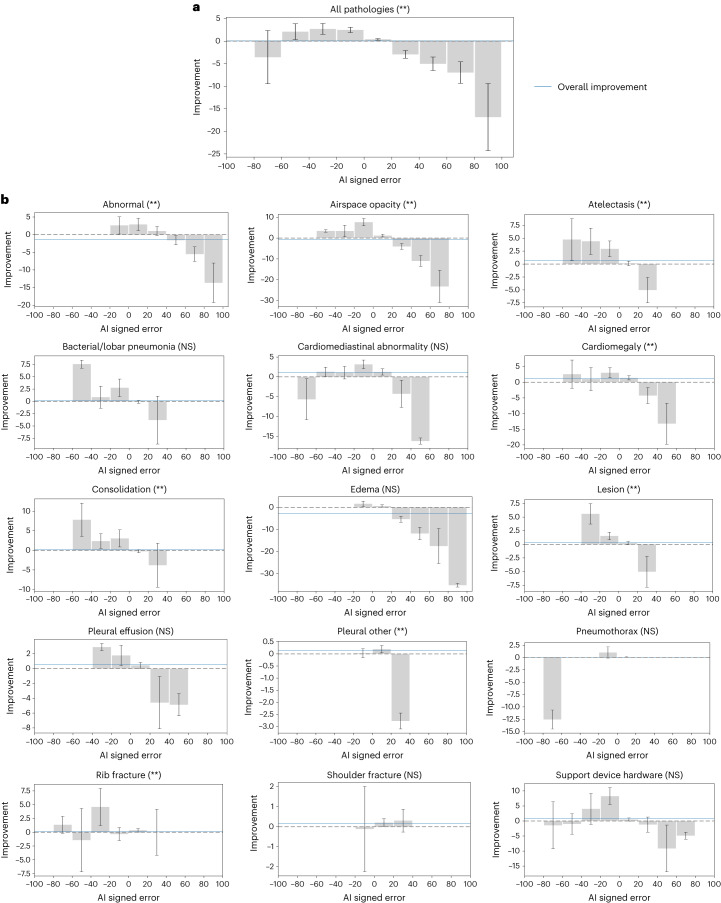
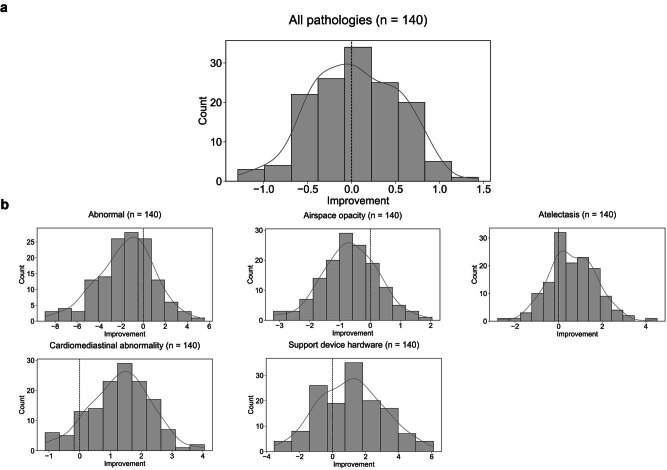
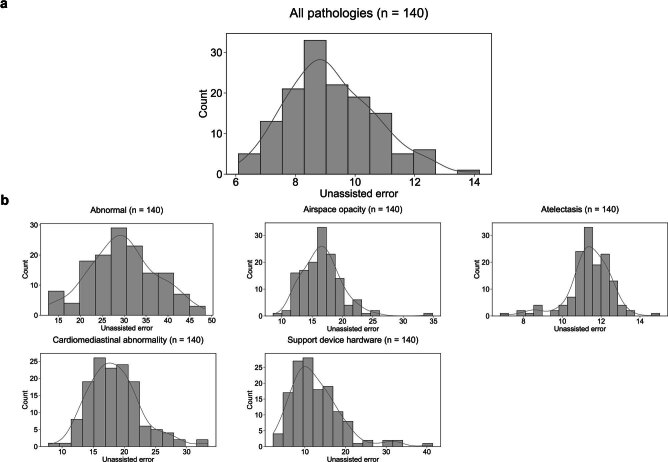
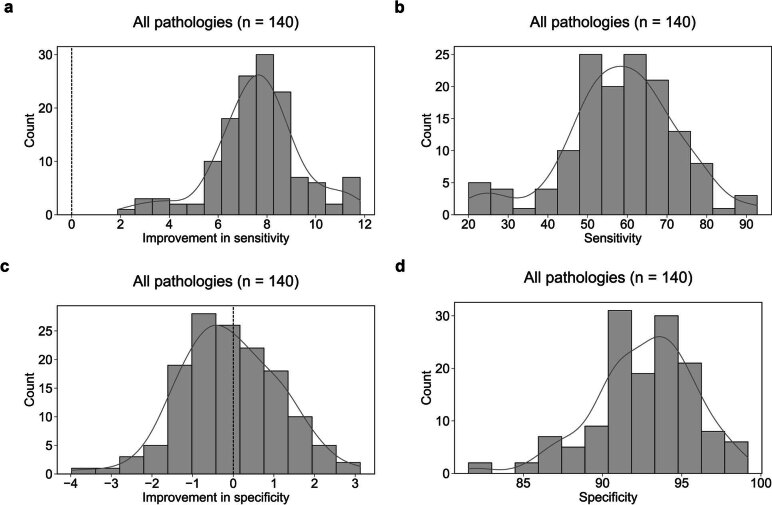
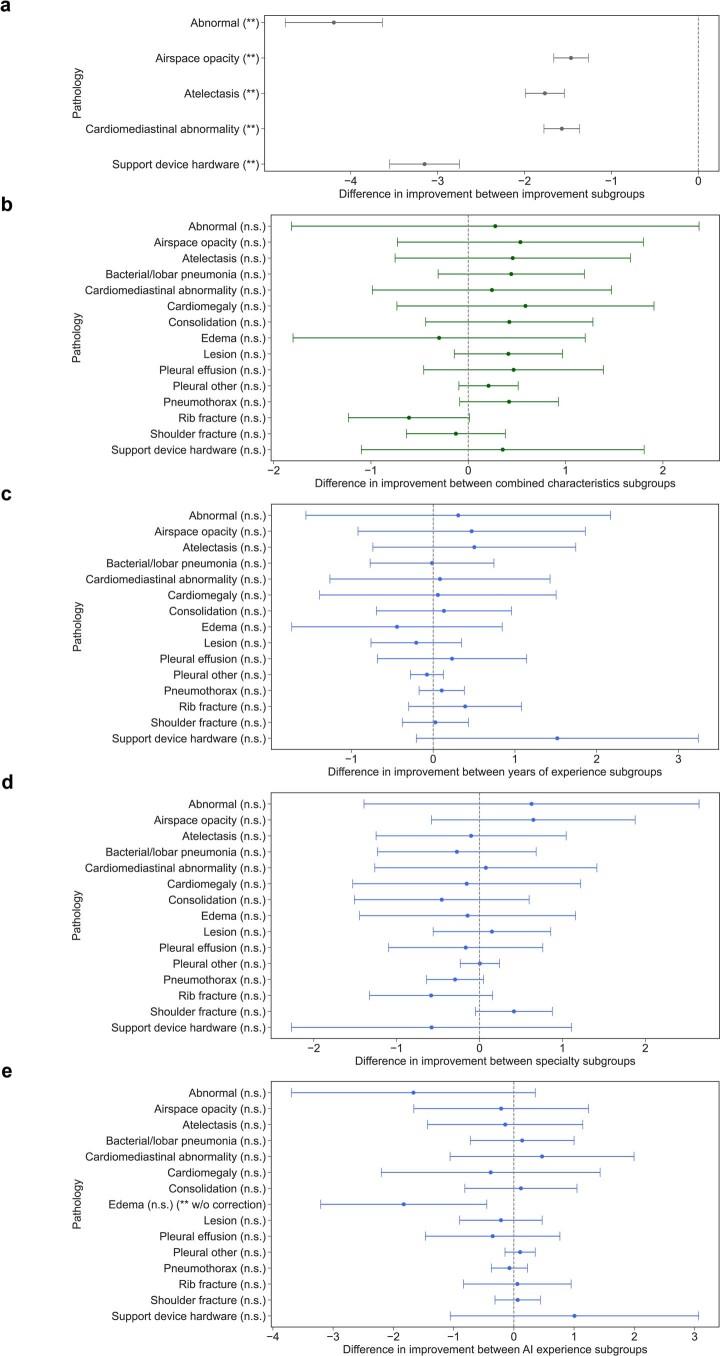
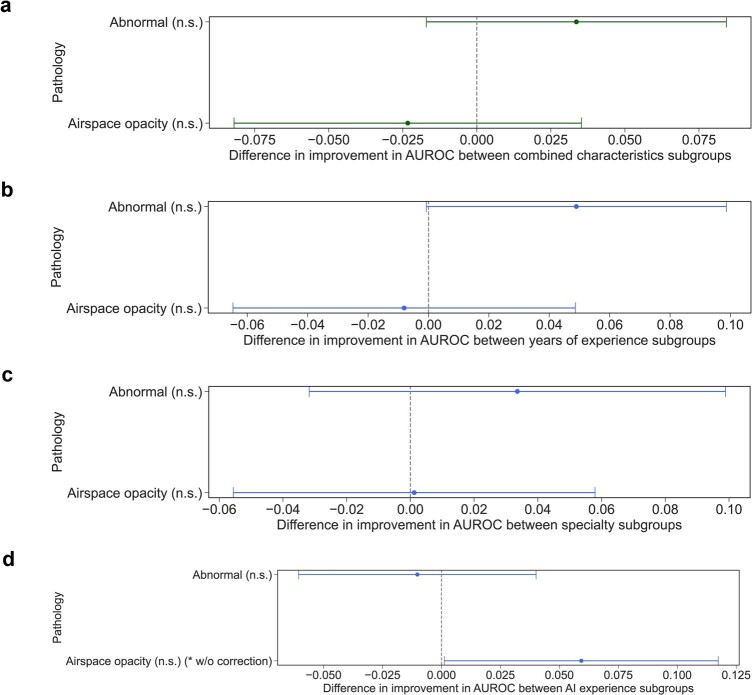
The integration of artificial intelligence (AI) in medical image interpretation requires effective collaboration between clinicians and AI algorithms. Although previous studies demonstrated the potential of AI assistance in improving overall clinician performance, the individual impact on clinicians remains unclear. This large-scale study examined the heterogeneous effects of AI assistance on 140 radiologists across 15 chest X-ray diagnostic tasks and identified predictors of these effects. Surprisingly, conventional experience-based factors, such as years of experience, subspecialty and familiarity with AI tools, fail to reliably predict the impact of AI assistance. Additionally, lower-performing radiologists do not consistently benefit more from AI assistance, challenging prevailing assumptions. Instead, we found that the occurrence of AI errors strongly influences treatment outcomes, with inaccurate AI predictions adversely affecting radiologist performance on the aggregate of all pathologies and on half of the individual pathologies investigated. Our findings highlight the importance of personalized approaches to clinician–AI collaboration and the importance of accurate AI models. By understanding the factors that shape the effectiveness of AI assistance, this study provides valuable insights for targeted implementation of AI, enabling maximum benefits for individual clinicians in clinical practice.
Overview
The claims and statistics of this paper haven’t been checked yet.
Free: it reads the open-access text and checks the first 5 claims that cite a source we can check. Create a free account to check every claim.
Integrity signals
Registry
Cites
Statistics
Figures
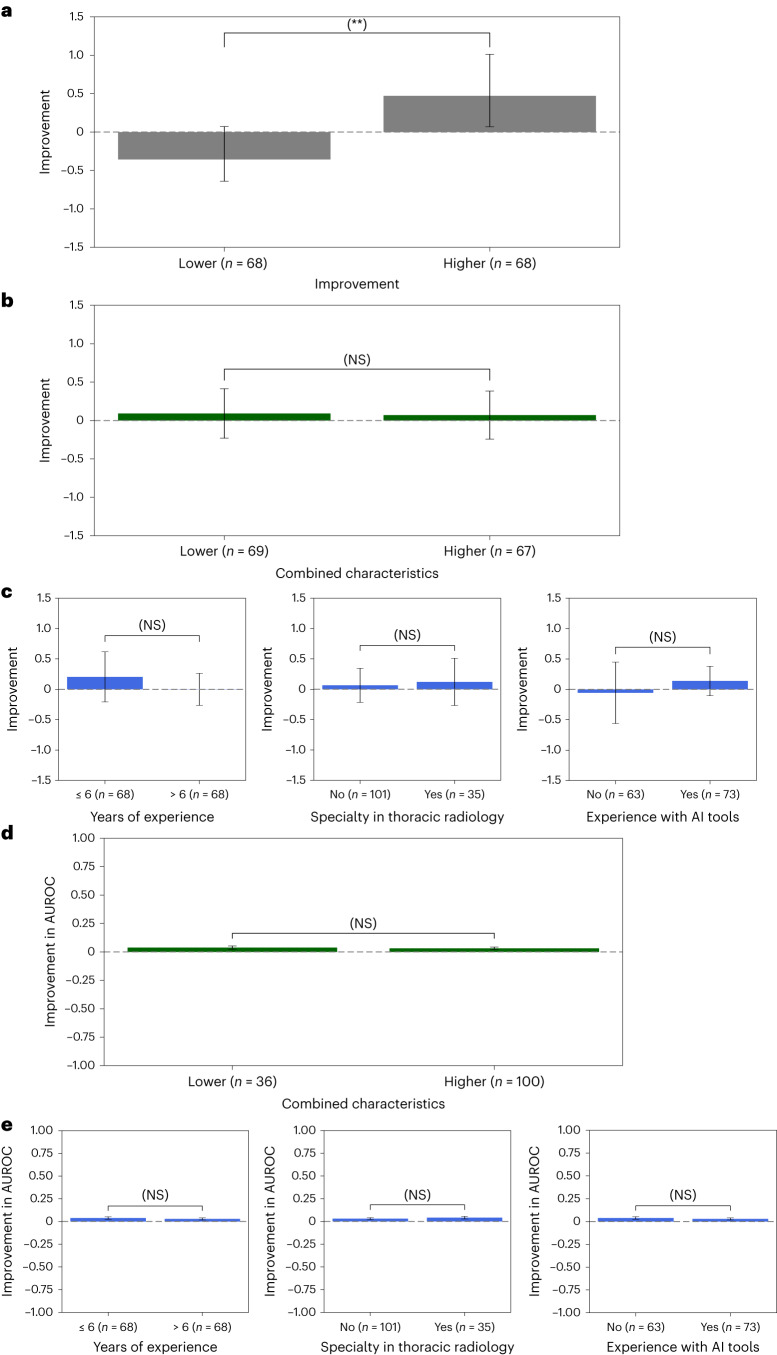
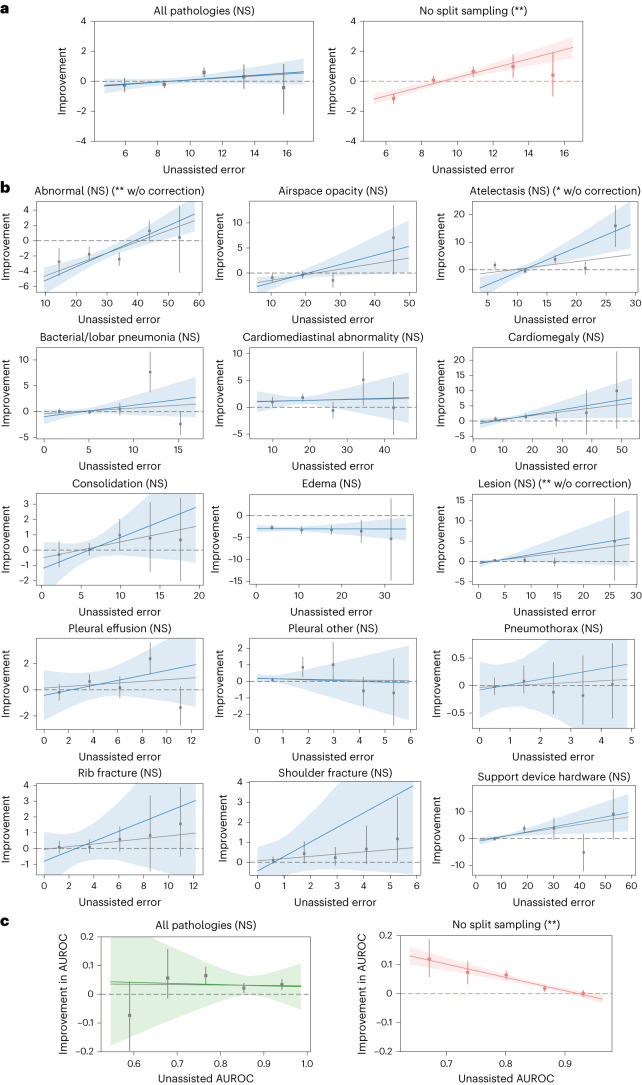
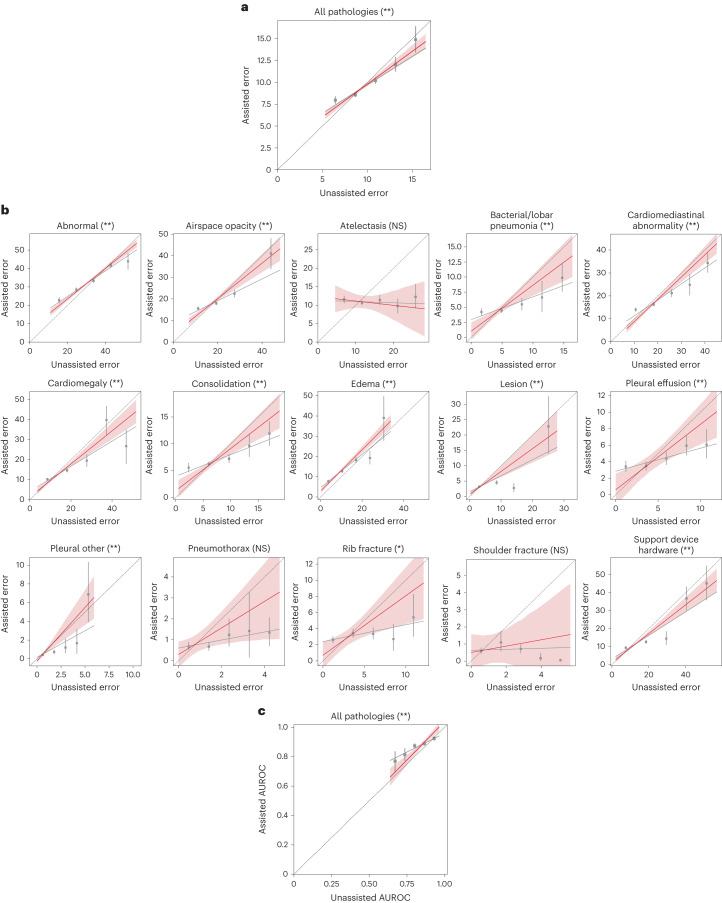
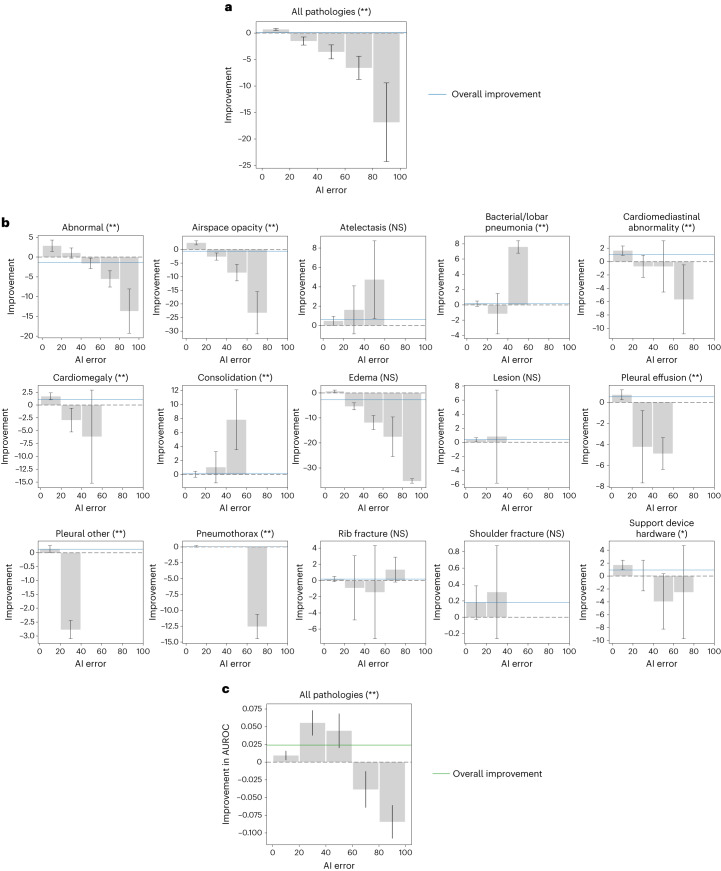
Verification
Claims the paper makes
The claims and statistics of this paper haven’t been checked yet.
Free: it reads the open-access text and checks the first 5 claims that cite a source we can check. Create a free account to check every claim.
Claims other papers make about this one
Each is checked against this paper’s own text: does it say what the citing paper says it does?
The source backs part of the claim, not all of it — or backs it for a different population, condition or comparison.
In the citing paper
“Prior studies using traditional AI models have documented the effects of cognitive biases,22-27 with inaccurate predictions impairing radiologist performance and erroneous suggestions prompting pathology experts to overturn correct diagnoses in 7% of cases.22, 23”
From Automation Bias in Large Language Model Assisted Diagnostic Reasoning Among AI-Trained Physicians (2025) · cites this paper as [22]
Experimental — accuracy not yet measuredThe source backs part of the claim, not all of it — or backs it for a different population, condition or comparison.
In the citing paper
“Studies27,29,30,42 provide empirical evidence that GenAI tools can significantly improve clinical accuracy, workflow efficiency, and decision-support capacity when implemented under structured supervision.”
From Generative Artificial Intelligence in Healthcare: Automation Bias, Deskilling, and Cognitive Implications – A Systematic Review (2026) · cites this paper as [27]
Experimental — accuracy not yet measuredThe source backs part of the claim, not all of it — or backs it for a different population, condition or comparison.
In the citing paper
“Empirical evidence27,29,42 indicated that clinician performance is optimized when AI outputs are analyzed rather than uncritically accepted.”
From Generative Artificial Intelligence in Healthcare: Automation Bias, Deskilling, and Cognitive Implications – A Systematic Review (2026) · cites this paper as [27]
Experimental — accuracy not yet measuredThe source backs part of the claim, not all of it — or backs it for a different population, condition or comparison.
In the citing paper
“For example, radiologists in one study found it challenging to determine the correctness of AI predictions, leading to poor decisions when inaccurate predictions were provided [78].”
From To Recommend or Not to Recommend: Designing and Evaluating AI-Enabled Decision Support for Time-Critical Medical Events (2025) · cites this paper as [78]
Experimental — accuracy not yet measured
Self-check
Percentages, sums and reported differences re-computed from the paper’s own numbers.
The self-check needs the paper’s full text.
Citations
Cites
Densely Connected Convolutional Networks
Huang, G., Liu, Z., Van Der Maaten, L., & Weinberger, K. Q. (2017) · 2017 IEEE Conference on Computer Vision and Pattern Recognition (CVPR) · doi:10.1109/cvpr.2017.243 · Cited by 48,566
Mostly Harmless Econometrics: An Empiricist's Companion
Angrist, J. D., & Pischke, J.-S. (2009) · doi:10.1515/9781400829828 · Cited by 9,467
Mostly Harmless Econometrics: An Empiricist's Companion
Angrist, J. D., & Pischke, J.-S. (2008) · doi:10.2307/j.ctvcm4j72 · Cited by 5,051
A Practitioner’s Guide to Cluster-Robust Inference
Colin Cameron, A., & Miller, D. L. (2015) · Journal of Human Resources · doi:10.3368/jhr.50.2.317 · Cited by 5,037
Fleischner Society: Glossary of Terms for Thoracic Imaging
Hansell, D. M., Bankier, A. A., MacMahon, H., McLoud, T. C., Müller, N. L., & Remy, J. (2008) · Radiology · doi:10.1148/radiol.2462070712 · Cited by 4,198
International evaluation of an AI system for breast cancer screening
McKinney, S. M., Sieniek, M., Godbole, V., Godwin, J., Antropova, N., Ashrafian, H., Back, T., Chesus, M., Corrado, G. S., Darzi, A., et al. (2020) · Nature · doi:10.1038/s41586-019-1799-6 · Cited by 3,287
Rajpurkar, P., Chen, E., Banerjee, O., & Topol, E. J. (2022) · Nature Medicine · doi:10.1038/s41591-021-01614-0 · Cited by 3,212
Self-citationKey challenges for delivering clinical impact with artificial intelligence
Kelly, C. J., Karthikesalingam, A., Suleyman, M., Corrado, G., & King, D. (2019) · BMC Medicine · doi:10.1186/s12916-019-1426-2 · Cited by 3,136
MIMIC-CXR, a de-identified publicly available database of chest radiographs with free-text reports
Johnson, A. E. W., Pollard, T. J., Berkowitz, S. J., Greenbaum, N. R., Lungren, M. P., Deng, C.-Y., Mark, R. G., & Horng, S. (2019) · Scientific Data · doi:10.1038/s41597-019-0322-0 · Cited by 1,816
Experimental methods: Between-subject and within-subject design
Charness, G., Gneezy, U., & Kuhn, M. A. (2012) · Journal of Economic Behavior & Organization · doi:10.1016/j.jebo.2011.08.009 · Cited by 1,469
Research works printed but not linked: 3
- Norden, J. G. & Shah, N. R. What AI in health care can learn from the long road to autonomous vehicles. NEJM Catalyst https://catalyst.nejm.org/doi/full/10.1056/CAT.21.0458 (2022). · doi:10.1056/cat.21.0458
- Mozannar, H. et al. Who Should Predict? Exact Algorithms For Learning to Defer to Humans. in International Conference on Artificial Intelligence and Statistics 10520–10545 (PMLR, 2023).
- Endo, M., Krishnan, R., Krishna, V., Ng, A. Y. & Rajpurkar, P. Retrieval-based chest X-ray report generation using a pre-trained contrastive language-image model. in Proc. ofMachine Learning for Health 209–219 (PMLR, 2021).
Cited by
Items 201–236 of 236
Structurally Expensive: The Durable Drivers of High United States Healthcare Spending
Powell, A. C. (2026) · Seminars in Roentgenology · doi:10.1016/j.ro.2026.151024
Xu, J., Wang, C., Wang, W., Wang, Q., Liu, K., Yan, R., Zhu, Y., Qin, S., Dai, X., Jin, X., et al. (2026) · BMC Medical Imaging · doi:10.1186/s12880-026-02664-x
AI as a cognitive multiplier: explaining performance variance in organizational decision-making
Lučić, L. (2026) · European Journal of Management Studies · doi:10.1108/ejms-04-2026-0055
Auditable agentic AI for evidence-grounded thyroid ultrasound diagnosis and reportingPreprint
Li, G., Gong, H., Chen, S., Wang, B., Wang, Y., Wang, S., You, G., Xiong, X., Wang, H., Mao, M., et al. (2026) · Research Square · doi:10.21203/rs.3.rs-10385518/v1
Brzezicki, M. A., & Zakowicz, P. T. (2026) · International Journal of Psychiatry in Clinical Practice · doi:10.1080/13651501.2026.2718248
Yamazaki, M., Oyanagi, K., Fuzawa, Y., You, K., Nomura, T., Yagi, T., Koizumi, N., Tasaki, A., Tominaga, M., Namihira, I., et al. (2026) · Radiology Cardiothoracic Imaging · doi:10.1148/ryct.250521
Dessureault, L., & Patel, A. (2026) · ASEE Annual Conference & Exposition · doi:10.18260/1-2--60461
McMonigle, P., Farrelly, W., & Curran, K. (2026) · Engineering Science & Technology · doi:10.37256/est.8120279934
Leveraging Collective Advice-Taking Behavior to Infer Accuracy and Improve the Wisdom of Crowds
Zhang, Y. (2026) · Management Science · doi:10.1287/mnsc.2024.04499
Stańczyk, A., Haduch, K., Michalska, Z., Łęczycka, A., Ordyczyńska-Mardyła, N. A., Stranz, I. Z., Chorąży, O. H., Strzelczyk, J., Suchta, I., & Kędziora, A. (2026) · International Journal of Innovative Technologies in Social Science · doi:10.31435/ijitss.3(51).2026.6205
Context-aware AI assistance reduces diagnostic error in chest X-ray interpretation
Nour, R., & Noor, A. (2026) · Scientific Reports · doi:10.1038/s41598-026-67997-7
Mahankali, S. (2026) · Indian journal of radiology and imaging - new series/Indian journal of radiology and imaging/Indian Journal of Radiology & Imaging · doi:10.1055/s-0046-1827801 · Cited by 1
“6 Meta-analytic evidence regarding ef fi ciency is mixed: while many studies report that concurrent AI assistance can meaningfully reduce reading times and workload, pooled meta-analyses often show heterogeneous or nonsigni fi cant effects, suggesting that any realized ef fi ciency gains depend…”
InfluentialIntegration of artificial intelligence and multi-omics for precision medicine
Marei, H. E. S., Cenciarelli, C., & Vagni, D. (2026) · Functional & Integrative Genomics · doi:10.1007/s10142-026-02024-6
“Yu et al. (2024) found across 140 radiologists and 15 diagnostic tasks that neither experience, subspecialty nor familiarity with artificial-intelligence tools reliably pre - dicted whether assistance helped an individual clinician, and incorrect model predictions degraded radiologist performance…”
Joint Activity Testing for Human-AI Event Detection in Dynamic Space Operations
Asabere, D., Morey, D. A., Dukes, A. W., Hrebenach, J., Modali, A., Kramer, R. N., Dillon, M. W., Sazhin, D., Rayo, M. F., & Borghetti, L. (2026) · Proceedings of the Human Factors and Ergonomics Society Annual Meeting · doi:10.1177/10711813261485164
Cohen, J. G., Stadelmann, J. V., Leite-Arada, D., & Poletti, P. (2026) · Journal of Clinical Imaging Science · doi:10.25259/jcis_99_2026
Jo, W., Park, B., & Sim, J. (2026) · JMIR Medical Informatics · doi:10.2196/92937
“Recent work has noted that heterogeneity in AI assistance effects across radiologists reflects variations in practice patterns and institutional contexts [26,32], suggesting that multicenter validation is essential.”
Martinelli, C. V., Vidali, A., Carnevale, V., Wang, C.-H., Ercoli, A., & Giordano, A. (2026) · doi:10.2196/preprints.110829
Ludovichetti, R., Pawlus, K., Chhugani, A., Chhugani, Y., Nierobisch, N., Federau, C., Kulcsár, Z., & Hainc, N. (2026) · Research Square · doi:10.21203/rs.3.rs-10445073/v1
Available but Unclaimed: An Empirical Study of Human-AI SynergyPreprint
Welsch, R., Rausch, M., Knierim, P., Kosch, T., Kuhn, J., Schmidt, A., & Fernandes, D. (2026) · arXiv (Cornell University) · doi:10.48550/arxiv.2609.16793
“Within a single system, higher accuracy does yield larger team gains [81].”
Yang, L., Wang, H., Lu, Z., & Sun, Y. (2026) · Frontiers in Neurology · doi:10.3389/fneur.2026.1957037
“In-depth In-depth investigation is also needed into how AI can best collaborate with clinicians (108).”
When the radiologist remains: Reverse alignment and the final biological component
Ertürk, Ş. M. (2026) · Diagnostic and Interventional Radiology · doi:10.4274/dir.2026.262809
Mansuri, A., Chavoshi, M., Dapamede, T., Bala, W., Brown-Mulry, B., Isaac, R., Khosravi, B., Li, H., Li, F., Moon, J. T., et al. (2026) · npj Digital Medicine · doi:10.1038/s41746-026-03418-3 · Cited by 1
“…the literature increasingly frames AI utility as greatest where human performance is most variable—a 2024 study found that AI assistance benefited lower-performing radiologists more than high performers, suggesting that targeting AI development toward harder findings maximizes clinical impact 33 .”
Damar, Ö., & Yaman, M. (2026) · Tomography · doi:10.3390/tomography12100142
“Multireader studies show that AI assistance may improve average performance, although the benefit varies by abnormality and reader [8,9,12,13].”
Maleki, H., & Kermanian, M. (2026) · European Journal of Prosthodontics and Restorative Dentistry · doi:10.1922/ejprd.v34i9s.2115
Wu, L., Xu, Z., Wang, H., Zhou, F., Deng, W., Zhang, C., Zhu, Y., Chen, K., Liang, X., Yang, C., et al. (2026) · arXiv (Cornell University) · doi:10.48550/arxiv.2610.09589
“Previous studies have shown that the effect of AI assistance varies with task-specific expertise 10,28 .”
Assistance curve analysis: evaluating the clinical value of AI-assisted decision makingPreprint
Alqumbaey, M., & Nasher, Y. M. (2026) · Research Square · doi:10.21203/rs.3.rs-10899895/v1
AI Augmented Student Advising: A Comparative Study of LLMs and Advisor-Based Course Recommendations
Srinivasan, S., Alabsi, H. Z., Mangle, A., Obeidat, R., Zenebe, A., & Kapur, K. (2026) · Journal of Educational Technology Systems · doi:10.1177/00472395261498055
Ultrafast all-optical biomimetic encoder for spiking neural networks
Bian, Q., Hu, F., Jia, J., Sun, A., Xing, S., Dong, B., Yan, A., Li, Z., Shi, J., Chi, N., et al. (2026) · Opto-Electronic Science · doi:10.29026/oes.2026.260051
Clinical Tasks Explain AI Readiness Across Medical SpecialtiesPreprint
Meskó, B., Katonai, G., Chen, S., Sheng, B., Wong, T. Y., & Topol, E. (2026) · Research Square · doi:10.21203/rs.3.rs-11164578/v1
From clinician review to measurable human oversight of AI-drafted paediatric discharge documentsPreprint
Morquin, D., Bochu, G., Robert, L., Loi, Z., Buhnila, I., Ferreira, R., Jeziorski, É., Messaoui, L., Piarroux, R., & Yauy, K. (2026) · medRxiv · doi:10.64898/2026.10.20.26365977
Artificial Intelligence in Emergency Communication Centers: A Taxonomy and Survey
Jinks, B., Jarvis, P., & Lemieux, G. G. F. (2026) · IEEE Access · doi:10.1109/access.2026.3746948
“Within emergency response specifically, early deployments highlight heterogeneity in user trust and the need for interfaces that expose uncertainty and rationale [36], [37].”
Deobhakta, A. A., & Tsai, J. C. (2026) · BMJ Connections Digital Health & AI · doi:10.1136/bmjcdh-2026-000031
Gnanarathna, S. P., Laksiri, W. M. R., & Madhavi, W. W. I. (2026) · Journal of SDGs Research in Emerging Business
Elnaemy, A. E. Y. M., & Eldesoki, A. (2026) · Clinical Standard · doi:10.68913/cs.2026.0006
Bashir, Z., Wong, C. K., Lin, M., Raheli, A., Feragen, A., Christensen, A. N., Pehrson, C., Nielsen, M., Andreasen, L. A., Andersen, B. R., et al. (2026) · American Journal of Obstetrics & Gynecology MFM · doi:10.1016/j.ajogmf.2026.102192
Human Oversight Is a Capability, Not a Control: What AI Governance Can Learn from Safety Science
McCauley, J., & Glantz, E. J. (2026) · doi:10.1145/3806096.3844812
Metadata
- Authors
- Yu, F., Moehring, A., Banerjee, O., Salz, T., Agarwal, N., & Rajpurkar, P.
- Affiliations
- Harvard University (US)
- Massachusetts Institute of Technology (US)
- Corresponding author
- Rajpurkar, Pranav
- Venue
- Nature Medicine
- Published
- 2024-03
- Volume
- 30
- Issue
- 3
- Pages
- 837-849
- ISSN
- 1078-8956 (ISSN-L)
- 1546-170X
- PMC
- PMC10957478
- OpenAlex
- W4392956046
- Cited by
- 200
- References
- 44
- Citations by year
- 2026: 81 · 2025: 97 · 2024: 21
- FWCI
- 18.60
- Type
- journal article
- Language
- en
- Open access
- hybrid
- doi.org
- Licence
- cc-by
- creativecommons.org/licenses/by/4.0 (tdm)
- creativecommons.org/licenses/by/4.0 (vor, 18 d)
- Locations
- Nature Medicine (publishedVersion, cc-by)
- PubMed Central (publishedVersion, cc-by)
- PubMed (publishedVersion)
- Funders
- Alfred P. Sloan Foundation (2022-17182)
- Topics
- Health Sciences › Medicine › Health Informatics › Artificial Intelligence in Healthcare and Education
- Health Sciences › Medicine › Radiology, Nuclear Medicine and Imaging › Radiology practices and education
- Physical Sciences › Computer Science › Artificial Intelligence › AI in cancer detection
- Keywords
- radiologists, chest X-ray interpretation, clinician-AI collaboration, treatment effect heterogeneity, AI errors, radiologist performance, diagnostic accuracy
- MeSH terms
- Radiologists, Algorithms, Artificial Intelligence, Humans
About these checks
Registry, retraction, Cites and statistics results are computed, not judged, with one exception: a printed reference that no index lists is read once by a model before it counts as a citation error. Claims are extracted by a model and kept only when their quote appears verbatim in the text; each cited source is then checked, with a model’s help, for whether it says what the claim relies on. Those verdicts can be wrong — read the claim’s quote and the cited source before relying on one.
Statistics and arithmetic are recomputed, not judged.
Confidence bands are shown only for fields calibrated on our annotated test set. None is calibrated yet, so no band is shown.
What counts as a claim ›How we measure confidence ›How we check this ›
Are you an author, or do you see a problem with this page? Request a review
Data sources
Bibliographic data: Semantic Scholar, OpenAlex, Crossref.
Contains information from the Semantic Scholar Academic Graph Datasets, made available under the ODC Attribution License (ODC-BY 1.0).
Semantic Scholar’s data is described in: Kinney, R., et al. (2023). The Semantic Scholar Open Data Platform. arXiv:2301.10140.
