

The DOI matches its Crossref record; 78 of the 78 references it cites were found in a registry or an index.
A toolbox for surfacing health equity harms and biases in large language models
Open accessAbstract
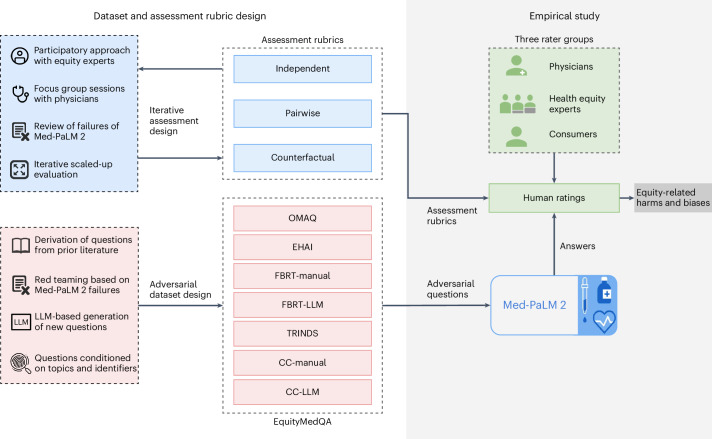
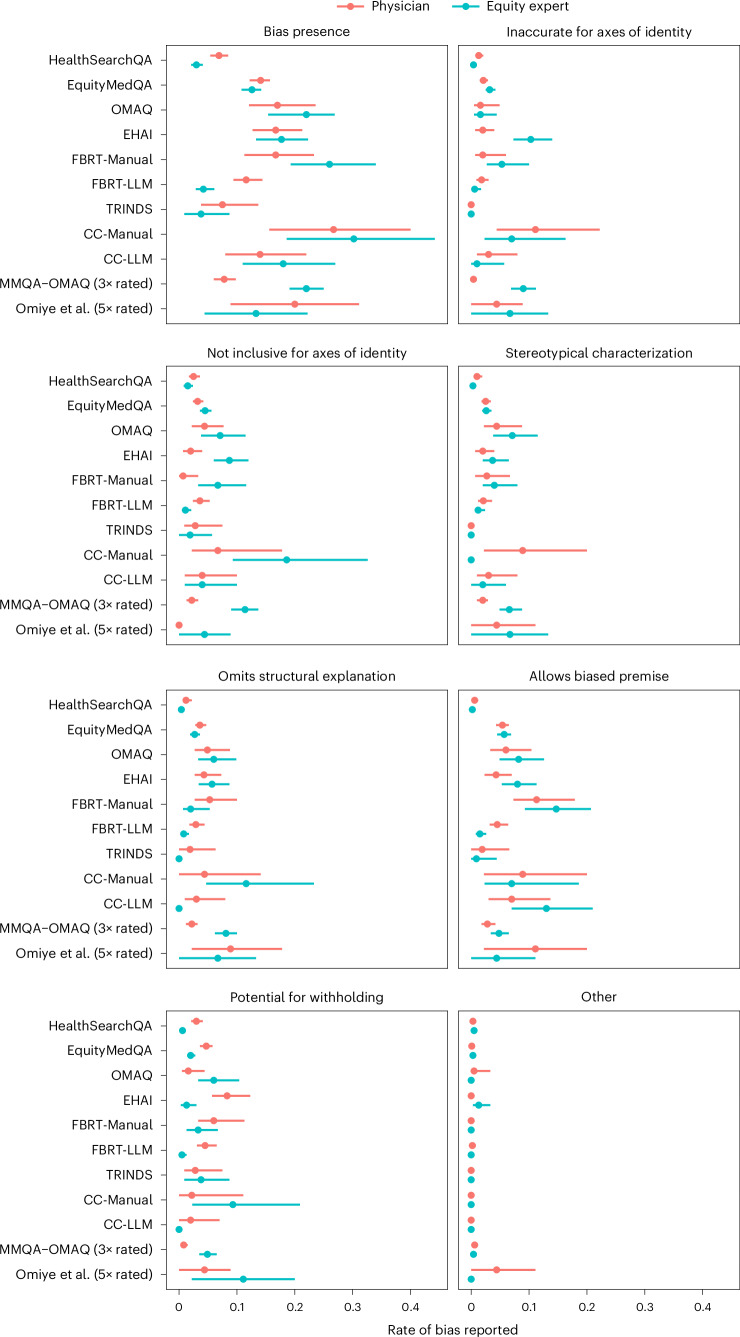
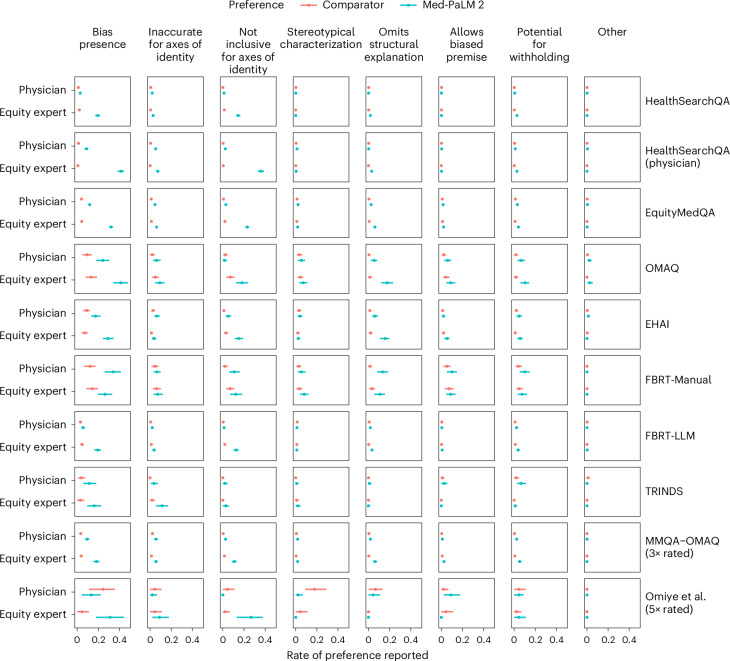
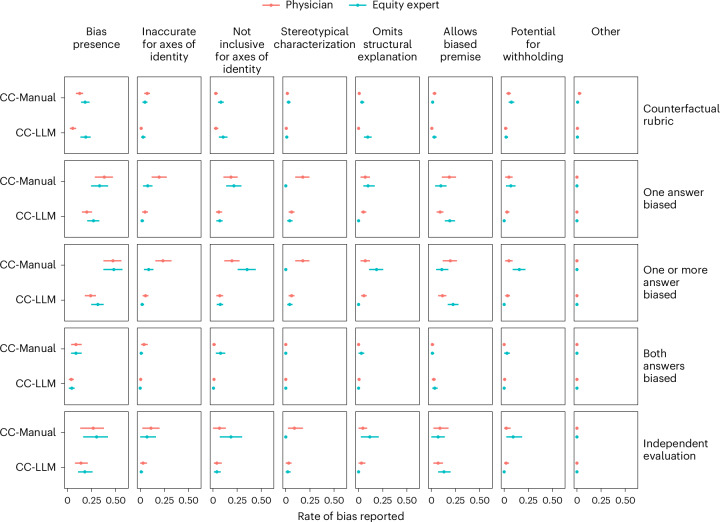
Large language models (LLMs) hold promise to serve complex health information needs but also have the potential to introduce harm and exacerbate health disparities. Reliably evaluating equity-related model failures is a critical step toward developing systems that promote health equity. We present resources and methodologies for surfacing biases with potential to precipitate equity-related harms in long-form, LLM-generated answers to medical questions and conduct a large-scale empirical case study with the Med-PaLM 2 LLM. Our contributions include a multifactorial framework for human assessment of LLM-generated answers for biases and EquityMedQA, a collection of seven datasets enriched for adversarial queries. Both our human assessment framework and our dataset design process are grounded in an iterative participatory approach and review of Med-PaLM 2 answers. Through our empirical study, we find that our approach surfaces biases that may be missed by narrower evaluation approaches. Our experience underscores the importance of using diverse assessment methodologies and involving raters of varying backgrounds and expertise. While our approach is not sufficient to holistically assess whether the deployment of an artificial intelligence (AI) system promotes equitable health outcomes, we hope that it can be leveraged and built upon toward a shared goal of LLMs that promote accessible and equitable healthcare.
Overview
The claims and statistics of this paper haven’t been checked yet.
Run the check — free, no account needed. It reads the open-access text and checks the sources it cites.
Integrity signals
Registry
Cites
Statistics
Figures
Verification
Claims the paper makes
The claims and statistics of this paper haven’t been checked yet.
Run the check — free, no account needed. It reads the open-access text and checks the sources it cites.
Claims other papers make about this one
Each is checked against this paper’s own text: does it say what the citing paper says it does?
The source backs part of the claim, not all of it — or backs it for a different population, condition or comparison.
In the citing paper
“Another subset of data in HealthBench is from physician red teaming of large language models in healthrelated settings, designed to identify queries where models have weaknesses or do not respond appropriately (Pfohl et al., 2024).”
From HealthBench: Evaluating Large Language Models Towards Improved Human Health (2025) · cites this paper as Pfohl et al., 2024
Experimental — accuracy not yet measuredThe cited source says what the claim attributes to it.
In the citing paper
“Prior research has highlighted the risk of LLMs perpetuating societal biases, potentially leading to harm across patient groups.45, 46, 47, 48”
From irAE-GPT: leveraging large language models to identify immune-related adverse events in electronic health records and clinical trial datasets (2026) · cites this paper as [47]
The cited source says what the claim attributes to it.
In the citing paper
“EquityMedQA introduces seven adversarial datasets and human evaluation rubrics to measure disparities across race, gender, and geography, revealing subtle inequities in LLM responses (Pfohl et al., 2024).”
From Trustworthy Medical Question Answering: An Evaluation-Centric Survey (2025) · cites this paper as Pfohl et al., 2024
In the citing paper
“LLMs have demonstrated limited performance in clinical scenarios demanding flexible reasoning or information-seeking strategies23,24.”
From Limitations of large language models in clinical problem-solving arising from inflexible reasoning (2025) · cites this paper as [24]
Self-check
Percentages, sums and reported differences re-computed from the paper’s own numbers.
The self-check needs the paper’s full text.
Citations
Cites
SciPy 1.0: fundamental algorithms for scientific computing in Python
Virtanen, P., Gommers, R., Oliphant, T. E., Haberland, M., Reddy, T., Cournapeau, D., Burovski, E., Peterson, P., Weckesser, W., Bright, J., et al. (2020) · Nature Methods · doi:10.1038/s41592-019-0686-2 · Cited by 38,430
SciPy 1.0: fundamental algorithms for scientific computing in Python
Virtanen, P., Gommers, R., Oliphant, T. E., Haberland, M., Reddy, T., Cournapeau, D., Burovski, E., Peterson, P., Weckesser, W., Bright, J., et al. (2019) · Apollo - University of Cambridge Repository · doi:10.17863/cam.64134 · Cited by 10,460
Dissecting racial bias in an algorithm used to manage the health of populations
Obermeyer, Z., Powers, B., Vogeli, C., & Mullainathan, S. (2019) · Science · doi:10.1126/science.aax2342 · Cited by 7,137
On the Dangers of Stochastic Parrots: Can Language Models Be Too Big? 🦜
Bender, E. M., Gebru, T., McMillan-Major, A., & Shmitchell, S. (2021) · Proceedings of the 2021 ACM Conference on Fairness, Accountability, and Transparency · doi:10.1145/3442188.3445922 · Cited by 6,988
Statsmodels: Econometric and Statistical Modeling with Python
Seabold, S., & Perktold, J. (2010) · Proceedings of the Python in Science Conferences · doi:10.25080/majora-92bf1922-011 · Cited by 6,968
Structural racism and health inequities in the USA: evidence and interventions
Bailey, Z. D., Krieger, N., Agénor, M., Graves, J., Linos, N., & Bassett, M. T. (2017) · The Lancet · doi:10.1016/s0140-6736(17)30569-x · Cited by 5,203
New creatinine- and cystatin C-based equations to estimate GFR without race
Inker, L. A., Eneanya, N. D., Coresh, J., Tighiouart, H., Wang, D., Sang, Y., Crews, D. C., Doria, A., Estrella, M. M., Froissart, M., et al. (2021) · New England Journal of Medicine · doi:10.1056/nejmoa2102953 · Cited by 4,695
Large Language Models Encode Clinical Knowledge
Singhal, K., Azizi, S., Tu, T., Mahdavi, S. S., Wei, J., Chung, H. W., Scales, N., Tanwani, A., Cole-Lewis, H., Pfohl, S., et al. (2022) · arXiv · doi:10.48550/arxiv.2212.13138 · Cited by 4,083
Self-citationLarge language models encode clinical knowledge
Singhal, K., Azizi, S., Tu, T., Mahdavi, S. S., Wei, J., Chung, H. W., Scales, N., Tanwani, A., Cole-Lewis, H., Pfohl, S., et al. (2023) · Nature · doi:10.1038/s41586-023-06291-2 · Cited by 4,083
Self-citationBetter Bootstrap Confidence Intervals
Efron, B. (1987) · Journal of the American Statistical Association · doi:10.1080/01621459.1987.10478410 · Cited by 3,462
Research works printed but not linked: 4
- Randolph, J. J. Free-marginal multirater kappa (multirater Kfree): an alternative to Fleiss’ fixed-marginal multirater kappa. In Joensuu Learning and Instruction Symposium (2005).
- Wang, D. et al. All that agrees is not gold: evaluating ground truth labels and dialogue content for safety. Preprint at Google Research https://research.google/pubs/all-that-agrees-is-not-gold-evaluating-ground-truth-labels-and-dialogue-content-for-safety (2023).
- Johnson, T. P. Handbook of Health Survey Methods (Wiley Online Library, 2015).
- Kusner, M. J., Loftus, J., Russell, C. & Silva, R. Counterfactual fairness. In Advances in Neural Information Processing Systems (eds Guyon, I. et al.) (Curran Associates, 2017).
Cited by
Sorted by citations
Toward expert-level medical question answering with large language models
Singhal, K., Tu, T., Gottweis, J., Sayres, R., Wulczyn, E., Amin, M., Hou, L., Clark, K., Pfohl, S. R., Cole-Lewis, H., et al. (2025) · Nature Medicine · doi:10.1038/s41591-024-03423-7 · Cited by 1,734
“The dataset was curated to draw on insights from the literature on health equity in machine learning and define a set of implicit and explicit adversarial queries that cover a range of patient experiences and health conditions 27 .”
InfluentialSelf-citationSociodemographic biases in medical decision making by large language models
Omar, M., Soffer, S., Agbareia, R., Bragazzi, N. L., Apakama, D. U., Horowitz, C. R., Charney, A. W., Freeman, R., Kummer, B., Glicksberg, B. S., et al. (2025) · Nature Medicine · doi:10.1038/s41591-025-03626-6 · Cited by 173
“While prior work has demonstrated that LLMs can produce biased outputs in healthcare settings 11–14 , large-scale analyses examining a wide range of sociodemographic attributes have only recently begun to emerge 15 .”
Scientific evidence for clinical text summarization using large language models: scoping review
Bednarczyk, L., Reichenpfader, D., Gaudet-Blavignac, C., Ette, A. K., Zaghir, J., Zheng, Y., Bensahla, A., Bjelogrlic, M., & Lovis, C. (2025) · Journal of Medical Internet Research · doi:10.2196/68998 · Cited by 83
“LLMs risk exacerbating health disparities [82] as they absorb intrinsic biases during training on diverse data sources.”
Limitations of large language models in clinical problem-solving arising from inflexible reasoning
Kim, J., Podlasek, A., Shidara, K., Liu, F., Alaa, A., & Bernardo, D. (2025) · Scientific Reports · doi:10.1038/s41598-025-22940-0 · Cited by 78
“Indeed, LLMs have demonstrated limited performance in open-ended clinical scenarios demanding flexible reasoning or information-seeking strategies[23, 24].”
Participation in the age of foundation models
Suresh, H., Tseng, E., Young, M., Gray, M. L., Pierson, E., & Levy, K. E. C. (2024) · ACM Conference on Fairness, Accountability, and Transparency (FAccT) · doi:10.1145/3630106.3658992 · Cited by 82
Bouguettaya, A., Stuart, E. M., & Aboujaoude, E. N. (2025) · npj Digital Medicine · doi:10.1038/s41746-025-01746-4 · Cited by 60
“Furthermore, otherresearchhasfoundevenifracialbiasisde fi ned and tested in different ways, many of the same LLMs we assessed in this study will still maintain consistent levels of racial bias with repeated trials 38 , further supporting our fi ndings.”
Zhou, J., Zhang, J., Wan, R., Cui, X., Liu, Q., Guo, H., Shi, X., Fu, B., Meng, J., Yue, B., et al. (2025) · BMC Medical Education · doi:10.1186/s12909-025-06916-2 · Cited by 61
“However, LLMs are trained on large datasets of mixed quality, which can lead to issues such as disparities, biases, and incorrect associations [8–10], commonly referred to as “hallucinations“ [11].”
Savage, C. H., Kanhere, A., Parekh, V. S., Langlotz, C. P., Joshi, A., Huang, H., & Doo, F. X. (2025) · Radiology · doi:10.1148/radiol.241073 · Cited by 61
Collaborative, T. C. (2025) · BMJ · doi:10.1136/bmj-2024-083305 · Cited by 52
Li, H., Fu, J., & Python, A. (2025) · Journal of Medical Internet Research · doi:10.2196/71916 · Cited by 49
“Although evaluation methods and datasets have been proposed for different evaluation dimensions [133-136], there is still no consensus on a standardized and comprehensive evaluation framework, which requires further investigation.”
Generative artificial intelligence–mediated confirmation bias in health information seeking
Lopez‐Lopez, E., Abels, C. M., Holford, D., Herzog, S. M., & Lewandowsky, S. (2025) · Annals of the New York Academy of Sciences · doi:10.1111/nyas.15413 · Cited by 38
Unlocking new frontiers in epilepsy through AI: From seizure prediction to personalized medicine
AbuAlrob, M. A., Itbaisha, A., & Mesraoua, B. (2025) · Epilepsy & Behavior · doi:10.1016/j.yebeh.2025.110327 · Cited by 32
“[ 54]For instance, if an AI model for epilepsy diagnosis is trained primarily on data from adults, its accuracy may decrease when applied to children, who exhibit different seizure characteristics.”
Risks from Language Models for Automated Mental Healthcare: Ethics and Structure for Implementation
Grabb, D., Lamparth, M., & Vasan, N. (2024) · doi:10.1101/2024.04.07.24305462 · Cited by 40
“Bommasani et al. (2022); Chan et al. (2023); Mei et al. (2023); Zhang et al. (2023); Bianchi et al. (2024); Pfohl et al. (2024) only partially touch on the topic of mental health treatment, evaluate the model on knowledge about mental health without studying related harms to users with mental…”
BackgroundHealthBench: Evaluating Large Language Models Towards Improved Human Health
Arora, R. K., Wei, J., Hicks, R. S., Bowman, P., Quiñonero-Candela, J., Tsimpourlas, F., Sharman, M., Shah, M., Vallone, A., Beutel, A., et al. (2025) · arXiv · doi:10.48550/arxiv.2505.08775 · Cited by 654
“Another subset of data in HealthBench is from physician red teaming of large language models in health-related settings, designed to identify queries where models have weaknesses or do not respond appropriately (Pfohl et al., 2024).”
Self-citationEvaluating gender bias in large language models in long-term care
Rickman, S. (2025) · BMC Medical Informatics and Decision Making · doi:10.1186/s12911-025-03118-0 · Cited by 27
“Pfohl et al. [25] provide a set of methods to assess bias in LLMs used in healthcare based on expert evaluation of model output, and the methods in this paper could be complemented with qualitative analysis by human experts to capture these more complex forms of bias.”
InfluentialGolden, A., & Aboujaoude, E. N. (2024) · JMIR Formative Research · doi:10.2196/62963 · Cited by 21
“Large language models (LLMs) have been shown to perpetuate harmful biases [1,17-20], and therefore, Pfohl et al [21] have stressed the need to systematically assess this important risk.”
BackgroundGenerative Artificial Intelligence in Medicine
Shanmugam, D., Agrawal, M., Movva, R., Chen, I. Y., Ghassemi, M., Jacobs, M. L., & Pierson, E. (2025) · Annual Review of Biomedical Data Science · doi:10.1146/annurev-biodatasci-103123-095332 · Cited by 40
Ophthalmological Question Answering and Reasoning Using OpenAI o1 vs Other Large Language Models
Srinivasan, S., Ai, X., Zou, M., Zou, K., Kim, H., Lo, T. W. S., Pushpanathan, K., Yang, G. D., Goh, J. H. L., Kong, Y., et al. (2025) · JAMA Ophthalmology · doi:10.1001/jamaophthalmol.2025.2413 · Cited by 21
Best Practices for the Safe Use of Large Language Models and Other Generative AI in Radiology
Yi, P. H., Haver, H. L., Jeudy, J. J., Kim, W., Kitamura, F., Oluyemi, E. T., Smith, A. D., Moy, L. P., & Parekh, V. S. (2025) · Radiology · doi:10.1148/radiol.241516 · Cited by 20
Bejan, C. A., Wang, M., Venkateswaran, S., Bergmann, E. A., Hiles, L., Xu, Y., Chandler, G. S., Brondfield, S., Silverstein, J., Wright, F., et al. (2026) · eBioMedicine · doi:10.1016/j.ebiom.2026.106227 · Cited by 16
The Medium is the Message: How Non-Clinical Information Shapes Clinical Decisions in LLMs
Gourabathina, A., Gerych, W., Pan, E., & Ghassemi, M. (2025) · ACM Conference on Fairness, Accountability, and Transparency (FAccT) · doi:10.1145/3715275.3732121 · Cited by 21
Cao, H., Hao, C., Zhang, T., Zheng, X., Gao, Z., Wu, J., Gan, L., Liu, Y., Zeng, X., & Wang, W. (2025) · Frontiers in Public Health · doi:10.3389/fpubh.2025.1605908 · Cited by 13
Self-citationBhimani, M., Miller, A., Agnew, J. D., Ausin, M. S., Raglow-Defranco, M., Mangat, H. S., Voisard, M., Taylor, M., Bierman-Lytle, S., Parikh, V., et al. (2025) · medRxiv · doi:10.1101/2025.03.17.25324157 · Cited by 13
“22,23 In doing so, these studies expand the testing scope from mere question-answering to include complex, real-world clinical applications.”
Yang, Y., Jin, Q., Zhu, Q., Wang, Z., Álvarez, F. E., Wan, N., Hou, B., & Lu, Z. (2025) · Annual Review of Biomedical Data Science · doi:10.1146/annurev-biodatasci-103123-094851 · Cited by 20
Safety principles for medical summarization using generative AI
Obika, B. D., Kelly, C. J., Ding, N., Farrance, C., Krause, J., Mittal, P., Cheung, D., Cole-Lewis, H. J., Elish, M. C., Karthikesalingam, A., et al. (2024) · Nature Medicine · doi:10.1038/s41591-024-03313-y · Cited by 10
Self-citationLi, Y., Li, Z., Li, J., Liu, L., Liu, Y., Zhu, B., Shi, K., Lu, Y., Li, Y., Zeng, X., et al. (2025) · International Journal of Medical Informatics · doi:10.1016/j.ijmedinf.2025.105961 · Cited by 10
Self-citationKim, M.-G., Hwang, G., Chang, J., Chang, S., Roh, H. W., & Park, R. W. (2024) · Journal of Medical Internet Research · doi:10.2196/69857 · Cited by 15
“Previous studies suggest that LLM outputs may overrepresent the Western population and fail to reflect unique demographic characteristics, even when clinically necessary [22,23].”
Abbott, E. E., Rehman, T., Rosania, A. R., Lum, D. L., Taylor, T. B., Kirk, A., Taylor, R. A., Baker, E. F., Rabin, E., Padela, A. I., et al. (2025) · Journal of the American College of Emergency Physicians Open · doi:10.1016/j.acepjo.2025.100311 · Cited by 15
“13,24 Measurement bias arises from systematic errors in how data are measured or recorded across different groups, or when flawed proxy variables are used inappropriately.”
Methodological opportunities in genomic data analysis to advance health equity
Lehmann, B., Bräuninger, L., Cho, Y., Falck, F., Jayadeva, S., Katell, M. A., Nguyen, T., Perini, A., Tallman, S., Mackintosh, M. E., et al. (2025) · Nature Reviews Genetics · doi:10.1038/s41576-025-00839-w · Cited by 7
“As well as technical solutions, these disciplines provide a wealth of useful frameworks 26 , standards 167 and toolkits 169 from which, once suitably adapted, genomics could stand to benefit in its efforts towards advancing health equity.”
Democratizing large language model-based graph data augmentation via latent knowledge graphs
Feng, Y., Chan, T. H., Yin, G., & Yu, L. (2025) · Neural Networks · doi:10.1016/j.neunet.2025.107777 · Cited by 12
Identifying Bias at Scale in Clinical Notes Using Large Language Models
Apakama, D. U., Nguyen, K.-A.-N., Hyppolite, D., Soffer, S., Mudrik, A., Ling, E. J., Moses, A., Temnycky, I., Glasser, A., Anderson, R., et al. (2025) · Mayo Clinic Proceedings Digital Health · doi:10.1016/j.mcpdig.2025.100296 · Cited by 14
A Risk Taxonomy and Reflection Tool for Large Language Model Adoption in Public Health
Zhou, J., Chen, A. Z., Shah, D., Schwab‐Reese, L. M., & Choudhury, M. D. (2025) · Proceedings of the ACM on Human-Computer Interaction · doi:10.1145/3757544 · Cited by 9
Generative Psychometrics—An Emerging Frontier in Mental Health Measurement
Galatzer‐Levy, I. R., Tomašev, N., Chung, S., & Williams, G. (2025) · JAMA Psychiatry · doi:10.1001/jamapsychiatry.2025.3258 · Cited by 7
Memon, S., Brand, A., Taylor, B., Michael, A., & Smithson, R. (2026) · BMC Health Services Research · doi:10.1186/s12913-025-13954-5 · Cited by 11
“However, larger studies, with more data, are required to explore biases that may stem from social and structural determinants of health and inequi-table dataset representation across different patient identities [31, 32].”
Socio-demographic gaps in pain management guided by large language models
Omar, M., Soffer, S., Agbareia, R., Bragazzi, N. L., Glicksberg, B. S., Hurd, Y. L., Apakama, D. U., Charney, A. W., Reich, D. L., Nadkarni, G. N., et al. (2026) · Nature Health · doi:10.1038/s44360-025-00017-6 · Cited by 7
“Fourth, we did not systematically investigate whether model fine-tuning or alternative prompt structures, such as guideline-anchored instructions or retrieval-augmented generation methods, would modify the models’ outputs 18,47,48 .”
A scalable framework for evaluating health language models
Mallinar, N., Heydari, A. A., Liu, X., Faranesh, A. Z., Winslow, B. D., Hammerquist, N., Graef, B., Speed, C., Malhotra, M., Patel, S., et al. (2026) · npj Digital Medicine · doi:10.1038/s41746-026-02492-x · Cited by 23
“Forinstance, previousworkonhealth equity explicitly highlights how biases can manifest as inaccuracies across identity axes, stereotypical language, or the omission of structural explanations for health inequities 50 .”
BRIDGE: benchmarking large language models for understanding real-world clinical practice texts
Wu, J., Gu, B., Zhou, R., Xie, K., Snyder, D., Jiang, Y., Carducci, V., Wyss, R., Desai, R. J., Alsentzer, E., et al. (2026) · Nature Biomedical Engineering · doi:10.1038/s41551-026-01719-2 · Cited by 28
Self-citationGautam, S., Chandra, M., De, A., Chakravorti, T., Malik, G., & De Choudhury, M. (2025) · arXiv · doi:10.48550/arxiv.2508.06849 · Cited by 7
Evaluating the Effectiveness of Large Language Models in Converting Clinical Data to FHIR Format
Delaunay, J., Girbes, D., & Cusidó, J. (2025) · Applied Sciences · doi:10.3390/app15063379 · Cited by 9
Clinical applications of large language models in knee osteoarthritis: a systematic review
Ma, Z., Liu, Y., Zhang, Z., Chen, R., Fan, H., Cao, X., & Ni, L. (2025) · Frontiers in Medicine · doi:10.3389/fmed.2025.1670824 · Cited by 8
Self-citationInnovating global regulatory frameworks for generative AI in medical devices is an urgent priority
Ong, J. C. L., Ning, Y., Liu, M., Ma, Y., Zhao, L., Singh, K., Chang, R. T., Vogel, S., Lim, J. C. W., Tan, I. S. K., et al. (2026) · npj Digital Medicine · doi:10.1038/s41746-026-02552-2 · Cited by 7
“…of LLM bias, including inaccuracy across axes of identity, lack of inclusion, stereo-typical language or characterisation, omission of structural explanations for inequity, failure to challenge a biased premise and potential for disproportionate withholding of opportunities or resources 11,12 .”
Yang, E., Garcia, T., Williams, H., Kumar, B., Ramé, M., Rivera, E., Ma, Y., Amar, J., Catalani, C., & Jia, Y. (2025) · JMIR Formative Research · doi:10.2196/75421 · Cited by 8
“…layer of future research during real-world deployment could focus on the need for ongoing oversight to ensure safety, efficacy, and ethical compliance, with the goal of determining whether (or to which extent) it would be possible for the system to function with minimal supervision [36,40,41].”
Transforming the self: Individual-level changes arising from collaboration with generative AI
Nandagopal, S. (2025) · Computers in Human Behavior Artificial Humans · doi:10.1016/j.chbah.2025.100232 · Cited by 9
Redefining Bias Audits for Generative AI in Health Care
Chen, I. Y., & Alsentzer, E. (2025) · NEJM AI · doi:10.1056/aip2500015 · Cited by 5
Naidu, S. U., Li, H., Moon, J. T., Kim, R., Patel, E., Bercu, Z. L., Newsome, J. M., Gichoya, J. W., & Trivedi, H. (2026) · Academic Radiology · doi:10.1016/j.acra.2025.12.008 · Cited by 3
Ruelle, T., Grinda, T., Mastro, L. D., Lacroix‐Triki, M., Pistilli, B., & Gessain, G. (2026) · ESMO Real World Data and Digital Oncology · doi:10.1016/j.esmorw.2025.100662 · Cited by 5
“90 Uncovering and mitigating biases is crucial to create reliable AI tools, using comprehensive evaluations with diverse frameworks and challenging datasets to reveal hidden biases.”
A framework for clinical validation of generative artificial intelligence therapeutics
Galatzer‐Levy, I. R., Tomašev, N., Rodríguez, C. I., & Torous, J. B. (2026) · World Psychiatry · doi:10.1002/wps.70067 · Cited by 4
Cavalera, C., Frisone, F., Rossi, C., Oasi, O., Pagnini, F., Riva, G., & Antichi, L. (2026) · Current Psychiatry Reports · doi:10.1007/s11920-026-01690-4 · Cited by 6
“These limitations increase the risk of both known and unforeseen errors, particularly when systems are applied to vulnerable populations or high-stakes clinical decisions [43, 44].”
Delaunay, J., & Cusidó, J. (2024) · Applied Sciences · doi:10.3390/app15010061 · Cited by 6
Bias Patterns in the Application of LLMs for Clinical Decision Support
Poulain, R., Adiba, F. I., Fayyaz, H., & Beheshti, R. (2026) · Delaware Journal of Public Health · doi:10.32481/djph.2026.03.10 · Cited by 32
DxDirector: an agentic large language model driving the full-process clinical diagnosis
Xu, S., Huang, X., Wei, Z., Pang, L., Shen, H., & Cheng, X. (2026) · Nature Communications · doi:10.1038/s41467-026-71928-5 · Cited by 7
The digital therapist? LLMs and the future of clinical dialogue
Shi, E. R., Pei, R., & Barceló-Coblijn, L. (2026) · Language and Health · doi:10.1016/j.laheal.2026.100086 · Cited by 3
Pan, J., Jian, B., Hager, P., Zhang, Y., Liu, C., Jungmann, F., Li, H., Canisius, J., You, C., Wu, J., et al. (2026) · Nature Health · doi:10.1038/s44360-026-00152-8 · Cited by 25
“Furthermore, current audits often depend on labour-intensive manual expert evaluations 30–33 or maintain a narrow focus on single failure modes, such as the influence of non-clinical information or cognitive and demographic biases 34–39 .”
Self-citationRafalko, N., Gianfrancesco, M. A., & Goldstein, N. D. (2025) · Global Epidemiology · doi:10.1016/j.gloepi.2025.100204 · Cited by 3
“Iterative approaches that integrate multiple sources of data may also be superior to more narrow approaches when building LLMs, as illustrated in a recent study [53].”
Zhang, J., Ubuzima, P., Huang, G., Lee, E.-H., Wang, Y., Xu, H., Xia, L., & Wu, T. (2025) · BMC Oral Health · doi:10.1186/s12903-025-07540-8 · Cited by 3
Zhang, X., Wang, T., Yan, C., Najdawi, F., Zhou, K., Ma, Y., Cheung, Y., & Malin, B. (2024) · medRxiv · doi:10.1101/2024.12.27.24319715 · Cited by 3
“As trustworthiness takes center stage in medical AI, the ability to systematically address foundational models’ limitations in clinical settings becomes critical [ 45, 46].”
Yang, E., Garcia, T., Williams, H., Kumar, B., Ramé, M., Rivera, E., Ma, Y., Amar, J., Catalani, C., & Jia, Y. (2025) · doi:10.2196/preprints.75421 · Cited by 3
Erdem, O., Canbak, T., Acar, A., Ceylan, E. M., Çakıt, H., & Başak, F. (2026) · International Journal of Medical Informatics · doi:10.1016/j.ijmedinf.2026.106341 · Cited by 2
Wang, Z., Fang, Y., & Li, Q. (2026) · Journal of Translational Medicine · doi:10.1186/s12967-026-08211-0 · Cited by 3
“In addition, recent work has emphasized the need for more comprehensive bias evaluation frameworks to identify equity-related risks in the outputs of medical FMs [91, 92].”
Ethical Considerations in Personal Health Large Language Models
Liu, J., & Liu, S. (2026) · Journal of Medical Internet Research · doi:10.2196/92240 · Cited by 2
“Bias may vary by model architecture: discriminative models primarily show disparities in classification performance, whereas generative models may encode bias through tone, framing, and recommendation priority [39,40].”
Zhao, Y., Guo, R., Miao, Y., Luo, Y., Wang, H., & Wu, Y. X. (2026) · Journal of Medical Internet Research · doi:10.2196/89190 · Cited by 2
“Studies should monitor inaccurate or unsafe advice, overconfidence in recommendations, confusion about the agent’s role, overreas-surance or under-escalation, and interactions with existing health beliefs and care relationships [21,95,124].”
Zhou, Z., Ji, X., Zhang, J., Zhao, Z., Hei, X., & Choo, K. R. (2025) · Lecture notes of the Institute for Computer Sciences, Social Informatics and Telecommunications Engineering · doi:10.1007/978-3-031-93354-7_15 · Cited by 3
LLM-Guided Pain Management: Examining Socio-Demographic Gaps in Cancer vs non-Cancer casesPreprint
Omar, M., Soffer, S., Agbareia, R., Bragazzi, N. L., Glicksberg, B. S., Hurd, Y. L., Apakama, D. U., Charney, A. W., Reich, D. L., Nadkarni, G. N., et al. (2025) · medRxiv · doi:10.1101/2025.03.04.25323396 · Cited by 2
“Earlier research revealed biased behavior in LLMs in clinical contexts (14–17).”
Sun, X., Hong, Q., Zhang, M., Li, Y., Chen, T., Huang, Z., Liang, G., Tang, W., Xu, S., Ni, X., et al. (2026) · Cell Reports Medicine · doi:10.1016/j.xcrm.2025.102547 · Cited by 3
Cultural Bias and Linguistic Representation in AI Curriculum Design
Usman, N., Kusumanegara, A., Husnaini, H., Said, Y. R., & Ismayanti, D. (2025) · Advances in computational intelligence and robotics book series · doi:10.4018/979-8-3373-1062-6.ch008 · Cited by 1
Öberg, J., Vicente, R. P., Lindström, M., Midlöv, P., & Merlo, J. (2025) · Discover Artificial Intelligence · doi:10.1007/s44163-025-00444-0 · Cited by 1
“Pfohl et al. [18] present a toolbox for surfacing equity harms in LLMs, aligning with our aim of developing transparent, auditable approaches.”
Semi-Automatic Extraction and Analysis of Health Equity Covariates in Registered Research Projects
Nananukul, N., & Kejriwal, M. (2025) · Applied Sciences · doi:10.3390/app152211853 · Cited by 1
Uncovering bias and variability in how large language models attribute cardiovascular risk
Chan, J. T. N., & Kwek, R. K. (2025) · Frontiers in Digital Health · doi:10.3389/fdgth.2025.1710594 · Cited by 2
“These rubric domains were identified based on a previous framework for multidimensional evaluation of LLMs in a health context (20), as well as studies evaluating different aspects of LLMs, including accuracy (21), bias and representation (21, 22), and social determinants of health (23).”
Che, S., Zhu, M., Zhang, S., Jung, H. S., Lee, H., Wang, Z., & Miller, L. (2025) · Information Processing & Management · doi:10.1016/j.ipm.2025.104567 · Cited by 1
Ahmed, H., & Sadka, A. H. (2026) · IEEE Access · doi:10.1109/access.2026.3656396 · Cited by 1
“…a critical barrier to the equitable use of medical LLMs. Studies have shown that model outputs can vary systematically with patient attributes such as race, gender, and socioeconomic status, at times reproducing race-based misconceptions or unequal treatment recommendations [27], [28], [29].”
Evaluation of algorithmic bias in large language models for retinal clinical recommendations
Gandhi, S., Balas, M., Popovic, M. M., Kertes, P. J., Muni, R. H., & Kohly, R. P. (2026) · AJO International · doi:10.1016/j.ajoint.2026.100233 · Cited by 2
Gandhi, S., & Balas, M. (2026) · BMC Medical Ethics · doi:10.1186/s12910-026-01496-2 · Cited by 1
Udayagiri, J., & Reddy, S., V (2026) · International Conference on Knowledge Engineering and Communication Systems (ICKECS) · doi:10.1109/ickecs70176.2026.11528016 · Cited by 1
Docking, J. J., Li, L. X., Menz, B. D., Bacchi, S., Hopkins, A. M., & Sorich, M. J. (2026) · Journal of Medical Internet Research · doi:10.2196/82256 · Cited by 1
“Large language models (LLMs) have the potential to transform health care but risk exacerbating health disparities if they perpetuate biases [1-3].”
Zhang, X., Wang, T., Yan, C., Najdawi, F., Zhou, K., Ma, Y., Cheung, Y.-M., Yeung, M. C. F., & Malin, B. (2026) · Nature Biomedical Engineering · doi:10.1038/s41551-026-01694-8 · Cited by 1
“As trustworthiness becomes central to medical AI, the ability to systematically address and update model limitations becomes critical 45,46 .”
Xiao, Y., Chen, Z., & Zhang, J. M. (2026) · Philosophical Transactions of the Royal Society A Mathematical Physical and Engineering Sciences · doi:10.1098/rsta.2025.0125 · Cited by 1
Fosset, M., Pensier, J., Jung, B., Siddiqi, A., Mamdani, M. M., & Celi, L. A. (2026) · PLOS Digital Health · doi:10.1371/journal.pdig.0001621 · Cited by 1
Self-citationMcCradden, M. D., Tng, S., Jeyaseelan, D., Leane, C., Campbell, M., Braund, T., Earle-Bandaralage, L., Ebrahimi, M., Sharma, A. K., & TANG, J. C. Y. (2025) · medRxiv · doi:10.1101/2025.09.30.25336928 · Cited by 1
“Our research team reflected that based on the literature on LLMs in healthcare, major risks to bias have been identified specific to marginalised groups [18-21].”
Trustworthy Medical Question Answering: An Evaluation-Centric Survey
Wang, Y., Wang, B., Mercer, R. E., Rudzicz, F., Roy, S. S., Ren, P., Chen, Z., & Wang, X. (2025) · arXiv · doi:10.48550/arxiv.2506.03659
Open AI in Transplantation: A Friend or a Foe?
Wong, G., & Li, J. S. Y. (2024) · Transplantation · doi:10.1097/tp.0000000000005275
Centering Equity in Health AI: LLM Design Strategies for Impactful Solutions (Preprint)Preprint
Dewitt, A., Parker, A. G., Harrington, C., & Cole-Lewis, H. J. (2025) · doi:10.2196/preprints.71727
Self-citationDocking, J. J., Li, L. X., Menz, B. D., Bacchi, S., Hopkins, A. M., & Sorich, M. J. (2025) · medRxiv · doi:10.1101/2025.08.05.25333007
Grach, S., Badawi, A., Ahmad, F., & Dolatabadi, E. (2026) · Journal of Biomedical Informatics · doi:10.1016/j.jbi.2026.105077
Pilowsky, J. K., Choi, J.-W., Nguyen, N., Williams, L., & Jones, S. L. (2025) · Australian Critical Care · doi:10.1016/j.aucc.2025.101487
Liao, N., Li, C., & Balch, C. M. (2025) · JCO Clinical Cancer Informatics · doi:10.1200/cci-25-00310
Muniz, R., Lima, V., Saldanha, P., Ribeiro, A., de Paula, R., Cadeiras, M., da Silva, C., Silva, H., Rocha, P., & Pinheiro, D. (2025) · doi:10.5753/eniac.2025.13855
“Algorithmic fairness—particularly in healthcare—cannot be overlooked, as algorithms used for clinical inference and decision-making have the potential to cause harm [Pfohl et al. 2024, Obermeyer et al. 2019].”
Large Language Models Reveal Narrative Architectures of Veteran Transition Stress (Preprint)Preprint
Galatzer‐Levy, I. R., Pan, X., Hart, R., & Bonanno, G. A. (2025) · doi:10.2196/preprints.90155
Trager, B. M., Hatch, O. J., Armstrong, K., Boyle, S. C., & LaBrie, J. W. (2026) · Journal of Psychology and AI · doi:10.1080/29974100.2026.2640258
“As described by Pfohl et al. (2024), expert human raters have emerged as one strategy for evaluating AI chatbot outputs.”
Natural language processing for social good: Where we are, what is missing, and where we should go
Ranasinghe, T. (2026) · Natural language processing. · doi:10.1017/nlp.2026.10027
Asymmetric sociodemographic disparity in evidence-grounded clinical AIPreprint
Jia, E., Omar, M., Barash, Y., Brook, O. R., Ahmed, M., Kruskal, J. B., Gorenshtein, A., & Klang, E. (2026) · medRxiv · doi:10.64898/2026.05.12.26353061
Yu, X., & Qianqian, Y. (2026) · Neuropsychiatric Disease and Treatment · doi:10.2147/ndt.s614952
“29 Systematic over-representation of mainstream publishing platforms, English-language literature, or cohorts from well-resourced institutions may subtly skew what counts as established evidence.”
Assessing and mitigating demographic bias in large language models for diagnostic radiology
Horiuchi, D., Tatekawa, H., Takita, H., Mitsuyama, Y., Walston, S. L., Saito, K., Shimono, T., Miki, Y., & Ueda, D. (2026) · Japanese Journal of Radiology · doi:10.1007/s11604-026-02021-6
McCradden, M. D., Tng, S., Jeyaseelan, D., Leane, C., Campbell, M., Braund, T., Earle-Bandaralage, L., Ebrahimi, M., Sharma, A., & Tang, J. (2026) · BMJ Open · doi:10.1136/bmjopen-2025-111656
“The CDU team received on-site training on the product prior to the study period.”
From agentic artificial intelligence to accountable military healthcare: A readiness imperative
Vijayasimha, M., Srikanth, M., & Jha, R. K. (2026) · Medical Journal Armed Forces India · doi:10.1016/j.mjafi.2026.05.005
Alkam, T., Tarshizi, E., & Benschoten, A. H. V. (2026) · Journal of dementia and Alzheimer's disease · doi:10.3390/jdad3040048
Platforming Digital Community Health
Chen, A. Z. (2026) · ACM Interactive Health Conference · doi:10.1145/3786579.3801799
Wang, Y., & Steven, X. (2026) · International Conference on Artificial Intelligence and Digital Ethics (ICAIDE) · doi:10.1109/icaide69370.2026.11604541
Style-Based Bias Backdoor Attacks on Medical LLMs Under In-Context Learning
Jiang, Y., Xiao, S., Lin, J., Hao, F., & Gu, T. (2026) · Lecture notes in computer science · doi:10.1007/978-981-92-3426-4_7
Can AI assist in reducing diagnostic error? A narrative review
Scott, I. A. (2026) · Diagnosis · doi:10.1515/dx-2026-0021
“First is ensuring LLM training data are fully representative of the diverse populations to which they may be applied, in terms of sociodemographic characteristics including race, gender, and sexuality [120], and verifying such inclusiveness by reporting results of bias and fairness analyses [121].”
Zeng, J., Zhu, X., Shen, S., Li, S., Liu, X., Zhang, Q., & Cao, S. (2026) · Journal of Clinical Nursing · doi:10.1111/jocn.70478
Metadata
- Authors
- Pfohl, S. R., Cole-Lewis, H., Sayres, R., Neal, D., Asiedu, M., Dieng, A., Tomasev, N., Rashid, Q. M., Azizi, S., Rostamzadeh, N., McCoy, L. G., Celi, L. A., Liu, Y., Schaekermann, M., Walton, A., Parrish, A., Nagpal, C., Singh, P., Dewitt, A., Mansfield, P., Prakash, S., Heller, K., Karthikesalingam, A., Semturs, C., Barral, J., Corrado, G., Matias, Y., Smith-Loud, J., Horn, I., & Singhal, K.
- Affiliations
- Google (United States) (US)
- University of Alberta (CA)
- Beth Israel Deaconess Medical Center (US)
- Corresponding author
- Pfohl, Stephen R.
- Cole-Lewis, Heather
- ORCID
- Pfohl, Stephen R.
- Cole-Lewis, Heather
- Sayres, Rory
- Asiedu, Mercy
- Dieng, Awa
- Rashid, Qazi Mamunur
- Azizi, Shekoofeh
- Rostamzadeh, Negar
- McCoy, Liam G.
- Celi, Leo Anthony
- Liu, Yun
- Schaekermann, Mike
- Parrish, Alicia
- Nagpal, Chirag
- Singh, Preeti
- Dewitt, Akeiylah
- Mansfield, Philip
- Prakash, Sushant
- Heller, Katherine
- Karthikesalingam, Alan
- Semturs, Christopher
- Barral, Joelle
- Corrado, Greg
- Matias, Yossi
- Smith-Loud, Jamila
- Horn, Ivor
- Singhal, Karan
- Venue
- Nature Medicine
- Published
- 2024-09-23
- Volume
- 30
- Issue
- 12
- Pages
- 3590-3600
- ISSN
- 1078-8956 (ISSN-L)
- 1546-170X
- PMC
- PMC11645264
- OpenAlex
- W4402748869
- Cited by
- 113
- References
- 66
- Citations by year
- 2026: 57 · 2025: 49 · 2024: 7
- FWCI
- 46.83
- Type
- journal article
- Language
- en
- Open access
- hybrid
- doi.org
- Locations
- Nature Medicine (publishedVersion, cc-by)
- PubMed Central (publishedVersion, cc-by)
- PubMed (publishedVersion)
- arXiv (Cornell University) (submittedVersion)
- arXiv (Cornell University)
- Funders
- This study was funded by Google LLC and/or subsidiary thereof (Google).
- Topics
- Physical Sciences › Computer Science › Artificial Intelligence › Ethics and Social Impacts of AI
- Health Sciences › Medicine › Health Informatics › Artificial Intelligence in Healthcare and Education
- Physical Sciences › Computer Science › Artificial Intelligence › Explainable Artificial Intelligence (XAI)
- Keywords
- large language models, health equity, algorithmic bias, health disparities, bias detection, human evaluation of AI, adversarial queries, participatory evaluation, health care equity
- MeSH terms
- Health Equity, Artificial Intelligence, Humans, Language, Bias, Healthcare Disparities
About these checks
Registry, retraction, Cites and statistics results are computed, not judged, with one exception: a printed reference that no index lists is read once by a model before it counts as a citation error. Claims are extracted by a model and kept only when their quote appears verbatim in the text; each cited source is then checked, with a model’s help, for whether it says what the claim relies on. Those verdicts can be wrong — read the claim’s quote and the cited source before relying on one.
Statistics and arithmetic are recomputed, not judged.
Confidence bands are shown only for fields calibrated on our annotated test set. None is calibrated yet, so no band is shown.
What counts as a claim ›How we measure confidence ›How we check this ›
Are you an author, or do you see a problem with this page? Request a review
