

A generative AI-discovered TNIK inhibitor for idiopathic pulmonary fibrosis: a randomized phase 2a trial
Open accessThe DOI matches its Crossref record; 73 of the 81 references it cites were found in a registry or an index; 30 of the 67 sources its claims cite were checked for support.
Abstract
Phase 2a multicenter, double-blind, randomized, placebo-controlled trial of rentosertib (formerly ISM001-055), a first-in-class AI-generated small-molecule inhibitor of TNIK for idiopathic pulmonary fibrosis. Safety was similar across arms; highest-dose group showed mean FVC increase versus decline with placebo over 12 weeks.
Overview
CoChat Summary
## TL;DR
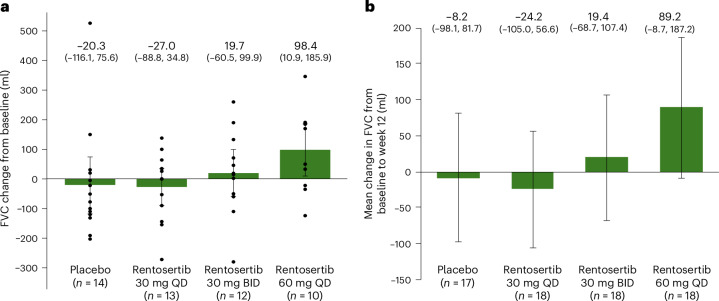
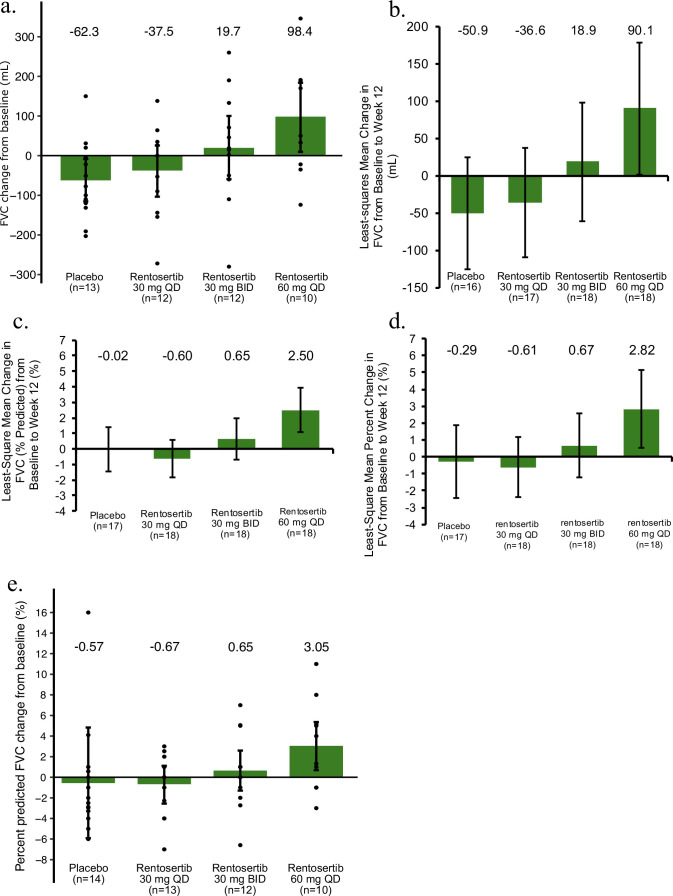
This phase 2a randomized, double-blind, placebo-controlled trial found that the AI-discovered TNIK inhibitor rentosertib was generally safe and well tolerated in idiopathic pulmonary fibrosis (IPF) over 12 weeks. The highest dose tested, 60 mg once daily, showed the most favorable lung-function signal, including a mean FVC change of +98.4 ml versus −20.3 ml with placebo.
## Key findings
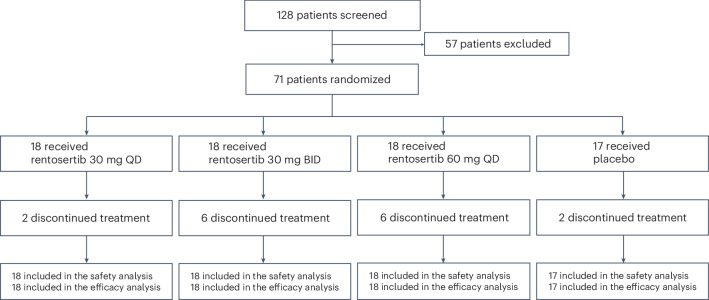
- Among 71 randomized patients, treatment-emergent adverse events were common but similar across groups: 72.2% (13/18) with 30 mg QD, 83.3% (15/18) with 30 mg BID, 83.3% (15/18) with 60 mg QD, and 70.6% (12/17) with placebo.
- Treatment-related serious adverse events were uncommon: 0 in placebo, 1/18 (5.6%) in 30 mg QD, and 2/18 (11.1%) in each of the 30 mg BID and 60 mg QD groups.
- After 12 weeks, mean FVC change was −20.3 ml with placebo, −27.0 ml with 30 mg QD, +19.7 ml with 30 mg BID, and +98.4 ml with 60 mg QD (95% CI 10.9 to 185.9).
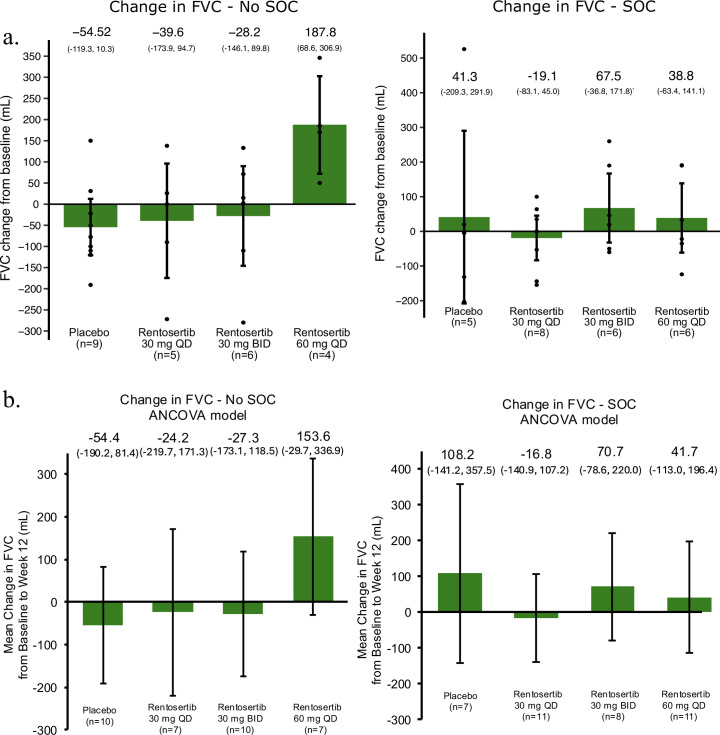
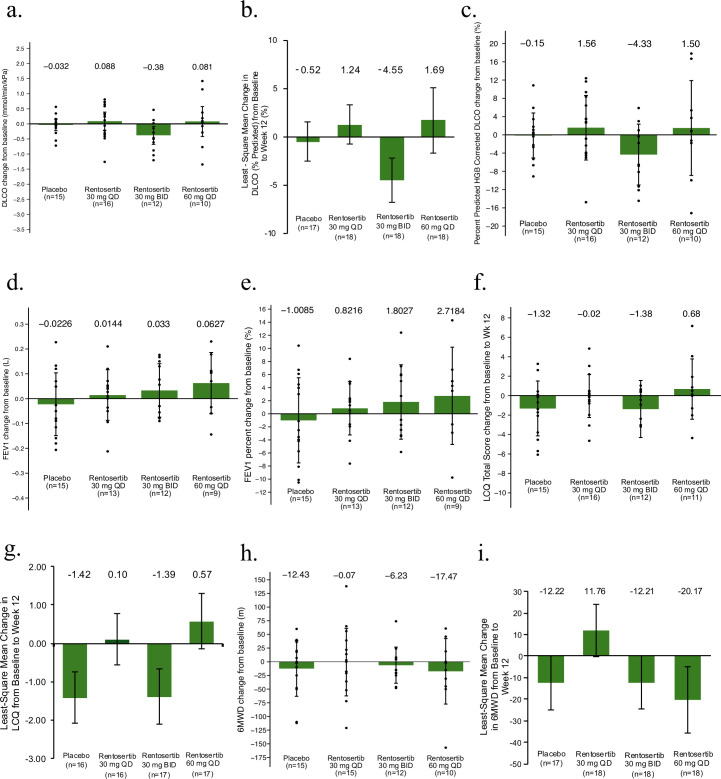
- In the 60 mg QD group without concurrent standard-of-care antifibrotic therapy, FVC improved by +187.8 ml (95% CI 68.6 to 306.9 ml); the paper also reports a significant LCQ improvement at 60 mg QD versus placebo (two-sided P = 0.0495).
## Methods
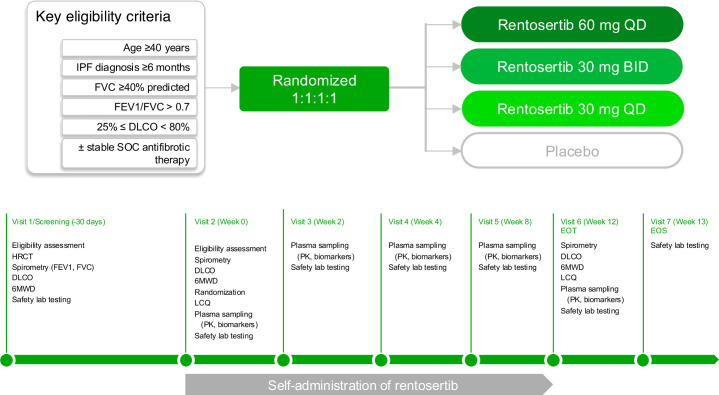
- Phase 2a, multicenter, double-blind, randomized, placebo-controlled, multidose trial at 21 sites in China; adults with IPF were assigned 1:1:1:1 to placebo or rentosertib 30 mg QD, 30 mg BID, or 60 mg QD for 12 weeks.
- 128 patients were screened and 71 enrolled; the intention-to-treat population included all 71 randomized patients, and all were included in safety and efficacy analyses.
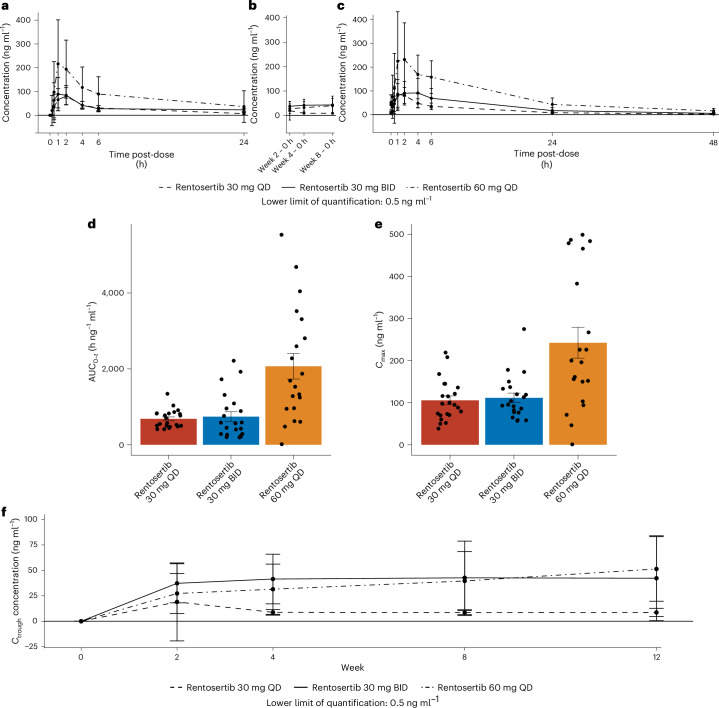
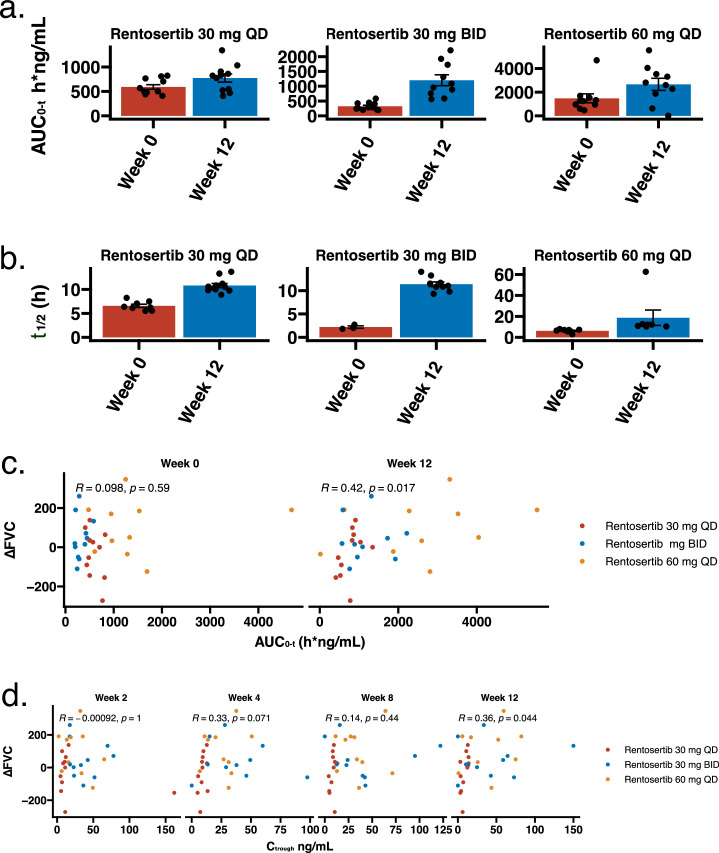
- Primary endpoint was the proportion with at least one treatment-emergent adverse event; secondary analyses included FVC and other lung-function measures, LCQ, 6MWD, pharmacokinetics, and exploratory serum proteomics, using ANCOVA for FVC, mixed models for LCQ, multiple imputation for missing week-12 values, and generalized linear/mixed models for proteomics.
## Limitations
- The paper states that limitations include the small cohort size in each arm, the geographical and demographic homogeneity of participants (all residents of China of similar race), and the short follow-up period, which limit assessment of long-term safety and efficacy.
- The text makes evident that 22/71 patients were missing week-12 measurements and 16/71 (22.5%) discontinued treatment before study end, which may affect precision and completeness of efficacy estimates.
- The 12-week duration is also explicitly noted as relatively short for capturing longer-term events such as acute exacerbations of IPF.
Model-written summary. Check it against the paper before relying on it.
Integrity signals
Registry
Cites
Statistics
Figures
Verification
Claims the paper makes
22 Valid · 2 Not valid · 11 Not checked · 70 Own results and interpretations
The cited sources that could be checked couldn’t confirm or dispute this claim.
In the paper
“Despite substantial progress in artificial intelligence (AI) for generative chemistry, few novel AI-discovered or AI-designed drugs have reached human clinical trials.”
- Also stated in: § Main · plain
“Despite these advancements, few AI-discovered or AI-designed drugs have reached clinical trials.”
§ A generative AI-discovered TNIK inhibitor for idiopathic pulmonary fibrosis: a randomized phase 2a trial > Abstract Despite substantial progress in artificial intelligence (AI) for generative chemistry, few novel AI-discovered or AI-designed drugs have reached human clinical trials. Here we present the results of the first phase 2a multicenter, double-blind, randomized, placebo-controlled trial testing the safety and efficacy of rentosertib (formerly ISM001-055), a first-in-class AI-generated small-molecule inhibitor of TNIK, a first-in-class target in idiopathic pulmonary fibrosis (IPF) discovered using generative AI. IPF is an age-related progressive lung condition with no current therapies available that reverse the degenerative course of disease. Patients were randomized to 12 weeks of treatment with 30 mg rentosertib once daily (QD, n = 18), 30 mg rentosertib twice daily (BID, n = 18), 60 mg rentosertib QD (n = 18) or placebo (n = 17). The primary endpoint was the percentage of patients who have at least one treatment-emergent adverse event, which was similar across all treatment arms (72.2% in patients receiving 30 mg rentosertib QD (n = 13/18), 83.3% for 30 mg rentosertib BID (n = 15/18), 83.3% for 60 mg rentosertib QD (n = 15/18) and 70.6% for placebo (n = 12/17)). Treatment-related serious adverse event rates were low and comparable across treatment groups, with the most common events leading to treatment discontinuation related to liver toxicity or diarrhea. Secondary endpoints included pharmacokinetic dynamics (Cmax, Ctrough, tmax, AUC0–t/τ/∞ and t1/2), changes in lung function as measured by forced vital capacity, diffusion capacity of the lung for carbon monoxide, forced expiry in 1 s and change in the Leicester Cough Questionnaire score, change in 6-min walk distance and the number and hospitalization duration of acute exacerbations of IPF. We observed increased forced vital capacity at the highest dosage with a mean change of +98.4 ml (95% confidence interval 10.9 to 185.9) for patients in the 60 mg rentosertib QD group, compared with −20.3 ml (95% confidence interval −116.1 to 75.6) for the placebo group. These results suggest that targeting TNIK with rentosertib is safe and well tolerated and warrants further investigation in larger-scale clinical trials of longer duration. ClinicalTrials.gov registration number: NCT05938920.
What the sources say
- Could not verifycites [20] Wong, C. H., Siah, K. W. & Lo, A. W. Estimation of clinical trial success rates and related parameters. Biostatistics 20, 273–286 (2019). 29394327 PMC6409418 sourceExperimental — accuracy not yet measured
The Introduction describes a dataset of clinical trials involving more than 21,000 compounds, but does not identify which, if any, were AI-discovered or AI-designed. Searches for AI-designed drugs and generative chemistry found no passage addressing how many such drugs reached human trials. (LLM, conf=0.76)
- Not checked — no full text of the sourcecites [21] KP Jayatunga, M., Ayers, M., Bruens, L., Jayanth, D. & Meier, C. How successful are AI-discovered drugs in clinical trials? A first analysis and emerging lessons. Drug Discov. Today 29, 104009 (2024). 38692505 source
plain- Asserted: passes — The authors put it forward as true.
- Checkable: passes — It can be checked against evidence.
- Load-bearing: passes — The paper’s conclusions depend on it.
- Based: passes — The paper gives a reason why it holds.
- Also stated in: § Main · plain
Every source the paper cites for this claim was checked and supports it.
In the paper
“however, a 12-week study is a relatively short time frame to capture such long-term disease events or trajectory44.”
§ A generative AI-discovered TNIK inhibitor for idiopathic pulmonary fibrosis: a randomized phase 2a trial > Discussion
What the sources say
- Supportedcites [44] Richeldi, L. et al. Trial of a preferential phosphodiesterase 4B inhibitor for idiopathic pulmonary fibrosis. N. Engl. J. Med. 386, 2178–2187 (2022). 35569036 source
The Discussion identifies the 12-week duration as a limitation. It says the trial was long enough to assess changes in FVC but too short, given its size, to meaningfully collect data on clinically important events such as acute exacerbations or death. This supports the claim about longer-term events or disease trajectory. (LLM, conf=0.94)
plain- Asserted: passes — The authors put it forward as true.
- Checkable: passes — It can be checked against evidence.
- Load-bearing: passes — The paper’s conclusions depend on it.
- Based: passes — The paper gives a reason why it holds.
- Supported
The cited sources support only part of this claim — read each source’s verdict below.
In the paper
“The incongruity of increased FVC with stable DLCO may be attributed to low numbers of patients in each treatment arm and the inherent variability of DLCO measurement41.”
§ A generative AI-discovered TNIK inhibitor for idiopathic pulmonary fibrosis: a randomized phase 2a trial > Discussion
What the sources say
- Partly supportedcites [41] McCormack, M. C. Facing the noise: addressing the endemic variability in DLCO testing. Respir. Care 57, 17–25 (2012). 22222122 sourceExperimental — accuracy not yet measured
Our copy of McCormack's 'Facing the Noise' strongly supports only the measurement-variability half of the sentence: the Abstract states 'The variability in the measurement limits the utility of the test. Variability is attributable to differences in equipment, testing conditions, patient factors, and reference equations,' and the Indications section repeats that 'High variability, both within and between laboratories, has been a limitation of DLCO testing' (Testing Procedures, p. ~4, adds instrument accuracy data). However, the paper nowhere addresses the specific 'incongruity of increased FVC with stable DLCO' or the attribution to 'low numbers of patients in each treatment arm' — the only FVC/DLCO pairing is a Discussion remark (Pichurko) that DLCO measured serially alongside FVC after one year's treatment has prognostic value, which does not comment on discordant changes or on small treatment arms. (LLM, conf=0.72)
hedgedstates a possible cause- Asserted: passes — The authors put it forward as true.
- Checkable: passes — It can be checked against evidence.
- Load-bearing: unclear — It is unclear whether the paper’s conclusions depend on it.
- Based: passes — The paper gives a reason why it holds.
- Partly supported
The cited sources support only part of this claim — read each source’s verdict below.
In the paper
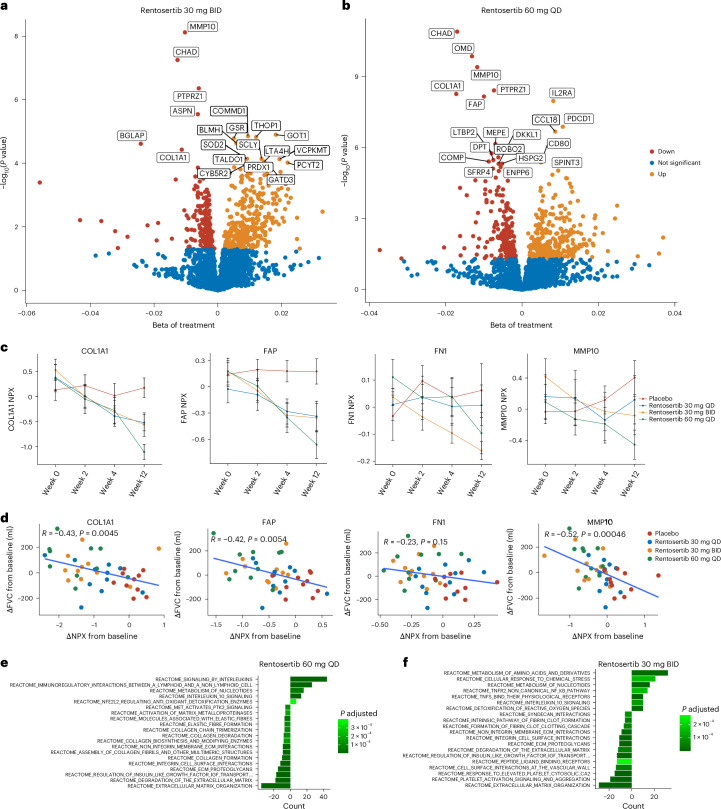
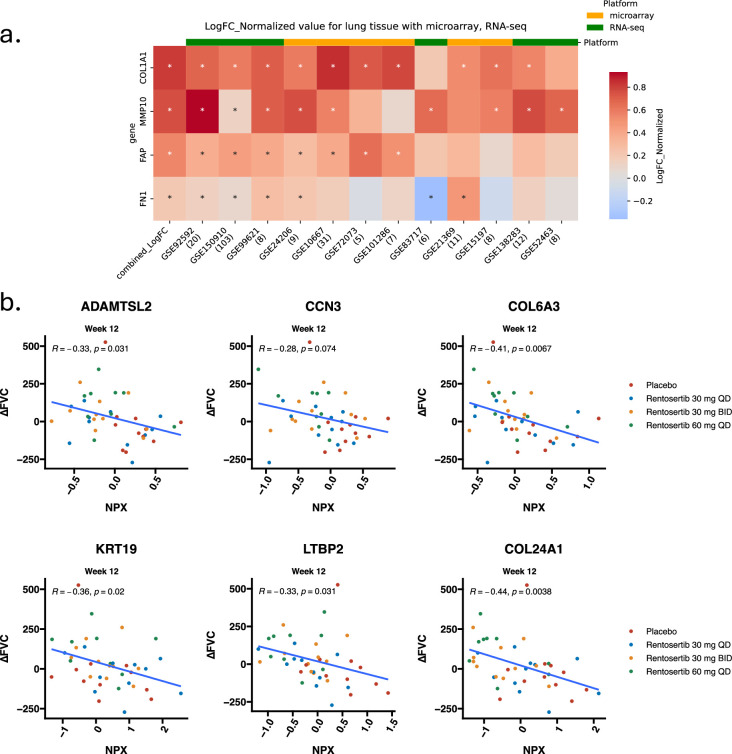
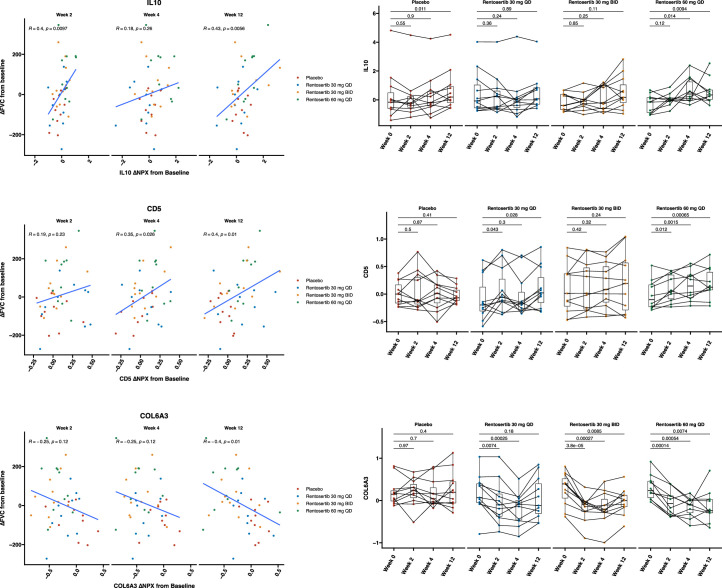
“We further found that the abundance at week 12 of proteins previously reported to be associated with lung function38 and transplant-free survival39 in patients with IPF, such as ADAMTSL2, COL6A3, CCN3, COL24A1, KRT19 and LTBP2, were associated change in FVC”
§ A generative AI-discovered TNIK inhibitor for idiopathic pulmonary fibrosis: a randomized phase 2a trial > Results > Post-hoc exploratory analyses
What the sources say
- Could not verifycites [38] Su, C.-Y. et al. Multi-ancestry proteome-phenome-wide Mendelian randomization offers a comprehensive protein-disease atlas and potential therapeutic targets. Preprint at medRxiv10.1101/2024.10.17.24315553 (2024). sourceExperimental — accuracy not yet measured
Our copy of Su et al. (2024, medRxiv preprint 10.1101/2024.10.17.24315553) is a multi-ancestry proteome-phenome-wide MR atlas whose reported findings concern cardiometabolic and inflammatory-bowel phenotypes, with IL1RL1 in IBD/CD/UC as the illustrative follow-up (Abstract; Sections 4, 8.1, 12.2-12.5). No passage mentions idiopathic pulmonary fibrosis, transplant-free survival, forced vital capacity (FVC), week-12 protein abundance, or any of the named proteins ADAMTSL2, COL6A3, CCN3, COL24A1, KRT19, LTBP2; searches for 'IPF transplant-free survival lung function FVC', 'ADAMTSL2 COL6A3 CCN3 COL24A1 KRT19 LTBP2', and 'pulmonary fibrosis forced vital capacity' returned only unrelated pQTL/UK Biobank Cox-regression material. Notably, reference 38 in this paper is Finan et al.'s druggable-genome list (Section 15.5), not a lung-function study, so the citation cannot be an identification of the source cited here. The claim is therefore neither supported nor contradicted by our copy. (LLM, conf=0.72)
- Partly supportedcites [39] Oldham, J. M. et al. Proteomic biomarkers of survival in idiopathic pulmonary fibrosis. Am. J. Respir. Crit. Care Med. 209, 1111–1120 (2024). 37847691 PMC11092951 sourceExperimental — accuracy not yet measured
Our copy of Oldham et al. (2024) explicitly supports the transplant-free survival (TFS) attribution for three of the six proteins named in the citing sentence: the Abstract and Results (Top-20 table, Table 2) report LTBP2 (HR 2.43), COL24A1/collagen alpha-1(XXIV) chain (HR 2.11) and KRT19 (HR 1.60) as the validated proteins with the strongest TFS association, and the Discussion singles out KRT19 as among the top TFS-associated proteins. The other three proteins attributed to this source — ADAMTSL2, COL6A3 and CCN3 — appear nowhere in our copy; searches for them returned only the paper's validated ADAMTS13 (a different protein) and unrelated passages. Because the complete list of the 140 validated TFS proteins lives in online-only Tables E1–E3, which our copy does not contain, that portion of the list can be neither confirmed nor contradicted here. The citing sentence's own week-12/change-in-FVC result is the citing authors' finding, not something judged against this source. (LLM, conf=0.72)
plainstates an association- Asserted: passes — The authors put it forward as true.
- Checkable: passes — It can be checked against evidence.
- Load-bearing: unclear — It is unclear whether the paper’s conclusions depend on it.
- Based: passes — The paper gives a reason why it holds.
- Could not verify
A result the paper reports from its own data — it cites no other source for it, so there is none to check. The quote shows it is in the paper.
In the paper
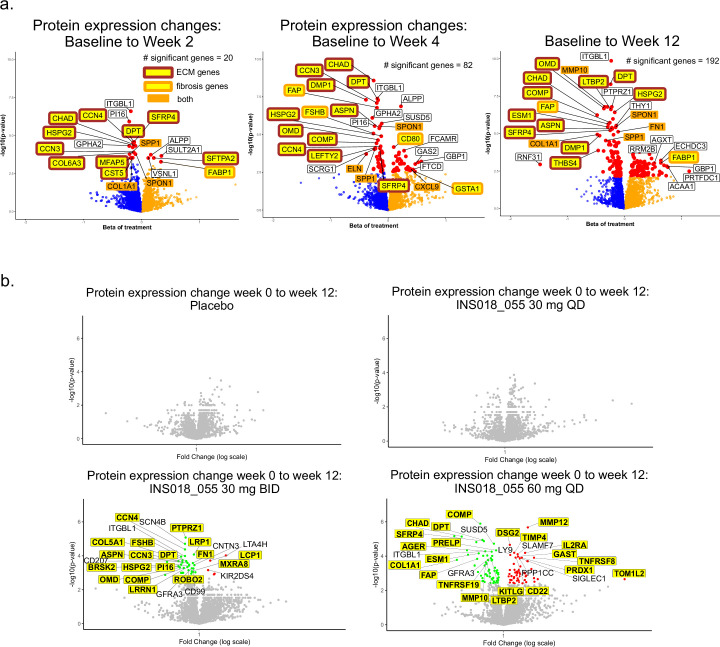
“Pathway enrichment analysis identified extracellular matrix organization as the most downregulated Reactome pathway gene set in both treatment groups,”
- Also stated in: § Post-hoc exploratory analyses · plain
“Pathway enrichment analysis identified extracellular matrix organization as the most downregulated Reactome pathway gene set in both treatment groups”
§ A generative AI-discovered TNIK inhibitor for idiopathic pulmonary fibrosis: a randomized phase 2a trial > Results > Post-hoc exploratory analyses
plain- Asserted: passes — The authors put it forward as true.
- Checkable: passes — It can be checked against evidence.
- Load-bearing: unclear — It is unclear whether the paper’s conclusions depend on it.
- Based: passes — The paper gives a reason why it holds.
- Also stated in: § Post-hoc exploratory analyses · plain
33 more claims
Create a free account to see all 105 claims and to verify the 10 references still open.
- It may state two separate claims as one. 42
- Probably not a substantial claim. 36
Claims other papers make about this one
Each is checked against this paper’s own text: does it say what the citing paper says it does?
The cited source says what the claim attributes to it.
In the citing paper
“AI has also facilitated the identification of new targets, including the kinase TNIK, and the design of senomorphic molecules capable of suppressing the SASP129,130.”
From Emerging strategies in senotherapeutics: from broad-spectrum senolysis to precision reprogramming (2026) · cites this paper as [129]
Citations
Cites
Efficacy and Safety of Nintedanib in Idiopathic Pulmonary Fibrosis
Richeldi, L., du Bois, R. M., Raghu, G., Azuma, A., Brown, K. K., Costabel, U., Cottin, V., Flaherty, K. R., Hansell, D. M., Inoue, Y., et al. (2014) · New England Journal of Medicine · doi:10.1056/nejmoa1402584 · Cited by 4,654
Graham, B. L., Steenbruggen, I., Miller, M. R., Barjaktarevic, I. Z., Cooper, B. G., Hall, G. L., Hallstrand, T. S., Kaminsky, D. A., McCarthy, K., McCormack, M. C., et al. (2019) · American Journal of Respiratory and Critical Care Medicine · doi:10.1164/rccm.201908-1590st · Cited by 4,305 · cited 2×
“%) had FVC and FEV1 measured at baseline/randomization with centrally sourced Spiro-Sphere devices (Clario) provided by the sponsor with study-specific training and proficiency tests to the operating staff to meet the 2019 ATS/ERS guideline criteria 63 with central overread.”
Diagnosis of Idiopathic Pulmonary Fibrosis. An Official ATS/ERS/JRS/ALAT Clinical Practice Guideline
Raghu, G., Remy-Jardin, M., Myers, J. L., Richeldi, L., Ryerson, C. J., Lederer, D. J., Behr, J., Cottin, V., Danoff, S. K., Morell, F., et al. (2018) · American Journal of Respiratory and Critical Care Medicine · doi:10.1164/rccm.201807-1255st · Cited by 4,103 · cited 1×
“…of interstitial lung disease (for example, environmental exposures, connective tissue disease, hypersensitivity pneumonitis or drug toxicities) 24 and marked by interstitial pneumonia, dyspnea and cough 25 , histologically characterized by fibroblast proliferation and extracellular matrix…”
A phase 3 trial of pirfenidone in patients with idiopathic pulmonary fibrosis.
King, T. E., Bradford, W. Z., Castro-Bernardini, S., Fagan, E. A., Glaspole, I., Glassberg, M. K., Gorina, E., Hopkins, P. M., Kardatzke, D., Lancaster, L., et al. (2014) · New England Journal of Medicine · doi:10.1056/nejmoa1402582 · Cited by 3,975
Standardization of Spirometry — 1987 Update
Buist, A. S. (1987) · American Review of Respiratory Disease · doi:10.1164/ajrccm/136.5.1073 · Cited by 3,266
Raghu, G., Remy-Jardin, M., Richeldi, L., Thomson, C. C., Inoue, Y., Johkoh, T., Kreuter, M., Lynch, D. A., Maher, T. M., Martinez, F. J., et al. (2022) · American Journal of Respiratory and Critical Care Medicine · doi:10.1164/rccm.202202-0399st · Cited by 2,957 · cited 1×
“Eligible patients were 40 years of age or older with an IPF diagnosis as defined by the American Thoracic Society, European Respiratory Society, Japanese Respiratory Society and Latin American Thoracic Association guidelines 62 .”
Pirfenidone in patients with idiopathic pulmonary fibrosis (CAPACITY): two randomised trials
Noble, P. W., Albera, C., Bradford, W. Z., Costabel, U., Glassberg, M. K., Kardatzke, D., King, T. E., Lancaster, L., Sahn, S. A., Szwarcberg, J., et al. (2011) · The Lancet · doi:10.1016/s0140-6736(11)60405-4 · Cited by 2,154 · cited 2×
“Clinical trials investigating these two drugs in patients with IPF have demonstrated only a slowing of disease progression 33,34 , as measured by forced vital capacity (FVC) and self-reported quality of life (QOL) metrics, and unclear benefit to survival 26 , making the development of therapies…”
Lederer, D. J., & Martinez, F. J. (2018) · New England Journal of Medicine · doi:10.1056/nejmra1705751 · Cited by 2,056
Richeldi, L., Collard, H. R., & Jones, M. G. (2017) · The Lancet · doi:10.1016/s0140-6736(17)30866-8 · Cited by 2,020
Diagnosing the decline in pharmaceutical R&D efficiency
Scannell, J. W., Blanckley, A., Boldon, H., & Warrington, B. (2012) · Nature Reviews Drug Discovery · doi:10.1038/nrd3681 · Cited by 1,981 · cited 1×
“The process of developing novel therapeutics is increasingly slow and costly 1 , with an average of US$2–3 billion spent over the course of 10–15 years to bring a new drug to market 2 .”
Estimation of clinical trial success rates and related parameters
Wong, C. H., Siah, K. W., & Lo, A. W. (2019) · Biostatistics · doi:10.1093/biostatistics/kxx069 · Cited by 1,585 · cited 1×
“AI-discovered drugs have experienced similar levels of phase 2 trial failure as non-AI-discovered drugs 20,21 , and none has so far progressed through phase 3 trials 21 .”
The Reactome Pathway Knowledgebase 2024
Milacic, M., Beavers, D., Conley, P., Gong, C., Gillespie, M., Griss, J., Haw, R., Jassal, B., Matthews, L., May, B., et al. (2024) · Nucleic Acids Research · doi:10.1093/nar/gkad1025 · Cited by 1,474
Acute Exacerbation of Idiopathic Pulmonary Fibrosis. An International Working Group Report
Collard, H. R., Ryerson, C. J., Corte, T. J., Jenkins, G., Kondoh, Y., Lederer, D. J., Lee, J. S., Maher, T. M., Wells, A. U., Antoniou, K. M., et al. (2016) · American Journal of Respiratory and Critical Care Medicine · doi:10.1164/rccm.201604-0801ci · Cited by 1,444
Martinez, F. J., Collard, H. R., Pardo, A., Raghu, G., Richeldi, L., Selman, M., Swigris, J. J., Taniguchi, H., & Wells, A. U. (2017) · Nature Reviews Disease Primers · doi:10.1038/nrdp.2017.74 · Cited by 1,388
Acute Exacerbations of Idiopathic Pulmonary Fibrosis
Collard, H. R., Moore, B. B., Flaherty, K. R., Brown, K. K., Kaner, R. J., King, T. E., Lasky, J. A., Loyd, J. E., Noth, I., Olman, M. A., et al. (2007) · American Journal of Respiratory and Critical Care Medicine · doi:10.1164/rccm.200703-463pp · Cited by 1,130
Birring, S. S. (2003) · Thorax · doi:10.1136/thorax.58.4.339 · Cited by 1,062 · cited 8×
“Additional secondary and exploratory endpoints and analyses were designed to further measure lung function, QOL metrics and cellular phenotypes associated with rentosertib treatment and response.”
InfluentialArtificial intelligence in drug development: Present status and future prospects
Mak, K.-K., & Pichika, M. R. (2019) · Drug Discovery Today · doi:10.1016/j.drudis.2018.11.014 · Cited by 1,018 · cited 1×
“…more rapid nomination of therapeutic candidate compounds that explore the possible chemical space more thoroughly 16,17 and with a concomitant reduction in hands-on screening 18,19 , thus allowing more preclinical candidate compounds to enter clinical testing and, eventually, clinical practice.”
Mode of action of nintedanib in the treatment of idiopathic pulmonary fibrosis
Wollin, L., Wex, E., Pautsch, A., Schnapp, G., Hostettler, K. E., Stowasser, S., & Kolb, M. (2015) · European Respiratory Journal · doi:10.1183/09031936.00174914 · Cited by 1,005 · cited 1×
“The current standard-of-care (SOC) therapy regimen to treat IPF includes either nintedanib, a broadly acting inhibitor of receptor tyrosine kinases 31 , or pirfenidone, an inhibitor of TGFβ-mediated fibroblast-to-myofibroblast transition 32 .”
2017 ERS/ATS standards for single-breath carbon monoxide uptake in the lung
Graham, B. L., Brusasco, V., Burgos, F., Cooper, B. G., Jensen, R., Kendrick, A., MacIntyre, N. R., Thompson, B. R., & Wanger, J. (2017) · European Respiratory Journal · doi:10.1183/13993003.00016-2016 · Cited by 972 · cited 1×
“All DLCO measurements were assessed with devices from each site according to the ATS/ ERS guidelines 64 , and all measurements were conducted with the same equipment for each site.”
Predicting Survival in Idiopathic Pulmonary Fibrosis
KING, T. E., TOOZE, J. A., SCHWARZ, M. I., BROWN, K. R., & CHERNIACK, R. M. (2001) · American Journal of Respiratory and Critical Care Medicine · doi:10.1164/ajrccm.164.7.2003140 · Cited by 853 · cited 1×
“The median survival time after diagnosis is 2–4 years despite widespread availability of targeted antifibrotic therapies 26,30 , highlighting the ongoing need for novel, effective therapies to treat IPF.”
Acute exacerbation of idiopathic pulmonary fibrosis: incidence, risk factors and outcome
Song, J. W., Hong, S.-B., Lim, C.-M., Koh, Y., & Kim, D. S. (2011) · European Respiratory Journal · doi:10.1183/09031936.00159709 · Cited by 783 · cited 1×
“42 with a median survival of 2.2 months after onset 43 , and incidence informs long-term therapeutic efficacy.”
InfluentialAberrant Wnt/β-Catenin Pathway Activation in Idiopathic Pulmonary Fibrosis
Chilosi, M., Poletti, V., Zamò, A., Lestani, M., Montagna, L., Piccoli, P., Pedron, S., Bertaso, M., Scarpa, A., Murer, B., et al. (2003) · The American Journal of Pathology · doi:10.1016/s0002-9440(10)64282-4 · Cited by 708
du Bois, R. M., Weycker, D., Albera, C., Bradford, W. Z., Costabel, U., Kartashov, A., King, T. E., Lancaster, L., Noble, P. W., Sahn, S. A., et al. (2011) · American Journal of Respiratory and Critical Care Medicine · doi:10.1164/rccm.201105-0840oc · Cited by 527
Artificial intelligence in drug discovery: recent advances and future perspectives
Jiménez-Luna, J., Grisoni, F., Weskamp, N., & Schneider, G. (2021) · Expert Opinion on Drug Discovery · doi:10.1080/17460441.2021.1909567 · Cited by 464
Artificial intelligence in cancer target identification and drug discovery
You, Y., Lai, X., Pan, Y., Zheng, H., Vera, J., Liu, S., Deng, S., & Zhang, L. (2022) · Signal Transduction and Targeted Therapy · doi:10.1038/s41392-022-00994-0 · Cited by 435 · cited 1×
“…have demonstrated proof-of-concept innovation and potential to accelerate and decrease costs across all stages of pharmaceutical research and development by facilitating disease-associated target prioritization 3–5 , compound design and optimization 6–10 , and clinical trial performance 11–15 .”
Self-citationAn Overview of Drug Discovery and Development
Berdigaliyev, N., & Aljofan, M. (2020) · Future Medicinal Chemistry · doi:10.4155/fmc-2019-0307 · Cited by 396 · cited 1×
“The process of developing novel therapeutics is increasingly slow and costly 1 , with an average of US$2–3 billion spent over the course of 10–15 years to bring a new drug to market 2 .”
A small-molecule TNIK inhibitor targets fibrosis in preclinical and clinical models
Ren, F., Aliper, A., Chen, J., Zhao, H., Rao, S., Kuppe, C., Ozerov, I. V., Zhang, M., Witte, K., Kruse, C., et al. (2025) · Nature Biotechnology · doi:10.1038/s41587-024-02143-0 · Cited by 348 · cited 4×
“…and CTR20221542 (accessed via http://www.chinadrug-trials.org.cn/)), the first report of a targeted TNIK inhibitor entering clinical testing, which found rentosertib to be safe and well tolerated by healthy individuals, exhibiting a favorable pharmacokinetic (PK) profile in both trials 9 .”
InfluentialSelf-citationCausal machine learning for predicting treatment outcomes
Feuerriegel, S., Frauen, D., Melnychuk, V., Schweisthal, J., Hess, K., Curth, A., Bauer, S., Kilbertus, N., Kohane, I. S., & van der Schaar, M. (2024) · Nature Medicine · doi:10.1038/s41591-024-02902-1 · Cited by 343
AI-powered therapeutic target discovery
Pun, F. W., Ozerov, I. V., & Zhavoronkov, A. (2023) · Trends in Pharmacological Sciences · doi:10.1016/j.tips.2023.06.010 · Cited by 341 · cited 1×
“…have demonstrated proof-of-concept innovation and potential to accelerate and decrease costs across all stages of pharmaceutical research and development by facilitating disease-associated target prioritization 3–5 , compound design and optimization 6–10 , and clinical trial performance 11–15 .”
Self-citationAI in drug discovery and its clinical relevance
Qureshi, R., Irfan, M., Gondal, T. M., Khan, S., Wu, J., Hadi, M. U., Heymach, J., Le, X., Yan, H., & Alam, T. (2023) · Heliyon · doi:10.1016/j.heliyon.2023.e17575 · Cited by 319
A Data-Driven Approach to Predicting Successes and Failures of Clinical Trials
Gayvert, K. M., Madhukar, N. S., & Elemento, O. (2016) · Cell chemical biology · doi:10.1016/j.chembiol.2016.07.023 · Cited by 310 · cited 1×
“…have demonstrated proof-of-concept innovation and potential to accelerate and decrease costs across all stages of pharmaceutical research and development by facilitating disease-associated target prioritization 3–5 , compound design and optimization 6–10 , and clinical trial performance 11–15 .”
Viral Infection in Acute Exacerbation of Idiopathic Pulmonary Fibrosis
Wootton, S. C., Kim, D. S., Kondoh, Y., Chen, E., Lee, J. S., Song, J. W., Huh, J. W., Taniguchi, H., Chiu, C., Boushey, H., et al. (2011) · American Journal of Respiratory and Critical Care Medicine · doi:10.1164/rccm.201010-1752oc · Cited by 285
Acute Exacerbation of Idiopathic Pulmonary Fibrosis
Hyzy, R., Huang, S., Myers, J., Flaherty, K., & Martinez, F. (2007) · Chest · doi:10.1378/chest.07-0299 · Cited by 277
Diagnosis of idiopathic pulmonary fibrosis
Choi, H. S. (2021) · Journal of the Korean Medical Association · doi:10.5124/jkma.2021.64.4.248 · Cited by 259
Trial of a Preferential Phosphodiesterase 4B Inhibitor for Idiopathic Pulmonary Fibrosis
Richeldi, L., Azuma, A., Cottin, V., Hesslinger, C., Stowasser, S., Valenzuela, C., Wijsenbeek, M. S., Zoz, D. F., Voss, F., & Maher, T. M. (2022) · New England Journal of Medicine · doi:10.1056/nejmoa2201737 · Cited by 236 · cited 1×
“Three acute exacerbations occurred in the 60 mg rentosertib arm and one in the placebo arm; however, a 12-week study is a relatively short time frame to capture such long-term disease events or trajectory 44 .”
Acharya, P. S., Zukas, A., Chandan, V., Katzenstein, A.-L. A., & Puré, E. (2006) · Human Pathology · doi:10.1016/j.humpath.2005.11.020 · Cited by 204 · cited 1×
“…transformation 56 and may play a central role in IPF tissue remodeling 55,57 ; circulating ROBO2 is associated with poor IPF prognosis 58 ; FAP is expressed exclusively in fibrotic loci in the lungs of patients with IPF 59 ; and CHAD binds to type II collagen in cartilaginous fibrotic loci 60,61 .”
Generative Deep Learning for Targeted Compound Design
Sousa, T., Correia, J., Pereira, V., & Rocha, M. (2021) · Journal of Chemical Information and Modeling · doi:10.1021/acs.jcim.0c01496 · Cited by 191
AI in small-molecule drug discovery: a coming wave?
Jayatunga, M. K. P., Xie, W., Ruder, L., Schulze, U., & Meier, C. (2022) · Nature Reviews Drug Discovery · doi:10.1038/d41573-022-00025-1 · Cited by 187 · cited 1×
“…more rapid nomination of therapeutic candidate compounds that explore the possible chemical space more thoroughly 16,17 and with a concomitant reduction in hands-on screening 18,19 , thus allowing more preclinical candidate compounds to enter clinical testing and, eventually, clinical practice.”
PandaOmics: An AI-Driven Platform for Therapeutic Target and Biomarker Discovery
Kamya, P. R. N., Ozerov, I. V., Pun, F. W., Tretina, K., Fokina, T., Chen, S., Naumov, V., Long, X., Lin, S., Korzinkin, M., et al. (2024) · Journal of Chemical Information and Modeling · doi:10.1021/acs.jcim.3c01619 · Cited by 182 · cited 1×
“We queried diverse published gene expression datasets profiling the tissue of patients with IPF and that of healthy individuals using our AI-powered target discovery platform, PandaOmics 37 , for expression patterns of these top genes to validate their relevance to IPF.”
Self-citationValidation of the Leicester Cough Questionnaire in non-cystic fibrosis bronchiectasis
Murray, M. P., Turnbull, K., MacQuarrie, S., Pentland, J. L., & Hill, A. T. (2009) · European Respiratory Journal · doi:10.1183/09031936.00160508 · Cited by 169 · cited 1×
“The LCQ questionnaire has mainly been validated in disease settings such as chronic obstructive pulmonary disease 67 , noncystic fibrosis bronchiectasis 68 and chronic cough 69 .”
Molecular design in drug discovery: a comprehensive review of deep generative models
Cheng, Y., Gong, Y., Liu, Y., Song, B., & Zou, Q. (2021) · Briefings in Bioinformatics · doi:10.1093/bib/bbab344 · Cited by 169
Machine learning-aided generative molecular design
Du, Y., Jamasb, A. R., Guo, J., Fu, T., Harris, C., Wang, Y., Duan, C., Liò, P., Schwaller, P., & Blundell, T. L. (2024) · Nature Machine Intelligence · doi:10.1038/s42256-024-00843-5 · Cited by 169 · cited 1×
“…have demonstrated proof-of-concept innovation and potential to accelerate and decrease costs across all stages of pharmaceutical research and development by facilitating disease-associated target prioritization 3–5 , compound design and optimization 6–10 , and clinical trial performance 11–15 .”
How successful are AI-discovered drugs in clinical trials? A first analysis and emerging lessons
KP Jayatunga, M., Ayers, M., Bruens, L., Jayanth, D., & Meier, C. (2024) · Drug Discovery Today · doi:10.1016/j.drudis.2024.104009 · Cited by 166 · cited 2×
“AI-discovered drugs have experienced similar levels of phase 2 trial failure as non-AI-discovered drugs 20,21 , and none has so far progressed through phase 3 trials 21 .”
Idiopathic pulmonary fibrosis: lessons from clinical trials over the past 25 years
Raghu, G. (2017) · European Respiratory Journal · doi:10.1183/13993003.01209-2017 · Cited by 146 · cited 1×
“…lung disease (for example, environmental exposures, connective tissue disease, hypersensitivity pneumonitis or drug toxicities) 24 and marked by interstitial pneumonia, dyspnea and cough 25 , histologically characterized by fibroblast proliferation and extracellular matrix remodeling 26–29 .”
Reviewing the Regulators of COL1A1
Devos, H., Zoidakis, J., Roubelakis, M. G., Latosinska, A., & Vlahou, A. (2023) · International Journal of Molecular Sciences · doi:10.3390/ijms241210004 · Cited by 119 · cited 1×
“…transition in IPF via β-catenin 52 ; COL1A1 is a key component of dysregulated extracellular matrix deposition characteristic of fibrosis 53–55 ; ASPN plays a role in myofibroblast transformation 56 and may play a central role in IPF tissue remodeling 55,57 ; circulating ROBO2 is…”
Pun, F. W., Liu, B. H. M., Long, X., Leung, H. W., Leung, G. H. D., Mewborne, Q. T., Gao, J., Shneyderman, A., Ozerov, I. V., Wang, J., et al. (2022) · Frontiers in Aging Neuroscience · doi:10.3389/fnagi.2022.914017 · Cited by 115 · cited 1×
“As an answer to this question, our group used generative AI-driven discovery tools 22,23 to identify Traf2-and Nck-interacting kinase (TNIK) de novo as a critical regulator of idiopathic pulmonary fibrosis (IPF) pathology as it orchestrates multiple profibrotic and proinflammatory cellular programs…”
Self-citationCurrent approaches to the management of idiopathic pulmonary fibrosis
Raghu, G., & Richeldi, L. (2017) · Respiratory Medicine · doi:10.1016/j.rmed.2017.05.017 · Cited by 90
Aliper, A., Kudrin, R., Polykovskiy, D., Kamya, P., Tutubalina, E., Chen, S., Ren, F., & Zhavoronkov, A. (2023) · Clinical Pharmacology & Therapeutics · doi:10.1002/cpt.3008 · Cited by 89 · cited 1×
“…have demonstrated proof-of-concept innovation and potential to accelerate and decrease costs across all stages of pharmaceutical research and development by facilitating disease-associated target prioritization 3–5 , compound design and optimization 6–10 , and clinical trial performance 11–15 .”
Self-citationÅhrman, E., Hallgren, O., Malmström, L., Hedström, U., Malmström, A., Bjermer, L., Zhou, X.-H., Westergren-Thorsson, G., & Malmström, J. (2018) · Journal of Proteomics · doi:10.1016/j.jprot.2018.02.027 · Cited by 88 · cited 1×
“…characteristic of fibrosis 53–55 ; ASPN plays a role in myofibroblast transformation 56 and may play a central role in IPF tissue remodeling 55,57 ; circulating ROBO2 is associated with poor IPF prognosis 58 ; FAP is expressed exclusively in fibrotic loci in the lungs of patients with IPF 59…”
Pirfenidone for idiopathic pulmonary fibrosis and beyond
Aimo, A., Spitaleri, G., Nieri, D., Tavanti, L. M., Meschi, C., Panichella, G., Lupón, J., Pistelli, F., Carrozzi, L., Bayes-Genis, A., et al. (2022) · Cardiac Failure Review · doi:10.15420/cfr.2021.30 · Cited by 88 · cited 1×
“The current standard-of-care (SOC) therapy regimen to treat IPF includes either nintedanib, a broadly acting inhibitor of receptor tyrosine kinases 31 , or pirfenidone, an inhibitor of TGFβ-mediated fibroblast-to-myofibroblast transition 32 .”
Pun, F. W., Leung, G. H. D., Leung, H. W., Liu, B. H. M., Long, X., Ozerov, I. V., Wang, J., Ren, F., Aliper, A., Izumchenko, E., et al. (2022) · Aging · doi:10.18632/aging.203960 · Cited by 84 · cited 1×
“As an answer to this question, our group used generative AI-driven discovery tools 22,23 to identify Traf2-and Nck-interacting kinase (TNIK) de novo as a critical regulator of idiopathic pulmonary fibrosis (IPF) pathology as it orchestrates multiple profibrotic and proinflammatory cellular programs…”
Self-citationNguyen, A. M., Schelfhout, J., Muccino, D., Bacci, E. D., La Rosa, C., Vernon, M., & Birring, S. S. (2022) · Therapeutic Advances in Respiratory Disease · doi:10.1177/17534666221099737 · Cited by 81 · cited 1×
“The LCQ questionnaire has mainly been validated in disease settings such as chronic obstructive pulmonary disease 67 , noncystic fibrosis bronchiectasis 68 and chronic cough 69 .”
The validity and precision of the leicester cough questionnaire in COPD patients with chronic cough
Berkhof, F. F., Boom, L. N., ten Hertog, N. E., Uil, S. M., Kerstjens, H. A., & van den Berg, J. W. (2012) · Health and Quality of Life Outcomes · doi:10.1186/1477-7525-10-4 · Cited by 80 · cited 1×
“The LCQ questionnaire has mainly been validated in disease settings such as chronic obstructive pulmonary disease 67 , noncystic fibrosis bronchiectasis 68 and chronic cough 69 .”
Proteomic Biomarkers of Survival in Idiopathic Pulmonary Fibrosis
Oldham, J. M., Huang, Y., Bose, S., Ma, S.-F., Kim, J. S., Schwab, A., Ting, C., Mou, K., Lee, C. T., Adegunsoye, A., et al. (2024) · American Journal of Respiratory and Critical Care Medicine · doi:10.1164/rccm.202301-0117oc · Cited by 72 · cited 5×
“Moreover, a number of the top downregulated proteins are known to be associated with pulmonary fibrosis: MMP10 47 , LTBP2 39,48,49 , KRT19 39 and COL24A1 39 have been nominated as biomarkers for IPF and transplant-free survival; PTPRZ1 50 activates β-catenin signaling, which contributes to IPF development 51 , and BHL…”
InfluentialMatrix metalloproteinase-10: a novel biomarker for idiopathic pulmonary fibrosis
Sokai, A., Handa, T., Tanizawa, K., Oga, T., Uno, K., Tsuruyama, T., Kubo, T., Ikezoe, K., Nakatsuka, Y., Tanimura, K., et al. (2015) · Respiratory Research · doi:10.1186/s12931-015-0280-9 · Cited by 64 · cited 5×
“COL1A1 , MMP10 and FAP were found to be universally upregulated in IPF patient samples compared with healthy individuals, and FN1 was upregulated in most datasets (Extended Data Fig.”
InfluentialRegional and disease specific human lung extracellular matrix composition
Hoffman, E. T., Uhl, F. E., Asarian, L., Deng, B., Becker, C., Uriarte, J. J., Downs, I., Young, B., & Weiss, D. J. (2023) · Biomaterials · doi:10.1016/j.biomaterials.2022.121960 · Cited by 64 · cited 1×
“…transformation 56 and may play a central role in IPF tissue remodeling 55,57 ; circulating ROBO2 is associated with poor IPF prognosis 58 ; FAP is expressed exclusively in fibrotic loci in the lungs of patients with IPF 59 ; and CHAD binds to type II collagen in cartilaginous fibrotic loci 60,61 .”
Enomoto, Y., Matsushima, S., Shibata, K., Aoshima, Y., Yagi, H., Meguro, S., Kawasaki, H., Kosugi, I., Fujisawa, T., Enomoto, N., et al. (2018) · Clinical Science · doi:10.1042/cs20180435 · Cited by 60 · cited 1×
“Moreover, a number of the top downregulated proteins are known to be associated with pulmonary fibrosis: MMP10 47 , LTBP2 39,48,49 , KRT19 39 and COL24A1 39 have been nominated as biomarkers for IPF and transplant-free survival; PTPRZ1 50 activates β-catenin signaling, which contributes to IPF…”
Key indicators of phase transition for clinical trials through machine learning
Feijoo, F., Palopoli, M., Bernstein, J., Siddiqui, S., & Albright, T. E. (2020) · Drug Discovery Today · doi:10.1016/j.drudis.2019.12.014 · Cited by 58
Huang, S., Lai, X., Yang, L., Ye, F., Huang, C., Qiu, Y., Lin, S., Pu, L., Wang, Z., & Huang, W. (2022) · American Journal of Respiratory Cell and Molecular Biology · doi:10.1165/rcmb.2021-0257oc · Cited by 55 · cited 1×
“…a key component of dysregulated extracellular matrix deposition characteristic of fibrosis 53–55 ; ASPN plays a role in myofibroblast transformation 56 and may play a central role in IPF tissue remodeling 55,57 ; circulating ROBO2 is associated with poor IPF prognosis 58 ; FAP is expressed…”
Navigating the frontier of drug-like chemical space with cutting-edge generative AI models
Lavecchia, A. (2024) · Drug Discovery Today · doi:10.1016/j.drudis.2024.104133 · Cited by 52 · cited 1×
“…discovery to AI platforms enables more rapid nomination of therapeutic candidate compounds that explore the possible chemical space more thoroughly 16,17 and with a concomitant reduction in hands-on screening 18,19 , thus allowing more preclinical candidate compounds to enter clinical testing…”
Integrated deep learned transcriptomic and structure-based predictor of clinical trials outcomes
Artemov, A. V., Putin, E., Vanhaelen, Q., Aliper, A., Ozerov, I. V., & Zhavoronkov, A. (2016) · bioRxiv (Cold Spring Harbor Laboratory) · doi:10.1101/095653 · Cited by 40
Self-citationRebelo, P., Oliveira, A., Paixão, C., Valente, C., Andrade, L., & Marques, A. (2020) · International Journal of Chronic Obstructive Pulmonary Disease · doi:10.2147/copd.s219480 · Cited by 37 · cited 1×
“A higher score indicates a better QOL, with an MCID reported to be a change of 1.3 points for patients with chronic obstructive pulmonary disease 66 .”
InfluentialWan, H., Huang, X., Cong, P., He, M., Chen, A., Wu, T., Dai, D., Li, W., Gao, X., Tian, L., et al. (2021) · Frontiers in Molecular Biosciences · doi:10.3389/fmolb.2021.711239 · Cited by 33 · cited 2×
“…transition in IPF via β-catenin 52 ; COL1A1 is a key component of dysregulated extracellular matrix deposition characteristic of fibrosis 53–55 ; ASPN plays a role in myofibroblast transformation 56 and may play a central role in IPF tissue remodeling 55,57 ; circulating ROBO2 is…”
Bibaki, E., Tsitoura, E., Vasarmidi, E., Margaritopoulos, G., Trachalaki, A., Koutoulaki, C., Georgopoulou, T., Spandidos, D., Tzanakis, N., & Antoniou, K. (2018) · Molecular Medicine Reports · doi:10.3892/mmr.2018.8778 · Cited by 29
TNIK’s emerging role in cancer, metabolism, and age-related diseases
Ewald, C. Y., Pulous, F. E., Lok, S. W. Y., Pun, F. W., Aliper, A., Ren, F., & Zhavoronkov, A. (2024) · Trends in Pharmacological Sciences · doi:10.1016/j.tips.2024.04.010 · Cited by 27 · cited 2×
“…proteins, such as IL-10 and CD5, and other extra-cellular matrix-related proteins, such as COL6A3, were found to have significant associations with time on treatment and change in FVC, further suggesting that TNIK plays a diverse role in various aging-related dysregulated pathways 36 (Fig.”
Self-citationFacing the Noise: Addressing the Endemic Variability in D LCO Testing
McCormack, M. C. (2012) · Respiratory Care · doi:10.4187/respcare.01435 · Cited by 22 · cited 1×
“The incongruity of increased FVC with stable DLCO may be attributed to low numbers of patients in each treatment arm and the inherent variability of DLCO measurement 41 .”
Hu, X., Zou, M., Ni, L., Zhang, M., Zheng, W., Liu, B., & Cheng, Z. (2022) · Frontiers in Pharmacology · doi:10.3389/fphar.2022.829673 · Cited by 21
Su, C.-Y., van der Graaf, A., Zhang, W., Jang, D.-K., Selber-Hnatiw, S., Yang, T.-Y., Butler-Laporte, G., Liang, K. Y. H., Matsuda, F., Costanzo, M. C., et al. (2024) · doi:10.1101/2024.10.17.24315553 · Cited by 17 · cited 1×
“We further found that the abundance at week 12 of proteins previously reported to be associated with lung function 38 and transplant-free survival 39 in patients with IPF, such as ADAMTSL2, COL6A3, CCN3, COL24A1, KRT19 and LTBP2, were associated change in FVC (Extended Data Fig.”
Xu, J., Qi, H., Wang, Z., Wang, L., Steurer, B., Cai, X., Liu, J., Aliper, A., Zhang, M., Ren, F., et al. (2024) · Journal of Medicinal Chemistry · doi:10.1021/acs.jmedchem.4c00248 · Cited by 15 · cited 1×
“…have demonstrated proof-of-concept innovation and potential to accelerate and decrease costs across all stages of pharmaceutical research and development by facilitating disease-associated target prioritization 3–5 , compound design and optimization 6–10 , and clinical trial performance 11–15 .”
Self-citationTodd, J. L., Neely, M. L., Overton, R., Mulder, H., Roman, J., Lasky, J. A., de Andrade, J. A., Gulati, M., Huang, H., Leonard, T. B., et al. (2022) · Lung · doi:10.1007/s00408-021-00505-y · Cited by 14 · cited 1×
“…myofibroblast transformation 56 and may play a central role in IPF tissue remodeling 55,57 ; circulating ROBO2 is associated with poor IPF prognosis 58 ; FAP is expressed exclusively in fibrotic loci in the lungs of patients with IPF 59 ; and CHAD binds to type II collagen in cartilaginous…”
Shang, D., Xu, X., Wang, D., Li, Y., & Liu, Y. (2013) · World Journal of Urology · doi:10.1007/s00345-013-1077-4 · Cited by 12
Zou, M., Hu, X., Song, W., Gao, H., Wu, C., Zheng, W., & Cheng, Z. (2023) · Clinical and Experimental Medicine · doi:10.1007/s10238-023-01214-x · Cited by 10 · cited 1×
“Moreover, a number of the top downregulated proteins are known to be associated with pulmonary fibrosis: MMP10 47 , LTBP2 39,48,49 , KRT19 39 and COL24A1 39 have been nominated as biomarkers for IPF and transplant-free survival; PTPRZ1 50 activates β-catenin signaling, which contributes to IPF…”
Chondroadherin binds to type II collagen
Shum, L. (2001) · Arthritis Research & Therapy · doi:10.1186/ar-2001-72650 · Cited by 3
Cited by
Leading artificial intelligence–driven drug discovery platforms: 2025 landscape and global outlook
Dharmasivam, M., Kaya, B., Akinware, A., Azad, M. G., & Richardson, D. R. (2025) · Pharmacological Reviews · doi:10.1016/j.pharmr.2025.100102 · Cited by 51
Decoding organ fibrosis: mechanistic insights and emerging therapeutic strategies
Chen, X., Zhang, J., Guo, L., Wu, C., Zhou, J., Xu, M., Mo, L., Li, Y., & He, J. (2026) · Signal Transduction and Targeted Therapy · doi:10.1038/s41392-025-02532-0 · Cited by 59
Reimagining human-centric drug development with new approach methodologies
Wu, X., Wu, M. A., Zou, J., Kleinstreuer, N., & Wu, J. C. (2026) · Science · doi:10.1126/science.aeb0045 · Cited by 44
Advances in Inhaled Nanoparticle Drug Delivery for Pulmonary Disease Management
Fan, Y., Zhou, Y., Zhao, J., & Zhao, Y. (2025) · The FASEB Journal · doi:10.1096/fj.202502624r · Cited by 45
“Moreover, NCK-interacting kinase (TNIK) as a first- in-class target for IPF and rentosertib as a first- in-class TNIK inhibitor are discovered using AI [191, 192].”
Graph neural networks driven acceleration in drug discovery
Wang, R., & Zhuang, C. (2025) · Acta Pharmaceutica Sinica B · doi:10.1016/j.apsb.2025.10.011 · Cited by 38
“They successfully screened and targeted a novel and previously 110,113 .”
Metadata
- Authors
- Xu, Z., Ren, F., Wang, P., Cao, J., Tan, C., Ma, D., Zhao, L., Dai, J., Ding, Y., Fang, H., Li, H., Liu, H., Luo, F., Meng, Y., Pan, P., Xiang, P., Xiao, Z., Rao, S., Satler, C., Liu, S., Lv, Y., Zhao, H., Chen, S., Cui, H., Korzinkin, M., Gennert, D., & Zhavoronkov, A.
- Affiliations
- Peking Union Medical College Hospital (CN)
- Tianjin Medical University General Hospital (CN)
- Capital Medical University (CN)
- Qilu Hospital of Shandong University (CN)
- Sheng Jing Hospital (CN)
- Nanjing Drum Tower Hospital (CN)
- Hainan General Hospital (CN)
- Tongji University (CN)
- First Affiliated Hospital of Zhengzhou University (CN)
- Sichuan University (CN)
- Nanfang Hospital (CN)
- Central South University (CN)
- Peking University Shougang Hospital (CN)
- Jiangxi Provincial People's Hospital (CN)
- Insilico Medicine (United States) (US)
- Corresponding author
- Xu, Zuojun
- Zhavoronkov, Alex
- ORCID
- Venue
- Nature Medicine
- Published
- 2025-06-03
- Volume
- 31
- Issue
- 8
- Pages
- 2602-2610
- ISSN
- 1078-8956 (ISSN-L)
- 1546-170X
- PMC
- PMC12353801
- OpenAlex
- W4410974018
- Semantic Scholar
- 3a6931210bdb236ad48f646017a88d6faaeb4988
- Cited by
- 180
- References
- 81
- Citations by year
- 2026: 142 · 2025: 38
- FWCI
- 117.24
- Type
- journal article
- Language
- en
- Open access
- hybrid
- doi.org
- Licence
- cc-by-nc-nd
- creativecommons.org/licenses/by-nc-nd/4.0 (tdm)
- creativecommons.org/licenses/by-nc-nd/4.0 (vor)
- Locations
- Nature Medicine (publishedVersion, cc-by-nc-nd)
- PubMed Central (publishedVersion, cc-by-nc-nd)
- PubMed (publishedVersion)
- Topics
- Health Sciences › Medicine › Pulmonary and Respiratory Medicine › Interstitial Lung Diseases and Idiopathic Pulmonary Fibrosis
- Life Sciences › Pharmacology, Toxicology and Pharmaceutics › Drug Discovery › Computational Drug Discovery Methods
- Health Sciences › Medicine › Pulmonary and Respiratory Medicine › Chronic Obstructive Pulmonary Disease (COPD) Research
- Keywords
- idiopathic pulmonary fibrosis, small molecule inhibitors, lung function, forced vital capacity, pharmacokinetics, safety and tolerability, acute exacerbation, Leicester Cough Questionnaire, 6-minute walk distance, hepatotoxicity, diarrhea, dose comparison
- MeSH terms
- Aged, Artificial Intelligence, Double-Blind Method, Female, Humans, Male, Middle Aged, Treatment Outcome, Idiopathic Pulmonary Fibrosis
About these checks
Registry, retraction, Cites and statistics results are computed, not judged, with one exception: a printed reference that no index lists is read once by a model before it counts as a citation error. Claims are extracted by a model and kept only when their quote appears verbatim in the text; each cited source is then checked, with a model’s help, for whether it says what the claim relies on. Those verdicts can be wrong — read the claim’s quote and the cited source before relying on one.
The claim verdicts this report counts are experimental: their accuracy is not yet measured.
A language model drew the claims from the paper on 2026-10-10, under version 3 of the claim definition (model deepseek-v4.1-flash, prompt extract-v3).
A second model labelled each claim on 2026-10-10 (model jev-1.13-20260917, definition revision gold-guideline-v0.2).
Cited sources are checked with a language model’s help (gpt-6-sol and qwen3.8-omni-flash).
Statistics and arithmetic are recomputed, not judged.
Confidence bands are shown only for fields calibrated on our annotated test set. None is calibrated yet, so no band is shown.
What counts as a claim ›How we measure confidence ›How we check this ›
Are you an author, or do you see a problem with this page? Request a review
Data sources
Bibliographic data: Semantic Scholar, OpenAlex, Crossref.
Contains information from the Semantic Scholar Academic Graph Datasets, made available under the ODC Attribution License (ODC-BY 1.0).
Semantic Scholar’s data is described in: Kinney, R., et al. (2023). The Semantic Scholar Open Data Platform. arXiv:2301.10140.
