

A generative AI-discovered TNIK inhibitor for idiopathic pulmonary fibrosis: a randomized phase 2a trial
Open accessThe DOI matches its Crossref record; 73 of the 81 references it cites were found in a registry or an index; 30 of the 67 sources its claims cite were checked for support.
Abstract
Phase 2a multicenter, double-blind, randomized, placebo-controlled trial of rentosertib (formerly ISM001-055), a first-in-class AI-generated small-molecule inhibitor of TNIK for idiopathic pulmonary fibrosis. Safety was similar across arms; highest-dose group showed mean FVC increase versus decline with placebo over 12 weeks.
Overview
CoChat Summary
## TL;DR
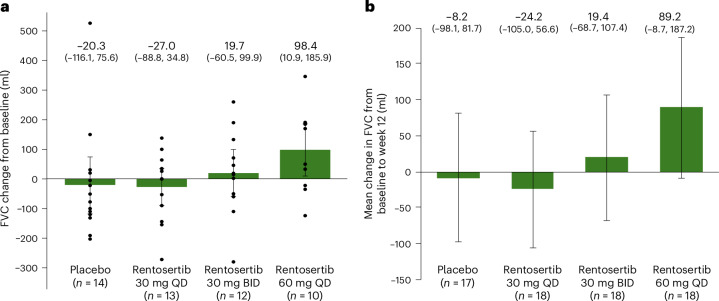
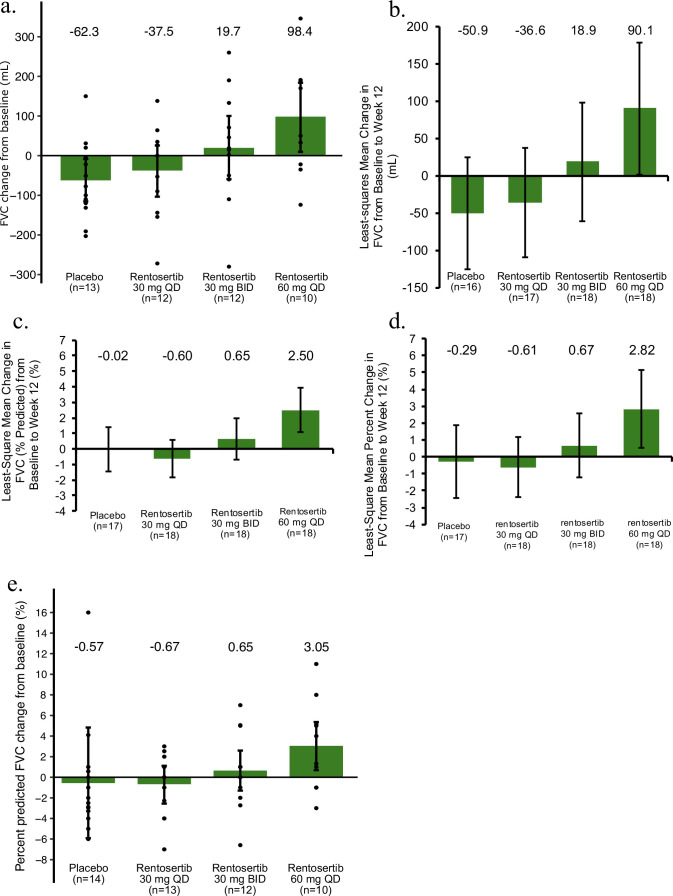
This phase 2a randomized, double-blind, placebo-controlled trial found that the AI-discovered TNIK inhibitor rentosertib was generally safe and well tolerated in idiopathic pulmonary fibrosis (IPF) over 12 weeks. The highest dose tested, 60 mg once daily, showed the most favorable lung-function signal, including a mean FVC change of +98.4 ml versus −20.3 ml with placebo.
## Key findings
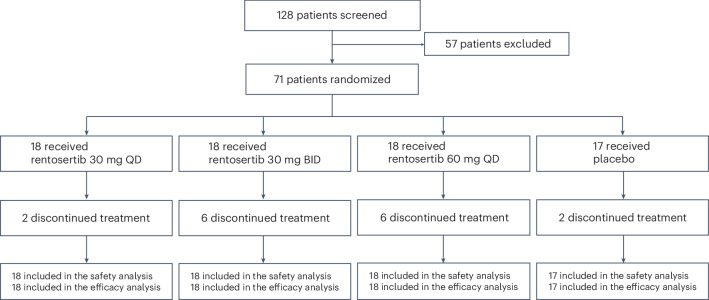
- Among 71 randomized patients, treatment-emergent adverse events were common but similar across groups: 72.2% (13/18) with 30 mg QD, 83.3% (15/18) with 30 mg BID, 83.3% (15/18) with 60 mg QD, and 70.6% (12/17) with placebo.
- Treatment-related serious adverse events were uncommon: 0 in placebo, 1/18 (5.6%) in 30 mg QD, and 2/18 (11.1%) in each of the 30 mg BID and 60 mg QD groups.
- After 12 weeks, mean FVC change was −20.3 ml with placebo, −27.0 ml with 30 mg QD, +19.7 ml with 30 mg BID, and +98.4 ml with 60 mg QD (95% CI 10.9 to 185.9).
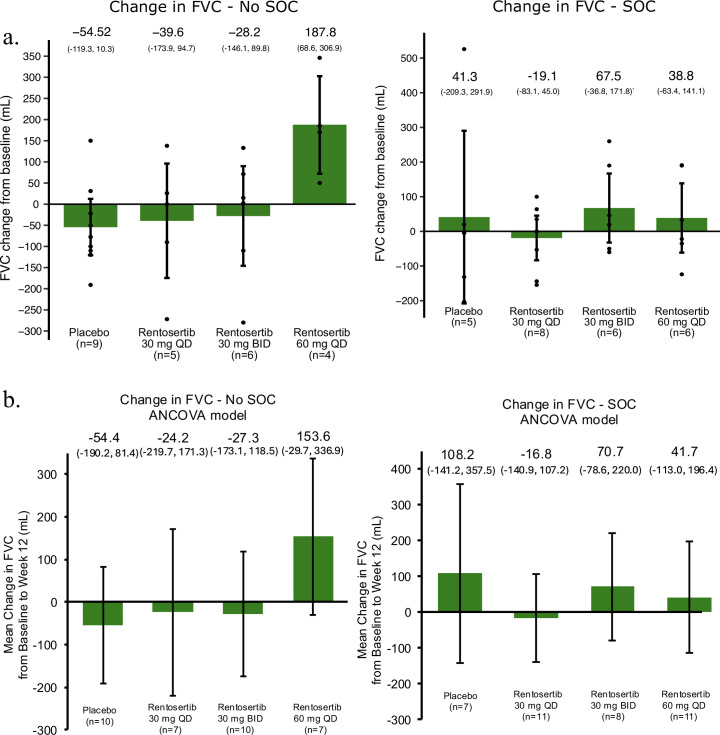
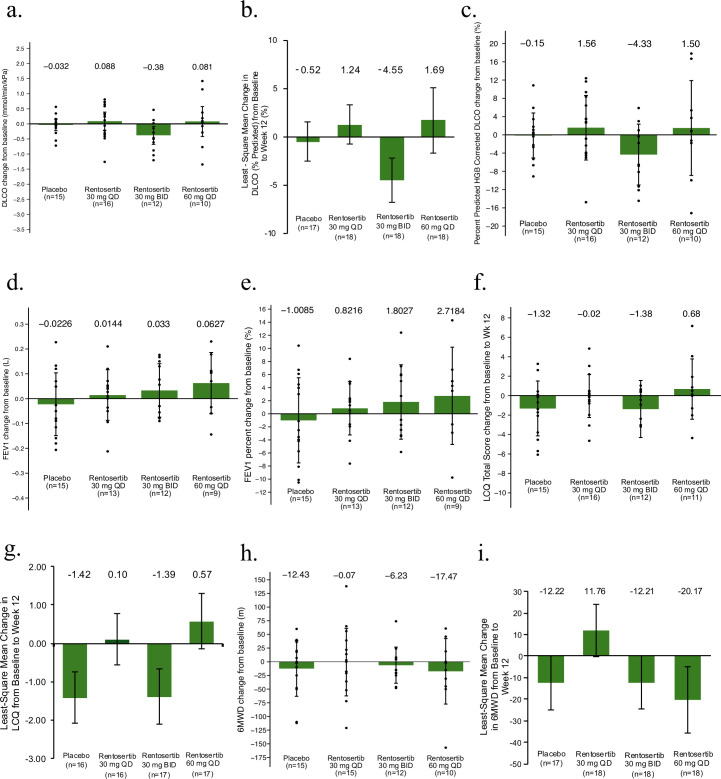
- In the 60 mg QD group without concurrent standard-of-care antifibrotic therapy, FVC improved by +187.8 ml (95% CI 68.6 to 306.9 ml); the paper also reports a significant LCQ improvement at 60 mg QD versus placebo (two-sided P = 0.0495).
## Methods
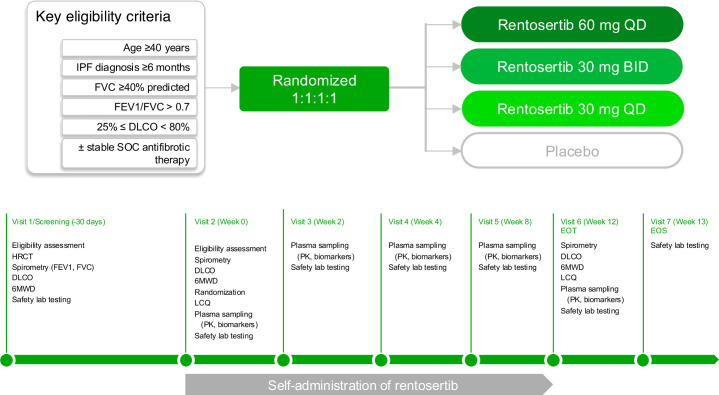
- Phase 2a, multicenter, double-blind, randomized, placebo-controlled, multidose trial at 21 sites in China; adults with IPF were assigned 1:1:1:1 to placebo or rentosertib 30 mg QD, 30 mg BID, or 60 mg QD for 12 weeks.
- 128 patients were screened and 71 enrolled; the intention-to-treat population included all 71 randomized patients, and all were included in safety and efficacy analyses.
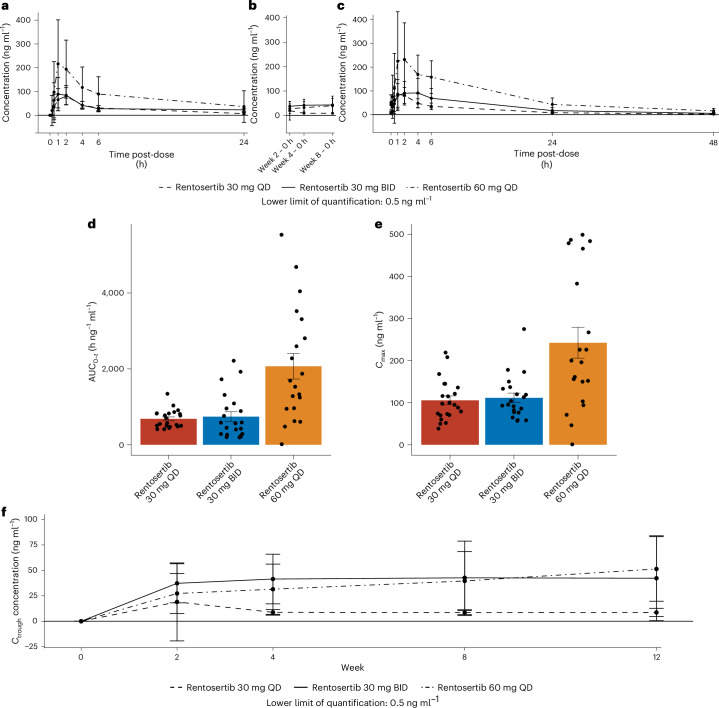
- Primary endpoint was the proportion with at least one treatment-emergent adverse event; secondary analyses included FVC and other lung-function measures, LCQ, 6MWD, pharmacokinetics, and exploratory serum proteomics, using ANCOVA for FVC, mixed models for LCQ, multiple imputation for missing week-12 values, and generalized linear/mixed models for proteomics.
## Limitations
- The paper states that limitations include the small cohort size in each arm, the geographical and demographic homogeneity of participants (all residents of China of similar race), and the short follow-up period, which limit assessment of long-term safety and efficacy.
- The text makes evident that 22/71 patients were missing week-12 measurements and 16/71 (22.5%) discontinued treatment before study end, which may affect precision and completeness of efficacy estimates.
- The 12-week duration is also explicitly noted as relatively short for capturing longer-term events such as acute exacerbations of IPF.
Model-written summary. Check it against the paper before relying on it.
Integrity signals
Registry
Cites
Statistics
Figures
Verification
Claims the paper makes
22 Valid · 2 Not valid · 11 Not checked · 70 Own results and interpretations
The cited sources that could be checked couldn’t confirm or dispute this claim.
In the paper
“Despite substantial progress in artificial intelligence (AI) for generative chemistry, few novel AI-discovered or AI-designed drugs have reached human clinical trials.”
- Also stated in: § Main · plain
“Despite these advancements, few AI-discovered or AI-designed drugs have reached clinical trials.”
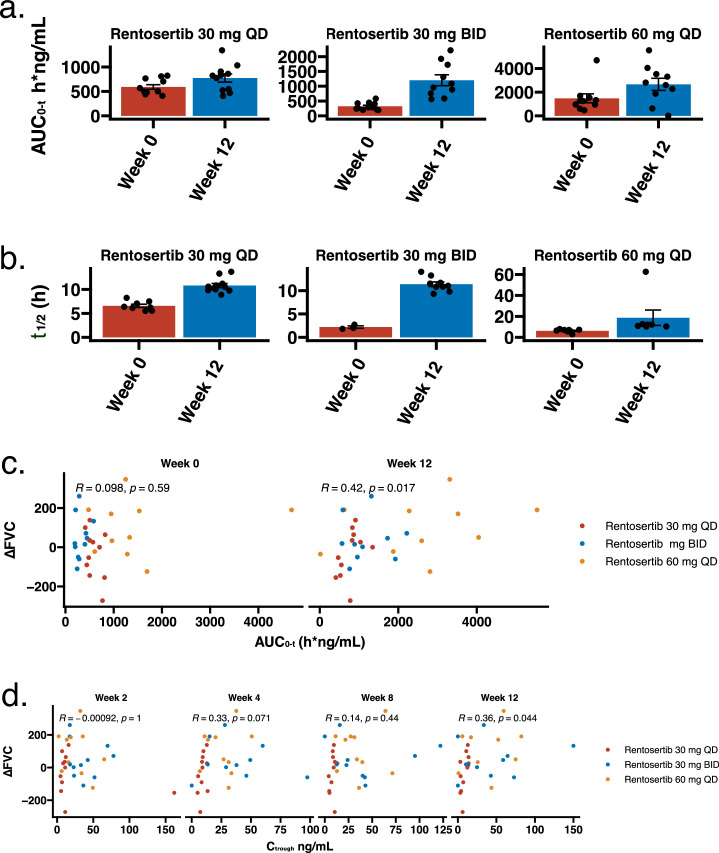
§ A generative AI-discovered TNIK inhibitor for idiopathic pulmonary fibrosis: a randomized phase 2a trial > Abstract Despite substantial progress in artificial intelligence (AI) for generative chemistry, few novel AI-discovered or AI-designed drugs have reached human clinical trials. Here we present the results of the first phase 2a multicenter, double-blind, randomized, placebo-controlled trial testing the safety and efficacy of rentosertib (formerly ISM001-055), a first-in-class AI-generated small-molecule inhibitor of TNIK, a first-in-class target in idiopathic pulmonary fibrosis (IPF) discovered using generative AI. IPF is an age-related progressive lung condition with no current therapies available that reverse the degenerative course of disease. Patients were randomized to 12 weeks of treatment with 30 mg rentosertib once daily (QD, n = 18), 30 mg rentosertib twice daily (BID, n = 18), 60 mg rentosertib QD (n = 18) or placebo (n = 17). The primary endpoint was the percentage of patients who have at least one treatment-emergent adverse event, which was similar across all treatment arms (72.2% in patients receiving 30 mg rentosertib QD (n = 13/18), 83.3% for 30 mg rentosertib BID (n = 15/18), 83.3% for 60 mg rentosertib QD (n = 15/18) and 70.6% for placebo (n = 12/17)). Treatment-related serious adverse event rates were low and comparable across treatment groups, with the most common events leading to treatment discontinuation related to liver toxicity or diarrhea. Secondary endpoints included pharmacokinetic dynamics (Cmax, Ctrough, tmax, AUC0–t/τ/∞ and t1/2), changes in lung function as measured by forced vital capacity, diffusion capacity of the lung for carbon monoxide, forced expiry in 1 s and change in the Leicester Cough Questionnaire score, change in 6-min walk distance and the number and hospitalization duration of acute exacerbations of IPF. We observed increased forced vital capacity at the highest dosage with a mean change of +98.4 ml (95% confidence interval 10.9 to 185.9) for patients in the 60 mg rentosertib QD group, compared with −20.3 ml (95% confidence interval −116.1 to 75.6) for the placebo group. These results suggest that targeting TNIK with rentosertib is safe and well tolerated and warrants further investigation in larger-scale clinical trials of longer duration. ClinicalTrials.gov registration number: NCT05938920.
What the sources say
- Could not verifycites [20] Wong, C. H., Siah, K. W. & Lo, A. W. Estimation of clinical trial success rates and related parameters. Biostatistics 20, 273–286 (2019). 29394327 PMC6409418 sourceExperimental — accuracy not yet measured
The Introduction describes a dataset of clinical trials involving more than 21,000 compounds, but does not identify which, if any, were AI-discovered or AI-designed. Searches for AI-designed drugs and generative chemistry found no passage addressing how many such drugs reached human trials. (LLM, conf=0.76)
- Not checked — no full text of the sourcecites [21] KP Jayatunga, M., Ayers, M., Bruens, L., Jayanth, D. & Meier, C. How successful are AI-discovered drugs in clinical trials? A first analysis and emerging lessons. Drug Discov. Today 29, 104009 (2024). 38692505 source
plain- Asserted: passes — The authors put it forward as true.
- Checkable: passes — It can be checked against evidence.
- Load-bearing: passes — The paper’s conclusions depend on it.
- Based: passes — The paper gives a reason why it holds.
- Also stated in: § Main · plain
Every source the paper cites for this claim was checked and supports it.
In the paper
“however, a 12-week study is a relatively short time frame to capture such long-term disease events or trajectory44.”
§ A generative AI-discovered TNIK inhibitor for idiopathic pulmonary fibrosis: a randomized phase 2a trial > Discussion
What the sources say
- Supportedcites [44] Richeldi, L. et al. Trial of a preferential phosphodiesterase 4B inhibitor for idiopathic pulmonary fibrosis. N. Engl. J. Med. 386, 2178–2187 (2022). 35569036 source
The Discussion identifies the 12-week duration as a limitation. It says the trial was long enough to assess changes in FVC but too short, given its size, to meaningfully collect data on clinically important events such as acute exacerbations or death. This supports the claim about longer-term events or disease trajectory. (LLM, conf=0.94)
plain- Asserted: passes — The authors put it forward as true.
- Checkable: passes — It can be checked against evidence.
- Load-bearing: passes — The paper’s conclusions depend on it.
- Based: passes — The paper gives a reason why it holds.
- Supported
The cited sources support only part of this claim — read each source’s verdict below.
In the paper
“The incongruity of increased FVC with stable DLCO may be attributed to low numbers of patients in each treatment arm and the inherent variability of DLCO measurement41.”
§ A generative AI-discovered TNIK inhibitor for idiopathic pulmonary fibrosis: a randomized phase 2a trial > Discussion
What the sources say
- Partly supportedcites [41] McCormack, M. C. Facing the noise: addressing the endemic variability in DLCO testing. Respir. Care 57, 17–25 (2012). 22222122 sourceExperimental — accuracy not yet measured
Our copy of McCormack's 'Facing the Noise' strongly supports only the measurement-variability half of the sentence: the Abstract states 'The variability in the measurement limits the utility of the test. Variability is attributable to differences in equipment, testing conditions, patient factors, and reference equations,' and the Indications section repeats that 'High variability, both within and between laboratories, has been a limitation of DLCO testing' (Testing Procedures, p. ~4, adds instrument accuracy data). However, the paper nowhere addresses the specific 'incongruity of increased FVC with stable DLCO' or the attribution to 'low numbers of patients in each treatment arm' — the only FVC/DLCO pairing is a Discussion remark (Pichurko) that DLCO measured serially alongside FVC after one year's treatment has prognostic value, which does not comment on discordant changes or on small treatment arms. (LLM, conf=0.72)
hedgedstates a possible cause- Asserted: passes — The authors put it forward as true.
- Checkable: passes — It can be checked against evidence.
- Load-bearing: unclear — It is unclear whether the paper’s conclusions depend on it.
- Based: passes — The paper gives a reason why it holds.
- Partly supported
The cited sources support only part of this claim — read each source’s verdict below.
In the paper
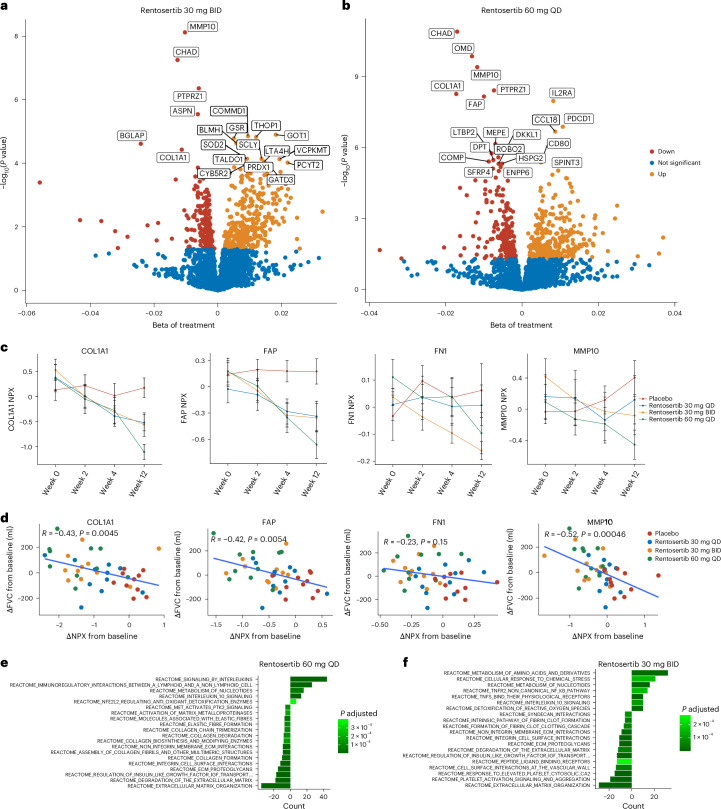
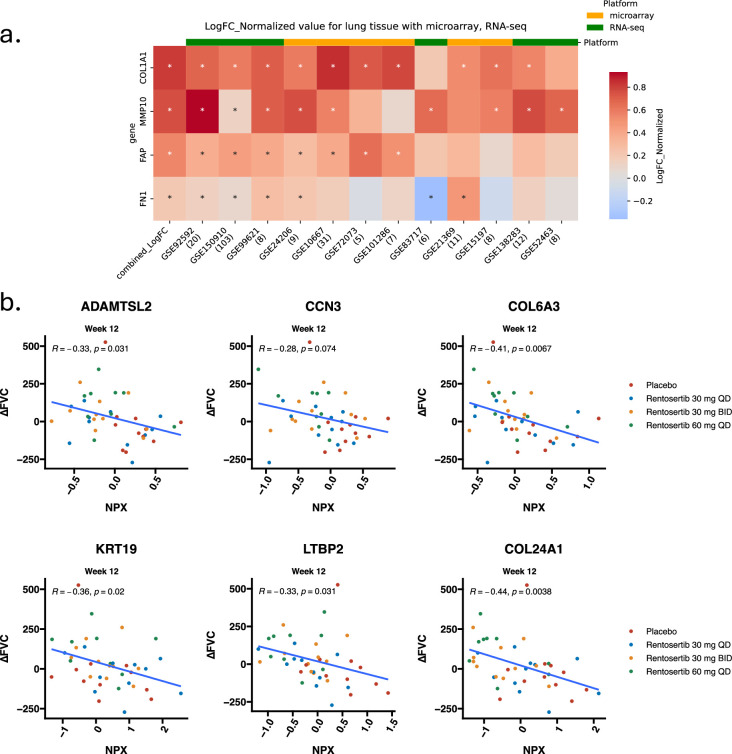
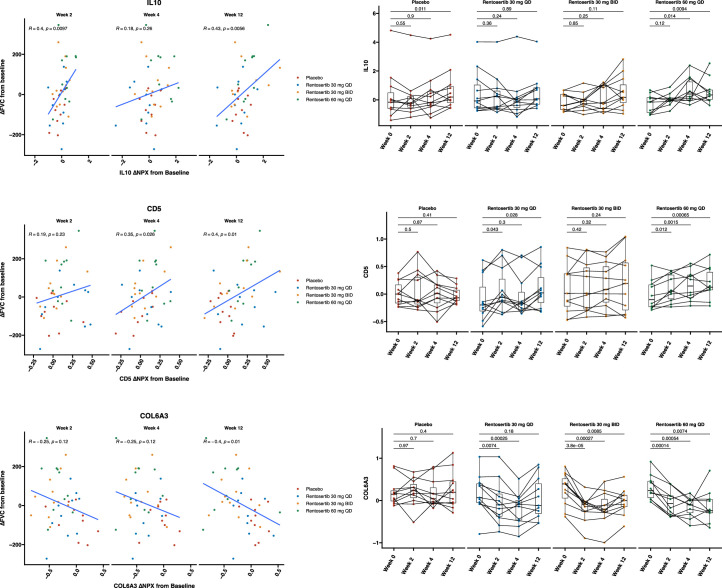
“We further found that the abundance at week 12 of proteins previously reported to be associated with lung function38 and transplant-free survival39 in patients with IPF, such as ADAMTSL2, COL6A3, CCN3, COL24A1, KRT19 and LTBP2, were associated change in FVC”
§ A generative AI-discovered TNIK inhibitor for idiopathic pulmonary fibrosis: a randomized phase 2a trial > Results > Post-hoc exploratory analyses
What the sources say
- Could not verifycites [38] Su, C.-Y. et al. Multi-ancestry proteome-phenome-wide Mendelian randomization offers a comprehensive protein-disease atlas and potential therapeutic targets. Preprint at medRxiv10.1101/2024.10.17.24315553 (2024). sourceExperimental — accuracy not yet measured
Our copy of Su et al. (2024, medRxiv preprint 10.1101/2024.10.17.24315553) is a multi-ancestry proteome-phenome-wide MR atlas whose reported findings concern cardiometabolic and inflammatory-bowel phenotypes, with IL1RL1 in IBD/CD/UC as the illustrative follow-up (Abstract; Sections 4, 8.1, 12.2-12.5). No passage mentions idiopathic pulmonary fibrosis, transplant-free survival, forced vital capacity (FVC), week-12 protein abundance, or any of the named proteins ADAMTSL2, COL6A3, CCN3, COL24A1, KRT19, LTBP2; searches for 'IPF transplant-free survival lung function FVC', 'ADAMTSL2 COL6A3 CCN3 COL24A1 KRT19 LTBP2', and 'pulmonary fibrosis forced vital capacity' returned only unrelated pQTL/UK Biobank Cox-regression material. Notably, reference 38 in this paper is Finan et al.'s druggable-genome list (Section 15.5), not a lung-function study, so the citation cannot be an identification of the source cited here. The claim is therefore neither supported nor contradicted by our copy. (LLM, conf=0.72)
- Partly supportedcites [39] Oldham, J. M. et al. Proteomic biomarkers of survival in idiopathic pulmonary fibrosis. Am. J. Respir. Crit. Care Med. 209, 1111–1120 (2024). 37847691 PMC11092951 sourceExperimental — accuracy not yet measured
Our copy of Oldham et al. (2024) explicitly supports the transplant-free survival (TFS) attribution for three of the six proteins named in the citing sentence: the Abstract and Results (Top-20 table, Table 2) report LTBP2 (HR 2.43), COL24A1/collagen alpha-1(XXIV) chain (HR 2.11) and KRT19 (HR 1.60) as the validated proteins with the strongest TFS association, and the Discussion singles out KRT19 as among the top TFS-associated proteins. The other three proteins attributed to this source — ADAMTSL2, COL6A3 and CCN3 — appear nowhere in our copy; searches for them returned only the paper's validated ADAMTS13 (a different protein) and unrelated passages. Because the complete list of the 140 validated TFS proteins lives in online-only Tables E1–E3, which our copy does not contain, that portion of the list can be neither confirmed nor contradicted here. The citing sentence's own week-12/change-in-FVC result is the citing authors' finding, not something judged against this source. (LLM, conf=0.72)
plainstates an association- Asserted: passes — The authors put it forward as true.
- Checkable: passes — It can be checked against evidence.
- Load-bearing: unclear — It is unclear whether the paper’s conclusions depend on it.
- Based: passes — The paper gives a reason why it holds.
- Could not verify
A result the paper reports from its own data — it cites no other source for it, so there is none to check. The quote shows it is in the paper.
In the paper
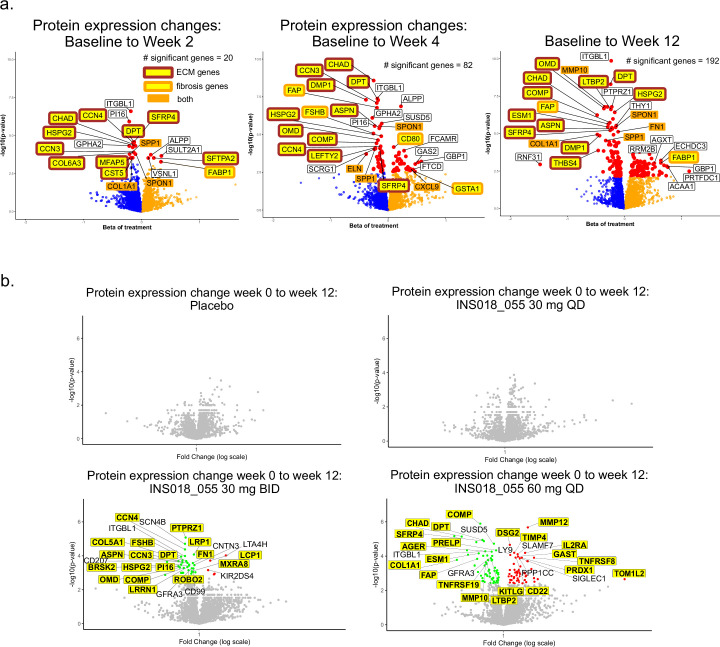
“Pathway enrichment analysis identified extracellular matrix organization as the most downregulated Reactome pathway gene set in both treatment groups,”
- Also stated in: § Post-hoc exploratory analyses · plain
“Pathway enrichment analysis identified extracellular matrix organization as the most downregulated Reactome pathway gene set in both treatment groups”
§ A generative AI-discovered TNIK inhibitor for idiopathic pulmonary fibrosis: a randomized phase 2a trial > Results > Post-hoc exploratory analyses
plain- Asserted: passes — The authors put it forward as true.
- Checkable: passes — It can be checked against evidence.
- Load-bearing: unclear — It is unclear whether the paper’s conclusions depend on it.
- Based: passes — The paper gives a reason why it holds.
- Also stated in: § Post-hoc exploratory analyses · plain
33 more claims
Create a free account to see all 105 claims and to verify the 10 references still open.
- It may state two separate claims as one. 42
- Probably not a substantial claim. 36
Claims other papers make about this one
Each is checked against this paper’s own text: does it say what the citing paper says it does?
The cited source says what the claim attributes to it.
In the citing paper
“AI has also facilitated the identification of new targets, including the kinase TNIK, and the design of senomorphic molecules capable of suppressing the SASP129,130.”
From Emerging strategies in senotherapeutics: from broad-spectrum senolysis to precision reprogramming (2026) · cites this paper as [129]
Citations
Cites
Efficacy and Safety of Nintedanib in Idiopathic Pulmonary Fibrosis
Richeldi, L., du Bois, R. M., Raghu, G., Azuma, A., Brown, K. K., Costabel, U., Cottin, V., Flaherty, K. R., Hansell, D. M., Inoue, Y., et al. (2014) · New England Journal of Medicine · doi:10.1056/nejmoa1402584 · Cited by 4,654
Graham, B. L., Steenbruggen, I., Miller, M. R., Barjaktarevic, I. Z., Cooper, B. G., Hall, G. L., Hallstrand, T. S., Kaminsky, D. A., McCarthy, K., McCormack, M. C., et al. (2019) · American Journal of Respiratory and Critical Care Medicine · doi:10.1164/rccm.201908-1590st · Cited by 4,305 · cited 2×
“%) had FVC and FEV1 measured at baseline/randomization with centrally sourced Spiro-Sphere devices (Clario) provided by the sponsor with study-specific training and proficiency tests to the operating staff to meet the 2019 ATS/ERS guideline criteria 63 with central overread.”
Diagnosis of Idiopathic Pulmonary Fibrosis. An Official ATS/ERS/JRS/ALAT Clinical Practice Guideline
Raghu, G., Remy-Jardin, M., Myers, J. L., Richeldi, L., Ryerson, C. J., Lederer, D. J., Behr, J., Cottin, V., Danoff, S. K., Morell, F., et al. (2018) · American Journal of Respiratory and Critical Care Medicine · doi:10.1164/rccm.201807-1255st · Cited by 4,103 · cited 1×
“…of interstitial lung disease (for example, environmental exposures, connective tissue disease, hypersensitivity pneumonitis or drug toxicities) 24 and marked by interstitial pneumonia, dyspnea and cough 25 , histologically characterized by fibroblast proliferation and extracellular matrix…”
A phase 3 trial of pirfenidone in patients with idiopathic pulmonary fibrosis.
King, T. E., Bradford, W. Z., Castro-Bernardini, S., Fagan, E. A., Glaspole, I., Glassberg, M. K., Gorina, E., Hopkins, P. M., Kardatzke, D., Lancaster, L., et al. (2014) · New England Journal of Medicine · doi:10.1056/nejmoa1402582 · Cited by 3,975
Standardization of Spirometry — 1987 Update
Buist, A. S. (1987) · American Review of Respiratory Disease · doi:10.1164/ajrccm/136.5.1073 · Cited by 3,266
Raghu, G., Remy-Jardin, M., Richeldi, L., Thomson, C. C., Inoue, Y., Johkoh, T., Kreuter, M., Lynch, D. A., Maher, T. M., Martinez, F. J., et al. (2022) · American Journal of Respiratory and Critical Care Medicine · doi:10.1164/rccm.202202-0399st · Cited by 2,957 · cited 1×
“Eligible patients were 40 years of age or older with an IPF diagnosis as defined by the American Thoracic Society, European Respiratory Society, Japanese Respiratory Society and Latin American Thoracic Association guidelines 62 .”
Pirfenidone in patients with idiopathic pulmonary fibrosis (CAPACITY): two randomised trials
Noble, P. W., Albera, C., Bradford, W. Z., Costabel, U., Glassberg, M. K., Kardatzke, D., King, T. E., Lancaster, L., Sahn, S. A., Szwarcberg, J., et al. (2011) · The Lancet · doi:10.1016/s0140-6736(11)60405-4 · Cited by 2,154 · cited 2×
“Clinical trials investigating these two drugs in patients with IPF have demonstrated only a slowing of disease progression 33,34 , as measured by forced vital capacity (FVC) and self-reported quality of life (QOL) metrics, and unclear benefit to survival 26 , making the development of therapies…”
Lederer, D. J., & Martinez, F. J. (2018) · New England Journal of Medicine · doi:10.1056/nejmra1705751 · Cited by 2,056
Richeldi, L., Collard, H. R., & Jones, M. G. (2017) · The Lancet · doi:10.1016/s0140-6736(17)30866-8 · Cited by 2,020
Diagnosing the decline in pharmaceutical R&D efficiency
Scannell, J. W., Blanckley, A., Boldon, H., & Warrington, B. (2012) · Nature Reviews Drug Discovery · doi:10.1038/nrd3681 · Cited by 1,981 · cited 1×
“The process of developing novel therapeutics is increasingly slow and costly 1 , with an average of US$2–3 billion spent over the course of 10–15 years to bring a new drug to market 2 .”
Cited by
Leading artificial intelligence–driven drug discovery platforms: 2025 landscape and global outlook
Dharmasivam, M., Kaya, B., Akinware, A., Azad, M. G., & Richardson, D. R. (2025) · Pharmacological Reviews · doi:10.1016/j.pharmr.2025.100102 · Cited by 51
Decoding organ fibrosis: mechanistic insights and emerging therapeutic strategies
Chen, X., Zhang, J., Guo, L., Wu, C., Zhou, J., Xu, M., Mo, L., Li, Y., & He, J. (2026) · Signal Transduction and Targeted Therapy · doi:10.1038/s41392-025-02532-0 · Cited by 59
Reimagining human-centric drug development with new approach methodologies
Wu, X., Wu, M. A., Zou, J., Kleinstreuer, N., & Wu, J. C. (2026) · Science · doi:10.1126/science.aeb0045 · Cited by 44
Advances in Inhaled Nanoparticle Drug Delivery for Pulmonary Disease Management
Fan, Y., Zhou, Y., Zhao, J., & Zhao, Y. (2025) · The FASEB Journal · doi:10.1096/fj.202502624r · Cited by 45
“Moreover, NCK-interacting kinase (TNIK) as a first- in-class target for IPF and rentosertib as a first- in-class TNIK inhibitor are discovered using AI [191, 192].”
Graph neural networks driven acceleration in drug discovery
Wang, R., & Zhuang, C. (2025) · Acta Pharmaceutica Sinica B · doi:10.1016/j.apsb.2025.10.011 · Cited by 38
“They successfully screened and targeted a novel and previously 110,113 .”
Othman, Z. K., Ahmed, M. M., Kasimieh, O., Musa, S. S., Branda, F., Cue, E. G., Ocampo, J. M. A., Lucero‐Prisno, D. E., & Vimolmangkang, S. (2025) · Intelligence-Based Medicine · doi:10.1016/j.ibmed.2025.100316 · Cited by 37
New approach methodologies for drug discovery
Liu, W., Pang, P. D., Wu, C. A., Tagle, D. A., & Wu, J. C. (2026) · Cell · doi:10.1016/j.cell.2026.02.012 · Cited by 49
Recent advances in the pharmacology of voltage-gated ion channels
Mateos, D. L., Harris, B. J., Hernández-González, A., Yarov-Yarovoy, V. M., & Wulff, H. (2025) · Pharmacological Reviews · doi:10.1016/j.pharmr.2025.100090 · Cited by 31
“259 Both the target and the compound were identified using Insilico Medicine’s generative AI-based biology and chemistry platforms demonstrating the potential impact of using AI in drug discovery.”
Lam, J. H., & Katritch, V. (2025) · npj Drug Discovery. · doi:10.1038/s44386-025-00031-4 · Cited by 40
Target identification and assessment in the era of AI
Pun, F. W., Podolskiy, D. I., Izumchenko, E., Mortlock, A. A., Oprea, T. I., Scheibye‐Knudsen, M., Fortney, K., Morgen, E. K., Ren, F., & Zhavoronkov, A. A. (2026) · Nature Reviews Drug Discovery · doi:10.1038/s41573-026-01412-8 · Cited by 40
“Furthermore, INS018_055 showed favourable safety and tolerability profiles in two independent phase I trials and a phase IIa trial 174,175 (NCT05938920), which enrolled 71 patients with IPF in China, evaluating 3 dosing regimens (30 mg QD, 30 mg BID or 60 mg QD) against placebo over 12 weeks.”
Self-citationA New Era of Artificial Intelligence (AI): Transforming Drug Discovery and Development
Ali, S., Tian, X., Chen, H., & Zhou, J. (2025) · Journal of Medicinal Chemistry · doi:10.1021/acs.jmedchem.5c03159 · Cited by 28
AI-enabled drug discovery reaches clinical milestone
Žitnik, M. (2025) · Nature Medicine · doi:10.1038/s41591-025-03832-2 · Cited by 25
Park, K., & Jeon, M. (2025) · Pharmaceuticals · doi:10.3390/ph18121793 · Cited by 21
“…the first end-to-end AI-designed small-molecule drug, ren-tosertib, a TNIK inhibitor for idiopathic pulmonary fibrosis that advanced to phase II clinical trials in 2024 after being identified, optimized, and nominated entirely through AI-driven generative design and preclinical modeling [74].”
Verma, V., & Kumar, D. (2025) · Letters in Drug Design & Discovery · doi:10.1016/j.lddd.2026.100341 · Cited by 26
Nguyen, J. V. L., Meziadi, A., Brunner, C., McKeague, M., Malic, L., & Tabrizian, M. (2025) · Advanced Science · doi:10.1002/advs.202516852 · Cited by 17
Genomics of drug target prioritization for complex diseases
Chen, R. K., Duffy, Á., & Do, R. (2025) · Nature Reviews Genetics · doi:10.1038/s41576-025-00904-4 · Cited by 31
“Another example has used the PandOmics platform of multi-omics and NLP to prioritize targets 155 , which identified PHD1 and PHD2 for inflammatory bowel disease (phase I) and TNIK for fibrosis (phase II) 156,157,160 .”
Senhaji, L., Senhaji, N., Abbassi, M., Karhate, M., Serraj, M., Biaze, M. E., Benjelloun, M. C., Ouldim, K., Bouguenouch, L., & Amara, B. (2026) · Biomedicines · doi:10.3390/biomedicines14010090 · Cited by 15
From clock to clock: Therapeutic target discovery for aging and age-related diseases
Chen, J., Leung, G. H. D., Leung, H., Ustiugova, A. S., Shneyderman, A., Korzinkin, M., Gennert, D. G., Pun, F. W., Aliper, A. M., Ren, F., et al. (2025) · Ageing Research Reviews · doi:10.1016/j.arr.2025.102871 · Cited by 13
Self-citationRole of artificial intelligence in gastric diseases
Gong, E. J., Woo, J., Lee, J. J., & Bang, C. S. (2025) · World Journal of Gastroenterology · doi:10.3748/wjg.v31.i37.111327 · Cited by 11
From Prompt to Drug: Toward Pharmaceutical Superintelligence
Zhavoronkov, A. A., Gennert, D. G., & Shi, J. (2026) · ACS Central Science · doi:10.1021/acscentsci.5c01473 · Cited by 20
Self-citationDeep generative molecular design and its value in modern drug discovery
Özdemir, E. S., Jang, H., Keskin, Ö., Gürsoy, A., & Nussinov, R. (2026) · Expert Opinion on Drug Discovery · doi:10.1080/17460441.2026.2636192 · Cited by 12
“Encouragingly, the field is transitioning from computational novelty to translational success [24,25].”
Khairil, L., Benny, K. H. S., Jerry, J., Khatib, F. M., Ramli, M. D. C., & Kumar, S. (2026) · Pharmaceuticals · doi:10.3390/ph19060916 · Cited by 11
“In 2024, Rentosertib became one of the first AI-assisted drug candidates to advance into Phase IIa clinical trials for idiopathic pulmonary fibrosis [35,36].”
Artificial intelligence in drug discovery — what it is, where we stand and the path forward
Bender, A., Thomas, M. C., Scannell, J. W., Shaywitz, D. A., Ghiandoni, G. M., Greener, J. G., Pruteanu, L.-L., Jacobson, R. D., Handa, K., Hirano, M., et al. (2026) · Nature Reviews Drug Discovery · doi:10.1038/s41573-026-01496-2 · Cited by 48
TCF/LEF-mediated transcriptional regulation in the canonical Wnt pathway
Takano, C., & Higuchi, Y. (2025) · Current Molecular Pharmacology · doi:10.1016/j.cmp.2025.09.004 · Cited by 6
Emerging strategies in senotherapeutics: from broad-spectrum senolysis to precision reprogramming
Zhang, W., Song, S., Zhang, Y., Pan, Y., Hu, D., & Wang, Y. (2026) · npj Aging · doi:10.1038/s41514-026-00355-z · Cited by 6
“SnCs disrupt tissue homeostasis through sustained cell-cycle arrest and the pro-in fl ammatory activity of the SASP.”
InfluentialApplication and Prospects of Large Language Models in Small-Molecule Drug Discovery
Ma, J., Liu, J., Xu, D., Song, X., & Zhang, Z. (2025) · Analytical Chemistry · doi:10.1021/acs.analchem.5c04083 · Cited by 11
Artificial intelligence in idiopathic pulmonary fibrosis: advances, challenges and future directions
Selman, M., Buendía-Roldán, I., & Pardo, A. (2025) · European Respiratory Journal · doi:10.1183/13993003.01112-2025 · Cited by 10
Dinakarkumar, Y., Ganesan, S. K., John, R. M., Raj, A. L. T., Raja, H., Selvaraj, A., Punitha, N., & Venkatesh, A. (2025) · Advanced Therapeutics · doi:10.1002/adtp.202500532 · Cited by 6
“More recently, this AI-designed compound (now called rentosertib) has moved into Phase II trials for fibrosis, marking a milestone where both the target and therapeutic were discovered using generative AI [26].”
Leung, H., Duan, C., Gou, W., Chen, J., Xin, Y., Zheng, Z., Naumov, V., Gennert, D. G., Zhang, M., Aliper, A., et al. (2026) · Scientific Reports · doi:10.1038/s41598-026-47765-3 · Cited by 9
“Notably, several targets prioritized by PandaOmics, which integrates multiple omics and text scores, have been validated in both preclinical and clinical studies 13–16 .”
Self-citationReimagining computational macromolecular modeling: AI-driven approaches
Özdemir, E. S., Jang, H., Nussinov, R., Keskin, Ö., & Gürsoy, A. (2025) · Biophysical Journal · doi:10.1016/j.bpj.2025.11.028 · Cited by 8
Foundation models in clinical oncology: Progresses and perspectives
Li, J., Fu, J., Geng, X., & Wang, H. (2025) · Cancer Letters · doi:10.1016/j.canlet.2025.218220 · Cited by 11
A comprehensive survey on artificial intelligence for biomolecule design
Yang, G., Li, J., Wang, Q., Wu, L., Chen, Z., Zhao, P.-C., Wang, H., Wang, Q., Wen, B., Song, C., et al. (2026) · The Innovation Life · doi:10.59717/j.xinn-life.2026.100196 · Cited by 5
Treatments for idiopathic pulmonary fibrosis are on the horizon
Vernimmen, T. (2026) · Nature · doi:10.1038/d41586-026-00109-7 · Cited by 7
Tang, J., Gong, D., Li, H., & Li, S. (2026) · Acta Pharmaceutica Sinica B · doi:10.1016/j.apsb.2026.01.039 · Cited by 7
“Rentosertib has already demonstrated promising results in a phase IIa clinical trial, marking a milestone in the clinical application of AI and providing one of the clearest validations to date that AI-designed molecules can advance successfully through clinical development 64 .”
Self-citationPrecision oncology in the age of AI: lessons from AI-driven drug discovery and clinical translation
Yoo, W. (2026) · BJC Reports · doi:10.1038/s44276-026-00221-1 · Cited by 13
“A recent phase 2a randomized, placebo-controlled clinical trial published in Nature Medicine has marked a signi fi cant in fl ection point in the fi eld of translational medicine [3].”
Zhao, L., Liu, H., Yao, X., Ma, X., Liu, B., Li, B., Tong, H. H. Y., & Zhang, Q. (2025) · Journal of Chemical Information and Modeling · doi:10.1021/acs.jcim.5c01521 · Cited by 4
Self-citationAI-driven toolset for IPF and aging research associates lung fibrosis with accelerated aging
Galkin, F., Chen, S., Aliper, A. M., Zhavoronkov, A. A., & Ren, F. (2025) · Aging · doi:10.18632/aging.206295 · Cited by 8
Self-citationIn silico Drug Discovery: Bridging the Gaps in Preclinical Translation
Markossian, S., Baskir, H. M., Grossman, A., Chandran, S., Rele, S. S., Hall, M. D., Amaro, R. E., Tropsha, A., & Zakharov, A. V. (2025) · Drug Discovery Today · doi:10.1016/j.drudis.2025.104567 · Cited by 4
From algorithms to systems: integrating computation into drug discovery
Bradley, A. R., Rossall, A., Pairaudeau, G., & Deane, C. M. (2025) · Expert Opinion on Drug Discovery · doi:10.1080/17460441.2025.2601102 · Cited by 5
“Similarly, Insilico Medicine’s rentosertib – generated from target-ideation to candidate with their AI technology – completed Phase IIa studies for idiopathic pulmonary fibrosis in 2025, becoming the first generative-AI molecule to progress that far in the clinic [4].”
Tanimoto, A., Ramkumar, K., Stewart, C. A., Zhang, B., Concannon, K., Cardnell, R. J., Shen, L., Wang, Q., Wang, J., Gay, C. M., et al. (2025) · Journal of Thoracic Oncology · doi:10.1016/j.jtho.2025.12.102 · Cited by 6
Fung, M.-C. (2026) · Medical Review · doi:10.1515/mr-2025-0074 · Cited by 7
Braddock, M., & Jeziorski, K. (2026) · Expert Opinion on Drug Discovery · doi:10.1080/17460441.2026.2624023 · Cited by 4
“…intelligence (AI) approach and subsequently ISM001-055 (later named rentosertib) as a lead candidate [35] for treating patients with idiopathic pulmonary fibrosis (IPF), a condition in which the lungs become scarred and breathing becomes increasingly difficult and for which there is no cure [36].”
Artificial Intelligence in Drug Discovery and Development: Raising Quality per Decision
Furukawa, S., Uchida, H., & Kishimoto, T. (2026) · Pharmacopsychiatry · doi:10.1055/a-2810-8972 · Cited by 8
Adam, D. (2026) · Nature Medicine · doi:10.1038/s41591-026-04275-z · Cited by 4
Foundation models and AI agents in oncology drug discovery
Ghanwatkar, Y., Rajdeo, P., & Mahato, R. I. (2026) · Drug Discovery Today · doi:10.1016/j.drudis.2026.104655 · Cited by 4
Zhavoronkov, A. A., Galkin, F., Chen, S., Ren, F., Aliper, A., Durymanov, M. O., Sidorenko, D., Cui, H., Han, J. J., Xu, H., et al. (2026) · Nature Biotechnology · doi:10.1038/s41587-026-03286-y · Cited by 6
Self-citationZhavoronkov, A. A., Wilczok, D., Ren, F., & Galkin, F. (2025) · Aging · doi:10.18632/aging.206301 · Cited by 9
“The case of rentosertib is particularly interesting since it is a potential restorative drug, leading to a slight increase in lung volume (+98 ml) over a 12-week period [64].”
Self-citationLu, H., Sun, D., Zhang, H., Shi, S., Yu, H., Cui, H., Cai, X., Ding, X., Chen, S., Zhang, M., et al. (2025) · Journal of Medicinal Chemistry · doi:10.1021/acs.jmedchem.5c01944 · Cited by 2
Self-citationThe future of drug development: AI transforming the pharmaceutical industry
Chen, Y., & Liu, Z. (2025) · International Journal of Surgery · doi:10.1097/js9.0000000000003955 · Cited by 2
Deep learning for small-molecule drug discovery: From molecular design to clinical translation
Oliveira, R. I., Pereira, T., Abbasi, M., Salvador, J. A. R., & Arrais, J. P. (2025) · Journal of Pharmaceutical Analysis · doi:10.1016/j.jpha.2025.101533 · Cited by 8
“On the contrary, INS018_055 has the potential for better tolerability and simpler dosing, which leads to improved patient adherence in long-term treatment [122].”
From animal models to new approach methodologies: Opportunities and challenges
Zhu, H., Lin, X., Weng, Q., Cao, J., He, Q., & Yang, B. K. (2026) · The Innovation · doi:10.1016/j.xinn.2026.101260 · Cited by 8
Self-citationSeyhan, A. A., & Carini, C. (2026) · Critical Reviews in Oncology/Hematology · doi:10.1016/j.critrevonc.2026.105461 · Cited by 9
Artificial intelligence in drug discovery: from algorithmic foundations to clinical translation
Mao, Z., & Yan, L. (2026) · Frontiers in Pharmacology · doi:10.3389/fphar.2026.1870527 · Cited by 5
“A subsequent Phase IIa trial (completed in 2023) met its primary safety endpoints and showed dose-dependent improvements in forced vital capacity (FVC), a key efficacy measure in IPF (Xu et al., 2025).”
NHS 10 year plan: Can using AI offer a solution to the NHS’ problems?
Strain, W. D., Cronin-Lampe, J., Evans, M., et al. (2025) · BMJ · doi:10.1136/bmj.r1407 · Cited by 2
Hellmann, F., Ristow, I., Well, L., Lohse, S., Anokhin, M., Kuhlen, M., André, E., & Harder, A. (2025) · Orphanet Journal of Rare Diseases · doi:10.1186/s13023-025-04093-5 · Cited by 3
“…subtyping (Ali Bashashati, personal communication), as well as identification of the best drug combination from pre-clincal data, implementing predictions of AlphaFold [87] that need to be absolutely up-to date for the NF1 protein [88], and analyzing most expected response to planned therapy [85].”
Lu, H., Shi, S., Yu, H., Sun, D., Zhang, H., Cui, H., Cai, X., Ding, X., Chen, S., Zhang, M., et al. (2025) · Journal of Medicinal Chemistry · doi:10.1021/acs.jmedchem.5c01943 · Cited by 1
Self-citationDharmasivam, M., Azad, M. G., Richardson, V., et al. (2025) · Pharmacological Reviews · doi:10.1016/j.pharmr.2025.100103 · Cited by 1
Wang, D., Jing, Y., Zang, D., Zhang, C., & Yu, X. (2025) · Letters in Drug Design & Discovery · doi:10.1016/j.lddd.2025.100194 · Cited by 3
Luo, X., Zhang, J., Lin, F., Liu, S., & Yang, Z. (2026) · World Journal of Emergency Medicine · doi:10.5847/wjem.j.1920-8642.2026.025 · Cited by 1
Self-citationLacret, R. (2026) · Journal of Natural Products · doi:10.1021/acs.jnatprod.5c01436 · Cited by 1
Weber, L. I., Timpen, L. E., Egger, A.-S., Schöpf, P., Ayhan, N. D., Demmel, D., Hotze, M., Zhang, Y., Mehrabi, M., Puglisi, K., et al. (2026) · Proceedings of the National Academy of Sciences · doi:10.1073/pnas.2524159123 · Cited by 3
Digital twin approaches for interpretable side effect prediction in drug discovery
Ecker, A., Szabó, G., Szalma, J., Fichó, E., Reguly, I. Z., & Csikász-Nagy, A. (2026) · Drug Discovery Today · doi:10.1016/j.drudis.2026.104637 · Cited by 7
Blueprint for Drug Repurposing Success: Foundational Concepts and Practical Framework
Ray, A., Dey, S., & Sur, D. (2026) · Drug Development Research · doi:10.1002/ddr.70270 · Cited by 1
Targeting PI3Kδ for lymphoma and immune diseases treatment: a review
Jia, W. (2026) · Molecular Diversity · doi:10.1007/s11030-026-11536-z · Cited by 2
Target discovery and drug design in the era of artificial intelligence
Fleming, P., & Ivanov, A. A. (2026) · Medicinal Chemistry Research · doi:10.1007/s00044-026-03562-1 · Cited by 5
Iqbal, S., Chen, J., Pal, D., & Shen, B. (2026) · Drug Discovery Today · doi:10.1016/j.drudis.2026.104687 · Cited by 1
Lee, E., Chary, A., Gerelkhuu, Z., Weber, P., Virmani, I., Brugger, B. A., Ribeiro, I. R. S., Brun, E., Lacconi, V., Bang, H., et al. (2026) · Nano Convergence · doi:10.1186/s40580-026-00566-w · Cited by 5
“…AI-driven platforms, including generative-AI-supported candidate design workflows, illustrate how in silico approaches can support candidate prioritization and progression into testing, provided that model outputs remain linked to interpretable biological and safety-relevant evidence [285].”
Artificial intelligence in drug development: From molecular discovery to precision medicine
Xie, T., Zhang, Z.-H., Wang, Y.-S., Wang, H., Chen, X., Han, F., & Shao, F. (2026) · Genes & Diseases · doi:10.1016/j.gendis.2026.102402 · Cited by 1
Proteome-aware organ proxy aging clocksPreprint
Xu, H., Chen, J., Chen, D., Mao, K., & Han, J. J. (2026) · bioRxiv (Cold Spring Harbor Laboratory) · doi:10.64898/2026.04.24.720503 · Cited by 1
Ye, J., Chen, N., Zhu, Y., Xu, Y., Pan, C., & Xu, Y. (2025) · Bioorganic & Medicinal Chemistry · doi:10.1016/j.bmc.2025.118423
AI for clinical trials in oncology
Cerami, E., Riaz, I. B., & Kehl, K. L. (2025) · ESMO Real World Data and Digital Oncology · doi:10.1016/j.esmorw.2025.100658 · Cited by 1
Olowosoke, C. B., Nwankwo, D. O., Izu, C. S., et al. (2025) · Advances in Biomarker Sciences and Technology · doi:10.1016/j.abst.2025.12.002
Shared genetic architecture across fibrotic diseases
Bundgaard, J. S., Rand, S. A., Bentsen, M. S., Pedersen, O. B., Sørensen, E., Erikstrup, C., Bruun, M. T., Aagaard, B., Larsen, O. H., Dyrskjøt, L., et al. (2026) · Nature Communications · doi:10.21203/rs.3.rs-8156241/v1
Wang, M., Song, K., Jia, H., et al. (2026) · Acta Materia Medica · doi:10.15212/amm-2025-0054
NeurIPS 2025: Biology’s Transformer Moment
Lin, F. (2026) · GEN Biotechnology · doi:10.1177/27681572251414378
Prioritizing Therapeutic Targets for Interstitial Lung Disease: A Causal Mediation AnalysisPreprint
Oldham, J., Molyneaux, P. L., Maddali, M. V., Newton, C. A., Kim, J. S., Konkol, S., Pugashetti, J. V., Liu, G. Y., Goobie, G. C., Adegunsoye, A., et al. (2026) · Research Square · doi:10.21203/rs.3.rs-8714555/v1
“49 IL5RA is widely studied and well-established regulator of eosinophil activation and survival.”
Gao, L., Yan, S., Feng, K., Liu, H., Zhang, Z., & Diao, X. (2026) · Journal of Chemical Information and Modeling · doi:10.1021/acs.jcim.5c03045 · Cited by 2
Self-citationZhang, Z., Qin, Y., Muthuramalingam, R. P. K., Ding, Y., Chng, W. H., Liu, J., Wu, J., Yeow, C., Kan, M.-Y., & Pastorin, G. (2026) · ACS Nano Medicine · doi:10.1021/acsnanomed.5c00180
Self-citationArtificial intelligence in molecular screening: Advances, challenges, and future perspectives
Kuang, J., Gangwar, S., Ahmad, S., & Raza, K. (2026) · Elsevier eBooks · doi:10.1016/b978-0-443-44415-9.00017-x
Toward actionable interventions in human aging (12th ARDD meeting, 2025)
Dekan, A., Lore, S., Yoon, Y. E., Sjöholm, A., Tyshkovskiy, A., Terskikh, A. V., Cuervo, A. M., Georgievskaya, A., Heinz, A., Seluanov, A., et al. (2026) · Aging · doi:10.18632/aging.206368 · Cited by 1
“This disease-first strategy was perfectly exemplified by Insilico Medicine ’ s drug for IPF [64].”
Rethinking MS Therapeutics: From Disease Pathogenesis Mechanisms to AI-Driven Drug Discovery
Ziaei, M., Sehhati, M., Torabi, M., Esmaeil, N., & Ghasemi, F. (2026) · Journal of Neuroimmune Pharmacology · doi:10.1007/s11481-026-10286-x
Zhu, T., Wang, R., & Huang, Y. (2026) · Clinical Pharmacology & Therapeutics · doi:10.1002/cpt.70296
Current Status and Future Perspectives on Multi-target Drugs Development in Cardiovascular Diseases
Luo, S., Xie, L., & Ji, Y. (2026) · 中国科学基金 · doi:10.3724/bnsfc-2025-0008
“…挖掘与心血管病理过程密切相关的驱动分子 [ 33 , 34 ] 性质 , 其难度比传统的单靶分子开发更大 [ 36 ] 。基于人 工智能和深度学习模型从头生成多靶点分子可能是解 决该类问题的一个有效策略 [ 37 ] 。 2024 年汪胜等 [ 38 ] 发展 了一类基于可变形骨架的化学信息学方法 ( Flexible 心血管疾病组合靶标药物提供了新的研究范式 [ 39 ] 。 间转录组等多种手段验证动物模型与临床病理过程的 相似性 [ 40 ] 。如最近中国医学科学院阜外医院王淼教授 团队 [ 40 ] 靶标的干预策略同时有效 [ 49 ] 。器官芯片 ( Organs-on-chips”
Applications of Artificial Intelligence in Drug Target Discovery
Li, S., & Li, H. (2026) · 中国科学基金 · doi:10.3724/bnsfc-2025-0009
Self-citationERS Congress 2025: highlights from the Interstitial Lung Diseases Assembly
Khoury, J., Yüksel, A., Bizymi, N., Fabozzi, A., Garcia-Moyano, M., Wijsenbeek, M. S., Kreuter, M., & Fabbri, L. (2026) · ERJ Open Research · doi:10.1183/23120541.00344-2026
“The treatment group gained a mean of +188 mL in FVC, compared to − 20 mL in the placebo group after 12 weeks of treatment [11].”
Balancing opportunities and risks of artificial intelligence in drug policy and regulation
Bareamichael, P. I., Dai, T., Socal, M. P., & Anderson, G. (2026) · American Journal of Health-System Pharmacy · doi:10.1093/ajhp/zxag124
Beyond Docking: Intelligent Modeling and the New Landscape of Drug-Protein Interactions
Taha, M. M., Tayel, A., & Shoeib, H. O. T. A. T. (2025) · Biomedical engineering · doi:10.5772/intechopen.1013595 · Cited by 1
Petzl, A. M., Ren, Y., Norby, F. L., Wang, J., Dubin, R. F., Antanavicius, I., Segal, M. R., Chen, L. Y., Alonso, Á., Rhee, E. P., et al. (2026) · Journal of the American Society of Nephrology · doi:10.1681/asn.0000001117 · Cited by 2
Drug repurposing for lung disease: mechanistic rationale, clinical evidence, and the path forward
Bhatt, S., Gyimah, C., Kaul, B., Johannson, K. A., LIMPER, A. H., & Dempsey, T. (2026) · American Journal of Respiratory and Critical Care Medicine · doi:10.1093/ajrccm/aamag216 · Cited by 1
Zhavoronkov, A. A., & Leung, C. Y. (2026) · Healthy ageing and longevity · doi:10.1007/978-3-032-20006-8_19
Self-citationArtificial intelligence: Catalyzing a new era in pancreatic cancer cure
Wang, J., Luo, W., Zhang, M., Wang, Y., Ye, L., Qiu, J. U. N. T. A. O., Liu, Y., Weng, G., Liu, T., Cao, Z., et al. (2026) · Cancer Letters · doi:10.1016/j.canlet.2026.218558 · Cited by 1
Rentosertib: A TNIK inhibitor in clinical trials for idiopathic pulmonary fibrosis
Meng, S., & Zhao, J. (2026) · Elsevier eBooks · doi:10.1016/b978-0-443-45105-8.00015-9
Introduction of AI in drug design
Huang, S., & Ou, T. (2026) · Elsevier eBooks · doi:10.1016/b978-0-443-45105-8.00008-1 · Cited by 1
Habiba, U., Ayaz, M., & Islam, N. (2026) · Applied Biochemistry and Biotechnology · doi:10.1007/s12010-026-05704-y
Advances in pharmacotherapy for fibrotic interstitial lung disease
Feng, X., Deng, M., Miao, J., Zheng, Z., & Hou, G. (2026) · Medical Review · doi:10.1515/mr-2025-0086 · Cited by 1
“Building on this fi nding, Xu et al. conducted the fi rst multi-centre, randomized phase IIa trial of rentosertib, an AI-designed TNIK inhibitor [145].”
Xu, J., Liu, X., Liang, X., Cai, X., & Qian, W. (2026) · BMC Pulmonary Medicine · doi:10.1186/s12890-026-04342-8 · Cited by 2
“In the primary trials, the most frequently reported serious adverse events leading to treatment discontinuation were related to hepatic toxicity [53].”
The Emerging Role of Artificial Intelligence in Advancing Molecular Precision Medicine for Cancer
Cerchia, C., & Lavecchia, A. (2026) · Cancer drug discovery and develogment/Cancer drug discovery and development · doi:10.1007/978-3-032-24071-2_13
Novara, M. E., Chirulli, M., Vitulo, P., Carollo, A., & Provenzani, A. (2026) · Biomedicines · doi:10.3390/biomedicines14061293 · Cited by 1
“Rare adverse events were related to hepatic toxicity, diarrhea and hypokalemia [78].”
Unleashing innovative cross-organ fibrosis therapies by harnessing the omics revolution
Lebeaupin, C., Donahue, K. L., Dower, K., Wynn, T. A., Hart, K. M., & Fabre, T. (2026) · JCI Insight · doi:10.1172/jci.insight.200155
“Indeed, the TNIK-targeting molecule showed early signs of efficacy 12 months later in a phase IIa trial in pulmonary fibrosis, highlighting the potential of these innovative approaches to drug development (167, 169).”
Methodology and Evaluation for Machine Learning in Drug Molecule Design
Yang, Z. (2026) · BIO Web of Conferences · doi:10.1051/bioconf/202623702006
Metadata
- Authors
- Xu, Z., Ren, F., Wang, P., Cao, J., Tan, C., Ma, D., Zhao, L., Dai, J., Ding, Y., Fang, H., Li, H., Liu, H., Luo, F., Meng, Y., Pan, P., Xiang, P., Xiao, Z., Rao, S., Satler, C., Liu, S., Lv, Y., Zhao, H., Chen, S., Cui, H., Korzinkin, M., Gennert, D., & Zhavoronkov, A.
- Affiliations
- Peking Union Medical College Hospital (CN)
- Tianjin Medical University General Hospital (CN)
- Capital Medical University (CN)
- Qilu Hospital of Shandong University (CN)
- Sheng Jing Hospital (CN)
- Nanjing Drum Tower Hospital (CN)
- Hainan General Hospital (CN)
- Tongji University (CN)
- First Affiliated Hospital of Zhengzhou University (CN)
- Sichuan University (CN)
- Nanfang Hospital (CN)
- Central South University (CN)
- Peking University Shougang Hospital (CN)
- Jiangxi Provincial People's Hospital (CN)
- Insilico Medicine (United States) (US)
- Corresponding author
- Xu, Zuojun
- Zhavoronkov, Alex
- ORCID
- Venue
- Nature Medicine
- Published
- 2025-06-03
- Volume
- 31
- Issue
- 8
- Pages
- 2602-2610
- ISSN
- 1078-8956 (ISSN-L)
- 1546-170X
- PMC
- PMC12353801
- OpenAlex
- W4410974018
- Semantic Scholar
- 3a6931210bdb236ad48f646017a88d6faaeb4988
- Cited by
- 180
- References
- 81
- Citations by year
- 2026: 142 · 2025: 38
- FWCI
- 117.24
- Type
- journal article
- Language
- en
- Open access
- hybrid
- doi.org
- Licence
- cc-by-nc-nd
- creativecommons.org/licenses/by-nc-nd/4.0 (tdm)
- creativecommons.org/licenses/by-nc-nd/4.0 (vor)
- Locations
- Nature Medicine (publishedVersion, cc-by-nc-nd)
- PubMed Central (publishedVersion, cc-by-nc-nd)
- PubMed (publishedVersion)
- Topics
- Health Sciences › Medicine › Pulmonary and Respiratory Medicine › Interstitial Lung Diseases and Idiopathic Pulmonary Fibrosis
- Life Sciences › Pharmacology, Toxicology and Pharmaceutics › Drug Discovery › Computational Drug Discovery Methods
- Health Sciences › Medicine › Pulmonary and Respiratory Medicine › Chronic Obstructive Pulmonary Disease (COPD) Research
- Keywords
- idiopathic pulmonary fibrosis, small molecule inhibitors, lung function, forced vital capacity, pharmacokinetics, safety and tolerability, acute exacerbation, Leicester Cough Questionnaire, 6-minute walk distance, hepatotoxicity, diarrhea, dose comparison
- MeSH terms
- Aged, Artificial Intelligence, Double-Blind Method, Female, Humans, Male, Middle Aged, Treatment Outcome, Idiopathic Pulmonary Fibrosis
About these checks
Registry, retraction, Cites and statistics results are computed, not judged, with one exception: a printed reference that no index lists is read once by a model before it counts as a citation error. Claims are extracted by a model and kept only when their quote appears verbatim in the text; each cited source is then checked, with a model’s help, for whether it says what the claim relies on. Those verdicts can be wrong — read the claim’s quote and the cited source before relying on one.
The claim verdicts this report counts are experimental: their accuracy is not yet measured.
A language model drew the claims from the paper on 2026-10-10, under version 3 of the claim definition (model deepseek-v4.1-flash, prompt extract-v3).
A second model labelled each claim on 2026-10-10 (model jev-1.13-20260917, definition revision gold-guideline-v0.2).
Cited sources are checked with a language model’s help (gpt-6-sol and qwen3.8-omni-flash).
Statistics and arithmetic are recomputed, not judged.
Confidence bands are shown only for fields calibrated on our annotated test set. None is calibrated yet, so no band is shown.
What counts as a claim ›How we measure confidence ›How we check this ›
Are you an author, or do you see a problem with this page? Request a review
Data sources
Bibliographic data: Semantic Scholar, OpenAlex, Crossref.
Contains information from the Semantic Scholar Academic Graph Datasets, made available under the ODC Attribution License (ODC-BY 1.0).
Semantic Scholar’s data is described in: Kinney, R., et al. (2023). The Semantic Scholar Open Data Platform. arXiv:2301.10140.
