

Model metamers reveal divergent invariances between biological and artificial neural networks
Open accessPublished version of a preprint
The DOI matches its Crossref record; 115 of the 115 references it cites were found in a registry or an index.
Abstract
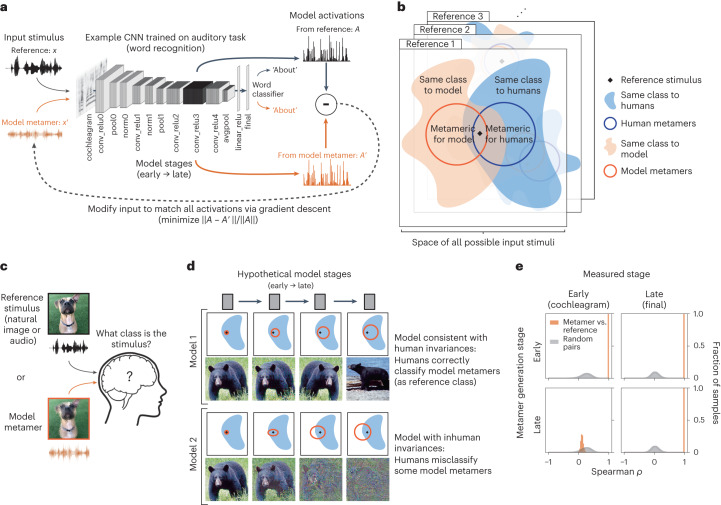
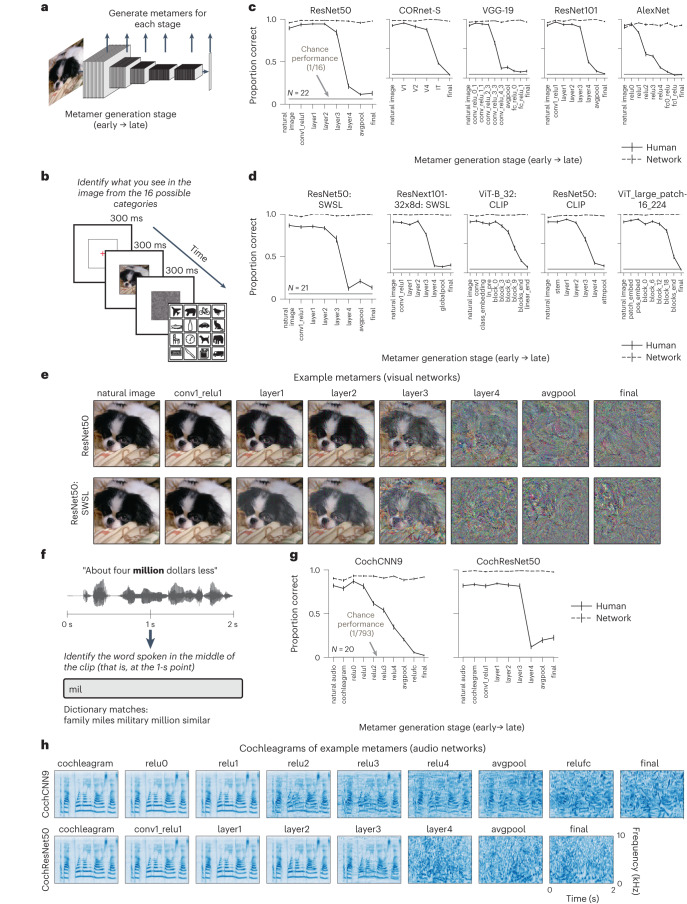
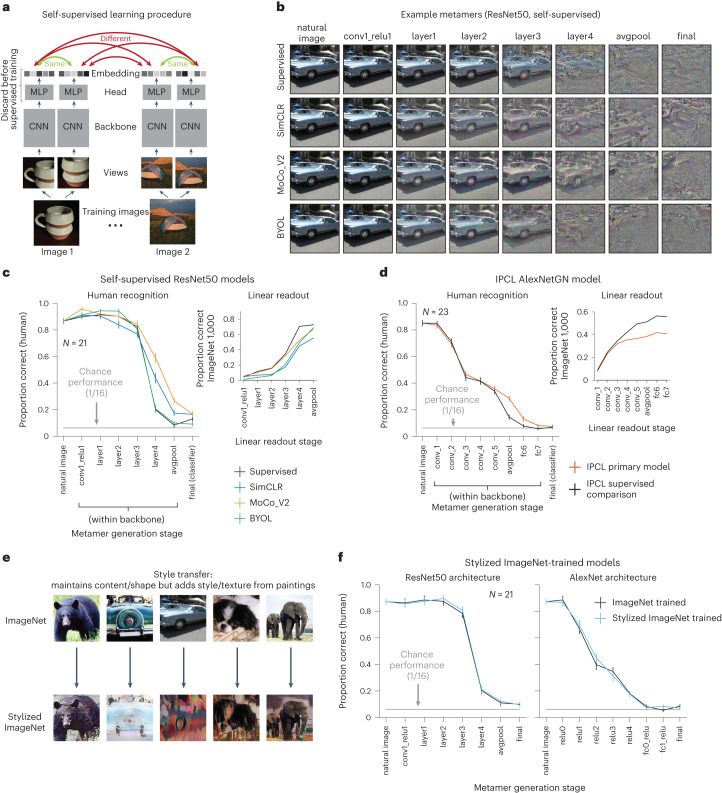
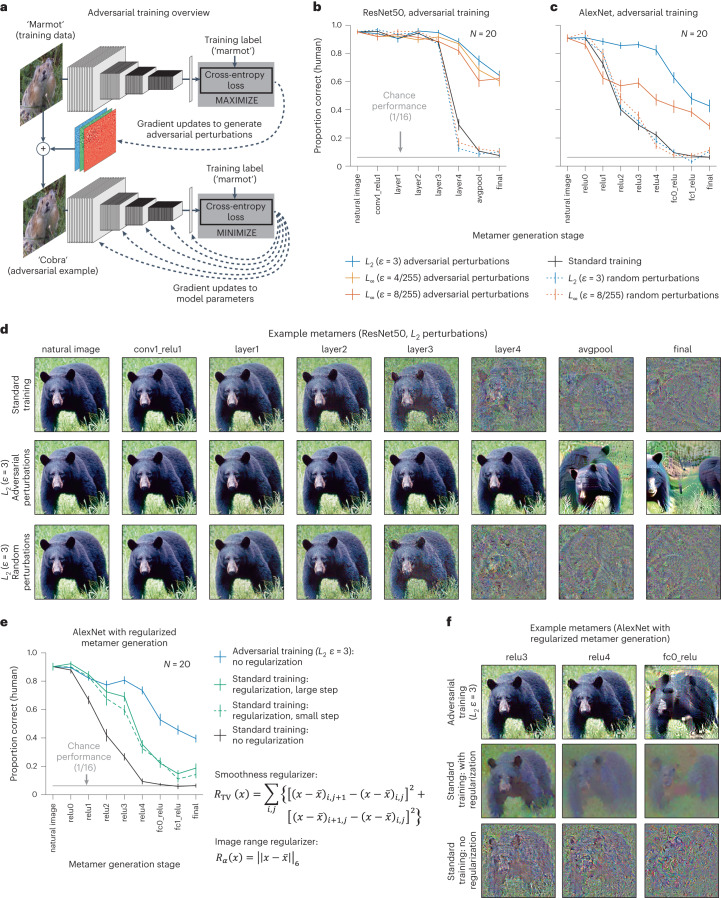
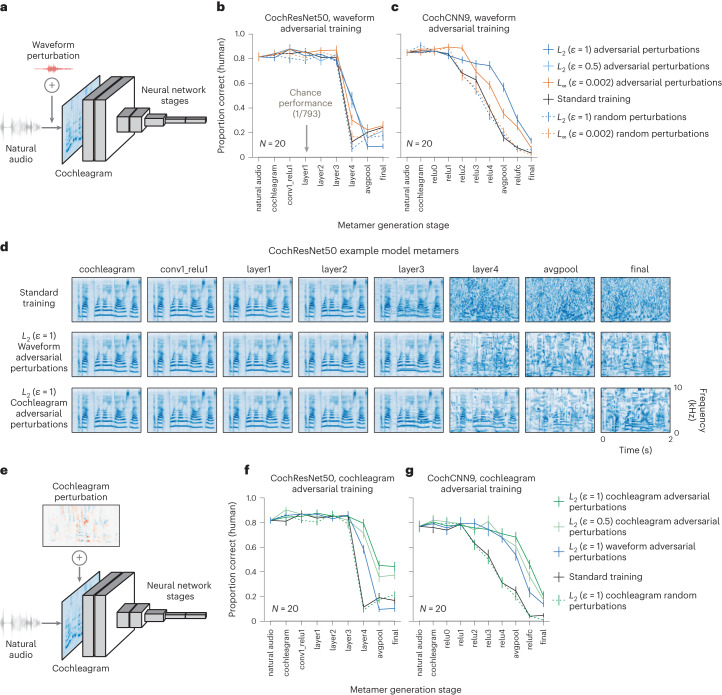
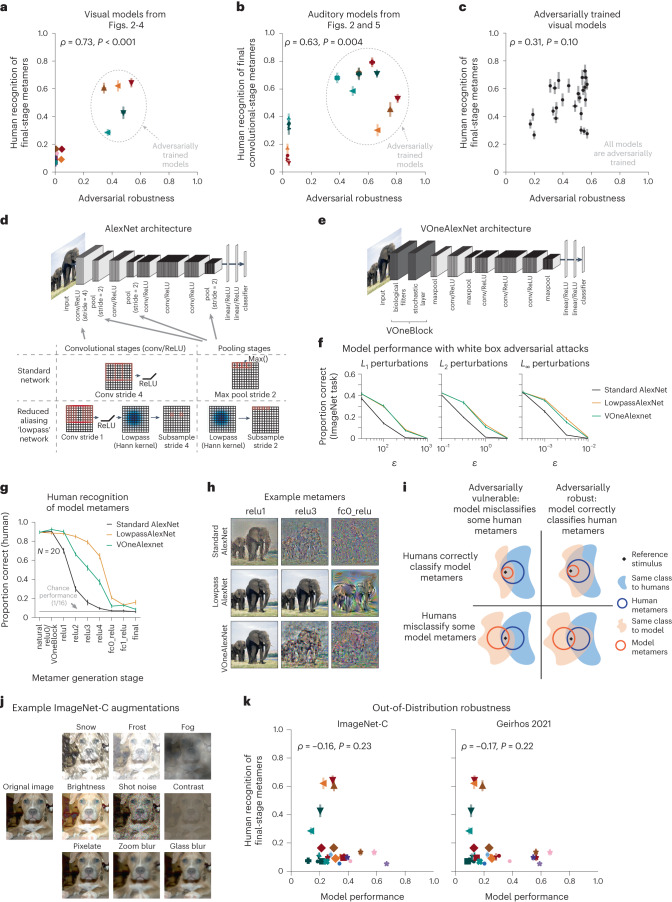
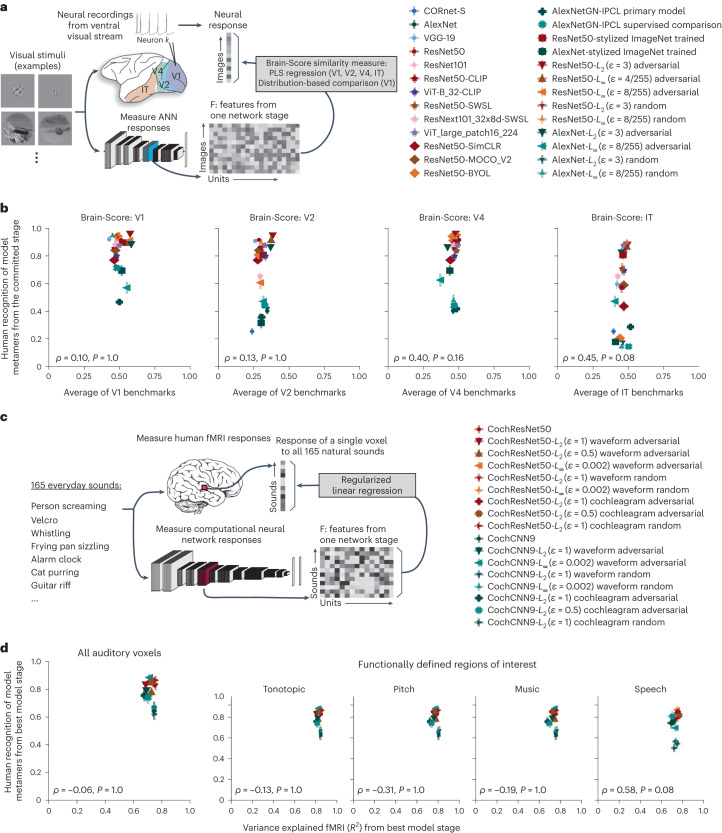
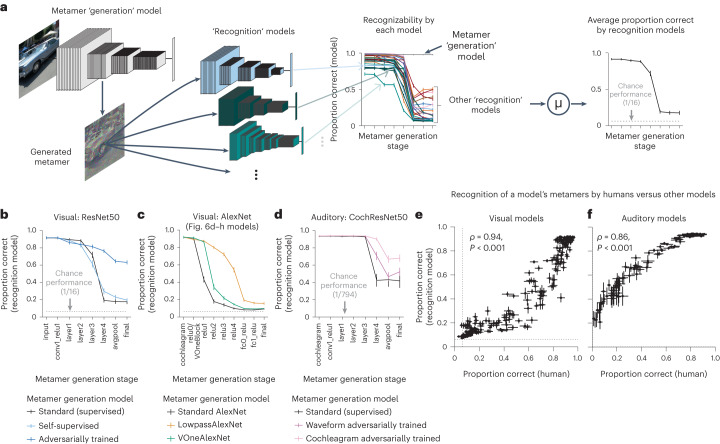
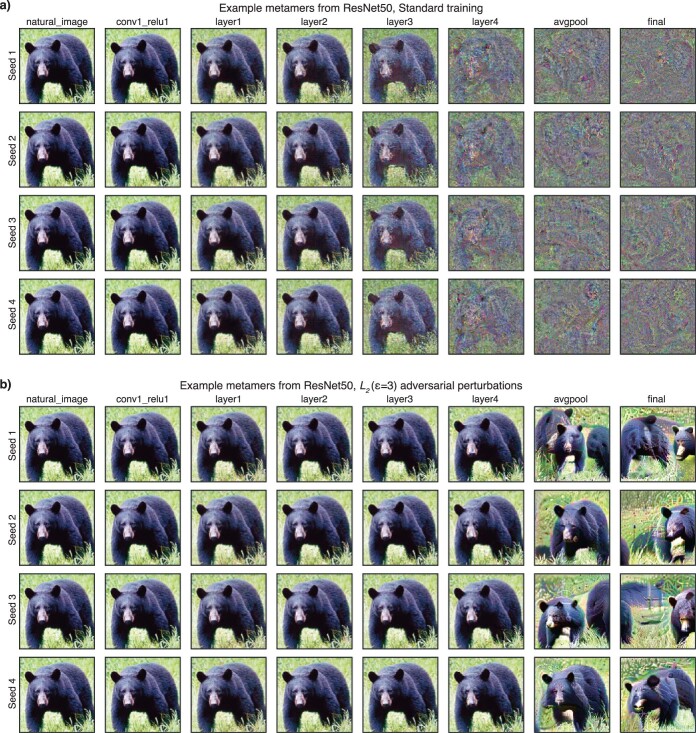
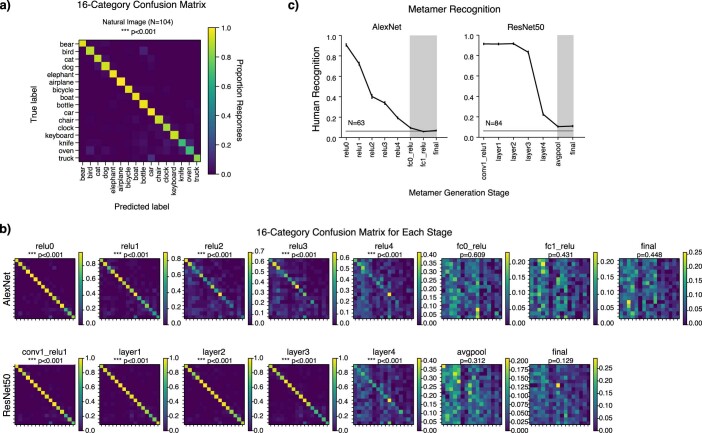
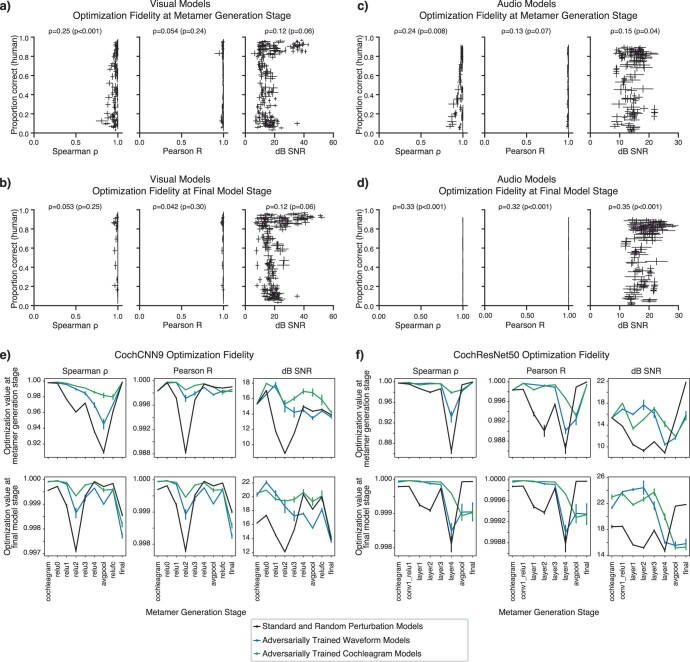
Deep neural network models of sensory systems are often proposed to learn representational transformations with invariances like those in the brain. To reveal these invariances, we generated ‘model metamers’, stimuli whose activations within a model stage are matched to those of a natural stimulus. Metamers for state-of-the-art supervised and unsupervised neural network models of vision and audition were often completely unrecognizable to humans when generated from late model stages, suggesting differences between model and human invariances. Targeted model changes improved human recognizability of model metamers but did not eliminate the overall human–model discrepancy. The human recognizability of a model’s metamers was well predicted by their recognizability by other models, suggesting that models contain idiosyncratic invariances in addition to those required by the task. Metamer recognizability dissociated from both traditional brain-based benchmarks and adversarial vulnerability, revealing a distinct failure mode of existing sensory models and providing a complementary benchmark for model assessment.
Overview
The claims and statistics of this paper haven’t been checked yet.
Free: it reads the open-access text and checks the first 5 claims that cite a source we can check. Create a free account to check every claim.
Integrity signals
Registry
Cites
Statistics
Figures
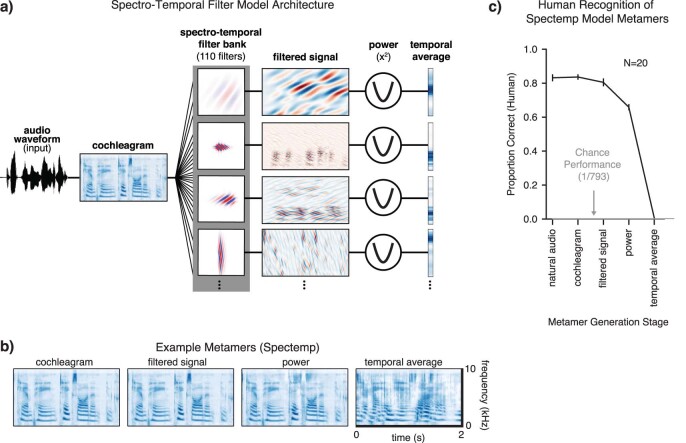
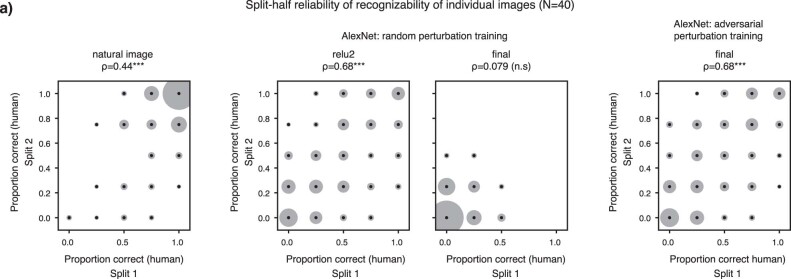
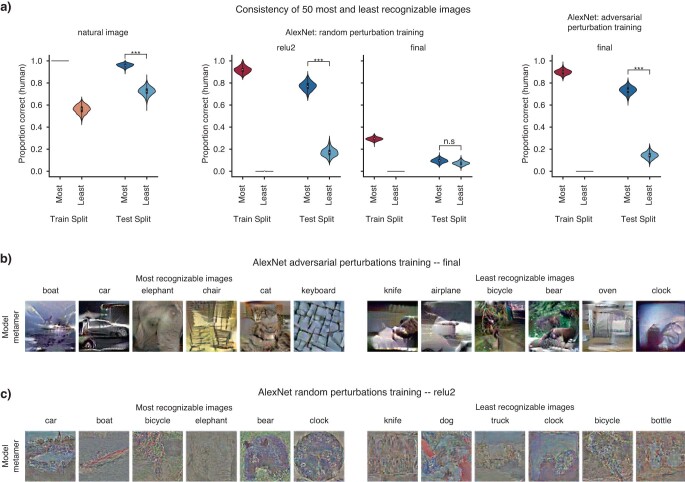
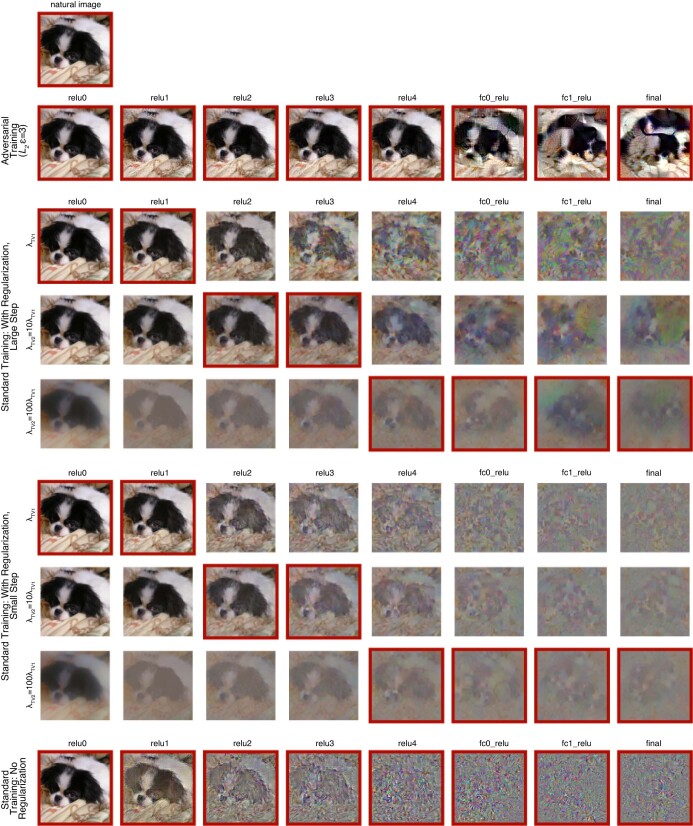
Verification
Claims the paper makes
The claims and statistics of this paper haven’t been checked yet.
Free: it reads the open-access text and checks the first 5 claims that cite a source we can check. Create a free account to check every claim.
Claims other papers make about this one
Each is checked against this paper’s own text: does it say what the citing paper says it does?
The source backs part of the claim, not all of it — or backs it for a different population, condition or comparison.
In the citing paper
“Moreover, systematic individual differences also arise across ANNs when varying network depth, dropout, and random initializations [73,79]”
From The Umwelt Representation Hypothesis: rethinking Universality (2026) · cites this paper as [73]
Experimental — accuracy not yet measured
Self-check
Percentages, sums and reported differences re-computed from the paper’s own numbers.
The self-check needs the paper’s full text.
Citations
Cites
Scikit-learn: Machine Learning in Python
Pedregosa, F., Varoquaux, G., Gramfort, A., Michel, V., Thirion, B., Grisel, O., Blondel, M., Müller, A., Nothman, J., Louppe, G., et al. (2012) · arXiv · doi:10.48550/arxiv.1201.0490 · Cited by 71,016
Faul, F., Erdfelder, E., Lang, A.-G., & Buchner, A. (2007) · Behavior Research Methods · doi:10.3758/bf03193146 · Cited by 65,971
ImageNet: A large-scale hierarchical image database
Deng, J., Dong, W., Socher, R., Li, L.-J., Li, K., & Fei-Fei, L. (2009) · 2009 IEEE Conference on Computer Vision and Pattern Recognition · doi:10.1109/cvpr.2009.5206848 · Cited by 65,333 · cited 1×
“We generated metamers for multiple stages of five standard visual neural networks trained to recognize objects 26–29 (trained on the ImageNet1K dataset 30 ; Fig.”
MethodStatistical power analyses using G∗Power 3.1: tests for correlation and regression analyses
Faul, F., Erdfelder, E., Buchner, A., & Lang, A.-G. (2009) · Behavior Research Methods · doi:10.3758/brm.41.4.1149 · Cited by 37,615
PyTorch: An Imperative Style, High-Performance Deep Learning Library
Paszke, A., Gross, S., Massa, F., Lerer, A., Bradbury, J., Chanan, G., Killeen, T., Lin, Z., Gimelshein, N., Antiga, L., et al. (2019) · arXiv · doi:10.48550/arxiv.1912.01703 · Cited by 31,473
Learning Transferable Visual Models From Natural Language Supervision
Radford, A., Kim, J. W., Hallacy, C., Ramesh, A., Goh, G., Agarwal, S., Sastry, G., Askell, A., Mishkin, P., Clark, J., et al. (2021) · arXiv · doi:10.48550/arxiv.2103.00020 · Cited by 15,293 · cited 1×
“We subsequently ran a second experiment on an additional five models pre-trained on larger datasets that became available at later stages of the project 32–34 .”
MethodAggregated Residual Transformations for Deep Neural Networks
Xie, S., Girshick, R., Dollar, P., Tu, Z., & He, K. (2017) · 2017 IEEE Conference on Computer Vision and Pattern Recognition (CVPR) · doi:10.1109/cvpr.2017.634 · Cited by 12,465
Identity mappings in deep residual networks
He, K., Zhang, X., Ren, S., & Sun, J. (2016) · Lecture Notes in Computer Science · doi:10.1007/978-3-319-46493-0_38 · Cited by 10,741
Intriguing properties of neural networks
Szegedy, C., Zaremba, W., Sutskever, I., Bruna, J., Erhan, D., Goodfellow, I., & Fergus, R. (2013) · arXiv · doi:10.48550/arxiv.1312.6199 · Cited by 8,143 · cited 2×
“A known peculiarity of contemporary artificial neural networks is their vulnerability to small adversarial perturbations designed to change the class label predicted by a model 14,15 .”
BackgroundThe proof and measurement of association between two things
Spearman, C. (1904) · The American Journal of Psychology · doi:10.2307/1412159 · Cited by 8,039
Research works printed but not linked: 17
- 7. Goodfellow, I., Lee, H., Le, Q., Saxe, A. & Ng, A. Measuring invariances in deep networks. In Advances in Neural Information Processing Systems 22 (eds Bengio, Y., Schuurmans, D., Lafferty, J., Williams, C. & Culotta, A.) 646–654 (Curran Associates, Inc., 2009).
- 10. Geirhos, R., Temme, C. R. M. & Rauber, J. Generalisation in humans and deep neural networks. In Advances in Neural Information Processing Systems 31 (eds Bengio, S. et al.) 7538–7550 (Curran Associates, Inc., 2018).
- 12. Zhang, R. Making convolutional networks shift-invariant again. In Proc. 36th International Conference on Machine Learning (eds Chaudhuri K., and Salakhutdinov, R.) 7324-7334 (PMLR, 2019).
- 17. Wyszecki, G. & Stiles, W. S. Color Science 2nd edn (Wiley, 1982).
- 25. Feather, J., Durango, A., Gonzalez, R. & McDermott, J. Metamers of neural networks reveal divergence from human perceptual systems. In Advances in Neural Information Processing Systems 32 (eds Wallach, H. et al.) 10078–10089 (Curran Associates, Inc. 2019).
- 27. Simonyan, K. & Zisserman, A. Very deep convolutional networks for large-scale image recognition. In 3rd International Conference on Learning Representations (eds Bengio Y. & LeCun Y.) (2015)
- 29. Krizhevsky, A., Sutskever, I. & Hinton, G. E. ImageNet classification with deep convolutional neural networks. In Advances in Neural Information Processing Systems 25 (eds Pereira, F., Burges, C. J., Bottou, L. & Weinberger, K. Q.) 1097–1105 (Curran Associates, Inc., 2012).
- 38. Chen, T., Kornblith, S., Norouzi, M. & Hinton, G. A simple framework for contrastive learning of visual representations. In Proc. 37th International Conference on Machine Learning (eds Daumé III, H. & Singh, A.) 1597–1607 (PMLR, 2020).
- 44. Hermann, K., Chen, T. & Kornblith, S. The origins and prevalence of texture bias in convolutional neural networks. In Advances in Neural Information Processing Systems33 (eds Larochelle, H., Ranzato, M., Hadsell, R., Balcan, M. F. & Lin, H.) 19000–19015 (Curran Associates, Inc., 2020).
- 46. Madry, A., Makelov, A., Schmidt, L., Tsipras, D. & Vladu, A. Towards deep learning models resistant to adversarial attacks. In Proc. 6th International Conference on Learning Representations (eds Bengio, Y., LeCun, Y., Sainath, T., Murray, I., Ranzato, M., & Vinyals, O.) (2018).
- 49. Goodfellow, I., Shlens, J. & Szegedy, C. Explaining and harnessing adversarial examples. In Proc. 3rd International Conference on Learning Representations (eds Bengio, Y. & LeCun, Y.) (2015).
- 53. Hénaff, O. J. & Simoncelli, E. P. Geodesics of learned representations. In Proc. 4th International Conference on Learning Representations (eds Bengio, Y. & LeCun, Y.) (2016).
- 56. Sabour, S., Cao, Y., Faghri, F. & Fleet, D. J. Adversarial manipulation of deep representations. In Proc. 4th International Conference on Learning Representations (eds Bengio, Y. & LeCun, Y.) (2016).
- 57. Hendrycks, D. & Dietterich, T. Benchmarking neural network robustness to common corruptions and perturbations. In Proc. 7th International Conference on Learning Representations (eds Sainath, T., Rush, A., Levine, S. Livescu, K. & Mohamed, S.) (2019).
- 66. Jacobsen, J.-H., Behrmann, J., Zemel, R. & Bethge, M. Excessive invariance causes adversarial vulnerability. In Proc. 7th International Conference on Learning Representations, (ICLR) (eds Sainath, T., Rush, A., Levine, S. Livescu, K. & Mohamed, S.) (2019).
- 74. Thorat, S., Aldegheri, G. & Kietzmann, T. C. Category-orthogonal object features guide information processing in recurrent neural networks trained for object categorization. In SVRHM 2021 Workshop @ NeurIPS (2021).
- 76. Fetaya, E., Jacobsen, J.-H., Grathwohl, W. & Zemel, R. Understanding the limitations of conditional generative models. In Proc. 8th International Conference on Learning Representations (eds Rush, A., Mohamed, S., Song, D., Cho, K., & White, M.) (2020).
Cited by
Conwell, C., Prince, J. S., Kay, K. N., Alvarez, G. A., & Konkle, T. (2022) · doi:10.1101/2022.03.28.485868 · Cited by 160
Conwell, C., Prince, J. S., Kay, K. N., Alvarez, G. A., & Konkle, T. (2024) · Nature Communications · doi:10.1038/s41467-024-53147-y · Cited by 100
Tuckute, G., Feather, J., Boebinger, D., & McDermott, J. H. (2023) · PLoS Biology · doi:10.1371/journal.pbio.3002366 · Cited by 123
Self-citationSelf-attention in vision transformers performs perceptual grouping, not attention
Mehrani, P., & Tsotsos, J. K. (2023) · Frontiers in Computer Science · doi:10.3389/fcomp.2023.1178450 · Cited by 58
Human-like object concept representations emerge naturally in multimodal large language models
Du, C., Fu, K., Wen, B., Sun, Y., Peng, J., Wei, W., Gao, Y., Wang, S., Zhang, C., Li, J., et al. (2025) · Nature Machine Intelligence · doi:10.1038/s42256-025-01049-z · Cited by 83
“While these endeavors have led to notable advancements 28–31 , the critical question remains unanswered: can human-like psychological representations naturally emerge without task-specific training?”
Willeke, K. F., Restivo, K., Franke, K., Nix, A., Cadena, S. A., Shinn, T., Nealley, C., Rodriguez, G., Patel, S. S., Ecker, A. S., et al. (2023) · bioRxiv (Cold Spring Harbor Laboratory) · doi:10.1101/2023.05.12.540591 · Cited by 45
Saddler, M. R., & McDermott, J. H. (2024) · Nature Communications · doi:10.1038/s41467-024-54700-5 · Cited by 34
Self-citationLarge-scale calcium imaging reveals a systematic V4 map for encoding natural scenes
Wang, T., Lee, T. S., Yao, H., Hong, J., Li, Y., Jiang, H., Andolina, I. M., & Tang, S. (2024) · Nature Communications · doi:10.1038/s41467-024-50821-z · Cited by 23
Quantum-tunneling deep neural network for optical illusion recognition
Maksymov, I. S. (2024) · APL Machine Learning · doi:10.1063/5.0225771 · Cited by 15
Park, J.-Y., Tsukamoto, M., Tanaka, M., & Kamitani, Y. (2025) · PLoS Biology · doi:10.1371/journal.pbio.3003293 · Cited by 16
“For instance, DNNs frequently fail to generalize human-like invariances, demonstrate high sensitivity to adversarial perturbations [37], and exhibit behaviors that diverge markedly from those of biological systems [38,39].”
A spatiotemporal style transfer algorithm for dynamic visual stimulus generation
Greco, A., & Siegel, M. (2024) · Nature Computational Science · doi:10.1038/s43588-024-00746-w · Cited by 13
“We thank the reviewer for highlighting this important point.”
Universality of representation in biological and artificial neural networks
Hosseini, E., Casto, C., Zaslavsky, N., Conwell, C., Richardson, M., & Fedorenko, E. (2024) · doi:10.1101/2024.12.26.629294 · Cited by 10
Listening with generative models
Cusimano, M., Hewitt, L., & McDermott, J. H. (2024) · Cognition · doi:10.1016/j.cognition.2024.105874 · Cited by 8
Self-citationWang, J., Lou, Q., Xu, Z., Jin, Y., Luo, G., & Zhou, H. (2025) · Materials Today Electronics · doi:10.1016/j.mtelec.2025.100143 · Cited by 9
A Python Toolbox for Representational Similarity AnalysisPreprint
van den Bosch, J. J. F., Golan, T., Peters, B., Taylor, J., Shahbazi, M., Lin, B., Charest, I., Diedrichsen, J., Kriegeskorte, N., Mur, M., et al. (2025) · eLife · doi:10.7554/elife.107828.1 · Cited by 9
Better artificial intelligence does not mean better models of biology
Linsley, D., Feng, P., & Serre, T. (2026) · Trends in Cognitive Sciences · doi:10.1016/j.tics.2025.11.016 · Cited by 7
Clonan, A. C., Zhai, X., Stevenson, I. H., & Escabí, M. A. (2025) · Journal of Neuroscience · doi:10.1523/jneurosci.1751-24.2025 · Cited by 7
Optimized feature gains explain and predict successes and failures of human selective listening
Griffith, I. M., Hess, R. P., & McDermott, J. H. (2026) · Nature Human Behaviour · doi:10.1038/s41562-026-02414-7 · Cited by 7
Self-citationIt takes neurons to understand neurons: Digital twins of visual cortex synthesize neural metamersPreprint
Cobos, E., Muhammad, T., Fahey, P. G., Ding, Z., Ding, Z., Reimer, J., Sinz, F. H., & Tolias, A. S. (2022) · bioRxiv (Cold Spring Harbor Laboratory) · doi:10.1101/2022.12.09.519708 · Cited by 10
A deep learning framework for understanding cochlear implantsPreprint
Banerjee, A., Saddler, M. R., Arenberg, J. G., & McDermott, J. H. (2025) · bioRxiv (Cold Spring Harbor Laboratory) · doi:10.1101/2025.07.16.665227 · Cited by 7
Self-citationShared Minds: The Cognitive Parallels Between Humans and Artificial Intelligence
Tremblay, S., Marois, A., Zare, M., & Lafond, D. (2026) · Human Behavior and Emerging Technologies · doi:10.1155/hbe2/9946143 · Cited by 5
Shifting Attention to You: Personalized Brain-Inspired AI ModelsPreprint
Zhao, S. C., Hu, Y., Lee, J., Bender, A., Mazumdar, T., Wallace, M., & Tovar, D. A. (2025) · arXiv (Cornell University) · doi:10.48550/arxiv.2502.04658 · Cited by 6
Willeke, K. F., Restivo, K., Franke, K., Nix, A., Cadena, S. A., Shinn, T., Nealley, C., Rodriguez, G., Patel, S. S., Ecker, A. S., et al. (2026) · eLife · doi:10.7554/elife.109875 · Cited by 6
A Python Toolbox for Representational Similarity AnalysisPreprint
van den Bosch, J. J. F., Golan, T., Peters, B., Taylor, J., Shahbazi, M., Lin, B., Charest, I., Diedrichsen, J., Kriegeskorte, N., Mur, M., et al. (2025) · bioRxiv (Cold Spring Harbor Laboratory) · doi:10.1101/2025.05.22.655542 · Cited by 7
A Python Toolbox for Representational Similarity AnalysisPreprint
van den Bosch, J. J. F., Golan, T., Peters, B., Taylor, J., Shahbazi, M., Lin, B., Charest, I., Diedrichsen, J., Kriegeskorte, N., Mur, M., et al. (2025) · eLife · doi:10.7554/elife.107828 · Cited by 5
Willeke, K. F., Restivo, K., Franke, K., Nix, A., Cadena, S. A., Shinn, T., Nealley, C., Rodriguez, G., Patel, S. S., Ecker, A. S., et al. (2026) · eLife · doi:10.7554/elife.109875.1 · Cited by 4
From sound to source: Human and model recognition of environmental soundsPreprint
Alavilli, S., & McDermott, J. H. (2026) · bioRxiv (Cold Spring Harbor Laboratory) · doi:10.64898/2026.03.12.711349 · Cited by 4
“We replicated the analysis procedures of Tuckute, Feather et al. (2023) [52], who conducted a model-brain similarity analysis of a large set of audio models available at that time.”
Self-citationA decade of comparing brains to DNNs: Progress and perspectives
Schmitt, L., Dong, D. T., Çelik, E., de Lange, F. P., & Toneva, M. (2026) · Trends in Cognitive Sciences · doi:10.1016/j.tics.2026.06.011 · Cited by 3
Xing, L., Formisano, E., & Riecke, L. (2026) · Journal of Neuroscience · doi:10.1523/jneurosci.1651-25.2025 · Cited by 3
Spectral regularization for adversarially-robust representation learning
Yang, S., Zavatone-Veth, J. A., & Pehlevan, C. (2025) · Asilomar Conference on Signals, Systems and Computers (ACSSC) · doi:10.1109/ieeeconf67917.2025.11443939 · Cited by 3
“Early layers may be responsible for low-level feature extraction, while later layers adapt to high-level and task-specific features [37], [50], [51].”
Skrill, D., Feather, J., & Norman-Haignere, S. (2026) · bioRxiv (Cold Spring Harbor Laboratory) · doi:10.64898/2026.08.05.743059 · Cited by 3
“We tested a standard DNN that previously showed good prediction accuracy of fMRI responses to natural sounds (CochResNet50, Feather et al. (2023)).”
InfluentialSelf-citationThe Umwelt Representation Hypothesis: rethinking Universality
Bosch, V., Sommers, R. P., Doerig, A., & Kietzmann, T. C. (2026) · Trends in Cognitive Sciences · doi:10.1016/j.tics.2026.07.004 · Cited by 2
Wingert, J. C., Parida, S., Norman-Haignere, S., & David, S. V. (2026) · Nature Neuroscience · doi:10.1038/s41593-026-02216-0 · Cited by 4
“Given this problem, a concern about deep-learning models is that they solve problems in ways that are not biological and thus their value to understanding biological computations may be limited 13 .”
Perceptual misalignment of texture representations in convolutional neural networks
de Paolis, L., Anselmi, F., Ansuini, A., & Piasini, E. (2026) · Journal of Vision · doi:10.1167/jov.26.9.9 · Cited by 2
“However, the strong predictive power of this approach for neural activity is only partly mirrored by the capacity of these artificial neural networks to accurately predict behavioral responses to individual stimuli [38, 39, 40, 41, 42].”
Charge transfer and control mechanisms in contact-electron-activated artificial synapse
Yu, X., Luo, X., Han, G., Zhang, Y., Wang, Z. L., & Zhu, L. (2026) · Chemical Engineering Journal · doi:10.1016/j.cej.2026.175874 · Cited by 2
Brain-AI convergence: Generative world models and hierarchical attention for human intelligence
Ohmae, S., & Ohmae, K. (2026) · Patterns · doi:10.1016/j.patter.2026.101593 · Cited by 2
Making models disagree to learn how brains compute
Golan, T., Schütt, H. H., & Kriegeskorte, N. (2026) · Nature reviews. Neuroscience · doi:10.1038/s41583-026-01070-0 · Cited by 2
“…selected stimulus sets from a stimulus bank so that the resulting stimulus set was controversial among alternative models. a , A triplet of natural-scene images selected such that each image is the odd one out according to a different image property 86 . b , Representational dissimilarity…”
Deng, H., Zhang, C., Wei, C., & Liu, Q. (2025) · International Joint Conference on Neural Networks (IJCNN) · doi:10.1109/ijcnn64981.2025.11229045 · Cited by 2
“In previous studies, researchers attempting to use synthetic images to investigate human and model cognition often encountered the issue of unnatural or unrealistic generated images( [11], [10], [13], [12]).”
Foveated metamers of the early visual systemPreprint
Broderick, W. F., Rufo, G., Winawer, J. A., & Simoncelli, E. P. (2026) · eLife · doi:10.7554/elife.90554 · Cited by 2
Beilharz, B., & Wallis, T. S. A. (2025) · arXiv (Cornell University) · doi:10.48550/arxiv.2512.12307 · Cited by 2
Parametric neural control differentiates top neural network models of primate visual cortexPreprint
Prince, J. S., Wang, B., Fel, T., Jagadeesh, A. V., Vaziri, P. A., Alvarez, G. A., Livingstone, M. S., & Konkle, T. (2026) · bioRxiv (Cold Spring Harbor Laboratory) · doi:10.64898/2026.08.16.745063 · Cited by 2
“Off-axis Off-axis accentuations, for example, could probe whether the invariances predicted by an encoding axis also match the neuron’s null space (cf. 71 , 28, 72).”
InfluentialExploring biologically inspired mechanisms of adversarial robustness
Holzhausen, K., Merlid, M., Torvik, H. O., Malthe‐Sørenssen, A., & Lepperød, M. E. (2025) · Neural Computing and Applications · doi:10.1007/s00521-025-11019-6 · Cited by 1
“However, black box attacks show that inferior temporal gyrus neurons in primates are more susceptible than adversarially trained networks [6].”
What Do Visual Neural Networks Learn?
Har-Shalom, D., & Weiss, Y. (2025) · Annual Review of Vision Science · doi:10.1146/annurev-vision-110323-112903 · Cited by 2
A novel vision system based on multi-scale pooling for high-speed defect inspection of chenille yarn
Xu, Y., Li, Z., Li, C., Yang, C., Zhang, J., & Luo, J. (2026) · Measurement · doi:10.1016/j.measurement.2026.120780 · Cited by 1
Topology Identification of Multilayer Complex Dynamical Networks: From Known to Unknown
Wang, X., Wu, Y., Jiang, G.-P., & Chen, G. (2026) · IEEE Transactions on Control of Network Systems · doi:10.1109/tcns.2026.3667754 · Cited by 1
“C OMPLEX dynamical networks are widely present in vari-ousnaturalandman-madesystems,suchasbiologicalneu-ral networks [1], communication networks [2], power grids [3], [4], social networks [5], etc. Gaining an in-depth understanding of the structures and functions of complex dynamical networks can…”
Ecological Vision Hypothesis: Training Deep Neural Networks for Robustness and Human Alignment
Tong, F., & Jang, H. (2026) · Annual Review of Vision Science · doi:10.1146/annurev-vision-110323-112649 · Cited by 2
MAME: Multidimensional adaptive metamer exploration with human perceptual feedback
Kamao, M., Ono, H., Yamashita, A., Amano, K., & Sawayama, M. (2026) · Journal of Vision · doi:10.1167/jov.26.8.1 · Cited by 1
“Among the many available DNN models, we selected this specific model because previous work has shown it to best approximate human metamers under indirect exploration paradigms (Feather et al., 2023).”
Identification of letters distorted by physiologically-inspired spatial scrambling
Zhu, X., & Baldwin, A. S. (2026) · PLoS Computational Biology · doi:10.1371/journal.pcbi.1014856 · Cited by 1
“For example, CNN models can be worse than simpler models of early visual processing in predicting the visibility of distortions [98] and contain different invariances than humans when evaluated using model metamers [99].”
Foveated metamers of the early visual system
Broderick, W. F., Rufo, G., Winawer, J. A., & Simoncelli, E. P. (2026) · eLife · doi:10.7554/elife.90554.4 · Cited by 1
Understanding cross-model perceptual invariances through ensemble metamers
Boehm, L., Mueller, J. L., Löffler, C., Schwinn, L., Eskofier, B. M., & Zanca, D. (2026) · Neural Computing and Applications · doi:10.1007/s00521-026-12145-5 · Cited by 1
“Finally, we expand the evaluation strategy proposed by [8] and utilize a comprehensive set of image-based metrics to validate our results.”
InfluentialDeepSpeech models show Human-like Performance and Processing of Cochlear Implant InputsPreprint
Steinhardt, C. R., Keshishian, M., Mesgarani, N., & Stachenfeld, K. (2024) · arXiv (Cornell University) · doi:10.48550/arxiv.2407.20535 · Cited by 1
“A unique feature of PhoDe is that it not only is capable of processing speech inputs in the form of spectrograms like prior DNNs[41] but also that due to its more biophysically realistic architecture, it is constrained to processes inputs like human listeners, causally overtime.”
BackgroundClonan, A. C., Stevenson, I. H., & Escabí, M. A. (2026) · bioRxiv (Cold Spring Harbor Laboratory) · doi:10.64898/2026.04.27.721224 · Cited by 1
The collapse of the wave function as the mediator of free will in prime neurons
Loboguerrero, D. A. (2025) · Frontiers in Neuroscience · doi:10.3389/fnins.2025.1637217
Organic Convolution in The Ventral Visual Pathway Can Explain the Variety of Shape Tuning in Area V4Preprint
Gold, C. (2022) · Research Square · doi:10.1101/2022.05.03.490165
Ohmae, S., & Ohmae, K. (2024) · arXiv (Cornell University) · doi:10.48550/arxiv.2411.16075
Robust spatial hearing beyond primary interaural cues in humans over deep neural networksPreprint
Greco, A., Baek, S., Rastelli, C., Siegel, M., & Braun, C. (2025) · bioRxiv (Cold Spring Harbor Laboratory) · doi:10.1101/2025.08.05.668776
Modeling Dynamical Vision with Biologically Plausible Recurrent Convolutional NetworksPreprint
Gutzen, R., & Lindsay, G. W. (2025) · bioRxiv (Cold Spring Harbor Laboratory) · doi:10.1101/2025.08.11.669756
“This gap is compounded by the limitations of current model comparison approaches, which rely on aggregate benchmark scores that can mask qualitative differences between models [17, 18].”
Zhu, Y., Grier, C., Garcia, A., Pearson, D., Gibson, C., Schwartz, O., & Dykstra, A. R. (2025) · Scientific Data · doi:10.1038/s41597-025-05769-0
Foveated metamers of the early visual systemPreprint
Broderick, W. F., Rufo, G., Winawer, J. A., & Simoncelli, E. P. (2025) · eLife · doi:10.7554/elife.90554.2
Parallel Backpropagation for Shared-Feature Visualization
Lappe, A., Bognár, A., Nejad, G. G., Mukovskiy, A., Martini, L. M., Giese, M. A., & Vogels, R. (2024) · neural information processing systems · doi:10.52202/079017-0724 · Cited by 4
Dissociating the neural codes for multiple pitch perception in humansPreprint
Graves, J. E., Guest, D. R., Starr, T. M., Li, A., & Mehta, A. H. (2025) · bioRxiv (Cold Spring Harbor Laboratory) · doi:10.1101/2025.11.21.689749
“Forward models of specific neural codes, such as the approach in the present study, have certain advantages and disadvantages compared to machine-learning strategies relying on deep neural networks (24, 25, 58, 59).”
Zhao, S. (2025) · Discover Artificial Intelligence · doi:10.1007/s44163-025-00621-1
Disentangled representations via score-based variational autoencodersPreprint
Lyo, B. S. H., Simoncelli, E. P., & Savin, C. (2025) · arXiv (Cornell University) · doi:10.48550/arxiv.2512.17127
“This is related to the metamer perspective (Helmholtz, 1852; Zhu et al., 1998; Portilla and Simoncelli, 2000; Freeman and Simoncelli, 2011; Mahendran and Vedaldi, 2014; Feather et al., 2023), where the goal is to produce data samples that share the same latent representation as a target datum.”
Willeke, K. F., Restivo, K., Franke, K., Nix, A., Cadena, S. A., Shinn, T., Nealley, C., Rodriguez, G., Patel, S. S., Ecker, A. S., et al. (2026) · eLife · doi:10.7554/elife.109875.1.sa3
Chen, C., Yang, Z., & Wang, X. (2026) · bioRxiv (Cold Spring Harbor Laboratory) · doi:10.64898/2026.02.11.705311
“…the activations of model units and human auditory cortex to the same sound stimuli (Kell et al., 2018; Li et al., 2023; Tuckute et al., 2023), or compare the task performance between models and humans (Saddler et al., 2021; Francl & McDermott, 2022; Feather et al., 2023; Saddler & McDermott, 2024).”
Robustness of Deep Neural Networks in Engineering Systems:Frontiers and Outlook
Jin, L., Chen, L., Zhang, Q., & Li, H. (2026) · 中国科学基金 · doi:10.3724/bnsfc-2025-0032
“…, 表明在高维空间中模型鲁棒性 显著不足 [ 17 ] 。进一步的研究表明 , 鲁棒分类器的存在 性取决于数据分布在低维子空间的集中程度 , 且在高维 任务中 , 除非对数据流形做出极强的假设 , 否则不可避 免地会存在对抗样本 , 造成模型性能急剧下降 [ 18 ] 。 式偏好 [ 19 , 20 ] 。这些隐式偏好包括对于非鲁棒特征的偏 好 : 在只追求准确率的标准训练下 , 神经网络会依赖有助 于提升准确率但鲁棒性低的特征 , 而这些特征常常是人 类无法感知或认为无关的模式 ( 如特定纹理或像素 ) [ 21 ] 。 在标准训练中 , 模型倾向于学习不具鲁棒性的特征 [ 22 ]…”
Daube, C., Groß, J., & Ince, R. A. A. (2026) · bioRxiv (Cold Spring Harbor Laboratory) · doi:10.64898/2026.03.18.712602 · Cited by 1
“In order to better adjudicate between different models, the additional consideration of artificial stimuli as used in existing literature (Bowers et al., 2022) or as obtained from clever model-specific stimulus optimisation procedures (Feather et al., 2023; Golan et al., 2020) is required.”
Perceived face similarity reflects inverse-generative and naturalistic discriminative objectivesPreprint
Guo, W., Schütt, H. H., Jozwik, K. M., Storrs, K. R., Kriegeskorte, N., & Golan, T. (2026) · arXiv (Cornell University) · doi:10.48550/arxiv.2605.12619
“…yields better-conditioned image mapping with more disentanglement [95]; we also ran a model metamer experiment inspired by prior model-metamer work [96] to test different latent spaces, and W showed the most stable convergence and produced metamers that were perceptually closest to the target…”
Hicks, J. M., Boebinger, D., Nourski, K. V., Howard, M. A., Garcia, C. M., Wychowski, T., Pilcher, W. H., & Norman-Haignere, S. (2026) · Conference on Cognitive Computational Neuroscience (CCN) · doi:10.32470/srbsjd0
“…models to determine whether there are patterns that cannot be explained by spectrotemporal tuning, but which can be accounted for by models that are explicitly optimized for invariant recognition (e.g., deep neural networks) (Kell et al., 2018; Feather et al., 2023, Yamins and DiCarlo, 2016).”
Investigating Invariances in Auditory Event Categorization with Model Metamers
Kim, H. S., Lee, E. J., McPherson, M. J., Noyce, A. L., & Feather, J. (2026) · Conference on Cognitive Computational Neuroscience (CCN) · doi:10.32470/2gj54og
Self-citationFoveated metamers of the early visual systemPreprint
Broderick, W. F., Rufo, G., Winawer, J. A., & Simoncelli, E. P. (2026) · eLife · doi:10.7554/elife.90554.3
A low-dimensional, generalizable encoding manifold for auditory cortexPreprint
Parida, S., Wingert, J. C., Stickney, J. D., & David, S. V. (2026) · bioRxiv (Cold Spring Harbor Laboratory) · doi:10.64898/2026.08.30.747962
“This divergence manifests in their internal representational geometries and their vulnerability to adversarial attacks that do not impair biological hearing (Carlini & Wagner, 2018; Feather et al., 2023; Muzellec & Kar, 2026; Subramanian et al., 2019; Tuckute et al., 2023; Weerts et al., 2022).”
Personalized Hearing Loss Compensation for the Next Generation Hearables and Hearing Aids
Verhulst, S., Wen, C., Thienpont, M., Nissens, B., Devolder, P., Biest, H. V. D., Inghels, M., Frater, A., & Wouters, M. (2026) · Journal of the Association for Research in Otolaryngology · doi:10.1007/s10162-026-01077-5
Subspace Image Synthesis for Style-Invariant Object RecognitionPreprint
Ono, H., Yamashita, A., Amano, K., & Sawayama, M. (2026) · bioRxiv (Cold Spring Harbor Laboratory) · doi:10.64898/2026.10.21.759598
“If a model representation captures dimensions that are important for human perception, images matched within that representation should preserve the corresponding perceptual attributes for human observers (Feather et al., 2023).”
Metadata
- Authors
- Feather, J., Leclerc, G., Mądry, A., & McDermott, J. H.
- Affiliations
- McGovern Institute for Brain Research (US)
- MIT Computer Science and Artificial Intelligence Laboratory (US)
- Harvard University (US)
- Corresponding author
- Feather, Jenelle
- McDermott, Josh H.
- Venue
- Nature Neuroscience
- Published
- 2023-10-16
- Volume
- 26
- Issue
- 11
- Pages
- 2017-2034
- ISSN
- 1097-6256 (ISSN-L)
- 1546-1726
- PMC
- PMC10620097
- OpenAlex
- W4387666878
- Semantic Scholar
- e7dbccef912e36208a77f84d81a4fc9181b866ff
- Cited by
- 59
- References
- 111
- Citations by year
- 2026: 26 · 2025: 19 · 2024: 9 · 2023: 3
- FWCI
- 2.71
- Type
- journal article
- Language
- en
- Open access
- hybrid
- doi.org
- Licence
- cc-by
- creativecommons.org/licenses/by/4.0 (tdm)
- creativecommons.org/licenses/by/4.0 (vor)
- Locations
- Nature Neuroscience (publishedVersion, cc-by)
- Conference on Cognitive Computational Neuroscience (CCN) (publishedVersion, cc-by)
- bioRxiv (Cold Spring Harbor Laboratory) (acceptedVersion, cc-by-nc-nd)
- PubMed Central (publishedVersion, cc-by)
- PubMed (publishedVersion)
- DSpace@MIT (Massachusetts Institute of Technology) (submittedVersion, cc-by)
- OSTI OAI (U.S. Department of Energy Office of Scientific and Technical Information) (submittedVersion)
- Funders
- U.S. Department of Health & Human Services | NIH | National Institute on Deafness and Other Communication Disorders (R01DC017970)
- National Science Foundation (BCS-1634050)
- Topics
- Physical Sciences › Computer Science › Artificial Intelligence › Neural Networks and Applications
- Physical Sciences › Computer Science › Computer Vision and Pattern Recognition › Advanced Neural Network Applications
- Life Sciences › Neuroscience › Cognitive Neuroscience › Visual perception and processing mechanisms
- Keywords
- invariance, deep neural network, visual models, auditory model, adversarial vulnerability
- MeSH terms
- Brain, Humans, Learning, Neural Networks, Computer
About these checks
Registry, retraction, Cites and statistics results are computed, not judged, with one exception: a printed reference that no index lists is read once by a model before it counts as a citation error. Claims are extracted by a model and kept only when their quote appears verbatim in the text; each cited source is then checked, with a model’s help, for whether it says what the claim relies on. Those verdicts can be wrong — read the claim’s quote and the cited source before relying on one.
Statistics and arithmetic are recomputed, not judged.
Confidence bands are shown only for fields calibrated on our annotated test set. None is calibrated yet, so no band is shown.
What counts as a claim ›How we measure confidence ›How we check this ›
Are you an author, or do you see a problem with this page? Request a review
Data sources
Bibliographic data: Semantic Scholar, OpenAlex, Crossref.
Contains information from the Semantic Scholar Academic Graph Datasets, made available under the ODC Attribution License (ODC-BY 1.0).
Semantic Scholar’s data is described in: Kinney, R., et al. (2023). The Semantic Scholar Open Data Platform. arXiv:2301.10140.
