

In vivo hyperphosphorylation of tau is associated with synaptic loss and behavioral abnormalities in the absence of tau seeds
Open accessPublished version of a preprint
The DOI matches its Crossref record; 99 of the 100 references it cites were found in a registry or an index; none of the 48 sources its claims cite is checked for support yet.
Abstract
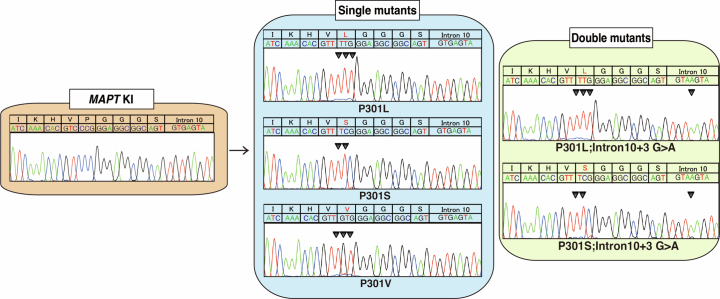
Tau pathology is a hallmark of several neurodegenerative diseases, including frontotemporal dementia and Alzheimer’s disease. However, the sequence of events and the form of tau that confers toxicity are still unclear, due in large part to the lack of physiological models of tauopathy initiation and progression in which to test hypotheses. We have developed a series of targeted mice expressing frontotemporal-dementia-causing mutations in the humanized MAPT gene to investigate the earliest stages of tauopathy. MAPT Int10+3G>A and MAPT S305N;Int10+3G>A lines show abundant hyperphosphorylated tau in the hippocampus and entorhinal cortex, but they do not develop seed-competent fibrillar structures. Accumulation of hyperphosphorylated tau was accompanied by neurite degeneration, loss of viable synapses and indicators of behavioral abnormalities. Our results demonstrate that neuronal toxicity can occur in the absence of fibrillar, higher-order structures and that tau hyperphosphorylation is probably involved in the earliest etiological events in tauopathies showing isoform ratio imbalance.
Overview
CoChat Summary
TL;DR
The authors generated humanized MAPT knock-in mice carrying FTD splice-shifting mutations (Int10+3 and S305N;Int10+3) that produce predominantly 4R-tau and show hyperphosphorylated tau in hippocampus and entorhinal cortex without seed-competent fibrillar structures. These mice develop synapse loss, neurite degeneration, and behavioral abnormalities, suggesting hyperphosphorylated tau can be toxic in the absence of fibrillar seeds.
Key findings
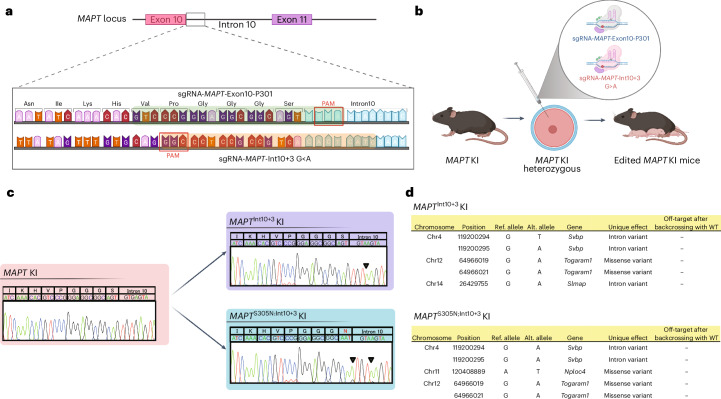
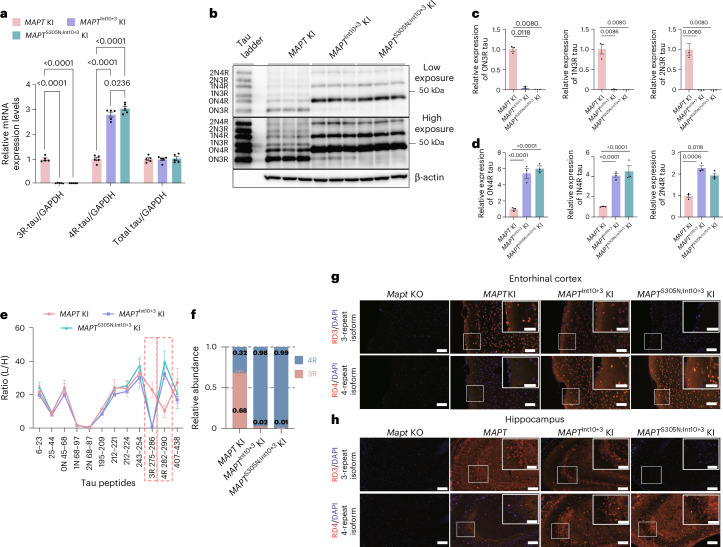
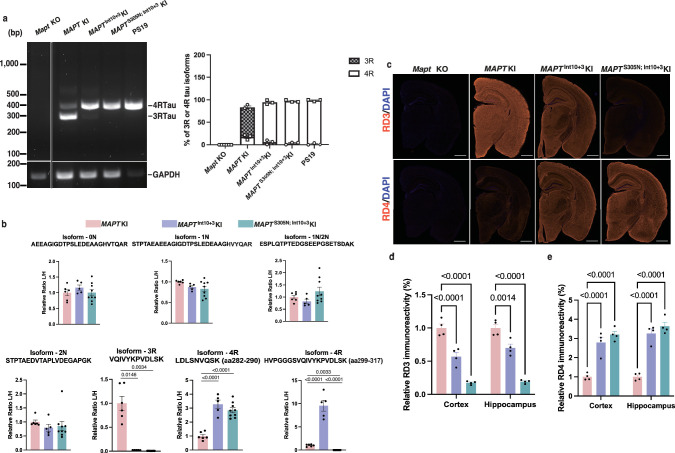
- Mutant lines shift tau isoform expression: 3R-tau peptide was <1% in both MAPTInt10+3 and MAPTS305N;Int10+3 mice, while 4R-tau was enriched to 98% and 99%, respectively; total tau levels were unchanged.
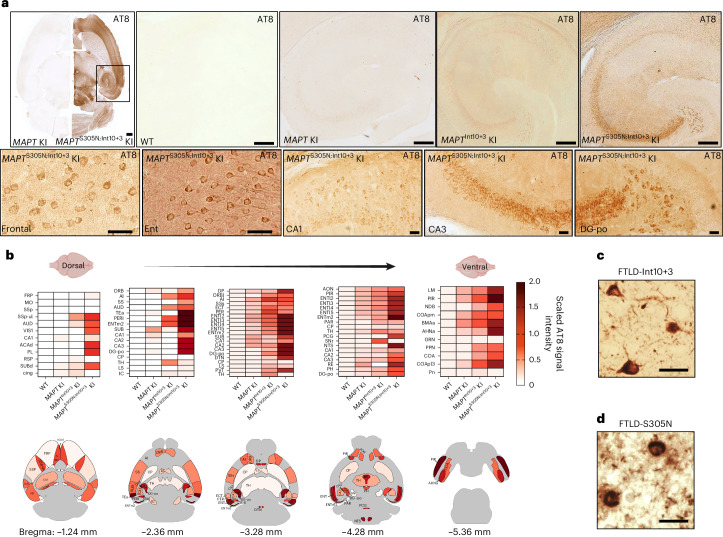
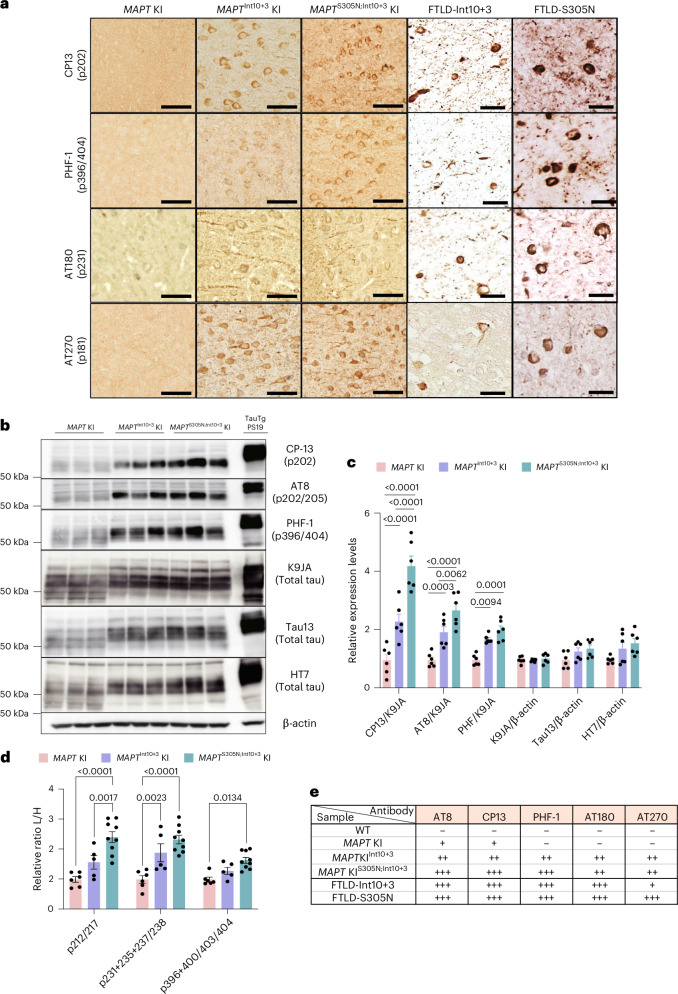
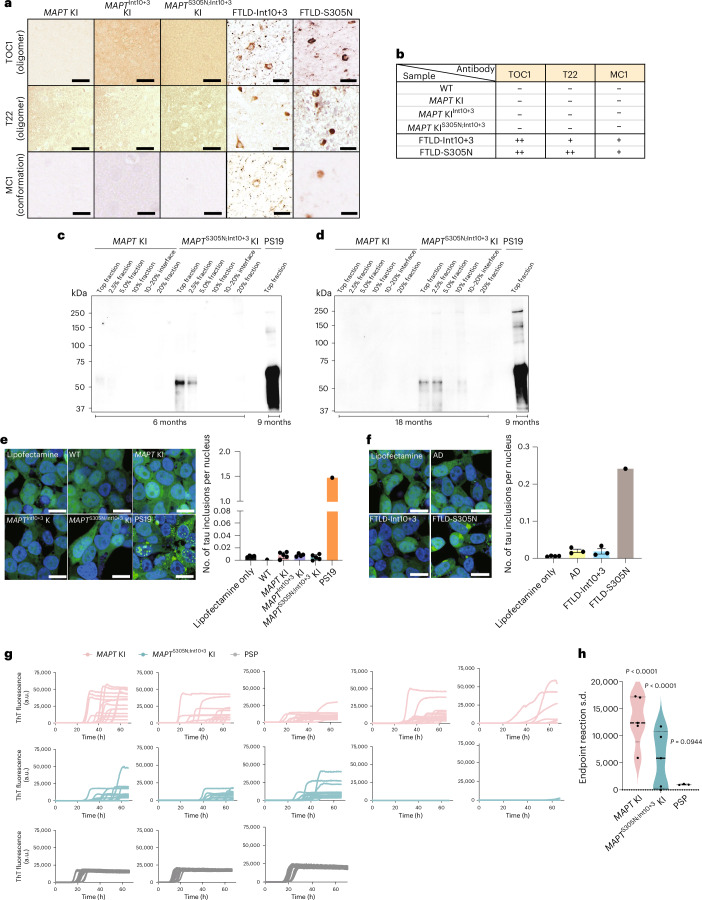
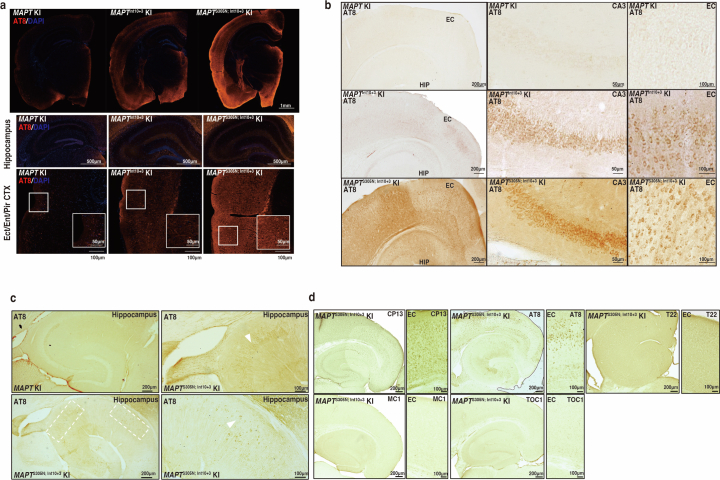
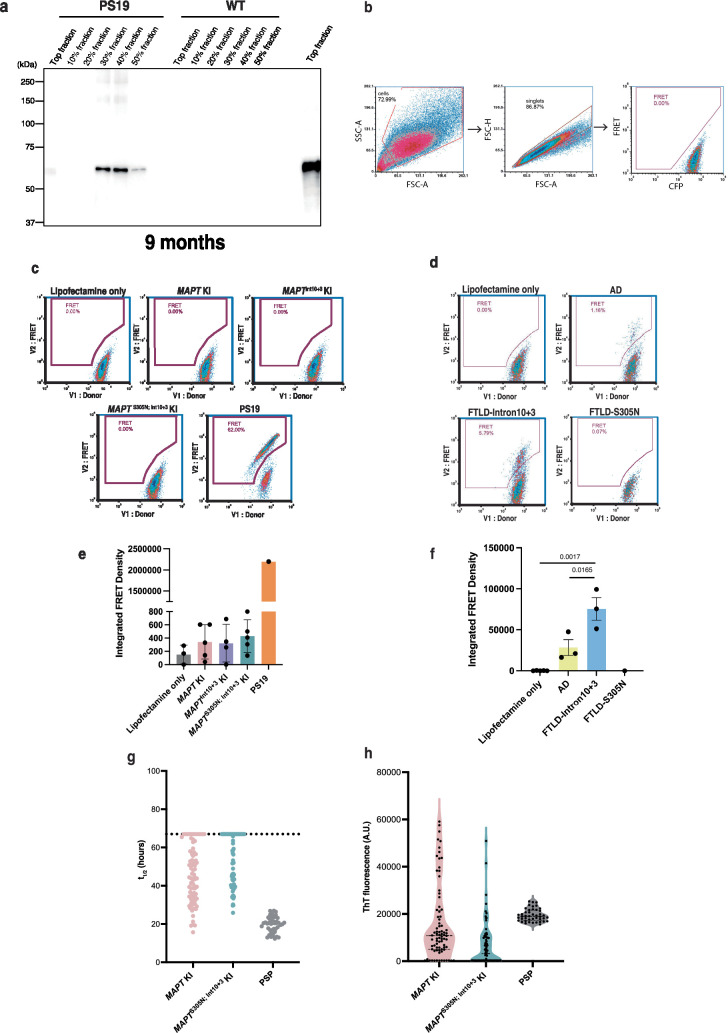
- Hyperphosphorylated tau accumulated in hippocampus and entorhinal cortex, strongest in MAPTS305N;Int10+3 mice; phospho-tau was elevated by CP13, AT8, and PHF-1, and LC–MS/MS showed increased phosphorylation at aa 212, 217, 231, 235, 238 and 396, 404 versus MAPT KI. No T22 or MC1 immunoreactivity, no Gallyas silver positivity, no seeding in P301S or S305N biosensor cells, and RT-QuIC reactions were random (MAPT KI and MAPTS305N;Int10+3 P < 0.0001; PSP P = 0.0944).
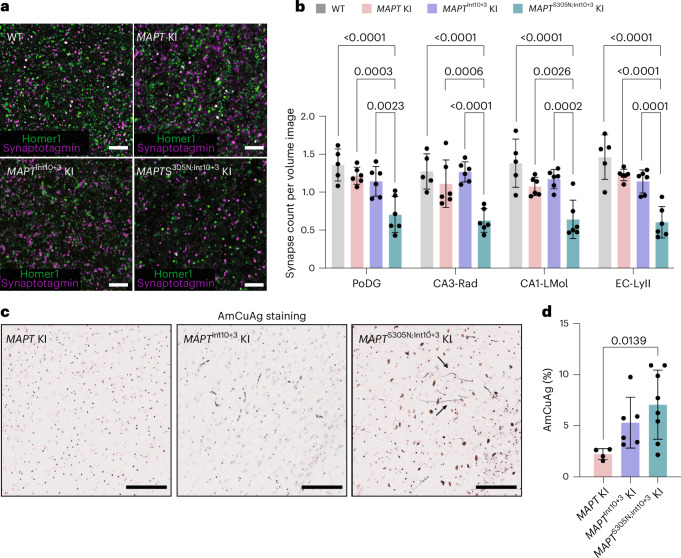
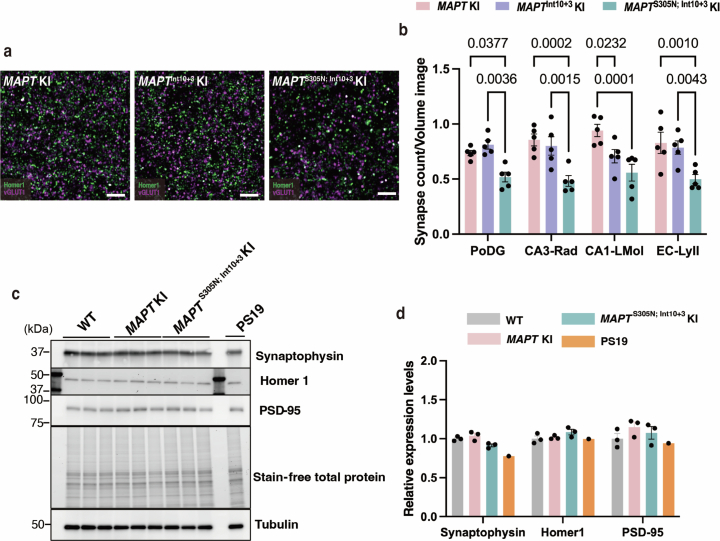
- MAPTS305N;Int10+3 mice showed significantly reduced colocalized synaptotagmin/Homer1 puncta in all regions tested (PoDG, CA3-Rad, CA1-LMol, EC-LyII) at 16 months and increased amino-cupric silver staining in entorhinal cortex neurite-like structures versus MAPT KI.
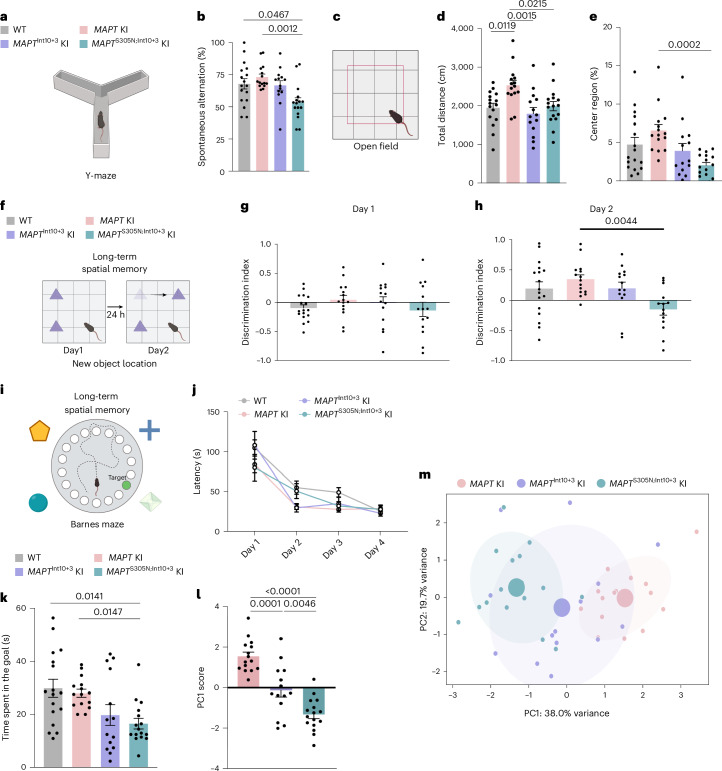
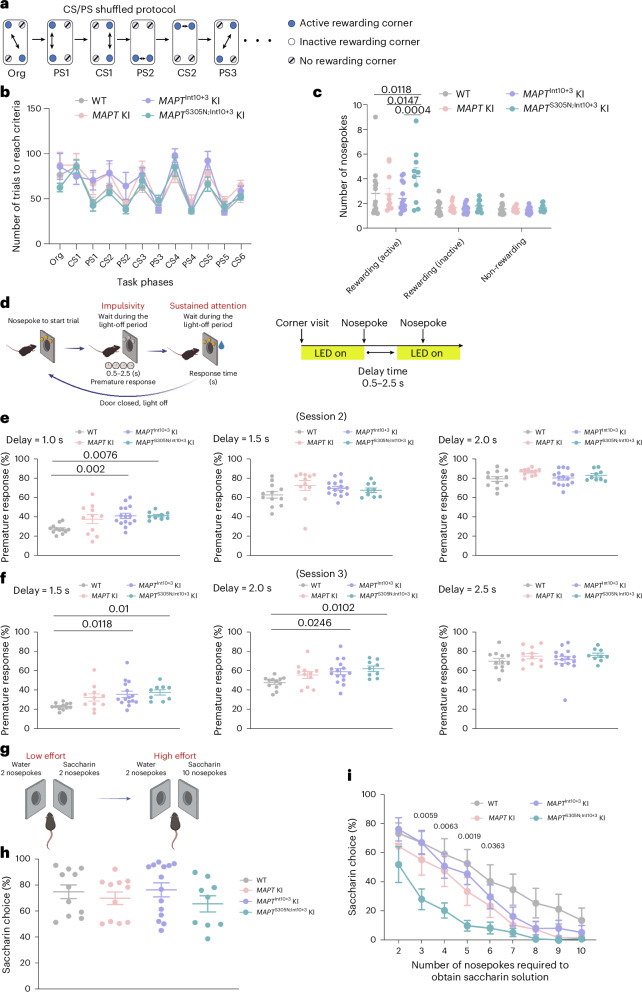
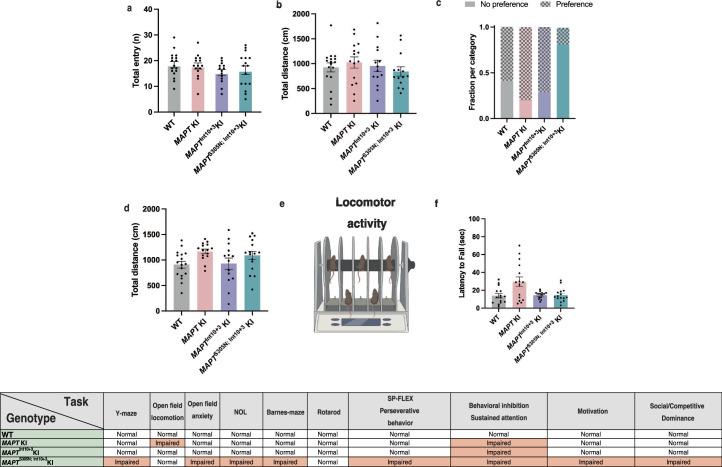
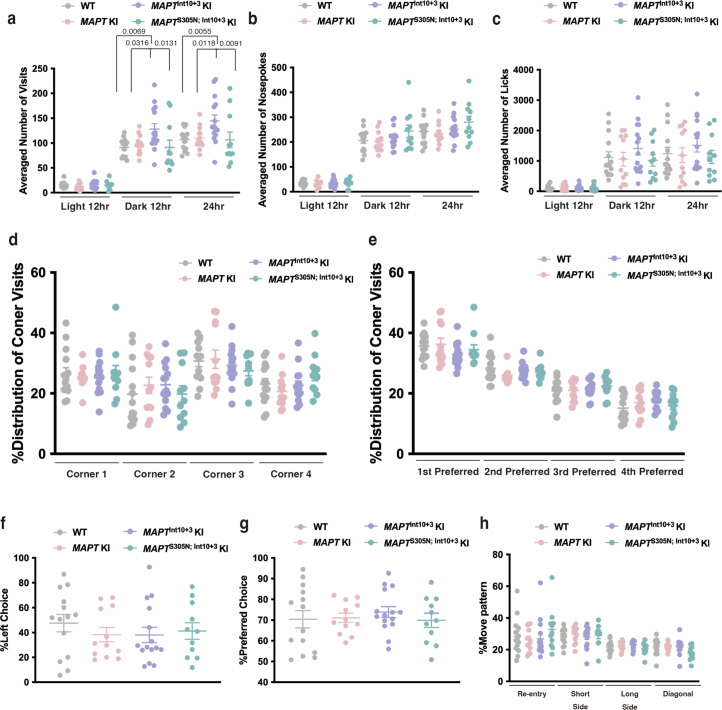
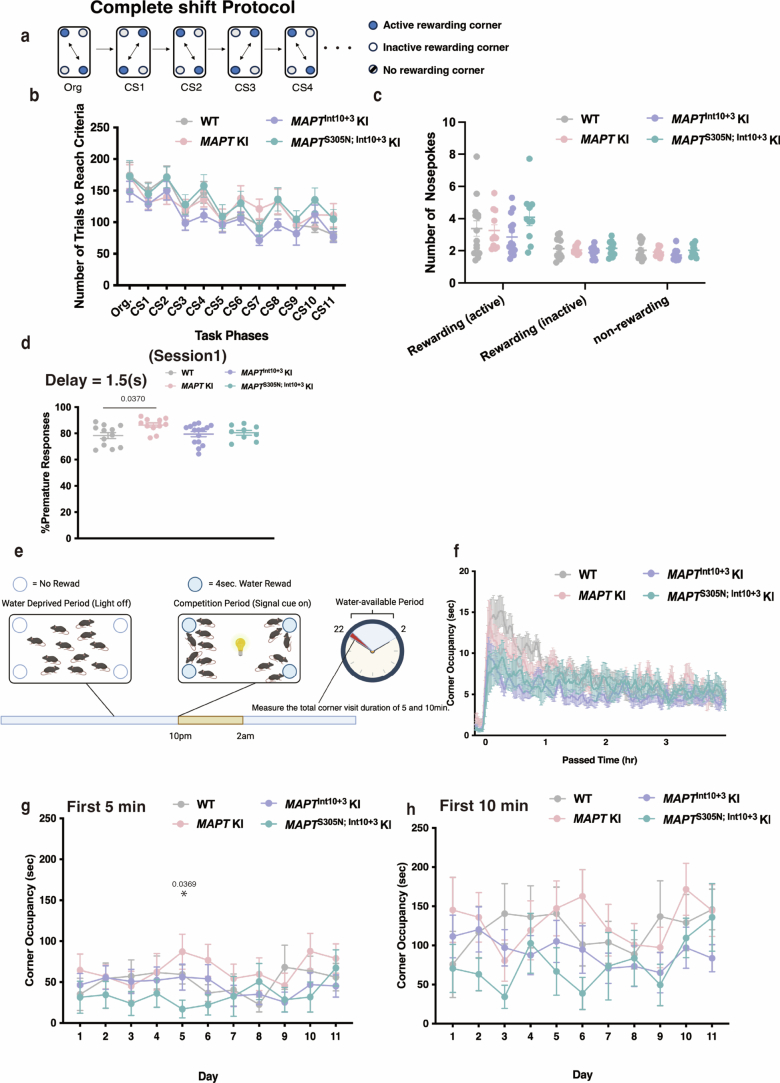
- MAPTS305N;Int10+3 mice at 15–16 months showed reduced Y-maze spontaneous alternation versus WT and MAPT KI, decreased open-field center time versus MAPT KI, reduced new object location preference, reduced Barnes maze target-hole time versus WT and MAPT KI, increased perseverative nosepokes in IntelliCage SP-FLEX Session 2, increased premature responses in behavioral inhibition Sessions 2–3 versus WT, and decreased saccharin choice under effort.
Methods
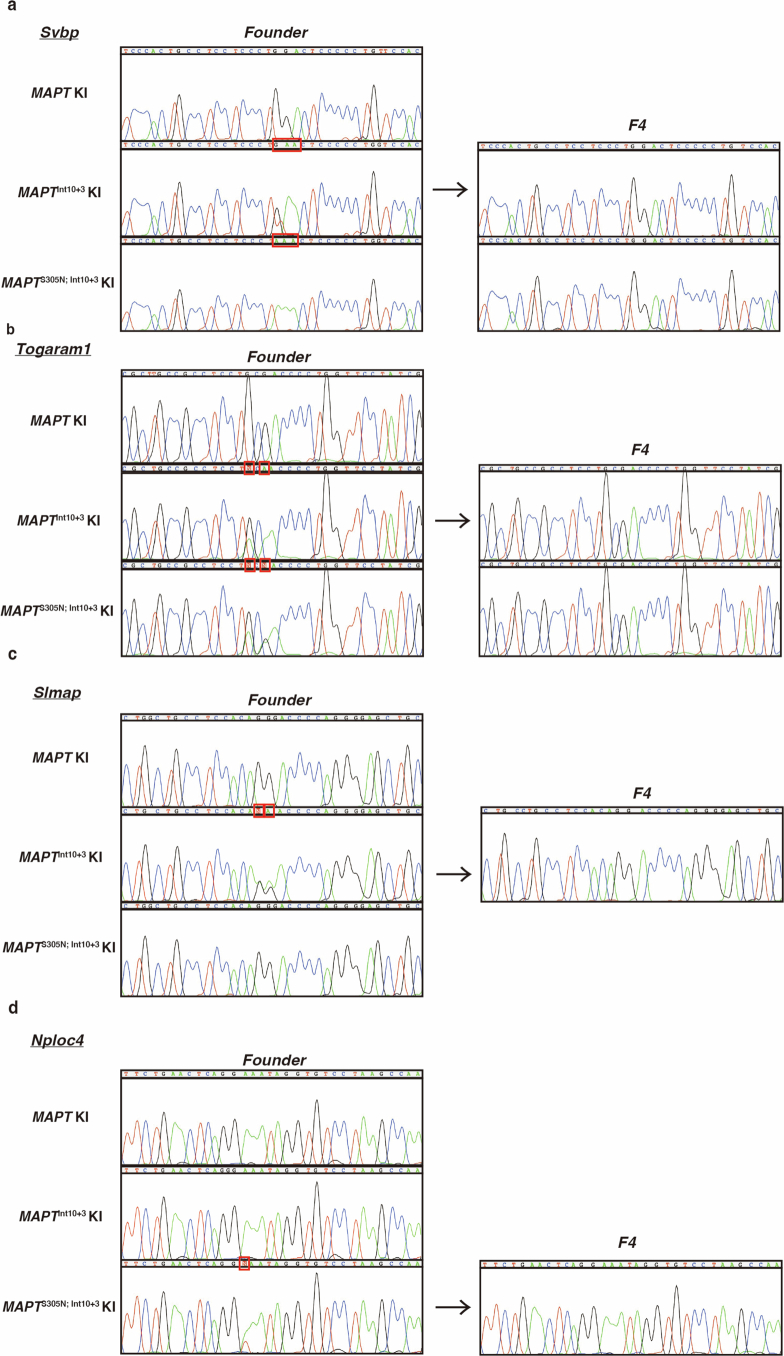
- Design: BE3 and VQR-BE base editing was used in heterozygous MAPT KI mouse zygotes to introduce FTD-associated mutations; seven mutant lines were generated, and the study focused on MAPTInt10+3 and MAPTS305N;Int10+3 lines, with off-target mutations removed by backcrossing.
- Data/sample: mice were analyzed at ages including 3, 6, 10–18, 12, 15, 16, 18, 24, and 30 months depending on assay; human FTLD Int10+3/S305N and AD brain tissue and PS19 mice were used as comparisons/positive controls. Classic behavior tests used male mice at 15–16 months; IntelliCage tests used female mice at 14–16 months.
- Analysis: RT-PCR, western blot, LC–MS/MS, immunohistochemistry, sucrose gradient/sarkosyl extraction, FRET biosensor seeding, RT-QuIC, super-resolution synapse imaging, amino-cupric silver staining, and behavioral testing; statistics included one-way/two-way ANOVA with Tukey, Kruskal–Wallis with Dunn, χ2, and PCA.
Limitations
- Stated: single-sex studies are a potential limitation (male mice for classic behavior, female mice for IntelliCage). The mice did not develop seed-competent tau, which the authors state is a limitation for modeling the earliest stages of tauopathy; human tissue was late-stage, and although further aging might produce seeds, RT-QuIC and MC1 data at advanced age suggest this will not occur.
- Stated: humanization of the Mapt gene may itself affect impulsivity and aspects of apathy, potentially masking additional mutation effects; behavioral differences were subtle at the age tested and further analysis, especially at advanced ages, is warranted.
- Evident from the text: no statistical methods were used to predetermine sample sizes; IntelliCage experiments could not be blinded to genotype because RFID chips identified each mouse; S305N tau structure has not been resolved by cryo-EM due to lack of suitable archived tissue and scarcity of mutation carriers; lower expression of the S305N biosensor construct versus the P301S construct could account for reduced seeding efficiency.
Model-written summary. Check it against the paper before relying on it.
Integrity signals
Registry
Cites
Statistics
Figures

Verification
Claims the paper makes
0 Valid · 1 Not valid · 32 Not checked · 107 Own results and interpretations
A result the paper reports from its own data — it cites no other source for it, so there is none to check. The quote shows it is in the paper.
In the paper
“MC1 and T22 immunoreactivity was not detected in the brains of MAPTInt10+3 or MAPTS305N;Int10+3 KI mice even at 30 months of age”
§ In vivo hyperphosphorylation of tau is associated with synaptic loss and behavioral abnormalities in the absence of tau seeds > Results > Tau in mutant KI mice is not conformationally abnormal
plain- Asserted: passes — The authors put it forward as true.
- Checkable: passes — It can be checked against evidence.
- Load-bearing: passes — The paper’s conclusions depend on it.
- Based: passes — The paper gives a reason why it holds.
A result the paper reports from its own data — it cites no other source for it, so there is none to check. The quote shows it is in the paper.
In the paper
“Accumulation of hyperphosphorylated tau was accompanied by neurite degeneration”
§ In vivo hyperphosphorylation of tau is associated with synaptic loss and behavioral abnormalities in the absence of tau seeds > Abstract
plainstates an association- Asserted: passes — The authors put it forward as true.
- Checkable: passes — It can be checked against evidence.
- Load-bearing: passes — The paper’s conclusions depend on it.
- Based: passes — The paper gives a reason why it holds.
A result the paper reports from its own data — it cites no other source for it, so there is none to check. The quote shows it is in the paper.
In the paper
“The MAPTS305N;Int10+3 KI line exhibited significantly increased levels of amino-cupric silver in structures resembling neurites in the entorhinal cortex compared to MAPT KI mice”
§ In vivo hyperphosphorylation of tau is associated with synaptic loss and behavioral abnormalities in the absence of tau seeds > Results > MAPTS305N;Int10+3 KI show synapse loss and early neurodegeneration
plainstates an association- Asserted: passes — The authors put it forward as true.
- Checkable: passes — It can be checked against evidence.
- Load-bearing: passes — The paper’s conclusions depend on it.
- Based: passes — The paper gives a reason why it holds.
A result the paper reports from its own data — it cites no other source for it, so there is none to check. The quote shows it is in the paper.
In the paper
“This result was consistent with a reduction in the number of vGLUT1/Homer1 immunoreactive puncta”
§ In vivo hyperphosphorylation of tau is associated with synaptic loss and behavioral abnormalities in the absence of tau seeds > Results > MAPTS305N;Int10+3 KI show synapse loss and early neurodegeneration
plainstates an association- Asserted: passes — The authors put it forward as true.
- Checkable: passes — It can be checked against evidence.
- Load-bearing: unclear — It is unclear whether the paper’s conclusions depend on it.
- Based: passes — The paper gives a reason why it holds.
A result the paper reports from its own data — it cites no other source for it, so there is none to check. The quote shows it is in the paper.
In the paper
“No difference was observed among genotypes in the degree of behavioral shaping during the acquisition training (Fig. 7i,j).”
§ In vivo hyperphosphorylation of tau is associated with synaptic loss and behavioral abnormalities in the absence of tau seeds > Results > MAPTS305N;Int10+3 KI display signs of behavioral deficits
plain- Asserted: passes — The authors put it forward as true.
- Checkable: passes — It can be checked against evidence.
- Load-bearing: unclear — It is unclear whether the paper’s conclusions depend on it.
- Based: passes — The paper gives a reason why it holds.
50 more claims
Create a free account to see all 140 claims and to verify the 48 references still open.
- It may state two separate claims as one. 45
- Probably not a substantial claim. 56
- The quote only partly states this claim. 2
Self-check
Percentages, sums and reported differences re-computed from the paper’s own numbers.
Each contradiction between two passages listed here was confirmed by an independent check.
Rated minor: it would not touch a result — a value no result rests on, a p-value that stays on the same side of the significance level, or a conflict that is clerical, resolved elsewhere in the paper, or outside its own findings.
In the paper
§ In vivo hyperphosphorylation of tau is associated with synaptic loss and behavioral abnormalities in the absence of tau seeds > Results > Tau in mutant KI mice is not conformationally abnormal
“sarkosyl-insoluble phosphorylated tau was detected in the 30–50% fractions in brain tissue from a tau Tg line with overt pathology (PS19 mouse line), which is consistent with a previous study36 (Fig. 5c,d and Extended Data Fig. 6a).”
§ In vivo hyperphosphorylation of tau is associated with synaptic loss and behavioral abnormalities in the absence of tau seeds > Methods > Whole-genome resequencing
“2.5%, 5%, 10% and 20% sucrose were prepared in water and layered onto 13.2 ml ultraclear centrifuge tubes”
Rated minor: it would not touch a result — a value no result rests on, a p-value that stays on the same side of the significance level, or a conflict that is clerical, resolved elsewhere in the paper, or outside its own findings.
In the paper
§ In vivo hyperphosphorylation of tau is associated with synaptic loss and behavioral abnormalities in the absence of tau seeds > Results > Tau in mutant KI mice is hyperphosphorylated
“n = 6 mice were used for each strain, n = 3 male and n = 3 female.”
§ In vivo hyperphosphorylation of tau is associated with synaptic loss and behavioral abnormalities in the absence of tau seeds > Methods > Whole-genome resequencing
“For each bregma N = 6 mice were stained (N = 5 for nontransgenic WT mice).”
Rated minor: it would not touch a result — a value no result rests on, a p-value that stays on the same side of the significance level, or a conflict that is clerical, resolved elsewhere in the paper, or outside its own findings.
In the paper
§ In vivo hyperphosphorylation of tau is associated with synaptic loss and behavioral abnormalities in the absence of tau seeds > Results > Tau in mutant KI mice is not conformationally abnormal
“n = 3–4 per group”
§ In vivo hyperphosphorylation of tau is associated with synaptic loss and behavioral abnormalities in the absence of tau seeds > Results > Tau in mutant KI mice is not conformationally abnormal
“n = 1 male for FTLD-S305N”
Citations
Cites
The Amyloid Hypothesis of Alzheimer’s Disease: Progress and Problems on the Road to Therapeutics
Hardy, J., & Selkoe, D. J. (2002) · Science · doi:10.1126/science.1072994 · Cited by 13,864
Cingolani, P., Platts, A., Wang, L. L., Coon, M., Nguyen, T., Wang, L., Land, S. J., Lu, X., & Ruden, D. M. (2012) · Fly · doi:10.4161/fly.19695 · Cited by 11,816
Programmable editing of a target base in genomic DNA without double-stranded DNA cleavage
Komor, A. C., Kim, Y. B., Packer, M. S., Zuris, J. A., & Liu, D. R. (2016) · Nature · doi:10.1038/nature17946 · Cited by 5,437 · cited 2×
“Third-generation Base Editor (BE3) expressing Cas9 nickase (nCas9) fused with rat APOBEC1 and uracil glycosylase inhibitor (UGI) 29 was used to create mutant mouse lines.”
Sensitivity of revised diagnostic criteria for the behavioural variant of frontotemporal dementia
Rascovsky, K., Hodges, J. R., Knopman, D., Mendez, M. F., Kramer, J. H., Neuhaus, J., van Swieten, J. C., Seelaar, H., Dopper, E. G. P., Onyike, C. U., et al. (2011) · Brain · doi:10.1093/brain/awr179 · Cited by 5,221 · cited 1×
“Episodic memory problems have been described widely in patients with FTD and they are part of the current diagnostic criteria 61 .”
DNA targeting specificity of RNA-guided Cas9 nucleases
Hsu, P. D., Scott, D. A., Weinstein, J. A., Ran, F. A., Konermann, S., Agarwala, V., Li, Y., Fine, E. J., Wu, X., Shalem, O., et al. (2013) · Nature Biotechnology · doi:10.1038/nbt.2647 · Cited by 4,741
Triple-Transgenic Model of Alzheimer’s Disease with Plaques and Tangles
Oddo, S., Caccamo, A., Shepherd, J. D., Murphy, M. P., Golde, T. E., Kayed, R., Metherate, R., Mattson, M. P., Akbari, Y., & LaFerla, F. M. (2003) · Neuron · doi:10.1016/s0896-6273(03)00434-3 · Cited by 4,126
Association of missense and 5′-splice-site mutations in tau with the inherited dementia FTDP-17
Hutton, M., Lendon, C. L., Rizzu, P., Baker, M., Froelich, S., Houlden, H., Pickering-Brown, S., Chakraverty, S., Isaacs, A., Grover, A., et al. (1998) · Nature · doi:10.1038/31508 · Cited by 3,498
Tau in physiology and pathology
Wang, Y., & Mandelkow, E. (2016) · Nature Reviews Neuroscience · doi:10.1038/nrn.2015.1 · Cited by 2,251 · cited 3×
“…KI mice using BE3, we searched for the targetable Cs in the fourth to eighth position of sgRNAs with -NGG (BE) or -NGA (VQR-BE) PAM sequences and found that MAPT -P301 (CCG) and MAPT -Int10+3 particularly in the early stages, and effective disease-modifying therapies are currently unavailable 7–9 .”
Synapse Loss and Microglial Activation Precede Tangles in a P301S Tauopathy Mouse Model
Yoshiyama, Y., Higuchi, M., Zhang, B., Huang, S.-M., Iwata, N., Saido, T. C., Maeda, J., Suhara, T., Trojanowski, J. Q., & Lee, V. M.-Y. (2007) · Neuron · doi:10.1016/j.neuron.2007.01.010 · Cited by 2,208
Self-citationTau Suppression in a Neurodegenerative Mouse Model Improves Memory Function
SantaCruz, K., Lewis, J., Spires, T., Paulson, J., Kotilinek, L., Ingelsson, M., Guimaraes, A., DeTure, M., Ramsden, M., McGowan, E., et al. (2005) · Science · doi:10.1126/science.1113694 · Cited by 2,014
Cited by
Kosmos: An AI Scientist for Autonomous DiscoveryPreprint
Mitchener, L., Yiu, A., Chang, B., Bourdenx, M., Nadolski, T., Sulovari, A., Landsness, E. C., Barabási, D. L., Narayanan, S., Evans, N., et al. (2025) · arXiv · doi:10.48550/arxiv.2511.02824 · Cited by 246
Self-citationLuan, Y., Wang, W., Huang, Q., Wang, Y., Nussbaumer, J., Wang, J., Steward, A., Roemer, S. N., Guan, Y., Ewers, M., et al. (2025) · Nature Communications · doi:10.1038/s41467-025-61497-4 · Cited by 52
Proteoform medicine: characterizing and targeting protein forms in human disease
Korchak, J. A., Yi, S. S., Kelleher, N. L., Sahni, N., & Sheynkman, G. (2026) · Nature Reviews Genetics · doi:10.1038/s41576-025-00915-1 · Cited by 29
Richardson, T. E., Walker, J. M., Farrell, K. W., Oliveira, T. G., White, C. L., & Crary, J. F. (2025) · Acta Neuropathologica · doi:10.1007/s00401-025-02943-x · Cited by 28
Bertucci, T., Bowles, K. R., Lotz, S., Bheda, S., Qi, L., Farjood, F., Whitton, K., Goderie, S. K., Borden, S., Rossi, A., et al. (2023) · doi:10.1101/2023.07.11.548571 · Cited by 22
Metadata
- Authors
- Watamura, N., Foiani, M. S., Bez, S., Bourdenx, M., Santambrogio, A., Frodsham, C., Camporesi, E., Brinkmalm, G., Zetterberg, H., Patel, S., Kamano, N., Takahashi, M., Rueda-Carrasco, J., Katsouri, L., Fowler, S., Turkes, E., Hashimoto, S., Sasaguri, H., Saito, T., Islam, A. S., Benner, S., Endo, T., Kobayashi, K., Ishida, C., Vendruscolo, M., Yamada, M., Duff, K. E., & Saido, T. C.
- Affiliations
- RIKEN Center for Brain Science (JP)
- UK Dementia Research Institute (GB)
- University of Cambridge (GB)
- University of Gothenburg (SE)
- Sainsbury Wellcome Centre (GB)
- Centre for Human Genetics (GB)
- Shiga University of Medical Science (JP)
- Nagoya City University (JP)
- National Institute for Environmental Studies (JP)
- National Hospital Organization (JP)
- Kanazawa University (JP)
- Corresponding author
- Watamura, Naoto
- Foiani, Martha S.
- Duff, Karen E.
- Saido, Takaomi C.
- ORCID
- Watamura, Naoto
- Foiani, Martha S.
- Bez, Sumi
- Bourdenx, Mathieu
- Santambrogio, Alessia
- Frodsham, Claire
- Camporesi, Elena
- Brinkmalm, Gunnar
- Zetterberg, Henrik
- Kamano, Naoko
- Takahashi, Mika
- Katsouri, Loukia
- Fowler, Stephanie
- Turkes, Emir
- Hashimoto, Shoko
- Sasaguri, Hiroki
- Saito, Takashi
- Ishida, Chiho
- Vendruscolo, Michele
- Yamada, Masahito
- Duff, Karen E.
- Saido, Takaomi C.
- Venue
- Nature Neuroscience
- Published
- 2024-12-24
- Volume
- 28
- Issue
- 2
- Pages
- 293-307
- ISSN
- 1097-6256 (ISSN-L)
- 1546-1726
- PMC
- PMC11802456
- OpenAlex
- W4405732145
- Semantic Scholar
- 5dd79f20d781f4a5e912a5af32b71aadb9de249f
- Cited by
- 79
- References
- 99
- Citations by year
- 2026: 52 · 2025: 27
- FWCI
- 9.25
- Type
- journal article
- Language
- en
- Open access
- hybrid
- doi.org
- Licence
- cc-by
- creativecommons.org/licenses/by/4.0 (tdm)
- creativecommons.org/licenses/by/4.0 (vor)
- Locations
- Nature Neuroscience (publishedVersion, cc-by)
- Research Square (submittedVersion, cc-by)
- PubMed Central (publishedVersion, cc-by)
- PubMed (publishedVersion)
- UCL Discovery (University College London) (submittedVersion, cc-by)
- Apollo (University of Cambridge) (submittedVersion, cc-by)
- Funders
- Japan Agency for Medical Research and Development (JP20dm0207001)
- MEXT | Japan Society for the Promotion of Science (21K15378)
- U.S. Department of Health & Human Services | National Institutes of Health (AG063521)
- Topics
- Life Sciences › Neuroscience › Cellular and Molecular Neuroscience › Alzheimer's disease research and treatments
- Health Sciences › Medicine › Psychiatry and Mental health › Dementia and Cognitive Impairment Research
- Health Sciences › Medicine › Clinical Neurology › Amyotrophic Lateral Sclerosis Research
- Keywords
- tau hyperphosphorylation, tauopathy, frontotemporal dementia, Alzheimer's disease, MAPT mutations, synaptic loss, neurotoxicity, hippocampus, entorhinal cortex, neurite degeneration, behavioral abnormalities
- MeSH terms
- Animals, Behavior, Animal, Disease Models, Animal, Hippocampus, Humans, Mice, Inbred C57BL, Mice, Transgenic, Mutation, Phosphorylation, Synapses, tau Proteins, Tauopathies, Mice, Frontotemporal Dementia
About these checks
Registry, retraction, Cites and statistics results are computed, not judged, with one exception: a printed reference that no index lists is read once by a model before it counts as a citation error. Claims are extracted by a model and kept only when their quote appears verbatim in the text; each cited source is then checked, with a model’s help, for whether it says what the claim relies on. Those verdicts can be wrong — read the claim’s quote and the cited source before relying on one.
A language model drew the claims from the paper on 2026-11-26, under version 3 of the claim definition (model deepseek-v4.1-flash, prompt extract-v3).
A second model labelled each claim on 2026-11-26 (model jev-1.13-20260917, definition revision gold-guideline-v0.2).
Statistics and arithmetic are recomputed, not judged.
Confidence bands are shown only for fields calibrated on our annotated test set. None is calibrated yet, so no band is shown.
What counts as a claim ›How we measure confidence ›How we check this ›
Are you an author, or do you see a problem with this page? Request a review
Data sources
Bibliographic data: Semantic Scholar, OpenAlex, Crossref.
Contains information from the Semantic Scholar Academic Graph Datasets, made available under the ODC Attribution License (ODC-BY 1.0).
Semantic Scholar’s data is described in: Kinney, R., et al. (2023). The Semantic Scholar Open Data Platform. arXiv:2301.10140.
