

Structural conservation of antibiotic interaction with ribosomes
Open accessThe DOI matches its Crossref record; 106 of the 106 references it cites were found in a registry or an index.
Abstract
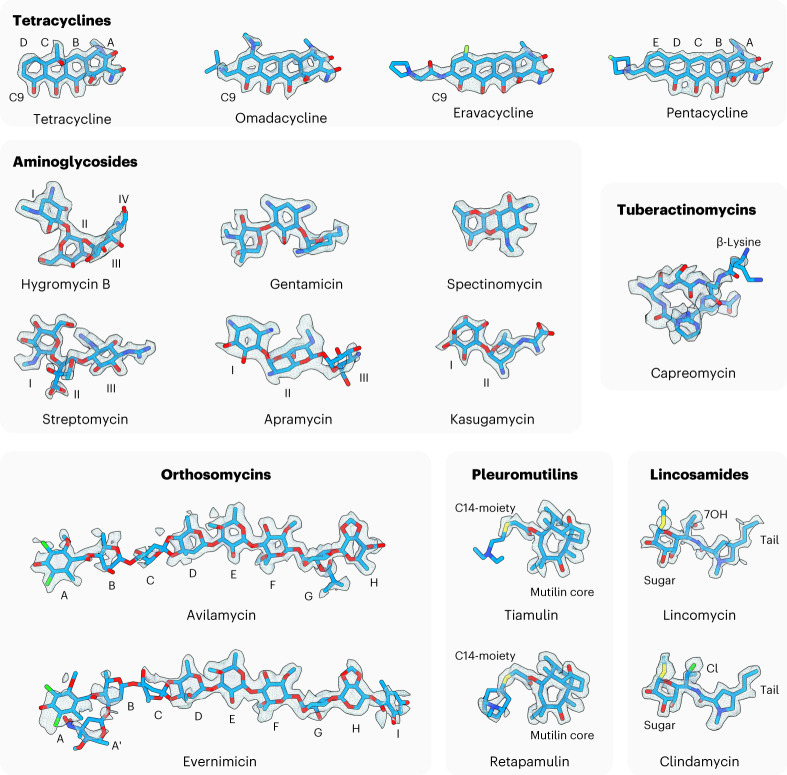
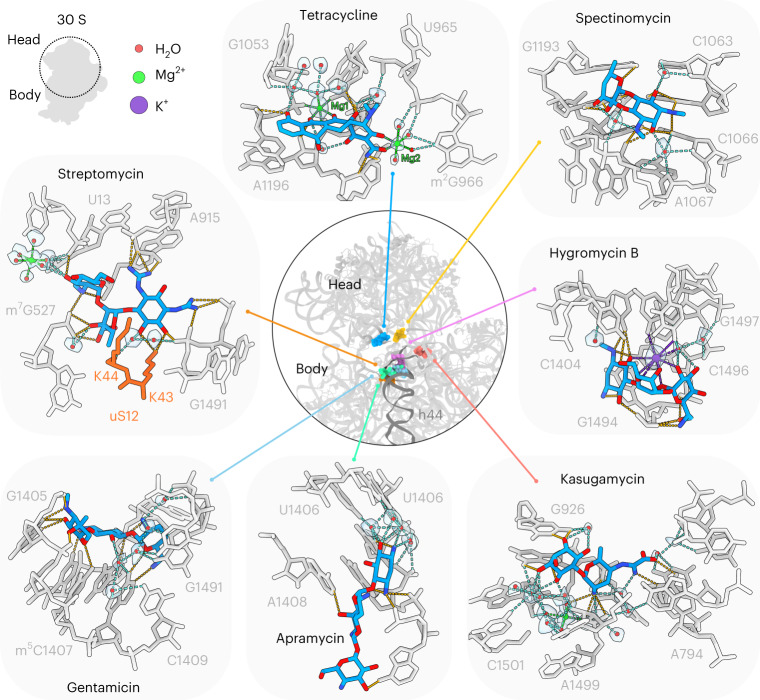
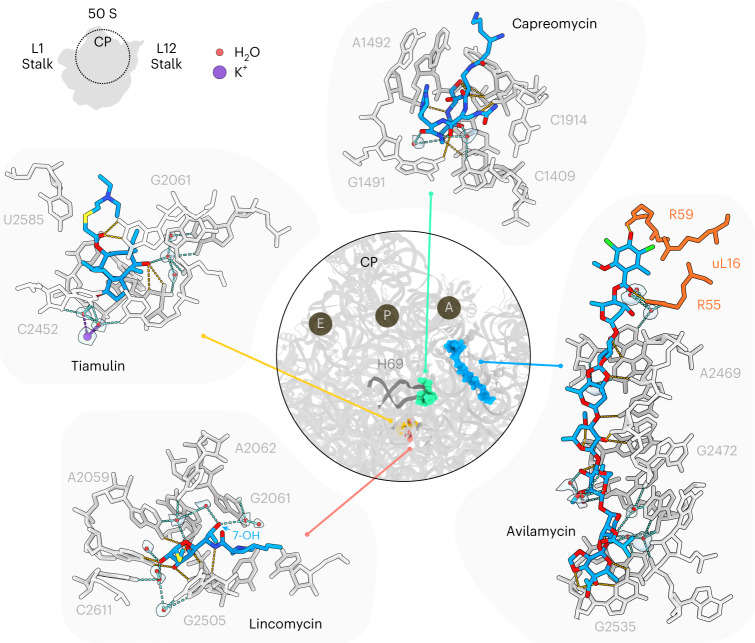
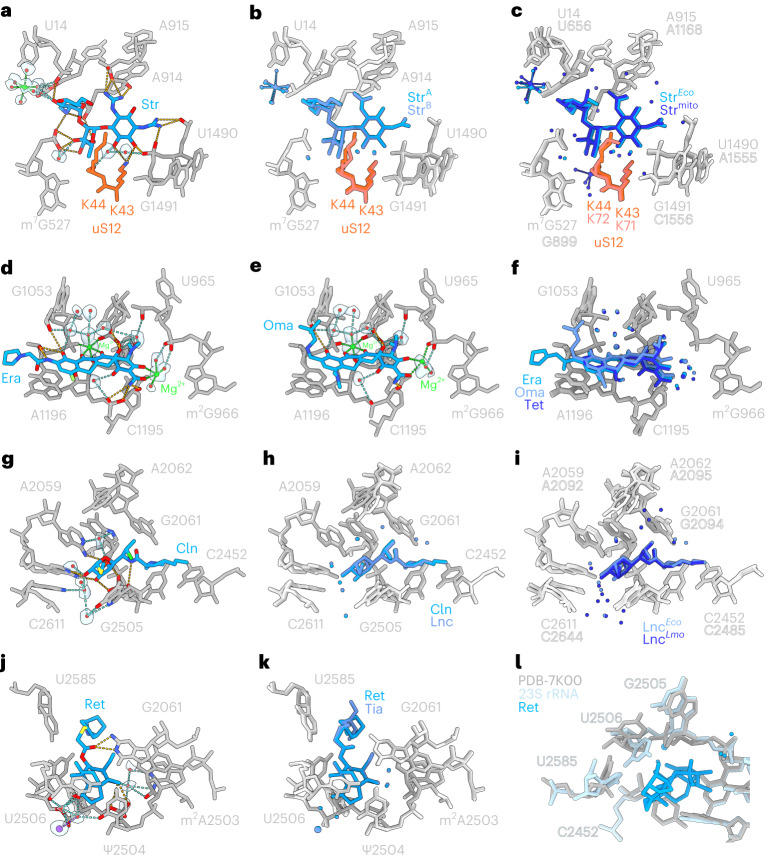
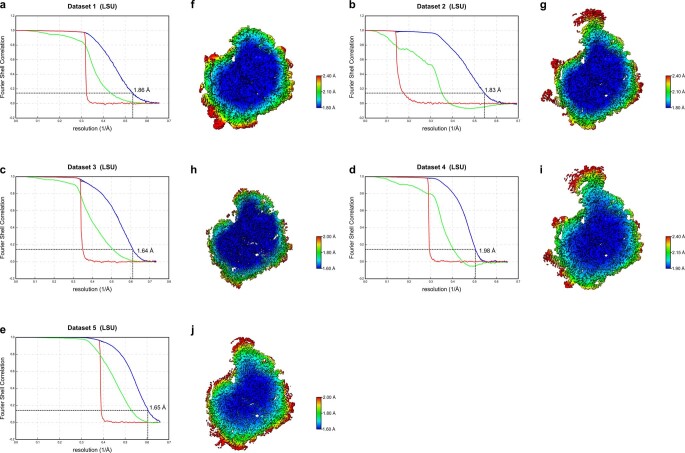
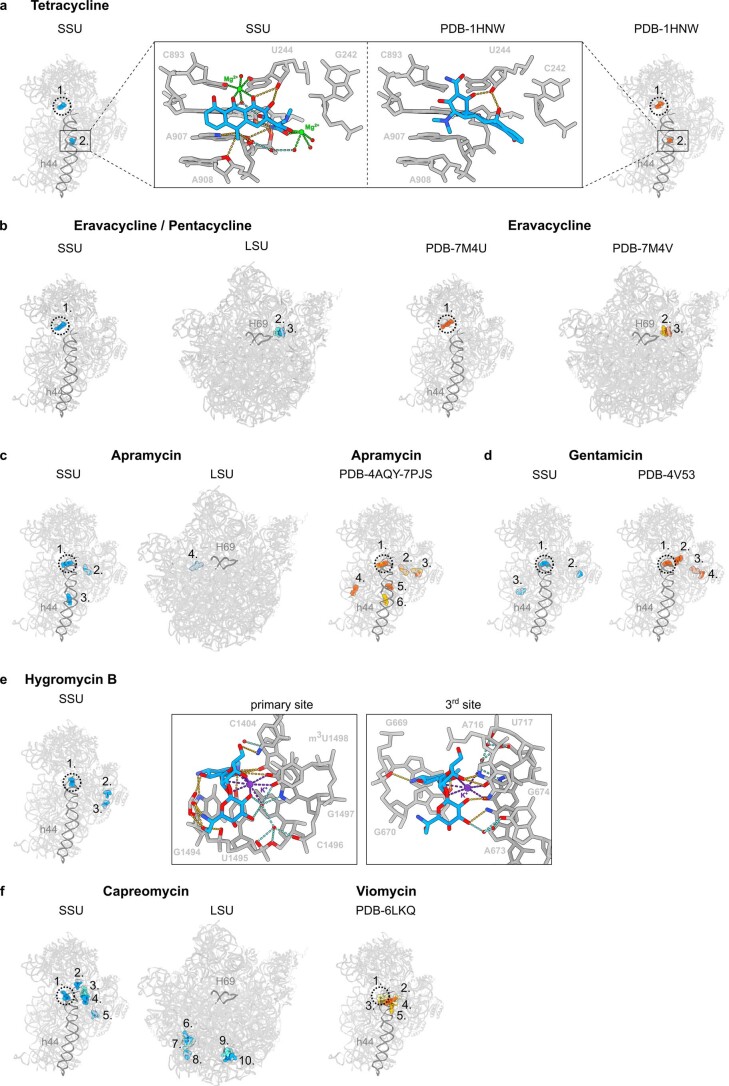
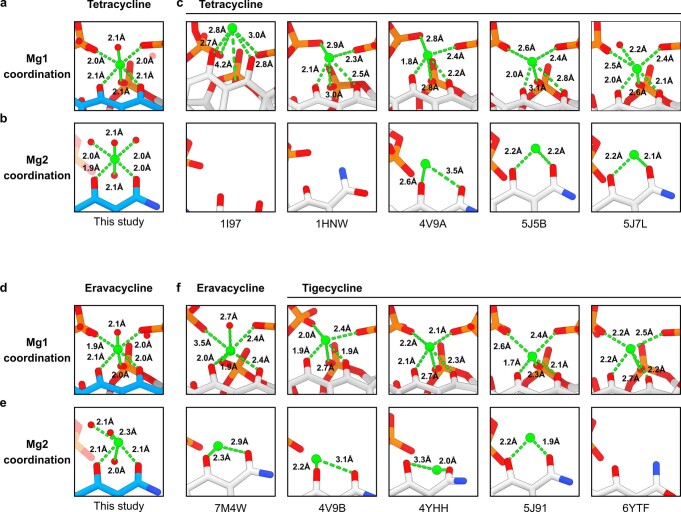
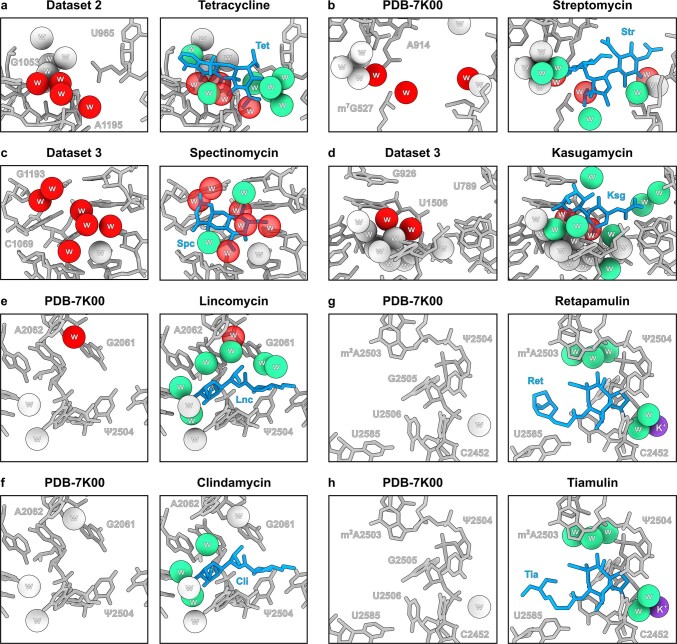
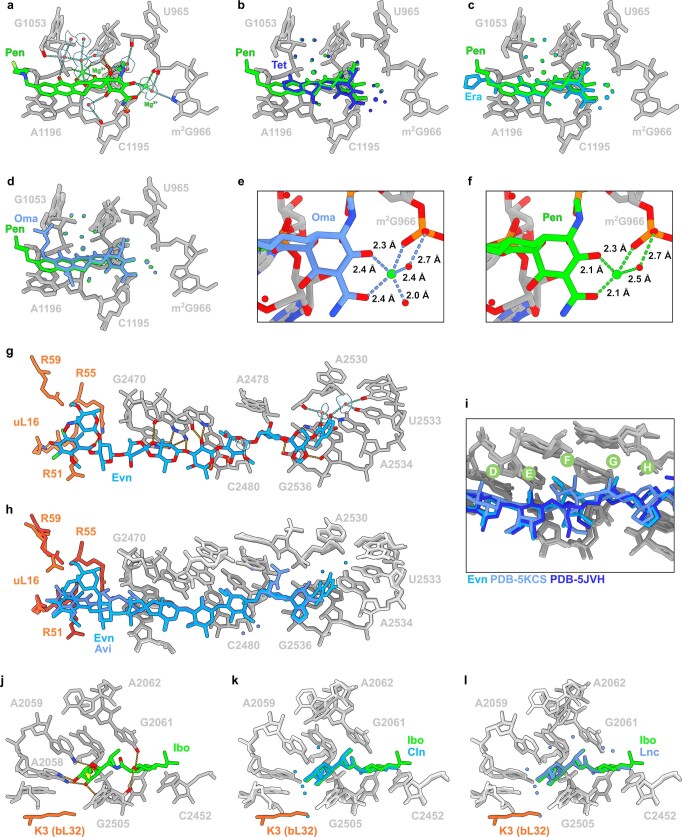
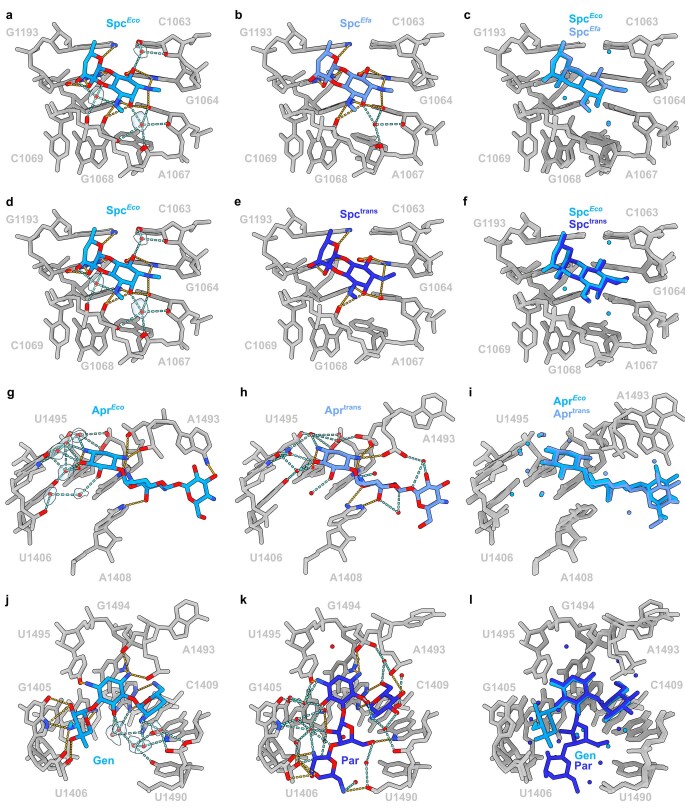
The ribosome is a major target for clinically used antibiotics, but multidrug resistant pathogenic bacteria are making our current arsenal of antimicrobials obsolete. Here we present cryo-electron-microscopy structures of 17 distinct compounds from six different antibiotic classes bound to the bacterial ribosome at resolutions ranging from 1.6 to 2.2 Å. The improved resolution enables a precise description of antibiotic–ribosome interactions, encompassing solvent networks that mediate multiple additional interactions between the drugs and their target. Our results reveal a high structural conservation in the binding mode between antibiotics with the same scaffold, including ordered water molecules. Water molecules are visualized within the antibiotic binding sites that are preordered, become ordered in the presence of the drug and that are physically displaced on drug binding. Insight into RNA–ligand interactions will facilitate development of new antimicrobial agents, as well as other RNA-targeting therapies.
Overview
The claims and statistics of this paper haven’t been checked yet.
Free: it reads the open-access text and checks the first 5 claims that cite a source we can check. Create a free account to check every claim.
Integrity signals
Registry
Cites
Statistics
Figures
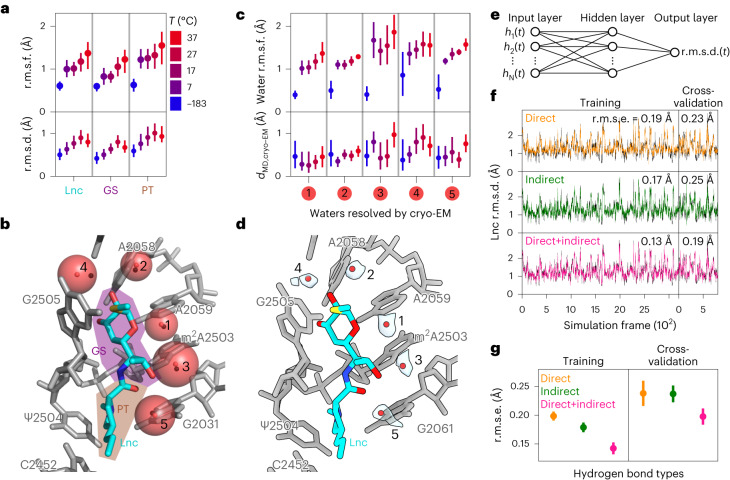
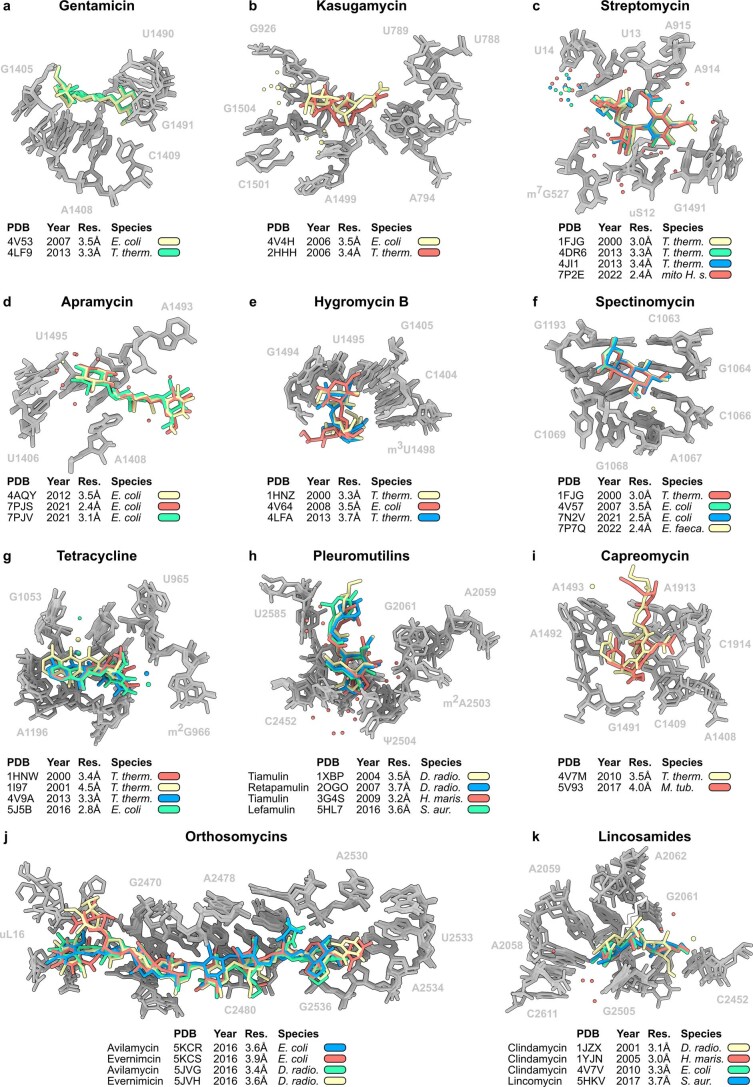
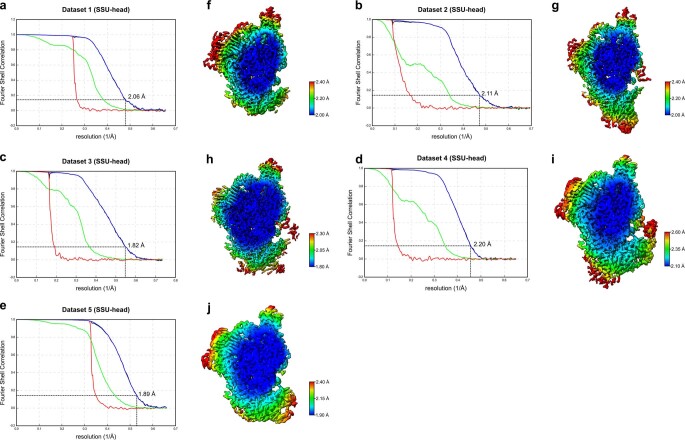
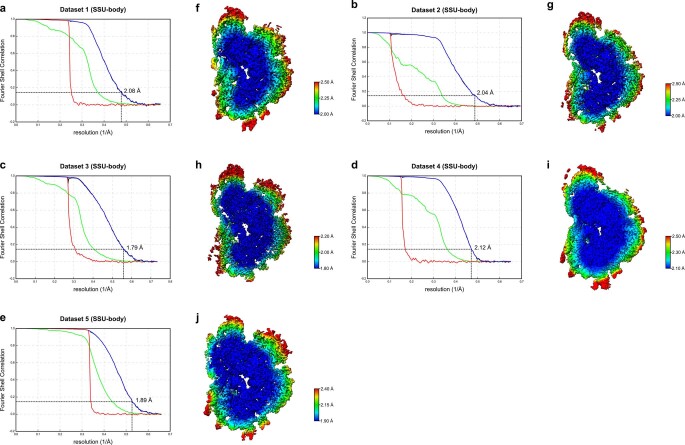
Verification
Claims the paper makes
The claims and statistics of this paper haven’t been checked yet.
Free: it reads the open-access text and checks the first 5 claims that cite a source we can check. Create a free account to check every claim.
Claims other papers make about this one
Each is checked against this paper’s own text: does it say what the citing paper says it does?
The source backs part of the claim, not all of it — or backs it for a different population, condition or comparison.
In the citing paper
“Some structural studies reported secondary binding sites for tetracyclines, but these sites were deemed inconsequential due to their distance from the two active centers of the bacterial ribosome, the mRNA decoding center and the peptidyl-transferase center (PTC)7,10,11.”
From Dual site targeting of the bacterial 70S ribosome by tetracyclines (2026) · cites this paper as [10]
Experimental — accuracy not yet measuredThe source backs part of the claim, not all of it — or backs it for a different population, condition or comparison.
In the citing paper
“Structural studies identified the mRNA decoding center in the 30S ribosomal subunit as the primary binding site, wherein tetracyclines bind close to the acceptor site (A site) codon and compete with the incoming A-site tRNA7–10.”
From Dual site targeting of the bacterial 70S ribosome by tetracyclines (2026) · cites this paper as [10]
Experimental — accuracy not yet measuredThe source backs part of the claim, not all of it — or backs it for a different population, condition or comparison.
In the citing paper
“The binding of all three tetracyclines at the canonical binding site of C. acnes and E. coli 70S ribosome was consistent with previously reported structural studies7–10,12.”
From Dual site targeting of the bacterial 70S ribosome by tetracyclines (2026) · cites this paper as [10]
Experimental — accuracy not yet measuredThe cited source says what the claim attributes to it.
In the citing paper
“The binding site of the first dimer, Dox-D1, overlaps with that of macrolides34 and lincosamides10,35 (Fig. 5B).”
From Dual site targeting of the bacterial 70S ribosome by tetracyclines (2026) · cites this paper as [10]
Self-check
Percentages, sums and reported differences re-computed from the paper’s own numbers.
The self-check needs the paper’s full text.
Citations
Cites
Molecular dynamics with coupling to an external bath
Berendsen, H. J. C., Postma, J. P. M., van Gunsteren, W. F., DiNola, A., & Haak, J. R. (1984) · The Journal of Chemical Physics · doi:10.1063/1.448118 · Cited by 30,700
Coot : model-building tools for molecular graphics
Emsley, P., & Cowtan, K. (2004) · Acta Crystallographica Section D Biological Crystallography · doi:10.1107/s0907444904019158 · Cited by 30,571
Features and development of Coot
Emsley, P., Lohkamp, B., Scott, W. G., & Cowtan, K. (2010) · Acta Crystallographica Section D Biological Crystallography · doi:10.1107/s0907444910007493 · Cited by 29,915
Abraham, M. J., Murtola, T., Schulz, R., Páll, S., Smith, J. C., Hess, B., & Lindahl, E. (2015) · SoftwareX · doi:10.1016/j.softx.2015.06.001 · Cited by 27,190
A smooth particle mesh Ewald method
Essmann, U., Perera, L., Berkowitz, M. L., Darden, T., Lee, H., & Pedersen, L. G. (1995) · The Journal of Chemical Physics · doi:10.1063/1.470117 · Cited by 22,514
Polymorphic transitions in single crystals: A new molecular dynamics method
Parrinello, M., & Rahman, A. (1981) · Journal of Applied Physics · doi:10.1063/1.328693 · Cited by 19,790
Development and testing of a general amber force field
Wang, J., Wolf, R. M., Caldwell, J. W., Kollman, P. A., & Case, D. A. (2004) · Journal of Computational Chemistry · doi:10.1002/jcc.20035 · Cited by 19,506
Canonical sampling through velocity rescaling
Bussi, G., Donadio, D., & Parrinello, M. (2007) · The Journal of Chemical Physics · doi:10.1063/1.2408420 · Cited by 18,089
MolProbity : all-atom structure validation for macromolecular crystallography
Chen, V. B., Arendall, W. B., Headd, J. J., Keedy, D. A., Immormino, R. M., Kapral, G. J., Murray, L. W., Richardson, J. S., & Richardson, D. C. (2010) · Acta Crystallographica Section D Biological Crystallography · doi:10.1107/s0907444909042073 · Cited by 14,115
ff14SB: Improving the Accuracy of Protein Side Chain and Backbone Parameters from ff99SB
Maier, J. A., Martinez, C., Kasavajhala, K., Wickstrom, L., Hauser, K. E., & Simmerling, C. (2015) · Journal of Chemical Theory and Computation · doi:10.1021/acs.jctc.5b00255 · Cited by 10,830
Cited by
An antibiotic preorganized for ribosomal binding overcomes antimicrobial resistance
Wu, K. J. Y., Tresco, B. I. C., Ramkissoon, A., Aleksandrova, E. V., Syroegin, E. A., See, D. N. Y., Liow, P., Dittemore, G. A., Yu, M., Testolin, G., et al. (2024) · Science · doi:10.1126/science.adk8013 · Cited by 90
Global health perspectives on antibacterial drug discovery and the preclinical pipeline
Theuretzbacher, U., Jumde, R. P., Hennessy, A. J., Cohn, J., & Piddock, L. J. V. (2025) · Nature Reviews Microbiology · doi:10.1038/s41579-025-01167-w · Cited by 65
“Protein synthesis is a complex process governed by the ribosome, involving specific functional centres and exhibiting major antibiotic binding sites on the 30S and 50S subunits 81,82 .”
The eRF1 degrader SRI-41315 acts as a molecular glue at the ribosomal decoding center
Coelho, J. P. L., Yip, M. C. J., Oltion, K., Taunton, J., & Shao, S. (2024) · Nature Chemical Biology · doi:10.1038/s41589-023-01521-0 · Cited by 31
“…U µl −1 SP6 RNA polymerase (NEB) and 6 ng µl −1 template at 37 °C for 1 h. Translation reactions contained 50% v/v of a homemade rabbit reticulocyte lysate-based translation mix, 5% v/v of the transcription reaction and either 5% v/v of EasyTag [ 35 S]methionine (PerkinElmer) or 40 µM methionine.”
Khusainov, I. S., Romanov, N., Goemans, C., Turoňová, B., Zimmerli, C. E., Welsch, S., Langer, J. D., Typas, A., & Beck, M. (2024) · Nature Communications · doi:10.1038/s41467-024-49084-5 · Cited by 26
“Structures of the 70S ribosome in complex with TET solved for gram-negative bacteria E. coli SQ171 and T. thermophilus 12 – 14 , together with their structure alignment to a vacant ribosome of gram-positive Staphylococcus aureus 15 , suggest that the TET binding mode is overall conserved.”
BackgroundLeonarski, F., Henning‐Knechtel, A., Kırmızıaltın, S., Ennifar, E., & Auffinger, P. (2024) · Nucleic Acids Research · doi:10.1093/nar/gkae1148 · Cited by 22
Hibernating ribosomes as drug targets?
Ekemezie, C. L., & Melnikov, S. V. (2024) · Frontiers in Microbiology · doi:10.3389/fmicb.2024.1436579 · Cited by 21
“Most ribosome-targeting antibiotics bind to ribosomal active centers (Wilson, 2009; Wilson, 2014; Lin et al., 2018; Beckert et al., 2021; Paternoga et al., 2023), generally blocking ribosomes from properly associating with or dissociating from their substrates.”
BackgroundMonitoring the complexity and dynamics of mitochondrial translation
Wakigawa, T., Mito, M., Ando, Y., Yamashiro, H., Tomuro, K., Tani, H., Tomizawa, K., Chujo, T., Nagao, A., Suzuki, T., et al. (2025) · Molecular Cell · doi:10.1016/j.molcel.2025.10.022 · Cited by 21
Laser flash melting cryo-EM samples to overcome preferred orientation
Straub, M. S., Harder, O. F., Mowry, N. J., Barrass, S. V., Hruby, J., Drabbels, M., & Lorenz, U. J. (2025) · Nature Methods · doi:10.1038/s41592-025-02796-y · Cited by 17
“Purified T20S proteasome (3.7 mg ml −1 in 50 mM Tris pH 8.0, 200 mM sodium chloride) and purified 50S ribosome 52 (an optical density at 260 nm (OD 260 ) of 40 per ml in 20 mM HEPES pH 7.5, 100 mM sodium chloride, 2 mM magnesium chloride) were gifts from A. Guskov, University of Gröningnen, and B.…”
InfluentialSingle-particle Cryo-EM and molecular dynamics simulations: A perfect match
Bock, L. V., Igaev, M., & Grubmüller, H. (2024) · Current Opinion in Structural Biology · doi:10.1016/j.sbi.2024.102825 · Cited by 17
Self-citationChloramphenicol Interferes with 50S Ribosomal Subunit Maturation via Direct and Indirect Mechanisms
Yu, T., & Zeng, F. (2024) · Biomolecules · doi:10.3390/biom14101225 · Cited by 18
“In recent years, significant progress has been made in understanding the intricate mechanisms involved in the interaction between ribosome-directed antibiotics and their corresponding targets [10].”
BackgroundT cell toxicity induced by tigecycline binding to the mitochondrial ribosome
Shao, Q., Khawaja, A., Nguyen, M. D., Singh, V., Zhang, J., Liu, Y., Nordin, J., Adori, M., Axel Innis, C., Castro Dopico, X., et al. (2025) · Nature Communications · doi:10.1038/s41467-025-59388-9 · Cited by 16
“Extensive studies in bacterial systems have shown that high concentrations of antibiotics may result in secondary binding sites in in vitro experiments, which may not be physiologically relevant 43 .”
Paenilamicins are context-specific translocation inhibitors of protein synthesis
Koller, T. O., Berger, M. J., Morici, M., Paternoga, H., Bulatov, T. M., Stasi, A. D., Dang, T., Mainz, A., Raulf, K., Crowe‐McAuliffe, C., et al. (2024) · Nature Chemical Biology · doi:10.1038/s41589-024-01752-9 · Cited by 16
“Together with U1495, C1496 and G1497, the N-terminal amino group of Agm coordinates an ion, which we assign to a K + ion based on the coordination distances and the presence of a K + ion in a similar position of a previous E. coli 70S–hygro-mycin B structure 16 .”
Self-citationfpocketR : A Platform for Identification and Analysis of Ligand-Binding Pockets in RNA
Veenbaas, S. D., Felder, S., & Weeks, K. M. (2025) · ACS Chemical Biology · doi:10.1021/acschembio.5c00805 · Cited by 16
“For the following examples, we emphasize that fpocketR has been optimized to selectively find pockets capable of binding drug-like ligands (12).”
Ultrathin liquid cells for microsecond time-resolved cryo-EM
Curtis, W. A., Wenz, J., Krüger, C. R., Barrass, S. V., Drabbels, M., & Lorenz, U. J. (2026) · Nature Communications · doi:10.1038/s41467-026-68515-z · Cited by 13
“…150 mM sodium chloride) was provided by the Protein Production and Structure Core Facility at EPFL, and the 50S ribosomal subunit (40 OD 260 /ml, 20 mM HEPES buffer, pH 7.5, 100 mM sodium chloride, 2 mM magnesium chloride) by Dr. Bertrand Beckert of the Dubochet Center for Imaging in Lausanne 59 .”
InfluentialLincosamide Antibiotics: Structure, Activity, and Biosynthesis
Mori, T., & Abe, I. (2024) · ChemBioChem · doi:10.1002/cbic.202300840 · Cited by 13
Safdari, H. A., Morici, M., Sanchez-Castro, A., Dallapè, A., Paternoga, H., Giuliodori, A. M., Fabbretti, A., Milón, P., & Wilson, D. N. (2025) · Nature Communications · doi:10.1038/s41467-025-57731-8 · Cited by 11
“1d), as observed previously on vacant 30S or 70S ribosomes 17 – 19 .”
InfluentialSelf-citationSafdari, H. A., Morici, M., Sanchez-Castro, A., Dallapè, A., Paternoga, H., Giuliodori, A. M., Fabbretti, A., Milón, P., & Wilson, D. N. (2024) · doi:10.1101/2024.09.26.614307 · Cited by 11
Self-citationRaulf, K., Koller, T. O., Beckert, B., Lepak, A. J., Morici, M., Mardirossian, M., Scocchi, M., Bange, G., & Wilson, D. N. (2025) · Nucleic Acids Research · doi:10.1093/nar/gkaf324 · Cited by 9
“We also observe two water-mediated interactions between spectinomycin and the 16S rRNA that were reported in the E. coli 70S ribosome, namely, with A1077 ( Ec A1067) and C1079 ( Ec C1069) [ 42 ].”
InfluentialSelf-citationDastidar, N. G., Freyer, N. S., Petrychenko, V., Schwarzer, A. C. D. A. P., Peng, B., Samatova, E., Kothe, C., Schmidt, M., Peske, F., Politi, A. Z., et al. (2025) · Nature Communications · doi:10.1038/s41467-025-65298-7 · Cited by 10
Mechanism of read-through enhancement by aminoglycosides and mefloquine
Kolosova, O., Zgadzay, Y., Stetsenko, A., Sukhinina, A. P., Atamas, A., Validov, S. Z., Rogachev, A. V., Usachev, K. S., Jenner, L. B., Dmitriev, S. E., et al. (2025) · Proceedings of the National Academy of Sciences · doi:10.1073/pnas.2420261122 · Cited by 10
“5 A ) is a noncanonical aminoglycoside known to bind to the DC of the bacterial ribosome (52, 53).”
Batool, Z., Pavlova, J. A., Paranjpe, M. N., Tereshchenkov, A. G., Lukianov, D. A., Osterman, I. А., Bogdanov, A. A., Sumbatyan, N. V., & Polikanov, Y. S. (2024) · Structure · doi:10.1016/j.str.2024.06.013 · Cited by 9
Kan, J., Morales-Amador, A., Hernandez, Y. A., Ternei, M. A., Lemetre, C., Maclntyre, L. W., Biais, N., & Brady, S. F. (2024) · eLife · doi:10.7554/elife.99281.3 · Cited by 8
Mechanistic Basis for the Translation Inhibition of Cutibacterium acnes by Clindamycin
Lomakin, I. B., Devarkar, S. C., Grada, A., & Bunick, C. G. (2024) · Journal of Investigative Dermatology · doi:10.1016/j.jid.2024.07.013 · Cited by 7
Hybrid Antibiotics Targeting the Bacterial Ribosome
Yeon, S. K., Pellegrino, J., Raskar, T., Tran, M. L. N., Dandan, M., Guérin, F., Einsiedler, M., Cattoir, V., Fraser, J. S., & Seiple, I. B. (2025) · ACS Central Science · doi:10.1021/acscentsci.5c01046 · Cited by 7
Human ribosomes interactions reveal the binding landscape of neomycinPreprint
Wu, M., Zhu, L., Wu, K., Jia, C., Zhang, X., Zhao, Z., Liu, H., Yi, C., Sun, S., Liu, K., et al. (2025) · bioRxiv (Cold Spring Harbor Laboratory) · doi:10.1101/2025.07.22.666027 · Cited by 8
“In bacteria, binding to h44 of the small subunit (SSU) and H69 of the large subunit (LSU) promotes codon misreading and disrupts translational fidelity 3,25,27 – 29 .”
Mapping rRNA, tRNA, and mRNA modifications in ribosomes at high resolution
Koziej, L., & Glatt, S. (2025) · Trends in Biochemical Sciences · doi:10.1016/j.tibs.2025.08.007 · Cited by 6
A Novel Actinobacteria-Specific Ribosome Hibernation Factor in Mycobacterium tuberculosisPreprint
Majumdar, S., Li, Y., Manjari, S. R., Gamper, H., Hou, Y., Banavali, N. K., Ojha, A. K., & Agrawal, R. K. (2024) · bioRxiv (Cold Spring Harbor Laboratory) · doi:10.1101/2024.11.25.625233 · Cited by 11
Structural mechanism of FusB-mediated rescue from fusidic acid inhibition of protein synthesis
González-López, A., Ge, X., Larsson, D. S. D., Sihlbom Wallem, C., Sanyal, S., & Selmer, M. (2025) · Nature Communications · doi:10.1038/s41467-025-58902-3 · Cited by 5
Binding assays enable discovery of Tet(X) inhibitors that combat tetracycline destructase resistance
Beech, M. J., Toma, E. C., Smith, H. G., Trush, M. M., Ang, J. H. J., Wong, M. Y., Wong, C. K., Ali, H. S., Butt, Z., Goel, V., et al. (2025) · Chemical Science · doi:10.1039/d5sc00964b · Cited by 5
Hiregange, D., Samiya, S., Mizgalska, D., Ben‐Zeev, E., Waghalter, M., Rivalta, A., Rajan, K. S., Halfon, Y., Breiner-Goldstein, E., Kaczmarczyk, I., et al. (2025) · Nucleic Acids Research · doi:10.1093/nar/gkaf458 · Cited by 6
Hedges, M. R., Carlo, C. M. D., & Wuest, W. M. (2025) · Chemical Communications · doi:10.1039/d5cc03863d · Cited by 8
Han, W., Liu, Y., Liang, X., Liu, J., Jiang, Q., Zhang, C., & Zhang, Y. (2026) · Journal of Hazardous Materials · doi:10.1016/j.jhazmat.2026.141792 · Cited by 6
The energy landscape of the ribosome
Byju, S., Hassan, A. H., & Whitford, P. C. (2023) · Biopolymers · doi:10.1002/bip.23570 · Cited by 5
Yao, Z., Yu, K., Qian, C., Zhou, B., Lin, Y., Zhang, X., Zhang, Y., Zhou, T., Zeng, W., Cao, J., et al. (2025) · BMC Microbiology · doi:10.1186/s12866-025-03950-4 · Cited by 5
“The ribosome plays a crucial role in protein synthesis and function as one of the largest molecular machines in the cell [21].”
RsmG methylation of 16S rRNA affects the function of ribosomal protein uS12
Bell, T. W., Turner, R. M., Merryman, A. M., Joseph, J. J., Gregory, S. T., & O’Connor, M. (2025) · Archives of Microbiology · doi:10.1007/s00203-025-04349-5 · Cited by 4
“These included the E. coli 30S subunit body in complex with streptomycin (pdb entry 8cgj; (Paternoga et al. 2023)), the T. thermophilus 30S subunit in complex with streptomycin, paromomycin, and spectinomycin (pdb entry 1fjg; (Carter et al. 2000)), the T. thermophilus 30S subunit in complex with…”
Chowdhury, A., Sapkota, D., & Girodat, D. J. (2024) · Current Opinion in Structural Biology · doi:10.1016/j.sbi.2024.102804 · Cited by 4
Structural basis for hygromycin B inhibition of yeast pseudouridine-deficient ribosomes
Zhao, Y., Xu, C., Chen, X., Jin, H., & Li, H. (2025) · Science Advances · doi:10.1126/sciadv.adu0151 · Cited by 4
“We did not observe any secondary hygromycin B binding site as seen in bacterial ribosomes ( 30 ).”
Embracing exascale computing in nucleic acid simulations
Li, J., Zhou, Y., & Chen, S. (2024) · Current Opinion in Structural Biology · doi:10.1016/j.sbi.2024.102847 · Cited by 6
Marks, J., Young, E., & Hafner, M. (2024) · eLife · doi:10.7554/elife.103699 · Cited by 5
Marks, J., Young, E., & Hafner, M. (2024) · eLife · doi:10.7554/elife.103699.1 · Cited by 5
Dual site targeting of the bacterial 70S ribosome by tetracyclines
Devarkar, S. C., Lomakin, I. B., Wang, J., Grada, A., & Bunick, C. G. (2026) · Nature Communications · doi:10.1038/s41467-026-72788-9 · Cited by 2
“Some structural studies reported secondary binding sites for tetracyclines, but these sites were deemed inconsequential due to their distance from the two active centers of the bacterial ribosome, the mRNA decoding center and the peptidyl-transferase center (PTC) 7,10,11 .”
InfluentialExtensive natural variation in bacterial ribosomal drug-binding sites
Ekemezie, C. L., Chan, L. I., Brown, C. R., Helena-Bueno, K., Williams, T. A., & Melnikov, S. V. (2025) · Cell Reports · doi:10.1016/j.celrep.2025.115878 · Cited by 2
Structural highlights of macromolecular complexes and assemblies
Vallat, B. K., & Berman, H. M. (2024) · Current Opinion in Structural Biology · doi:10.1016/j.sbi.2023.102773 · Cited by 4
Yñigez‐Gutierrez, A. E., Wurm, J. E., Froese, J. T., Rosenthal, N. E., & Bachmann, B. O. (2024) · ACS Chemical Biology · doi:10.1021/acschembio.3c00693 · Cited by 2
Wang, J. (2025) · Biochemistry · doi:10.1021/acs.biochem.4c00738 · Cited by 2
Doublet decoding of tRNASer3 demonstrates plasticity of ribosomal decoding center
Krishnaswamy, S., Akbar, S., Larsson, D. S. D., Chen, Y., & Selmer, M. (2025) · Nature Communications · doi:10.1038/s41467-025-61016-5 · Cited by 2
Shivhare, V., Basu, A., & Konar, A. D. (2025) · RSC Medicinal Chemistry · doi:10.1039/d5md00728c · Cited by 2
Liu, J., Tong, H. H. Y., Zheng, H., Lei, M. I. F., & Li, S. (2025) · Molecules · doi:10.3390/molecules30224433 · Cited by 2
Peptide Nucleic Acids (PNAs) in Antimicrobial Therapy: A Next Generation Strategy
D’Aniello, A., Masi, A., Avitabile, C., del Monaco, G., Saviano, M., & Moccia, M. (2026) · International Journal of Molecular Sciences · doi:10.3390/ijms27031565 · Cited by 2
“Owing to its essential role and high structural conservation, the ribosome has long been a preferred target for conventional antibiotics, including macrolides, aminoglycosides, and oxazolidinones [64,65].”
Naleem, N., Henning‐Knechtel, A., Kırmızıaltın, S., & Auffinger, P. (2026) · Nucleic Acids Research · doi:10.1093/nar/gkag120 · Cited by 3
“(cid:2) Non-hydrated Mg 2 + ions: Coordination of six non-water atoms has not yet been observed in nucleic acid structures, likely due to steric constraints imposed by phosphate and nucleobase groups (Fig.”
Larsson, D. S. D., Liiv, A., Ero, R., Rèmme, J., & Selmer, M. (2026) · Nucleic Acids Research · doi:10.1093/nar/gkag800 · Cited by 3
“RlmE 70S ribosome is overall very similar to the WT E. coli 70S ribosome [ 1 , 32 ].”
Exploring advances in single particle CryoEM with apoferritin: From blobs to true atomic resolution
Premageetha, G. T. R., Vinothkumar, K. R., & Bose, S. (2024) · The International Journal of Biochemistry & Cell Biology · doi:10.1016/j.biocel.2024.106536 · Cited by 2
Ribosomal hibernation: a survival strategy of microbes
Tanzawa, T., Maki, Y., Ueta, M., Wada, C., Wada, A., & Yoshida, H. (2025) · Elsevier eBooks · doi:10.1016/b978-0-443-27622-4.00022-5 · Cited by 2
Chen, Q., Fujiwara, A., Nakatani, K., Kawai, G., & Murata, A. (2025) · Chemical Science · doi:10.1039/d5sc05255f · Cited by 2
Dong, L., Zong, C., Qu, J., Cheng, F., & Zhang, Y. (2025) · Journal of Hazardous Materials · doi:10.1016/j.jhazmat.2025.139786 · Cited by 2
Bhowal, K. B., Nguyen, A. M. T., Ibarra‐Meneses, A. V., Lira, A. B., Rajan, K. S., Castaño, J. D., Beaudry, F., Bashan, A., Fernandez‐Prada, C., Olivier, M., et al. (2025) · Journal of Medicinal Chemistry · doi:10.1021/acs.jmedchem.5c01291 · Cited by 1
Recent advances in protein synthesis inhibitors
Chernyshova, A. P., Владимирович, С. П., Lukianov, D. A., & Alferova, V. A. (2026) · Biochimie · doi:10.1016/j.biochi.2026.01.005 · Cited by 1
Yuce, M., Sungur, F. A., & Kürkçüoğlu, Ö. (2026) · Biochemistry · doi:10.1021/acs.biochem.5c00832 · Cited by 1
How Medically Important Antimicrobials Bind to the 30S Ribosomal Subunit in a Bacterial Pathogen
(2026) · doi:10.1021/acs.biochem.6c00008 · Cited by 1
Visualizing how antibiotics interact with ribosomes
Paternoga, H., & Wilson, D. N. (2024) · BIOspektrum · doi:10.1007/s12268-024-2162-5 · Cited by 1
Self-citationMarks, J., Young, E., & Hafner, M. (2024) · bioRxiv (Cold Spring Harbor Laboratory) · doi:10.1101/2024.08.29.610400 · Cited by 2
“Multiple classes of antibiotics inhibit bacterial translation by binding functionally important sites on the ribosome and disrupting a specific process in translation, resulting in arrested translation on mRNAs at sites characteristic of the mechanism of inhibition 20,21 .”
Marks, J., Young, E., & Hafner, M. (2026) · eLife · doi:10.7554/elife.103699.3 · Cited by 1
How medically important antimicrobials bind to the 30S ribosomal subunit in a bacterial pathogen
Manjari, S. R., Mallery, C., & Banavali, N. K. (2025) · doi:10.64898/2025.12.24.696192 · Cited by 1
Looking back at 30 years of Nature Structural & Molecular Biology
Riddihough, G., Surridge, C. D., Ladurner, A. G., Clyne, R. K., Hodges, M., Heinrichs, A. A. J., Marcinkiewicz, K. M., Ullrich, F., Perdigoto, C. N., Osman, S., et al. (2024) · Nature Structural & Molecular Biology · doi:10.1038/s41594-024-01248-z
Kan, J., Morales-Amador, A., Hernandez, Y. A., Ternei, M. A., Lemetre, C., Maclntyre, L. W., Biais, N., & Brady, S. F. (2024) · eLife · doi:10.7554/elife.99281.1.sa4
Kan, J., Morales-Amador, A., Hernandez, Y. A., Ternei, M. A., Lemetre, C., Maclntyre, L. W., Biais, N., & Brady, S. F. (2024) · eLife · doi:10.7554/elife.99281.1
Paenilamicins bind to a unique site on the ribosome to inhibit protein synthesis
(2024) · Nature Chemical Biology · doi:10.1038/s41589-024-01753-8
Ribosome binding antibacterial agents
Yadav, M., Rawat, S., & Gupta, S. (2024) · Elsevier eBooks · doi:10.1016/b978-0-443-22222-1.00014-3
Kan, J., Morales-Amador, A., Hernandez, Y. A., Ternei, M. A., Lemetre, C., Maclntyre, L. W., Biais, N., & Brady, S. F. (2024) · eLife · doi:10.7554/elife.99281.2
Najafi, K., Haghnazari, N., Davari, K., & Keshavarzi, F. (2024) · Polish Journal of Environmental Studies · doi:10.15244/pjoes/191977
Garner, A. L., Bonnet, M., Carozza, C. A., Eby, O. G., & Dean, M. E. (2025) · Elsevier eBooks · doi:10.1016/b978-0-443-29808-0.00015-7
Bhowal, K. B., Nguyen, A. M. T., Ibarra‐Meneses, A. V., Lira, A. B., Rajan, K. S., Bashan, A., Castaño, J. D., Beaudry, F., Lubell, W. D., Fernandez‐Prada, C., et al. (2025) · ChemRxiv · doi:10.26434/chemrxiv-2025-j90fr
Bhowal, K. B., Nguyen, A. M. T., Ibarra‐Meneses, A. V., Lira, A. B., Rajan, K. S., Bashan, A., Castaño, J. D., Beaudry, F., Lubell, W. D., Fernandez‐Prada, C., et al. (2025) · ChemRxiv · doi:10.26434/chemrxiv-2025-j90fr-v2
Hicks, I., Moradei, R., Chiaraviglio, L., Aljahdali, A. Z., Donthiri, R. R., Kirby, J. E., & O'Doherty, G. A. (2025) · Organic Letters · doi:10.1021/acs.orglett.5c03402
Saskemycin, a potent and selective antimycobacterial agent targeting a unique site on the ribosomePreprint
Wright, G. D., Cook, M. A., Xu, M., Morici, M., Travin, D. Y., Wang, W., Klepacki, D., Chhabra, N., Rao, V. N., Sahile, H. A., et al. (2025) · Research Square · doi:10.21203/rs.3.rs-7820265/v1
“A similar but stronger effect was noted in the presence of tetracycline (TET), an antibiotic that directly blocks tRNA binding in the A-site by steric hindrance with the anticodon 49,50 (Fig.”
Self-citationIn vitro methods for studying the mechanisms of ribosome-targeting antibiotics
Hinnu, M. (2024) · DSpace repository (University of Tartu) · Cited by 15
Bis (carbamoyl)benzoic Acids from TMACl: Evaluation as Antibacterial and Anti‐Giardia Agents
Sánchez‐López, F., Alcántar-Zavala, E., López‐Ángulo, G., Terán, A. O., Rodríguez-Vega, G., Hernández‐Guevara, E., Chávez, D., Rendón‐Maldonado, J. G., & Montes‐Ávila, J. (2025) · ChemistrySelect · doi:10.1002/slct.202501211
Hobbie, S. N., Vasella, A. T., Böttger, E. C., & Crich, D. (2026) · JACS Au · doi:10.1021/jacsau.5c01358
Esteves, F., & Caria, H. (2026) · Journal of Xenobiotics · doi:10.3390/jox16010027 · Cited by 1
“This variant enhances the binding affinity between mitochondrial 12S rRNA and aminoglycoside molecules, thereby disrupting mitochondrial ribosomal fidelity, impairing oxidative phosphorylation, and promoting the overproduction of ROS in hair cells [52,53,93,274].”
Cheng, A., 马成英, & Gao, N. (2026) · bioRxiv (Cold Spring Harbor Laboratory) · doi:10.64898/2026.02.15.706057
Marks, J., Young, E., & Hafner, M. (2026) · eLife · doi:10.7554/elife.103699.2
Conformational analysis of different tautomers of some antibiotics
Daheriya, R., & Jena, N. R. (2026) · Journal of Molecular Modeling · doi:10.1007/s00894-026-06665-z
Cryo-EM of amyloid fibrils: Advances, challenges, and translational applications
Valli, D., & Maj, M. (2026) · Progress in molecular biology and translational science · doi:10.1016/bs.pmbts.2026.03.007
Klíma, M., Šilhán, J., Pavlik, P., Hercík, K., & Bouřa, E. (2026) · Nucleic Acids Research · doi:10.1093/nar/gkag340
In vitro and in vivo activity of eravacycline against Mycobacterium abscessus
Cheng, K., Liu, H., Lyu, M., Shang, Y., Ren, W., Guo, J., Pang, Y., & Li, S. (2026) · BMC Microbiology · doi:10.1186/s12866-026-05125-1
“Such mechanisms have been widely described in bacteria and may be associated with reduced susceptibility in clinical MAB isolates [28].”
Li, L., Wu, X., Lin, Q., Peng, T., Guo, C., Wang, J., & Li, X. (2026) · Agriculture · doi:10.3390/agriculture16111165
Fragmented rRNAs and lineage-specific RNA-binding proteins define myzozoan mitoribosomes
Wang, C., Kassem, S., Suo, X., Soldati‐Favre, D., & Jia, Y. (2026) · Trends in Parasitology · doi:10.1016/j.pt.2026.05.008
A Microscale Platform for the Comprehensive Analysis of Bacterial Translation Initiation
Vinogradova, D. S., Kasatsky, P. S., Spiridonova, Z. A., Leyva, S., Sanchez-Castro, A. E., Peñaranda, K., Zegarra, V., Soriano, P., Paleskava, A., Milón, P., et al. (2026) · International Journal of Molecular Sciences · doi:10.3390/ijms27114953
“Streptomycin (Str), an aminoglycoside antibiotic, binds protein S12 and 16S rRNA within the 30S subunit and induces translational errors [88–91].”
Ngô, L. N., Letten, A. D., & Engelstädter, J. (2026) · bioRxiv (Cold Spring Harbor Laboratory) · doi:10.64898/2026.06.09.731231
A Systematic Analysis of Lipid–Protein Interactions in the Protein Data Bank
Puri, N., & McShan, A. C. (2026) · Biochemistry · doi:10.1021/acs.biochem.6c00170
Off-target anti-leukemic effects of antibiotics: mechanisms and therapeutic insights
Charamis, J., Katzilakis, N., Stiakaki, E., & Kyriakidis, I. (2026) · Cancer Chemotherapy and Pharmacology · doi:10.1007/s00280-026-04916-7
“…, i n c l ud i ng NDH - 2 ac ti v it y a nd T C A c y c l e [ 225 ] T a b l e 1 ( c on ti nu e d ) peptidyl transferase center (PTC) architecture, and nascent peptide exit tunnel organization], providing a structural basis for off-target inhibition by several bacterial ribosome inhibitors [ 3, 16].”
Sparsomycin inhibits translation through a conserved mechanism across all domains of life
Paranjpe, M. N., Leroy, E., Syroegin, E. A., Flemmich, L., Thaler, J., Gillard, M., Bougas, A., Kournoutou, G. G., Dinos, G. P., Renault, T. T., et al. (2026) · Nucleic Acids Research · doi:10.1093/nar/gkag761
“Interestingly, another chemically unrelated PTC-targeting antibiotic, retapamulin, which is known to inhibit translation initiation [ 26 , 61 ], binds to a site overlapping that of SPA (Fig.”
Lam, T.-P., Pach, S., Ullmann, P., Enyoury, H. E. K., Brenk, R., Ballante, F., Balius, T. E., Kolb, P., Irwin, J. J., Carlsson, J., et al. (2026) · ChemRxiv · doi:10.26434/chemrxiv.15010189/v1
Structural mechanism of FusB-mediated rescue from fusidic acid inhibition of protein synthesis
González-López, A., Ge, X., Larsson, D. S. D., Sanyal, S., & Selmer, M. (2024) · doi:10.1101/2024.08.30.610483
Metadata
- Authors
- Paternoga, H., Crowe-McAuliffe, C., Bock, L. V., Koller, T. O., Morici, M., Beckert, B., Myasnikov, A. G., Grubmüller, H., Nováček, J., & Wilson, D. N.
- Affiliations
- Universität Hamburg (DE)
- Max Planck Institute for Multidisciplinary Sciences (DE)
- École Polytechnique Fédérale de Lausanne (CH)
- Central European Institute of Technology (CZ)
- Corresponding author
- Wilson, Daniel N.
- ORCID
- Venue
- Nature Structural & Molecular Biology
- Published
- 2023-08-07
- Volume
- 30
- Issue
- 9
- Pages
- 1380-1392
- ISSN
- 1545-9985 (ISSN-L)
- 1545-9993
- PMC
- PMC10497419
- OpenAlex
- W4385638623
- Semantic Scholar
- 070ee53fdf20bcc7e51d7c40d25fafce0f7e7b70
- Cited by
- 94
- References
- 103
- Citations by year
- 2026: 24 · 2025: 33 · 2024: 36 · 2023: 1
- FWCI
- 8.38
- Type
- journal article
- Language
- en
- Open access
- hybrid
- doi.org
- Licence
- cc-by
- creativecommons.org/licenses/by/4.0 (tdm)
- creativecommons.org/licenses/by/4.0 (vor)
- Locations
- Nature Structural & Molecular Biology (publishedVersion, cc-by)
- PubMed Central (publishedVersion, cc-by)
- PubMed (publishedVersion)
- GoeScholar The Publication Server of the Georg-August-Universität Göttingen (Georg-August-Universität Göttingen) (submittedVersion, other-oa)
- Funders
- Joint Programming Initiative on Antimicrobial Resistance
- Deutsche Forschungsgemeinschaft (WI3285/12-1, EXC 2067, EXC 2067‐1, 390729940, EXC 2067/1390729940)
- Ministerstvo Školství, Mládeže a Tělovýchovy (871037, CZ.02.1.01, LM2023042)
- Universität Hamburg
- Central European Institute of Technology
- European Regional Development Fund (02.1.01/0.0/0.0, CZ.02, CZ.02.1.01, CZ.02.1.01/0.0/0.0)
- Topics
- Life Sciences › Biochemistry, Genetics and Molecular Biology › Molecular Biology › RNA and protein synthesis mechanisms
- Life Sciences › Immunology and Microbiology › Applied Microbiology and Biotechnology › Microbial Natural Products and Biosynthesis
- Life Sciences › Biochemistry, Genetics and Molecular Biology › Structural Biology › Enzyme Structure and Function
- Keywords
- bacterial ribosome, multidrug resistance, cryo-EM structure, ordered water molecules, structural conservation, RNA-ligand interactions, antimicrobial drug design
- MeSH terms
- Anti-Bacterial Agents, Bacteria, Binding Sites, Ribosomes, RNA
About these checks
Registry, retraction, Cites and statistics results are computed, not judged, with one exception: a printed reference that no index lists is read once by a model before it counts as a citation error. Claims are extracted by a model and kept only when their quote appears verbatim in the text; each cited source is then checked, with a model’s help, for whether it says what the claim relies on. Those verdicts can be wrong — read the claim’s quote and the cited source before relying on one.
Statistics and arithmetic are recomputed, not judged.
Confidence bands are shown only for fields calibrated on our annotated test set. None is calibrated yet, so no band is shown.
What counts as a claim ›How we measure confidence ›How we check this ›
Are you an author, or do you see a problem with this page? Request a review
Data sources
Bibliographic data: Semantic Scholar, OpenAlex, Crossref.
Contains information from the Semantic Scholar Academic Graph Datasets, made available under the ODC Attribution License (ODC-BY 1.0).
Semantic Scholar’s data is described in: Kinney, R., et al. (2023). The Semantic Scholar Open Data Platform. arXiv:2301.10140.
