

MIMIC-IV, a freely accessible electronic health record dataset
Open accessThe DOI matches its Crossref record; 28 of the 28 references it cites were found in a registry or an index; 15 of the 20 sources its claims cite were checked for support.
Abstract
Digital data collection during routine clinical practice is now ubiquitous within hospitals. The data contains valuable information on the care of patients and their response to treatments, offering exciting opportunities for research. Typically, data are stored within archival systems that are not intended to support research. These systems are often inaccessible to researchers and structured for optimal storage, rather than interpretability and analysis. Here we present MIMIC-IV, a publicly available database sourced from the electronic health record of the Beth Israel Deaconess Medical Center. Information available includes patient measurements, orders, diagnoses, procedures, treatments, and deidentified free-text clinical notes. MIMIC-IV is intended to support a wide array of research studies and educational material, helping to reduce barriers to conducting clinical research.
Overview
CoChat Summary
## TL;DR
MIMIC-IV is a publicly available, deidentified electronic health record database from Beth Israel Deaconess Medical Center designed to support research, education, and technology development. It covers hospital and ICU care from 2008–2019 and adds modular structured data plus free-text clinical notes.
## Key findings
- The database includes patient measurements, orders, diagnoses, procedures, treatments, and deidentified free-text clinical notes, and is available through PhysioNet.
- The clinical cohort includes patients admitted to the emergency department or an ICU between 2008–2019; after exclusions, the authors linked 65,805 of 150,832 unique individuals (43.6%) to Massachusetts state death records.
- The paper reports that 51,022/65,803 (77.5%) of the successful death-record links were exact matches on last name, date of birth, and social security number; 11,634/65,803 (17.7%) were exact last name and date of birth plus approximate first name.
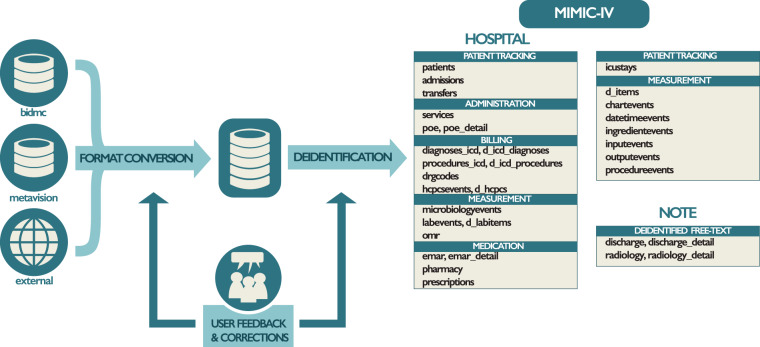
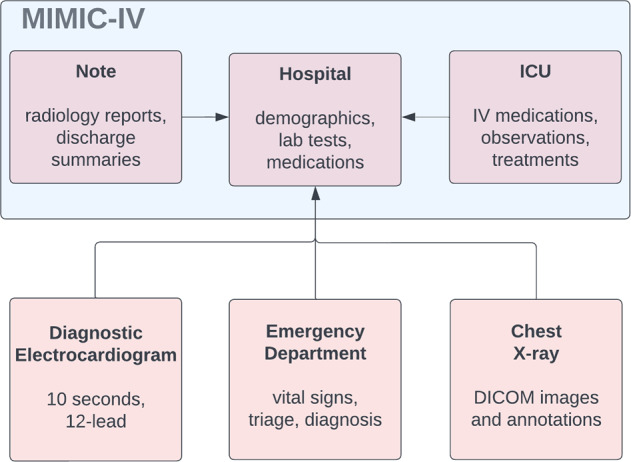
- MIMIC-IV was designed to be backward compatible with MIMIC-III while minimizing processing and organizing data into three modules: hosp, icu, and note.
## Methods
- Collaborative database construction from BIDMC clinical data, transformed and deidentified for release under IRB waiver and data use agreement; the process had three steps: acquisition, transformation, and deidentification.
- Sample/data: all patients admitted to the emergency department or an ICU at BIDMC between 2008–2019, excluding patients younger than 18 at first visit or on a protected list; external coding systems and Massachusetts death records were added.
- Main analysis/workflow: custom SQL scripts to restructure data into relational modules, plus custom linkage algorithms for out-of-hospital mortality and deidentification algorithms for HIPAA identifiers and free text; validation used integrity, consistency, and deidentification checks.
## Limitations
- The paper states that out-of-hospital mortality is only available through linkage to state death records, and deaths are censored at one year from last hospital discharge, so null death dates only indicate survival up to that point.
- The text makes evident that some data are incomplete or unevenly available across modules and time periods (for example, eMAR was deployed hospital-wide only by 2016, and the note module contains only discharge summaries and radiology reports); this is an evident coverage limitation from the text.
- The paper notes that clinical data are “sporadic and noisy,” reflecting routine care rather than research collection; this is a general data-quality limitation stated in the background.
Model-written summary. Check it against the paper before relying on it.
Integrity signals
Registry
Cites
Statistics
Figures
Verification
Claims the paper makes
13 Valid · 3 Not valid · 3 Not checked · 110 Own results and interpretations
Every source the paper cites for this claim was checked and supports it.
In the paper
“Finally, we combined two published algorithms for removing PHI from free-text17,18.”
§ MIMIC-IV, a freely accessible electronic health record dataset > Methods > Deidentification
What the sources say
- Supportedcites [17] Neamatullah I Automated de-identification of free-text medical records BMC medical informatics and decision making 2008 8 1 17 10.1186/1472-6947-8-32 18652655 PMC2526997 source
The Methods sections describe this paper's published algorithm for identifying and removing PHI from free-text medical records. The citing authors' statement that they combined two algorithms describes their own method; this citation identifies one of the algorithms. (LLM, conf=0.92)
- Supportedcites [18] Johnson, A. E. W., Bulgarelli, L. & Pollard, T. J. Deidentification of free-text medical records using pre-trained bidirectional transformers. In Proceedings of the ACM Conference on Health, Inference, and Learning, 214–221 (2020). PMC8330601 34350426 source
The Introduction (page not available in our copy) presents this paper’s BERT model for deidentifying free-text health records and describes measuring how much PHI it removes. The citation can therefore identify one of the two published algorithms; this source need not establish that the citing authors combined them. (LLM, conf=0.91)
plain- Asserted: passes — The authors put it forward as true.
- Checkable: passes — It can be checked against evidence.
- Load-bearing: passes — The paper’s conclusions depend on it.
- Based: passes — The paper gives a reason why it holds.
- Supported
Every source the paper cites for this claim was checked and supports it.
In the paper
“Due to data quality concerns regarding the Social Security Death Master File (SSDMF)13, we did not attempt to link patients to the SSDMF for determining out-of-hospital mortality.”
§ MIMIC-IV, a freely accessible electronic health record dataset > Methods > Acquisition
What the sources say
- Supportedcites [13] Levin MA Lin H-M Prabhakar G McCormick PJ Egorova NN Alive or dead: Validity of the social security administration death master file after 2011 Health Serv Res 2019 51 24 33 10.1111/1475-6773.13069 PMC6338290 30520023 source
The Discussion states that the Death Master File is no longer a reliable single source for mortality data, including out-of-hospital deaths. The decision not to link patients is the citing authors’ own methodological choice; the citation supports the data-quality concern motivating it. (LLM, conf=0.93)
plainstates a cause- Asserted: passes — The authors put it forward as true.
- Checkable: passes — It can be checked against evidence.
- Load-bearing: passes — The paper’s conclusions depend on it.
- Based: passes — The paper gives a reason why it holds.
- Supported
The cited sources support only part of this claim — read each source’s verdict below.
In the paper
“To support research that spans the periods of MIMIC-III (2002–2008) and MIMIC-IV (2008–2019), we have published the MIMIC-III Clinical Database CareVue subset22.”
§ MIMIC-IV, a freely accessible electronic health record dataset > Data Records > Building on earlier versions of MIMIC
What the sources say
- Partly supportedcites [22] Johnson AEW Pollard TJ Mark RG 2022 R. G. Mimic-iii clinical database carevue subset (version 1.4) PhysioNet 10.13026/8a4q-w170 sourceExperimental — accuracy not yet measured
The Abstract says the subset was provided to simplify combining MIMIC-III with MIMIC-IV, and the publication record identifies the released dataset. However, the Background and Methods give the CareVue period as 2001–2008, not the claim’s 2002–2008; the Background confirms MIMIC-IV’s 2008–2019 period. (LLM, conf=0.84)
plainstates a cause- Asserted: passes — The authors put it forward as true.
- Checkable: passes — It can be checked against evidence.
- Load-bearing: passes — The paper’s conclusions depend on it.
- Based: passes — The paper gives a reason why it holds.
- Partly supported
In the paper
“Access to MIMIC-IV is provided via PhysioNet19.”
§ MIMIC-IV, a freely accessible electronic health record dataset > Data Records
What the sources say
- Not checked — no full text of the sourcecites [19] Goldberger AL Physiobank, physiotoolkit, and physionet: components of a new research resource for complex physiologic signals circulation 2000 101 e215 e220 10.1161/01.CIR.101.23.e215 10851218 source
- Asserted: passes — The authors put it forward as true.
- Checkable: passes — It can be checked against evidence.
- Load-bearing: unclear — It is unclear whether the paper’s conclusions depend on it.
- Based: passes — The paper gives a reason why it holds.
A result the paper states — it cites no source for it, so there is none to check. The quote shows it is in the paper.
In the paper
“the d_icd_diagnoses and d_icd_procedures tables contain all codes which were valid at any point during the 2008–2019 time period.”
§ MIMIC-IV, a freely accessible electronic health record dataset > Data Records > Hospital module (hosp)
plain- Asserted: passes — The authors put it forward as true.
- Checkable: passes — It can be checked against evidence.
- Load-bearing: unclear — It is unclear whether the paper’s conclusions depend on it.
- Based: passes — The paper gives a reason why it holds.
29 more claims
Create a free account to see all 129 claims and every source verdict.
- Probably not a substantial claim. 84
- It may state two separate claims as one. 30
Claims other papers make about this one
Each is checked against this paper’s own text: does it say what the citing paper says it does?
The source backs part of the claim, not all of it — or backs it for a different population, condition or comparison.
In the citing paper
“We conducted a study using the publicly available MIMIC-IV dataset, which comprises 431,231 unique hospital admissions from 299,712 patients admitted to an ICU or the ED of the Beth Israel Deaconess Medical Center in Boston, Massachusetts27.”
From DRG-LLaMA : tuning LLaMA model to predict diagnosis-related group for hospitalized patients (2024) · cites this paper as [27]
Experimental — accuracy not yet measuredThe source backs part of the claim, not all of it — or backs it for a different population, condition or comparison.
In the citing paper
“For instance, the MIMIC-IV [148] includes a limited range of modalities, including clinical notes, medical images (chest x-ray Digital Imaging and Communications in Medicine [DICM] images), and time series (diagnostic electrocardiogram and patient records), making it a valuable but constrained resource for training medical M-LLMs.”
From Multimodal Large Language Models in Health Care: Applications, Challenges, and Future Outlook. (2024) · cites this paper as [148]
Experimental — accuracy not yet measuredThe source backs part of the claim, not all of it — or backs it for a different population, condition or comparison.
In the citing paper
“Existing multimodal medical data sets available for public use [84,85,148] are often relatively small in scale and demand the consolidation of numerous resources.”
From Multimodal Large Language Models in Health Care: Applications, Challenges, and Future Outlook. (2024) · cites this paper as [148]
Experimental — accuracy not yet measuredThe source backs part of the claim, not all of it — or backs it for a different population, condition or comparison.
In the citing paper
“- MIMIC-IV: A comprehensive, de-identified EHR dataset supporting tasks such as summarization, question answering, and document retrieval [17].”
From Retrieval-Augmented Generation (RAG) in Healthcare: A Comprehensive Review (2025) · cites this paper as [17]
Experimental — accuracy not yet measuredThe cited source says what the claim attributes to it.
In the citing paper
“In order to build agents that are grounded in medically relevant situations, we use a random sample of diagnostic questions from the US Medical Licensing Exam (USMLE), from deidentified electronic health records (MIMIC-IV)16, and from the New England Journal of Medicine (NEJM) case challenges.”
From AgentClinic: a multimodal benchmark for tool-using clinical AI agents (2026) · cites this paper as [16]
4 more claims about this paper
Create a free account to see every claim other papers make about this one.
Citations
Cites
Goldberger, A. L., Amaral, L. A. N., Glass, L., Hausdorff, J. M., Ivanov, P. C., Mark, R. G., Mietus, J. E., Moody, G. B., Peng, C.-K., & Stanley, H. E. (2000) · Circulation · doi:10.1161/01.cir.101.23.e215 · Cited by 14,809
Self-citationMIMIC-III, a freely accessible critical care database
Johnson, A. E. W., Pollard, T. J., Shen, L., Lehman, L.-W. H., Feng, M., Ghassemi, M., Moody, B., Szolovits, P., Anthony Celi, L., & Mark, R. G. (2016) · Scientific Data · doi:10.1038/sdata.2016.35 · Cited by 8,141 · cited 1×
“More recently, MIMIC-III was published in 2015 and significantly expanded MIMIC-II, containing data for over 40,000 patients 3 .”
MethodSelf-citationPollard, T. J., Johnson, A. E. W., Raffa, J. D., Celi, L. A., Mark, R. G., & Badawi, O. (2018) · Scientific Data · doi:10.1038/sdata.2018.178 · Cited by 1,993 · cited 2×
“0 comprises of 200,859 stays at ICUs and step-down units across 208 hospitals in the continental United States 4 .”
BackgroundSelf-citationSaeed, M., Villarroel, M., Reisner, A. T., Clifford, G., Lehman, L.-W., Moody, G., Heldt, T., Kyaw, T. H., Moody, B., & Mark, R. G. (2011) · Critical Care Medicine · doi:10.1097/ccm.0b013e31820a92c6 · Cited by 1,162
Self-citationBest Practices for Scientific Computing
Wilson, G., Aruliah, D. A., Brown, C. T., Chue Hong, N. P., Davis, M., Guy, R. T., Haddock, S. H. D., Huff, K. D., Mitchell, I. M., Plumbley, M. D., et al. (2014) · PLoS Biology · doi:10.1371/journal.pbio.1001745 · Cited by 723 · cited 1×
“The creation of MIMIC-IV followed best practices in scientific computing 23 .”
MethodJohnson, A., Bulgarelli, L., Pollard, T., Gow, B., Moody, B., Horng, S., Celi, L. A., & Mark, R. (2024) · PhysioNet · doi:10.13026/07hj-2a80 · Cited by 524
Self-citationJohnson, A., Bulgarelli, L., Pollard, T., Horng, S., Celi, L. A., & Mark, R. (2023) · PhysioNet · doi:10.13026/s6n6-xd98 · Cited by 524
Self-citationEarly prediction of circulatory failure in the intensive care unit using machine learning
Hyland, S. L., Faltys, M., Hüser, M., Lyu, X., Gumbsch, T., Esteban, C., Bock, C., Horn, M., Moor, M., Rieck, B., et al. (2020) · Nature Medicine · doi:10.1038/s41591-020-0789-4 · Cited by 477 · cited 1×
“The HiRID database contains high-resolution data for almost 34,000 admissions between 2008–2016 at Bern University Hospital in Switzerland 6,7 .”
BackgroundThe MIMIC Code Repository: enabling reproducibility in critical care research
Johnson, A. E. W., Stone, D. J., Celi, L. A., & Pollard, T. J. (2018) · Journal of the American Medical Informatics Association · doi:10.1093/jamia/ocx084 · Cited by 442 · cited 1×
“The MIMIC Code Repository was originally created for MIMIC-III to enable researchers to share and reuse code 24 .”
MethodSelf-citationAutomated de-identification of free-text medical records
Neamatullah, I., Douglass, M. M., Lehman, L.-W. H., Reisner, A., Villarroel, M., Long, W. J., Szolovits, P., Moody, G. B., Mark, R. G., & Clifford, G. D. (2008) · BMC Medical Informatics and Decision Making · doi:10.1186/1472-6947-8-32 · Cited by 413
Self-citation
Cited by
Items 401–500 of 3,269
Jing, L., Shi, X., Xu, L., Zhao, X., Li, F., & Qin, L. (2025) · Frontiers in Endocrinology · doi:10.3389/fendo.2025.1578078 · Cited by 12
Wang, H., Pounds, D., Zhang, W., Mokbel, A. Y., Kabir, M. N., Lin, X. Y., Highlander, A., & Dehzangi, A. (2025) · Diagnostics · doi:10.3390/diagnostics15212727 · Cited by 13
“…Intensive Care (MIMIC-IV) dataset, other notable resources include the eICU Collaborative Research Database, containing multi-center ICU data from over 200 hospitals and the PhysioNet Challenge datasets, which have supported multiple international competitions on early sepsis prediction [15–17].”
Benchmarking Large Language Models for MIMIC-IV Clinical Note Summarization
Naemi, A., & Sahafi, A. (2025) · Journal of Healthcare Informatics Research · doi:10.1007/s41666-025-00221-9 · Cited by 11
“The dataset is structured to improve data accessibility and interoperability, which enhances its utility for both research and real-world applications [20 ].”
Moody, J. B., Poitrasson-Rivière, A., Renaud, J. M., Hagio, T., Alahdab, F., Al-Mallah, M. H., Vanderver, M. D., Goonewardena, S. N., Ficaro, E. P., & Murthy, V. L. (2025) · NEJM AI · doi:10.1056/aioa2500164 · Cited by 24
Ruffini, F., Ayllón, E. M., Shen, L., Soda, P., & Guarrasi, V. (2025) · Computer Methods and Programs in Biomedicine · doi:10.1016/j.cmpb.2025.109196 · Cited by 21
Self-citationGeng, X., Wu, H., Liu, C., Qi, L., Ballah, A. K., Che, W., Wu, S., Fu, T., Li, N., Wei, X., et al. (2023) · Neurosurgical Review · doi:10.1007/s10143-023-02208-9 · Cited by 10
Qi, Z., Dong, L., Lin, J., & Duan, M. (2024) · Frontiers in Cellular and Infection Microbiology · doi:10.3389/fcimb.2024.1348896 · Cited by 14
IVP-VAE: Modeling EHR Time Series with Initial Value Problem Solvers
Xiao, J., Basso, L., Nejdl, W., Ganguly, N., & Sikdar, S. (2024) · Proceedings of the AAAI Conference on Artificial Intelligence · doi:10.1609/aaai.v38i14.29534 · Cited by 21
Simplifying Data Analysis in Biomedical Research: An Automated, User-Friendly Tool
Araújo, R., Ramalhete, L., Viegas, A., Rekowski, C. P. V., Fonseca, T. A. H., Calado, C. R. C., & Bento, L. F. N. (2024) · Methods and Protocols · doi:10.3390/mps7030036 · Cited by 12
Sadeghi, S., Hempel, L., Rodemund, N., & Kirsten, T. (2024) · Scientific Reports · doi:10.1038/s41598-024-61380-0 · Cited by 15
“However, MIMIC-IV separates patient data from the cases (stays) that are more relevant to patient care 37 .”
MethodNikravangolsefid, N., Reddy, S., Truong, H. H., Charkviani, M., Ninan, J., Prokop, L. J., Suppadungsuk, S., Singh, W., KASHANI, K. B., & Garces, J. P. D. (2024) · Journal of Critical Care · doi:10.1016/j.jcrc.2024.154889 · Cited by 15
Liang, X., Li, X., Cheng, H., Wei, F., Li, T., Li, Y., Huang, Y.-T., Lyu, J., & Wang, Y. (2024) · Nursing in Critical Care · doi:10.1111/nicc.13136 · Cited by 17
Subirade, C., Jamet, C., Tran, M. D., Vantrepotte, V., & Han, B. (2024) · Optics Express · doi:10.1364/oe.529712 · Cited by 12
A scalable approach for critical care data extraction and analysis in an academic medical center
Boie, S. D., Meyer-Eschenbach, F., Schreiber, F., Giesa, N., Barrenetxea, J., Guinemer, C., Haufe, S., Krämer, M., Brunecker, P., Praßer, F., et al. (2024) · International Journal of Medical Informatics · doi:10.1016/j.ijmedinf.2024.105611 · Cited by 14
Zhu, Y., Li, Y., Li, X., Huang, S., & Li, Y. (2024) · Scientific Reports · doi:10.1038/s41598-024-72969-w · Cited by 15
“Based on our analysis of the MIMIC-IV database 17 , ICU admission is generally determined by the actual care received by patients, typically including those with hemodynamic instability, respiratory failure requiring mechanical ventilation, or other organ dysfunctions necessitating close monitoring…”
MethodPrognostic value of red blood cell distribution width in sepsis induced cardiomyopathy patients
Liao, J., Lu, D., Zhang, L., & Wang, M. (2024) · Scientific Reports · doi:10.1038/s41598-024-75480-4 · Cited by 11
Li, C., Zhao, K., Ren, Q., Chen, L., Zhang, Y., Wang, G., & Xie, K. (2024) · Frontiers in Cellular and Infection Microbiology · doi:10.3389/fcimb.2024.1488505 · Cited by 11
Ge, T., Hu, J., & Zhou, Y. (2024) · Frontiers in Cardiovascular Medicine · doi:10.3389/fcvm.2024.1463861 · Cited by 12
“We conducted a retrospective observational study using the MIMIC-IV 2.2 database (25)”
InfluentialZandbiglari, K., Kumar, S., Bilal, M., Goodin, A. J., & Rouhizadeh, M. (2024) · Journal of Biomedical Informatics · doi:10.1016/j.jbi.2024.104755 · Cited by 19
Machine and Deep Learning Models for Hypoxemia Severity Triage in CBRNE Emergencies
Nanini, S., Abid, M., Mamouni, Y., Wiedemann, A., Jouvet, P. A., & Bourassa, S. (2024) · Diagnostics · doi:10.3390/diagnostics14232763 · Cited by 13
“We used the MIMIC-III and MIMIC-IV databases [29–31], which are extensive, de-identified health records of ICU patients.”
How AI can help in error detection and prevention in the ICU?
Flint, A. R., Schaller, S. J., & Balzer, F. (2025) · Intensive Care Medicine · doi:10.1007/s00134-024-07775-z · Cited by 14
“Moreover, creating openly accessible datasets, following the lead of initiatives like the Medical Information Mart for Intensive Care (MIMIC) [12], is crucial to support AI research and development.”
Zhao, W., Liao, Q., Feng, Y., et al. (2025) · Scientific Reports · doi:10.1038/s41598-025-90951-y · Cited by 10
“The Institutional Review Board at the Beth Israel Deaconess Medical Center (BIDMC) granted a waiver of informed consent and approved the sharing of the research resource 18 .”
Wang, D., He, C., Zou, S., Yu, L., Han, B., He, L., Liu, A., Hong, Y., & Li, Q. (2025) · Scientific Reports · doi:10.1038/s41598-025-92415-9 · Cited by 12
Guo, Z., Li, Y., An, S., & Zheng, J. (2025) · Diabetology & Metabolic Syndrome · doi:10.1186/s13098-025-01661-4 · Cited by 10
Shen, Y., Lin, K., Yang, L., et al. (2025) · BMC Cancer · doi:10.1186/s12885-025-14013-2 · Cited by 10
Wang, J., Li, H., Yang, P., Chen, X., Chen, S., Deng, L., Zeng, X., Luo, H., Zhang, D., Cai, X., et al. (2025) · Frontiers in Nutrition · doi:10.3389/fnut.2025.1435356 · Cited by 13
Association of blood urea nitrogen to albumin ratio with mortality in acute pancreatitis
Xia, H., Lin, J., Liu, M., et al. (2025) · Scientific Reports · doi:10.1038/s41598-025-97891-7 · Cited by 10
Synthetic data distillation enables the extraction of clinical information at scale
Woo, E. G., Burkhart, M. C., Alsentzer, E., & Beaulieu‐Jones, B. K. (2025) · npj Digital Medicine · doi:10.1038/s41746-025-01681-4 · Cited by 25
Schölin, L., Humphries, C., Eddleston, M., Brennan, G., Lloyd, A., Reed, M. J., Bryan, M. E., Smith, L. J., & Brett, J. (2025) · The Lancet Public Health · doi:10.1016/s2468-2667(25)00096-9 · Cited by 13
Wei, S., Dong, H., Yao, W., Chen, Y., Wang, X., ji, W., Zhang, Y., & Guo, S. (2025) · BMC Medical Informatics and Decision Making · doi:10.1186/s12911-025-03033-4 · Cited by 14
Platelets and mortality in bloodstream infection: a multicenter cohort study
Adelman, M. W., Casarin, S., Kurian, J., et al. (2025) · Clinical Microbiology and Infection · doi:10.1016/j.cmi.2025.07.021 · Cited by 10
Machine Learning for Sepsis Prediction: Prospects and Challenges
Yang, H. S. (2024) · Clinical Chemistry · doi:10.1093/clinchem/hvae006 · Cited by 16
Yada, S., Nishiyama, T., Wakamiya, S., Kawazoe, Y., Imai, S., Hori, S., & Aramaki, E. (2024) · PLoS ONE · doi:10.1371/journal.pone.0310432 · Cited by 10
Large Language Models forecast Patient Health Trajectories enabling Digital TwinsPreprint
Makarov, N., Bordukova, M., Rodriguez‐Esteban, R., et al. (2024) · medRxiv · doi:10.1101/2024.07.05.24309957 · Cited by 10
The Effect of Length of Stay in Hospital on Patients’ Health Outcomes: A Quasi-Experimental StudyPreprint
Langenberger, B., Worsham, C. M., & Geldsetzer, P. (2024) · medRxiv · doi:10.1101/2024.12.02.24318326 · Cited by 18
Contrastive learning with large language models for medical code prediction
Wu, Y., Zhang, J., Chen, X., Yao, X., & Chen, Z. (2025) · Expert Systems with Applications · doi:10.1016/j.eswa.2025.127241 · Cited by 19
Wei, Y., Xu, W., Yang, S., et al. (2025) · Frontiers in Cellular and Infection Microbiology · doi:10.3389/fcimb.2025.1623109 · Cited by 9
Zhong, Q., Cheng, Y., Li, Z., Wang, D., Rao, C., Jiang, Y., Li, L., Wang, Z., Liu, P., Che, H., et al. (2025) · The Lancet Digital Health · doi:10.1016/j.landig.2025.100901 · Cited by 14
Recent approaches of artificial intelligence in intensive care unit: A review
Havelikar, U. A., Bembde, A., Patil, D., Shinde, A., Sharma, R. K., Patel, V. P., & Chaudhari, N. B. (2025) · Intelligent Hospital · doi:10.1016/j.inhs.2025.100030 · Cited by 18
Zhu, C., Li, Z., Lin, F., Huang, L., Cao, K., Xiao, Y., Yang, J., Zhu, J., Li, H., & Li, W. (2025) · PLoS ONE · doi:10.1371/journal.pone.0336584 · Cited by 17
Zhou, D., Song, J., Fang, K., et al. (2025) · European journal of medical research · doi:10.1186/s40001-025-03492-5 · Cited by 9
Introducing the BlendedICU dataset, the first harmonized, international intensive care dataset
Oliver, M., Allyn, J., Carencotte, R., Allou, N., & Ferdynus, C. (2023) · Journal of Biomedical Informatics · doi:10.1016/j.jbi.2023.104502 · Cited by 21
Contreras, M., Silva, B., Shickel, B., Bandyopadhyay, S., Guan, Z., Ren, Y., Ozrazgat‐Baslanti, T., Khezeli, K., Bihorac, A., & Rashidi, P. (2023) · IEEE-EMBS International Conference on Biomedical and Health Informatics (BHI ...) · doi:10.1109/bhi58575.2023.10313445 · Cited by 11
Cheng, H., Huang, X., Yuan, S., Song, S., Tang, Y., Ling, Y., Tan, S., Wang, Z., Zhou, F., & Lyu, J. (2023) · Journal of Clinical Nursing · doi:10.1111/jocn.16962 · Cited by 10
MedEval: A Multi-Level, Multi-Task, and Multi-Domain Medical Benchmark for Language Model Evaluation
He, Z., Wang, Y., Yan, A., Liu, Y., Chang, E. Y., Gentili, A., McAuley, J., & Hsu, C. (2023) · Conference on Empirical Methods in Natural Language Processing (EMNLP) · doi:10.18653/v1/2023.emnlp-main.540 · Cited by 42
Tomazini, B. M., Besen, B. A. M. P., Taniguchi, L. U., Zampieri, F. G., & Cavalcanti, A. B. (2024) · Journal of Antimicrobial Chemotherapy · doi:10.1093/jac/dkae001 · Cited by 9
Gao, B., Chen, R., Zhao, H., Zhang, H., Wang, X., & Liu, D. (2024) · Frontiers in Medicine · doi:10.3389/fmed.2024.1416396 · Cited by 9
Aligning to Human Decision-Makers in Military Medical Triage
Molineaux, M., Weber, R. O., Floyd, M. W., Ménager, D., Larue, O., Addison, U., Kulhanek, R., Reifsnyder, N., Rauch, C. B., Mainali, M., et al. (2024) · Lecture notes in computer science · doi:10.1007/978-3-031-63646-2_24 · Cited by 14
Chen, Y., Zong, C., Zou, L., Zhang, Z., Yang, T., Zong, J., & Wan, X. (2024) · Heliyon · doi:10.1016/j.heliyon.2024.e33337 · Cited by 13
“0 [13] and the ICU of a large tertiary hospital in Liaoning Province, China.”
CohortNet: Empowering Cohort Discovery for Interpretable Healthcare Analytics
Cai, Q., Zheng, K., Jagadish, H. V., Ooi, B. C., & Yip, J. (2024) · Proceedings of the VLDB Endowment · doi:10.14778/3675034.3675041 · Cited by 16
On the evaluation of synthetic longitudinal electronic health records
Achterberg, J., Haas, M., & Spruit, M. R. (2024) · BMC Medical Research Methodology · doi:10.1186/s12874-024-02304-4 · Cited by 16
Ning, Y.-L., Xu, X., Ma, Q., Zhang, Y., Zhou, J., & Sun, C. (2024) · Diabetes Research and Clinical Practice · doi:10.1016/j.diabres.2024.111822 · Cited by 10
Xie, J., Zhang, T., Gao, J., Liu, Y., Chen, Y., Yang, M., Liu, Z., Mei, Q., Li, Z., Zhu, H., et al. (2024) · World Journal of Emergency Medicine · doi:10.5847/wjem.j.1920-8642.2024.074 · Cited by 14
Li, L., Li, L., Zhao, Q., Liu, X., Liu, Y., Guo, K., Zhang, D., Hu, C., & Hu, B. (2024) · MedComm · doi:10.1002/mco2.713 · Cited by 14
Nazyrova, N., Chahed, S., Chaussalet, T., & Dwek, M. V. (2024) · International Conference on Pattern Recognition Systems (ICPRS) · doi:10.1109/icprs62101.2024.10677826 · Cited by 19
“We used the Medical Information Mart for Intensive Care IV (MIMIC-IV) dataset for the classification task [24].”
MethodShimizu, G. Y., Schrempf, M., Romão, E. A., Jauk, S., Kramer, D., Rainer, P. P., da Costa, J. A. C., Marques, J. M. D. A., Scarpelini, S., Suzuki, K. M. F., et al. (2024) · PLoS ONE · doi:10.1371/journal.pone.0311719 · Cited by 15
Slim, M. A., van Amstel, R. B. E., Müller, M. C. A., Cremer, O. L., Vlaar, A. P. J., van der Poll, T., Wiersinga, W. J., Seymour, C. W., & van Vught, L. A. (2024) · Critical Care Explorations · doi:10.1097/cce.0000000000001176 · Cited by 13
An optimal antibiotic selection framework for Sepsis patients using Artificial Intelligence
Wendland, P., Schenkel-Häger, C., Wenningmann, I., & Kschischo, M. (2024) · npj Digital Medicine · doi:10.1038/s41746-024-01350-y · Cited by 12
Song, L., Ying, J., Li, M., Weng, C., Jia, S., Lan, Y., & Li, Z. (2024) · Scientific Reports · doi:10.1038/s41598-024-82890-x · Cited by 14
Fang, Y., Dou, A., Xie, H. W., Zhang, Y., Zhu, W., Zhang, Y., Li, C., Su, Y., Gao, Y., & Xie, K. (2025) · Renal Failure · doi:10.1080/0886022x.2025.2449579 · Cited by 12
Yao, F., Luo, J., Zhou, Q., Wang, L., & He, Z. (2025) · Scientific Reports · doi:10.1038/s41598-025-86674-9 · Cited by 16
“…on adult patients aged 18 and older who were hospitalized in the intensive care unit (ICU) of a top-tier tertiary hospital in the United States between 2008 and 2019 16 . eICU database includes 200,859 inpatient data from ICUs and step-down units in 208 hospitals across the United States 17 .”
Zhang, Y., Li, G., Li, J., Jian, B., Wang, K., Chen, J., Hou, J., Liao, J., Zhou, Z., Wu, Z., et al. (2025) · Renal Failure · doi:10.1080/0886022x.2025.2466818 · Cited by 10
“…in this study were sourced from the Medical Information Mart for Intensive Care IV (MIMIC-IV) database (https://mimic.mit.edu), which is a comprehensive and public database encompassing over 50,000 ICU admissions from Beth Israel Deaconess Medical Center, Boston, spanning from 2008 to 2019 [27].”
Jin, Y., Zhou, T., Hou, C., Zhang, H., & Xu, B. (2025) · European journal of medical research · doi:10.1186/s40001-025-02389-7 · Cited by 10
Severe community-acquired pneumonia in immunosuppressed patients admitted to the ICU
Garcés, A. E. V., Sanabria-Herrera, N., Duque, S., García-Gallo, E., Rodríguez, A. H., Oliveros, H., Serrano-Mayorga, C. C., Morris, A. C., Martín‐Loeches, I., & Reyes, L. F. (2025) · Respiratory Medicine · doi:10.1016/j.rmed.2025.108014 · Cited by 10
Ge, Q., Zheng, C., Song, X., Cong, Z., Luo, J., Zheng, H., Zhao, P., Wang, Y., Chen, B., & Shen, Y. (2025) · CNS Neuroscience & Therapeutics · doi:10.1111/cns.70273 · Cited by 12
“The retrospective study was performed by using data from the Medical Information Mart for Intensive Care IV (MIMIC IV) [8].”
Mosquera, J. E., Delevingne, L., Delbecq, F., Daouk, E., Drelich, A., Saleh, K., Gautier, R., & Leturia, M. (2025) · RSC Advances · doi:10.1039/d5ra00110b · Cited by 12
UniBrain: Universal Brain MRI diagnosis with hierarchical knowledge-enhanced pre-training
Lei, J., Dai, L., Jiang, H., Wu, C., Zhang, X., Zhang, Y., Yao, J., Xie, W., Zhang, Y., Li, Y., et al. (2025) · Computerized Medical Imaging and Graphics · doi:10.1016/j.compmedimag.2025.102516 · Cited by 35
Cao, H., Gui, L., Hu, Y., Yang, J., Hua, P., & Yang, S. (2025) · Nutrition Metabolism and Cardiovascular Diseases · doi:10.1016/j.numecd.2025.103973 · Cited by 10
You, X., Zhang, H., Li, T., Zhu, Y., Zhang, Z., Chen, X., & Huang, P. (2025) · Acta Diabetologica · doi:10.1007/s00592-025-02486-3 · Cited by 10
Zhang, S., Ding, H., Shen, Y., Shao, B., Gu, Y.-Y., Chen, Q., Zhang, H., Pei, Y., & Jiang, H. (2025) · BMC Medical Informatics and Decision Making · doi:10.1186/s12911-025-02976-y · Cited by 18
Liu, Y., Fu, H., Wang, Y., Sun, J., Zhang, R., Zhong, Y., Yang, T., Han, Y. T., Xiang, Y., Yuan, B., et al. (2025) · Frontiers in Endocrinology · doi:10.3389/fendo.2025.1546164 · Cited by 12
Ding, C., Huang, S.-S., Xu, Y., et al. (2025) · BMC Pulmonary Medicine · doi:10.1186/s12890-025-03622-z · Cited by 9
“The database contains detailed medical data of more than 90,000 ICU patients collected by Beth Israel Deaconess Medical Center from 2008 to 2022, involving demographics, vital signs, treatment measures, nursing records, imaging results, and discharge summaries, etc [18].”
InfluentialMiao, S., Liu, Y., Li, M., & Yan, J. (2025) · Scientific Reports · doi:10.1038/s41598-025-96718-9 · Cited by 17
“This dataset includes de-identified electronic health records from 364,627 patients hospitalized at Beth Israel Deaconess Medical Center between 2008 and 2019 13 .”
Zhong, P., Chen, X., Miao, P., Xing, Y., & Li, Y. (2025) · Scientific Reports · doi:10.1038/s41598-025-98854-8 · Cited by 9
Yue, Y. G., Li, P., Sun, Z., Wang, X., Li, Z., & Zhang, Y. (2025) · Frontiers in Endocrinology · doi:10.3389/fendo.2025.1558352 · Cited by 10
PNCD: Mitigating LLM hallucinations in noisy environments–A medical case study
Qu, J., Liu, J., Liu, X., Chen, M., Li, J., & Wang, J. (2025) · Information Fusion · doi:10.1016/j.inffus.2025.103328 · Cited by 15
Yang, X., Zhang, M., Lv, L., Chen, X., & Li, Z. (2025) · PLoS ONE · doi:10.1371/journal.pone.0323330 · Cited by 10
Zhang, Y., Cai, P., Wu, Y., Yu, Y., Chen, Z., Wang, G., Zhang, M., & Zheng, W. (2025) · Scientific Reports · doi:10.1038/s41598-025-07082-7 · Cited by 13
“This study analyzed data from the Medical Information Mart for Intensive Care version 2.2 (MIMIC-IV 2.2) database, which comprises de-identified health records of patients admitted to the intensive care units (ICUs) at Beth Israel Deaconess Medical Center in Boston, Massachusetts 14 .”
InfluentialAhn, J., Kang, B. G., Chang, M. Y., & Yoon, S. (2025) · Clinical and Experimental Otorhinolaryngology · doi:10.21053/ceo.2025-00121 · Cited by 10
“Although recent efforts have produced patient-specific and multimodal datasets (Table 3), most remain limited in scale and diversity, with fewer than ten thousand text-only QA pairs [16,18,20,21,80-85].”
Jin, C., Hao, R., Ren, X., & Shen, J. (2025) · European journal of medical research · doi:10.1186/s40001-025-02903-x · Cited by 10
Advancing medical question answering with a knowledge embedding transformer
Zhu, X., Khan, M., Ahmed, A. T., & Othmani, A. (2025) · PLoS ONE · doi:10.1371/journal.pone.0329606 · Cited by 12
You, X., Zhu, Y., Zhang, Z., Chen, Y. X., Mao, X., Chen, J., Zhou, Z., Li, W., Mei, Y., Huang, P., et al. (2025) · Journal of the American Heart Association · doi:10.1161/jaha.125.042408 · Cited by 11
“This is a multicenter study utilizing 2 cohorts from the Medical Information Mart for Intensive Care-IV (MIMIC-IV) database (version 3.1) 15 and the eICU Collaborative Research Database (eICU-CRD).”
InfluentialMedAgentSim: Self-evolving Multi-agent Simulations for Realistic Clinical Interactions
Almansoori, M., Kumar, K., & Cholakkal, H. (2025) · Lecture notes in computer science · doi:10.1007/978-3-032-05114-1_35 · Cited by 43
Lei, M., Liu, X., Cheng, L., Li, Y., Tang, N., Song, J., Song, M. K., Su, Q., Liu, M., Fu, S., et al. (2025) · Cardiovascular Diabetology · doi:10.1186/s12933-025-02911-5 · Cited by 12
“The dataset comprised comprehensive clinical records, including demographics, laboratory results, medication histories, and mortality outcomes [31].”
Rao, H., Liu, W., Wang, H., Huang, I.-C., He, Z., & Huang, X. (2026) · Journal of Healthcare Informatics Research · doi:10.1007/s41666-026-00229-9 · Cited by 16
“For example, MIMIC-IV (Medical Information Mart for Intensive Care) [78] does not allow for uploading data to those closed-source LLMs. Reproducibility faces additional barriers from the non-deterministic nature of these APIs and inconsistent reporting of prompts or decoding settings.”
Fang, D., Yu, D., Xu, J., Wei, M., Zhong, Y., & Chen, H. (2023) · BMC Cardiovascular Disorders · doi:10.1186/s12872-023-03465-8 · Cited by 10
“This research was performed on a large critical-care data-base, namely, Medical Information Mart for Intensive Care (MIMIC)-IV, which comprised critical care data for patients admitted to intensive care units at the Beth Israel Deaconess Medical Center (BIDMC) [14, 15].”
MethodGuo, Y., Leng, Y., & Gao, C. (2024) · Bioengineering · doi:10.3390/bioengineering11010049 · Cited by 13
“The Medical Information Mart for Intensive Care (MIMIC) III [9] and IV [10] databases are extensive critical care medicine databases, covering the electronic medical records from intensive care units at the Beth Israel Deaconess Medical Center (BIDMC) from 2001 to 2019.”
MethodKervezee, L., Dashti, H. S., Pilz, L. K., Skarke, C., & Ruben, M. D. (2024) · PLOS Digital Health · doi:10.1371/journal.pdig.0000511 · Cited by 12
“Notable examples of open-access databases in the intensive care domain are the MIMIC-IV database [27], the eICU [28], the HiRID database [29], and the AmsterdamUMCdb [30].”
BackgroundMethodPredictive Modeling with Temporal Graphical Representation on Electronic Health Records
Chen, J., Yin, C., Wang, Y., & Zhang, P. (2024) · International Joint Conference on Artificial Intelligence · doi:10.24963/ijcai.2024/637 · Cited by 80
Bornet, A., Proios, D., Yazdani, A., Jaume-Santero, F., Haller, G., Choi, E., & Teodoro, D. (2025) · Artificial Intelligence in Medicine · doi:10.1016/j.artmed.2025.103108 · Cited by 15
Shining Light on Dark Skin: Pulse Oximetry Correction Models
de Matos, J. C. R. G., Struja, T., Gallifant, J., Charpignon, M., Cardoso, J. S., & Celi, L. A. (2023) · IEEE Portuguese Meeting on Bioengineering · doi:10.1109/enbeng58165.2023.10175316 · Cited by 12
Self-citationYet Another ICU Benchmark: A Flexible Multi-Center Framework for Clinical ML
van de Water, R., Schmidt, H., Elbers, P., Thoral, P., Arnrich, B., & Rockenschaub, P. (2023) · arXiv · doi:10.48550/arxiv.2306.05109 · Cited by 9
Zhang, Y., Peng, Y., Zhang, W., & Deng, W. (2024) · Frontiers in Medicine · doi:10.3389/fmed.2023.1295423 · Cited by 7
Acute kidney injury prediction model utility in premature myocardial infarction
Tao, F., Yang, H., Wang, W., Bi, X., Dai, Y., Zhu, A., & Guo, P. (2024) · iScience · doi:10.1016/j.isci.2024.109153 · Cited by 9
Yin, F., Qiao, Z., Wu, X., et al. (2024) · PLoS ONE · doi:10.1371/journal.pone.0300012 · Cited by 8
Feature selection and risk prediction for diabetic patients with ketoacidosis based on MIMIC-IV
Liu, Y., Mo, W., Wang, H., Shao, Z., Zeng, Y., & Bi, J. (2024) · Frontiers in Endocrinology · doi:10.3389/fendo.2024.1344277 · Cited by 11
Schneider, A. L. C., Ginestra, J. C., Kerlin, M. P., Shashaty, M. G. S., Miano, T. A., Herman, D. S., Mitchell, O. J. L., Bennett, R., Moffett, A. T., Chandler, J., et al. (2024) · Learning Health Systems · doi:10.1002/lrh2.10439 · Cited by 10
“10 Second, most existing datasets have been limited to one hospital, 8 – 10 , 12 – 14 although one (the eICU Collaborative Another important strength of the CIRCE Project is the attention to curating data in a manner that is focused on diversity, equity, and inclusion.”
Xu, F., Xu, J., Ma, J., Xu, W., Gu, S., Geng, L., & Wang, J. (2024) · Frontiers in Nutrition · doi:10.3389/fnut.2024.1370472 · Cited by 16
Zou, Q., Li, J., Lin, P., Ma, J., Wei, Z., Tao, T. Y., Han, G., & Sun, S. (2024) · Frontiers in Endocrinology · doi:10.3389/fendo.2024.1397329 · Cited by 8
Jiang, Z., Chen, Y., Zhang, X., et al. (2024) · PeerJ · doi:10.7717/peerj.17747 · Cited by 8
Metadata
- Authors
- Johnson, A. E. W., Bulgarelli, L., Shen, L., Gayles, A., Shammout, A., Horng, S., Pollard, T. J., Hao, S., Moody, B., Gow, B., Lehman, L.-W. H., Celi, L. A., & Mark, R. G.
- Affiliations
- Hospital for Sick Children (CA)
- Massachusetts Institute of Technology (US)
- Beth Israel Deaconess Medical Center (US)
- Corresponding author
- Johnson, Alistair E. W.
- ORCID
- Venue
- Scientific Data
- Published
- 2023-01-03
- Volume
- 10
- Issue
- 1
- Pages
- 1-1
- ISSN
- 2052-4463 (ISSN-L)
- PMC
- PMC9810617
- OpenAlex
- W4313439128
- Semantic Scholar
- 5425de16356015c2f26d2a50684c6c46d6998f51
- Cited by
- 3,401
- References
- 25
- Citations by year
- 2026: 1421 · 2025: 1175 · 2024: 649 · 2023: 154
- Type
- data paper
- Language
- en
- Update notices
- Open access
- gold
- doi.org
- Licence
- cc-by
- creativecommons.org/licenses/by/4.0 (tdm)
- creativecommons.org/licenses/by/4.0 (vor)
- Locations
- Scientific Data (publishedVersion, cc-by)
- PubMed Central (publishedVersion, cc-by)
- PubMed (publishedVersion)
- DOAJ (DOAJ: Directory of Open Access Journals) (submittedVersion, cc-by-sa)
- Funders
- U.S. Department of Health & Human Services | National Institutes of Health (NIH-R01-EB017205)
- Topics
- Physical Sciences › Computer Science › Artificial Intelligence › Machine Learning in Healthcare
- Health Sciences › Health Professions › Health Information Management › Electronic Health Records Systems
- Health Sciences › Health Professions › Health Information Management › Medical Coding and Health Information
- Keywords
- MIMIC-IV, electronic health records, clinical research data, hospital patient data, open data access, Beth Israel Deaconess Medical Center
- MeSH terms
- Hospitals, Humans, Databases, Factual, Electronic Health Records
About these checks
Registry, retraction, Cites and statistics results are computed, not judged, with one exception: a printed reference that no index lists is read once by a model before it counts as a citation error. Claims are extracted by a model and kept only when their quote appears verbatim in the text; each cited source is then checked, with a model’s help, for whether it says what the claim relies on. Those verdicts can be wrong — read the claim’s quote and the cited source before relying on one.
The claim verdicts this report counts are experimental: their accuracy is not yet measured.
A language model drew the claims from the paper on 2026-10-02, under version 3 of the claim definition (model deepseek-v4.1-flash, prompt extract-v3).
A second model labelled each claim on 2026-10-02 (model jev-1.13-20260917, definition revision gold-guideline-v0.2).
Cited sources are checked with a language model’s help (gpt-6-sol).
Statistics and arithmetic are recomputed, not judged.
Confidence bands are shown only for fields calibrated on our annotated test set. None is calibrated yet, so no band is shown.
What counts as a claim ›How we measure confidence ›How we check this ›
Are you an author, or do you see a problem with this page? Request a review
Data sources
Bibliographic data: Semantic Scholar, OpenAlex, Crossref.
Contains information from the Semantic Scholar Academic Graph Datasets, made available under the ODC Attribution License (ODC-BY 1.0).
Semantic Scholar’s data is described in: Kinney, R., et al. (2023). The Semantic Scholar Open Data Platform. arXiv:2301.10140.
