

The DOI matches its Crossref record; 37 of the 37 references it cites were found in a registry or an index.
Automated analysis of connected speech reveals early biomarkers of Parkinson’s disease in patients with rapid eye movement sleep behaviour disorder
Open accessAbstract
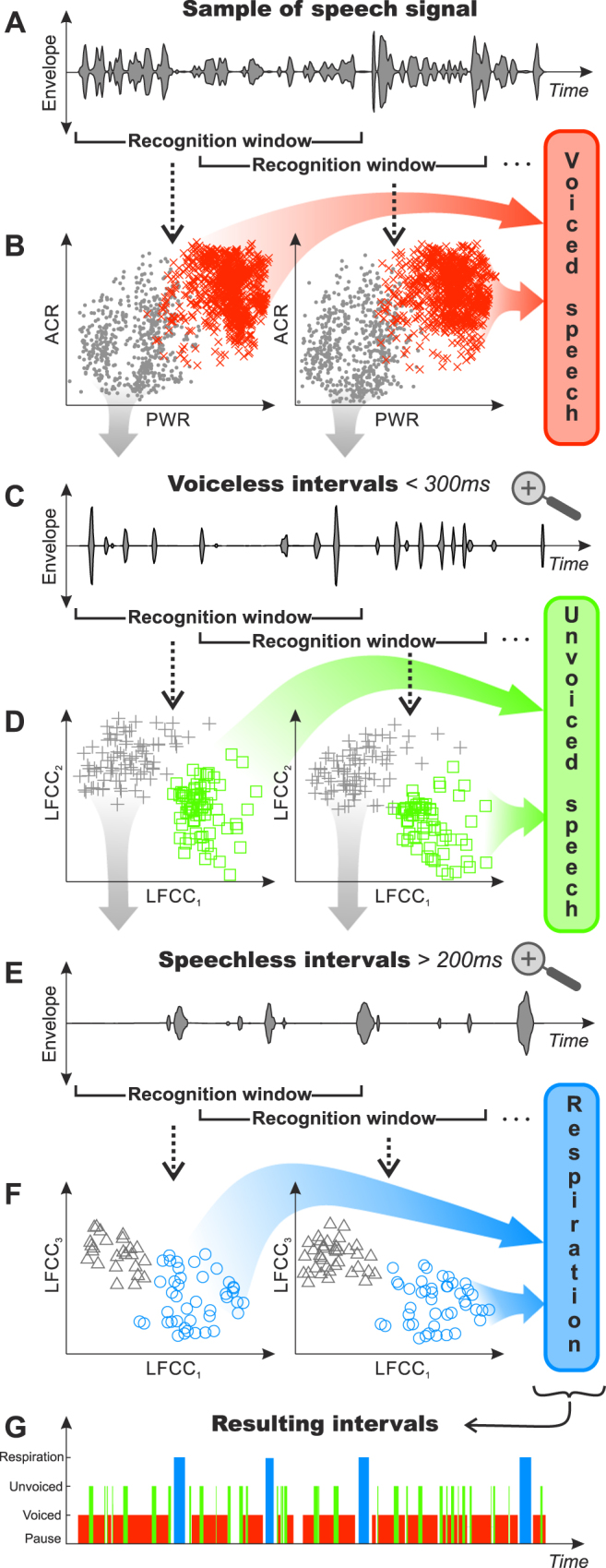
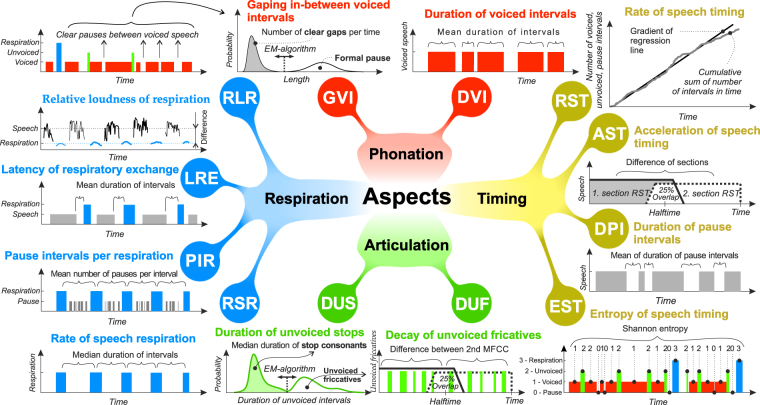
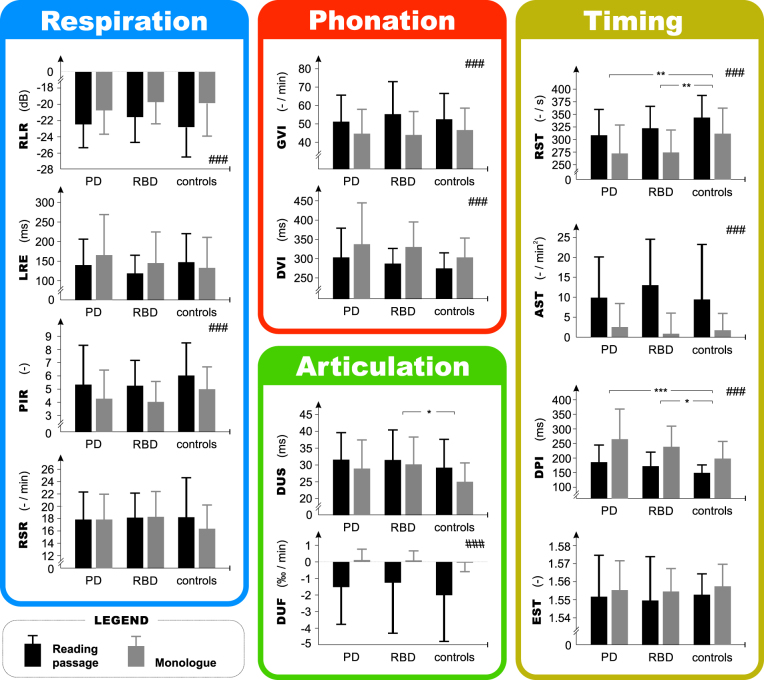
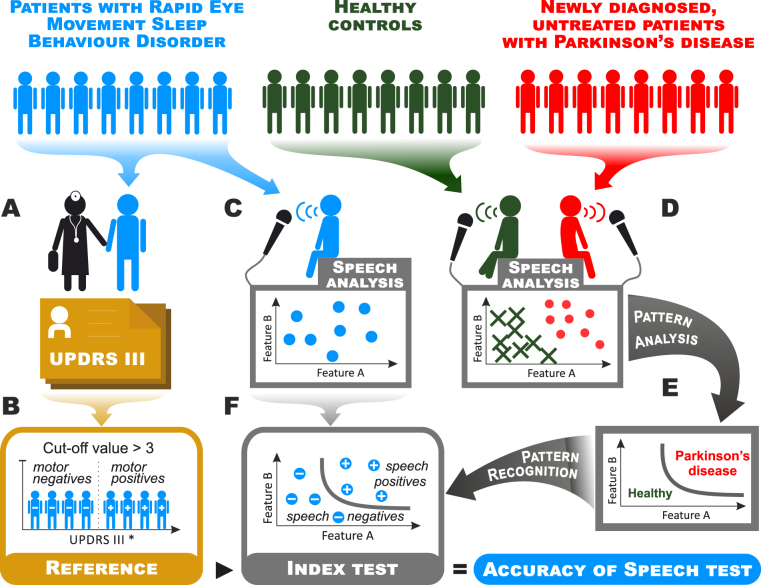
For generations, the evaluation of speech abnormalities in neurodegenerative disorders such as Parkinson’s disease (PD) has been limited to perceptual tests or user-controlled laboratory analysis based upon rather small samples of human vocalizations. Our study introduces a fully automated method that yields significant features related to respiratory deficits, dysphonia, imprecise articulation and dysrhythmia from acoustic microphone data of natural connected speech for predicting early and distinctive patterns of neurodegeneration. We compared speech recordings of 50 subjects with rapid eye movement sleep behaviour disorder (RBD), 30 newly diagnosed, untreated PD patients and 50 healthy controls, and showed that subliminal parkinsonian speech deficits can be reliably captured even in RBD patients, which are at high risk of developing PD or other synucleinopathies. Thus, automated vocal analysis should soon be able to contribute to screening and diagnostic procedures for prodromal parkinsonian neurodegeneration in natural environments.
Overview
The claims and statistics of this paper haven’t been checked yet.
Run the check — free, no account needed. It reads the open-access text and checks the sources it cites.
Integrity signals
Registry
Cites
Statistics
Figures
Verification
Claims the paper makes
The claims and statistics of this paper haven’t been checked yet.
Run the check — free, no account needed. It reads the open-access text and checks the sources it cites.
Claims other papers make about this one
Each is checked against this paper’s own text: does it say what the citing paper says it does?
In the citing paper
“MFCC2 reflects the ratio between vocal tract resonation of the high, and vocal fold vibration of the low, Mel‐frequency bands67; a parameter not specifically scored by MDS‐UPDRS item 2.1.25”
From Evaluation of smartphone‐based testing to generate exploratory outcome measures in a phase 1 Parkinson's disease clinical trial (2018) · cites this paper as [67]
In the citing paper
“Some of these deficits may actually occur preclini cally in each of these disorders. 3,33-36”
From Speech and language markers of neurodegeneration: a call for global equity (2023) · cites this paper as [35]
Self-check
Percentages, sums and reported differences re-computed from the paper’s own numbers.
The self-check needs the paper’s full text.
Citations
Cites
Faul, F., Erdfelder, E., Lang, A.-G., & Buchner, A. (2007) · Behavior Research Methods · doi:10.3758/bf03193146 · Cited by 65,971
Hughes, A. J., Daniel, S. E., Kilford, L., & Lees, A. J. (1992) · Journal of Neurology, Neurosurgery & Psychiatry · doi:10.1136/jnnp.55.3.181 · Cited by 10,378
Speaking: From Intention to Articulation
Levelt, W. J. M. (1989) · doi:10.7551/mitpress/6393.001.0001 · Cited by 4,804
Praat, a system for doing phonetics by computer
Boersma, P. (2002) · UvA-DARE (University of Amsterdam) · Cited by 4,417
Epidemiology of Parkinson's disease
de Lau, L. M., & Breteler, M. M. (2006) · The Lancet Neurology · doi:10.1016/s1474-4422(06)70471-9 · Cited by 4,110
The International Telecommunication Union
Jones, R. W. (2002) · Digest - IEEE Antennas and Propagation Society. International Symposium · doi:10.1109/aps.1997.631791 · Cited by 1,903
MDS research criteria for prodromal Parkinson's disease
Berg, D., Postuma, R. B., Adler, C. H., Bloem, B. R., Chan, P., Dubois, B., Gasser, T., Goetz, C. G., Halliday, G. M., Joseph, L., et al. (2015) · Movement Disorders · doi:10.1002/mds.26431 · Cited by 1,394
Differential diagnostic patterns of dysarthria
Darley, F. L., Aronson, A. E., & Brown, J. R. (1969) · Journal of Speech and Hearing Research · doi:10.1044/jshr.1202.246 · Cited by 1,323
Correlates of linguistic rhythm in the speech signal
Ramus, F., Nespor, M., & Mehler, J. (1999) · Cognition · doi:10.1016/s0010-0277(99)00058-x · Cited by 1,281
Suitability of Dysphonia Measurements for Telemonitoring of Parkinson's DiseasePreprint
Little, M. A., McSharry, P., Hunter, E. J., Spielman, J. L., & Ramig, L. O. (2008) · Nature Precedings · doi:10.1109/tbme.2008.2005954 · Cited by 1,194
Speech Impairment in a Large Sample of Patients with Parkinson’s Disease
Ho, A. K., Iansek, R., Marigliani, C., Bradshaw, J. L., & Gates, S. (1999) · Behavioural Neurology · doi:10.1155/1999/327643 · Cited by 685
Identifying prodromal Parkinson's disease: Pre‐Motor disorders in Parkinson's disease
Postuma, R. B., Aarsland, D., Barone, P., Burn, D. J., Hawkes, C. H., Oertel, W. H., & Ziemssen, T. (2012) · Movement Disorders · doi:10.1002/mds.24996 · Cited by 615
DISTURBANCE OF SEQUENTIAL MOVEMENTS IN PATIENTS WITH PARKINSON'S DISEASE
Benecke, R., Rothwell, J. C., Dick, J., Day, B. L., & MARSDEN, C. D. (1987) · Brain · doi:10.1093/brain/110.2.361 · Cited by 514
Rusz, J., Čmejla, R., Ruzickova, H., & Růžička, E. (2011) · The Journal of the Acoustical Society of America · doi:10.1121/1.3514381 · Cited by 498
Self-citationParkinson risk in idiopathic REM sleep behavior disorder
Postuma, R. B., Gagnon, J., Bertrand, J., Marchand, D. G., & Montplaisir, J. Y. (2015) · Neurology · doi:10.1212/wnl.0000000000001364 · Cited by 455
Postuma, R., Lang, A.-E., Gagnon, J., Pelletier, A., & Montplaisir, J. (2012) · Brain : a journal of neurology · doi:10.1093/brain/aws093 · Cited by 352
Schenck, C. H., Montplaisir, J. Y., Frauscher, B., Högl, B., Gagnon, J., Postuma, R. B., Šonka, K., Jennum, P., Partinen, M., Arnulf, I., et al. (2013) · Sleep Medicine · doi:10.1016/j.sleep.2013.02.016 · Cited by 236
Self-citationSpeech rate and rhythm in Parkinson's disease
Skodda, S., & Schlegel, U. S. (2008) · Movement Disorders · doi:10.1002/mds.21996 · Cited by 232
Sapir, S. (2014) · Journal of Speech Language and Hearing Research · doi:10.1044/2014_jslhr-s-13-0039 · Cited by 209
Factor structure of the unified Parkinson's disease rating scale: Motor examination section
Stebbins, G. T., & Goetz, C. G. (1998) · Movement Disorders · doi:10.1002/mds.870130404 · Cited by 201
Rapid eye movement sleep behavior disorder and subtypes of Parkinson's disease
Romenets, S. R., Gagnon, J., Latreille, V., Panisset, M., Chouinard, S., Montplaisir, J. Y., & Postuma, R. B. (2012) · Movement Disorders · doi:10.1002/mds.25086 · Cited by 188
Skodda, S., Grönheit, W., Mancinelli, N., & Schlegel, U. S. (2013) · Parkinson s Disease · doi:10.1155/2013/389195 · Cited by 179
Speech volume regulation in Parkinson’s disease: effects of implicit cues and explicit instructions
Ho, A. K., Bradshaw, J. L., Iansek, R., & Alfredson, R. J. (1999) · Neuropsychologia · doi:10.1016/s0028-3932(99)00067-6 · Cited by 172
Automatic Evaluation of Articulatory Disorders in Parkinson’s Disease
Novotný, M., Rusz, J., Čmejla, R., & Růžička, E. (2014) · IEEE/ACM Transactions on Audio Speech and Language Processing · doi:10.1109/taslp.2014.2329734 · Cited by 158
Self-citationRolinski, M., Griffanti, L., Piccini, P. P., Roussakis, A., Szewczyk‐Królikowski, K., Menke, R., Quinnell, T. G., Zaiwalla, Z., Klein, J. C., Mackay, C. E., et al. (2016) · Brain · doi:10.1093/brain/aww124 · Cited by 141
Speech and pause characteristics following speech rate reduction in hypokinetic dysarthria
Hammen, V. L., & Yorkston, K. M. (1996) · Journal of Communication Disorders · doi:10.1016/0021-9924(95)00037-2 · Cited by 122
Sussman, J. E., & Tjaden, K. (2012) · Journal of Speech Language and Hearing Research · doi:10.1044/1092-4388(2011/11-0048 · Cited by 106
Speech motor programming in hypokinetic and ataxic dysarthria
Spencer, K. A., & Rogers, M. A. (2005) · Brain and Language · doi:10.1016/j.bandl.2005.01.008 · Cited by 104
What dysarthrias can tell us about the neural control of speech
Kent, R. D., Kent, J. F., Weismer, G. G., & Duffy, J. R. (2000) · Journal of Phonetics · doi:10.1006/jpho.2000.0122 · Cited by 95
Rusz, J., Hlavnička, J., Tykalová, T., Bušková, J., Ulmanová, O., Růžička, E., & Šonka, K. (2016) · Sleep Medicine · doi:10.1016/j.sleep.2015.07.030 · Cited by 94
Voice onset time in Parkinson disease
Fischer, E. V., & Goberman, A. M. (2009) · Journal of Communication Disorders · doi:10.1016/j.jcomdis.2009.07.004 · Cited by 93
Hertrich, I., & Ackermann, H. (1995) · Annals of Otology Rhinology & Laryngology · doi:10.1177/000348949510400304 · Cited by 82
Gong, Y., Xiong, K., Mao, C., Shen, Y., Hu, W., Huang, J., Han, F., Chen, R., & Liu, C. (2014) · Sleep Medicine · doi:10.1016/j.sleep.2013.12.021 · Cited by 67
Gräber, S., Hertrich, I., Daum, I., Spieker, S., & Ackermann, H. (2002) · Brain and Language · doi:10.1016/s0093-934x(02)00002-0 · Cited by 60
REM Sleep Behaviour Disorder in Older Individuals
Trotti, L. M. (2010) · Drugs & Aging · doi:10.2165/11536260-000000000-00000 · Cited by 56
Automatic method of pause measurement for normal and dysarthric speech
Rosen, K. M., Murdoch, B. E., Folker, J. E., Vogel, A. P., Cahill, L., Delatycki, M. B., & Corben, L. A. (2010) · Clinical Linguistics & Phonetics · doi:10.3109/02699200903440983 · Cited by 49
Screening for REM sleep behavior disorder in the general population
Bušková, J., Ibarburu, V., Šonka, K., & Růžička, E. (2016) · Sleep Medicine · doi:10.1016/j.sleep.2016.07.003 · Cited by 38
Self-citation
Research works printed but not linked: 3
- Duffy, J. R. Motor Speech Disorders: Substrates, Differential Diagnosis and Management, 3rd ed., Mosby, St. Louis (2013).
- Weismer, G. & McNeil, M. Articulatory characteristics of Parkinsonian dysarthria: Segmental and phrase-level timing, spirantization, and glottal-supraglottal coordination. The dysarthrias: Physiology, acoustics, perception, management, College-Hill Press, San Diego 101–130 (1984).
- American Academy of Sleep Medicine. International Classification of Sleep Disorders, Third Edition: Diagnostic and Coding Manual, Westchester, Illinois: American Academy of Sleep Medicine (2014).
Cited by
Sorted by citations
Lipsmeier, F., Taylor, K. I., Kilchenmann, T., Wolf, D., Scotland, A., Schjodt‐Eriksen, J., Cheng, W., Fernandez‐Garcia, I., Siebourg‐Polster, J., Jin, L., et al. (2018) · Movement Disorders · doi:10.1002/mds.27376 · Cited by 266
Multimodal assessment of Parkinson’s disease: a deep learning approach
Vasquez-Correa, J. C., Arias-Vergara, T., Orozco-Arroyave, J. R., Eskofier, B., Klucken, J., & Noth, E. (2019) · IEEE Journal of Biomedical and Health Informatics · doi:10.1109/jbhi.2018.2866873 · Cited by 262
Emerging Sonodynamic Therapy‐Based Nanomedicines for Cancer Immunotherapy
Yang, Y., Huang, J., Liu, M., Qiu, Y., Chen, Q., Zhao, T., Xiao, Z., Yang, Y., Jiang, Y., Huang, Q., et al. (2022) · Advanced Science · doi:10.1002/advs.202204365 · Cited by 249
Shaping 3D Root System Architecture
Morris, E. C., Griffiths, M., Gołębiowska, A., Mairhofer, S., Burr-Hersey, J. E., Goh, T., von Wangenheim, D., Atkinson, B. S., Sturrock, C. J., Lynch, J. P., et al. (2017) · Current Biology · doi:10.1016/j.cub.2017.06.043 · Cited by 230
Henshaw, F. R., Dewsbury, L. S., Lim, C. K., & Steiner, G. Z. (2021) · Cannabis and Cannabinoid Research · doi:10.1089/can.2020.0105 · Cited by 184
Metadata
- Authors
- Hlavnička, J., Čmejla, R., Tykalová, T., Šonka, K., Růžička, E., & Rusz, J.
- Affiliations
- Czech Technical University in Prague (CZ)
- Charles University (CZ)
- Corresponding author
- Rusz, Jan
- Venue
- Scientific Reports
- Published
- 2017-02-02
- Volume
- 7
- Issue
- 1
- Pages
- 12-12
- ISSN
- 2045-2322 (ISSN-L)
- PMC
- PMC5428345
- OpenAlex
- W2580210409
- Cited by
- 326
- References
- 37
- Citations by year
- 2026: 11 · 2025: 25 · 2024: 25 · 2023: 30 · 2022: 28 · 2021: 71 · 2020: 44 · 2019: 46 · 2018: 33 · 2017: 11
- FWCI
- 27.12
- Type
- journal article
- Language
- en
- Open access
- gold
- doi.org
- Locations
- Scientific Reports (publishedVersion, cc-by)
- PubMed Central (publishedVersion, cc-by)
- PubMed (publishedVersion)
- DOAJ (DOAJ: Directory of Open Access Journals) (submittedVersion, cc-by-sa)
- Cvut DSpace (Czech Technical University) (submittedVersion, cc-by)
- Funders
- Grantová Agentura České Republiky (GA16-07879S)
- Ministerstvo Zdravotnictví Ceské Republiky (16-28914A, 15 – 28038A)
- Topics
- Health Sciences › Health Professions › Speech and Hearing › Voice and Speech Disorders
- Health Sciences › Medicine › Clinical Neurology › Parkinson's Disease Mechanisms and Treatments
- Social Sciences › Psychology › Experimental and Cognitive Psychology › Phonetics and Phonology Research
- Keywords
- Parkinson's disease, rapid eye movement sleep behavior disorder, automated speech analysis, acoustic biomarkers, early diagnosis, prodromal neurodegeneration, dysphonia, cardiac arrhythmias, synucleinopathies, speech screening
- MeSH terms
- Adult, Aged, Aged, 80 and over, Articulation Disorders, Female, Humans, Male, Middle Aged, Parkinson Disease, Pattern Recognition, Automated, Respiration, Biomarkers, REM Sleep Behavior Disorder, Dysphonia
About these checks
Registry, retraction, Cites and statistics results are computed, not judged, with one exception: a printed reference that no index lists is read once by a model before it counts as a citation error. Claims are extracted by a model and kept only when their quote appears verbatim in the text; each cited source is then checked, with a model’s help, for whether it says what the claim relies on. Those verdicts can be wrong — read the claim’s quote and the cited source before relying on one.
Statistics and arithmetic are recomputed, not judged.
Confidence bands are shown only for fields calibrated on our annotated test set. None is calibrated yet, so no band is shown.
What counts as a claim ›How we measure confidence ›How we check this ›
Are you an author, or do you see a problem with this page? Request a review
