

Tracking Real-Time Changes in Working Memory Updating and Gating with the Event-Based Eye-Blink Rate
Open accessPublished version of a preprint
The DOI matches its Crossref record; 64 of the 64 references it cites were found in a registry or an index.
Abstract
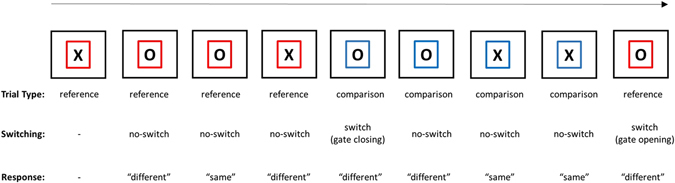
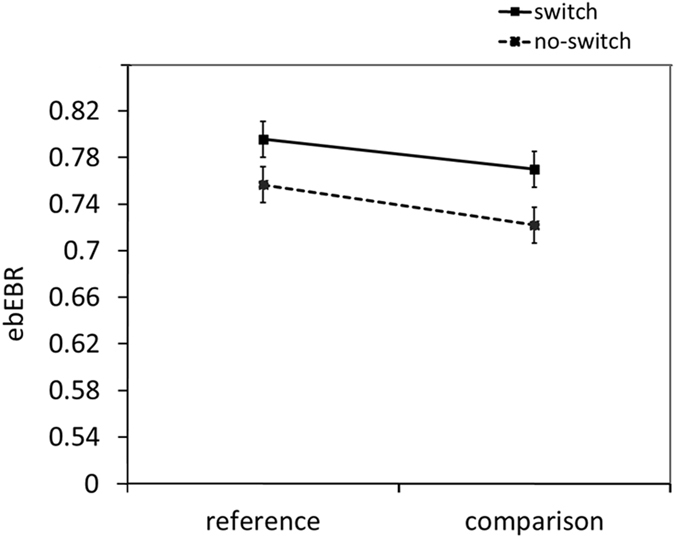
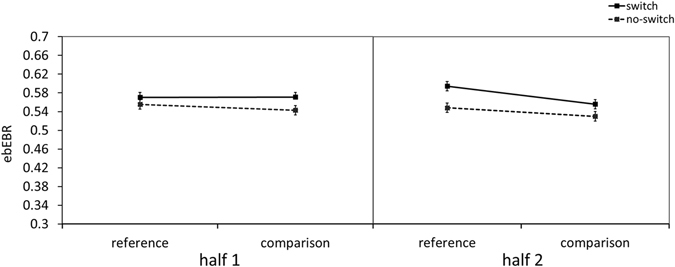
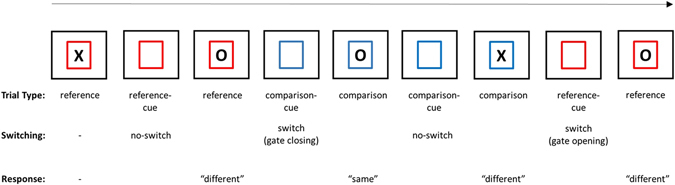
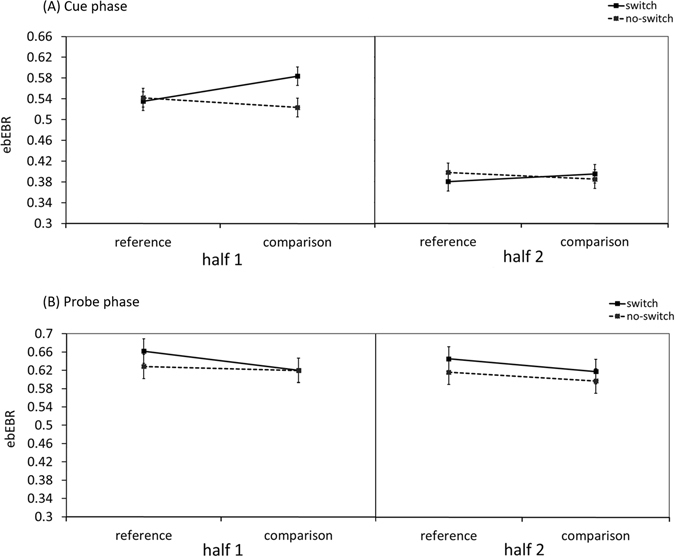
Effective working memory (WM) functioning depends on the gating process that regulates the balance between maintenance and updating of WM. The present study used the event-based eye-blink rate (ebEBR), which presumably reflects phasic striatal dopamine activity, to examine how the cognitive processes of gating and updating separately facilitate flexible updating of WM contents and the potential involvement of dopamine in these processes. Real-time changes in eye blinks were tracked during performance on the reference-back task, in which demands on these two processes were independently manipulated. In all three experiments, trials that required WM updating and trials that required gate switching were both associated with increased ebEBR. These results may support the prefrontal cortex basal ganglia WM model (PBWM) by linking updating and gating to striatal dopaminergic activity. In Experiment 3, the ebEBR was used to determine what triggers gate switching. We found that switching to an updating mode (gate opening) was more stimulus driven and retroactive than switching to a maintenance mode, which was more context driven. Together, these findings show that the ebEBR – an inexpensive, non-invasive, easy-to-use measure – can be used to track changes in WM demands during task performance and, hence, possibly striatal dopamine activity.
Overview
The claims and statistics of this paper haven’t been checked yet.
Free: it reads the open-access text and checks the first 5 claims that cite a source we can check. Create a free account to check every claim.
Integrity signals
Registry
Cites
Statistics
Figures
Verification
Claims the paper makes
The claims and statistics of this paper haven’t been checked yet.
Free: it reads the open-access text and checks the first 5 claims that cite a source we can check. Create a free account to check every claim.
Claims other papers make about this one
Each is checked against this paper’s own text: does it say what the citing paper says it does?
The cited source says what the claim attributes to it.
In the citing paper
“Second, trials requiring WM updating and gate switching elicited an increase in spontaneous eye blink rate (Rac-Lubashevsky, Slagter, & Kessler, 2017)—a presumed marker of dopamine activity in BG (Jongkees & Colzato, 2016), which implements the gating mechanism (Hazy et al., 2006).”
From Baseline-dependent effect of dopamine’s precursor L-tyrosine on working memory gating but not updating (2020) · cites this paper as Rac-Lubashevsky et al., 2017
The cited source says what the claim attributes to it.
In the citing paper
“In summary, the reference-back paradigm is well-suited to disentangle component processes of WM.”
From Baseline-dependent effect of dopamine’s precursor L-tyrosine on working memory gating but not updating (2020) · cites this paper as Rac-Lubashevsky et al., 2017
Self-check
Percentages, sums and reported differences re-computed from the paper’s own numbers.
The self-check needs the paper’s full text.
Citations
Cites
Delorme, A., & Makeig, S. (2004) · Journal of Neuroscience Methods · doi:10.1016/j.jneumeth.2003.10.009 · Cited by 24,371
An Integrative Theory of Prefrontal Cortex Function
Miller, E. K., & Cohen, J. D. (2001) · Annual Review of Neuroscience · doi:10.1146/annurev.neuro.24.1.167 · Cited by 12,803
A JOURNAL OF PHARMACOLOGY AND EXPERIMENTAL THERAPEUTICS
(1909) · Journal of the American Medical Association · doi:10.1001/jama.1909.02550020033007 · Cited by 7,866
The magical number 4 in short-term memory: A reconsideration of mental storage capacity
Cowan, N. (2001) · Behavioral and Brain Sciences · doi:10.1017/s0140525x01003922 · Cited by 6,779
Persistent activity in the prefrontal cortex during working memory
Curtis, C. E., & D'Esposito, M. (2003) · Trends in Cognitive Sciences · doi:10.1016/s1364-6613(03)00197-9 · Cited by 2,001
Temporal dynamics of brain activation during a working memory task
Cohen, J. D., Perlstein, W. M., Braver, T. S., Nystrom, L. E., Noll, D. C., Jonides, J., & Smith, E. E. (1997) · Nature · doi:10.1038/386604a0 · Cited by 1,876
A Parametric Study of Prefrontal Cortex Involvement in Human Working Memory
Braver, T. S., Cohen, J. D., Nystrom, L. E., Jonides, J., Smith, E. E., & Noll, D. C. (1997) · NeuroImage · doi:10.1006/nimg.1996.0247 · Cited by 1,694
Inverted-U–Shaped Dopamine Actions on Human Working Memory and Cognitive Control
Cools, R., & D'Esposito, M. (2011) · Biological Psychiatry · doi:10.1016/j.biopsych.2011.03.028 · Cited by 1,673
The primate basal ganglia: Parallel and integrative networks
Haber, S. N. (2003) · Journal of Chemical Neuroanatomy · doi:10.1016/j.jchemneu.2003.10.003 · Cited by 1,479
Neural measures reveal individual differences in controlling access to working memory
Vogel, E. K., McCollough, A. W., & Machizawa, M. G. (2005) · Nature · doi:10.1038/nature04171 · Cited by 1,299
Cited by
Spontaneous eye blink rate as predictor of dopamine-related cognitive function—A review
Jongkees, B. J., & Colzato, L. S. (2016) · Neuroscience & Biobehavioral Reviews · doi:10.1016/j.neubiorev.2016.08.020 · Cited by 300
Souchet, A. D., Philippe, S., Lourdeaux, D., & Leroy, L. (2022) · International Journal of Human–Computer Interaction · doi:10.1080/10447318.2021.1976509 · Cited by 204
“However, it appears to be a viable metric of central dopamine activity (Eckstein et al., 2017; Jongkees & Colzato, 2016; Rac-Lubashevsky et al., 2017) which is associated with motivation mechanisms (Wise, 2004).”
BackgroundBreathable Electronic Skins for Daily Physiological Signal Monitoring
Yang, Y., Cui, T., Li, D., Ji, S., Chen, Z., Shao, W., Liu, H., & Ren, T.-L. (2022) · Nano-Micro Letters · doi:10.1007/s40820-022-00911-8 · Cited by 176
Spontaneous eye blink rate: An index of dopaminergic component of sustained attention and fatigue
Maffei, A., & Angrilli, A. (2017) · International Journal of Psychophysiology · doi:10.1016/j.ijpsycho.2017.11.009 · Cited by 187
Imperceptible electrooculography graphene sensor system for human–robot interface
Ameri, S. K., Kim, M., Kuang, I. A., Perera, W. K., Alshiekh, M., Jeong, H., Topcu, U., Akinwande, D., & Lu, N. (2018) · npj 2D Materials and Applications · doi:10.1038/s41699-018-0064-4 · Cited by 162
What Does Eye-Blink Rate Variability Dynamics Tell Us About Cognitive Performance?
Paprocki, R., & Lenskiy, A. A. (2017) · Frontiers in Human Neuroscience · doi:10.3389/fnhum.2017.00620 · Cited by 78
“This phenomenon has also been used to support eye-blink rate as a measure to track changes in WM during task performance and as a possible measure of striatal dopamine activity (Rac-Lubashevsky et al., 2017).”
MethodNeural Substrates of Working Memory Updating
Nir-Cohen, G., Kessler, Y., & Egner, T. (2020) · Journal of Cognitive Neuroscience · doi:10.1162/jocn_a_01625 · Cited by 67
“The fact that robust gate-opening costs are reliably observed (Rac-Lubashevsky et al., 2017; Rac-Lubashevsky & Kessler, 2016a, 2016b; Kessler & Oberauer, 2014, 2015) argues against the PBWMmodel assumption, because such costs should not be obtained if the gate were closed automatically after each…”
BackgroundSelf-citationRevisiting the relationship between the P3b and working memory updating
Rac-Lubashevsky, R., & Kessler, Y. (2019) · Biological Psychology · doi:10.1016/j.biopsycho.2019.107769 · Cited by 64
Self-citationRac-Lubashevsky, R., & Kessler, Y. (2018) · Journal of Cognitive Neuroscience · doi:10.1162/jocn_a_01326 · Cited by 47
“Increased delta activity was observed during switching to reference, a contrast proposed to trigger gate opening (Rac-Lubashevsky et al., 2017; Rac-Lubashevsky & Kessler, 2016b), and during updating itself.”
BackgroundMethodResultInfluentialSelf-citationRac-Lubashevsky, R., & Frank, M. J. (2021) · PLoS Computational Biology · doi:10.1371/journal.pcbi.1008971 · Cited by 50
“The previous reference-back task focused on input gating [26,27,29,32] and its correlates in PFC and BG [30].”
BackgroundSelf-citationKonjusha, A., Yu, S., Mückschel, M., Colzato, L. S., Ziemssen, T., & Beste, C. (2023) · Journal of Neuroscience · doi:10.1523/jneurosci.2004-22.2023 · Cited by 44
Kessler, Y. (2017) · Frontiers in Psychology · doi:10.3389/fpsyg.2017.02260 · Cited by 43
Self-citationSpontaneous Eye Blink Rate During the Working Memory Delay Period Predicts Task Accuracy
Ortega, J., Plaska, C. R., Gomes, B. A., & Ellmore, T. M. (2022) · Frontiers in Psychology · doi:10.3389/fpsyg.2022.788231 · Cited by 34
van den Bosch, R., Hezemans, F. H., Määttä, J. I., Hofmans, L., Papadopetraki, D., Verkes, R., Marquand, A. F., Booij, J., & Cools, R. (2023) · eLife · doi:10.7554/elife.83161 · Cited by 31
“, 2019), working memory updating and gating (Rac-Lubashevsky et al., 2017), and exploration during reinforcement learning (Van Slooten et al.”
BackgroundSlooten, J. C. V., Jahfari, S., & Theeuwes, J. (2019) · Scientific Reports · doi:10.1038/s41598-019-53805-y · Cited by 39
Blink synchronization is an indicator of interest while viewing videos
Nakano, T., & Miyazaki, Y. (2018) · International Journal of Psychophysiology · doi:10.1016/j.ijpsycho.2018.10.012 · Cited by 31
Cognitive Control of Working Memory: A Model-Based Approach
Boag, R. J., Stevenson, N., van Dooren, R., Trutti, A. C., Sjoerds, Z., & Forstmann, B. U. (2021) · Brain Sciences · doi:10.3390/brainsci11060721 · Cited by 34
Jongkees, B. J. (2020) · Cognitive, Affective, & Behavioral Neuroscience · doi:10.3758/s13415-020-00783-8 · Cited by 28
Understanding subprocesses of working memory through the lens of model-based cognitive neuroscience
Trutti, A. C., Verschooren, S., Forstmann, B. U., & Boag, R. J. (2020) · Current Opinion in Behavioral Sciences · doi:10.1016/j.cobeha.2020.10.002 · Cited by 33
The Neural Correlates of Updating and Gating in Procedural Working Memory
Nir-Cohen, G., Egner, T., & Kessler, Y. (2023) · Journal of Cognitive Neuroscience · doi:10.1162/jocn_a_01988 · Cited by 26
Self-citationPajkossy, P., Szöllősi, Á., Demeter, G., & Racsmány, M. (2018) · Frontiers in Psychology · doi:10.3389/fpsyg.2018.00506 · Cited by 24
“Although most of the above studies did not link EBR changes to DA, some recent studies showed that task-related changes in EBR might specifically signal changes in DA transmission (van Bochove et al., 2013; Peckham and Johnson, 2016; Rac-Lubashevsky et al., 2017).”
ResultBabu, P. R. K., Aikat, V., Martino, J. M. D., Chang, Z., Perochon, S., Espinosa, S., Aiello, R. E., Carpenter, K. L. H., Compton, S. N., Davis, N. O., et al. (2023) · Scientific Reports · doi:10.1038/s41598-023-34293-7 · Cited by 23
Interpersonal eye-tracking reveals the dynamics of interacting minds
Wohltjen, S., & Wheatley, T. P. (2024) · Frontiers in Human Neuroscience · doi:10.3389/fnhum.2024.1356680 · Cited by 20
Yu, S., Mückschel, M., Rempel, S., Ziemssen, T., & Beste, C. (2022) · Cerebral Cortex Communications · doi:10.1093/texcom/tgac001 · Cited by 19
“2021), event-based eye-blink rate (Rac-Lubashevsky et al. 2017), and neurophysiological measures (Rac-Lubashevsky and Kessler 2018).”
BackgroundMethodN–2 repetition leads to a cost within working memory and a benefit outside it
Kessler, Y. (2018) · Annals of the New York Academy of Sciences · doi:10.1111/nyas.13607 · Cited by 15
Self-citationOcular signatures of proactive versus reactive cognitive control in young adults
Mäki-Marttunen, V., Hagen, T., Aminihajibashi, S., Foldal, M. D., Stavrinou, M., Halvorsen, J. H., Laeng, B., & Espeseth, T. (2018) · Cognitive Affective & Behavioral Neuroscience · doi:10.3758/s13415-018-0621-5 · Cited by 15
Neuronal correlates of eyeblinks are an expression of primary consciousness phenomena
Callara, A. L., Greco, A., Scilingo, E. P., & Bonfiglio, L. (2023) · Scientific Reports · doi:10.1038/s41598-023-39500-z · Cited by 12
“Furthermore, Rac-Lubashevsky and collegues 23 have shown that both the update mode (gate opening) and the maintenance mode (gate closing) of a WM reference-back task are followed within seconds by an increase in the event-based eyeblink rate, as an expression of a DA phasic response.”
BackgroundInfluentialAmeri, S. K., & Wang, L. (2020) · Elsevier eBooks · doi:10.1016/b978-0-12-818386-1.00003-5 · Cited by 15
Wang, Y., Luo, Z., Zhang, T., Zhang, M., Капилевич, Л. В., & Wang, J. (2025) · BMC Sports Science Medicine and Rehabilitation · doi:10.1186/s13102-025-01268-2 · Cited by 12
“This function underpins reasoning, decision-making, and complex multitasking [99]– [100].”
Csizmadia, P., Nagy, B., Kővári, L., & Gaál, Z. A. (2024) · Biological Psychology · doi:10.1016/j.biopsycho.2024.108765 · Cited by 10
Optimization of Event Camera Bias Settings for a Neuromorphic Driver Monitoring System
Dilmaghani, M. S., Shariff, W., Farooq, M. A., Lemley, J., & Corcoran, P. (2024) · IEEE Access · doi:10.1109/access.2024.3371487 · Cited by 10
Hartley, C. A., Coelho, C. A. O., Boeke, E. A., Ramirez, F., & Phelps, E. A. (2018) · Psychopharmacology · doi:10.1007/s00213-018-5082-6 · Cited by 9
“Past studies relating dynamic changes in blink rate to task conditions examined fluctuations at the timescale of seconds (Rac-Lubashevsky et al. 2017; van Bochove et al. 2013), rather than averaging over a phase of several minutes as we did in our analysis.”
ResultRevisiting eye blink in Parkinson’s disease
Vasudevan, V., Salardaine, Q., Rivaud-Péchoux, S., Biondetti, E., Villain, N., Lehéricy, S., Vidailhet, M., & Pouget, P. (2025) · Scientific Reports · doi:10.1038/s41598-025-95182-9 · Cited by 8
“Tasks demanding regulation of working memory have shown an increase in blink rates and an association between working memory performance and blink rates 16–18 .”
Descroix, E., Świątkowski, W., & Graff, C. (2022) · Journal of Nonverbal Behavior · doi:10.1007/s10919-021-00387-x · Cited by 8
Ocular measures during associative learning predict recall accuracy
Dave, A. A., Lehet, M. I., Diwadkar, V. A., & Thakkar, K. N. (2021) · International Journal of Psychophysiology · doi:10.1016/j.ijpsycho.2021.05.010 · Cited by 7
Harkin, B., Persson, S., Yates, A., Jauregi, A., & Kessler, K. (2023) · Journal of Psychopathology and Clinical Science · doi:10.1037/abn0000793 · Cited by 7
Threshold-varying integrate-and-fire model reproduces distributions of spontaneous blink intervals
Nomura, R., Liang, Y.-Z., Morita, K., Fujiwara, K., & Ikeguchi, T. (2018) · PLoS ONE · doi:10.1371/journal.pone.0206528 · Cited by 7
Kessler, Y., Zilberman, N., & Kvitelashvili, S. (2023) · Journal of Cognition · doi:10.5334/joc.257 · Cited by 6
Self-citationSlooten, J. C. V., Jahfari, S., & Theeuwes, J. (2019) · bioRxiv (Cold Spring Harbor Laboratory) · doi:10.1101/661553 · Cited by 6
Spontaneous eyeblinks are sensitive to sequential learning
Anton, E. S., Cleeremans, A., Destrebecqz, A., Peigneux, P., & Schmitz, R. (2018) · Neuropsychologia · doi:10.1016/j.neuropsychologia.2018.09.007 · Cited by 5
van den Bosch, R., Hezemans, F. H., Määttä, J. I., Hofmans, L., Papadopetraki, D., Verkes, R., Marquand, A. F., Booij, J., & Cools, R. (2022) · bioRxiv (Cold Spring Harbor Laboratory) · doi:10.1101/2022.07.11.499570 · Cited by 5
Harkin, B., & Yates, A. (2024) · Journal of Clinical Medicine · doi:10.3390/jcm13164629 · Cited by 5
“This suggests a shift from a global gating mechanism to one that is highly selective, stimulus-driven, and retroactive in nature [119,125,128].”
BackgroundLee, A. S., Blankson, B. K., Manza, P., O’Rawe, J. F., Evinger, C. L., & Leung, H. (2018) · bioRxiv (Cold Spring Harbor Laboratory) · doi:10.1101/345306 · Cited by 3
Jongkees, B. J. (2019) · PsyArXiv (OSF Preprints) · doi:10.31234/osf.io/bpv2y · Cited by 3
Impacts de la fatigue visuelle sur l’apprentissage via serious game en réalité virtuelle
Souchet, A. D. (2020) · theses.fr (ABES) · doi:10.70675/f91891adzfa55z4eb6za629z42d6e542de58 · Cited by 9
Kessler, Y., & Verschooren, S. (2025) · Memory & Cognition · doi:10.3758/s13421-025-01728-7 · Cited by 2
“…of around 1 s showed a larger gate-closing cost (Rac-Lubashevsky & Kessler, 2016a, 2016b; Verschooren et al., 2021), whereas studies that use longer intertrial intervals, around 4 s or more, showed comparable opening and closing costs (Nir-Cohen et al., 2020; Rac-Lubashevsky et al., 2017).”
Self-citationGesztesi, G., & Pajkossy, P. (2025) · Cognition · doi:10.1016/j.cognition.2025.106256 · Cited by 3
Gunther, K. E., Fu, X., MacNeill, L. A., Jones, M., Ermanni, B., & Pérez‐Edgar, K. E. (2024) · PLoS ONE · doi:10.1371/journal.pone.0294888 · Cited by 1
Self-prioritization in working memory gating
van Dooren, R., Jongkees, B. J., & Sellaro, R. (2024) · Attention Perception & Psychophysics · doi:10.3758/s13414-024-02869-8 · Cited by 1
“…et al., 2017) and provided indirect evidence for a more general involvement of striatal dopaminergic activity in WM updating and gate switching (Rac-Lubashevsky et al., 2017), and a more selective base-line-dependent dopaminergic modulation of gate opening (Jongkees, 2020) – both results in…”
Hua, Q., Li, Z., & Liu, Q. (2025) · Biological Psychology · doi:10.1016/j.biopsycho.2025.109117 · Cited by 1
Rapid integration of speaker accent during morphosyntactic processing
Holt, R., Kung, C., Schmidt, E., & Demuth, K. (2025) · Brain and Language · doi:10.1016/j.bandl.2025.105673 · Cited by 1
The Impact of a Rosemary Containing Drink on Cognition and Mood: The Role of Eye Blink Dynamics
Riby, L. M., Kardzhieva, D., Fenwick, S., Fowler, S., & Moss, M. (2026) · NeuroSci · doi:10.3390/neurosci7010015 · Cited by 1
Cognitive load in dialogue interpreting: experience and directionality
Adler, A. (2023) · DiVA (Stockholm University) · doi:10.13140/rg.2.2.11805.73443 · Cited by 12
Tetchner, J. (2017) · Greenwich Academic Literature Archive (University of Greenwich)
Toward a Model-Based Cognitive Neuroscience of Working Memory Subprocesses
Boag, R. J., Miletić, S., Trutti, A. C., & Forstmann, B. U. (2024) · Springer eBooks · doi:10.1007/978-3-031-45271-0_11
The Dual Cognitive Mechanisms of Inhibition and Updating: A Model-Based StudyPreprint
Sun, Y., & Han, S. (2025) · PsyArXiv (OSF Preprints) · doi:10.31234/osf.io/pgnr6_v3
Isolating Working Memory Gating Processes Under Stress
Calderan, M., Jongkees, B. J., Gambarota, F., Pastore, M., Cellini, N., & Sellaro, R. (2025) · Collabra Psychology · doi:10.1525/collabra.140750
Clignements spontanés dans la communication et le traitement conscient de l'information
Descroix, E. (2021) · theses.fr (ABES) · doi:10.70675/c6108850ze2f7z419cz88d4zd6c76ca33dd9
Miya, M., Akaishi, Y., Anzai, T., Suzuki, K., & Yamawaki, M. (2026) · BMC Medical Education · doi:10.1186/s12909-026-09175-x
“Furthermore, eye blinks increased when information was maintained or updated during a working memory task [52, 53].”
Spontaneous eye blinks as temporal markers of internal attentionPreprint
Schneider, D. A., Özdemir, Ş., Wascher, E., & Arnau, S. (2026) · bioRxiv (Cold Spring Harbor Laboratory) · doi:10.64898/2026.07.06.736774
Metadata
- Authors
- Rac-Lubashevsky, R., Slagter, H. A., & Kessler, Y.
- Affiliations
- Ben-Gurion University of the Negev (IL)
- University of Amsterdam (NL)
- Corresponding author
- Rac-Lubashevsky, Rachel
- Venue
- Scientific Reports
- Published
- 2017-05-31
- Volume
- 7
- Issue
- 1
- Pages
- 2547-2547
- ISSN
- 2045-2322 (ISSN-L)
- PMC
- PMC5451427
- OpenAlex
- W2950752434
- Semantic Scholar
- ccc0582b7445f5cf452a5fa9d2d68c14f8086185
- Cited by
- 52
- References
- 64
- Citations by year
- 2026: 3 · 2025: 6 · 2024: 7 · 2023: 6 · 2022: 5 · 2021: 4 · 2020: 5 · 2019: 2 · 2018: 10 · 2017: 3
- FWCI
- 3.14
- Type
- journal article
- Language
- en
- Open access
- gold
- doi.org
- Licence
- cc-by
- creativecommons.org/licenses/by/4.0 (tdm)
- creativecommons.org/licenses/by/4.0 (vor)
- Locations
- Scientific Reports (publishedVersion, cc-by)
- Europe PMC (PubMed Central) (publishedVersion, other-oa)
- PubMed Central (publishedVersion, cc-by)
- PubMed (publishedVersion)
- UvA-DARE (University of Amsterdam) (submittedVersion, cc-by)
- DOAJ (DOAJ: Directory of Open Access Journals) (submittedVersion, cc-by-sa)
- Data Archiving and Networked Services (DANS) (submittedVersion, other-oa)
- Funders
- Israel Science Foundation (458/14)
- Topics
- Life Sciences › Neuroscience › Cognitive Neuroscience › Neural and Behavioral Psychology Studies
- Social Sciences › Psychology › Experimental and Cognitive Psychology › Cognitive Abilities and Testing
- Life Sciences › Neuroscience › Cellular and Molecular Neuroscience › Neurotransmitter Receptor Influence on Behavior
- Keywords
- working memory updating, maintenance mode
- MeSH terms
- Adult, Attention, Basal Ganglia, Blinking, Corpus Striatum, Dopamine, Female, Humans, Male, Memory, Short-Term, Pattern Recognition, Visual, Task Performance and Analysis, Prefrontal Cortex
About these checks
Registry, retraction, Cites and statistics results are computed, not judged, with one exception: a printed reference that no index lists is read once by a model before it counts as a citation error. Claims are extracted by a model and kept only when their quote appears verbatim in the text; each cited source is then checked, with a model’s help, for whether it says what the claim relies on. Those verdicts can be wrong — read the claim’s quote and the cited source before relying on one.
Statistics and arithmetic are recomputed, not judged.
Confidence bands are shown only for fields calibrated on our annotated test set. None is calibrated yet, so no band is shown.
What counts as a claim ›How we measure confidence ›How we check this ›
Are you an author, or do you see a problem with this page? Request a review
Data sources
Bibliographic data: Semantic Scholar, OpenAlex, Crossref.
Contains information from the Semantic Scholar Academic Graph Datasets, made available under the ODC Attribution License (ODC-BY 1.0).
Semantic Scholar’s data is described in: Kinney, R., et al. (2023). The Semantic Scholar Open Data Platform. arXiv:2301.10140.
