

The DOI matches its Crossref record; 54 of the 54 references it cites were found in a registry or an index.
One-month spaceflight compromises the bone microstructure, tissue-level mechanical properties, osteocyte survival and lacunae volume in mature mice skeletons
Open accessAbstract
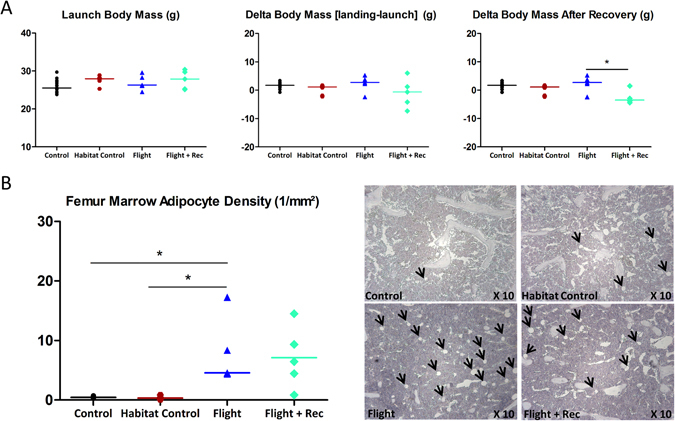
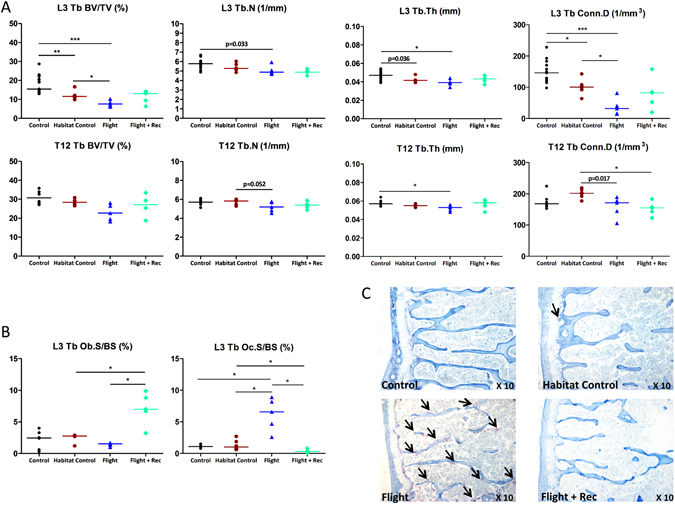
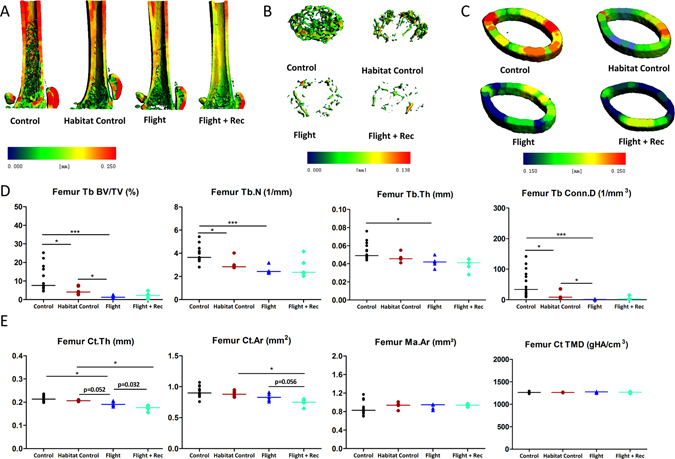
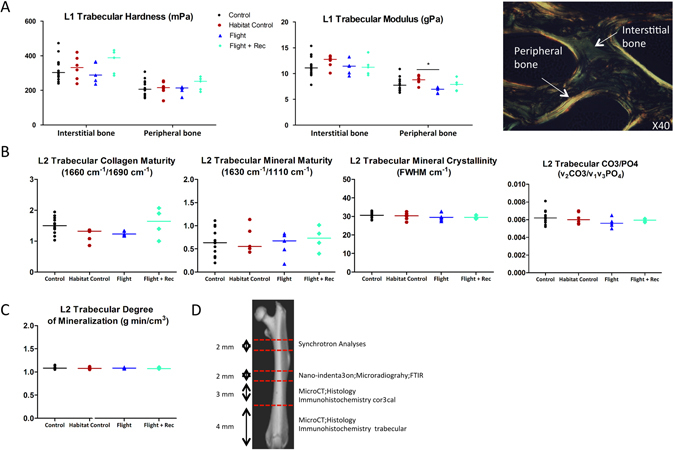
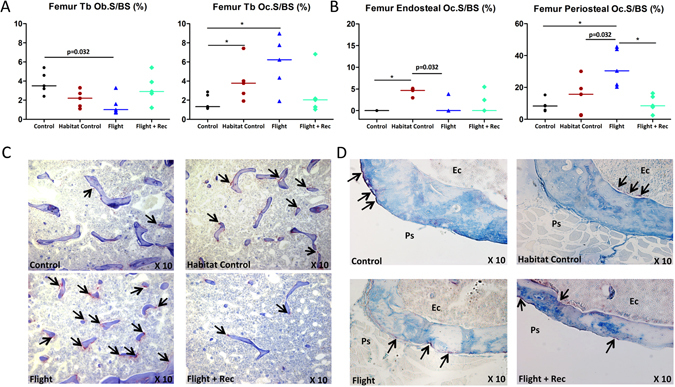
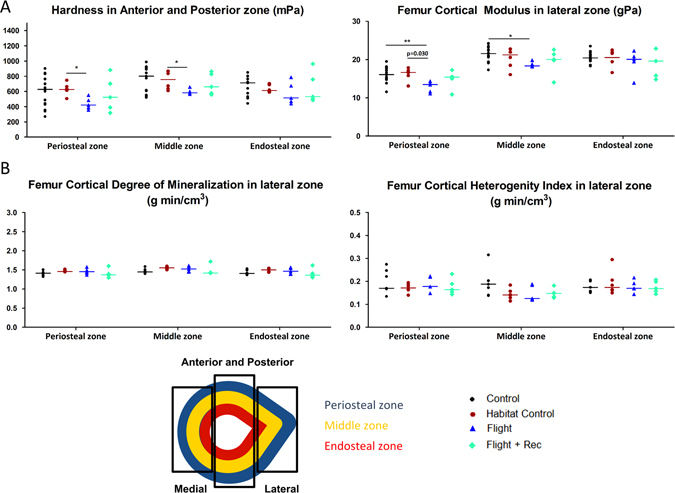
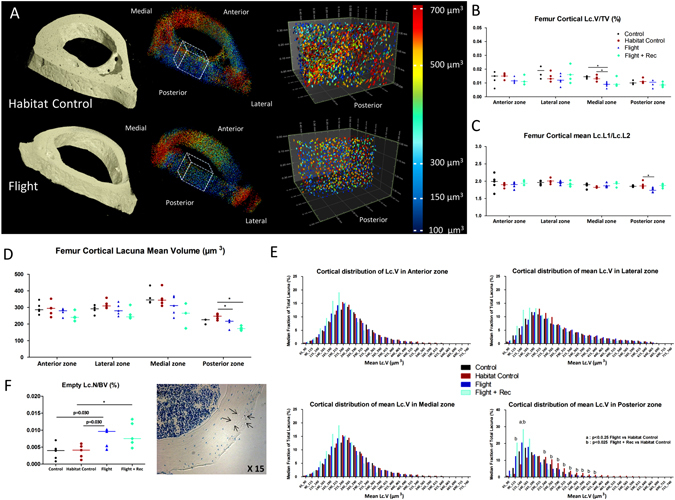
The weightless environment during spaceflight induces site-specific bone loss. The 30-day Bion-M1 mission offered a unique opportunity to characterize the skeletal changes after spaceflight and an 8-day recovery period in mature male C57/BL6 mice. In the femur metaphysis, spaceflight decreased the trabecular bone volume (−64% vs. Habitat Control), dramatically increased the bone resorption (+140% vs. Habitat Control) and induced marrow adiposity invasion. At the diaphysis, cortical thinning associated with periosteal resorption was observed. In the Flight animal group, the osteocyte lacunae displayed a reduced volume and a more spherical shape (synchrotron radiation analyses), and empty lacunae were highly increased (+344% vs. Habitat Control). Tissue-level mechanical cortical properties (i.e., hardness and modulus) were locally decreased by spaceflight, whereas the mineral characteristics and collagen maturity were unaffected. In the vertebrae, spaceflight decreased the overall bone volume and altered the modulus in the periphery of the trabecular struts. Despite normalized osteoclastic activity and an increased osteoblast number, bone recovery was not observed 8 days after landing. In conclusion, spaceflight induces osteocyte death, which may trigger bone resorption and result in bone mass and microstructural deterioration. Moreover, osteocyte cell death, lacunae mineralization and fatty marrow, which are hallmarks of ageing, may impede tissue maintenance and repair.
Overview
The claims and statistics of this paper haven’t been checked yet.
Run the check — free, no account needed. It reads the open-access text and checks the sources it cites.
Integrity signals
Registry
Cites
Statistics
Figures
Verification
Claims the paper makes
The claims and statistics of this paper haven’t been checked yet.
Run the check — free, no account needed. It reads the open-access text and checks the sources it cites.
Claims other papers make about this one
Each is checked against this paper’s own text: does it say what the citing paper says it does?
The source backs part of the claim, not all of it — or backs it for a different population, condition or comparison.
In the citing paper
“In stark contrast to the devastating effects of microgravity on osteoblasts, whose cytoskeletons may implode do to the failure of microtubules and actin filaments [54,55], and osteocytes, which undergo apoptosis as early as three days into space flight [56], osteoclasts maintain their ability to resorb bone in microgravity.”
From Osteoclasts and Microgravity (2020) · cites this paper as [56]
Experimental — accuracy not yet measured
Self-check
Percentages, sums and reported differences re-computed from the paper’s own numbers.
The self-check needs the paper’s full text.
Citations
Cites
Calcium's Role in Mechanotransduction during Muscle Development
Damm, T. B., & Egli, M. (2014) · Cellular Physiology and Biochemistry · doi:10.1159/000356667 · Cited by 14,552
Vico, L., Collet, P., Guignandon, A., Lafage-Proust, M.-H., Thomas, T., Rehailia, M., & Alexandre, C. (2000) · The Lancet · doi:10.1016/s0140-6736(00)02217-0 · Cited by 821
Self-citationSpectroscopic Characterization of Collagen Cross-Links in Bone
Paschalis, E. P., Verdelis, K., Doty, S. B., Boskey, A. L., Mendelsohn, R., & Yamauchi, M. (2001) · Journal of Bone and Mineral Research · doi:10.1359/jbmr.2001.16.10.1821 · Cited by 537
Inhibition of Bone Formation During Space Flight
Morey, E. R., & Baylink, D. J. (1978) · Science · doi:10.1126/science.150643 · Cited by 463
Pathophysiological basis of orthostatic hypotension in autonomic failure
Smit, A. A. J., Halliwill, J. R., Low, P. A., & Wieling, W. (1999) · The Journal of Physiology · doi:10.1111/j.1469-7793.1999.0001o.x · Cited by 387
Bone development and age-related bone loss in male C57BL/6J mice
Ferguson, V. L., Ayers, R. A., Bateman, T. A., & Simske, S. J. (2003) · Bone · doi:10.1016/s8756-3282(03)00199-6 · Cited by 384
Smith, S. M., Heer, M. A., Shackelford, L. C., Sibonga, J. D., Ploutz-Snyder, L., & Zwart, S. R. (2012) · Journal of Bone and Mineral Research · doi:10.1002/jbmr.1647 · Cited by 351
Changes in Bone Structure and Mass With Advancing Age in the Male C57BL/6J Mouse
Halloran, B. P., Ferguson, V. L., Simske, S. J., Burghardt, A. J., Venton, L. L., & Majumdar, S. (2002) · Journal of Bone and Mineral Research · doi:10.1359/jbmr.2002.17.6.1044 · Cited by 302
Adaptation of the proximal femur to skeletal reloading after long-duration spaceflight
Lang, T. F., Leblanc, A. D., Evans, H. J., & Lu, Y. (2006) · Journal of Bone and Mineral Research · doi:10.1359/jbmr.060509 · Cited by 302
Effects of 1- and 6-month spaceflight on bone mass and biochemistry in two humans
Collet, P., Uebelhart, D., Vico, L., Moro, L., Hartmann, D. J., Roth, M., & Alexandre, C. (1997) · Bone · doi:10.1016/s8756-3282(97)00052-5 · Cited by 288
Self-citation
Research works printed but not linked: 1
- Seeman, E., John, P. B., Lawrence, G. R., T. John MartinA2-John P. Bilezikian, L. G. R. & Martin, T. J. Principles of Bone Biology (Third Edition) 1943–1972 (Academic Press, San Diego, 2008).
Cited by
Sorted by citations
Skeletal changes during and after spaceflight
Vico, L., & Hargens, A. (2018) · Nature Reviews Rheumatology · doi:10.1038/nrrheum.2018.37 · Cited by 236
Self-citationUpdate on the effects of microgravity on the musculoskeletal system
Juhl, O. J., Buettmann, E. G., Friedman, M. A., DeNapoli, R. C., Hoppock, G. A., & Donahue, H. J. (2021) · npj Microgravity · doi:10.1038/s41526-021-00158-4 · Cited by 204
Disuse Osteoporosis: Clinical and Mechanistic Insights
Rolvien, T., & Amling, M. (2021) · Calcified Tissue International · doi:10.1007/s00223-021-00836-1 · Cited by 178
The effects of microgravity on bone structure and function
Man, J., Graham, T., Squires-Donelly, G., & Laslett, A. L. (2022) · npj Microgravity · doi:10.1038/s41526-022-00194-8 · Cited by 175
Vico, L., van Rietbergen, B., Vilayphiou, N., Linossier, M., Locrelle, H., Normand, M., Zouch, M., Gerbaix, M., Bonnet, N., Novikov, V., et al. (2017) · Journal of Bone and Mineral Research · doi:10.1002/jbmr.3188 · Cited by 150
Self-citationThe Mechanosensory Role of Osteocytes and Implications for Bone Health and Disease States
Choi, J. U. A., Kijas, A. W., Lauko, J., & Rowan, A. E. (2022) · Frontiers in Cell and Developmental Biology · doi:10.3389/fcell.2021.770143 · Cited by 138
Marrow Adipocytes: Origin, Structure, and Function
de Paula, F. J. A., & Rosen, C. J. (2019) · Annual Review of Physiology · doi:10.1146/annurev-physiol-021119-034513 · Cited by 80
Circulating miRNA Spaceflight Signature Reveals Targets for Countermeasure Development
Malkani, S., Chin, C. R., Cekanaviciute, E., Mortreux, M., Okinula, H., Tarbier, M., Schreurs, A., Shirazi‐Fard, Y., Tahimic, C. G. T., Rodríguez, D. N., et al. (2020) · Cell Reports · doi:10.1016/j.celrep.2020.108448 · Cited by 79
Spaceflight-Induced Bone Tissue Changes that Affect Bone Quality and Increase Fracture Risk
Coulombe, J. C., Senwar, B., & Ferguson, V. L. (2020) · Current Osteoporosis Reports · doi:10.1007/s11914-019-00540-y · Cited by 77
Control of Bone Matrix Properties by Osteocytes
Creecy, A., Damrath, J. G., & Wallace, J. M. (2021) · Frontiers in Endocrinology · doi:10.3389/fendo.2020.578477 · Cited by 68
Microgravity-Related Changes in Bone Density and Treatment Options: A Systematic Review
Baran, R., Wehland, M., Schulz, H., Heer, M. A., Infanger, M., & Grimm, D. G. (2022) · International Journal of Molecular Sciences · doi:10.3390/ijms23158650 · Cited by 71
Heveran, C. M., Rauff, A., King, K. B., Carpenter, R. D., & Ferguson, V. L. (2018) · Bone · doi:10.1016/j.bone.2018.01.018 · Cited by 57
Similarities Between Disuse and Age-Induced Bone Loss
Buettmann, E. G., Goldscheitter, G., Hoppock, G. A., Friedman, M. A., Suva, L. J., & Donahue, H. J. (2020) · Journal of Bone and Mineral Research · doi:10.1002/jbmr.4643 · Cited by 61
Tascher, G., Gerbaix, M., Maes, P., Chazarin, B., Ghislin, S., Антропова, Е. Н., Vassilieva, G. Y., Ouzren-Zarhloul, N., Gauquelin‐Koch, G., Vico, L., et al. (2018) · The FASEB Journal · doi:10.1096/fj.201801463r · Cited by 56
Self-citationSmith, J. K. (2020) · Life · doi:10.3390/life10090207 · Cited by 52
Brent, M. B. (2023) · Pharmacology & Therapeutics · doi:10.1016/j.pharmthera.2023.108383 · Cited by 52
Choi, S. Y., Saravia-Butler, A., Shirazi‐Fard, Y., Leveson-Gower, D. B., Stodieck, L., Cadena, S. M., Beegle, J., Solis, S., Ronca, A. E., & Globus, R. K. (2020) · Scientific Reports · doi:10.1038/s41598-020-58898-4 · Cited by 49
Inhibition of myostatin prevents microgravity-induced loss of skeletal muscle mass and strength
Smith, R. C., Cramer, M. S., Mitchell, P. J., Lucchesi, J., Ortega, A. M., Livingston, E. W., Ballard, D., Zhang, L., Hanson, J., Barton, K., et al. (2020) · PLoS ONE · doi:10.1371/journal.pone.0230818 · Cited by 48
Lacunar-canalicular bone remodeling: Impacts on bone quality and tools for assessment
Vahidi, G., Rux, C. J., Sherk, V. D., & Heveran, C. M. (2020) · Bone · doi:10.1016/j.bone.2020.115663 · Cited by 46
Wang, R., Shan, H., Zhang, G., Li, Q., Wang, J., Yan, Q., Li, E., Diao, Y., & Wei, L. (2022) · Carbohydrate Polymers · doi:10.1016/j.carbpol.2022.119742 · Cited by 45
Skeletal adaptations in young male mice after 4 weeks aboard the International Space Station
Maupin, K. A., Childress, P., Brinker, A., Khan, F., Abeysekera, I., Aguilar, I. N., Olivos, D. J., Adam, G., Savaglio, M. K., Ganesh, V., et al. (2019) · npj Microgravity · doi:10.1038/s41526-019-0081-4 · Cited by 45
Popp, K. L., Ackerman, K. E., Rudolph, S., Jóhannesdóttir, F., Hughes, J. M., Tenforde, A. S., Bredella, M. A., Xu, C. H., Unnikrishnan, G. U., Jaques Reifman, A., et al. (2020) · The American Journal of Sports Medicine · doi:10.1177/0363546520971782 · Cited by 41
The effects of spaceflight and fracture healing on distant skeletal sites
Dadwal, U. C., Maupin, K. A., Zamarioli, A., Tucker, A., Harris, J. S., Fischer, J. P., Rytlewski, J. D., Scofield, D. C., Wininger, A. E., Bhatti, F., et al. (2019) · Scientific Reports · doi:10.1038/s41598-019-47695-3 · Cited by 44
Bini, F., Pica, A., Marinozzi, A., & Marinozzi, F. (2019) · Scientific Reports · doi:10.1038/s41598-019-39297-w · Cited by 39
Gauthier, R., Langer, M., Follet, H., Olivier, C., Gouttenoire, P.-J., Helfen, L., Rongièras, F., Mitton, D., & Peyrin, F. (2018) · Journal of Structural Biology · doi:10.1016/j.jsb.2018.08.006 · Cited by 38
Self-citationInter-site Variability of the Human Osteocyte Lacunar Network: Implications for Bone Quality
Milovanovic, P. D., & Busse, B. (2019) · Current Osteoporosis Reports · doi:10.1007/s11914-019-00508-y · Cited by 36
Obata, Y., Bale, H., Barnard, H. S., Parkinson, D., Alliston, T. N., & Acevedo, C. (2020) · Journal of the mechanical behavior of biomedical materials/Journal of mechanical behavior of biomedical materials · doi:10.1016/j.jmbbm.2020.103887 · Cited by 35
Yang, H., Xu, X., Bullock, W. A., & Main, R. P. (2019) · Journal of Biomechanics · doi:10.1016/j.jbiomech.2019.04.021 · Cited by 34
Furukawa, S., Chatani, M., Higashitani, A., Higashibata, A., Kawano, F., Nikawa, T., Numaga‐Tomita, T., Ogura, T., Sato, F., Sehara‐Fujisawa, A., et al. (2021) · npj Microgravity · doi:10.1038/s41526-021-00145-9 · Cited by 32
Comparison of Necroptosis With Apoptosis for OVX-Induced Osteoporosis
He, B., Zhu, Y., Cui, H., Sun, B., Su, T., & Wen, P. (2021) · Frontiers in Molecular Biosciences · doi:10.3389/fmolb.2021.790613 · Cited by 31
Bone health in spacefaring rodents and primates: systematic review and meta-analysis
Fu, J., Goldsmith, M., Crooks, S. D., Condon, S. F., Morris, M., & Komarova, S. V. (2021) · npj Microgravity · doi:10.1038/s41526-021-00147-7 · Cited by 31
Iandolo, D., Strigini, M., Guignandon, A., & Vico, L. (2021) · Current Osteoporosis Reports · doi:10.1007/s11914-021-00713-8 · Cited by 27
Self-citationMultiscale effects of spaceflight on murine tendon and bone
Deymier, A. C., Schwartz, A. G., Lim, C., Wingender, B., Kotiya, A. A., Shen, H., Silva, M. J., & Thomopoulos, S. (2019) · Bone · doi:10.1016/j.bone.2019.115152 · Cited by 25
Migration and differentiation of osteoclast precursors under gradient fluid shear stress
Gao, Y., Li, T., Sun, Q., Ye, C., Guo, M., Chen, Z., Chen, J., & Huo, B. (2019) · Biomechanics and Modeling in Mechanobiology · doi:10.1007/s10237-019-01171-z · Cited by 25
Camy, C., Brioche, T., Senni, K., Foucault‐Bertaud, A., Genovesio, C., Lamy, E., Fovet, T., Chopard, A., Pithioux, M., & Roffino, S. (2022) · The FASEB Journal · doi:10.1096/fj.202200713r · Cited by 24
Morita, H., Kaji, H., Ueta, Y., & Abe, C. (2020) · The Journal of Physiological Sciences · doi:10.1186/s12576-020-00744-3 · Cited by 24
Farley, A., Gnyubkin, V., Vanden‐Bossche, A., Laroche, N., Neefs, M., Baatout, S., Baselet, B., Vico, L., & Mastrandrea, C. J. (2020) · Calcified Tissue International · doi:10.1007/s00223-020-00708-0 · Cited by 24
Self-citationCao, S., Wang, Y., Zhang, Y., Ren, J., Fan, B., Deng, Y., & Yin, W. (2024) · Journal of Agricultural and Food Chemistry · doi:10.1021/acs.jafc.4c05370 · Cited by 23
Microgravity-induced alterations of mouse bones are compartment- and site-specific and vary with age
Coulombe, J. C., Sarazin, B. A., Mullen, Z., Ortega, A. M., Livingston, E. W., Bateman, T. A., Stodieck, L., Lynch, M. E., & Ferguson, V. L. (2021) · Bone · doi:10.1016/j.bone.2021.116021 · Cited by 22
Animal physiology across the gravity continuum
Hariom, S. K., Ravi, A., Mohan, G. R., Pochiraju, H. D., Chattopadhyay, S., & Nelson, E. J. R. (2020) · Acta Astronautica · doi:10.1016/j.actaastro.2020.09.044 · Cited by 24
Rux, C. J., Vahidi, G., Darabi, A., Cox, L. M., & Heveran, C. M. (2022) · Bone · doi:10.1016/j.bone.2022.116327 · Cited by 20
Dietary countermeasure mitigates simulated spaceflight-induced osteopenia in mice
Steczina, S., Tahimic, C. G. T., Pendleton, M. M., M’Saad, O., Lowe, M. G., Alwood, J. S., Halloran, B. P., Globus, R. K., & Schreurs, A. (2020) · Scientific Reports · doi:10.1038/s41598-020-63404-x · Cited by 22
Kohler, R. K., Tastad, C. A., Stacy, A. J., Swallow, E. A., Metzger, C. E., Allen, M. R., & Wallace, J. M. (2021) · JBMR Plus · doi:10.1002/jbm4.10473 · Cited by 19
Bonnefoy, J., Ghislin, S., Beyrend, J., Coste, F., Calcagno, G., Lartaud, I., Gauquelin‐Koch, G., Poussier, S., & Frippiat, J. (2021) · International Journal of Molecular Sciences · doi:10.3390/ijms22062961 · Cited by 22
Self-citationGerbaix, M., White, H., Courbon, G., Shenkman, B. S., Gauquelin‐Koch, G., & Vico, L. (2018) · Frontiers in Physiology · doi:10.3389/fphys.2018.00746 · Cited by 22
Self-citationAvitabile, E., Fusco, L., Minardi, S., Orecchioni, M., Zavan, B., Yılmazer, A., Rauner, M., Pippia, P., Tasciotti, E., & Delogu, L. G. (2020) · Frontiers in Bioengineering and Biotechnology · doi:10.3389/fbioe.2020.00722 · Cited by 18
Li, W., Li, X., Tian, Y., Chen, X., Zhou, J., Zhu, B., Xi, H., Gao, Y., Xian, C. J., & Chen, K. (2018) · Bioelectromagnetics · doi:10.1002/bem.22150 · Cited by 17
Reptiles in Space Missions: Results and Perspectives
Gulimova, V. I., Proshchina, A. E., Kharlamova, A. S., Krivova, Y. S., Barabanov, V., Berdiev, R. K., Асадчиков, В. Е., Buzmakov, A. V., Zolotov, D. A., & Saveliev, S. V. (2019) · International Journal of Molecular Sciences · doi:10.3390/ijms20123019 · Cited by 20
Kroge, S. V., Wölfel, E. M., Buravkova, L. B., Atiakshin, D., Markina, E. A., Schinke, T., Rolvien, T., Busse, B., & Jähn, K. (2021) · European Cells and Materials · doi:10.22203/ecm.v042a16 · Cited by 17
Toward countering muscle and bone loss with spaceflight: GSK3 as a potential target
Baranowski, R. W., Braun, J. L., Hockey, B. L., Yumol, J. L., Geromella, M. S., Watson, C. J. F., Kurgan, N., Messner, H. N., Whitley, K. C., MacNeil, A. J., et al. (2023) · iScience · doi:10.1016/j.isci.2023.107047 · Cited by 15
Self-citationMicrogravity Effects and Aging Physiology: Similar Changes or Common Mechanisms?
Ratushnyy, A. Y., & Buravkova, L. B. (2023) · Biochemistry (Moscow) · doi:10.1134/s0006297923110081 · Cited by 16
Giuliani, A., Mazzoni, S., Ruggiu, A., Canciani, B., Cancedda, R., & Tavella, S. (2018) · Frontiers in Physiology · doi:10.3389/fphys.2018.00181 · Cited by 15
The role of the Nrf2/Keap1 signaling cascade in mechanobiology and bone health
Priddy, C. N., & Li, J. (2021) · Bone Reports · doi:10.1016/j.bonr.2021.101149 · Cited by 15
Chen, Z., Zhang, Y., Zhao, F., Yin, C., Yang, C., Huai, Y., Liang, S., Liu, S., Xu, X., Wu, Z., et al. (2021) · Acta Astronautica · doi:10.1016/j.actaastro.2021.01.052 · Cited by 14
Loundagin, L. L., & Cooper, D. (2022) · European Cells and Materials · doi:10.22203/ecm.v043a15 · Cited by 14
Moreno-Jiménez, I., Heinig, S., Heras, U., Maichl, D. S., Strifler, S., Leich, E., Blouin, S., Fratzl, P., Fratzl‐Zelman, N., Jundt, F., et al. (2024) · Bone · doi:10.1016/j.bone.2024.117236 · Cited by 13
Putative Receptors for Gravity Sensing in Mammalian Cells: The Effects of Microgravity
Aventaggiato, M., Barreca, F., Vernucci, E., Bizzarri, M., Ferretti, E., Russo, M. A., & Tafani, M. (2020) · Applied Sciences · doi:10.3390/app10062028 · Cited by 12
Microgravity, Bone Homeostasis, and Insulin-Like Growth Factor-1
Smith, J. K. (2020) · Applied Sciences · doi:10.3390/app10134433 · Cited by 10
New insights in osteocyte imaging by synchrotron radiation
Portier, H., Jaffré, C., Kewish, C. M., Chappard, C., & Pallu, S. (2020) · Journal of Spectral Imaging · doi:10.1255/jsi.2020.a3 · Cited by 12
Osthole ameliorates simulated microgravity-induced bone loss through down-regulation of miR-34c-5p
Feng, X., Zhou, H., Zhang, Y., Yang, P., Bai, H., Zhang, T., Hua, J., Zhang, L., Liu, Y., Xie, X., et al. (2021) · Acta Astronautica · doi:10.1016/j.actaastro.2021.03.015 · Cited by 11
Genthial, R., Gerbaix, M., Farlay, D., Vico, L., Beaurepaire, E., Débarre, D., & Gourrier, A. (2019) · PLoS ONE · doi:10.1371/journal.pone.0209079 · Cited by 11
Self-citationWang, J., Meng, J., Ding, G., Kang, Y., & Zhao, W. (2018) · Electrophoresis · doi:10.1002/elps.201800461 · Cited by 11
Three-dimensional topology optimization model to simulate the external shapes of bone
Sakashita, M., Yamasaki, S., Yaji, K., Kawamoto, A., & Kondo, S. (2021) · PLoS Computational Biology · doi:10.1371/journal.pcbi.1009043 · Cited by 9
Fu, R., & Yang, H. (2024) · Physics of Fluids · doi:10.1063/5.0242900 · Cited by 8
Yang, F., Yan, Q., Wang, Y., Li, Q., Wang, J., Zeng, X., Pi, Y., Zhang, M., & Wei, L. (2025) · Phytomedicine · doi:10.1016/j.phymed.2025.156447 · Cited by 9
Oral Tissue Responses to Travel in Space
Mednieks, M. I., & Hand, A. R. (2019) · IntechOpen eBooks · doi:10.5772/intechopen.86728 · Cited by 9
Fluorescent mapping of osteocyte-driven bone formation at pre-osteocyte and mature osteocyte lacunae
Ford, S., Tiedemann, K., Shapiro, R., Komarova, S. V., Jähn, K., & Zimmermann, E. A. (2025) · Acta Biomaterialia · doi:10.1016/j.actbio.2025.09.040 · Cited by 7
Pintus, G., Akram, M. A., Giordo, R., Caggiari, G., & Majdalawieh, A. F. (2025) · Free Radical Biology and Medicine · doi:10.1016/j.freeradbiomed.2025.11.048 · Cited by 9
Krivonosov, Y. S., Gulimova, V. I., Buzmakov, A. V., Zolotov, D. A., Cedola, A., Bukreeva, I., Асадчиков, В. Е., & Saveliev, S. V. (2021) · Frontiers in Physiology · doi:10.3389/fphys.2021.752893 · Cited by 7
Liu, L.-J., Fan, Y., Wang, S.-H., Wu, X., Yang, X. Y., & Sun, L. (2023) · Acta Astronautica · doi:10.1016/j.actaastro.2023.01.039 · Cited by 7
Strategies for studying bone loss in microgravity
Fournier, R., & Harrison, R. E. (2020) · REACH · doi:10.1016/j.reach.2020.100036 · Cited by 7
The role of the LINC complex in ageing and microgravity
Lansweers, I., van Rijthoven, S., & van Loon, J. J. W. A. (2025) · Mechanisms of Ageing and Development · doi:10.1016/j.mad.2025.112028 · Cited by 8
Cahill, R., Blaber, E. A., Juran, C. M., Cheng-Campbell, M., Alwood, J. S., Shirazi‐Fard, Y., & Almeida, E. A. C. (2025) · PLoS ONE · doi:10.1371/journal.pone.0317307 · Cited by 6
Bone strength and composition in spacefaring rodents: systematic review and meta-analysis
Goldsmith, M., Crooks, S. D., Condon, S. F., Willie, B. M., & Komarova, S. V. (2022) · npj Microgravity · doi:10.1038/s41526-022-00195-7 · Cited by 6
Peurière, L., Mastrandrea, C. J., Vanden‐Bossche, A., Linossier, M., Thomas, M., Normand, M., Lafage‐Proust, M., & Vico, L. (2022) · SSRN Electronic Journal · doi:10.2139/ssrn.4232740 · Cited by 6
Self-citationTrabecula-level mechanoadaptation: Numerical analysis of morphological changes
Smotrova, E., Li, S., & Silberschmidt, V. V. (2023) · Computers in Biology and Medicine · doi:10.1016/j.compbiomed.2023.107720 · Cited by 5
Wang, J., Zhen, C., Zhang, G., Yang, Z., & Shang, P. (2024) · International Journal of Molecular Sciences · doi:10.3390/ijms252313136 · Cited by 5
Yamamoto, T., Ikegame, M., Kawago, U., Tabuchi, Y., Hirayama, J., Sekiguchi, T., Furusawa, Y., Yachiguchi, K., Matsubara, H., Urata, M., et al. (2020) · Biological Sciences in Space · doi:10.2187/bss.34.34 · Cited by 7
Camy, C., Grünewald, T. A., Lamy, E., Roseren, F., Caumes, M., Fovet, T., Brioche, T., Genovesio, C., Chopard, A., Pithioux, M., et al. (2024) · Bone Reports · doi:10.1016/j.bonr.2024.101734 · Cited by 5
Liang, X., Jiang, S., Su, P., Yin, C., Jiang, W., Gao, J., Liu, Z., Li, Y., Wang, W., Qian, A., et al. (2024) · npj Microgravity · doi:10.1038/s41526-024-00433-0 · Cited by 5
Increased bone marrow adiposity in murine femoro-tibial epiphyses exposed to 30 days of microgravity
Endicott, J., & Fitzgerald, J. (2019) · Matters Select · doi:10.19185/matters.201904000010 · Cited by 5
The changes of bone vessels and their role in bone loss in tail-suspended rats
Wang, S., Yang, X. Y., Ding, D., Wu, X., Han, Z., Sun, L., & Fan, Y. (2021) · Acta Astronautica · doi:10.1016/j.actaastro.2021.08.031 · Cited by 5
A pilot study on the nanoscale properties of bone tissue near lacunae in fracturing women
Wen, Q., Schmidt, R., Turner, J. A., Bare, S. P., Lappe, J. M., Recker, R. R., & Akhter, M. P. (2022) · Bone Reports · doi:10.1016/j.bonr.2022.101604 · Cited by 5
Wang, S., Yang, X. Y., Han, Z., Wu, X., Fan, Y., & Sun, L. (2022) · Medicine in Novel Technology and Devices · doi:10.1016/j.medntd.2022.100175 · Cited by 5
Gao, X., Wang, S., Shen, S., Wang, S., Xie, M., Storey, K. B., Yu, C., Lefai, É., Song, W., Chang, H., et al. (2023) · Journal of Comparative Physiology B · doi:10.1007/s00360-023-01482-9 · Cited by 5
Irisin Prevents the Effects of Simulated Microgravity on Bone and Muscle Differentiation Markers
Sanesi, L., Zerlotin, R., Campiolo, A., Oranger, A., Dicarlo, M., Suriano, C., Ghadiri, A., Colaianni, G., Grano, M., Tavella, S., et al. (2025) · FASEB BioAdvances · doi:10.1096/fba.2025-00085 · Cited by 4
Effects of spaceflight on cancellous and cortical bone in proximal femur in growing rats
Gamboa, A., Branscum, A. J., Olson, D. A., Sattgast, L. H., Iwaniec, U. T., & Turner, R. T. (2021) · Bone Reports · doi:10.1016/j.bonr.2021.100755 · Cited by 4
Wang, J., Jiang, Y., Hou, X., Raza, T., He, Y., Liu, X., Xing, D., & Wei, L. (2025) · Comparative Biochemistry and Physiology Part C Toxicology & Pharmacology · doi:10.1016/j.cbpc.2025.110189 · Cited by 4
Liu, T., Melkus, G., Ramsay, T., Berthiaume, A., Armbrecht, G., & Trudel, G. (2025) · Experimental Physiology · doi:10.1113/ep091495 · Cited by 3
Characterization of the murine spine for spaceflight studies
Lim, S., Veres, J. E., Almeida, E. A. C., & O’Connell, G. D. (2025) · PLoS ONE · doi:10.1371/journal.pone.0301316 · Cited by 3
Camy, C., Maurel-Pantel, A., Lallemand, M., Fovet, T., Brioche, T., Genovesio, C., Chopard, A., Pithioux, M., & Roffino, S. (2024) · Journal of Biomechanics · doi:10.1016/j.jbiomech.2024.112231 · Cited by 3
Moussa, M., de Vet, T., Lebcir, N., Zaslansky, P., Chalifour, L. E., Willie, B. M., & Komarova, S. V. (2025) · Journal of Bone and Mineral Research · doi:10.1093/jbmr/zjaf057 · Cited by 3
Coulombe, J. C., Mullen, Z., Weins, A. M., Fisher, L. E., Lynch, M. E., Stodieck, L., & Ferguson, V. L. (2022) · bioRxiv (Cold Spring Harbor Laboratory) · doi:10.1101/2022.01.04.474962 · Cited by 4
Systemic effects of BMP2 treatment of fractures on non-injured skeletal sites during spaceflight
Zamarioli, A., Adam, G., Maupin, K. A., Childress, P., Brinker, A., Ximenez, J. P. B., Chakraborty, N., Gautam, A., Hammamieh, R., & Kacena, M. A. (2022) · Frontiers in Endocrinology · doi:10.3389/fendo.2022.910901 · Cited by 2
Friedman, M. A., Zeineddine, Y., Tuyambaze, O., Elhawabri, W., Shammary, A. A., Stodieck, L., Ferguson, V. L., & Donahue, H. J. (2025) · Bone Reports · doi:10.1016/j.bonr.2025.101871 · Cited by 2
Giuliani, A., Mazzoni, S., Mangano, C., Zecca, P. A., Caprioglio, A., Vercellini, N., Raspanti, M., Mangano, F. G., Piattelli, A., Iezzi, G., et al. (2018) · BMC Oral Health · doi:10.1186/s12903-018-0590-7 · Cited by 2
Tereschenko, E. Y., Волков, В. В., Seregin, A. Y., Gulimova, V. I., & Savelyev, S. V. (2022) · Nanobiotechnology Reports · doi:10.1134/s2635167622030211 · Cited by 2
Bokhari, R. S., Metzger, C. E., Allen, M. R., & Bloomfield, S. A. (2018) · Gravitational and Space Research · doi:10.2478/gsr-2018-0006 · Cited by 2
Non-binary matroids having four non-binary elements.
Lemos, M. (1997) · Ars Combinatoria · Cited by 2
Berteau, J. (2024) · Laboratory Animal Research · doi:10.1186/s42826-024-00207-5 · Cited by 1
Metadata
- Authors
- Gerbaix, M., Gnyubkin, V., Farlay, D., Olivier, C., Ammann, P., Courbon, G., Laroche, N., Genthial, R., Follet, H., Peyrin, F., Shenkman, B., Gauquelin-Koch, G., & Vico, L.
- Affiliations
- Inserm (FR)
- Lyon 1 Université (FR)
- University of Geneva (CH)
- Centre National d'Études Spatiales (FR)
- Centre National de la Recherche Scientifique (FR)
- Russian Academy of Sciences (RU)
- Corresponding author
- Vico, Laurence
- ORCID
- Venue
- Scientific Reports
- Published
- 2017-06-01
- Volume
- 7
- Issue
- 1
- Pages
- 13078-13078
- ISSN
- 2045-2322 (ISSN-L)
- PMC
- PMC5453937
- OpenAlex
- W2619099565
- Cited by
- 127
- References
- 54
- Citations by year
- 2026: 11 · 2025: 15 · 2024: 8 · 2023: 11 · 2022: 16 · 2021: 19 · 2020: 19 · 2019: 16 · 2018: 10 · 2017: 1
- FWCI
- 9.31
- Type
- journal article
- Language
- en
- Update notices
- erratum (2017-10-12)
- Open access
- gold
- doi.org
- Locations
- Scientific Reports (publishedVersion, cc-by)
- Europe PMC (PubMed Central) (publishedVersion, other-oa)
- PubMed Central (publishedVersion, cc-by)
- PubMed (publishedVersion)
- Archive ouverte UNIGE (University of Geneva) (publishedVersion, other-oa)
- HAL (submittedVersion, other-oa)
- DOAJ (DOAJ: Directory of Open Access Journals) (submittedVersion, cc-by-sa)
- Archive ouverte UNIGE (University of Geneva) (submittedVersion, cc-by)
- Funders
- Agence Nationale de la Recherche (ANR-11-LABX-0063)
- European Synchrotron Radiation Facility
- Centre National d’Etudes Spatiales
- Université de Lyon (ANR−11-LABX−0063)
- LabEx PRIMES (ANR-11-LABX-0063))
- Russian Academy of Sciences
- Topics
- Health Sciences › Medicine › Physiology (medical) › Spaceflight effects on biology
- Health Sciences › Medicine › Orthopedics and Sports Medicine › Bone health and osteoporosis research
- Life Sciences › Biochemistry, Genetics and Molecular Biology › Molecular Biology › Bone Metabolism and Diseases
- Keywords
- spaceflight, microgravity, bone loss, osteocyte death, osteocyte lacunae, trabecular bone volume, cortical bone thinning, bone resorption, marrow adiposity, bone mechanical properties, bone recovery, bone aging
- MeSH terms
- Animals, Biomechanical Phenomena, Bone and Bones, Bone Resorption, Femur, Male, Mice, Inbred C57BL, Osteocytes, Space Flight, Spine, Weightlessness, Bone Density
About these checks
Registry, retraction, Cites and statistics results are computed, not judged, with one exception: a printed reference that no index lists is read once by a model before it counts as a citation error. Claims are extracted by a model and kept only when their quote appears verbatim in the text; each cited source is then checked, with a model’s help, for whether it says what the claim relies on. Those verdicts can be wrong — read the claim’s quote and the cited source before relying on one.
Statistics and arithmetic are recomputed, not judged.
Confidence bands are shown only for fields calibrated on our annotated test set. None is calibrated yet, so no band is shown.
What counts as a claim ›How we measure confidence ›How we check this ›
Are you an author, or do you see a problem with this page? Request a review
