

Astragaloside IV protects against podocyte injury via SERCA2-dependent ER stress reduction and AMPKα-regulated autophagy induction in streptozotocin-induced diabetic nephropathy
Open accessThe DOI matches its Crossref record; 56 of the 56 references it cites were found in a registry or an index.
Abstract
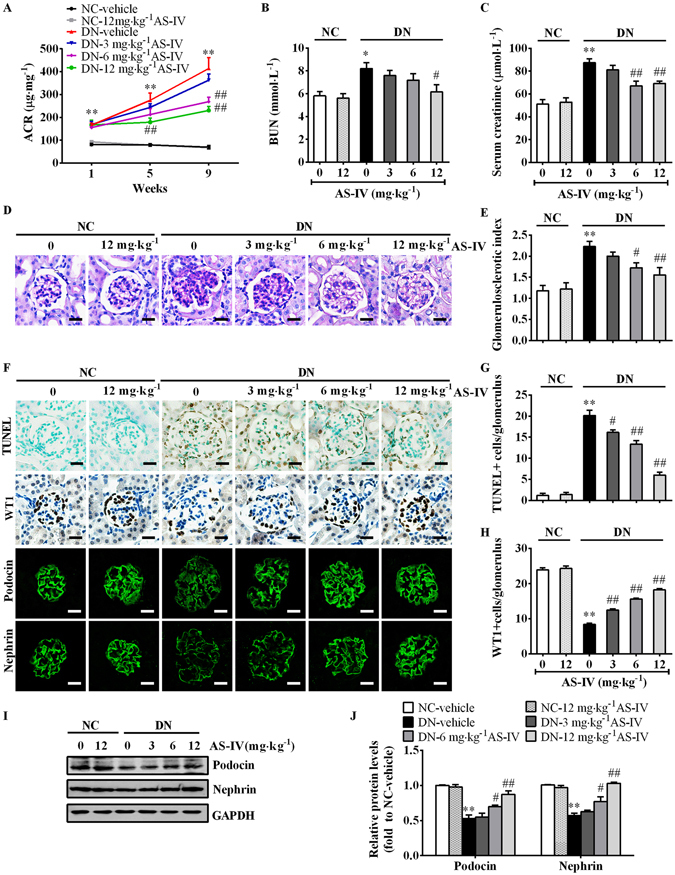
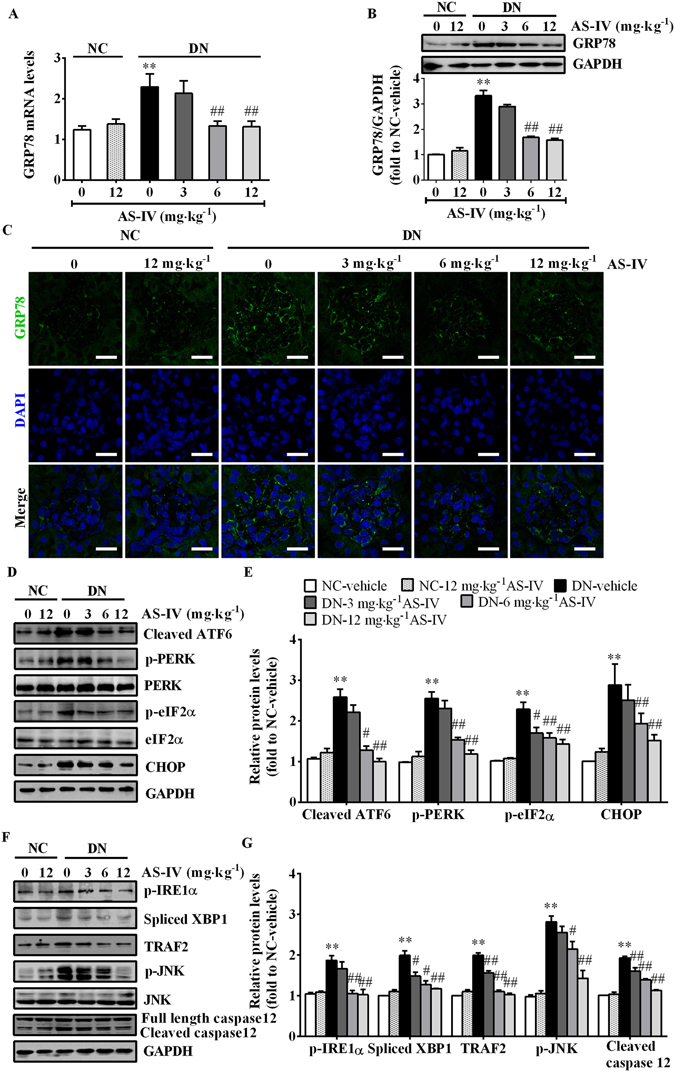
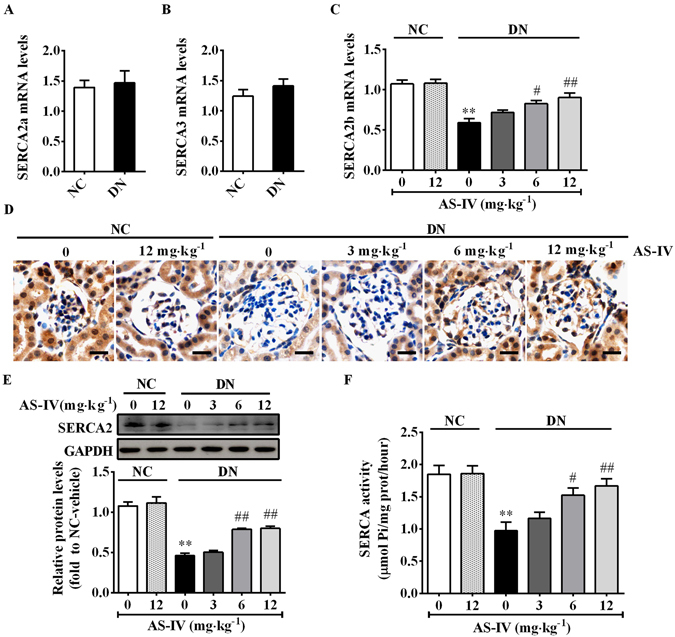
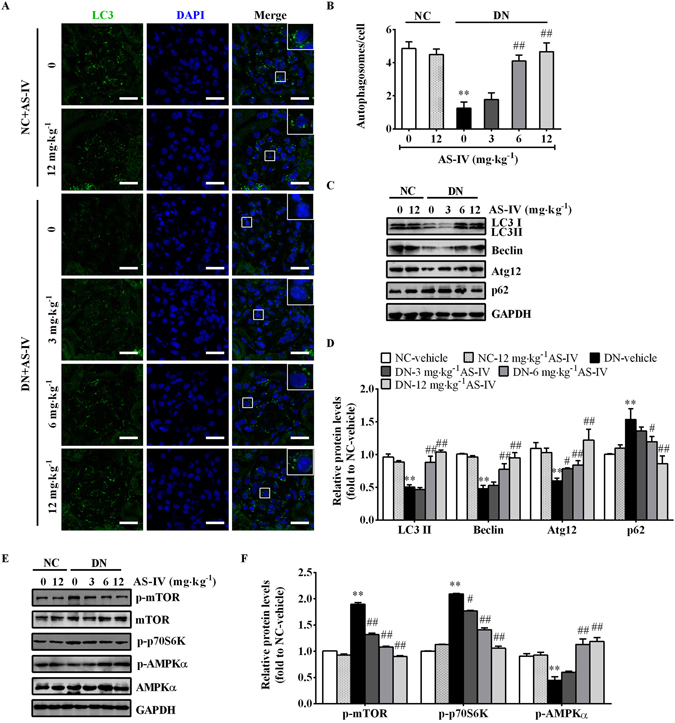
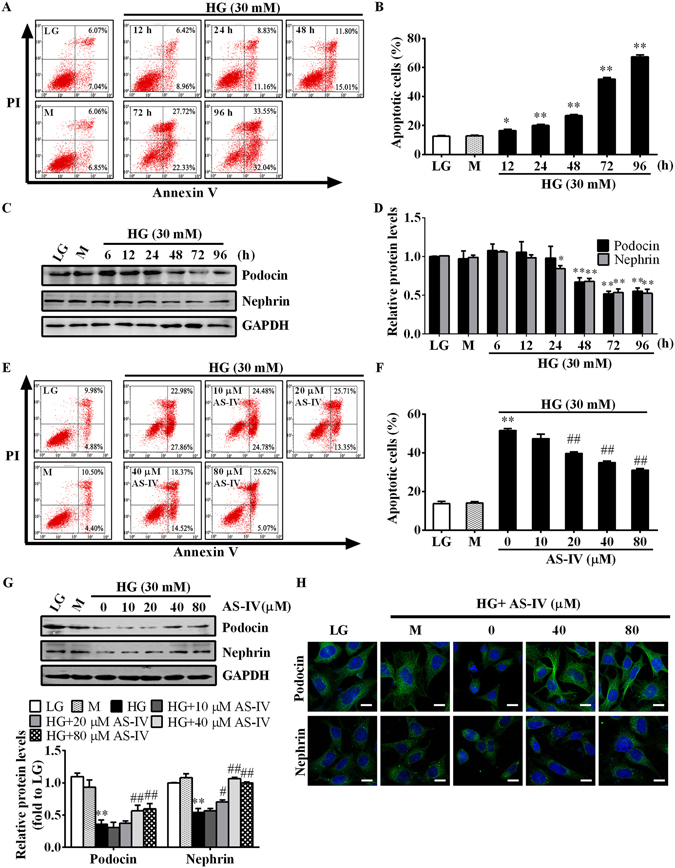
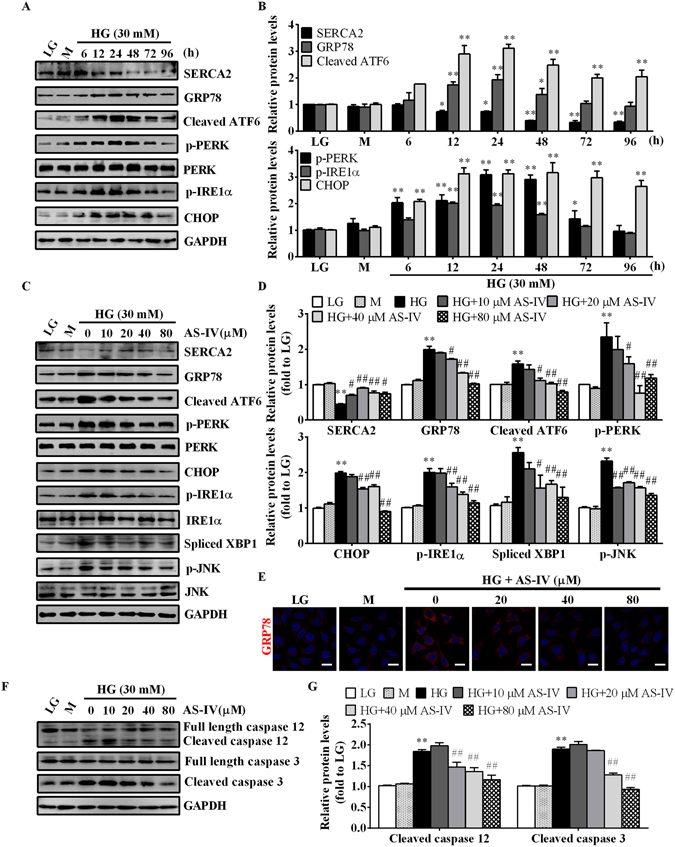
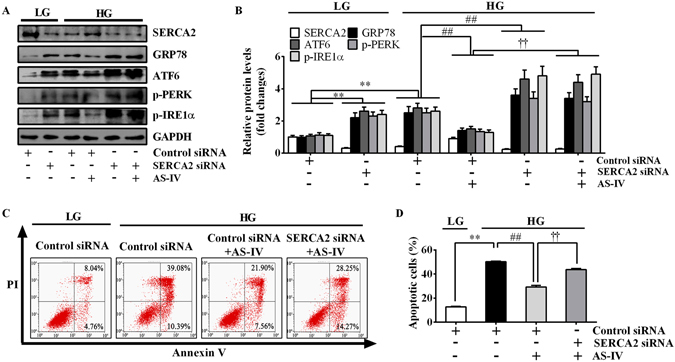
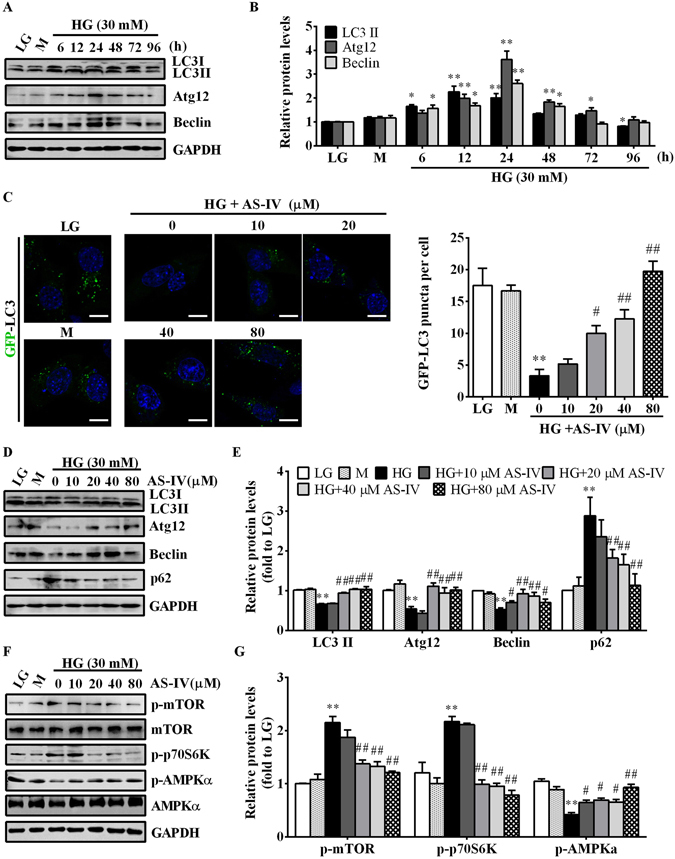
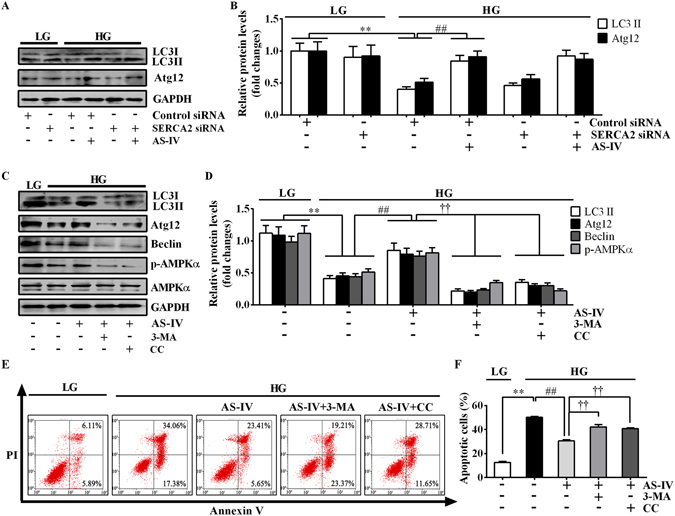
Aberrant endoplasmic reticulum (ER) stress and autophagy are associated with diabetic nephropathy. Here we investigated the effect of astragaloside IV (AS-IV) on the progression of diabetic nephropathy (DN) and the underlying mechanism involving ER stress and autophagy in streptozotocin (STZ)-induced diabetic mice and high glucose (HG)-incubated podocytes. The diabetic mice developed progressive albuminuria and glomerulosclerosis within 8 weeks, which were significantly ameliorated by AS-IV treatment in a dose-dependent manner. Moreover, diabetes or HG-induced podocyte apoptosis was markedly attenuated by AS-IV, paralleled by a marked remission in ER stress and a remarkable restoration in impaired autophagy, which were associated with a significant improvement in the expression of sarcoendoplasmic reticulum Ca 2+ ATPase 2b (SERCA2b) and AMP-activated protein kinase α (AMPKα) phosphorylation, respectively. Knockdown of SERCA2 in podocytes induced ER stress and largely abolished the protective effect of AS-IV, but had no obvious effect on the expression of autophagy-associated proteins. On the other hand, blockade of either autophagy induction or AMPKα activation could also significantly mitigate AS-IV-induced beneficial effect. Collectively, these results suggest that AS-IV prevented the progression of DN, which is mediated at least in part by SERCA2-dependent ER stress attenuation and AMPKα-promoted autophagy induction.
Overview
The claims and statistics of this paper haven’t been checked yet.
Free: it reads the open-access text and checks the first 5 claims that cite a source we can check. Create a free account to check every claim.
Integrity signals
Registry
Cites
Statistics
Figures
Verification
Claims the paper makes
The claims and statistics of this paper haven’t been checked yet.
Free: it reads the open-access text and checks the first 5 claims that cite a source we can check. Create a free account to check every claim.
Claims other papers make about this one
Each is checked against this paper’s own text: does it say what the citing paper says it does?
The source backs part of the claim, not all of it — or backs it for a different population, condition or comparison.
In the citing paper
“In addition, Astragaloside IV, a saponin purified from the Astragalus root, prevented DKD progression by stimulating autophagy in diabetic mice189-191”
From Autophagy in kidney homeostasis and disease (2020) · cites this paper as [190]
Experimental — accuracy not yet measured
Self-check
Percentages, sums and reported differences re-computed from the paper’s own numbers.
The self-check needs the paper’s full text.
Citations
Cites
Repertoires of Autophagy in the Pathogenesis of Ocular Diseases
Li, Y.-J., Jiang, Q., Cao, G.-F., Yao, J., & Yan, B. (2015) · Cellular Physiology and Biochemistry · doi:10.1159/000373980 · Cited by 16,304
De Cillà, S. D., Farruggio, S., Vujosevic, S., Raina, G., Filippini, D., Gatti, V., Clemente, N., Mary, D., Vezzola, D., Casini, G., et al. (2017) · Cellular Physiology and Biochemistry · doi:10.1159/000479441 · Cited by 5,136
Autophagy: cellular and molecular mechanisms
Glick, D., Barth, S., & Macleod, K. F. (2010) · The Journal of Pathology · doi:10.1002/path.2697 · Cited by 3,802
Autophagy and the Integrated Stress Response
Kroemer, G., Mariño, G., & Levine, B. (2010) · Molecular Cell · doi:10.1016/j.molcel.2010.09.023 · Cited by 3,506
The AMPK signalling pathway coordinates cell growth, autophagy and metabolism
Mihaylova, M. M., & Shaw, R. J. (2011) · Nature Cell Biology · doi:10.1038/ncb2329 · Cited by 2,923
Emerging regulation and functions of autophagy
Boya, P., Reggiori, F., & Codogno, P. (2013) · Nature Cell Biology · doi:10.1038/ncb2788 · Cited by 1,216
Fu, S., Yang, L., Li, P., Hofmann, O., Dicker, L., Hide, W., Lin, X., Watkins, S. M., Ivanov, A. R., & Hotamisligil, G. S. (2011) · Nature · doi:10.1038/nature09968 · Cited by 1,020
Endoplasmic Reticulum Stress Triggers Autophagy
Yorimitsu, T., Nair, U., Yang, Z., & Klionsky, D. J. (2006) · Journal of Biological Chemistry · doi:10.1074/jbc.m607007200 · Cited by 951
The Role of Inflammatory Cytokines in Diabetic Nephropathy
Navarro-González, J. F., & Mora-Fernández, C. (2008) · Journal of the American Society of Nephrology · doi:10.1681/asn.2007091048 · Cited by 932
Mundel, P., Reiser, J., Borja, A. Z. M., Pavenstädt, H., Davidson, G. R., Kriz, W., & Zeller, R. (1997) · Experimental Cell Research · doi:10.1006/excr.1997.3739 · Cited by 877
Hartleben, B., Gödel, M., Meyer-Schwesinger, C., Liu, S., Ulrich, T., Köbler, S., Wiech, T., Grahammer, F., Arnold, S. J., Lindenmeyer, M. T., et al. (2010) · Journal of Clinical Investigation · doi:10.1172/jci39492 · Cited by 721
Autophagy in Human Health and Disease
(2013) · New England Journal of Medicine · doi:10.1056/nejmc1303158 · Cited by 615
Pathogenesis, prevention, and treatment of diabetic nephropathy
Cooper, M. E. (1998) · The Lancet · doi:10.1016/s0140-6736(98)01346-4 · Cited by 560
Differential Effects of Endoplasmic Reticulum Stress-induced Autophagy on Cell Survival
Ding, W.-X., Ni, H.-M., Gao, W., Hou, Y.-F., Melan, M. A., Chen, X., Stolz, D. B., Shao, Z.-M., & Yin, X.-M. (2007) · Journal of Biological Chemistry · doi:10.1074/jbc.m609267200 · Cited by 486
Rodent models of streptozotocin‐induced diabetic nephropathy (Methods in Renal Research)
TESCH, G. H., & ALLEN, T. J. (2007) · Nephrology · doi:10.1111/j.1440-1797.2007.00796.x · Cited by 483
Molecular mechanisms of diabetic renal hypertrophy
Wolf, G., & Ziyadeh, F. N. (1999) · Kidney International · doi:10.1046/j.1523-1755.1999.00590.x · Cited by 472
US Renal Data System 2012 Annual Data Report
Collins, A. J., Foley, R. N., Herzog, C., Chavers, B., Gilbertson, D., Herzog, C., Ishani, A., Johansen, K., Kasiske, B., Kutner, N., et al. (2013) · American Journal of Kidney Diseases · doi:10.1053/j.ajkd.2012.11.031 · Cited by 425
Self-citationMicroalbuminuria and the Risk for Early Progressive Renal Function Decline in Type 1 Diabetes
Perkins, B. A., Ficociello, L. H., Ostrander, B. E., Silva, K. H., Weinberg, J., Warram, J. H., & Krolewski, A. S. (2007) · Journal of the American Society of Nephrology · doi:10.1681/asn.2006080872 · Cited by 370
Impaired Podocyte Autophagy Exacerbates Proteinuria in Diabetic Nephropathy
Tagawa, A., Yasuda, M., Kume, S., Yamahara, K., Nakazawa, J., Chin-Kanasaki, M., Araki, H., Araki, S.-I., Koya, D., Asanuma, K., et al. (2016) · Diabetes · doi:10.2337/db15-0473 · Cited by 315
Autophagy in diabetic nephropathy
Ding, Y., & Choi, M. E. (2015) · Journal of Endocrinology · doi:10.1530/joe-14-0437 · Cited by 306
Renoprotective role of the vitamin D receptor in diabetic nephropathy
Zhang, Z., Sun, L., Wang, Y., Ning, G., Minto, A. W., Kong, J., Quigg, R. J., & Li, Y. C. (2008) · Kidney International · doi:10.1038/sj.ki.5002572 · Cited by 305
Self-citationLenoir, O., Jasiek, M., Hénique, C., Guyonnet, L., Hartleben, B., Bork, T., Chipont, A., Flosseau, K., Bensaada, I., Schmitt, A., et al. (2015) · Autophagy · doi:10.1080/15548627.2015.1049799 · Cited by 296
Emerging role of autophagy in kidney function, diseases and aging
Huber, T. B., Edelstein, C. L., Hartleben, B., Inoki, K., Jiang, M., Koya, D., Kume, S., Lieberthal, W., Pallet, N., Quiroga, A., et al. (2012) · Autophagy · doi:10.4161/auto.19821 · Cited by 253
Park, S. W., Zhou, Y., Lee, J., Lee, J., & Ozcan, U. (2010) · Proceedings of the National Academy of Sciences · doi:10.1073/pnas.1012044107 · Cited by 233
The intrarenal renin–angiotensin system and diabetic nephropathy
Carey, R. M., & Siragy, H. M. (2003) · Trends in Endocrinology & Metabolism · doi:10.1016/s1043-2760(03)00111-5 · Cited by 230
Fang, L., Zhou, Y., Cao, H., Wen, P., Jiang, L., He, W., Dai, C., & Yang, J. (2013) · PLoS ONE · doi:10.1371/journal.pone.0060546 · Cited by 228
Vangheluwe, P., Raeymaekers, L., Dode, L., & Wuytack, F. (2005) · Cell Calcium · doi:10.1016/j.ceca.2005.06.033 · Cited by 226
Proteostasis in endoplasmic reticulum—new mechanisms in kidney disease
Inagi, R., Ishimoto, Y., & Nangaku, M. (2014) · Nature Reviews Nephrology · doi:10.1038/nrneph.2014.67 · Cited by 213
Kitada, M., Takeda, A., Nagai, T., Ito, H., Kanasaki, K., & Koya, D. (2011) · Experimental Diabetes Research · doi:10.1155/2011/908185 · Cited by 213
Kang, S., Dahl, R., Hsieh, W., Shin, A., Zsebo, K. M., Buettner, C., Hajjar, R. J., & Lebeche, D. (2016) · Journal of Biological Chemistry · doi:10.1074/jbc.m115.705012 · Cited by 189
Endoplasmic reticulum stress as a progression factor for kidney injury
Inagi, R. (2010) · Current Opinion in Pharmacology · doi:10.1016/j.coph.2009.11.006 · Cited by 179
Cybulsky, A. V. (2012) · Kidney International · doi:10.1038/ki.2012.390 · Cited by 165
Gui, D., Guo, Y., Wang, F., Liu, W., Chen, J., Chen, Y., Huang, J., & Wang, N. (2012) · PLoS ONE · doi:10.1371/journal.pone.0039824 · Cited by 157
Li, J., Gui, Y., Ren, J., Liu, X., Feng, Y., Zeng, Z., He, W., Yang, J., & Dai, C. (2016) · Scientific Reports · doi:10.1038/srep23975 · Cited by 152
Zhang, M.-Z., Wang, Y., Paueksakon, P., & Harris, R. C. (2014) · Diabetes · doi:10.2337/db13-1279 · Cited by 151
Self-citationGui, D., Huang, J., Guo, Y., Chen, J., Chen, Y., Xiao, W., Liu, X., & Wang, N. (2013) · Cytokine · doi:10.1016/j.cyto.2013.01.008 · Cited by 150
Roe, M. W., Philipson, L. H., Frangakis, C. J., Kuznetsov, A., Mertz, R. J., Lancaster, M. E., Spencer, B., Worley, J. F., & Dukes, I. D. (1994) · Journal of Biological Chemistry · doi:10.1016/s0021-9258(17)32299-8 · Cited by 147
The podocyte as a target for therapies—new and old
Mathieson, P. W. (2011) · Nature Reviews Nephrology · doi:10.1038/nrneph.2011.171 · Cited by 147
Impaired SERCA function contributes to cardiomyocyte dysfunction in insulin resistant rats
Wold, L. E., DUTTA, K., MASON, M., Ren, J. T., Cala, S. E., Schwanke, M. L., & Davidoff, A. J. (2005) · Journal of Molecular and Cellular Cardiology · doi:10.1016/j.yjmcc.2005.03.014 · Cited by 136
Cao, A.-L., Wang, L., Chen, X., Wang, Y., Guo, H., Chu, S., Liu, C., Zhang, X., & Peng, W. (2016) · Laboratory Investigation · doi:10.1038/labinvest.2016.44 · Cited by 132
Self-citationChen, Y., Gui, D., Chen, J., He, D., Luo, Y., & Wang, N. (2014) · Cellular Physiology and Biochemistry · doi:10.1159/000362974 · Cited by 128
Prevention and treatment of diabetic nephropathy
Wittmann, I., Molnár, G. A., Degrell, P., Wagner, Z., Tamaskó, M., Laczy, B., Brasnyó, P., Wagner, L. J., & Nagy, J. (2005) · Diabetes Research and Clinical Practice · doi:10.1016/j.diabres.2005.03.011 · Cited by 119
Kono, T., Ahn, G., Moss, D. R., Gann, L., Zarain-Herzberg, A., Nishiki, Y., Fueger, P. T., Ogihara, T., & Evans-Molina, C. (2012) · Molecular Endocrinology · doi:10.1210/me.2011-1181 · Cited by 118
The Podocyte in Diabetic Kidney Disease
Stitt-Cavanagh, E. M., MacLoed, L., & Kennedy, C. (2009) · The Scientific World JOURNAL · doi:10.1100/tsw.2009.133 · Cited by 118
Chen, Y., Liu, C. P., Xu, K. F., Mao, X. D., Lu, Y. B., Fang, L., Yang, J. W., & Liu, C. (2008) · American Journal of Nephrology · doi:10.1159/000148209 · Cited by 110
Amelioration of Diabetic Nephropathy in SPARC-Null Mice
Taneda, S., Pippin, J. W., Sage, E. H., Hudkins, K. L., Takeuchi, Y., Couser, W. G., & Alpers, C. E. (2003) · Journal of the American Society of Nephrology · doi:10.1097/01.asn.0000054498.83125.90 · Cited by 102
Autophagy and the kidney: health and disease
Takabatake, Y., Kimura, T., Takahashi, A., & Isaka, Y. (2014) · Nephrology Dialysis Transplantation · doi:10.1093/ndt/gft535 · Cited by 90
Inhibition of RAS in diabetic nephropathy
Campbell, K., & Yacoub, R. (2015) · International Journal of Nephrology and Renovascular Disease · doi:10.2147/ijnrd.s37893 · Cited by 81
Guo, H., Cao, A., Chu, S., Wang, Y., Zang, Y., Mao, X., Wang, H., Wang, Y., Liu, C., Zhang, X., et al. (2016) · Frontiers in Pharmacology · doi:10.3389/fphar.2016.00500 · Cited by 76
Self-citationRole of ER Stress in Ventricular Contractile Dysfunction in Type 2 Diabetes
Takada, A., Miki, T., Kuno, A., Kouzu, H., Sunaga, D., Itoh, T., Tanno, M., Yano, T., Sato, T., Ishikawa, S., et al. (2012) · PLoS ONE · doi:10.1371/journal.pone.0039893 · Cited by 73
Endoplasmic reticulum stress in insulin resistance and diabetes
Guerrero-Hernández, A., León-Aparicio, D., Chávez‐Reyes, J., Olivares-Reyes, J. A., & DeJesus, S. (2014) · Cell Calcium · doi:10.1016/j.ceca.2014.08.006 · Cited by 70
Wang, L., Chi, Y.-F., Yuan, Z., Zhou, W., Yin, P., Zhang, X., Peng, W., & Cai, H. (2014) · Experimental Biology and Medicine · doi:10.1177/1535370214532597 · Cited by 66
Self-citationZhuang, A., & Forbes, J. M. (2014) · Journal of Endocrinology · doi:10.1530/joe-13-0517 · Cited by 65
Xu, Y. C., Liu, L., Xin, W., Zhao, X., Chen, L., Zhen, J., & Wan, Q. (2015) · Journal of Diabetes and its Complications · doi:10.1016/j.jdiacomp.2015.07.021 · Cited by 47
Fang, L., Li, X.-R., Luo, Y., He, W.-C., Dai, C.-S., & Yang, J.-W. (2014) · Experimental Cell Research · doi:10.1016/j.yexcr.2014.01.001 · Cited by 45
Autophagy: a novel therapeutic target for kidney diseases
Kume, S., Uzu, T., Maegawa, H., & Koya, D. (2012) · Clinical and Experimental Nephrology · doi:10.1007/s10157-012-0695-2 · Cited by 18
Cited by
Autophagy in kidney homeostasis and disease
Tang, C., Livingston, M. J., Liu, Z., & Dong, Z. (2020) · Nature Reviews Nephrology · doi:10.1038/s41581-020-0309-2 · Cited by 496
(2020) · Advances in Pharmacology · doi:10.1016/bs.apha.2019.08.002 · Cited by 430
Tang, G., Li, S., Zhang, C., Chen, H., Wang, N., & Feng, Y. (2021) · Acta Pharmaceutica Sinica B · doi:10.1016/j.apsb.2020.12.020 · Cited by 364
Acute Kidney Injury and Progression of Diabetic Kidney Disease
Yu, S. M.-W., & Bonventre, J. V. (2018) · Advances in Chronic Kidney Disease · doi:10.1053/j.ackd.2017.12.005 · Cited by 175
Barrera‐Chimal, J., & Jaisser, F. (2020) · Diabetes, Obesity and Metabolism · doi:10.1111/dom.13969 · Cited by 174
Metadata
- Authors
- Guo, H., Wang, Y., Zhang, X., Zang, Y., Zhang, Y., Wang, L., Wang, H., Wang, Y., Cao, A., & Peng, W.
- Affiliations
- Shanghai University of Traditional Chinese Medicine (CN)
- Fudan University (CN)
- Corresponding author
- Cao, Aili
- Peng, Wen
- Venue
- Scientific Reports
- Published
- 2017-07-31
- Volume
- 7
- Issue
- 1
- Pages
- 6852-6852
- ISSN
- 2045-2322 (ISSN-L)
- PMC
- PMC5537362
- OpenAlex
- W2738598016
- Cited by
- 104
- References
- 56
- Citations by year
- 2026: 5 · 2025: 6 · 2024: 19 · 2023: 17 · 2022: 11 · 2021: 14 · 2020: 15 · 2019: 9 · 2018: 8
- FWCI
- 7.81
- Type
- journal article
- Language
- en
- Open access
- gold
- doi.org
- Licence
- cc-by
- creativecommons.org/licenses/by/4.0 (tdm)
- creativecommons.org/licenses/by/4.0 (vor)
- Locations
- Scientific Reports (publishedVersion, cc-by)
- PubMed Central (publishedVersion, cc-by)
- PubMed (publishedVersion)
- DOAJ (DOAJ: Directory of Open Access Journals) (submittedVersion, cc-by-sa)
- Funders
- National Natural Science Foundation of China (81473480)
- State Administration of Traditional Chinese Medicine of the People's Republic of China
- Shanghai Municipal Health Bureau (ZYSNXD012-RC-ZXY)
- Topics
- Health Sciences › Medicine › Nephrology › Chronic Kidney Disease and Diabetes
- Health Sciences › Medicine › Nephrology › Renal Diseases and Glomerulopathies
- Life Sciences › Biochemistry, Genetics and Molecular Biology › Cell Biology › Endoplasmic Reticulum Stress and Disease
- Keywords
- astragaloside IV, diabetic nephropathy, podocyte injury, endoplasmic reticulum stress, autophagy, SERCA2b, AMPKα, streptozotocin-induced diabetes, high glucose, podocyte apoptosis, albuminuria, glomerulosclerosis, calcium homeostasis
- MeSH terms
- AMP-Activated Protein Kinase Kinases, Animals, Autophagy, Cell Line, Diabetes Mellitus, Experimental, Diabetic Nephropathies, Male, Mice, Inbred C57BL, Protein Kinases, Saponins, Triterpenes, Apoptosis, Podocytes, Mice, Sarcoplasmic Reticulum Calcium-Transporting ATPases, Endoplasmic Reticulum Stress
About these checks
Registry, retraction, Cites and statistics results are computed, not judged, with one exception: a printed reference that no index lists is read once by a model before it counts as a citation error. Claims are extracted by a model and kept only when their quote appears verbatim in the text; each cited source is then checked, with a model’s help, for whether it says what the claim relies on. Those verdicts can be wrong — read the claim’s quote and the cited source before relying on one.
Statistics and arithmetic are recomputed, not judged.
Confidence bands are shown only for fields calibrated on our annotated test set. None is calibrated yet, so no band is shown.
What counts as a claim ›How we measure confidence ›How we check this ›
Are you an author, or do you see a problem with this page? Request a review
Data sources
Bibliographic data: Semantic Scholar, OpenAlex, Crossref.
Contains information from the Semantic Scholar Academic Graph Datasets, made available under the ODC Attribution License (ODC-BY 1.0).
Semantic Scholar’s data is described in: Kinney, R., et al. (2023). The Semantic Scholar Open Data Platform. arXiv:2301.10140.
