

Altered brain activity and the effect of personality traits in excessive smartphone use during facial emotion processing
Open accessThe DOI matches its Crossref record; 79 of the 81 references it cites were found in a registry or an index.
Abstract
Excessive smartphone use is a phenomenon related to maladaptive smartphone use, leading to negative consequences. This study set out with the aim of assessing the effects of excessive smartphone use on behavioral and neural responses during facial emotional processing. We examined 25 excessive smartphone users and 27 normal control users using functional MRI during facial emotion processing and investigated Behavioral Inhibition System/Behavioral Activation System (BIS/BAS). The excessive smartphone use group (SP) showed neural deactivation in the dorsolateral prefrontal cortex (DLPFC) and dorsal anterior cingulate cortex (dACC) during the presentation of an angry face and emotional transition compared to that of the normal control group (NC). Additionally, the SP revealed neural deactivation of the superior temporal sulcus and temporo-parietal junction related to social interaction during emotional transition compared to the NC. We found that BAS-Reward Responsiveness level was correlated with behavioral responses during repeated happy faces related to emotional reward in SP compared to NC. It can thus be suggested that excessive smartphone use is likely to fail on cognitive control during emotional processing, and this impairment might be influenced on emotional processing related to social interaction.
Overview
The claims and statistics of this paper haven’t been checked yet.
Free: it reads the open-access text and checks the first 5 claims that cite a source we can check. Create a free account to check every claim.
Integrity signals
Registry
Cites
Statistics
Figures
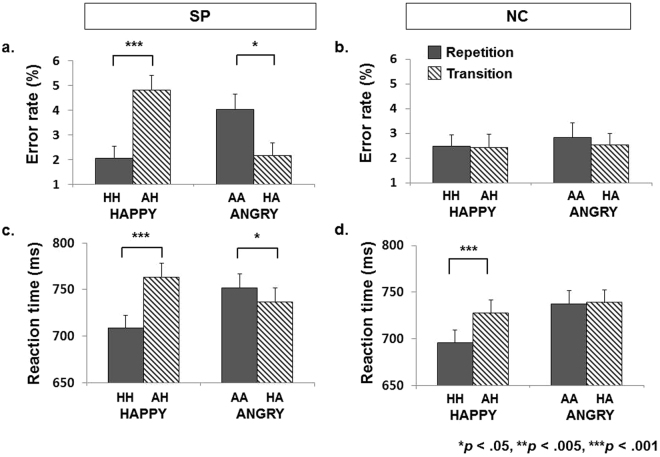
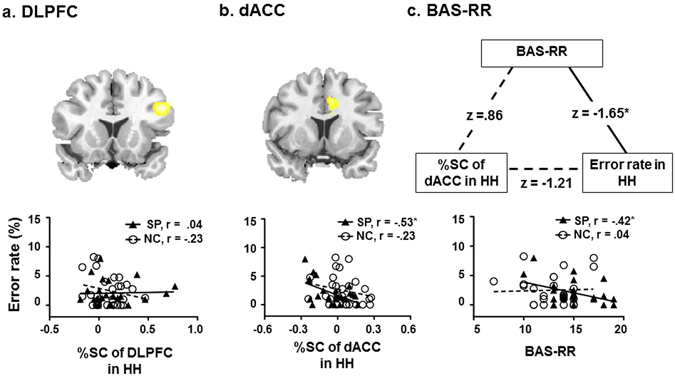
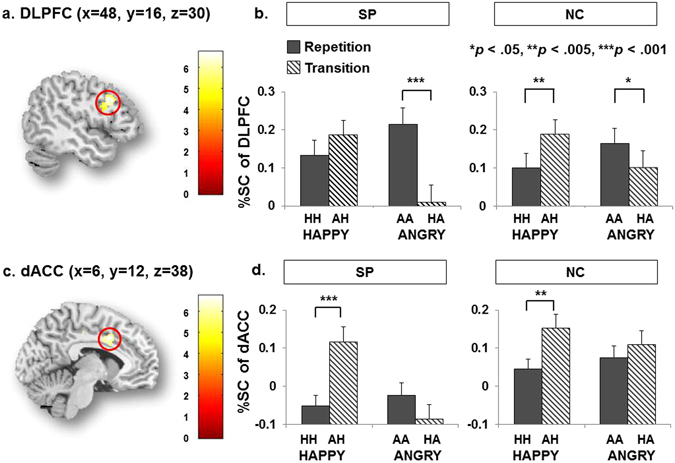
Verification
Claims the paper makes
The claims and statistics of this paper haven’t been checked yet.
Free: it reads the open-access text and checks the first 5 claims that cite a source we can check. Create a free account to check every claim.
Claims other papers make about this one
Each is checked against this paper’s own text: does it say what the citing paper says it does?
The source backs part of the claim, not all of it — or backs it for a different population, condition or comparison.
In the citing paper
“Medical problems include sleep problems, reduced physical fitness, unhealthy eating habits, pain and migraines, reduced cognitive control and changes in the brain's gray matter volume.”
From Excessive Smartphone Use Is Associated With Health Problems in Adolescents and Young Adults (2021) · cites this paper as [82]
Experimental — accuracy not yet measuredThe source backs part of the claim, not all of it — or backs it for a different population, condition or comparison.
In the citing paper
“Excessive smartphone use is associated with difficulties in cognitive-emotion regulation, impulsivity, impaired cognitive function, addiction to social networking, shyness and low self-esteem.”
From Excessive Smartphone Use Is Associated With Health Problems in Adolescents and Young Adults (2021) · cites this paper as [82]
Experimental — accuracy not yet measuredThe source backs part of the claim, not all of it — or backs it for a different population, condition or comparison.
In the citing paper
“Recent studies have also shown an association between an excessive use of smartphones and abnormal activity of regions in the prefrontal cortex and in the networks that connect to these regions (29, 82).”
From Excessive Smartphone Use Is Associated With Health Problems in Adolescents and Young Adults (2021) · cites this paper as [82]
Experimental — accuracy not yet measured
Self-check
Percentages, sums and reported differences re-computed from the paper’s own numbers.
The self-check needs the paper’s full text.
Citations
Cites
The assessment and analysis of handedness: The Edinburgh inventory
Oldfield, R. C. (1971) · Neuropsychologia · doi:10.1016/0028-3932(71)90067-4 · Cited by 35,900
Carver, C. S., & White, T. L. (1994) · Journal of Personality and Social Psychology · doi:10.1037/0022-3514.67.2.319 · Cited by 7,306
The cognitive control of emotion
OCHSNER, K., & GROSS, J. (2005) · Trends in Cognitive Sciences · doi:10.1016/j.tics.2005.03.010 · Cited by 4,495
Conflict monitoring and anterior cingulate cortex: an update
Botvinick, M. M., Cohen, J. D., & Carter, C. S. (2004) · Trends in Cognitive Sciences · doi:10.1016/j.tics.2004.10.003 · Cited by 3,623
Anterior Cingulate Cortex, Error Detection, and the Online Monitoring of Performance
Carter, C. S., Braver, T. S., Barch, D. M., Botvinick, M. M., Noll, D., & Cohen, J. D. (1998) · Science · doi:10.1126/science.280.5364.747 · Cited by 3,273
Emotional processing in anterior cingulate and medial prefrontal cortex
Etkin, A., Egner, T., & Kalisch, R. (2011) · Trends in Cognitive Sciences · doi:10.1016/j.tics.2010.11.004 · Cited by 3,059
Anterior Cingulate Conflict Monitoring and Adjustments in Control
Kerns, J. G., Cohen, J. D., MacDonald, A. W., Cho, R. Y., Stenger, V. A., & Carter, C. S. (2004) · Science · doi:10.1126/science.1089910 · Cited by 2,891
Origins and functions of positive and negative affect: A control-process view.
Carver, C. S., & Scheier, M. F. (1990) · Psychological Review · doi:10.1037/0033-295x.97.1.19 · Cited by 2,726
Rethinking feelings: an fMRI study of the cognitive regulation of emotion
Ochsner, K. N., Bunge, S. A., Gross, J. J., & Gabrieli, J. D. E. (2002) · Journal of Cognitive Neuroscience · doi:10.1162/089892902760807212 · Cited by 2,520
People thinking about thinking peopleThe role of the temporo-parietal junction in “theory of mind”
Saxe, R., & Kanwisher, N. (2003) · NeuroImage · doi:10.1016/s1053-8119(03)00230-1 · Cited by 2,316
Cited by
Excessive Smartphone Use Is Associated With Health Problems in Adolescents and Young Adults
Wacks, Y., & Weinstein, A. M. (2021) · Frontiers in Psychiatry · doi:10.3389/fpsyt.2021.669042 · Cited by 424
“Excessive smartphone users have shown impairment in cognitive control during emotional processing of angry faces and social interaction in fMRI (82).”
BackgroundStructural and functional correlates of smartphone addiction
Horvath, J., Mundinger, C., Schmitgen, M. M., Wolf, N. D., Sambataro, F., Hirjak, D., Kubera, K. M., Koenig, J., & Christian Wolf, R. (2020) · Addictive Behaviors · doi:10.1016/j.addbeh.2020.106334 · Cited by 190
Digital Addiction: Increased Loneliness, Anxiety, and Depression
Peper, E., & Harvey, R. (2018) · NeuroRegulation · doi:10.15540/nr.5.1.3 · Cited by 129
“In social situations, constant phone interruptions cause those involved to feel slighted and snubbed (Chun et al., 2017; Vaghefi & Lapointe, 2014).”
BackgroundRole of Frontostriatal Connectivity in Adolescents With Excessive Smartphone Use
Chun, J.-W., Choi, J., Cho, H., Choi, M.-R., Ahn, K.-J., Choi, J.-S., & Kim, D.-J. (2018) · Frontiers in Psychiatry · doi:10.3389/fpsyt.2018.00437 · Cited by 66
“Moreover, in a study using emotional faces, individuals with SP showed lower activity in frontocingulate regions compared with healthy individuals (57).”
BackgroundSelf-citationNeural correlates of cue reactivity in individuals with smartphone addiction
Schmitgen, M. M., Horvath, J., Mundinger, C., Wolf, N. D., Sambataro, F., Hirjak, D., Kubera, K. M., Koenig, J., & Wolf, R. C. (2020) · Addictive Behaviors · doi:10.1016/j.addbeh.2020.106422 · Cited by 79
Karaköse, T., Yıldırım, B., Tülübaş, T., & Kardas, A. (2023) · Frontiers in Psychology · doi:10.3389/fpsyg.2023.1126815 · Cited by 85
“…in their brain activity which are commonly associated with both chemical (i.e., drug addiction) or non-chemical (i.e., behavioral) addictions, and underlies that addiction develops as a result of a deficient reward system (Kuss and Griffiths, 2012; Weinstein and Lejoyeux, 2015; Chun et al., 2017).”
BackgroundMontag, C., & Becker, B. (2023) · Psychoradiology · doi:10.1093/psyrad/kkad001 · Cited by 74
“Five studies investigated the neural basis of altered cognitive and affective behaviors related to SmUD tendencies by means of task-based functional MRI (Arató et al. , 2023; Choi et al. , 2021; Chun et al. , 2017; Han & Kim, 2022; Schmitgen et al. , 2020).”
BackgroundYun, J., Shim, G., & Jeong, B. (2019) · Scientific Reports · doi:10.1038/s41598-019-42199-6 · Cited by 79
A brief intervention to reduce burnout and improve sleep quality in medical students
Brubaker, J. R., Swan, A., & Beverly, E. A. (2020) · BMC Medical Education · doi:10.1186/s12909-020-02263-6 · Cited by 61
Huang, S., Lai, X., Li, Y., Wang, W., Zhao, X., Dai, X., Wang, H., & Wang, Y. (2023) · Heliyon · doi:10.1016/j.heliyon.2023.e14897 · Cited by 42
Altered core networks of brain connectivity and personality traits in internet gaming disorder
Chun, J., Park, C.-H., Kim, J.-Y., Choi, J., Cho, H., Jung, D. J., Ahn, K. J., Choi, J., Kim, D., & Choi, I. Y. (2020) · Journal of Behavioral Addictions · doi:10.1556/2006.2020.00014 · Cited by 44
“Recently, the BAS has been linked not only to Internet addiction (Dong, Hu, & Lin, 2013), but also to excessive smartphone use (Chun et al., 2017).”
BackgroundSelf-citationLin, H., Chang, Y., Chen, M., Liu, S.-T., Chen, B.-S., Li, L., Lee, C., Sue, Y., Sung, T.-M., Sun, C., et al. (2022) · International Journal of Environmental Research and Public Health · doi:10.3390/ijerph192316277 · Cited by 40
“96 activation foci) [34,35,37,39] and four studies reporting the regions with suppressed activities (196 participants, 25 activation foci) [32,34,37,40].”
BackgroundPyeon, A., Choi, J., Cho, H., Kim, J.-Y., Choi, I. Y., Ahn, K. J., Choi, J., Chun, J., & Kim, D. (2021) · Journal of Behavioral Addictions · doi:10.1556/2006.2021.00085 · Cited by 37
Self-citationAltered Functional Connectivity of the Salience Network in Problematic Smartphone Users
Ahn, J., Lee, D., Namkoong, K., & Jung, Y. (2021) · Frontiers in Psychiatry · doi:10.3389/fpsyt.2021.636730 · Cited by 43
“Meanwhile, a few neuroimaging studies on problematic smartphone use have also suggested changes in FC in brain regions related with cognitive control and emotional processing: One study reported altered neural deactivation of the prefrontal and cingulate cortex during facial emotion processing in problematic smartphon…”
BackgroundAcute smartphone use impairs vigilance and inhibition capacities
Jacquet, T., Lepers, R., Pageaux, B., & Poulin-Charronnat, B. (2023) · Scientific Reports · doi:10.1038/s41598-023-50354-3 · Cited by 35
“Although this hypothesis could not be validated in the present study, some neuroimaging studies have shown a decrease in ACC activity in intensive smartphone users 46,47 .”
ResultLuo, J., Xu, J., Lin, Y. S., & Chen, Q. (2025) · Frontiers in Psychiatry · doi:10.3389/fpsyt.2025.1533757 · Cited by 31
Arató, Á., Nagy, S. A., Perlaki, G., Orsi, G., Szente, A. T., Kis-Jakab, G., Áfra, E., Alhour, H. A., Kovács, N., Janszky, J., et al. (2023) · Scientific Reports · doi:10.1038/s41598-022-27172-0 · Cited by 27
Dong, R., Yuan, D., Xue, W., Cai, J., Ai, Z., & Zhou, S. (2025) · Frontiers in Psychology · doi:10.3389/fpsyg.2025.1463671 · Cited by 29
Brain and Smartphone Addiction: A Systematic Review
Anbumalar, C., & Binu Sahayam, D. (2024) · Human Behavior and Emerging Technologies · doi:10.1155/2024/5592994 · Cited by 26
Schmitgen, M. M., Wolf, N. D., Sambataro, F., Hirjak, D., Kubera, K. M., Koenig, J., & Wolf, R. C. (2022) · Brain and Behavior · doi:10.1002/brb3.2739 · Cited by 26
“…et al., 2020), such as reduced gray matter volume (GMV) or intrinsic neural activity (INA) inACC (Horvath et al., 2020), altered functional connectivity at rest (Kim et al., 2016), and changes inneural activity inACCand frontoparietal corticesduring affective processing (Chun et al., 2017).”
BackgroundA perspective of yoga on smartphone addiction: A narrative review
Putchavayala, C. K., Singh, D., & Sashidharan, R. K. (2022) · Journal of Family Medicine and Primary Care · doi:10.4103/jfmpc.jfmpc_1765_21 · Cited by 24
“[21] Further, an functional magnetic resonance imaging (fMRI) study reported that smartphone addiction inhibits cognitive control during emotional processing and influences social interaction.[22] Similarly, a neuroimaging study on adolescents with mobile phone addiction correlates higher impulsive scores with altered…”
BackgroundUnveiling the grip of mobile phone addiction: an in-depth review
Li, J., & Yang, H. Y. (2024) · Frontiers in Psychiatry · doi:10.3389/fpsyt.2024.1429941 · Cited by 27
Screens and brains: multimodal neuroimaging insights into mechanisms of problematic smartphone use
Wolf, N. D., Henemann, G. M., Schmitgen, M. M., Koenig, J., Bach, P., & Wolf, R. C. (2025) · Progress in Neuro-Psychopharmacology and Biological Psychiatry · doi:10.1016/j.pnpbp.2025.111531 · Cited by 19
Yaşin, S., Altunışık, E., & Tak, A. Z. A. (2023) · The Journal of Nervous and Mental Disease · doi:10.1097/nmd.0000000000001675 · Cited by 23
Tie, B., Zhang, T., He, M., Geng, L., Feng, Q., Liu, C., Wang, X., Wang, Y., Tian, D., Gao, Y., et al. (2024) · Computers in Human Behavior · doi:10.1016/j.chb.2024.108531 · Cited by 17
Shi, W., Zhao, Y., Zhou, J., & Shi, J. (2025) · Addictive Behaviors · doi:10.1016/j.addbeh.2025.108346 · Cited by 15
Meta-analysis of structural and functional abnormalities in behavioral addictions
Mei, B., Tao, Q., Dang, J., Niu, X., Sun, J., Zhang, M., Wang, W., Han, S., Zhang, Y., & Cheng, J. (2024) · Addictive Behaviors · doi:10.1016/j.addbeh.2024.108088 · Cited by 12
Wang, Z., Diedrichsen, J., Saltoun, K., Steele, C. J., Anteraper, S. A., Yeo, B. T. T., Schmahmann, J. D., & Bzdok, D. (2024) · Journal of Neurophysiology · doi:10.1152/jn.00164.2024 · Cited by 12
Behind the screens: Proposing a mentalization-based theoretical model of problematic Internet use
Chatterjee, D., & Rai, R. (2023) · Cyberpsychology Journal of Psychosocial Research on Cyberspace · doi:10.5817/cp2023-5-6 · Cited by 13
„Smartphone addiction”: Fakt oder Fiktion?
Wolf, N. D., & Wolf, R. C. (2020) · Nervenheilkunde · doi:10.1055/a-1191-9747 · Cited by 11
“Erste dezidierte Untersuchungen zur exzessiven Smartphone-Nutzung konnten eine frontotemporale und zinguläre Hypoaktivität im Kontext eines Emotionserkennungsparadigmas nachweisen [44] sowie eine abnorme Integrität neuronaler Faserverbindungen u.”
BackgroundRozgonjuk, D., Montag, C., & Elhai, J. D. (2022) · Studies in neuroscience, psychology and behavioral economics · doi:10.1007/978-3-031-04772-5_4 · Cited by 12
Smart Healthcare Systems and Precision Medicine
Paik, S.-H., & Kim, D. (2019) · Advances in experimental medicine and biology · doi:10.1007/978-981-32-9721-0_13 · Cited by 9
Self-citationAttention Enhancing Technology: A New Dimension in the Design of Effective Wellbeing Apps
Wiederkehr, L., Pitt, J. V., Dannhauser, T. M., & Bruzda, K. (2021) · IEEE Transactions on Technology and Society · doi:10.1109/tts.2021.3070221 · Cited by 9
Guzmán Cortés, J. A., Sánchez-Betancourt, J. T., Meneses López, N., Feliciano Hernández, V., & Ruiz Reyes, V. (2022) · Interdisciplinaria. Revista de Psicología y Ciencias Afines · doi:10.16888/interd.2022.39.2.2 · Cited by 4
Bao, L., Zhang, W., Zhao, J., & Geng, J. (2025) · BMC Psychology · doi:10.1186/s40359-025-03360-1 · Cited by 6
Chun, J., Choi, J., Pyeon, A., Hu, M., Cho, H., Choi, J., Ahn, K. J., Nam, J.-H., Choi, I. Y., & Kim, D. (2025) · International Journal of Clinical and Health Psychology · doi:10.1016/j.ijchp.2025.100650 · Cited by 4
“In the previous study, this experimental paradigm was devised to examine the cognitive regulation of emotional faces (Chun et al., 2017).”
Self-citationLim, J. (2019) · Journal of Digital Convergence · doi:10.14400/jdc.2019.17.11.327 · Cited by 4
Lee, S. L., Pereira, J. T., & Khasbullah, S. N. A. (2022) · International Journal of Mobile Human Computer Interaction · doi:10.4018/ijmhci.313027 · Cited by 4
Sain, D., Demirci, H., & Bilge, Y. (2026) · Psicologia Reflexão e Crítica · doi:10.1186/s41155-026-00381-6 · Cited by 5
“Another study showed reduced neural activation in the DLPFC and dorsal anterior cingulate cortex in participants who used smartphones excessively (Chun et al., 2017).”
Rethinking Human-Smartphone Interaction with Deleuze, Guattari, and Polanyi
Fazio, N. (2022) · Theory Culture & Society · doi:10.1177/02632764221074182 · Cited by 3
Faro, H., Franchini, É., Albuquerque, M. R., Cavalcante-Silva, D., Pereira, D. C., de Lima, L. A. D., Machado, D. G. D. S., & Fortes, L. D. S. (2025) · Experimental Brain Research · doi:10.1007/s00221-025-07185-7 · Cited by 3
“Nonetheless, given the evidence that social media use can cause long-term brain modulation over time (Chun et al. 2017 ; Horvath et al. 2020; Lee et al. 2019), future studies should explore the neurophysiological effects of extended social media exposure.”
Li, X., Wang, J., Li, H., Huang, M., Hu, Y., Yang, L., Wang, H., & Wang, Q. (2026) · Progress in Neuro-Psychopharmacology and Biological Psychiatry · doi:10.1016/j.pnpbp.2026.111741 · Cited by 2
Connected But Protected: Guiding Healthy Brain Development in the Digital Age
Chun, J., Choi, J., Hu, M., & Kim, D. (2024) · Frontiers for Young Minds · doi:10.3389/frym.2024.1445381 · Cited by 2
Self-citationSmartphone addiction may reduce prefrontal cortex activity: an assessment using cerebral blood flowPreprint
Suzuki, T., Waki, H., & Hisajima, T. (2024) · Research Square · doi:10.21203/rs.3.rs-3953237/v1 · Cited by 2
Fu, Y., Wang, Y., Chang, Y., Liu, Y., Chao, T., Wang, R., & Xiao, T. (2026) · Research Square · doi:10.21203/rs.3.rs-8993913/v1 · Cited by 2
Digitale Forsterkere: Hvordan atferd kan påvirkes av økende digitalisering
Henrichsen, H. S. M. (2018) · NVA (Nasjonalt vitenarkiv)
Smartphone use in Children's Shows: A Qualitative Content Analysis
Fleming, D. M. (2019)
Michael, S. M., Wolf, N. D., Mundinger, C., Juliane, H., Sambataro, F., Hirjak, D., Maria, K. K., Julian, K., & Wolf, R. C. (2022) · doi:10.36959/784/430
“Similarly, individuals with SPA show structural and functional changes at the neural structural and functional level 14, such as reduced gray matter volume (GMV), intrinsic neural activity (INA) in ACC [14], altered resting-state connectivity [15], and changes in neural activity in DLPFC, ACC and inferior parietal cor…”
BackgroundKarakteristik gejala Computer Vision Syndrom (CVS) pada pekerja bidang pendidikan
Prasetyaningsih, N., Hartanti, M. D., Adiwardhani, A., & Samira, J. (2022) · Jurnal Biomedika dan Kesehatan · doi:10.18051/jbiomedkes.2022.v5.125-131
“pain,(7) smartphone 'addiction/addiction',(8,9) emotional changes,(10) decline in academic grades, relationships with parents and friends become inharmonious and even try to commit suicide.”
Chun, J., Choi, J., Pyeon, A., Hu, M., Cho, H., Choi, J., Ahn, K. J., Nam, J.-H., Choi, I. Y., & Kim, D. (2025) · SSRN Electronic Journal · doi:10.2139/ssrn.5399032
Self-citationGerdan, G., Akgül, Ö., & Gürlük, Y. O. (2025) · Addictive Behaviors · doi:10.1016/j.addbeh.2025.108509
Wacks, Y., Koslowsky, M., Bloch, A., & Weinstein, A. M. (2025) · Frontiers in Psychiatry · doi:10.3389/fpsyt.2025.1691748
Mechanismen problematischer Smartphone-Nutzung: Eine Übersicht multimodaler Neurobildgebung
Wolf, N. D., Henemann, G. M., Schmitgen, M. M., & Wolf, R. C. (2025) · Nervenheilkunde · doi:10.1055/a-2625-7090
Kasutamisteavituste mõju problemaatilisele ja objektiivselt mõõdetud nutitelefonikasutusele
Raudsik, K. (2018) · DSpace repository (University of Tartu) · Cited by 3
More Than Science! the Social Part of Research Cruises
Seguro, I. (2026) · Frontiers for Young Minds · doi:10.3389/frym.2026.1632918
Wolf, N., Schmitgen, M. M., Henemann, G. M., Haage, S. H., Koenig, J., & Wolf, R. C. (2026) · Computers in Human Behavior Reports · doi:10.1016/j.chbr.2026.101244
Aslan, S. T., Kıcıklar, S., Fırat, Z., Ekinci, G., & Hamamcı, A. (2026) · Brain Imaging and Behavior · doi:10.1007/s11682-026-01201-2
“…the hypofrontality reported in addiction may primarily concern executive control regions (Brand et al., 2014), whereas the orbitofrontal cortex may show heightened engagement under negative mood, consistent with impaired prefrontal regulation during emotional processing (Chun et al., 2017).”
Arató, Á., Darnai, G., Dudás, B., Szente, A. T., Alhour, H. A., Perlaki, G., Orsi, G., Nagy, S. A., & Janszky, J. (2026) · iScience · doi:10.1016/j.isci.2026.117913
“…users (regardless of the measurement method) show an altered recruitment of brain areas that are considered to be parts of the DMN, 36–40 the somatomotor network, 39–41 the limbic system, 4,39 and the FPN. 36,42,43 These studies revealed activation patterns among functionally related brain regions.”
Metadata
- Authors
- Chun, J.-W., Choi, J., Kim, J.-Y., Cho, H., Ahn, K.-J., Nam, J.-H., Choi, J.-S., & Kim, D.-J.
- Affiliations
- The Catholic University of Korea Seoul St. Mary's Hospital (KR)
- Seoul National University (KR)
- Catholic University of Korea (KR)
- Corresponding author
- Kim, Jin-Young
- Kim, Dai-Jin
- Venue
- Scientific Reports
- Published
- 2017-09-22
- Volume
- 7
- Issue
- 1
- Pages
- 12156-12156
- ISSN
- 2045-2322 (ISSN-L)
- PMC
- PMC5610339
- OpenAlex
- W2754218130
- Semantic Scholar
- 49457fcd61d06b52454444f8ada6307b1d51ff0e
- Cited by
- 60
- References
- 81
- Citations by year
- 2026: 7 · 2025: 11 · 2024: 8 · 2023: 7 · 2022: 10 · 2021: 6 · 2020: 5 · 2019: 4 · 2018: 2
- FWCI
- 7.70
- Type
- journal article
- Language
- en
- Open access
- gold
- doi.org
- Licence
- cc-by
- creativecommons.org/licenses/by/4.0 (tdm)
- creativecommons.org/licenses/by/4.0 (vor)
- Locations
- Scientific Reports (publishedVersion, cc-by)
- Europe PMC (PubMed Central) (publishedVersion, cc-by)
- PubMed Central (publishedVersion, cc-by)
- PubMed (publishedVersion)
- Funders
- National Research Foundation
- National Research Foundation of Korea (NRF-2014M3C7A1062893, 2014M3C7A1062893)
- Topics
- Social Sciences › Sociology and Political Science › Impact of Technology on Adolescents
- Life Sciences › Neuroscience › Cognitive Neuroscience › Neural and Behavioral Psychology Studies
- Social Sciences › Psychology › Clinical Psychology › Historical and Modern Theater Studies
- Keywords
- smartphone overuse, emotional face processing, personality traits, behavioral inhibition system, behavioral activation system, reward responsiveness, dorsolateral prefrontal cortex, dorsal anterior cingulate cortex, superior temporal sulcus, temporoparietal junction, neural deactivation, cognitive control, emotional processing, social interaction
- MeSH terms
- Smartphone, Adult, Anger, Brain, Brain Mapping, Emotions, Facial Expression, Female, Humans, Interpersonal Relations, Magnetic Resonance Imaging, Male, Personality, Prefrontal Cortex, Young Adult
About these checks
Registry, retraction, Cites and statistics results are computed, not judged, with one exception: a printed reference that no index lists is read once by a model before it counts as a citation error. Claims are extracted by a model and kept only when their quote appears verbatim in the text; each cited source is then checked, with a model’s help, for whether it says what the claim relies on. Those verdicts can be wrong — read the claim’s quote and the cited source before relying on one.
Statistics and arithmetic are recomputed, not judged.
Confidence bands are shown only for fields calibrated on our annotated test set. None is calibrated yet, so no band is shown.
What counts as a claim ›How we measure confidence ›How we check this ›
Are you an author, or do you see a problem with this page? Request a review
Data sources
Bibliographic data: Semantic Scholar, OpenAlex, Crossref.
Contains information from the Semantic Scholar Academic Graph Datasets, made available under the ODC Attribution License (ODC-BY 1.0).
Semantic Scholar’s data is described in: Kinney, R., et al. (2023). The Semantic Scholar Open Data Platform. arXiv:2301.10140.
