

Toll-like receptor 2 induced cytotoxic T-lymphocyte-associated protein 4 regulates Aspergillus-induced regulatory T-cells with pro-inflammatory characteristics
Open accessThe DOI matches its Crossref record; 44 of the 44 references it cites were found in a registry or an index.
Abstract
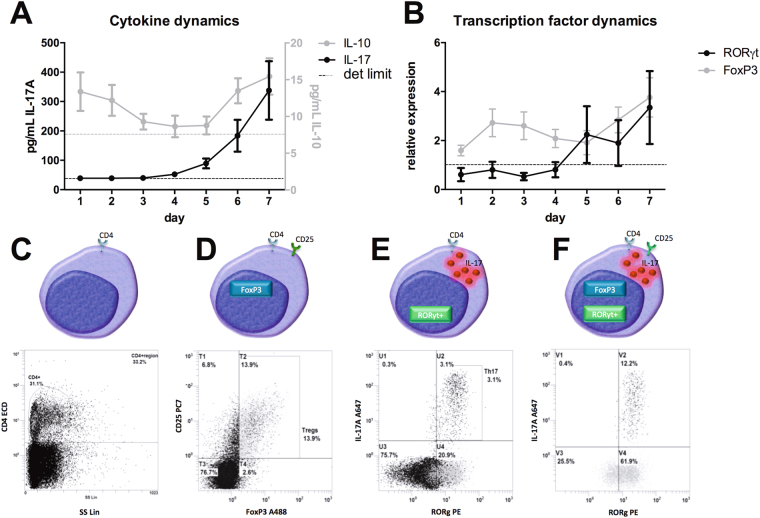
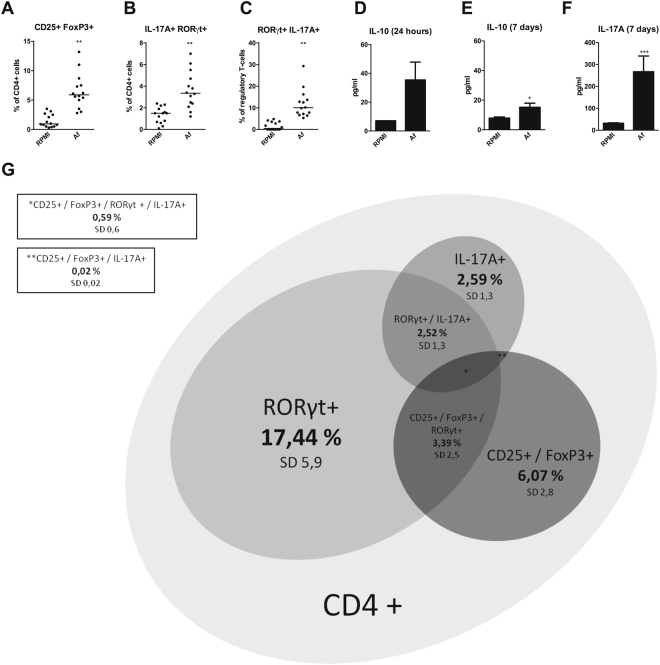
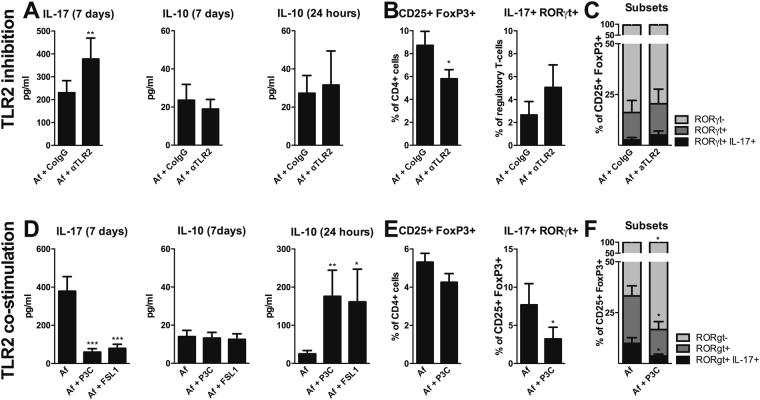
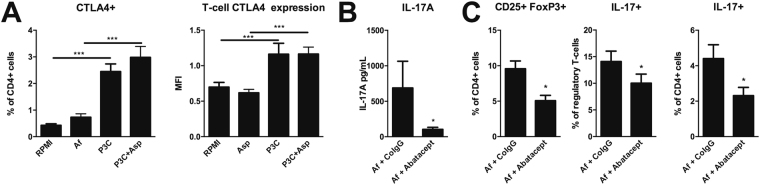
Patients with cystic fibrosis, chronic obstructive pulmonary disease, severe asthma, pre-existing pulmonary lesions, and severely immunocompromised patients are susceptible to develop infections with the opportunistic pathogenic fungus Aspergillus fumigatus, called aspergillosis. Infections in these patients are associated with persistent pro-inflammatory T-helper (T H)2 and T H 17 responses. Regulatory T-cells, natural suppressor cells of the immune system, control pro-inflammatory T-cell responses, but can also contribute to disease by shifting to a pro-inflammatory T H 17-like phenotype. Such a shift could play an important role in the detrimental immunopathology that is seen in aspergillosis. Our study demonstrates that Aspergillus fumigatus induces regulatory T-cells with a T H 17-like phenotype. We also demonstrate that these regulatory T-cells with a pro-inflammatory T H 17-like phenotype can be reprogrammed to their “classical” anti-inflammatory phenotype by activating Toll-like receptor 2 (TLR2), which regulates the induction of cytotoxic T-lymphocyte-associated protein 4 (CTLA4). Similarly, soluble CTLA4 could reverse the pro-inflammatory phenotype of Aspergillus-induced regulatory T-cells. In conclusion, our results suggest a role for regulatory T-cells with a pro-inflammatory T H 17-like phenotype in Aspergillus-associated immunopathology, and identifies key players, i.e. TLR2 and CTLA4, involved in this mechanism.
Overview
The claims and statistics of this paper haven’t been checked yet.
Free: it reads the open-access text and checks the first 5 claims that cite a source we can check. Create a free account to check every claim.
Integrity signals
Registry
Cites
Statistics
Figures
Verification
Claims the paper makes
The claims and statistics of this paper haven’t been checked yet.
Free: it reads the open-access text and checks the first 5 claims that cite a source we can check. Create a free account to check every claim.
Claims other papers make about this one
Each is checked against this paper’s own text: does it say what the citing paper says it does?
The source backs part of the claim, not all of it — or backs it for a different population, condition or comparison.
In the citing paper
“Importantly, Aspergillus-specific Tregs with proinflammatory properties can be induced in human cells (318, 319).”
From Aspergillus fumigatus and Aspergillosis in 2019 (2019) · cites this paper as [319]
Experimental — accuracy not yet measured
Self-check
Percentages, sums and reported differences re-computed from the paper’s own numbers.
The self-check needs the paper’s full text.
Citations
Cites
Regulatory T Cells and Immune Tolerance
Sakaguchi, S., Yamaguchi, T., Nomura, T., & Ono, M. (2008) · Cell · doi:10.1016/j.cell.2008.05.009 · Cited by 5,325
FOXP3+ regulatory T cells in the human immune system
Sakaguchi, S., Miyara, M., Costantino, C. M., & Hafler, D. A. (2010) · Nature Reviews Immunology · doi:10.1038/nri2785 · Cited by 2,439
Abatacept for Rheumatoid Arthritis Refractory to Tumor Necrosis Factor α Inhibition
Genovese, M. C., Becker, J.-C., Schiff, M., Luggen, M., Sherrer, Y., Kremer, J., Birbara, C., Box, J., Natarajan, K., Nuamah, I., et al. (2005) · New England Journal of Medicine · doi:10.1056/nejmoa050524 · Cited by 1,241
Pathogenic conversion of Foxp3+ T cells into TH17 cells in autoimmune arthritis
Komatsu, N., Okamoto, K., Sawa, S., Nakashima, T., Oh-hora, M., Kodama, T., Tanaka, S., Bluestone, J. A., & Takayanagi, H. (2014) · Nature Medicine · doi:10.1038/nm.3432 · Cited by 1,153
Pathogenesis of Aspergillus fumigatus in Invasive Aspergillosis
Dagenais, T. R. T., & Keller, N. P. (2009) · Clinical Microbiology Reviews · doi:10.1128/cmr.00055-08 · Cited by 993
Toll-like receptor 2 controls expansion and function of regulatory T cells
Sutmuller, R. P. M. (2006) · Journal of Clinical Investigation · doi:10.1172/jci25439 · Cited by 756
Self-citationHuman CD25highFoxp3pos regulatory T cells differentiate into IL-17–producing cells
Koenen, H. J. P. M., Smeets, R. L., Vink, P. M., van Rijssen, E., Boots, A. M. H., & Joosten, I. (2008) · Blood · doi:10.1182/blood-2008-01-133967 · Cited by 736
Netea, M. G., Sutmuller, R., Hermann, C., Van der Graaf, C. A. A., Van der Meer, J. W. M., van Krieken, J. H., Hartung, T., Adema, G., & Kullberg, B. J. (2004) · The Journal of Immunology · doi:10.4049/jimmunol.172.6.3712 · Cited by 609
IL‐23 and the Th17 pathway promote inflammation and impair antifungal immune resistance
Zelante, T., De Luca, A., Bonifazi, P., Montagnoli, C., Bozza, S., Moretti, S., Belladonna, M. L., Vacca, C., Conte, C., Mosci, P., et al. (2007) · European Journal of Immunology · doi:10.1002/eji.200737409 · Cited by 555
Dillon, S. (2006) · Journal of Clinical Investigation · doi:10.1172/jci27203 · Cited by 551
Cited by
Aspergillus fumigatus and Aspergillosis in 2019
Latgé, J.-P., & Chamilos, G. (2019) · Clinical Microbiology Reviews · doi:10.1128/cmr.00140-18 · Cited by 1,400
Wurster, S., Watowich, S. S., & Kontoyiannis, D. P. (2022) · Frontiers in Immunology · doi:10.3389/fimmu.2022.1018202 · Cited by 81
The Multifaceted Role of T-Helper Responses in Host Defense against Aspergillus fumigatus
Dewi, I., Van de Veerdonk, F., & Gresnigt, M. (2017) · Journal of Fungi · doi:10.3390/jof3040055 · Cited by 69
“fumigatus also induces regulatory T-cells with a Th17-like phenotype [120], however, it remains to be determined to what extent these cells contribute to the detrimental immunopathology seen during aspergillosis.”
BackgroundSelf-citationThe myriad challenges of respiratory fungal infection in cystic fibrosis
Tracy, M. C., & Moss, R. B. (2018) · Pediatric Pulmonology · doi:10.1002/ppul.24126 · Cited by 62
Galdino, N. A. D. L., Loures, F. V., de Araújo, E. F., da Costa, T. A., Preite, N. W., & Calich, V. L. G. (2018) · Scientific Reports · doi:10.1038/s41598-018-35037-8 · Cited by 51
Metadata
- Authors
- Raijmakers, R. P. H., Sprenkeler, E. G. G., Aleva, F. E., Jacobs, C. W. M., Kanneganti, T.-D., Joosten, L. A. B., van de Veerdonk, F. L., & Gresnigt, M. S.
- Affiliations
- Radboud University Nijmegen (NL)
- St. Jude Children's Research Hospital (US)
- Corresponding author
- Gresnigt, Mark S.
- ORCID
- Venue
- Scientific Reports
- Published
- 2017-09-13
- Volume
- 7
- Issue
- 1
- Pages
- 11500-11500
- ISSN
- 2045-2322 (ISSN-L)
- PMC
- PMC5597613
- OpenAlex
- W2754074287
- Cited by
- 16
- References
- 43
- Citations by year
- 2026: 1 · 2024: 1 · 2022: 3 · 2021: 4 · 2020: 1 · 2019: 2 · 2018: 3 · 2017: 1
- FWCI
- 0.86
- Type
- journal article
- Language
- en
- Open access
- gold
- doi.org
- Licence
- cc-by
- creativecommons.org/licenses/by/4.0 (tdm)
- creativecommons.org/licenses/by/4.0 (vor)
- Locations
- Scientific Reports (publishedVersion, cc-by)
- PubMed Central (publishedVersion, cc-by)
- PubMed (publishedVersion)
- Radboud Repository (Radboud University) (submittedVersion, other-oa)
- Radboud Repository (Radboud University) (submittedVersion)
- Funders
- E-Rare
- Topics
- Life Sciences › Immunology and Microbiology › Immunology › T-cell and B-cell Immunology
- Health Sciences › Medicine › Pulmonary and Respiratory Medicine › Asthma and respiratory diseases
- Health Sciences › Medicine › Infectious Diseases › Antifungal resistance and susceptibility
- Keywords
- Aspergillus fumigatus, aspergillosis, regulatory T cells, TLR2, CTLA-4, T cell reprogramming, pro-inflammatory response
- MeSH terms
- Animals, Aspergillosis, Aspergillus, Aspergillus fumigatus, Humans, Ligands, Phenotype, Case-Control Studies, Immunophenotyping, Cytokines, Mice, Knockout, Inflammation Mediators, T-Lymphocytes, Regulatory, Receptors, Pattern Recognition, Toll-Like Receptor 2, Mice, Th17 Cells, CTLA-4 Antigen
About these checks
Registry, retraction, Cites and statistics results are computed, not judged, with one exception: a printed reference that no index lists is read once by a model before it counts as a citation error. Claims are extracted by a model and kept only when their quote appears verbatim in the text; each cited source is then checked, with a model’s help, for whether it says what the claim relies on. Those verdicts can be wrong — read the claim’s quote and the cited source before relying on one.
Statistics and arithmetic are recomputed, not judged.
Confidence bands are shown only for fields calibrated on our annotated test set. None is calibrated yet, so no band is shown.
What counts as a claim ›How we measure confidence ›How we check this ›
Are you an author, or do you see a problem with this page? Request a review
How to cite
Cite CoChat for the checks on this page, and the paper for its own findings.
- This page
- CoChat. (2026). Citation check: Toll-like receptor 2 induced cytotoxic T-lymphocyte-associated protein 4 regulates Aspergillus-induced regulatory T-cells with pro-inflammatory characteristics. https://app.cochat.ai/papers/10.1038/s41598-017-11738-4
- The paper
- Raijmakers, R. P. H., Sprenkeler, E. G. G., Aleva, F. E., Jacobs, C. W. M., Kanneganti, T.-D., Joosten, L. A. B., van de Veerdonk, F. L., & Gresnigt, M. S. (2017). Toll-like receptor 2 induced cytotoxic T-lymphocyte-associated protein 4 regulates Aspergillus-induced regulatory T-cells with pro-inflammatory characteristics. Scientific Reports. https://doi.org/10.1038/s41598-017-11738-4
Data sources
Bibliographic data: Semantic Scholar, OpenAlex, Crossref.
Contains information from the Semantic Scholar Academic Graph Datasets, made available under the ODC Attribution License (ODC-BY 1.0).
Semantic Scholar’s data is described in: Kinney, R., et al. (2023). The Semantic Scholar Open Data Platform. arXiv:2301.10140.
