

Surface reactivity of amphibole asbestos: a comparison between crocidolite and tremolite
Open accessThe DOI matches its Crossref record; 37 of the 37 references it cites were found in a registry or an index; 11 of the 55 sources its claims cite were checked for support.
Abstract
Among asbestos minerals, fibrous riebeckite (crocidolite) and tremolite share the amphibole structure but largely differ in terms of their iron content and oxidation state. In asbestos toxicology, iron-generated free radicals are largely held as one of the causes of asbestos malignant effect. With the aim of clarifying i) the relationship between Fe occurrence and asbestos surface reactivity, and ii) how free-radical generation is modulated by surface modifications of the minerals, UICC crocidolite and fibrous tremolite from Maryland were leached from 1 day to 1 month in an oxidative medium buffered at pH 7.4 to induce redox alterations and surface rearrangements that may occur in body fluids. Structural and chemical modifications and free radical generation were monitored by HR-TEM/EDS and spin trapping/EPR spectroscopy, respectively. Free radical yield resulted to be dependent on few specific Fe 2+ and Fe 3+ surface sites rather than total Fe content. The evolution of reactivity with time highlighted that low-coordinated Fe ions primarily contribute to the overall reactivity of the fibre. Current findings contribute to explain the causes of the severe asbestos-induced oxidative stress at molecular level also for iron-poor amphiboles, and demonstrate that asbestos have a sustained surface radical activity even when highly altered by oxidative leaching.
Overview
CoChat Summary
TL;DR
In UICC crocidolite and Maryland tremolite, free-radical surface reactivity was governed by specific low-coordinated Fe2+/Fe3+ surface sites rather than total or surface Fe content. Both amphiboles sustained radical activity after oxidative leaching up to one month, with tremolite slightly more reactive than crocidolite in HO• and COO−• generation.
Key findings
- Free-radical yield depended on specific Fe2+ and Fe3+ surface sites, not total Fe content: tremolite was slightly more reactive than crocidolite in both HO• and COO−• production, despite crocidolite containing almost ten times Fe ions per formula unit and up to four times more surface Fe by XPS.
- Pristine crocidolite and tremolite both generated HO•; COO−• generation was observed only in the presence of ascorbic acid.
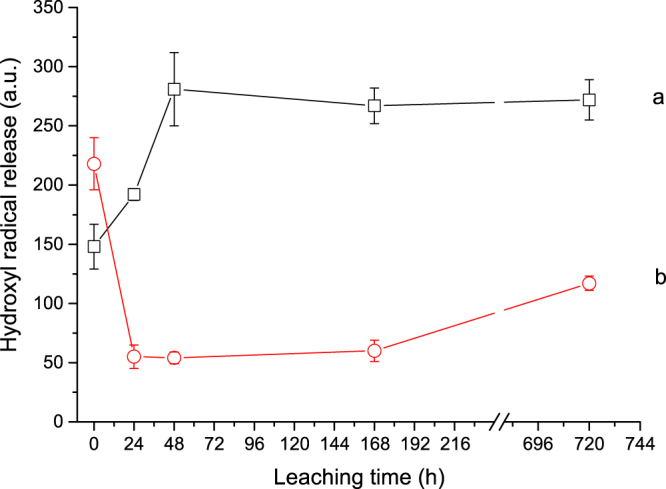
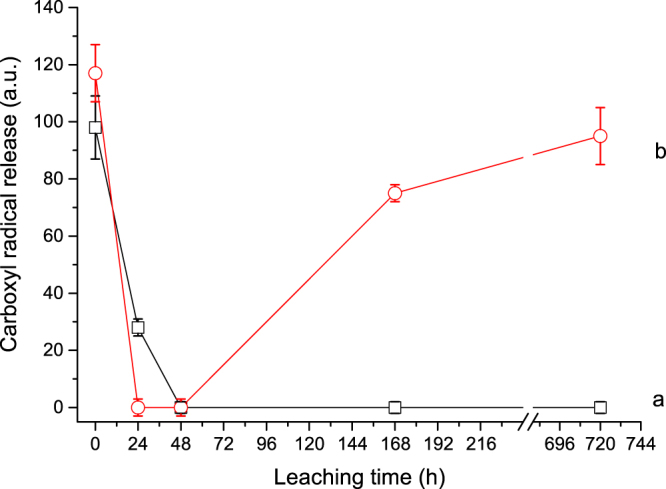
- Upon leaching, crocidolite HO• production suddenly increased from 0–48 h and then showed no further increase up to 1 month, while COO−• was measurable only for pristine and 24 h-leached fibres and negligible from 48 h onward.
- Tremolite showed an abrupt HO• decrease in the first 24 h followed by slow recovery up to 1 month; COO−• was maximal in pristine tremolite, dropped to zero after 24 h, then increased after 48 h and was sustained to the longest leaching time.
Methods
- Samples were UICC crocidolite standard and fibrous tremolite from Montgomery County, Maryland. Fibres were incubated as 25 mg in 2 ml of 0.1 M H2O2 buffered with 0.5 M potassium phosphate at pH 7.4, shaken at 37 °C, for 24, 48, 168, and 720 h.
- Structural and chemical alterations were monitored by HR-TEM/EDS. Free radical generation was measured by spin trapping/EPR with DMPO: HO• from H2O2 and COO−• from formate anion, the latter with ascorbic acid as reducing agent; EPR spectra were double-integrated over 1 h incubation.
Limitations
- The paper states that the leaching conditions are “far from mimicking the cellular environment” and were chosen to promote dissolution dynamics within a reasonable experimental time.
- Evident from the text: radical generation was measured in cell-free EPR assays, not in cells or in vivo, and the study examined only two amphibole asbestos samples, so generalizability to other amphiboles is limited.
Model-written summary. Check it against the paper before relying on it.
Integrity signals
Registry
Cites
Statistics
Figures
Verification
Claims the paper makes
7 Valid · 0 Not valid · 26 Not checked · 33 Own results and interpretations
A result the paper states — it cites no source for it, so there is none to check. The quote shows it is in the paper.
In the paper
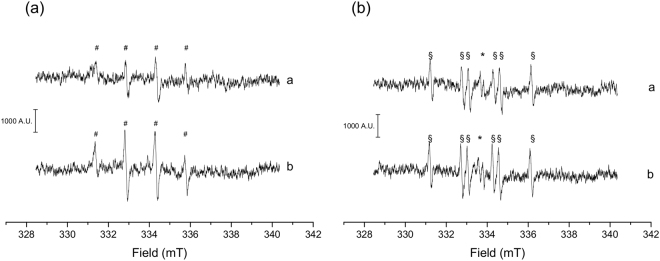
“COO−• radicals were not released when tests were performed in a non-reducing medium.”
§ Surface reactivity of amphibole asbestos: a comparison between crocidolite and tremolite > Results > Alteration of the free radical generation activity upon leaching
plain- Asserted: passes — The authors put it forward as true.
- Checkable: passes — It can be checked against evidence.
- Load-bearing: unclear — It is unclear whether the paper’s conclusions depend on it.
- Based: passes — The paper gives a reason why it holds.
In the paper
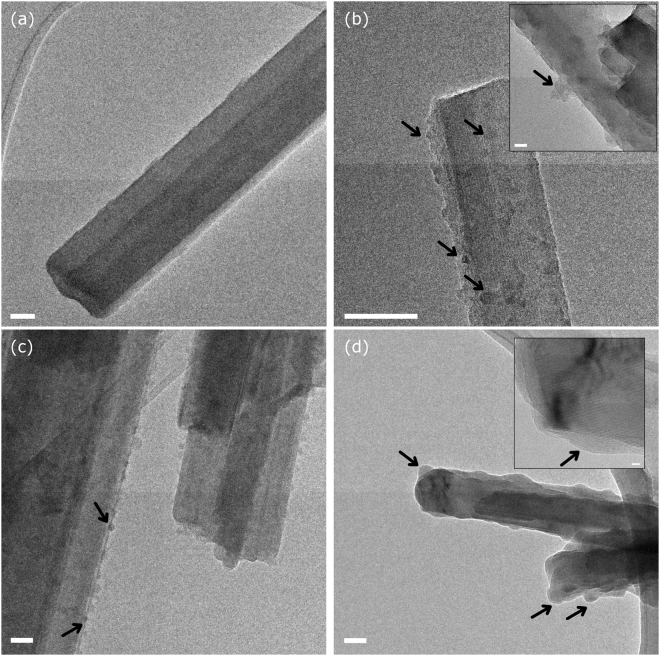
“Upon leaching, the iron-rich surface of UICC crocidolite underwent quick alteration, as indicated by TEM analysis and fully discussed in a previous study on dissolution kinetics17.”
§ Surface reactivity of amphibole asbestos: a comparison between crocidolite and tremolite > Discussion
What the sources say
- Not checked — no full text of the sourcecites [17] Pacella A Dissolution reaction and surface iron speciation of UICC crocidolite in buffered solution at pH 7.4: A combined ICP-OES, XPS and TEM investigation Geochim. Cosmochim. Acta 2014 127 221 232 10.1016/j.gca.2013.11.035 source
plainstates a cause- Asserted: passes — The authors put it forward as true.
- Checkable: passes — It can be checked against evidence.
- Load-bearing: passes — The paper’s conclusions depend on it.
- Based: passes — The paper gives a reason why it holds.
A result the paper reports from its own data — it cites no other source for it, so there is none to check. The quote shows it is in the paper.
In the paper
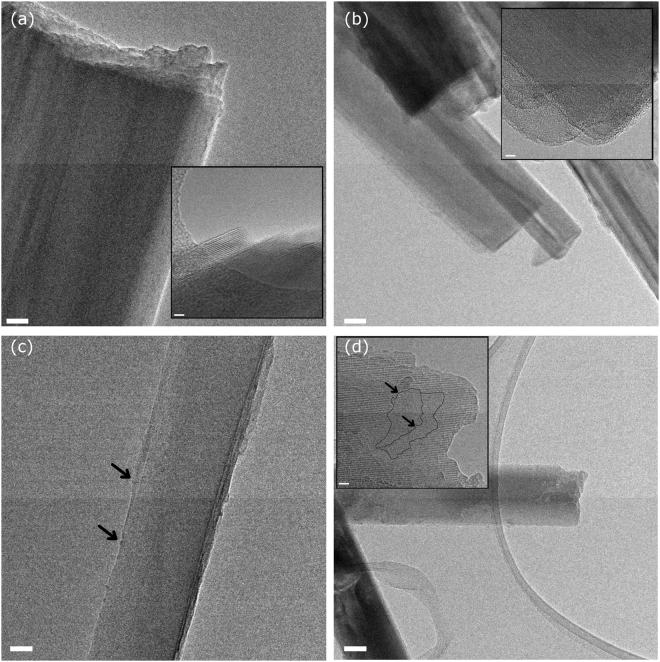
“This may explain why tremolite surface underwent minor chemical and structural modification with respect to crocidolite, as evidenced by TEM images (Fig. 2 vs. Fig. 1).”
§ Surface reactivity of amphibole asbestos: a comparison between crocidolite and tremolite > Discussion
hedged- Asserted: passes — The authors put it forward as true.
- Checkable: passes — It can be checked against evidence.
- Load-bearing: passes — The paper’s conclusions depend on it.
- Based: passes — The paper gives a reason why it holds.
A result the paper reports from its own data — it cites no other source for it, so there is none to check. The quote shows it is in the paper.
In the paper
“However, crocidolite proved to be slightly less reactive than tremolite in HO• release (Fig. 3a, spectra a and b, respectively).”
§ Surface reactivity of amphibole asbestos: a comparison between crocidolite and tremolite > Results > Free radical generation activity of the pristine fibres
plain- Asserted: passes — The authors put it forward as true.
- Checkable: passes — It can be checked against evidence.
- Load-bearing: unclear — It is unclear whether the paper’s conclusions depend on it.
- Based: passes — The paper gives a reason why it holds.
A result the paper reports from its own data — it cites no other source for it, so there is none to check. The quote shows it is in the paper.
In the paper
“For longer leaching time points, TEM analysis evidenced the presence of Fe-oxide and phosphate nanoparticles precipitated on the altered surface (Fig. 1).”
§ Surface reactivity of amphibole asbestos: a comparison between crocidolite and tremolite > Discussion
plainstates an association- Asserted: passes — The authors put it forward as true.
- Checkable: passes — It can be checked against evidence.
- Load-bearing: passes — The paper’s conclusions depend on it.
- Based: passes — The paper gives a reason why it holds.
30 more claims
Create a free account to see all 66 claims and every source verdict.
- It may state two separate claims as one. 27
- Probably not a substantial claim. 7
Citations
Cites
International Agency for Research on Cancer (IARC)
(2018) · The Grants Register 2018 · doi:10.1007/978-1-349-94186-5_629 · Cited by 2,801
REVIEWS in MINERALOGY and GEOchEMIStRY
Hazen, R. M., & Jones, A. (2013) · Cited by 1,185
Arsenic, metals, fibres, and dusts.
(2012) · PubMed · Cited by 1,052
Iron-catalyzed hydroxyl radical formation. Stringent requirement for free iron coordination site.
Graf, E., Mahoney, J. R., Bryant, R. G., & Eaton, J. W. (1984) · Journal of Biological Chemistry · doi:10.1016/s0021-9258(17)43139-5 · Cited by 855
Walling, C., & Goosen, A. (1973) · Journal of the American Chemical Society · doi:10.1021/ja00790a042 · Cited by 410
Diseases caused by silica: mechanisms of injury and disease development
Ding, M., Chen, F., Shi, X., Yucesoy, B., Mossman, B., & Vallyathan, V. (2002) · International Immunopharmacology · doi:10.1016/s1567-5769(01)00170-9 · Cited by 350
Ophiolite concept and the evolution of geological thought
Dilek, Y., & Newcomb, S. (2003) · Geological Society of America eBooks · doi:10.1130/spe373 · Cited by 297
Multiple roles of oxidants in the pathogenesis of asbestos-induced diseases
Shukla, A., Gulumian, M., Hei, T. K., Kamp, D., Rahman, Q., & Mossman, B. T. (2003) · Free Radical Biology and Medicine · doi:10.1016/s0891-5849(03)00060-1 · Cited by 288
Dissolution of hydrous iron(III) oxides by reductive mechanisms
Suter, D., Banwart, S., & Stumm, W. (1991) · Langmuir · doi:10.1021/la00052a033 · Cited by 251
Asbestos-induced lung diseases: an update
Kamp, D. W. (2009) · Translational Research · doi:10.1016/j.trsl.2009.01.004 · Cited by 251
Research works printed but not linked: 1
- Committee on asbestos: selected health effects - Institute of Medicine (US). Asbestos:Selected Cancers. (National Academies Press 2006). 20669440
Cited by
Transforming growth factor-β receptors: versatile mechanisms of ligand activation
Chia, Z.-J., Cao, Y., Little, P. J., & Kamato, D. (2024) · Acta Pharmacologica Sinica · doi:10.1038/s41401-024-01235-6 · Cited by 107
“In the presence of ascorbic acid, there is an increase in the release of active TGF-β in A549 lung cancer cells [91, 92].”
BackgroundBloise, A., Ricchiuti, C., Punturo, R., & Pereira, D. (2020) · Chemical Geology · doi:10.1016/j.chemgeo.2020.119896 · Cited by 46
Gualtieri, A. F., Andreozzi, G. B., Tomatis, M., & Turci, F. (2019) · Free Radical Biology and Medicine · doi:10.1016/j.freeradbiomed.2018.07.023 · Cited by 45
Self-citationStructure Model and Toxicity of the Product of Biodissolution of Chrysotile Asbestos in the Lungs
Gualtieri, A. F., Lusvardi, G., Pedone, A., Giuseppe, D. D., Zoboli, A., Mucci, A., Zambon, A., Filaferro, M., Vitale, G., Benassi, M., et al. (2019) · Chemical Research in Toxicology · doi:10.1021/acs.chemrestox.9b00220 · Cited by 26
Thermal inertization of amphibole asbestos modulates Fe topochemistry and surface reactivity
Pacella, A., Tomatis, M., Viti, C., Bloise, A., Arrizza, L., Ballirano, P., & Turci, F. (2020) · Journal of Hazardous Materials · doi:10.1016/j.jhazmat.2020.123119 · Cited by 22
Self-citationKhaliullin, T. O., Kisin, E. R., Guppi, S., Yanamala, N. V. K., Zhernovkov, V., & Shvedova, A. A. (2020) · Toxicology and Applied Pharmacology · doi:10.1016/j.taap.2020.115302 · Cited by 19
Cox, L. A., Bogen, K. T., Conolly, R. B., Graham, U. M., Moolgavkar, S. H., Oberdörster, G., Roggli, V. L., Turci, F., & Mossman, B. T. (2023) · Environmental Research · doi:10.1016/j.envres.2023.115607 · Cited by 18
Self-citationBloise, A. (2023) · Journal of Materials Science · doi:10.1007/s10853-023-08595-0 · Cited by 18
Giordani, M., Mattioli, M., Cangiotti, M., Fattori, A., Ottaviani, M. F., Betti, M., Ballirano, P., Pacella, A., Giuseppe, D. D., Scognamiglio, V., et al. (2021) · Chemosphere · doi:10.1016/j.chemosphere.2021.133067 · Cited by 21
Self-citationSurface and bulk modifications of amphibole asbestos in mimicked gamble's solution at acidic PH
Pacella, A., Ballirano, P., Fantauzzi, M., Rossi, A. M., Nardi, E., Capitani, G., Arrizza, L., & Montereali, M. R. (2021) · Scientific Reports · doi:10.1038/s41598-021-93758-9 · Cited by 21
Self-citationWalter, M., Schenkeveld, W. D. C., Reissner, M., Gille, L., & Kraemer, S. M. (2019) · Chemistry – A European Journal · doi:10.1002/chem.201804319 · Cited by 14
Nanoscale transformations of amphiboles within human alveolar epithelial cells
Vigliaturo, R., Jamnik, M., Dražić, G., Podobnik, M., Žnidarič, M. T., Ventura, G. D., Redhammer, G. J., Žnidaršič, N., Caserman, S., & Gieré, R. (2022) · Scientific Reports · doi:10.1038/s41598-022-05802-x · Cited by 14
Voloaca, O. M., Greenhalgh, C. J., Cole, L. M., Clench, M. R., Managh, A. J., & Haywood‐Small, S. (2020) · Rapid Communications in Mass Spectrometry · doi:10.1002/rcm.8906 · Cited by 14
Cytotoxicity of fibrous antigorite from New Caledonia
Gazzano, E., Petriglieri, J. R., Aldieri, E., Fubini, B., Laporte‐Magoni, C., Pavan, C., Tomatis, M., & Turci, F. (2022) · Environmental Research · doi:10.1016/j.envres.2022.115046 · Cited by 16
Self-citationPetriglieri, J. R., Barale, L., Viti, C., Ballirano, P., Belluso, E., Bruno, M. R., Campopiano, A., Cannizzaro, A., Fantauzzi, M., Gianchiglia, F., et al. (2023) · Journal of Hazardous Materials · doi:10.1016/j.jhazmat.2023.131754 · Cited by 13
Self-citationŁuniewski, S., Rogowska, W., Łozowicka, B., & Iwaniuk, P. (2024) · Materials · doi:10.3390/ma17071644 · Cited by 11
“Fe can catalyze the Haber–Weiss (Fenton) reaction, generating OH hydroxyl radicals [100,104–108].”
BackgroundBloise, A., Fuoco, I., Vespasiano, G., Parisi, F., Russa, M. F. L., Piersante, C., Perri, G., Filicetti, S., Pacella, A., Rosa, R. D., et al. (2024) · The Science of The Total Environment · doi:10.1016/j.scitotenv.2024.177116 · Cited by 8
Self-citationCapitani, G., Miyajima, N., Sulpizio, R., D'addabbo, M. G., Galimberti, L., Guidi, M., & Andreozzi, G. B. (2018) · Environmental Earth Sciences · doi:10.1007/s12665-018-7692-z · Cited by 8
Self-citationBoyles, M. S. P., Poland, C. A., Raftis, J. B., & Duffin, R. (2019) · Inhalation Toxicology · doi:10.1080/08958378.2019.1683103 · Cited by 8
“Such an evolution over time has been reported previously in relation to amphiboles (Andreozzi et al. 2017).”
BackgroundSurface and Bulk Modifications of Fibrous Erionite in Mimicked Gamble’s Solution at Acidic pH
Pacella, A., Ballirano, P., Fantauzzi, M., Rossi, A. M., Viti, C., Arrizza, L., Nardi, E., Caprioli, R., & Montereali, M. R. (2021) · Minerals · doi:10.3390/min11090914 · Cited by 10
Self-citationBardelli, F., Brun, F., De Panfilis, S., Cloetens, P., Capella, S., Belluso, E., Bellis, D., Di Napoli, A., & Cedola, A. (2021) · Toxicology Letters · doi:10.1016/j.toxlet.2021.05.002 · Cited by 6
Pacella, A., Ballirano, P., Carlo, M. C. D., Fantauzzi, M., Rossi, A. M., Nardi, E., Viti, C., Arrizza, L., Campopiano, A., Cannizzaro, A., et al. (2023) · Nanomaterials · doi:10.3390/nano13222933 · Cited by 8
“More-over, it was established that due to leaching under physiological conditions, the surface modifications of the fibres may change the radical yield of amphibole asbestos depending on fibre crystal chemistry, surface area, and leaching solution [22,23].”
BackgroundSelf-citationGualtieri, A. F., Cocchi, M., Muniz‐Miranda, F., Pedone, A., Castellini, E., & Strani, L. (2024) · Journal of Hazardous Materials · doi:10.1016/j.jhazmat.2024.134004 · Cited by 6
“…that LMCT bands for the isolated [FeO 4 ] tetrahedral group were observed in the 215 – 240 nm range, and bands between 270 – 290 nm were detected for isolated octahedral [FeO 6 ] group, while due to octahedral Fe 3 + in cluster-like Fe x O y species, LMCT bands were found between 300 and 400 nm.”
Ballirano, P., & Pacella, A. (2020) · Mineralogical Magazine · doi:10.1180/mgm.2020.89 · Cited by 8
“In the present work we focus on the in situ analysis of the structure modifications occurring in tremolite fibres upon heating using the same well-characterised sample from Maryland, USA analysed by Pacella et al. (2010) and Pacella et al. (2020). This sample, owing to its relatively high iron content (∼5 wt.”
BackgroundMethodResultInfluentialSelf-citationPetriglieri, J. R., Capitani, G., Ballirano, P., Barale, L., Piana, F., Tomatis, M., Carlo, M. C. D., Gianchiglia, F., Campopiano, A., Olori, A., et al. (2025) · The Science of The Total Environment · doi:10.1016/j.scitotenv.2025.178970 · Cited by 9
Self-citationHigh-pressure synchrotron X-ray diffraction study of tremolite and actinolite in various fluids
Kong, M., Vogt, T., & Lee, Y. (2018) · Current Applied Physics · doi:10.1016/j.cap.2018.05.018 · Cited by 4
“traces in vermiculite products such as stucco, plasterboard, fireproofing materials, and other common construction products) since they do not dissolve in water and more resistant to acid attack and alkalis, have no odor and do not migrate through soil [6,7].”
BackgroundLaurita, S., & Rizzo, G. (2019) · Fibers · doi:10.3390/fib7090079 · Cited by 6
“EDS chemical analysis (Figure 3) showed the presence of a substantial amount of Fe; in fact, crocidolite is among amphibole asbestos, one of the richest in iron [38].”
BackgroundFernandez, G., Giaccio, B., Monaco, L., Tomatis, M., Pacella, A., Palladino, D. M., Sulpizio, R., Turci, F., Zanchetta, G., Ballirano, P., et al. (2023) · Journal of Volcanology and Geothermal Research · doi:10.1016/j.jvolgeores.2023.107826 · Cited by 3
Self-citationPacella, A., Ballirano, P., Carlo, M. C. D., Altieri, A., Paccapelo, M., Skogby, H., Campopiano, A., Bruno, M. R., Croce, A., Piersante, C., et al. (2024) · Environmental Geochemistry and Health · doi:10.1007/s10653-024-02196-9 · Cited by 4
Self-citationPape, P. L., Morin, G., Baptiste, B., Allard, T., Balan, E., Delbes, L., Carvallo, C., Vaccaro, C., Philippe, M., Ayrault, S., et al. (2025) · Applied Geochemistry · doi:10.1016/j.apgeochem.2025.106497 · Cited by 2
Ferruginous bodies exert a strong Proinflammatory effect
Borelli, V., Zangari, M., Bernareggi, A., Bardelli, F., Vita, F., & Zabucchi, G. (2023) · Journal of Toxicology and Environmental Health, Part A · doi:10.1080/15287394.2023.2181899 · Cited by 1
“…1980; McLemore et al. 1980), while other researchers proposed that these bodies are cytotoxic and may serve as a source of reactive oxygen species (ROS) production (Andreozzi et al. 2017; Borelli et al. 2007, 2012; Fubini and Mollo 1995; Governa and Amati 1999; Lund et al. 1994; Shen et al. 2000).”
BackgroundLeinardi, R., Petriglieri, J. R., Uwambayinema, F., Pochet, A., Yakoub, Y., Ibouraadaten, S., Tomatis, M., Lescoat, A., Turci, F., Lecureur, V., et al. (2025) · Journal of Hazardous Materials · doi:10.1016/j.jhazmat.2025.139648 · Cited by 2
“UICC crocidolite fibers have been widely used in in vivo toxicological studies [40], and their detailed physico-chemical characterization is reported in the literature [41,42].”
Self-citationKorchevskiy, A. A., & Wylie, A. G. (2025) · Toxicology Mechanisms and Methods · doi:10.1080/15376516.2025.2590731 · Cited by 2
“…zeta potential than the non-asbestiform variety, potentially affecting membra-nolytic activity and other toxic mechanisms (tantra et al. 2010). andreozzi et al. (2017) showed that iron plays a role in the surface reactivity of crocidolite and tremolite, which suggests that even iron-poor…”
Hashizume, H. (2022) · NIMS monographs · doi:10.1007/978-4-431-56924-4_1 · Cited by 1
Gualtieri, A. F., Cocchi, M., Muniz‐Miranda, F., et al. (2023) · SSRN Electronic Journal · doi:10.2139/ssrn.4669398 · Cited by 1
Bloise, A., Richiutti, C., Punturo, R., et al. (2024) · doi:10.31223/x5gt2s · Cited by 1
Castellini, E., & Gualtieri, A. F. (2026) · Chemical Research in Toxicology · doi:10.1021/acs.chemrestox.6c00003
Khaliullin, T. O. (2020) · The Research Repository @ WVU (West Virginia University) · doi:10.33915/etd.7820
Voloaca, O. M. (2022) · Sheffield Hallam University · doi:10.7190/shu-thesis-00479
A GIXAFS study of the Fe oxide precipitates on quartz surfaces
Benedetto, F. D., Montegrossi, G., d’Acapito, F., Innocenti, M., & Romanelli, M. (2026) · Applied Geochemistry · doi:10.1016/j.apgeochem.2026.106924
Bloise, A., Ballirano, P., Fuoco, I., Carlo, M. C. D., Apollaro, C., Vespasiano, G., Paccapelo, M., Arrizza, L., Dyar, M. D., Sklute, E. C., et al. (2026) · Environmental Geochemistry and Health · doi:10.1007/s10653-026-03314-5
Self-citationDissolution and surface chemical modifications of mineral fibres in artificial lysosomal fluid
Carlo, M. C. D., Ballirano, P., Arrizza, L., Montereali, M. R., Fantauzzi, M., Rossi, A. M., Capitani, G., Magnani, N., Campione, M., Yivlialin, R., et al. (2026) · Applied Geochemistry · doi:10.1016/j.apgeochem.2026.107048
Self-citation
Metadata
- Authors
- Andreozzi, G. B., Pacella, A., Corazzari, I., Tomatis, M., & Turci, F.
- Affiliations
- Sapienza University of Rome (IT)
- University of Turin (IT)
- Corresponding author
- Turci, Francesco
- Venue
- Scientific Reports
- Published
- 2017-10-31
- Volume
- 7
- Issue
- 1
- Pages
- 14696-14696
- ISSN
- 2045-2322 (ISSN-L)
- PMC
- PMC5665974
- OpenAlex
- W2766436150
- Semantic Scholar
- cd7cc79d25a2d8b7c09724221f15ae2fcbc8bae0
- Cited by
- 42
- References
- 36
- Citations by year
- 2026: 5 · 2025: 4 · 2024: 5 · 2023: 6 · 2022: 4 · 2021: 4 · 2020: 6 · 2019: 3 · 2018: 5
- FWCI
- 3.17
- Type
- journal article
- Language
- en
- Open access
- gold
- doi.org
- Licence
- cc-by
- creativecommons.org/licenses/by/4.0 (tdm)
- creativecommons.org/licenses/by/4.0 (vor)
- Locations
- Scientific Reports (publishedVersion, cc-by)
- PubMed Central (publishedVersion, cc-by)
- PubMed (publishedVersion)
- IRIS Research product catalog (Sapienza University of Rome) (submittedVersion, cc-by)
- Institutional Research Information System University of Turin (University of Turin) (submittedVersion, other-oa)
- DOAJ (DOAJ: Directory of Open Access Journals) (submittedVersion)
- Funders
- Institut National Du Cancer
- Topics
- Health Sciences › Medicine › Pulmonary and Respiratory Medicine › Occupational and environmental lung diseases
- Social Sciences › Health › Occupational Health and Global Justice
- Life Sciences › Pharmacology, Toxicology and Pharmaceutics › Toxicology › Bioactive Compounds and Antitumor Agents
- Keywords
- asbestos, crocidolite, tremolite, amphibole, surface reactivity, free radicals, oxidative leaching, iron oxidation state, iron coordination, spin trapping, asbestos toxicity, oxidative stress, mineral surface modification
About these checks
Registry, retraction, Cites and statistics results are computed, not judged, with one exception: a printed reference that no index lists is read once by a model before it counts as a citation error. Claims are extracted by a model and kept only when their quote appears verbatim in the text; each cited source is then checked, with a model’s help, for whether it says what the claim relies on. Those verdicts can be wrong — read the claim’s quote and the cited source before relying on one.
The claim verdicts this report counts are experimental: their accuracy is not yet measured.
A language model drew the claims from the paper on 2026-10-10, under version 3 of the claim definition (model deepseek-v4.1-flash, prompt extract-v3).
A second model labelled each claim on 2026-10-10 (model jev-1.13-20260917, definition revision gold-guideline-v0.2).
Statistics and arithmetic are recomputed, not judged.
Confidence bands are shown only for fields calibrated on our annotated test set. None is calibrated yet, so no band is shown.
What counts as a claim ›How we measure confidence ›How we check this ›
Are you an author, or do you see a problem with this page? Request a review
Data sources
Bibliographic data: Semantic Scholar, OpenAlex, Crossref.
Contains information from the Semantic Scholar Academic Graph Datasets, made available under the ODC Attribution License (ODC-BY 1.0).
Semantic Scholar’s data is described in: Kinney, R., et al. (2023). The Semantic Scholar Open Data Platform. arXiv:2301.10140.
