

Conditionally reprogrammed primary airway epithelial cells maintain morphology, lineage and disease specific functional characteristics
Open accessThe DOI matches its Crossref record; 62 of the 62 references it cites were found in a registry or an index.
Abstract
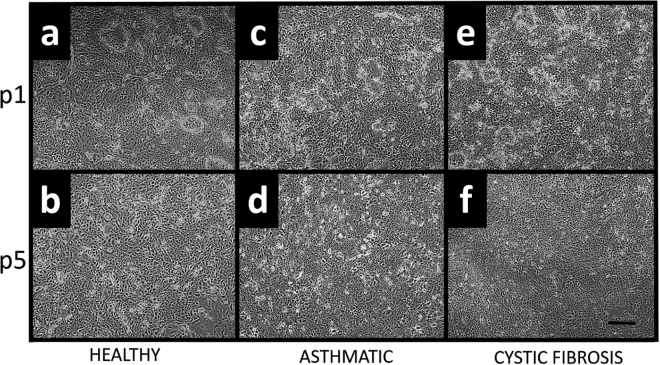
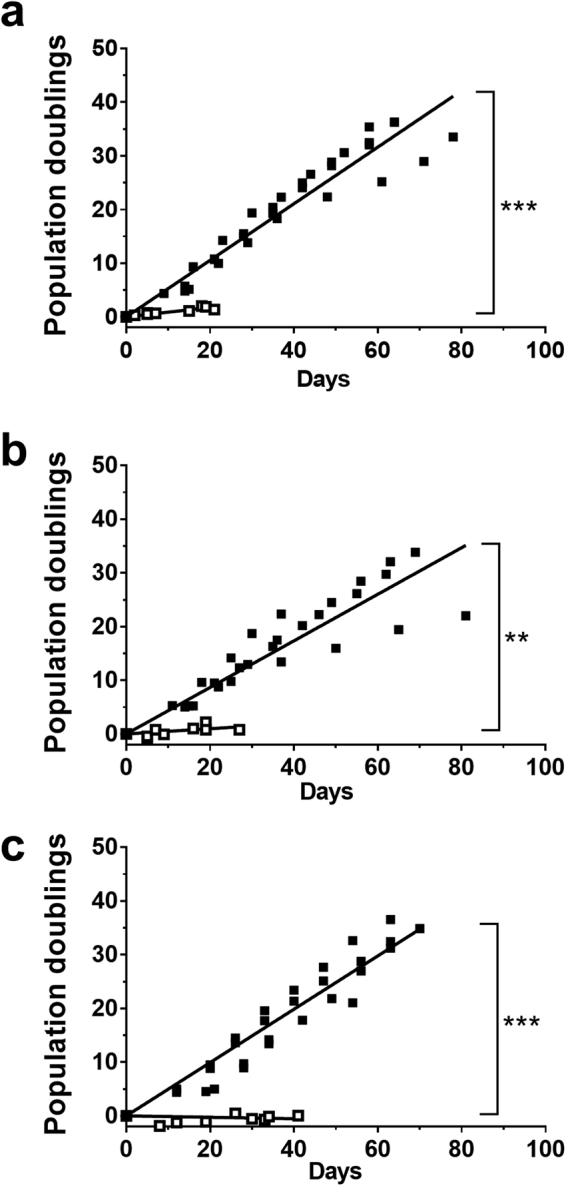
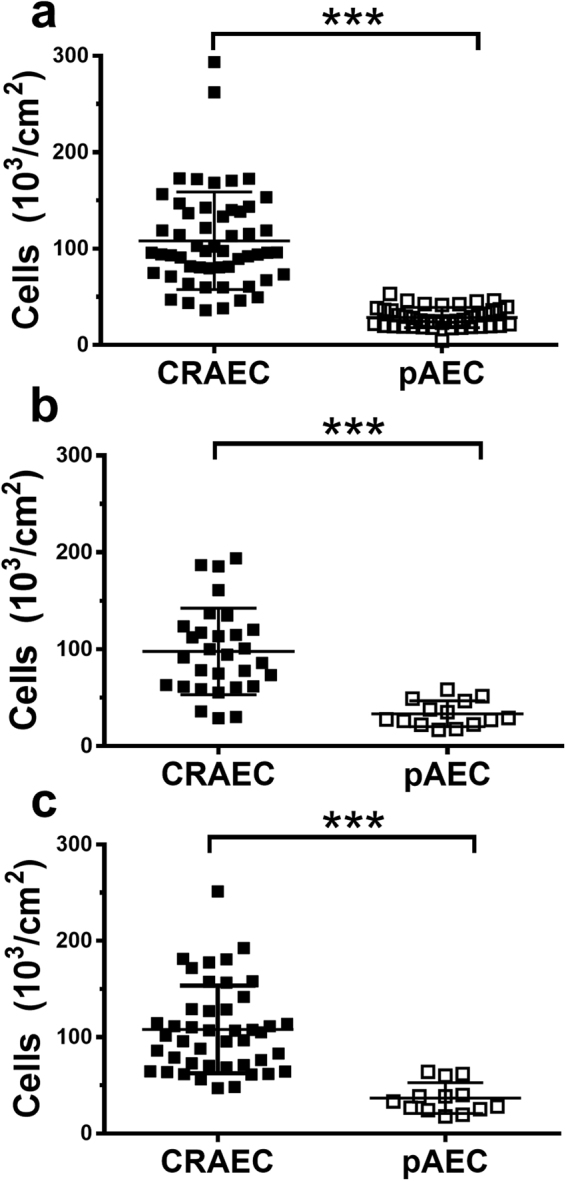
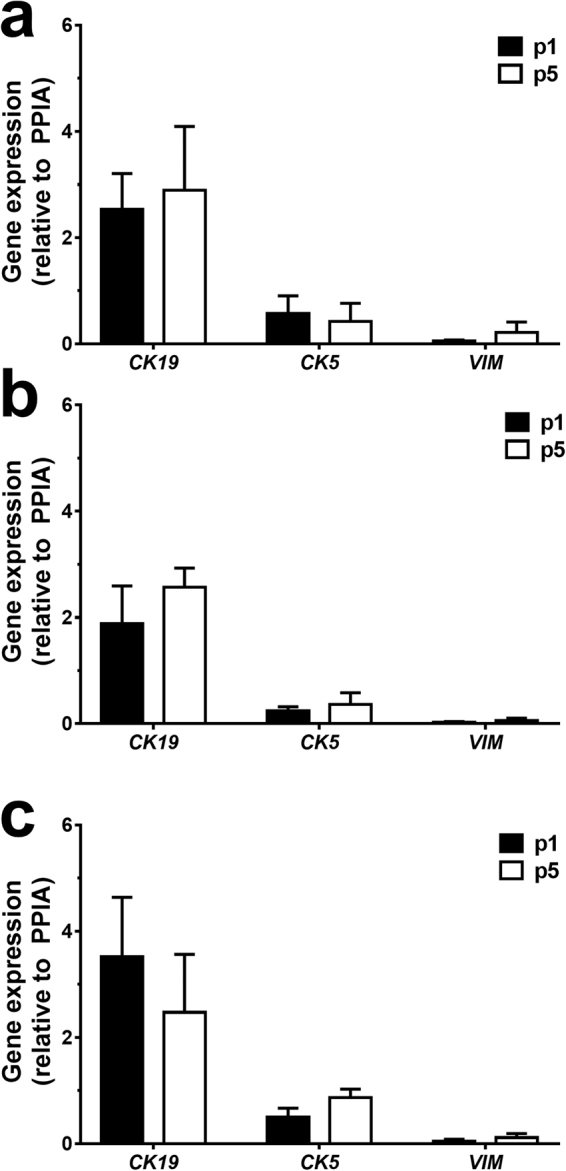
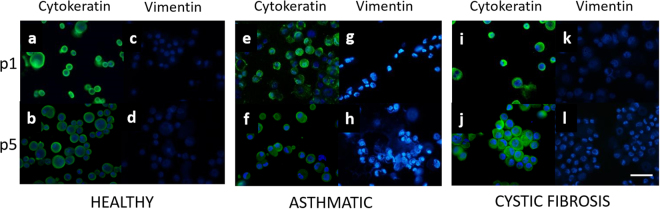
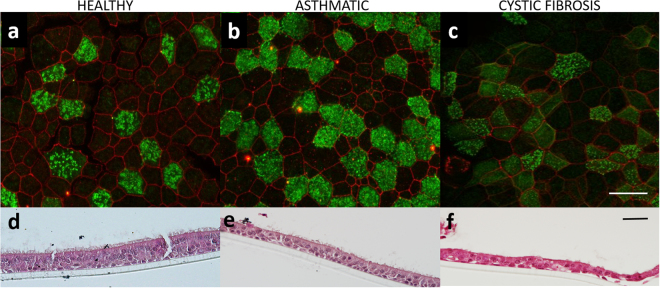
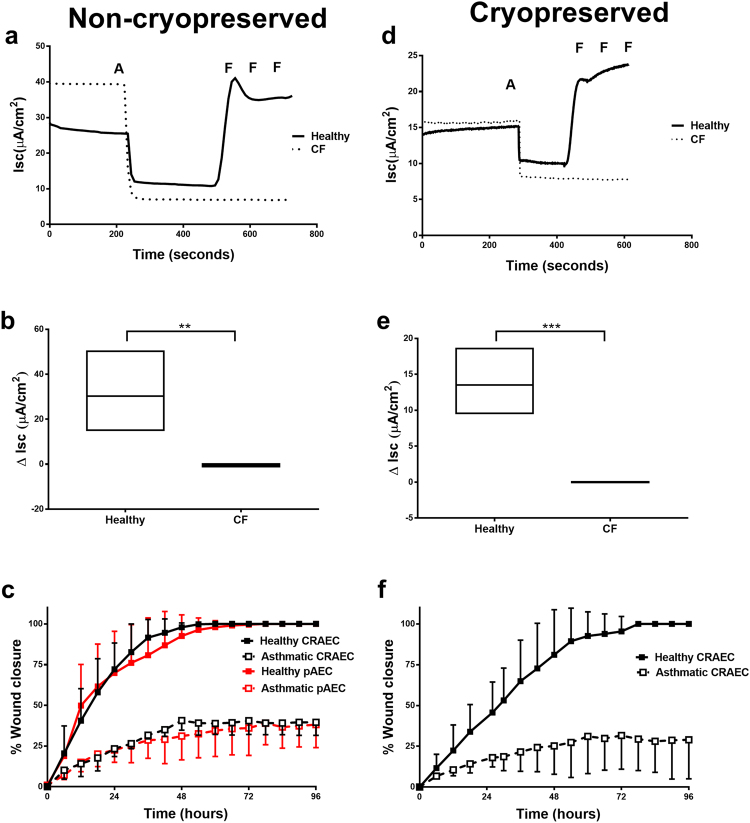
Current limitations to primary cell expansion led us to test whether airway epithelial cells derived from healthy children and those with asthma and cystic fibrosis (CF), co-cultured with an irradiated fibroblast feeder cell in F-medium containing 10 µM ROCK inhibitor could maintain their lineage during expansion and whether this is influenced by underlying disease status. Here, we show that conditionally reprogrammed airway epithelial cells (CRAECs) can be established from both healthy and diseased phenotypes. CRAECs can be expanded, cryopreserved and maintain phenotypes over at least 5 passages. Population doublings of CRAEC cultures were significantly greater than standard cultures, but maintained their lineage characteristics. CRAECs from all phenotypes were also capable of fully differentiating at air-liquid interface (ALI) and maintained disease specific characteristics including; defective CFTR channel function cultures and the inability to repair wounds. Our findings indicate that CRAECs derived from children maintain lineage, phenotypic and importantly disease-specific functional characteristics over a specified passage range.
Overview
The claims and statistics of this paper haven’t been checked yet.
Free: it reads the open-access text and checks the first 5 claims that cite a source we can check. Create a free account to check every claim.
Integrity signals
Registry
Cites
Statistics
Figures
Verification
Claims the paper makes
The claims and statistics of this paper haven’t been checked yet.
Free: it reads the open-access text and checks the first 5 claims that cite a source we can check. Create a free account to check every claim.
Claims other papers make about this one
Each is checked against this paper’s own text: does it say what the citing paper says it does?
The source backs part of the claim, not all of it — or backs it for a different population, condition or comparison.
In the citing paper
“Although this state safeguards genomic stability and preserves physiological fidelity, it fundamentally limits the use of conventional primary cell cultures in high-throughput screening, where large numbers of phenotypically consistent cells are required for assay scalability, reproducibility, and repeated testing (Martinovich et al. 2017).”
From Primary cell cultures versus immortalized cell lines: critical comparative insights into biological fidelity and translational applications (2026) · cites this paper as Martinovich et al. 2017
Experimental — accuracy not yet measuredThe cited source says what the claim attributes to it.
In the citing paper
“Martinovich et al. (2017) showed that CR-expanded airway epithelial cells could be extensively propagated while retaining airway epithelial morphology, lineage marker expression, and disease-specific functional phenotypes, including CFTR-mediated ion transport and wound-repair responses.”
From Primary cell cultures versus immortalized cell lines: critical comparative insights into biological fidelity and translational applications (2026) · cites this paper as Martinovich et al. (2017)
Self-check
Percentages, sums and reported differences re-computed from the paper’s own numbers.
The self-check needs the paper’s full text.
Citations
Cites
International Study of Asthma and Allergies in Childhood (ISAAC): rationale and methods
Asher, M., Keil, U., Anderson, H., Beasley, R., Crane, J., Martinez, F., Mitchell, E., Pearce, N., Sibbald, B., Stewart, A., et al. (1995) · European Respiratory Journal · doi:10.1183/09031936.95.08030483 · Cited by 3,724
Jones, P. W., Quirk, F. H., Baveystock, C. M., & Littlejohns, P. (1992) · American Review of Respiratory Disease · doi:10.1164/ajrccm/145.6.1321 · Cited by 3,035
Treatment of Childhood Atopic Dermatitis and Economic Burden of Illness in Asia Pacific Countries
Lee, B. W., & Detzel, P. R. (2015) · Annals of Nutrition and Metabolism · doi:10.1159/000370221 · Cited by 1,668
Rescue of CF airway epithelial cell function in vitro by a CFTR potentiator, VX-770
Van Goor, F., Hadida, S., Grootenhuis, P. D. J., Burton, B., Cao, D., Neuberger, T., Turnbull, A., Singh, A., Joubran, J., Hazlewood, A., et al. (2009) · Proceedings of the National Academy of Sciences · doi:10.1073/pnas.0904709106 · Cited by 1,228
Epidermal growth factor and the multiplication of cultured human epidermal keratinocytes
Rheinwald, J. G., & Green, H. (1977) · Nature · doi:10.1038/265421a0 · Cited by 1,066
ROCK Inhibitor and Feeder Cells Induce the Conditional Reprogramming of Epithelial Cells
Liu, X., Ory, V., Chapman, S., Yuan, H., Albanese, C., Kallakury, B., Timofeeva, O. A., Nealon, C., Dakic, A., Simic, V., et al. (2012) · The American Journal of Pathology · doi:10.1016/j.ajpath.2011.10.036 · Cited by 726
Puck, T. T., & Marcus, P. I. (1955) · Proceedings of the National Academy of Sciences · doi:10.1073/pnas.41.7.432 · Cited by 643
Well-Differentiated Human Airway Epithelial Cell Cultures
Leslie Fulcher, M., Gabriel, S., Burns, K. A., Yankaskas, J. R., & Randell, S. H. (2004) · Human Cell Culture Protocols · doi:10.1385/1-59259-861-7:183 · Cited by 614
p53 Mutations in human immortalized epithelial cell lines
Lehman, T. A., Modali, R., Boukamp, P., Stanek, J., Bennett, W. P., Welsh, J. A., Metcalf, R. A., Stampfer, M. R., Fusenig, N., Rogan, E. M., et al. (1993) · Carcinogenesis · doi:10.1093/carcin/14.5.833 · Cited by 447
Dual SMAD Signaling Inhibition Enables Long-Term Expansion of Diverse Epithelial Basal Cells
Mou, H., Vinarsky, V., Tata, P. R., Brazauskas, K., Choi, S. H., Crooke, A. K., Zhang, B., Solomon, G. M., Turner, B., Bihler, H., et al. (2016) · Cell Stem Cell · doi:10.1016/j.stem.2016.05.012 · Cited by 382
Research works printed but not linked: 2
- Sutanto EN Innate Inflammatory Responses of Pediatric Cystic Fibrosis Airway Epithelial Cells Effects of Nonviral and Viral Stimulation Am J Resp Cell Mol 2011 44 761 767 10.1165/rcmb.2010-0368OC 21317379 · DOI
- Randell, S. H., Fulcher, M. L., O’Neal, W. & Olsen, J. C. In Cystic Fibrosis: Diagnosis and Protocols, Volume II: Methods and Resources to Understand Cystic Fibrosis (eds Margarida D. Amaral & Karl Kunzelmann) 285–310 (Humana Press, 2011).
Cited by
Han, F., Li, S., Yang, Y., & Bai, Z. (2021) · Bioengineered · doi:10.1080/21655979.2021.1964158 · Cited by 159
IL-1β dominates the promucin secretory cytokine profile in cystic fibrosis
Chen, G., Sun, L., Kato, T., Okuda, K., Martino, M. B., Abzhanova, A., Lin, J. M., Gilmore, R. C., Batson, B. D., O’Neal, Y. K., et al. (2019) · Journal of Clinical Investigation · doi:10.1172/jci125669 · Cited by 140
Awatade, N. T., Wong, S. L., Hewson, C. K., Fawcett, L. K., Kicic, A., Jaffe, A., & Waters, S. A. (2018) · Frontiers in Pharmacology · doi:10.3389/fphar.2018.01429 · Cited by 92
“The modified CRCs could support airway epithelial cell growth up to passage 10 with robust formation of pseudostratified epithelium at the extended passage, although a modest decrease in CFTR-dependent Cl− transport was observed.”
BackgroundInfluentialSelf-citationAnimal and Cell Culture Models for Cystic Fibrosis
McCarron, A., Parsons, D., & Donnelley, M. (2020) · American Journal Of Pathology · doi:10.1016/j.ajpath.2020.10.017 · Cited by 101
“This has now been overcome by improvements in cell expansion techniques, such as conditional reprogramming, which allow cells to be passaged numerous times while still maintaining a normal cellular phenotype, morphology, and disease-specific functional characteristics upon ALI generation.(84,94) Furthermore, normal an…”
Long-term differentiating primary human airway epithelial cell cultures: how far are we?
Bukowy‐Bieryłło, Z. (2021) · Cell Communication and Signaling · doi:10.1186/s12964-021-00740-z · Cited by 98
“Alternative collection methods, such as nasal or (nonbronchoscopic) bronchial brushings, are simple, quick, minimally invasive and can be performed even at the young age [49, 50].”
BackgroundInfluential
Metadata
- Authors
- Martinovich, K. M., Iosifidis, T., Buckley, A. G., Looi, K., Ling, K.-M., Sutanto, E. N., Kicic-Starcevich, E., Garratt, L. W., Shaw, N. C., Montgomery, S., Lannigan, F. J., Knight, D. A., Kicic, A., & Stick, S. M.
- Affiliations
- The Kids Research Institute Australia (AU)
- The University of Western Australia (AU)
- University of British Columbia (CA)
- Corresponding author
- Kicic, Anthony
- ORCID
- Venue
- Scientific Reports
- Published
- 2017-12-21
- Volume
- 7
- Issue
- 1
- Pages
- 17971-17971
- ISSN
- 2045-2322 (ISSN-L)
- PMC
- PMC5740081
- OpenAlex
- W2772528121
- Cited by
- 96
- References
- 62
- Citations by year
- 2026: 6 · 2025: 9 · 2024: 7 · 2023: 5 · 2022: 20 · 2021: 18 · 2020: 20 · 2019: 8 · 2018: 3
- FWCI
- 7.01
- Type
- journal article
- Language
- en
- Open access
- gold
- doi.org
- Licence
- cc-by
- creativecommons.org/licenses/by/4.0 (tdm)
- creativecommons.org/licenses/by/4.0 (vor)
- Locations
- Scientific Reports (publishedVersion, cc-by)
- Europe PMC (PubMed Central) (publishedVersion, cc-by)
- PubMed Central (publishedVersion, cc-by)
- PubMed (publishedVersion)
- UWA Profiles and Research Repository (UWA) (submittedVersion, cc-by)
- DOAJ (DOAJ: Directory of Open Access Journals) (submittedVersion)
- eSpace (Curtin University) (submittedVersion, cc-by)
- Figshare (submittedVersion, cc-by)
- NOVA (University of Newcastle Australia) (submittedVersion, cc-by)
- Topics
- Health Sciences › Medicine › Pulmonary and Respiratory Medicine › Cystic Fibrosis Research Advances
- Health Sciences › Medicine › Surgery › Tissue Engineering and Regenerative Medicine
- Health Sciences › Medicine › Pulmonary and Respiratory Medicine › Asthma and respiratory diseases
- Keywords
- primary airway epithelial cells, cell expansion, ROCK inhibitor, air-liquid interface differentiation, cystic fibrosis, asthma, wound healing, cryopreservation
- MeSH terms
- Cellular Reprogramming Techniques, Animals, Asthma, Cell Differentiation, Cells, Cultured, Child, Preschool, Cystic Fibrosis, Female, Fibroblasts, Humans, Male, Cell Lineage, Respiratory Mucosa, Mice
About these checks
Registry, retraction, Cites and statistics results are computed, not judged, with one exception: a printed reference that no index lists is read once by a model before it counts as a citation error. Claims are extracted by a model and kept only when their quote appears verbatim in the text; each cited source is then checked, with a model’s help, for whether it says what the claim relies on. Those verdicts can be wrong — read the claim’s quote and the cited source before relying on one.
Statistics and arithmetic are recomputed, not judged.
Confidence bands are shown only for fields calibrated on our annotated test set. None is calibrated yet, so no band is shown.
What counts as a claim ›How we measure confidence ›How we check this ›
Are you an author, or do you see a problem with this page? Request a review
How to cite
Cite CoChat for the checks on this page, and the paper for its own findings.
- This page
- CoChat. (2026). Citation check: Conditionally reprogrammed primary airway epithelial cells maintain morphology, lineage and disease specific functional characteristics. https://app.cochat.ai/papers/10.1038/s41598-017-17952-4
- The paper
- Martinovich, K. M., Iosifidis, T., Buckley, A. G., Looi, K., Ling, K.-M., Sutanto, E. N., Kicic-Starcevich, E., Garratt, L. W., Shaw, N. C., Montgomery, S., Lannigan, F. J., Knight, D. A., Kicic, A., & Stick, S. M. (2017). Conditionally reprogrammed primary airway epithelial cells maintain morphology, lineage and disease specific functional characteristics. Scientific Reports. https://doi.org/10.1038/s41598-017-17952-4
Data sources
Bibliographic data: Semantic Scholar, OpenAlex, Crossref.
Contains information from the Semantic Scholar Academic Graph Datasets, made available under the ODC Attribution License (ODC-BY 1.0).
Semantic Scholar’s data is described in: Kinney, R., et al. (2023). The Semantic Scholar Open Data Platform. arXiv:2301.10140.
