

Effects of blood glucose level on 18F fluorodeoxyglucose (18F-FDG) uptake for PET/CT in normal organs: an analysis on 5623 patients
Open accessThe DOI matches its Crossref record; 25 of the 26 references it cites were found in a registry or an index.
Abstract
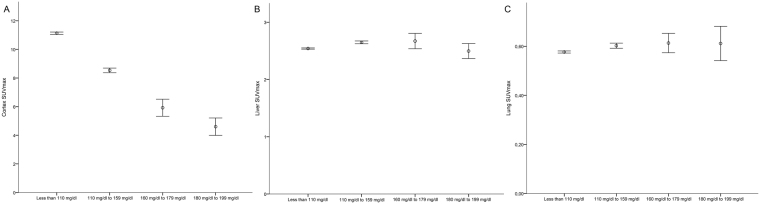
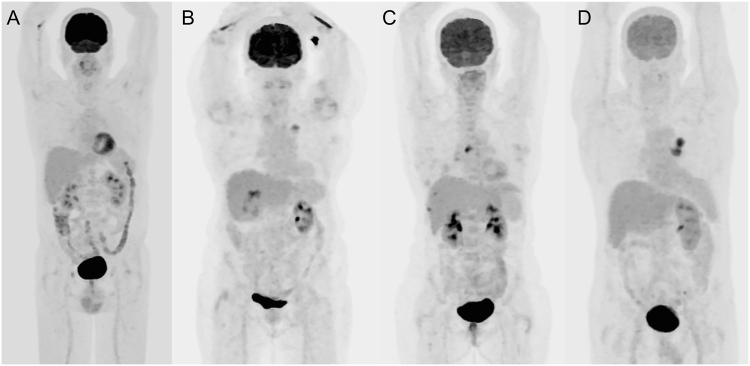
Our purpose was to evaluate the effect of glycemia on 18 F-FDG uptake in normal organs of interest. The influences of other confounding factors, such as body mass index (BMI), diabetes, age, and sex, on the relationships between glycemia and organ-specific standardized uptake values (SUVs) were also investigated. We retrospectively identified 5623 consecutive patients who had undergone clinical PET/CT for oncological indications. Patients were stratified into groups based on glucose levels, measured immediately before 18 F-FDG injection. Differences in mean SUVmax values among glycemic ranges were clinically significant only when >10% variation was observed. The brain was the only organ that presented a significant inverse relationship between SUVmax and glycemia (p < 0.001), even after controlling for diabetic status. No such difference was observed for the liver or lung. After adjustment for sex, age, and BMI, the association of glycemia with SUVmax was significant for the brain and liver, but not for the lung. In conclusion, the brain was the only organ analyzed showing a clinically significant relationship to glycemia after adjustment for potentially confounding variables. The lung was least affected by the variables in our model, and may serve as an alternative background tissue to the liver.
Overview
The claims and statistics of this paper haven’t been checked yet.
Free: it reads the open-access text and checks the first 5 claims that cite a source we can check. Create a free account to check every claim.
Integrity signals
Registry
Cites
Statistics
Figures
Verification
Claims the paper makes
The claims and statistics of this paper haven’t been checked yet.
Free: it reads the open-access text and checks the first 5 claims that cite a source we can check. Create a free account to check every claim.
Claims other papers make about this one
Each is checked against this paper’s own text: does it say what the citing paper says it does?
The source backs part of the claim, not all of it — or backs it for a different population, condition or comparison.
In the citing paper
“On multivariate analysis, there was an inconsistent association with the confounding factors on either occasion and blood glucose level did not have a significant effect on their SUVmax as concordant with previous studies.[1,3]”
From Intrapatient variability of 18F-FDG uptake in normal tissues (2022) · cites this paper as [3]
Experimental — accuracy not yet measuredThe source backs part of the claim, not all of it — or backs it for a different population, condition or comparison.
In the citing paper
“Several studies suggested that the blood pool is a more optimal and stable reference tissue than the liver,[1,3,25,39,41] as it is much less dependent than the liver on glycemia and other variables.[10]”
From Intrapatient variability of 18F-FDG uptake in normal tissues (2022) · cites this paper as [3]
Experimental — accuracy not yet measuredThe source backs part of the claim, not all of it — or backs it for a different population, condition or comparison.
In the citing paper
“This suggests effects on SUV in obese patients that are specific for [18F]FDG, possibly stemming from the positive correlation between BMI and blood glucose [3,6].”
From Influences on PET Quantification and Interpretation (2022) · cites this paper as [3]
Experimental — accuracy not yet measuredThe cited source says what the claim attributes to it.
In the citing paper
“In a number of normal organs, the SUV corrected for body mass is positively correlated with the body mass index (BMI) [1,2,3].”
From Influences on PET Quantification and Interpretation (2022) · cites this paper as [3]
Self-check
Percentages, sums and reported differences re-computed from the paper’s own numbers.
The self-check needs the paper’s full text.
Citations
Cites
From RECIST to PERCIST: Evolving Considerations for PET Response Criteria in Solid Tumors
Wahl, R. L., Jacene, H., Kasamon, Y., & Lodge, M. A. (2009) · Journal of Nuclear Medicine · doi:10.2967/jnumed.108.057307 · Cited by 3,777
FDG PET/CT: EANM procedure guidelines for tumour imaging: version 2.0
Boellaard, R., Delgado-Bolton, R., Oyen, W. J. G., Giammarile, F., Tatsch, K., Eschner, W., Verzijlbergen, F. J., Barrington, S. F., Pike, L. C., Weber, W. A., et al. (2015) · European Journal of Nuclear Medicine and Molecular Imaging · doi:10.1007/s00259-014-2961-x · Cited by 3,303
Procedure guideline for tumor imaging with 18F-FDG PET/CT 1.0.
Delbeke, D., Coleman, R. E., Guiberteau, M. J., Brown, M. L., Royal, H. D., Siegel, B. A., Townsend, D. W., Berland, L. L., Parker, J. A., Hubner, K., et al. (2006) · PubMed · Cited by 713
Progress and Promise of FDG-PET Imaging for Cancer Patient Management and Oncologic Drug Development
Kelloff, G. J., Hoffman, J. M., Johnson, B., Scher, H. I., Siegel, B. A., Cheng, E. Y., Cheson, B. D., O'Shaughnessy, J., Guyton, K. Z., Mankoff, D. A., et al. (2005) · Clinical Cancer Research · doi:10.1158/1078-0432.ccr-04-2626 · Cited by 671
Zasadny, K. R., & Wahl, R. L. (1993) · Radiology · doi:10.1148/radiology.189.3.8234714 · Cited by 635
Kinahan, P. E., & Fletcher, J. W. (2010) · Seminars in Ultrasound, CT and MRI · doi:10.1053/j.sult.2010.10.001 · Cited by 631
Procedure guideline for tumor imaging with F-18 FDG PET/CT
Delbeke, D., Coleman, R. E., Guiberteau, M. J., Brown, M. L., Royal, H. D., Siegel, B. A., Townsend, D. W., Berland, L. L., Parker, J. A., Hübner, K. F., et al. (2006) · Cited by 620
Huang, (. S.-C. (2000) · Nuclear Medicine and Biology · doi:10.1016/s0969-8051(00)00155-4 · Cited by 458
Reproducibility of metabolic measurements in malignant tumors using FDG PET.
Weber, W., Ziegler, S. I., Thödtmann, R., Hanauske, A.-R., & Schwaiger, M. (1999) · PubMed · Cited by 388
Within-patient variability of (18)F-FDG: standardized uptake values in normal tissues.
Paquet, N., Albert, A., Foidart, J., & Hustinx, R. (2004) · PubMed · Cited by 287
Cited by
Ge, J., Zhang, Q., Zeng, J., Gu, Z., & Gao, M. (2020) · Biomaterials · doi:10.1016/j.biomaterials.2019.119553 · Cited by 180
Strategies for the Development of Glycomimetic Drug Candidates
Hevey, R. (2019) · Pharmaceuticals · doi:10.3390/ph12020055 · Cited by 139
“This widespread recognition of fluorinated glyco-analogues has been a contributing factor to the success of 18F-2-deoxy-2-fluoro-d-glucose (8) as a radiotracer for diagnosing neoplasia through positron emission tomography (PET scans) [47,48].”
BackgroundEskian, M., Alavi, A., Khorasanizadeh, M., Viglianti, B. L., Jacobsson, H., Barwick, T. D., Meysamie, A., Yi, S. K., Iwano, S., Bybel, B., et al. (2019) · European Journal of Nuclear Medicine and Molecular Imaging · doi:10.1007/s00259-018-4194-x · Cited by 109
Intensity normalization methods in brain FDG-PET quantification
López‐González, F. J., Silva‐Rodríguez, J., Paredes‐Pacheco, J., Niñerola‐Baizán, A., Efthimiou, N., Martín‐Martín, C., Moscoso, A., Ruibal, Á., Roé-Vellvé, N., & Aguiar, P. (2020) · NeuroImage · doi:10.1016/j.neuroimage.2020.117229 · Cited by 82
Influences on PET Quantification and Interpretation
Rogasch, J. M. M., Hofheinz, F., van Heek, L., Voltin, C.-A., Boellaard, R., & Kobe, C. (2022) · Diagnostics · doi:10.3390/diagnostics12020451 · Cited by 57
“This suggests effects on SUV in obese patients that are specific for [18F]FDG, possibly stemming from the positive correlation between BMI and blood glucose [3,6].”
BackgroundAssessing PET Parameters in Oncologic 18F-FDG Studies
Sarikaya, İ., & Sarıkaya, A. (2019) · Journal of Nuclear Medicine Technology · doi:10.2967/jnmt.119.236109 · Cited by 64
“Per our recent assessment, hyperglycemia does not affect liver and blood-pool activity (12,40,41).”
BackgroundSarikaya, İ., Sarıkaya, A., & Sharma, P. N. (2019) · Journal of Nuclear Medicine Technology · doi:10.2967/jnmt.119.226969 · Cited by 51
“Reduction of 18F-FDG uptake in the brain started after a blood glucose level of 110 mg/dL and then became gradually more prominent with increasing blood glucose levels, similar to the literature (11).”
BackgroundBioisosteres of Carbohydrate Functional Groups in Glycomimetic Design
Hevey, R. (2019) · Biomimetics · doi:10.3390/biomimetics4030053 · Cited by 55
Predictive Value of [18F]FDG PET/CT for Lymph Node Metastasis in Rectal Cancer
Kim, S. H., Song, B., Kim, B. W., Kim, H. W., Won, K. S., Bae, S. U., Jeong, W. K., & Baek, S. K. (2019) · Scientific Reports · doi:10.1038/s41598-019-41422-8 · Cited by 37
Clinical value of baseline 18F-FDG PET/CT in soft tissue sarcomas
Marlés, R. H. R., Fernández, J. L. N., García-Sandoval, J. P. P., Medina, F. S., Salem, L. M., Esteban, L. F., Gutiérrez, J. F. C., Sánchez, M. I. C., Merino, G. R., & Valderas, M. A. C. (2021) · European Journal of Hybrid Imaging · doi:10.1186/s41824-021-00110-5 · Cited by 38
Hyperglycemia and 18F-FDG PET/CT, issues and problem solving: a literature review
Finessi, M., Bisi, G., & Deandreis, D. (2019) · Acta Diabetologica · doi:10.1007/s00592-019-01385-8 · Cited by 33
Cao, Y., Zhou, K., Diao, W., Long, X., Tian, F., Su, M., & Jia, Z. (2021) · Quantitative Imaging in Medicine and Surgery · doi:10.21037/qims-20-35 · Cited by 31
“These measurements are often used as reference background values to distinguish tumors and define treatment response for head and neck squamous cell carcinoma and lymphoma (3-6).”
MethodEffect of various blood glucose levels on regional FDG uptake in the brain.
Sarikaya, İ., Albatineh, A. N., & Sarikayaa, A. (2020) · PubMed Central · doi:10.22038/aojnmb.2019.14418 · Cited by 24
“Based on the evidence, hyperglycemia reduces FDG uptake in the brain (4-9).”
BackgroundCossu, V., Bauckneht, M., Bruno, S., Orengo, A. M., Emionite, L., Balza, E., Castellani, P., Piccioli, P., Miceli, A., Raffa, S., et al. (2020) · Translational Oncology · doi:10.1016/j.tranon.2020.100752 · Cited by 15
Kim, S. H., Song, B., Kim, H. W., Won, K. S., Son, Y., & Ryu, S. W. (2020) · Korean Journal of Radiology · doi:10.3348/kjr.2019.0672 · Cited by 12
“The SUVmax, a simple measurement and the most widely used metabolic parameter obtained by (18)F-FDG PET/CT (27), consistently estimated 3-year PRS outcomes.”
MethodAl‐Alsheikh, A. S., Alabdulkader, S., Miras, A. D., & Goldstone, A. P. (2023) · Obesity Reviews · doi:10.1111/obr.13620 · Cited by 10
“178,179 Several studies investigated BGU post-bariatric surgery 38 – 41, In one cross-sectional study, BGU was measured in response to food intake post-RYGB surgery compared with adults with and without obesity, 38 whereas in longitudinal studies, one study measured BGU in response to…”
Jiang, H., Haimerl, J., Gu, X., & Lu, W. (2023) · Lecture notes in computer science · doi:10.1007/978-3-031-27420-6_4 · Cited by 10
Blautzik, J., Grelich, L., Schramm, N., Henkel, R., Bartenstein, P., & Pfluger, T. (2019) · EJNMMI Research · doi:10.1186/s13550-019-0577-7 · Cited by 13
van der Hoek, J. L., Krommendijk, M. E., Manohar, S., Arens, J., & Jebbink, E. G. (2024) · Transplant International · doi:10.3389/ti.2024.12827 · Cited by 9
“A large retrospective study by Sprinz et al. analysed FDG uptake in the liver, lungs and brain, where only in the brain FDG was a signi fi cant marker for glucose uptake [52].”
BackgroundSatoh, Y., Imai, M., Ikegawa, C., Hirata, K., Abo, N., Kusuzaki, M., Oyama‐Manabe, N., & Onishi, H. (2022) · Annals of Nuclear Medicine · doi:10.1007/s12149-022-01789-7 · Cited by 8
“RCRs were determined based on the findings of the previous studies [12, 13].”
MethodPredictors of infectious foci on FDG PET/CT in Staphylococcus aureus bacteremia
Ghanem‐Zoubi, N., Abu-Elhija, J., Kagna, O., Hellou, M. M., Qasum, M., Haber, D. A., Paul, M., & Keidar, Z. (2023) · Scientific Reports · doi:10.1038/s41598-023-41336-6 · Cited by 8
18F-FDG uptake in the normal appendix in adults: PET/CT evaluation
Silman, C., Matsumoto, S., Ono, A., Kiyonaga, M., & Otsuka, K. (2019) · Annals of Nuclear Medicine · doi:10.1007/s12149-019-01330-3 · Cited by 7
Galvez, T., Berkane, I., Thézenas, S., Eberlé, M., Flori, N., Guillemard, S., Ilonca, A. D., Santoro, L., Kotzki, P., Sénesse, P., et al. (2023) · Nutrients · doi:10.3390/nu15133042 · Cited by 8
“For instance, liver, blood and spleen SUVs are overestimated in obese persons compared to non-obese persons [22,27,28].”
BackgroundLongo, M., Jericó, D., Córdoba, K. M., Riezu‐Boj, J. I., Urtasun, R., Solares, I., Sampedro, A., Collantes, M., Peñuelas, I., Moreno-Aliaga, M. J., et al. (2023) · International Journal of Molecular Sciences · doi:10.3390/ijms241511938 · Cited by 6
“By combining ex vivo measurements of [18F]Fluoro-2-deoxy-2-D-glucose ([18F]FDG) levels with anatomical–functional analyses (PET/CT), we found a reduced hepatic and brain glucose uptake in the AIP mice compared to WT (Figure 3A,B), thus confirming previously reported data [33,34].”
ResultManagement of hyperglycemia in oncological patients scheduled for an FDG-PET/CT examination
Evangelista, L., Gori, S., Rubini, G., & Gallo, M. (2019) · Clinical and Translational Imaging · doi:10.1007/s40336-019-00347-y · Cited by 9
Global brain glucose uptake on 18F-FDG-PET/CT is influenced by chronic cardiovascular risk
Borja, A. J., Hancin, E. C., Zhang, V., Koa, B., Bhattaru, A., Rojulpote, C., Detchou, D. K. E. D., Aly, M., Kaghazchi, F., Gerke, O., et al. (2020) · Nuclear Medicine Communications · doi:10.1097/mnm.0000000000001349 · Cited by 6
Li, X., Young, A. J., Shi, Z., Byanyima, J. I., Vesslee, S. A., Reddy, R., Pond, T., Elliott, M., Reddy, R., Doot, R. K., et al. (2026) · Psychiatry Research Neuroimaging · doi:10.1016/j.pscychresns.2026.112154 · Cited by 11
Fietsam, A. C., Workman, C. D., Ponto, L. L. B., Kamholz, J. A., & Rudroff, T. (2020) · Brain Sciences · doi:10.3390/brainsci10080549 · Cited by 7
“Table 2 presents glucose uptake (SUV) normalized to a standard blood glucose (NG) level of 100 mg/dL [54,55] and to the liver (NL) [57,58].”
BackgroundMethodHe, J., Huang, Y., Huang, N., & Jiang, J. (2024) · Frontiers in Oncology · doi:10.3389/fonc.2024.1363843 · Cited by 6
Kim, D., Ko, H. Y., Lee, S., Lee, Y., Ryu, S., Kim, S. Y., Chung, J.-I., Lee, M., Moon, J. H., Chang, J. H., et al. (2020) · Cancers · doi:10.3390/cancers12071977 · Cited by 6
Wang, T., Li, B., Shi, H., Li, P., Deng, Y., Wang, S., Luo, Q., Xv, D., He, J., & Wang, S. (2023) · Insights into Imaging · doi:10.1186/s13244-023-01442-5 · Cited by 4
“Since liver tissues and tumors have different intake and metabolic rates for 18F-FDG, the corresponding kinetic parameters can be obtained only when the model is calculated [16].”
BackgroundOtomi, Y., Otsuka, H., Shono, N., Onishi, H., Mitsuhashi, R., Matsuzaki, S., Takaoka, Y., Enomoto, H., Sakamoto, Y., Sasahara, M., et al. (2021) · The Journal of Medical Investigation · doi:10.2152/jmi.68.181 · Cited by 4
Decoding Artificial Intelligence in Neuroscience: Applications Beyond Diagnosis
Salave, S., Rana, D., Benival, D. M., & Jain, A. (2023) · Current Indian Science · doi:10.2174/2210299x01666230223104508 · Cited by 4
Pei, Y., Wang, Z., Hao, S., Tong, Y., Wu, R., Qiao, X., Liu, Y., & Zhang, G. (2024) · Nuclear Medicine Communications · doi:10.1097/mnm.0000000000001825 · Cited by 3
“Patient factors can also influence 18 F-FDG uptake, with the most important factor being the patient’s blood glucose level before PET/CT imaging [13].”
BackgroundIntrapatient variability of 18F-FDG uptake in normal tissues
Sayed, M. H. M., Abdelnaim, A. K., & Mohamadien, N. R. (2022) · Journal of Clinical Imaging Science · doi:10.25259/jcis_23_2022 · Cited by 2
“On multivariate analysis, there was an inconsistent association with the confounding factors on either occasion and blood glucose level did not have a significant effect on their SUVmax as concordant with previous studies.[1,3] Additionally, in line with Paquet et al.”
BackgroundMethodResultInfluentialKrizan, I. M., Sai, K. K. S., Damuka, N., Macauley, S. L., Thurman, B. M., Long, M., & Kavanagh, K. (2024) · Bioorganic & Medicinal Chemistry Letters · doi:10.1016/j.bmcl.2024.129906 · Cited by 2
Murat, H., Kechik, M. M. A., Chew, M. T., Kamal, I., Said, M. A., & Karim, M. K. A. (2024) · Radioprotection · doi:10.1051/radiopro/2024034 · Cited by 2
Interactions between Ploidy and Resource Availability Shape Clonal Evolution in Glioblastoma
Nowicka, Z., Rentzeperis, F., Tagal, V., Teer, J. K., Ilter, D., Beck, R. J., Cole, J. P., Pinto, A. F., Tejero, J. D., Scanu, E., et al. (2025) · Cancer Research · doi:10.1158/0008-5472.can-24-0401 · Cited by 3
Wehlte, L., Walter, J., Daisenberger, L., Kuhnle, F., Ingenerf, M., Schmid‐Tannwald, C., Brendel, M., Kauffmann-Guerrero, D. E., Heinzerling, L., Tufman, A., et al. (2024) · Diagnostics · doi:10.3390/diagnostics14111139 · Cited by 3
“When reviewing the literature, little information can be found on the influence of BMI on lung SUV [32,33].”
BackgroundUnexpected focal fluorodeoxyglucose uptake in main organs; pass through or pass by?
Lee, H., & Hwang, K.-H. (2024) · World Journal of Clinical Cases · doi:10.12998/wjcc.v12.i11.1885 · Cited by 1
Physiological Distribution of 18F-FDG in the Spinal Cord of Disease-Free Subjects
Kesim, S., & Özgüven, S. (2025) · Molecular Imaging and Radionuclide Therapy · doi:10.4274/mirt.galenos.2025.56514 · Cited by 1
“While hyperglycemia is reported to have a greater impact on 18 F-FDG uptake in the central nervous system compared to the liver (23), the reduced SUV and nSUV in our study group may be explained by poorly controlled hyperglycemia in diabetes, leading to competitive inhibition of 18 F-FDG uptake in…”
The Role of PET Image Quantification in Modern Radiation Therapy
Abdelrahman, A., & Naqa, I. E. (2025) · PET Clinics · doi:10.1016/j.cpet.2025.07.008 · Cited by 1
Rachid, A., Chen, B., & Zhu, G. (2023) · Quantitative Imaging in Medicine and Surgery · doi:10.21037/qims-22-917 · Cited by 1
“Sprinz et al. reported that higher blood glucose levels were significantly associated with lower brain 18 F-FDG uptake (31).”
Li, Y., Mo, Y., Chen, M., Zhang, W., Li, S., & Zhang, X. (2024) · Cancers · doi:10.3390/cancers16152708 · Cited by 1
Elsoudy, N. M., Anwar, M., Amer, H. H., Yassien, H. M., & Abdelazeez, L. M. (2024) · Radiation Physics and Chemistry · doi:10.1016/j.radphyschem.2024.112438 · Cited by 2
PET-CT Physics, Instrumentation, and Techniques
Shaikh, S. (2020) · Springer eBooks · doi:10.1007/978-981-15-9801-2_2 · Cited by 1
Cancer Staging with 18F-FDG PET/CT in Hyperglycemic Patients
Finessi, M., Liberini, V., & Deandreis, D. (2020) · Springer eBooks · doi:10.1007/978-3-030-53370-0_47 · Cited by 1
Altmayer, S., Zanon, M., Sprinz, C., Watte, G., & Hochhegger, B. (2019) · European Journal of Nuclear Medicine and Molecular Imaging · doi:10.1007/s00259-019-04288-6 · Cited by 1
Self-citationNowicka, Z., Rentzeperis, F., Beck, R. J., Tagal, V., Pinto, A. F., Scanu, E., Veith, T. A., Cole, J. P., Ilter, D., Dominguez‐Viqueira, W., et al. (2023) · bioRxiv (Cold Spring Harbor Laboratory) · doi:10.1101/2023.10.17.562670 · Cited by 1
“To approximate glucose levels, we assumed SUVr values are inversely correlated to glucose uptake 8 48,49 and that glucose concentration in the brain ranges between 1.0-2.7 mMol 50 .”
InfluentialManagement of blood glucose levels in oncological patients scheduled for FDG PET/CT examination
Evangelista, L. S. (2019) · The Journal of AMD · doi:10.36171/jamd19.22.4.08
“(9) 2018 Original article 5,623 The influence of BGL on the FDG uptake in normal organs Eskian et al.”
BackgroundOliver, A., Wulster, K. B., Stefanovski, D., Spriet, M. P., Ciamillo, S. A., Ford, M., Kulp, J. C., & Eps, A. W. V. (2023) · American Journal of Veterinary Research · doi:10.2460/ajvr.23.04.0077 · Cited by 2
“22 However, horses tend not to have a wide variation in blood glucose compared with humans: minimally invasive handling (prepur-chase exam) in normal, un-sedated horses does not cause hyperglycemia 23 and, unlike humans, even horses with insulin dysregulation do not show base-line hyperglycemia in…”
Alam, M. A., Hanaoka, S., Nomura, Y., Kikuchi, T., Nakao, T., Takenaga, T., Hayashi, N., Yoshikawa, T., & Abe, O. (2024) · International Journal of Computer Assisted Radiology and Surgery · doi:10.1007/s11548-023-03044-4
“Standardized uptake value (SUV) is a semi-quantitative measurement of 18 F-FDG tracer uptake in tissues [4].”
BackgroundKrizan, I. M., Sai, K. K. S., Damuka, N., Macauley, S. L., Thurman, B. M., Long, M., & Kavanagh, K. (2024) · SSRN Electronic Journal · doi:10.2139/ssrn.4821607
Li, T., Liu, Y., Dai, M., Zhao, X., Han, J., Zhang, Z., Jing, F., Tian, W., Wang, J., Zhao, X., et al. (2024) · Cancer Biotherapy and Radiopharmaceuticals · doi:10.1089/cbr.2024.0026 · Cited by 1
“12,13 In 68 Ga-FAPI PET/CT, SUV max , SUV mean , SUV peak , and SUL peak represent the corresponding FAPI uptakes, where FAPI-TV is the tumor uptake volume of FAPI, and FAPI-TLA is the total lesion FAPI activity.”
Tatçı, E., Schuerrle, S. B., & Özmen, Ö. (2025) · Revista Española de Medicina Nuclear e Imagen Molecular (English Edition) · doi:10.1016/j.remnie.2025.500123
Tatci, E., Schuerrle, S. B., & Özmen, Ö. (2025) · Revista Española de Medicina Nuclear e Imagen Molecular · doi:10.1016/j.remn.2025.500123
Fukuda, K., Matsuzaki, H., Nomura, Y., Kawahara, T., Nakao, T., Yamaguchi, T., Hanaoka, S., Saito, A., Yamamichi, N., Kage, H., et al. (2025) · ERJ Open Research · doi:10.1183/23120541.00755-2025
“It has been reported that SUVmedian is influenced by blood glucose levels [30].”
Fernandes, G., Moryoussef, M., Dufour, I., Lhommel, R., & Goffin, E. (2026) · Peritoneal Dialysis International · doi:10.1177/08968608251412166
Intensity Normalization Using Elastic Warping for FDG-PET Images
LI, C. W., Zhang, X., & Yu, W. (2026) · IEEE International Symposium on Biomedical Imaging (ISBI) · doi:10.1109/isbi61048.2026.11516045
Metadata
- Authors
- Sprinz, C., Zanon, M., Altmayer, S., Watte, G., Irion, K., Marchiori, E., & Hochhegger, B.
- Affiliations
- Hospital Mãe de Deus (BR)
- Universidade Federal de Ciências da Saúde de Porto Alegre (BR)
- Manchester Royal Infirmary (GB)
- Universidade Federal do Rio de Janeiro (BR)
- Corresponding author
- Zanon, Matheus
- Venue
- Scientific Reports
- Published
- 2018-02-01
- Volume
- 8
- Issue
- 1
- Pages
- 2126-2126
- ISSN
- 2045-2322 (ISSN-L)
- PMC
- PMC5794870
- OpenAlex
- W2802218762
- Semantic Scholar
- 96b4566cd0597c39bca67441a643744ad2917993
- Cited by
- 59
- References
- 26
- Citations by year
- 2026: 3 · 2025: 6 · 2024: 12 · 2023: 10 · 2022: 3 · 2021: 2 · 2020: 10 · 2019: 12 · 2018: 1
- FWCI
- 4.31
- Type
- journal article
- Language
- en
- Open access
- gold
- doi.org
- Licence
- cc-by
- creativecommons.org/licenses/by/4.0 (tdm)
- creativecommons.org/licenses/by/4.0 (vor)
- Locations
- Scientific Reports (publishedVersion, cc-by)
- Europe PMC (PubMed Central) (publishedVersion, cc-by)
- PubMed Central (publishedVersion, cc-by)
- PubMed (publishedVersion)
- LA Referencia (Red Federada de Repositorios Institucionales de Publicaciones Científicas) (publishedVersion, other-oa)
- DOAJ (DOAJ: Directory of Open Access Journals) (submittedVersion, cc-by-sa)
- Topics
- Health Sciences › Medicine › Radiology, Nuclear Medicine and Imaging › Medical Imaging Techniques and Applications
- Health Sciences › Medicine › Pulmonary and Respiratory Medicine › Lung Cancer Diagnosis and Treatment
- Health Sciences › Medicine › Radiology, Nuclear Medicine and Imaging › Radiopharmaceutical Chemistry and Applications
- Keywords
- FDG uptake, blood glucose, glycemia, standardized uptake value, SUVmax, PET/CT, brain, liver, lung, body mass index, diabetes mellitus, confounding factors
- MeSH terms
- Positron Emission Tomography Computed Tomography, Aged, Blood Glucose, Brain, Female, Humans, Liver, Lung, Male, Middle Aged, Retrospective Studies, Radiopharmaceuticals, Fluorodeoxyglucose F18
About these checks
Registry, retraction, Cites and statistics results are computed, not judged, with one exception: a printed reference that no index lists is read once by a model before it counts as a citation error. Claims are extracted by a model and kept only when their quote appears verbatim in the text; each cited source is then checked, with a model’s help, for whether it says what the claim relies on. Those verdicts can be wrong — read the claim’s quote and the cited source before relying on one.
Statistics and arithmetic are recomputed, not judged.
Confidence bands are shown only for fields calibrated on our annotated test set. None is calibrated yet, so no band is shown.
What counts as a claim ›How we measure confidence ›How we check this ›
Are you an author, or do you see a problem with this page? Request a review
Data sources
Bibliographic data: Semantic Scholar, OpenAlex, Crossref.
Contains information from the Semantic Scholar Academic Graph Datasets, made available under the ODC Attribution License (ODC-BY 1.0).
Semantic Scholar’s data is described in: Kinney, R., et al. (2023). The Semantic Scholar Open Data Platform. arXiv:2301.10140.
