

Understanding the prebiotic potential of different dietary fibers using an in vitro continuous adult fermentation model (PolyFermS)
Open accessThe DOI matches its Crossref record; 67 of the 67 references it cites were found in a registry or an index.
Abstract
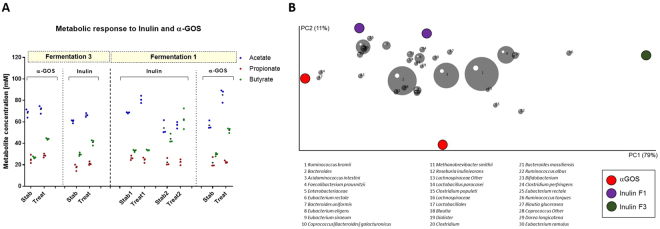
Consumption of fermentable dietary fibers (DFs), which can induce growth and/or activity of specific beneficial populations, is suggested a promising strategy to modulate the gut microbiota and restore health in microbiota-linked diseases. Until today, inulin and fructo-oligosaccharides (FOS) are the best studied DFs, while little is known about the gut microbiota-modulating effects of β-glucan, α-galactooligosaccharide (α-GOS) and xylo-oligosaccharide (XOS). Here, we used three continuous in vitro fermentation PolyFermS model to study the modulating effect of these DFs on two distinct human adult proximal colon microbiota, independently from the host. Supplementation of DFs, equivalent to a 9 g daily intake, induced a consistent metabolic response depending on the donor microbiota. Irrespective to the DF supplemented, the Bacteroidaceae-Ruminococcaceae dominated microbiota produced more butyrate (up to 96%), while the Prevotellaceae-Ruminococcaceae dominated microbiota produced more propionate (up to 40%). Changes in abundance of specific bacterial taxa upon DF supplementation explained the observed changes in short-chain fatty acid profiles. Our data suggest that the metabolic profile of SCFA profile may be the most suitable and robust read-out to characterize microbiota-modulating effects of a DF and highlights importance to understand the inter-individual response to a prebiotic treatment for mechanistic understanding and human application.
Overview
The claims and statistics of this paper haven’t been checked yet.
Free: it reads the open-access text and checks the first 5 claims that cite a source we can check. Create a free account to check every claim.
Integrity signals
Registry
Cites
Statistics
Figures
Verification
Claims the paper makes
The claims and statistics of this paper haven’t been checked yet.
Free: it reads the open-access text and checks the first 5 claims that cite a source we can check. Create a free account to check every claim.
Claims other papers make about this one
Each is checked against this paper’s own text: does it say what the citing paper says it does?
The source backs part of the claim, not all of it — or backs it for a different population, condition or comparison.
In the citing paper
“Given that many of the response-associated bacteria identified in our cohort have known roles in starch degradation and fiber fermentation (25–29)”
From Dietary fiber and probiotics influence the gut microbiome and melanoma immunotherapy response (2021) · cites this paper as [27]
Experimental — accuracy not yet measured
Self-check
Percentages, sums and reported differences re-computed from the paper’s own numbers.
The self-check needs the paper’s full text.
Citations
Cites
QIIME allows analysis of high-throughput community sequencing data
Caporaso, J. G., Kuczynski, J., Stombaugh, J., Bittinger, K., Bushman, F. D., Costello, E. K., Fierer, N., Peña, A. G., Goodrich, J. K., Gordon, J. I., et al. (2010) · Nature Methods · doi:10.1038/nmeth.f.303 · Cited by 34,887
UPARSE: highly accurate OTU sequences from microbial amplicon reads
Edgar, R. C. (2013) · Nature Methods · doi:10.1038/nmeth.2604 · Cited by 16,707
A human gut microbial gene catalogue established by metagenomic sequencing
MetaHIT Consortium, Qin, J., Li, R., Raes, J., Arumugam, M., Burgdorf, K. S., Manichanh, C., Nielsen, T., Pons, N., Levenez, F., et al. (2010) · Nature · doi:10.1038/nature08821 · Cited by 11,624
A core gut microbiome in obese and lean twins
Turnbaugh, P. J., Hamady, M., Yatsunenko, T., Cantarel, B. L., Duncan, A., Ley, R. E., Sogin, M. L., Jones, W. J., Roe, B. A., Affourtit, J. P., et al. (2009) · Nature · doi:10.1038/nature07540 · Cited by 7,823
Enterotypes of the human gut microbiome
MetaHIT Consortium (additional members), Arumugam, M., Raes, J., Pelletier, E., Le Paslier, D., Yamada, T., Mende, D. R., Fernandes, G. R., Tap, J., Bruls, T., et al. (2011) · Nature · doi:10.1038/nature09944 · Cited by 7,548
Linking long-term dietary patterns with gut microbial enterotypes
Wu, G. D., Chen, J., Hoffmann, C., Bittinger, K., Chen, Y.-Y., Keilbaugh, S. A., Bewtra, M., Knights, D., Walters, W. A., Knight, R., et al. (2011) · Science · doi:10.1126/science.1208344 · Cited by 6,513
Gibson, G. R., Hutkins, R., Sanders, M. E., Prescott, S. L., Reimer, R. A., Salminen, S. J., Scott, K., Stanton, C., Swanson, K. S., Cani, P. D., et al. (2017) · Nature Reviews Gastroenterology & Hepatology · doi:10.1038/nrgastro.2017.75 · Cited by 5,634
De Filippo, C., Cavalieri, D., Di Paola, M., Ramazzotti, M., Poullet, J. B., Massart, S., Collini, S., Pieraccini, G., & Lionetti, P. (2010) · Proceedings of the National Academy of Sciences · doi:10.1073/pnas.1005963107 · Cited by 5,579
Diversity, stability and resilience of the human gut microbiota
Lozupone, C. A., Stombaugh, J. I., Gordon, J. I., Jansson, J. K., & Knight, R. (2012) · Nature · doi:10.1038/nature11550 · Cited by 5,533
Functional interactions between the gut microbiota and host metabolism
Tremaroli, V., & Bäckhed, F. (2012) · Nature · doi:10.1038/nature11552 · Cited by 4,387
Cited by
Items 101–176 of 176
Alessandri, G., Rizzo, S. M., Mancabelli, L., Fontana, F., Longhi, G., Turroni, F., van Sinderen, D., & Ventura, M. (2024) · Microbial Biotechnology · doi:10.1111/1751-7915.14509 · Cited by 17
“…cultivation was switched to a continuous mode by an inflow and outflow of fresh and exhausted growth medium, respectively, via peristaltic pumps with a mean retention time of 8 h (50 mL/h) mimicking the aver - age colonic transit time in healthy adults (Isenring et al., 2022; Poeker et al., 2018 ).”
MethodMousavi, R., Mottawea, W., Audet, M., & Hammami, R. (2022) · Biology · doi:10.3390/biology11091311 · Cited by 20
“Still, we have to consider some limitations of the ex vivo colon simulator models, such as a low number of biological replicates, which is due to the time and the high-cost constraints, short period of microbial treatment, enrichment/depletion effect of the culture medium, and the lack of complexity of the gut mucosal…”
BackgroundIacobellis, I., Lisi, A. D., Vacca, M., Apa, C. A., Celano, G., Mancini, L., Minervini, F., Calasso, M. P., & Angelis, M. D. (2024) · Foods · doi:10.3390/foods13223608 · Cited by 19
“Coliform densities”
Requena, T., Song, Y., Peláez, C., & Martínez‐Cuesta, M. C. (2021) · LWT · doi:10.1016/j.lwt.2021.110921 · Cited by 15
Muthuramalingam, K., Singh, V., Choi, C., Choi, S. I., Kim, Y., Unno, T., & Cho, M. (2021) · European Journal of Nutrition · doi:10.1007/s00394-021-02537-9 · Cited by 15
Chauveau, A., Treyer, A., Geirnaert, A., Bircher, L., Babst, A., Abegg, V. F., Simões‐Wüst, A. P., Lacroix, C., Potterat, O., & Hamburger, M. O. (2023) · Biomedicine & Pharmacotherapy · doi:10.1016/j.biopha.2023.114652 · Cited by 17
Self-citationWang, H., Li, H., Li, Z., Feng, L., & Peng, L. J. (2023) · Nutrients · doi:10.3390/nu15224843 · Cited by 14
“Furthermore, certain intestinal microorganisms ( Bacteroides , Prevotella , and Lactobacillus ) play a crucial role in hydrolyzing polysaccharides into soluble cytokines [33].”
BackgroundEfficacy of zinc nanoparticle supplementation on ruminal environment in lambs
Petrič, D., Mikulová, K., Bombárová, A., Batťányi, D., Čobanová, K., Kopel, P., Łukomska, A., Pawlak, P., Sidoruk, P., Kotwica, S., et al. (2024) · BMC Veterinary Research · doi:10.1186/s12917-024-04281-8 · Cited by 20
Carrera-Quintanar, L., Ortuño‐Sahagún, D., Franco‐Arroyo, N. N., Paredes, J. M. V., Zepeda‐Morales, A. S. M., & López-Roa, R. I. (2018) · International Journal of Molecular Sciences · doi:10.3390/ijms19123827 · Cited by 15
“They found that the response to such prebiotics were individual-dependent [50].”
BackgroundMethodZaki, U. K. H., Fryganas, C., Trijsburg, L. E., Feskens, E. J. M., & Capuano, E. (2022) · Food & Function · doi:10.1039/d2fo02559k · Cited by 13
Impact of Gut Microbiota on Drug Metabolism and Absorption
Burke, K., & Li, Y. (2025) · Current Pharmacology Reports · doi:10.1007/s40495-025-00429-8 · Cited by 17
“…growth medium under anaerobic conditions in the fermentation bioreactor, with peristaltic pumps mimicking the colonic transit time in healthy adults [22, 23]; and the in vitro stabilization of the fecal bacterial community was achieved after 15 days of continuous cultivation [22].”
In vitro Effects of Prebiotics and Synbiotics on Apis cerana Gut Microbiota
Lv, M., Lei, Q., Yin, H., Hu, T., WANG, S., Dong, K., Pan, H., Liu, Y., Lin, Q., & Cao, Z. (2021) · Polish Journal of Microbiology · doi:10.33073/pjm-2021-049 · Cited by 12
“Commonly used prebiotics include inulin (INU), fructo-oligosaccharides (FOS), xylo-oligosaccharides (XOS), and isomalto-oligosaccharides (IMO) (Carlson et al. 2017; Poeker et al. 2018; Sorndech et al. 2018; Tandon et al. 2019).”
BackgroundGut microbiome, body weight, and mammographic breast density in healthy postmenopausal women
Yaghjyan, L., Mai, V., Wang, X., Ukhanova, M., Tagliamonte, M., Martinez, Y. C., Rich, S. N., & Egan, K. M. (2021) · Cancer Causes & Control · doi:10.1007/s10552-021-01420-6 · Cited by 17
Viglioli, M., Rizzo, S. M., Alessandri, G., Fontana, F., Milani, C., Turroni, F., Mancabelli, L., Croci, N., Rivara, S., Vacondio, F., et al. (2024) · International Journal of Pharmaceutics · doi:10.1016/j.ijpharm.2024.124663 · Cited by 14
El‐Sherbiny, M., Khattab, M. S. A., Tawab, A. M. A. E., Elnahr, M., Cieślak, A., & Szumacher‐Strabel, M. (2023) · Molecules · doi:10.3390/molecules28010358 · Cited by 27
“Ruminococcus flavefaciens F: CGAACGGAGATAATTTGAGTTTACTTAGG R: CGGTCTCTGTATGTTATGAGGTATTACC [26]”
Esmail, G. A., Uriot, O., Mottawea, W., Denis, S., Sultan, S., Njoku, E. N., Chiba, M., Tosh, S. M., Blanquet‐Diot, S., & Hammami, R. (2025) · Food Research International · doi:10.1016/j.foodres.2025.115993 · Cited by 10
Lukiw, W. J. (2020) · Integrative Food Nutrition and Metabolism · doi:10.15761/ifnm.1000277 · Cited by 10
“fragilis (ETBF) proliferate rapidly in the mammalian GI-tract both in the absence of adequate dietary fiber and in the presence of high-fat cholesterol (HF-C) diets [35,50-52].”
BackgroundEffects of rye inclusion in dog food on fecal microbiota and short-chain fatty acids
Palmqvist, H., Ringmark, S., Höglund, K., Pelve, E. A., Lundh, T., & Dicksved, J. (2023) · BMC Veterinary Research · doi:10.1186/s12917-023-03623-2 · Cited by 12
Ultra-sensitive isotope probing to quantify activity and substrate assimilation in microbiomesPreprint
Kleiner, M., Kouris, A., Violette, M. J., D’Angelo, G., Liu, Y., Korenek, A., Tolić, N., Sachsenberg, T. T., McCalder, J., Lipton, M. S. W., et al. (2021) · bioRxiv (Cold Spring Harbor Laboratory) · doi:10.1101/2021.03.29.437612 · Cited by 11
“Furthermore, it suggests that nitrogen/protein supply is 507 critical to consider when developing fiber based prebiotics to manipulate intestinal microbiota 508 species[36,37], which to our knowledge has not been considered so far.”
Pereira, M. F., Soares, I. D. C., Cabral, M. M., de Freitas, P. A., Sousa, G. M. D. A., Magalhães, S. C., Carioca, A. A. F., de Oliveira, M. R. C., Magalhães, F. E. A., de Oliveira, A. C., et al. (2025) · Nutrients · doi:10.3390/nu17050888 · Cited by 14
“The beneficial effects of dietary fibers on glucose metabolism changing the gut microbiota may be related to short-chain fatty acid (SCFA) production [45].”
Shu, J., Huang, Y.-H., He, X., Liu, F., Liang, Q.-Q., Yong, X. N., & Xie, Y. (2025) · World Journal of Hepatology · doi:10.4254/wjh.v17.i3.103854 · Cited by 12
Factors affecting microbial metabolism in a human fecal fermentation model to evaluate prebiotics
Parkar, S. G., Davis, P., Trower, T. M., HEDDERLEY, D. I., Sutton, K. H., & Ingram, J. R. (2018) · Journal of Nutrition & Intermediary Metabolism · doi:10.1016/j.jnim.2018.12.003 · Cited by 10
Stachyose Prevents Intestinal Mucosal Injury in the Immunosuppressed Mice
Shang, X., He, X., Liu, H., Wen, B., Tan, T., Xu, C., Niu, W., & Zhang, Y. (2020) · Starch - Stärke · doi:10.1002/star.201900073 · Cited by 9
Vera, D. M., López-Gambero, A. J., Verheul-Campos, J., Navarro, J. A., Morelli, L., Galeano, P., Suárez, J., Sanjuan, C., Pacheco-Sánchez, B., Rivera, P., et al. (2024) · Nutrients · doi:10.3390/nu16234186 · Cited by 8
Lessard‐Lord, J., Lupien‐Meilleur, J., Roussel, C., Gosselin-Cliche, B., Silvestri, C., Marzo, V. D., Roy, D., Rousseau, E., & Desjardins, Y. (2024) · The FASEB Journal · doi:10.1096/fj.202301739rr · Cited by 8
“14 In any case, as TrC addition and sampling-induced variations are related to the experimental design and are well controlled, they can easily be taken in account in the ODEs and be integrated to the numerical simulations.”
BackgroundStimulation of microbial butyrate synthesis through prebiotics
Simonelli, N., Abraham, A. G., & Medrano, M. (2024) · Food Bioscience · doi:10.1016/j.fbio.2024.105329 · Cited by 8
Li, Q., Marietou, A., Andersen, F. F., Hosek, J., Scavenius, C., Zhang, J., & Schwab, C. (2025) · Microbiology Spectrum · doi:10.1128/spectrum.02193-24 · Cited by 10
“The response in fermentation activity of xylo-oligosaccharides, inulin, or β-glucan depended on the initial fecal microbiota composition and fermentation type, i.e., butyrogenic or propiogenic (35, 36).”
Kilua, A., Pelpolage, S., Goto, A., Nakayama, Y., Kitazono, E., Toyohara, K., Nagata, R., Fukuma, N. M., Han, K., & Fukushima, M. (2021) · International Journal of Biological Macromolecules · doi:10.1016/j.ijbiomac.2021.08.063 · Cited by 7
Kundra, P., Greppi, A., Duppenthaler, M., Plüss, S., Pugin, B., Lacroix, C., & Geirnaert, A. (2024) · Frontiers in Nutrition · doi:10.3389/fnut.2024.1360199 · Cited by 11
Self-citationLiu, S., Perez-Donado, C. E., & Rose, D. J. (2025) · Food & Function · doi:10.1039/d5fo00005j · Cited by 7
de la Cruz, C. P. P., Alap, L. P. B., Manalili, E. V., Rafael, R. R., & Tolentino, P. D. H. (2023) · Journal of Fisheries · doi:10.17017/j.fish.384 · Cited by 5
Wang, Y., Zhu, S., Zhang, T., Gao, M., & Zhan, X. (2024) · Foods · doi:10.3390/foods13050713 · Cited by 8
“This allows for comparisons between controls and different treatment outcomes within the same microbial community, making it highly suitable for investigating the mechanisms of action of various prebiotics and bacterial metabolites [46–49].”
BackgroundNúñez-Gómez, V., Gómez-Gallego, C., Kolehmainen, M., González‐Barrio, R., & Periago, M. J. (2025) · LWT · doi:10.1016/j.lwt.2025.117536 · Cited by 7
Properties and biotechnological applications of microbial deacetylase
Zou, S., Li, X., Huang, Y., Zhang, B., Tang, H. L., Xue, Y., & Zheng, Y. (2023) · Applied Microbiology and Biotechnology · doi:10.1007/s00253-023-12613-1 · Cited by 5
The Gut Microbiome May Help Address Mental Health Disparities in Hispanics: A Narrative Review
Vera-Urbina, F., Santos-Torres, M. F. D., Godoy‐Vitorino, F., & Torres-Hernández, B. A. (2022) · Microorganisms · doi:10.3390/microorganisms10040763 · Cited by 6
Yoon, J. H., Ajao, A. M., Veluri, S., Shanmugasundaram, R., Oladeinde, A., Lourenco, J. M., & Olukosi, O. A. (2025) · Poultry Science · doi:10.1016/j.psj.2025.105763 · Cited by 5
“…family Ruminococcaceae – also observed in the RP-cDDGS group of the present study – was attributed to the higher dietary fiber contents, hence suggesting a potential role of these microbes in the fiber fermentation (Liu et al., 2021; Petry et al., 2021; Poeker et al., 2018; Sprague et al., 2024).”
Xiao, Y., Zhang, X., Shao, B., Wu, Z., Li, X., Yi, D., Li, T., Yang, T., Zhu, J.-X., Huang, T., et al. (2025) · Journal of Agricultural and Food Chemistry · doi:10.1021/acs.jafc.5c07003 · Cited by 5
Microbe–Diet Interactions and Personalized Nutrition
Kujawska, M., & Hall, L. J. (2025) · Annual Review of Food Science and Technology · doi:10.1146/annurev-food-111523-121845 · Cited by 9
Shanmukha, K. D., Pasupuleti, V., Yadav, K., Baviskar, S. M., Pradhan, M., Vora, L. K., & Khatri, D. K. (2025) · Probiotics and Antimicrobial Proteins · doi:10.1007/s12602-025-10796-9 · Cited by 9
“…the dynamics of the intestinal epithelium along with influencing electrolyte reabsorption, gut motility, and immune activity epigenetically [187]. c) Immunomodulatory Effect The probiotics consume the prebiotic dietary fibers as their food source that are further fermented to produce SCFA…”
Zhang, B., Zhao, W., Song, D., & Lyu, X. (2024) · Food & Function · doi:10.1039/d4fo01123f · Cited by 3
Chauveau, A., Geirnaert, A., Babst, A., Treyer, A., Lacroix, C., Hamburger, M. O., & Potterat, O. (2023) · Biomedicine & Pharmacotherapy · doi:10.1016/j.biopha.2023.115420 · Cited by 2
Self-citationRachmühl, C., Lacroix, C., Ferragamo, A., Giorgetti, A., Stoffel, N. U., Zimmermann, M. B., Brittenham, G. M., & Geirnaert, A. (2024) · Microbiome Research Reports · doi:10.20517/mrr.2024.34 · Cited by 2
Self-citationGao, M., Li, R.-Q., Khattab, M. S. A., Tawab, A. M. A. E., Liu, Y., & El‐Sherbiny, M. (2025) · Animals · doi:10.3390/ani15101424 · Cited by 3
Savari, M.-N., & Jabali, A. (2023) · Nanomedicine and nanotoxicology · doi:10.1007/978-981-99-6507-6_5 · Cited by 2
Dysbiosis–epigenetics–immune system interaction and ageing health problems
Eshkoor, S. A., & Fanijavadi, S. (2024) · Journal of Medical Microbiology · doi:10.1099/jmm.0.001921 · Cited by 2
Mao, J., Zhang, Y., Liu, J., & Wang, H. (2022) · Journal of the Science of Food and Agriculture · doi:10.1002/jsfa.12198 · Cited by 3
Sitepu, R., Timur, S. Y. W., & Rollando, R. (2021) · Media Farmasi Jurnal Ilmu Farmasi · doi:10.12928/mf.v18i2.20419 · Cited by 1
“Bakteri asam laktat (BAL) adalah bakteri yang mampu memfermentasikan gula menjadi asam laktat dalam usus besar dengan cara menghambat pertumbuhan mikroba patogenik dan mikroba pembusuk sehingga keseimbangan mikroflora alami dalam usus akan selalu terjaga (Putra, 2015).”
BackgroundEvaluation of the Biological Properties of the Bacteriodaceae Family Using the Caco-2 Cell Line
Podoprigora, I. V., Sergueïevna, D. M., Zakharzhevskaya, N. B., Kafarskaya, L. I., & Efimov, B. A. (2024) · Bulletin of Experimental Biology and Medicine · doi:10.1007/s10517-024-06281-y · Cited by 1
Advancing in vitro gut fermentation: the convergence of gut-on-a-chip and digital twins
Wang, J., Ryou, K., Shim, H., Lee, H. J., & Shin, M. (2026) · Current Opinion in Biotechnology · doi:10.1016/j.copbio.2026.103541 · Cited by 1
Mahayri, T. M., Moniello, G., Mrázek, J., Kvasnová, S., Cocco, G., Garippa, G., & Fliegerova, K. O. (2026) · Animals · doi:10.3390/ani16162486 · Cited by 1
“Even though they do not directly produce butyrate, studies in humans have shown that they can contribute to the butyrate pool by producing acetate, which can serve as a co-substrate in the butyryl-CoA transferase pathway within gut bacteria [69].”
Effect of Processing on Microbiota Accessible Carbohydrates in Whole Grains
Smith, C. A. (2019) · Lincoln (University of Nebraska) · Cited by 2
From Bioreactors to Organoids: Tools for Culturing and Understanding Microbiota
Yata, V. K. (2025) · Indian Journal of Microbiology · doi:10.1007/s12088-025-01460-5 · Cited by 2
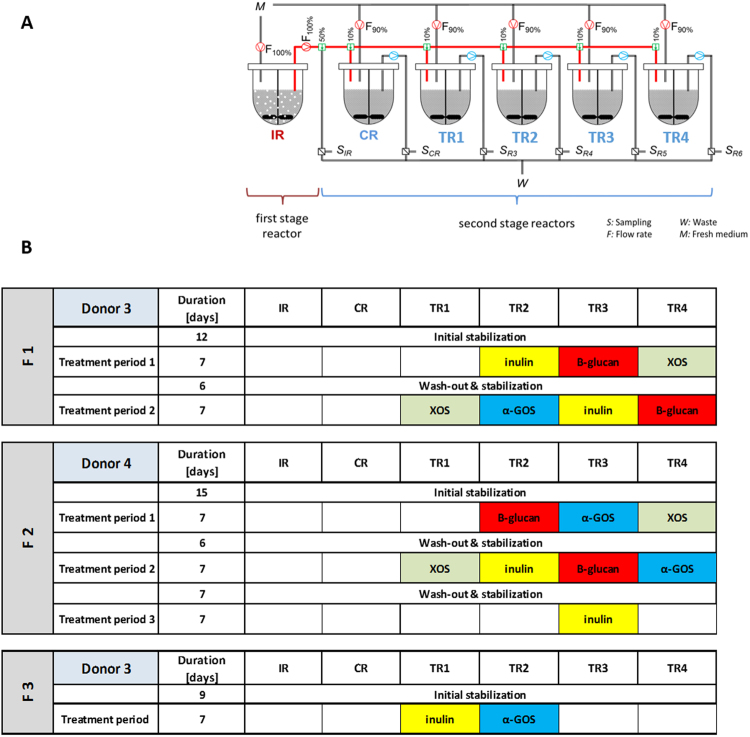
“The typical design of this model consists of first stage inoculum reactor and second stage reactors that consists one control and test reactors [80].”
Yanza, Y. R., Szumacher‐Strabel, M., Lechniak, D., Ślusarczyk, S., Kolodziejski, P. A., Patra, A. K., Váradyová, Z., Lisiak, D., Vazirigohar, M., & Cieślak, A. (2021) · Research Square · doi:10.21203/rs.3.rs-663920/v1
726 高次デジタル画像相関法の開発と応力急変部のひずみ勾配計測(金属の変形と計測技術, エネルギー・環境材料)
阿部, 真., & 西川, 出. (2005) · 学術講演会講演論文集
Nutraceutical and phytopharmaceuticals in immune health
Kam, A. H., & Neergheen, V. S. (2022) · Elsevier eBooks · doi:10.1016/b978-0-12-821232-5.00024-0 · Cited by 1
Gut microbiota GABA regulation by intestinal pH osmolality and microbial consumption
Ye, K., Plüss, S., Moresi, C., Aslani, S., Mujezinovic, D., Cornejo, F. A., Lacroix, C., Arnoldini, M., & Pugin, B. (2026) · Nature Communications · doi:10.21203/rs.3.rs-5358067/v1
Self-citationVohra, A. (2025) · International Journal of Agriculture and Nutrition · doi:10.33545/26646064.2025.v7.i7a.233
Mahayri, T. M., Atallah, E., Mrázek, J., Bovera, F., Piccolo, G., Moniello, G., & Fliegerova, K. O. (2025) · Veterinary Medicine and Science · doi:10.1002/vms3.70650 · Cited by 1
Sabanci, K., Güleç, Ş., & Büyükkileci, A. O. (2025) · International Journal of Biological Macromolecules · doi:10.1016/j.ijbiomac.2025.148510 · Cited by 1
Dietary fiber as bioactive constituent: A long story behind and ahead
Moratilla-Rivera, I., & Pérez‐Jiménez, J. (2025) · Elsevier eBooks · doi:10.1016/b978-0-443-29983-4.00005-3
Woo, J. S., Hwang, S.-H., Yang, S., Lee, K. H., Lee, Y. S., Choi, J. W., Park, J.-S., Jhun, J., Park, S.-H., & Cho, M.-L. (2023) · Figshare · doi:10.6084/m9.figshare.23520041
Palmqvist, H., Ringmark, S., Höglund, K., Pelve, E. A., Lundh, T., & Dicksved, J. (2023) · Figshare · doi:10.6084/m9.figshare.22792815
Palmqvist, H., Ringmark, S., Höglund, K., Pelve, E. A., Lundh, T., & Dicksved, J. (2023) · Figshare · doi:10.6084/m9.figshare.22792818
Fayed, B. (2026) · Discover Food · doi:10.1007/s44187-026-00894-0
Fauszt, P., Szilágyi, E., Mikolás, M., Szilágyi-Tolnai, E., David, P., Kovács-Forgács, I. N., Csernus, B., Gal, F., Stündl, L., Bíró, S., et al. (2026) · Animal Microbiome · doi:10.1186/s42523-026-00575-4
“These taxa are typically involved in fiber degradation, SCFA production, and gut health maintenance [70, 71]; thus, their reduction may indicate impaired fiber fermentation capacity, consistent with previous reports of heat-induced disruptions in microbial fermentation efficiency [7].”
Chauhan, D. S., Mishra, D., Hamid, Sharanagat, V. S., & Jaiswal, A. K. (2026) · Sustainable Food Technology · doi:10.1039/d6fb00132g · Cited by 1
Precision microbiome medicine and therapeutics: the enabling role of in vitro gut models
Huang, Z., Ng, S. C., Sokol, H., & Rolhion, N. (2026) · FEMS Microbiology Reviews · doi:10.1093/femsre/fuag038
“…probiotic/prebiotic-driven community succession, and engraftment dynamics after FMT. Utilizing the PolyFermS platform, researchers have demonstrated that dietary fibers exert distinct prebiotic effects that are significantly influenced by baseline microbiota composition (Poeker et al. 2018 ).”
From Diet to Dysbiosis: The Microbiome’s Relationship to Eosinophilic Esophagitis
Yoo, E., Schneider, Y., Bechtold, M. L., & Uchida, A. M. (2026) · Current Gastroenterology Reports · doi:10.1007/s11894-026-01058-x
“Human microbiotas with Bacteroidaceae-Ruminococcaceae-dominated microbiota increase butyrate by up to 96% with fiber supplementation, while those domi - nated by Prevotellaceae-Ruminococcaceae preferentially generate propionate [42].”
Diet-modulated gut phageome: A novel cross-kingdom framework for understanding host homeostasis
Fei, X., Xu, S., Wang, G., Zhan, X., Mo, Q., & Fu, A. (2026) · Trends in Food Science & Technology · doi:10.1016/j.tifs.2026.106089
Tan, F., Chen, Y., Ma, M., Zheng, L., Ma, A., Jia, Y., Xia, J., Chen, Z., & Li, S. (2026) · Food Bioscience · doi:10.1016/j.fbio.2026.110092
Charumathi, K., Kim, S., & Shin, H. (2026) · Frontiers in Microbiology · doi:10.3389/fmicb.2026.1927734 · Cited by 1
“Poeker et al. (2018) and Nogacka et al. (2020) found significant inter-individual variability in microbial composition, fermentation capacity, gas output, and SCFA generation.”
Chen, Y., Li, Y., Li, X., Xu, X., & Chen, S. (2026) · Frontiers in Cellular and Infection Microbiology · doi:10.3389/fcimb.2026.1962509
Metadata
- Authors
- Poeker, S. A., Geirnaert, A., Berchtold, L., Greppi, A., Krych, L., Steinert, R. E., de Wouters, T., & Lacroix, C.
- Affiliations
- ETH Zurich (CH)
- Corresponding author
- Lacroix, Christophe
- Venue
- Scientific Reports
- Published
- 2018-03-12
- Volume
- 8
- Issue
- 1
- Pages
- 4318-4318
- ISSN
- 2045-2322 (ISSN-L)
- PMC
- PMC5847601
- OpenAlex
- W2790225783
- Semantic Scholar
- d09c1001b59f6fda9bcc970c2772ead656bd5411
- Cited by
- 176
- References
- 67
- Citations by year
- 2026: 11 · 2025: 21 · 2024: 23 · 2023: 19 · 2022: 16 · 2021: 40 · 2020: 28 · 2019: 14 · 2018: 3
- FWCI
- 7.56
- Type
- journal article
- Language
- en
- Open access
- gold
- doi.org
- Licence
- cc-by
- creativecommons.org/licenses/by/4.0 (tdm)
- creativecommons.org/licenses/by/4.0 (vor)
- Locations
- Scientific Reports (publishedVersion, cc-by)
- Europe PMC (PubMed Central) (publishedVersion, cc-by)
- PubMed Central (publishedVersion, cc-by)
- PubMed (publishedVersion)
- Research at the University of Copenhagen (University of Copenhagen) (publishedVersion, cc-by)
- DOAJ (DOAJ: Directory of Open Access Journals) (submittedVersion)
- Repository for Publications and Research Data (ETH Zurich) (submittedVersion, cc-by)
- ETH Zürich Research Collection (cc-by)
- Funders
- National Science Foundation
- Schweizerischer Nationalfonds zur Förderung der Wissenschaftlichen Forschung
- Eidgenössische Technische Hochschule Zürich
- DSM Nutritional Products
- Topics
- Life Sciences › Biochemistry, Genetics and Molecular Biology › Molecular Biology › Gut microbiota and health
- Health Sciences › Nursing › Nutrition and Dietetics › Microbial Metabolites in Food Biotechnology
- Life Sciences › Agricultural and Biological Sciences › Food Science › Probiotics and Fermented Foods
- Keywords
- dietary fiber, prebiotics, gut microbiota modulation, short-chain fatty acids, butyrate, propionate, inulin, fructooligosaccharides, β-glucan, xylooligosaccharides, interindividual variability, colonic microbiota
- MeSH terms
- Gastrointestinal Microbiome, Adult, Bacteroidaceae, Butyrates, Dietary Fiber, Fatty Acids, Fermentation, Humans, Propionates, Ruminococcus, Metabolome, Prebiotics
About these checks
Registry, retraction, Cites and statistics results are computed, not judged, with one exception: a printed reference that no index lists is read once by a model before it counts as a citation error. Claims are extracted by a model and kept only when their quote appears verbatim in the text; each cited source is then checked, with a model’s help, for whether it says what the claim relies on. Those verdicts can be wrong — read the claim’s quote and the cited source before relying on one.
Statistics and arithmetic are recomputed, not judged.
Confidence bands are shown only for fields calibrated on our annotated test set. None is calibrated yet, so no band is shown.
What counts as a claim ›How we measure confidence ›How we check this ›
Are you an author, or do you see a problem with this page? Request a review
Data sources
Bibliographic data: Semantic Scholar, OpenAlex, Crossref.
Contains information from the Semantic Scholar Academic Graph Datasets, made available under the ODC Attribution License (ODC-BY 1.0).
Semantic Scholar’s data is described in: Kinney, R., et al. (2023). The Semantic Scholar Open Data Platform. arXiv:2301.10140.
