

Stress-associated changes in salivary microRNAs can be detected in response to the Trier Social Stress Test: An exploratory study
Open accessThe DOI matches its Crossref record; 64 of the 64 references it cites were found in a registry or an index.
Abstract
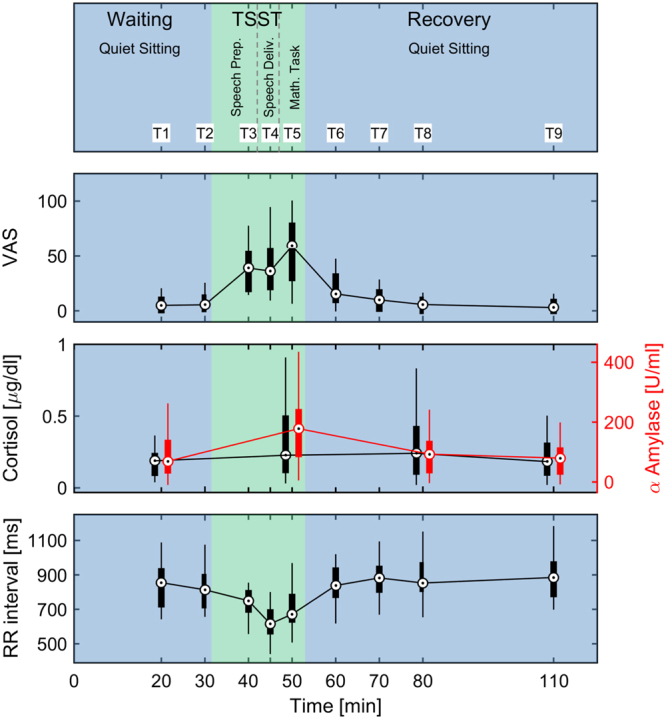
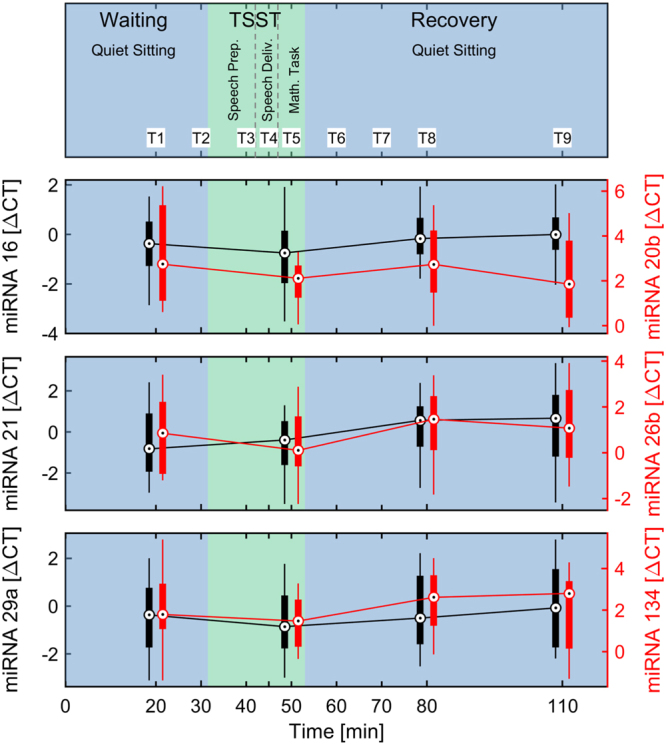
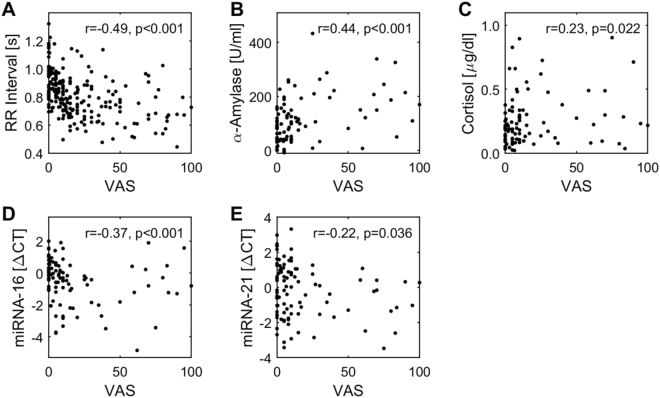
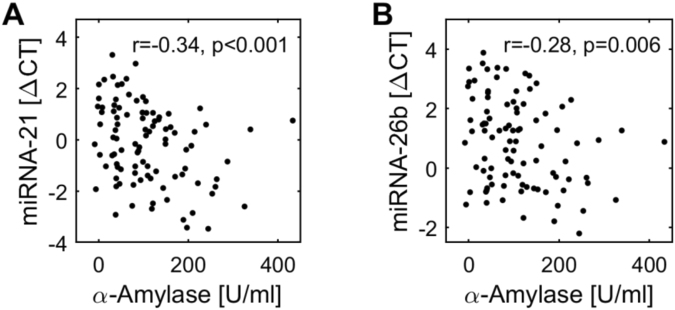
Stress is an important co-factor for the genesis and maintenance of many diseases and is known to have an effect on gene expression via epigenetic regulation. MicroRNAs (miRNAs) appear to function as one of the key factors of this regulation. This is the first study to investigate the response of 11 stress-associated miRNAs in human saliva - as a non-invasive source - in an experimental condition of acute psychological stress, and also their correlation with established psychological (subjective stress perception), physiological (heart rate and heart rate variability) and biochemical stress parameters (salivary cortisol and alpha-amylase). 24 healthy participants between 20 and 35 years of age were investigated, using the Trier Social Stress Test (TSST) to induce acute psychological stress. Stress-associated changes were significant for miR-20b, -21 and 26b, and changes in miR-16 and -134 were close to significance, recommending further research on these miRNAs in the context of stress reactions. Significant correlations with alpha-amylase suggest their integration in sympathetic stress regulation processes. Additionally, our results demonstrate the TSST as a reliable tool for studying salivary miRNAs as non-invasive indicators of epigenetic processes in acute psychological stress reactions.
Overview
The claims and statistics of this paper haven’t been checked yet.
Free: it reads the open-access text and checks the first 5 claims that cite a source we can check. Create a free account to check every claim.
Integrity signals
Registry
Cites
Statistics
Figures
Verification
Claims the paper makes
The claims and statistics of this paper haven’t been checked yet.
Free: it reads the open-access text and checks the first 5 claims that cite a source we can check. Create a free account to check every claim.
Claims other papers make about this one
Each is checked against this paper’s own text: does it say what the citing paper says it does?
The cited source says what the claim attributes to it.
In the citing paper
“Concentrations of miR 21 correlated positively with experienced stress over the course of the challenge”
From The applied implications of epigenetics in anxiety, affective and stress-related disorders - A review and synthesis on psychosocial stress, psychotherapy and prevention (2020) · cites this paper as Wiegand et al., 2018
The cited source says what the claim attributes to it.
In the citing paper
“a recent investigation of stress-associated miRNAs in saliva found significant changes in miR 20b, miR 21 and miR 26b before, during and after a psychosocial stress challenge (Trier Social Stress Test) in 24 healthy participants (Wiegand et al., 2018).”
From The applied implications of epigenetics in anxiety, affective and stress-related disorders - A review and synthesis on psychosocial stress, psychotherapy and prevention (2020) · cites this paper as Wiegand et al., 2018
The cited source says what the claim attributes to it.
In the citing paper
“while miR 21 and miR 26b concentrations correlated positively with the secreted amount of the salivary stress marker alpha-amylase”
From The applied implications of epigenetics in anxiety, affective and stress-related disorders - A review and synthesis on psychosocial stress, psychotherapy and prevention (2020) · cites this paper as Wiegand et al., 2018
The cited source says what the claim attributes to it.
In the citing paper
“suggesting an integration of miRNA-related processes into sympathetic stress regulation and offering a non-invasive way to determine a dynamic acute stress indicator (Wiegand et al., 2018).”
From The applied implications of epigenetics in anxiety, affective and stress-related disorders - A review and synthesis on psychosocial stress, psychotherapy and prevention (2020) · cites this paper as Wiegand et al., 2018
The cited source says what the claim attributes to it.
In the citing paper
“miR 21 correlated with experienced stress”
From The applied implications of epigenetics in anxiety, affective and stress-related disorders - A review and synthesis on psychosocial stress, psychotherapy and prevention (2020) · cites this paper as Wiegand et al., 2018
Self-check
Percentages, sums and reported differences re-computed from the paper’s own numbers.
The self-check needs the paper’s full text.
Citations
Cites
Statistical power analysis for the behavioral sciences
(1990) · Computers, Environment and Urban Systems · doi:10.1016/0198-9715(90)90050-4 · Cited by 65,269
Bartel (2004) · doi:10.1016/s0092-8674(04)00045-5 · Cited by 34,714
MicroRNAs: Target Recognition and Regulatory Functions
Bartel, D. P. (2009) · Cell · doi:10.1016/j.cell.2009.01.002 · Cited by 20,068
Heart Rate Variability: Standards of Measurement, Physiological Interpretation, and Clinical Use
Electrophysiology, T. F. O. T. E. S. O. C. T. N. A. (1996) · Circulation · doi:10.1161/01.cir.93.5.1043 · Cited by 17,159
Heart rate variability: Standards of measurement, physiological interpretation, and clinical use
Malik, M., Bigger, J. T., Camm, A. J., Kleiger, R. E., Malliani, A., Moss, A. J., & Schwartz, P. J. (1996) · European Heart Journal · doi:10.1093/oxfordjournals.eurheartj.a014868 · Cited by 15,289
Practical Nonparametric Statistics
Groggel, D. J. (2000) · Technometrics · doi:10.1080/00401706.2000.10486067 · Cited by 11,041
Kirschbaum, C., Pirke, K.-M., & Hellhammer, D. H. (2008) · Neuropsychobiology · doi:10.1159/000119004 · Cited by 6,093
Psychological Stress and Disease
Cohen, S., Janicki-Deverts, D., & Miller, G. E. (2007) · JAMA · doi:10.1001/jama.298.14.1685 · Cited by 3,168 · cited 3×
“(2) Our explicit selection of 11miRNAs was based on current findings about stress-associated miRNAs in general, without available knowledge about their presence in human saliva.”
BackgroundResultSalivary cortisol as a biomarker in stress research
Hellhammer, D. H., Wüst, S., & Kudielka, B. M. (2009) · Psychoneuroendocrinology · doi:10.1016/j.psyneuen.2008.10.026 · Cited by 1,925
Kirschbaum, C., Kudielka, B. M., Gaab, J., Schommer, N. C., & Hellhammer, D. H. (1999) · Psychosomatic Medicine · doi:10.1097/00006842-199903000-00006 · Cited by 1,890
Research works printed but not linked: 1
- 52. Birkett, M. A. The Trier Social Stress Test protocol for inducing psychological stress. J Vis Exp, https://doi.org/10.3791/3238 (2011). · DOI · Paper page
Cited by
Narvaez Linares, N. F., Charron, V., Ouimet, A. J., Labelle, P. R., & Plamondon, H. (2020) · Neurobiology of Stress · doi:10.1016/j.ynstr.2020.100235 · Cited by 147
Pan, T., Jia, P., Chen, N., Fang, Y., Liang, Y., Guo, M., & Ding, X. (2019) · Theranostics · doi:10.7150/thno.29832 · Cited by 190
“These increases in miR-21 expression may be achieved by accurate blocking of the lower extremity arteries in mice [41-43].”
Daiber, A., Kröller‐Schön, S., Frenis, K., Oelze, M., Kalinovic, S., Vujacic‐Mirski, K., Kuntic, M., Bayo Jimenez, M. T., Helmstädter, J., Steven, S., et al. (2019) · BioFactors · doi:10.1002/biof.1506 · Cited by 162
“, miR-20b, −21 and -26b) with established psychological (subjective stress perception), physiological (heart rate and heart rate variability), and biochemical stress parameters (salivary cortisol and alpha-amylase) in response to acute psychological stress [76].”
BackgroundSchiele, M. A., Gottschalk, M. G., & Domschke, K. (2020) · Clinical Psychology Review · doi:10.1016/j.cpr.2020.101830 · Cited by 156
Frontal lobe real-time EEG analysis using machine learning techniques for mental stress detection
AlShorman, O., Masadeh, M., Heyat, M. B. B., Akhtar, F., Almahasneh, H. S., Ashraf, G. M., & Alexiou, A. T. (2022) · Journal of Integrative Neuroscience · doi:10.31083/j.jin2101020 · Cited by 153
“Various techniques have been proposed to evaluate stress based on biological and biochemical effects [22].”
BackgroundExploiting Circulating MicroRNAs as Biomarkers in Psychiatric Disorders
Roy, B., Yoshino, Y., Allen, L., Prall, K., Schell, G., & Dwivedi, Y. (2020) · Molecular Diagnosis & Therapy · doi:10.1007/s40291-020-00464-9 · Cited by 95
Lyons, C. E., Razzoli, M., & Bartolomucci, A. (2023) · Neuroscience & Biobehavioral Reviews · doi:10.1016/j.neubiorev.2023.105359 · Cited by 81
A New Insight into the Roles of MiRNAs in Metabolic Syndrome
Huang, Y., Yan, Y., Xv, W., Ge, Q., Li, C., Zou, H., & Li, Y. (2018) · BioMed Research International · doi:10.1155/2018/7372636 · Cited by 60
“A study has identified that miR-20b, -21, -26b -16, and -134 in saliva were closely associated with stress when treated with Trier Social Stress Test to induce acute psychological stress [112].”
BackgroundAssociation of acute psychosocial stress with oxidative stress: Evidence from serum analysis
Kim, E., Zhao, Z., Rzasa, J. R., Glassman, M., Bentley, W. E., Chen, S., Kelly, D. L., & Payne, G. F. (2021) · Redox Biology · doi:10.1016/j.redox.2021.102138 · Cited by 52
Bozack, A. K., Colicino, E., Rodosthenous, R. S., Bloomquist, T. R., Baccarelli, A., Wright, R. O., Wright, R. J., & Lee, A. (2020) · Epigenetics · doi:10.1080/15592294.2020.1805677 · Cited by 42
Sessa, F., Salerno, M., Cipolloni, L., Bertozzi, G., Messina, G., Mizio, G. D., Asmundo, A., & Pomara, C. (2020) · Aging · doi:10.18632/aging.103512 · Cited by 36
“Furthermore, this miRNA is involved in mood control: it has been described dysregulated in several stress situations [41] and bipolar disorders [42].”
BackgroundSpellenberg, C., Heusser, P., Büssing, A., Savelsbergh, A., & Cysarz, D. (2020) · Scientific Reports · doi:10.1038/s41598-020-72034-2 · Cited by 26
Self-citationPenalized models for analysis of multiple mediators
Schaid, D. J., & Sinnwell, J. P. (2020) · Genetic Epidemiology · doi:10.1002/gepi.22296 · Cited by 25
“This is fascinating because changes in saliva miR‐26b has been found to be associated with stress (Wiegand et al., 2018), with the same TSST stress test used by Houtepen et al. (2016).”
MethodLuedemann, C., Reinersmann, J.-L., Klinger, C., Degener, S., Dreger, N. M., Roth, S. L., Kaufmann, M., & Savelsbergh, A. (2022) · Biomolecules · doi:10.3390/biom12101366 · Cited by 19
“[32] freezes the saliva specimens at −80 ◦C after collection before the first centrifugation and purification steps of”
MethodSelf-citationThe acute effect of psychosocial stress on the level of oxidative stress in children
Janšáková, K., Belica, I., Rajčániová, E., Rajčáni, J., Kyselicová, K., Celušáková, H., Laznibatová, J., & Ostatníková, D. (2021) · International Journal of Psychophysiology · doi:10.1016/j.ijpsycho.2021.01.007 · Cited by 15
The Association of Salivary Serotonin With Mood and Cardio-Autonomic Function: A Preliminary Report
Karbownik, M. S., & Hicks, S. D. (2022) · Frontiers in Psychiatry · doi:10.3389/fpsyt.2022.788153 · Cited by 13
Salivary microRNA-126 and 135a: a potentially non-invasive diagnostic biomarkers of type- 2 diabetes
Monfared, Y. K., Mirzaii-Dizgah, M.-R., Khodabandehloo, E., Sarookhani, M. R., Hashemipour, S., & Mirzaii‐Dizgah, I. (2021) · Journal of Diabetes & Metabolic Disorders · doi:10.1007/s40200-021-00914-z · Cited by 12
“Zhang et al. presented that change in the expression level of miRNAs may be a potential underlying mechanism for development pleomorphic adenomas benign tumors [20], furthermore, Wiegand et al. detected that salivary microRNAs (miR-20b, −21 and 26b, miR-16, and − 134) change in response to the Trier Social Stress Test…”
BackgroundSaliva microRNA Profile in Children with and without Severe SARS-CoV-2 Infection
Hicks, S. D., Zhu, D., Sullivan, R. E., Kannikeswaran, N., Meert, K. L., Chen, W., Suresh, S., & Sethuraman, U. (2023) · International Journal of Molecular Sciences · doi:10.3390/ijms24098175 · Cited by 12
Suppression of Escherichia coli Growth Dynamics via RNAs Secreted by Competing Bacteria
Markelova, N., Glazunova, O. A., Alikina, О., Panyukov, V. V., Shavkunov, K. S., & Ozoline, O. N. (2021) · Frontiers in Molecular Biosciences · doi:10.3389/fmolb.2021.609979 · Cited by 11
“It is well-known that eukaryotic microRNAs are abundant in the blood, urine and other specimens (Beatty et al., 2014; Fritz et al., 2016; Wiegand et al., 2018; Yau et al., 2019), where they exhibit high stability (Mall et al.”
BackgroundCollins, N. J., Phillips, N. L. H., Reich, L. N., Milbocker, K. A., & Roth, T. L. (2020) · Adversity and Resilience Science · doi:10.1007/s42844-020-00015-5 · Cited by 10
Tooth Decay: Genetic and Epigenetic Insights Driving the Development of Anti-Caries Vaccines
Bouaita, I., Peixoto, A., Mascarenhas, P., & Manso, A. C. (2025) · Genes · doi:10.3390/genes16080952 · Cited by 9
“This highlights a possible link between early life stress, epigenetic reprogramming of non-coding RNAs, and an increased risk of dental caries [47].”
Jurkiewicz, M., Mueller‐Alcazar, A., Moser, D., Jayatilaka, I., Mikhailik, A., Ferri, J. M., Fogelman, N., & Canli, T. (2021) · BMC Research Notes · doi:10.1186/s13104-021-05635-3 · Cited by 8
“A previous study reported TSST-associated changes in salivary levels of miR-20b, -21 and 26b [9], but their expression levels in PBMCs and their association with gene expression remain unknown.”
BackgroundYoshida, Y., Yajima, Y., Kawakami, K., Nakamura, S.-I., Tsukahara, T., Oishi, K., & Toyoda, A. (2022) · International Journal of Molecular Sciences · doi:10.3390/ijms232214479 · Cited by 9
“In addition, salivary miRNA biomarkers in humans subjected to acute psychological stress using the Trier Social Stress Test were investigated [26].”
MethodIntracellular Compartmentalization: A Key Determinant of MicroRNA Functions
Nalavade, R., & Singh, M. (2023) · MicroRNA · doi:10.2174/2211536612666230330184006 · Cited by 7
Holliday, E. D., Bagasra, A. B., Bagasra, O., & Pandey, P. (2025) · Frontiers in Psychiatry · doi:10.3389/fpsyt.2025.1507064 · Cited by 6
Schütz, F., Longo, L., Keingeski, M. B., Filippi‐Chiela, E. C., Cruz, C. U., & Álvares‐da‐Silva, M. R. (2024) · World Journal of Hepatology · doi:10.4254/wjh.v16.i12.1468 · Cited by 6
Endogenous glucocorticoids and human immunity: Time to revisit old dogmas
Bhatt, B., & Franco, L. M. (2025) · Seminars in Immunology · doi:10.1016/j.smim.2025.101949 · Cited by 5
Zhang, L., Grip, A., Hjelmqvist, D. T., Benedict, C., Brandão, L. E. M., & Cedernaes, J. (2025) · Journal of Cellular and Molecular Medicine · doi:10.1111/jcmm.70523 · Cited by 5
“A prior study found that several miRNAs can be induced by psychological stress in humans [10].”
Korkmaz, N. D., Elibol, B., Durmus, Z. B., Ozdemir, A., Akbaş, F., Gülöksüz, S., & Şahbaz, Ç. (2025) · Neuroscience · doi:10.1016/j.neuroscience.2025.07.001 · Cited by 3
“(Wiegand et al., 2018).”
NOX2 as a Biomarker of Academic Performance: Evidence from University Students during Examination
Nocella, C., D’Amico, A., Cangemi, R., FOSSATI, C., Pigozzi, F., Mannacio, E., Cammisotto, V., Bartimoccia, S., Castellani, V., Sarto, G., et al. (2024) · Antioxidants · doi:10.3390/antiox13050551 · Cited by 3
“In an experimental condition of acute psychological stress, such as the “Trier Social Stress Test” (TSST), Wiegand et al. found that, among stress-associated changes, the expression of salivary microRNA (miRNA) involved in the cellular response managing oxidative stress was higher [37].”
BackgroundManenti, I., Viola, I., Ala, U., Cornale, P., Macchi, E., Toschi, P., Martignani, E., Baratta, M., & Miretti, S. (2023) · Animals · doi:10.3390/ani13203273 · Cited by 3
“Our results are in line with a previous study by Wiegand and colleagues that demonstrated a significant difference in expression for miR-21 and changes close to the significance level for miR-16 in humans in response to acute psychological social stress [23].”
MethodResultManenti, I., Viola, I., Canto, F., Accornero, P., Toschi, P., Versace, C., Macchi, E., Martignani, E., Abecia, J. A., & Miretti, S. (2025) · Journal of Animal Science · doi:10.1093/jas/skaf123 · Cited by 2
“…miRNAs (Table 1) among those well detectable in saliva (Patel et al., 2011) and/or linked to stress-response and animal welfare (Jin et al., 2016; Wiegand et al., 2018; Lee et al., 2019; Guelfi et al., 2022), were selected and were evaluated based on a representative number of saliva and plasma…”
Mirnas as Biomarkers of Musculoskeletal Pain in Long-Distance Runners: The Mimus Study Protocol
Tumolo, M. R., Grassi, T., Leo, C. G., Mincarone, P., Bagordo, F., Bodini, A., Scoditti, E., Panìco, A., Donno, A. D., Matteis, E. D., et al. (2023) · Epigenomics · doi:10.2217/epi-2023-0088 · Cited by 3
Case study on cryptorchidism in a horse from a medico-legal and animal welfare viewpoint
Landi, A., Previti, A., Biondi, V., Roccaro, M., Pugliese, M., Peli, A., & Passantino, A. (2023) · Lirias · doi:10.4454/db.v9i1 · Cited by 2
Viani, A., Orusa, T., Divari, S., Lovisolo, S., Zanet, S., Borgogno-Mondino, E., Orusa, R., & Bollo, E. (2023) · Institutional Research Information System University of Turin (University of Turin) · Cited by 2
Linares, N. F. N., Charron, V., Ouimet, A. J., Labelle, P., & Plamondon, H. (2020) · PsyArXiv (OSF Preprints) · doi:10.31234/osf.io/9wtre · Cited by 2
Exosomes and microRNA: A New Form of Remote and Bidirectional Neuroimmunomodulation?
Straub, R. H. (2025) · NeuroImmunoModulation · doi:10.1159/000547243 · Cited by 2
Proposed effect of epigenetic alterations on stress-related disorders
Yılmaz, O. (2022) · Elsevier eBooks · doi:10.1016/b978-0-12-823039-8.00010-1 · Cited by 1
Jurkiewicz, M., Mueller‐Alcazar, A., Moser, D., Jayatilaka, I., Mikhailik, A., Ferri, J. M., Fogelman, N., & Canli, T. (2021) · Research Square · doi:10.21203/rs.3.rs-322294/v1 · Cited by 1
Chronic stress induces cellular senescence: implications for aging and neurodegenerative disorders
Lyons, C. E. (2022) · University of Minnesota Digital Conservancy (University of Minnesota) · Cited by 1
MicroRNAs as Potential Biomarkers of Mental Disorders: Diagnostic and Prognostic Implications
Tereshchenko, S. Y. (2024) · Psikhiatriya · doi:10.30629/2618-6667-2024-22-1-68-77
Tumolo, M. R., Bodini, A., Bagordo, F., Leo, C. G., Mincarone, P., Matteis, E. D., Sabina, S., Grassi, T., & Scoditti, E. (2024) · Biomedicines · doi:10.3390/biomedicines12112494 · Cited by 1
Diversifying Substrates and Reaction Conditions for Polymerase Strand Recycling
Li, Y., Gundlach, A., Ellington, A. D., & Lucks, J. B. (2025) · ACS Synthetic Biology · doi:10.1021/acssynbio.5c00207
Collins, N. J. (2024) · Library, Museums and Press - UDSpace (University of Delaware) · doi:10.58088/yw8d-ey61
Heart rate variability-driven innovations: new developments in stress research
Emese, R. (2026) · SZTE Repository of Dissertations (University of Szeged)
Sterzo, M. L., Moncada, M., Boffa, F., Palazzese, L., Iuso, D., Czernik, M., & Loi, P. (2023) · UniTERAMO Research Catalog (University of Teramo)
Ferrari, F., Auletta, L., Giudice, C., Grieco, V., Gariboldi, E. M., Ubiali, A., & Romussi, S. (2023) · Archivio Istituzionale della Ricerca (Universita Degli Studi Di Milano)
Salamanca, G., Tagliavia, C., J-M., G., Grandis, A., & Bombardi, C. (2023) · Archivio istituzionale della ricerca (Alma Mater Studiorum Università di Bologna)
Proceedings of the 5th EVCBMAW
(2023) · OpenAgrar
Salivary miRNA and microbial profiles reflect different responses to psychosocial stressPreprint
Garbarino, S., Magnavita, N., Pardini, B., Tarallo, S., Cipriani, F., Camandona, A., Ferrero, G., Scoditti, E., & Naccarati, A. (2026) · bioRxiv (Cold Spring Harbor Laboratory) · doi:10.64898/2026.03.20.713173
Ravenda, S., Gerra, M. C., Barbetti, M., Salaris, A., Provenzano, L., Porciello, G., Sgoifo, A., Dallabona, C., & Carnevali, L. (2026) · Psychoneuroendocrinology · doi:10.1016/j.psyneuen.2026.107859
Altered salivary miRNA and microbial profiles reflect different responses to psychosocial stressPreprint
Naccarati, A., Garbarino, S., Magnavita, N., Pardini, B., Tarallo, S., Cipriani, F., Camandona, A., Ferrero, G., & Scoditti, E. (2026) · Research Square · doi:10.21203/rs.3.rs-9280394/v1
Molecular mechanisms of stress-induced changes in metabolism and neuroregulation
Karabanov, S. Y., Fedulova, L. R., Vasilevskaya, E., & Kibitkina, A. A. (2026) · Genes and Cells · doi:10.17816/gc699058
Purcaro, C., Filippo, E. S. D., Vezzoli, A., Bondi, D., Giardini, G., Fulle, S., Verratti, V., & Mrakic‐Sposta, S. (2026) · Physiological Reports · doi:10.14814/phy2.70966
“…as physical exercise, hypoxia, inflammation, and aging (Horak et al., 2018); in particular, salivary miR-21 can chronically increase due to inflammatory status, as oral lichen planus (Di Stasio et al., 2025), and acutely increase due to psychological stress reactions (Wiegand et al., 2018).”
Reho, P., Jackson, G. L., Wang, F., Flores, N. M., Henneman, L., Mercer, D. G., Schwartz, B. S., Baccarelli, A., Wu, H., & (5172998), J. A. C. (2026) · Environmental Research · doi:10.1016/j.envres.2026.124856
Reinsberg, N., Borlepawar, A., Hajieva, P., & Mueller‐Alcazar, A. (2026) · Comprehensive Psychoneuroendocrinology · doi:10.1016/j.cpnec.2026.100364
“All four studies measured miRNA expression at multiple times (arrival to 3 hours post stress induction) within one day [59,63,66,67].”
InfluentialAssociation between miR-21 polymorphism and the risk of primary dental caries in preschool children
Tian, J., Bai, S., Li, S., & Yang, A. (2026) · Odontology · doi:10.1007/s10266-026-01544-8
Schütz, F. (2026) · Lume (Universidade Federal do Rio Grande do Sul)
A non-surgical approach to prolonged constipation in an Indian python (Python molurus)
Ottino, C., Scandone, L., Serpieri, M., Bonaffini, G., Prandi, I., Quaranta, G., & Mauthe von Degerfeld, M. (2023) · Institutional Research Information System University of Turin (University of Turin)
Abdominal surgery under epidural anaesthesia in calves
Giusto, G., Bellino, C., Cerullo, A., Ceppa, A., & Gandini, M. (2023) · Institutional Research Information System University of Turin (University of Turin)
Manenti, I. (n.d.) · Institutional Research Information System University of Turin (University of Turin)
High +Gz Exposure Alters Urinary Extracellular Vesicle miRNAs in HumansPreprint
Mizohata, Y., Akiyama, M., Takei, F., Inuzuka, E., Konishi, T., & Ohrui, N. (2026) · bioRxiv (Cold Spring Harbor Laboratory) · doi:10.64898/2026.11.11.766004
Metadata
- Authors
- Wiegand, C., Heusser, P., Klinger, C., Cysarz, D., Büssing, A., Ostermann, T., & Savelsbergh, A.
- Affiliations
- Witten/Herdecke University (DE)
- Corresponding author
- Wiegand, Conrad
- Venue
- Scientific Reports
- Published
- 2018-05-08
- Volume
- 8
- Issue
- 1
- Pages
- 7112-7112
- ISSN
- 2045-2322 (ISSN-L)
- PMC
- PMC5940676
- OpenAlex
- W2806081118
- Semantic Scholar
- 8ee37961ca0ace2f79dd0cf52696073c21e5666a
- Cited by
- 46
- References
- 62
- Citations by year
- 2026: 6 · 2025: 8 · 2024: 4 · 2023: 5 · 2022: 5 · 2021: 5 · 2020: 10 · 2019: 2 · 2018: 1
- FWCI
- 2.58
- Type
- journal article
- Language
- en
- Open access
- gold
- doi.org
- Licence
- cc-by
- creativecommons.org/licenses/by/4.0 (tdm)
- creativecommons.org/licenses/by/4.0 (vor)
- Locations
- Scientific Reports (publishedVersion, cc-by)
- Europe PMC (PubMed Central) (publishedVersion, other-oa)
- PubMed Central (publishedVersion, cc-by)
- PubMed (publishedVersion)
- DOAJ (DOAJ: Directory of Open Access Journals) (submittedVersion, cc-by-sa)
- Funders
- NIH Clinical Center
- Topics
- Life Sciences › Neuroscience › Behavioral Neuroscience › Stress Responses and Cortisol
- Life Sciences › Biochemistry, Genetics and Molecular Biology › Cancer Research › MicroRNA in disease regulation
- Health Sciences › Medicine › Cardiology and Cardiovascular Medicine › Heart Rate Variability and Autonomic Control
- Keywords
- salivary microRNAs, acute psychological stress, Trier Social Stress Test, epigenetic regulation, miR-20b, miR-21, miR-26b, miR-16, miR-134, salivary cortisol, salivary amylase, heart rate variability, stress biomarkers, non-invasive biomarkers
- MeSH terms
- Adult, Anxiety, Exercise Test, Female, Heart Rate, Humans, Male, Saliva, Stress, Psychological, MicroRNAs, Young Adult
About these checks
Registry, retraction, Cites and statistics results are computed, not judged, with one exception: a printed reference that no index lists is read once by a model before it counts as a citation error. Claims are extracted by a model and kept only when their quote appears verbatim in the text; each cited source is then checked, with a model’s help, for whether it says what the claim relies on. Those verdicts can be wrong — read the claim’s quote and the cited source before relying on one.
Statistics and arithmetic are recomputed, not judged.
Confidence bands are shown only for fields calibrated on our annotated test set. None is calibrated yet, so no band is shown.
What counts as a claim ›How we measure confidence ›How we check this ›
Are you an author, or do you see a problem with this page? Request a review
Data sources
Bibliographic data: Semantic Scholar, OpenAlex, Crossref.
Contains information from the Semantic Scholar Academic Graph Datasets, made available under the ODC Attribution License (ODC-BY 1.0).
Semantic Scholar’s data is described in: Kinney, R., et al. (2023). The Semantic Scholar Open Data Platform. arXiv:2301.10140.
