

Terrein is an inhibitor of quorum sensing and c-di-GMP in Pseudomonas aeruginosa: a connection between quorum sensing and c-di-GMP
Open accessThe DOI matches its Crossref record; 59 of the 60 references it cites were found in a registry or an index.
Abstract
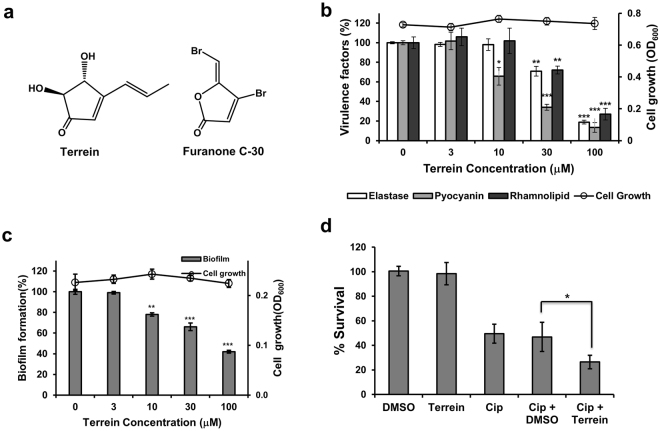
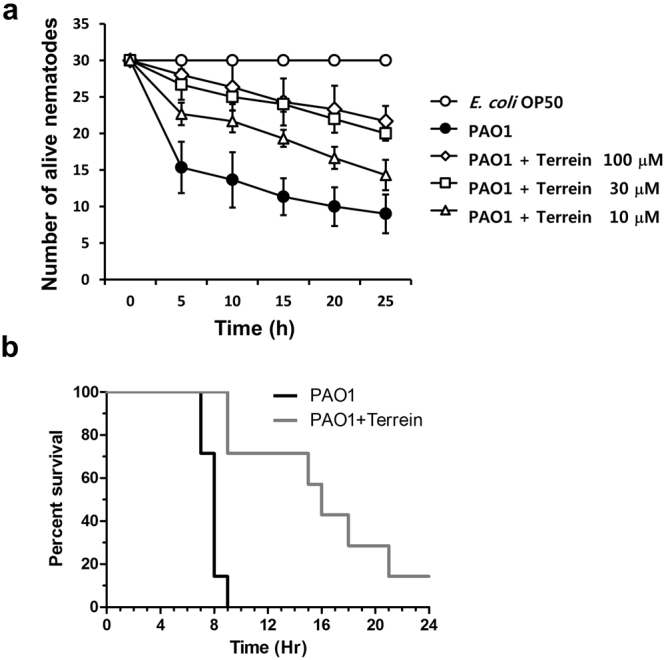
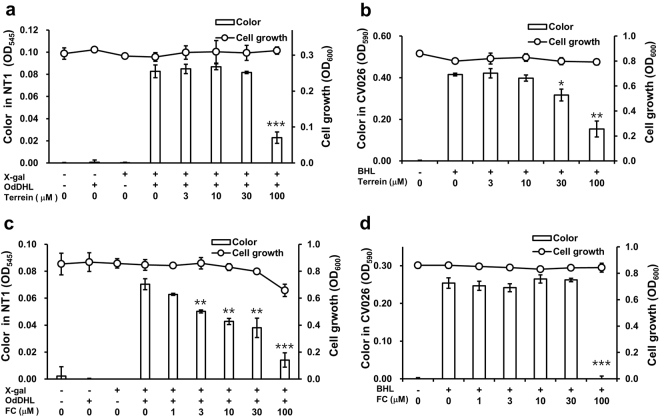
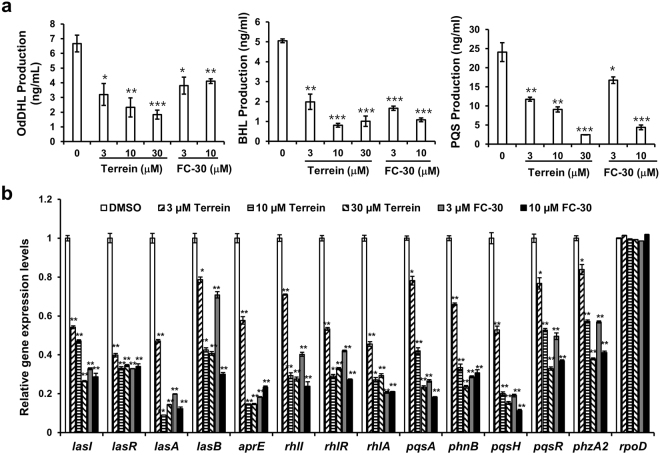
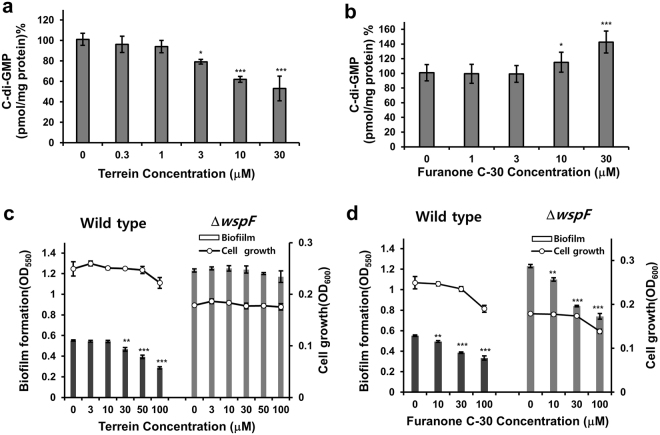
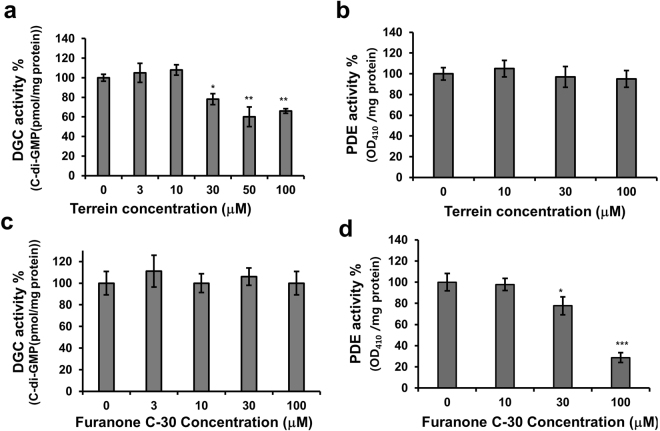
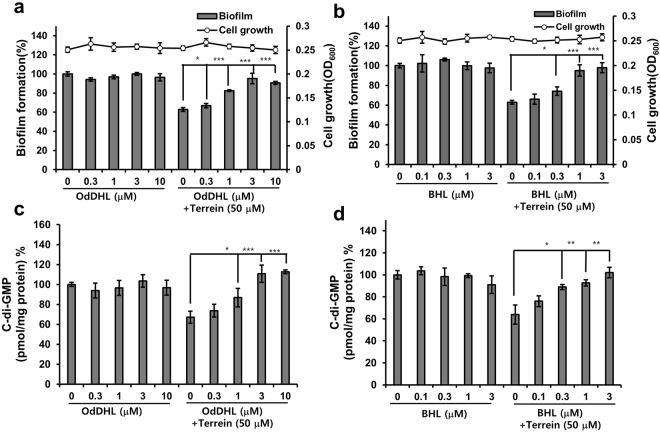
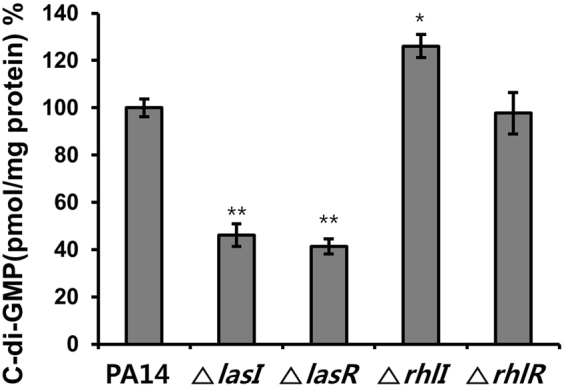
To address the drug-resistance of bacterial pathogens without imposing a selective survival pressure, virulence and biofilms are highly attractive targets. Here, we show that terrein, which was isolated from Aspergillus terreus, reduced virulence factors (elastase, pyocyanin, and rhamnolipid) and biofilm formation via antagonizing quorum sensing (QS) receptors without affecting Pseudomonas aeruginosa cell growth. Additionally, the effects of terrein on the production of QS signaling molecules and expression of QS-related genes were verified. Interestingly, terrein also reduced intracellular 3,5-cyclic diguanylic acid (c-di-GMP) levels by decreasing the activity of a diguanylate cyclase (DGC). Importantly, the inhibition of c-di-GMP levels by terrein was reversed by exogenous QS ligands, suggesting a regulation of c-di-GMP levels by QS; this regulation was confirmed using P. aeruginosa QS mutants. This is the first report to demonstrate a connection between QS signaling and c-di-GMP metabolism in P. aeruginosa, and terrein was identified as the first dual inhibitor of QS and c-di-GMP signaling.
Overview
The claims and statistics of this paper haven’t been checked yet.
Free: it reads the open-access text and checks the first 5 claims that cite a source we can check. Create a free account to check every claim.
Integrity signals
Registry
Cites
Statistics
Figures
Verification
Claims the paper makes
The claims and statistics of this paper haven’t been checked yet.
Free: it reads the open-access text and checks the first 5 claims that cite a source we can check. Create a free account to check every claim.
Claims other papers make about this one
Each is checked against this paper’s own text: does it say what the citing paper says it does?
In the citing paper
“other fungal metabolites can impact bacterial quorum sensing and c-diGMP signaling (584)”
From Aspergillus fumigatus and Aspergillosis in 2019 (2019) · cites this paper as [584]
Self-check
Percentages, sums and reported differences re-computed from the paper’s own numbers.
The self-check needs the paper’s full text.
Citations
Cites
1 retracted
Ryan, R. P., Fouhy, Y., Lucey, J. F., Crossman, L. C., Spiro, S., He, Y.-W., Zhang, L.-H., Heeb, S., Cámara, M., Williams, P., et al. (2006) · Proceedings of the National Academy of Sciences · doi:10.1073/pnas.0600345103 · Cited by 507
RetractedBad Bugs, No Drugs: No ESKAPE! An Update from the Infectious Diseases Society of America
Boucher, H. W., Talbot, G. H., Bradley, J. S., Edwards, J. E., Gilbert, D., Rice, L. B., Scheld, M., Spellberg, B., & Bartlett, J. (2009) · Clinical Infectious Diseases · doi:10.1086/595011 · Cited by 4,958
QUORUM SENSING: Cell-to-Cell Communication in Bacteria
Waters, C. M., & Bassler, B. L. (2005) · Annual Review of Cell and Developmental Biology · doi:10.1146/annurev.cellbio.21.012704.131001 · Cited by 3,979
Understanding biofilm resistance to antibacterial agents
Davies, D. (2003) · Nature Reviews Drug Discovery · doi:10.1038/nrd1008 · Cited by 2,781
Quorum sensing signal-response systems in Gram-negative bacteria
Papenfort, K., & Bassler, B. L. (2016) · Nature Reviews Microbiology · doi:10.1038/nrmicro.2016.89 · Cited by 2,256
Bacterial Quorum Sensing: Its Role in Virulence and Possibilities for Its Control
Rutherford, S. T., & Bassler, B. L. (2012) · Cold Spring Harbor Perspectives in Medicine · doi:10.1101/cshperspect.a012427 · Cited by 2,129
McClean, K. H., Winson, M. K., Fish, L., Taylor, A., Chhabra, S. R., Camara, M., Daykin, M., Lamb, J. H., Swift, S., Bycroft, B. W., et al. (1997) · Microbiology · doi:10.1099/00221287-143-12-3703 · Cited by 1,744
Cyclic di-GMP: the First 25 Years of a Universal Bacterial Second Messenger
Römling, U., Galperin, M. Y., & Gomelsky, M. (2013) · Microbiology and Molecular Biology Reviews · doi:10.1128/mmbr.00043-12 · Cited by 1,700
Bacterial Quorum-Sensing Network Architectures
Ng, W.-L., & Bassler, B. L. (2009) · Annual Review of Genetics · doi:10.1146/annurev-genet-102108-134304 · Cited by 1,679
Attenuation of Pseudomonas aeruginosa virulence by quorum sensing inhibitors
Hentzer, M. (2003) · The EMBO Journal · doi:10.1093/emboj/cdg366 · Cited by 1,422
Cited by
Aspergillus fumigatus and Aspergillosis in 2019
Latgé, J.-P., & Chamilos, G. (2019) · Clinical Microbiology Reviews · doi:10.1128/cmr.00140-18 · Cited by 1,400
Pseudomonas aeruginosa Biofilms
Thi, M. T. T., Wibowo, D., & Rehm, B. H. A. (2020) · International Journal of Molecular Sciences · doi:10.3390/ijms21228671 · Cited by 911
Fleitas Martínez, O., Cardoso, M. H., Ribeiro, S. M., & Franco, O. L. (2019) · Frontiers in Cellular and Infection Microbiology · doi:10.3389/fcimb.2019.00074 · Cited by 304
“Anti-biofilm P. aeruginosa PAO1 • Reduced elastase, pyocyanin, rhamnolipid, and biofilm production • Attenuated in vivo virulence of P. aeruginosa PAO1 toward C. elegans and mice Kim et al., 2018”
BackgroundPseudomonas aeruginosa biofilms and their partners in crime
Cendra, M. D. M., & Torrents, E. (2021) · Biotechnology Advances · doi:10.1016/j.biotechadv.2021.107734 · Cited by 176
Multiple Roles of c-di-GMP Signaling in Bacterial Pathogenesis
Valentini, M., & Filloux, A. (2019) · Annual Review of Microbiology · doi:10.1146/annurev-micro-020518-115555 · Cited by 170
Singh, A., Amod, A., Pandey, P., Bose, P., Pingali, M. S., Shivalkar, S., Varadwaj, P. K., Sahoo, A. K., & Samanta, S. K. (2022) · Biomedical Materials · doi:10.1088/1748-605x/ac50f6 · Cited by 201
“Bacterial gen-eexpression must becoordinated to form biofilms, and bacteria use the QS process to accomplish this purpose, generating and responding to a variety of intracellular and intercellular signals [72].”
Anti-virulence therapeutic strategies against bacterial infections: recent advances
Dehbanipour, R., & Ghalavand, Z. (2022) · GERMS · doi:10.18683/germs.2022.1328 · Cited by 177
Bacterial biofilm inhibitors: An overview
Kalia, V. C., Patel, S. K. S., & Lee, J.-K. (2023) · Ecotoxicology and Environmental Safety · doi:10.1016/j.ecoenv.2023.115389 · Cited by 161
Dutt, Y., Dhiman, R., Singh, T., Vibhuti, A., Gupta, A. A., Pandey, R. P., Raj, V. S., Chang, C.-M., & Priyadarshini, A. (2022) · Antibiotics · doi:10.3390/antibiotics11070930 · Cited by 150
Small-Molecule Inhibition of Bacterial Biofilm
Ghosh, A., Jayaraman, N., & Chatterji, D. (2020) · ACS Omega · doi:10.1021/acsomega.9b03695 · Cited by 139
Qvortrup, K. M., Hultqvist, L. D., Nilsson, M., Jakobsen, T. H., Jansen, C. U., Uhd, J., Andersen, J. B., Nielsen, T. E., Givskov, M., & Tolker‐Nielsen, T. (2019) · Frontiers in Chemistry · doi:10.3389/fchem.2019.00742 · Cited by 112
Alam, K., Farraj, D. A. A., Mah-e-Fatima, S., Yameen, M. A., Elshikh, M. S., Alkufeidy, R. M., Mustafa, A. E. M. A., Bhasme, P., Alshammari, M. K., Alkubaisi, N. A. O., et al. (2020) · Journal of Infection and Public Health · doi:10.1016/j.jiph.2020.07.007 · Cited by 121
Regulation and controlling the motility properties of Pseudomonas aeruginosa
Khan, F., Pham, D. T. N., Oloketuyi, S. F., & Kim, Y. (2019) · Applied Microbiology and Biotechnology · doi:10.1007/s00253-019-10201-w · Cited by 102
Quorum sensing interference by phenolic compounds – A matter of bacterial misunderstanding
Lima, E. M. F., Winans, S. C., & Pinto, U. M. (2023) · Heliyon · doi:10.1016/j.heliyon.2023.e17657 · Cited by 103
“Thus, there might be a strong relationship between QS and c-di-GMP production, and terrein was classified as a dual inhibitor of QS and c-di-GMP signaling [104].”
BackgroundInfluentialThe Molecular Architecture of Pseudomonas aeruginosa Quorum-Sensing Inhibitors
Li, Q., Mao, S., Wang, H., & Ye, X. (2022) · Marine Drugs · doi:10.3390/md20080488 · Cited by 96
Controlling Biofilm Development Through Cyclic di-GMP Signaling
Park, S., & Sauer, K. (2022) · Advances in Experimental Medicine and Biology · doi:10.1007/978-3-031-08491-1_3 · Cited by 82
Martínez, O. F., Rigueiras, P. O., Pires, Á. D. S., Porto, W. F., Silva, O. N., de la Fuente‐Núñez, C., & Franco, O. L. (2019) · Frontiers in Cellular and Infection Microbiology · doi:10.3389/fcimb.2018.00444 · Cited by 90
“Interference in signal detection implies the use of compounds that interfere with the signal binding to the receptor (Singh et al., 2016; Wang and Muir, 2016; Kim et al., 2018).”
BackgroundToushik, S. H., Mizan, M. F. R., Hossain, M. I., & Ha, S. (2020) · Trends in Food Science & Technology · doi:10.1016/j.tifs.2020.03.019 · Cited by 66
Novel therapeutic strategies for treatingPseudomonas aeruginosainfection
Shao, X., Xie, Y., Zhang, Y., Liu, J., Ding, Y., Wu, M., Wang, X., & Deng, X. (2020) · Expert Opinion on Drug Discovery · doi:10.1080/17460441.2020.1803274 · Cited by 66
Demolishing the great wall of biofilms in Gram‐negative bacteria: To disrupt or disperse?
Yu, M., & Chua, S. L. (2019) · Medicinal Research Reviews · doi:10.1002/med.21647 · Cited by 41
“aeruginosa, respectively.(47) C‐di‐GMP analogs, such as triazole‐linked analogs, could compete with c‐di‐GMP for active sites in DGCs, to disrupt c‐di‐GMP signaling.”
BackgroundScreening for Diguanylate Cyclase (DGC) Inhibitors Mitigating Bacterial Biofilm Formation
Cho, K. H., Tryon, R., & Kim, J.-H. (2020) · Frontiers in Chemistry · doi:10.3389/fchem.2020.00264 · Cited by 43
“Further studies revealed that it controls various cellular functions including EPS synthesis and secretion, flagellar motility, adhesion, cell cycle initiation and regulation, and virulence factor synthesis in bacteria (Caly et al., 2015; Kim et al., 2018).”
BackgroundThe role of bacterial signaling networks in antibiotics response and resistance regulation
Li, Y., Feng, T., & Wang, Y. (2022) · Marine Life Science & Technology · doi:10.1007/s42995-022-00126-1 · Cited by 43
Bhardwaj, S., Bhatia, S., Singh, S., & Franco, F. C. (2021) · PubMed Central · doi:10.22038/ijbms.2021.49151.11254 · Cited by 55
Differential effects of alkyl gallates on quorum sensing in Pseudomonas aeruginosa
Kim, B., ParK, J.-S., Choi, H., Kwak, J., & Kim, W. (2019) · Scientific Reports · doi:10.1038/s41598-019-44236-w · Cited by 39
Self-citationZhou, G., Dong, P., Luo, X., Zhu, L., Mao, Y., Liu, Y., & Zhang, Y. (2023) · Food Microbiology · doi:10.1016/j.fm.2023.104394 · Cited by 38
Fontaine, B. M., Duggal, Y., & Weinert, E. E. (2018) · ACS Infectious Diseases · doi:10.1021/acsinfecdis.8b00255 · Cited by 32
Attenuation of quorum sensing system and virulence in Vibrio cholerae by phytomolecules
Saha, S., Aggarwal, S., & Singh, D. V. (2023) · Frontiers in Microbiology · doi:10.3389/fmicb.2023.1133569 · Cited by 34
“Violacein inhibition is one of the major criteria for comparison of the inhibitors to the known inhibitors Furanone C-30 and terrein that has anti-quorum sensing agents in several micro-organisms (He et al., 2012; García-Contreras et al., 2013; Kim et al., 2018).”
MethodLegionella quorum sensing meets cyclic-di-GMP signaling
Hochstrasser, R., & Hilbi, H. (2020) · Current Opinion in Microbiology · doi:10.1016/j.mib.2020.01.001 · Cited by 25
Innovation and Application of the Type III Secretion System Inhibitors in Plant Pathogenic Bacteria
Yuan, X., Yu, M., & Yang, C. (2020) · Microorganisms · doi:10.3390/microorganisms8121956 · Cited by 31
Park, J.-S., Choi, H.-Y., & Kim, W.-G. (2020) · mBio · doi:10.1128/mbio.00878-20 · Cited by 29
“In contrast, as expected, no differences in biofilm inhibition between the ΔwspF and wild-type strains were observed when using FC (data not shown) (17).”
InfluentialSelf-citationGeddes‐McAlister, J., Kugadas, A., & Gadjeva, M. G. (2019) · Pathogens · doi:10.3390/pathogens8040283 · Cited by 23
“Terrein inhibited both QS and cyclic-di-GMP signaling and caused a decrease in virulence in an infection model study [20].”
BackgroundTuytschaever, T., Raes, K., & Sampers, I. (2025) · International Journal of Food Microbiology · doi:10.1016/j.ijfoodmicro.2025.111091 · Cited by 24
Biofilms Exposed: Innovative Imaging and Therapeutic Platforms for Persistent Infections
Haval, M., Unakal, C., Ghagane, S. C., Pandit, B. R., Daniel, E., Siewdass, P., Ekimeri, K., Rajamanickam, V., Justiz-Vaillant, A., Lootawan, K.-A. A., et al. (2025) · Antibiotics · doi:10.3390/antibiotics14090865 · Cited by 22
Chen, G., Zhang, H., Meng, Y., Huang, R., Xiao, Y., Qu, Y., & Ren, Y. (2024) · Environmental Research · doi:10.1016/j.envres.2024.118273 · Cited by 22
Chadha, J., Khullar, L., Gulati, P., Chhibber, S., & Harjai, K. (2023) · Microbial Pathogenesis · doi:10.1016/j.micpath.2023.106281 · Cited by 24
Choi, H.-Y., & Kim, W. (2024) · Nature Communications · doi:10.1038/s41467-024-50116-3 · Cited by 27
“Reportedly, DGCs and PDEscanberegulatedbytheQSintercellularchemicalcommunication system 17 or activated by the signaling molecule NO 2,5,10 .”
BackgroundSelf-citationRhamnose Binding Protein as an Anti-Bacterial Agent—Targeting Biofilm of Pseudomonas aeruginosa
Fu, T.-K., Ng, S., Chen, Y.-E., Lee, Y.-C., Demeter, F., Herczeg, M., Borbás, A., Chiu, C., Lan, C., Chen, C., et al. (2019) · Marine Drugs · doi:10.3390/md17060355 · Cited by 23
Sharma, S., Gopu, V., Sivasankar, C., & Shetty, P. H. (2019) · RSC Advances · doi:10.1039/c9ra05725k · Cited by 25
Pseudomonas aeruginosa biofilm: treatment strategies to combat infection
Ramesh, R., Rekha, N. D., & Gopal, S. (2025) · Archives of Microbiology · doi:10.1007/s00203-025-04346-8 · Cited by 24
“…mediate the synthesis of intracellular c-di-GMP levels by decreasing the activity of a diguanylate cyclase (DGC), inhibiting virulence factors (elastase, pyocyanin, and rhamnolipid), and reducing biofilm formation without bactericidal action on P. aeruginosa in vitro and in vivo (Kim et al. 2018).”
The adaptability of Pseudomonas aeruginosa biofilm in oxygen-limited environments
Ren, L., Yuan, Y., Farea, K., Xu, F., He, J., Liu, Y., & Zheng, B. (2025) · Frontiers in Cellular and Infection Microbiology · doi:10.3389/fcimb.2025.1655335 · Cited by 26
Tilvi, S., Parvatkar, R. R., Singh, K. S., & Devi, P. (2021) · Chemistry & Biodiversity · doi:10.1002/cbdv.202000956 · Cited by 20
“[38] A study by Satoshi Yamamoto et. al (2018) revealed that (+)-terrein inhibited IL-6/sIL-6R-induced phosphorylation of JAK1 Akt, and SHP-2 in human gingival fibroblasts.”
Biofilm Signaling, Composition and Regulation in Burkholderia pseudomallei
Nyanasegran, P. K., Nathan, S., Firdaus-Raih, M., Muhammad, N. A. N., & Ng, C. L. (2023) · Journal of Microbiology and Biotechnology · doi:10.4014/jmb.2207.07032 · Cited by 22
“Cyclic di-GMP (c-di-GMP), quorum-sensing (QS) molecules, and small RNAs (sRNAs) are known to be the major signaling molecules present in the biofilm community [29-31].”
BackgroundNucleotides as Bacterial Second Messengers
Cancino-Diaz, M. E., Guerrero–Barajas, C., Cabrera, G. B., & Cancino‐Díaz, J. C. (2023) · Molecules · doi:10.3390/molecules28247996 · Cited by 23
“Another mechanism is the global reduction of c-di-GMP levels, for which azathioprine, 6-mercaptopurine, and terrein are effective on E. coli and P. aeruginosa [106–108].”
BackgroundEarly Oxidative Transformations During the Biosynthesis of Terrein and Related Natural Products
Kahlert, L., Bernardi, D. I., Hauser, M., Ióca, L. P., Berlinck, R. G. S., Skellam, E., & Cox, R. J. (2021) · Chemistry - A European Journal · doi:10.1002/chem.202101447 · Cited by 18
Insights into the molecular basis of c-di-GMP signalling in Pseudomonas aeruginosa
Feng, Q., Zhou, J., Zhang, L., Fu, Y., & Yang, L. (2022) · Critical Reviews in Microbiology · doi:10.1080/1040841x.2022.2154140 · Cited by 17
“…systems, such as QS, which is a cell-to-cell communication system and another second messenger cyclic nucleotide cyclic adenosine 3 0 -5 0 -monophosphate (cAMP) signalling in P. aeruginosa as well as other pathogens (Ueda and Wood 2009; Almblad et al. 2015; Luo et al. 2015; Kim et al. 2018).”
BackgroundThe role of cyclic nucleotides in bacterial antimicrobial resistance and tolerance
Liu, Y., Blanco-Toral, C., & Larrouy-Maumus, G. J. (2024) · Trends in Microbiology · doi:10.1016/j.tim.2024.08.006 · Cited by 18
Liu, J. R., Liu, J., Huang, Y.-S., Chen, W., & Lin, J. (2024) · Journal of Medicinal Chemistry · doi:10.1021/acs.jmedchem.4c01253 · Cited by 17
Choi, H., Le, D. D., & Kim, W. (2022) · Frontiers in Microbiology · doi:10.3389/fmicb.2022.913882 · Cited by 16
Self-citationBeyond Antibiotics: What the Future Holds
Benyamini, P. (2024) · Antibiotics · doi:10.3390/antibiotics13100919 · Cited by 17
“Studies by Kim et al. reveal that terrain, produced by Aspergillus terreus , is a dual inhibitor of QS and c-di-GMP signaling [240].”
BackgroundCarette, J., Nachtergael, A., Duez, P., Jaziri, M. E., & Rasamiravaka, T. (2020) · IntechOpen eBooks · doi:10.5772/intechopen.90833 · Cited by 28
“[77] indicated that the alkylcyclopentanone terrein, isolated from Aspergillus terreus, reduced virulence factors (elastase, pyocyanin, and rhamnolipids) and biofilm formation via antagonizing QS receptors without affecting P.”
BackgroundYao, G., Bai, X., Zhang, B., Wang, L., Chen, S., & Wang, Z. (2022) · Microbial Cell Factories · doi:10.1186/s12934-022-01859-5 · Cited by 14
“Interestingly, terrein is the first reported dual inhibitor of QS and c-di-GMP signaling in the pathogenic bacteria Pseudomonas aeruginosa [13], showing potential in the development of novel antibiotics against multidrug-resistant (MDR) gram-negative bacteria.”
BackgroundNakagawa, S., Omori, K., Nakayama, M., Mandai, H., Yamamoto, S., Kobayashi, H., Sako, H., Sakaida, K., Yoshimura, H., Ishii, S., et al. (2020) · International Immunopharmacology · doi:10.1016/j.intimp.2020.106429 · Cited by 16
“Various biological properties of (+)-terrein have been reported, including antibacterial activities [9], inhibition of angiogenin secretion in prostate cancer cells [10] and head/neck cancer [11], anti-inflammatory immune modulation in pulpal inflammation [12], and inhibition of biofilm formation [13].”
BackgroundStrategies and Approaches for Discovery of Small Molecule Disruptors of Biofilm Physiology
Trebino, M. A., Shingare, R. D., MacMillan, J. B., & Yildiz, F. H. (2021) · Molecules · doi:10.3390/molecules26154582 · Cited by 17
“aeruginosa, as a readout of biofilm formation [126,127].”
BackgroundDismantling the bacterial virulence program
Alford, M. A., Pletzer, D., & Hancock, R. E. W. (2019) · Microbial Biotechnology · doi:10.1111/1751-7915.13388 · Cited by 12
Recent Advances in Isolation, Synthesis and Biological Evaluation of Terrein
Huang, D., Yang, J., Li, C., Hui, Y., & Chen, W. (2021) · Chemistry & Biodiversity · doi:10.1002/cbdv.202100594 · Cited by 11
Characterization of quorum quenching enzyme AiiA and its potential role in strawberry preservation
Liang, Z., Deng, X., Guo, K., Yin, X., Zhang, C., Yang, Y., Xv, P., Liu, L., & Rao, Y. (2025) · Food Research International · doi:10.1016/j.foodres.2025.116059 · Cited by 15
Zhu, Q., Zheng, Y., Zhou, X., Wang, D., Yuan, M., Qian, D.-K., Liang, S., Yu, W., Yang, J., Hou, H., et al. (2024) · ISME Communications · doi:10.1093/ismeco/ycae096 · Cited by 10
“Another study implied that quorum sensing negatively affected cellular c-di-GMP production in Pseudomonas aeruginosa [19].”
BackgroundFeng, Q., Dai, X., Wu, Q., Zhang, L., Yang, L., & Fu, Y. (2025) · mSphere · doi:10.1128/msphere.01026-24 · Cited by 11
Biomolecules for early detection of biofilms through point-of-use devices
Bazsefidpar, S., Saweres-Argüelles, C., Gutiérrez, G., Matos, M., Calero, V., Serrano-Pertierra, E., García, P., & Blanco-López, M. D. C. (2024) · Microchemical Journal · doi:10.1016/j.microc.2024.111702 · Cited by 9
Zhu, Q., Du, Y., Zheng, Y., Hu, Z., Liu, Z., Hu, J., & Hou, H. (2024) · Environmental Research · doi:10.1016/j.envres.2024.120604 · Cited by 9
A comprehensive review on structural attributes of biofilm inhibitors against potential targets
Borkar, M. R., Khade, K., & Sherje, A. P. (2023) · Journal of Molecular Structure · doi:10.1016/j.molstruc.2023.136262 · Cited by 7
Fu, S., Song, W., Han, X., Chen, L., & Shen, L. (2024) · Microorganisms · doi:10.3390/microorganisms12050985 · Cited by 8
“Therefore, QSIs remain a potential drug to combat bacterial infections.”
BackgroundDiscovery of Biofilm Inhibitors from the Microbiota of Marine Egg Masses
Kyei, L., Piedl, K., Menegatti, C., Miller, E. M., & Mevers, E. E. (2024) · Journal of Natural Products · doi:10.1021/acs.jnatprod.4c00376 · Cited by 8
Yoon, Y. D., Lee, M. Y., Choi, B. J., Lee, C. W., Lee, H.-J., Kwon, J., Yang, J.-W., & Kang, J. S. (2022) · Pharmaceuticals · doi:10.3390/ph15111429 · Cited by 8
Sako, H., Omori, K., Nakayama, M., Mandai, H., Ideguchi, H., Saki, N., Sakaida, K., Kamei‐Νagata, C., Kobayashi, H., Ishii, S., et al. (2023) · Journal of Fungi · doi:10.3390/jof9030314 · Cited by 9
Carneiro, D. G., Aguilar, A. P., Mantovani, H. C., Mendes, T. A. D. O., & Vanetti, M. C. D. (2024) · Biofouling · doi:10.1080/08927014.2024.2305385 · Cited by 6
“Quorum sensing also monitors c-di-GMP levels in Burkholderia cenocepacia (Deng et al. 2012) and Pseudomonas aeruginosa (Kim et al. 2018).”
BackgroundMolecular mechanisms of microbial resistance to disinfectants
Kovalchuk, S. N., Fedorova, L. P., & Ilina, E. N. (2023) · Antibiot Khimioter = Antibiotics and Chemotherapy · doi:10.37489/0235-2990-2023-68-1-2-45-56 · Cited by 6
Raghuvanshi, V., & Katiyar, D. (2024) · Medicinal Chemistry Research · doi:10.1007/s00044-024-03294-0 · Cited by 4
“It also inhibited bio fi lm formation at 10 – 100 µM concentration and virulence factor expression without affecting the cell growth [92].”
Zou, W., Lin, R., Zhao, Y., Zhan, P., Zhao, X., & Zhang, Q. (2026) · Virulence · doi:10.1080/21505594.2026.2687214 · Cited by 6
“Terreine, for example, simultaneously inhibits QS receptor activity and DGC function in Pseudomonas aeruginosa , lowering c-di-GMP levels and consequently suppressing biofilm formation and virulence factor secretion (Figure 3(A)) [131].”
Terrien, a metabolite made by Aspergillus terreus , has activity against Cryptococcus neoformans
Cadelis, M. M., Grey, A., van de Pas, S. J., Geese, S., Weir, B. S., Copp, B. R., & Wiles, S. (2022) · PeerJ · doi:10.7717/peerj.14239 · Cited by 8
Jotta, V. F. M., García, G. J. Y., Fonseca, P. L. C., Ferreira, Â. D. M., Azevedo, V., Brenig, B., Goés‐Neto, A., & Badotti, F. (2024) · Journal of Applied Microbiology · doi:10.1093/jambio/lxae231 · Cited by 4
Control of microbial biofilms: Application of natural and synthetic compounds
Jagadeesh, N., & Mailar, K. (2020) · Elsevier eBooks · doi:10.1016/b978-0-444-64279-0.00008-6 · Cited by 5
Sakaida, K., Omori, K., Nakayama, M., Mandai, H., Nakagawa, S., Sako, H., KAMEI, C., Yamamoto, S., Kobayashi, H., Ishii, S., et al. (2021) · Frontiers in Pharmacology · doi:10.3389/fphar.2021.674366 · Cited by 5
“TER has been reported to have various biological effects, such as inhibiting biofilm formation (Kim et al., 2018), angiogenin secretion in prostate cancer cells (Arakawa et al., 2008), and pulp inflammation (Lee et al., 2008).”
BackgroundInvestigation of Secondary Metabolites from Marine‐Derived Fungi Aspergillus
Tilvi, S., Parvatkar, R. R., Awashank, A., & Khan, S. (2022) · ChemistrySelect · doi:10.1002/slct.202203742 · Cited by 4
Previously unknown regulatory role of extracellular RNA on bacterial directional migrationPreprint
Tetz, V., Kardava, K. M., Vecherkovskaya, M. F., Khodadadi‐Jamayran, A., Tsirigos, A., & Tetz, G. V. (2024) · bioRxiv (Cold Spring Harbor Laboratory) · doi:10.1101/2024.07.11.603110 · Cited by 3
Sajeevan, A., Andrew, D., Patra, T. N., Solomon, A. P., & Dandela, R. (2025) · RSC Advances · doi:10.1039/d5ra01722j · Cited by 6
Huang, Y., Chen, H., Wu, J., Huang, X., Zhang, Y., Ren, A., Wu, X., Huang, C., Xie, W., Zu, D., et al. (2026) · Acta Pharmaceutica Sinica B · doi:10.1016/j.apsb.2026.03.048 · Cited by 6
“To determine the effect of compound 2g on intracellular c-di-GMP levels, P. aeruginosa PAO1 was cultured in LB medium at 37 ◦ C with shaking to the mid-exponential phase, and c-di-GMP was extracted and quantified based on a previously described method with modifications 82,83 .”
Targeting Delivery Nanocarriers for (+)-Terrein to Enhance Its Anticancer Effects
Jiang, Y.-Y., Yuan, F., Li, J., Wu, H.-E., Wei, M., Shao, C., Liu, M., & Wang, G.-H. (2020) · ACS Omega · doi:10.1021/acsomega.0c04571 · Cited by 4
YfiB: An Outer Membrane Protein Involved in the Virulence of Shigella flexneri
Sen, T., & Verma, N. K. (2022) · Microorganisms · doi:10.3390/microorganisms10030653 · Cited by 3
“c-di-GMP is a well-known player in bacterial virulence, promoting prolonged survival of the pathogen and as homologs of YfiBNR exist in other gram-negatives, this regulatory system can be used as an effective drug target in treating bacterial diseases [78-80].”
BackgroundTargeting Cyclic Dinucleotide Signaling with Small Molecules
Sintim, H. O., & Opoku‐Temeng, C. (2020) · Springer eBooks · doi:10.1007/978-3-030-33308-9_33 · Cited by 2
Chatterjee, D., & Karthikeyan, S. (2024) · Journal of Pure and Applied Microbiology · doi:10.22207/jpam.18.2.08 · Cited by 4
Kumari, S., & Das, S. (2025) · Research in Microbiology · doi:10.1016/j.resmic.2025.104350 · Cited by 3
Niu, W., Yang, W., Duan, Y., Gao, C., Chen, Z., & Li, Y. (2025) · Food and Bioproducts Processing · doi:10.1016/j.fbp.2025.12.004 · Cited by 2
Van, L. T., Marinescu, F., & Curuțiu, C. (2023) · Romanian Archives of Microbiology and Immunology · doi:10.54044/rami.2023.02.02 · Cited by 2
Enupe, O. J., Umar, C. M., Philip, M., Musa, E., Oti, V. B., & Khaliq, A. (2024) · Acta Microbiologica Hellenica · doi:10.3390/amh69040024 · Cited by 6
Eawsakul, K., Klangbud, W. K., Saengsawang, P., Ongtanasup, T., Ratchasong, K., Boripun, R., Nissapatorn, V., Pereira, M. D. L., Turni, C., Makkliang, F., et al. (2024) · Biofouling · doi:10.1080/08927014.2024.2438689 · Cited by 2
“Early biofilm development is aided by c-di-GMP signaling, which enhances bacterial adhesion and represses bacterial motility, while biofilm maturation and dispersion are aided by QS signaling (Kim et al. 2018; Nyanasegran et al. 2023).”
Harnessing a deep-sea EAL-domain enzyme for quorum quenching and biofilm control in food pipelines
Meenatchi, R., Priya, P. S., Appikatla, N. S., Mohanakrishna, R., Kesavan, D., Leema, J. T. M., Nair, S. S. D., Gupta, S., Yadav, P., Saravanane, N., et al. (2025) · International Journal of Food Microbiology · doi:10.1016/j.ijfoodmicro.2025.111326 · Cited by 2
Cao, J., Chen, Z., Lin, B., He, X., Liu, Y., Wang, S., Xue, B., & Wang, J. (2025) · Bioresource Technology · doi:10.1016/j.biortech.2025.133302 · Cited by 2
A Formal Model for the Simulation and Analysis of Early Biofilm Formation
Cerone, A., & Marsili, E. (2021) · Lecture notes in computer science · doi:10.1007/978-3-030-70650-0_9 · Cited by 2
“Recent examples of c-di-GMP quenching agents include the aromatic compound coumarin [32], the fungal-produced antimicrobial terrein [13], the immunosuppressive drug azathioprine [5] and the antimetabolite drug sulfathiazole [4].”
BackgroundChemical biology approaches to identify novel anti-pseudomonas aeruginosa agents
Fong, J. (2019) · DR-NTU (Nanyang Technological University) · doi:10.32657/10356/100420
Small molecules as next generation biofilm inhibitors and anti-infective agents
Aswathanarayan, J. B., & Vittal, R. R. (2022) · Physical Sciences Reviews · doi:10.1515/psr-2021-0175
Yao, G., Bai, X., Zhang, B., Wang, L., Chen, S., & Wang, Z. (2022) · Figshare · doi:10.6084/m9.figshare.20252713
Vogel, C. D., Aust, A.-C., Wende, R. C., Schagdarsurengin, U., & Wagenlehner, F. (2026) · Antibiotics · doi:10.3390/antibiotics15010076
“L -fucopyranoside [26–28], terrein [29,30], and 1-monolaurin [24,25] in terms of the inhibitory effect on the biofilm formation of P. aeruginosa ATCC 27853 and P. aeruginosa PA 01.”
c-di-GMP is a key regulator of Pseudomonas aeruginosa response to UVA radiation
Rodriguez, C., Schiaffino, L. P., Costa, C., & Pezzoni, M. (2026) · Photochemical & Photobiological Sciences · doi:10.1007/s43630-026-00875-3
Metadata
- Authors
- Kim, B., Park, J.-S., Choi, H.-Y., Yoon, S. S., & Kim, W.-G.
- Affiliations
- Korea Research Institute of Bioscience and Biotechnology (KR)
- Yonsei University (KR)
- Corresponding author
- Kim, Won-Gon
- Venue
- Scientific Reports
- Published
- 2018-06-05
- Volume
- 8
- Issue
- 1
- Pages
- 8617-8617
- ISSN
- 2045-2322 (ISSN-L)
- PMC
- PMC5988783
- OpenAlex
- W2806156239
- Cited by
- 103
- References
- 60
- Citations by year
- 2026: 7 · 2025: 11 · 2024: 17 · 2023: 10 · 2022: 22 · 2021: 8 · 2020: 14 · 2019: 13 · 2018: 1
- FWCI
- 3.20
- Type
- journal article
- Language
- en
- Open access
- gold
- doi.org
- Licence
- cc-by
- creativecommons.org/licenses/by/4.0 (tdm)
- creativecommons.org/licenses/by/4.0 (vor)
- Locations
- Scientific Reports (publishedVersion, cc-by)
- Europe PMC (PubMed Central) (publishedVersion, other-oa)
- PubMed Central (publishedVersion, cc-by)
- PubMed (publishedVersion)
- DOAJ (DOAJ: Directory of Open Access Journals) (submittedVersion)
- KRIBB Repository (submittedVersion)
- YUHSpace (Yonsei University Medical Library) (submittedVersion, cc-by-nc-nd)
- Funders
- Korea Health Industry Development Institute (HI17C1807)
- Korea Research Institute of Bioscience and Biotechnology
- Topics
- Life Sciences › Biochemistry, Genetics and Molecular Biology › Molecular Biology › Bacterial biofilms and quorum sensing
- Life Sciences › Biochemistry, Genetics and Molecular Biology › Molecular Biology › Phosphodiesterase function and regulation
- Life Sciences › Immunology and Microbiology › Applied Microbiology and Biotechnology › Antimicrobial agents and applications
- Keywords
- terrein, Pseudomonas aeruginosa, quorum sensing, c-di-GMP, diguanylate cyclase, biofilm formation, virulence factors, elastase, pyocyanin, rhamnolipids, Aspergillus terreus, virulence factor inhibition
- MeSH terms
- Aspergillus, Cyclopentanes, Cyclic GMP, Pseudomonas aeruginosa, Virulence, Biofilms, Quorum Sensing
About these checks
Registry, retraction, Cites and statistics results are computed, not judged, with one exception: a printed reference that no index lists is read once by a model before it counts as a citation error. Claims are extracted by a model and kept only when their quote appears verbatim in the text; each cited source is then checked, with a model’s help, for whether it says what the claim relies on. Those verdicts can be wrong — read the claim’s quote and the cited source before relying on one.
Statistics and arithmetic are recomputed, not judged.
Confidence bands are shown only for fields calibrated on our annotated test set. None is calibrated yet, so no band is shown.
What counts as a claim ›How we measure confidence ›How we check this ›
Are you an author, or do you see a problem with this page? Request a review
Data sources
Bibliographic data: Semantic Scholar, OpenAlex, Crossref.
Contains information from the Semantic Scholar Academic Graph Datasets, made available under the ODC Attribution License (ODC-BY 1.0).
Semantic Scholar’s data is described in: Kinney, R., et al. (2023). The Semantic Scholar Open Data Platform. arXiv:2301.10140.
