

The case for rejecting the memristor as a fundamental circuit element
Open accessThe DOI matches its Crossref record; 30 of the 33 references it cites were found in a registry or an index, and 1 are not checked yet; 3 of the 23 sources its claims cite were checked for support.
Abstract
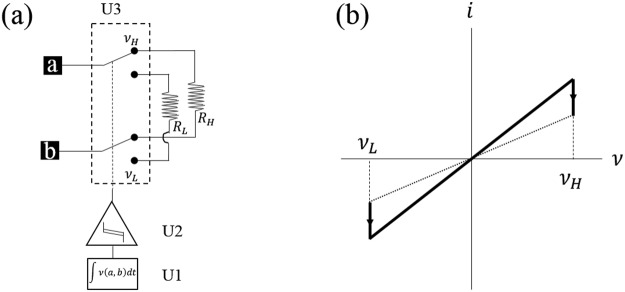
The memory resistor with the moniker memristor was a harmless postulate in 1971. Since 2008 a device that claims to be the memristor is on the prowl, seeking recognition as a fundamental circuit element, sometimes wanting electronics textbooks to be rewritten, always promising remarkable digital, analog and neuromorphic computing possibilities. A systematic discussion about the fundamental nature of the device is almost absent within the memristor community. Advocates use incomplete constitutive relationships, ignore concepts of activity/passivity and aver that nonlinearity is central to their case. Few researchers have examined these claims. Our report investigates the assertion that the memristor is a fundamental passive circuit element, from the fresh perspective that electrical engineering is the science of charge management. We demonstrate with a periodic table of fundamental elements that the 2008 memristor is not the 1971 postulate and neither of them is fundamental. The ideal memristor is an unphysical active device and any physically realizable memristor is a nonlinear composition of resistors with active hysteresis. We also show that there exists only three fundamental passive circuit elements.
Verified 2026-11-22 · 1 reference not checked yet
Overview
CoChat Summary
TL;DR
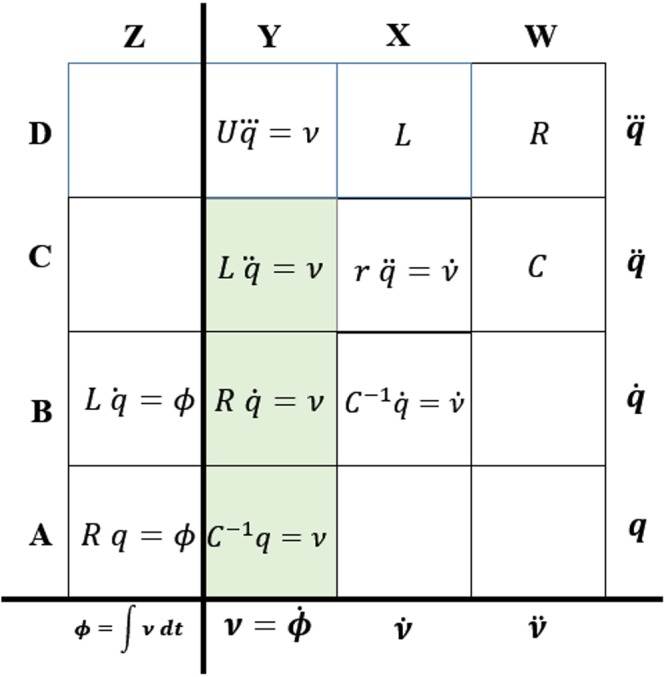
The paper argues that the memristor is not a fundamental passive circuit element and should not be added to the canonical set of electrical elements. Using a “periodic table” framework for charge- and flux-based relations, it concludes that only three fundamental passive elements exist: capacitor, resistor, and inductor.
Key findings
- The authors claim the 2008 HP memristor is not the same as the 1971 postulate, and that neither is fundamental; the ideal memristor is described as “an unphysical active device,” while any physically realizable memristor is “a nonlinear composition of resistors with active hysteresis.”
- Their periodic-table argument concludes that only three fundamental passive circuit elements exist: C, R, and L.
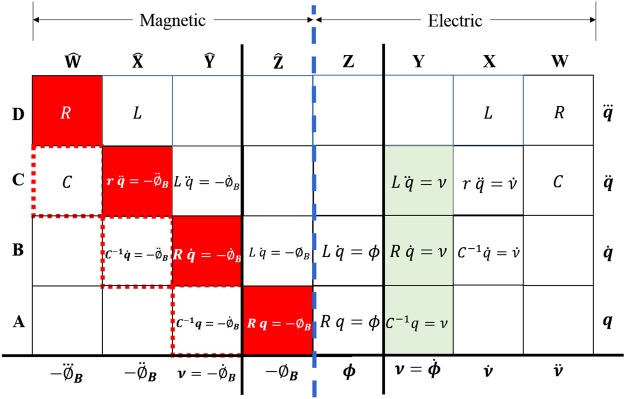
- They state the memristor cannot occupy the relevant slot because Rule 1 is violated: “only one fundamental element can occupy a slot,” and the resistor already occupies that slot.
- They also state Rule 2 is violated because memristor behavior depends on a time interval/integration and the observed switching is a transient event; they further argue that the memristor’s hysteresis implies activity, not passivity.
Methods
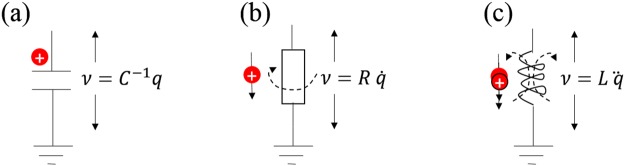
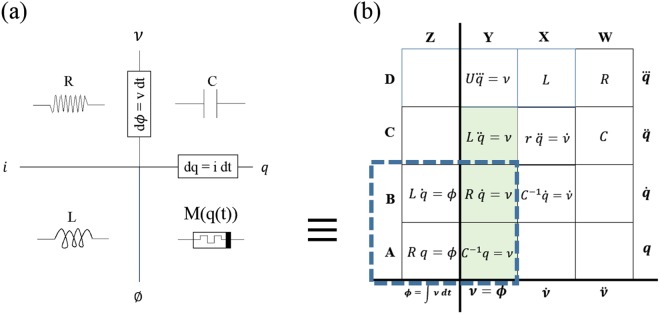
- The paper uses a conceptual/theoretical framework that treats charge as the “single fundamental electronic entity,” and builds a “periodic table” of passive elements in both charge-voltage and charge-flux (magnetic) domains.
- It compares constitutive relations for capacitors, resistors, and inductors against the memristor’s proposed relations, including the 1971 and 2008 formulations and Strukov’s table.
- The analysis is primarily inspection- and argument-based, applying two explicit rules to the periodic-table framework; no datasets were generated or analyzed.
Limitations
- The paper itself does not present empirical experiments or new measurements; its arguments are theoretical and conceptual.
- The text makes evident that the conclusions depend on the authors’ chosen framework and rules for what counts as “fundamental” and on their interpretation of passivity/activity; this is an argumentative limitation (text-evident), not a stated one.
- The paper states no datasets were generated or analyzed, so there is no direct empirical validation within the study.
Model-written summary. Check it against the paper before relying on it.
Integrity signals
Registry
Cites
Statistics
Figures
Verification
Claims the paper makes
3 Valid · 1 Not valid · 12 Not checked · 43 Own results and interpretations
A result the paper states — it cites no source for it, so there is none to check. The quote shows it is in the paper.
In the paper
“Therefore the composite resistance is always positive.”
§ The case for rejecting the memristor as a fundamental circuit element > Results > What is Chua’s or HP’s memristor
plain- Asserted: passes — The authors put it forward as true.
- Checkable: passes — It can be checked against evidence.
- Load-bearing: passes — The paper’s conclusions depend on it.
- Based: passes — The paper gives a reason why it holds.
None of the sources cited for this claim have been checked yet.
In the paper
“The said model has also been demonstrated to exhibit correct temperature dependence w.r.t empirical data20.”
§ The case for rejecting the memristor as a fundamental circuit element > Results > What is Chua’s or HP’s memristor
What the sources say
- Not checked yetcites [20] Abraham I An Advection-Diffusion Model for the Vacancy Migration Memristor IEEE Access 2016 4 7747 7757 10.1109/ACCESS.2016.2621721 source
Checked before — its earlier verdict is held back until a new check runs.
boostedstates an association- Asserted: passes — The authors put it forward as true.
- Checkable: passes — It can be checked against evidence.
- Load-bearing: unclear — It is unclear whether the paper’s conclusions depend on it.
- Based: passes — The paper gives a reason why it holds.
- Not checked yet
A result the paper states — it cites no source for it, so there is none to check. The quote shows it is in the paper.
In the paper
“Of the three known fundamental elements, only the inductor and resistor appear in column Z.”
§ The case for rejecting the memristor as a fundamental circuit element > Results > Locating the fundamental elements
plain- Asserted: passes — The authors put it forward as true.
- Checkable: passes — It can be checked against evidence.
- Load-bearing: passes — The paper’s conclusions depend on it.
- Based: passes — The paper gives a reason why it holds.
A result the paper states — it cites no source for it, so there is none to check. The quote shows it is in the paper.
In the paper
“The model unambiguously reveals the presence of a non-dominant negative resistance.”
§ The case for rejecting the memristor as a fundamental circuit element > Results > What is Chua’s or HP’s memristor
boosted- Asserted: passes — The authors put it forward as true.
- Checkable: passes — It can be checked against evidence.
- Load-bearing: passes — The paper’s conclusions depend on it.
- Based: passes — The paper gives a reason why it holds.
In the paper
“The first evidence is the original model from HP. It looks like a potentiometer made of two resistors and a slider7.”
§ The case for rejecting the memristor as a fundamental circuit element > Results > What is Chua’s or HP’s memristor
What the sources say
- Not checked — no full text of the sourcecites [7] Strukov DB Snider GS Stewart DR Williams RS The missing memristor found Nature 2008 453 80 83 10.1038/nature06932 18451858 source
plain- Asserted: passes — The authors put it forward as true.
- Checkable: passes — It can be checked against evidence.
- Load-bearing: passes — The paper’s conclusions depend on it.
- Based: passes — The paper gives a reason why it holds.
26 more claims
Create a free account to see all 59 claims and to verify the 2 references still open.
- Probably not a substantial claim. 10
- It may state two separate claims as one. 21
- The quote only partly states this claim. 1
Citations
Cites
Strukov, D. B., Snider, G. S., Stewart, D. R., & Williams, R. S. (2008) · Nature · doi:10.1038/nature06932 · Cited by 11,828
Memristor—The Missing Circuit Element
Chua, L. (1971) · IEEE Transactions on Circuit Theory · doi:10.1109/tct.1971.1083337 · Cited by 10,268 · cited 1×
“Therefore equation (5) is not the constitutive relation for an inductor.”
BackgroundHorowitz, P., Hill, W., & Rollefson, R. J. (1990) · American Journal of Physics · doi:10.1119/1.16385 · Cited by 1,487 · cited 1×
“Equation (2) defines the resistor, making U in (A, Z) equal R as shown in Fig.”
MethodSPICE Model of Memristor with Nonlinear Dopant Drift
Biolek, Z., Biolek, D., & Biolková, V. (2009) · Brno University of Technology Digital Library (Brno University of Technology) · Cited by 1,355
VTEAM: A General Model for Voltage-Controlled Memristors
Kvatinsky, S., Ramadan, M., Friedman, E. G., & Kolodny, A. (2015) · IEEE Transactions on Circuits and Systems II: Express Briefs · doi:10.1109/tcsii.2015.2433536 · Cited by 838
How We Found The Missing Memristor
Williams, R. (2008) · IEEE Spectrum · doi:10.1109/mspec.2008.4687366 · Cited by 697 · cited 1×
“{R1̇, R2̇} = {ρ1nb ′ (t), −ρ2nb ′ (t)} (14)”
If it's pinched it's a memristor
Chua, L. (2014) · Semiconductor Science and Technology · doi:10.1088/0268-1242/29/10/104001 · Cited by 685
Tour, J. M., & He, T. (2008) · Nature · doi:10.1038/453042a · Cited by 504
Memristor Emulator for Memristor Circuit Applications
Kim, H., Sah, M. P., Yang, C., Cho, S., & Chua, L. O. (2012) · IEEE Transactions on Circuits and Systems I: Regular Papers · doi:10.1109/tcsi.2012.2188957 · Cited by 453
Fast Principal Component Analysis of Large-Scale Genome-Wide Data
(2014) · doi:10.1371/journal.pone.0093766 · Cited by 305
Research works printed but not linked: 4
- Johnson, H. W. & Graham, M. In High-Speed Digital Design, A Handbook of Black Magic 17–22 (Prentice Hall, Inc., 1993).
- Adee, S. The Mysterious Memristor. IEEE Spectrum (2008).
- Nalawade SS Varsharani ND Memristor The Fourth Fundamental Circuit Element Int. J. Recent Innov. Trends Comput. Commun. 2015 3 15 19
- Jeltsema, D. Memristors: The Rise and the Fall (?) In 21st International Symposium on Mathematical Theory of Networks and Systems 425–428 (2014).
Cited by
Recent advances in physical reservoir computing: A review
Tanaka, G., Yamane, T., Héroux, J. B., Nakane, R., Kanazawa, N., Takeda, S., Numata, H., Nakano, D., & Hirose, A. (2019) · Neural Networks · doi:10.1016/j.neunet.2019.03.005 · Cited by 2,146
“Although there are some debates about whether the memristor is truly counted as a fundamental passive circuit element (Abraham, 2018), memristive devices indeed exist in reality and are promising for computing.”
BackgroundExperimental photonic quantum memristor
Spagnolo, M., Morris, J., Piacentini, S., Antesberger, M., Massa, F., Crespi, A., Ceccarelli, F., Osellame, R., & Walther, P. J. (2022) · Nature Photonics · doi:10.1038/s41566-022-00973-5 · Cited by 177
“Evidently, equations (3) and (4) satisfy the form required by equations (1) and (2) and therefore define a memristive device with R(t) as the state variable.”
BackgroundMethodBisquert, J., & Guerrero, A. (2022) · Journal of the American Chemical Society · doi:10.1021/jacs.2c00777 · Cited by 139
Khot, A. C., Dongale, T. D., Nirmal, K. A., Sung, J. H., Lee, H. J., Nikam, R. D., & Kim, T. G. (2022) · ACS Applied Materials & Interfaces · doi:10.1021/acsami.1c23268 · Cited by 85
Memristive oscillator to memristive map, energy characteristic
Guo, Y., Ma, J., Zhang, X., & Hu, X. (2024) · Science China Technological Sciences · doi:10.1007/s11431-023-2637-1 · Cited by 66
“Both MFCM [54–56] and CCM [57–59] can save and contain field energy when they are incorporated into a linear or nonlinear circuit.”
Memristors for the Curious Outsiders
Carbajal, J. P., & Caravelli, F. (2018) · Technologies · doi:10.3390/technologies6040118 · Cited by 82
“Currently, the discussion is focused not only on the application of this technology to novel computation and memory storage, but also on the fundamental role of memristors in circuit theory [17].”
BackgroundBrown, T. D., Kumar, S., & Williams, R. S. (2022) · Applied Physics Reviews · doi:10.1063/5.0070558 · Cited by 68
Resistorless Memristor Emulator Using CFTA and Its Experimental Verification
Prasad, S. S., Kumar, P., & Ranjan, R. K. (2021) · IEEE Access · doi:10.1109/access.2021.3075341 · Cited by 67
“Abraham illustrated that the physically realizable memristor [4] is nonlinear composition of resistor with hysteresis and the presence of real memristor is hypothesis [5], [6].”
BackgroundIsah, A., & Bilbault, J. (2022) · Journal of Low Power Electronics and Applications · doi:10.3390/jlpea12030044 · Cited by 67
Bou, A., & Bisquert, J. (2021) · The Journal of Physical Chemistry B · doi:10.1021/acs.jpcb.1c03905 · Cited by 56
Recent advances in flexible memristors for advanced computing and sensing
Xu, J., Luo, Z., Chen, L., Zhou, C., Zhang, H., Zheng, Y., & Wei, L. (2024) · Materials Horizons · doi:10.1039/d4mh00291a · Cited by 59
Self-Assembly of Double-Helical Metallopolymers
Greenfield, J. L., & Nitschke, J. R. (2022) · Accounts of Chemical Research · doi:10.1021/acs.accounts.1c00657 · Cited by 46
Memristor based electronic devices towards biomedical applications
Zhang, J. M., Du, J., Yang, C., Liang, H., Cao, Z., Duan, X., Yan, W., Zhao, Y., & Sun, B. T. (2024) · Journal of Materials Chemistry C · doi:10.1039/d3tc03034b · Cited by 48
Memristive Stateful Logic for Edge Boolean Computers
Kim, Y. S., Son, M. W., & Kim, K. M. (2021) · Advanced Intelligent Systems · doi:10.1002/aisy.202000278 · Cited by 43
Zhao, Y. L., Yu, D., Liu, Z., Li, S., & He, Z. (2020) · IEEE Access · doi:10.1109/access.2020.3000589 · Cited by 35
“The ‘‘long-missing memristor’’ found in 2008 [4] open a dispute owing to lack of a predictable relationship between electric charge andmagnetic flux [30], [31].”
BackgroundHalogen-containing semiconductors: From artificial photosynthesis to unconventional computing
Klejna, S., Mazur, T., Wlaźlak, E., Zawal, P., Soo, H. S., & Szacilowski, K. T. (2020) · Coordination Chemistry Reviews · doi:10.1016/j.ccr.2020.213316 · Cited by 34
Multidimensional scaling locus of memristor and fractional order elements
Machado, J. A. T., & Lopes, A. M. (2020) · Journal of Advanced Research · doi:10.1016/j.jare.2020.01.004 · Cited by 30
“However, the necessity of the 4-th element and the Cartesian layout of the PTE is still under debate [18,19].”
BackgroundAn overview of memristive cryptography
James, A. P. (2019) · The European Physical Journal Special Topics · doi:10.1140/epjst/e2019-900044-x · Cited by 28
“oduct computations. 2.1 Memristor in a nutshell The memristor is considered as a fourth fundamental circuit element [93,22]. There has been arguments in the recent past for and against this assertion [100,2]. Nonetheless, there are several useful behavioural properties that makes memristor practically a very useful ci…”
BackgroundInfluentialOn the mechanism of creating pinched hysteresis loops using a commercial memristor device
Majzoub, S., Elwakil, A. S., Psychalinos, C., & Maundy, B. (2019) · AEU - International Journal of Electronics and Communications · doi:10.1016/j.aeue.2019.152923 · Cited by 24
Introduction to neuromorphic functions of memristors: The inductive nature of synapse potentiation
Kim, S., Zhang, H., Rivera‐Sierra, G., Fenollosa, R., Rubio‐Magnieto, J., & Bisquert, J. (2025) · Journal of Applied Physics · doi:10.1063/5.0257462 · Cited by 25
Graphene Oxide: Graphene Quantum Dot Nanocomposite for Better Memristic Switching Behaviors
Li, L. (2020) · Nanomaterials · doi:10.3390/nano10081448 · Cited by 21
“The memristor’s potential for phenomenal computing is in no way diminished by the negative assessment of its qualifications as a fundamental device [3,4].”
BackgroundVégh, J. (2021) · Neural Computing and Applications · doi:10.1007/s00521-021-06456-y · Cited by 20
Revisiting the memristor concept within basic circuit theory
Tellini, B., Bologna, M., Chandía, K. J., & Macucci, M. (2021) · International Journal of Circuit Theory and Applications · doi:10.1002/cta.3111 · Cited by 19
“In [15] Abraham maintains that the device proposed in [13] is not Chua’s postulate of 1971, while also rejecting the memristor as a new basic circuit element.”
BackgroundProposal for Trapped-Ion Quantum Memristor
Stremoukhov, S. Y., Форш, П. А., Khabarova, K. Y., & Kolachevsky, N. (2023) · Entropy · doi:10.3390/e25081134 · Cited by 18
“Later works challenged Chua’s conceptual line, questioning the memristor’s status as the fundamental fourth element [3].”
BackgroundMaundy, B., Elwakil, A. S., & Psychalinos, C. (2019) · IEEE Transactions on Circuits and Systems I Regular Papers · doi:10.1109/tcsi.2019.2900944 · Cited by 17
“of work that denies the memristor as a fundamental circuit element, its possible existence (see [26], [27] for example)”
BackgroundWells, R. A., & Robertson, A. W. (2024) · Advanced Electronic Materials · doi:10.1002/aelm.202400121 · Cited by 21
The critical role of materials and device geometry on performance of RRAM and memristor: Review
Shaikh, M. T. A. S., Prasad, C. V., Kim, K. J., & Rim, Y. S. (2025) · Materials Today Physics · doi:10.1016/j.mtphys.2025.101715 · Cited by 20
Spinristor: A Spin‐Filtering Memristor
Jaroš, A., Sasar, M., Tučková, L., Bonab, E. F., Badri, Z., Straka, M., & Foroutan‐Nejad, C. (2023) · Advanced Electronic Materials · doi:10.1002/aelm.202300360 · Cited by 17
The First Implementation of a Memtranstor Emulator and its Artificial Synaptic Plasticity Analysis
Zheng, C., Peng, L., Cen, J., & Iu, H. H. (2024) · IEEE Transactions on Computer-Aided Design of Integrated Circuits and Systems · doi:10.1109/tcad.2024.3355848 · Cited by 17
“Inthecomplete mem-elements system, each nonlinear mem-element has a corresponding fundamental linear counterpart, where MR, MC, and ML correspond to resistor (R), capacitor (C) and inductor (L), respectively, and MT corresponds to transtor (T) [9], [12].”
BackgroundPhysical evidence of meminductance in a passive, two-terminal circuit element
Dinavahi, A., Yamamoto, A. Y., & Harris, H. R. (2023) · Scientific Reports · doi:10.1038/s41598-022-24914-y · Cited by 15
On the Role of Speed in Technological and Biological Information Transfer for Computations
Végh, J., & Berki, Á. J. (2022) · Acta Biotheoretica · doi:10.1007/s10441-022-09450-6 · Cited by 22
“There are, however, some serious doubts as to whether a genuine memristor can exist in physical reality (Abraham 2018).”
BackgroundPrimavera, B. A., & Shainline, J. M. (2021) · Frontiers in Neuroscience · doi:10.3389/fnins.2021.732368 · Cited by 13
Kumar, M., Rai, S. K., Aggarwal, B., & Gupta, M. (2025) · Integration · doi:10.1016/j.vlsi.2025.102511 · Cited by 15
Memristive Devices for Quantum Metrology
Milano, G., Lupi, F. F., Fretto, M., Ricciardi, C., Leo, N. D., & Boarino, L. (2020) · Advanced Quantum Technologies · doi:10.1002/qute.202000009 · Cited by 12
Sławek, A., Alluhaibi, L., Kowalewska, E., Abdi, G., Mazur, T., Podborska, A., Mech, K., Marciszko‐Wiąckowska, M., Maximenko, A., & Szacilowski, K. T. (2024) · Advanced Electronic Materials · doi:10.1002/aelm.202300818 · Cited by 10
Capacitor or Memristor: Janus Behavior of Polyoxometalates
Moors, M., & Monakhov, K. Y. (2024) · ACS Applied Electronic Materials · doi:10.1021/acsaelm.3c01751 · Cited by 10
Charge Transport inside TiO2 Memristors Prepared via FEBID
Baranowski, M., Sachser, R., Marinković, B. P., et al. (2022) · Nanomaterials · doi:10.3390/nano12234145 · Cited by 9
Tučková, L., Jaroš, A., Foroutan‐Nejad, C., & Straka, M. (2023) · Physical Chemistry Chemical Physics · doi:10.1039/d3cp01149f · Cited by 14
Revising the Classic Computing Paradigm and Its Technological Implementations
Végh, J. (2021) · Informatics · doi:10.3390/informatics8040071 · Cited by 11
“There are, however, some serious doubts as to whether a genuine memristor can actually exist in physical reality [40].”
BackgroundIdeal memcapacitors and meminductors are overunity devices
Jeltsema, D., & van der Schaft, A. J. (2020) · Scientific Reports · doi:10.1038/s41598-020-73833-3 · Cited by 8
Lagrangian for Circuits with Higher-Order Elements
Biolek, Z., Biolek, D., & Biolková, V. (2019) · Entropy · doi:10.3390/e21111059 · Cited by 11
The Josephson junction as a quantum engine
Alicki, R., Horodecki, M., Jenkins, A., Łobejko, M., & Suárez, G. (2023) · New Journal of Physics · doi:10.1088/1367-2630/ad06d8 · Cited by 10
“Our model might therefore be useful in clarifying the debate about whether memristors are passive or active devices [76, 77].”
BackgroundInnovative Hardware-Based Cybersecurity Solutions
Ionescu, O. N., Dumitru, V., Pricop, E., et al. (2019) · Studies in systems, decision and control · doi:10.1007/978-3-030-31328-9_12 · Cited by 7
Towards Generalizing the Information Theory for Neural Communication
Végh, J., & Berki, Á. J. (2022) · Entropy · doi:10.3390/e24081086 · Cited by 11
“(The effect is in resemblance with that of the memristor [39,40].”
Logistic Function Based Memristor Model With Circuit Application
Abraham, I., Ren, S., & Siferd, R. (2019) · IEEE Access · doi:10.1109/access.2019.2951673 · Cited by 8
“Questions abound regarding the claimed fundamental nature of the device [6], [7].”
BackgroundSelf-citationIntroduction to non-volatile memory
Tappertzhofen, S. (2022) · Elsevier eBooks · doi:10.1016/b978-0-12-814629-3.00001-5 · Cited by 12
Which Scaling Rule Applies to Artificial Neural Networks
Végh, J. (2021) · Transactions on computational science and computational intelligence · doi:10.1007/978-3-030-70296-0_30 · Cited by 10
An experimental demonstration of the memristor test
Pershin, Y. V., Kim, J., Datta, T., & Ventra, M. D. (2022) · Physica E Low-dimensional Systems and Nanostructures · doi:10.1016/j.physe.2022.115290 · Cited by 8
“The question of whether or not the resistance switching cells are memristors [1, 2] has intrigued the scientific community since the early days of the modern ‘memristor era’ [3, 4, 5, 6, 7, 8].”
BackgroundPinched hysteresis loops in non‐linear resonators
Elwakil, A. S., Fouda, M. E., Majzoub, S., & Radwan, A. G. (2020) · IET Circuits Devices & Systems · doi:10.1049/cds2.12003 · Cited by 6
“There are actually doubts about the uniqueness of the memristor as a fundamental device which have been raised by several researchers (see [19] and the references therein) but there is no doubt that it is a dynamic and nonlinear device [20, 10, 21].”
BackgroundShin, S. J., & Chung, T. D. (2021) · Chemistry - An Asian Journal · doi:10.1002/asia.202100798 · Cited by 5
Chaffey, T., & Sepulchre, R. J. (2021) · European Control Conference (ECC) · doi:10.23919/ecc54610.2021.9654912 · Cited by 5
Living Kombucha Electronics with ProteinoidsPreprint
Nikolaidou, A. E., Mougkogiannis, P., & Adamatzky, A. (2023) · Research Square · doi:10.21203/rs.3.rs-3665052/v1 · Cited by 4
Resistive switching of transition metal ferrites on silicon substrate
Kumara, M., Clower, W., Seetala, K., et al. (2021) · Materials Letters · doi:10.1016/j.matlet.2021.131467 · Cited by 4
Quantum memristors: a new approach to neuromorphic computing
Форш, П. А., Stremoukhov, S. Y., Frolova, A. S., Khabarova, K. Y., & Kolachevsky, N. (2024) · Physics-Uspekhi · doi:10.3367/ufnr.2024.06.039698 · Cited by 11
Bifurcation analysis of a fractional order time-delay Chua’s circuit based on coupled memristors
Ding, D., Weng, Y., Hu, Y., & Yang, Z. (2019) · Modern Physics Letters B · doi:10.1142/s0217984919503664 · Cited by 4
Living Kombucha Electronics with Proteinoids
Nikolaidou, A. E., Mougkogiannis, P., & Adamatzky, A. (2025) · ACS Omega · doi:10.1021/acsomega.4c09743 · Cited by 10
“There have been propositions for experiments to determine whether a genuine memristor can be obtained 42–46 .”
Numerical simulations of the linear drift memristor model
Ferrari, F. A. S., Prado, T. D. L., da Silva, T. F. P., dos Santos, C. M., Santos, M. S., de Souza, S. L. T., Iarosz, K. C., Junior, J. D. S., & Batista, A. M. (2019) · The European Physical Journal Plus · doi:10.1140/epjp/i2019-12463-y · Cited by 3
Why Learning and Machine Learning Are Different
Végh, J., & Berki, Á. J. (2021) · Advances in Artificial Intelligence and Machine Learning · doi:10.54364/aaiml.2021.1109 · Cited by 3
de Carvalho, R. C., Betts, A., & Cassidy, J. (2020) · Physical Chemistry Chemical Physics · doi:10.1039/c9cp06016b · Cited by 3
Spatiotemporal evolution of resistance state in simulated memristive networks
Francesco, F. D., Sanca, G. A., & Quinteros, C. P. (2021) · Applied Physics Letters · doi:10.1063/5.0067048 · Cited by 5
Are There an Infinite Number of Passive Circuit Elements in the World?
Wang, F. Z. (2024) · Electronics · doi:10.3390/electronics13132669 · Cited by 2
Mueller, S. (2020) · EXPLORE · doi:10.1016/j.explore.2020.04.001 · Cited by 2
Adesina, N. O. (2022) · Louisiana State University · doi:10.31390/gradschool_dissertations.5771 · Cited by 1
On the Role of Information Transfer’s Speed in Technological and Biological ComputationsPreprint
Végh, J., & Berki, Á. J. (2021) · Preprints.org · doi:10.20944/preprints202103.0414.v1 · Cited by 1
“There are, however, some serious doubts as to whether a genuine memristor can actually exist in physical reality [52].”
BackgroundGuidelines for benchmarking non-ideal analog memristive crossbars for neural networks
James, A. P. (2021) · Elsevier eBooks · doi:10.1016/b978-0-12-821184-7.00023-2 · Cited by 1
Jinrong, 王. W., Bing, 宋. S., Hui, 徐. X., et al. (2023) · Laser & Optoelectronics Progress · doi:10.3788/lop222566 · Cited by 1
Spatial Mapping of Distributed Sensors Biomimicking the Human Vision System
Dutta, S., & Wilson, M. (2021) · Electronics · doi:10.3390/electronics10121443 · Cited by 4
“There are existing studies on this component in the context of electrical circuits [59,60], but our work may be the first to apply the memristor analogy to synaptic pruning.”
BackgroundObservation of a Pinched-Loop in a Current-Excited Inductive Circuit
Elwakil, A. S., Psychalinos, C., Maundy, B., et al. (2023) · IEEE International Symposium on Circuits and Systems proceedings · doi:10.1109/iscas46773.2023.10181753 · Cited by 1
“In addition, the question of whether the memristor is or is not a fundamental element has been addressed by several authors (see for example [14], [15]).”
BackgroundThree State Output Module and Digital Switch Circuit Based on Threshold Memristor
Li, S., Pan, N., Gao, S., et al. (2022) · Journal of Physics Conference Series · doi:10.1088/1742-6596/2395/1/012021
“The memristor is actually a two-terminal device [3] whose main characteristics are non-volatility and nanoscale characteristic size.”
BackgroundSpinristor: A Swiss Army Knife of Molecular ElectronicsPreprint
Bonab, E. F., Jaroš, A., Badri, Z., et al. (2021) · ChemRxiv · doi:10.26434/chemrxiv-2021-9xgrq
Isah, A. (2026) · International Journal of Circuit Theory and Applications · doi:10.1002/cta.70333
Furui, S., & Santos, S. D. (2024) · IEEE Ultrasonics, Ferroelectrics, and Frequency Control Joint Symposium (UFFC-JS) · doi:10.1109/uffc-js60046.2024.10793741
“But its potential for computing[9] is not diminishing[10].”
Memristor based multifunction oscillator
Abraham, I., & Ren, S. (2019) · IEEE International Midwest Symposium on Circuits and Systems (MWSCAS) · doi:10.1109/mwscas.2019.8885077
Self-citationÉlucidation des mécanismes électroniques dans des memristors organiques
Tomasso, C. J. (2023) · theses.fr (ABES) · doi:10.70675/374fe14az5147z4799zac4aze1c9393b34d5
Memristors in Nonlinear Network : Application to Information (Signal and Image) Processing
Isah, A. (2021) · theses.fr (ABES) · doi:10.70675/d071f6d0zda25z433az8436z64ac8b3979c6
28 302Nano- und Molekularelektronik
Hartmann, U. (2025) · De Gruyter eBooks · doi:10.1515/9783486855449-006
Spinristor: A Swiss Army Knife of Molecular ElectronicsPreprint
Bonab, E. F., Jaroš, A., Badri, Z., et al. (2021) · doi:10.33774/chemrxiv-2021-9xgrq
Invariant Torus in the Phase Portrait of the Muthuswamy–Chua–Ginoux System
Braga, D. D. C., & Garcia, B. A. (2026) · Nonlinear Dynamics · doi:10.1007/s11071-026-12831-y
“Regardless of the ongoing debate about the memristor as a fundamental circuit element [1], there is an abundance of literature dealing with the analysis of electrical circuits involving memristors.”
New memtranstor emulator using DVCCTA and OTA with its application
Das, R., Rai, S. K., & Aggarwal, B. (2026) · Integration · doi:10.1016/j.vlsi.2026.102777
Wang, F. Z. (2021) · arXiv (Cornell University)
Only Six Passive Circuit Elements Are ExistentPreprint
Wang, F. Z. (2021) · arXiv (Cornell University) · doi:10.48550/arxiv.2109.03041
“Even if it is “internal molecular currents” that generate the magnetization, it must be different or independent of an (externally applied) current [31].”
BackgroundMethodInfluentialMemristor-Based Logic Circuit Design Applications
Karim, M. A., & Grosch, A. (2022) · Elsevier eBooks · doi:10.1016/b978-0-12-819728-8.00055-3
The Sociology of the Field and Lesson to Be Learned
Ventra, M. D., & Pershin, Y. V. (2023) · SpringerBriefs in physics · doi:10.1007/978-3-031-25625-7_5
Introductory Chapter: Challenges in Neuro-Memristive Circuit Design
James, A. P. (2020) · Contact-less Assessment of In-vivo Body Signals Using Microwave Doppler Radar (InTech) · doi:10.5772/intechopen.91969
Analysis of nonlinear passive pinched hysteresis generator circuits
Kiyama-Armendariz, R., & Abraham, I. (2019) · IEEE International Midwest Symposium on Circuits and Systems (MWSCAS) · doi:10.1109/mwscas.2019.8885055 · Cited by 1
“Any passive circuit that can exhibit memristor properties is of interest to circuit designers especially in the face of research that questions this possibility [9-11].”
BackgroundSelf-citationMemristors for neuromorphic computing systems: basic parameters and methods of their optimization
Ilin, A. S., Matsukatova, A. N., Николаевич, М. М., Emelyanov, A. V., Rylkov, V. V., Demin, V. A., Форш, П. А., Kashkarov, P. K., & Kovalchuk, M. V. (2025) · Uspekhi Fizicheskih Nauk · doi:10.3367/ufnr.2025.09.040037
Only Six Passive Circuit Elements Exist.
Wang, F. Z. (2021)
Achieving signal power amplification using energetically passive devices
(2022) · doi:10.1007/s00502-022-01046-9
“This is similar to the definition used in a recent discussion on fundamentally passive elements [2], where an active device is defined as “a physical device that can produce power gain”, which implicitly refers to signal power amplification and thus power generation on the signal level.”
Can We Still Find an Ideal Memristor?
Wang, F. Z. (2024) · Magnetism · doi:10.3390/magnetism4030014 · Cited by 2
“There are actually doubts about the uniqueness of the memristor as a fundamental device which have been raised by several researchers (see [19] and the references therein) but there is no doubt that it is a dynamic and nonlinear device [20, 10, 21].”
BackgroundDesign of 1T2M integration of storage and calculation based on threshold memristor
Gao, S., Li, L., Huang, H., et al. (2022) · Journal of Physics Conference Series · doi:10.1088/1742-6596/2383/1/012057
“The resistance value of the memristor changes with the flow of electric charge [3], and has the characteristics of non-volatility, small size, low power consumption and easy compatibility with CMOS technology [4].”
BackgroundMemtranstor Emulator Using Active Building Blocks with Its Application
Rai, S. K., Das, R., Aggarwal, B., et al. (2026) · Circuits Systems and Signal Processing · doi:10.1007/s00034-026-03680-6
Metadata
- Authors
- Abraham, I.
- Affiliations
- Intel (United States) (US)
- Corresponding author
- Abraham, Isaac
- ORCID
- Abraham, Isaac
- Venue
- Scientific Reports
- Published
- 2018-07-20
- Volume
- 8
- Issue
- 1
- Pages
- 10972-10972
- ISSN
- 2045-2322 (ISSN-L)
- PMC
- PMC6054652
- OpenAlex
- W2884413845
- Cited by
- 95
- References
- 33
- Citations by year
- 2026: 6 · 2025: 6 · 2024: 11 · 2023: 10 · 2022: 16 · 2021: 21 · 2020: 10 · 2019: 13 · 2018: 2
- FWCI
- 4.39
- Type
- journal article
- Language
- en
- Open access
- gold
- doi.org
- Licence
- cc-by
- creativecommons.org/licenses/by/4.0 (tdm)
- creativecommons.org/licenses/by/4.0 (vor)
- Locations
- Scientific Reports (publishedVersion, cc-by)
- Europe PMC (PubMed Central) (publishedVersion, cc-by)
- PubMed Central (publishedVersion, cc-by)
- PubMed (publishedVersion)
- arXiv (Cornell University) (submittedVersion)
- DOAJ (DOAJ: Directory of Open Access Journals) (submittedVersion)
- arXiv (Cornell University)
- Topics
- Physical Sciences › Engineering › Electrical and Electronic Engineering › Advanced Memory and Neural Computing
- Physical Sciences › Engineering › Electrical and Electronic Engineering › Electrical and Thermal Properties of Materials
- Physical Sciences › Engineering › Electrical and Electronic Engineering › Engineering and Technology Innovations
- Keywords
- memristors, passive components, constitutive equations, nonlinearity, hysteresis, charge management, active devices, neuromorphic computing
About these checks
Registry, retraction, Cites and statistics results are computed, not judged, with one exception: a printed reference that no index lists is read once by a model before it counts as a citation error. Claims are extracted by a model and kept only when their quote appears verbatim in the text; each cited source is then checked, with a model’s help, for whether it says what the claim relies on. Those verdicts can be wrong — read the claim’s quote and the cited source before relying on one.
The claim verdicts this report counts are experimental: their accuracy is not yet measured.
A language model drew the claims from the paper on 2026-09-29, under version 3 of the claim definition (model deepseek-v4.1-flash, prompt extract-v3).
A second model labelled each claim on 2026-09-29 (model jev-1.13-20260917, definition revision gold-guideline-v0.2).
Statistics and arithmetic are recomputed, not judged.
Confidence bands are shown only for fields calibrated on our annotated test set. None is calibrated yet, so no band is shown.
What counts as a claim ›How we measure confidence ›How we check this ›
Are you an author, or do you see a problem with this page? Request a review
Data sources
Bibliographic data: Semantic Scholar, OpenAlex, Crossref.
Contains information from the Semantic Scholar Academic Graph Datasets, made available under the ODC Attribution License (ODC-BY 1.0).
Semantic Scholar’s data is described in: Kinney, R., et al. (2023). The Semantic Scholar Open Data Platform. arXiv:2301.10140.
