

The DOI matches its Crossref record; 67 of the 67 references it cites were found in a registry or an index.
A catalogue of somatic NRF2 gain-of-function mutations in cancer
Open accessAbstract
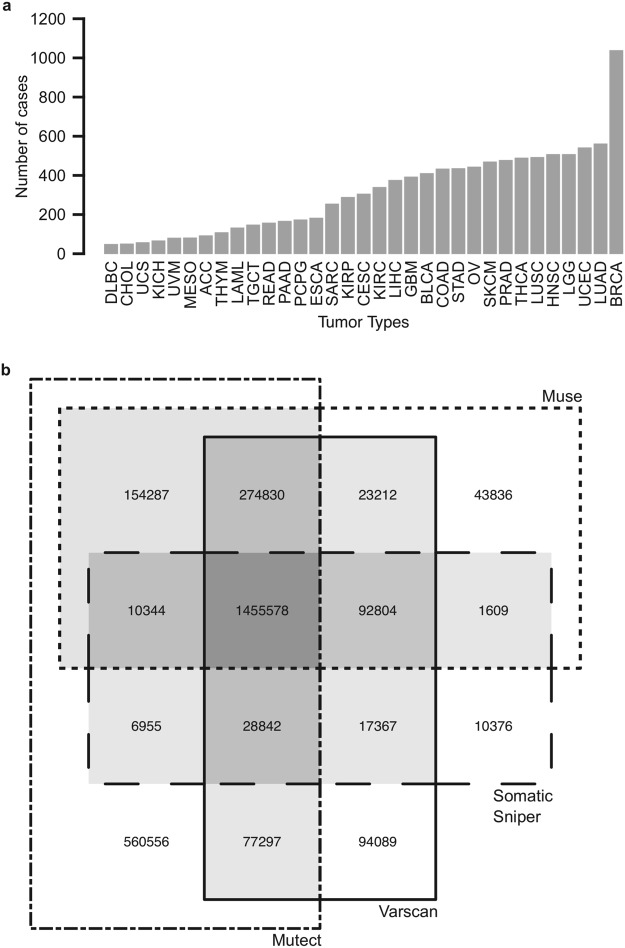
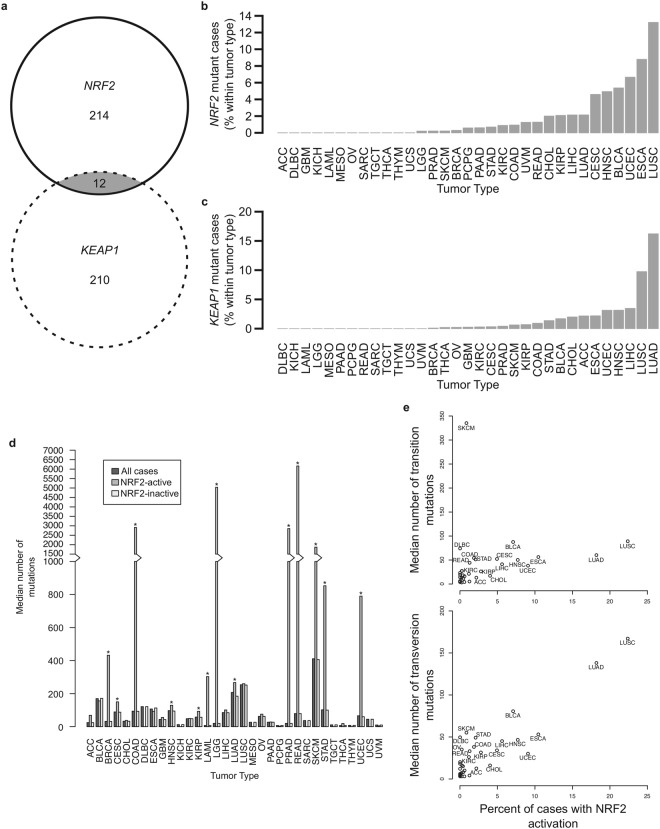
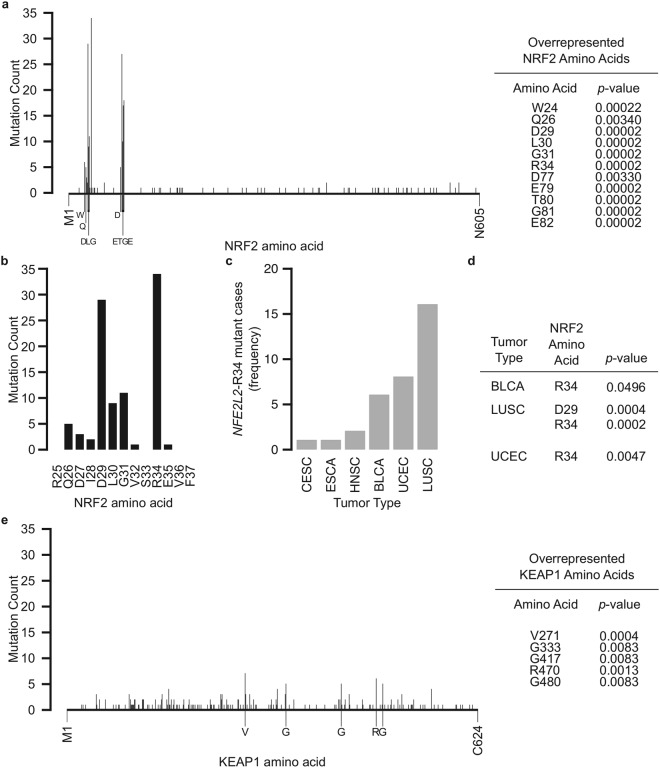
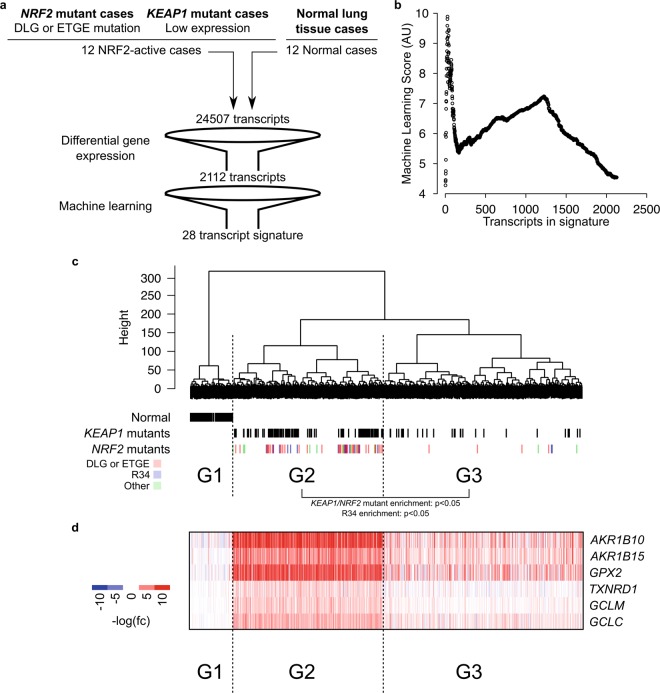
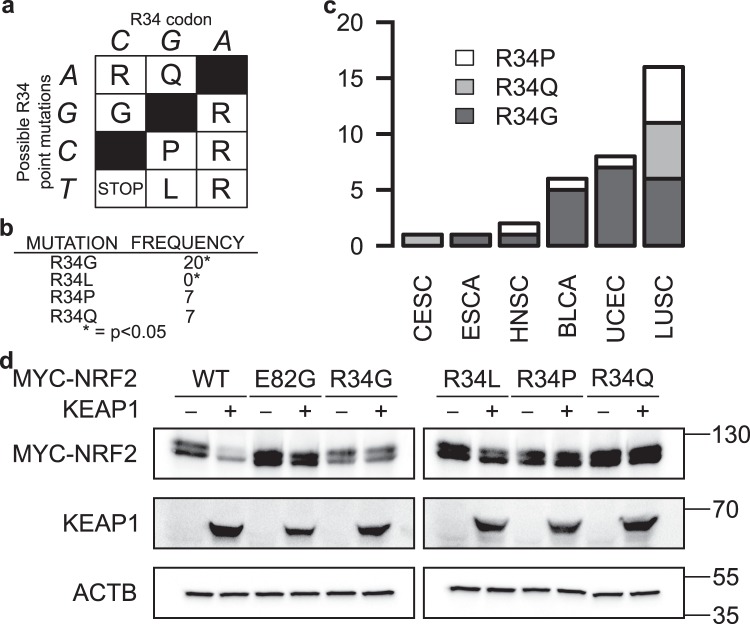
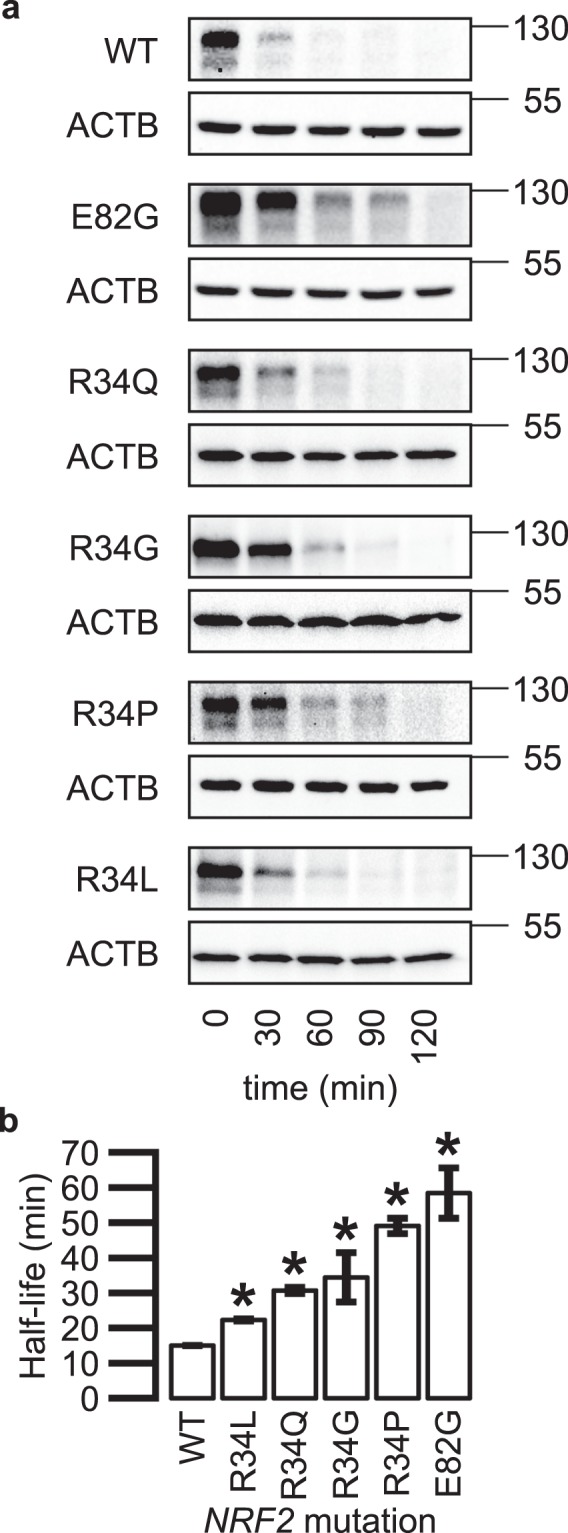
Identification and characterization of somatic mutations in cancer have important prognostication and treatment implications. Genes encoding the Nuclear factor (erythroid-derived 2)-like 2 (NRF2) transcription factor and its negative regulator, Kelch-like ECH-associated protein 1 (KEAP1), are frequently mutated in cancer. These mutations drive constitutive NRF2 activation and correlate with poor prognosis. Despite its apparent significance, a comprehensive catalogue of somatic NRF2 mutations across different tumor types is still lacking. Here, we catalogue NRF2 mutations in The Cancer Genome Atlas (TCGA) database. 226 unique NRF2-mutant tumors were identified from 10,364 cases. NRF2 mutations were found in 21 out of the 33 tumor types. A total of 11 hotspots were identified. Of these, mutation to the R34 position was most frequent. Notably, R34 and D29 mutations were overrepresented in bladder, lung, and uterine cancers. Analyses of corresponding RNA sequencing data using a de novo derived gene expression classifier showed that the R34 mutations drive constitutive NRF2 activation with a selection pressure biased against the formation of R34L. Of all R34 mutants, R34L conferred the least degree of protein stabilization, suggesting a pro-tumor NRF2 half-life threshold. Our findings offer a comprehensive catalogue of NRF2 mutations in cancer that can help prognostication and NRF2 research.
Overview
The claims and statistics of this paper haven’t been checked yet.
Run the check — free, no account needed. It reads the open-access text and checks the sources it cites.
Integrity signals
Registry
Cites
Statistics
Figures
Verification
Claims the paper makes
The claims and statistics of this paper haven’t been checked yet.
Run the check — free, no account needed. It reads the open-access text and checks the sources it cites.
Claims other papers make about this one
Each is checked against this paper’s own text: does it say what the citing paper says it does?
In the citing paper
“Some somatic mutations give rise to hyperactive Nrf2, which causes enhanced antioxidant capacity and confers protection of cancer cells from ROS and cancer therapy, thereby leading to cancer cell growth and proliferation, cancer progression, and cancer therapy resistance (e.g., chemoresistance) (Figure 8) [161,162,163,164,165,166,167,168,169,170,171].”
From Nrf2 and Oxidative Stress: A General Overview of Mechanisms and Implications in Human Disease (2022) · cites this paper as [168]
Self-check
Percentages, sums and reported differences re-computed from the paper’s own numbers.
The self-check needs the paper’s full text.
Citations
Cites
Moderated estimation of fold change and dispersion for RNA-seq data with DESeq2
Love, M. I., Huber, W., & Anders, S. (2014) · Genome Biology · doi:10.1186/s13059-014-0550-8 · Cited by 95,106
Lynch, T. J., Bell, D. W., Sordella, R., Gurubhagavatula, S., Okimoto, R. A., Brannigan, B. W., Harris, P. L., Haserlat, S. M., Supko, J. G., Haluska, F. G., et al. (2004) · New England Journal of Medicine · doi:10.1056/nejmoa040938 · Cited by 11,486
Improved survival with vemurafenib in melanoma with BRAF V600E mutation
Chapman, P. B., Hauschild, A., Robert, C., Haanen, J. B., Ascierto, P., Larkin, J., Dummer, R., Garbe, C., Testori, A., Maio, M., et al. (2011) · New England Journal of Medicine · doi:10.1056/nejmoa1103782 · Cited by 7,720
Itoh, K., Chiba, T., Takahashi, S., Ishii, T., Igarashi, K., Katoh, Y., Oyake, T., Hayashi, N., Satoh, K., Hatayama, I., et al. (1997) · Biochemical and Biophysical Research Communications · doi:10.1006/bbrc.1997.6943 · Cited by 3,999
Journal of Statistical Software
de Leeuw, J. (2009) · Wiley Interdisciplinary Reviews Computational Statistics · doi:10.1002/wics.10 · Cited by 3,651
Discovery and saturation analysis of cancer genes across 21 tumour types
Lawrence, M. S., Stojanov, P., Mermel, C. H., Robinson, J. T., Garraway, L. A., Golub, T. R., Meyerson, M., Gabriel, S. B., Lander, E. S., & Getz, G. (2014) · Nature · doi:10.1038/nature12912 · Cited by 3,096
Mechanism of Activation of the RAF-ERK Signaling Pathway by Oncogenic Mutations of B-RAF
Wan, P., Garnett, M. J., Roe, S. M., Lee, S., Niculescu‐Duvaz, D., Good, V. M., Cancer Genome Project, Jones, C. M., Marshall, C. J., Springer, C. J., et al. (2004) · Cell · doi:10.1016/s0092-8674(04)00215-6 · Cited by 2,863
Dinkova-Kostova, A. T., Holtzclaw, W. D., Cole, R. N., Itoh, K., Wakabayashi, N., Katoh, Y., Yamamoto, M., & Talalay, P. (2002) · Proceedings of the National Academy of Sciences · doi:10.1073/pnas.172398899 · Cited by 1,947
Nrf2–Keap1 defines a physiologically important stress response mechanism
Motohashi, H., & Yamamoto, M. (2004) · Trends in Molecular Medicine · doi:10.1016/j.molmed.2004.09.003 · Cited by 1,725
Zhang, D. D., & Hannink, M. (2003) · Molecular and Cellular Biology · doi:10.1128/mcb.23.22.8137-8151.2003 · Cited by 1,480
Cited by
Sorted by citations
Therapeutic targeting of the NRF2 and KEAP1 partnership in chronic diseases
Cuadrado, A., Rojo, A. I., Wells, G., Hayes, J. D., Cousin, S. P., Rumsey, W. L., Attucks, O. C., Franklin, S., Levonen, A., Kensler, T. W., et al. (2019) · Nature Reviews Drug Discovery · doi:10.1038/s41573-018-0008-x · Cited by 1,510
A compendium of mutational cancer driver genes
Martínez-Jiménez, F., Muiños, F., Sentís, I., Deu-Pons, J., Reyes-Salazar, I., Arnedo-Pac, C., Mularoni, L., Pich, O., Bonet, J., Kranas, H., et al. (2020) · Nature reviews. Cancer · doi:10.1038/s41568-020-0290-x · Cited by 1,340
Nrf2 and Oxidative Stress: A General Overview of Mechanisms and Implications in Human Disease
Ngo, V., & Duennwald, M. L. (2022) · Antioxidants · doi:10.3390/antiox11122345 · Cited by 1,130
The multifaceted role of reactive oxygen species in tumorigenesis
Kirtonia, A., Sethi, G., & Garg, M. (2020) · Cellular and Molecular Life Sciences · doi:10.1007/s00018-020-03536-5 · Cited by 452
Short Overview of ROS as Cell Function Regulators and Their Implications in Therapy Concepts
Milković, L., Gašparović, A. Č., Cindrić, M., Mouthuy, P., & Žarković, N. (2019) · Cells · doi:10.3390/cells8080793 · Cited by 330
The KEAP1-NRF2 pathway: Targets for therapy and role in cancer
Adinolfi, S., Patinen, T., Deen, A. J., Pitkänen, S., Härkönen, J., Kansanen, E., Küblbeck, J., & Levonen, A. (2023) · Redox Biology · doi:10.1016/j.redox.2023.102726 · Cited by 326
Oxidative Stress in the Tumor Microenvironment and Its Relevance to Cancer Immunotherapy
Aboelella, N. S., Brandle, C., Kim, T., Ding, Z., & Zhou, G. (2021) · Cancers · doi:10.3390/cancers13050986 · Cited by 303
Rauf, A., Khalil, A. A., Awadallah, S. M., Khan, S. A., Abu‐Izneid, T., Kamran, M., Hemeg, H. A., Mubarak, M. S., Khalid, A., & Wilairatana, P. (2023) · Food Science & Nutrition · doi:10.1002/fsn3.3784 · Cited by 220
The Nrf2 Pathway in Liver Diseases
Zhou, J., Zheng, Q., & Chen, Z. (2022) · Frontiers in Cell and Developmental Biology · doi:10.3389/fcell.2022.826204 · Cited by 204
NRF2: KEAPing Tumors Protected
Pillai, R., Hayashi, M., Zavitsanou, A.-M., & Papagiannakopoulos, T. Y. (2022) · Cancer Discovery · doi:10.1158/2159-8290.cd-21-0922 · Cited by 196
Potential Applications of NRF2 Inhibitors in Cancer Therapy
Panieri, E., & Saso, L. (2019) · Oxidative Medicine and Cellular Longevity · doi:10.1155/2019/8592348 · Cited by 189
Redox Potential of Antioxidants in Cancer Progression and Prevention
George, S., & Abrahamse, H. (2020) · Antioxidants · doi:10.3390/antiox9111156 · Cited by 187
Torti, S. V., & Torti, F. M. (2020) · Cancer Research · doi:10.1158/0008-5472.can-20-2017 · Cited by 183
Targeting NRF2 and Its Downstream Processes: Opportunities and Challenges
Torrente, L., & DeNicola, G. M. (2021) · The Annual Review of Pharmacology and Toxicology · doi:10.1146/annurev-pharmtox-052220-104025 · Cited by 175
NRF2 activation induces NADH-reductive stress, providing a metabolic vulnerability in lung cancer
Weiss‐Sadan, T., Ge, M., Hayashi, M., Gohar, M., Yao, C.-H., de Groot, A., Harry, S. A., Carlin, A. D., Fischer, H., Shi, L., et al. (2023) · Cell Metabolism · doi:10.1016/j.cmet.2023.01.012 · Cited by 159
Aldo-Keto Reductases and Cancer Drug Resistance
Penning, T. M., Jonnalagadda, S. K., Trippier, P. C., & Rižner, T. L. (2021) · Pharmacological Reviews · doi:10.1124/pharmrev.120.000122 · Cited by 158
Li, F., Aljahdali, I. A. M., Zhang, R., Nastiuk, K. L., Krolewski, J. J., & Ling, X. (2021) · Journal of Experimental & Clinical Cancer Research · doi:10.1186/s13046-021-02026-1 · Cited by 114
Kahroba, H., Shirmohamadi, M., Hejazi, M. S., & Samadi, N. (2019) · Life Sciences · doi:10.1016/j.lfs.2019.116986 · Cited by 96
Nuclear Factor Erythroid 2-Related Factor 2 in Regulating Cancer Metabolism
Smolková, K., Mikó, E., Kovàcs, T., Leguina‐Ruzzi, A., Sipos, A., & Bai, P. (2020) · Antioxidants and Redox Signaling · doi:10.1089/ars.2020.8024 · Cited by 101
“NRF2 addiction” in lung cancer cells and its impact on cancer therapy
Hammad, A., Namani, A., Elshaer, M., Wang, X. J., & Tang, X. (2019) · Cancer Letters · doi:10.1016/j.canlet.2019.09.016 · Cited by 87
Advances in hereditary leiomyomatosis and renal cell carcinoma (HLRCC) research
Ooi, A. (2019) · Seminars in Cancer Biology · doi:10.1016/j.semcancer.2019.10.016 · Cited by 85
Self-citationOxidative Stress-Related Mechanisms in Melanoma and in the Acquired Resistance to Targeted Therapies
Pizzimenti, S., Ribero, S., Cucci, M. A., Grattarola, M., Monge, C., Dianzani, C., Barrera, G., & Muzio, G. (2021) · Antioxidants · doi:10.3390/antiox10121942 · Cited by 79
The Pleiotropic Role of the KEAP1/NRF2 Pathway in Cancer
Wu, W., & Papagiannakopoulos, T. Y. (2020) · Annual Review of Cancer Biology · doi:10.1146/annurev-cancerbio-030518-055627 · Cited by 70
Mohan, T., Narasimhan, K. K. S., Ravi, D. B., Velusamy, P., Chandrasekar, N., Chakrapani, L. N., Srinivasan, A., Karthikeyan, P., Kannan, P., Tamilarasan, B., et al. (2020) · Free Radical Biology and Medicine · doi:10.1016/j.freeradbiomed.2020.07.037 · Cited by 66
Nrf2 in early vascular ageing: Calcification, senescence and therapy
Arefin, S., Buchanan, S. J., Hobson, S., Steinmetz, J. L., Alsalhi, S., Shiels, P. G., Kublickiene, K. R., & Stenvinkel, P. (2020) · Clinica Chimica Acta · doi:10.1016/j.cca.2020.02.026 · Cited by 67
Recent Perspective of Lactobacillus in Reducing Oxidative Stress to Prevent Disease
Zhao, T., Wang, H., Liu, Z., Liu, Y., DeJi, Li, B., & Huang, X. (2023) · Antioxidants · doi:10.3390/antiox12030769 · Cited by 72
Guan, L., Nambiar, D. K., Cao, H., Viswanathan, V., Kwok, S., Hui, A. B., Hou, Y., Hildebrand, R., von Eyben, R., Holmes, B., et al. (2023) · Cancer Research · doi:10.1158/0008-5472.can-22-1903 · Cited by 65
Zhang, X., Wang, Y., & Meng, L. (2021) · Acta Pharmaceutica Sinica B · doi:10.1016/j.apsb.2021.09.028 · Cited by 57
HIF1, HSF1, and NRF2: Oxidant-Responsive Trio Raising Cellular Defenses and Engaging Immune System
Cyran, A. M., & Zhitkovich, A. (2022) · Chemical Research in Toxicology · doi:10.1021/acs.chemrestox.2c00131 · Cited by 55
Schiavoni, V., Emanuelli, M., Milanese, G., Galosi, A. B., Pompei, V., Salvolini, E., & Campagna, R. (2024) · International Journal of Molecular Sciences · doi:10.3390/ijms252413239 · Cited by 51
Panieri, E., & Saso, L. (2021) · Antioxidants and Redox Signaling · doi:10.1089/ars.2020.8146 · Cited by 46
The KEAP1-NRF2 System and Esophageal Cancer
Hirose, W., Oshikiri, H., Taguchi, K., & Yamamoto, M. P. (2022) · Cancers · doi:10.3390/cancers14194702 · Cited by 48
Significance of NRF2 in physiological and pathological conditions an comprehensive review
Kryszczuk, M., & Kowalczuk, O. (2022) · Archives of Biochemistry and Biophysics · doi:10.1016/j.abb.2022.109417 · Cited by 44
NRF2‐dependent stress defense in tumor antioxidant control and immune evasion
Angeli, J. P. F., & Meierjohann, S. (2020) · Pigment Cell & Melanoma Research · doi:10.1111/pcmr.12946 · Cited by 46
Haque, E., Karim, M. R., Teeli, A. S., Śmiech, M., Leszczyński, P., Winiarczyk, D., Parvanov, E. D., Atanasov, A. G., & Taniguchi, H. (2020) · International Journal of Molecular Sciences · doi:10.3390/ijms21155378 · Cited by 40
Srivastava, R., Fernández-Ginés, R., Encinar, J. A., Cuadrado, A., & Wells, G. (2022) · Free Radical Biology and Medicine · doi:10.1016/j.freeradbiomed.2022.09.023 · Cited by 41
Molecular mechanisms and systemic targeting of NRF2 dysregulation in cancer
Kang, J.-S., Nam, L. B., Yoo, O.-K., & Keum, Y. (2020) · Biochemical Pharmacology · doi:10.1016/j.bcp.2020.114002 · Cited by 35
Sulforaphane Impact on Reactive Oxygen Species (ROS) in Bladder Carcinoma
Xie, H., Chun, F. K. ‐., Rutz, J., & Blaheta, R. A. (2021) · International Journal of Molecular Sciences · doi:10.3390/ijms22115938 · Cited by 36
Condello, M., & Meschini, S. (2021) · Cells · doi:10.3390/cells10123326 · Cited by 34
Li, M., Zhang, Z., Wang, Q., Yan, Y., & Li, B. (2022) · Nature Communications · doi:10.1038/s41467-022-32962-1 · Cited by 33
Mele, L. L., Vecchio, V. D., Marampon, F., Regad, T., Wagner, S., Mosca, L., Bimonte, S., Giudice, A., Liccardo, D., Prisco, C., et al. (2020) · Cell Death and Disease · doi:10.1038/s41419-020-03056-x · Cited by 34
The mechanistic insights of the antioxidant Keap1-Nrf2 pathway in oncogenesis: a deadly scenario
Mukherjee, A. G., & Gopalakrishnan, A. V. (2023) · Medical Oncology · doi:10.1007/s12032-023-02124-4 · Cited by 33
NRF2 immunobiology in cancer: implications for immunotherapy and therapeutic targeting
Panda, H., Rowland, N. G., Krall, C. M., Bowman, B. M., Major, M. B., & Zolkind, P. (2025) · Oncogene · doi:10.1038/s41388-025-03560-4 · Cited by 39
Role of the KEAP1-NRF2 Axis in Renal Cell Carcinoma
Clerici, S., & Boletta, A. (2020) · Cancers · doi:10.3390/cancers12113458 · Cited by 36
Mitigation of Cardiovascular Disease and Toxicity through NRF2 Signalling
Roberts, J. A., Rainbow, R. D., & Sharma, P. (2023) · International Journal of Molecular Sciences · doi:10.3390/ijms24076723 · Cited by 35
Feng, J., Xie, L., Yu, X., Liu, C., Dong, H., Lu, W., & Kong, R. (2021) · Biochemical and Biophysical Research Communications · doi:10.1016/j.bbrc.2021.01.069 · Cited by 30
Patient-Derived Mutant Forms of NFE2L2/NRF2 Drive Aggressive Murine Hepatoblastomas
Wang, H., Lu, J. L., Mandel, J. A., Zhang, W., Schwalbe, M., Gorka, J. E., Liu, Y., Marburger, B., Wang, J., Ranganathan, S., et al. (2021) · Cellular and Molecular Gastroenterology and Hepatology · doi:10.1016/j.jcmgh.2021.02.004 · Cited by 26
Hasan, S. K., Jayakumar, S., Barroso, E. E., Jha, A., Catalano, G., Sandur, S. K., & Noguera, N. I. (2025) · Cells · doi:10.3390/cells14100713 · Cited by 31
NRF2: Master regulator of cellular homeostasis and therapeutic vulnerability in cancer
Chen, W.-T., McKee, N. W., Kuhnell, D., & Dodson, M. B. (2026) · Redox Biology · doi:10.1016/j.redox.2026.104050 · Cited by 29
Kerins, M. J., Liu, P., Tian, W., Mannheim, W., Zhang, D. D., & Ooi, A. (2019) · Molecular and Cellular Biology · doi:10.1128/mcb.00037-19 · Cited by 25
Self-citationRegulation of the immune response to contact sensitizers by Nrf2
Vallion, R., & Kerdine‐Römer, S. (2022) · Contact Dermatitis · doi:10.1111/cod.14073 · Cited by 25
HIF-1 and NRF2; Key Molecules for Malignant Phenotypes of Pancreatic Cancer
Hamada, S., Matsumoto, R., & Masamune, A. (2022) · Cancers · doi:10.3390/cancers14020411 · Cited by 24
Mehine, M. M., Ahvenainen, T., Khamaiseh, S., Härkönen, J., Reinikka, S., Heikkinen, T., Äyräväinen, A., Pakarinen, P. I., Härkki, P., Pasanen, A. M., et al. (2022) · Oncogenesis · doi:10.1038/s41389-022-00425-3 · Cited by 25
Chronic arsenic exposure enhances metastatic potential via NRF2-mediated upregulation of SOX9
Schmidlin, C. J., Zeng, T., Liu, P., Wei, Y., Dodson, M. B., Chapman, E., & Zhang, D. D. (2020) · Toxicology and Applied Pharmacology · doi:10.1016/j.taap.2020.115138 · Cited by 23
Ramisetti, S. V., Patra, T., Munirathnam, V., Sainath, J. V., Veeraiyan, D., & Namani, A. (2024) · Archivos de Bronconeumología · doi:10.1016/j.arbres.2024.06.021 · Cited by 25
Sahu, M., & Jain, U. (2025) · Biochimica et Biophysica Acta (BBA) - Molecular Basis of Disease · doi:10.1016/j.bbadis.2025.167764 · Cited by 24
Emerging Therapeutic Targets in Oncologic Photodynamic Therapy
Manda, G., Hinescu, M. E., Neagoe, I. V., Ferreira, L. F. V., Boscencu, R., Vasos, P. R., Basaga, S. H., & Cuadrado, A. (2019) · Current Pharmaceutical Design · doi:10.2174/1381612825666190122163832 · Cited by 23
Simov, V., Altman, M. D., Bianchi, E., DelRizzo, S., DiNunzio, E. N., Feng, G., Goldenblatt, P., Ingenito, R., Johnson, S. A., Mansueto, M. S., et al. (2021) · European Journal of Medicinal Chemistry · doi:10.1016/j.ejmech.2021.113686 · Cited by 21
Nrf2 in Neoplastic and Non-Neoplastic Liver Diseases
Orrù, C., Giordano, S., & Columbano, A. (2020) · Cancers · doi:10.3390/cancers12102932 · Cited by 21
López‐Torres, C. D., Torres‐Mena, J. E., Castro‐Gil, M. P., Villa‐Treviño, S., Arellanes‐Robledo, J., del Pozo‐Yauner, L., & Pérez‐Carreón, J. I. (2022) · The Journal of Gene Medicine · doi:10.1002/jgm.3439 · Cited by 21
Sp1 is a substrate of Keap1 and regulates the activity of CRL4AWDR23 ubiquitin ligase toward Nrf2
Siswanto, F. M., Oguro, A., & Imaoka, S. (2021) · Journal of Biological Chemistry · doi:10.1016/j.jbc.2021.100704 · Cited by 21
Cooperation Between the NRF2 Pathway and Oncogenic β‐catenin During HCC Tumorigenesis
Savall, M., Senni, N., Lagoutte, I., Sohier, P., Dentin, R., Romagnolo, B., Perret, C., & Bossard, P. (2021) · Hepatology Communications · doi:10.1002/hep4.1746 · Cited by 20
Xu, Y., Hu, S., Chen, R., Xu, S., Yu, G., & Ji, L. (2025) · Molecular Biology Reports · doi:10.1007/s11033-025-10731-9 · Cited by 18
Mechanisms of Resorcinol Antagonism of Benzo[a]pyrene-Induced Damage to Human Keratinocytes
Lee, S. E., Kwon, K., Oh, S. W., Park, S. J., Yu, E., Kim, H., Yang, S., Park, J. Y., Chung, W., Cho, J. Y., et al. (2020) · Biomolecules & Therapeutics · doi:10.4062/biomolther.2020.083 · Cited by 18
Ramesh, P. S., Bovilla, V. R., Swamy, V. H., Manoli, N. N., Dasegowda, K. B., Siddegowda, S. M., Chandrashekarappa, S., Somasundara, V. M., Kabekkodu, S. P., Rajesh, R., et al. (2023) · Free Radical Biology and Medicine · doi:10.1016/j.freeradbiomed.2023.06.011 · Cited by 18
Small molecule screen identifies pyrimethamine as an inhibitor of NRF2-driven esophageal hyperplasia
Paiboonrungruang, C., Xiong, Z., Lamson, D. R., Li, Y., Bowman, B. M., Chembo, J., Huang, C. D., Li, J., Livingston, E. W., Frank, J. E., et al. (2023) · Redox Biology · doi:10.1016/j.redox.2023.102901 · Cited by 18
Differential squamous cell fates elicited by NRF2 gain of function versus KEAP1 loss of function
Takahashi, J. A., Suzuki, T., Sato, M., Nitta, S., Yaguchi, N., Muta, T., Tsuchida, K., Suda, H., Morita, M., Hamada, S., et al. (2024) · Cell Reports · doi:10.1016/j.celrep.2024.114104 · Cited by 18
Orrù, C., Perra, A., Kowalik, M. A., Rizzolio, S., Puliga, E., Cabras, L., Giordano, S., & Columbano, A. (2020) · Cancers · doi:10.3390/cancers12082305 · Cited by 18
Hamad, S. H., Montgomery, S. A., Simon, J. M., Bowman, B. M., Spainhower, K. B., Murphy, R. M., Knudsen, E. S., Fenton, S. E., Randell, S. H., Holt, J. R., et al. (2022) · Oncogene · doi:10.1038/s41388-022-02348-0 · Cited by 15
Liu, S., Liu, J., Xie, Y., Zhai, T., Hinderer, E. W., Stromberg, A. J., Vanderford, N. L., Kolesar, J., Moseley, H., Chen, L., et al. (2020) · Bioinformatics · doi:10.1093/bioinformatics/btaa957 · Cited by 16
Lee, Y. S., Kang, J. K., Jung, E. S., & Lee, A. (2023) · Journal of Breast Cancer · doi:10.4048/jbc.2023.26.e42 · Cited by 15
NRF2-Driven KEAP1 Transcription in Human Lung Cancer
Tian, Y., Liu, Q., Yu, S., Chu, Q., Chen, Y., Wu, K., & Wang, L. (2020) · Molecular Cancer Research · doi:10.1158/1541-7786.mcr-20-0108 · Cited by 15
Understanding the Impact of Oxidative Stress on Ovarian Cancer: Advances in Diagnosis and Treatment
Meshkovska, Y., Abramov, A., Mahira, S., & Thatikonda, S. (2024) · Future Pharmacology · doi:10.3390/futurepharmacol4030035 · Cited by 13
Bae, T., & Kwak, M. (2024) · Journal of Cancer Prevention · doi:10.15430/jcp.24.021 · Cited by 15
Banas, K. H., Rivera-Torres, N., Bialk, P. A., Yoo, B.-C., & Kmiec, E. B. (2020) · Molecular Cancer Research · doi:10.1158/1541-7786.mcr-19-1208 · Cited by 14
Chen, C., Carrillo, N. D., Chen, M., Wen, T., Awasthi, P., Anderson, R. A., & Cryns, V. L. (2025) · Journal of Biological Chemistry · doi:10.1016/j.jbc.2025.110367 · Cited by 20
NRF2 mutation enhances the immune escape of hepatocellular carcinoma by reducing STING activation
Li, C., Liang, G., Yan, K., & Wang, Y. (2024) · Biochemical and Biophysical Research Communications · doi:10.1016/j.bbrc.2024.149536 · Cited by 13
Iwasaki, T., Shirota, H., Sasaki, K., Ouchi, K., Nakayama, Y., Oshikiri, H., Otsuki, A., Suzuki, T., Yamamoto, M., & Ishioka, C. (2024) · Cancer Science · doi:10.1111/cas.16355 · Cited by 12
Jin, X., Lou, X., Qi, H., Zheng, C., Li, B., Siwu, X., Liu, R., Lv, Q., Zhao, A., Ruan, J., et al. (2024) · Oncogenesis · doi:10.1038/s41389-024-00536-z · Cited by 12
Nguyen, M. T., Lee, G. J., Kim, B. R., Kim, H. J., Tak, J., Park, M. K., Kim, E. J., Kang, G.-J., Rho, S. B., Lee, H. J., et al. (2024) · Pharmacological Research · doi:10.1016/j.phrs.2024.107512 · Cited by 14
Dysregulation of Redox Status in Urinary Bladder Cancer Patients
Reszka, E., Lesicka, M., Wieczorek, E., Jabłońska, E., Janasik, B., Stepnik, M., Konecki, T., & Jabłonowski, Z. (2020) · Cancers · doi:10.3390/cancers12051296 · Cited by 12
Computational analysis of protein–protein interactions of cancer drivers in renal cell carcinoma
Pei, J., Zhang, J., & Cong, Q. (2023) · FEBS Open Bio · doi:10.1002/2211-5463.13732 · Cited by 11
Choe, J. H., Mazambani, S., Kim, T. H., & Kim, J. (2021) · Cells · doi:10.3390/cells10030606 · Cited by 14
NRF2-driven redox metabolism takes center stage in cancer metabolism from an outside-in perspective
Choi, E.-J., & Jeon, S. (2020) · Archives of Pharmacal Research · doi:10.1007/s12272-020-01224-3 · Cited by 10
Nrf2 induces malignant transformation of hepatic progenitor cells by inducing β-catenin expression
Fragoulis, A., Schenkel, J., Schröder, N., Brandt, E. F., Weiand, M., Neu, T., Ramadori, P., Caspers, T., Kant, S., Pufe, T., et al. (2022) · Redox Biology · doi:10.1016/j.redox.2022.102453 · Cited by 11
NRF2 Activation in Trp53;p16-deficient Mice Drives Oral Squamous Cell Carcinoma
Hamad, S. H., Sellers, R. S., Wamsley, N. T., Zolkind, P., Schrank, T. P., Major, M. B., & Weissman, B. E. (2024) · Cancer Research Communications · doi:10.1158/2767-9764.crc-23-0386 · Cited by 10
Chen, Y., Jiao, D., He, H., Sun, H., Liu, Y., Shi, Q., Zhang, P., Li, Y., Mo, R., Gao, K., et al. (2023) · Redox Biology · doi:10.1016/j.redox.2023.102872 · Cited by 13
Nrf2 expression in pancreatic stellate cells promotes progression of cancer
Tanaka, Y., Hamada, S., Matsumoto, R., Taguchi, K., Yamamoto, M. P., & Masamune, A. (2021) · American Journal of Physiology-Gastrointestinal and Liver Physiology · doi:10.1152/ajpgi.00120.2021 · Cited by 10
The molecular perspective on the melanoma and genome engineering of T-cells in targeting therapy
Hajibabaie, F., Abedpoor, N., Javanmard, S. H., Hasan, A., Sharifi, M., Rahimmanesh, I., Shariati, L., & Makvandi, P. (2023) · Environmental Research · doi:10.1016/j.envres.2023.116980 · Cited by 11
Nrf2, A Target for Precision Oncology in Cancer Prognosis and Treatment
Ngo, H. K. C., Le, H., & Surh, Y. (2023) · Journal of Cancer Prevention · doi:10.15430/jcp.2023.28.4.131 · Cited by 9
Identification of novel Nrf2/Keap1 pathway mutations in pediatric acute lymphoblastic leukemia
Akın, D. F., Aktaş, S. H., Ünal, M. A., & Kankılıç, T. (2019) · Pediatric Hematology and Oncology · doi:10.1080/08880018.2019.1682090 · Cited by 9
FEATURES OF REDOX REGULATION IN TUMOR CELLS
Zenkov, N. K., Kozhin, P. M., Vcherashnyaya, A. V., Мартинович, Г. Г., Kandalintseva, N. V., & Menshchikova, E. B. (2019) · Сибирский научный медицинский журнал · doi:10.15372/ssmj20190202 · Cited by 9
The Impact of Genetic Mutations on the Efficacy of Immunotherapies in Lung Cancer
Lui, K., Cheung, K., Ng, W. W. M., Wang, Y., Au, D. W. H., & Cho, W. C. S. (2024) · International Journal of Molecular Sciences · doi:10.3390/ijms252211954 · Cited by 9
NRF2–KEAP1 as a redox signal-resolution circuit: Beyond the antioxidant switch
Sailis, A. B. (2026) · Progress in Biophysics and Molecular Biology · doi:10.1016/j.pbiomolbio.2026.03.005 · Cited by 8
Decoding the NRF2–NOTCH Crosstalk in Lung Cancer—An Update
Sparaneo, A., Torrisi, F., D’Angeli, F., Giurdanella, G., Bravaccini, S., Muscarella, L. A., & Fabrizio, F. P. (2025) · Antioxidants · doi:10.3390/antiox14060657 · Cited by 11
Tipping the balance: NRF2’s dual role in ferroptotic fate
de Souza, I., Teixeira, A. B. D. S., dos Santos, A. F., Angeli, J. P. F., & Rocha, C. R. R. (2026) · Oncogenesis · doi:10.1038/s41389-026-00630-4 · Cited by 9
Li, Y., Ladd, Z., Xiong, Z., Bui-Linh, C., Paiboonrungruang, C., Subramaniyan, B., Li, H., Wang, H., Balch, C., Shersher, D. D., et al. (2025) · Cancers · doi:10.3390/cancers17111853 · Cited by 7
Haque, E., Śmiech, M., Łuczyńska, K., Bouchard, M. F., Viger, R. S., Kono, H., Pierzchała, M., & Taniguchi, H. (2021) · International Journal of Molecular Sciences · doi:10.3390/ijms22105296 · Cited by 7
Nrf2 activation does not affect adenoma development in a mouse model of colorectal cancer
Knatko, E. V., Castro, C., Higgins, M., Zhang, Y., Honda, T., Henderson, C. J., Wolf, C. R., Griffin, J. L., & Dinkova‐Kostova, A. T. (2021) · Communications Biology · doi:10.1038/s42003-021-02552-w · Cited by 7
APOBEC mutagenesis and selection for NFE2L2 contribute to the origin of lung squamous-cell carcinoma
Cannataro, V. L., Kudalkar, S. N., Dasari, K., Gaffney, S. G., Lazowski, H., Jackson, L. K., Yildiz, I., Das, R. K., Rothberg, B. E. G., Anderson, K. S., et al. (2022) · Lung Cancer · doi:10.1016/j.lungcan.2022.07.004 · Cited by 7
Metadata
- Authors
- Kerins, M. J., & Ooi, A.
- Affiliations
- University of Arizona (US)
- Corresponding author
- Ooi, Aikseng
- Venue
- Scientific Reports
- Published
- 2018-08-27
- Volume
- 8
- Issue
- 1
- Pages
- 12846-12846
- ISSN
- 2045-2322 (ISSN-L)
- PMC
- PMC6110754
- OpenAlex
- W2888569026
- Cited by
- 140
- References
- 67
- Citations by year
- 2026: 14 · 2025: 13 · 2024: 18 · 2023: 18 · 2022: 19 · 2021: 22 · 2020: 26 · 2019: 10
- FWCI
- 5.16
- Type
- journal article
- Language
- en
- Open access
- gold
- doi.org
- Locations
- Scientific Reports (publishedVersion, cc-by)
- Europe PMC (PubMed Central) (publishedVersion, other-oa)
- PubMed Central (publishedVersion, cc-by)
- PubMed (publishedVersion)
- UA Campus Repository (The University of Arizona) (acceptedVersion, cc-by)
- DOAJ (DOAJ: Directory of Open Access Journals) (submittedVersion)
- Funders
- National Science Foundation (DGE-1143953)
- U.S. Department of Health & Human Services | NIH | National Institute of Environmental Health Sciences (R21ES027920)
- Topics
- Life Sciences › Biochemistry, Genetics and Molecular Biology › Molecular Biology › Genomics, phytochemicals, and oxidative stress
- Life Sciences › Biochemistry, Genetics and Molecular Biology › Cancer Research › Cancer Genomics and Diagnostics
- Life Sciences › Biochemistry, Genetics and Molecular Biology › Molecular Biology › Chromatin Remodeling and Cancer
- Keywords
- Nrf2, somatic mutations, gain-of-function mutations, Keap1, mutational hotspots, protein stabilization, gene expression classifier, bladder cancer, lung cancer, uterine cancer, cancer genomics, TCGA
- MeSH terms
- Kelch-Like ECH-Associated Protein 1, Gain of Function Mutation, Humans, Neoplasms, Signal Transduction, Sequence Analysis, DNA, Computational Biology, Amino Acid Substitution, Databases, Genetic, Cell Line, Tumor, NF-E2-Related Factor 2, Protein Stability
About these checks
Registry, retraction, Cites and statistics results are computed, not judged, with one exception: a printed reference that no index lists is read once by a model before it counts as a citation error. Claims are extracted by a model and kept only when their quote appears verbatim in the text; each cited source is then checked, with a model’s help, for whether it says what the claim relies on. Those verdicts can be wrong — read the claim’s quote and the cited source before relying on one.
Statistics and arithmetic are recomputed, not judged.
Confidence bands are shown only for fields calibrated on our annotated test set. None is calibrated yet, so no band is shown.
What counts as a claim ›How we measure confidence ›How we check this ›
Are you an author, or do you see a problem with this page? Request a review
