

The DOI matches its Crossref record; 67 of the 67 references it cites were found in a registry or an index.
A catalogue of somatic NRF2 gain-of-function mutations in cancer
Open accessAbstract
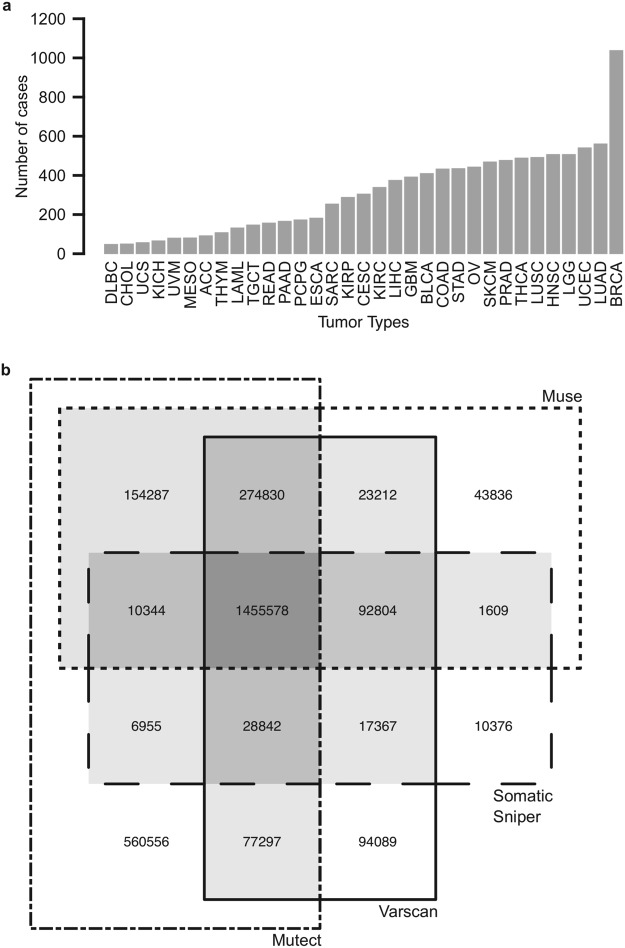
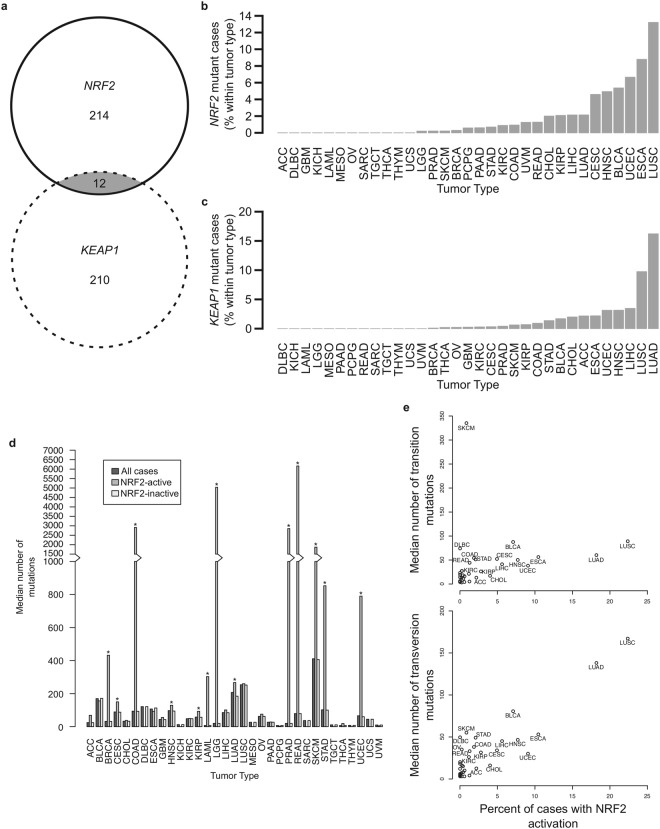
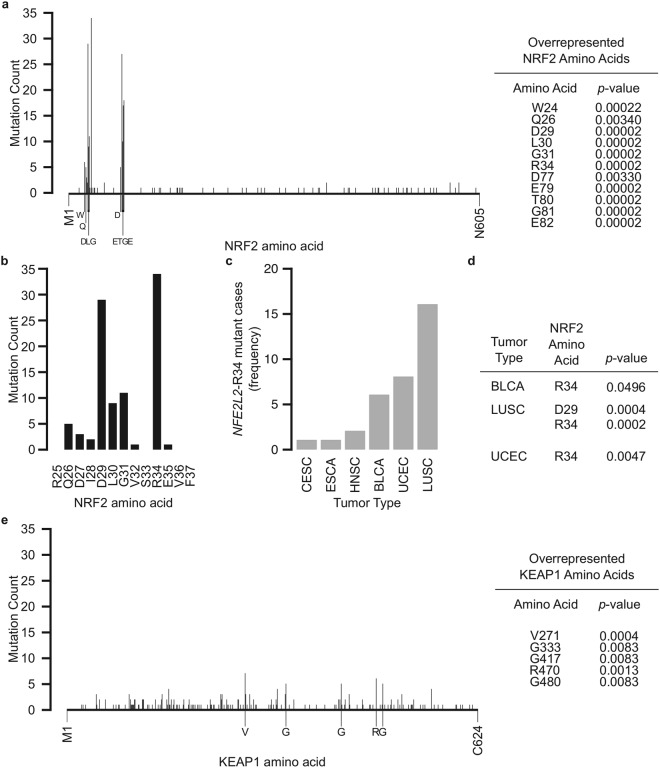
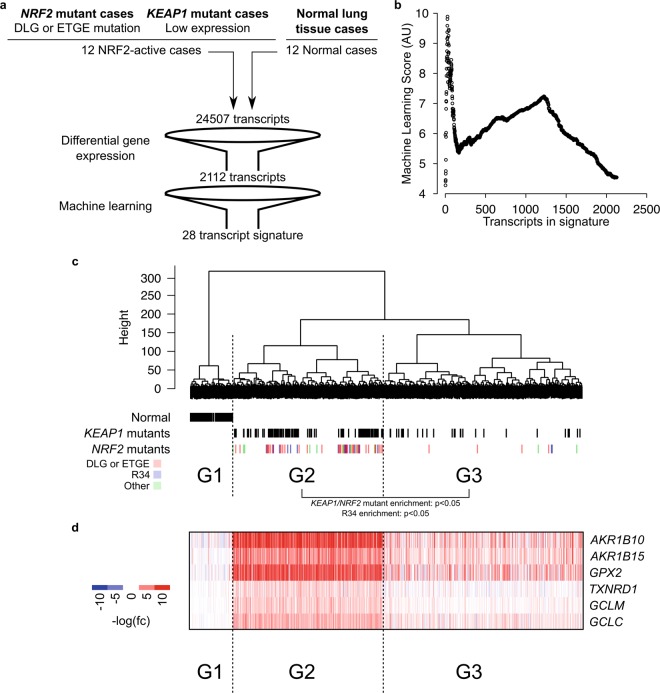
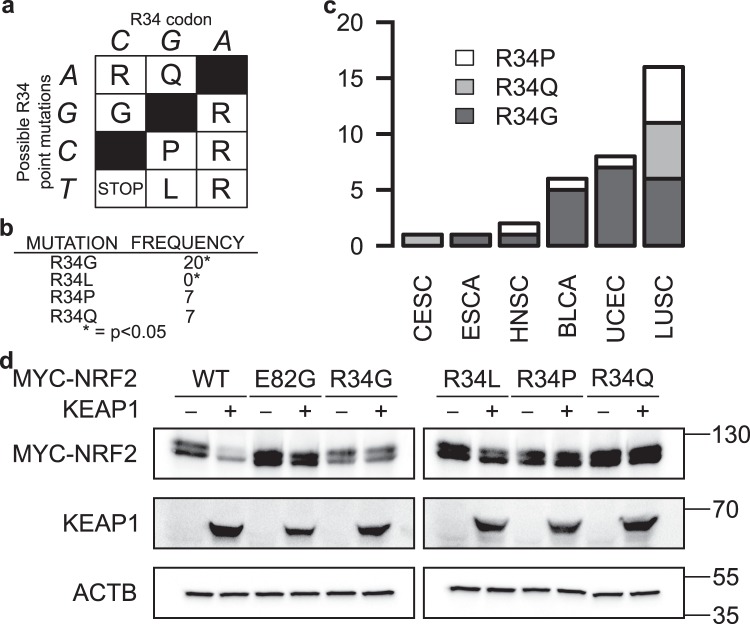
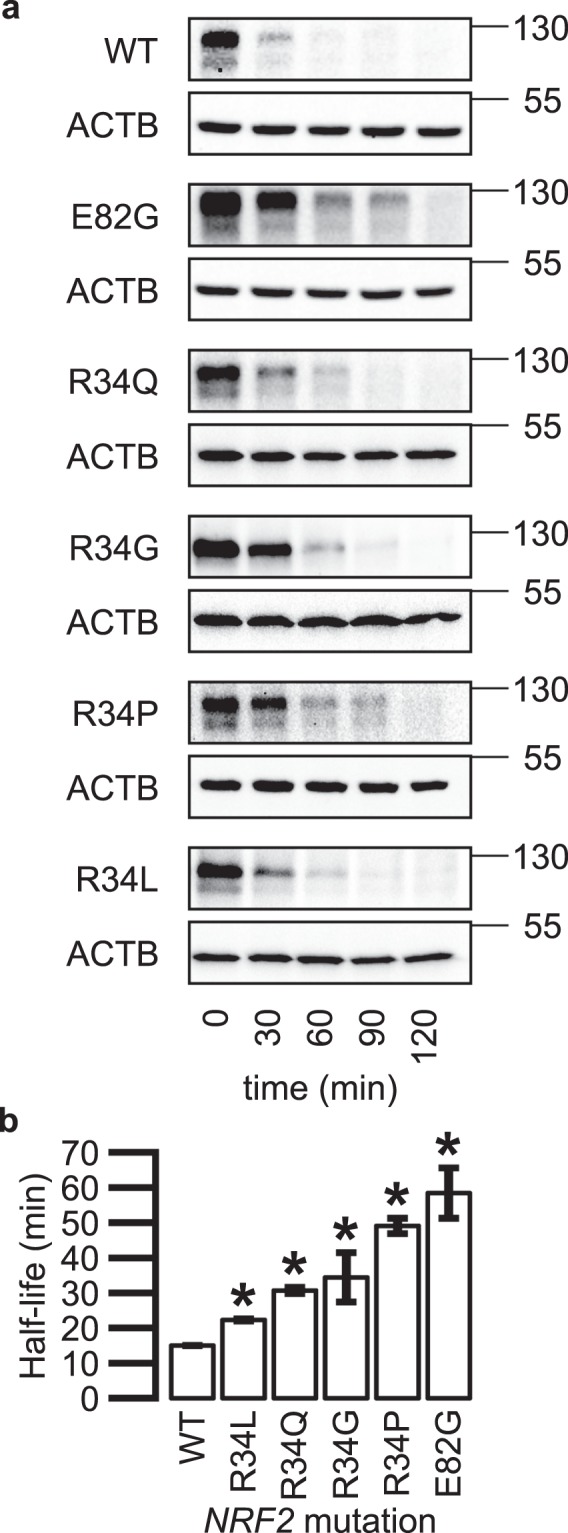
Identification and characterization of somatic mutations in cancer have important prognostication and treatment implications. Genes encoding the Nuclear factor (erythroid-derived 2)-like 2 (NRF2) transcription factor and its negative regulator, Kelch-like ECH-associated protein 1 (KEAP1), are frequently mutated in cancer. These mutations drive constitutive NRF2 activation and correlate with poor prognosis. Despite its apparent significance, a comprehensive catalogue of somatic NRF2 mutations across different tumor types is still lacking. Here, we catalogue NRF2 mutations in The Cancer Genome Atlas (TCGA) database. 226 unique NRF2-mutant tumors were identified from 10,364 cases. NRF2 mutations were found in 21 out of the 33 tumor types. A total of 11 hotspots were identified. Of these, mutation to the R34 position was most frequent. Notably, R34 and D29 mutations were overrepresented in bladder, lung, and uterine cancers. Analyses of corresponding RNA sequencing data using a de novo derived gene expression classifier showed that the R34 mutations drive constitutive NRF2 activation with a selection pressure biased against the formation of R34L. Of all R34 mutants, R34L conferred the least degree of protein stabilization, suggesting a pro-tumor NRF2 half-life threshold. Our findings offer a comprehensive catalogue of NRF2 mutations in cancer that can help prognostication and NRF2 research.
Overview
The claims and statistics of this paper haven’t been checked yet.
Run the check — free, no account needed. It reads the open-access text and checks the sources it cites.
Integrity signals
Registry
Cites
Statistics
Figures
Verification
Claims the paper makes
The claims and statistics of this paper haven’t been checked yet.
Run the check — free, no account needed. It reads the open-access text and checks the sources it cites.
Claims other papers make about this one
Each is checked against this paper’s own text: does it say what the citing paper says it does?
In the citing paper
“Some somatic mutations give rise to hyperactive Nrf2, which causes enhanced antioxidant capacity and confers protection of cancer cells from ROS and cancer therapy, thereby leading to cancer cell growth and proliferation, cancer progression, and cancer therapy resistance (e.g., chemoresistance) (Figure 8) [161,162,163,164,165,166,167,168,169,170,171].”
From Nrf2 and Oxidative Stress: A General Overview of Mechanisms and Implications in Human Disease (2022) · cites this paper as [168]
Self-check
Percentages, sums and reported differences re-computed from the paper’s own numbers.
The self-check needs the paper’s full text.
Citations
Cites
Moderated estimation of fold change and dispersion for RNA-seq data with DESeq2
Love, M. I., Huber, W., & Anders, S. (2014) · Genome Biology · doi:10.1186/s13059-014-0550-8 · Cited by 95,106
Lynch, T. J., Bell, D. W., Sordella, R., Gurubhagavatula, S., Okimoto, R. A., Brannigan, B. W., Harris, P. L., Haserlat, S. M., Supko, J. G., Haluska, F. G., et al. (2004) · New England Journal of Medicine · doi:10.1056/nejmoa040938 · Cited by 11,486
Improved survival with vemurafenib in melanoma with BRAF V600E mutation
Chapman, P. B., Hauschild, A., Robert, C., Haanen, J. B., Ascierto, P., Larkin, J., Dummer, R., Garbe, C., Testori, A., Maio, M., et al. (2011) · New England Journal of Medicine · doi:10.1056/nejmoa1103782 · Cited by 7,720
Itoh, K., Chiba, T., Takahashi, S., Ishii, T., Igarashi, K., Katoh, Y., Oyake, T., Hayashi, N., Satoh, K., Hatayama, I., et al. (1997) · Biochemical and Biophysical Research Communications · doi:10.1006/bbrc.1997.6943 · Cited by 3,999
Journal of Statistical Software
de Leeuw, J. (2009) · Wiley Interdisciplinary Reviews Computational Statistics · doi:10.1002/wics.10 · Cited by 3,651
Discovery and saturation analysis of cancer genes across 21 tumour types
Lawrence, M. S., Stojanov, P., Mermel, C. H., Robinson, J. T., Garraway, L. A., Golub, T. R., Meyerson, M., Gabriel, S. B., Lander, E. S., & Getz, G. (2014) · Nature · doi:10.1038/nature12912 · Cited by 3,096
Mechanism of Activation of the RAF-ERK Signaling Pathway by Oncogenic Mutations of B-RAF
Wan, P., Garnett, M. J., Roe, S. M., Lee, S., Niculescu‐Duvaz, D., Good, V. M., Cancer Genome Project, Jones, C. M., Marshall, C. J., Springer, C. J., et al. (2004) · Cell · doi:10.1016/s0092-8674(04)00215-6 · Cited by 2,863
Dinkova-Kostova, A. T., Holtzclaw, W. D., Cole, R. N., Itoh, K., Wakabayashi, N., Katoh, Y., Yamamoto, M., & Talalay, P. (2002) · Proceedings of the National Academy of Sciences · doi:10.1073/pnas.172398899 · Cited by 1,947
Nrf2–Keap1 defines a physiologically important stress response mechanism
Motohashi, H., & Yamamoto, M. (2004) · Trends in Molecular Medicine · doi:10.1016/j.molmed.2004.09.003 · Cited by 1,725
Zhang, D. D., & Hannink, M. (2003) · Molecular and Cellular Biology · doi:10.1128/mcb.23.22.8137-8151.2003 · Cited by 1,480
Rcpp : Seamless R and C++ Integration
Eddelbüttel, D., & François, R. (2011) · Journal of Statistical Software · doi:10.18637/jss.v040.i08 · Cited by 1,468
The emerging role of the Nrf2–Keap1 signaling pathway in cancerPreprint
Jaramillo, M. C., & Zhang, D. D. (2013) · Genes & Development · doi:10.1101/gad.225680.113 · Cited by 1,326
NRF2 and cancer: the good, the bad and the importance of context
Sporn, M. B., & Liby, K. T. (2012) · Nature Reviews Cancer · doi:10.1038/nrc3278 · Cited by 1,067
Dysfunctional KEAP1–NRF2 Interaction in Non-Small-Cell Lung Cancer
Singh, A., Misra, V., Thimmulappa, R. K., Lee, H., Ames, S., Hoque, M. O., Herman, J. G., Baylin, S. B., Sidransky, D., Gabrielson, E., et al. (2006) · PLoS Medicine · doi:10.1371/journal.pmed.0030420 · Cited by 1,060
Molecular basis of the Keap1–Nrf2 system
Suzuki, T., & Yamamoto, M. (2015) · Free Radical Biology and Medicine · doi:10.1016/j.freeradbiomed.2015.06.006 · Cited by 995
NRF2 and KEAP1 mutations: permanent activation of an adaptive response in cancer
Hayes, J. D., & McMahon, M. J. (2009) · Trends in Biochemical Sciences · doi:10.1016/j.tibs.2008.12.008 · Cited by 870
Preventable Exposures Associated With Human Cancers
Cogliano, V. J., Baan, R. A., Straíf, K., Grosse, Y., Secretan, B., Ghissassi, F. E., Bouvard, V., Benbrahim‐Tallaa, L., Guha, N., Freeman, C., et al. (2011) · JNCI Journal of the National Cancer Institute · doi:10.1093/jnci/djr483 · Cited by 855
Polycyclic Aromatic Hydrocarbons: From Metabolism to Lung Cancer
Moorthy, B., Chu, C., & Carlin, D. J. (2015) · Toxicological Sciences · doi:10.1093/toxsci/kfv040 · Cited by 807
Furukawa, M., & Xiong, Y. (2004) · Molecular and Cellular Biology · doi:10.1128/mcb.25.1.162-171.2005 · Cited by 759
Tong, K. I., Katoh, Y., Kusunoki, H., Itoh, K., Tanaka, T., & Yamamoto, M. (2006) · Molecular and Cellular Biology · doi:10.1128/mcb.26.8.2887-2900.2006 · Cited by 759
Structural basis for defects of Keap1 activity provoked by its point mutations in lung cancer
Padmanabhan, B., Tong, K. I., Ohta, T., Nakamura, Y., Scharlock, M., Ohtsuji, M., Kang, M.-I., Kobayashi, A., Yokoyama, S., & Yamamoto, M. (2006) · Molecular Cell · doi:10.1016/j.molcel.2006.01.013 · Cited by 735
Shibata, T., Ohta, T., Tong, K. I., Kokubu, A., Odogawa, R., Tsuta, K., Asamura, H., Yamamoto, M., & Hirohashi, S. (2008) · Proceedings of the National Academy of Sciences · doi:10.1073/pnas.0806268105 · Cited by 728
Adam, J., Hatipoglu, E., O'Flaherty, L., Ternette, N., Sahgal, N., Lockstone, H., Baban, D., Nye, E., Stamp, G. W., Wolhuter, K., et al. (2011) · Cancer Cell · doi:10.1016/j.ccr.2011.09.006 · Cited by 585
Formation and Biological Targets of Quinones: Cytotoxic versus Cytoprotective Effects
Bolton, J. L., & Dunlap, T. L. (2016) · Chemical Research in Toxicology · doi:10.1021/acs.chemrestox.6b00256 · Cited by 538
Characterization of NEDD8, a Developmentally Down-regulated Ubiquitin-like Protein
Kamitani, T., Kito, K., Nguyen, H. P., & Yeh, E. T. H. (1997) · Journal of Biological Chemistry · doi:10.1074/jbc.272.45.28557 · Cited by 535
McMahon, M. J., Thomas, N., Itoh, K., Yamamoto, M. P., & Hayes, J. D. (2006) · Journal of Biological Chemistry · doi:10.1074/jbc.m601119200 · Cited by 495
Tong, K. I., Padmanabhan, B., Kobayashi, A., Shang, C., Hirotsu, Y., Yokoyama, S., & Yamamoto, M. P. (2007) · Molecular and Cellular Biology · doi:10.1128/mcb.00753-07 · Cited by 459
McMahon, M. J., Lamont, D. J., Beattie, K. A., & Hayes, J. D. (2010) · Proceedings of the National Academy of Sciences · doi:10.1073/pnas.1007387107 · Cited by 445
Nrf2–MafG heterodimers contribute globally to antioxidant and metabolic networks
Hirotsu, Y., Katsuoka, F., Funayama, R., Nagashima, T., Nishida, Y., Nakayama, K., Engel, J. D., & Yamamoto, M. P. (2012) · Nucleic Acids Research · doi:10.1093/nar/gks827 · Cited by 431
Solis, L. M., Behrens, C., Dong, W., Suraokar, M. B., Ozburn, N. C., Moran, C. A., Corvalán, A. H., Biswal, S. S., Swisher, S. G., Bekele, B. N., et al. (2010) · Clinical Cancer Research · doi:10.1158/1078-0432.ccr-09-3352 · Cited by 430
Ooi, A., Wong, J.-C., Petillo, D., Roossien, D., Perrier-Trudova, V., Whitten, D., Min, B. W. H., Tan, M.-H., Zhang, Z., Yang, X. J., et al. (2011) · Cancer Cell · doi:10.1016/j.ccr.2011.08.024 · Cited by 401
Self-citationFeng, Z., Hu, W., Hu, Y., & Tang, M. (2006) · Proceedings of the National Academy of Sciences · doi:10.1073/pnas.0607031103 · Cited by 378
Oncogenic NRF2 mutations in squamous cell carcinomas of oesophagus and skin
Kim, Y. R., Oh, J. E., Kim, M. S., Kang, M. R., Park, S. W., Han, J. Y., Eom, H., Yoo, N. J., & Lee, S. H. (2009) · The Journal of Pathology · doi:10.1002/path.2653 · Cited by 357
Maher, J. M., Dieter, M. Z., Aleksunes, L. M., Slitt, A. L., Guo, G. L., Tanaka, Y., Scheffer, G. L., Chan, J. Y., Manautou, J. E., Chen, Y., et al. (2007) · Hepatology · doi:10.1002/hep.21831 · Cited by 319
Targeting NRF2 signaling for cancer chemoprevention
Kwak, M.-K., & Kensler, T. W. (2009) · Toxicology and Applied Pharmacology · doi:10.1016/j.taap.2009.08.028 · Cited by 306
Fukumoto, S., Yamauchi, N., Moriguchi, H., Hippo, Y., Watanabe, A., Shibahara, J., Taniguchi, H., Ishikawa, S., Ito, H., Yamamoto, S., et al. (2005) · Clinical Cancer Research · doi:10.1158/1078-0432.ccr-04-1238 · Cited by 290
Keap1 Mutations and Nrf2 Pathway Activation in Epithelial Ovarian Cancer
Konstantinopoulos, P. A., Spentzos, D., Fountzilas, E., Francoeur, N. J., Sanisetty, S., Grammatikos, A. P., Hecht, J. L., & Cannistra, S. A. (2011) · Cancer Research · doi:10.1158/0008-5472.can-10-4668 · Cited by 272
Fukutomi, T., Takagi, K., Mizushima, T., Ohuchi, N., & Yamamoto, M. P. (2013) · Molecular and Cellular Biology · doi:10.1128/mcb.01191-13 · Cited by 267
Chemical Proteomics Identifies Druggable Vulnerabilities in a Genetically Defined Cancer
Bar-Peled, L., Kemper, E. K., Suciu, R. M., Vinogradova, E. V., Backus, K. M., Horning, B. D., Paul, T. A., Ichu, T.-A., Svensson, R. U., Olucha, J., et al. (2017) · Cell · doi:10.1016/j.cell.2017.08.051 · Cited by 262
Lee, J. H., Khor, T. O., Shu, L., Su, Z., Fuentes, F., & Kong, A. T. (2012) · Pharmacology & Therapeutics · doi:10.1016/j.pharmthera.2012.09.008 · Cited by 254
Shibata, T., Kokubu, A., Saito, S., Narisawa-Saito, M., Sasaki, H., Aoyagi, K., Yoshimatsu, Y., Tachimori, Y., Kushima, R., Kiyono, T., et al. (2011) · Neoplasia · doi:10.1593/neo.11750 · Cited by 224
Nrf2: control of sensitivity to carcinogens
Slocum, S. L., & Kensler, T. W. (2011) · Archives of Toxicology · doi:10.1007/s00204-011-0675-4 · Cited by 219
Recurrent Loss of NFE2L2 Exon 2 Is a Mechanism for Nrf2 Pathway Activation in Human Cancers
Goldstein, L. D., Lee, J., Gnad, F., Klijn, C. N., Schaub, A., Reeder, J., Daemen, A., Bakalarski, C. E., Holcomb, T., Shames, D. S., et al. (2016) · Cell Reports · doi:10.1016/j.celrep.2016.08.010 · Cited by 206
Lu, K., Alcivar, A. L., Ma, J., Foo, T. K., Zywea, S., Mahdi, A., Huo, Y., Kensler, T. W., Gatza, M. L., & Xia, B. (2017) · Cancer Research · doi:10.1158/0008-5472.can-16-2204 · Cited by 181
Krøigård, A. B., Thomassen, M., Lænkholm, A., Kruse, T. A., & Larsen, M. J. (2016) · PLoS ONE · doi:10.1371/journal.pone.0151664 · Cited by 177
Ooi, A., Dykema, K., Ansari, A., Petillo, D., Snider, J., Kahnoski, R., Anema, J., Craig, D., Carpten, J., Teh, B.-T., et al. (2013) · Cancer Research · doi:10.1158/0008-5472.can-12-3227 · Cited by 159
Self-citationSmoking and cancer‐related gene expression in bronchial epithelium and non‐small‐cell lung cancers
Woenckhaus, M., Klein‐Hitpaß, L., Grepmeier, U., Merk, J., Pfeifer, R., Wild, P. J., Bettstetter, M., Wuensch, P. H., Blaszyk, H., Hartmann, A., et al. (2006) · The Journal of Pathology · doi:10.1002/path.2039 · Cited by 149
Targeting Nrf2 Signaling to Combat Chemoresistance
No, J. H., Kim, Y.-B., & Song, Y. S. (2014) · Journal of Cancer Prevention · doi:10.15430/jcp.2014.19.2.111 · Cited by 146
Cancer-Derived Mutations in KEAP1 Impair NRF2 Degradation but not Ubiquitination
Hast, B. E., Cloer, E. W., Goldfarb, D., Li, H., Siesser, P. F., Yan, F., Walter, V., Zheng, N., Hayes, D. N., & Major, M. B. (2014) · Cancer Research · doi:10.1158/0008-5472.can-13-1655 · Cited by 138
Frequent epigenetics inactivation of KEAP1 gene in non-small cell lung cancer
Muscarella, L. A., Parrella, P., D’Alessandro, V., la Torre, A., Barbano, R., Fontana, A., Tancredi, A., Guarnieri, V., Balsamo, T., Coco, M., et al. (2011) · Epigenetics · doi:10.4161/epi.6.6.15773 · Cited by 134
Cai, L., Yuan, W., Zhang, Z., He, L., & Chou, K. (2016) · Scientific Reports · doi:10.1038/srep36540 · Cited by 116
Namani, A., Rahaman, M. M., Chen, M., & Tang, X. (2018) · BMC Cancer · doi:10.1186/s12885-017-3907-z · Cited by 105
KEAP1 gene mutations and NRF2 activation are common in pulmonary papillary adenocarcinoma
Li, Q. K., Singh, A., Biswal, S., Askin, F., & Gabrielson, E. (2011) · Journal of Human Genetics · doi:10.1038/jhg.2010.172 · Cited by 90
Nrf2 Overexpression Predicts Prognosis and 5-FU Resistance in Gastric Cancer
Hu, X., Yao, J., Gao, S., Wang, X., Peng, X.-Q., Yang, Y., & Feng, X. (2013) · Asian Pacific Journal of Cancer Prevention · doi:10.7314/apjcp.2013.14.9.5231 · Cited by 82
Mutagenicity and Sequence Specificity of Acrolein-DNA Adducts
Wang, H., Zhang, S., Hu, Y., & Tang, M.-S. (2009) · Chemical Research in Toxicology · doi:10.1021/tx800369y · Cited by 79
Wang, J., Zhang, M., Zhang, L., Cai, H., Zhou, S., Zhang, J., & Wang, Y. (2010) · Journal of Surgical Research · doi:10.1016/j.jss.2010.05.058 · Cited by 75
Induction of the Keap1/Nrf2/ARE pathway by oxidizable diphenols
Dinkova‐Kostova, A. T., & Wang, X. J. (2010) · Chemico-Biological Interactions · doi:10.1016/j.cbi.2010.09.010 · Cited by 70
MacLeod, A. K., Acosta-Jimenez, L., Coates, P. J., McMahon, M. J., Carey, F. A., Honda, T., Henderson, C. J., & Wolf, C. R. (2016) · British Journal of Cancer · doi:10.1038/bjc.2016.363 · Cited by 65
Dinkova‐Kostova, A. T. (2012) · Topics in current chemistry · doi:10.1007/128_2012_337 · Cited by 57
Nuclear factor, erythroid 2-like 2-associated molecular signature predicts lung cancer survival
Qian, Z., Zhou, T., Gurguis, C. I., Xu, X., Wen, Q., Lv, J., Fang, F., Hecker, L., Cress, A. E., Natarajan, V., et al. (2015) · Scientific Reports · doi:10.1038/srep16889 · Cited by 54
Orrù, C., Szydlowska, M., Taguchi, K., Zavattari, P., Perra, A., Yamamoto, M. P., & Columbano, A. (2018) · Journal of Hepatology · doi:10.1016/j.jhep.2018.05.010 · Cited by 39
MacLeod, A. K., Acosta-Jimenez, L., Coates, P. J., McMahon, M. J., Carey, F. A., Honda, T., Hayes, J. D., Henderson, C. J., & Wolf, C. R. (2017) · British Journal of Cancer · doi:10.1038/bjc.2017.80 · Cited by 36
Acrolein exposure suppresses antigen-induced pulmonary inflammation
Spiess, P. C., Kasahara, D. I., Habibovic, A., Hristova, M., Randall, M. J., Poynter, M. E., & van der Vliet, A. (2013) · Respiratory Research · doi:10.1186/1465-9921-14-107 · Cited by 32
Genotoxicity of ortho-quinones: reactive oxygen species versus covalent modification
Penning, T. M. (2017) · Toxicology Research · doi:10.1039/c7tx00223h · Cited by 29
Sandhu, I. S., Maksim, N. J., Amouzougan, E. A., Gallion, B. W., Raviele, A. L. J., & Ooi, A. (2015) · Biochemical Society Transactions · doi:10.1042/bst20150041 · Cited by 19
Self-citationActivation of Nrf2 Pathways Correlates with Resistance of NSCLC Cell Lines to CBP501 In Vitro
Mine, N., Yamamoto, S., Kufe, D. W., Hoff, D. D. V., & Kawabe, T. (2014) · Molecular Cancer Therapeutics · doi:10.1158/1535-7163.mct-13-0808 · Cited by 11
Orrú, C., Szydlowska, M., Taguchi, K., Perra, A., Ledda, G. M., Yamamoto, M., & Columbano, A. (2018) · Journal of Hepatology · doi:10.1016/s0168-8278(18)30408-2 · Cited by 1
Cited by
Sorted by citations
Therapeutic targeting of the NRF2 and KEAP1 partnership in chronic diseases
Cuadrado, A., Rojo, A. I., Wells, G., Hayes, J. D., Cousin, S. P., Rumsey, W. L., Attucks, O. C., Franklin, S., Levonen, A., Kensler, T. W., et al. (2019) · Nature Reviews Drug Discovery · doi:10.1038/s41573-018-0008-x · Cited by 1,510
A compendium of mutational cancer driver genes
Martínez-Jiménez, F., Muiños, F., Sentís, I., Deu-Pons, J., Reyes-Salazar, I., Arnedo-Pac, C., Mularoni, L., Pich, O., Bonet, J., Kranas, H., et al. (2020) · Nature reviews. Cancer · doi:10.1038/s41568-020-0290-x · Cited by 1,340
Nrf2 and Oxidative Stress: A General Overview of Mechanisms and Implications in Human Disease
Ngo, V., & Duennwald, M. L. (2022) · Antioxidants · doi:10.3390/antiox11122345 · Cited by 1,130
The multifaceted role of reactive oxygen species in tumorigenesis
Kirtonia, A., Sethi, G., & Garg, M. (2020) · Cellular and Molecular Life Sciences · doi:10.1007/s00018-020-03536-5 · Cited by 452
Short Overview of ROS as Cell Function Regulators and Their Implications in Therapy Concepts
Milković, L., Gašparović, A. Č., Cindrić, M., Mouthuy, P., & Žarković, N. (2019) · Cells · doi:10.3390/cells8080793 · Cited by 330
Metadata
- Authors
- Kerins, M. J., & Ooi, A.
- Affiliations
- University of Arizona (US)
- Corresponding author
- Ooi, Aikseng
- Venue
- Scientific Reports
- Published
- 2018-08-27
- Volume
- 8
- Issue
- 1
- Pages
- 12846-12846
- ISSN
- 2045-2322 (ISSN-L)
- PMC
- PMC6110754
- OpenAlex
- W2888569026
- Cited by
- 140
- References
- 67
- Citations by year
- 2026: 14 · 2025: 13 · 2024: 18 · 2023: 18 · 2022: 19 · 2021: 22 · 2020: 26 · 2019: 10
- FWCI
- 5.16
- Type
- journal article
- Language
- en
- Open access
- gold
- doi.org
- Locations
- Scientific Reports (publishedVersion, cc-by)
- Europe PMC (PubMed Central) (publishedVersion, other-oa)
- PubMed Central (publishedVersion, cc-by)
- PubMed (publishedVersion)
- UA Campus Repository (The University of Arizona) (acceptedVersion, cc-by)
- DOAJ (DOAJ: Directory of Open Access Journals) (submittedVersion)
- Funders
- National Science Foundation (DGE-1143953)
- U.S. Department of Health & Human Services | NIH | National Institute of Environmental Health Sciences (R21ES027920)
- Topics
- Life Sciences › Biochemistry, Genetics and Molecular Biology › Molecular Biology › Genomics, phytochemicals, and oxidative stress
- Life Sciences › Biochemistry, Genetics and Molecular Biology › Cancer Research › Cancer Genomics and Diagnostics
- Life Sciences › Biochemistry, Genetics and Molecular Biology › Molecular Biology › Chromatin Remodeling and Cancer
- Keywords
- Nrf2, somatic mutations, gain-of-function mutations, Keap1, mutational hotspots, protein stabilization, gene expression classifier, bladder cancer, lung cancer, uterine cancer, cancer genomics, TCGA
- MeSH terms
- Kelch-Like ECH-Associated Protein 1, Gain of Function Mutation, Humans, Neoplasms, Signal Transduction, Sequence Analysis, DNA, Computational Biology, Amino Acid Substitution, Databases, Genetic, Cell Line, Tumor, NF-E2-Related Factor 2, Protein Stability
About these checks
Registry, retraction, Cites and statistics results are computed, not judged, with one exception: a printed reference that no index lists is read once by a model before it counts as a citation error. Claims are extracted by a model and kept only when their quote appears verbatim in the text; each cited source is then checked, with a model’s help, for whether it says what the claim relies on. Those verdicts can be wrong — read the claim’s quote and the cited source before relying on one.
Statistics and arithmetic are recomputed, not judged.
Confidence bands are shown only for fields calibrated on our annotated test set. None is calibrated yet, so no band is shown.
What counts as a claim ›How we measure confidence ›How we check this ›
Are you an author, or do you see a problem with this page? Request a review
