

Reversible senescence of human colon cancer cells after blockage of mitosis/cytokinesis caused by the CNF1 cyclomodulin from Escherichia coli
Open accessThe DOI matches its Crossref record; 65 of the 65 references it cites were found in a registry or an index.
Abstract
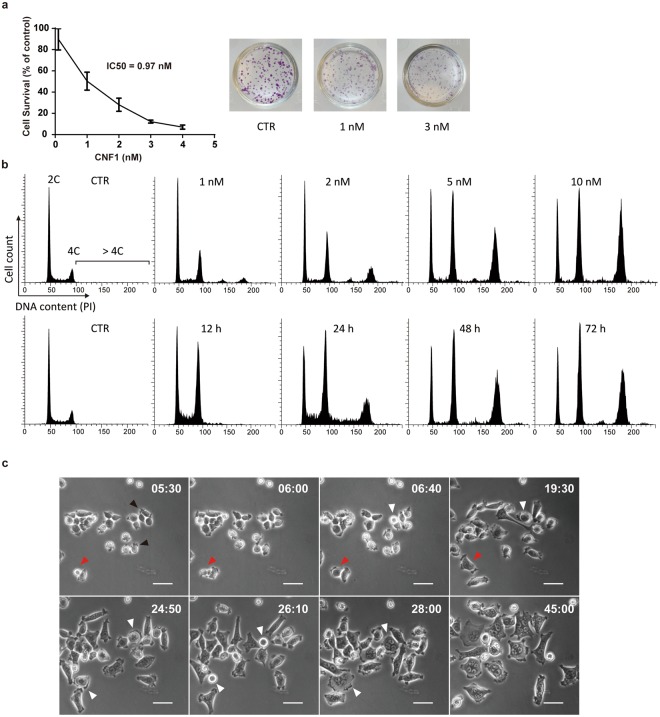
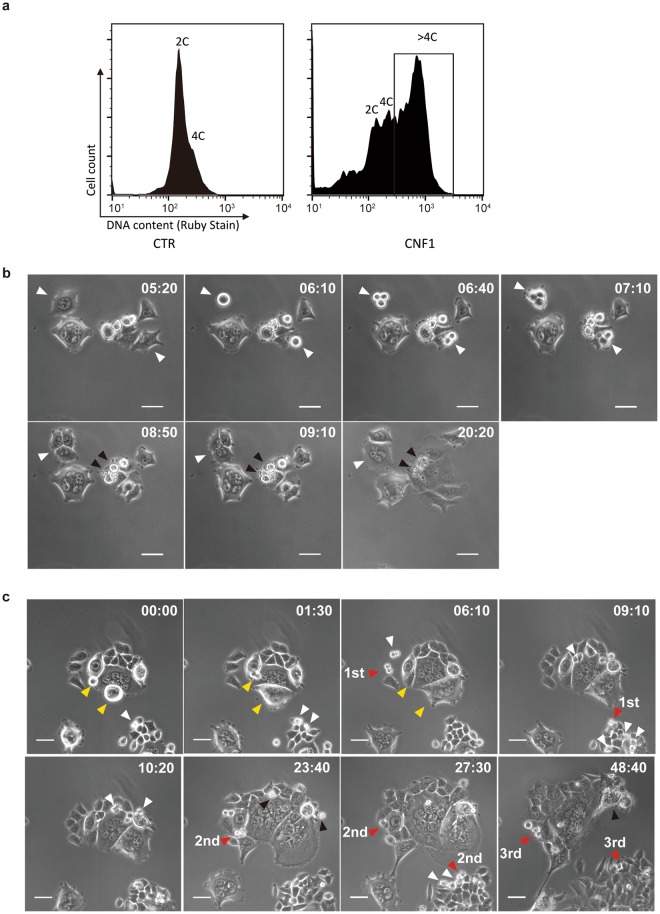
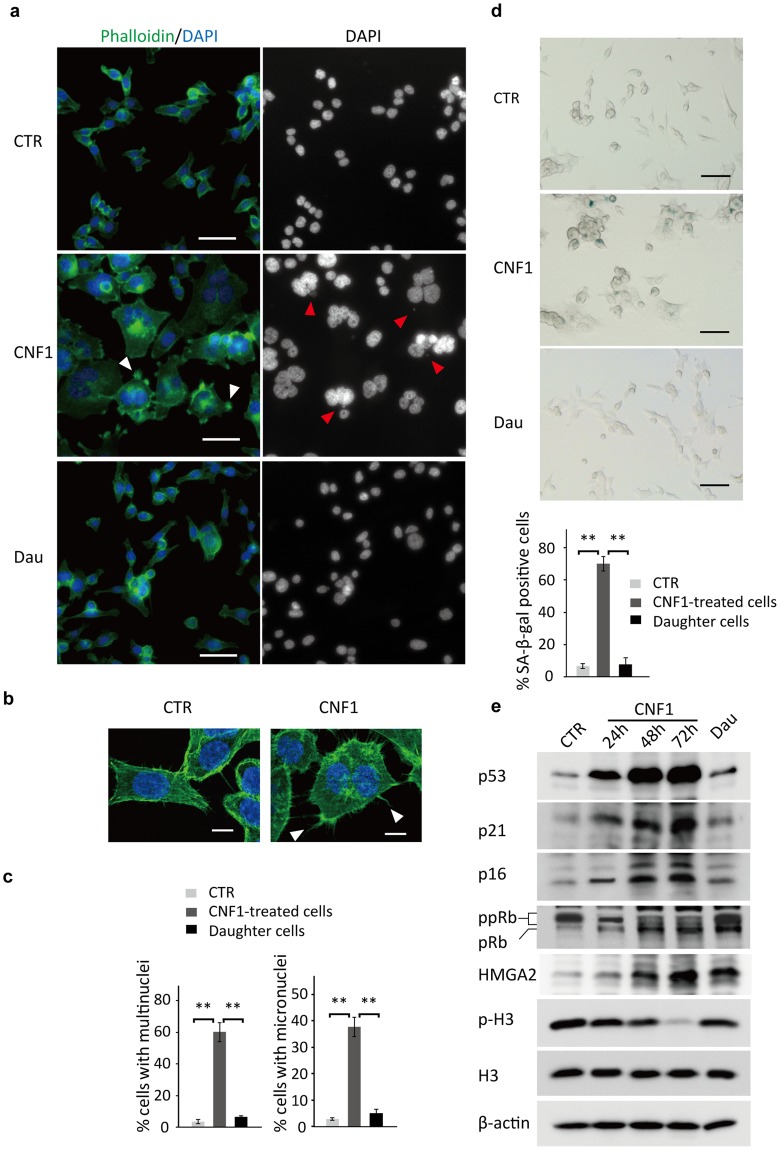
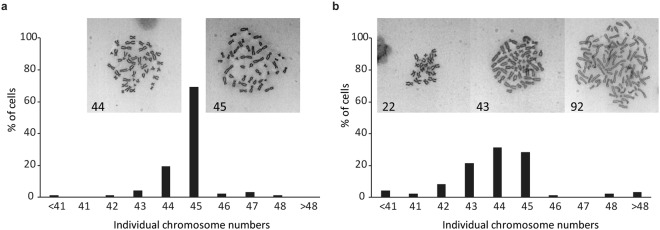
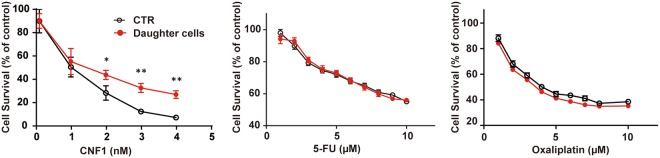
Cytotoxic necrotizing factor 1 (CNF1), a protein toxin produced by extraintestinal pathogenic Escherichia coli, activates the Rho-family small GTPases in eukaryotic cell, thereby perturbing multiple cellular functions. Increasing epidemiological evidence suggests a link between CNF1 and human inflammatory bowel disease and colorectal cancer. At the cellular level, CNF1 has been hypothesized to reprogram cell fate towards survival due to the role in perturbing cell cycle and apoptosis. However, it remains undetermined how cells survive from CNF1 intoxication. In this work, we show that CNF1 treatment blocks mitosis/cytokinesis, elicits endoreplication and polyploidisation in cultured human colon cancer cells, and drives them into reversible senescence, which provides a survival route for cells via depolyploidisation. Senescence in CNF1-treated cells is demonstrated with upregulation of several senescence markers including senescence-associated β-galactosidase activity, p53, p21 and p16, and concomitant inhibition of the retinoblastoma protein phosphorylation. Importantly, progeny derived from CNF1 treatment exhibit genomic instability exemplified by increased aneuploidy and become more resistant to CNF1, but not to 5-fluorouracil and oxaliplatin, the two agents commonly used in chemotherapeutic treatment for colorectal cancer. These observations display survival features of the cell after CNF1 treatment that may have implications for the potential role of CNF1 in carcinogenesis.
Overview
The claims and statistics of this paper haven’t been checked yet.
Free: it reads the open-access text and checks the first 5 claims that cite a source we can check. Create a free account to check every claim.
Integrity signals
Registry
Cites
Statistics
Figures
Verification
Claims the paper makes
The claims and statistics of this paper haven’t been checked yet.
Free: it reads the open-access text and checks the first 5 claims that cite a source we can check. Create a free account to check every claim.
Claims other papers make about this one
Each is checked against this paper’s own text: does it say what the citing paper says it does?
In the citing paper
“Metabolites produced by some intestinal microbiota may be genotoxic and can directly induce DNA damage of host cells or modulate the basic host cell signaling pathways involved in cell proliferation and apoptosis.”
From The Role of Gut Microbiota in Lung Cancer: From Carcinogenesis to Immunotherapy (2021) · doi:10.3389/fonc.2021.720842 · cites this paper as [60]
Self-check
Percentages, sums and reported differences re-computed from the paper’s own numbers.
The self-check needs the paper’s full text.
Citations
Cites
Etienne-Manneville, S., & Hall, A. (2002) · Nature · doi:10.1038/nature01148 · Cited by 4,201
Clonogenic assay of cells in vitro
Franken, N. A. P., Rodermond, H. M., Stap, J., Haveman, J., & van Bree, C. (2006) · Nature Protocols · doi:10.1038/nprot.2006.339 · Cited by 4,188
Oxaliplatin, Fluorouracil, and Leucovorin as Adjuvant Treatment for Colon Cancer
André, T., Boni, C., Mounedji-Boudiaf, L., Navarro, M., Tabernero, J., Hickish, T., Topham, C., Zaninelli, M., Clingan, P., Bridgewater, J., et al. (2004) · New England Journal of Medicine · doi:10.1056/nejmoa032709 · Cited by 3,689
Fenech, M., Kirsch-Volders, M., Natarajan, A. T., Surralles, J., Crott, J. W., Parry, J., Norppa, H., Eastmond, D. A., Tucker, J. D., & Thomas, P. (2011) · Mutagenesis · doi:10.1093/mutage/geq052 · Cited by 1,244
Therapy-induced senescence in cancer.
Ewald, J. A., Desotelle, J. A., Wilding, G., & Jarrard, D. F. (2010) · JNCI: Journal of the National Cancer Institute · doi:10.1093/jnci/djq364 · Cited by 824
Rajagopalan, H., & Lengauer, C. (2004) · Nature · doi:10.1038/nature03099 · Cited by 725
Martin, H. M., Campbell, B. J., Hart, C. A., Mpofu, C., Nayar, M., Singh, R., Englyst, H., Williams, H. F., & Rhodes, J. M. (2004) · Gastroenterology · doi:10.1053/j.gastro.2004.03.054 · Cited by 716
Endoreplication: polyploidy with purpose
Lee, H. O., Davidson, J. M., & Duronio, R. J. (2009) · Genes & Development · doi:10.1101/gad.1829209 · Cited by 590
High Prevalence of Mucosa-Associated E. coli Producing Cyclomodulin and Genotoxin in Colon Cancer
Buc, E., Dubois, D., Sauvanet, P., Raisch, J., Delmas, J., Darfeuille-Michaud, A., Pezet, D., & Bonnet, R. (2013) · PLoS ONE · doi:10.1371/journal.pone.0056964 · Cited by 535
Gln 63 of Rho is deamidated by Escherichia coli cytotoxic necrotizing factor-1
Schmidt, G., Sehr, P., Wilm, M., Selzer, J., Mann, M., & Aktories, K. (1997) · Nature · doi:10.1038/42735 · Cited by 530
Toxin-induced activation of the G protein p21 Rho by deamidation of glutamine
Flatau, G., Lemichez, E., Gauthier, M., Chardin, P., Paris, S., Fiorentini, C., & Boquet, P. (1997) · Nature · doi:10.1038/42743 · Cited by 498
Roberson, R. S., Kussick, S. J., Vallieres, E., Chen, S.-Y. J., & Wu, D. Y. (2005) · Cancer Research · doi:10.1158/0008-5472.can-04-1270 · Cited by 428
Kotlowski, R., Bernstein, C. N., Sepehri, S., & Krause, D. O. (2007) · Gut · doi:10.1136/gut.2006.099796 · Cited by 422
Hypermethylation can selectively silence individual p16ink4A alleles in neoplasia.
Myöhänen, S., Baylin, S. B., & Herman, J. G. (1998) · PubMed · Cited by 305
Senescence, apoptosis and therapy — cutting the lifelines of cancer
Schmitt, C. A. (2003) · Nature Reviews Cancer · doi:10.1038/nrc1044 · Cited by 295
Bacterial protein toxins that modify host regulatory GTPases
Aktories, K. (2011) · Nature Reviews Microbiology · doi:10.1038/nrmicro2592 · Cited by 288
Puig, P., Guilly, M., Bouchot, A., Droin, N., Cathelin, D., Bouyer, F., Favier, L., Ghiringhelli, F., Kroemer, G., Solary, E., et al. (2008) · Cell Biology International · doi:10.1016/j.cellbi.2008.04.021 · Cited by 253
Bacterial cytotoxins: targeting eukaryotic switches
Aktories, K., & Barbieri, J. T. (2005) · Nature Reviews Microbiology · doi:10.1038/nrmicro1150 · Cited by 249
Cyclomodulins: bacterial effectors that modulate the eukaryotic cell cycle
Nougayrède, J.-P., Taieb, F., Rycke, J. D., & Oswald, E. (2005) · Trends in Microbiology · doi:10.1016/j.tim.2005.01.002 · Cited by 249
Smith, Y. C., Rasmussen, S. B., Grande, K. K., Conran, R. M., & O’Brien, A. D. (2008) · Infection and Immunity · doi:10.1128/iai.00075-08 · Cited by 181
Lerm, M., Selzer, J., Hoffmeyer, A., Rapp, U. R., Aktories, K., & Schmidt, G. (1999) · Infection and Immunity · doi:10.1128/iai.67.2.496-503.1999 · Cited by 179
Induction of senescence with doxorubicin leads to increased genomic instability of HCT116 cells
Sliwinska, M. A., Mosieniak, G., Wolanin, K., Babik, A., Piwocka, K., Magalska, A., Szczepanowska, J., Fronk, J., & Sikora, E. (2009) · Mechanisms of Ageing and Development · doi:10.1016/j.mad.2008.04.011 · Cited by 178
Bingen-Bidois, M., Clermont, O., Bonacorsi, S., Terki, M., Brahimi, N., Loukil, C., Barraud, D., & Bingen, E. (2002) · Infection and Immunity · doi:10.1128/iai.70.6.3216-3226.2002 · Cited by 173
Colon cancer-associated B2 Escherichia coli colonize gut mucosa and promote cell proliferation
Raisch, J. (2014) · World Journal of Gastroenterology · doi:10.3748/wjg.v20.i21.6560 · Cited by 173
Bacterial Toxins That Modify The Actin Cytoskeleton
Barbieri, J. T., Riese, M. J., & Aktories, K. (2002) · Annual Review of Cell and Developmental Biology · doi:10.1146/annurev.cellbio.18.012502.134748 · Cited by 173
Khan, N. A., Wang, Y., Kim, K. J., Chung, J. W., Wass, C. A., & Kim, K. S. (2002) · Journal of Biological Chemistry · doi:10.1074/jbc.m112224200 · Cited by 157
Polyploidy Formation in Doxorubicin-Treated Cancer Cells Can Favor Escape from Senescence
Mosieniak, G., Sliwinska, M. A., Alster, O., Strzeszewska, A., Sunderland, P., Piechota, M., Was, H., & Sikora, E. (2015) · Neoplasia · doi:10.1016/j.neo.2015.11.008 · Cited by 155
Rippere-Lampe, K. E., O'Brien, A. D., Conran, R., & Lockman, H. A. (2001) · Infection and Immunity · doi:10.1128/iai.69.6.3954-3964.2001 · Cited by 154
Cellular senescence and cancer chemotherapy resistance
Gordon, R. R., & Nelson, P. S. (2012) · Drug Resistance Updates · doi:10.1016/j.drup.2012.01.002 · Cited by 134
Polyploidy road to therapy‐induced cellular senescence and escape
Wang, Q., Wu, P. C., Dong, D. Z., Ivanova, I., Chu, E., Zeliadt, S., Vesselle, H., & Wu, D. Y. (2013) · International Journal of Cancer · doi:10.1002/ijc.27810 · Cited by 129
Chung, J. W., Hong, S. J., Kim, K. J., Goti, D., Stins, M. F., Shin, S., Dawson, V. L., Dawson, T. M., & Kim, K. S. (2003) · Journal of Biological Chemistry · doi:10.1074/jbc.m301028200 · Cited by 127
The cytotoxic necrotizing factor 1 (CNF1) from Escherichia coli
Boquet, P. (2001) · Toxicon · doi:10.1016/s0041-0101(01)00154-4 · Cited by 123 · cited 1×
“It is known that CNF1 causes cell multinucleation and endomitosis in various cell lines (Boquet 2001).”
BackgroundHijacking of Rho GTPases during bacterial infection
Lemichez, E., & Aktories, K. (2013) · Experimental Cell Research · doi:10.1016/j.yexcr.2013.04.021 · Cited by 115
Lacerda, H. M., Pullinger, G. D., Lax, A. J., & Rozengurt, E. (1997) · Journal of Biological Chemistry · doi:10.1074/jbc.272.14.9587 · Cited by 90
Cyclomodulins in Urosepsis Strains of Escherichia coli
Dubois, D., Delmas, J., Cady, A., Robin, F., Sivignon, A., Oswald, E., & Bonnet, R. (2010) · Journal of Clinical Microbiology · doi:10.1128/jcm.02365-09 · Cited by 83
Outer Membrane Vesicle-Mediated Export of Processed PrtV Protease from Vibrio cholerae
Rompikuntal, P. K., Vdovikova, S., Duperthuy, M., Johnson, T. L., Åhlund, M. K., Lundmark, R., Oscarsson, J., Sandkvist, M., Uhlin, B. E., & Wai, S. N. (2015) · PLoS ONE · doi:10.1371/journal.pone.0134098 · Cited by 77
Self-citationMunro, P., Flatau, G., Doye, A., Boyer, L., Oregioni, O., Mege, J.-L., Landraud, L., & Lemichez, E. (2004) · Journal of Biological Chemistry · doi:10.1074/jbc.m401580200 · Cited by 77
In vitro evidence for senescent multinucleated melanocytes as a source for tumor-initiating cells
Leikam, C., Hufnagel, A. L., Otto, C., Murphy, D. J., Mühling, B., Kneitz, S., Nanda, I., Schmid, M., Wagner, T. U., Haferkamp, S., et al. (2015) · Cell Death & Disease · doi:10.1038/cddis.2015.71 · Cited by 74
Cytotoxic Necrotizing Factors (CNFs)−A Growing Toxin Family
Knust, Z., & Schmidt, G. (2010) · Toxins · doi:10.3390/toxins2010116 · Cited by 73
Blumenthal, B., Hoffmann, C., Aktories, K., Backert, S., & Schmidt, G. (2007) · Infection and Immunity · doi:10.1128/iai.01937-06 · Cited by 68
Miraglia, A. G., Travaglione, S., Meschini, S., Falzano, L., Matarrese, P., Quaranta, M. G., Viora, M., Fiorentini, C., & Fabbri, A. (2007) · Molecular Biology of the Cell · doi:10.1091/mbc.e06-10-0910 · Cited by 66
A Novel Role of Listeria monocytogenes Membrane Vesicles in Inhibition of Autophagy and Cell Death
Vdovikova, S., Luhr, M., Szalai, P., Skalman, L. N., Francis, M. K., Lundmark, R., Engedal, N., Johansson, J., & Wai, S. N. (2017) · Frontiers in Cellular and Infection Microbiology · doi:10.3389/fcimb.2017.00154 · Cited by 66
Self-citationFilho, R. A. E.-A., Nicolas, A., Castro, T. L. D. P., Deplanche, M., Azevedo, V., Goossens, P. L., Taieb, F. E., Lina, G., Loir, Y. L., & Berkova, N. (2017) · Frontiers in Cellular and Infection Microbiology · doi:10.3389/fcimb.2017.00208 · Cited by 66
Hijacking Rho GTPases by protein toxins and apoptosis: molecular strategies of pathogenic bacteria
Fiorentini, C., Falzano, L., Travaglione, S., & Fabbri, A. (2003) · Cell Death & Differentiation · doi:10.1038/sj.cdd.4401151 · Cited by 63
Horiguchi, Y. (2001) · Toxicon · doi:10.1016/s0041-0101(01)00149-0 · Cited by 60
Piteau, M., Papatheodorou, P., Schwan, C., Schlösser, A., Aktories, K., & Schmidt, G. (2014) · PLoS Pathogens · doi:10.1371/journal.ppat.1003884 · Cited by 60
Guo, Y., Zhang, Z., Wei, H., Wang, J., Lv, J., Zhang, K., Keller, E. T., Yao, Z., & Wang, Q. (2017) · The Journal of Pathology · doi:10.1002/path.4940 · Cited by 55
Self-citationThe Rho-activating CNF1 toxin from pathogenic E. coli: A risk factor for human cancer development?
Travaglione, S., Fabbri, A., & Fiorentini, C. (2008) · Infectious Agents and Cancer · doi:10.1186/1750-9378-3-4 · Cited by 52
Failure of cell cleavage induces senescence in tetraploid primary cells
Panopoulos, A., Pacios-Bras, C., Choi, J., Mythili, Y., Sussman, M. A., Fotedar, R., & Margolis, R. L. (2014) · Molecular Biology of the Cell · doi:10.1091/mbc.e14-03-0844 · Cited by 52
Falzano, L., Quaranta, M. G., Travaglione, S., Filippini, P., Fabbri, A., Viora, M., Donelli, G., & Fiorentini, C. (2003) · Infection and Immunity · doi:10.1128/iai.71.7.4178-4181.2003 · Cited by 52
Falzano, L., Filippini, P., Travaglione, S., Miraglia, A. G., Fabbri, A., & Fiorentini, C. (2006) · Infection and Immunity · doi:10.1128/iai.01413-05 · Cited by 48
Thomas, W., Ascott, Z. K., Harmey, D., Slice, L. W., Rozengurt, E., & Lax, A. J. (2001) · Infection and Immunity · doi:10.1128/iai.69.11.6839-6845.2001 · Cited by 45
Smith, M. A., Weingarten, R. A., Russo, L. M., Ventura, C. L., & O’Brien, A. D. (2015) · Infection and Immunity · doi:10.1128/iai.02848-14 · Cited by 41
Aung, K. M., Sjöström, A. E., von Pawel‐Rammingen, U., Riesbeck, K., Uhlin, B. E., & Wai, S. N. (2016) · Journal of Innate Immunity · doi:10.1159/000443646 · Cited by 40
Self-citationJohnson, D. E., Drachenberg, C., Lockatell, C. V., Island, M. D., Warren, J. W., & Donnenberg, M. S. (2000) · FEMS Immunology & Medical Microbiology · doi:10.1111/j.1574-695x.2000.tb01454.x · Cited by 39
Genetic determinants of methotrexate responsiveness and resistance in colon cancer cells
Morales, C., Ribas, M., Aiza, G., & Peinado, M. A. (2005) · Oncogene · doi:10.1038/sj.onc.1208834 · Cited by 39
Vannini, E., Panighini, A., Cerri, C., Fabbri, A., Lisi, S., Pracucci, E., Benedetto, N., Vannozzi, R., Fiorentini, C., Caleo, M., et al. (2014) · BMC Cancer · doi:10.1186/1471-2407-14-449 · Cited by 34
Is the Rac GTPase‐activating toxin CNF1 a smart hijacker of host cell fate?
Malorni, W., & Fiorentini, C. (2006) · The FASEB Journal · doi:10.1096/fj.05-4706hyp · Cited by 34
Augspach, A., List, J., Wolf, P., Bielek, H., Schwan, C., Elsässer‐Beile, U., Aktories, K., & Schmidt, G. (2013) · Toxins · doi:10.3390/toxins5112241 · Cited by 28
Abdi, H. A., & Rashki, A. (2014) · International Journal of Enteric Pathogens · doi:10.17795/ijep21725 · Cited by 23
Tunsjø, H. S., Wiik-Nielsen, C. R., Grove, S., Skjerve, E., Sørum, H. R., & L'Abée-Lund, T. M. (2011) · Microbial Pathogenesis · doi:10.1016/j.micpath.2011.02.001 · Cited by 20
A Multinucleating Escherichia Coli Cytotoxin Perturbs Cell Cycle in Cultured Epithelial Cells
Giamboi-Miraglia, A., Travaglione, S., Filippini, P., Fabbri, A., Fiorentini, C., & Falzano, L. (2007) · Toxicology in Vitro · doi:10.1016/j.tiv.2006.08.013 · Cited by 19
Michaud, J. E., Kim, K. S., Harty, W. J., Kasprenski, M. C., & Wang, M. (2017) · BMC Microbiology · doi:10.1186/s12866-017-1036-0 · Cited by 15
New therapeutics from Nature: The odd case of the bacterial cytotoxic necrotizing factor 1
Maroccia, Z., Loizzo, S., Travaglione, S., Frank, C., Fabbri, A., & Fiorentini, C. (2018) · Biomedicine & Pharmacotherapy · doi:10.1016/j.biopha.2018.02.140 · Cited by 12
Evolutionary aspects of toxin-producing bacteria
Wilson, B. A., & Ho, M. (2015) · Elsevier eBooks · doi:10.1016/b978-0-12-800188-2.00001-x · Cited by 10
Cited by
Microbiome in Colorectal Cancer: How to Get from Meta-omics to Mechanism?
Ternes, D., Karta, J., Tsenkova, M., Wilmes, P., Haan, S., & Letellier, E. (2020) · Trends in Microbiology · doi:10.1016/j.tim.2020.01.001 · Cited by 251
The Role of the Gut Microbiota in Colorectal Cancer Causation
Hinai, E. A., Walton, G., & Commane, D. M. (2019) · International Journal of Molecular Sciences · doi:10.3390/ijms20215295 · Cited by 150
“In contrast, cytotoxic necrotising factor (CNF-1) exposure precipitates a reorganisation of the actin cytoskeleton and reversible cellular senescence that may be coupled to chromosomal irregularities and genomic instability in cultured colonocytes [73].”
BackgroundIntestinal bacteria and colorectal cancer: etiology and treatment
Dougherty, M. W., & Jobin, C. (2023) · Gut Microbes · doi:10.1080/19490976.2023.2185028 · Cited by 160
The Role of Gut Microbiota in Lung Cancer: From Carcinogenesis to Immunotherapy
(2021) · doi:10.3389/fonc.2021.720842 · Cited by 136
“These interactions may lead to genetic and epigenetic modifications, thus endowing protumoral genome instability, which is most often caused by bacterial protein toxins that trigger host cell double-strand DNA breaks (DSBs), such as cytolethal distending toxin (CDT) (58, 59), cytotoxic necrotizing factor (CNF) (60, 61…”
BackgroundColon Carcinogenesis: The Interplay Between Diet and Gut Microbiota
Loke, Y. L., Chew, M. T., Ngeow, Y. F., Lim, W. W.-D., & Peh, S. C. (2020) · Frontiers in Cellular and Infection Microbiology · doi:10.3389/fcimb.2020.603086 · Cited by 147
Metadata
- Authors
- Zhang, Z., Aung, K. M., Uhlin, B. E., & Wai, S. N.
- Affiliations
- University of Helsinki (FI)
- Umeå University (SE)
- Corresponding author
- Zhang, Zhen
- Wai, Sun Nyunt
- Venue
- Scientific Reports
- Published
- 2018-12-12
- Volume
- 8
- Issue
- 1
- Pages
- 17780-17780
- ISSN
- 2045-2322 (ISSN-L)
- PMC
- PMC6290797
- OpenAlex
- W2905534179
- Cited by
- 44
- References
- 65
- Citations by year
- 2025: 9 · 2024: 1 · 2023: 6 · 2022: 7 · 2021: 13 · 2020: 6 · 2019: 2
- FWCI
- 3.61
- Type
- journal article
- Language
- en
- Open access
- gold
- doi.org
- Licence
- cc-by
- creativecommons.org/licenses/by/4.0 (tdm)
- creativecommons.org/licenses/by/4.0 (vor)
- Locations
- Scientific Reports (publishedVersion, cc-by)
- Europe PMC (PubMed Central) (publishedVersion, cc-by)
- PubMed Central (publishedVersion, cc-by)
- PubMed (publishedVersion)
- DiVA at Umeå University (Umeå University) (submittedVersion, other-oa)
- DOAJ (DOAJ: Directory of Open Access Journals) (submittedVersion)
- Funders
- Cancerfonden (CAN2014/831)
- Vetenskapsrådet (2013-02392, 2015-03007, 2016-06598, 829-2006-7431, 2015-06824, 349-2007-8673, 2014-04401)
- Umeå Centre for Microbial Research
- Topics
- Life Sciences › Biochemistry, Genetics and Molecular Biology › Cell Biology › Telomeres, Telomerase, and Senescence
- Life Sciences › Biochemistry, Genetics and Molecular Biology › Cell Biology › Microtubule and mitosis dynamics
- Health Sciences › Medicine › Oncology › Cancer-related Molecular Pathways
- Keywords
- cytotoxic necrotizing factor 1, Escherichia coli toxins, endoreplication, polyploidization, colorectal cancer cells, Rho GTPase activation, senescence-associated β-galactosidase, retinoblastoma protein phosphorylation, genomic instability, aneuploidy, chemoresistance, carcinogenesis, inflammatory bowel disease
- MeSH terms
- Bacterial Toxins, Cell Survival, Colonic Neoplasms, Cytotoxins, Escherichia coli, Eukaryotic Cells, Humans, Mitosis, Phosphorylation, Biomarkers, Up-Regulation, Cellular Senescence, Escherichia coli Proteins, HCT116 Cells, Cell Line, Tumor, Cytokinesis
About these checks
Registry, retraction, Cites and statistics results are computed, not judged, with one exception: a printed reference that no index lists is read once by a model before it counts as a citation error. Claims are extracted by a model and kept only when their quote appears verbatim in the text; each cited source is then checked, with a model’s help, for whether it says what the claim relies on. Those verdicts can be wrong — read the claim’s quote and the cited source before relying on one.
Statistics and arithmetic are recomputed, not judged.
Confidence bands are shown only for fields calibrated on our annotated test set. None is calibrated yet, so no band is shown.
What counts as a claim ›How we measure confidence ›How we check this ›
Are you an author, or do you see a problem with this page? Request a review
Data sources
Bibliographic data: Semantic Scholar, OpenAlex, Crossref.
Contains information from the Semantic Scholar Academic Graph Datasets, made available under the ODC Attribution License (ODC-BY 1.0).
Semantic Scholar’s data is described in: Kinney, R., et al. (2023). The Semantic Scholar Open Data Platform. arXiv:2301.10140.
