

Data-driven subtyping of Parkinson's disease using longitudinal clinical records: a cohort study
Open accessThe DOI matches its Crossref record; 40 of the 42 references it cites were found in a registry or an index.
Abstract
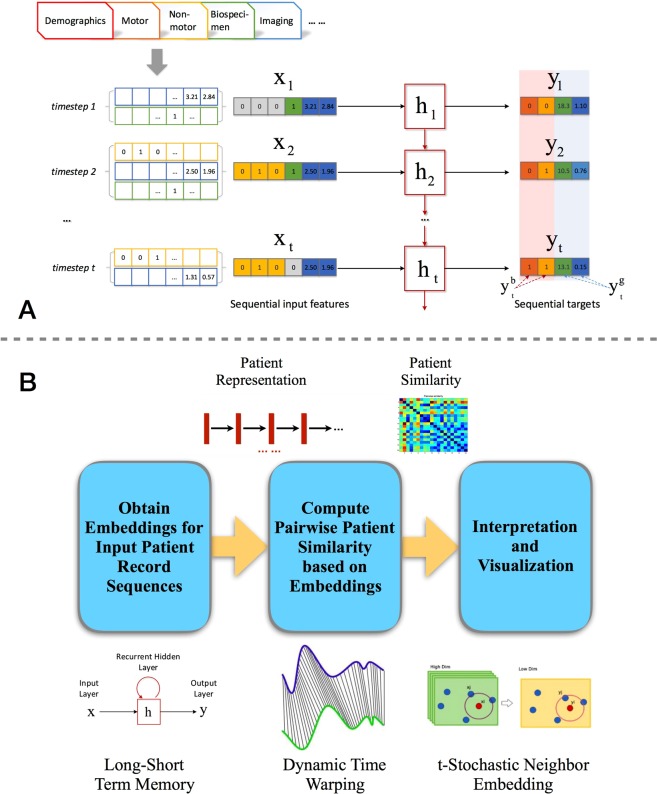
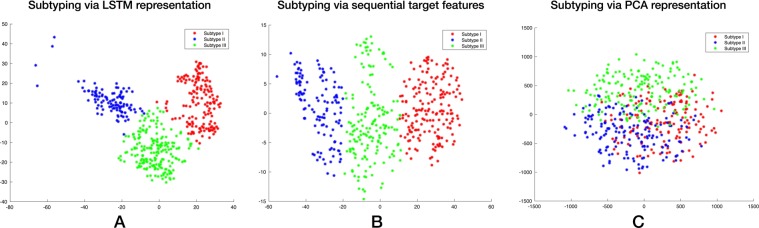
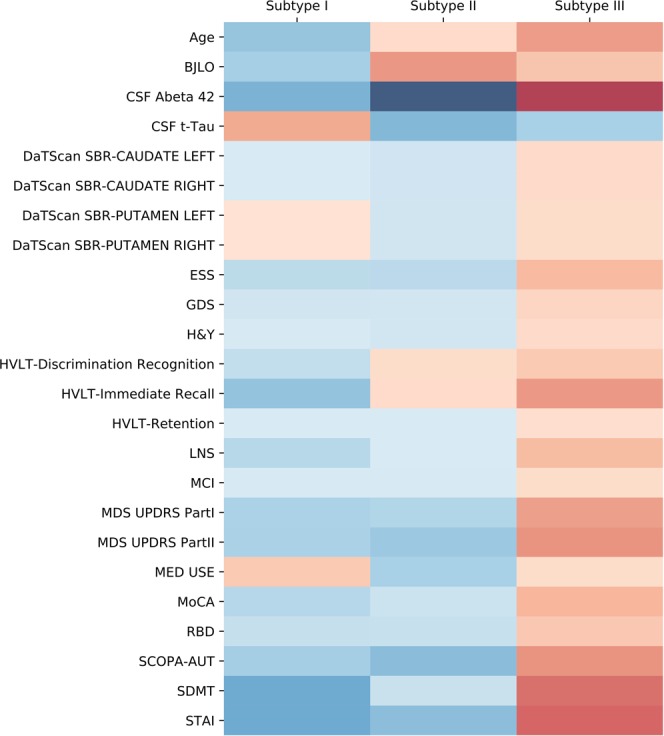
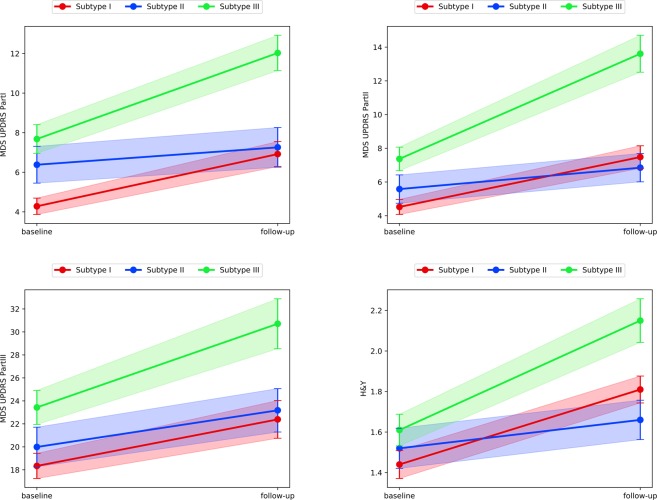
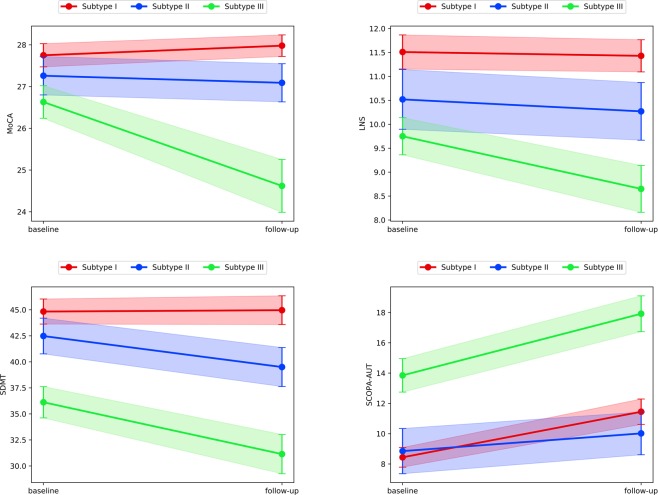
Parkinson’s disease (PD) is associated with diverse clinical manifestations including motor and non-motor signs and symptoms, and emerging biomarkers. We aimed to reveal the heterogeneity of PD to define subtypes and their progression rates using an automated deep learning algorithm on the top of longitudinal clinical records. This study utilizes the data collected from the Parkinson’s Progression Markers Initiative (PPMI), which is a longitudinal cohort study of patients with newly diagnosed Parkinson’s disease. Clinical information including motor and non-motor assessments, biospecimen examinations, and neuroimaging results were used for identification of PD subtypes. A deep learning algorithm, Long-Short Term Memory (LSTM), was used to represent each patient as a multi-dimensional time series for subtype identification. Both visualization and statistical analysis were performed for analyzing the obtained PD subtypes. As a result, 466 patients with idiopathic PD were investigated and three subtypes were identified. Subtype I (Mild Baseline, Moderate Motor Progression) is comprised of 43.1% of the participants, with average age 58.79 ± 9.53 years, and was characterized by moderate functional decay in motor ability but stable cognitive ability. Subtype II (Moderate Baseline, Mild Progression) is comprised of 22.9% of the participants, with average age 61.93 ± 6.56 years, and was characterized by mild functional decay in both motor and non-motor symptoms. Subtype III (Severe Baseline, Rapid Progression) is comprised 33.9% of the patients, with average age 65.32 ± 8.86 years, and was characterized by rapid progression of both motor and non-motor symptoms. These subtypes suggest that when comprehensive clinical and biomarker data are incorporated into a deep learning algorithm, the disease progression rates do not necessarily associate with baseline severities, and the progression rate of non-motor symptoms is not necessarily correlated with the progression rate of motor symptoms.
Overview
The claims and statistics of this paper haven’t been checked yet.
Free: it reads the open-access text and checks the first 5 claims that cite a source we can check. Create a free account to check every claim.
Integrity signals
Registry
Cites
Statistics
Figures
Verification
Claims the paper makes
The claims and statistics of this paper haven’t been checked yet.
Free: it reads the open-access text and checks the first 5 claims that cite a source we can check. Create a free account to check every claim.
Claims other papers make about this one
Each is checked against this paper’s own text: does it say what the citing paper says it does?
The check wasn’t confident either way, so it gives no verdict — never disputed.
In the citing paper
“For example, changes in physical activity and movement patterns, driving behavior, sleep patterns, everyday speech, eye tracking, facial expressions, technology use, writing, texting, and keyboard typing dynamics have all been shown to differentiate those with and without neurodegenerative disease.111–119”
From Review of Artificial Intelligence for Clinical Use in Alzheimer's Disease and Related Dementias (2026) · cites this paper as [115]
Experimental — accuracy not yet measured
Self-check
Percentages, sums and reported differences re-computed from the paper’s own numbers.
The self-check needs the paper’s full text.
Citations
Cites
Hochreiter, S., & Schmidhuber, J. (1997) · Neural Computation · doi:10.1162/neco.1997.9.8.1735 · Cited by 102,318
(2008) · Journal of Machine Learning Research · Cited by 33,051
Algorithm AS 136: A K-Means Clustering Algorithm
Hartigan, J. A., & Wong, M. A. (1979) · Applied Statistics · doi:10.2307/2346830 · Cited by 14,523
Dermatologist-level classification of skin cancer with deep neural networks
Esteva, A., Kuprel, B., Novoa, R. A., Ko, J., Swetter, S. M., Blau, H. M., & Thrun, S. (2017) · Nature · doi:10.1038/nature21056 · Cited by 14,362
Wold, S., Esbensen, K., & Geladi, P. (1987) · Chemometrics and Intelligent Laboratory Systems · doi:10.1016/0169-7439(87)80084-9 · Cited by 11,606
Algorithms for Clustering Data
Sarle, W. S. (1990) · Technometrics · doi:10.1080/00401706.1990.10484648 · Cited by 7,865
Gulshan, V., Peng, L., Coram, M., Stumpe, M. C., Wu, D., Narayanaswamy, A., Venugopalan, S., Widner, K., Madams, T., Cuadros, J., et al. (2016) · JAMA · doi:10.1001/jama.2016.17216 · Cited by 7,697
Introduction to Reinforcement Learning
Sutton, R. S., & Barto, A. G. (1998) · The MIT Press eBooks · Cited by 6,855
Proceedings of the 25th international conference on Machine learning - ICML '08
(2008) · doi:10.1145/1390156 · Cited by 6,680
(1975) · CERN Document Server (European Organization for Nuclear Research) · Cited by 5,958
Research works printed but not linked: 1
- Van Der Maaten L Postma E Van den Herik J Dimensionality reduction: a comparative J Mach Learn. Res 2009 10 66 71
Cited by
Items 101–145 of 145
Bridging the Gaps: Imputation of Parkinson’s Disease Clinical Assessments With Federated Learning
Reyes, J., Noroozi, A., Xiao, Y., & Kersten‐Oertel, M. (2025) · IEEE Journal of Biomedical and Health Informatics · doi:10.1109/jbhi.2025.3593459 · Cited by 3
“Similarly,multivariateimputationbychainedequations(MICE) createsmultiplepredictionsforeachmissingvalue[18],andhas beennotablyutilizedinpreparingPPMIdatafordefiningPD subtypesandpredictingsymptomprogressionwithLong-Short TermMemorynetworks[19].”
Neuroimaging-Based Subgroups in Schizophrenia: A Critical Appraisal of Clustering Studies
Yu, Y., Ge, R., & Frangou, S. (2026) · Biological Psychiatry Global Open Science · doi:10.1016/j.bpsgos.2026.100745 · Cited by 2
Reyes, J., Xiao, Y., & Kersten‐Oertel, M. (2021) · Lecture notes in computer science · doi:10.1007/978-3-030-90874-4_16 · Cited by 4
Temporal Clustering with External Memory Network for Disease Progression Modeling
Zhang, Z., Yin, C., & Zhang, P. (2021) · Proceedings · doi:10.1109/icdm51629.2021.00107 · Cited by 4
AttentionHCare: Advances on computer-aided medical prognosis using attention-based neural networks
Barros, P. H. F. D., & Junior, J. F. R. (2022) · International Joint Conference on Neural Networks (IJCNN) · doi:10.1109/ijcnn55064.2022.9892642 · Cited by 5
“We found works focused on mortality prediction [9], [14]; learning medical data representations [15], [16]; Parkinson’s disease phenotyping [17]–[19]; and prognosis prediction over longitudinal clinical data, which is the focus of the present work.”
BackgroundDynamic Outcomes-Based Clustering of Disease Trajectory in Mechanically Ventilated Patients
Rocheteau, E., Bica, I., Lió, P., & Ercole, A. (2023) · Studies in computational intelligence · doi:10.1007/978-3-031-36938-4_6 · Cited by 2
Interpreting deep embeddings for disease progression clusteringPreprint
Munoz-Farre, A., Poulakakis-Daktylidis, A., Kothalawala, D. M., & Rodriguez‐Martinez, A. (2023) · arXiv (Cornell University) · doi:10.48550/arxiv.2307.06060 · Cited by 2
“Zhang et al. (2019) used the hidden state of LSTM layers as time-series for subtype identification, and dynamic time warping for computing similarities, focusing on Parkinson’s disease.”
MethodCissoko, M. B. H. (2024) · theses.fr (ABES) · doi:10.70675/bf8e00b4za732z4d6az8383z0fba65007b86 · Cited by 3
Zhu, Z., Li, J., Xu, C., Zou, J., & Zhao, Q. (2024) · IEEE Transactions on Big Data · doi:10.1109/tbdata.2024.3481955 · Cited by 1
“This contributes to clinical references and is crucial for various downstream tasks, such as personalized healthcare [4], [5], prediction of disease progression [6], cohort study [7], [8], medical diagnoses [9], target patient retrieval [10] and clinical pathway analysis [11].”
Global research trends on subtypes of Parkinson's disease: A visual bibliometric analysis
Yan, S., Cai, S., Xu, Y., & Chen, X. (2025) · Archives of Gerontology and Geriatrics Plus · doi:10.1016/j.aggp.2025.100166 · Cited by 1
Deep Learning for Early Diagnosis of Neurological Disorders
Malviya, R., Kumar, S., Solanke, A. S., Goyal, P., & Chauhan, K. (2025) · Wiley eBooks · doi:10.1002/9781394347537.ch4 · Cited by 1
A Predictive Model for Parkinson’s Disease Reveals Candidate Gene Sets for Progression Subtype
Dennis, S. R., Simuni, T., & Luo, Y. (2020) · IEEE International Conference on Bioinformatics and Biomedicine (BIBM) · doi:10.1109/bibm49941.2020.9313376 · Cited by 1
“[9] The subtypes were identified using a deep learning algorithm, Long-Short Term Memory, by representing each patient’s disease progression as a multi-dimensional time-series data from motor and non-motor clinical exams commonly used to measure the severity of PD.”
MethodPhenotyping with Positive Unlabelled Learning for Genome-Wide Association Studies
Vauvelle, A., Tomlinson, H., Sim, A., & Denaxas, S. (2022) · Studies in computational intelligence · doi:10.1007/978-3-031-14771-5_9 · Cited by 1
DICE: Deep Significance Clustering for Outcome-Aware StratificationPreprint
Huang, Y., Axsom, K., Lee, J. R., Subramanian, L., & Zhang, Y. (2021) · arXiv (Cornell University) · doi:10.48550/arxiv.2101.02344 · Cited by 1
“Deep representation learning can be used to transform the data into clustering-friendly representation (Hershey et al., 2016; Xie et al., 2016; Li et al., 2018; Yang et al., 2017; Zhang et al., 2019a).”
BackgroundMethodMachine Learning Prediction of Parkinson’s Disease Onset and Subtype Using Germline VariantsPreprint
Dennis, S., Simuni, T., & Luo, Y. (2021) · medRxiv · doi:10.1101/2021.06.14.21258631 · Cited by 1
Machine learning for neuroimaging using a very large scale clinical datawarehouse
Bottani, S. (2022) · theses.fr (ABES) · doi:10.70675/12718ec1z979dz459dzb3a7z69fecdff5ef1 · Cited by 5
Eleven Years of Change: Disease Progression in Biomarker-Defined Sporadic Parkinson’s DiseasePreprint
González-Latapí, P., Gochanour, C., Cho, H., Choi, S. H., Caspell‐Garcia, C., Coffey, C. S., Brumm, M. C., Lafontant, D.-E., Xiao, Y., Tanner, C. M., et al. (2024) · medRxiv · doi:10.1101/2024.10.09.24315191 · Cited by 1
Kapur, K., Freidank, M., & Rebhan, M. (2022) · medRxiv · doi:10.1101/2022.10.25.22280440
“EHR phenotyping can be considered as an unsupervised machine learning problem to cluster similar patients (Drysdale et al. 2017; Fereshtehnejad et al. 2017; Zhang et al. 2019; Z. Xu et al. 2020).”
BackgroundBarros, P. H. F. D. (2022) · Digital Library of Theses and Dissertations (Universidade de São Paulo) · doi:10.11606/d.55.2022.tde-19012023-093014
การวินิจฉัยโรคพาร์กินสันโดยใช้การเรียนรู้ของเครื่อง
ธัมมิกรัตน์, ห. (2020) · Chula Digiverse · doi:10.58837/chula.the.2020.1134
Paranjpe, I., Wang, X., Anandakrishnan, N., Haydak, J. C., Vleck, T. T. V., DeFronzo, S., Li, Z., Mendoza, A., Liu, R., Fu, J., et al. (2023) · medRxiv · doi:10.1101/2023.09.06.23295120 · Cited by 1
“Recently, deep learning techniques have been applied to clinical and genomics datasets to uncover subphenotypes of Parkinson’s disease 14 , cancer 15,16 , autism spectrum disorder 17 , acute kidney injury 18 , and type 2 diabetes 19,20 .”
BackgroundLeveraging long-term smartwatch data to inform Parkinson’s disease progression, subtypes, and riskPreprint
Schalkamp, A., Peall, K. J., Harrison, N. A., Escott‐Price, V., & Sandor, C. (2023) · medRxiv · doi:10.1101/2023.09.13.23295404
“Several studies have investigated potential subtypes (Dadu et al., 2022; Fereshtehnejad et al., 2017; Lawton et al., 2018; Zhang et al., 2019) of PD based on clinical or biological data, but no consensus has been reached to date.”
BackgroundWang, H., Li, J., Liu, B., Li, J., & Long, J. (2024) · IEEE Annual International Computer Software and Applications Conference (COMPSAC) · doi:10.1109/compsac61105.2024.00345
“…a large amount of patient data, which contributes to clinical references and is important for many downstream tasks, such as personalized healthcare[4-5], prediction of disease progression[6], cohort study[7-8], medical diagnoses[9], target patient retrieval[10] and clinical pathway analysis[11].”
Background639. Subtyping Schizophrenia Using Brain Imaging: A Critical Appraisal of Clustering-Based Models
Yu, Y., Ge, R., & Frangou, S. (2026) · Biological Psychiatry · doi:10.1016/j.biopsych.2026.03.873
Roy, S., Mücke, S., Marschollek, M., Frieling, H., Ganguly, N., & Wolff, D. (2025) · Frontiers in Artificial Intelligence · doi:10.3389/frai.2025.1668206 · Cited by 1
Multimorbidity measurement strategies for predicting hospital visits
Neves, B. D., Moreira, J. M., Gonçalves, S., Cerejo, J., Mota, I., Silva, N. A., Leite, F., & Silva, M. J. (2025) · BMC Health Services Research · doi:10.1186/s12913-025-13817-z
Richier, C. (2021) · Illinois Digital Environment for Access to Learning and Scholarship (University of Illinois at Urbana-Champaign)
A Canonical Neural Map and Its Deviations Shape Parkinson’s Disease PhenotypesPreprint
Mirpour, K., Alijanpourotaghsara, A., Sharma, V. D., Bordelon, Y. M., & Pouratian, N. (2026) · SSRN Electronic Journal · doi:10.2139/ssrn.7148950
Efficient Detection of Parkinson's Disease Using Deep Learning
Chahar, M., & Vetrithangam, D. (2025) · International Conference for Advancement in Technology (ICONAT) · doi:10.1109/iconat66879.2025.11362786
“The analysis of blood samples, together with CSF, is used to identify biomarkers possibly linked to PD. Biomarker identification for PD remains a work-in-progress and hence not yet done in medical institutions as a standard procedure [13].”
Exploration des données de la médecine personnalisée par des techniques de Data Mining
Kadi, H. (2021) · theses.fr (ABES) · doi:10.70675/a70aa712z6498z4c1cza997z7b5084758803 · Cited by 1
Yassine, S. (2023) · theses.fr (ABES) · doi:10.70675/80de79f9zf5b7z46a6z9d17z8738f0081de9
Entity Matching and Clustering Multivariate Longitudinal Data : application on Patient Subtyping
Liekah, L. (2023) · theses.fr (ABES) · doi:10.70675/5a578ca8zae73z4d6czbcb9z6b5541d01541
Machine learning model based on plasma proteomics for the identification of Parkinson’s disease
Adewale, B. A., Chia, R., Moaddel, R., Landeck, N., Rasheed, M., Alba, C., Reho, P., Vasta, R., Calvo, A., Moglia, C., et al. (2026) · Brain · doi:10.1093/brain/awag140
Self-citationKar, B., Sarkar, B. K., & Sana, S. S. (2026) · Proceedings of the National Academy of Sciences India Section A Physical Sciences · doi:10.1007/s40010-026-01028-y
Yu, Q., Guan, X., Wu, J., Sun, X., Chen, Q., Yu, D., Liu, L., Kuang, G., Li, J., Hu, X., et al. (2026) · European Journal of Nuclear Medicine and Molecular Imaging · doi:10.1007/s00259-026-07975-3
Valenzuela, O., Carrillo‐Pérez, F., Herrera, L. J., Pomares, H., Rojas, F., & Rojas, I. (2026) · Communications in computer and information science · doi:10.1007/978-3-032-22199-5_8
Hani, M., Betrouni, N., Melonou, J. T., Mahmoudi, S., & Benjelloun, M. (2026) · Electronics · doi:10.3390/electronics15153368
Yang, Z., Shen, S., Preißner, S., & Preißner, R. (2026) · npj Parkinson s Disease · doi:10.1038/s41531-026-01510-9
“This fi nding is consistent with results from several data-driven PD subtype studies 47 .”
AI-based multimodal integration of genomics and electronic health records
Venkatesh, R., & Ritchie, M. D. (2026) · Nature Reviews Genetics · doi:10.1038/s41576-026-00992-w
Parkinson’s disease diagnosis using machine learning and multimodal biomarkers: A systematic review
Imran, M., Imran, A., & Alshammari, A. A. (2026) · Computational Biology and Chemistry · doi:10.1016/j.compbiolchem.2026.109388
Santos‐García, D., Solleiro, Á., Núñez, A. P., Fonticoba, T. D. D., Maestre, S. J., Pons-Pons, G., Caldentey, J. G., Caballol, N. S., Hernández‐Vara, J., Manzanares, L. L., et al. (2026) · Parkinsonism & Related Disorders · doi:10.1016/j.parkreldis.2026.109037
Parkinson Disease Subtype Stability and Eventual Convergence
Khan, N. A., Lessov‐Schlaggar, C. N., Eid, A. M., Foster, E. R., Maiti, B., Domash, H., Hwang, H., Perrin, R. J., Kotzbauer, P. T., Perlmutter, J. S., et al. (2026) · Annals of Clinical and Translational Neurology · doi:10.1002/acn3.70567
“…MRI, PET imaging, genetic and other - omic measures, and, eventually, neuropathology data, may help determine if these empirically derived behavioral subtypes reflect distinct underlying biological mechanisms and enhance the biological validity of subtype classification [8, 13, 14, 46, 51].”
AI-driven discovery and delivery systems for anti-Parkinsonian agents
Tiwari, P. C., Kartik, S., Rohilla, K., Chaudhary, M. J., Pal, R., & Nath, R. (2026) · Journal of drug targeting · doi:10.1080/1061186x.2026.2756474
Multimorbidity Measurement Strategies for Predicting Hospital Visits
Neves, B., Moreira, J. M., Gonçalves, S., Cerejo, J., Mota, I., Silva, N. A., Leite, F., & Silva, M. J. (2025) · doi:10.21203/rs.3.rs-6515465/v1
Metadata
- Authors
- Zhang, X., Chou, J., Liang, J., Xiao, C., Zhao, Y., Sarva, H., Henchcliffe, C., & Wang, F.
- Affiliations
- Cornell University (US)
- Tsinghua University (CN)
- IBM Research - Cambridge (United States) (US)
- Corresponding author
- Wang, Fei
- Venue
- Scientific Reports
- Published
- 2019-01-28
- Volume
- 9
- Issue
- 1
- Pages
- 797-797
- ISSN
- 2045-2322 (ISSN-L)
- PMC
- PMC6349906
- OpenAlex
- W2914683543
- Semantic Scholar
- 9957dd2760e62d82af6095ac251e6d7bc59e0f05
- Cited by
- 137
- References
- 42
- Citations by year
- 2026: 12 · 2025: 15 · 2024: 17 · 2023: 22 · 2022: 26 · 2021: 22 · 2020: 19 · 2019: 4
- FWCI
- 12.01
- Type
- journal article
- Language
- en
- Open access
- gold
- doi.org
- Licence
- cc-by
- creativecommons.org/licenses/by/4.0 (tdm)
- creativecommons.org/licenses/by/4.0 (vor)
- Locations
- Scientific Reports (publishedVersion, cc-by)
- Europe PMC (PubMed Central) (publishedVersion, cc-by)
- PubMed Central (publishedVersion, cc-by)
- PubMed (publishedVersion)
- DOAJ (DOAJ: Directory of Open Access Journals) (submittedVersion, cc-by-sa)
- eScholarship (California Digital Library) (submittedVersion)
- eScholarship (California Digital Library) (submittedVersion, cc-by)
- Funders
- National Science Foundation
- National Science Foundation Michael J. Fox Foundation
- Topics
- Health Sciences › Medicine › Clinical Neurology › Parkinson's Disease Mechanisms and Treatments
- Physical Sciences › Computer Science › Artificial Intelligence › Machine Learning in Healthcare
- Health Sciences › Medicine › Psychiatry and Mental health › Dementia and Cognitive Impairment Research
- Keywords
- Parkinson's disease, disease subtyping, disease progression, deep learning, long short-term memory, Parkinson's Progression Markers Initiative, motor symptoms, non-motor symptoms, disease heterogeneity, biomarkers
- MeSH terms
- Deep Learning, Aged, Female, Humans, Longitudinal Studies, Male, Middle Aged, Neuropsychological Tests, Parkinson Disease, Age Distribution, Disease Progression, Neuroimaging
About these checks
Registry, retraction, Cites and statistics results are computed, not judged, with one exception: a printed reference that no index lists is read once by a model before it counts as a citation error. Claims are extracted by a model and kept only when their quote appears verbatim in the text; each cited source is then checked, with a model’s help, for whether it says what the claim relies on. Those verdicts can be wrong — read the claim’s quote and the cited source before relying on one.
Statistics and arithmetic are recomputed, not judged.
Confidence bands are shown only for fields calibrated on our annotated test set. None is calibrated yet, so no band is shown.
What counts as a claim ›How we measure confidence ›How we check this ›
Are you an author, or do you see a problem with this page? Request a review
Data sources
Bibliographic data: Semantic Scholar, OpenAlex, Crossref.
Contains information from the Semantic Scholar Academic Graph Datasets, made available under the ODC Attribution License (ODC-BY 1.0).
Semantic Scholar’s data is described in: Kinney, R., et al. (2023). The Semantic Scholar Open Data Platform. arXiv:2301.10140.
