

Data-driven subtyping of Parkinson's disease using longitudinal clinical records: a cohort study
Open accessThe DOI matches its Crossref record; 40 of the 42 references it cites were found in a registry or an index.
Abstract
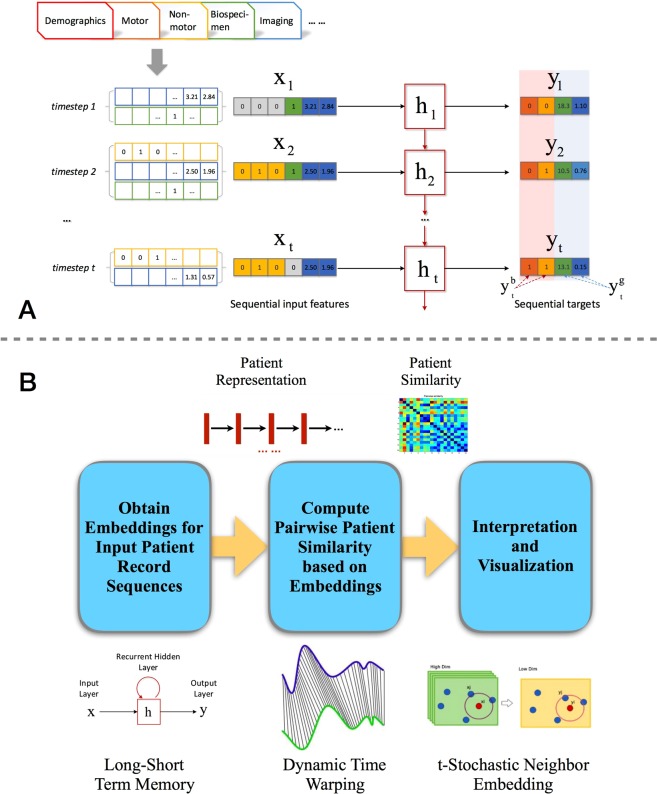
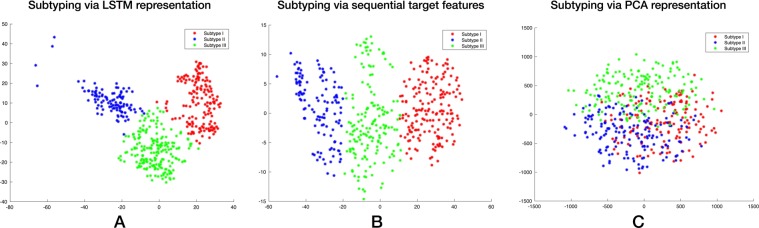
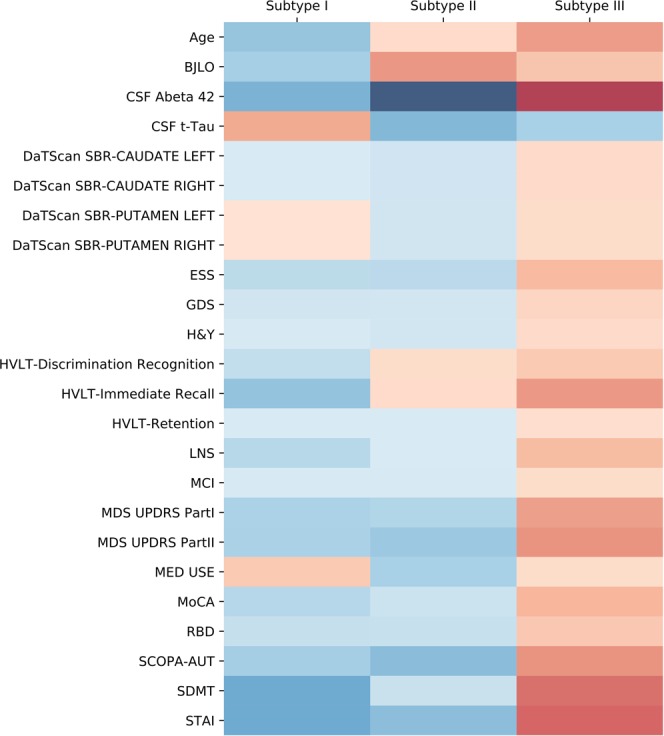
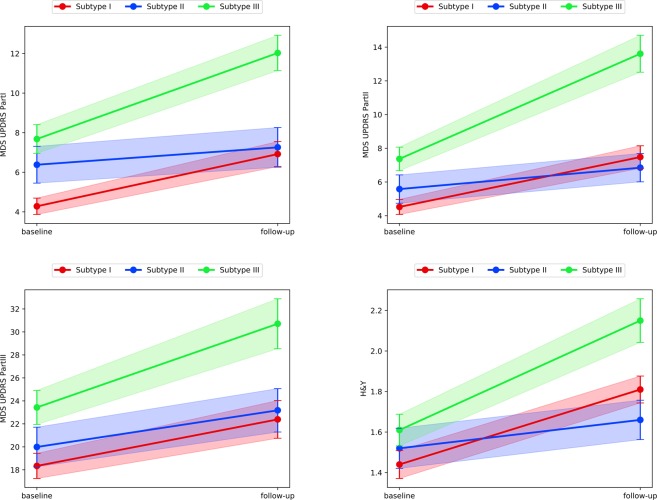
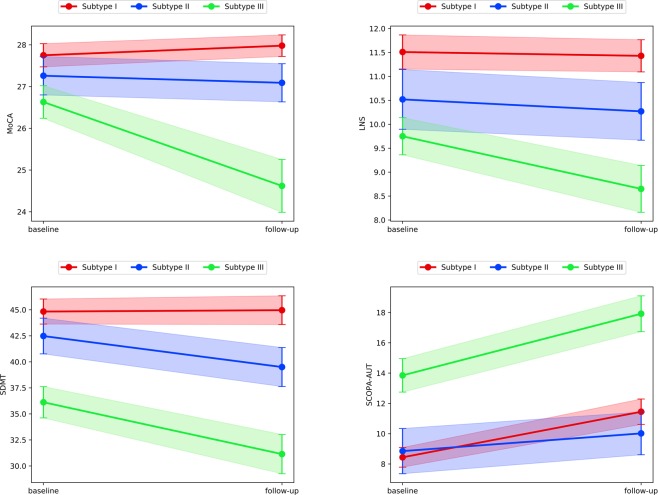
Parkinson’s disease (PD) is associated with diverse clinical manifestations including motor and non-motor signs and symptoms, and emerging biomarkers. We aimed to reveal the heterogeneity of PD to define subtypes and their progression rates using an automated deep learning algorithm on the top of longitudinal clinical records. This study utilizes the data collected from the Parkinson’s Progression Markers Initiative (PPMI), which is a longitudinal cohort study of patients with newly diagnosed Parkinson’s disease. Clinical information including motor and non-motor assessments, biospecimen examinations, and neuroimaging results were used for identification of PD subtypes. A deep learning algorithm, Long-Short Term Memory (LSTM), was used to represent each patient as a multi-dimensional time series for subtype identification. Both visualization and statistical analysis were performed for analyzing the obtained PD subtypes. As a result, 466 patients with idiopathic PD were investigated and three subtypes were identified. Subtype I (Mild Baseline, Moderate Motor Progression) is comprised of 43.1% of the participants, with average age 58.79 ± 9.53 years, and was characterized by moderate functional decay in motor ability but stable cognitive ability. Subtype II (Moderate Baseline, Mild Progression) is comprised of 22.9% of the participants, with average age 61.93 ± 6.56 years, and was characterized by mild functional decay in both motor and non-motor symptoms. Subtype III (Severe Baseline, Rapid Progression) is comprised 33.9% of the patients, with average age 65.32 ± 8.86 years, and was characterized by rapid progression of both motor and non-motor symptoms. These subtypes suggest that when comprehensive clinical and biomarker data are incorporated into a deep learning algorithm, the disease progression rates do not necessarily associate with baseline severities, and the progression rate of non-motor symptoms is not necessarily correlated with the progression rate of motor symptoms.
Overview
The claims and statistics of this paper haven’t been checked yet.
Free: it reads the open-access text and checks the first 5 claims that cite a source we can check. Create a free account to check every claim.
Integrity signals
Registry
Cites
Statistics
Figures
Verification
Claims the paper makes
The claims and statistics of this paper haven’t been checked yet.
Free: it reads the open-access text and checks the first 5 claims that cite a source we can check. Create a free account to check every claim.
Claims other papers make about this one
Each is checked against this paper’s own text: does it say what the citing paper says it does?
The check wasn’t confident either way, so it gives no verdict — never disputed.
In the citing paper
“For example, changes in physical activity and movement patterns, driving behavior, sleep patterns, everyday speech, eye tracking, facial expressions, technology use, writing, texting, and keyboard typing dynamics have all been shown to differentiate those with and without neurodegenerative disease.111–119”
From Review of Artificial Intelligence for Clinical Use in Alzheimer's Disease and Related Dementias (2026) · cites this paper as [115]
Experimental — accuracy not yet measured
Self-check
Percentages, sums and reported differences re-computed from the paper’s own numbers.
The self-check needs the paper’s full text.
Citations
Cites
Hochreiter, S., & Schmidhuber, J. (1997) · Neural Computation · doi:10.1162/neco.1997.9.8.1735 · Cited by 102,318
(2008) · Journal of Machine Learning Research · Cited by 33,051
Algorithm AS 136: A K-Means Clustering Algorithm
Hartigan, J. A., & Wong, M. A. (1979) · Applied Statistics · doi:10.2307/2346830 · Cited by 14,523
Dermatologist-level classification of skin cancer with deep neural networks
Esteva, A., Kuprel, B., Novoa, R. A., Ko, J., Swetter, S. M., Blau, H. M., & Thrun, S. (2017) · Nature · doi:10.1038/nature21056 · Cited by 14,362
Wold, S., Esbensen, K., & Geladi, P. (1987) · Chemometrics and Intelligent Laboratory Systems · doi:10.1016/0169-7439(87)80084-9 · Cited by 11,606
Algorithms for Clustering Data
Sarle, W. S. (1990) · Technometrics · doi:10.1080/00401706.1990.10484648 · Cited by 7,865
Gulshan, V., Peng, L., Coram, M., Stumpe, M. C., Wu, D., Narayanaswamy, A., Venugopalan, S., Widner, K., Madams, T., Cuadros, J., et al. (2016) · JAMA · doi:10.1001/jama.2016.17216 · Cited by 7,697
Introduction to Reinforcement Learning
Sutton, R. S., & Barto, A. G. (1998) · The MIT Press eBooks · Cited by 6,855
Proceedings of the 25th international conference on Machine learning - ICML '08
(2008) · doi:10.1145/1390156 · Cited by 6,680
(1975) · CERN Document Server (European Organization for Nuclear Research) · Cited by 5,958
Research works printed but not linked: 1
- Van Der Maaten L Postma E Van den Herik J Dimensionality reduction: a comparative J Mach Learn. Res 2009 10 66 71
Cited by
A review on longitudinal data analysis with random forest
Hu, J., & Szymczak, S. (2023) · Briefings in Bioinformatics · doi:10.1093/bib/bbad002 · Cited by 678
“With longitudinal data, clinicians can better understand disease progression, especially of chronic diseases, so that patients can be properly strat-ified and treatment plans can be tailored accordingly [27, 31, 59].”
Prodromal Parkinson disease subtypes — key to understanding heterogeneity
Berg, D., Borghammer, P., Fereshtehnejad, S.-M., Heinzel, S., Horsager, J., Schaeffer, E., & Postuma, R. B. (2021) · Nature Reviews Neurology · doi:10.1038/s41582-021-00486-9 · Cited by 409
Si, Y., Du, J., Li, Z., Jiang, X., Miller, T., Wang, F., Jim Zheng, W., & Roberts, K. (2021) · Journal of Biomedical Informatics · doi:10.1016/j.jbi.2020.103671 · Cited by 235
Self-citationDeep representation learning of electronic health records to unlock patient stratification at scale
Landi, I., Glicksberg, B. S., Lee, H.-C., Cherng, S., Landi, G., Danieletto, M., Dudley, J. T., Furlanello, C., & Miotto, R. (2020) · npj Digital Medicine · doi:10.1038/s41746-020-0301-z · Cited by 213
“used LSTM to identify three subgroups of patients with idiopathic PD that differ in disease progression patterns and symptom severity [11].”
BackgroundMethodResultInfluentialParkinson’s Disease Subtypes: Critical Appraisal and Recommendations
Mestre, T., Fereshtehnejad, S.-M., Berg, D., Bohnen, N. I., Dujardin, K., Erro, R., Espay, A. J., Halliday, G. M., van Hilten, J. J., Hu, M. T., et al. (2021) · Journal of Parkinson s Disease · doi:10.3233/jpd-202472 · Cited by 161
“To our knowledge, only one study has used longitudinal profiling as the basis for defining subtypes [7], incorporating data on the evolution of clinical or biological features across time into the definition of subtypes.”
Ethnic Variation in the Manifestation of Parkinson’s Disease: A Narrative Review
Ben-Joseph, A., Marshall, C. R., Lees, A. J., & Noyce, A. J. (2019) · Journal of Parkinson s Disease · doi:10.3233/jpd-191763 · Cited by 153
Dadu, A., Satone, V., Kaur, R., Hashemi, S. H., Leonard, H., Iwaki, H., Makarious, M. B., Billingsley, K. J., Bandres‐Ciga, S., Sargent, L. J., et al. (2022) · npj Parkinson's Disease · doi:10.1038/s41531-022-00439-z · Cited by 115
“More recently, a study used a Long-Short Term Memory-based deep learning algorithm to discover PD subtypes, with each subtype showing different progression rate 18 .”
Severson, K., Chahine, L. M., Smolensky, L., Dhuliawala, M., Frasier, M. A., Ng, K., Ghosh, S., & Hu, J. (2021) · The Lancet Digital Health · doi:10.1016/s2589-7500(21)00101-1 · Cited by 115
Cruz, B. G. S., Husch, A., & Hertel, F. (2023) · Frontiers in Aging Neuroscience · doi:10.3389/fnagi.2023.1216163 · Cited by 92
“In recent years, research works have progressively employed data-driven cluster analysis that includes longitudinal assessment of motor and non-motor symptoms (De Pablo-Fernández et al., 2019; Zhang et al., 2019; Dadu et al., 2022).”
MethodXu, Z., Chou, J., Zhang, X. S., Luo, Y., Isakova, T., Adekkanattu, P., Ancker, J. S., Jiang, G., Kiefer, R. C., Pacheco, J. A., et al. (2020) · Journal of Biomedical Informatics · doi:10.1016/j.jbi.2019.103361 · Cited by 69
Self-citationGenetic architecture of Parkinson’s disease subtypes – Review of the literature
Dulski, J., Uitti, R. J., Ross, O. A., & Wszołek, Z. K. (2022) · Frontiers in Aging Neuroscience · doi:10.3389/fnagi.2022.1023574 · Cited by 69
“In contrast, the latter (novel) approach is more advantageous in the research setting, as it allows hypothesis-free analysis of multiple domains; but it is rarely translated into an algorithm applicable in clinical practice (Fereshtehnejad et al., 2017; Lawton et al., 2018; Zhang et al., 2019; Mestre et al., 2021).”
BackgroundTwo distinct trajectories of clinical and neurodegeneration events in Parkinson’s disease
Zhou, C., Wang, L., Cheng, W., Lv, J., Guan, X., Guo, T., Wu, J., Zhang, W., Gao, T., Liu, X., et al. (2023) · npj Parkinson s Disease · doi:10.1038/s41531-023-00556-3 · Cited by 73
Classification performance assessment for imbalanced multiclass data
Aguilar–Ruiz, J. S., & Michalak, M. (2024) · Scientific Reports · doi:10.1038/s41598-024-61365-z · Cited by 78
“…impairment in Parkinson’s disease 4 ) and multi-class imbalance (31 cancer type classification 5 ; identification of Parkinson’s disease subtypes 6 ; microbiome-based cancer diagnostics 7 ; prostate cancer detection 8 ; dementia subtype prediction 9 ; Gleason grading of prostate cancer 10 ;…”
BackgroundHaq, A. U., Li, J., Agbley, B. L. Y., Mawuli, C. B., Ali, Z., Nazir, S., & Din, S. U. (2022) · Expert Systems with Applications · doi:10.1016/j.eswa.2022.118045 · Cited by 73
Liu, Y., Lawton, M., Lo, C., Bowring, F., Klein, J. C., Querejeta, A., Scotton, S., Welch, J., Razzaque, J., Barber, T. R., et al. (2021) · Movement Disorders · doi:10.1002/mds.28763 · Cited by 65
A scoping review of neurodegenerative manifestations in explainable digital phenotyping
Alfalahi, H., Dias, S. B., Khandoker, A. H., Chaudhuri, К. R., & Hadjileontiadis, L. J. (2023) · npj Parkinson's Disease · doi:10.1038/s41531-023-00494-0 · Cited by 67
“The PD patients were subsequently classi fi ed into mild, moderate and severe progression regardless of the symptom severity at baseline, re fl ecting that disease severity and progression rate are independent disease characteristics 157 .”
BackgroundProgression subtypes in Parkinson’s disease identified by a data-driven multi cohort analysis
Hähnel, T., Raschka, T., Sapienza, S., Klucken, J., Glaab, E., Corvol, J.-C., Falkenburger, B. H., & Fröhlich, H. (2024) · npj Parkinson's Disease · doi:10.1038/s41531-024-00712-3 · Cited by 58
“Subtypes were mostly inferred based on cross-sectional differences 10 , but some researchers also investigated differences in disease progression using longitudinal data from single cohorts 11,12 .”
BackgroundSu, C., Hou, Y., Xu, J., Xu, Z., Zhou, M., Ke, A., Li, H., Xu, J., Brendel, M., Maasch, J. R. M. A., et al. (2024) · npj Digital Medicine · doi:10.1038/s41746-024-01175-9 · Cited by 65
“The DPPE extended our previous work 27 , integrating a Long Short-Term Memory (LSTM) 8,13 network with an autoencoder architecture.”
Self-citationSalmanpour, M. R., Shamsaei, M., Hajianfar, G., Soltanian-Zadeh, H., & Rahmim, A. (2022) · Quantitative Imaging in Medicine and Surgery · doi:10.21037/qims-21-425 · Cited by 60
“Another effort (31) focused on specifying the heterogeneity of PD (subtypes) and then investigated the progression of some motor and non-motor features among sub-clusters in 6-year follow-up.”
BackgroundMethodResultInfluentialMartinez-Eguiluz, M., Arbelaitz, O., Gurrutxaga, I., Muguerza, J., Perona, I., Murueta‐Goyena, A., Acera, M., Pino, R. D., Tijero, B., Gómez‐Esteban, J. C., et al. (2022) · Neural Computing and Applications · doi:10.1007/s00521-022-07256-8 · Cited by 60
“A combination of non-motor symptoms with other clinical imaging and/or biofluid biomarkers was also used in some other works pursuing different objectives as PD subtyping [31] or prediction of symptoms of depression [32].”
MethodTransitioning from Subtyping to Precision Medicine in Parkinson's Disease: A Purpose‐Driven Approach
Marras, C., Fereshtehnejad, S., Berg, D., Bohnen, N. I., Dujardin, K., Erro, R., Espay, A. J., Halliday, G. M., van Hilten, J. J., Hu, M. T., et al. (2024) · Movement Disorders · doi:10.1002/mds.29708 · Cited by 54
“Although efforts toward a comprehensive approach to encompass the heterogeneity found in PD are underway, 7,50 at present, technical challenges and the lack of suf fi ciently sized longitudinal and multimodal databases make us unprepared to develop the algorithms to do so.”
BackgroundRobust identification of Parkinson's disease subtypes using radiomics and hybrid machine learning
Salmanpour, M. R., Shamsaei, M., Saberi, A., Hajianfar, G., Soltanian-Zadeh, H., & Rahmim, A. (2020) · Computers in Biology and Medicine · doi:10.1016/j.compbiomed.2020.104142 · Cited by 54
Machine learning-based prediction of cognitive outcomes in de novo Parkinson’s disease
Harvey, J., Reijnders, R. A., Cavill, R., Duits, A., Köhler, S., Eijssen, L., Rutten, B. P. F., Shireby, G. L., Torkamani, A., Creese, B., et al. (2022) · npj Parkinson's Disease · doi:10.1038/s41531-022-00409-5 · Cited by 60
“Therefore, a growing area of research opts to utilize machine learning (ML) approaches both to identify data-driven subtypes of disease 17,18 and to predict disease progression 19 – 21 including future cognitive outcomes 14,22 .”
BackgroundIdentifying Sepsis Subphenotypes via Time-Aware Multi-Modal Auto-Encoder
Yin, C., Liu, R., Zhang, D., & Zhang, P. (2020) · Proceedings of the 26th ACM SIGKDD International Conference on Knowledge Discovery & Data Mining · doi:10.1145/3394486.3403129 · Cited by 46
Identification of Parkinson's Disease Subtypes from Resting‐State Electroencephalography
Yassine, S., Gschwandtner, U., Auffret, M., Duprez, J., Vérin, M., Fuhr, P., & Hassan, M. (2023) · Movement Disorders · doi:10.1002/mds.29451 · Cited by 51
“In parallel, the advent of longitudinal studies assessing the evolution of clinical and biological features of different PD subtypes has afforded reliable tracking of the clinical trajectory and disease progression by attributing a well-defined biological/clinical profile for each subphenotype.(13,22-25,31) Yet, the u…”
BackgroundResultLeveraging graph-based hierarchical medical entity embedding for healthcare applications
Wu, T., Wang, Y., Wang, Y., Zhao, E., & Yuan, Y. (2021) · Scientific Reports · doi:10.1038/s41598-021-85255-w · Cited by 63
Termine, A., Fabrizio, C., Strafella, C., Caputo, V., Petrosini, L., Caltagirone, C., Giardina, E., & Cascella, R. (2021) · Journal of Personalized Medicine · doi:10.3390/jpm11040280 · Cited by 50
“The integration of biomarkers and clinical data for DL application showed that the disease progression rates, and the baseline severities are not necessarily associated and that motor and non-motor symptoms are not necessarily correlated [52].”
BackgroundMethodRibeiro, L. C. F., Afonso, L. C. S., & Papa, J. P. (2019) · Computers in Biology and Medicine · doi:10.1016/j.compbiomed.2019.103477 · Cited by 46
Gerraty, R. T., Provost, A. C., Li, L., Wagner, E. A., Haas, M., & Lancashire, L. (2023) · Frontiers in Aging Neuroscience · doi:10.3389/fnagi.2023.1076657 · Cited by 46
“Zhang et al. (2019) first trained Long Short-Term Memory (LSTM) (Hochreiter and Schmidhuber, 1997) networks to encode sequences of input clinical observations in order to predict a set of target measures, which included clinical and biological variables (such as Dopamine Transporter [DAT] scan and…”
MethodParkinson's disease subtypes: Approaches and clinical implications
Deng, X., Mehta, A., Xiao, B., Chaudhuri, К. R., Tan, E., & Tan, L. C. (2024) · Parkinsonism & Related Disorders · doi:10.1016/j.parkreldis.2024.107208 · Cited by 48
Multimodal and multicontrast image fusion via deep generative models
Dimitri, G. M., Spasov, S. E., Duggento, A., Passamonti, L., Lió, P., & Toschi, N. (2022) · Information Fusion · doi:10.1016/j.inffus.2022.07.017 · Cited by 44
“Similar initial attempts have been made in PD (Zhang et al., 2019) where three robust subtypes of PD were identified.”
ResultAssociation of specific biotypes in patients with Parkinson disease and disease progression
Wang, L., Cheng, W., Rolls, E. T., Dai, F., Gong, W., Du, J., Zhang, W., Wang, S., Liu, F., Wang, J., et al. (2020) · Neurology · doi:10.1212/wnl.0000000000010498 · Cited by 41
“We focused on clinical features that capture major PD symptoms, including both motor and nonmotor symptoms, in line with previous studies.(3,7,28,29) Details of clinical assessments used in this study are presented in PPMI (ppmiinfo.”
Deep learning for brain disorders: from data processing to disease treatment
Burgos, N., Bottani, S., Faouzi, J., Thibeau–Sutre, E., & Colliot, O. (2020) · Briefings in Bioinformatics · doi:10.1093/bib/bbaa310 · Cited by 46
“In [183] the objective was to identify subtypes of PD progression using an LSTM with clinical and imaging data.”
BackgroundMethodLee, S. H., Park, S., Yeo, S. S., Kwon, O., Lee, M., Yoo, H.-R., Ahn, E. K., Jang, J. Y., & Jang, J.-H. (2022) · Diagnostics · doi:10.3390/diagnostics12010112 · Cited by 44
“Subtype I (Mild baseline, moderate motor progression) Subtype II (Moderate baseline, mild progression) Subtype III (Severe baseline, rapid progression) Clinical information (motor and non-motor assessment), biospecimen examinations, neuroimaging using a deep learning algorithm, LSTM CSF t-tau level ↓ in subtype I Subt…”
BackgroundMethodInfluentialArtificial intelligence-based clustering and characterization of Parkinson's disease trajectories
Birkenbihl, C., Ahmad, A., Massat, N. J., Raschka, T., Avberšek, A., Downey, P. M., Armstrong, M., & Fröhlich, H. (2023) · Scientific Reports · doi:10.1038/s41598-023-30038-8 · Cited by 39
Athreya, A. P., Brückl, T. M., Binder, E. B., Rush, A. J., Biernacka, J. M., Frye, M. A., Neavin, D. R., Skime, M. K., Monrad, D., Iyer, R. K., et al. (2021) · Neuropsychopharmacology · doi:10.1038/s41386-020-00943-x · Cited by 34
“Deep learning approaches have been explored for inferring patient subgroups based on homogeneity in disease trajectories in a data-driven manner [43].”
BackgroundSu, C., Xu, Z., Hoffman, K., Goyal, P., Safford, M. M., Lee, J. S. H., Alvarez-Mulett, S. L., Gómez-Escobar, L. G., Price, D. R., Harrington, J. S., et al. (2021) · Scientific Reports · doi:10.1038/s41598-021-95431-7 · Cited by 35
“similarities among temporal sequences(20, 21).”
Self-citationSu, X., Grabowska, M. E., Kullo, I. J., Luo, Y., Smoller, J. W., Walunas, T. L., Wei, W., Jarvik, G. P., Mooney, S. D., & Crosslin, D. R. (2025) · npj Digital Medicine · doi:10.1038/s41746-025-01872-z · Cited by 43
Ye, L., & Guo, C. (2023) · Journal of Applied Biomedicine · doi:10.1016/j.bbe.2022.12.008 · Cited by 34
Huang, Y., Liu, Y., Steel, P. A. D., Axsom, K., Lee, J. R., Tummalapalli, S. L., Wang, F., Pathak, J., Subramanian, L., & Zhang, Y. (2021) · Journal of the American Medical Informatics Association · doi:10.1093/jamia/ocab203 · Cited by 33
“19,22,37,38 Clustering algorithms such as k -means and hierarchical clustering separate a population based on the similarities of input variables.”
BackgroundMethodSelf-citationNew markers in Parkinson's disease
Bougea, A. M. (2020) · Advances in clinical chemistry · doi:10.1016/bs.acc.2019.12.001 · Cited by 30
Liu, Z., Zhang, J., Hou, Y., Zhang, X., Li, G., & Xiang, Y. (2023) · Communications in computer and information science · doi:10.1007/978-981-19-9865-2_10 · Cited by 36
Self-citationDevarajan, J. P., Sreedharan, V. R., & Narayanamurthy, G. (2021) · IEEE Transactions on Engineering Management · doi:10.1109/tem.2021.3096862 · Cited by 32
“PD is defined as a “movement disorder or progressive neurodegenerative disease” [26]–[28].”
BackgroundSubphenotyping depression using machine learning and electronic health records
Xu, Z., Wang, F., Adekkanattu, P. M., Bose, B., Vekaria, V., Brandt, P., Jiang, G., Kiefer, R. C., Luo, Y., Pacheco, J. A., et al. (2020) · Learning Health Systems · doi:10.1002/lrh2.10241 · Cited by 27
“Multiple data-driven approaches for identifying disease phenotypes with EHRs have been explored.(8,9) From a data-driven perspective, discovering phenotypes using EHRs can be seen as a “data clustering” problem.”
MethodSelf-citationStructure-aware siamese graph neural networks for encounter-level patient similarity learning
Gu, Y., Yang, X., Tian, L., Yang, H., Lv, J., Yang, C., Wang, J., Xi, J., Kong, G., & Zhang, W. (2022) · Journal of Biomedical Informatics · doi:10.1016/j.jbi.2022.104027 · Cited by 32
Chan, L., Chung, C., Hsieh, Y., Wu, R., & Hong, C. (2023) · Therapeutic Advances in Neurological Disorders · doi:10.1177/17562864221150329 · Cited by 28
Synuclein in neurodegeneration
Bougea, A. M. (2020) · Advances in clinical chemistry · doi:10.1016/bs.acc.2020.08.007 · Cited by 25
Data-Driven Models for Objective Grading Improvement of Parkinson’s Disease
Butt, A. H., Rovini, E., Fujita, H., Maremmani, C., & Cavallo, F. (2020) · Annals of Biomedical Engineering · doi:10.1007/s10439-020-02628-4 · Cited by 22
Brendel, M., Su, C., Hou, Y., Henchcliffe, C., & Wang, F. (2021) · npj Parkinson's Disease · doi:10.1038/s41531-021-00228-0 · Cited by 23
Self-citationOutcome-Oriented Deep Temporal Phenotyping of Disease Progression
Lee, C., Rashbass, J., & van der Schaar, M. (2020) · IEEE Transactions on Biomedical Engineering · doi:10.1109/tbme.2020.3041815 · Cited by 24
Clustering Interval-Censored Time-Series for Disease Phenotyping
Chen, I. Y., Krishnan, R. G., & Sontag, D. A. (2022) · Proceedings of the AAAI Conference on Artificial Intelligence · doi:10.1609/aaai.v36i6.20570 · Cited by 30
Temporal deep learning framework for retinopathy prediction in patients with type 1 diabetes
Rabhi, S., Blanchard, F., Diallo, A. M., Zeghlache, D., Lukas, C., Berot, A., Delemer, B., & Barraud, S. (2022) · Artificial Intelligence in Medicine · doi:10.1016/j.artmed.2022.102408 · Cited by 22
Precision medicine for Parkinson’s disease: The subtyping challenge
Frasier, M. A., Fiske, B. K., & Sherer, T. (2022) · Frontiers in Aging Neuroscience · doi:10.3389/fnagi.2022.1064057 · Cited by 21
“Indeed, the application of advanced machine learning approaches have already begun to identify clusters of PD subtypes (Zhang et al., 2019; Severson et al., 2021).”
BackgroundPan, G., Jiang, Y., Zhang, W., Zhang, X., Wang, L., & Cheng, W. (2024) · Psychoradiology · doi:10.1093/psyrad/kkae002 · Cited by 20
“…of different subtypes within PD (Fereshtehnejad et al. , 2017 ; Horsager et al. , 2020 ; Lewis et al. , 2005 ; Thenganatt & Jankovic, 2014 ; Zhang et al. , 2019 ), current classifications are primarily based on cross-sectional data, which may mix the classification of subtypes with varying…”
BackgroundSelf-citationNeuroimaging-based data-driven subtypes of spatiotemporal atrophy due to Parkinson’s disease
Shawa, Z., Shand, C., Taylor, B., Berendse, H. W., Vriend, C., van Balkom, T. D., van den Heuvel, O. A., van der Werf, Y. D., Wang, J., Tsai, C., et al. (2025) · Brain Communications · doi:10.1093/braincomms/fcaf146 · Cited by 19
“Zhang et al. 39 ( n = 466) used a deep learning algorithm (Long-Short Term Memory network) to create a multi-dimensional time series re-presentation of each person with Parkinson’s to inform the sub-typing.”
Choudhury, P., Zhang, N., Adler, C. H., Chen, K., Belden, C. M., Driver‐Dunckley, E. D., Mehta, S. H., Shprecher, D., Serrano, G. E., Shill, H. A., et al. (2023) · Alzheimer s & Dementia · doi:10.1002/alz.13357 · Cited by 19
“28 Data driven methods have identified different subtypes within PD ranging from mild motor impairment to malignant subtypes 45 with variable rates of motor decline.”
Approaches to Early Parkinson’s Disease Subtyping
Hu, M., Skjærbæk, C., & Borghammer, P. (2024) · Journal of Parkinson s Disease · doi:10.3233/jpd-230419 · Cited by 18
“8 There is therefore a future shift-change needed from PD subtyping to precision medicine approaches, which utilize omics and clinical data via machine learning and other statistical approaches to interrogate disease mechanisms on an individual basis.”
BackgroundDyskinesia in multiple system atrophy and progressive supranuclear palsy
Jost, W. H., Lingor, P., Tönges, L., Schwarz, J., Buhmann, C., Kassubek, J., & Schrag, A. E. (2019) · Journal of Neural Transmission · doi:10.1007/s00702-019-02012-0 · Cited by 17
“There are ongoing efforts to improve the subtyping of parkinsonian syndromes using a combination of clinical features, MRI or PET imaging and molecular biomarkers (e.g. Fereshtehnejad 2017, Zhang 2019).”
BackgroundCharting Disease Trajectories from Isolated REM Sleep Behavior Disorder to Parkinson's Disease
Di Folco, C., Couronné, R., Arnulf, I., Mangone, G., Leu‐Semenescu, S., Dodet, P., Vidailhet, M., Corvol, J., Lehéricy, S., & Durrleman, S. (2024) · Movement Disorders · doi:10.1002/mds.29662 · Cited by 16
“Previous methods clustered patients at baseline and analyzed the progression of each group a posteriori, 13 based on longitudinal data, 29 subtyped with speci fi c neural network architecture using a generic hidden Markov model framework 50,51 or more specialized methods.”
MethodExplainable AI approach for early detection of Parkinson’s disease using PPMI Online data
Aggarwal, N., Saxena, G. J., Singh, S., & Pundir, A. (2024) · Neural Computing and Applications · doi:10.1007/s00521-024-10127-z · Cited by 18
“Multimodal study of clinical information such as motor and non-motor characteristics, biospecimen results, and neuroimaging outputs was used by Zhang et al. [42] for the classification of PD subtypes using long short-term memory (LSTM).”
Disease progression subtypes of Parkinson’s disease based on milestone events
Chen, S., Wang, M., Shao, J.-Y., Yang, H., Zhang, H., & Zhang, J. (2024) · Journal of Neurology · doi:10.1007/s00415-024-12645-1 · Cited by 15
“A limited number of studies have employed neuroimaging or fluid biomarkers for PD subtyping [14].”
Ahmed, S., Komeili, M., & Park, J. (2022) · Scientific Reports · doi:10.1038/s41598-022-25454-1 · Cited by 17
Data-driven discovery of movement-linked heterogeneity in neurodegenerative diseases
Endo, M., Nerrise, F., Zhao, Q., Sullivan, E. V., Fei-Fei, L., Henderson, V. W., Pohl, K. M., Poston, K. L., & Adeli, E. (2024) · Nature Machine Intelligence · doi:10.1038/s42256-024-00882-y · Cited by 17
“To demonstrate the capability of Article https://doi.org/10.1038/s42256-024-00882-y measurements of data for subtyping such as biospecimen examinations, neuroimaging measures, genomic data, neurophysiological assessments and rapid eye-movement sleep behaviour 14–16 .”
InfluentialValidandi, V., Kurella, S., Gorain, S., Sagubandi, Y., Mungamuri, S. K., & Sinha, S. N. (2024) · Food Additives & Contaminants Part A · doi:10.1080/19440049.2024.2339369 · Cited by 13
Robust Bayesian Analysis of Early-Stage Parkinson’s Disease Progression Using DaTscan Images
Zhou, Y., Tinaz, S., & Tagare, H. D. (2020) · IEEE Transactions on Medical Imaging · doi:10.1109/tmi.2020.3031478 · Cited by 13
“Recently, a complex combination of neural networks, dynamic time warping, t-SNE embedding and k-means was used to cluster the PPMI data into subtypes [35].”
BackgroundMethodMaurits, M. P., Korsunsky, I., Raychaudhuri, S., Murphy, S. N., Smoller, J. W., Weiss, S. T., Petukhova, L., Weng, C., Wei, W., Huizinga, T. W. J., et al. (2022) · Journal of the American Medical Informatics Association · doi:10.1093/jamia/ocac008 · Cited by 12
Genetics of Parkinson's disease heterogeneity: A genome-wide association study of clinical subtypes
Dulski, J., Uitti, R. J., Soto‐Beasley, A. I., Hernandez, D. G., Ramanan, V. K., Cahn, E. J., Ren, Y., Johnson, P. W., Quicksall, Z., Wszołek, Z. K., et al. (2023) · Parkinsonism & Related Disorders · doi:10.1016/j.parkreldis.2023.105935 · Cited by 12
Athreya, A. P., Voort, J. L. V., Shekunov, J., Rackley, S. J., Leffler, J. M., McKean, A. J. S., Romanowicz, M., Kennard, B. D., Emslie, G. J., Mayes, T. L., et al. (2022) · Journal of Child Psychology and Psychiatry · doi:10.1111/jcpp.13580 · Cited by 24
“Recent work also has used deep learning approaches to model disease trajectory (Zhang et al., 2019).”
Chen, Q., Scherbaum, R., Gold, R., Pitarokoili, K., Mosig, A., Zella, S. M. A., & Tönges, L. (2023) · Journal of Neural Transmission · doi:10.1007/s00702-023-02627-4 · Cited by 12
Machine Learning in Glomerular Diseases: Promise for Precision Medicine
Nadkarni, G. N., Chaudhary, K., & Coca, S. G. (2019) · American Journal of Kidney Diseases · doi:10.1053/j.ajkd.2019.04.011 · Cited by 10
Chen, Z., Yang, Y., Zhang, D., Guo, J. S., Guo, Y. M., Hu, X., Chen, Y., & Bian, J. (2023) · Informatics · doi:10.3390/informatics10020046 · Cited by 9
“Recent advancements in machine learning (ML) have led to success in various RWD analysis tasks, such as clinical risk prediction [15,16], disease subphenotyping [17,18], and personalized treatment [19].”
BackgroundStability of motor-nonmotor subtype in early-stage Parkinson’s disease
Xiao, Y., Wei, Q., Ou, R., Hou, Y., Zhang, L., Liu, K., Lin, J., Yang, T., Jiang, Q., & Shang, H. (2022) · Frontiers in Aging Neuroscience · doi:10.3389/fnagi.2022.1040405 · Cited by 9
“This limitation has also been found in other subtyping criteria using data-driven methods and crosssectional data (Erro et al., 2016; Lawton et al., 2018; Zhang et al., 2019).”
ResultTsanas, A., & Arora, S. (2021) · International Joint Conference on Biomedical Engineering Systems and Technologies (BIOSTEC) · doi:10.5220/0010383000002865 · Cited by 10
“, 2009), standardized clinical instruments to assess motor, non-motor, and cognitive domains (Lawton, 2018; Zhang et al., 2019), or sensor-based gait pattern analysis (Nguyen et al.”
BackgroundWest, M., Cheng, Y., He, Y., Leng, Y., Magdamo, C., Hyman, B. T., Dickson, J. R., Serrano-Pozo, A., Blacker, D., & Das, S. (2025) · JMIR Aging · doi:10.2196/65178 · Cited by 8
“Unsupervised learning approaches on EHR datasets have revealed latent structure in conditions, such as autism [17,18] and Parkinson disease [19].”
Developing personalized treatment strategies for Parkinson’s disease based on disease subtypes
Hey, G. E., Eisinger, R. S., Guarín, D. L., Safarpour, D., Rodríguez‐Violante, M., & Ramirez‐Zamora, A. (2025) · Expert Review of Neurotherapeutics · doi:10.1080/14737175.2025.2552784 · Cited by 8
“AI can additionally be used to reliably predict symptom progression in subtype-specific PD [12,23,24].”
Fabrizio, C., Termine, A., & Caltagirone, C. (2025) · Journal of Central Nervous System Disease · doi:10.1177/11795735241286821 · Cited by 8
Optimal Sequential Multiclass Diagnosis
Wang, J. (2021) · Operations Research · doi:10.1287/opre.2021.2114 · Cited by 12
Sengupta, S., Loomba, J. J., Sharma, S., Brown, D. E., Thorpe, L. E., Haendel, M. A., Chute, C. G., & Hong, S. (2022) · IEEE International Conference on Bioinformatics and Biomedicine (BIBM) · doi:10.1109/bibm55620.2022.9994851 · Cited by 9
Qamar, M. A., Tall, P., van Wamelen, D. J., Wan, Y.-M., Rukavina, K., Fieldwalker, A., Matthew, D., Leta, V., Bannister, K., & Chaudhuri, К. R. (2023) · International review of neurobiology · doi:10.1016/bs.irn.2023.08.012 · Cited by 10
van Wamelen, D. J., Leta, V., Chaudhuri, К. R., & Jenner, P. G. (2023) · Current Neuropharmacology · doi:10.2174/1570159x21666230731110709 · Cited by 7
“Nonetheless, as outlined before, PD is a heterogeneous condition, both from a clinical as well as a neu-1612 rochemical perspective, and the relative importance of different neuronal pathways and transmitter systems is likely to differ between patients and disease stages [25, 36, 115-118].”
BackgroundUnsupervised clustering reveals phenotypes of AKI in ICU COVID-19 patients
Sangla, F., Marchi, E., Assouline, B., Terrier, C. L., Sgardello, S. D., Pugin, J., Criton, G., & Legouis, D. (2022) · Frontiers in Medicine · doi:10.3389/fmed.2022.980160 · Cited by 7
Review of Artificial Intelligence for Clinical Use in Alzheimer's Disease and Related Dementias
Breithaupt, A. G., Tang, A., Paolillo, E. W., Bibars, M., Johnson, E. C. B., Saloner, R., Possin, K. L., Windon, C. C., Hill-Jarrett, T. G., Giorgio, J., et al. (2026) · Seminars in Neurology · doi:10.1055/a-2744-9871 · Cited by 6
Split Learning on Segmented Healthcare Data
Hu, L., Zhou, T., Liu, Z., Liu, F., & Cai, Z. (2025) · IEEE Transactions on Big Data · doi:10.1109/tbdata.2025.3556639 · Cited by 8
“For structured electronic healthcare records (EHRs), [17] proposed a data-driven approach, which encoded longitudinal temporal information, to identify Parkinson’s disease.”
Schönfeldová, J., Cohen, C., Otmazgin, O., & Saban, W. (2025) · Scientific Reports · doi:10.1038/s41598-025-12787-w · Cited by 7
“Typically, studies that include non-motor measures in their classification models do so along with other motor, neuroimaging, and/or biofluid biomarkers 40–43 .”
Lenglos, C., Lin, S., Zeighami, Y., Baumeister, T. R., Carbonell, F., & Iturria‐Medina, Y. (2022) · Scientific Reports · doi:10.1038/s41598-022-09506-0 · Cited by 6
Huang, Y., Zheng, Z., Ma, M., Xin, X., Liu, H., Fei, X., Wei, L., & Chen, H. (2022) · Journal of Medical Internet Research · doi:10.2196/37486 · Cited by 6
“EMR data can be used to not only reflect the health status of patients and record the treatment trajectory, but also help doctors in making clinical decisions [1-6] and improving the efficiency of diagnosis and treatment [1,7,8].”
BackgroundMethodDICE: Deep Significance Clustering for Outcome-Driven StratificationPreprint
Huang, Y., Park, J. C., Axsom, K., Subramanian, L., & Zhang, Y. (2020) · medRxiv · doi:10.1101/2020.10.04.20204321 · Cited by 6
“Previous studies [9] that incorporated statistical significance analyzed it separately after the representation learning process.”
BackgroundMulti-layer Trajectory Clustering: a Network Algorithm for Disease Subtyping
Krishnagopal, S. (2020) · Biomedical Physics & Engineering Express · doi:10.1088/2057-1976/abad8f · Cited by 5
“In recent years, several deep learning approaches to disease-subtyping have emerged [22, 23].”
BackgroundDigital biomarkers in movement disorders
Urso, D., van Wamelen, D. J., Trivedi, D., Chaudhuri, К. R., & Falup‐Pecurariu, C. (2023) · International review of movement disorders · doi:10.1016/bs.irmvd.2023.05.004 · Cited by 5
Personalized event prediction for Electronic Health Records
Lee, J. M., & Hauskrecht, M. (2023) · Artificial Intelligence in Medicine · doi:10.1016/j.artmed.2023.102620 · Cited by 7
Neural Pharmacodynamic State Space ModelingPreprint
Hussain, Z., Krishnan, R. G., & Sontag, D. A. (2021) · arXiv (Cornell University) · doi:10.48550/arxiv.2102.11218 · Cited by 8
“Copyright 2021 by the author(s). sub-type (Zhang et al., 2019b).”
BackgroundMedication recommendation for Parkinson’s disease based on dynamics of symptom progression
Oh, M., Kim, H., & Lee, H. K. (2024) · Scientific Reports · doi:10.1038/s41598-024-76941-6 · Cited by 4
“Unlike previous studies that primarily focused on onset prediction or limited aspects of progression 7,9 , our method employs a time-series based representation of patient disease progress, capturing both motor and non-motor symptoms.”
Tsanas, A., & Arora, S. (2020) · International Joint Conference on Biomedical Engineering Systems and Technologies (BIOSTEC) · doi:10.5220/0009361200002513 · Cited by 4
Medical decision-making based on the exploration of a personalized medicine dataset
Kadi, H., Rebbah, M., Meftah, B., & Lézoray, O. (2021) · Informatics in Medicine Unlocked · doi:10.1016/j.imu.2021.100561 · Cited by 4
“After the data representation and similarity calculation, Zhang et al. [9] utilized the TNSE technique to reduce dimensionality and applied a clustering technique to define Parkinson ’ s disease subtypes.”
Jang, W., Lee, J. Y., Kim, J. Y., Lee, S. J., Kim, T. Y., Choi, Y. Y., Kim, H.-T., & Kim, C. K. (2021) · Medicine · doi:10.1097/md.0000000000026995 · Cited by 4
Petrijan, T., & Menih, M. (2025) · Neurology International · doi:10.3390/neurolint17040051 · Cited by 3
“Analyses of cerebrospinal fluid have demonstrated that individuals with diffuse malignant subtypes are more likely to present a cerebrospinal fluid profile similar to Alzheimer’s disease (AD), characterized by reduced β -amyloid levels and elevated tau concentrations [35].”
Rizou, V., Grammalidis, N., Daras, P., & Dimitropoulos, K. (2025) · Scientific Reports · doi:10.1038/s41598-025-25812-9 · Cited by 3
Ram, A. (2024) · OALib · doi:10.4236/oalib.1111135 · Cited by 3
Zeng, Z., Jiang, H., Zhang, Y., Shen, Z., Ji, J., McKeown, M. J., Chin, J. J., Leung, C., & Miao, C. (2020) · International Joint Conference on Artificial Intelligence · doi:10.24963/ijcai.2020/775 · Cited by 3
“There have been a few successful work that showed the potential of using smartphones as an accessible and longitudinal monitoring tool for self-diagnosis of PD [Stamate et al., 2017; Schwab and Karlen, 2019; Zhang et al., 2019a].”
Carr, O., Javer, A., Rockenschaub, P., Parsons, O., & Dürichen, R. (2021) · Proceedings of Machine Learning Research · doi:10.48550/arxiv.2111.06152 · Cited by 7
“Zhang et al. (2019) used a recurrent neural network (RNN) to predict markers of progression in Parkinson’s disease and then employed dynamic time warping (Berndt and Clifford, 1994) and t-distributed Stochastic Neighbor Embedding (t-SNE) (van der Maaten and Hinton, 2008) to cluster patients based…”
MethodInfluential
Metadata
- Authors
- Zhang, X., Chou, J., Liang, J., Xiao, C., Zhao, Y., Sarva, H., Henchcliffe, C., & Wang, F.
- Affiliations
- Cornell University (US)
- Tsinghua University (CN)
- IBM Research - Cambridge (United States) (US)
- Corresponding author
- Wang, Fei
- Venue
- Scientific Reports
- Published
- 2019-01-28
- Volume
- 9
- Issue
- 1
- Pages
- 797-797
- ISSN
- 2045-2322 (ISSN-L)
- PMC
- PMC6349906
- OpenAlex
- W2914683543
- Semantic Scholar
- 9957dd2760e62d82af6095ac251e6d7bc59e0f05
- Cited by
- 137
- References
- 42
- Citations by year
- 2026: 12 · 2025: 15 · 2024: 17 · 2023: 22 · 2022: 26 · 2021: 22 · 2020: 19 · 2019: 4
- FWCI
- 12.01
- Type
- journal article
- Language
- en
- Open access
- gold
- doi.org
- Licence
- cc-by
- creativecommons.org/licenses/by/4.0 (tdm)
- creativecommons.org/licenses/by/4.0 (vor)
- Locations
- Scientific Reports (publishedVersion, cc-by)
- Europe PMC (PubMed Central) (publishedVersion, cc-by)
- PubMed Central (publishedVersion, cc-by)
- PubMed (publishedVersion)
- DOAJ (DOAJ: Directory of Open Access Journals) (submittedVersion, cc-by-sa)
- eScholarship (California Digital Library) (submittedVersion)
- eScholarship (California Digital Library) (submittedVersion, cc-by)
- Funders
- National Science Foundation
- National Science Foundation Michael J. Fox Foundation
- Topics
- Health Sciences › Medicine › Clinical Neurology › Parkinson's Disease Mechanisms and Treatments
- Physical Sciences › Computer Science › Artificial Intelligence › Machine Learning in Healthcare
- Health Sciences › Medicine › Psychiatry and Mental health › Dementia and Cognitive Impairment Research
- Keywords
- Parkinson's disease, disease subtyping, disease progression, deep learning, long short-term memory, Parkinson's Progression Markers Initiative, motor symptoms, non-motor symptoms, disease heterogeneity, biomarkers
- MeSH terms
- Deep Learning, Aged, Female, Humans, Longitudinal Studies, Male, Middle Aged, Neuropsychological Tests, Parkinson Disease, Age Distribution, Disease Progression, Neuroimaging
About these checks
Registry, retraction, Cites and statistics results are computed, not judged, with one exception: a printed reference that no index lists is read once by a model before it counts as a citation error. Claims are extracted by a model and kept only when their quote appears verbatim in the text; each cited source is then checked, with a model’s help, for whether it says what the claim relies on. Those verdicts can be wrong — read the claim’s quote and the cited source before relying on one.
Statistics and arithmetic are recomputed, not judged.
Confidence bands are shown only for fields calibrated on our annotated test set. None is calibrated yet, so no band is shown.
What counts as a claim ›How we measure confidence ›How we check this ›
Are you an author, or do you see a problem with this page? Request a review
Data sources
Bibliographic data: Semantic Scholar, OpenAlex, Crossref.
Contains information from the Semantic Scholar Academic Graph Datasets, made available under the ODC Attribution License (ODC-BY 1.0).
Semantic Scholar’s data is described in: Kinney, R., et al. (2023). The Semantic Scholar Open Data Platform. arXiv:2301.10140.
