

Megathrust earthquake drives drastic organic carbon supply to the hadal trench.
Open accessThe DOI matches its Crossref record; 49 of the 49 references it cites were found in a registry or an index.
Abstract
The giant 2011 Tohoku-oki earthquake has been inferred to remobilise fine-grained, young surface sediment enriched in organic matter from the slope into the >7 km deep Japan Trench. Yet, this hypothesis and assessment of its significance for the carbon cycle has been hindered by limited data density and resolution in the hadal zone. Here we combine new high-resolution bathymetry data with sub-bottom profiler images and sediment cores taken during 2012–2016 in order to map for the first time the spatial extent of the earthquake-triggered event deposit along the hadal Japan Trench. We quantify a sediment volume of ~0.2 km 3 deposited from spatially-widespread remobilisation of young surficial seafloor slope sediments triggered by the 2011 earthquake and its aftershock sequence. The mapped volume and organic carbon content in sediment cores encompassing the 2011 event reveals that this single tectonic event delivered >1 Tg of organic carbon to the hadal trench. This carbon supply is comparable to high carbon fluxes described for other Earth system processes, shedding new light on the impact of large earthquakes on long-term carbon cycling in the deep-sea.
Overview
The claims and statistics of this paper haven’t been checked yet.
Free: it reads the open-access text and checks the first 5 claims that cite a source we can check. Create a free account to check every claim.
Integrity signals
Registry
Cites
Statistics
Figures
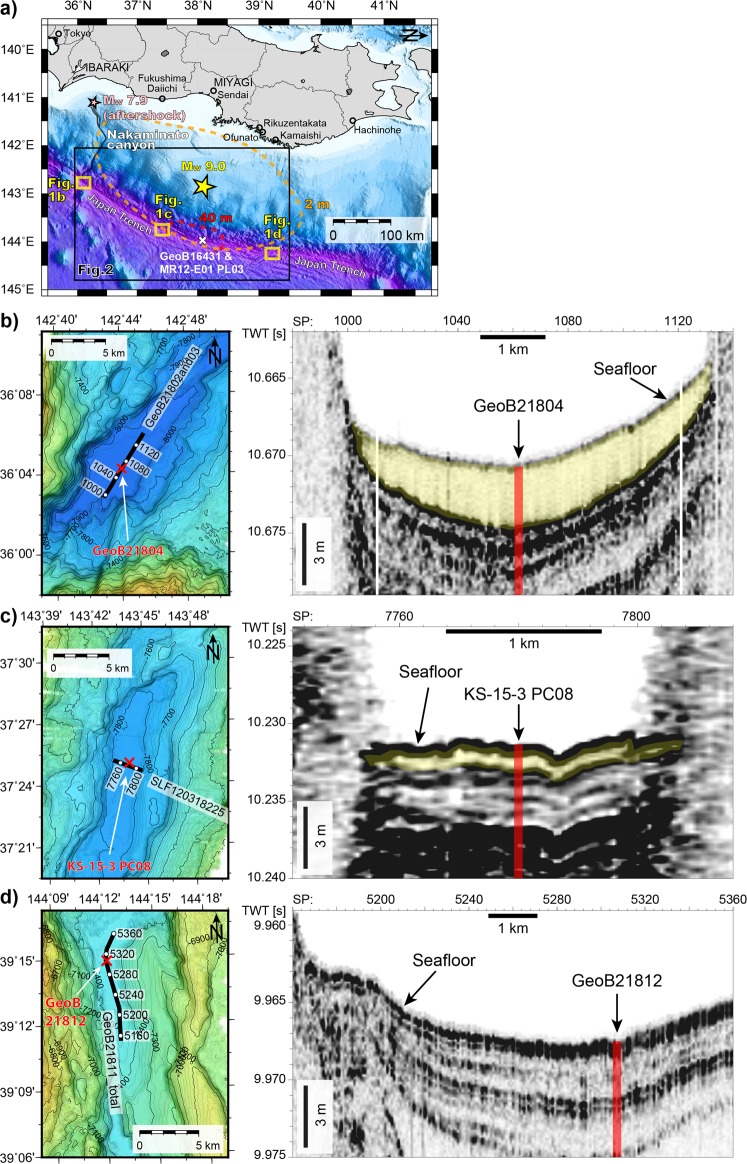
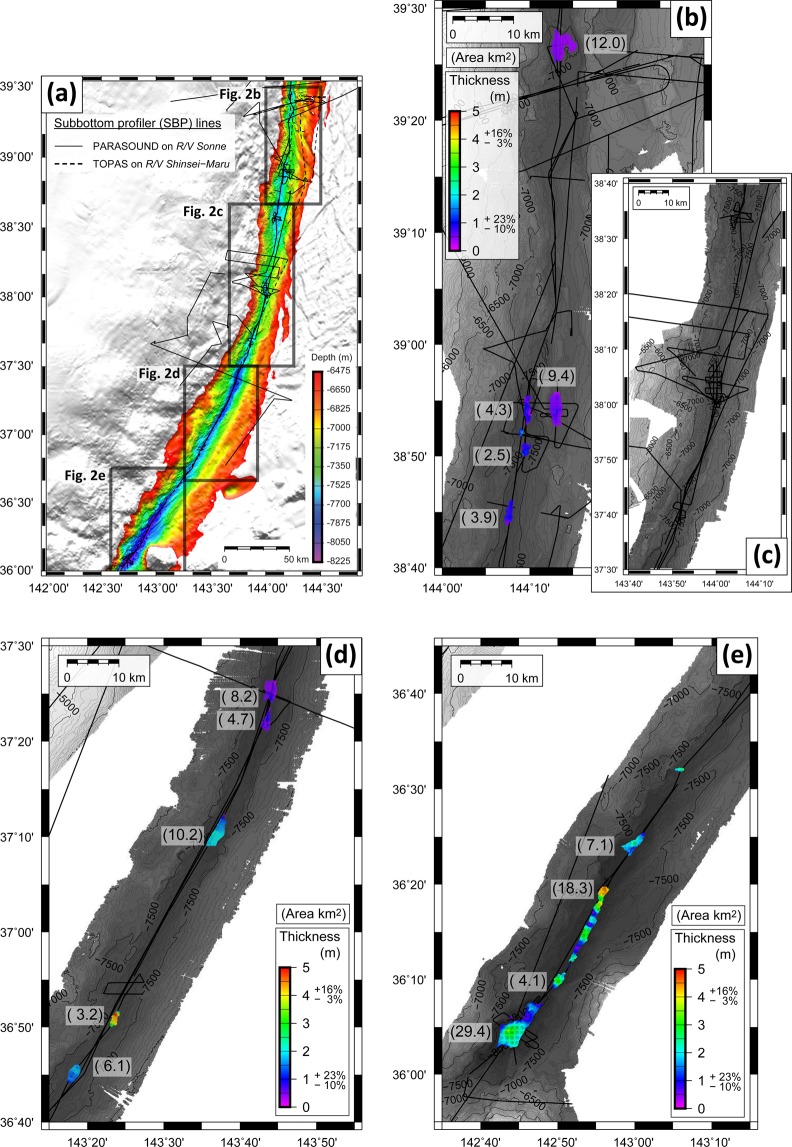
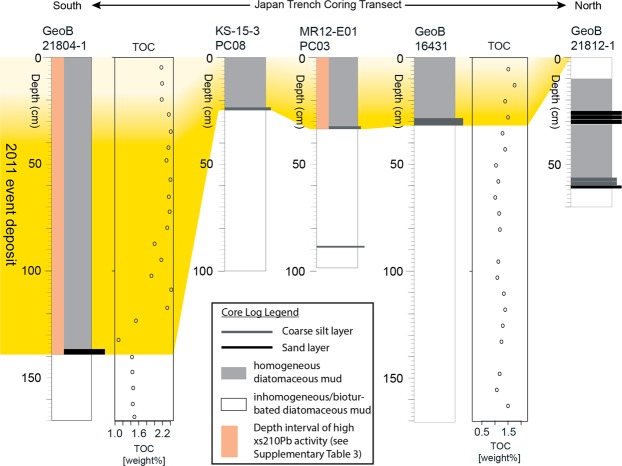
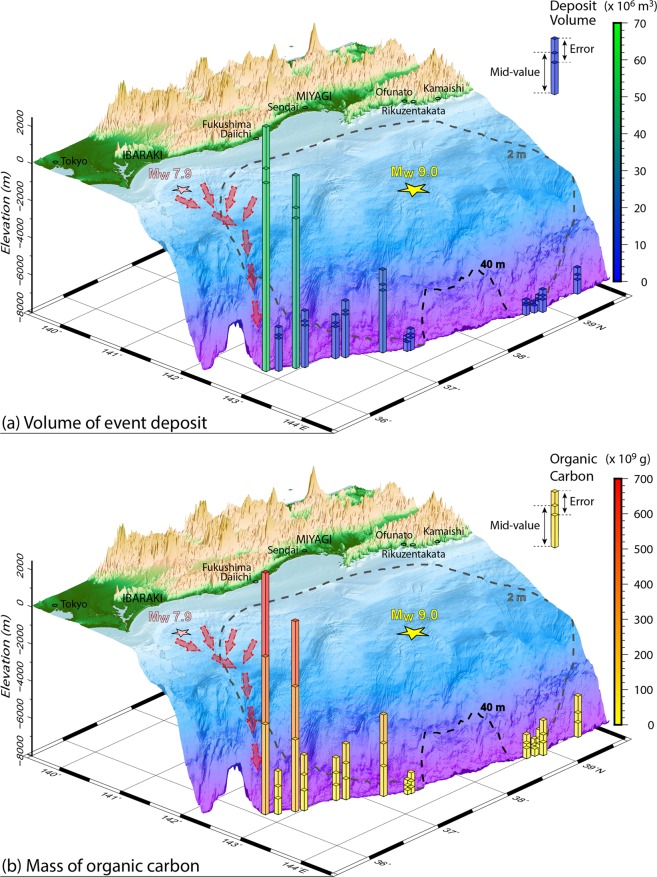
Verification
Claims the paper makes
The claims and statistics of this paper haven’t been checked yet.
Free: it reads the open-access text and checks the first 5 claims that cite a source we can check. Create a free account to check every claim.
Claims other papers make about this one
Each is checked against this paper’s own text: does it say what the citing paper says it does?
The source backs part of the claim, not all of it — or backs it for a different population, condition or comparison.
In the citing paper
“hadal trenches remain largely unexplored, yet they act as terminal sinks for sediment, organic carbon (OC) and even pollutants (Kioka et al., 2019; Peng et al., in press).”
From Event Stratigraphy in a Hadal Oceanic Trench: The Japan Trench as Sedimentary Archive Recording Recurrent Giant Subduction Zone Earthquakes and Their Role in Organic Carbon Export to the Deep Sea (2019) · cites this paper as Kioka et al., 2019
Experimental — accuracy not yet measuredThe source backs part of the claim, not all of it — or backs it for a different population, condition or comparison.
In the citing paper
“The floor of the trench-axis is relatively shallower at the northern and central trench basins ranging between around 7,400 and 7,700 m, while the southern trench basin north of Daiichi-Kashima Seamount reaches a water depth of 8,030 m (Kioka et al., 2019).”
From Event Stratigraphy in a Hadal Oceanic Trench: The Japan Trench as Sedimentary Archive Recording Recurrent Giant Subduction Zone Earthquakes and Their Role in Organic Carbon Export to the Deep Sea (2019) · cites this paper as Kioka et al., 2019
Experimental — accuracy not yet measuredThe source backs part of the claim, not all of it — or backs it for a different population, condition or comparison.
In the citing paper
“These earthquakes were smaller in size than 2011 earthquake, which may explain that the resulting event deposits and total remobilized sediment volume are much smaller than those for the recent 2011 event found in the southern and central Japan Trench (Kioka et al., 2019).”
From Event Stratigraphy in a Hadal Oceanic Trench: The Japan Trench as Sedimentary Archive Recording Recurrent Giant Subduction Zone Earthquakes and Their Role in Organic Carbon Export to the Deep Sea (2019) · cites this paper as Kioka et al., 2019
Experimental — accuracy not yet measuredThe cited source says what the claim attributes to it.
In the citing paper
“This high spatial resolution results in being uniquely capable of identifying even small depositional basins within the structurally complex and hadal trench-floor system (Kioka et al., 2019).”
From Event Stratigraphy in a Hadal Oceanic Trench: The Japan Trench as Sedimentary Archive Recording Recurrent Giant Subduction Zone Earthquakes and Their Role in Organic Carbon Export to the Deep Sea (2019) · cites this paper as Kioka et al., 2019
Experimental — accuracy not yet measuredThe cited source says what the claim attributes to it.
In the citing paper
“The uppermost acoustically transparent body U1-S01 is the event deposit linked to the 2011 earthquake (Kioka et al., 2019).”
From Event Stratigraphy in a Hadal Oceanic Trench: The Japan Trench as Sedimentary Archive Recording Recurrent Giant Subduction Zone Earthquakes and Their Role in Organic Carbon Export to the Deep Sea (2019) · cites this paper as Kioka et al., 2019
4 more claims about this paper
Create a free account to see every claim other papers make about this one.
Self-check
Percentages, sums and reported differences re-computed from the paper’s own numbers.
The self-check needs the paper’s full text.
Citations
Cites
Plumbing the Global Carbon Cycle: Integrating Inland Waters into the Terrestrial Carbon Budget
Cole, J. J., Prairie, Y. T., Caraco, N. F., McDowell, W. H., Tranvik, L. J., Striegl, R. G., Duarte, C. M., Kortelainen, P., Downing, J. A., Middelburg, J. J., et al. (2007) · Ecosystems · doi:10.1007/s10021-006-9013-8 · Cited by 3,941
Sedimentary organic matter preservation: an assessment and speculative synthesis
Hedges, J. I., & Keil, R. G. (1995) · Marine Chemistry · doi:10.1016/0304-4203(95)00008-f · Cited by 2,536
Carbon, nitrogen, and phosphorus transport by world rivers
Meybeck, M. (1982) · American Journal of Science · doi:10.2475/ajs.282.4.401 · Cited by 2,219
Burdige, D. J. (2007) · Chemical Reviews · doi:10.1021/cr050347q · Cited by 1,310
Berner, R. A. (1982) · American Journal of Science · doi:10.2475/ajs.282.4.451 · Cited by 1,200
A new digital bathymetric model of the world's oceans
Weatherall, P., Marks, K. M., Jakobsson, M., Schmitt, T., Tani, S., Arndt, J. E., Rovere, M., Chayes, D., Ferrini, V., & Wigley, R. (2015) · Earth and Space Science · doi:10.1002/2015ea000107 · Cited by 985
The 2011 Magnitude 9.0 Tohoku-Oki Earthquake: Mosaicking the Megathrust from Seconds to Centuries
Simons, M., Minson, S. E., Sladen, A., Ortega, F., Jiang, J., Owen, S. E., Meng, L., Ampuero, J.-P., Wei, S., Chu, R., et al. (2011) · Science · doi:10.1126/science.1206731 · Cited by 774
Efficient organic carbon burial in the Bengal fan sustained by the Himalayan erosional system
Galy, V., France-Lanord, C., Beyssac, O., Faure, P., Kudrass, H., & Palhol, F. (2007) · Nature · doi:10.1038/nature06273 · Cited by 756
Feast and famine–Microbial life in the deep-sea bed
Jørgensen, B. B., & Boetius, A. (2007) · Nature Reviews Microbiology · doi:10.1038/nrmicro1745 · Cited by 671
Shallow Dynamic Overshoot and Energetic Deep Rupture in the 2011 M w 9.0 Tohoku-Oki Earthquake
Ide, S., Baltay, A., & Beroza, G. C. (2011) · Science · doi:10.1126/science.1207020 · Cited by 645
Cited by
Kane, I. A., & Clare, M. A. (2019) · Frontiers in Earth Science · doi:10.3389/feart.2019.00080 · Cited by 476
“Thin-skinned (cm-thick) but areally widespread slope failures have been shown to introduce large quantities of sediment (>0.1 km3) and organic carbon (>1 Tg) to the Japan Trench (Kioka et al., 2019); hence might also be expected to remobilize previously buried microplastics.”
BackgroundInfluentialSediment oxygen consumption: Role in the global marine carbon cycle
Jørgensen, B. B., Wenzhöfer, F., Egger, M., & Glud, R. N. (2022) · Earth-Science Reviews · doi:10.1016/j.earscirev.2022.103987 · Cited by 223
“Using bathymetric mapping, Parasound profiling, and sediment TOC measurements it was estimated that 1 Tg of organic carbon was re-deposited to the interior of the Japan Trench during the Tohoku-oki earthquake in 2011 (Kioka et al., 2019).”
MethodDiversity and distribution of viruses inhabiting the deepest ocean on Earth
Jian, H., Yi, Y., Wang, J., Hao, Y., Zhang, M., Wang, S., Meng, C., Zhang, Y., Jing, H., Wang, Y., et al. (2021) · The ISME Journal · doi:10.1038/s41396-021-00994-y · Cited by 139
“between the sediments of the Mariana Trench, which might be due to frequent earthquakes and sediment slide in this hadal trench [99].”
BackgroundLongest sediment flows yet measured show how major rivers connect efficiently to deep sea
Talling, P. J., Baker, M. L., Pope, E., Ruffell, S. C., Jacinto, R. S., Heijnen, M. S., Hage, S., Simmons, S. M., Hasenhündl, M., Heerema, C. J., et al. (2022) · Nature Communications · doi:10.1038/s41467-022-31689-3 · Cited by 132
Hadal trenches are dynamic hotspots for early diagenesis in the deep sea
Glud, R. N., Berg, P., Thamdrup, B., Larsen, M. B., Stewart, H., Jamieson, A. J., Glud, A., OGURI, K., Sanei, H., Rowden, A. A., et al. (2021) · Communications Earth & Environment · doi:10.1038/s43247-020-00087-2 · Cited by 117
Microbiomes in the Challenger Deep slope and bottom-axis sediments
Zhou, Y., Mara, P., Cui, G., Edgcomb, V. P., & Wang, Y. (2022) · Nature Communications · doi:10.1038/s41467-022-29144-4 · Cited by 103
Goto, K., Ishizawa, T., Ebina, Y., Imamura, F., Sato, S., & Udo, K. (2020) · Earth-Science Reviews · doi:10.1016/j.earscirev.2020.103417 · Cited by 82
The Global Turbidity Current Pump and Its Implications for Organic Carbon Cycling
Talling, P. J., Hage, S., Baker, M. L., Bianchi, T. S., Hilton, R. G., & Maier, K. L. (2023) · Annual Review of Marine Science · doi:10.1146/annurev-marine-032223-103626 · Cited by 79
Kioka, A., Schwestermann, T., Moernaut, J., Ikehara, K., Kanamatsu, T., Eglinton, T. I., & Strasser, M. (2019) · Frontiers in Earth Science · doi:10.3389/feart.2019.00319 · Cited by 73
“…18 November 2019 Published: 05 December 2019 Citation: Kioka A, Schwestermann T, Moernaut J, Ikehara K, Kanamatsu T, Eglinton TI and Strasser M (2019) Event Stratigraphy in a Hadal Oceanic Trench: The Japan Trench as Sedimentary Archive Recording Recurrent Giant Subduction Zone Earthquakes…”
BackgroundInfluentialSelf-citationGeology, environment, and life in the deepest part of the world’s oceans
Du, M., Peng, X., Zhang, H., Ye, C., Dasgupta, S., Li, J., Li, J., Liu, S., Xu, H., Chen, C., et al. (2021) · The Innovation · doi:10.1016/j.xinn.2021.100109 · Cited by 71
“Furthermore, Kioka et al.98 estimated that the Tohoku-Oki earthquake in 2011 could have delivered >1 Tg of organic carbon to the Japan Trench, which is comparable with the high carbon fluxes described for other Earth system processes.”
BackgroundInfluentialSchauberger, C., Glud, R. N., Hausmann, B., Trouche, B., Maignien, L., Poulain, J., Wincker, P., Arnaud‐Haond, S., Wenzhöfer, F., & Thamdrup, B. (2021) · The ISME Journal · doi:10.1038/s41396-021-01021-w · Cited by 74
Sediment Accumulation and Carbon Burial in Four Hadal Trench Systems
OGURI, K., Masqué, P., Zabel, M., Stewart, H., MacKinnon, G., Rowden, A. A., Berg, P., Wenzhöfer, F., & Glud, R. N. (2022) · Journal of Geophysical Research Biogeosciences · doi:10.1029/2022jg006814 · Cited by 68
Molenaar, A., Moernaut, J., Wiemer, G., Dubois, N., & Strasser, M. (2019) · Geophysical Research Letters · doi:10.1029/2019gl082350 · Cited by 58
“…our results are in line with recent studies discussing the importance of earthquake shaking for transporting organic‐rich surficial slope sediment to the hadal trench, forming an important contributor to the marine carbon cycle (Bao et al., 2018; Kioka et al., 2019; Mountjoy et al., 2018).”
BackgroundResultSelf-citationEvent-dominated transport, provenance, and burial of organic carbon in the Japan Trench
Schwestermann, T., Eglinton, T. I., Haghipour, N., McNichol, A. P., Ikehara, K., & Strasser, M. (2021) · Earth and Planetary Science Letters · doi:10.1016/j.epsl.2021.116870 · Cited by 59
Self-citationDistribution, Source, and Burial of Sedimentary Organic Carbon in Kermadec and Atacama Trenches
Xu, Y., Li, X., Luo, M., Xiao, W., Fang, J., Rashid, H., Peng, Y., Li, W., Wenzhöfer, F., Rowden, A. A., et al. (2021) · Journal of Geophysical Research Biogeosciences · doi:10.1029/2020jg006189 · Cited by 54
“rates during episodic events that contribute enormous amounts of sediment and OC to the hadal trench bottom, as observed at the Japan Trench during the giant 2011 Tohoku-oki earthquake (Kioka et al., 2019).”
BackgroundMolenaar, A., Daele, M. V., Vandorpe, T., Degenhart, G., Batist, M. D., Urrutia, R., Mario Pino, Q., Strasser, M., & Moernaut, J. (2021) · Sedimentology · doi:10.1111/sed.12856 · Cited by 46
“…and transported sufficient surficial sediment to create widespread seismo-turbidites with elevated xs210Pb activities at hundreds of kilometres along a mid-slope terrace and in the Japan Trench (McHugh et al., 2016, 2020), moving vast amounts of organic carbon into the trench (Kioka et al., 2019a).”
BackgroundSelf-citationIsotopic and sedimentary signature of megathrust ruptures along the Japan subduction margin
McHugh, C. M. G., Seeber, L., Rasbury, E. T., Strasser, M., Kioka, A., Kanamatsu, T., Ikehara, K., & Usami, K. (2020) · Marine Geology · doi:10.1016/j.margeo.2020.106283 · Cited by 45
Self-citationIkehara, K., Usami, K., & Kanamatsu, T. (2020) · Earth Planets and Space · doi:10.1186/s40623-020-01241-y · Cited by 43
Self-citationSchwestermann, T., Huang, J. S., Konzett, J., Kioka, A., Wefer, G., Ikehara, K., Moernaut, J., Eglinton, T. I., & Strasser, M. (2020) · Geochemistry Geophysics Geosystems · doi:10.1029/2019gc008861 · Cited by 40
“In the hemipelagic background sediment, bulk OC 14C ages show a strong linear relationship with depth, while the overall age offset is ~1.6 ka (Bao et al., 2018; Kioka et al., 2019b).”
BackgroundResultInfluentialSelf-citationReview and syntheses: Impacts of turbidity flows on deep-sea benthic communities
Bigham, K. T., Rowden, A. A., Leduc, D., & Bowden, D. A. (2021) · Biogeosciences · doi:10.5194/bg-18-1893-2021 · Cited by 39
“…periodic turbidity flows in the Congo Channel off southwest Africa (Khripounoff et al., 2003; Vangriesheim et al., 2009), and a turbidity flow off the coast of Japan 125 triggered by the 9.0 (Mw) 2011 Tōhoku Earthquake that transported an estimated 0.2 km 3 of sediment (Kioka et al., 2019) (Fig.”
BackgroundInfluentialThe hadal zone is an important and heterogeneous sink of black carbon in the ocean
Zhang, X., Xu, Y., Xiao, W., Zhao, M., Wang, Z., Wang, X., Xu, L., Luo, M., Li, X., Fang, J., et al. (2022) · Communications Earth & Environment · doi:10.1038/s43247-022-00351-7 · Cited by 37
Xu, Y., Jia, Z., Xiao, W., Fang, J., Wang, Y., Luo, M., Wenzhöfer, F., Rowden, A. A., & Glud, R. N. (2020) · Organic Geochemistry · doi:10.1016/j.orggeochem.2020.104079 · Cited by 37
Organic carbon remineralization rate in global marine sediments: A review
Chen, Z., Nie, T., Zhao, X., Li, J., Yang, B., Cui, D., & Li, X. (2021) · Regional Studies in Marine Science · doi:10.1016/j.rsma.2021.102112 · Cited by 43
Carbon and sediment fluxes inhibited in the submarine Congo Canyon by landslide-damming
Pope, E., Heijnen, M. S., Talling, P. J., Jacinto, R. S., Gaillot, A., Baker, M. L., Hage, S., Hasenhündl, M., Heerema, C. J., McGhee, C., et al. (2022) · Nature Geoscience · doi:10.1038/s41561-022-01017-x · Cited by 35
Ikehara, K., Usami, K., Irino, T., Omura, A., Jenkins, R. G., & Ashi, J. (2020) · Sedimentary Geology · doi:10.1016/j.sedgeo.2020.105791 · Cited by 34
Self-citationEfficient sequestration of terrigenous organic carbon in the New Britain Trench
Xiao, W., Xu, Y., Haghipour, N., Montluçon, D. B., Pan, B., Jia, Z., Ge, H., Yao, P., & Eglinton, T. I. (2019) · Chemical Geology · doi:10.1016/j.chemgeo.2019.119446 · Cited by 31
Self-citationManea, E., Dell’Anno, A., Rastelli, E., Tangherlini, M., Nunoura, T., Nomaki, H., Danovaro, R., & Corinaldesi, C. (2019) · Frontiers in Microbiology · doi:10.3389/fmicb.2019.01952 · Cited by 28
“, 2000), which are even subjected to frequent earthquakes (Hashimoto et al., 2009; Kawagucci et al., 2012; Oguri et al., 2013; Gamo and Shitashima, 2018; Kioka et al., 2019) thus favoring occasional gravity-driven sediment slides and further affecting habitat stability.”
BackgroundEarthquake-enhanced dissolved carbon cycles in ultra-deep ocean sediments
Chu, M., Bao, R., Strasser, M., Ikehara, K., Everest, J., Maeda, L., Hochmuth, K., Xu, L., McNichol, A. P., Bellanova, P., et al. (2023) · Nature Communications · doi:10.1038/s41467-023-41116-w · Cited by 29
Self-citationExpedition 386 scientific prospectus: Japan trench paleoseismology.
Strasser, M., Ikehara, K., & Cotterill, C. (2019) · International Ocean Discovery Program Scientific Prospectus · doi:10.14379/iodp.sp.386.2019 · Cited by 27
Self-citationStrasser, M., Dugan, B., Kanagawa, K., Moore, G. F., Toczko, S. T., Maeda, L., Kido, Y., Moe, K. T., Sanada, Y., Esteban, L., et al. (2014) · Proceedings of the Integrated Ocean Drilling Program. Expedition reports/Proceedings of the Integrated Ocean Drilling Program · doi:10.2204/iodp.proc.338.101.2014 · Cited by 26
Self-citationClare, M. A., Lichtschlag, A., Paradis, S., & Barlow, N. (2023) · Nature Communications · doi:10.1038/s41467-023-37854-6 · Cited by 26
“…oftheKaik ō uraCanyon(estimated at 1.21km 3 and 7 Mt of organic carbon) following the M w 7.8 earth-quake offshore New Zealand in 2016 43 and the M w 9.0 Tohoku-oki earthquake in 2011 that triggered a 0.2 km 3 landslide that transported just under 1 Mt of organic carbon to 7km water depth 11 .”
InfluentialStrasser, M., Ikehara, K., Pizer, C. O., Itaki, T., Satoguchi, Y., Kioka, A., McHugh, C. M. G., Proust, J., Sawyer, D. E., Everest, J., et al. (2024) · Marine Geology · doi:10.1016/j.margeo.2024.107387 · Cited by 24
Self-citationFidelity of turbidites as earthquake records
Talling, P. J. (2021) · Nature Geoscience · doi:10.1038/s41561-021-00707-2 · Cited by 24
Drivers of Bacterial α- and β-Diversity Patterns and Functioning in Subsurface Hadal Sediments
Rastelli, E., Corinaldesi, C., Dell’Anno, A., Tangherlini, M., Martire, M. L., Nishizawa, M., Nomaki, H., Nunoura, T., & Danovaro, R. (2019) · Frontiers in Microbiology · doi:10.3389/fmicb.2019.02609 · Cited by 22
Wu, N., Jackson, C. A.-L., Johnson, H. D., Hodgson, D. M., & Nugraha, H. D. (2020) · Basin Research · doi:10.1111/bre.12429 · Cited by 22
“MTCs are found along all continental margins, and can play a major role in sediment transfer from the continents to the deep ocean (e.g. Hjelstuen, Eldholm, & Faleide, 2007; Kioka et al., 2019; Li et al., 2015; Masson, Harbitz, Wynn, Pedersen, & Løvholt, 2006; Talling, Amy, & Wynn, 2007).”
BackgroundKanamatsu, T., Ikehara, K., & Hsiung, K. (2021) · Marine Geology · doi:10.1016/j.margeo.2021.106669 · Cited by 24
Self-citationSchauberger, C., Thamdrup, B., Lemonnier, C., Trouche, B., Poulain, J., Wincker, P., Arnaud‐Haond, S., Glud, R. N., & Maignien, L. (2024) · ISME Communications · doi:10.1093/ismeco/ycad005 · Cited by 22
“Still, ecological dissimilarity scaled with oceanic depth in this dataset, a finding in agreement with previous 16S rRNA gene amplicon studies [10, 11, 15], as well as with the density of single nucleotide variations (SNVs) per mapped read.”
BackgroundResultWeston, J. N. J., & Jamieson, A. J. (2022) · ICES Journal of Marine Science · doi:10.1093/icesjms/fsac074 · Cited by 21
High Carbon Mineralization Rates in Subseafloor Hadal Sediments—Result of Frequent Mass Wasting
Zabel, M., Glud, R. N., Sanei, H., Elvert, M., Pape, T., Chuang, P., Okuma, E., Geprägs, P., & Kölling, M. (2022) · Geochemistry Geophysics Geosystems · doi:10.1029/2022gc010502 · Cited by 20
Seismic and Acoustic Monitoring of Submarine Landslides
Clare, M. A., Lintern, G., Pope, E., Baker, M. L., Ruffell, S. C., Zulkifli, M., Simmons, S., Urlaub, M., Belal, M., & Talling, P. J. (2023) · Geophysical monograph · doi:10.1002/9781119750925.ch5 · Cited by 17
Kioka, A., & Strasser, M. (2021) · Elsevier eBooks · doi:10.1016/b978-0-12-818234-5.00167-x · Cited by 17
Self-citationTrouche, B., Schauberger, C., Bouderka, F., Auguet, J., Belser, C., Poulain, J., Thamdrup, B., Wincker, P., Arnaud‐Haond, S., Glud, R. N., et al. (2023) · ISME Communications · doi:10.1038/s43705-023-00341-6 · Cited by 17
The Link Between Upper-Slope Submarine Landslides and Mass Transport Deposits in the Hadal Trenchs
Usami, K., Ikehara, K., Kanamatsu, T., Kioka, A., Schwestermann, T., & Strasser, M. (2020) · ICL contribution to landslide disaster risk reduction · doi:10.1007/978-3-030-60196-6_26 · Cited by 16
Self-citationPolonia, A., Bonetti, C., Bonetti, J., Çağatay, M. N., Gallerani, A., Gasperini, L., Nelson, C., & Romano, S. (2021) · Geochemistry Geophysics Geosystems · doi:10.1029/2020gc009446 · Cited by 15
Megafaunal Community Structure From the Abyssal to Hadal Zone in the Yap Trench
Zhang, D., Zhou, Y., Yang, J., Linley, T. D., Zhang, R., Lu, B., Xu, P., Shen, C., Lin, S., Wang, Y.-Y., et al. (2021) · Frontiers in Marine Science · doi:10.3389/fmars.2021.617820 · Cited by 15
Luo, M., Zheng, M. Y., Wallmann, K., Dale, A. W., Strasser, M., Torres, M. E., Kölling, M., Riedinger, N., März, C., Rasbury, E. T., et al. (2025) · Geology · doi:10.1130/g53131.1 · Cited by 12
Self-citationBigham, K. T., Rowden, A. A., Leduc, D., Bowden, D. A., Nodder, S. D., Orpin, A. R., & Halliday, N. J. (2023) · Deep Sea Research Part I Oceanographic Research Papers · doi:10.1016/j.dsr.2023.104192 · Cited by 11
Sindlev, M. B., Balmonte, J. P., Wenzhöfer, F., Xiao, W., Stief, P., OGURI, K., Tsuchiya, M., Yokoyama, Y., Rudra, A., Canfield, D. E., et al. (2025) · Progress In Oceanography · doi:10.1016/j.pocean.2025.103627 · Cited by 16
Jitsuno, K., Hoshino, T., Nishikawa, Y., Kogawa, M., Mineta, K., Strasser, M., Ikehara, K., Everest, J., Maeda, L., Inagaki, F., et al. (2024) · mSphere · doi:10.1128/msphere.00337-23 · Cited by 9
“Clade 7 was the most predominant in the northern sites M0087D and M0094B, whereas clade 6 was predominant in the southern sites M0093B, M0090D, and M0081F.”
BackgroundInfluentialSelf-citationShi, L., Zhang, X., Xiao, W., Pan, B., Liu, Z., & Xu, Y. (2020) · Deep Sea Research Part I Oceanographic Research Papers · doi:10.1016/j.dsr.2020.103276 · Cited by 10
Radiocarbonscapes of Sedimentary Organic Carbon in the East Asian Seas
Bao, R., & Blattmann, T. M. (2020) · Frontiers in Marine Science · doi:10.3389/fmars.2020.00517 · Cited by 9
Removal of dissolved organic carbon in the West Pacific hadal zones
Chu, M., Bao, R., Strasser, M., Ikehara, K., Ding, Y., Liu, K., Liu, M., Xu, L., Wang, Y., Bellanova, P., et al. (2025) · Nature Communications · doi:10.1038/s41467-025-55883-1 · Cited by 8
Self-citationXie, J., Zhang, G., Guo, J., Chen, C., Wu, Q., Luo, M., Chen, D., Peng, X., He, L., Li, Y., et al. (2024) · Environmental Science & Technology · doi:10.1021/acs.est.4c07255 · Cited by 8
Expedition 386 Preliminary Report: Japan Trench Paleoseismology
Scientists, E. 3., Ikehara, K., Strasser, M., Everest, J., Maeda, L., & Hochmuth, K. (2023) · Preliminary report · doi:10.14379/iodp.pr.386.2023 · Cited by 9
Self-citationStrasser, M., Ikehara, K., Everest, J., Maeda, L., Hochmuth, K., Grant, H. L. J., Stewart, M., Okutsu, N., Sakurai, N., Yokoyama, T., et al. (2023) · Proceedings of the International Ocean Discovery Program. Expedition reports · doi:10.14379/iodp.proc.386.101.2023 · Cited by 9
Self-citationWakita, M., Watanabe, S., Yoshino, J., OGURI, K., Nomaki, H., Kawagucci, S., Ariyoshi, K., Nagano, A., & Fujikura, K. (2022) · Progress in Earth and Planetary Science · doi:10.1186/s40645-022-00515-1 · Cited by 8
“The 2011 Tohoku Earthquake and aftershocks drive drastic marine organic carbon supply to the hadal Japan trench (Ikehara et al. 2021; Kioka et al. 2021; Schwestermann et al. 2021), which is possibly associated with the relatively 13C-enriched methane in the hadal water at the trench.”
BackgroundFungal Abundance and Diversity in the Mariana Trench, the Deepest Ecosystem on Earth
Varrella, S., Barone, G., Corinaldesi, C., Giorgetti, A., Nomaki, H., Nunoura, T., Rastelli, E., Tangherlini, M., Danovaro, R., & Dell’Anno, A. (2024) · Journal of Fungi · doi:10.3390/jof10010073 · Cited by 7
Bigham, K. T., Leduc, D., Rowden, A. A., Bowden, D. A., Nodder, S. D., & Orpin, A. R. (2024) · PeerJ · doi:10.7717/peerj.17367 · Cited by 7
“…but a reduced sedimentation impact on the Japan Trench slope (1–5 cm of deposition, 0.2 km 3 of transported sediment; ( Kitahashi et al., 2014 ; Kioka et al., 2019 ) than the Kaik¯oura Earthquake turbidity flow had on Kaik¯oura Canyon (average erosion of 5.6 m, 0.9 km 3 of transported…”
InfluentialEarthquake-induced redistribution and reburial of microbes in the hadal trenches
Chu, M., Liu, J., Li, H., Zhou, Y., Wang, N., Xia, C., Kopf, A., Strasser, M., & Bao, R. (2023) · The Innovation Geoscience · doi:10.59717/j.xinn-geo.2023.100027 · Cited by 6
Self-citationGeological evidence for repeated slip-to-the-trench style megathrust earthquakes at the Japan Trench
Pizer, C. O., Ikehara, K., Keep, M., Kioka, A., Kodaira, S., Miura, R., Moernaut, J., Nakamura, Y., & Strasser, M. (2025) · Geology · doi:10.1130/g52797.1 · Cited by 6
Self-citationSwanborn, D. J. B., Bond, T., Stewart, H., Garcia, E. A., Stott, M. S., Kitazato, H., & Jamieson, A. J. (2025) · Journal of Biogeography · doi:10.1111/jbi.70053 · Cited by 5
“The Japan Trench is known for tsunamigenic megathrust earthquakes that result in large mass wasting events at depth and resuspension of sediments thousands of meters above the seafloor (Itou et al. 2000; Kioka et al. 2019; Oguri et al. 2013).”
Çağatay, M. N., Biltekin, D., Yakupoğlu, N., Güngör, E., Güngör, N., Uçarkuş, G., Henry, P., Polonia, A., Gasperini, L., Grall, C., et al. (2025) · Marine Geology · doi:10.1016/j.margeo.2025.107630 · Cited by 6
Goldfinger, C., Beeson, J. W., Black, B., Vizcaino, A., Nelson, C., Morey, A. E., Patton, J. R., Gutiérrez-Pastor, J., Romsos, C. G., & Walzcak, M. D. (2025) · Geosphere · doi:10.1130/ges02857.1 · Cited by 6
Jamieson, A. J., Swanborn, D. J. B., Bond, T., Cundy, M. E., Fujiwara, Y., LINDSAY, D. J., Stott, M., & Kitazato, H. (2026) · Biodiversity Data Journal · doi:10.3897/bdj.14.e182172 · Cited by 4
Biotransformations of arsenic in marine sediments across marginal slope to hadal zone
Li, Z., He, Y., Zhang, H., Qian, H., & Wang, Y. (2024) · Journal of Hazardous Materials · doi:10.1016/j.jhazmat.2024.135955 · Cited by 9
Clare, M. A., Lintern, G., Pope, E., Baker, M., Ruffell, S. C., Zulkifli, M., Simmons, S., Urlaub, M., Belal, M., & Talling, P. J. (2021) · doi:10.31223/x5703q · Cited by 4
Otsuka, S., Zhang, J., Horikawa, K., Uramoto, G., Yang, S., & Tomoharu, S. (2026) · Global and Planetary Change · doi:10.1016/j.gloplacha.2026.105465 · Cited by 2
Wu, N., Jackson, C. A.-L., Hodgson, D. M., Nugraha, H. D., & Zhong, G. (2026) · Geological Society of America Bulletin · doi:10.1130/b38795.1 · Cited by 2
Kawamura, K., Wada, A., Römer, M., Strasser, M., Fink, H. G., Ito, Y., & Hino, R. (2020) · ICL contribution to landslide disaster risk reduction · doi:10.1007/978-3-030-60196-6_32 · Cited by 2
Self-citationReligious Education and Citizenship
Halstead, J. M. (2009) · University of Huddersfield Repository (University of Huddersfield) · Cited by 2
Organic carbon sources, transport, and mineralization in Kermadec Trench sediments
Bai, S., Xu, H., Liu, S., Dong, L., & Wu, Z. (2025) · Frontiers in Marine Science · doi:10.3389/fmars.2025.1661587 · Cited by 1
IODP 3 Expedition 503 “Hadal Trench Tsunamigenic Slip History” Scientific Prospectus
Ikehara, K., Strasser, M., & Maeda, L. (2025) · Proceedings of the International Ocean Drilling Programme · doi:10.5194/piodp-503-1-2025 · Cited by 1
“…(Ashi et al., 2014), and 2011 CE M w 9.0 T ¯ ohoku-oki earth-quakes (Noguchi et al., 2012; Oguri et al., 2013); – a significant volume of sediment and carbon transport to the deep sea by canyon flushing and remobilisation of young organic-carbon-rich surficial sediments over wide areas, triggered by…”
InfluentialSelf-citationBigham, K. T., Rowden, A. A., Leduc, D., & Bowden, D. A. (2025) · Progress In Oceanography · doi:10.1016/j.pocean.2025.103616 · Cited by 1
Chu, M., Liu, K., Cai, Z., Rasbury, E. T., Kölling, M., Zabel, M., McHugh, C. M. G., Strasser, M., Ikehara, K., & Bao, R. (2026) · Nature Communications · doi:10.1038/s41467-026-72049-9 · Cited by 1
“As one of the most seismically active hadal trenches worldwide, the Japan Trench recieves a sediment delivery that is overwhelmingly dominated by earthquake-triggered turbidity currents 46 – 48 .”
Self-citationIkehara, K. (2022) · The Journal of the Geological Society of Japan · doi:10.5575/geosoc.2022.0013
Self-citationChang, J., Inoue, T., Misawa, A., & Kohsaku, A. R. A. I. (2022) · Basin Research · doi:10.1111/bre.12736
“The small amount of sediment input observed in the central part of Japan Trench, however, is ascribed to the absence of the submarine canyon as a conduit for terrestrial and extreme event sediments.”
BackgroundInfluentialResilience of deep-sea benthic communities to turbidity flows following the 2016 Kaikōura Earthquake
Bigham, K. T. (2023) · Open Access Victoria University of Wellington | Te Herenga Waka (Figshare) · doi:10.26686/wgtn.24646104 · Cited by 1
Qi, S. U. N., Ting-cang, H. U., Lin-ying, C. H. E. N., Luo, M., & Duo-fu, C. H. E. N. (2024) · Bulletin of Mineralogy Petrology and Geochemistry · doi:10.3724/j.issn.1007-2802.20240089
Keep, M., Rasbury, E. T., McHugh, C. M. G., Strasser, M., Ikehara, K., Pizer, C. O., & Nakamura, Y. (2025) · Marine and Petroleum Geology · doi:10.1016/j.marpetgeo.2025.107597
Self-citationPitfalls and opportunities in estimating the volumes of small, young submarine landslides
Urlaub, M., Sager, T. F., & Berndt, C. (2025) · Geo-Marine Letters · doi:10.1007/s00367-025-00826-4
“Submarine landslides occur on submerged slopes in all geological settings and cover a vast range of sizes, from surficial sediment removal (Kioka et al. 2019) to several orders of magnitude larger than terrestrial landslides (Korup et al. 2007).”
Seismic events drive pollution in Japan Trench hadal basins
Trotta, S., Schwarzbauer, J., Michetti, A. M., & Bellanova, P. (2026) · Communications Earth & Environment · doi:10.1038/s43247-026-03401-6
Carbon source, distribution, and burial flux in global hadal trenches
Wei, Y., & Xu, Y. (2026) · Elsevier eBooks · doi:10.1016/b978-0-443-27610-1.00018-1
Trace metal concentrations, distributions and enrichments in the Aleutian Trench
Sindlev, M. B., Glud, R. N., & Canfield, D. E. (2026) · Chemical Geology · doi:10.1016/j.chemgeo.2026.123460
Zhang, H., Luo, M., & Duo-fu, C. H. E. N. (2026) · Bulletin of Mineralogy Petrology and Geochemistry · doi:10.3724/j.issn.1007-2802.20260103
Piezophilic activity dominates the Puerto Rico Trench deep subseafloor biospherePreprint
Desmarais, M., Breusing, C., Finch, A. H., Baumas, C. M. J., Orsi, W. D., Plominsky, Á. M., Morono, Y., Wehrmann, L. M., Graham, D., Pockalny, R. A., et al. (2026) · bioRxiv (Cold Spring Harbor Laboratory) · doi:10.64898/2026.09.30.755482
Metadata
- Authors
- Kioka, A., Schwestermann, T., Moernaut, J., Ikehara, K., Kanamatsu, T., McHugh, C. M., dos Santos Ferreira, C., Wiemer, G., Haghipour, N., Kopf, A. J., Eglinton, T. I., & Strasser, M.
- Affiliations
- Universität Innsbruck (AT)
- Geological Survey of Japan (JP)
- Japan Agency for Marine-Earth Science and Technology (JP)
- Queens College, CUNY (US)
- University of Bremen (DE)
- ETH Zurich (CH)
- Corresponding author
- Kioka, A.
- ORCID
- Venue
- Scientific Reports
- Published
- 2019-02-07
- Volume
- 9
- Issue
- 1
- Pages
- 1553-1553
- ISSN
- 2045-2322 (ISSN-L)
- PMC
- PMC6367409
- OpenAlex
- W2911462454
- Cited by
- 84
- References
- 49
- Citations by year
- 2026: 9 · 2025: 11 · 2024: 8 · 2023: 10 · 2022: 11 · 2021: 15 · 2020: 11 · 2019: 7
- FWCI
- 8.25
- Type
- journal article
- Language
- en
- Open access
- gold
- doi.org
- Licence
- cc-by
- creativecommons.org/licenses/by/4.0 (tdm)
- creativecommons.org/licenses/by/4.0 (vor)
- Locations
- Scientific Reports (publishedVersion, cc-by)
- Europe PMC (PubMed Central) (publishedVersion, cc-by)
- PubMed Central (publishedVersion, cc-by)
- PubMed (publishedVersion)
- Repository for Publications and Research Data (ETH Zurich) (publishedVersion, cc-by)
- DOAJ (DOAJ: Directory of Open Access Journals) (submittedVersion)
- ETH Zürich Research Collection (cc-by)
- Funders
- Austrian Science Fund (P29678)
- University of Innsbruck
- Topics
- Physical Sciences › Earth and Planetary Sciences › Earth-Surface Processes › Geological formations and processes
- Physical Sciences › Earth and Planetary Sciences › Geophysics › earthquake and tectonic studies
- Physical Sciences › Environmental Science › Environmental Chemistry › Methane Hydrates and Related Phenomena
- Keywords
- Great East Japan Earthquake, megathrust earthquakes, Japan Trench, hadal trenches, organic carbon supply, sediment remobilization, sediment volume, aftershocks, high-resolution bathymetry, sub-bottom profiling
About these checks
Registry, retraction, Cites and statistics results are computed, not judged, with one exception: a printed reference that no index lists is read once by a model before it counts as a citation error. Claims are extracted by a model and kept only when their quote appears verbatim in the text; each cited source is then checked, with a model’s help, for whether it says what the claim relies on. Those verdicts can be wrong — read the claim’s quote and the cited source before relying on one.
Statistics and arithmetic are recomputed, not judged.
Confidence bands are shown only for fields calibrated on our annotated test set. None is calibrated yet, so no band is shown.
What counts as a claim ›How we measure confidence ›How we check this ›
Are you an author, or do you see a problem with this page? Request a review
Data sources
Bibliographic data: Semantic Scholar, OpenAlex, Crossref.
Contains information from the Semantic Scholar Academic Graph Datasets, made available under the ODC Attribution License (ODC-BY 1.0).
Semantic Scholar’s data is described in: Kinney, R., et al. (2023). The Semantic Scholar Open Data Platform. arXiv:2301.10140.
