

Discovery of NV-5138, the first selective Brain mTORC1 activator
Open accessThe DOI matches its Crossref record; 42 of the 42 references it cites were found in a registry or an index.
Abstract
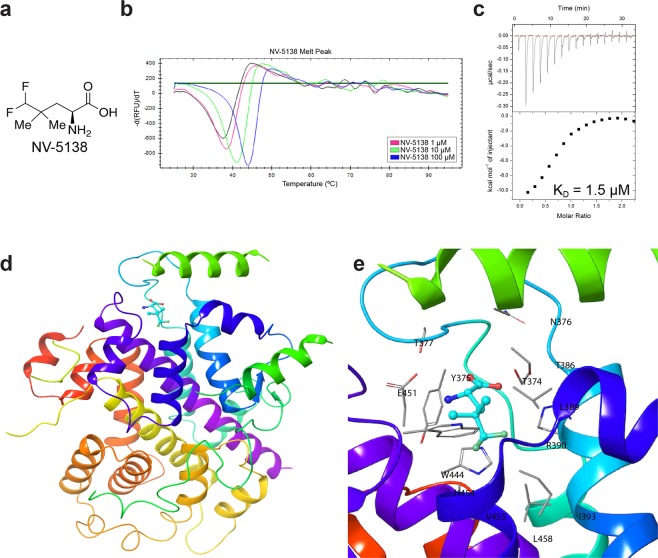
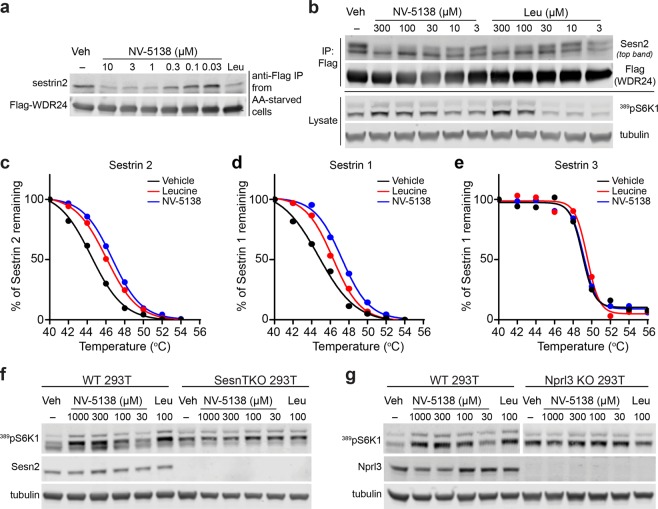
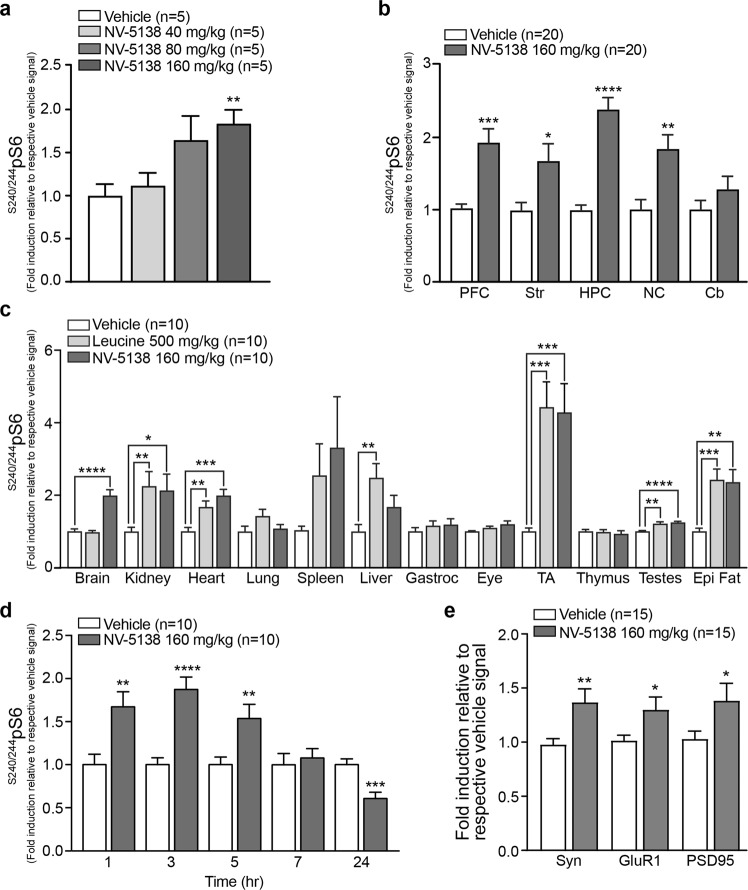
The mechanistic target of rapamycin complex 1 (mTORC1) has been linked to several important chronic medical conditions many of which are associated with advancing age. A variety of inputs including the amino acid leucine are required for full mTORC1 activation. The cytoplasmic proteins Sestrin1 and Sestrin2 specifically bind to the multiprotein complex GATOR2 and communicate leucine sufficiency to the mTORC1 pathway activation complex. Herein, we report NV-5138 , a novel orally bioavailable compound that binds to Sestrin2 and activates mTORC1 both in vitro and in vivo . NV-5138 like leucine transiently activates mTORC1 in several peripheral tissues, but in contrast to leucine uniquely activates this complex in the brain due lack of metabolism and utilization in protein synthesis. As such, NV-5138 will permit the exploration in areas of unmet medical need including neuropsychiatric conditions and cognition which have been linked to the activation status of mTORC1.
Overview
The claims and statistics of this paper haven’t been checked yet.
Free: it reads the open-access text and checks the first 5 claims that cite a source we can check. Create a free account to check every claim.
Integrity signals
Registry
Cites
Statistics
Figures
Verification
Claims the paper makes
The claims and statistics of this paper haven’t been checked yet.
Free: it reads the open-access text and checks the first 5 claims that cite a source we can check. Create a free account to check every claim.
Claims other papers make about this one
Each is checked against this paper’s own text: does it say what the citing paper says it does?
The source backs part of the claim, not all of it — or backs it for a different population, condition or comparison.
In the citing paper
“Together, the results demonstrate that NV-5138 produces rapid synaptic and antidepressant behavioral responses via activation of the mTORC1 pathway and BDNF signaling”
From Sestrin modulator NV-5138 produces rapid antidepressant effects via direct mTORC1 activation (2019) · cites this paper as [22]
Experimental — accuracy not yet measuredThe source backs part of the claim, not all of it — or backs it for a different population, condition or comparison.
In the citing paper
“As expected, a single dose of NV-5138 (160 mg/kg) rapidly increased levels of phospho-mTOR as well as the downstream targets, phospho-p70S6K1, and phospho-4EB-P1, in synaptosomal preparations of PFC (Figure 4, C-E), confirming recent studies (22).”
From Sestrin modulator NV-5138 produces rapid antidepressant effects via direct mTORC1 activation (2019) · cites this paper as [22]
Experimental — accuracy not yet measuredThe cited source says what the claim attributes to it.
In the citing paper
“NV-5138 is not a substrate for the key leucine metabolizing pathways and is not incorporated into proteins (22).”
From Sestrin modulator NV-5138 produces rapid antidepressant effects via direct mTORC1 activation (2019) · cites this paper as [22]
In the citing paper
“In addition, NV-5138 is highly selective for sestrin without modulation of other CNS targets, including binding to or functional modulation of NMDA receptors (22).”
From Sestrin modulator NV-5138 produces rapid antidepressant effects via direct mTORC1 activation (2019) · cites this paper as [22]
In the citing paper
“NV-5138 was designed as a synthetic leucine analogue that readily penetrates the blood-brain barrier and selectively binds sestrin to activate mTORC1 signaling in the brain (22).”
From Sestrin modulator NV-5138 produces rapid antidepressant effects via direct mTORC1 activation (2019) · cites this paper as [22]
2 more claims about this paper
Create a free account to see every claim other papers make about this one.
Self-check
Percentages, sums and reported differences re-computed from the paper’s own numbers.
The self-check needs the paper’s full text.
Citations
Cites
mTOR Signaling in Growth, Metabolism, and Disease
Saxton, R. A., & Sabatini, D. M. (2017) · Cell · doi:10.1016/j.cell.2017.02.004 · Cited by 7,555
The molecular biology of memory storage: a dialogue between genes and synapses
Kandel, E. R. (2001) · Science · doi:10.1126/science.1067020 · Cited by 3,917
mTOR-Dependent Synapse Formation Underlies the Rapid Antidepressant Effects of NMDA Antagonists
Li, N., Lee, B., Liu, R.-J., Banasr, M., Dwyer, J. M., Iwata, M., Li, X.-Y., Aghajanian, G., & Duman, R. S. (2010) · Science · doi:10.1126/science.1190287 · Cited by 2,881
The cellular thermal shift assay for evaluating drug target interactions in cells
Jafari, R., Almqvist, H., Axelsson, H., Ignatushchenko, M., Lundbäck, T., Nordlund, P., & Molina, D. M. (2014) · Nature Protocols · doi:10.1038/nprot.2014.138 · Cited by 1,474
p53 Target Genes Sestrin1 and Sestrin2 Connect Genotoxic Stress and mTOR Signaling
Budanov, A. V., & Karin, M. (2008) · Cell · doi:10.1016/j.cell.2008.06.028 · Cited by 1,326
Sestrin2 is a leucine sensor for the mTORC1 pathway
Wolfson, R. L., Chantranupong, L., Saxton, R. A., Shen, K., Scaria, S. M., Cantor, J. R., & Sabatini, D. M. (2016) · Science · doi:10.1126/science.aab2674 · Cited by 1,306
mTOR signaling: At the crossroads of plasticity, memory and disease
Hoeffer, C. A., & Klann, E. (2010) · Trends in Neurosciences · doi:10.1016/j.tins.2009.11.003 · Cited by 1,128
Reversal of learning deficits in a Tsc2+/− mouse model of tuberous sclerosis
Ehninger, D., Han, S., Shilyansky, C., Zhou, Y., Li, W., Kwiatkowski, D. J., Ramesh, V., & Silva, A. J. (2008) · Nature Medicine · doi:10.1038/nm1788 · Cited by 882
Bourgeron, T. (2009) · Current Opinion in Neurobiology · doi:10.1016/j.conb.2009.06.003 · Cited by 637
Sestrin as a feedback inhibitor of TOR that prevents age-related pathologies
Lee, J. H., Budanov, A. V., Park, E. J., Birse, R., Kim, T. E., Perkins, G. A., Ocorr, K., Ellisman, M. H., Bodmer, R., Bier, E., et al. (2010) · Science · doi:10.1126/science.1182228 · Cited by 570
Cited by
Goul, C., Peruzzo, R., & Zoncu, R. (2023) · Nature Reviews Molecular Cell Biology · doi:10.1038/s41580-023-00641-8 · Cited by 269
Li, Y.-F. (2020) · Pharmacology & Therapeutics · doi:10.1016/j.pharmthera.2020.107494 · Cited by 170
Novel Glutamatergic Modulators for the Treatment of Mood Disorders: Current Status
Henter, I. D., Park, L. T., & Zarate, C. A. (2021) · CNS Drugs · doi:10.1007/s40263-021-00816-x · Cited by 142
“NV-5138, an analog of the amino acid leucine, was developed as an mTORC1 activator and potential antidepressant [119].”
BackgroundJung, B.-K., Park, Y., Yoon, B., Bae, J.-S., Han, S.-W., Heo, J. E., Kim, D., & Ryu, K. (2023) · Autophagy · doi:10.1080/15548627.2023.2180202 · Cited by 114
Sestrin modulator NV-5138 produces rapid antidepressant effects via direct mTORC1 activation
Kato, T., Pothula, S., Liu, R.-J., Duman, C. H., Terwilliger, R., Vlasuk, G. P., Saiah, E., Hahm, S., & Duman, R. S. (2019) · Journal of Clinical Investigation · doi:10.1172/jci126859 · Cited by 88
Self-citationExaptive Evolution of Target of Rapamycin Signaling in Multicellular Eukaryotes
Brunkard, J. O. (2020) · Developmental Cell · doi:10.1016/j.devcel.2020.06.022 · Cited by 91
Krystal, J. H., Kaye, A. P., Jefferson, S., Girgenti, M. J., Wilkinson, S. T., Sanacora, G., & Esterlis, I. (2023) · Proceedings of the National Academy of Sciences · doi:10.1073/pnas.2305772120 · Cited by 91
Sestrins in Physiological Stress Responses
Kim, M., Kowalsky, A. H., & Lee, J. H. (2020) · Annual Review of Physiology · doi:10.1146/annurev-physiol-031620-092317 · Cited by 71
“Some leucine analogues were developed to act as Sestrin inhibitors (83); however, agents upregulating Sestrins have not been reported.”
BackgroundTeotia, P., Van Hook, M. J., Fischer, D., & Ahmad, I. (2019) · Development · doi:10.1242/dev.178012 · Cited by 48
“Recently, a small molecule, NV-5138, has been shown to activate mTORC1 both in vivo and in vitro (Kato et al., 2019; Sengupta et al., 2019).”
BackgroundLiaqat, H., Parveen, A., & Kim, S. Y. (2022) · International Journal of Molecular Sciences · doi:10.3390/ijms232314968 · Cited by 53
“A potent antidepressant (NV-5138, an mTORC1 activator) elevated the synaptic proteins by upregulating mTORC1 signaling, in which BDNF is required to participate [81].”
BackgroundThe regulation of healthspan and lifespan by dietary amino acids
Babygirija, R., & Lamming, D. W. (2021) · Translational Medicine of Aging · doi:10.1016/j.tma.2021.05.001 · Cited by 46
Structural mechanisms of the mTOR pathway
Linde-Garelli, K. Y., & Rogala, K. B. (2023) · Current Opinion in Structural Biology · doi:10.1016/j.sbi.2023.102663 · Cited by 39
Alda-1 Attenuates Hyperoxia-Induced Acute Lung Injury in Mice
Patil, S. S., Hernández‐Cuervo, H., Fukumoto, J., Krishnamurthy, S., Lin, M., Alleyn, M. D., Breitzig, M., Narala, V. R., Soundararajan, R., Lockey, R. F., et al. (2021) · Frontiers in Pharmacology · doi:10.3389/fphar.2020.597942 · Cited by 41
“Several other molecules activate mTOR and attenuate oxidative stress including: NV-5138, L-leucine, 3 BDO (3-benzyl-5-((2nitrophenoxy) methyl)–dihydrofuran-2(3H)-one), and MHY1485 (Boultwood et al., 2013; Ge et al., 2014; Zhao et al., 2016; Sengupta et al., 2019).”
BackgroundA Fbxo48 inhibitor prevents pAMPKα degradation and ameliorates insulin resistance
Liu, Y., Jurczak, M. J., Lear, T., Lin, B., Larsen, M. B., Kennerdell, J. R., Chen, Y., Huckestein, B. R., Nguyen, M. K., Tuncer, F., et al. (2021) · Nature Chemical Biology · doi:10.1038/s41589-020-00723-0 · Cited by 41
Role of BDNF-mTORC1 Signaling Pathway in Female Depression
An, X., Yao, X., Li, B., Yang, W., Cui, R., Zhao, G., & Jin, Y. (2021) · Neural Plasticity · doi:10.1155/2021/6619515 · Cited by 48
Nutrient sensing of mTORC1 signaling in cancer and aging
Jiang, C., Tan, X., Liu, N., Yan, P., Hou, T., & Wei, W. (2024) · Seminars in Cancer Biology · doi:10.1016/j.semcancer.2024.08.001 · Cited by 42
SESTRINs: Emerging Dynamic Stress-Sensors in Metabolic and Environmental Health
Ro, S., Fay, J., Cyuzuzo, C. I., Jang, Y., Lee, N., Song, H., & Harris, E. N. (2020) · Frontiers in Cell and Developmental Biology · doi:10.3389/fcell.2020.603421 · Cited by 37
“Recently, Navitor Pharmaceuticals developed Sestrin2-specific inhibitor, a leucine analog NV-5138, and try to treat the major depressive disorder (MDD) by activating mTORC1 in the brain (Hasegawa et al., 2019; Kato et al., 2019; Sengupta et al., 2019).”
BackgroundLuo, W., Xu, H., Xu, L., Jiang, W., Chen, C., Chang, Y., Liu, C., Tian, Z., Qiu, X., Xie, C., et al. (2022) · Glia · doi:10.1002/glia.24271 · Cited by 30
“The drugs were prepared according to the manufacturers' guidelines, and the initial concentrations of EDA, RAPA, and NV-5138 in vitro were determined as described previously (Eleuteri et al., 2017; Sengupta et al., 2019; Zhao et al., 2019).”
MethodChaki, S., & Watanabe, M. (2022) · Neuropharmacology · doi:10.1016/j.neuropharm.2022.109348 · Cited by 30
Hooshmandi, M., Sharma, V. K., Pérez, C. T., Sood, R., Simbriger, K., Wong, C., Lister, K. C., Guzmán, A. U., Bartley, T., Rocha, C., et al. (2023) · Neuron · doi:10.1016/j.neuron.2023.06.017 · Cited by 32
Vasiliu, O. (2022) · Frontiers in Pharmacology · doi:10.3389/fphar.2022.884143 · Cited by 35
KATO, T. (2022) · Neuropharmacology · doi:10.1016/j.neuropharm.2022.109325 · Cited by 27
Dysregulation of mTOR signalling is a converging mechanism in lissencephaly
Zhang, C., Liang, D., Ercan‐Sencicek, A. G., Bulut, A. S., Cortés, J., Cheng, I. Q., Henegariu, O., Nishimura, S., Wang, X., Peksen, A. B., et al. (2025) · Nature · doi:10.1038/s41586-024-08341-9 · Cited by 23
Dysregulated translational control in brain disorders: from genes to behavior
Wiebe, S. A., Nagpal, A., & Sonenberg, N. (2020) · Current Opinion in Genetics & Development · doi:10.1016/j.gde.2020.05.005 · Cited by 24
NV-5138 as a fast-acting antidepressant via direct activation of mTORC1 signaling
Hasegawa, Y., Zhu, X., & Kamiya, A. (2019) · Journal of Clinical Investigation · doi:10.1172/jci129702 · Cited by 20
Sestrin2 as a Protective Shield against Cardiovascular Disease
Zahid, M., Abdelsalam, S. S., Raïq, H., Parray, A., Korashy, H. M., Zeidan, A., Elrayess, M. A., & Agouni, A. (2023) · International Journal of Molecular Sciences · doi:10.3390/ijms24054880 · Cited by 23
Yue, L., Huang, H., & Lin, W. (2024) · Angewandte Chemie International Edition · doi:10.1002/anie.202407308 · Cited by 19
Ortega-Molina, A., Lebrero‐Fernández, C., Sanz, A., Deleyto-Seldas, N., Plata-Gómez, A. B., Menéndez, C., Graña‐Castro, O., Caleiras, E. J., & Efeyan, A. (2021) · Cell Reports · doi:10.1016/j.celrep.2021.109372 · Cited by 19
“Ever since identification of the Rag GTPase pathway, there has been a relentless interest in potential therapeutic targeting of nutrient signaling as a strategy to selectively control mTORC1 activity (Chung et al., 2019; Kang et al., 2019; Sengupta et al., 2019).”
Vasiliu, O. (2022) · Frontiers in Pharmacology · doi:10.3389/fphar.2022.884155 · Cited by 23
“Suppressed mTORC1 signaling has been suggested as a possible pathogenic mechanism in MDD, and NMDA receptor modulators such as ketamine are dependent upon the mTORC1 activation in brain areas responsible for mood, for example, the medial prefrontal cortex (Sengupta et al., 2019).”
BackgroundInfluentialCHI, O. Z., Liu, X., Magsino, J., & Weiss, H. R. (2023) · Brain Sciences · doi:10.3390/brainsci13101372 · Cited by 14
“Our data warrant further studies on the effects of leucine on neuronal survival and their mechanisms in the later stages of cerebral ischemia-reperfusion.”
BackgroundThe Molecular Basis of Amino Acids Sensing
Jiang, C., Tan, X., Jin, J., & Wang, P. (2025) · Advanced Science · doi:10.1002/advs.202501889 · Cited by 18
A renaissance in targeting the PI3K/AKT/mTOR pathway
Conduit, S. E., Vasan, N., Brown, J. R., Perry, M. W. D., & Vanhaesebroeck, B. (2026) · Nature Reviews Drug Discovery · doi:10.1038/s41573-026-01388-5 · Cited by 20
Khamsing, D., Lebrun, S., Fanget, I., Larochette, N., Tourain, C., de Sars, V., Brunstein, M., Oheim, M., Carrel, D., Darchen, F., et al. (2021) · Molecular Brain · doi:10.1186/s13041-021-00820-8 · Cited by 14
The role of Sestrins in the regulation of the aging process
Fan, X., Zeng, Y. Y., Song, W., Li, J., Ai, S., Yang, D., Mao, X., & Yang, M. (2020) · Mechanisms of Ageing and Development · doi:10.1016/j.mad.2020.111251 · Cited by 13
Tait-Mulder, J., Hodge, K., Sumpton, D. P., Zanivan, S. R., & Vázquez, A. (2020) · Cancer & Metabolism · doi:10.1186/s40170-020-00228-3 · Cited by 12
Zhou, Y., Zhang, Y., Botchway, B. O. A., Huang, M., & Liu, X. (2023) · Metabolic Brain Disease · doi:10.1007/s11011-023-01323-2 · Cited by 9
“Moreover, its deletion leads to the complete insensitivity of mTORC1 signaling to amino acid starvation (Chantranupong et al. 2014; Sawa et al. 2022; Sengupta et al. 2019). mTORC1 signaling is positively regulated by GATOR2 via acting the parallel to or upstream of GATOR1.”
Locked in Structure: Sestrin and GATOR—A Billion-Year Marriage
Haidurov, A., & Budanov, A. V. (2024) · Cells · doi:10.3390/cells13181587 · Cited by 8
“Out of the three mammalian Sestrin genes, only the sole protein product of SESN2 was structurally resolved [27–29].”
BackgroundNezamuldeen, L., & Jafri, M. S. (2024) · Biology · doi:10.3390/biology13080606 · Cited by 7
“Navitor Pharmaceuticals is developing it [107].”
Translational control in neurovascular brain development
Chalkiadaki, K., Statoulla, E., Μάρκου, Μ., Bellou, S., Bagli, E., Fotsis, T., Murphy, C., & Gkogkas, C. G. (2021) · Royal Society Open Science · doi:10.1098/rsos.211088 · Cited by 6
Hou, Y., Zhang, H., Zhu, Y., He, X., Li, W., Su, L., Liu, M., Chen, X., Shen, F., Chen, X., et al. (2023) · International Immunopharmacology · doi:10.1016/j.intimp.2023.110710 · Cited by 6
Association between the antioxidant properties of SESN proteins and anti-cancer therapies
Kozak, J., & Jonak, K. E. (2023) · Amino Acids · doi:10.1007/s00726-023-03281-6 · Cited by 5
“These structural findings underline the discovery of the selective brain mTORC1 activator NV-5138, which binds SESN2 protein the way leucine does (Sengupta et al. 2019).”
BackgroundSestrins as Biomarkers of Cellular Stress and Human Disease
Haidurov, A., & Budanov, A. V. (2026) · Cells · doi:10.3390/cells15070651 · Cited by 4
Lamming, D. W. (2023) · Elsevier eBooks · doi:10.1016/b978-0-12-823679-6.00002-3 · Cited by 4
Khan, A., Zahid, M., Shahab, M., Al‐Zoubi, R. M., Shkoor, M., Benameur, T., & Agouni, A. (2024) · Journal of Biomolecular Structure and Dynamics · doi:10.1080/07391102.2024.2335289 · Cited by 4
“Leucine is the native known ligand of Sesn2, and its interaction with Sesn2 is particularly noteworthy, as it influences the activity of mTOR (Saxton et al., 2016; Sengupta et al., 2019).”
Sestrins in Carcinogenesis—The Firefighters That Sometimes Stoke the Fire
Haidurov, A., & Budanov, A. V. (2025) · Cancers · doi:10.3390/cancers17091578 · Cited by 5
“Thus, NV-5138 is being investigated for activation of mTORC1 in neurological disorders associated with reduced mTORC1 activity, including depression [108].”
Herholz, K., McMahon, A. W., Thompson, J. C., Jones, M. S., Boutin, H., Gregory, J., Parker, C. A., & Hinz, R. (2024) · Molecular Imaging and Biology · doi:10.1007/s11307-024-01965-3 · Cited by 3
“Plasma leucine levels influence protein synthesis rates in muscle and fat tissue via the mTOR pathway and, according to recent experimental findings [45], also in the brain.”
Calvo, I. A., Sharma, S., Paulo, J. A., Gulka, A. O. D., Boeszoermenyi, A., Zhang, J., Lombana, J. M., Palmieri, C. M., Laviolette, L. A., Arthanari, H., et al. (2021) · iScience · doi:10.1016/j.isci.2021.103338 · Cited by 3
“Consistent with its importance in normal physiology, drugs targeting TOR kinase or other components of the TORC1 signaling networks have emerged as promising treatment strategies for an increasing number of medical conditions (Kato et al., 2019; Saxton and Sabatini, 2017; Sengupta et al., 2019).”
BackgroundHuntington’s disease phenotypes are improved via mTORC1 modulation by small molecule therapy
St-Cyr, S., Child, D. D., Giaime, E., Smith, A. R., Pascua, C. J., Hahm, S., Saiah, E., & Davidson, B. L. (2022) · PLoS ONE · doi:10.1371/journal.pone.0273710 · Cited by 4
Self-citationPicker‐Minh, S., Luperi, I., Ravindran, E., Kraemer, N., Zaqout, S., Stoltenburg, G., Ninnemann, O., Hernandez-Miranda, L. R., Mani, S., & Kaindl, A. M. (2022) · The Cerebellum · doi:10.1007/s12311-022-01488-z · Cited by 4
“It has been reported that mTOR1 agonists can rescue the cell body size of PC [8, 41] and that enhancement of mTOR signaling can improve motor coordination [42].”
BackgroundTargum, S. D., Sanacora, G., Formella, A. E., Ceresoli‐Borroni, G., & Owen, R. (2026) · Journal of Psychiatric Research · doi:10.1016/j.jpsychires.2026.01.006 · Cited by 2
Treatment-Resistant Depression and Medications
Iqbal, S., Saxena, K., Lateef, A., Khan, S., Blassingame, J. C., & Shah, A. A. (2024) · Psychiatric Annals · doi:10.3928/00485713-20240618-04 · Cited by 3
Yue, L., Huang, H., & Lin, W. (2024) · Angewandte Chemie · doi:10.1002/ange.202407308 · Cited by 1
Zahid, M., Khan, A., Sawali, M. A., Mohamed, O. A., Gharaibeh, A. M., & Agouni, A. (2025) · Molecules · doi:10.3390/molecules30244791 · Cited by 1
Nasser, A. F., Owen, J. R., Goméni, R., Kosheleff, A. R., Portelli, J., Adeojo, L., & Hughes, T. E. (2024) · Clinical Therapeutics · doi:10.1016/j.clinthera.2023.12.015 · Cited by 2
Bulky substrates of isoleucine 2-epimerase: α-Neopentylglycine and NV-5138
Sorbara, N. T., Black, A. K. A., & Bearne, S. L. (2025) · Bioorganic & Medicinal Chemistry Letters · doi:10.1016/j.bmcl.2025.130160 · Cited by 1
Where is the Mechanistic Target of Rapamycin Signaling Pathway in Depression?
Lee, J. A. (2022) · Mood and Emotion · doi:10.35986/me.2022.20.2.23 · Cited by 1
Trejo, L. J., Rosipal, R., Moore, A., Lujan, B., Kosheleff, A. R., Ereshefsky, L., Owen, R., & Vlasuk, G. P. (2021) · PsyArXiv (OSF Preprints) · doi:10.31234/osf.io/hu7ba · Cited by 1
Self-citationMeier, S., Larsen, A. S. G., Wanke, F., Mercado, N., Mei, A., Takacs, L., Mracsko, E. Z., Collin, L., Kampmann, M., Roudnicky, F., et al. (2024) · bioRxiv (Cold Spring Harbor Laboratory) · doi:10.1101/2024.03.16.585330 · Cited by 2
“Since both mTORC1 activation reduced lipid burden irrespective of APOE levels, and the fact that brain penetrant mTORC1 activators have been identified and are now in clinical development 39,40 , this could represent a therapeutic approach to reduce glial lipid burden.”
BackgroundRam, B. M., Shriwas, O., Xu, M., Chuang, K.-H., & Dai, C. (2024) · bioRxiv (Cold Spring Harbor Laboratory) · doi:10.1101/2024.05.24.595838
SPG11 models reveal lysosomal calcium as a regulator of neural progenitor proliferationPreprint
Samaroo, D., Cauhapé, M., Bernachot, L., & Darios, F. D. (2025) · bioRxiv (Cold Spring Harbor Laboratory) · doi:10.1101/2025.07.21.665525
Martínez‐Alonso, E., Escobar-Peso, A., Palma, F. D., Cavalli, A., & Alcázar, A. (2025) · International Journal of Biological Macromolecules · doi:10.1016/j.ijbiomac.2025.147400
Khamsing, D., Lebrun, S., Fanget, I., Larochette, N., Tourain, C., de Sars, V., Brunstein, M., Oheim, M., Carrel, D., Darchen, F., et al. (2021) · Figshare · doi:10.6084/m9.figshare.14955902
Khamsing, D., Lebrun, S., Fanget, I., Larochette, N., Tourain, C., de Sars, V., Brunstein, M., Oheim, M., Carrel, D., Darchen, F., et al. (2021) · Figshare · doi:10.6084/m9.figshare.14955911
Khamsing, D., Lebrun, S., Fanget, I., Larochette, N., Tourain, C., de Sars, V., Brunstein, M., Oheim, M., Carrel, D., Darchen, F., et al. (2021) · Figshare · doi:10.6084/m9.figshare.14955908
Khamsing, D., Lebrun, S., Fanget, I., Larochette, N., Tourain, C., de Sars, V., Brunstein, M., Oheim, M., Carrel, D., Darchen, F., et al. (2021) · Figshare · doi:10.6084/m9.figshare.14955899
Brown, K. A., Morris, P. J., Thomas, C. J., & Gould, T. D. (2026) · Journal of Neuroscience · doi:10.1523/jneurosci.0958-25.2026 · Cited by 1
miR-495-3p inhibition rescues mTORC1 hyperactivation-driven autistic-like behaviors in micePreprint
Levone, B. R., Schneider, N., Deltuvaite, P., Germain, P., & Schratt, G. M. (2026) · bioRxiv (Cold Spring Harbor Laboratory) · doi:10.64898/2026.03.02.708955
SPG11 models reveal lysosomal calcium regulation of neural progenitor proliferation
Samaroo, D., Cauhapé, M., Bernachot, L., Moulière, S., & Darios, F. D. (2026) · Neurobiology of Disease · doi:10.1016/j.nbd.2026.107423 · Cited by 1
The Industry Services Program at the Canadian Light Source
Reid, J. W., Bergen, E., Bond, T. M., Spasyuk, D. M., Blanchard, P. E. R., Nienaber, K. H., Barlow, B. C., Vu, M., & Elliott, A. (2026) · Synchrotron Radiation News · doi:10.1080/08940886.2026.2678770
Tankyrase‐2 regulates adipocyte differentiation through AMPK / mTOR signaling
Rauch, B., Ujlaki, G., Póliska, S., Murahwa, N., Kovács, P., Pettkó‐Szandtner, A., Uray, K., & Bai, P. (2026) · FEBS Journal · doi:10.1111/febs.70676
Unique fluoroalkyl substituents: is there life after CF 3 ?
Kubyshkin, V., & Mykhailiuk, P. K. (2026) · Chemical Science · doi:10.1039/d6sc04959a · Cited by 1
“197”
Towards precision psychiatry: initial foundations and future directions
Etkin, A., O’Donnell, P., Ressler, K. J., & Manji, H. K. (2026) · Nature Reviews Drug Discovery · doi:10.1038/s41573-026-01509-0 · Cited by 3
“SPN-820/NV-5138 aimed to activate mechanistic target of rapamycin complex 1 (mTORC1) 195,196 , but top-line data from a phase II study in treatment-resistant depression was negative.”
Metadata
- Authors
- Sengupta, S., Giaime, E., Narayan, S., Hahm, S., Howell, J., O’Neill, D., Vlasuk, G. P., & Saiah, E.
- Corresponding author
- Giaime, Emilie
- Venue
- Scientific Reports
- Published
- 2019-03-11
- Volume
- 9
- Issue
- 1
- Pages
- 4107-4107
- ISSN
- 2045-2322 (ISSN-L)
- PMC
- PMC6412019
- OpenAlex
- W2920928376
- Semantic Scholar
- f83569c7669abd4938690a0980e21cf0ce8709bb
- Cited by
- 72
- References
- 42
- Citations by year
- 2026: 10 · 2025: 7 · 2024: 11 · 2023: 11 · 2022: 9 · 2021: 14 · 2020: 7 · 2019: 3
- FWCI
- 2.73
- Type
- journal article
- Language
- en
- Open access
- gold
- doi.org
- Licence
- cc-by
- creativecommons.org/licenses/by/4.0 (tdm)
- creativecommons.org/licenses/by/4.0 (vor)
- Locations
- Scientific Reports (publishedVersion, cc-by)
- Europe PMC (PubMed Central) (publishedVersion, cc-by)
- PubMed Central (publishedVersion, cc-by)
- PubMed (publishedVersion)
- DOAJ (DOAJ: Directory of Open Access Journals) (submittedVersion)
- Topics
- Life Sciences › Biochemistry, Genetics and Molecular Biology › Molecular Biology › PI3K/AKT/mTOR signaling in cancer
- Life Sciences › Biochemistry, Genetics and Molecular Biology › Cell Biology › Autophagy in Disease and Therapy
- Life Sciences › Biochemistry, Genetics and Molecular Biology › Molecular Biology › Metabolism, Diabetes, and Cancer
- Keywords
- mTORC1 activation, Sestrin2, GATOR2, brain, oral bioavailability, neuropsychiatric disorders, cognition, aging, rapamycin
- MeSH terms
- Mechanistic Target of Rapamycin Complex 1, Sestrins, Administration, Oral, Transaminases, Animals, Brain, Humans, Leucine, Male, Neurons, Nuclear Proteins, Protein Binding, Recombinant Proteins, RNA, Messenger, Drug Design, Rats, Sprague-Dawley, Drug Discovery, HEK293 Cells
About these checks
Registry, retraction, Cites and statistics results are computed, not judged, with one exception: a printed reference that no index lists is read once by a model before it counts as a citation error. Claims are extracted by a model and kept only when their quote appears verbatim in the text; each cited source is then checked, with a model’s help, for whether it says what the claim relies on. Those verdicts can be wrong — read the claim’s quote and the cited source before relying on one.
Statistics and arithmetic are recomputed, not judged.
Confidence bands are shown only for fields calibrated on our annotated test set. None is calibrated yet, so no band is shown.
What counts as a claim ›How we measure confidence ›How we check this ›
Are you an author, or do you see a problem with this page? Request a review
Data sources
Bibliographic data: Semantic Scholar, OpenAlex, Crossref.
Contains information from the Semantic Scholar Academic Graph Datasets, made available under the ODC Attribution License (ODC-BY 1.0).
Semantic Scholar’s data is described in: Kinney, R., et al. (2023). The Semantic Scholar Open Data Platform. arXiv:2301.10140.
