

From Louvain to Leiden: guaranteeing well-connected communities
Open accessThe DOI matches its Crossref record; 30 of the 30 references it cites were found in a registry or an index; 1 of the 26 sources its claims cite were checked for support.
Abstract
Community detection is often used to understand the structure of large and complex networks. One of the most popular algorithms for uncovering community structure is the so-called Louvain algorithm. We show that this algorithm has a major defect that largely went unnoticed until now: the Louvain algorithm may yield arbitrarily badly connected communities. In the worst case, communities may even be disconnected, especially when running the algorithm iteratively. In our experimental analysis, we observe that up to 25% of the communities are badly connected and up to 16% are disconnected. To address this problem, we introduce the Leiden algorithm. We prove that the Leiden algorithm yields communities that are guaranteed to be connected. In addition, we prove that, when the Leiden algorithm is applied iteratively, it converges to a partition in which all subsets of all communities are locally optimally assigned. Furthermore, by relying on a fast local move approach, the Leiden algorithm runs faster than the Louvain algorithm. We demonstrate the performance of the Leiden algorithm for several benchmark and real-world networks. We find that the Leiden algorithm is faster than the Louvain algorithm and uncovers better partitions, in addition to providing explicit guarantees.
Overview
CoChat Summary
TL;DR
The Louvain algorithm can yield arbitrarily badly connected communities, including disconnected ones, especially when iterated. The Leiden algorithm guarantees connected communities and, under iteration, converges to subset-optimal partitions while running faster and finding higher-quality partitions.
Key findings
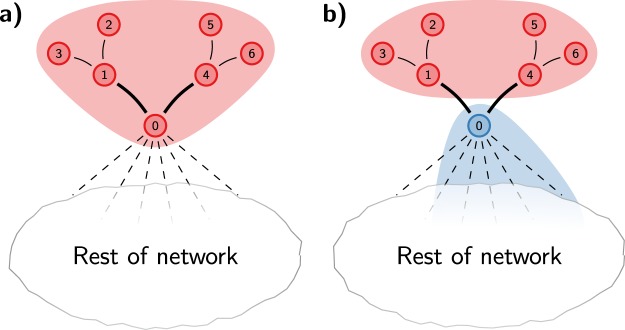
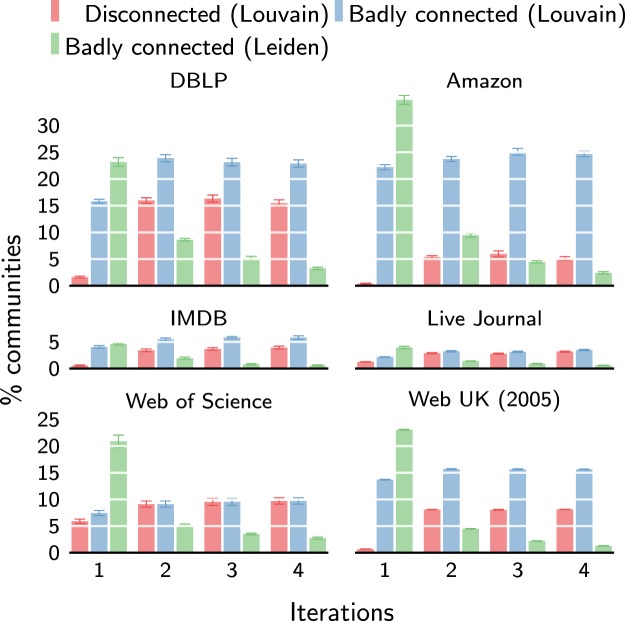
- Louvain may produce arbitrarily badly connected communities; in experiments up to 25% of communities were badly connected and up to 16% were disconnected. First-iteration badly connected percentages included Amazon 23%, DBLP 16%, and Web UK 14%; disconnected communities were usually around 1%, but exceeded 5% for Web of Science in the first iteration and jumped to 16% for DBLP in later iterations. After four iterations, Amazon had 5% disconnected but 25% badly connected communities.
- Leiden guarantees all communities are connected after each iteration, and also γ-separated and γ-connected. After a stable iteration, all nodes are locally optimally assigned and all communities are subpartition γ-dense; asymptotically, all communities are uniformly γ-dense and subset optimal.
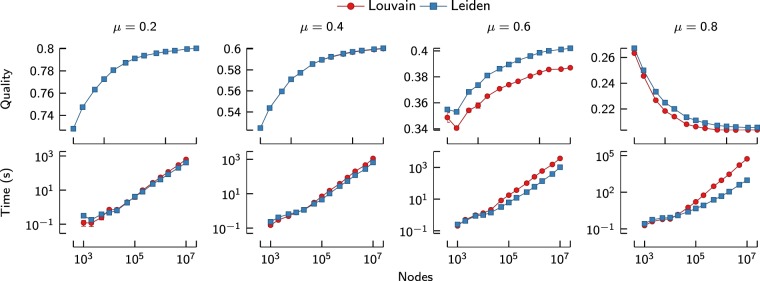
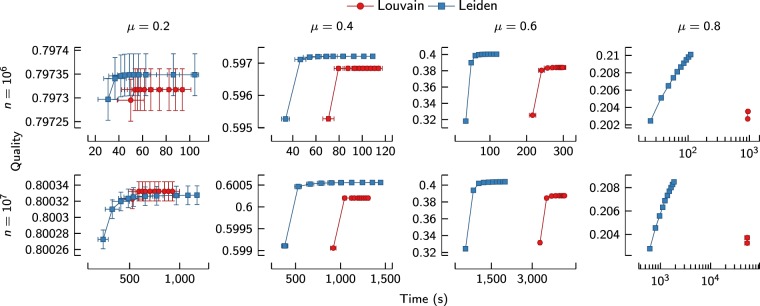
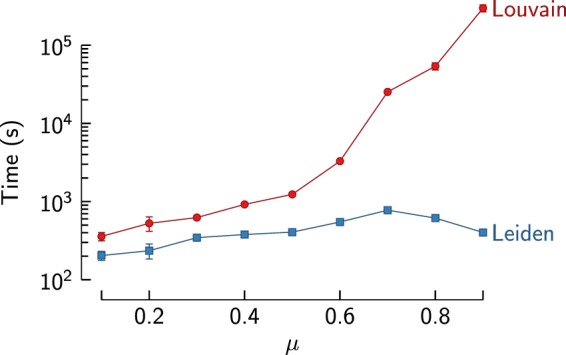
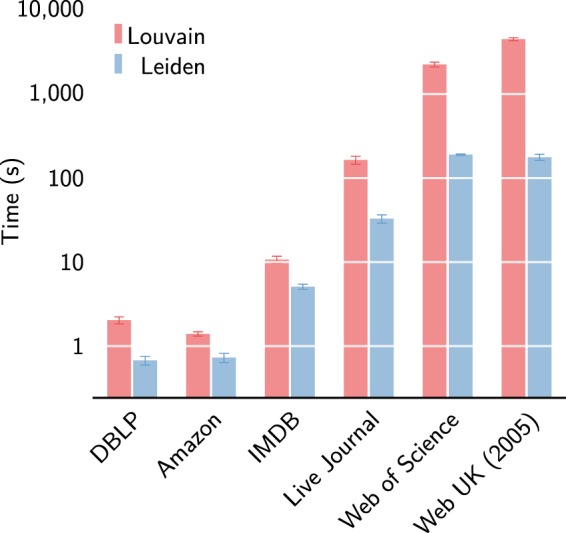
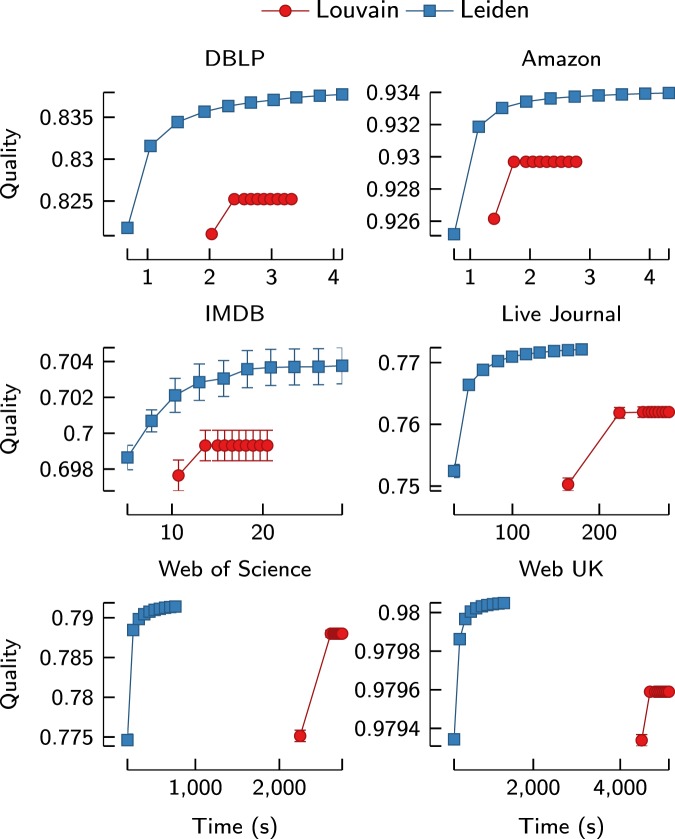
- Leiden was faster than Louvain: first iteration roughly 2–20 times faster on empirical networks, including more than 7× faster for Live Journal, more than 11× for Web of Science, and more than 20× for Web UK. On benchmark networks with difficult partitions (μ = 0.9), Louvain required almost 2.5 days while Leiden needed fewer than 10 minutes; for largest networks Leiden reached 10–100 times faster runtimes.
- Leiden found higher modularity on all six empirical networks: DBLP 0.8387 vs 0.8262, Amazon 0.9341 vs 0.9301, IMDB 0.7069 vs 0.7062, Live Journal 0.7739 vs 0.7653, Web of Science 0.7951 vs 0.7911, and Web UK 0.9801 vs 0.9796.
Methods
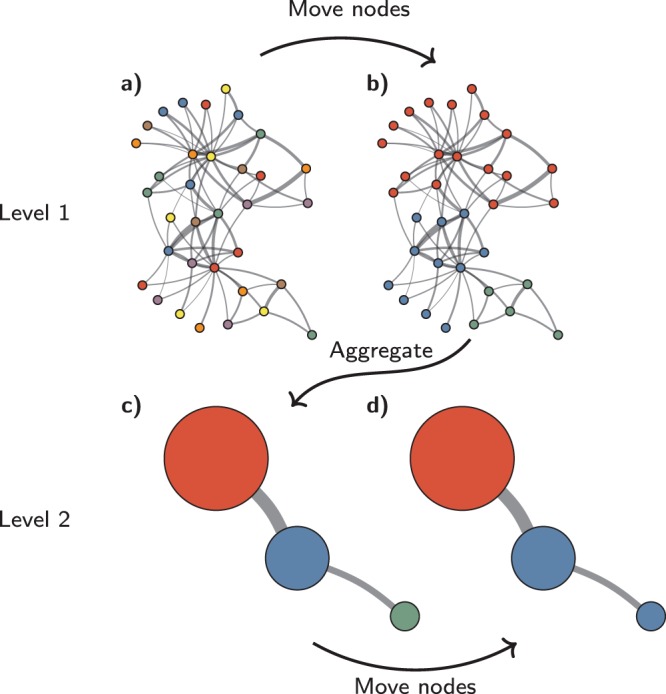
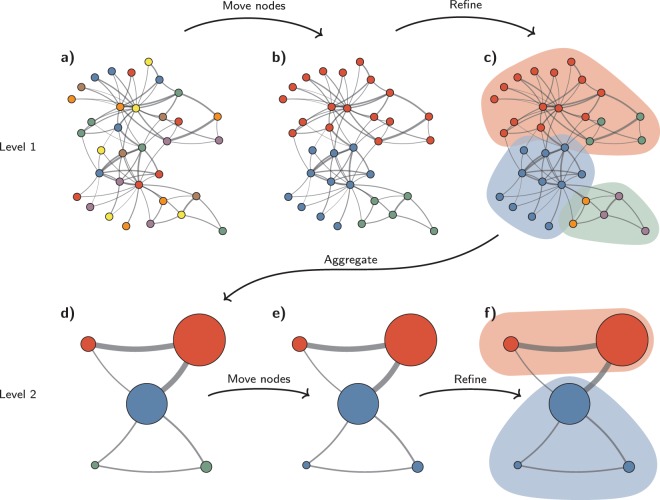
- The paper introduces the Leiden algorithm, which combines local moving, refinement of the partition, and aggregation; proofs of guarantees are relegated to Supplementary Information. It compares Leiden with Louvain on six empirical networks and on benchmark networks.
- Empirical networks: DBLP (317,080 nodes, degree 6.6), Amazon (334,863, 5.6), IMDB (374,511, 80.2), Live Journal (3,997,962, 17.4), Web of Science (9,811,130, 21.2), and Web UK (39,252,879, 39.8). Modularity was used with γ = 1; Table 2 reports maximal modularity after 10 replications of 10 iterations each. Badly connected community analysis was repeated 10 times, with Leiden run on each community’s subnetwork until a stable iteration.
- Benchmark networks ranged from n = 10^3 to n = 10^7 nodes, with community size 50 and CPM as the quality function; the mixing parameter μ varied, 10 iterations were performed, and each parameter set was repeated 10 times. The refinement randomness parameter was θ = 0.01.
Limitations
- The paper states that benchmark networks have only limited value because they are not representative of empirical real-world networks and have a rather simple structure.
- The paper states that counting communities split by Leiden gives only a lower bound on the number of badly connected communities; if Leiden does not find subcommunities, there is no guarantee that modularity cannot be increased by splitting the community.
- Evident from the text: there is no dedicated limitations section; technical details and proofs are relegated to Supplementary Information, and the experimental analysis fixes θ = 0.01 although values roughly in [0.0005, 0.1] are said to provide reasonable results.
Model-written summary. Check it against the paper before relying on it.
Integrity signals
Registry
Cites
Statistics
Figures
Verification
Claims the paper makes
1 Valid · 2 Not valid · 17 Not checked · 142 Own results and interpretations
The cited sources support only part of this claim — read each source’s verdict below.
In the paper
“Hence, the problem of Louvain outlined above is independent from the issue of the resolution limit.”
§ From Louvain to Leiden: guaranteeing well-connected communities > Louvain Algorithm > Badly connected communities
What the sources say
- Partly supportedcites [14] Fortunato S Barthélemy M Resolution Limit in Community Detection Proc. Natl. Acad. Sci. USA 2007 104 36 10.1073/pnas.0605965104 17190818 PMC1765466 sourceExperimental — accuracy not yet measured
Our copy supports the resolution-limit side of the sentence: the Conclusions (VI, p. 7) state that 'the resolution limit of modularity does not rely on particular network structures, but only on the comparison between the sizes of interconnected communities and that of the whole network', the Introduction (p. 1) calls it an 'intrinsic scale' of modularity, and Section V (pp. 5-6) shows the failure persists with simulated annealing, i.e. it is a property of the quality function rather than of one particular optimizer. What the source does not contain is the other term of the comparison: Louvain is never mentioned anywhere in the paper (the Introduction, p. 1, lists only generic greedy procedures [19,20], extremal optimization [21] and simulated annealing [22,23]), and no passage contrasts the resolution limit with an algorithm-specific defect. The independence claim is therefore the citing authors' own inference built on this paper's characterization of the resolution limit. (LLM, conf=0.70)
plain- Asserted: passes — The authors put it forward as true.
- Checkable: passes — It can be checked against evidence.
- Load-bearing: passes — The paper’s conclusions depend on it.
- Based: passes — The paper gives a reason why it holds.
- Partly supported
A result the paper states — it cites no source for it, so there is none to check. The quote shows it is in the paper.
In the paper
“The percentage of badly connected communities is less affected by the number of iterations of the Louvain algorithm.”
§ From Louvain to Leiden: guaranteeing well-connected communities > Experimental Analysis > Badly connected communities
plain- Asserted: passes — The authors put it forward as true.
- Checkable: passes — It can be checked against evidence.
- Load-bearing: unclear — It is unclear whether the paper’s conclusions depend on it.
- Based: passes — The paper gives a reason why it holds.
A result the paper states — it cites no source for it, so there is none to check. The quote shows it is in the paper.
In the paper
“In addition, we prove that, when the Leiden algorithm is applied iteratively, it converges to a partition in which all subsets of all communities are locally optimally assigned.”
- Also stated in: § Introduction · boosted
“In addition, we prove that the algorithm converges to an asymptotically stable partition in which all subsets of all communities are locally optimally assigned.”
§ From Louvain to Leiden: guaranteeing well-connected communities > Abstract
boostedstates a cause- Asserted: passes — The authors put it forward as true.
- Checkable: passes — It can be checked against evidence.
- Load-bearing: passes — The paper’s conclusions depend on it.
- Based: passes — The paper gives a reason why it holds.
- Also stated in: § Introduction · boosted
A result the paper reports from its own data — it cites no other source for it, so there is none to check. The quote shows it is in the paper.
In the paper
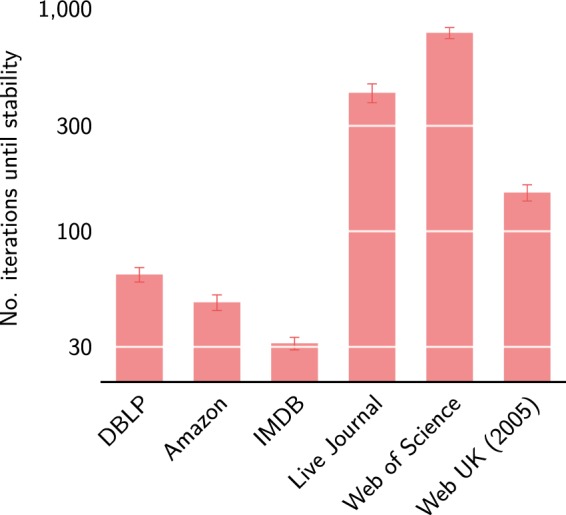
“The second iteration of Louvain shows a large increase in the percentage of disconnected communities.”
§ From Louvain to Leiden: guaranteeing well-connected communities > Experimental Analysis > Badly connected communities
plainstates a cause- Asserted: passes — The authors put it forward as true.
- Checkable: passes — It can be checked against evidence.
- Load-bearing: passes — The paper’s conclusions depend on it.
- Based: passes — The paper gives a reason why it holds.
A result the paper reports from its own data — it cites no other source for it, so there is none to check. The quote shows it is in the paper.
In the paper
“In terms of the percentage of badly connected communities in the first iteration, Leiden performs even worse than Louvain, as can be seen in Fig. 4.”
§ From Louvain to Leiden: guaranteeing well-connected communities > Experimental Analysis > Badly connected communities
plain- Asserted: passes — The authors put it forward as true.
- Checkable: passes — It can be checked against evidence.
- Load-bearing: unclear — It is unclear whether the paper’s conclusions depend on it.
- Based: passes — The paper gives a reason why it holds.
115 more claims
Create a free account to see all 162 claims and to verify the 24 references still open.
- Probably not a substantial claim. 23
- It may state two separate claims as one. 23
- The quote only partly states this claim. 1
Claims other papers make about this one
Each is checked against this paper’s own text: does it say what the citing paper says it does?
The cited source says what the claim attributes to it.
In the citing paper
“When compared to six common clustering algorithms, including Leiden25 and CellHarmony26, VFC was the top performing algorithm on every simulation on the T cell data and best performing, on average, on the zebrafish dataset, with a 57% increase in average performance over Louvain, which was the next best algorithm”
From Quantifying the effect of experimental perturbations at single-cell resolution (2021) · cites this paper as [25]
The cited source says what the claim attributes to it.
In the citing paper
“Louvain’s successor Leiden circumvents this issue by yielding guaranteed connected communities and is computationally more efficient52.”
From Best practices for single-cell analysis across modalities (2023) · cites this paper as [52]
The cited source says what the claim attributes to it.
In the citing paper
“However, the Louvain algorithm can lead to arbitrarily poorly connected communities52.”
From Best practices for single-cell analysis across modalities (2023) · cites this paper as [52]
The cited source says what the claim attributes to it.
In the citing paper
“We found that many t-types had total variance substantially above the variances of the k-means clusters (Fig. 5b) and an alternative analysis using entropies of Leiden clustering35 often highlighted the same t-types as variable (Extended Data Fig. 8).”
From Phenotypic variation of transcriptomic cell types in mouse motor cortex (2021) · cites this paper as [35]
The cited source says what the claim attributes to it.
In the citing paper
“Community detection uses the Leiden algorithm [28] with ModularityVertexPartition, producing hierarchical subclustering to depth 3.”
From SuperLocalMemory: Privacy-Preserving Multi-Agent Memory with Bayesian Trust Defense Against Memory Poisoning (2026) · cites this paper as [28]
6 more claims about this paper
Create a free account to see every claim other papers make about this one.
Citations
Cites
Fast unfolding of communities in large networks
Blondel, V. D., Guillaume, J.-L., Lambiotte, R., & Lefebvre, E. (2008) · Journal of Statistical Mechanics: Theory and Experiment · doi:10.1088/1742-5468/2008/10/p10008 · Cited by 21,424 · cited 3×
“The Louvain algorithm 10 is very simple and elegant.”
MethodFinding and evaluating community structure in networks
Newman, M. E. J., & Girvan, M. (2004) · Physical Review E · doi:10.1103/physreve.69.026113 · Cited by 13,931 · cited 2×
“The Leiden algorithm consists of three phases: (1) local moving of nodes, (2) refinement of the partition and (3) aggregation of the network based on the refined partition, using the non-refined partition to create an initial partition for the aggregate network.”
BackgroundMethodComplex brain networks: graph theoretical analysis of structural and functional systems
Bullmore, E., & Sporns, O. (2009) · Nature Reviews Neuroscience · doi:10.1038/nrn2575 · Cited by 11,820
Fortunato, S. (2010) · Physics Reports · doi:10.1016/j.physrep.2009.11.002 · Cited by 11,293 · cited 4×
“The Leiden algorithm consists of three phases: (1) local moving of nodes, (2) refinement of the partition and (3) aggregation of the network based on the refined partition, using the non-refined partition to create an initial partition for the aggregate network.”
BackgroundMethodInfluentialFinding community structure in very large networks
Clauset, A., Newman, M. E. J., & Moore, C. (2004) · Physical Review E · doi:10.1103/physreve.70.066111 · Cited by 7,390 · cited 1×
“Optimising modularity is NP-hard 5 , and consequentially many heuristic algorithms have been proposed, such as hierarchical agglomeration 6 , extremal optimisation 7 , simulated annealing 4,8 and spectral 9 algorithms.”
MethodFinding community structure in networks using the eigenvectors of matrices
Newman, M. E. J. (2006) · Physical Review E · doi:10.1103/physreve.74.036104 · Cited by 4,761
Functional cartography of complex metabolic networks
Guimerà, R., & Nunes Amaral, L. A. (2005) · Nature · doi:10.1038/nature03288 · Cited by 3,983 · cited 2×
“Optimising modularity is NP-hard 5 , and consequentially many heuristic algorithms have been proposed, such as hierarchical agglomeration 6 , extremal optimisation 7 , simulated annealing 4,8 and spectral 9 algorithms.”
MethodNear linear time algorithm to detect community structures in large-scale networks
Raghavan, U. N., Albert, R., & Kumara, S. (2007) · Physical Review E · doi:10.1103/physreve.76.036106 · Cited by 3,502 · cited 2×
“Trying to fix the problem by simply considering the connected components of communities 19–21 is unsatisfactory because it addresses only the most extreme case and does not resolve the more fundamental problem.”
BackgroundBenchmark graphs for testing community detection algorithms
Lancichinetti, A., Fortunato, S., & Radicchi, F. (2008) · Physical Review E · doi:10.1103/physreve.78.046110 · Cited by 3,051 · cited 1×
“To study the scaling of the Louvain and the Leiden algorithm, we rely on a variant of a well-known approach for constructing benchmark networks 28 .”
MethodResolution limit in community detection
Fortunato, S., & Barthélemy, M. (2007) · Proceedings of the National Academy of Sciences · doi:10.1073/pnas.0605965104 · Cited by 3,024 · cited 2×
“The algorithm may yield arbitrarily badly connected communities, over and above the well-known issue of the resolution limit 14 .”
Background
Research works printed but not linked: 2
- Porter MA Onnela J-P Mucha PJ Communities in Networks Not. AMS 2009 56 1082 1097
- Luecken, M. D. Application of multi-resolution partitioning of interaction networks to the study of complex disease. Ph.D. thesis, (University of Oxford, 2016).
Cited by
Items 2,301–2,400 of 7,288
Sirma AI (Ontotext), B., Hristov, A., Tahchiev, A., Sirma AI (Ontotext), B., Papazov, H., MIT, M. P. S., Tulechki, N., Sirma AI (Ontotext), B., Primov, T., Sirma AI (Ontotext), B., et al. (2021) · International conference Recent advances in natural language processing · doi:10.26615/978-954-452-072-4_063 · Cited by 9
Silva, B. R. D. S., Jara, C. P., Sidarta-Oliveira, D., Velloso, L. A., Velander, W. H., & ARAUJO, E. P. D. (2022) · Viruses · doi:10.3390/v14122753 · Cited by 9
Friendshoring in global food supply chains
Khadka, S., Gopinath, M., & Batarseh, F. A. (2025) · European Review of Agricultural Economics · doi:10.1093/erae/jbae031 · Cited by 9
Dynamic Community Detection Decouples Multiple Time Scale Behavior of Complex Chemical Systems
Zarayeneh, N., Kumar, N., Kalyanaraman, A., & Clark, A. E. (2022) · Journal of Chemical Theory and Computation · doi:10.1021/acs.jctc.2c00454 · Cited by 8
McGowan, E., Sanjak, J. S., Mathé, E. A., & Zhu, Q. (2023) · Orphanet Journal of Rare Diseases · doi:10.1186/s13023-023-02876-2 · Cited by 9
Ran, Y., Yi, J., Si, W., SMALL, M. P., & Shang, K.-K. (2025) · Chaos An Interdisciplinary Journal of Nonlinear Science · doi:10.1063/5.0268930 · Cited by 9
Competitive Categorization and Networks: Cognitive Strategic Groups
Han, T., Ghobadian, A., Yim, A., Tao, R., & Thomas, H. (2022) · British Journal of Management · doi:10.1111/1467-8551.12694 · Cited by 9
Parallel median consensus clustering in complex networks
Hussain, M. T., Halappanavar, M. M., Chatterjee, S., Radicchi, F., Fortunato, S., & Azad, A. (2025) · Scientific Reports · doi:10.1038/s41598-025-87479-6 · Cited by 9
Active Sampling for Efficient Subjective Evaluation of Tactons at Scale
Demers, M., Fortin, P. E., Weill–Duflos, A., Yoo, Y., & Cooperstock, J. R. (2021) · IEEE World Haptics Conference (WHC) · doi:10.1109/whc49131.2021.9517257 · Cited by 9
ComGPT: Detecting Local Community Structure With Large Language Models
Li, N., Shen, H., Mu, L., Zhang, Y., & Luo, W. (2026) · IEEE Transactions on Computational Social Systems · doi:10.1109/tcss.2025.3634341 · Cited by 9
Kalhor, G., Zeraati, T., & Bahrak, B. (2023) · EPJ Data Science · doi:10.1140/epjds/s13688-023-00422-5 · Cited by 9
Automated Interpretability and Feature Discovery in Language Models with AgentsPreprint
Marin-Llobet, A., & Ferrando, J. (2026) · arXiv (Cornell University) · doi:10.48550/arxiv.2605.01555 · Cited by 9
A large-scale empirical investigation of specialization in criminal career
Heiler, G., Pham, T. M., Korbel, J., Wachs, J., & Thurner, S. (2023) · Scientific Reports · doi:10.1038/s41598-023-43552-6 · Cited by 9
The Short Dark Triad across 14 cultures: A novel network-based invariance approach
Dinić, B. M., Costantini, G., Papageorgiou, K. Α., Araujo, B. B., Grabovac, B., Żemojtel-Piotrowska, M. A., Ankit, A., Wertag, A., Kornienko, D. S., Tripathi, P., et al. (2025) · Personality and Individual Differences · doi:10.1016/j.paid.2025.113321 · Cited by 9
Modeling Graphs with Vertex Replacement Grammars
Sikdar, S., Hibshman, J., & Weninger, T. (2019) · Proceedings · doi:10.1109/icdm.2019.00066 · Cited by 9
Is entrepreneurship an emerging area of research? A computational response
Souza, R. F., Ballini, R., da Silveira, J. M. F. J., & Teixeira, A. A. C. (2021) · REGEPE Entrepreneurship and Small Business Journal · doi:10.14211/ibjesb.e1742 · Cited by 10
Enabling Analysis and Reasoning on Software Systems through Knowledge Graph Representation
Rukmono, S. A., & Chaudron, M. R. V. (2023) · International Conference on Mining Software Repositories (MSR) · doi:10.1109/msr59073.2023.00029 · Cited by 9
From Single Aircraft to Communities: A Neutral Interpretation of Air Traffic Complexity Dynamics
Isufaj, R., Omeri, M., Piera, M. À., Valls, J. S., & Gallego, C. E. V. (2022) · Aerospace · doi:10.3390/aerospace9100613 · Cited by 9
Auguin, E., Guinet, C., Mourier, J., Clua, É., Gasco, N., & Tixier, P. (2024) · Ecology and Evolution · doi:10.1002/ece3.11448 · Cited by 9
Semi-Local Integration Measure of Node Importance
Kirigin, T. B., Babić, S. B., & Perаk, B. (2022) · Mathematics · doi:10.3390/math10030405 · Cited by 9
cp_measure: API-first feature extraction for image-based profiling workflowsPreprint
Muñoz, A. F., Treis, T., Kalinin, A. A., Dasgupta, S., Theis, F. J., Carpenter, A. E., & Singh, S. (2025) · PubMed Central · doi:10.48550/arxiv.2507.01163 · Cited by 9
Improved Near-Duplicate Detection for Aggregated and Paywalled News-Feeds
Tumre, S., Patil, S., & Kumar, A. (2025) · Conference of the North American Chapter of the Association for Computational Linguistics: Human Language Technologies (NAACL-HLT) · doi:10.18653/v1/2025.naacl-industry.73 · Cited by 9
Morey, R. E., Soncin, F., Kallol, S., Sah, N., Manalo, Z., Bui, T., Slamecka, J., Cheung, V. C., Pizzo, D. P., Requena, D. F., et al. (2026) · Communications Biology · doi:10.1038/s42003-026-10460-0 · Cited by 9
Visualizing the structure and development of climate change communication research
Canon, C. R., Boyle, D. P., & McAfee, S. A. (2022) · Journal of Science Communication · doi:10.22323/2.21070203 · Cited by 9
Silva, A., Chen, G., Ma, H., Nekooei, S. M., & Zuo, X. (2025) · International Joint Conference on Artificial Intelligence · doi:10.24963/ijcai.2025/821 · Cited by 9
Network Analysis: Connecting the Dots to Understand Tourism
Baggio, R. (2022) · Tourism on the verge · doi:10.1007/978-3-030-88389-8_21 · Cited by 9
The spatiotemporal analysis of the population migration network in China, 2021
Li, W., & Yao, Y. (2023) · Infectious Disease Modelling · doi:10.1016/j.idm.2023.10.003 · Cited by 9
MicroMatic: Fully Automated Microservices Identification Approach From Monolithic Systems
Trabelsi, I., Popa, B., Pereyrol, J., Beaulieu, P.-O., & Moha, N. (2024) · doi:10.1145/3643794.3648283 · Cited by 9
Chopra, G., Unni, V. R., Venkatesan, P., Vallejo‐Bernal, S. M., Marwan, N., Kurths, J., & Sujith, R. I. (2024) · Scientific Reports · doi:10.1038/s41598-024-73872-0 · Cited by 9
Group Fairness Metrics for Community Detection Methods in Social Networks
de Vink, E., & Saxena, A. (2025) · Studies in computational intelligence · doi:10.1007/978-3-031-82435-7_4 · Cited by 9
Community deception in directed influence networks
Madi, S. A., & Pirrò, G. (2023) · Social Network Analysis and Mining · doi:10.1007/s13278-023-01122-8 · Cited by 9
Zhang, Q., Gong, D., Li, K., Dang, K., Wang, Y., Pan, C., Yan, Z., & Yang, W. (2024) · Frontiers in Medicine · doi:10.3389/fmed.2024.1432780 · Cited by 9
Optimal location of free-floating bike-sharing dispatching hubs: A multi-scale perspective
Chen, W., Gu, Y., Chen, X., Cheng, L., & Vos, J. D. (2025) · Journal of Transport Geography · doi:10.1016/j.jtrangeo.2025.104264 · Cited by 9
Park, J., Park, J., & Choi, Y. (2022) · Environmental Modelling & Software · doi:10.1016/j.envsoft.2022.105320 · Cited by 9
Hesamipour, S., Balafar, M. A., & Mousazadeh, S. (2023) · Complexity · doi:10.1155/2023/4796536 · Cited by 9
Delineation of Cancer Service Areas Anchored by Major Cancer Centers in the United States
Wang, C., Wang, F., & Onega, T. (2022) · Cancer Research Communications · doi:10.1158/2767-9764.crc-22-0099 · Cited by 9
Vargas‐Quesada, B., Zarco, C., & Cordón, Ó. (2023) · International Journal of Interactive Multimedia and Artificial Intelligence · doi:10.9781/ijimai.2021.09.004 · Cited by 9
Liu, Q., Hou, Z., & Yang, J. (2022) · Remote Sensing · doi:10.3390/rs14174144 · Cited by 9
A subgraphs-density based overlapping community detection algorithm for large-scale complex networks
Saif, S. M., Samie, M. E., & Hamzeh, A. (2022) · Computing · doi:10.1007/s00607-022-01121-1 · Cited by 9
Community Detection Graph Convolutional Network for Overlap-Aware Speaker Diarization
Wang, J., Chen, Z., Zhou, H., Li, L., & Hong, Q. (2023) · IEEE International Conference on Acoustics Speech and Signal Processing · doi:10.1109/icassp49357.2023.10095143 · Cited by 9
Martínez-Hernández, E. (2022) · Digital Chemical Engineering · doi:10.1016/j.dche.2022.100075 · Cited by 9
Multi-resolution spatio-temporal prediction with application to wind power generationPreprint
Dong, Z., Zhang, H., Zhu, S., Xie, Y., & Hentenryck, P. V. (2021) · arXiv (Cornell University) · doi:10.48550/arxiv.2108.13285 · Cited by 9
The Landscapes of Sustainability in the Library and Information Science: Collaboration Insights
Kamińska, A. M., Opaliński, Ł., & Wyciślik, Ł. (2022) · Sustainability · doi:10.3390/su142416818 · Cited by 8
Xie, H., Lu, Y., Zhang, A., Zheng, A., Rao, B., Yang, C., Li, A., Guo, W., Hu, L., Huang, X., et al. (2025) · Clinical and Translational Medicine · doi:10.1002/ctm2.70541 · Cited by 8
Charting the landscape of presence in virtual reality research: a bibliometric review
Williams, P., Kelly, M., Rowett, D. S., & Gwilt, I. (2025) · Frontiers in Virtual Reality · doi:10.3389/frvir.2025.1691240 · Cited by 8
Connecting phenotype to genotype: PheWAS-inspired analysis of autism spectrum disorder
Matta, J., Dobrino, D., Yeboah, D., Howard, S., EL‐Manzalawy, Y., & Obafemi-Ajayi, T. (2022) · Frontiers in Human Neuroscience · doi:10.3389/fnhum.2022.960991 · Cited by 9
Fatieieva, Y., Galimullina, R., Isaev, S. V., Klimovich, A. V., Lemaire, L. A., & Adameyko, I. I. (2025) · Communications Biology · doi:10.1038/s42003-025-08502-0 · Cited by 8
Multi-omics analysis of canine aging markers and evaluation of stem cell intervention
Li, B., Ding, Y., Han, M., Zhang, Z., Ling, Z., Zhu, W., Xian-jun, Z., Zhang, Y., Lv, C., Li, N., et al. (2025) · Communications Biology · doi:10.1038/s42003-025-08333-z · Cited by 8
Epigenome erosion in Alzheimer’s disease brain cells and induced neuronsPreprint
Wang, B.-A., Jones, J. R., Zhou, J., Tian, W., Wu, Y., Wang, W., Berube, P., Bartlett, A., Castanon, R., Nery, J. R., et al. (2023) · bioRxiv (Cold Spring Harbor Laboratory) · doi:10.1101/2023.10.15.562394 · Cited by 8
Do male leading authors retract more articles than female leading authors?
Zheng, E., Fu, H., Thelwall, M. A., & Fang, Z. (2025) · Journal of Informetrics · doi:10.1016/j.joi.2025.101682 · Cited by 8
Yousef, N., Wu, W., Alajaji, S. A., Mahadevan, A., Sultan, A. S., Molloy, E. K., & Nguyen, J. T. (2026) · Head and Neck Pathology · doi:10.1007/s12105-025-01876-x · Cited by 8
A Flexible Data-Driven Framework for Correcting Coarsely Annotated scRNA-seq Data
Zheng, R., He, Y., Huang, J., Kan, S., Wang, H., Wang, E., & Li, M. (2025) · Big Data Mining and Analytics · doi:10.26599/bdma.2025.9020009 · Cited by 8
Inferring causal trajectories from spatial transcriptomics using CASCAT
Yu, Y., Nie, W., Zhang, Q., & Li, S. C. (2025) · Nucleic Acids Research · doi:10.1093/nar/gkaf791 · Cited by 8
A multimodal approach for visualizing and identifying electrophysiological cell types in vivo
Lee, E., Gül, A. E., Heller, G. R., Lakunina, A. A., Yu, H. Y., Shelton, A., Olsen, S. R., Steinmetz, N. A., Hurwitz, C., Jaramillo, S., et al. (2026) · Nature Communications · doi:10.1038/s41467-026-71331-0 · Cited by 8
Najafabadi, M. G., Gray, G. K., Kong, L. R., Gupta, K., Perera, D., Naylor, H. W., Brugge, J. S., Venkitaraman, A. R., & Shehata, M. (2023) · Nature Communications · doi:10.1038/s41467-023-40956-w · Cited by 8
Bauer, M. F., Heimstädt, M., Franzreb, C., & Schimmler, S. (2023) · Big Data & Society · doi:10.1177/20539517231180575 · Cited by 8
Structure of scientific knowledge flows to intergovernmental organizations
Asatani, K., Iwata, Y., Tomokiyo, Y., Mahfouz, B., Yarime, M., & Sakata, I. (2026) · Proceedings of the National Academy of Sciences · doi:10.1073/pnas.2514861123 · Cited by 8
Whole-body connectome of a segmented annelid larvaPreprint
Verasztó, C., Jasek, S., Gühmann, M., Bezares-Calderón, L. A., Williams, E. A., Shahidi, R., & Jékely, G. (2024) · eLife · doi:10.7554/elife.97964.1 · Cited by 8
Precise detection of cell-type-specific domains in spatial transcriptomics
Ruan, Z., Zhou, W., Liu, Z., Wei, J., Pan, Y., Yan, C., Wei, X., Xiang, W., Yan, C., Chen, S., et al. (2024) · Cell Reports Methods · doi:10.1016/j.crmeth.2024.100841 · Cited by 8
Pena, C. B., MacCarron, P., & O’Sullivan, D. J. P. (2025) · Royal Society Open Science · doi:10.1098/rsos.240454 · Cited by 8
Graph analysis of guilt processing network highlights links with subclinical anxiety and self-blame
Zareba, M. R., Bielski, K., Costumero, V., & Visser, M. (2024) · Social Cognitive and Affective Neuroscience · doi:10.1093/scan/nsae092 · Cited by 8
Social media in the Global South: A Network Dataset of the Malian Twittersphere
Schroeder, D. T., de Bruijn, M., Bruls, L., Moges, M. A., Badji, S. D., Fritz, N., Cissé, M. G., Langguth, J., Mutsvairo, B., & Orgeret, K. S. (2023) · Journal of Data Mining & Digital Humanities · doi:10.46298/jdmdh.11246 · Cited by 8
Chaudhary, S., Voigts, A., Bereket, M. D., Albert, M. L., Schwamborn, K., Zeggini, E., & Casale, F. P. (2026) · Genome biology · doi:10.1186/s13059-026-04031-z · Cited by 9
Skin Explorer: An Interactive Single-Cell RNA-Sequencing Resource for Healthy Human Skin
Yuan, H., Sanz, N. C., Wagner, R. E., Roessler, L., Heinmäe, E., Yeerken, A., Are, A., Annusver, K., & Kasper, M. (2025) · Journal of Investigative Dermatology · doi:10.1016/j.jid.2025.08.025 · Cited by 8
Adoption of Pedagogical Innovations: Social Networks of Engineering Education Guilds
Riley, D., Mallouk, K. E., Faber, C. J., & Strong, A. (2023) · Education Sciences · doi:10.3390/educsci13111102 · Cited by 8
GeneSetCart: assembling, augmenting, combining, visualizing, and analyzing gene sets
Marino, G. B., Olaiya, S., Evangelista, J. E., Clarke, D. J. B., & Ma’ayan, A. (2025) · GigaScience · doi:10.1093/gigascience/giaf025 · Cited by 8
Afiffy, M., Fakhr, M. W., & Maghraby, F. A. (2026) · Scientific Reports · doi:10.1038/s41598-026-36721-w · Cited by 8
scSCDT: Self-contrastive neural network with deep topology mining for scRNA-seq data clustering
Zhou, Z., Tang, B., Chen, F., Wang, W., Zhao, S., & Yu, N. (2025) · Expert Systems with Applications · doi:10.1016/j.eswa.2025.129751 · Cited by 8
Heritage Iconographic Content Structuring: from Automatic Linking to Visual Validation
Blettery, E., & Gouet-Brunet, V. (2024) · Journal on Computing and Cultural Heritage · doi:10.1145/3666007 · Cited by 8
Matisse: a MATLAB-based analysis toolbox for in situ sequencing expression maps
Salas, S. M., Gyllborg, D., Langseth, C. M., & Nilsson, M. F. (2021) · BMC Bioinformatics · doi:10.1186/s12859-021-04302-5 · Cited by 8
Barrera-Cruz, M., Puchol, O. G., Jiménez‐Puerto, J., Cortell‐Nicolau, A., & Aubán, J. B. (2024) · PLoS ONE · doi:10.1371/journal.pone.0306027 · Cited by 8
Das, A., Sinha, K., & Chakrabarty, S. (2024) · Physical Chemistry Chemical Physics · doi:10.1039/d4cp02921f · Cited by 8
Epithelial WNT secretion drives niche escape of developing gastric cancer
Lee, J., Kim, S., Oh, Y., Jahn, S. R., Kim, J., Kim, Y., Schmäche, T., Kim, S.-M., Teriyapirom, I., Gross, T. J., et al. (2025) · Molecular Cancer · doi:10.1186/s12943-025-02543-z · Cited by 8
Poling, H. M., Noël, T., Singh, A., Fisher, G. W., Thorner, K., Chaturvedi, P., Nattamai, K., Srivastava, K., Batie, M. R., Hausfeld, T. A., et al. (2026) · Nature Biomedical Engineering · doi:10.1038/s41551-026-01688-6 · Cited by 8
Xu, K., Li, J., Qin, L., Liu, J., Yang, H., Dou, G., Ma, L., Dong, Y., & Wang, Y. (2024) · Heliyon · doi:10.1016/j.heliyon.2024.e33196 · Cited by 8
Guo, W., Li, X., Wang, D., Yan, N., Hu, Q., Yang, F., Zhang, X., Yao, J., & Gu, J. (2024) · Genome biology · doi:10.1186/s13059-024-03436-y · Cited by 8
Makhani, K., Yang, X., Dierick, F., Subramaniam, N., Gagnon, N., Ebrahimian, T., Lehoux, S., Wu, H., Ding, J., & Mann, K. K. (2025) · Environmental Health Perspectives · doi:10.1289/ehp14285 · Cited by 8
Characterizing Microglial Signaling Dynamics During Inflammation Using Single‐Cell Mass Cytometry
Kumar, S., Kahle, A. D., Keeler, A. B., Zunder, E. R., & Deppmann, C. D. (2025) · Glia · doi:10.1002/glia.24670 · Cited by 8
A variational deep-learning approach to modeling memory T cell dynamics
van Dorp, C. H., Gray, J. I., Paik, D. H., Färber, D. L., & Yates, A. J. (2025) · PLoS Computational Biology · doi:10.1371/journal.pcbi.1013242 · Cited by 8
DOLPHIN advances single-cell transcriptomics beyond gene level by leveraging exon and junction reads
Song, K., Zheng, Y., Zhao, B., Eidelman, D. H., Tang, J., & Ding, J. (2025) · Nature Communications · doi:10.1038/s41467-025-61580-w · Cited by 8
Spatial omics for profiling the dynamic tumor microenvironment
Nguyen, H. N., Eapen, M. M., Nguyen, Q. H., & Sharma, A. (2026) · Clinical & Translational Immunology · doi:10.1002/cti2.70084 · Cited by 8
Speeding Up Reachability Queries in Public Transport Networks Using Graph Partitioning
Tesfaye, B., Augsten, N., Pawlik, M., Böhlen, M. H., & Jensen, C. S. (2021) · Information Systems Frontiers · doi:10.1007/s10796-021-10164-2 · Cited by 8
scMFG: a single-cell multi-omics integration method based on feature grouping
Ma, L., Liu, J., Sun, W., Zhao, C., & Yu, L. (2025) · BMC Genomics · doi:10.1186/s12864-025-11319-0 · Cited by 8
Aponte-Santiago, N. A., Su, Y., & Wagner, D. E. (2026) · bioRxiv (Cold Spring Harbor Laboratory) · doi:10.64898/2026.03.23.713599 · Cited by 8
Kanellou, P., Georgakopoulos‐Soares, I., & Zaravinos, A. (2023) · Cancers · doi:10.3390/cancers15061795 · Cited by 8
Community detection in directed weighted networks using Voronoi partitioning
Molnár, B., Márton, I.-B., Horvát, S., & Ercsey-Ravasz, M. (2024) · Scientific Reports · doi:10.1038/s41598-024-58624-4 · Cited by 8
A severe local flood and social events show a similar impact on human mobility
Loreti, S., Keiler, M., & Zischg, A. P. (2025) · npj Complexity · doi:10.1038/s44260-025-00030-6 · Cited by 8
Zheng, K., Dai, L., Zhang, S., Zhao, Y., Li, W., Gao, Y., Mang, Y., Jiao, L., Tang, Y., & Ran, J. (2024) · Gut and Liver · doi:10.5009/gnl230345 · Cited by 8
Xing, C., Hang, Z., Guo, W., Li, Y., Shah, R., Zhao, Y., Zeng, Z., & Du, H. (2023) · Cytotherapy · doi:10.1016/j.jcyt.2023.08.015 · Cited by 8
Rigorous integration of single-cell ATAC-seq data using regularized barycentric mapping
Zhu, S., Hua, H., & Chen, S. (2025) · Nature Machine Intelligence · doi:10.1038/s42256-025-01099-3 · Cited by 8
Single-nucleus RNA-sequencing in pre-cellularization Drosophila melanogaster embryos
Albright, A., Stadler, M. R., & Eisen, M. B. (2022) · PLoS ONE · doi:10.1371/journal.pone.0270471 · Cited by 8
Feng, C., Li, Q., Yang, M., Chen, Y.-H., Zhang, M., Wang, H., & Li, X. (2025) · Frontiers in Immunology · doi:10.3389/fimmu.2025.1702290 · Cited by 8
Syvolovskyi, I., & Лисечко, В. П. (2025) · Системи управління навігації та зв’язку Збірник наукових праць · doi:10.26906/sunz.2025.2.255 · Cited by 8
AOC: Assembling overlapping communities
Jakatdar, A., Liu, B., Warnow, T. J., & Chacko, G. W. (2022) · Quantitative Science Studies · doi:10.1162/qss_a_00227 · Cited by 8
Elias, H. K., Mitra, S., da Silva, M. B., Rajagopalan, A., Gipson, B., Lee, N. M., Kousa, A. I., Ali, M. A., Grassmann, S. A., Raghuraman, R., et al. (2025) · Nature Communications · doi:10.1038/s41467-025-61125-1 · Cited by 8
Wang, L., Wan, L., Chen, X., Gao, P., Hou, Y., Wu, L., Liu, W., Tian, S., Han, M., Peng, S., et al. (2024) · MedComm · doi:10.1002/mco2.762 · Cited by 8
Mahony, C. B., Copper, L., Vrljicak, P., Noyvert, B., Constantinidou, C., Browne, S., Pan, Y., Palles, C., Ott, S., Higgs, M. R., et al. (2023) · Cell Reports · doi:10.1016/j.celrep.2023.112571 · Cited by 8
A high-performance evolutionary multiobjective community detection algorithm
Santos, G. O., Vieira, L. S., Rossetti, G., Ferreira, C. H. G., & Moreira, G. J. P. (2025) · Social Network Analysis and Mining · doi:10.1007/s13278-025-01519-7 · Cited by 8
Hippocluster: An efficient, hippocampus-inspired algorithm for graph clustering
Chalmers, E., Gruber, A. J., & Luczak, A. (2023) · Information Sciences · doi:10.1016/j.ins.2023.118999 · Cited by 8
Regulation of revival stem cell differentiation by CREPT/RPRD1B during intestinal regeneration
Lan, T., Li, M., Duan, X., Jia, H., Cao, Y., Wang, Y., Ren, F., Sheng, J., Xu, J., & Chang, Z. (2025) · Cell & Bioscience · doi:10.1186/s13578-025-01434-6 · Cited by 8
Metadata
- Authors
- Traag, V. A., Waltman, L., & van Eck, N. J.
- Affiliations
- Leiden University (NL)
- Corresponding author
- Traag, V. A.
- Venue
- Scientific Reports
- Published
- 2019-03-26
- Volume
- 9
- Issue
- 1
- Pages
- 5233-5233
- ISSN
- 2045-2322 (ISSN-L)
- PMC
- PMC6435756
- OpenAlex
- W2897249806
- Semantic Scholar
- 79cdbabb22ef80074f5659430fe6fc97932798f5
- Cited by
- 5,635
- References
- 27
- Citations by year
- 2026: 1250 · 2025: 1281 · 2024: 980 · 2023: 757 · 2022: 639 · 2021: 466 · 2020: 213 · 2019: 46
- FWCI
- 158.78
- Type
- journal article
- Language
- en
- Open access
- gold
- doi.org
- Licence
- cc-by
- creativecommons.org/licenses/by/4.0 (tdm)
- creativecommons.org/licenses/by/4.0 (vor)
- Locations
- Scientific Reports (publishedVersion, cc-by)
- Europe PMC (PubMed Central) (publishedVersion, other-oa)
- PubMed Central (publishedVersion, cc-by)
- PubMed (publishedVersion)
- arXiv (Cornell University) (submittedVersion)
- Leiden Repository (Leiden University) (submittedVersion, cc-by)
- Data Archiving and Networked Services (DANS) (submittedVersion, cc-by)
- DOAJ (DOAJ: Directory of Open Access Journals) (submittedVersion)
- Leiden Repository (Leiden University) (submittedVersion)
- arXiv (Cornell University)
- Topics
- Physical Sciences › Physics and Astronomy › Statistical and Nonlinear Physics › Complex Network Analysis Techniques
- Physical Sciences › Computer Science › Artificial Intelligence › Advanced Clustering Algorithms Research
- Life Sciences › Biochemistry, Genetics and Molecular Biology › Molecular Biology › Bioinformatics and Genomic Networks
- Keywords
- community detection, Louvain algorithm, Leiden algorithm, network partitioning, community connectivity, complex networks
About these checks
Registry, retraction, Cites and statistics results are computed, not judged, with one exception: a printed reference that no index lists is read once by a model before it counts as a citation error. Claims are extracted by a model and kept only when their quote appears verbatim in the text; each cited source is then checked, with a model’s help, for whether it says what the claim relies on. Those verdicts can be wrong — read the claim’s quote and the cited source before relying on one.
The claim verdicts this report counts are experimental: their accuracy is not yet measured.
A language model drew the claims from the paper on 2026-11-23, under version 3 of the claim definition (model deepseek-v4.1-flash, prompt extract-v3).
A second model labelled each claim on 2026-11-23 (model jev-1.13-20260917, definition revision gold-guideline-v0.2).
Cited sources are checked with a language model’s help (qwen3.8-omni-flash).
Statistics and arithmetic are recomputed, not judged.
Confidence bands are shown only for fields calibrated on our annotated test set. None is calibrated yet, so no band is shown.
What counts as a claim ›How we measure confidence ›How we check this ›
Are you an author, or do you see a problem with this page? Request a review
Data sources
Bibliographic data: Semantic Scholar, OpenAlex, Crossref.
Contains information from the Semantic Scholar Academic Graph Datasets, made available under the ODC Attribution License (ODC-BY 1.0).
Semantic Scholar’s data is described in: Kinney, R., et al. (2023). The Semantic Scholar Open Data Platform. arXiv:2301.10140.
