

Ancestral Stress Alters Lifetime Mental Health Trajectories and Cortical Neuromorphology via Epigenetic Regulation
Open accessThe DOI matches its Crossref record; 73 of the 73 references it cites were found in a registry or an index.
Abstract
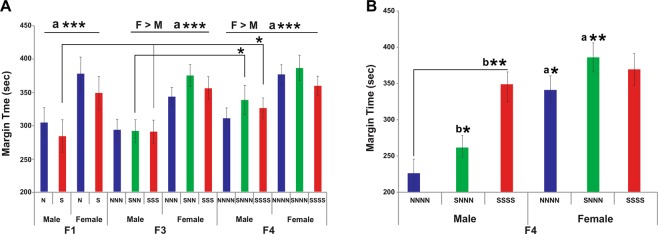
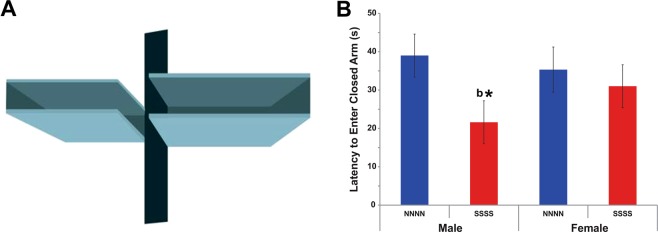
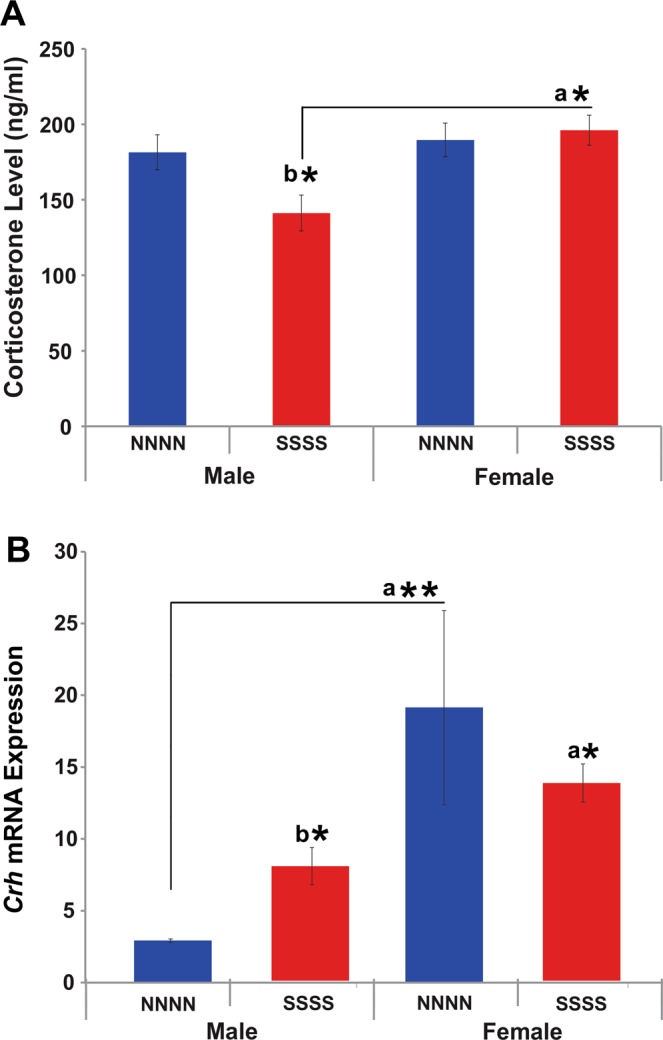
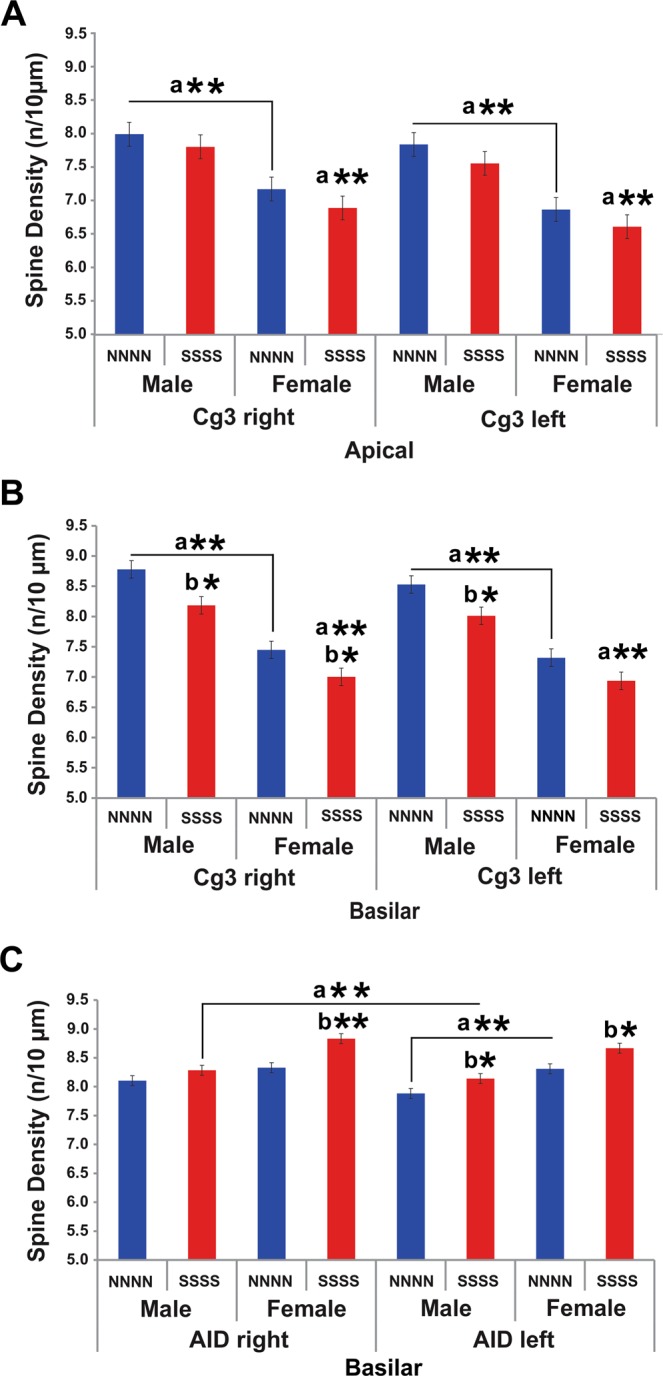
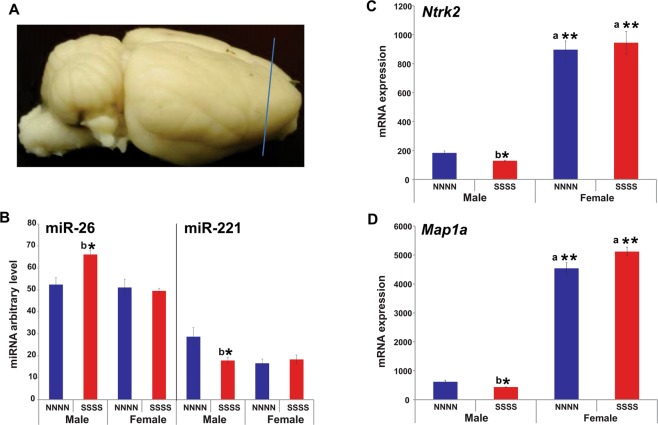
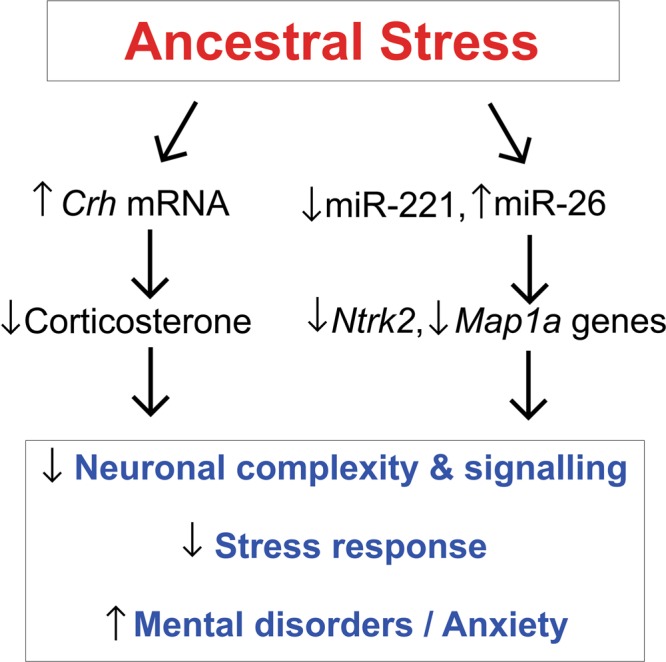
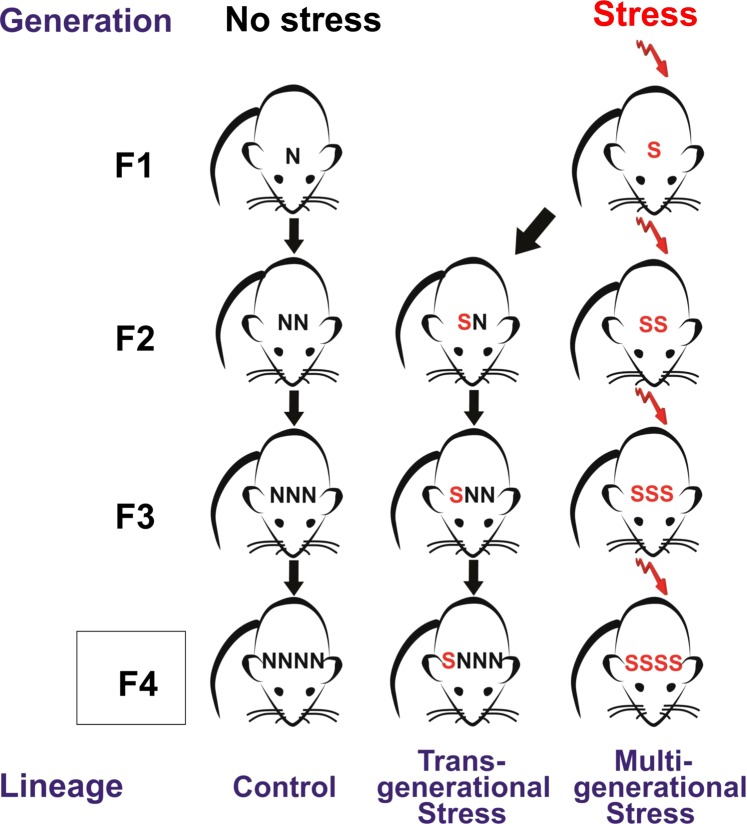
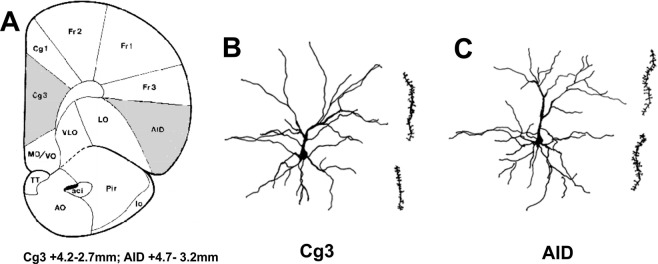
Experiences during early development are powerful determinants of lifetime mental health. Here we investigated if ancestral stress regulates the brain’s epigenetic memory to alter neuromorphology and emotionality in the remote F4 progeny. Pregnant female rat dams of the parental F0 generation were exposed to stress on gestational days 12–18. To generate a transgenerational stress lineage, their pregnant daughters (F1), grand-daughters (F2) and great-grand-daughters (F3) remained undisturbed. To generate a multigenerational stress lineage, pregnant dams of each generation (F1–F3) were stressed. A lineage of non-stress controls (F0–F3) was also produced. Multigenerational stress exceeded the impact of transgenerational stress by increasing anxiety-like behaviours and stress response in young and middle-aged F4 males but not females. Functional changes were accompanied by reduced spine density in the male medial prefrontal cortex with opposite effects in the orbital frontal cortex. Ancestral stress regulated cortical miR-221 and miR-26 expression and their target genes, thus downregulating ntrk2 and map1a genes in males while downregulating crh and upregulating map1a genes in females. These miRNA-dependent pathways are candidates for developmental programming of lifetime mental health. Thus, multigenerational stress in particular determines sexually dimorphic predisposition to stress vulnerability and generates a phenotype resembling symptoms of post-traumatic stress disorder.
Overview
The claims and statistics of this paper haven’t been checked yet.
Free: it reads the open-access text and checks the first 5 claims that cite a source we can check. Create a free account to check every claim.
Integrity signals
Registry
Cites
Statistics
Figures
Verification
Claims the paper makes
The claims and statistics of this paper haven’t been checked yet.
Free: it reads the open-access text and checks the first 5 claims that cite a source we can check. Create a free account to check every claim.
Claims other papers make about this one
Each is checked against this paper’s own text: does it say what the citing paper says it does?
In the citing paper
“In rodents, various stress paradigms can produce depressive and anxiety-like behaviours in multiple subsequent generations and is correlated with specific epigenetic marks hypothesised to elicit their effect through neurodevelopmental or endocrinological mechanisms.43,44”
From The role of epigenetics in psychological resilience (2021) · cites this paper as [43]
Self-check
Percentages, sums and reported differences re-computed from the paper’s own numbers.
The self-check needs the paper’s full text.
Citations
Cites
Differential expression analysis for sequence count data
Anders, S., & Huber, W. (2010) · Genome Biology · doi:10.1186/gb-2010-11-10-r106 · Cited by 15,581
Ultrastructural Characterization of the Lower Motor System in a Mouse Model of Krabbe Disease
Cappello, V., Marchetti, L., Parlanti, P., Landi, S., Tonazzini, I., Cecchini, M., Piazza, V., & Gemmi, M. (2016) · Scientific Reports · doi:10.1038/s41598-016-0001-8 · Cited by 13,097
Whiteford, H. A., Degenhardt, L., Rehm, J., Baxter, A. J., Ferrari, A. J., Erskine, H. E., Charlson, F. J., Norman, R. E., Flaxman, A. D., Johns, N., et al. (2013) · The Lancet · doi:10.1016/s0140-6736(13)61611-6 · Cited by 6,006
Fetal nutrition and cardiovascular disease in adult life
Barker, D. J. P., Godfrey, K. M., Gluckman, P. D., Harding, J. E., Owens, J. A., & Robinson, J. S. (1993) · The Lancet · doi:10.1016/0140-6736(93)91224-a · Cited by 2,753
Parental olfactory experience influences behavior and neural structure in subsequent generations
Dias, B. G., & Ressler, K. J. (2014) · Nature Neuroscience · doi:10.1038/nn.3594 · Cited by 1,338
Epigenetic transmission of the impact of early stress across generations
Franklin, T. B., Russig, H., Weiss, I. C., Gräff, J., Linder, N., Michalon, A., Vizi, S., & Mansuy, I. M. (2010) · Biological Psychiatry · doi:10.1016/j.biopsych.2010.05.036 · Cited by 1,125
Sex-Specific Programming of Offspring Emotionality after Stress Early in Pregnancy
Mueller, B. R., & Bale, T. L. (2008) · The Journal of Neuroscience · doi:10.1523/jneurosci.1424-08.2008 · Cited by 988
Prenatal stress, glucocorticoids and the programming of the brain
Welberg, L. A. M., & Seckl, J. R. (2001) · Journal of Neuroendocrinology · doi:10.1111/j.1365-2826.2001.00601.x · Cited by 928
Vallée, M., Mayo, W., Dellu, F., Le Moal, M., Simon, H., & Maccari, S. (1997) · The Journal of Neuroscience · doi:10.1523/jneurosci.17-07-02626.1997 · Cited by 775
Chronic stress alters dendritic morphology in rat medial prefrontal cortex
Cook, S. C., & Wellman, C. L. (2004) · Journal of Neurobiology · doi:10.1002/neu.20025 · Cited by 745
Cited by
The role of epigenetics in psychological resilience
Smeeth, D., Beck, S., Karam, E. G., & Pluess, M. (2021) · The Lancet Psychiatry · doi:10.1016/s2215-0366(20)30515-0 · Cited by 108
Aging, Social Distancing, and COVID-19 Risk: Who is more Vulnerable and Why?
Faraji, J., & Metz, G. A. S. (2021) · Aging and Disease · doi:10.14336/ad.2021.0319 · Cited by 47
Self-citationSex-specific stress and biobehavioral responses to human experimenters in rats
Faraji, J., Ambeskovic, M., Sauter, N., Toly, J., Whitten, K., Lopes, N. A., Olson, D. M., & Metz, G. A. S. (2022) · Frontiers in Neuroscience · doi:10.3389/fnins.2022.965500 · Cited by 40
Self-citationOn the role of epigenetic modifications of HPA axis in posttraumatic stress disorder and resilience
Khan, Z., Messiri, N. E., Iqbal, E., Hassan, H., Tanweer, M. S., Sadia, S. R., Taj, M., Zaidi, U., Yusuf, K., Syed, N. I., et al. (2025) · Journal of Neurophysiology · doi:10.1152/jn.00345.2024 · Cited by 32
Developmental Stressors Induce Innate Immune Memory in Microglia and Contribute to Disease Risk
Carloni, E., Ramos, A., & Hayes, L. N. (2021) · International Journal of Molecular Sciences · doi:10.3390/ijms222313035 · Cited by 32
“This topic has been extensively reviewed elsewhere [120,123,125,126].”
BackgroundMcKibben, L. A., & Dwivedi, Y. (2021) · BMC Genomics · doi:10.1186/s12864-021-08003-4 · Cited by 29
“A few other studies have shown significant changes in miR-26 following stress including increased expression in mouse prefrontal cortex [50] as well as in male rats prefrontal cortex who experienced repeated and ancestral stress [51].”
BackgroundLans, A. M. (2022) · Historical Archaeology · doi:10.1007/s41636-022-00372-1 · Cited by 28
Environmental epigenetics: new horizons in redefining biological and health outcomes
Faraji, J., & Metz, G. A. S. (2026) · Environment International · doi:10.1016/j.envint.2026.110072 · Cited by 30
Self-citationKing, S. E., Schatz, N. A., Babenko, O., Ilnytskyy, Y., Kovalchuk, I., & Metz, G. A. S. (2025) · Communications Biology · doi:10.1038/s42003-024-07444-3 · Cited by 20
“A complete list of mRNAsfor each treatment group and tissue can be found in Supplementary Data 21 – 31.”
InfluentialSelf-citationSocial Isolation Stress Modulates Pregnancy Outcomes and the Inflammatory Profile of Rat Uterus
Lopes, N. A., Falkenberg, E. A., Wiley, C., Patel, V., Serrano-Lomelin, J. A., Fang, X., Weiler, A. M., McCreary, J. K., Metz, G. A. S., & Olson, D. M. (2022) · International Journal of Molecular Sciences · doi:10.3390/ijms23116169 · Cited by 18
“showed that MG psychological stress resulted in HPA axis dysregulation and blunted CORT levels, especially in F4 generation males [63].”
BackgroundSelf-citationAmbeskovic, M., Ilnytskyy, Y., Kiss, D., Currie, C. L., Montina, T., Kovalchuk, I., & Metz, G. A. S. (2020) · Aging · doi:10.18632/aging.102848 · Cited by 20
“studies revealed that multigenerational prenatal stress (MPS) in particular is more potent in programming the stress response than early life stress [15, 26], especially in”
BackgroundMethodSelf-citationThe stressed orbitofrontal cortex.
Sequeira, M. K., & Gourley, S. L. (2021) · Behavioral Neuroscience · doi:10.1037/bne0000456 · Cited by 16
“Notably, gene expression changes were detected in tissues extracted from the frontal cortex (Ambeskovic et al., 2019), which includes the medial prefrontal cortex, as well as OFC.”
BackgroundInfluentialFaraji, J., Bettenson, D., Babatunde, S., Gangur-Powell, T., Yong, V. W., & Metz, G. A. S. (2022) · Brain Behavior & Immunity - Health · doi:10.1016/j.bbih.2022.100477 · Cited by 14
“Behavioural Testing Open Field Open-field exploratory activity and emotional states were assessed using an AccuScan activity monitoring system (AccuScan Instruments Inc., OH, USA) with clear Plexiglas boxes [length 42 cm, width 42 cm, height 30 cm; (Ambeskovic et al., 2019)].”
MethodSelf-citationTruong, L., & King, A. J. (2023) · Poultry Science · doi:10.1016/j.psj.2023.103005 · Cited by 12
“Previous research revealed that multiple generations of stress incrementally altered response to stress over time (Ambeskovic et al., 2019).”
BackgroundKarunakaran, K. B., Amemori, S., Balakrishnan, N., Ganapathiraju, M. K., & Amemori, K. (2021) · Scientific Reports · doi:10.1038/s41598-021-97418-w · Cited by 14
Heynen, J. P., Paxman, E., Sanghavi, P., McCreary, J. K., Montina, T., & Metz, G. A. S. (2022) · Metabolites · doi:10.3390/metabo12070572 · Cited by 12
“Both stress models were previously linked to preterm birth and metabolic disease [24], anxiety-like and depression-like symptoms [29,32,35], impaired neurodevelopmental trajectories [42,43], and accelerated biological aging [30,31].”
BackgroundSelf-citationCintado, E., Tezanos, P., Casas, M. D. L., Muela, P., McGreevy, K. R., Fontn-Lozano, N., Sacristán-Horcajada, E., Pignatelli, J., CEBALLOS, M. L. D., del Hierro, M. J., et al. (2024) · Journal of Neuroscience · doi:10.1523/jneurosci.2061-23.2024 · Cited by 12
Dorothy, P. D. A., & Rajan, K. E. (2025) · Frontiers in Neuroscience · doi:10.3389/fnins.2025.1518046 · Cited by 10
Early life stress shifts critical periods and causes precocious visual cortex development
Poplawski, J., Montina, T., & Metz, G. (2024) · PLoS ONE · doi:10.1371/journal.pone.0316384 · Cited by 7
“Moreover, ELS consequences can be transmitted to generations of offspring and induce similar impacts on remote offspring [22–24].”
Self-citationFaraji, J., Bettenson, D., Yong, V. W., & Metz, G. A. S. (2023) · Journal of Neuroimmunology · doi:10.1016/j.jneuroim.2023.578240 · Cited by 7
“An AccuScan activity monitoring system (AccuScan Instruments Inc., OH, USA) with clear Plexiglas boxes [length 42 cm, width 42 cm, height 30 cm (Ambeskovic et al., 2019)] was used to assess exploratory activity and affective states in an open field environment.”
MethodSelf-citationEpigenetic Approach to PTSD: In the Aspects of Rat Models
Aykaç, A., & Kalkan, R. (2021) · Global Medical Genetics · doi:10.1055/s-0041-1736633 · Cited by 7
Say Her Name: Resistance, Race Riots, and a Bioarchaeology of Black Life in New York City
Lans, A. M. (2024) · Historical Archaeology · doi:10.1007/s41636-024-00504-9 · Cited by 3
Moore, C., Helms, M. L., Nipper, M. A., Winfrey, L. C., Finn, D. A., & Meshul, C. K. (2024) · European Journal of Neuroscience · doi:10.1111/ejn.16577 · Cited by 5
“However, it has been reported that generational stress, leading to increased anxiety, results in a significant decrease in the density of dendritic spines from Layer III of the mPFC (Ambeskovic et al., 2019).”
Faraji, J., Schatz, N. A., King, S. E., Soltanpour, N., & Metz, G. A. S. (2025) · Environmental Epigenetics · doi:10.1093/eep/dvaf031 · Cited by 3
“However, an epigenetic memory of severe or cumulative stress may also threaten the adaptive value of transgenerational reprogramming by increased physiological ‘wear and tear’, which may result in pathological risks, such as psychopatholo-gies or non-communicable diseases [ 49 , 52–56 ].”
Self-citationAmbeskovic, M., Truica, S., McCreary, J. K., Faraji, J., Fang, X., Olson, D. M., & Metz, G. A. S. (2025) · Brain Behavior and Immunity Integrative · doi:10.1016/j.bbii.2025.100104 · Cited by 4
Self-citationRole of epigenetics in the brain
Matt, S. M., Roth, E. D., & Roth, T. L. (2021) · Elsevier eBooks · doi:10.1016/b978-0-12-823577-5.00007-6 · Cited by 2
Artificial Intelligence and Social Determinants of Health
Morelli, V. (2025) · Rheumatic Disease Clinics of North America · doi:10.1016/j.pop.2025.07.003 · Cited by 1
Ethical implications of epigenetic studies: On ghost damage
Cabezas, M. (2024) · Ethics & bioethics · doi:10.2478/ebce-2024-0005 · Cited by 2
MicroRNAs and the Response to Stress
Hollins, S. L., & Cairns, M. J. (2020) · Elsevier eBooks · doi:10.1016/b978-0-12-813156-5.00003-0
Infant and Maternal Mental Health issues
Altimier, L., & Boyle, B. (2020) · Journal of Neonatal Nursing · doi:10.1016/j.jnn.2020.11.012
Sins of fathers through a scientific lens: Transgenerational effects
Merrifield, M., & Kovalchuk, O. (2021) · Elsevier eBooks · doi:10.1016/b978-0-323-85679-9.00033-7
Metadata
- Authors
- Ambeskovic, M., Babenko, O., Ilnytskyy, Y., Kovalchuk, I., Kolb, B., & Metz, G. A. S.
- Affiliations
- University of Lethbridge (CA)
- Corresponding author
- Ambeskovic, Mirela
- Metz, Gerlinde A. S.
- Venue
- Scientific Reports
- Published
- 2019-04-23
- Volume
- 9
- Issue
- 1
- Pages
- 6389-6389
- ISSN
- 2045-2322 (ISSN-L)
- PMC
- PMC6476877
- OpenAlex
- W2939592094
- Semantic Scholar
- 23fd533dd6d9f627a4585ffc8da8de35fbd662a5
- Cited by
- 36
- References
- 72
- Citations by year
- 2026: 1 · 2025: 6 · 2024: 5 · 2023: 4 · 2022: 5 · 2021: 12 · 2020: 3
- FWCI
- 3.27
- Type
- journal article
- Language
- en
- Open access
- gold
- doi.org
- Licence
- cc-by
- creativecommons.org/licenses/by/4.0 (tdm)
- creativecommons.org/licenses/by/4.0 (vor)
- Locations
- Scientific Reports (publishedVersion, cc-by)
- Europe PMC (PubMed Central) (publishedVersion, cc-by)
- PubMed Central (publishedVersion, cc-by)
- PubMed (publishedVersion)
- DOAJ (DOAJ: Directory of Open Access Journals) (submittedVersion)
- Funders
- Alberta Innovates
- Canadian Institutes of Health Research (363195, 158581, 158581_1)
- Natural Sciences and Engineering Research Council of Canada (#363195)
- Topics
- Life Sciences › Neuroscience › Behavioral Neuroscience › Stress Responses and Cortisol
- Health Sciences › Medicine › Public Health, Environmental and Occupational Health › Maternal Mental Health During Pregnancy and Postpartum
- Health Sciences › Medicine › Pediatrics, Perinatology and Child Health › Birth, Development, and Health
- Keywords
- epigenetic memory, medial prefrontal cortex, orbitofrontal cortex, dendritic spine density, anxiety-like behavior, stress response, sex differences, miR-221, miR-26, NTRK2, MAP1A, corticotropin-releasing factor, developmental programming, post-traumatic stress disorder, prenatal stress
- MeSH terms
- Animals, Anxiety, Behavior, Animal, Brain, Corticosterone, Female, Frontal Lobe, Male, Mental Health, RNA, Messenger, Stress, Psychological, Maze Learning, Rats, Long-Evans, MicroRNAs, Epigenesis, Genetic, Dendritic Spines
About these checks
Registry, retraction, Cites and statistics results are computed, not judged, with one exception: a printed reference that no index lists is read once by a model before it counts as a citation error. Claims are extracted by a model and kept only when their quote appears verbatim in the text; each cited source is then checked, with a model’s help, for whether it says what the claim relies on. Those verdicts can be wrong — read the claim’s quote and the cited source before relying on one.
Statistics and arithmetic are recomputed, not judged.
Confidence bands are shown only for fields calibrated on our annotated test set. None is calibrated yet, so no band is shown.
What counts as a claim ›How we measure confidence ›How we check this ›
Are you an author, or do you see a problem with this page? Request a review
Data sources
Bibliographic data: Semantic Scholar, OpenAlex, Crossref.
Contains information from the Semantic Scholar Academic Graph Datasets, made available under the ODC Attribution License (ODC-BY 1.0).
Semantic Scholar’s data is described in: Kinney, R., et al. (2023). The Semantic Scholar Open Data Platform. arXiv:2301.10140.
