

Ancestral Stress Alters Lifetime Mental Health Trajectories and Cortical Neuromorphology via Epigenetic Regulation
Open accessThe DOI matches its Crossref record; 73 of the 73 references it cites were found in a registry or an index.
Abstract
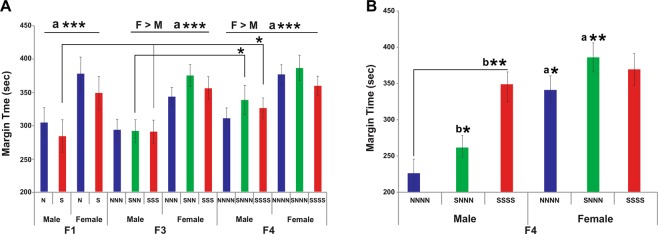
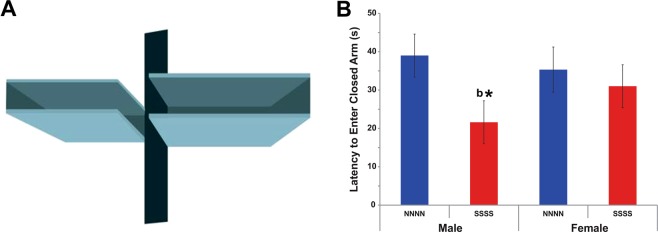
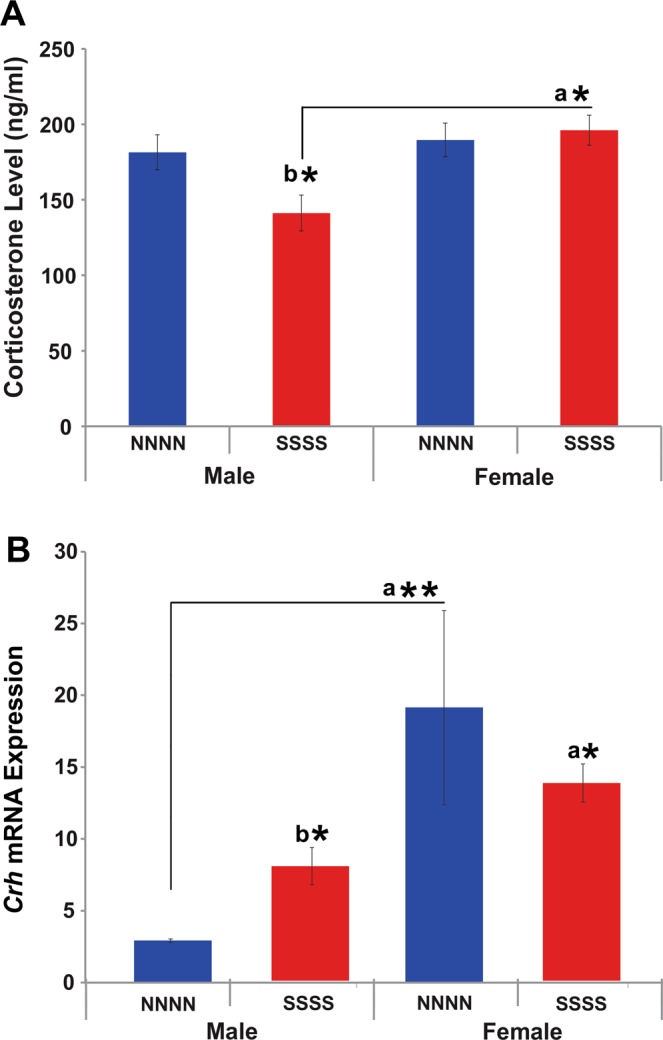
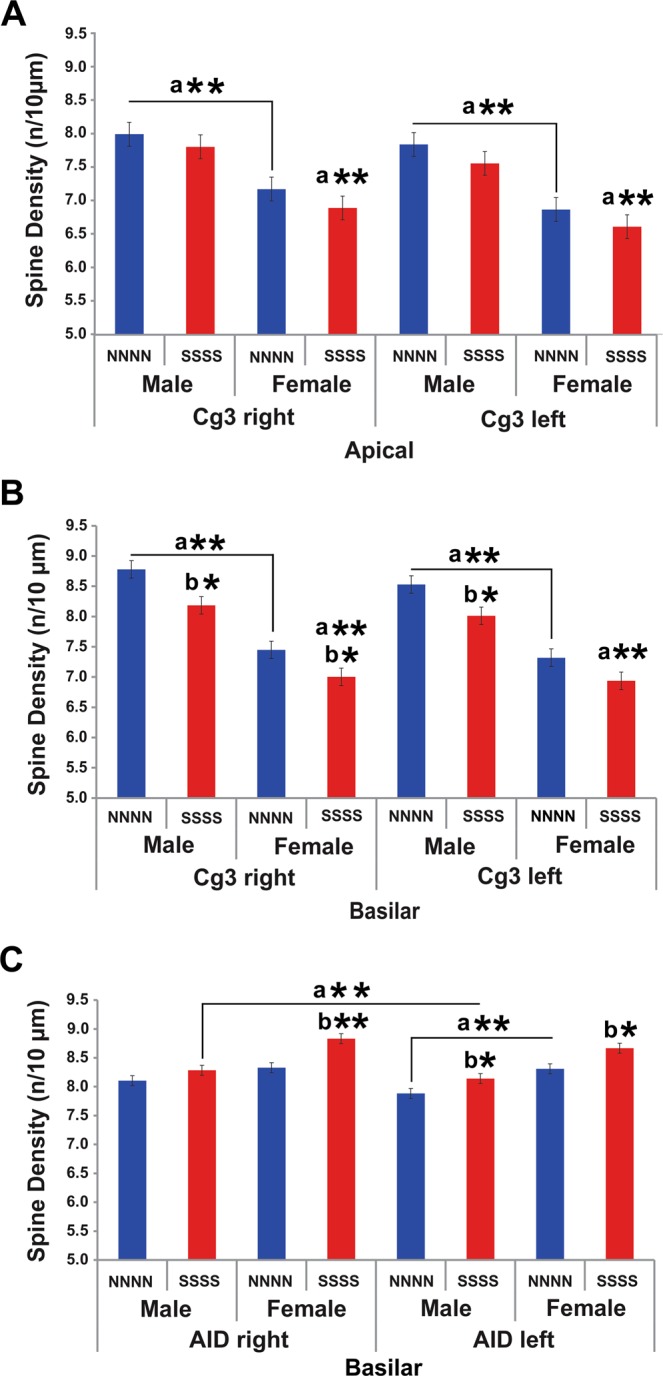
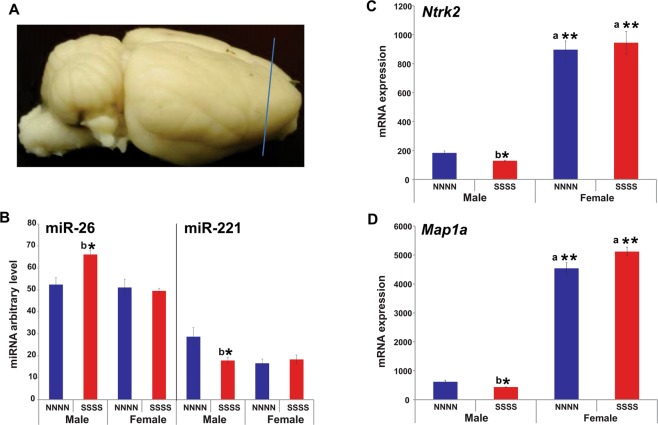
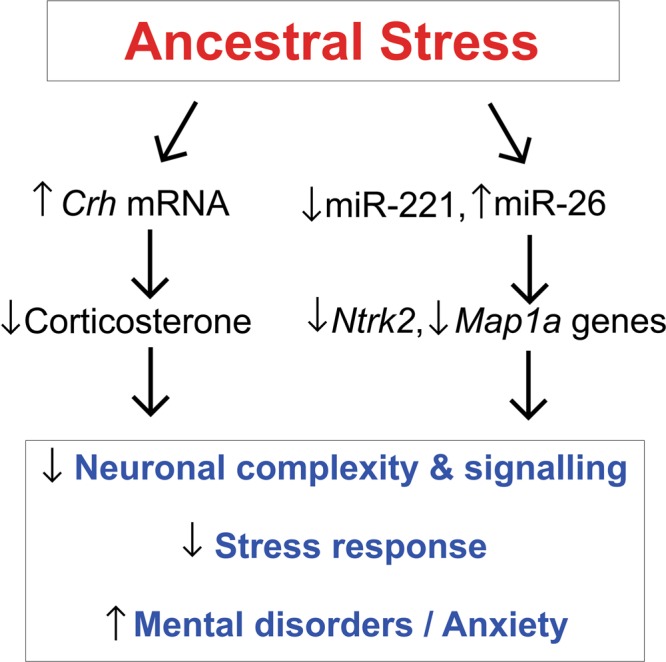
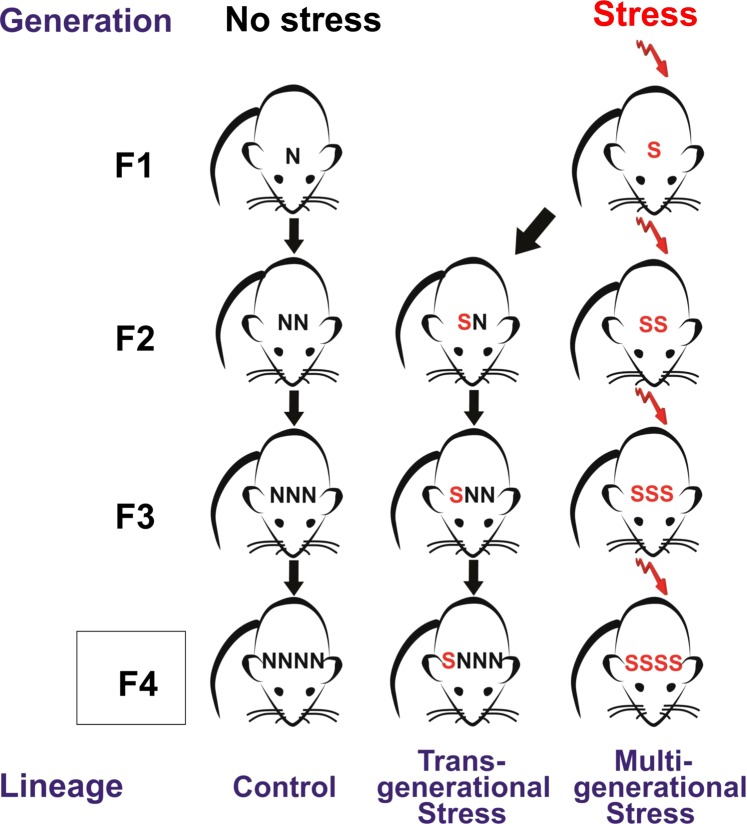
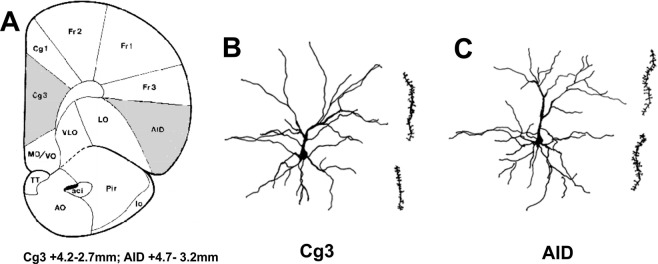
Experiences during early development are powerful determinants of lifetime mental health. Here we investigated if ancestral stress regulates the brain’s epigenetic memory to alter neuromorphology and emotionality in the remote F4 progeny. Pregnant female rat dams of the parental F0 generation were exposed to stress on gestational days 12–18. To generate a transgenerational stress lineage, their pregnant daughters (F1), grand-daughters (F2) and great-grand-daughters (F3) remained undisturbed. To generate a multigenerational stress lineage, pregnant dams of each generation (F1–F3) were stressed. A lineage of non-stress controls (F0–F3) was also produced. Multigenerational stress exceeded the impact of transgenerational stress by increasing anxiety-like behaviours and stress response in young and middle-aged F4 males but not females. Functional changes were accompanied by reduced spine density in the male medial prefrontal cortex with opposite effects in the orbital frontal cortex. Ancestral stress regulated cortical miR-221 and miR-26 expression and their target genes, thus downregulating ntrk2 and map1a genes in males while downregulating crh and upregulating map1a genes in females. These miRNA-dependent pathways are candidates for developmental programming of lifetime mental health. Thus, multigenerational stress in particular determines sexually dimorphic predisposition to stress vulnerability and generates a phenotype resembling symptoms of post-traumatic stress disorder.
Overview
The claims and statistics of this paper haven’t been checked yet.
Free: it reads the open-access text and checks the first 5 claims that cite a source we can check. Create a free account to check every claim.
Integrity signals
Registry
Cites
Statistics
Figures
Verification
Claims the paper makes
The claims and statistics of this paper haven’t been checked yet.
Free: it reads the open-access text and checks the first 5 claims that cite a source we can check. Create a free account to check every claim.
Claims other papers make about this one
Each is checked against this paper’s own text: does it say what the citing paper says it does?
In the citing paper
“In rodents, various stress paradigms can produce depressive and anxiety-like behaviours in multiple subsequent generations and is correlated with specific epigenetic marks hypothesised to elicit their effect through neurodevelopmental or endocrinological mechanisms.43,44”
From The role of epigenetics in psychological resilience (2021) · cites this paper as [43]
Self-check
Percentages, sums and reported differences re-computed from the paper’s own numbers.
The self-check needs the paper’s full text.
Citations
Cites
Differential expression analysis for sequence count data
Anders, S., & Huber, W. (2010) · Genome Biology · doi:10.1186/gb-2010-11-10-r106 · Cited by 15,581
Ultrastructural Characterization of the Lower Motor System in a Mouse Model of Krabbe Disease
Cappello, V., Marchetti, L., Parlanti, P., Landi, S., Tonazzini, I., Cecchini, M., Piazza, V., & Gemmi, M. (2016) · Scientific Reports · doi:10.1038/s41598-016-0001-8 · Cited by 13,097
Whiteford, H. A., Degenhardt, L., Rehm, J., Baxter, A. J., Ferrari, A. J., Erskine, H. E., Charlson, F. J., Norman, R. E., Flaxman, A. D., Johns, N., et al. (2013) · The Lancet · doi:10.1016/s0140-6736(13)61611-6 · Cited by 6,006
Fetal nutrition and cardiovascular disease in adult life
Barker, D. J. P., Godfrey, K. M., Gluckman, P. D., Harding, J. E., Owens, J. A., & Robinson, J. S. (1993) · The Lancet · doi:10.1016/0140-6736(93)91224-a · Cited by 2,753
Parental olfactory experience influences behavior and neural structure in subsequent generations
Dias, B. G., & Ressler, K. J. (2014) · Nature Neuroscience · doi:10.1038/nn.3594 · Cited by 1,338
Epigenetic transmission of the impact of early stress across generations
Franklin, T. B., Russig, H., Weiss, I. C., Gräff, J., Linder, N., Michalon, A., Vizi, S., & Mansuy, I. M. (2010) · Biological Psychiatry · doi:10.1016/j.biopsych.2010.05.036 · Cited by 1,125
Sex-Specific Programming of Offspring Emotionality after Stress Early in Pregnancy
Mueller, B. R., & Bale, T. L. (2008) · The Journal of Neuroscience · doi:10.1523/jneurosci.1424-08.2008 · Cited by 988
Prenatal stress, glucocorticoids and the programming of the brain
Welberg, L. A. M., & Seckl, J. R. (2001) · Journal of Neuroendocrinology · doi:10.1111/j.1365-2826.2001.00601.x · Cited by 928
Vallée, M., Mayo, W., Dellu, F., Le Moal, M., Simon, H., & Maccari, S. (1997) · The Journal of Neuroscience · doi:10.1523/jneurosci.17-07-02626.1997 · Cited by 775
Chronic stress alters dendritic morphology in rat medial prefrontal cortex
Cook, S. C., & Wellman, C. L. (2004) · Journal of Neurobiology · doi:10.1002/neu.20025 · Cited by 745
Effects of prenatal exposure to the Dutch famine on adult disease in later life: an overview
Roseboom, T. J., van der Meulen, J. H. P., Ravelli, A. C. J., Osmond, C., Barker, D. J. P., & Bleker, O. P. (2001) · Molecular and Cellular Endocrinology · doi:10.1016/s0303-7207(01)00721-3 · Cited by 642
A method for vibratome sectioning of Golgi–Cox stained whole rat brain
Gibb, R., & Kolb, B. (1998) · Journal of Neuroscience Methods · doi:10.1016/s0165-0270(97)00163-5 · Cited by 622
Self-citationOPEN‐FIELD BEHAVIOR IN THE RAT: WHAT DOES IT MEAN?*
Denenberg, V. H. (1969) · Annals of the New York Academy of Sciences · doi:10.1111/j.1749-6632.1969.tb12983.x · Cited by 582
Glover, V. (2011) · Journal of Child Psychology and Psychiatry · doi:10.1111/j.1469-7610.2011.02371.x · Cited by 569
Prenatal stress and brain development
Charil, A., Laplante, D. P., Vaillancourt, C., & King, S. (2010) · Brain Research Reviews · doi:10.1016/j.brainresrev.2010.06.002 · Cited by 559
Endocrine Disruptor Vinclozolin Induced Epigenetic Transgenerational Adult-Onset Disease
Anway, M. D., Leathers, C., & Skinner, M. K. (2006) · Endocrinology · doi:10.1210/en.2006-0640 · Cited by 555
Smiley, S., Nickerson, P. E., Comanita, L., Daftarian, N., El-Sehemy, A., Tsai, E. L. S., Matan-Lithwick, S., Yan, K., Thurig, S., Touahri, Y., et al. (2016) · Scientific Reports · doi:10.1038/srep24012 · Cited by 474
Lee, Y., & Davis, M. (1997) · The Journal of Neuroscience · doi:10.1523/jneurosci.17-16-06434.1997 · Cited by 457
Vamvakopoulos, N. C., & Chrousos, G. P. (1993) · Journal of Clinical Investigation · doi:10.1172/jci116782 · Cited by 422
Epigenetic programming of the stress response in male and female rats by prenatal restraint stress
Darnaudéry, M., & Maccari, S. (2008) · Brain Research Reviews · doi:10.1016/j.brainresrev.2007.11.004 · Cited by 412
Levels of anxiety and sources of stress in adults with autism
Gillott, A., & Standen, P. J. (2007) · Journal of Intellectual Disabilities · doi:10.1177/1744629507083585 · Cited by 359
MicroRNA Cluster 221-222 and Estrogen Receptor α Interactions in Breast Cancer
Di Leva, G., Gasparini, P., Piovan, C., Ngankeu, A., Garofalo, M., Taccioli, C., Iorio, M. V., Li, M., Volinia, S., Alder, H., et al. (2010) · JNCI: Journal of the National Cancer Institute · doi:10.1093/jnci/djq102 · Cited by 320
Transgenerational transmission of cortisol and PTSD risk
Yehuda, R., & Bierer, L. M. (2007) · Progress in Brain Research · doi:10.1016/s0079-6123(07)67009-5 · Cited by 306
Koehl, M., Darnaud�ry, M., Dulluc, J., Van Reeth, O., Moal, M. L., & Maccari, S. (1999) · Journal of Neurobiology · doi:10.1002/(sici)1097-4695(19990905)40:3<302::aid-neu3>3.0.co;2-7 · Cited by 303
Murmu, M. S., Salomon, S., Biala, Y., Weinstock, M., Braun, K., & Bock, J. (2006) · European Journal of Neuroscience · doi:10.1111/j.1460-9568.2006.05024.x · Cited by 278
Centrally released oxytocin mediates mating-induced anxiolysis in male rats
Waldherr, M., & Neumann, I. D. (2007) · Proceedings of the National Academy of Sciences · doi:10.1073/pnas.0705860104 · Cited by 261
TrkB Receptor Signalling: Implications in Neurodegenerative, Psychiatric and Proliferative Disorders
Gupta, V., You, Y., Gupta, V., Klistorner, A., & Graham, S. (2013) · International Journal of Molecular Sciences · doi:10.3390/ijms140510122 · Cited by 258
King, S., Dancause, K., Turcotte‐Tremblay, A., Veru, F., & Laplante, D. P. (2012) · Birth Defects Research Part C: Embryo Today: Reviews · doi:10.1002/bdrc.21026 · Cited by 232
MicroRNA networks direct neuronal development and plasticity
Olde Loohuis, N. F. M., Kos, A., Martens, G. J. M., Van Bokhoven, H., Nadif Kasri, N., & Aschrafi, A. (2012) · Cellular and Molecular Life Sciences · doi:10.1007/s00018-011-0788-1 · Cited by 222
Evidence for reduced experience-dependent dendritic spine plasticity in the aging prefrontal cortex
Bloss, E. B., Janssen, W. G., Ohm, D. T., Yuk, F. J., Wadsworth, S., Saardi, K. M., McEwen, B. S., & Morrison, J. H. (2011) · The Journal of Neuroscience · doi:10.1523/jneurosci.0839-11.2011 · Cited by 219
Bowman, R. E., MacLusky, N. J., Sarmiento, Y., Frankfurt, M., Gordon, M., & Luine, V. N. (2004) · Endocrinology · doi:10.1210/en.2003-1759 · Cited by 218
Early life stress in fathers improves behavioural flexibility in their offspring
Gapp, K., Soldado-Magraner, S., Alvarez-Sánchez, M., Bohacek, J., Vernaz, G., Shu, H., Franklin, T. B., Wolfer, D., & Mansuy, I. M. (2014) · Nature Communications · doi:10.1038/ncomms6466 · Cited by 173
Epigenetic Inheritance and the Intergenerational Transfer of Experience.
Harper, L. (2005) · Psychological Bulletin · doi:10.1037/0033-2909.131.3.340 · Cited by 170
Stress during development alters dendritic morphology in the nucleus accumbens and prefrontal cortex
Muhammad, A., Carroll, C., & Kolb, B. E. (2012) · Neuroscience · doi:10.1016/j.neuroscience.2012.04.041 · Cited by 166
Self-citationStress induces region specific alterations in microRNAs expression in mice
Rinaldi, A., Vincenti, S., De Vito, F., Bozzoni, I., Oliverio, A., Presutti, C., Fragapane, P., & Mele, A. (2010) · Behavioural Brain Research · doi:10.1016/j.bbr.2009.11.012 · Cited by 163
Yao, Y., Robinson, A. M., Zucchi, F. C., Robbins, J. C., Babenko, O., Kovalchuk, O., Kovalchuk, I., Olson, D. M., & Metz, G. A. (2014) · BMC Medicine · doi:10.1186/s12916-014-0121-6 · Cited by 148
Self-citationSamaco, R. C., Mandel-Brehm, C., McGraw, C. M., Shaw, C. A., McGill, B. E., & Zoghbi, H. Y. (2012) · Nature Genetics · doi:10.1038/ng.1066 · Cited by 145
Early life programming as a target for prevention of child and adolescent mental disorders
Lewis, A. J., Galbally, M., Gannon, T., & Symeonides, C. (2014) · BMC Medicine · doi:10.1186/1741-7015-12-33 · Cited by 132
miRPathDB: a new dictionary on microRNAs and target pathways
Backes, C., Kehl, T., Stöckel, D., Fehlmann, T., Schneider, L., Meese, E., Lenhof, H.-P., & Keller, A. (2017) · Nucleic Acids Research · doi:10.1093/nar/gkw926 · Cited by 128
microRNA-Seq reveals cocaine-regulated expression of striatal microRNAs
Eipper-Mains, J. E., Kiraly, D. D., Palakodeti, D., Mains, R. E., Eipper, B. A., & Graveley, B. R. (2011) · RNA · doi:10.1261/rna.2775511 · Cited by 127
Kim, H. K., Capaldi, D. M., Pears, K. C., Kerr, D. C. R., & Owen, L. D. (2009) · Criminal Behaviour and Mental Health · doi:10.1002/cbm.708 · Cited by 126
Mychasiuk, R., Gibb, R., & Kolb, B. (2012) · Synapse · doi:10.1002/syn.21512 · Cited by 125
Self-citationTripodi, M., Evers, J. F., Mauss, A., Bate, M., & Landgraf, M. (2008) · PLoS Biology · doi:10.1371/journal.pbio.0060260 · Cited by 124
MicroRNA: Small RNA mediators of the brains genomic response to environmental stress
Hollins, S. L., & Cairns, M. J. (2016) · Progress in Neurobiology · doi:10.1016/j.pneurobio.2016.06.005 · Cited by 117
Chronic stress alters neural activity in medial prefrontal cortex during retrieval of extinction
Wilber, A. A., Walker, A. G., Southwood, C. J., Farrell, M. R., Lin, G. L., Rebec, G. V., & Wellman, C. L. (2011) · Neuroscience · doi:10.1016/j.neuroscience.2010.10.070 · Cited by 115
Activity-Driven Dendritic Remodeling Requires Microtubule-Associated Protein 1A
Szebenyi, G., Bollati, F. A., Bisbal, M., Sheridan, S., Faas, L., Wray, R., Haferkamp, S., Nguyen, S., Cáceres, A., & Brady, S. T. (2005) · Current Biology · doi:10.1016/j.cub.2005.08.069 · Cited by 113
Regulation of microRNA expression and function by nuclear receptor signaling
Yang, Z., & Wang, L. (2011) · Cell & Bioscience · doi:10.1186/2045-3701-1-31 · Cited by 109
miR-26a and miR-384-5p are required for LTP maintenance and spine enlargement
Gu, Q.-H., Yu, D., Hu, Z., Liu, X., Yang, Y., Luo, Y., Zhu, J., & Li, Z. (2015) · Nature Communications · doi:10.1038/ncomms7789 · Cited by 107
Rothbaum, B. O., Kearns, M. C., Reiser, E., Davis, J. S., Kerley, K. A., Rothbaum, A. O., Mercer, K. B., Price, M., Houry, D., & Ressler, K. J. (2014) · The Journal of Clinical Psychiatry · doi:10.4088/jcp.13m08715 · Cited by 98
Loss of hypothalamic corticotropin-releasing hormone markedly reduces anxiety behaviors in mice
Zhang, R., Asai, M., Mahoney, C. E., Joachim, M., Shen, Y., Gunner, G., & Majzoub, J. A. (2017) · Molecular Psychiatry · doi:10.1038/mp.2016.136 · Cited by 97
Transgenerational effects of early environmental insults on aging and disease incidence
Ambeskovic, M., Roseboom, T. J., & Metz, G. A. S. (2017) · Neuroscience & Biobehavioral Reviews · doi:10.1016/j.neubiorev.2017.08.002 · Cited by 87
Self-citationTransgenerational programming of maternal behaviour by prenatal stress
Ward, I. D., Zucchi, F. C., Robbins, J. C., Falkenberg, E. A., Olson, D. M., Benzies, K., & Metz, G. A. (2013) · BMC Pregnancy and Childbirth · doi:10.1186/1471-2393-13-s1-s9 · Cited by 73
Self-citationIqbal, M., Moisiadis, V. G., Kostaki, A., & Matthews, S. G. (2012) · Endocrinology · doi:10.1210/en.2012-1054 · Cited by 72
Muhammad, A., & Kolb, B. (2011) · Developmental Neuroscience · doi:10.1159/000324744 · Cited by 71
Self-citationHamada, N., Fujita, Y., Kojima, T., Kitamoto, A., Akao, Y., Nozawa, Y., & Ito, M. (2012) · Neurochemistry International · doi:10.1016/j.neuint.2012.03.010 · Cited by 69
The Pharmacogenetics of Lithium Response Depends upon Clinical Co-Morbidity
Bremer, T. M., Diamond, C., McKinney, R., Shehktman, T., Barrett, T. B., Herold, C., & Kelsoe, J. R. (2007) · Molecular Diagnosis & Therapy · doi:10.1007/bf03256238 · Cited by 59
Long, N. M., Ford, S. P., & Nathanielsz, P. W. (2013) · American Journal of Obstetrics and Gynecology · doi:10.1016/j.ajog.2012.12.014 · Cited by 59
Environmental intervention as a therapy for adverse programming by ancestral stress
McCreary, J. K., Erickson, Z. T., Hao, Y., Ilnytskyy, Y., Kovalchuk, I., & Metz, G. A. S. (2016) · Scientific Reports · doi:10.1038/srep37814 · Cited by 59
Self-citationDendrite remodeling in development and disease
Emoto, K. (2011) · Development, Growth & Differentiation · doi:10.1111/j.1440-169x.2010.01242.x · Cited by 57
Regulatory networks between neurotrophins and miRNAs in brain diseases and cancers
Shi, J. (2015) · Acta Pharmacologica Sinica · doi:10.1038/aps.2014.135 · Cited by 57
Mychasiuk, R., Gibb, R. L., & Kolb, B. E. (2011) · Brain Research · doi:10.1016/j.brainres.2011.07.023 · Cited by 56
Self-citationStress transgenerationally programs metabolic pathways linked to altered mental health
Kiss, D., Ambeskovic, M., Montina, T., & Metz, G. A. S. (2016) · Cellular and Molecular Life Sciences · doi:10.1007/s00018-016-2272-4 · Cited by 54
Self-citationButler, R. K., Oliver, E. M., Sharko, A. C., Parilla-Carrero, J., Kaigler, K. F., Fadel, J. R., & Wilson, M. A. (2016) · Behavioural Brain Research · doi:10.1016/j.bbr.2016.01.051 · Cited by 47
MicroRazerS: rapid alignment of small RNA reads
Emde, A.-K., Grunert, M., Weese, D., Reinert, K., & Sperling, S. R. (2010) · Bioinformatics · doi:10.1093/bioinformatics/btp601 · Cited by 43
Erickson, Z. T., Falkenberg, E. A., & Metz, G. A. S. (2014) · PLoS ONE · doi:10.1371/journal.pone.0092132 · Cited by 40
Self-citationAmbeskovic, M., Soltanpour, N., Falkenberg, E. A., Zucchi, F. C. R., Kolb, B., & Metz, G. A. S. (2016) · Cerebral Cortex · doi:10.1093/cercor/bhw063 · Cited by 40
Self-citationNätt, D., Barchiesi, R., Murad, J., Feng, J., Nestler, E. J., Champagne, F. A., & Thorsell, A. (2017) · Scientific Reports · doi:10.1038/s41598-017-10803-2 · Cited by 40
A Deletion in Tropomyosin-Related Kinase B and the Development of Human Anxiety
Ernst, C., Wanner, B., Brezo, J., Vitaro, F., Tremblay, R. E., & Turecki, G. (2010) · Biological Psychiatry · doi:10.1016/j.biopsych.2010.10.008 · Cited by 30
Gai, Z., Li, K., Sun, H.-R., She, X., Cui, B., & Wang, R. (2016) · Journal of the Neurological Sciences · doi:10.1016/j.jns.2016.07.049 · Cited by 29
Evidence for Ancestral Programming of Resilience in a Two-Hit Stress Model
Faraji, J., Soltanpour, N., Ambeskovic, M., Zucchi, F. C. R., Beaumier, P., Kovalchuk, I., & Metz, G. A. S. (2017) · Frontiers in Behavioral Neuroscience · doi:10.3389/fnbeh.2017.00089 · Cited by 24
Self-citationDeo, A. J., Huang, Y.-Y., Hodgkinson, C. A., Xin, Y., Oquendo, M. A., Dwork, A. J., Arango, V., Brent, D. A., Goldman, D., Mann, J. J., et al. (2013) · Psychiatric Genetics · doi:10.1097/ypg.0b013e32835d7028 · Cited by 20
Skelin, I., Needham, M., Molina, L., Metz, G. A. S., & Gruber, A. J. (2015) · Neuroscience · doi:10.1016/j.neuroscience.2015.01.009 · Cited by 18
Self-citationMitotic sympathetic neuroblasts initiate axonal pathfindingin vivo
Wolf, E., Black, I. B., & DiCicco-Bloom, E. M. (1999) · Journal of Neurobiology · doi:10.1002/(sici)1097-4695(19990905)40:3<366::aid-neu8>3.0.co;2-b · Cited by 12
Cited by
The role of epigenetics in psychological resilience
Smeeth, D., Beck, S., Karam, E. G., & Pluess, M. (2021) · The Lancet Psychiatry · doi:10.1016/s2215-0366(20)30515-0 · Cited by 108
Aging, Social Distancing, and COVID-19 Risk: Who is more Vulnerable and Why?
Faraji, J., & Metz, G. A. S. (2021) · Aging and Disease · doi:10.14336/ad.2021.0319 · Cited by 47
Self-citationSex-specific stress and biobehavioral responses to human experimenters in rats
Faraji, J., Ambeskovic, M., Sauter, N., Toly, J., Whitten, K., Lopes, N. A., Olson, D. M., & Metz, G. A. S. (2022) · Frontiers in Neuroscience · doi:10.3389/fnins.2022.965500 · Cited by 40
Self-citationOn the role of epigenetic modifications of HPA axis in posttraumatic stress disorder and resilience
Khan, Z., Messiri, N. E., Iqbal, E., Hassan, H., Tanweer, M. S., Sadia, S. R., Taj, M., Zaidi, U., Yusuf, K., Syed, N. I., et al. (2025) · Journal of Neurophysiology · doi:10.1152/jn.00345.2024 · Cited by 32
Developmental Stressors Induce Innate Immune Memory in Microglia and Contribute to Disease Risk
Carloni, E., Ramos, A., & Hayes, L. N. (2021) · International Journal of Molecular Sciences · doi:10.3390/ijms222313035 · Cited by 32
“This topic has been extensively reviewed elsewhere [120,123,125,126].”
Background
Metadata
- Authors
- Ambeskovic, M., Babenko, O., Ilnytskyy, Y., Kovalchuk, I., Kolb, B., & Metz, G. A. S.
- Affiliations
- University of Lethbridge (CA)
- Corresponding author
- Ambeskovic, Mirela
- Metz, Gerlinde A. S.
- Venue
- Scientific Reports
- Published
- 2019-04-23
- Volume
- 9
- Issue
- 1
- Pages
- 6389-6389
- ISSN
- 2045-2322 (ISSN-L)
- PMC
- PMC6476877
- OpenAlex
- W2939592094
- Semantic Scholar
- 23fd533dd6d9f627a4585ffc8da8de35fbd662a5
- Cited by
- 36
- References
- 72
- Citations by year
- 2026: 1 · 2025: 6 · 2024: 5 · 2023: 4 · 2022: 5 · 2021: 12 · 2020: 3
- FWCI
- 3.27
- Type
- journal article
- Language
- en
- Open access
- gold
- doi.org
- Licence
- cc-by
- creativecommons.org/licenses/by/4.0 (tdm)
- creativecommons.org/licenses/by/4.0 (vor)
- Locations
- Scientific Reports (publishedVersion, cc-by)
- Europe PMC (PubMed Central) (publishedVersion, cc-by)
- PubMed Central (publishedVersion, cc-by)
- PubMed (publishedVersion)
- DOAJ (DOAJ: Directory of Open Access Journals) (submittedVersion)
- Funders
- Alberta Innovates
- Canadian Institutes of Health Research (363195, 158581, 158581_1)
- Natural Sciences and Engineering Research Council of Canada (#363195)
- Topics
- Life Sciences › Neuroscience › Behavioral Neuroscience › Stress Responses and Cortisol
- Health Sciences › Medicine › Public Health, Environmental and Occupational Health › Maternal Mental Health During Pregnancy and Postpartum
- Health Sciences › Medicine › Pediatrics, Perinatology and Child Health › Birth, Development, and Health
- Keywords
- epigenetic memory, medial prefrontal cortex, orbitofrontal cortex, dendritic spine density, anxiety-like behavior, stress response, sex differences, miR-221, miR-26, NTRK2, MAP1A, corticotropin-releasing factor, developmental programming, post-traumatic stress disorder, prenatal stress
- MeSH terms
- Animals, Anxiety, Behavior, Animal, Brain, Corticosterone, Female, Frontal Lobe, Male, Mental Health, RNA, Messenger, Stress, Psychological, Maze Learning, Rats, Long-Evans, MicroRNAs, Epigenesis, Genetic, Dendritic Spines
About these checks
Registry, retraction, Cites and statistics results are computed, not judged, with one exception: a printed reference that no index lists is read once by a model before it counts as a citation error. Claims are extracted by a model and kept only when their quote appears verbatim in the text; each cited source is then checked, with a model’s help, for whether it says what the claim relies on. Those verdicts can be wrong — read the claim’s quote and the cited source before relying on one.
Statistics and arithmetic are recomputed, not judged.
Confidence bands are shown only for fields calibrated on our annotated test set. None is calibrated yet, so no band is shown.
What counts as a claim ›How we measure confidence ›How we check this ›
Are you an author, or do you see a problem with this page? Request a review
Data sources
Bibliographic data: Semantic Scholar, OpenAlex, Crossref.
Contains information from the Semantic Scholar Academic Graph Datasets, made available under the ODC Attribution License (ODC-BY 1.0).
Semantic Scholar’s data is described in: Kinney, R., et al. (2023). The Semantic Scholar Open Data Platform. arXiv:2301.10140.
