

Role of adipose tissue GLP-1R expression in metabolic improvement after bariatric surgery in patients with type 2 diabetes
Open accessThe DOI matches its Crossref record; 40 of the 40 references it cites were found in a registry or an index.
Abstract
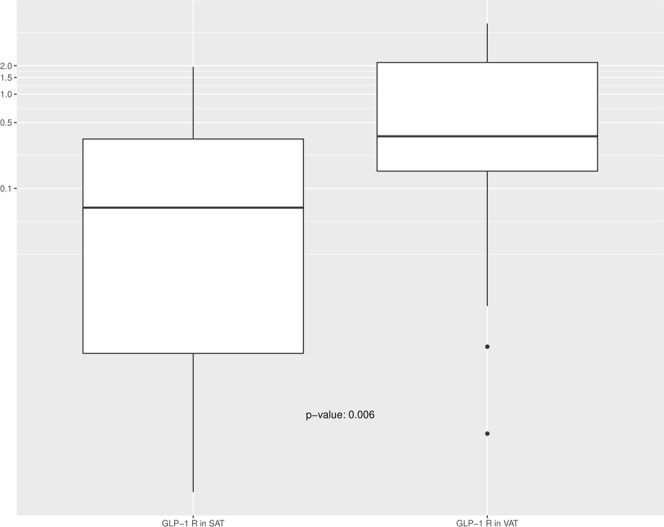
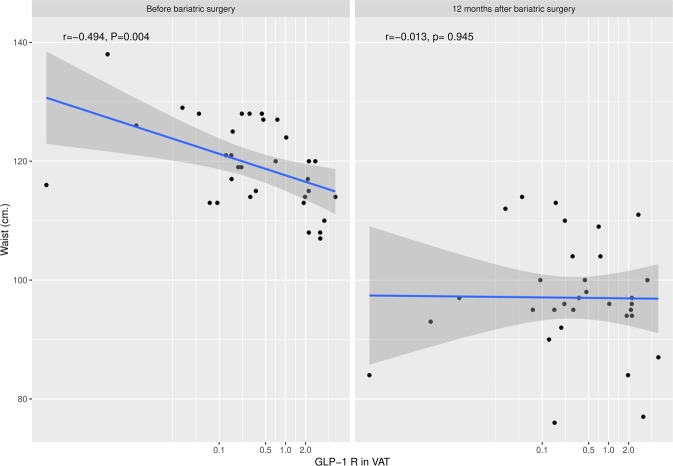
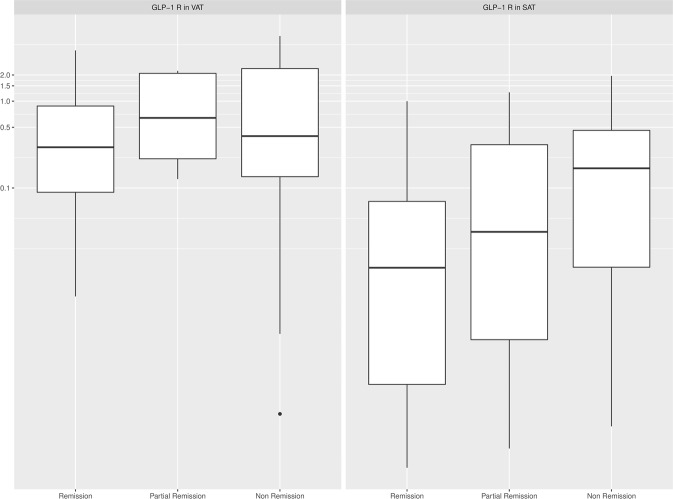
We aimed to explore the relationship between GLP-1 receptor (GLP-1R) expression in adipose tissue (AT) and incretin secretion, glucose homeostasis and weight loss, in patients with morbid obesity and type 2 diabetes undergoing bariatric surgery. RNA was extracted from subcutaneous (SAT) and visceral (VAT) AT biopsies from 40 patients randomized to metabolic gastric bypass, sleeve gastrectomy or greater curvature plication. Biochemical parameters, fasting plasma insulin, glucagon and area under the curve (AUC) of GLP-1 following a standard meal test were determined before and 1 year after bariatric surgery. GLP-1R expression was higher in VAT than in SAT. GLP-1R expression in VAT correlated with weight (r = −0.453, p = 0.008), waist circumference (r = −0.494, p = 0.004), plasma insulin (r = −0.466, p = 0.007), and systolic blood pressure (BP) (r = −0.410, p = 0.018). At 1 year, GLP-1R expression in VAT was negatively associated with diastolic BP (r = −0.361, p = 0.039) and, following metabolic gastric bypass, with the increase of GLP-1 AUC, (R 2 = 0.46, p = 0.038). Finally, GLP-1R in AT was similar independently of diabetes outcomes and was not associated with weight loss after surgery. Thus, GLP-1R expression in AT is of limited value to predict incretin response and does not play a role in metabolic outcomes after bariatric surgery.
Overview
The claims and statistics of this paper haven’t been checked yet.
Free: it reads the open-access text and checks the first 5 claims that cite a source we can check. Create a free account to check every claim.
Integrity signals
Registry
Cites
Statistics
Figures
Verification
Claims the paper makes
The claims and statistics of this paper haven’t been checked yet.
Free: it reads the open-access text and checks the first 5 claims that cite a source we can check. Create a free account to check every claim.
Claims other papers make about this one
Each is checked against this paper’s own text: does it say what the citing paper says it does?
The source backs part of the claim, not all of it — or backs it for a different population, condition or comparison.
In the citing paper
“GLP-1R expression in VAT has unquestionably been linked to the degree of IR and with the greatest improvement in insulin sensitivity following biliopancreatic diversion surgery, even though GLP-1R expression in the SAT depot did not appear to differ considerably according to different degrees of IR [68].”
From Adipose Tissue: A Novel Target of the Incretin Axis? A Paradigm Shift in Obesity-Linked Insulin Resistance (2024) · cites this paper as [68]
Experimental — accuracy not yet measured
Self-check
Percentages, sums and reported differences re-computed from the paper’s own numbers.
The self-check needs the paper’s full text.
Citations
Cites
The Physiology of Glucagon-like Peptide 1
Holst, J. J. (2007) · Physiological Reviews · doi:10.1152/physrev.00034.2006 · Cited by 3,371
Subcutaneous and visceral adipose tissue: their relation to the metabolic syndrome
Wajchenberg, B. L. (2000) · Endocrine Reviews · doi:10.1210/edrv.21.6.0415 · Cited by 2,961
Subcutaneous and visceral adipose tissue: Structural and functional differences
Ibrahim, M. M. (2010) · Obesity Reviews · doi:10.1111/j.1467-789x.2009.00623.x · Cited by 2,238
Human epicardial adipose tissue is a source of inflammatory mediators
Mazurek, T., Zhang, L., Zalewski, A., Mannion, J. D., Diehl, J. T., Arafat, H., Sarov-Blat, L., O’Brien, S., Keiper, E. A., Johnson, A. G., et al. (2003) · Circulation · doi:10.1161/01.cir.0000099542.57313.c5 · Cited by 1,966
The glycemic index: methodology and clinical implications
Wolever, T., Jenkins, D., Jenkins, A., & Josse, R. (1991) · The American Journal of Clinical Nutrition · doi:10.1093/ajcn/54.5.846 · Cited by 1,168
How do we define cure of diabetes?
Buse, J. B., Caprio, S., Cefalu, W. T., Ceriello, A., Del Prato, S., Inzucchi, S. E., McLaughlin, S., Phillips, G. L., Robertson, R. P., Rubino, F., et al. (2009) · Diabetes Care · doi:10.2337/dc09-9036 · Cited by 1,003
Laferrère, B., Heshka, S., Wang, K., Khan, Y., McGinty, J., Teixeira, J., Hart, A. B., & Olivan, B. (2007) · Diabetes Care · doi:10.2337/dc06-1549 · Cited by 532
Anti-Inflammatory Effects of GLP-1-Based Therapies beyond Glucose Control
Lee, Y.-S., & Jun, H.-S. (2016) · Mediators of Inflammation · doi:10.1155/2016/3094642 · Cited by 530
Mechanisms of diabetes improvement following bariatric/metabolic surgery
Batterham, R. L., & Cummings, D. E. (2016) · Diabetes Care · doi:10.2337/dc16-0145 · Cited by 376
Still, C. D., Wood, G. C., Benotti, P., Petrick, A. T., Gabrielsen, J., Strodel, W. E., Ibele, A., Seiler, J., Irving, B. A., Celaya, M. P., et al. (2014) · The Lancet Diabetes & Endocrinology · doi:10.1016/s2213-8587(13)70070-6 · Cited by 350
Cited by
Chait, A., & den Hartigh, L. J. (2020) · Frontiers in Cardiovascular Medicine · doi:10.3389/fcvm.2020.00022 · Cited by 1,529
“While initially described as being devoid of GLP-1 receptors (584), it has now been confirmed that adipocytes express the GLP-1 receptor (585, 586).”
BackgroundNauck, M. A., Quast, D. R., Wefers, J., & Pfeiffer, A. F. H. (2021) · Diabetes, Obesity and Metabolism · doi:10.1111/dom.14496 · Cited by 388
Revisiting the Complexity of GLP-1 Action from Sites of Synthesis to Receptor Activation
McLean, B. A., Wong, C. K., Campbell, J. E., Hodson, D. J., Trapp, S., & Drucker, D. J. (2021) · Endocrine Reviews · doi:10.1210/endrev/bnaa032 · Cited by 289
Antidiabetic agents as a novel treatment for Alzheimer’s and Parkinson’s disease
Nowell, J., Blunt, E., Gupta, D., & Edison, P. (2023) · Ageing Research Reviews · doi:10.1016/j.arr.2023.101979 · Cited by 179
“GLP-1 exerts influence on lipogenic and lipolytic activity and improves glucose uptake in the adipose tissue (Ejarque et al., 2019), reduces albumin excretion and natriuresis in the kidney, and upregulates glycogen synthesis and glucose oxidation in the muscle.”
BackgroundAnti-Inflammatory Effects of GLP-1 Receptor Activation in the Brain in Neurodegenerative Diseases
Diz-Chaves, Y., Mastoor, Z., Spuch, C., González-Matías, L. C., & Mallo, F. (2022) · International Journal of Molecular Sciences · doi:10.3390/ijms23179583 · Cited by 148
Adipose Tissue Dysfunction in Polycystic Ovary Syndrome
Bril, F., Ezeh, U., Amiri, M., Hatoum, S., Pace, L., Chen, Y.-H., Bertrand, F., Gower, B., & Azziz, R. (2023) · The Journal of Clinical Endocrinology & Metabolism · doi:10.1210/clinem/dgad356 · Cited by 123
Molecular mechanisms by which GLP-1 RA and DPP-4i induce insulin sensitivity
Yaribeygi, H., Sathyapalan, T., & Sahebkar, A. (2019) · Life Sciences · doi:10.1016/j.lfs.2019.116776 · Cited by 102
Modulation of Adipocyte Metabolism by Microbial Short-Chain Fatty Acids
May, K. S., & den Hartigh, L. J. (2021) · Nutrients · doi:10.3390/nu13103666 · Cited by 107
“White adipose tissue has been shown to express GLP-1 receptors in humans, and was inversely correlated with body weight and waist circumference in people with T2D and obesity [168].”
BackgroundGlucagon-Like Peptide-1 (GLP-1) in the Integration of Neural and Endocrine Responses to Stress
Diz-Chaves, Y., Herrera-Pérez, S., González-Matías, L. C., Lamas, J. A., & Mallo, F. (2020) · Nutrients · doi:10.3390/nu12113304 · Cited by 84
Yin, S., Hong, J., Sha, T., Chen, Z., Guo, Y., Li, C., & Liu, Y. (2019) · Clinical Therapeutics · doi:10.1016/j.clinthera.2019.06.011 · Cited by 75
The effects of GLP-1 agonists on musculoskeletal health and orthopedic care
Gatto, A., Liu, K., Milan, N., & Wong, S. (2025) · Current Reviews in Musculoskeletal Medicine · doi:10.1007/s12178-025-09978-3 · Cited by 55
“Secreted from intestinal L-cells in response to food ingestion, GLP-1 enhances glucose-dependent insulin secretion while suppressing glucagon release, thereby promoting effective glycemic control [ 14– 16].”
Direct effects of glucagon on glucose uptake and lipolysis in human adipocytes
Pereira, M. J., Thombare, K., Sarsenbayeva, A., Kamble, P. G., Almby, K., Lundqvist, M., & Eriksson, J. W. (2020) · Molecular and Cellular Endocrinology · doi:10.1016/j.mce.2019.110696 · Cited by 54
Qi, L., Gröger, M., Sharma, A., Goswami, I., Chen, E., Zhong, F., Ram, A., Healy, K. E., Hsiao, E. C., Willenbring, H., et al. (2024) · Nature Communications · doi:10.1038/s41467-024-52258-w · Cited by 54
“Moreover, in contrastto other metabolically active cells suchas adipocytes 40,41 , whether GLP1R is expressed at relevant levels and metabolically active in hepatocytes is controversial 42 .”
BackgroundMethodCastro‐Barquero, S., Casas, R. M., Rimm, E. B., Tresserra‐Rimbau, A., Romaguera, D., Martínez, J. A., Salas‐Salvadó, J., Martínez‐González, M. Á., Vidal, J., Ruiz‐Canela, M., et al. (2023) · Molecular Nutrition & Food Research · doi:10.1002/mnfr.202200264 · Cited by 46
Oliveira, F. C. B., Bauer, E. J., Ribeiro, C. M., Pereira, S. A., Beserra, B. T. S., Wajner, S. M., Maia, A. L., Neves, F. A. R., Coelho, M. S., & Amato, A. A. (2022) · Frontiers in Endocrinology · doi:10.3389/fendo.2021.803363 · Cited by 30
Liu, F., Yang, Q., Zhang, H., Zhang, Y., Yang, G., Ban, B., Li, Y., & Zhang, M. (2022) · PLOS ONE · doi:10.1371/journal.pone.0270899 · Cited by 30
“Real-time PCR and immunofluorescence results have shown that the GLP-1 receptor is present and more abundant in VAT and EAT than in SAT [11].”
BackgroundMethodVaittinen, M., Ilha, M., Herbers, E., Wagner, A., Virtanen, K. A., Pietiläinen, K. H., Pirinen, E., & Pihlajamäki, J. (2023) · Diabetes Research and Clinical Practice · doi:10.1016/j.diabres.2023.110635 · Cited by 33
Visceral Adiposity and Cardiometabolic Risk: Clinical Insights and Assessment
Shetty, S., Suvarna, R., Bhattacharya, S., & Seetharaman, K. (2025) · Cardiology in Review · doi:10.1097/crd.0000000000000984 · Cited by 40
Dongdem, J. T., Etornam, A. E., Beletaa, S., Alidu, I., Kotey, H., & Wezena, C. A. (2024) · Advances in Pharmacological and Pharmaceutical Sciences · doi:10.1155/2024/2005589 · Cited by 26
Voros, C., Chatzinikolaou, F. G., Papapanagiotou, I., Polykalas, S., Mavrogianni, D., Koulakmanidis, A.-M., Athanasiou, D., Kanaka, V., Bananis, K., Athanasiou, A. I., et al. (2026) · International Journal of Molecular Sciences · doi:10.3390/ijms27020759 · Cited by 35
“This indicates that it is not only located in metabolic organs [5].”
De Fano, M., Malara, M., Vermigli, C., & Murdolo, G. (2024) · International Journal of Molecular Sciences · doi:10.3390/ijms25168650 · Cited by 17
Lymperopoulos, A., Altsman, V. L., & Stoicovy, R. A. (2025) · International Journal of Molecular Sciences · doi:10.3390/ijms26157239 · Cited by 27
Reed, J., Bain, S. C., & Kanamarlapudi, V. (2024) · Diabetes Metabolic Syndrome and Obesity · doi:10.2147/dmso.s415934 · Cited by 24
“32 In Parkinson’s disease, nigrostriatal neurons undergo cell death and GLP-1R is expressed in these neurons.”
Patil, M., Casari, I., Warne, L. N., & Falasca, M. (2024) · Biomedicine & Pharmacotherapy · doi:10.1016/j.biopha.2024.116245 · Cited by 12
The dual challenge of diabesity: pathophysiology, management, and future directions
Sindhwani, R., Bora, K. S., & Hazra, S. (2024) · Naunyn-Schmiedeberg s Archives of Pharmacology · doi:10.1007/s00210-024-03713-4 · Cited by 21
“Evidences suggest that the hormonal and metabolic changes following surgery, such as enhanced GLP-1 secretion, may have direct cardioprotective effects, offering an additional layer of benefit beyond weight loss (Ejarque et al. 2019).”
Basdas, R., Martínez-Cereijo, J. M., Fernández, Á. L., Reija, L., Cabaleiro, A., Bravo, S. B., González‐Juanatey, J. R., & Eirás, S. (2025) · JACC Basic to Translational Science · doi:10.1016/j.jacbts.2025.03.009 · Cited by 16
Possible role of type 1 and type 2 taste receptors on obesity-induced inflammation
Koh, G. Y., Rowling, M. J., & Pritchard, S. K. (2022) · Nutrition Reviews · doi:10.1093/nutrit/nuac007 · Cited by 10
Do anti-obesity medical treatments have a direct effect on adipose tissue?
Vergès, B. L. (2024) · Annales d Endocrinologie · doi:10.1016/j.ando.2024.05.021 · Cited by 10
Subcutaneous adipose tissue and skeletal muscle mitochondria following weight loss
van der Kolk, B. W., Pirinen, E., Nicoll, R., Pietiläinen, K. H., & Heinonen, S. (2024) · Trends in Endocrinology and Metabolism · doi:10.1016/j.tem.2024.08.002 · Cited by 10
Lorza‐Gil, E., Strauß, O., Ziegler, E., Kansy, K., Katschke, M.-T., Rahimi, G., Neuscheler, D., Sandforth, L., Sandforth, A., Sancar, G., et al. (2024) · Molecular Metabolism · doi:10.1016/j.molmet.2024.102067 · Cited by 12
Kruglikov, I. L. (2025) · Journal of Cosmetic Dermatology · doi:10.1111/jocd.70584 · Cited by 8
Chalmers, K. A., Cousins, S., Blazeby, J. M., & the By‐Band‐Sleeve Trial Management Group (2024) · Obesity Reviews · doi:10.1111/obr.13718 · Cited by 7
Pal, B., & Chattopadhyay, M. (2024) · Journal of Diabetology · doi:10.4103/jod.jod_117_23 · Cited by 8
Mamontova, E. D., Michurina, S. S., Stafeev, I., Sorkina, E., Sklyanik, I. A., Koksharova, E., Menshikov, M. Y., Shestakova, M. V., & Parfyonova, Y. V. (2021) · Biochemistry (Moscow) · doi:10.1134/s000629792103010x · Cited by 5
Activation of cyclooxygenase-2 signaling mediates liraglutide-induced adipose lipolytic activity
Li, J., Wu, H., Ma, W., Yuan, T., Chen, X., & Pan, Y. (2025) · European Journal of Pharmacology · doi:10.1016/j.ejphar.2025.178133 · Cited by 5
Pancreatic GLP-1r binding potential is reduced in insulin-resistant pigs
Malbert, C., Chauvin, A., Horowitz, M., & Jones, K. L. (2020) · BMJ Open Diabetes Research & Care · doi:10.1136/bmjdrc-2020-001540 · Cited by 4
Clinical and Radiological Fusion: A New Frontier in Predicting Post-Transplant Diabetes Mellitus
Budhiraja, P., Smith, B. H., Kukla, A., Kline, T. L., Korfiatis, P. D., Stegall, M. D., Jadlowiec, C. C., Cheungpasitporn, W., Wadei, H. M., Kudva, Y. C., et al. (2025) · Transplant International · doi:10.3389/ti.2025.14377 · Cited by 3
“Real-time Polymerase Chain Reaction and immuno fl uorescence studies show that GLP-1 receptors are more abundant in VAT and epicardial adipose tissue than in SAT [29].”
Regulation of Human Sortilin Alternative Splicing by Glucagon-like Peptide-1 (GLP1) in Adipocytes
Lui, A., Patel, R. S., Krause‐Hauch, M., Sparks, R. P., & Patel, N. A. (2023) · International Journal of Molecular Sciences · doi:10.3390/ijms241814324 · Cited by 4
“GLP1 receptor (GLP1R) expression is higher in visceral adipose tissue compared to subcutaneous adipose tissue [76].”
BackgroundSun, F., Zhou, X., Li, Q., Li, Y., Zhang, H., Yan, Z., He, H., Zhao, Z., Ke, Z., Gao, Y., et al. (2020) · Diabetes/Metabolism Research and Reviews · doi:10.1002/dmrr.3422 · Cited by 3
“potential target for the treatment of hypertension because metabolic surgery increases GLP‐1 secretion.(19) Our previous research showed that metabolic surgery significantly antagonised the activation of the sympathetic nerve system in both human and experimental hypertensive models.”
BackgroundMamontova, E. D., Michurina, S. S., Стафеев, Ю. С., Sorkina, E., Скляник, И. А., Koksharova, E., Menshikov, M., Shestakova, M. V., & Парфёнова, Е. В. (2021) · Biochemistry (Moscow) · doi:10.31857/s032097252103009x · Cited by 1
Zhang, F., Chen, W., Wang, H., Wu, D., Chen, Z., Cheng, R., Hu, J., Xie, L., Qiu, Y., Zhou, Z., et al. (2026) · Journal of Advanced Research · doi:10.1016/j.jare.2026.02.006 · Cited by 3
Curto, R., Giglione, C., Cannarella, R., Berisha, H., Hattab, R., Condorelli, R. A., Vignera, S. L., Calogero, A. E., & Magni, P. (2026) · Pharmacological Research · doi:10.1016/j.phrs.2026.108278 · Cited by 2
Fasting GLP-1 Levels in Women with PCOS and CAH
Robeva, R. N., Kirilov, G., Elenkova, A. P., & Zacharieva, S. (2024) · Acta Medica Bulgarica · doi:10.2478/amb-2024-0071 · Cited by 1
Implications of type 1 and type 2 taste receptors on obesity-induced inflammation
Koh, G. Y., & Wang, Y. (2022) · Journal of Food Bioactives · doi:10.31665/jfb.2022.18323 · Cited by 1
“Even though the receptor for GLP-1 was first identified in the gut and pancreatic β-cells (78, 84), it has now been acknowledged that GLP-1 receptors are also expressed in the adipose tissues, central nervous system, and taste cells (26, 32, 79, 96, 120) with functions that are beyond glycemic control.”
BackgroundRIBEIRO, G. D. M., Amorim, D. B. A. M., Bárbara, J. P. S., Morozewsky, G. M., Fernandes, L. F. E. V. D. M., Fernandes, K. R., Milward, J. E. B., Magnago, L. S., Nakagawa, F. N. F., de Oliveira, G. L., et al. (2023) · International Journal of Health Science · doi:10.22533/at.ed.1593472329064
Hypothalamus-liver talks: whispers in the language of metabolism
Ferreira, V., Fernández-González, I., Vattathara, J. J., Rodríguez-Díaz, A., Fernández-Sanmartín, P., & Diéguez, C. (2026) · Reviews in Endocrine and Metabolic Disorders · doi:10.1007/s11154-026-10031-y
“In this regard, GLP-1R is G-protein coupled receptor expressed in pancreatic β-cells, but also in neurons of multiple CNS regions [102], as as in the kidney, lung, heart, adipose tissue, and other organs [ 129 , 134, 135].”
Dobrzycka, M., & Karczewska‐Kupczewska, M. (2026) · Diabetology & Metabolic Syndrome · doi:10.1186/s13098-026-02185-1 · Cited by 3
“Both GLP-1 and GIP enhance insulin secretion; however, they exert differential effects on glucagon, with GIP stimulating glucagon release during hypoglycemia and GLP-1 suppressing it under hyper-glycemic conditions [104].”
Peptide-functionalized nanoemulsions with exendin-4 as a model ligand
Holler, N., Gesslbauer, B., Tam‐Amersdorfer, C., Letofsky‐Papst, I., Mayrhofer, C., Andreae, F., & Zimmer, A. (2026) · International Journal of Pharmaceutics X · doi:10.1016/j.ijpx.2026.100598
“…adipocytes from insulin-resistant (but not diabetic), morbidly obese individuals compared with lean donors, whereas studies on visceral adipose tissue (VAT) from patients with T2DM have described lower GLP-1R expression or reduced GLP-1 sensitivity (Ejarque et al., 2019; El Bekay et al., 2016).”
Reitz, J., Rosoff, D. B., Pacher, P., & Lohoff, F. W. (2026) · Biological Psychiatry Global Open Science · doi:10.1016/j.bpsgos.2026.100793 · Cited by 1
Rudran, B., Little, C. D. J., Palmer, A. J. R., Judge, A., Carli, A., Price, A. J., & Alvand, A. (2026) · The Bone & Joint Journal · doi:10.1302/0301-620x.108b8.bjj-2025-1486.r2 · Cited by 1
Beyond BMI cut-offs: optimizing risk, not excluding patients
Alvand, A., Rudran, B., & Haddad, F. S. (2026) · The Bone & Joint Journal · doi:10.1302/0301-620x.108b8.bjj-2026-0441
Medina, N. G., Cui, Y., Chen, D. Q., Fayyaz, M., Xu, F., Mirshafeeyan, M., & Smith, A. M. (2026) · ACS Nano · doi:10.1021/acsnano.6c00432
Abud, G. F., de Freitas, E. C., & Stanford, K. I. (2026) · Current Obesity Reports · doi:10.1007/s13679-026-00756-x
“GLP-1R expression has been reported in both scWAT and vWAT depots in humans [68, 69].”
Metadata
- Authors
- Ejarque, M., Guerrero-Pérez, F., de la Morena, N., Casajoana, A., Virgili, N., López-Urdiales, R., Maymó-Masip, E., Pujol Gebelli, J., Garcia Ruiz de Gordejuela, A., Perez-Maraver, M., Pellitero, S., Fernández-Veledo, S., Vendrell, J., & Vilarrasa, N.
- Affiliations
- Instituto de Salud Carlos III (ES)
- Bellvitge University Hospital (ES)
- Corresponding author
- Vendrell, Joan
- Venue
- Scientific Reports
- Published
- 2019-04-18
- Volume
- 9
- Issue
- 1
- Pages
- 6274-6274
- ISSN
- 2045-2322 (ISSN-L)
- PMC
- PMC6472499
- OpenAlex
- W2937781487
- Semantic Scholar
- ae279a2b36cd8568dcf056ab301c7dc17341c32c
- Cited by
- 53
- References
- 40
- Citations by year
- 2026: 11 · 2025: 7 · 2024: 12 · 2023: 5 · 2022: 6 · 2021: 4 · 2020: 5 · 2019: 3
- FWCI
- 4.29
- Type
- journal article
- Language
- en
- Open access
- gold
- doi.org
- Licence
- cc-by
- creativecommons.org/licenses/by/4.0 (tdm)
- creativecommons.org/licenses/by/4.0 (vor)
- Locations
- Scientific Reports (publishedVersion, cc-by)
- Europe PMC (PubMed Central) (publishedVersion, cc-by)
- PubMed Central (publishedVersion, cc-by)
- PubMed (publishedVersion)
- Rovira & Virgili repository (submittedVersion, cc-by)
- Dipòsit Digital de la Universitat de Barcelona (Universitat de Barcelona) (submittedVersion, cc-by)
- DOAJ (DOAJ: Directory of Open Access Journals) (submittedVersion)
- Funders
- Centres de Recerca de Catalunya
- Generalitat de Catalunya (00438)
- Ministerio de Economía y Competitividad (SAF2015-65019-R, PI14/00228, PI14/)
- Centro de Investigación Biomédica en Red Diabetes y Enfermedades Metabólicas Asociadas (CP10/00438, CB07708/0012)
- Instituto de Salud Carlos III (CP10/ 00438, PI17/01503, PI17/00915, PI17/01556, PI14/00633, PI14/00228, PI11/, PI11/01960, PI14/, SAF2015-65019-R, PI14/01997, CB07708/0012)
- European Regional Development Fund (PI17/01503, CP10/00438, CB07708/0012, SAF2015-65019-R, PI14/00228)
- Topics
- Health Sciences › Medicine › Surgery › Bariatric Surgery and Outcomes
- Health Sciences › Medicine › Endocrinology, Diabetes and Metabolism › Adipokines, Inflammation, and Metabolic Diseases
- Health Sciences › Medicine › Endocrinology, Diabetes and Metabolism › Diabetes Treatment and Management
- Keywords
- GLP-1 receptor, adipose tissue, type 2 diabetes, bariatric surgery, morbid obesity, visceral adipose tissue, subcutaneous adipose tissue, incretin secretion, glucagon-like peptide-1, glucose homeostasis, weight loss, sleeve gastrectomy, insulin, blood pressure
- MeSH terms
- Glucagon-Like Peptide-1 Receptor, Adipose Tissue, Adolescent, Adult, Blood Glucose, Diabetes Mellitus, Type 2, Fasting, Female, Gastrectomy, Humans, Male, Middle Aged, Obesity, Morbid, Stomach, Gastric Bypass, Weight Loss, Bariatric Surgery, Incretins, Young Adult
About these checks
Registry, retraction, Cites and statistics results are computed, not judged, with one exception: a printed reference that no index lists is read once by a model before it counts as a citation error. Claims are extracted by a model and kept only when their quote appears verbatim in the text; each cited source is then checked, with a model’s help, for whether it says what the claim relies on. Those verdicts can be wrong — read the claim’s quote and the cited source before relying on one.
Statistics and arithmetic are recomputed, not judged.
Confidence bands are shown only for fields calibrated on our annotated test set. None is calibrated yet, so no band is shown.
What counts as a claim ›How we measure confidence ›How we check this ›
Are you an author, or do you see a problem with this page? Request a review
Data sources
Bibliographic data: Semantic Scholar, OpenAlex, Crossref.
Contains information from the Semantic Scholar Academic Graph Datasets, made available under the ODC Attribution License (ODC-BY 1.0).
Semantic Scholar’s data is described in: Kinney, R., et al. (2023). The Semantic Scholar Open Data Platform. arXiv:2301.10140.
