

The relationship between the structural characteristics of lactobacilli-EPS and its ability to induce apoptosis in colon cancer cells in vitro
Open accessThe DOI matches its Crossref record; 95 of the 96 references it cites were found in a registry or an index.
Abstract
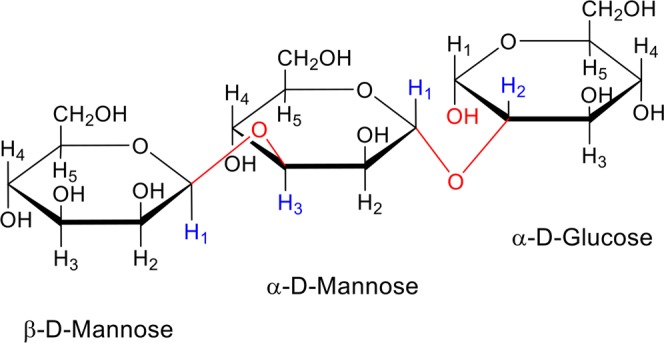
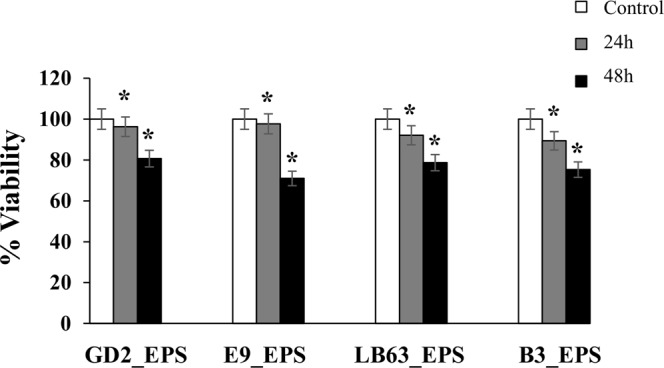
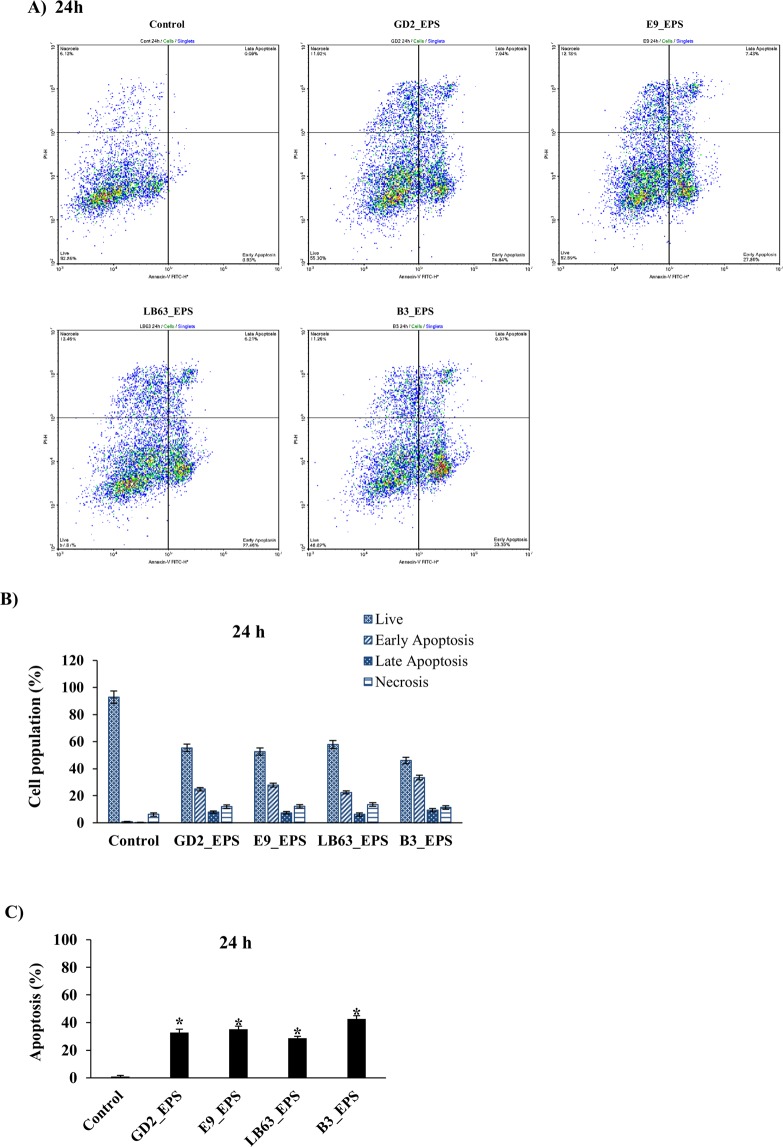
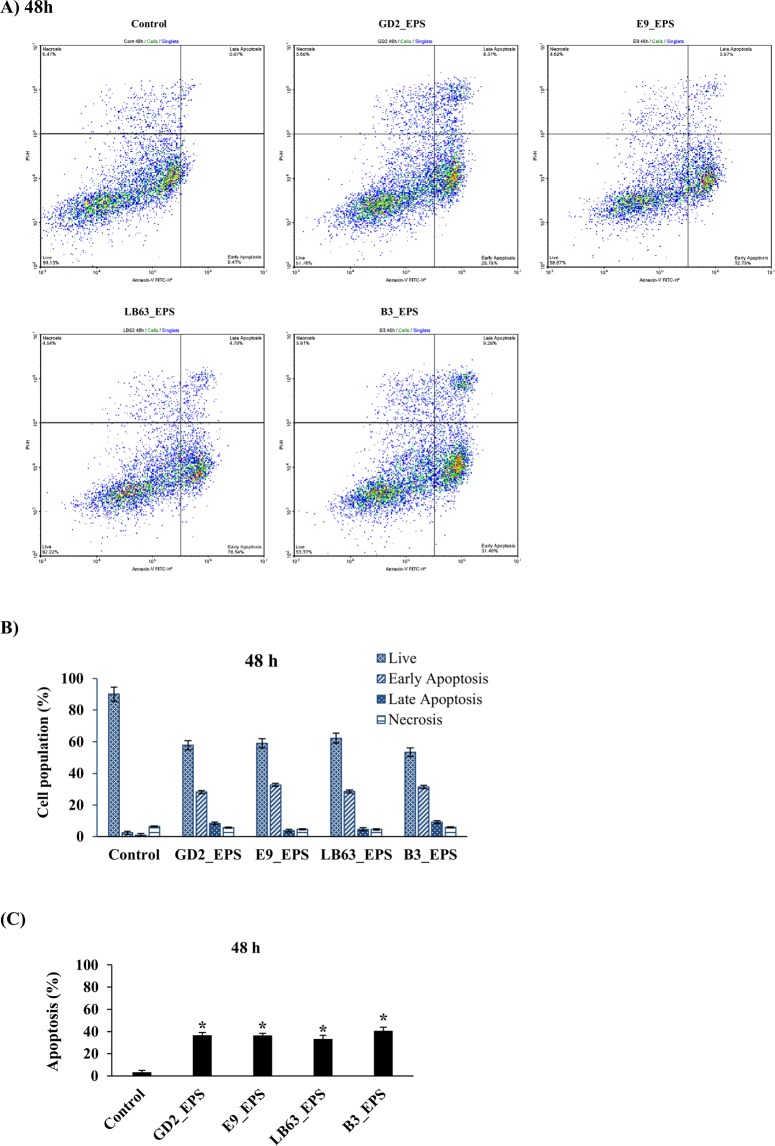
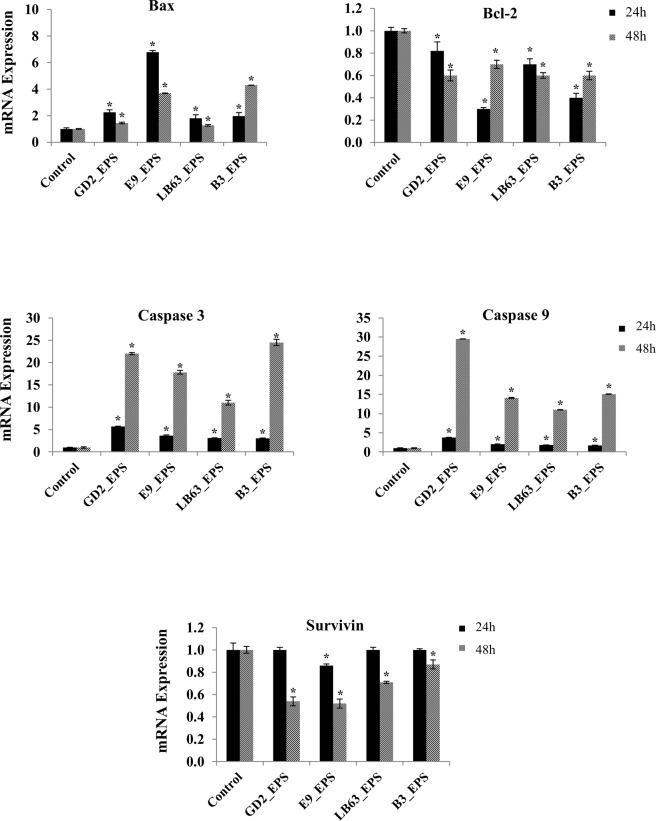
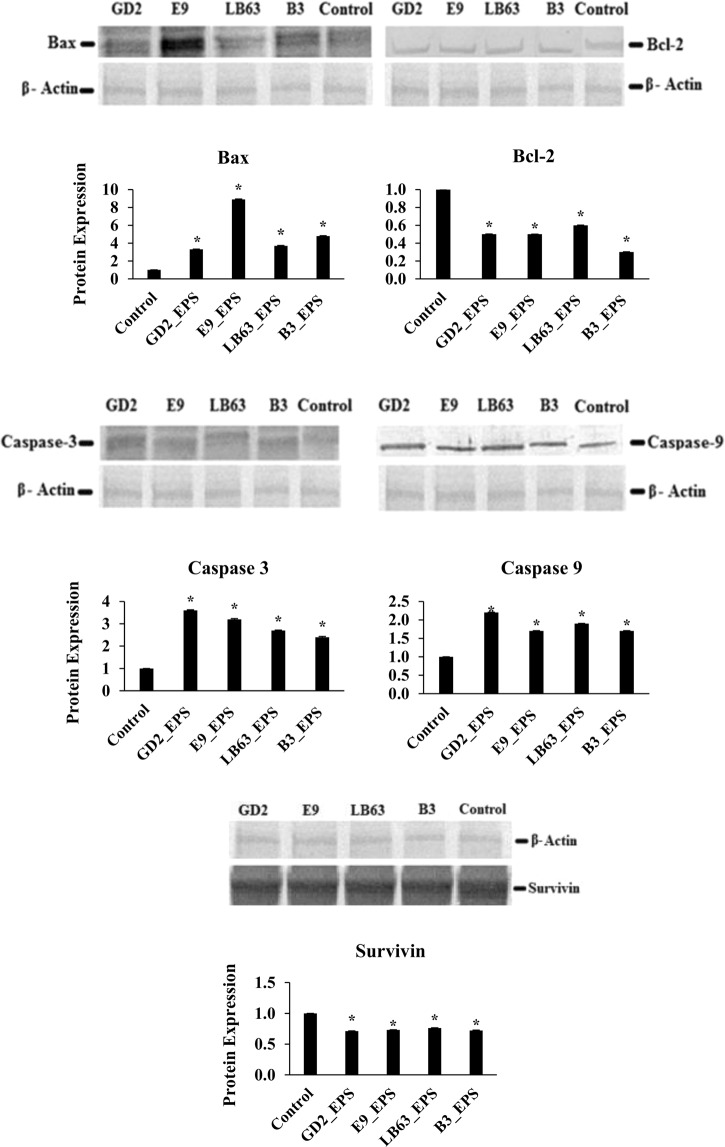
Colon cancer is one of the most common cancer around the world. Exopolysaccharides (EPSs) produced by lactobacilli as potential prebiotics have been found to have an anti-tumor effect. In this study, lyophilized EPSs of four Lactobacillus spp. for their impact on apoptosis in colon cancer cells (HT-29) was evaluated using flow cytometry. The relationship between capability of a lactobacilli-EPS to induce apoptosis and their monosaccharide composition, molecular weight (MW), and linkage type was investigated by HPLC, SEC, and NMR, respectively. Changes in apoptotic-markers were examined by qPCR and Western Blotting. EPSs were capable of inhibiting proliferation in a time-dependent manner and induced apoptosis via increasing the expression of Bax, Caspase 3 and 9 while decreasing Bcl-2 and Survivin. All EPSs contained mannose, glucose, and N-acetylglucosamine with different relative proportions. Some contained arabinose or fructose. MW ranged from 10 2 –10 4 Da with two or three fractions. EPS of L. delbrueckii ssp. bulgaricus B3 having the highest amount of mannose and the lowest amount of glucose, showed the highest apoptosis induction. In conclusion, lactobacilli-EPSs inhibit cell proliferation in HT-29 via apoptosis. Results suggest that a relationship exists between the ability of EPS to induce apoptosis and its mannose and glucose composition.
Overview
The claims and statistics of this paper haven’t been checked yet.
Free: it reads the open-access text and checks the first 5 claims that cite a source we can check. Create a free account to check every claim.
Integrity signals
Registry
Cites
Statistics
Figures
Verification
Claims the paper makes
The claims and statistics of this paper haven’t been checked yet.
Free: it reads the open-access text and checks the first 5 claims that cite a source we can check. Create a free account to check every claim.
Claims other papers make about this one
Each is checked against this paper’s own text: does it say what the citing paper says it does?
The source backs part of the claim, not all of it — or backs it for a different population, condition or comparison.
In the citing paper
“Finally, the EPS is lyophilized [27,33,35,43,99,101] to remove moisture and allow long storage.”
From Lactic Acid Bacteria Exopolysaccharides Producers: A Sustainable Tool for Functional Foods (2021) · cites this paper as [27]
Experimental — accuracy not yet measuredThe source backs part of the claim, not all of it — or backs it for a different population, condition or comparison.
In the citing paper
“A colorimetric procedure for the determination of total carbohydrate (expressed as glucose equivalents per unit of weight) by phenol-sulfuric acid method is the most widely used method of calculating EPS yield [27,33,34,42,43,44,49,55,99,102].”
From Lactic Acid Bacteria Exopolysaccharides Producers: A Sustainable Tool for Functional Foods (2021) · cites this paper as [27]
Experimental — accuracy not yet measuredThe cited source says what the claim attributes to it.
In the citing paper
“For the following precipitation of EPS, ethanol is commonly used [27,42,43,50,55,58,99], although isopropanol [100], acetone [33] or a mixture of acetone and ethanol [101] have been also used.”
From Lactic Acid Bacteria Exopolysaccharides Producers: A Sustainable Tool for Functional Foods (2021) · cites this paper as [27]
The check wasn’t confident either way, so it gives no verdict — never disputed.
In the citing paper
“Then, proteins can be precipitated with trichloroacetic acid (TCA) [27,49,58,70] or a combination of TCA and proteases [97].”
From Lactic Acid Bacteria Exopolysaccharides Producers: A Sustainable Tool for Functional Foods (2021) · cites this paper as [27]
Experimental — accuracy not yet measuredThe check wasn’t confident either way, so it gives no verdict — never disputed.
In the citing paper
“High-performance, anion-exchange chromatography coupled with pulsed amperometric detection [8,27,35,53] or gas chromatography (GC) [32,43] are commonly utilized to analyze the monosaccharide composition of EPS.”
From Lactic Acid Bacteria Exopolysaccharides Producers: A Sustainable Tool for Functional Foods (2021) · cites this paper as [27]
Experimental — accuracy not yet measured
Self-check
Percentages, sums and reported differences re-computed from the paper’s own numbers.
The self-check needs the paper’s full text.
Citations
Cites
Bray, F., Ferlay, J., Soerjomataram, I., Siegel, R. L., Torre, L. A., & Jemal, A. (2018) · CA: A Cancer Journal for Clinicians · doi:10.3322/caac.21492 · Cited by 84,109
Colorimetric Method for Determination of Sugars and Related Substances
DuBois, M., Gilles, K. A., Hamilton, J. K., Rebers, P. A., & Smith, F. (1956) · Analytical Chemistry · doi:10.1021/ac60111a017 · Cited by 52,269
Ultrastructural Characterization of the Lower Motor System in a Mouse Model of Krabbe Disease
Cappello, V., Marchetti, L., Parlanti, P., Landi, S., Tonazzini, I., Cecchini, M., Piazza, V., & Gemmi, M. (2016) · Scientific Reports · doi:10.1038/s41598-016-0001-8 · Cited by 13,097
Hill (2014) · doi:10.1038/nrgastro.2014.66 · Cited by 9,592
Ashburner, M. (1989) · Cold Spring Harbor Laboratory eBooks · Cited by 6,756
International Agency for Research on Cancer (IARC)
(2018) · The Grants Register 2018 · doi:10.1007/978-1-349-94186-5_629 · Cited by 2,801
Guo, J., Huang, F., Liu, J., Chen, Y., Wang, W., Cao, B., Zou, Z., Liu, S., Pan, J., Bao, C., et al. (2016) · Scientific Reports · doi:10.1038/srep21230 · Cited by 2,148
Medicinal mushrooms as a source of antitumor and immunomodulating polysaccharides
S., W. (2002) · Applied Microbiology and Biotechnology · doi:10.1007/s00253-002-1076-7 · Cited by 2,141
Genomic analysis identifies association of Fusobacterium with colorectal carcinoma
Kostic, A. D., Gevers, D., Pedamallu, C. S., Michaud, M., Duke, F., Earl, A. M., Ojesina, A. I., Jung, J., Bass, A. J., Tabernero, J., et al. (2012) · Genome Research · doi:10.1101/gr.126573.111 · Cited by 1,960
Molecular mechanisms of caspase regulation during apoptosis
Riedl, S. J., & Shi, Y. (2004) · Nature Reviews Molecular Cell Biology · doi:10.1038/nrm1496 · Cited by 1,899
Research works printed but not linked: 3
- Gürsoy, A., Durlu-Özkaya, F., Yıldız, F. & Aslım, B. Ekzopolisakkarit Üretimi Yüksek Yerli Streptococcus thermophilus (W22) ve Lactobacillus delbrueckii ssp. bulgaricus (B3). Kafkas Univ. Vet. Fak. Derg. 16, 81-86 (2009).
- Ledezma, O. E. V. et al. Characterization of extracellular polymeric substances (EPS) produced by marine Micromonospora sp. J. Chem. Pharm. Res. 8, 442-451 (2016).
- Haroun, B. M., Refaat, B. M., Menoufy, H. A. E.-, Amin, H. A. & Amr, A. Structure Analysis and Antitumor Activity of the Exopolysaccharide from Probiotic. J. Appl. Sci. Res. 9, 425-434 (2013).
Cited by
Items 101–168 of 168
Supplementation with vitamins D3 and a mitigates Parkinsonism in a haloperidol mice model
Sirajo, M. U., Oyem, J. C., & Badamasi, I. M. (2023) · Journal of Chemical Neuroanatomy · doi:10.1016/j.jchemneu.2023.102366 · Cited by 8
Ageeli, A. A., & Mohamed, S. F. (2025) · Processes · doi:10.3390/pr13040935 · Cited by 9
Crosstalk between COVID-19 and the gut-brain axis: a gut feeling
Kalam, N., & Balasubramaniam, V. R. M. T. (2024) · Postgraduate Medical Journal · doi:10.1093/postmj/qgae030 · Cited by 8
Madian, R. A., Aggag, S. A., Yacout, M., Awad, S., & Ibrahim, A. (2025) · Annals of Microbiology · doi:10.1186/s13213-025-01796-9 · Cited by 8
“Those results developed a new efficacious anti-cancer drug that leads cancer cells to apoptosis (Tukenmez et al. 2019).”
Sharma, N., Ashil, V. R., Kumar, V., Gore, D. D., Singh, I. P., & Tikoo, K. (2022) · Process Biochemistry · doi:10.1016/j.procbio.2022.04.029 · Cited by 8
Kumari, M., Kumari, R., Nataraj, B. H., Shelke, P. A., Ali, S. A., Nagpal, R., & Behare, P. V. (2023) · Current Research in Food Science · doi:10.1016/j.crfs.2023.100478 · Cited by 10
Potential health benefits of postbiotics and its utilization as natural food preservatives
Singh, R., Singh, P., Habiba, U., Pandey, V. K., Kaur, S., & Rustagi, S. (2025) · Food and Humanity · doi:10.1016/j.foohum.2025.100726 · Cited by 14
Human Commensal Bacteria: Next-generation Pro- and Post-biotics for Anticancer Therapy
Sapkota, H., Dasgupta, S., Roy, B., & Pathan, E. K. (2025) · Frontiers in Bioscience-Elite · doi:10.31083/fbe26809 · Cited by 12
“Another metabolite - exopolysaccharides (EPSs), obtained from Lactobacillus strains, showed anti-proliferative activity against colon and cervical cancer cell lines by inducing apoptosis and autophagy [65–67].”
Mendi, A. H., & Aslım, B. (2022) · Brazilian Archives of Biology and Technology · doi:10.1590/1678-4324-2022210231 · Cited by 6
Mirzadeh, M. A., Eslami, M., Ghanbari, A., Zarbakhsh, S., Yosefi, S., & Pakdel, A. (2024) · Medical Oncology · doi:10.1007/s12032-024-02346-0 · Cited by 9
Yang, X., Zhang, K., Xia, L., & Li, J. (2026) · iMetaMed · doi:10.1002/imm3.70030 · Cited by 5
Ilıkkan, Ö. K., Dinçer, S. A., Bağdat, E. Ş., Çağlar, I., Dertli, E., İspirli, H., & Şahin, F. İ. (2023) · Bioactive Carbohydrates and Dietary Fibre · doi:10.1016/j.bcdf.2023.100400 · Cited by 7
Çelik, K., Yüksekdağ, Z., Acar, B. Ç., & Kara, F. (2024) · Tekirdağ Ziraat Fakültesi Dergisi · doi:10.33462/jotaf.1370839 · Cited by 6
Zhang, J., Hu, T., Ma, Y., Ma, Y., & Sun, Q. (2025) · Carbohydrate Polymer Technologies and Applications · doi:10.1016/j.carpta.2025.100830 · Cited by 13
Lacticaseibacillus rhamnosus—A Promising Tool for Colorectal Cancer Treatment
Budu, O., Banciu, C. D., Şoica, C., Lighezan, D., Milan, A., Prodea, A., Mioc, A., Mioc, M., Mardale, G., & Sima, L. (2023) · Processes · doi:10.3390/pr11030781 · Cited by 6
Isolation and selection of sauerkraut lactic acid bacteria producing exopolysaccharides
Georgieva, A., Petkova, M., Todorova, E., Gotcheva, V., & Angelov, A. (2023) · BIO Web of Conferences · doi:10.1051/bioconf/20235802001 · Cited by 7
Zhang, J., Hu, T., & Sun, Q. (2024) · Food Science and Human Wellness · doi:10.26599/fshw.2024.9250368 · Cited by 8
Mikshina, P. V., Kharina, M. V., Sungatullina, A., Petrova, T., Анварович, С. Т., & Никитина, Е. В. (2024) · International Journal of Biological Macromolecules · doi:10.1016/j.ijbiomac.2024.136092 · Cited by 3
Saikia, T., Patowary, L., Sadhu, P., & Laloo, D. (2025) · Cancer drug discovery and develogment/Cancer drug discovery and development · doi:10.1007/978-3-031-86065-2_15 · Cited by 3
Henawy, A. R., Abdelhadi, A. A., Halema, A. A., Refae, R., & Barakat, O. S. (2023) · Egyptian Pharmaceutical Journal · doi:10.4103/epj.epj_63_23 · Cited by 3
Tafla, T., Balasubramanian, A., & Iyer, J. K. (2025) · Onco · doi:10.3390/onco5030041 · Cited by 3
“Treatment of HT-29 cells with exopolysaccharides purified from different species of Lactobacillus induced apoptosis [107].”
Arshad, M., Zhang, C.-Y., Gao, Z.-K., Sun, H., Xu, D.-Q., Fan, C., Zhang, B.-W., Geng, J.-X., Li, Y., Kotusov, A., et al. (2026) · Scientific Reports · doi:10.1038/s41598-026-43626-1 · Cited by 2
Jiang, J., Zhang, X., Han, D., Liang, Q., Yang, L., Kong, L., Guan, Y., Sun, H., Liu, C., Sun, Y., et al. (2026) · Frontiers in Immunology · doi:10.3389/fimmu.2026.1784957 · Cited by 6
“Lactobacillus exopolysaccharides (EPS) exhibit selective anti-tumor activities through apoptosis induction, cell cycle arrest, anti-angiogenesis, and anti-in fl ammation (101), EPSF1 inhibits Caco-2 cells (IC 50 : 72.5 m g/mL) while preserving WI-38 normal cells (102, 103).”
InfluentialJayaraman, V., Apthi, S., Datta, L., Baxi, D. B., Rajasekharan, S. K., Vasanthi, L., Palaniyandi, K., & Gnanasampanthapandian, D. (2024) · Springer eBooks · doi:10.1007/978-981-96-0297-1_3 · Cited by 3
Afshar, P., Nasiraie, L. R., Shokrzadeh, M., Ghorbani‐HasanSaraei, A., & Raeisi, S. N. (2021) · Current Medical Mycology · doi:10.18502/cmm.6.4.5438 · Cited by 6
“First, EPS of LPs has a strong ability to bind with AFs via noncovalent weak interactions, reduced bioavailability of toxins, and increased excretion of fecal AFB1[32, 33].”
BackgroundInfluentialRecently Progressed Postbiotics as Nutraceuticals
Jeong, G. (2021) · Food Supplements and Biomaterials for Health · doi:10.52361/fsbh.2021.1.e33 · Cited by 2
Gut Microbiota Modulation: Probiotics and Prebiotics in GI Cancer
Au-Doung, P. L. W., Chan, R. H., Wu, W. K. K., & Li, Q. (2023) · Springer eBooks · doi:10.1007/978-981-19-4492-5_14 · Cited by 2
Hadid, M. A., Al-Shaibani, A. B. A., & Al-Halbosiy, M. M. F. (2023) · Journal of AL-Farabi for Medical Sciences · doi:10.59746/jfms.v1i1.24 · Cited by 1
Ahrabi, S., Anvari, M., & Rahmani, B. (2025) · Journal of Food Science and Technology · doi:10.1007/s13197-025-06407-8 · Cited by 2
Madian, R. A., Ibrahim, A., Yacout, M., Awad, S., & Aggag, S. A. (2025) · Biotechnology Letters · doi:10.1007/s10529-025-03648-7 · Cited by 1
“Based on their findings, Tukenmez et al. (2019) developed a novel anti-cancer medication capable of inducing apoptosis in cancer cells.”
Abedelmaksoud, T. G., Allaith, S. A., Altemimi, A. B., Abdelaziz, M. E., Thabit, Z. A., Hesarinejad, M. A., & Mohamed, R. M. (2025) · Food Science & Nutrition · doi:10.1002/fsn3.70960 · Cited by 2
“EPS from lactobacilli has also been shown to induce apoptosis in HT-29 cells, confirmed by changes in apoptotic markers via qPCR and Western blot analyses (Tukenmez et al. 2019).”
Yadav, M. K., Mendoza, R. M., Song, J. H., Vasquez, R., Lee, J. S., Park, Y., Paik, H., Kim, I. H., & Kang, D. (2025) · Probiotics and Antimicrobial Proteins · doi:10.1007/s12602-025-10835-5 · Cited by 1
“Similar cytotoxic effects have been reported for EPS from L. brevis LB63 and TD4 against colon cancer (HT‑29) cells [53, 54 ].”
Fumani, A. E., Anvari, M., Bibalan, M. H., & Abadi, R. S. K. (2025) · Current Microbiology · doi:10.1007/s00284-025-04617-z · Cited by 1
Exopolysaccharides of Lactic Acid Bacteria: Functions and Research Methods
Boyarineva, I. V., Zhuravleva, A., & Kovaleva, E. (2025) · Dairy Industry · doi:10.21603/1019-8946-2025-6-66 · Cited by 1
Xu, Q., Jiao, L., Xue, J., Xu, G., & Tang, X. (2026) · Marine Drugs · doi:10.3390/md24010039 · Cited by 1
“This broad molecular weight distribution suggests that EPSs are not a single uniform polymer but instead consist of multiple fractions, a feature common among microbial EPS and often associated with diverse functional properties [20,21].”
Ouarabi, L., Hamma-Faradji, S., Ouarabi, L., Barache, N., Trabelsi, I., Salah, R. B., & Drider, D. (2026) · Brazilian Journal of Microbiology · doi:10.1007/s42770-025-01856-x · Cited by 1
“This is the case for example, for example, for L. rhamnosus (210.28 mg/L) [32], L. plantarum SP8 (280.105 mg/L) [33], L. plantarum GD2 (397 mg/L), L. delbrueckii subsp. bulgaricus B3 (449 mg/L) [34], and L. fermentum (84.5 mg/L) [35].”
InfluentialBeneficial impacts of postbiotic components –– Crosstalk between gut and organs
Wang, Y., Liu, Z., Zhang, X., & You, C. (2026) · Current Research in Food Science · doi:10.1016/j.crfs.2026.101444 · Cited by 2
“Tukenmez et al. (2019) demonstrated the in vitro apoptosis-promoting effect of Lactobacilli -derived EPS (containing mannose, glucose, and N-acetylglucosamine) on HT-29 colon cancer cells.”
Marjanovic, M., Maletin, N., Kukic, B. P., Nikolić, I., Petrović, N., Radić, J., Đurić, A., Knezevic, M., Dejanović, B., & Calic, V. (2026) · Frontiers in Cellular and Infection Microbiology · doi:10.3389/fcimb.2026.1907957 · Cited by 1
“However, evidence in colorectal cancer remains limited, and most available data originate from experimental models (Chuah et al., 2019; Tukenmez et al., 2019; Zhong et al., 2024).”
Kadioglu, I. S., & Karaduman, T. (2024) · Journal of Radiation Research and Applied Sciences · doi:10.1016/j.jrras.2024.100891 · Cited by 2
Pezzino, G., Calabrò, A., Drommi, F., Campana, S., Cavaliere, R., Bonaccorsi, I., Carrega, P., Zammuto, V., Rizzo, M. G., Gugliandolo, C., et al. (2024) · ImmunoTargets and Therapy · doi:10.2147/itt.s470319 · Cited by 1
Postbiotics and their therapeutic effects: a review
Köktürk, S. N., & Yardımcı, H. (2023) · Reviews in Medical Microbiology · doi:10.1097/mrm.0000000000000383 · Cited by 2
Rajesh, G., Ragunathan, R., & Johney, J. (2025) · Biosciences Biotechnology Research Asia · doi:10.13005/bbra/3395 · Cited by 2
Probioactives: Bacteriocin and Exopolysaccharides
Anandharaj, M., Rani, R. P., & Swain, M. R. (2021) · Elsevier eBooks · doi:10.1016/b978-0-12-822909-5.00019-8 · Cited by 3
Screening and identification of probiotic lactic acid bacteria from plant samplesd
Nuhwa, R., Savarajara, A., & Lanasupawat, S. (2019) · Chula Digiverse · doi:10.58837/chula.the.2019.39 · Cited by 1
Rafoogarzadeh, R., Rafiee, A., & Taheri, S. (2024) · Research Square · doi:10.21203/rs.3.rs-4709833/v1 · Cited by 1
Implications of bacterial bioflocculant for public health demands
Sivaramakrishnan, S., & Vimala, R. T. V. (2022) · Elsevier eBooks · doi:10.1016/b978-0-323-91138-2.00009-x
Bioactivities of Bacterial Polysaccharides
Cruz‐Aldaco, K., Govea‐Salas, M., Araújo, R. G., Medina, M. D. D., & Loredo‐Treviño, A. (2022) · Springer eBooks · doi:10.1007/978-3-030-42215-8_30 · Cited by 1
Mesenchymal stem cell-probiotic communication: Beneficial bacteria in preconditioning
Mendi, A. H., Aktaş, B., & Aslım, B. (2022) · Springer eBooks · doi:10.1007/978-981-16-6016-0_51-1 · Cited by 3
Mesenchymal Stem Cell-Probiotic Communication: Beneficial Bacteria in Preconditioning
Mendi, A. H., Aktaş, B., & Aslım, B. (2022) · Springer eBooks · doi:10.1007/978-981-19-2655-6_51
Chen, J., Chen, X., Chen, L., Luo, X., Zhuang, C., & Wu, J. (2022) · Materials Express · doi:10.1166/mex.2022.2260
Singh, N., & Yadav, A. (2024) · Water Practice & Technology · doi:10.2166/wpt.2024.106
Nouri, Z. H. M., Tafvizi, F., Amini, K., Khandandezfoli, N., & Kheirkhah, B. (2023) · مهندسی ژنتیک و ایمنی زیستی. · doi:10.61186/gebsj.12.2.216 · Cited by 3
Τσούπρας, Α., Gkika, D. A., Markopoulos, T., Curran, R., Scallon, C., Karali, M., & Kyzas, G. Z. (2024) · Reference series in phytochemistry · doi:10.1007/978-3-031-38663-3_214 · Cited by 4
Fallah, F. G., Habibollahi, H., & Sharbafi, M. A. (2024) · Alborz University Medical Journal · doi:10.61186/aums.13.1.34
Lu, K., Wang, X., Zhou, Y., & Zhu, Q. (2025) · Food Science and Human Wellness · doi:10.26599/fshw.2025.9250469
Abanuzoğlu, M., & Dolanbay, S. N. (2025) · Osmaniye Korkut Ata Üniversitesi Fen Bilimleri Enstitüsü Dergisi · doi:10.47495/okufbed.1655264
Lai, J., & Chen, H. (2025) · Scientia Sinica Vitae · doi:10.1360/ssv-2025-0114
Refat, E. S., Attia, A. A., Awady, M. E. E., Ali, M., Hamed, A. A., & Nasr-Eldin, M. A. (2025) · BMC Microbiology · doi:10.1186/s12866-025-04462-x
“According to Tukenmez et al. [63], Lactobacillus del-brueckii ssp. bulgaricus B3-EPS increased the expression of Bax , Caspase 3, and Caspase 9 while lowering that of Bcl2 , which hindered time-dependent proliferation and caused apoptosis.”
Additional file 1 of Microbial signatures and continuum in endometrial cancer and benign patients
Semertzidou, A., Whelan, E., Smith, A., Ng, S. Q. Y., Roberts, L. A., Brosens, J. J., Marchesi, J. R., Bennett, P. R., MacIntyre, D. A., & Kyrgiou, M. (2024) · Figshare · doi:10.6084/m9.figshare.26143658
Suman, K., & Bandi, A. (2025) · Research Journal of Pharmacy and Technology · doi:10.52711/0974-360x.2025.00835
Tsjokajev, A., Boehlich, G. J., Horn, S. J., Vaaje‐Kolstad, G., & Westereng, B. (2026) · bioRxiv (Cold Spring Harbor Laboratory) · doi:10.64898/2026.02.27.708493 · Cited by 1
Andeden, E. E., Dolanbay, S. N., Avcı, G., & Aslım, B. (2026) · Molecular Biotechnology · doi:10.1007/s12033-026-01579-w
Derdak, R., Sakoui, S., Jouga, F., Mourabiti, F., Addoum, B., Soukri, A., & Khalfi, B. E. (2026) · Bioactive Carbohydrates and Dietary Fibre · doi:10.1016/j.bcdf.2026.100536 · Cited by 1
Kayserilioğlu, B., Aslım, B., Gelmez, B., Yüksel, N., Yılmaz, Ş., & Baykara, T. (2026) · Journal of Applied Microbiology · doi:10.1093/jambio/lxag137
Sebouai, M., & Kumar, P. (2026) · 3 Biotech · doi:10.1007/s13205-026-04971-0
“…of cancer cells, as suggested by several in vitro studies (Kahouli, Tomaro-Duchesneau, and Prakash 2013; Haghshenas et al. 2014; Tiptiri-Kourpeti et al. 2016). while some strains have been demonstrated to have powerful immunomodulating properties (El-Deeb et al. 2018; Tukenmez et al. 2019).”
Molecular mechanisms involved in the anticancer activities of probiotics and postbiotics
Rocchetti, M. T., Mangieri, D., Spano, G., & Fiocco, D. (2026) · Cancer Cell International · doi:10.1186/s12935-026-04411-2
“…a broad biochemical diversity, and some studies have highlighted the relevance of their molecular structure and sugar composition for their proapoptotic ability [112, 153], suggesting that this may be mediated by the interaction of specific sugars with Toll-like receptors (TLRs) on cancer cells.”
Potunuru, U. R., Padmapriya, P., Balasubramanian, M., Avany, B. A. M., Goswami, R., Devi, P. B., Mohan, A., Balamurugan, K., Dhayalan, A., Kavitake, D., et al. (2026) · Frontiers in Molecular Biosciences · doi:10.3389/fmolb.2026.1901988
“The anti-cancer mechanism of EPS is mostly attributed to the apoptosis of cancer cells (Li et al., 2022; Sun et al., 2021; Sungur et al., 2017; Tukenmez et al., 2019; Zhou et al., 2017).”
Metabolomics of probiotics: Impact on host metabolism
Nagarajan, S., Kingston, J. J., & Sharma, R. K. (2026) · Elsevier eBooks · doi:10.1016/b978-0-443-45154-6.00025-8
Metadata
- Authors
- Tukenmez, U., Aktas, B., Aslim, B., & Yavuz, S.
- Affiliations
- Gazi University (TR)
- Venue
- Scientific Reports
- Published
- 2019-06-04
- Volume
- 9
- Issue
- 1
- Pages
- 8268-8268
- ISSN
- 2045-2322 (ISSN-L)
- PMC
- PMC6547643
- OpenAlex
- W2948910594
- Semantic Scholar
- 87d9eb54a6e3d1938bb7f34ee3957f2e3d04f8df
- Cited by
- 167
- References
- 95
- Citations by year
- 2026: 14 · 2025: 27 · 2024: 33 · 2023: 29 · 2022: 25 · 2021: 15 · 2020: 20 · 2019: 4
- FWCI
- 12.35
- Type
- journal article
- Language
- en
- Open access
- gold
- doi.org
- Licence
- cc-by
- creativecommons.org/licenses/by/4.0 (tdm)
- creativecommons.org/licenses/by/4.0 (vor)
- Locations
- Scientific Reports (publishedVersion, cc-by)
- PubMed Central (publishedVersion, cc-by)
- PubMed (publishedVersion)
- DOAJ (DOAJ: Directory of Open Access Journals) (submittedVersion)
- Funders
- Türkiye Bilimsel ve Teknolojik Araştırma Kurumu (115R282)
- Topics
- Life Sciences › Agricultural and Biological Sciences › Food Science › Probiotics and Fermented Foods
- Life Sciences › Agricultural and Biological Sciences › Food Science › Polysaccharides Composition and Applications
- Health Sciences › Nursing › Nutrition and Dietetics › Microbial Metabolites in Food Biotechnology
- Keywords
- apoptosis induction, colon cancer, HT-29 cells, prebiotics, anti-tumor effect, monosaccharide composition, mannose, glucose, molecular weight, glycosidic linkage, Bax, caspase-3, caspase-9, Bcl-2, survivin, cell proliferation inhibition, Lactobacillus bulgaricus
- MeSH terms
- Survivin, Acetylglucosamine, Chromatography, High Pressure Liquid, Colonic Neoplasms, Glucose, Humans, Lactobacillus, Mannose, Monosaccharides, Magnetic Resonance Spectroscopy, Polysaccharides, Bacterial, Gene Expression Regulation, Neoplastic, Apoptosis, HT29 Cells, Proto-Oncogene Proteins c-bcl-2, Cell Proliferation
About these checks
Registry, retraction, Cites and statistics results are computed, not judged, with one exception: a printed reference that no index lists is read once by a model before it counts as a citation error. Claims are extracted by a model and kept only when their quote appears verbatim in the text; each cited source is then checked, with a model’s help, for whether it says what the claim relies on. Those verdicts can be wrong — read the claim’s quote and the cited source before relying on one.
Statistics and arithmetic are recomputed, not judged.
Confidence bands are shown only for fields calibrated on our annotated test set. None is calibrated yet, so no band is shown.
What counts as a claim ›How we measure confidence ›How we check this ›
Are you an author, or do you see a problem with this page? Request a review
Data sources
Bibliographic data: Semantic Scholar, OpenAlex, Crossref.
Contains information from the Semantic Scholar Academic Graph Datasets, made available under the ODC Attribution License (ODC-BY 1.0).
Semantic Scholar’s data is described in: Kinney, R., et al. (2023). The Semantic Scholar Open Data Platform. arXiv:2301.10140.
