

Sources, distribution and fate of microfibres on the Great Barrier Reef, Australia
Open accessThe DOI matches its Crossref record; 74 of the 74 references it cites were found in a registry or an index.
Abstract
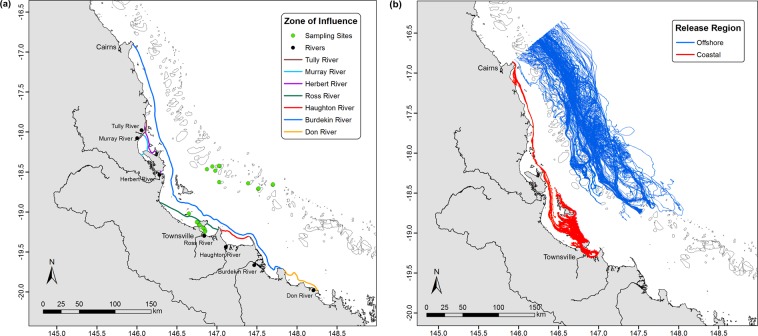
Marine microdebris, in particular microplastics (plastics <5 mm), has become an issue of international concern due to its prevalence, persistence and potential adverse impacts on marine ecosystems. Informing source reduction based on ecological effects requires an understanding of the origin, distribution and characteristics of microdebris and the interactions with marine organisms. Here we show widespread contamination of the central Great Barrier Reef environment with microdebris, with microfibres comprising 86% of all items detected. Microdebris intake by coral reef fish was non-random, with chemical composition, shape and colour differing significantly from that detected in surface waters. Furthermore, the origin of microdebris contamination in surface waters is non-random with riverine discharge a likely source for microdebris detected at inshore, but not at offshore reef locations. Our findings demonstrate the complexities associated with determining marine microdebris exposure and fate, and assist in improving future ecological assessments and prioritizing source reduction.
Overview
The claims and statistics of this paper haven’t been checked yet.
Free: it reads the open-access text and checks the first 5 claims that cite a source we can check. Create a free account to check every claim.
Integrity signals
Registry
Cites
Statistics
Figures
Verification
Claims the paper makes
The claims and statistics of this paper haven’t been checked yet.
Free: it reads the open-access text and checks the first 5 claims that cite a source we can check. Create a free account to check every claim.
Self-check
Percentages, sums and reported differences re-computed from the paper’s own numbers.
The self-check needs the paper’s full text.
Citations
Cites
Production, use, and fate of all plastics ever made
Geyer, R., Jambeck, J. R., & Law, K. L. (2017) · Science Advances · doi:10.1126/sciadv.1700782 · Cited by 18,606
Plastic waste inputs from land into the ocean
Jambeck, J. R., Geyer, R., Wilcox, C., Siegler, T. R., Perryman, M., Andrady, A., Narayan, R., & Law, K. L. (2015) · Science · doi:10.1126/science.1260352 · Cited by 13,163
Hidalgo-Ruz, V., Gutow, L., Thompson, R. C., & Thiel, M. (2012) · Environmental Science & Technology · doi:10.1021/es2031505 · Cited by 5,440
Eriksen, M., Lebreton, L. C. M., Carson, H. S., Thiel, M., Moore, C. J., Borerro, J. C., Galgani, F., Ryan, P. G., & Reisser, J. (2014) · PLoS ONE · doi:10.1371/journal.pone.0111913 · Cited by 4,710
Accumulation of microplastic on shorelines woldwide: Sources and sinks
Browne, M. A., Crump, P., Niven, S. J., Teuten, E., Tonkin, A., Galloway, T., & Thompson, R. (2011) · Environmental Science & Technology · doi:10.1021/es201811s · Cited by 4,548
The pollution of the marine environment by plastic debris: a review.
Derraik, J. G. B. (2002) · Marine Pollution Bulletin · doi:10.1016/s0025-326x(02)00220-5 · Cited by 4,042
River plastic emissions to the world’s oceans
Lebreton, L. C. M., van der Zwet, J., Damsteeg, J.-W., Slat, B., Andrady, A., & Reisser, J. (2017) · Nature Communications · doi:10.1038/ncomms15611 · Cited by 4,011
(2015) · Springer eBooks · doi:10.1007/978-3-319-16510-3 · Cited by 3,502
Plastic debris in the open ocean
Cózar, A., Echevarría, F., González-Gordillo, J. I., Irigoien, X., Úbeda, B., Hernández-León, S., Palma, Á. T., Navarro, S., García-de-Lomas, J., Ruiz, A., et al. (2014) · Proceedings of the National Academy of Sciences · doi:10.1073/pnas.1314705111 · Cited by 3,133
Synthetic fibers in atmospheric fallout: A source of microplastics in the environment?
Dris, R., Gasperi, J., Saad, M., Mirande, C., & Tassin, B. (2016) · Marine Pollution Bulletin · doi:10.1016/j.marpolbul.2016.01.006 · Cited by 2,223
Cited by
Miller, M. E., Hamann, M., & Kroon, F. J. (2020) · PLOS ONE · doi:10.1371/journal.pone.0240792 · Cited by 657
Self-citationVeerasingam, S., Ranjani, M., Venkatachalapathy, R., Bagaev, A., Mukhanov, V., Litvinyuk, D., Mugilarasan, M., Gurumoorthi, K., Guganathan, L., Aboobacker, V. M., et al. (2021) · Critical Reviews in Environmental Science and Technology · doi:10.1080/10643389.2020.1807450 · Cited by 561
Prata, J. C., Reis, V., da Costa, J. P., Mouneyrac, C., Duarte, A. C., & Rocha-Santos, T. (2021) · Journal of Hazardous Materials · doi:10.1016/j.jhazmat.2020.123660 · Cited by 338
Sooriyakumar, P., Bolan, N., Kumar, M., Singh, L., Yu, Y., Li, Y., Weralupitiya, C., Vithanage, M., Ramanayaka, S., Sarkar, B., et al. (2022) · Journal of Hazardous Materials Advances · doi:10.1016/j.hazadv.2022.100077 · Cited by 251
Microplastics in the coral reefs and their potential impacts on corals: A mini-review
Huang, W., Chen, M., Song, B., Deng, J., Shen, M., Chen, Q., Zeng, G., & Liang, J. (2021) · Science of The Total Environment · doi:10.1016/j.scitotenv.2020.143112 · Cited by 227
Paint particles in the marine environment: An overlooked component of microplastics
Turner, A. (2021) · Water Research X · doi:10.1016/j.wroa.2021.100110 · Cited by 220
“Paint particles have also been reported amongst microplastic debris retrieved from plankton trawls in the North Atlantic (Mor ´ et-Ferguson et al., 2010), Black Sea ( ¨ and Bat, 2017), tropical and equatorial western Atlantic Ocean (Ivar do Sul et al., 2014; Garcia et al., 2020), Adriatic Sea (Suaria et al., 2016) and…”
BackgroundMicroplastics Pollution: A Brief Review of Its Source and Abundance in Different Aquatic Ecosystems
Ashrafy, A., Liza, A. A., Islam, M. N., Billah, M. M., Arafat, S. T., Rahman, M. M., & Rahman, S. M. (2023) · Journal of Hazardous Materials Advances · doi:10.1016/j.hazadv.2022.100215 · Cited by 187
Microplastics in mangroves and coral reef ecosystems: a review
John, J., Nandhini, A. R., Velayudhaperumal Chellam, P., & Sillanpää, M. (2022) · Environmental Chemistry Letters · doi:10.1007/s10311-021-01326-4 · Cited by 165
Ge, J., Zhang, Z., Ouyang, Z., Shang, M., Liu, P., Li, H., & Guo, X. (2022) · Environmental Research · doi:10.1016/j.envres.2022.112729 · Cited by 168
Kroon, F. J., Berry, K. L. E., Brinkman, D. L., Kookana, R., Leusch, F. D. L., Melvin, S. D., Neale, P. A., Negri, A. P., Puotinen, M., Tsang, J. J., et al. (2020) · Science of The Total Environment · doi:10.1016/j.scitotenv.2019.135140 · Cited by 146
“Only a few studies have specifically examined the sources of marine debris pollution in the GBR and TS regions (Griffin, 2008; Hardesty et al., 2014; Haynes, 1997; Jensen et al., 2019) (Table 1).”
BackgroundInfluentialSelf-citationResidual additives in marine microplastics and their risk assessment – A critical review
Fauser, P., Vorkamp, K., & Strand, J. (2022) · Marine Pollution Bulletin · doi:10.1016/j.marpolbul.2022.113467 · Cited by 131
Currently monitored microplastics pose negligible ecological risk to the global ocean
Beiras, R., & Schönemann, A. M. (2020) · Scientific Reports · doi:10.1038/s41598-020-79304-z · Cited by 126
Tang, J., Wu, Z., Wan, L., Cai, W., Chen, S., Wang, X., Luo, J., Zhou, Z., Zhao, J., & Lin, S. (2020) · Journal of Hazardous Materials · doi:10.1016/j.jhazmat.2020.124205 · Cited by 120
Lanctôt, C. M., Bednarz, V. N., Melvin, S. D., Jacob, H., Oberhaensli, F. R., Swarzenski, P. W., Ferrier‐Pagès, C., Carroll, A. R., & Métian, M. (2020) · Environmental Pollution · doi:10.1016/j.envpol.2020.114559 · Cited by 112
Microplastics induced inflammation and apoptosis via ferroptosis and the NF-κB pathway in carp
Xu, T., Cui, J., Xu, R., Cao, J., & Guo, M. (2023) · Aquatic Toxicology · doi:10.1016/j.aquatox.2023.106659 · Cited by 109
Impacts of microplastic on fisheries and seafood security — Global analysis and synthesis
Kibria, G. (2023) · The Science of The Total Environment · doi:10.1016/j.scitotenv.2023.166652 · Cited by 109
Rahman, M. N., Shozib, S. H., Akter, M. Y., Islam, A. R. M. T., Islam, M. S., Sohel, M. S., Kamaraj, C., Rakib, M. R. J., Idris, A. M., Sarker, A., et al. (2023) · Journal of Hazardous Materials · doi:10.1016/j.jhazmat.2023.131522 · Cited by 101
Miller, M. E., Motti, C. A., Hamann, M., & Kroon, F. J. (2023) · Science of the Total Environment · doi:10.1016/j.scitotenv.2022.159615 · Cited by 93
Self-citationNama, S., Shanmughan, A., Nayak, B. B., Bhushan, S., & RAMTEKE, K. K. (2023) · Marine Pollution Bulletin · doi:10.1016/j.marpolbul.2023.114755 · Cited by 91
Low abundance of microplastics in commercially caught fish across southern Australia
Wootton, N., Reis‐Santos, P., Dowsett, N., Turnbull, A. R., & Gillanders, B. M. (2021) · Environmental Pollution · doi:10.1016/j.envpol.2021.118030 · Cited by 90
Reef‐building corals act as long‐term sink for microplastic
Reichert, J., Arnold, A. L., Hammer, N., Miller, I. B., Rades, M., Schubert, P., Ziegler, M., & Wilke, T. (2021) · Global Change Biology · doi:10.1111/gcb.15920 · Cited by 92
A Comparison of Microplastic in Fish From Australia and Fiji
Wootton, N., Ferreira, M., Reis‐Santos, P., & Gillanders, B. M. (2021) · Frontiers in Marine Science · doi:10.3389/fmars.2021.690991 · Cited by 83
“The spectrum range was set between 3,900 and 650 cm−1, with the atmospheric water/CO2 region between 2,500 and 1,900 cm−1 excluded when compared to spectral libraries, as recommended by Primpke et al. (2018) and Jensen et al. (2019).”
BackgroundResultMicroplastics in corals: An emergent threat
Soares, M. D. O., Matos, E., Lucas, C. C., Rizzo, L., Allcock, A. L., & Rossi, S. (2020) · Marine Pollution Bulletin · doi:10.1016/j.marpolbul.2020.111810 · Cited by 91
“Microplastics are increasingly being reported from reef environments, both close onshore and offshore, with riverine input from coastal cities and activities, local intensive fisheries, and trade winds as hypothesized as sources (Critchell et al., 2019; Jensen et al., 2019; Huang et al., 2019).”
BackgroundMicroplastics: impacts on corals and other reef organisms
Pantos, O. (2022) · Emerging Topics in Life Sciences · doi:10.1042/etls20210236 · Cited by 74
Interactive effects of microplastic pollution and heat stress on reef-building corals
Reichert, J., Tirpitz, V., Anand, R., Bach, K., Knopp, J., Schubert, P., Wilke, T., & Ziegler, M. (2021) · Environmental Pollution · doi:10.1016/j.envpol.2021.118010 · Cited by 75
Ferreira, G. V. B., Justino, A. K. S., Eduardo, L. N., Lenoble, V., Fauvelle, V., Schmidt, N., Junior, T. V., Frédou, T., & Lucena‐Frédou, F. (2022) · Marine Pollution Bulletin · doi:10.1016/j.marpolbul.2021.113309 · Cited by 80
Gwinnett, C. M. B., & Miller, R. Z. (2021) · Marine Pollution Bulletin · doi:10.1016/j.marpolbul.2021.113095 · Cited by 70
“…avoidance of plastic equipment, including substituting plastic sample containers with glass jars (Plee and Pomory, 2020) - Controlled air environments including conducting processing within laminar flow hoods (Bord ´ os et al., 2019) or secluded rooms with controlled air flow (Jensen et al., 2019).”
Scleractinian corals incorporate microplastic particles: identification from a laboratory study
Hierl, F., Wu, H. C., & Westphal, H. (2021) · Environmental Science and Pollution Research · doi:10.1007/s11356-021-13240-x · Cited by 69
“Although PET concentrations of 0.5 g L-1 in the experiment were above concentrations occurring in the environment (Reisser et al. 2013; Syakti et al. 2017; Ding et al. 2019; Jensen et al. 2019), the observed effects may increase and accumulate over the lifetime of a coral colony.”
BackgroundInfluentialMicroplastics in decapod crustaceans sourced from Australian seafood markets
Solomon, O. O., Reis‐Santos, P., Wootton, N., & Gillanders, B. M. (2022) · Marine Pollution Bulletin · doi:10.1016/j.marpolbul.2022.113706 · Cited by 63
Santana, M. F. M., Dawson, A. L., Motti, C. A., van Herwerden, L., Lefevre, C., & Kroon, F. J. (2021) · Frontiers in Environmental Science · doi:10.3389/fenvs.2021.641135 · Cited by 54
“Here, adult ambon damselfish were exposed once to environmentally relevant types (irregular shaped blue PP particles and regular shaped blue PET fibers) and concentrations (ERC) of microplastics, based on characteristics or estimations of microplastics found in sea surface waters (Cole et al., 2014; Cozar et al., 2014…”
BackgroundMethodInfluentialSelf-citationMicroplastic Contamination Has Limited Effects on Coral Fertilisation and Larvae
Berry, K., Epstein, H. E., Lewis, P. J., Hall, N., & Negri, A. P. (2019) · Diversity · doi:10.3390/d11120228 · Cited by 57
Kutralam-Muniasamy, G., Pérez‐Guevara, F., Elizalde, I., & Shruti, V. C. (2021) · Trends in Environmental Analytical Chemistry · doi:10.1016/j.teac.2021.e00147 · Cited by 54
Microplastic pollution in the surface seawater in Zhongsha Atoll, South China Sea
Liu, S., Pan, Y.-F., Li, H.-X., Lin, L., Hou, R., Yuan, Z. H., Huang, P., Cai, M., & Xu, X. (2022) · The Science of The Total Environment · doi:10.1016/j.scitotenv.2022.153604 · Cited by 52
Impacts of microplastics on scleractinian corals nearshore Liuqiu Island southwestern Taiwan
Lim, Y. C., Chen, C., Cheng, Y., Chen, C., & Dong, C. (2022) · Environmental Pollution · doi:10.1016/j.envpol.2022.119371 · Cited by 46
Allen, E., Henninger, C. E., Garforth, A. A., & Asuquo, E. (2024) · Environmental Science & Technology · doi:10.1021/acs.est.3c05955 · Cited by 41
Effects of pollution on marine organisms
Mearns, A. J., Morrison, A. M., Arthur, C., Rutherford, N., Bissell, M., & Rempel‐Hester, M. A. (2020) · Water Environment Research · doi:10.1002/wer.1400 · Cited by 46
Do coral reefs act as sinks for microplastics?
Soares, M. D. O., Rizzo, L., Neto, A. R. X., Barros, Y., Filho, J. E. M., Giarrizzo, T., & Rabelo, E. F. (2023) · Environmental Pollution · doi:10.1016/j.envpol.2023.122509 · Cited by 44
Carbery, M., Herb, F., Reynes, J., Pham, C. K., Fong, W., & Lehner, R. (2022) · Marine Pollution Bulletin · doi:10.1016/j.marpolbul.2022.114179 · Cited by 35
Jiang, N., Chang, X., Huang, W., Khan, F. U., Fang, J. K., Hu, M., Xu, E. G., & Wang, Y. (2024) · Journal of Hazardous Materials · doi:10.1016/j.jhazmat.2024.134107 · Cited by 35
An assessment workflow to recover microplastics from complex biological matrices
Santana, M., Kroon, F. J., van Herwerden, L., Vamvounis, G., & Motti, C. A. (2022) · Marine Pollution Bulletin · doi:10.1016/j.marpolbul.2022.113676 · Cited by 34
Self-citationSheela, A. M., Manimekalai, B., & Dhinagaran, G. (2021) · Environmental Engineering Research · doi:10.4491/eer.2021.243 · Cited by 29
“According to 24 expeditions (2007–2013), it has been estimated that about 270,000 tons of plastics could be floating in oceans across all five subtropical gyres, coastal Australia, Bay of Bengal, and the Mediterranean Sea [59].”
BackgroundInfluentialCrutchett, T., Paterson, H., Ford, B. M., & Speldewinde, P. (2020) · Frontiers in Marine Science · doi:10.3389/fmars.2020.00526 · Cited by 28
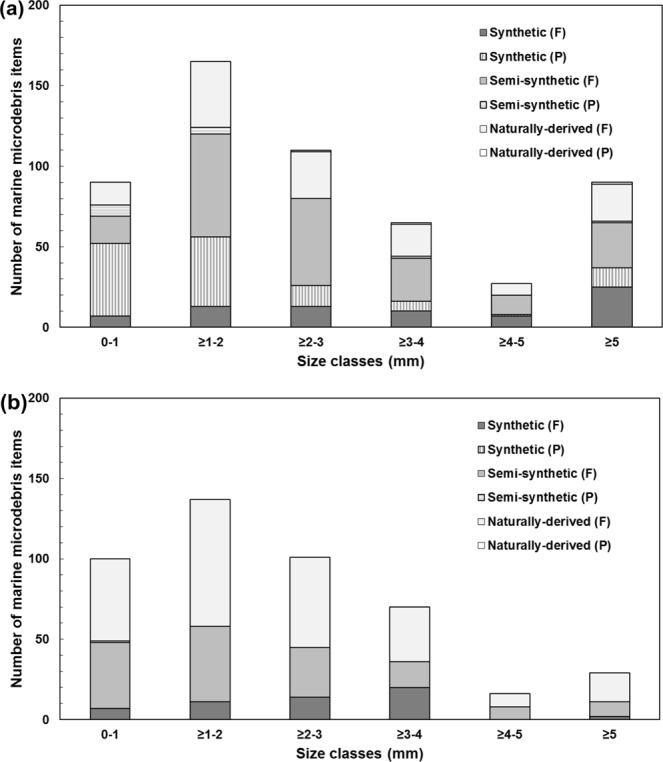
“Although semi-synthetic particles are not always quantified, existing studies have found they can constitute 30–58% of recovered debris which is also reflected in this study (Bessa et al., 2018; Kroon F.J. et al., 2018; Jensen et al., 2019).”
BackgroundInfluentialBiofilm development as a factor driving the degradation of plasticised marine microplastics
Gulizia, A. M., Bell, S. C., Kuek, F., Santana, M., Edmunds, R. C., Yeoh, Y. K., Sato, Y., Haikola, P., van Herwerden, L., Motti, C. A., et al. (2024) · Journal of Hazardous Materials · doi:10.1016/j.jhazmat.2024.136975 · Cited by 27
Self-citationEffects of microplastic and heavy metals on coral reefs: A new window for analytical research
Islam, M. S., Islam, A. R. M. T., Ismail, Z., Ahmed, M. K., Ali, M. M., Kabir, M. H., Ibrahim, K. A., Al-Qthanin, R. N., & Idris, A. M. (2023) · Heliyon · doi:10.1016/j.heliyon.2023.e22692 · Cited by 28
Liang, J., Niu, T., Zhang, L., Yang, Y., Li, Z., Liang, Z., Yu, K., & Gong, S. (2025) · Environmental Research · doi:10.1016/j.envres.2025.120750 · Cited by 22
Plastics: An Additional Threat for Coral Ecosystems
Lartaud, F., Meistertzheim, A., Reichert, J., Ziegler, M., Péru, E., & Ghiglione, J. (2020) · Springer eBooks · doi:10.1007/978-3-030-57054-5_14 · Cited by 25
Microplastic contamination in no-take Marine Protected Areas of Brazil: Bivalves as sentinels
Nunes, B. Z., Ribeiro, V. V., Leal, C. G. P. E. G., Motti, C. A., & Castro, Í. B. (2025) · Environmental Research · doi:10.1016/j.envres.2025.121231 · Cited by 21
Self-citationDectection and Quantification of Microplastic Pollution in the Endangered Galapagos Sea Lion
Moreira‐Mendieta, A., Garcia‐Garin, O., Muñoz‐Pérez, J. P., Urquía, D. O., Drago, M., Borrell, A., & Páez‐Rosas, D. (2023) · The Science of The Total Environment · doi:10.1016/j.scitotenv.2023.166223 · Cited by 19
Lim, K. P., Sun, C., Yusoff, S. B., Ding, J., Loh, K., Li, J., & Lim, P. (2024) · Marine Pollution Bulletin · doi:10.1016/j.marpolbul.2024.117112 · Cited by 21
An Exploratory Review of Microplastic Pollution, Associated Microbiomes and Pathogens in Water
Cholewińska, P., Wojnarowski, K., Moniuszko, H., Pokorny, P., & Palić, D. (2025) · Applied Sciences · doi:10.3390/app15158128 · Cited by 19
Microplastics in Scylla Serrata: A baseline study from southwest India
Valsan, G., Tamrakar, A., & Warrier, A. K. (2024) · Marine Pollution Bulletin · doi:10.1016/j.marpolbul.2024.116109 · Cited by 18
Effects of microplastic combined with Cr(III) on apoptosis and energy pathway of coral endosymbiont
Xiao, B., Li, D., Liao, B., Zheng, H., Yang, X., Xie, Y., Xie, Z., & Li, C. (2023) · Environmental Science and Pollution Research · doi:10.1007/s11356-022-25041-x · Cited by 16
Abeysinghe, K. M. S. N., Guruge, K. P. G. K. P., Bandara, T., & Kumara, P. B. T. P. (2024) · Marine Pollution Bulletin · doi:10.1016/j.marpolbul.2024.116713 · Cited by 16
Chen, H., Wang, S., Guo, H., Huo, Y., Lin, H., & Zhang, Y. (2021) · Frontiers of Environmental Science & Engineering · doi:10.1007/s11783-021-1443-1 · Cited by 15
“There has been evidence suggesting that both scleractinian corals (de Carvalho-Souza et al., 2018) and coral reef species (such as sea anemones and coral reef fish; Jensen et al., 2019; de Orte et al., 2019) could ingest plastics.”
BackgroundIslam, M. S., Hossin, M. S., Uddin, M. R., Islam, M. T., Antu, U. B., Islam, A. R. M. T., Hasan, M., bin Hossain, M. T., Ali, M. M., Ismail, Z., et al. (2024) · Chemistry and Ecology · doi:10.1080/02757540.2024.2356561 · Cited by 14
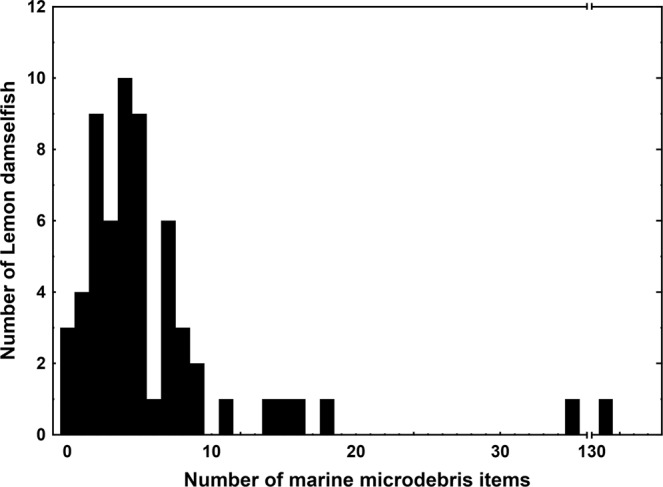
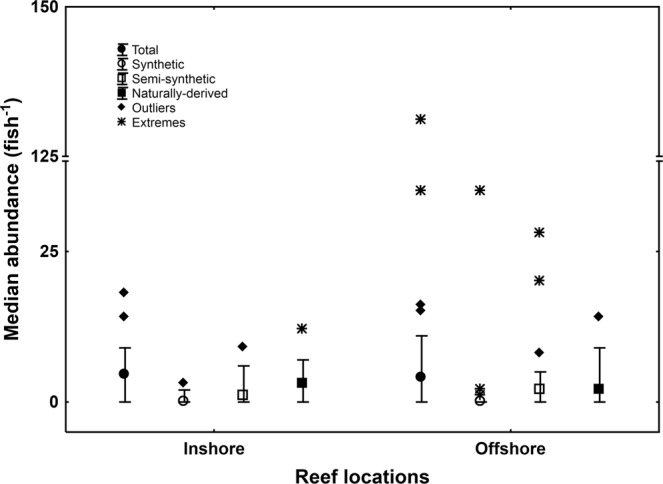
“The World Heritage Area of Australia (Central Great Barrier Reef), MPs’ abundance (0–18 fsh − 1 inshore area and 0–131 fsh − 1 offshore area) was noticed by Jensen et al. [55].”
BackgroundMiller, M. E., Santana, M. F. M., Carsique, M., Motti, C. A., Hamann, M., & Kroon, F. J. (2022) · Environmental Pollution · doi:10.1016/j.envpol.2022.119545 · Cited by 13
Self-citationFernandes, R., Martins, R., & Marques, C. (2025) · Analytical Methods · doi:10.1039/d4ay01802h · Cited by 15
Schlawinsky, M., Santana, M., Motti, C. A., Martins, A. P. B., Thomas‐Hall, P., Miller, M. E., Lefévre, C. D., & Kroon, F. J. (2022) · Limnology and Oceanography Methods · doi:10.1002/lom3.10504 · Cited by 15
“…found in the marine environment (Lusher et al. 2014; GESAMP 2016; Jensen et al. 2019), the following most environmentally prevalent polymer types of various shapes and sizes (Jensen et al. 2019; Ripken et al. 2021; Jiang et al. 2022) were chosen (Table S1) to assess the filtration apparatus (Figs.”
BackgroundMethodSelf-citationGlobal Review and Analysis of the Presence of Microplastics in Fish
KIBRIA, G. (2022) · Asian Fisheries Science · doi:10.33997/j.afs.2022.35.3.003 · Cited by 12
Seasonal variability of microplastic contamination in marine fishes of the state of Gujarat, India
Motivarash, Y. B., Bhatt, A., Jaiswar, R., Makrani Rehanavaz, A., & Dabhi, R. M. (2024) · Environmental Science and Pollution Research · doi:10.1007/s11356-024-35208-3 · Cited by 13
“It has also been observed that MPs uptake can be non-random (Jensen et al. 2019) and highly selective (da Costa et al. 2016; Ory et al. 2017).”
Utilisation of Bubbles and Oil for Microplastic Capture from Water
Saczek, J., Yao, X., Zivkovic, V., Mamlouk, M., Wang, S., & Pramana, S. S. (2022) · Engineering · doi:10.1016/j.eng.2023.01.021 · Cited by 12
Santana, M., Tonin, H., Vamvounis, G., van Herwerden, L., Motti, C. A., & Kroon, F. J. (2025) · Environmental Science and Pollution Research · doi:10.1007/s11356-025-36234-5 · Cited by 11
“…(3.5 microplastics individual −1 ) (Wootton et al. 2021) and specifically that reported in other planktivorous fish (e.g. 1.22 microplastics individual −1 ) (Kalaiselvan et al. 2022), including for the same species from the central GBRWHA (4 microplastics individual −1 ) (Jensen et al. 2019).”
InfluentialSelf-citationPraved, P. H., Sreeraj, P., Neethu, K. V., Nandan, S. B., Ravindran, S., & Marigoudar, S. R. (2025) · Journal of Hazardous Materials · doi:10.1016/j.jhazmat.2025.139866 · Cited by 10
Chen, C., Lu, T., & Liao, C. (2021) · The Science of The Total Environment · doi:10.1016/j.scitotenv.2021.150964 · Cited by 10
Trophic transfer of polyester microfibres across a multi-level marine food web.
Miller, M. E., Motti, C. A., Snekkevik, V. K., Vickers, K., Kennedy, H., Bastin, L., Hamann, M., & Kroon, F. J. (2025) · Marine Pollution Bulletin · doi:10.1016/j.marpolbul.2025.118590 · Cited by 9
Self-citationTirpitz, V., Hutter, M., Hutter, H., Prume, J. A., Koch, M., Wilke, T., & Reichert, J. (2025) · The Science of The Total Environment · doi:10.1016/j.scitotenv.2024.178318 · Cited by 9
Washington, E. A., Paley, A. S., Gulizia, A. M., Motti, C. A., Vamvounis, G., & Hoogenboom, M. O. (2024) · The Science of The Total Environment · doi:10.1016/j.scitotenv.2024.177604 · Cited by 8
Self-citationFloatables and Plastic Debris in Estuarine and Coastal Marine Environments
Ramos, S., Rodrigues, S. M., Pereira, R., Silva, D., & Almeida, C. M. R. (2024) · Elsevier eBooks · doi:10.1016/b978-0-323-90798-9.00111-6 · Cited by 12
López-Hernández, M., Tirpitz, V., Do, M.-S., Czermak, M., Ferrier‐Pagès, C., Reichert, J., & Ziegler, M. (2025) · The Science of The Total Environment · doi:10.1016/j.scitotenv.2025.179026 · Cited by 7
Marine litter pollution in inhabited and uninhabited Lakshadweep islands, Indian Ocean
Nisanth, H. P., Praved, P. H., Sukumarapillai, A., & Kumar, A. B. (2025) · Marine Pollution Bulletin · doi:10.1016/j.marpolbul.2025.118062 · Cited by 7
Compa, M., Alomar, C., Ventero, A., Iglesias, M., & Deudero, S. (2022) · Estuarine Coastal and Shelf Science · doi:10.1016/j.ecss.2022.108041 · Cited by 7
Sudheesh, P., Velappan, M. N., Anil, P., Kamath, A. H., & Babu, A. V. (2025) · Water Air & Soil Pollution · doi:10.1007/s11270-025-08553-3 · Cited by 5
Zobkov, M., & Efremova, T. (2023) · Water Resources · doi:10.1134/s0097807823030144 · Cited by 5
Chukwuka, A. V., Omogbemi, E. D., Adegboyegun, A. D., & Adeogun, A. O. (2025) · Regional Studies in Marine Science · doi:10.1016/j.rsma.2025.104166 · Cited by 6
Torrance, M., Gillies, E. J., Borchers, T. H., Shoemaker, A., Chiche-Lapierre, C., & Barrett, C. J. (2026) · Microplastics · doi:10.3390/microplastics5010018 · Cited by 7
Vulnerability of Coral Reefs to Contaminants of Emerging Concern
Gardon, T., Dromard, C. R., Gaertner, J. C., & Gaertner‐Mazouni, N. (2025) · Coral reefs of the world · doi:10.1007/978-3-031-98584-3_6 · Cited by 3
Isingoma, C. L., Talukdar, A., Sharma, P., & Bhattacharya, S. (2026) · Earth Critical Zone · doi:10.1016/j.ecz.2026.100078 · Cited by 2
Giuretis, D., Wootton, N., Gillanders, B. M., & Reis‐Santos, P. (2026) · Marine Pollution Bulletin · doi:10.1016/j.marpolbul.2026.120011 · Cited by 2
Gao, X., Chen, J., Yu, K., Bu, Y., Wang, L., & Yu, K. (2024) · Marine Pollution Bulletin · doi:10.1016/j.marpolbul.2024.117331 · Cited by 2
“…found in coral reefs worldwide, including the South China Sea (Ding et al., 2019; Huang et al., 2019; Zhang et al., 2019; Tang et al., 2021), Rameswaram Coral Island (Vidyasakar et al., 2018), the Maldives (Imhof et al., 2017; Saliu et al., 2018), and the Great Barrier Reef (Jensen et al., 2019).”
Jan, S., Bhat, F. A., Abubakr, A., Malik, M. M., Shah, T. H., Mushtaq, S., Manzoor, A., & Wanjari, R. N. (2026) · Springer eBooks · doi:10.1007/978-3-032-17411-6_3 · Cited by 1
Microplastic pollution in UNESCO world natural heritage sites: A global integrative review
Carvalho, É. P. B., Rodrigues, A. S. D. L., da Luz, T. M., & Malafaia, G. (2026) · Journal of Coastal Conservation · doi:10.1007/s11852-026-01207-4 · Cited by 1
“…to low sampling density, limited spatial coverage, and pronounced analytical In Oceania, the available evidence is likewise strongly concentrated at a single site, the Great Barrier Reef, albeit represented by three independent studies (Jensen et al. 2019; Miller et al. 2022 ; Carbery et al. 2022).”
Zhang, J., Gong, Y., Cai, Y., Yang, Y., & Chen, Z. (2023) · Frontiers in Conservation Science · doi:10.3389/fcosc.2023.1122719 · Cited by 1
“The dt, hb, ip, iv, and om mean detritivores, herbivores, piscivores, invertebrate feeders, and omnivores respectively. frontiersin.org Dayton, 1999; Anderson et al., 2016; Jensen et al., 2019).”
BackgroundLestrade, O., & Hernandez, F. J. (2023) · Gulf and Caribbean Research · doi:10.18785/gcr.3401.05 · Cited by 1
Zobkov, M., & Ефремова, Т. А. (2023) · Водные ресурсы · doi:10.31857/s0321059623030148 · Cited by 1
Micro-Nano Plastics—Impact on Coral Ecosystem
Dey, S., Chatterjee, P., Samanta, P., Ghosh, A. R., & Jung, J. (2025) · Sustainable development goals series · doi:10.1007/978-981-96-5047-7_13 · Cited by 1
Boyd, D. (2023) · Queensland University of Technology · doi:10.5204/thesis.eprints.242130 · Cited by 2
Microplastics and Morphometrics Relationship in Coastal FishPreprint
Macusi, E. D., Jumag, J., Cuenca-Ocay, G., & Bersaldo, M. J. I. (2024) · Preprints.org · doi:10.20944/preprints202408.0792.v1
Yeemin, T., Chamchoy, C., Klinthong, W., Pengsakun, S., Banleng, W., Phutthaphibankun, C., Karnpakob, P., Suebpala, W., & Sutthacheep, M. (2025) · Frontiers in Marine Science · doi:10.3389/fmars.2025.1670359 · Cited by 1
Lange, K., Ferrier‐Pagès, C., Cannestrier, L., Henry, C. R., Noscimiento, M.-I. M. D., & Béraud, É. (2026) · Marine Pollution Bulletin · doi:10.1016/j.marpolbul.2026.119436
Microplastics in the Adjacent Feeding Area of Corals at Ingeniero Reef, Veracruz Reef System, Mexico
Morán-Silva, Á., Hernández-López, D., Zúñiga-Rivera, D., Chávez-López, R., Cházaro–Olvera, S., & Montoya‐Mendoza, J. (2026) · Microplastics · doi:10.3390/microplastics5010059
“Jensen et al. [49] reported that 86% of microplastics in the Great Barrier Reef were fibers, while Ding et al. [50] found that fibers accounted for 79% of microplastics in reefs of the South China Sea.”
Subsampling bias in microplastics research: lessons from literature and numerical simulations
Santana, M., Yau, G. D., & Motti, C. A. (2026) · Microplastics and Nanoplastics · doi:10.1186/s43591-026-00213-5
Self-citationAn investigation into the impacts of co-occurring microplastics and oil pollution on coral reef fish
Delpachitra, A. (2024) · Otago University Research Archive (University of Otago)
Erdmann, S., Tonin, H., Smith, H. A., Torda, G., Johnson, B., Johnson, J. L. A., Johnson, S., Bourne, D. G., & Cooke, I. (2026) · Conservation Genetics · doi:10.1007/s10592-026-01848-w
Self-citationMicroplastics in the Ocean: Assessing Their Effects on Coral Reefs and Marine Biodiversity
Phillip, A. (2026) · Water and Environmental Sustainability · doi:10.52293/wes.2026.2.1067
Metadata
- Authors
- Jensen, L. H., Motti, C. A., Garm, A. L., Tonin, H., & Kroon, F. J.
- Affiliations
- University of Copenhagen (DK)
- Australian Institute of Marine Science (AU)
- Corresponding author
- Kroon, Frederieke J.
- Venue
- Scientific Reports
- Published
- 2019-06-21
- Volume
- 9
- Issue
- 1
- Pages
- 9021-9021
- ISSN
- 2045-2322 (ISSN-L)
- PMC
- PMC6588688
- OpenAlex
- W2950718982
- Cited by
- 92
- References
- 73
- Citations by year
- 2026: 8 · 2025: 14 · 2024: 14 · 2023: 13 · 2022: 16 · 2021: 14 · 2020: 11 · 2019: 2
- FWCI
- 3.22
- Type
- journal article
- Language
- en
- Open access
- gold
- doi.org
- Licence
- cc-by
- creativecommons.org/licenses/by/4.0 (tdm)
- creativecommons.org/licenses/by/4.0 (vor)
- Locations
- Scientific Reports (publishedVersion, cc-by)
- PubMed Central (publishedVersion, cc-by)
- PubMed (publishedVersion)
- Research at the University of Copenhagen (University of Copenhagen) (publishedVersion, cc-by)
- DOAJ (DOAJ: Directory of Open Access Journals) (submittedVersion)
- Funders
- Major General J.F. Classens, Miss Ellen Backe and Margaret Munn Tovborg Jensen's Foundation.
- Australian Institute of Marine Science
- Topics
- Physical Sciences › Environmental Science › Pollution › Microplastics and Plastic Pollution
- Physical Sciences › Environmental Science › Ecology › Coral and Marine Ecosystems Studies
- Physical Sciences › Environmental Science › Pollution › Pharmaceutical and Antibiotic Environmental Impacts
- Keywords
- microfibers, microplastics, Great Barrier Reef, coral reef fish, river discharge, pollution prevention, plastic pollution
About these checks
Registry, retraction, Cites and statistics results are computed, not judged, with one exception: a printed reference that no index lists is read once by a model before it counts as a citation error. Claims are extracted by a model and kept only when their quote appears verbatim in the text; each cited source is then checked, with a model’s help, for whether it says what the claim relies on. Those verdicts can be wrong — read the claim’s quote and the cited source before relying on one.
Statistics and arithmetic are recomputed, not judged.
Confidence bands are shown only for fields calibrated on our annotated test set. None is calibrated yet, so no band is shown.
What counts as a claim ›How we measure confidence ›How we check this ›
Are you an author, or do you see a problem with this page? Request a review
Data sources
Bibliographic data: Semantic Scholar, OpenAlex, Crossref.
Contains information from the Semantic Scholar Academic Graph Datasets, made available under the ODC Attribution License (ODC-BY 1.0).
Semantic Scholar’s data is described in: Kinney, R., et al. (2023). The Semantic Scholar Open Data Platform. arXiv:2301.10140.
