

Radiosensitizing effect of curcumin-loaded lipid nanoparticles in breast cancer cells
Open accessThe DOI matches its Crossref record; 55 of the 55 references it cites were found in a registry or an index.
Abstract
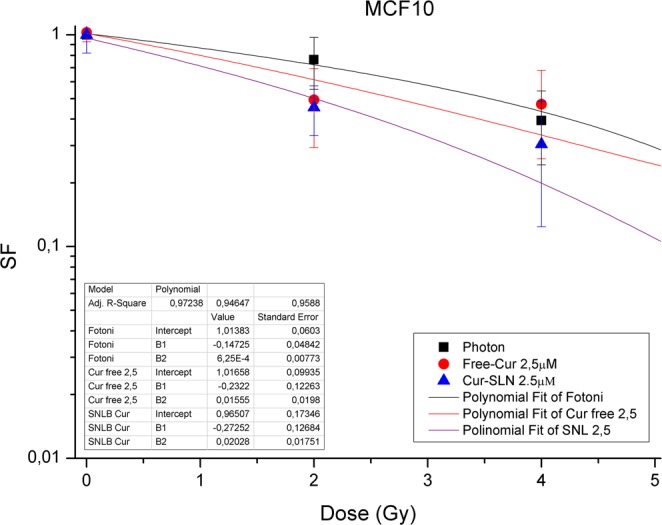
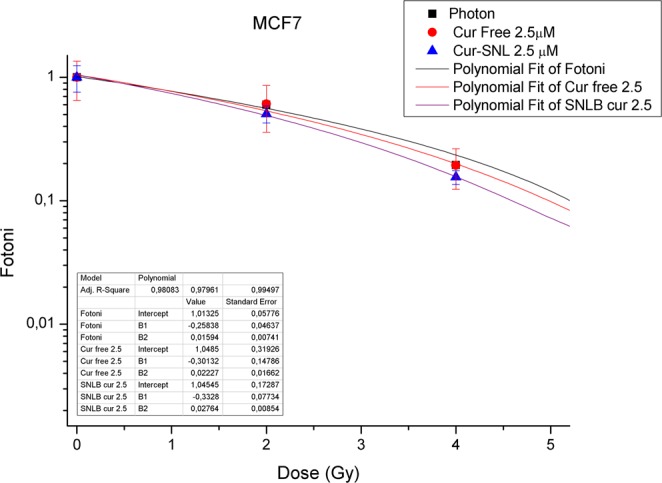
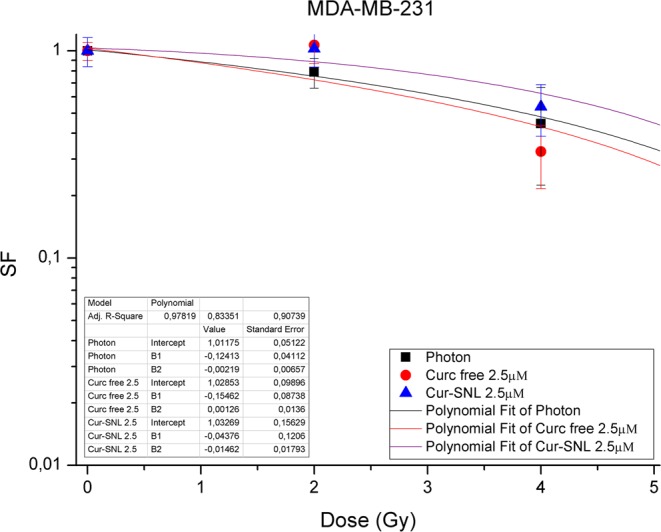
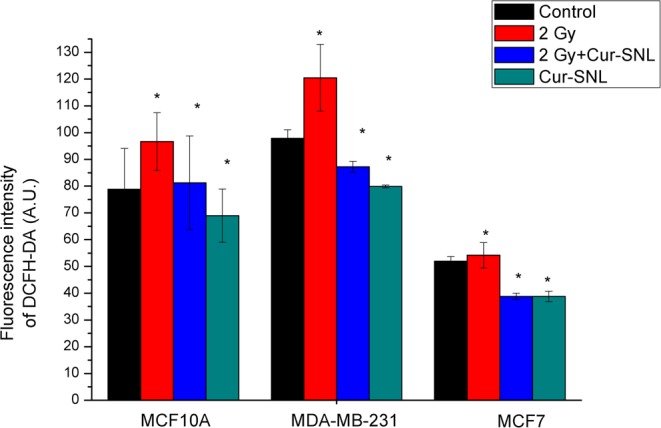
In breast cancer (BC) care, radiotherapy is considered an efficient treatment, prescribed both for controlling localized tumors or as a therapeutic option in case of inoperable, incompletely resected or recurrent tumors. However, approximately 90% of BC-related deaths are due to the metastatic tumor progression. Then, it is strongly desirable to improve tumor radiosensitivity using molecules with synergistic action. The main aim of this study is to develop curcumin-loaded solid nanoparticles (Cur-SLN) in order to increase curcumin bioavailability and to evaluate their radiosensitizing ability in comparison to free curcumin (free-Cur), by using an in vitro approach on BC cell lines. In addition, transcriptomic and metabolomic profiles, induced by Cur-SLN treatments, highlighted networks involved in this radiosensitization ability. The non tumorigenic MCF10A and the tumorigenic MCF7 and MDA-MB-231 BC cell lines were used. Curcumin-loaded solid nanoparticles were prepared using ethanolic precipitation and the loading capacity was evaluated by UV spectrophotometer analysis. Cell survival after treatments was evaluated by clonogenic assay. Dose–response curves were generated testing three concentrations of free-Cur and Cur-SLN in combination with increasing doses of IR (2–9 Gy). IC 50 value and Dose Modifying Factor (DMF) was measured to quantify the sensitivity to curcumin and to combined treatments. A multi-“omic” approach was used to explain the Cur-SLN radiosensitizer effect by microarray and metobolomic analysis. We have shown the efficacy of the Cur-SLN formulation as radiosensitizer on three BC cell lines. The DMFs values, calculated at the isoeffect of SF = 50%, showed that the Luminal A MCF7 resulted sensitive to the combined treatments using increasing concentration of vehicled curcumin Cur-SLN (DMF: 1,78 with 10 µM Cur-SLN.) Instead, triple negative MDA-MB-231 cells were more sensitive to free-Cur, although these cells also receive a radiosensitization effect by combination with Cur-SLN (DMF: 1.38 with 10 µM Cur-SLN). The Cur-SLN radiosensitizing function, evaluated by transcriptomic and metabolomic approach, revealed anti-oxidant and anti-tumor effects. Curcumin loaded- SLN can be suggested in future preclinical and clinical studies to test its concomitant use during radiotherapy treatments with the double implications of being a radiosensitizing molecule against cancer cells, with a protective role against IR side effects.
Overview
The claims and statistics of this paper haven’t been checked yet.
Free: it reads the open-access text and checks the first 5 claims that cite a source we can check. Create a free account to check every claim.
Integrity signals
Registry
Cites
Statistics
Figures
Verification
Claims the paper makes
The claims and statistics of this paper haven’t been checked yet.
Free: it reads the open-access text and checks the first 5 claims that cite a source we can check. Create a free account to check every claim.
Claims other papers make about this one
Each is checked against this paper’s own text: does it say what the citing paper says it does?
The cited source says what the claim attributes to it.
In the citing paper
“Therapeutic payload delivery was also commonly described, including chemotherapeutic agents, epigenetic modulators, and nucleic acid-based therapeutics [27,42,45,52,71,72,73].”
From Nanoparticle-Mediated Radiosensitization in Breast Cancer: A Systematic Review of Preclinical Evidence and Translational Challenges (2026) · cites this paper as [42]
Self-check
Percentages, sums and reported differences re-computed from the paper’s own numbers.
The self-check needs the paper’s full text.
Citations
Cites
NCBI GEO: archive for functional genomics data sets—update
Barrett, T., Wilhite, S. E., Ledoux, P., Evangelista, C., Kim, I. F., Tomashevsky, M., Marshall, K. A., Phillippy, K. H., Sherman, P. M., Holko, M., et al. (2012) · Nucleic Acids Research · doi:10.1093/nar/gks1193 · Cited by 10,418
Kunnumakkara, A. B., Anand, P., & Aggarwal, B. B. (2008) · Cancer Letters · doi:10.1016/j.canlet.2008.03.009 · Cited by 1,073
Wilken, R., Veena, M. S., Wang, M. B., & Srivatsan, E. S. (2011) · Molecular Cancer · doi:10.1186/1476-4598-10-12 · Cited by 1,066
Bartelink, H., Horiot, J.-C., Poortmans, P. M., Struikmans, H., Van den Bogaert, W., Fourquet, A., Jager, J. J., Hoogenraad, W. J., Oei, S. B., Wárlám-Rodenhuis, C. C., et al. (2007) · Journal of Clinical Oncology · doi:10.1200/jco.2007.11.4991 · Cited by 1,047
Biological response of cancer cells to radiation treatment
Baskar, R., Dai, J., Wenlong, N., Yeo, R., & Yeoh, K.-W. (2014) · Frontiers in Molecular Biosciences · doi:10.3389/fmolb.2014.00024 · Cited by 638
The Molecular Targets and Therapeutic Uses of Curcumin in Health and Disease
(2007) · ADVANCES IN EXPERIMENTAL MEDICINE AND BIOLOGY · doi:10.1007/978-0-387-46401-5 · Cited by 638
Smith, B. D., Bellon, J. R., Blitzblau, R., Freedman, G., Haffty, B., Hahn, C., Halberg, F., Hoffman, K., Horst, K., Moran, J., et al. (2018) · Practical Radiation Oncology · doi:10.1016/j.prro.2018.01.012 · Cited by 614
Oncogenic K‐Ras decouples glucose and glutamine metabolism to support cancer cell growth
Gaglio, D., Metallo, C. M., Gameiro, P. A., Hiller, K., Danna, L. S., Balestrieri, C., Alberghina, L., Stephanopoulos, G., & Chiaradonna, F. (2011) · Molecular Systems Biology · doi:10.1038/msb.2011.56 · Cited by 492
Self-citationShishodia, S., Amin, H. M., Lai, R., & Aggarwal, B. B. (2005) · Biochemical Pharmacology · doi:10.1016/j.bcp.2005.04.043 · Cited by 459
Curcumin confers radiosensitizing effect in prostate cancer cell line PC-3
Chendil, D., Ranga, R. S., Meigooni, D., Sathishkumar, S., & Ahmed, M. M. (2004) · Oncogene · doi:10.1038/sj.onc.1207284 · Cited by 308
Cited by
Ashrafizadeh, M., Zarrabi, A., Bigham, A., Taheriazam, A., Saghari, Y., Mirzaei, S., Hashemi, M., Hushmandi, K., Karimi‐Maleh, H., Nazarzadeh Zare, E., et al. (2023) · Medicinal Research Reviews · doi:10.1002/med.21971 · Cited by 207
Parvin, N., Aslam, M., Joo, S., & Mandal, T. K. (2025) · Molecules · doi:10.3390/molecules30153177 · Cited by 201
“Curcumin-loaded nanocarriers have shown greater HDAC inhibition and reactivation of silenced genes in leukemia models compared to free drug [126].”
Shrihastini, V., Muthuramalingam, P., Adarshan, S., Mariappan, S., Chen, J., Shin, H., & Ramesh, M. (2021) · Cancers · doi:10.3390/cancers13246222 · Cited by 157
Komorowska, D., Radzik, T., Kalenik, S., & Rodacka, A. (2022) · International Journal of Molecular Sciences · doi:10.3390/ijms231810627 · Cited by 95
“curcumin protects against IR in normal cells and reduces the survival rate of cancer cells that affect stimulation autophagy [47].”
BackgroundSandhu, S. K., Kumar, S., Raut, J. S., Singh, M., Kaur, S., Sharma, G., Roldan, T. L., Trehan, S., Holloway, J., Wahler, G., et al. (2021) · Antioxidants · doi:10.3390/antiox10050725 · Cited by 93
Space Radiation Protection Countermeasures in Microgravity and Planetary Exploration
Montesinos, C. A., Khalid, R., Cristea, O., Greenberger, J. S., Epperly, M. W., Lemon, J. A., Boreham, D. R., Popov, D., Gorthi, G., Ramkumar, N., et al. (2021) · Life · doi:10.3390/life11080829 · Cited by 99
Recent advances in phytochemical based nano-drug delivery systems to combat breast cancer: A review
Solanki, R., Jodha, B., Prabina, K. E., Aggarwal, N., & Patel, S. (2022) · Journal of Drug Delivery Science and Technology · doi:10.1016/j.jddst.2022.103832 · Cited by 81
Radiosensitization and Radioprotection by Curcumin in Glioblastoma and Other Cancers
Zoi, V., Galani, V., Tsekeris, P. G., Kyritsis, A. P., & Alexiou, G. Α. (2022) · Biomedicines · doi:10.3390/biomedicines10020312 · Cited by 79
“5–10 μM Deregulation of molecules involved in the induction of apoptosis, in the inflammatory process, in the cell cycle, and tyrosine metabolism [42]”
BackgroundAilioaie, L. M., Ailioaie, C., & Litscher, G. (2021) · Pharmaceutics · doi:10.3390/pharmaceutics13101562 · Cited by 75
“The authors demonstrated the antioxidant, radiosensitizing and anti-tumor capacity of Cur-SLN through a transcriptomic and metabolomic analysis [78].”
BackgroundXu, L., Li, W., Sadeghi‐Soureh, S., Amirsaadat, S., Pourpirali, R., & Alijani, S. (2021) · Journal of Biomedical Materials Research Part A · doi:10.1002/jbm.a.37288 · Cited by 67
Different nano-delivery systems for delivery of nutraceuticals
Rashidi, L. (2021) · Food Bioscience · doi:10.1016/j.fbio.2021.101258 · Cited by 72
Curcumin delivery and co-delivery based on nanomaterials as an effective approach for cancer therapy
Pourmadadi, M., Abbasi, P., Eshaghi, M. M., Bakhshi, A., Manicum, A.-L. E., Rahdar, A., Pandey, S., Jadoun, S., & Diez-Pascual, A. M. (2022) · Journal of Drug Delivery Science and Technology · doi:10.1016/j.jddst.2022.103982 · Cited by 73
Cava, C., & Castiglioni, I. (2020) · Applied Sciences · doi:10.3390/app10196981 · Cited by 60
“Curcumin is a diarylheptanoid, which is a natural phenol isolated from the Curcuma longa plant, and has multiple pleiotropic effects, such as the suppression of multiple signaling pathways, the inhibition of cell proliferation, and antimetastatic properties [66].”
BackgroundModification of radiosensitivity by Curcumin in human pancreatic cancer cell lines
Schwarz, K., Dobiasch, S., Nguyen, L., Schilling, D., & Combs, S. E. (2020) · Scientific Reports · doi:10.1038/s41598-020-60765-1 · Cited by 58
Zhou, R., Gong, J., Deng, X., Shen, L., Wu, S., Fan, H., & Liu, L. (2024) · Biomedicine & Pharmacotherapy · doi:10.1016/j.biopha.2024.117404 · Cited by 59
Askar, M. A., Elshawi, O. E., zaid, O. A., Mansour, N. A., & Hanafy, A. M. (2021) · Tumor Biology · doi:10.3233/tub-211506 · Cited by 53
Bioactive Compounds: Multi-Targeting Silver Bullets for Preventing and Treating Breast Cancer
Muniraj, N., Siddharth, S., & Sharma, D. (2019) · Cancers · doi:10.3390/cancers11101563 · Cited by 57
“Development of curcumin-loaded solid nanoparticles (Cur-SLN) [157], non-spherical mesoporous silica nanoparticles (MSNAs) [158], and HER2 aptamer-decorated curcumin-loaded human serum albumin nanoparticle (Apt-HSA/CCM NP) [159] are just few examples of nanoparticle approaches.”
BackgroundProspects of Curcumin Nanoformulations in Cancer Management
Amekyeh, H., ALKHADER, E. A., Sabra, R., & Billa, N. (2022) · Molecules · doi:10.3390/molecules27020361 · Cited by 54
“Minafra and colleagues [141] produced CUR-SLNs (302.”
Demir, B., Moulahoum, H., Ghorbanizamani, F., Barlas, F. B., Yeşiltepe, O., Gümüş, Z. P., Meral, K., Demirkol, D. O., & Tımur, S. (2021) · Journal of Drug Delivery Science and Technology · doi:10.1016/j.jddst.2021.102363 · Cited by 49
Zhang, J., Sun, J., Li, C., Qiao, H., & Hussain, Z. (2023) · Journal of Nanobiotechnology · doi:10.1186/s12951-023-01854-x · Cited by 47
“[93] proposed a synergistic therapy with Cur-SLNs (as a radiosensitizer and synergistic molecule) and radiotherapy (2–9 Gy) for the superior therapeutic outcomes against the BC.”
BackgroundCammarata, F. P., Torrisi, F., Forte, G. I., Minafra, L., Bravatà, V., Pisciotta, P., Savoca, G., Calvaruso, M., Petringa, G., Cirrone, G. A. P., et al. (2019) · International Journal of Molecular Sciences · doi:10.3390/ijms20194745 · Cited by 46
“2 software (Agilent Technologies), and pathway analysis conducted by using DAVID database, were performed as previously described [76].”
MethodSelf-citationTargeting triple negative breast cancer stem cells using nanocarriers
Dasari, N., Guntuku, G., & Pindiprolu, S. K. S. S. (2024) · Discover Nano · doi:10.1186/s11671-024-03985-y · Cited by 50
Nutraceutical Compounds as Sensitizers for Cancer Treatment in Radiation Therapy
Calvaruso, M., Pucci, G., Musso, R., Bravatà, V., Cammarata, F. P., Russo, G. I., Forte, G. I., & Minafra, L. (2019) · International Journal of Molecular Sciences · doi:10.3390/ijms20215267 · Cited by 48
“5 μM), revealed a double action of Curcumin, as an anti-oxidant, with a protective role against IR, and as an antitumor compound, given its ability to stimulate autophagy [17].”
BackgroundSelf-citationMehranfard, N., Ghasemi, M., Rajabian, A., & Ansari, L. (2023) · Heliyon · doi:10.1016/j.heliyon.2023.e22820 · Cited by 46
A quantum-inspired classifier for clonogenic assay evaluations
Sergioli, G., Militello, C., Rundo, L., Minafra, L., Torrisi, F., Russo, G. I., Chow, K. L., & Giuntini, R. (2021) · Scientific Reports · doi:10.1038/s41598-021-82085-8 · Cited by 40
Self-citationArab-Bafrani, Z., Zabihi, E., Jafari, S. M., Khoshbin-Khoshnazar, A., Mousavi, E., Khalili, M., & Babaei, A. (2021) · International Journal of Pharmaceutics · doi:10.1016/j.ijpharm.2021.120828 · Cited by 39
Current Advances in Nanotechnology-Mediated Delivery of Herbal and Plant-Derived Medicines
Jalili, A., Bagherifar, R., Nokhodchi, A., Conway, B. R., & Javadzadeh, Y. (2023) · Advanced Pharmaceutical Bulletin · doi:10.34172/apb.2023.087 · Cited by 42
Peng, Y., Li, X., Gu, P., Cheng, W., Zhang, R., & Hu, K. (2022) · Journal of Drug Delivery Science and Technology · doi:10.1016/j.jddst.2022.103497 · Cited by 37
Talik Sisin, N. N., Abdul Razak, K., Zainal Abidin, S., Che Mat, N. F., Abdullah, R., Ab Rashid, R., Khairil Anuar, M. A., & Rahman, W. N. (2020) · International Journal of Nanomedicine · doi:10.2147/ijn.s269214 · Cited by 36
Curcumin and Glu‐GNPs Induce Radiosensitivity against Breast Cancer Stem‐Like Cells
Ke, Y., Liao, Z., Wu, Y., Li, M., Guo, T., Lin, J., Li, Y., & Hu, C. (2020) · BioMed Research International · doi:10.1155/2020/3189217 · Cited by 35
Molecular Investigation on a Triple Negative Breast Cancer Xenograft Model Exposed to Proton Beams
Cammarata, F. P., Forte, G. I., Broggi, G., Bravatà, V., Minafra, L., Pisciotta, P., Calvaruso, M., Tringali, R., Tomasello, B., Torrisi, F., et al. (2020) · International Journal of Molecular Sciences · doi:10.3390/ijms21176337 · Cited by 35
Self-citationRadioprotectors, Radiomitigators, and Radiosensitizers
Montoro, A., Obrador, E., Mistry, D., Forte, G. I., Bravatà, V., Minafra, L., Calvaruso, M., Cammarata, F. P., Falk, M., Schettino, G., et al. (2023) · Springer eBooks · doi:10.1007/978-3-031-18810-7_11 · Cited by 34
Self-citationCalvaruso, M., Militello, C., Minafra, L., Regina, V. L., Torrisi, F., Pucci, G., Cammarata, F. P., Bravatà, V., Forte, G. I., & Russo, G. I. (2021) · Life · doi:10.3390/life11111190 · Cited by 34
“On these bases, we wanted to characterize mechanically the random positioning machine (RPM) and to investigate the biological effects of simulated microgravity (s-μg) on a TNBC cell line, the human MDA-MB-231, that we have used extensively as both in vitro and in vivo models for our previous studies [18,32].”
MethodSelf-citationRadiosensitizing Potential of Curcumin in Different Cancer Models
Sak, K. (2019) · Nutrition and Cancer · doi:10.1080/01635581.2019.1681480 · Cited by 31
The State of the Art of Theranostic Nanomaterials for Lung, Breast, and Prostate Cancers
de Freitas, L. F., Ferreira, A. H., Thipe, V. C., Varca, G. H. C., de Lima, C. S. A., Batista, J. G. S., Riello, F. N., Nogueira, K. M., da Cruz, C. P. C., Mendes, G. O. A., et al. (2021) · Nanomaterials · doi:10.3390/nano11102579 · Cited by 32
Wang, N., Zhang, Y., Liu, H., Wang, A., Ren, T., Gou, J., Zhang, Y. X., Yin, T., He, H., & Tang, X. (2020) · Molecular Pharmaceutics · doi:10.1021/acs.molpharmaceut.0c00718 · Cited by 30
Firat, E., & Niedermann, G. (2016) · Oncotarget · doi:10.18632/oncotarget.10702 · Cited by 33
Askar, M. A., Thabet, N. M., El-Sayyad, G. S., El-Batal, A. I., Elkodous, M. A., Kawamura, G., Matsuda, A., Elshawi, O. E., Helal, H., & Abdel-Rafei, M. K. (2021) · Cancers · doi:10.3390/cancers13215571 · Cited by 29
“Survival curves were calculated, to derive the Dose-Modifying Factor (DMF); this was calculated at the iso-effect of survival fraction (SF) = 50% with radiation treatment alone respective to combined treatments [26].”
MethodLipid-based Nanoparticles for the Targeted Delivery of Anticancer Drugs: A Review
Moghaddam, M. M., Khodaverdi, H., Zeini, M. S., Vazifedust, S., Akbariqomi, M., & Tebyanian, H. (2022) · Current Drug Delivery · doi:10.2174/1567201819666220117102658 · Cited by 29
Sahli, F., Courcelle, M., Palama, T., Djaker, N., Savarin, P., & Spadavecchia, J. (2020) · Journal of Medicinal Chemistry · doi:10.1021/acs.jmedchem.0c00694 · Cited by 28
Detappe, A., Mathieu, C., Jin, C., Agius, M. P., Diringer, M.-C., Tran, V.-L., Pivot, X., Lux, F., Tillement, O., Kufe, D., et al. (2020) · International Journal of Radiation Oncology*Biology*Physics · doi:10.1016/j.ijrobp.2020.06.069 · Cited by 27
Askar, M. A., Thabet, N. M., El-sayyad, G. S., El-Batal, A. I., kodous, M. A. E., Kawamura, G., Matsuda, A., Shawi, O. E. E., Helal, H., & Abdel-Rafei, M. K. (2021) · doi:10.21203/rs.3.rs-910507/v1 · Cited by 27
RETRACTED: Potential Role of Natural Products to Combat Radiotherapy and Their Future Perspectives
Akter, R., Najda, A., Rahman, M. H., Shah, M., Wesołowska, S., Hassan, S. S. U., Mubin, S., Bibi, P., & Saeeda, S. (2021) · Molecules · doi:10.3390/molecules26195997 · Cited by 27
RetractedAfereydoon, S., Haghiralsadat, F., Hamzian, N., Shams, A., Hemati, M., Naghib, S. M., Shabani, M., Zandieh‐Doulabi, B., & Tofighi, D. (2022) · Frontiers in Bioengineering and Biotechnology · doi:10.3389/fbioe.2022.917368 · Cited by 26
Afarin, R., Ahmadpour, F., Hatami, M., Monjezi, S., & Igder, S. (2024) · Heliyon · doi:10.1016/j.heliyon.2024.e31925 · Cited by 26
“Additionally, this mechanism is involved in reducing fibrosis, which is controlled by TGF β , a process that is also regulated by NF-kB transcription [6,7].”
BackgroundSharma, J. B., Bhatt, S., Saini, V., & Kumar, M. (2021) · Assay and Drug Development Technologies · doi:10.1089/adt.2021.017 · Cited by 25
Utilizing pharmacological properties of polyphenolic curcumin in nanotechnology
Elanthendral, G., Shobana, N., Meena, R., Prakash, P. R., & Samrot, A. V. (2021) · Biocatalysis and Agricultural Biotechnology · doi:10.1016/j.bcab.2021.102212 · Cited by 22
Cytotoxic and radiosensitising effects of a novel thioredoxin reductase inhibitor in breast cancer
Abdullah, N. A., Inman, M. W., Moody, C. J., Storr, S. J., & Martin, S. G. (2021) · Investigational New Drugs · doi:10.1007/s10637-021-01106-5 · Cited by 20
Recent Update on Nanocarrier(s) as the Targeted Therapy for Breast Cancer
Mukherjee, D., & Raikwar, S. (2024) · AAPS PharmSciTech · doi:10.1208/s12249-024-02867-x · Cited by 21
Wang, W.-H., Shen, C.-Y., Chien, Y.-C., CHANG, W.-S., Tsai, C.-W., Lin, Y.-H., & Hwang, J. (2020) · International Journal of Molecular Sciences · doi:10.3390/ijms21124385 · Cited by 20
Liposomal Nano-Based Drug Delivery Systems for Breast Cancer Therapy: Recent Advances and Progresses
Yazdan, M., Naghib, S. M., & Moepubi, M. R. (2024) · Anti-Cancer Agents in Medicinal Chemistry · doi:10.2174/0118715206293653240322041047 · Cited by 20
Glut-3 Gene Knockdown as a Potential Strategy to Overcome Glioblastoma Radioresistance
Pucci, G., Minafra, L., Bravatà, V., Calvaruso, M., Turturici, G., Cammarata, F. P., Savoca, G., Abbate, B. F., Russo, G. I., Cavalieri, V., et al. (2024) · International Journal of Molecular Sciences · doi:10.3390/ijms25042079 · Cited by 17
“Cell viability was calculated by subtracting the luminescent dead-cell signal from the total luminescent value and normalizing data to the total cell number.”
MethodSelf-citationCombining Nanocarrier-Assisted Delivery of Molecules and Radiotherapy
Gomes, E. R., & Franco, M. S. (2022) · Pharmaceutics · doi:10.3390/pharmaceutics14010105 · Cited by 16
“CUR has also been found to increase the intrinsic and extrinsic apoptosis pathways induced by RT [46].”
BackgroundMethodHarnessing curcumin and nanotechnology for enhanced treatment of breast cancer bone metastasis
Poshteh, S. S., Alipour, S., & Varamini, P. (2024) · Discover Nano · doi:10.1186/s11671-024-04126-1 · Cited by 17
Radiation Therapy Personalization in Cancer Treatment: Strategies and Perspectives
Calvaruso, M., Pucci, G., Alberghina, C., & Minafra, L. (2025) · International Journal of Molecular Sciences · doi:10.3390/ijms26136375 · Cited by 16
“We performed an “omic” study at the transcriptomic and metabolomic level to highlight the action mechanisms of a new formulation of Curcumin, carried with lipid nanoparticles, in producing radiosensitivity effects on the three different BC cell lines [80].”
Self-citationMilitello, C., Rundo, L., Minafra, L., Cammarata, F. P., Calvaruso, M., Conti, V., & Russo, G. I. (2020) · Symmetry · doi:10.3390/sym12050773 · Cited by 14
“In the near future, we plan to increase the number of samples per experimental setting, as well as test MF2C3 on other cell lines according to the next biological in vivo studies [61].”
BackgroundSelf-citationCarneiro, T. J., Araújo, R., Vojtek, M., Gonçalves‐Monteiro, S., de Carvalho, A. L. M. B., Marques, M. P. M., Diniz, C., & Gil, A. M. (2021) · International Journal of Molecular Sciences · doi:10.3390/ijms221910775 · Cited by 12
Nouri, Z., Sajadimajd, S., Bahrami, G., Moradi, S., Abdi, F., Farzaei, M. H., & Arkan, E. (2022) · Journal of Nanomaterials · doi:10.1155/2022/7254212 · Cited by 11
“The incorporation of Rut led to a slight enhance in the size and PDI of the Rut-SLNs which was consistent with other studies [20, 37].”
ResultMingoia, F., Sano, C. D., D’Anna, C., Fazzari, M., Minafra, L., Bono, A., Monica, G. L., Martorana, A., Almerico, A. M., & Lauria, A. (2023) · European Journal of Medicinal Chemistry · doi:10.1016/j.ejmech.2023.115537 · Cited by 11
Self-citationSharma, J. B., Sherry, S., Bhatt, S., Saini, V., & Kumar, M. (2021) · Research Journal of Pharmacy and Technology · doi:10.52711/0974-360x.2021.00520 · Cited by 11
Sisin, N. N. T., & Rahman, W. N. (2023) · BioNanoScience · doi:10.1007/s12668-022-01057-y · Cited by 13
“Other natural compounds which had been evaluated on their radiosensitization effects include quercetin [162, 163], curcumin [139, 164, 165], gallotannin [166], Agelas sp.”
BackgroundAdjuvant Anti-tumor Therapy with Polyphenolic Compounds: A Review
Фанилевич, Г. И., Jiang, J., Beylerli, O., Beilerli, A., Ilyasova, T., Shumadalova, A. V., Bai, Y., Du, W., & Yang, B. (2024) · Current Medicinal Chemistry · doi:10.2174/0109298673284605240301035057 · Cited by 10
Savoca, G., Calvaruso, M., Minafra, L., Bravatà, V., Cammarata, F. P., Iacoviello, G., Abbate, B. F., Evangelista, G., Spada, M., Forte, G. I., et al. (2020) · Journal of Personalized Medicine · doi:10.3390/jpm10040177 · Cited by 10
“In particular, the BcPcEMT cells were characterized by a strong “epithelial to mesenchymal transition” (EMT) phenotype [25,26,33].”
InfluentialSelf-citationNanomaterial-Based Antivascular Therapy in the Multimodal Treatment of Cancer
Ma, X., Fang, W., Wang, D., Shao, N., Chen, J., Nie, T., Huang, C., Huang, Y., Luo, L., & Xiao, Z. (2023) · Pharmaceutics · doi:10.3390/pharmaceutics15041207 · Cited by 10
“Minafra developed a solid nanoparticle (Cur-SLN) containing curcumin that inhibits VEGF and IL-8 and improves the efficacy of radiotherapy [135].”
BackgroundWinuprasith, T., Koirala, P., McClements, D. J., & Khomein, P. (2023) · International Journal of Nanomedicine · doi:10.2147/ijn.s416737 · Cited by 11
“For example, curcumin-loaded solid lipid nanoparticles (SLNs) have been prepared using an emulsion-templating technique.(112) These SLNs were then used as a radiosensitizer in breast cancer cells.”
MethodRadiation Without Borders: Unraveling Bystander and Non-Targeted Effects in Oncology
Ramamurthy, M. O., Subramanian, P., Aravindan, S., Periyasamy, L., & Aravindan, N. (2025) · Cells · doi:10.3390/cells14221761 · Cited by 9
Mechanisms of traditional Chinese medicine overcoming of radiotherapy resistance in breast cancer
Zhao, X., Luo, T., Qiu, Y., Yang, Z., Wang, D., Wang, Z., Zeng, J., & Bi, Z. (2024) · Frontiers in Oncology · doi:10.3389/fonc.2024.1388750 · Cited by 13
“In summary, through its antioxidant and anti-tumor effects, curcumin sensitizes the cells to radiotherapy (92).”
BackgroundBiocomposite Complex Hydrogels With Antimicrobial Activity Suitable for Wound Healing
Raţă, D. M., Cadinoiu, A. N., Vochița, G., Gherghel, D., Lakkaboyana, S. K., Fuioagă, C. P., Atanase, L. I., & Ichim, D. L. (2025) · Journal of Polymer Science · doi:10.1002/pol.20241166 · Cited by 10
Huang, C., Wei, P., Prince, G. M. S. H., Batzorig, U., Lee, C.-C., Chang, Y., & Hung, C. (2023) · Biomedicines · doi:10.3390/biomedicines11051384 · Cited by 9
“Curcumin combined with clinical radiation could be a more effective way of treating breast cancer patients according to TM expression [53]; however, further investigations are required.”
BackgroundChun, D., Tian, Y., Duan, W., Chen, X., Ren, W., & Deng, Q. (2021) · Radiation Research · doi:10.1667/rade-20-00239.1 · Cited by 9
“HUSFs, which were slightly higher than those in other cells, especially tumor cells, such as breast cancer cells (19), colon cancer cells (20), hepatocellular carcinoma cells (21), oral squamous cell carcinoma (22), to name a few.”
BackgroundChang, S., Kim, S., Kim, H. J., Jeong, Y. J., & Lee, K. C. (2021) · International Journal of Peptide Research and Therapeutics · doi:10.1007/s10989-021-10313-w · Cited by 8
“Therefore, radiosensitizers have been developed and specifically identified for breast cancer treatment to improve the efficacy of radiation therapy (Mayahi et al. 2020; Minafra et al. 2019).”
BackgroundThabet, N. M., Abdel-Rafei, M. K., El-Sayyad, G. S., Elkodous, M. A., Shaaban, A., Du, Y.-C., Rashed, L. A., & Askar, M. A. (2022) · Cancer Nanotechnology · doi:10.1186/s12645-022-00122-1 · Cited by 7
“inhibition assays, the survival curves were calculated and utilized to obtain the DoseModifying Factor (DMF) calculated at the iso-effect of survival fraction (SF) = 50% with radiation treatment alone respect to combined treatments (Minafra et al. 2019).”
MethodAbdel-Rafei, M. K., Azab, K. S., El-Sayyad, G. S., Askar, M. A., Elkodous, M. A., Fatih, N. M. E., Tawill, G. E., & Thabet, N. M. (2022) · Current Cancer Drug Targets · doi:10.2174/1568009622666220816123508 · Cited by 8
Curcumin‘s antineoplastic, radiosensitizing and radioprotective properties
Cihan, Y. B. (2021) · Klinicka onkologie · doi:10.48095/ccko2021273 · Cited by 6
Alzeer, R. M., Al-Hadyan, K., Al-Harbi, N., Judia, S. S. B., Almeer, R., & Alsbeih, G. (2023) · Toxins · doi:10.3390/toxins15120701 · Cited by 5
Curcumin’s Radioprotective Effects on Zebrafish Embryos
Pucci, G., Savoca, G., Iacoviello, G., Russo, G. I., Forte, G. I., & Cavalieri, V. (2024) · Antioxidants · doi:10.3390/antiox13111281 · Cited by 7
Self-citationRaeisi, E., Heidari-Soureshjani, S., Sherwin, C. M. T., Lemoigne, Y., & Mardani-Nafchi, H. (2025) · Current Cancer Drug Targets · doi:10.2174/0115680096360434250211042759 · Cited by 6
Role of Phytochemicals in the Treatment of Breast Cancer: Natural Swords Battling Cancer Cells
Sawanny, R., Pramanik, S., & Agarwal, U. (2021) · Current Cancer Therapy Reviews · doi:10.2174/1573394716666210106123255 · Cited by 5
Shivarani, P., Beesappagari, P., Repollu, M., Badiginchala, P., Qudsiya, S., Mala, C. U. S., Ravi, G., & Bhargav, E. (2025) · Assay and Drug Development Technologies · doi:10.1089/adt.2024.125 · Cited by 5
“…cells, 15 surface-modified CUR-SLN development by Jong-Suep Baek et al., 16 delivery of CUR through radiosensitized SLN by Luigi Minafra et al., 17 and prolonged CUR-SLN formulation by Jiabei Sun et al. 18 LS niosomes on Michigan Cancer Foundation-7 (MCF-7) cell lines by Mahmood Barani et al.…”
Shiridokht, F., Kehtari, P., Eskandani, M., Farajollahi, A., & Vandghanooni, S. (2025) · International Journal of Pharmaceutics: X · doi:10.1016/j.ijpx.2025.100419 · Cited by 4
Ultrasmall Platinum Nanoparticles for Radiation‐Enhanced Cancer Therapy
Encinas‐Giménez, M., García-Peiro, J. I., Hueso, J. L., Caleiras, E. J., Notario, L., Hornos, F., Martín‐Duque, P., la Vieja, A. D., & Santamaria, J. (2026) · Advanced Functional Materials · doi:10.1002/adfm.202600051 · Cited by 4
“This approach is conceptually analogous to the “dose-modifying ratio at 50% survival” and “dose-modifying factor at SF_50” commonly used in nanoparticle radio sensitization studies [70, 71], adapted here to our viability-based assay rather than clonogenic survival.”
γ-radiation-induced damage on normal hepatocytes and its protection by ethyl cinnamate
Mukherjee, S., Dutta, A., & Chakraborty, A. (2023) · Journal of Radioanalytical and Nuclear Chemistry · doi:10.1007/s10967-023-09067-0 · Cited by 4
“A variety of phytocompounds with antioxidant properties, such as resveratrol [21–23], curcumin [24, 25], ferulic acid [26, 27], and trans-resveratrol [28], exert radio-modulatory functions in both normal and cancer cells.”
Nanotechnology based delivery of nutraceuticals
Gurav, S. S., Nadaf, S., Jena, G. K., & Gurav, N. S. (2023) · Elsevier eBooks · doi:10.1016/b978-0-443-19193-0.00006-x · Cited by 4
Toossi, M. T. B., Vaziri, F., Gholamhoseinian, H., Azimian, H., Jaafari, M. R., Negah, S. S., & Dolat, E. (2025) · Molecular Biology Reports · doi:10.1007/s11033-025-11360-y · Cited by 3
“Additionally, curcumin exerted protective effects in normal cells by activating inhibitory mechanisms within the NF-κB signaling pathway, thereby reducing inflammation through downregulation of inflam - matory cytokines such as interleukins and decreasing free radical levels [31 ].”
Dourado, D., Alencar, É. D. N., de Oliveira, M. C., Pereira, D. T., Amorim, T. A., Freire, D. T., & do Egito, E. S. T. (2024) · Elsevier eBooks · doi:10.1016/b978-0-443-15412-6.00007-6 · Cited by 4
Lunca, S., Morarasu, S., & Dimofte, G. M. (2026) · International Journal of Molecular Sciences · doi:10.3390/ijms27146522 · Cited by 2
“Therapeutic payload delivery was reported across multiple studies, including chemotherapeutic agents, epigenetic modulators, and nucleic acid-based therapeutics [16,27,42,45,52].”
Pradhan, S., & Pattanaik, S. (2026) · Current Cancer Therapy Reviews · doi:10.2174/0115733947415593251128063911 · Cited by 2
Calvaruso, M., Panizza, D., Colciago, R. R., Faccenda, V., Pucci, G., Ponti, E. D., Forte, G. I., Russo, G. I., Minafra, L., & Arcangeli, S. (2025) · Biomedicines · doi:10.3390/biomedicines13092154 · Cited by 2
“The human TNBC MDA-MB-231 cell line was purchased from the American Type Culture Collection (ATCC, Manassas, VA, USA) and cultured according to standard conditions, as previously described [9].”
InfluentialSelf-citationTurmeric: A Spice Modulating Immune Response and Combatting Cancer – literature overview
Gregułą, A., Mazur, B., Stachyrak, K., Mika, D., Kłos, A., Turek, K., Lambach, M., Pawlicki, M., Mazurek, A., & Wilanowska, W. (2024) · Journal of Education Health and Sport · doi:10.12775/jehs.2024.60.015 · Cited by 1
Esmaeli, M., Ghanbari, A., Dehabadi, M. D., Nazri, P., Manesh, E. P., & Khaleghi, A. A. (2025) · Indian Journal of Gynecologic Oncology · doi:10.1007/s40944-025-00969-3 · Cited by 1
“L. Minafra et al. showed that solid nanoparticles loaded with curcumin increased the radiosensitivity of breast cancer cells compared to free curcumin [17].”
Qiu, C., Chen, D., Yu, Y., Lee, Y. Y., Tan, C. P., & Wang, Y. (2026) · Food and Bioproducts Processing · doi:10.1016/j.fbp.2026.01.013 · Cited by 1
Goudarzi, N., Bahadoran, E., Alaei, M., Taebi, K., Ashrafzadeh, A., Shahbaz, A. K., & Shahbaz, S. K. (2026) · Journal of Chemistry · doi:10.1155/joch/3870015 · Cited by 1
Al-Abdulhadi, S., Majeed, A. A., Polatova, D., Suliman, M., PadmaPriya, G., Karthikeyan, J., Arora, V., Nayak, P. P., Al‐Rashidi, R. R., & Kadhum, W. R. (2026) · Biotechnology Journal · doi:10.1002/biot.70242 · Cited by 1
Paliwal, R., & Paliwal, S. R. (2020) · Springer eBooks · doi:10.1007/978-981-15-9692-6_4 · Cited by 1
Nanotechnology based docetaxel
Kaur, I. P., Singh, J., Goel, S., Jain, S., Singh, A., Pandit, C., Alluri, P. G., Soni, U., Barnwal, R. P., Bhatia, A., et al. (2022) · Elsevier eBooks · doi:10.1016/b978-0-12-821789-4.00006-0 · Cited by 2
Ullah, S., Naveed, M., Ali, A., Bibi, S., Idrees, W., Rafique, S., Idrees, M., Waqas, M. S., Uddin, J., Jan, A., et al. (2024) · Heliyon · doi:10.1016/j.heliyon.2024.e24581 · Cited by 1
“USP18 upregulation stimulates HCV production and dulls the anti-HCV effects of Interferons [31].”
BackgroundEmerging Nanomaterial-Based Medications: Key Challenges and Opportunities
Reis, J. D. C., Oliveira, T., & Payan‐Carreira, R. (2021) · Springer eBooks · doi:10.1007/978-3-030-67223-2_4
Bioactive compounds of turmeric and their pharmacological effect
Shahrin, A., Akter, C., Khan, S. I., & Karim, R. (2022) · Journal of Multidisciplinary Sciences · doi:10.33888/jms.2022.421 · Cited by 1
“Moreover, curcumin's radiosensitizing effect on breast cancer cells has been reported (Minafra et al., 2019).”
Nanoradiosensitzers: Preparation, Characterization and Their Performance
Anwar, H., Abbas, B., Khalid, M., Yunas, K., Nosrati, H., Danafar, H., & Sharma, S. K. (2022) · Nanomedicine and nanotoxicology · doi:10.1007/978-3-031-04071-9_4 · Cited by 1
Chemopreventive approach of Indian spice “Curcumin” in the treatment of breast cancer
Deb, A., Mishra, M., Kumar, B., Pandey, N. K., Singh, S., Baghel, D. S., Mazumder, R., & Porwal, O. (2023) · Trends in Immunotherapy · doi:10.24294/ti.v8.i1.2211
“Radio sensitizing effect of curcumin‐loaded lipid nanoparticles in also showed beneficial effect in breast cancer cells [110] .”
Background
Metadata
- Authors
- Minafra, L., Porcino, N., Bravatà, V., Gaglio, D., Bonanomi, M., Amore, E., Cammarata, F. P., Russo, G., Militello, C., Savoca, G., Baglio, M., Abbate, B., Iacoviello, G., Evangelista, G., Gilardi, M. C., Bondì, M. L., & Forte, G. I.
- Affiliations
- Institute of Molecular Bioimaging and Physiology (IT)
- University of Milano-Bicocca (IT)
- Institute of Nanostructured Materials (IT)
- Corresponding author
- Bravatà, Valentina
- ORCID
- Venue
- Scientific Reports
- Published
- 2019-07-31
- Volume
- 9
- Issue
- 1
- Pages
- 11134-11134
- ISSN
- 2045-2322 (ISSN-L)
- PMC
- PMC6668411
- OpenAlex
- W2754565030
- Cited by
- 108
- References
- 55
- Citations by year
- 2026: 12 · 2025: 11 · 2024: 14 · 2023: 14 · 2022: 16 · 2021: 24 · 2020: 12 · 2019: 4
- FWCI
- 4.84
- Type
- journal article
- Language
- en
- Open access
- gold
- doi.org
- Licence
- cc-by
- creativecommons.org/licenses/by/4.0 (tdm)
- creativecommons.org/licenses/by/4.0 (vor)
- Locations
- Scientific Reports (publishedVersion, cc-by)
- Europe PMC (PubMed Central) (publishedVersion, cc-by)
- PubMed Central (publishedVersion, cc-by)
- PubMed (publishedVersion)
- BOA (University of Milano-Bicocca) (submittedVersion, other-oa)
- DOAJ (DOAJ: Directory of Open Access Journals) (submittedVersion)
- Funders
- Università degli Studi di Palermo
- Topics
- Life Sciences › Biochemistry, Genetics and Molecular Biology › Molecular Medicine › Curcumin's Biomedical Applications
- Physical Sciences › Physics and Astronomy › Radiation › Radiation Therapy and Dosimetry
- Physical Sciences › Engineering › Biomedical Engineering › Nanoplatforms for cancer theranostics
- Keywords
- curcumin, solid lipid nanoparticles, radiosensitization, breast cancer, radiotherapy, dose modification factor, MCF-7 cells, MDA-MB-231 cells, MCF10A cells, gene expression profiling, metabolite profiling, antioxidant activity, triple-negative breast cancer, luminal A, curcumin bioavailability, clonogenic survival
- MeSH terms
- Antineoplastic Agents, Breast Neoplasms, Cell Survival, Curcumin, Drug Carriers, Female, Humans, Lipids, Particle Size, Radiation-Sensitizing Agents, Drug Delivery Systems, Apoptosis, Cell Line, Tumor, Nanoparticles, MCF-7 Cells
About these checks
Registry, retraction, Cites and statistics results are computed, not judged, with one exception: a printed reference that no index lists is read once by a model before it counts as a citation error. Claims are extracted by a model and kept only when their quote appears verbatim in the text; each cited source is then checked, with a model’s help, for whether it says what the claim relies on. Those verdicts can be wrong — read the claim’s quote and the cited source before relying on one.
Statistics and arithmetic are recomputed, not judged.
Confidence bands are shown only for fields calibrated on our annotated test set. None is calibrated yet, so no band is shown.
What counts as a claim ›How we measure confidence ›How we check this ›
Are you an author, or do you see a problem with this page? Request a review
Data sources
Bibliographic data: Semantic Scholar, OpenAlex, Crossref.
Contains information from the Semantic Scholar Academic Graph Datasets, made available under the ODC Attribution License (ODC-BY 1.0).
Semantic Scholar’s data is described in: Kinney, R., et al. (2023). The Semantic Scholar Open Data Platform. arXiv:2301.10140.
