

Radiosensitizing effect of curcumin-loaded lipid nanoparticles in breast cancer cells
Open accessThe DOI matches its Crossref record; 55 of the 55 references it cites were found in a registry or an index.
Abstract
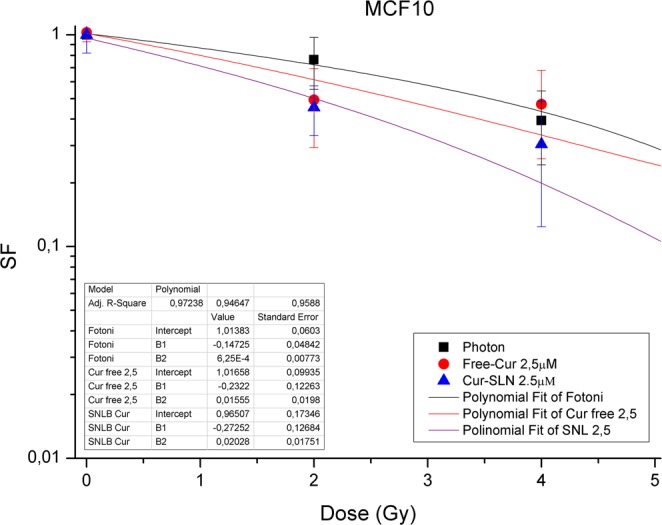
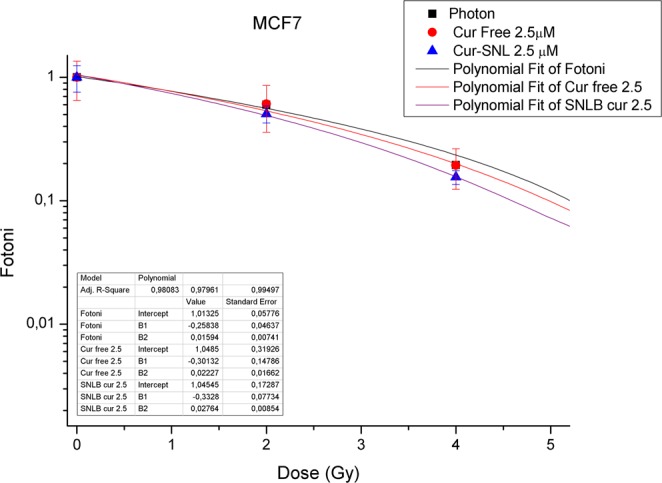
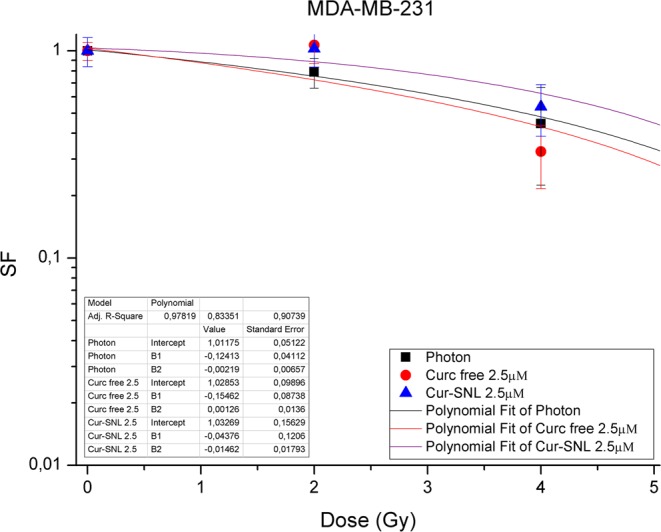
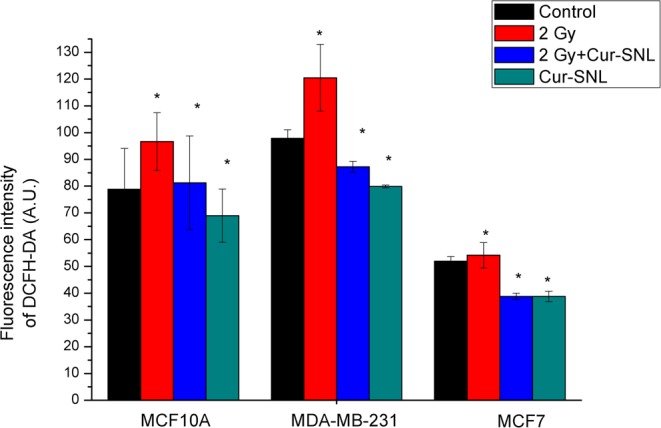
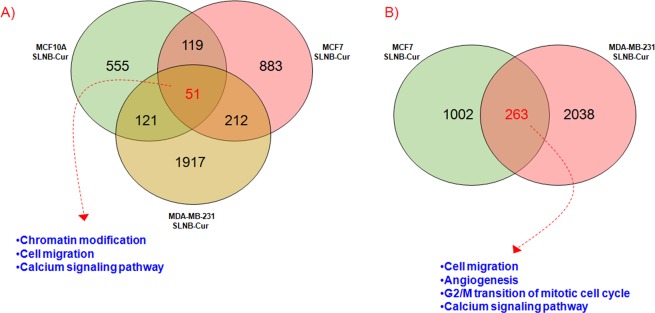
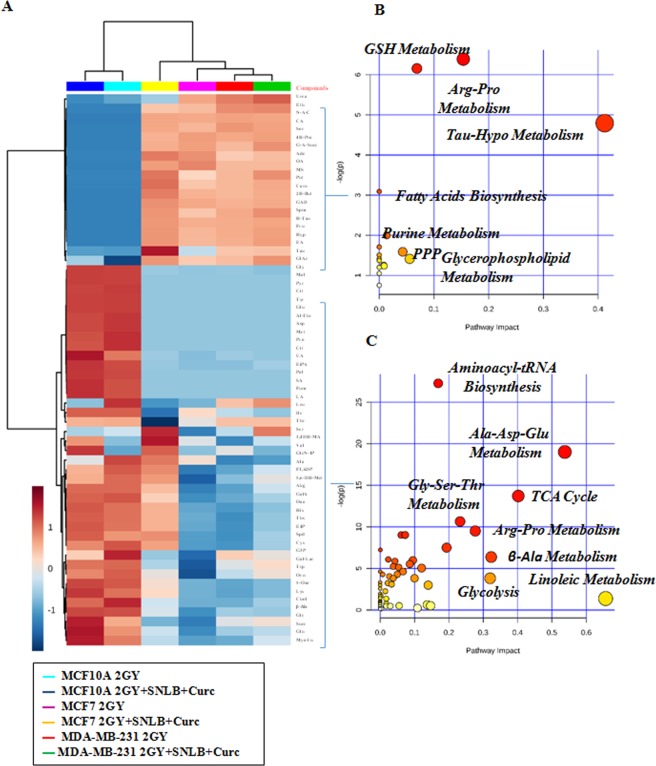
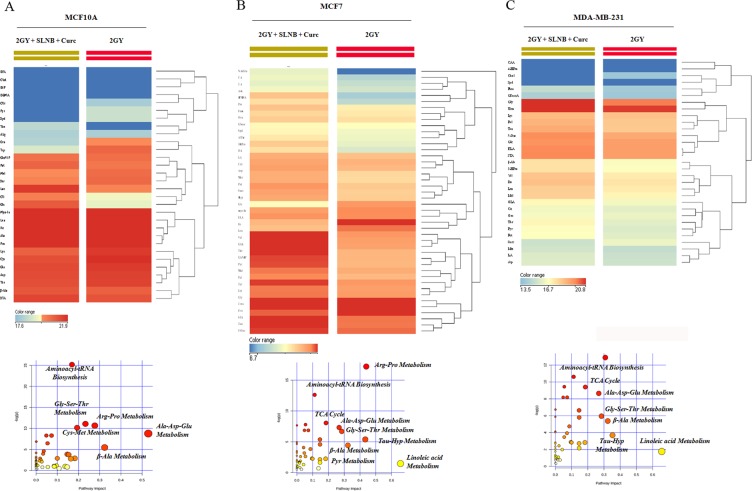
In breast cancer (BC) care, radiotherapy is considered an efficient treatment, prescribed both for controlling localized tumors or as a therapeutic option in case of inoperable, incompletely resected or recurrent tumors. However, approximately 90% of BC-related deaths are due to the metastatic tumor progression. Then, it is strongly desirable to improve tumor radiosensitivity using molecules with synergistic action. The main aim of this study is to develop curcumin-loaded solid nanoparticles (Cur-SLN) in order to increase curcumin bioavailability and to evaluate their radiosensitizing ability in comparison to free curcumin (free-Cur), by using an in vitro approach on BC cell lines. In addition, transcriptomic and metabolomic profiles, induced by Cur-SLN treatments, highlighted networks involved in this radiosensitization ability. The non tumorigenic MCF10A and the tumorigenic MCF7 and MDA-MB-231 BC cell lines were used. Curcumin-loaded solid nanoparticles were prepared using ethanolic precipitation and the loading capacity was evaluated by UV spectrophotometer analysis. Cell survival after treatments was evaluated by clonogenic assay. Dose–response curves were generated testing three concentrations of free-Cur and Cur-SLN in combination with increasing doses of IR (2–9 Gy). IC 50 value and Dose Modifying Factor (DMF) was measured to quantify the sensitivity to curcumin and to combined treatments. A multi-“omic” approach was used to explain the Cur-SLN radiosensitizer effect by microarray and metobolomic analysis. We have shown the efficacy of the Cur-SLN formulation as radiosensitizer on three BC cell lines. The DMFs values, calculated at the isoeffect of SF = 50%, showed that the Luminal A MCF7 resulted sensitive to the combined treatments using increasing concentration of vehicled curcumin Cur-SLN (DMF: 1,78 with 10 µM Cur-SLN.) Instead, triple negative MDA-MB-231 cells were more sensitive to free-Cur, although these cells also receive a radiosensitization effect by combination with Cur-SLN (DMF: 1.38 with 10 µM Cur-SLN). The Cur-SLN radiosensitizing function, evaluated by transcriptomic and metabolomic approach, revealed anti-oxidant and anti-tumor effects. Curcumin loaded- SLN can be suggested in future preclinical and clinical studies to test its concomitant use during radiotherapy treatments with the double implications of being a radiosensitizing molecule against cancer cells, with a protective role against IR side effects.
Overview
The claims and statistics of this paper haven’t been checked yet.
Free: it reads the open-access text and checks the first 5 claims that cite a source we can check. Create a free account to check every claim.
Integrity signals
Registry
Cites
Statistics
Figures
Verification
Claims the paper makes
The claims and statistics of this paper haven’t been checked yet.
Free: it reads the open-access text and checks the first 5 claims that cite a source we can check. Create a free account to check every claim.
Claims other papers make about this one
Each is checked against this paper’s own text: does it say what the citing paper says it does?
The cited source says what the claim attributes to it.
In the citing paper
“Therapeutic payload delivery was also commonly described, including chemotherapeutic agents, epigenetic modulators, and nucleic acid-based therapeutics [27,42,45,52,71,72,73].”
From Nanoparticle-Mediated Radiosensitization in Breast Cancer: A Systematic Review of Preclinical Evidence and Translational Challenges (2026) · cites this paper as [42]
Self-check
Percentages, sums and reported differences re-computed from the paper’s own numbers.
The self-check needs the paper’s full text.
Citations
Cites
NCBI GEO: archive for functional genomics data sets—update
Barrett, T., Wilhite, S. E., Ledoux, P., Evangelista, C., Kim, I. F., Tomashevsky, M., Marshall, K. A., Phillippy, K. H., Sherman, P. M., Holko, M., et al. (2012) · Nucleic Acids Research · doi:10.1093/nar/gks1193 · Cited by 10,418
Kunnumakkara, A. B., Anand, P., & Aggarwal, B. B. (2008) · Cancer Letters · doi:10.1016/j.canlet.2008.03.009 · Cited by 1,073
Wilken, R., Veena, M. S., Wang, M. B., & Srivatsan, E. S. (2011) · Molecular Cancer · doi:10.1186/1476-4598-10-12 · Cited by 1,066
Bartelink, H., Horiot, J.-C., Poortmans, P. M., Struikmans, H., Van den Bogaert, W., Fourquet, A., Jager, J. J., Hoogenraad, W. J., Oei, S. B., Wárlám-Rodenhuis, C. C., et al. (2007) · Journal of Clinical Oncology · doi:10.1200/jco.2007.11.4991 · Cited by 1,047
Biological response of cancer cells to radiation treatment
Baskar, R., Dai, J., Wenlong, N., Yeo, R., & Yeoh, K.-W. (2014) · Frontiers in Molecular Biosciences · doi:10.3389/fmolb.2014.00024 · Cited by 638
The Molecular Targets and Therapeutic Uses of Curcumin in Health and Disease
(2007) · ADVANCES IN EXPERIMENTAL MEDICINE AND BIOLOGY · doi:10.1007/978-0-387-46401-5 · Cited by 638
Smith, B. D., Bellon, J. R., Blitzblau, R., Freedman, G., Haffty, B., Hahn, C., Halberg, F., Hoffman, K., Horst, K., Moran, J., et al. (2018) · Practical Radiation Oncology · doi:10.1016/j.prro.2018.01.012 · Cited by 614
Oncogenic K‐Ras decouples glucose and glutamine metabolism to support cancer cell growth
Gaglio, D., Metallo, C. M., Gameiro, P. A., Hiller, K., Danna, L. S., Balestrieri, C., Alberghina, L., Stephanopoulos, G., & Chiaradonna, F. (2011) · Molecular Systems Biology · doi:10.1038/msb.2011.56 · Cited by 492
Self-citationShishodia, S., Amin, H. M., Lai, R., & Aggarwal, B. B. (2005) · Biochemical Pharmacology · doi:10.1016/j.bcp.2005.04.043 · Cited by 459
Curcumin confers radiosensitizing effect in prostate cancer cell line PC-3
Chendil, D., Ranga, R. S., Meigooni, D., Sathishkumar, S., & Ahmed, M. M. (2004) · Oncogene · doi:10.1038/sj.onc.1207284 · Cited by 308
Li, M., Zhang, Z., Hill, D. L., Wang, H., & Zhang, R. (2007) · Cancer Research · doi:10.1158/0008-5472.can-06-3066 · Cited by 274
Han, J., Pan, X.-Y., Xu, Y., Xiao, Y., An, Y., Tie, L., Pan, Y., & Li, X.-J. (2012) · Autophagy · doi:10.4161/auto.19471 · Cited by 253
Sahebkar, A., Serban, M.-C., Ursoniu, S., & Banach, M. (2015) · Journal of Functional Foods · doi:10.1016/j.jff.2015.01.005 · Cited by 218
Apoptosis by dietary factors: the suicide solution for delaying cancer growth
Khan, N., Afaq, F., & Mukhtar, H. (2006) · Carcinogenesis · doi:10.1093/carcin/bgl243 · Cited by 213
Genetics and genomics of radiotherapy toxicity: towards prediction
West, C. M., & Barnett, G. C. (2011) · Genome Medicine · doi:10.1186/gm268 · Cited by 204
Curcumin Modulates MicroRNA-203–Mediated Regulation of the Src-Akt Axis in Bladder Cancer
Saini, S., Arora, S., Majid, S., Shahryari, V., Chen, Y., Deng, G., Yamamura, S., Ueno, K., & Dahiya, R. (2011) · Cancer Prevention Research · doi:10.1158/1940-6207.capr-11-0267 · Cited by 204
Okunieff, P., Xu, J., Hu, D., Liu, W., Zhang, L., Morrow, G. R., Pentland, A. P., Ryan, J. L., & Ding, I. (2006) · International Journal of Radiation Oncology*Biology*Physics · doi:10.1016/j.ijrobp.2006.03.025 · Cited by 155
Proteomic analyses reveal distinct chromatin‐associated and soluble transcription factor complexes
Li, X., Wang, W., Wang, J., Malovannaya, A., Xi, Y., Li, W., Guerra, R., Hawke, D. H., Qin, J., & Chen, J. (2015) · Molecular Systems Biology · doi:10.15252/msb.20145504 · Cited by 152
Lin, A., Piao, H.-L., Zhuang, L., Sarbassov, D. D., Ma, L., & Gan, B. (2014) · Cancer Research · doi:10.1158/0008-5472.can-13-1729 · Cited by 149
Kim, H.-S., Luo, L., Pflugfelder, S. C., & Li, D.-Q. (2005) · Investigative Opthalmology & Visual Science · doi:10.1167/iovs.04-0929 · Cited by 146
RADIOPROTECTION AND RADIOSENSITIZATION BY CURCUMIN
Jagetia, G. C. (2007) · Springer eBooks · doi:10.1007/978-0-387-46401-5_13 · Cited by 133
Jia, T., Zhang, L., Duan, Y., Zhang, M., Wang, G., Zhang, J., & Zhao, Z. (2014) · Cancer Cell International · doi:10.1186/s12935-014-0126-4 · Cited by 118
Curcumin improves glucose tolerance via stimulation of glucagon‐like peptide‐1 secretion
Kato, M., Nishikawa, S., Ikehata, A., Dochi, K., Tani, T., Takahashi, T., Imaizumi, A., & Tsuda, T. (2017) · Molecular Nutrition & Food Research · doi:10.1002/mnfr.201600471 · Cited by 100
Qiao, Q., Jiang, Y., & Li, G. (2013) · Journal of Pharmacological Sciences · doi:10.1254/jphs.12149fp · Cited by 99
ZHANG, Z., CHEN, H., XU, C., SONG, L., HUANG, L., LAI, Y., WANG, Y., CHEN, H., GU, D., REN, L., et al. (2016) · Oncology Reports · doi:10.3892/or.2016.4669 · Cited by 97
Cucurmin, anticancer, & antitumor perspectives: A comprehensive review
Imran, M., Ullah, A., Saeed, F., Nadeem, M., Arshad, M. U., & Suleria, H. A. R. (2018) · Critical Reviews in Food Science and Nutrition · doi:10.1080/10408398.2016.1252711 · Cited by 97
Differential effects of garcinol and curcumin on histone and p53 modifications in tumour cells
Collins, H. M., Abdelghany, M. K., Messmer, M., Yue, B., Deeves, S. E., Kindle, K. B., Mantelingu, K., Aslam, A., Winkler, G. S., Kundu, T. K., et al. (2013) · BMC Cancer · doi:10.1186/1471-2407-13-37 · Cited by 95
Hagl, S., Kocher, A., Schiborr, C., Kolesova, N., Frank, J., & Eckert, G. P. (2015) · Neurochemistry International · doi:10.1016/j.neuint.2015.07.026 · Cited by 95
Guo, S., Long, M., Li, X., Zhu, S., ZHANG, M., & Yang, Z. (2016) · Molecular Medicine Reports · doi:10.3892/mmr.2016.4796 · Cited by 87
Oike, T., Ogiwara, H., Torikai, K., Nakano, T., Yokota, J., & Kohno, T. (2012) · International Journal of Radiation Oncology*Biology*Physics · doi:10.1016/j.ijrobp.2012.01.017 · Cited by 80
Park, S., Cho, D. H., Anděra, L., Suh, N., & Kim, I. (2013) · Molecular and Cellular Biochemistry · doi:10.1007/s11010-013-1752-1 · Cited by 78
Bondì, M. L., Emma, M. R., Botto, C., Augello, G., Azzolina, A., Gaudio, F. D., Craparo, E. F., Cavallaro, G., Bachvarov, D. R., & Cervello, M. (2017) · Journal of Agricultural and Food Chemistry · doi:10.1021/acs.jafc.6b04409 · Cited by 67
Self-citationXiang, L., Nakamura, Y., Lim, Y.-M., Yamasaki, Y., Kurokawa-Nose, Y., Maruyama, W., Osawa, T., Matsuura, A., Motoyama, N., & Tsuda, L. (2011) · Aging · doi:10.18632/aging.100396 · Cited by 64
Curcumin induces G2/M arrest and triggers apoptosis via FoxO1 signaling in U87 human glioma cells
Cheng, C., Jiao, J., QIAN, Y., Guo, X., Huang, J., Dai, M.-C., Zhang, L., Ding, X., Zong, D., & SHAO, J.-F. (2016) · Molecular Medicine Reports · doi:10.3892/mmr.2016.5037 · Cited by 64
Wang, J., Wang, C., & Bu, G. (2018) · Experimental and Therapeutic Medicine · doi:10.3892/etm.2018.5805 · Cited by 62
Jain, A. K., Samykutty, A. K., Jackson, C. L., Browning, D. D., Bollag, W. B., Thangaraju, M., Takahashi, S., & Singh, S. R. (2015) · Cancer Letters · doi:10.1016/j.canlet.2015.05.017 · Cited by 60
Novel curcumin analogue hybrids: Synthesis and anticancer activity
Wang, J. Q., Wang, X., Wang, Y., Tang, W. J., Shi, J. B., & Liu, X. H. (2018) · European Journal of Medicinal Chemistry · doi:10.1016/j.ejmech.2018.07.013 · Cited by 54
Ductal Carcinoma in Situ—The Influence of the Radiotherapy Boost on Local Control
Wong, P., Lambert, C., Agnihotram, R. V., David, M., Duclos, M., & Freeman, C. R. (2011) · International Journal of Radiation Oncology*Biology*Physics · doi:10.1016/j.ijrobp.2011.03.045 · Cited by 47
Amore, E., Ferraro, M., Manca, M. L., Gjomarkaj, M., Giammona, G., Pace, E., & Bondì, M. L. (2017) · Nanomedicine · doi:10.2217/nnm-2017-0072 · Cited by 45
Self-citationDose-modifying factor for captopril for mitigation of radiation injury to normal lung
Medhora, M., Gao, F., Fish, B. L., Jacobs, E. R., Moulder, J. E., & Szabo, A. (2012) · Journal of Radiation Research · doi:10.1093/jrr/rrs004 · Cited by 43
Hsu, F., Liu, Y., LIU, T.-T., & Hwang, J. (2015) · BioMed Research International · doi:10.1155/2015/363671 · Cited by 41
“Omics” of HER2-Positive Breast Cancer
Bravatà, V., Cammarata, F. P., Forte, G. I., & Minafra, L. (2013) · OMICS A Journal of Integrative Biology · doi:10.1089/omi.2012.0099 · Cited by 38
Self-citationGan, X., Li, C., Wang, J., & Guo, X. (2016) · International Journal of COPD · doi:10.2147/copd.s113978 · Cited by 37
Wang, S., Peng, X., Cui, L., Li, T., Bei, Y., Ma, G., & Ba, X. (2017) · Spectrochimica Acta Part A Molecular and Biomolecular Spectroscopy · doi:10.1016/j.saa.2017.09.010 · Cited by 35
Hu, J. J., Shen, T., Xie, J., Wang, S., He, Y., & Zhu, F. (2017) · Experimental and Therapeutic Medicine · doi:10.3892/etm.2017.5318 · Cited by 34
High-dose Ionizing Radiation Regulates Gene Expression Changes in the MCF7 Breast Cancer Cell Line.
Bravatà, V., Minafra, L., Russo, G. I., Forte, G. I., Cammarata, F. P., Ripamonti, M., Casarino, C., Augello, G., Costantini, F., Barbieri, G., et al. (2015) · PubMed · Cited by 34
Self-citationFirat, E., & Niedermann, G. (2016) · Oncotarget · doi:10.18632/oncotarget.10702 · Cited by 33
Ibrahim, A., El-meligy, A., Lungu, G. F., Fetaih, H., Dessouki, A. A., Stoica, G., & Barhoumi, R. (2011) · European Journal of Pharmacology · doi:10.1016/j.ejphar.2011.06.048 · Cited by 32
Meattini, I., Livi, L., Franceschini, D., Saieva, C., Meacci, F., Marrazzo, L., Bendinelli, B., Scotti, V., Cardillo, C. D. L., Nori, J., et al. (2013) · European Journal of Surgical Oncology · doi:10.1016/j.ejso.2013.03.002 · Cited by 31
Chen, Q., Jiao, D., Wang, L., Wang, L., Hu, H., Song, J., Yan, J., Wu, L., & Shi, J. (2015) · Molecular BioSystems · doi:10.1039/c4mb00336e · Cited by 31
Militello, C., Rundo, L., Conti, V., Minafra, L., Cammarata, F. P., Mauri, G., Gilardi, M. C., & Porcino, N. (2017) · Computers in Biology and Medicine · doi:10.1016/j.compbiomed.2017.08.005 · Cited by 21
Self-citationGene Expression Profiling of MCF10A Breast Epithelial Cells Exposed to IOERT.
Minafra, L., Bravatà, V., Russo, G. I., Forte, G. I., Cammarata, F. P., Ripamonti, M., Candiano, G., Cervello, M., Giallongo, A., Perconti, G., et al. (2015) · PubMed · Cited by 21
Self-citationRadiogenomics: the utility in patient selection
Forte, G. I., Minafra, L., Bravatà, V., Cammarata, F. P., Lamia, D., Pisciotta, P., Cirrone, G. A. P., Cuttone, G., Gilardi, M. C., & Russo, G. I. (2017) · Translational Cancer Research · doi:10.21037/tcr.2017.06.47 · Cited by 18
Self-citationWang, Z., Xu, D., She, L., Zhang, Y., Wei, Q., Aa, J., Wang, G., Liu, B., & Xie, Y. (2018) · Molecular and Cellular Endocrinology · doi:10.1016/j.mce.2018.02.018 · Cited by 17
An Editorial Note: The Long Arm of Practical Radiation Oncology
Bennett, K. E., & Lee, W. R. (2013) · Practical Radiation Oncology · doi:10.1016/j.prro.2013.05.009 · Cited by 2
Cited by
Ashrafizadeh, M., Zarrabi, A., Bigham, A., Taheriazam, A., Saghari, Y., Mirzaei, S., Hashemi, M., Hushmandi, K., Karimi‐Maleh, H., Nazarzadeh Zare, E., et al. (2023) · Medicinal Research Reviews · doi:10.1002/med.21971 · Cited by 207
Parvin, N., Aslam, M., Joo, S., & Mandal, T. K. (2025) · Molecules · doi:10.3390/molecules30153177 · Cited by 201
“Curcumin-loaded nanocarriers have shown greater HDAC inhibition and reactivation of silenced genes in leukemia models compared to free drug [126].”
Shrihastini, V., Muthuramalingam, P., Adarshan, S., Mariappan, S., Chen, J., Shin, H., & Ramesh, M. (2021) · Cancers · doi:10.3390/cancers13246222 · Cited by 157
Komorowska, D., Radzik, T., Kalenik, S., & Rodacka, A. (2022) · International Journal of Molecular Sciences · doi:10.3390/ijms231810627 · Cited by 95
“curcumin protects against IR in normal cells and reduces the survival rate of cancer cells that affect stimulation autophagy [47].”
BackgroundSandhu, S. K., Kumar, S., Raut, J. S., Singh, M., Kaur, S., Sharma, G., Roldan, T. L., Trehan, S., Holloway, J., Wahler, G., et al. (2021) · Antioxidants · doi:10.3390/antiox10050725 · Cited by 93
Metadata
- Authors
- Minafra, L., Porcino, N., Bravatà, V., Gaglio, D., Bonanomi, M., Amore, E., Cammarata, F. P., Russo, G., Militello, C., Savoca, G., Baglio, M., Abbate, B., Iacoviello, G., Evangelista, G., Gilardi, M. C., Bondì, M. L., & Forte, G. I.
- Affiliations
- Institute of Molecular Bioimaging and Physiology (IT)
- University of Milano-Bicocca (IT)
- Institute of Nanostructured Materials (IT)
- Corresponding author
- Bravatà, Valentina
- ORCID
- Venue
- Scientific Reports
- Published
- 2019-07-31
- Volume
- 9
- Issue
- 1
- Pages
- 11134-11134
- ISSN
- 2045-2322 (ISSN-L)
- PMC
- PMC6668411
- OpenAlex
- W2754565030
- Cited by
- 108
- References
- 55
- Citations by year
- 2026: 12 · 2025: 11 · 2024: 14 · 2023: 14 · 2022: 16 · 2021: 24 · 2020: 12 · 2019: 4
- FWCI
- 4.84
- Type
- journal article
- Language
- en
- Open access
- gold
- doi.org
- Licence
- cc-by
- creativecommons.org/licenses/by/4.0 (tdm)
- creativecommons.org/licenses/by/4.0 (vor)
- Locations
- Scientific Reports (publishedVersion, cc-by)
- Europe PMC (PubMed Central) (publishedVersion, cc-by)
- PubMed Central (publishedVersion, cc-by)
- PubMed (publishedVersion)
- BOA (University of Milano-Bicocca) (submittedVersion, other-oa)
- DOAJ (DOAJ: Directory of Open Access Journals) (submittedVersion)
- Funders
- Università degli Studi di Palermo
- Topics
- Life Sciences › Biochemistry, Genetics and Molecular Biology › Molecular Medicine › Curcumin's Biomedical Applications
- Physical Sciences › Physics and Astronomy › Radiation › Radiation Therapy and Dosimetry
- Physical Sciences › Engineering › Biomedical Engineering › Nanoplatforms for cancer theranostics
- Keywords
- curcumin, solid lipid nanoparticles, radiosensitization, breast cancer, radiotherapy, dose modification factor, MCF-7 cells, MDA-MB-231 cells, MCF10A cells, gene expression profiling, metabolite profiling, antioxidant activity, triple-negative breast cancer, luminal A, curcumin bioavailability, clonogenic survival
- MeSH terms
- Antineoplastic Agents, Breast Neoplasms, Cell Survival, Curcumin, Drug Carriers, Female, Humans, Lipids, Particle Size, Radiation-Sensitizing Agents, Drug Delivery Systems, Apoptosis, Cell Line, Tumor, Nanoparticles, MCF-7 Cells
About these checks
Registry, retraction, Cites and statistics results are computed, not judged, with one exception: a printed reference that no index lists is read once by a model before it counts as a citation error. Claims are extracted by a model and kept only when their quote appears verbatim in the text; each cited source is then checked, with a model’s help, for whether it says what the claim relies on. Those verdicts can be wrong — read the claim’s quote and the cited source before relying on one.
Statistics and arithmetic are recomputed, not judged.
Confidence bands are shown only for fields calibrated on our annotated test set. None is calibrated yet, so no band is shown.
What counts as a claim ›How we measure confidence ›How we check this ›
Are you an author, or do you see a problem with this page? Request a review
Data sources
Bibliographic data: Semantic Scholar, OpenAlex, Crossref.
Contains information from the Semantic Scholar Academic Graph Datasets, made available under the ODC Attribution License (ODC-BY 1.0).
Semantic Scholar’s data is described in: Kinney, R., et al. (2023). The Semantic Scholar Open Data Platform. arXiv:2301.10140.
