

Prior physical synchrony enhances rapport and inter-brain synchronization during subsequent educational communication
Open accessPublished version of a preprint
The DOI matches its Crossref record; 102 of the 102 references it cites were found in a registry or an index.
Abstract
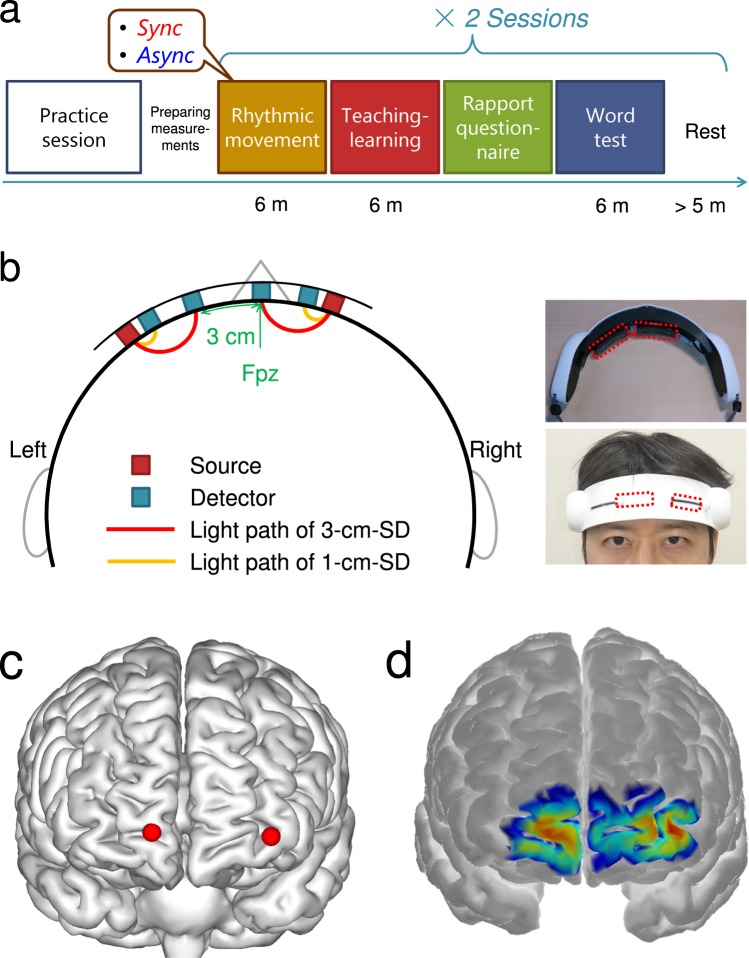
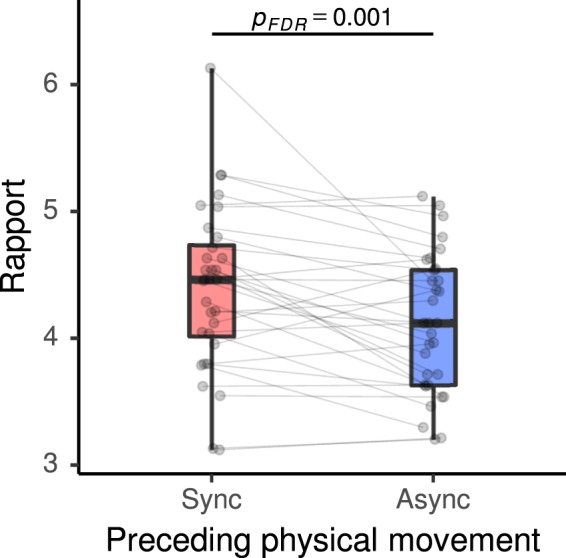
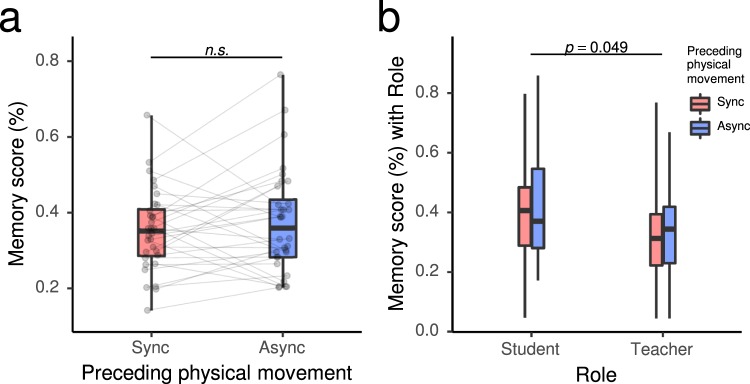
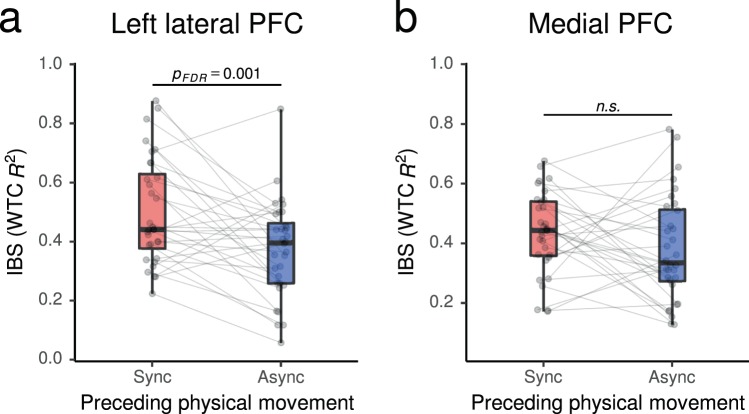
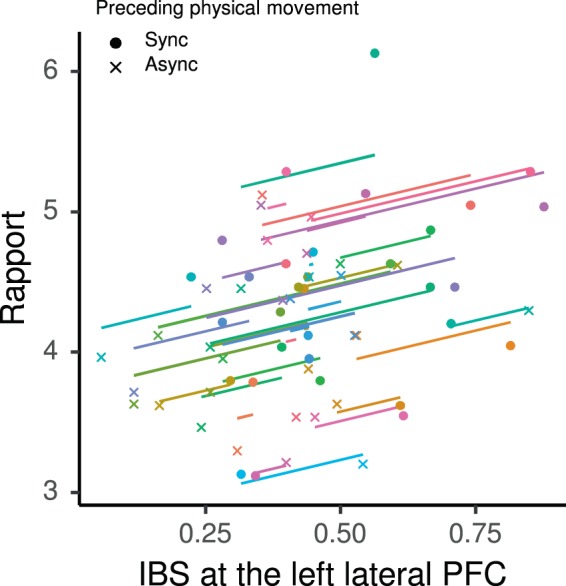
Physical synchrony has been suggested to have positive effects on not only concurrent but also subsequent communication, but the underlying neural processes are unclear. Using functional near-infrared spectroscopy (fNIRS) hyperscanning, we tested the effects of preceding physical synchrony on subsequent dyadic teaching-learning communication. Thirty-two pairs of participants performed two experimental sessions. In each session, they underwent a rhythmic arm movement block with synchronous or asynchronous conditions, and then taught/learned unknown words to/from each other according to a given scenario. Neural activities in their medial and left lateral prefrontal cortex (PFC) were measured and inter-brain synchronization (IBS) during the teaching-learning blocks was evaluated. Participants rated their subjective rapport during the teaching-learning blocks, and took a word memory test. The analyses revealed that (1) prior physical synchrony enhanced teacher-learner rapport; (2) prior physical synchrony also enhanced IBS in the lateral PFC; and (3) IBS changes correlated positively with rapport changes. Physical synchrony did however not affect word memory performance. These results suggest that IBS can be useful to measure the effects of social-bonding facilitation activities for educational communication.
Overview
The claims and statistics of this paper haven’t been checked yet.
Free: it reads the open-access text and checks the first 5 claims that cite a source we can check. Create a free account to check every claim.
Integrity signals
Registry
Cites
Statistics
Figures
Verification
Claims the paper makes
The claims and statistics of this paper haven’t been checked yet.
Free: it reads the open-access text and checks the first 5 claims that cite a source we can check. Create a free account to check every claim.
Self-check
Percentages, sums and reported differences re-computed from the paper’s own numbers.
The self-check needs the paper’s full text.
Citations
Cites
The assessment and analysis of handedness: The Edinburgh inventory
Oldfield, R. C. (1971) · Neuropsychologia · doi:10.1016/0028-3932(71)90067-4 · Cited by 35,900
A Practical Guide to Wavelet Analysis
Torrence, C., & Compo, G. P. (1998) · Bulletin of the American Meteorological Society · doi:10.1175/1520-0477(1998)079<0061:apgtwa>2.0.co;2 · Cited by 14,890
Lakens, D. (2013) · Frontiers in Psychology · doi:10.3389/fpsyg.2013.00863 · Cited by 10,303
Application of the cross wavelet transform and wavelet coherence to geophysical time series
Grinsted, A., Moore, J. C., & Jevrejeva, S. (2004) · Nonlinear Processes in Geophysics · doi:10.5194/npg-11-561-2004 · Cited by 6,285
BrainNet Viewer: A Network Visualization Tool for Human Brain Connectomics
Xia, M., Wang, J., & He, Y. (2013) · PLoS ONE · doi:10.1371/journal.pone.0068910 · Cited by 4,106
Meeting of minds: the medial frontal cortex and social cognition
Amodio, D. M., & Frith, C. D. (2006) · Nature Reviews Neuroscience · doi:10.1038/nrn1884 · Cited by 3,782
The chameleon effect: the perception–behavior link and social interaction
Chartrand, T. L., & Bargh, J. A. (1999) · Journal of Personality and Social Psychology · doi:10.1037/0022-3514.76.6.893 · Cited by 3,674
Ferrari, M., & Quaresima, V. (2012) · NeuroImage · doi:10.1016/j.neuroimage.2012.03.049 · Cited by 2,274
Bakdash, J. Z., & Marusich, L. R. (2017) · Frontiers in Psychology · doi:10.3389/fpsyg.2017.00456 · Cited by 2,018
On the adaptive control of the false discovery rate in multiple testing with independent statistics
Benjamini, Y., & Hochberg, Y. (2000) · Journal of Educational and Behavioral Statistics · doi:10.3102/10769986025001060 · Cited by 2,015
Cited by
Interactional synchrony: signals, mechanisms and benefits
Hoehl, S., Fairhurst, M., & Schirmer, A. (2021) · Social Cognitive and Affective Neuroscience · doi:10.1093/scan/nsaa024 · Cited by 231
“A recent study in adults showed that moving in synchrony with each other promoted self-reported rapport, though not learning per se, during a teacher–learner interaction (Nozawa et al., 2019).”
BackgroundInter-brain synchrony in teams predicts collective performance
Reinero, D. A., Dikker, S., & Van Bavel, J. J. (2021) · Social Cognitive and Affective Neuroscience · doi:10.1093/scan/nsaa135 · Cited by 169
A new science of emotion: implications for functional neurological disorder
Jungilligens, J., Paredes-Echeverri, S., Popkirov, S., Barrett, L. F., & Perez, D. L. (2022) · Brain · doi:10.1093/brain/awac204 · Cited by 164
Kelsen, B. A., Sumich, A., Kasabov, N., Liang, S. H. Y., & Wang, G. Y. (2022) · Neuroscience & Biobehavioral Reviews · doi:10.1016/j.neubiorev.2020.09.008 · Cited by 148
“The cortical regions activated and exhibiting IBS while sharing knowledge include frontal (Holper et al., 2013; Liu et al., 2019; Nozawa et al., 2019; Pan et al., 2018), temporal-parietal (Zheng et al.”
BackgroundDance on the Brain: Enhancing Intra- and Inter-Brain Synchrony
Basso, J. C., Satyal, M. K., & Rugh, R. (2021) · Frontiers in Human Neuroscience · doi:10.3389/fnhum.2020.584312 · Cited by 217
Hakim, U., Felice, S. D., Pinti, P., Zhang, X., Noah, J. A., Ono, Y., Burgess, P. W., Hamilton, A. F. D. C., Hirsch, J., & Tachtsidis, I. (2023) · NeuroImage · doi:10.1016/j.neuroimage.2023.120354 · Cited by 160
Barrett, L. F. (2022) · American Psychologist · doi:10.1037/amp0001054 · Cited by 152
Zheng, L., Liu, W., Long, Y., Zhai, Y., Zhao, H., Bai, X., Zhou, S., Li, K., Zhang, H., Liu, L., et al. (2020) · Social Cognitive and Affective Neuroscience · doi:10.1093/scan/nsaa016 · Cited by 94
Endogenous sources of interbrain synchrony in duetting pianists
Gugnowska, K., Novembre, G., Kohler, N., Villringer, A., Keller, P. E., & Sammler, D. (2022) · Cerebral Cortex · doi:10.1093/cercor/bhab469 · Cited by 78
The intrapersonal and interpersonal consequences of interpersonal synchrony
Hu, Y., Cheng, X., Pan, Y., & Hu, Y. (2022) · Acta Psychologica · doi:10.1016/j.actpsy.2022.103513 · Cited by 96
Inter-brain synchronization occurs without physical co-presence during cooperative online gaming
Wikström, V., Saarikivi, K., Falcon, M., Makkonen, T., Martikainen, S., Putkinen, V., Cowley, B. U., & Tervaniemi, M. H. (2022) · Neuropsychologia · doi:10.1016/j.neuropsychologia.2022.108316 · Cited by 74
“A form of synchronization which exists between the neural activity of interacting people has also been observed, and it is a possible mechanism behind the effects of interpersonal synchronization (Nozawa et al., 2019).”
BackgroundInfluentialIs neuroimaging ready for the classroom? A systematic review of hyperscanning studies in learning
Tan, S., Wong, J. N., & Teo, W. (2023) · NeuroImage · doi:10.1016/j.neuroimage.2023.120367 · Cited by 71
Müller, V., Ohström, K.-R. P., & Lindenberger, U. (2021) · Neuroscience & Biobehavioral Reviews · doi:10.1016/j.neubiorev.2021.07.017 · Cited by 62
Capturing Human Interaction in the Virtual Age: A Perspective on the Future of fNIRS Hyperscanning
Balters, S., Baker, J. M., Hawthorne, G., & Reiss, A. L. (2020) · Frontiers in Human Neuroscience · doi:10.3389/fnhum.2020.588494 · Cited by 36
Hyperscanning literature after two decades of neuroscientific research: A scientometric review
Carollo, A., & Esposito, G. (2024) · Neuroscience · doi:10.1016/j.neuroscience.2024.05.045 · Cited by 54
Interpersonal educational neuroscience: A scoping review of the literature
Zhang, Y., Hu, Y., Ma, F., Cui, H., Cheng, X., & Pan, Y. (2024) · Educational Research Review · doi:10.1016/j.edurev.2024.100593 · Cited by 48
Nouchi, R., Nouchi, H., Dinet, J., & Kawashima, R. (2021) · Brain Sciences · doi:10.3390/brainsci12010005 · Cited by 35
“Participants were asked to set the two dual source-detector (SD) optodes at the left and right dorsolateral prefrontal cortex (DLPFC: BA46) (Figure 1A), with about 3 cm detector 3 cm left or right from the Fpz position in the 10–20 system [19].”
MethodSelf-citationBarreto, C., Bruneri, G. D. A., Brockington, G., Ayaz, H., & Sato, J. R. (2021) · Frontiers in Human Neuroscience · doi:10.3389/fnhum.2021.622146 · Cited by 35
“This area is related to the cognitive process related to learning and has been evaluated with fNIRS in diverse tasks before (Wood and Grafman, 2003; Ayaz et al., 2012; Singh et al., 2018; Nozawa et al., 2019).”
BackgroundMüller, V., & Lindenberger, U. (2021) · Annals of the New York Academy of Sciences · doi:10.1111/nyas.14689 · Cited by 33
Nouchi, R., Kawata, N. Y. S., Saito, T. I., Himmelmeier, R. M., Ryo, N., Nouchi, H., & Kawashima, R. (2020) · Brain Sciences · doi:10.3390/brainsci10080560 · Cited by 35
“The NIRS device can measure prefrontal brain activities [16,17].”
MethodSelf-citationSung, G., Bhinder, H., Feng, T., & Schneider, B. (2023) · Computers & Education · doi:10.1016/j.compedu.2023.104784 · Cited by 36
Zhang, L., Xu, X., Li, Z., Chen, L., & Feng, L. (2022) · Frontiers in Psychology · doi:10.3389/fpsyg.2022.835147 · Cited by 36
Bridging Stories and Science: An fNIRS-based hyperscanning investigation into child learning in STEM
Zhang, J., Wang, Y., Leong, C., Mao, Y., & Yuan, Z. (2023) · NeuroImage · doi:10.1016/j.neuroimage.2023.120486 · Cited by 33
Age differences in interbrain synchronization during peer cooperation: an EEG hyperscanning study
Yang, M., Li, X., Sang, B., & Deng, X. (2023) · Cerebral Cortex · doi:10.1093/cercor/bhad308 · Cited by 28
Konrad, K., Gerloff, C., Kohl, S. H., Mehler, D. M. A., Mehlem, L., Volbert, E. L., Komorek, M., Henn, A. T., Boecker, M., Weiß, E. O., et al. (2024) · Frontiers in Neuroscience · doi:10.3389/fnins.2024.1286130 · Cited by 37
Sened, H., Zilcha‐Mano, S., & Shamay‐Tsoory, S. (2022) · Frontiers in Human Neuroscience · doi:10.3389/fnhum.2022.955238 · Cited by 32
“Performing synchronized arm movements was shown to improve synchrony in a later teaching session, demonstrating that synchronizing can precede the interpersonal interaction (Nozawa et al., 2019).”
BackgroundYokozuka, T., Miyamoto, H., Kasai, M., Miyake, Y., & Nozawa, T. (2021) · Speech Communication · doi:10.1016/j.specom.2021.03.001 · Cited by 26
Self-citationCheng, X., Guo, B., & Hu, Y. (2022) · Social Cognitive and Affective Neuroscience · doi:10.1093/scan/nsac022 · Cited by 24
“Meanwhile, for action coordination, previous findings on interpersonal synchrony, which aimed at synchronous actions in time and space without shared goal, found the IBS at the left lateral prefrontal cortex when participant dyads underwent a rhythmic arm movement synchronously (Nozawa et al., 2019) and when a group o…”
Nozawa, T., Kondo, M., Yamamoto, R., Jeong, H., Ikeda, S., Sakaki, K., Miyake, Y., Ishikawa, Y., & Kawashima, R. (2021) · Frontiers in Neuroergonomics · doi:10.3389/fnrgo.2021.686596 · Cited by 21
Self-citationTakeuchi, N., & Izumi, S. (2021) · Brain Sciences · doi:10.3390/brainsci11081095 · Cited by 28
Musical Meter Induces Interbrain Synchronization during Interpersonal Coordination
Hu, Y., Zhu, M., Liu, Y., Wang, Z., Cheng, X., Pan, Y., & Hu, Y. (2022) · eNeuro · doi:10.1523/eneuro.0504-21.2022 · Cited by 22
“…in musical contexts has been found to be accompanied by IBS, including rhythmic finger-tapping (Konvalinka et al., 2014), rhythmic arm swinging (Nozawa et al., 2019), rhythmic group-walking (Ikeda et al., 2017), groups playing drums (Liu et al., 2021), playing guitars in a quartet (Müller et…”
BackgroundThe Role of Functional Near-Infrared Spectroscopy in Collaborative Research: A systematic Review
Wang, Y., Dong, Y., Leuk, J. S.-P., Zhai, X., Xu, C., Fu, Y., & Teo, W. (2023) · Educational Psychology Review · doi:10.1007/s10648-023-09836-z · Cited by 24
Jin, Z., Yin, J., Pan, Y., Zhang, Y., Li, Y., Xu, X., & Luo, J. (2024) · NeuroImage · doi:10.1016/j.neuroimage.2024.120757 · Cited by 22
“…provided an opportunity to investigate interpersonal brain interactions (Babiloni and Astolfi, 2014; Koike et al., 2015), helping identify evidence of interbrain neural synchronization (INS) in multiple regions during the educational process (Lu et al., 2020; Nozawa et al., 2019; Tan et al., 2023).”
BackgroundDevezas, M. (2021) · Journal of Neuroimaging · doi:10.1111/jon.12877 · Cited by 18
Cross, E. S., Darda, K. M., Moffat, R., Muñoz, L., Humphries, S. A., & Kirsch, L. P. (2024) · Scientific Reports · doi:10.1038/s41598-024-72659-7 · Cited by 18
“The role for prefrontal cortex (including dorsomedial and ventromedial portions) when engaging in movement synchrony and experiencing the social reward has been further corroborated by recent work involving brain imaging with fNIRS 50–52 .”
Instructor-learner body coupling reflects instruction and learning
Pan, Y., Dikker, S., Zhu, Y., Yang, C., Hu, Y., & Goldstein, P. (2022) · npj Science of Learning · doi:10.1038/s41539-022-00131-0 · Cited by 15
Shamay‐Tsoory, S., Marton-Alper, I. Z., & Markus, A. (2024) · iScience · doi:10.1016/j.isci.2024.108796 · Cited by 19
“4 For instance, the inferior frontal gyrus (IFG), which is a crucial region within the observation-execution system, 5 playing a role in comprehending actions by representing the motor commands necessary to perform those actions, 6 was consistently observed to exhibit inter-brain coupling in dyads…”
BackgroundMethodInter-Brain Synchronization During Sandplay Therapy: Individual Analyses
Akimoto, M., Tanaka, T., Itô, J., Kubota, Y., & Seiyama, A. (2021) · Frontiers in Psychology · doi:10.3389/fpsyg.2021.723211 · Cited by 15
“For sandplay, in particular, both externally-oriented (LPFC) and internally-oriented (FP) brain regions (Gilbert et al., 2006; Nozawa et al., 2019) were almost inversely correlated, suggesting that there may be a common “therapist attitude” or “client-therapist relationship” in sandplay, where…”
BackgroundHype, hyperscanning and embodied social neurosciencePreprint
Hamilton, A. F. D. C. (2020) · PsyArXiv (OSF Preprints) · doi:10.31234/osf.io/rc9wp · Cited by 14
Liu, Y., Zhang, Y., Zhong, Y., Liu, J., Zhang, C., Meng, Y., Pang, N., Cheng, X. M., & Wang, H. (2024) · Cerebral Cortex · doi:10.1093/cercor/bhae131 · Cited by 14
Gui, Y., Cai, Z., Zhang, S., & Fan, X. (2025) · Computers & Education · doi:10.1016/j.compedu.2025.105266 · Cited by 19
Schaefer, L. V., & Bittmann, F. N. (2022) · Brain Sciences · doi:10.3390/brainsci12060703 · Cited by 12
Brouillard, C., Gabbert, F., & Scott, A. J. (2024) · Applied Cognitive Psychology · doi:10.1002/acp.4205 · Cited by 13
The topology of interpersonal neural network in weak social ties
Kurihara, Y., Takahashi, T., & Osu, R. (2024) · Scientific Reports · doi:10.1038/s41598-024-55495-7 · Cited by 14
“Furthermore, in socially attentive situations, more mentalization is required, which may induce brain synchronization between each other 60,61 .”
BackgroundLi, Y., Su, C., & Pan, Y. (2024) · Philosophical Transactions of the Royal Society B Biological Sciences · doi:10.1098/rstb.2023.0155 · Cited by 11
“Positive movement synchrony has been linked to interpersonal rapport during educational communication [14] and can foster a sense of social bonding and trust among individuals [15].”
The emergence of moral alignment within human groups is facilitated by interbrain synchrony
Sobeh, A., & Shamay‐Tsoory, S. (2025) · Communications Biology · doi:10.1038/s42003-025-07831-4 · Cited by 12
“Additionally, left IFG interbrain synchrony predicts better coordination and stronger feelings of rapport 35,40 , and predicts social learning outcome 41,42 .”
Exploring Neural Evidence of Attention in Classroom Environments: A Scoping Review
Zeng, H., Huang, X., Liu, Y., & Gu, X. (2025) · Brain Sciences · doi:10.3390/brainsci15080860 · Cited by 28
“Contemporary research suggests that synchrony encompasses more than just neural coupling: it includes behavioral (e.g., gaze alignment [14], gesture mimicry [65]) and affective (e.g., shared emotional states [66]) dimensions.”
Jamil, N., & Belkacem, A. N. (2024) · IEEE Access · doi:10.1109/access.2024.3409771 · Cited by 11
Coupled neural timescales in social interaction
Wolff, A., & Dumas, G. (2026) · Trends in Cognitive Sciences · doi:10.1016/j.tics.2026.02.010 · Cited by 11
Fukuie, T., Inoue, K., & Yamaguchi, A. (2024) · The Journal of Sports Medicine and Physical Fitness · doi:10.23736/s0022-4707.24.16055-0 · Cited by 5
The teaching and learning brains: Interpersonal neuroscience in educational research
CHENG, X., Liu, M., Pan, Y., & Li, H. (2021) · Advances in Psychological Science · doi:10.3724/sp.j.1042.2021.01993 · Cited by 10
“…et al., 2018; Poulsen et al., 2017; Zhu et al., 2019)。例如,Poulsen 等人( 2017)使用便携式脑电设备,在真实课堂中对多名学生观看教 学视频时的大脑活动进行了同步记录,结果发现,观看那些令人印象深刻(根据学生的主观 报告)的视频片段时,学生群体具有更高的 ISC(Poulsen et al., 2017),且这一 ISC 的程度可 以成功区分学生观看视频时的注意状态(有意学习/无意学习)(Cohen et al., 2018)。进一步…”
InfluentialXiaojun, C., Meihuan, L., & Yafeng, P. (2022) · Acta Psychologica Sinica · doi:10.3724/sp.j.1041.2022.01391 · Cited by 7
Suzuki, Y., Nozawa, T., Uchihara, T., Nakamura, S., Miyazaki, A., & Jeong, H. (2025) · Studies in Second Language Acquisition · doi:10.1017/s0272263125101290 · Cited by 7
“In a pioneering fNIRS hyperscanning study, Nozawa et al. (2019) found that prior physical synchrony between paired L2 learners enhanced IBS and rapport in the left LPFC during language-focused vocabulary practice (i.e., teaching unfamiliar English words in learner dyads).”
Self-citationWang, H., & Li, L. (2024) · International Journal of Clinical and Health Psychology · doi:10.1016/j.ijchp.2024.100492 · Cited by 7
“…synchronized clapping and tapping (Tunçgenç & Cohen, 2016), synchronized walking (Ikeda et al., 2017; Tunçgenç & Cohen, 2016), synchronized swaying (Nozawa et al., 2019; Valdesolo, Ouyang, & DeSteno, 2010), synchronized drumming (Rabinowitch et al., 2017; Hu et al., 2017), and synchronized dancing…”
BackgroundNozawa, T., Sas, M. I., Dolan, D., Rajpal, H., Rosas, F. E., Timmermann, C., Mediano, P. A. M., Honda, K., Amano, S., Miyake, Y., et al. (2025) · Scientific Reports · doi:10.1038/s41598-025-90271-1 · Cited by 12
Self-citationVideo Education through the Lens of Educational Neuroscience: A Concise Review
Zhang, Z., Gao, Y., Pan, Y., & Zhou, J. (2024) · TechTrends · doi:10.1007/s11528-024-00946-1 · Cited by 5
“Numerous studies have shown that interpersonal neural correlates can be used to evaluate factors that affect teaching and learning processes (Nozawa et al., 2019; Pan et al., 2020, 2021; Zheng et al., 2018).”
Capturing individual differences in prefrontal activity with wearable fNIRS for daily use
Nozawa, T., & Miyake, Y. (2020) · Conference on Human System Interactions · doi:10.1109/hsi49210.2020.9142689 · Cited by 5
“two types of 2-channel continuous-wave fNIRS devices (HOT-1000 [25] and HOT-2000; NeU Corporation, Japan; Fig.”
BackgroundSelf-citationInter-Brain Synchrony and Innovation in a Zoom World Using Analog and Digital Manipulatives
Balters, S., Baker, J. M., Hawthorne, G., & Reiss, A. L. (2021) · Understanding innovation · doi:10.1007/978-3-030-76324-4_2 · Cited by 4
Jamil, N., Belkacem, A. N., & Benkhelifa, E. (2022) · IEEE Learning With MOOCS (LWMOOCS) · doi:10.1109/lwmoocs53067.2022.9927791 · Cited by 5
“Nozawa et al. suggest that inter-brain synchronization may be used to assess the educational communication that can benefit social bonding enhancement activities [28].”
BackgroundNozawa, T., Sas, M. I., Dolan, D., Rajpal, H., Rosas, F. E., Timmermann, C., Mediano, P. A. M., Honda, K., Amano, S., Miyake, Y., et al. (2023) · doi:10.31234/osf.io/cqxya · Cited by 4
Self-citationEnvironmental effects on inter-brain coupling: a systematic review
Leahy, O., Kontaris, E., Gunasekara, N., Hirsch, J., & Tachtsidis, I. (2025) · Frontiers in Human Neuroscience · doi:10.3389/fnhum.2025.1627457 · Cited by 6
Hu, Y., Zhang, R., Duan, Z., Liu, M., & Cheng, X. (2025) · NeuroImage · doi:10.1016/j.neuroimage.2025.121430 · Cited by 3
Shao, C., Zhang, X., Sugiura, M., Zhang, W., & Sun, B. (2025) · NeuroImage · doi:10.1016/j.neuroimage.2025.121610 · Cited by 5
Lee, G., Ro, D., Shin, S., & Kim, Y. (2023) · Neurophotonics · doi:10.1117/1.nph.10.2.025015 · Cited by 3
Investigating short windows of interbrain synchrony: A step toward fNIRS-based hyperfeedback
Kostorz, K., Nguyen, T., Pan, Y., Melinščak, F., Steyrl, D., Hu, Y., Sorger, B., Hoehl, S., & Scharnowski, F. (2025) · Imaging Neuroscience · doi:10.1162/imag.a.43 · Cited by 10
“…tapping experiments (e.g., Cui et al., 2012; Funane et al., 2011) and creative problem solving (e.g., Xue et al., 2018) to teaching (e.g., Nozawa et al., 2019; Pan et al., 2017; Zheng et al., 2018), and counselling ( Y. Zhang et al., 2018); see also Czeszumski et al. (2022) for a recent…”
Teacher-Student Inter-Brain and Behavioral Synchronies in Remote Education
You, J., Jung, M., Shin, Y., & Kim, K. K. (2025) · IEEE Access · doi:10.1109/access.2025.3569961 · Cited by 2
Bonnaire, J., Dumas, G., & Cassell, J. (2024) · Frontiers in Neuroergonomics · doi:10.3389/fnrgo.2024.1290256 · Cited by 4
Zhang, Y., Shi, Z., Liu, Y., & Guo, J. (2025) · Cerebral Cortex · doi:10.1093/cercor/bhaf070 · Cited by 2
The effects of synchrony on spatial cue choice in a virtual wayfinding task
Redhead, E. S., Washington, R., Chen, C. R., Mackinnon, C., & Wood, A. P. (2022) · Journal of Environmental Psychology · doi:10.1016/j.jenvp.2022.101869 · Cited by 2
Coordinando los afectos: experiencias empáticas cuerpo a cuerpo
González-Grandón, X. A. (2023) · Trabajo Social · doi:10.15446/ts.v25n1.102353 · Cited by 2
Otsuka, H., Okahashi, S., Ishii, H., Asaba, W., Liu, C., Yamamoto, G., & Seiyama, A. (2024) · PLoS ONE · doi:10.1371/journal.pone.0304107 · Cited by 3
“Previous studies have shown that wavelength at 810 nm is near or just an isosbestic point of oxy-Hb and deoxy-Hb in vivo , and thus, delta-totalHb reflects delta-oxyHb [15, 16].”
Towards fNIRS Hyperfeedback: A Feasibility Study on Real-Time Interbrain SynchronyPreprint
Kostorz, K., Nguyen, T., Pan, Y., Melinščak, F., Steyrl, D., Hu, Y., Sorger, B., Hoehl, S., & Scharnowski, F. (2023) · bioRxiv (Cold Spring Harbor Laboratory) · doi:10.1101/2023.12.11.570765 · Cited by 2
Investigating the effect of synchronized movement on toddlers’ word learning
Bazhydai, M., Ke, H., Thomas, H., Wong, M. K. Y., & Westermann, G. (2022) · Frontiers in Psychology · doi:10.3389/fpsyg.2022.1008404 · Cited by 2
“Limited research in adults has explored the effect of synchrony on learning, producing inconclusive findings and exposing substantial methodological variability (Miles et al., 2010; Zheng et al., 2018; Nozawa et al., 2019).”
BackgroundBalters, S., Heaton, S., & Reiss, A. L. (2023) · Understanding innovation · doi:10.1007/978-3-031-36103-6_11 · Cited by 1
Deng, X., Hosseini, S., Miyake, Y., & Nozawa, T. (2024) · Behavioral Sciences · doi:10.3390/bs14110987 · Cited by 3
“The range of the timescales (Fourier periods) with significantly higher coherence in the genuine dyads compared to the permutated dyads were identified and used as the periods of interest (POIs).”
Self-citationSun, W., Liu, X., Ding, S., He, D., Wu, Q., & Li, S. (2026) · NeuroImage · doi:10.1016/j.neuroimage.2026.121779 · Cited by 1
佐々木, 雄., Ishizu, K., Seiyama, A., & Sugimoto, N. (2026) · Bipolar Disorders · doi:10.1111/bdi.70089 · Cited by 2
Self-citationSeeing Avatars During Social Interaction in VR May Enhance Inter-Brain Synchronization
Won, K., Pillette, L., Savalle, E., Argelaguet, F., Macé, M. J. ‐., & Lécuyer, A. (2026) · IEEE Transactions on Visualization and Computer Graphics · doi:10.1109/tvcg.2026.3671344 · Cited by 1
“2) IBS After Interaction: Previous studies found that the IBS was enhanced after interaction [25], [45], [65].”
InfluentialWireless Music Playing Buzzer Sensor-Assisted Music Tone Adaptive Control
Li, S., & Shen, D. (2022) · Journal of Sensors · doi:10.1155/2022/9002533 · Cited by 1
Norwood, M. F., Pretty, D., Marsh, C., Shirota, C., Gillet, C., Zeeman, H., & Kendall, E. (2024) · Springer eBooks · doi:10.1007/978-3-031-64699-7_15 · Cited by 1
Wang, L., Wong, C. H. Y., Chang, L., Yuan, Z., & Shih, Y.-T. (2024) · Springer eBooks · doi:10.1007/978-3-031-71922-6_10 · Cited by 1
Psychophysiological correlates of learner-instructor interaction: A scoping review
Kustova, T. A., Руслановна, В. А., Tcepelevich, M. M., Tkachenko, I., Oreshina, G. V., Zhukova, M., Golovanova, I. V., & Grigorenko, E. L. (2025) · International Journal of Psychophysiology · doi:10.1016/j.ijpsycho.2025.112556 · Cited by 1
Konrad, K., Gerloff, C., Kohl, S. H., Mehler, D. M. A., Mehlem, L., Volbert, E. L., Komorek, M., Henn, A. T., Boecker, M., Weiß, E. O., et al. (2023) · doi:10.31234/osf.io/6szvw · Cited by 2
Sas, M. I., Mediano, P. A. M., Rosas, F. E., Leone, H., Sas, A., Lockwood, C., Jensen, H. J., & Bor, D. (2024) · doi:10.31234/osf.io/e8j39 · Cited by 1
The topology of interpersonal neural network in weak social tiesPreprint
Kurihara, Y., Takahashi, T., & Osu, R. (2023) · bioRxiv (Cold Spring Harbor Laboratory) · doi:10.1101/2023.04.09.536147
YuanYuan, L., suchang, & Pan, Y. (2024) · doi:10.31234/osf.io/rs5zv
The Neural Dynamics of Interpersonal Synchrony
Dippong, J., & Overton, J. (2025) · Handbooks of sociology and social research · doi:10.1007/978-3-031-95615-7_18 · Cited by 2
Cognitive neural mechanisms of face-to-face interpersonal synchronous stepping: An fNIRS study
Li, Y., Lei, L. I. U., Pan, L. I., & Ying, L. I. U. (2026) · Brain and Cognition · doi:10.1016/j.bandc.2026.106395 · Cited by 1
Cheng, X., Liao, W., Cui, H., Pan, Y., & Hu, Y. (2026) · Learning and Instruction · doi:10.1016/j.learninstruc.2026.102320
Douglas, C. L., Tremblay, A., & Newman, A. J. (2026) · Journal of Cognitive Neuroscience · doi:10.1162/jocn.a.2595
Physical Synchrony through a Beamed Robot Enhances Social Closeness and Inter-Brain Synchrony
Kang, M., Jung, M., An, N., & Kim, K. K. (2026) · CHI Conference Extended Abstracts on Human Factors in Computing Systems (CHI EA) · doi:10.1145/3772363.3798892
“The adopted teacher–student word memorization task with prior PS and prior PA conditions [27, 40] consisted of three phases— movement, learning, and testing.”
InfluentialSas, M. I., Mediano, P. A. M., Rosas, F. E., Leone, H., Sas, A., Lockwood, C., Jensen, H. J., & Bor, D. (2026) · Collective Intelligence · doi:10.1177/26339137261435117 · Cited by 1
“…or physical synchrony has been shown to yield positive mental and emotional outcomes: building rapport and increasing inter-brain synchrony (Nozawa et al., 2019), improved cooperation (Jackson et al., 2018; Shockley et al., 2003) and team problem-solving performance (Gordon et al., 2020;…”
Suzuki, Y., Nozawa, T., Nakamura, S., Uchihara, T., Miyazaki, A., & Jeong, H. (2026) · Research Methods in Applied Linguistics · doi:10.1016/j.rmal.2026.100331 · Cited by 1
Self-citationBangerl, M. M., Stefan, K., Wood, G. M. D. O., & Pammer‐Schindler, V. (2026) · Computers in Human Behavior Reports · doi:10.1016/j.chbr.2026.101170
Metadata
- Authors
- Nozawa, T., Sakaki, K., Ikeda, S., Jeong, H., Yamazaki, S., Kawata, K. H. D. S., Kawata, N. Y. D. S., Sasaki, Y., Kulason, K., Hirano, K., Miyake, Y., & Kawashima, R.
- Affiliations
- Tokyo Institute of Technology (JP)
- Tohoku University (JP)
- Corresponding author
- Nozawa, Takayuki
- ORCID
- Venue
- Scientific Reports
- Published
- 2019-09-04
- Volume
- 9
- Issue
- 1
- Pages
- 12747-12747
- ISSN
- 2045-2322 (ISSN-L)
- PMC
- PMC6726616
- OpenAlex
- W2971781906
- Semantic Scholar
- aad770f22b874872cc2d6582f29537b8d84a271c
- Cited by
- 95
- References
- 102
- Citations by year
- 2026: 11 · 2025: 13 · 2024: 21 · 2023: 13 · 2022: 15 · 2021: 14 · 2020: 8
- FWCI
- 11.62
- Type
- journal article
- Language
- en
- Open access
- gold
- doi.org
- Licence
- cc-by
- creativecommons.org/licenses/by/4.0 (tdm)
- creativecommons.org/licenses/by/4.0 (vor)
- Locations
- Scientific Reports (publishedVersion, cc-by)
- bioRxiv (Cold Spring Harbor Laboratory) (acceptedVersion)
- PubMed Central (publishedVersion, cc-by)
- PubMed (publishedVersion)
- DOAJ (DOAJ: Directory of Open Access Journals) (submittedVersion)
- Funders
- MEXT | Japan Society for the Promotion of Science (JP26330171, JP15H01771, JP17H01753)
- MEXT | JST | Center of Innovation Program
- Topics
- Social Sciences › Psychology › Social Psychology › Action Observation and Synchronization
- Life Sciences › Neuroscience › Cognitive Neuroscience › Neural dynamics and brain function
- Life Sciences › Neuroscience › Cognitive Neuroscience › Neuroscience, Education and Cognitive Function
- Keywords
- inter-brain synchrony, educational communication, prefrontal cortex, word memory, social bonding, dyadic interaction
- MeSH terms
- Adult, Communication, Female, Humans, Interpersonal Relations, Learning, Male, Memory, Social Behavior, Prefrontal Cortex, Young Adult
About these checks
Registry, retraction, Cites and statistics results are computed, not judged, with one exception: a printed reference that no index lists is read once by a model before it counts as a citation error. Claims are extracted by a model and kept only when their quote appears verbatim in the text; each cited source is then checked, with a model’s help, for whether it says what the claim relies on. Those verdicts can be wrong — read the claim’s quote and the cited source before relying on one.
Statistics and arithmetic are recomputed, not judged.
Confidence bands are shown only for fields calibrated on our annotated test set. None is calibrated yet, so no band is shown.
What counts as a claim ›How we measure confidence ›How we check this ›
Are you an author, or do you see a problem with this page? Request a review
Data sources
Bibliographic data: Semantic Scholar, OpenAlex, Crossref.
Contains information from the Semantic Scholar Academic Graph Datasets, made available under the ODC Attribution License (ODC-BY 1.0).
Semantic Scholar’s data is described in: Kinney, R., et al. (2023). The Semantic Scholar Open Data Platform. arXiv:2301.10140.
