

In vitro metabolic zonation through oxygen gradient on a chip
Open accessThe DOI matches its Crossref record; 29 of the 29 references it cites were found in a registry or an index.
Abstract
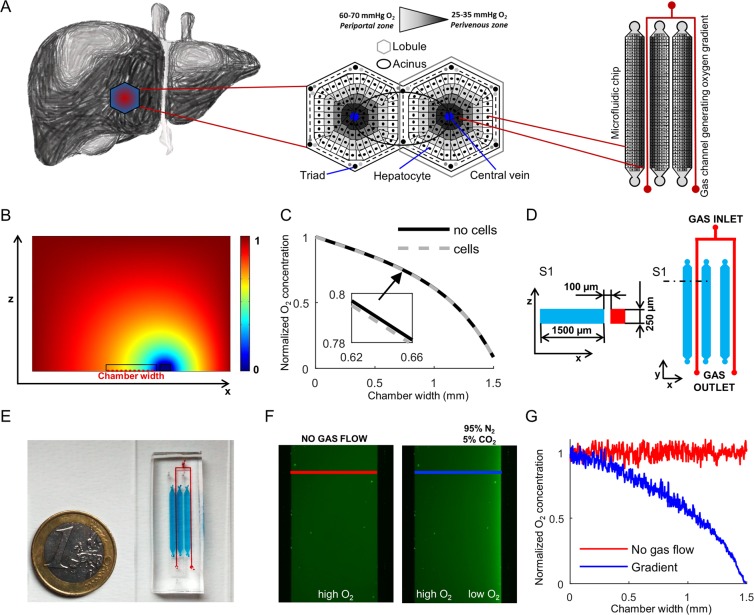
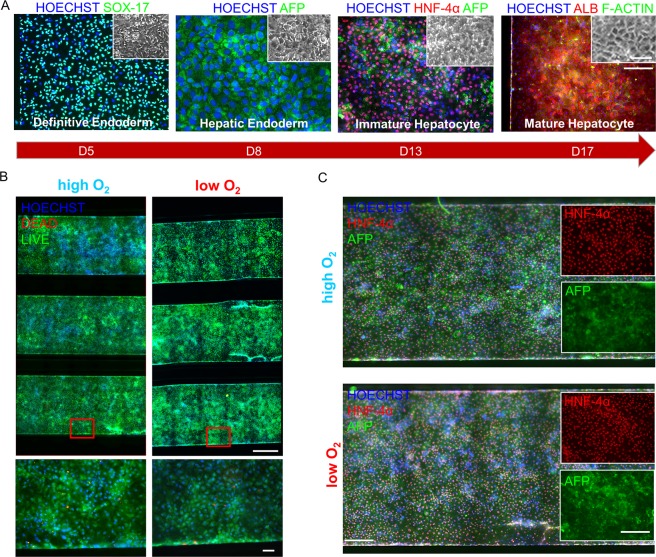
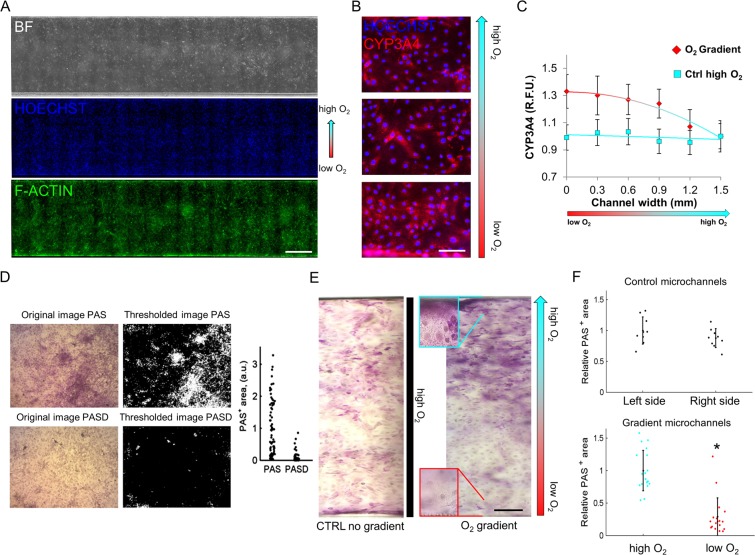
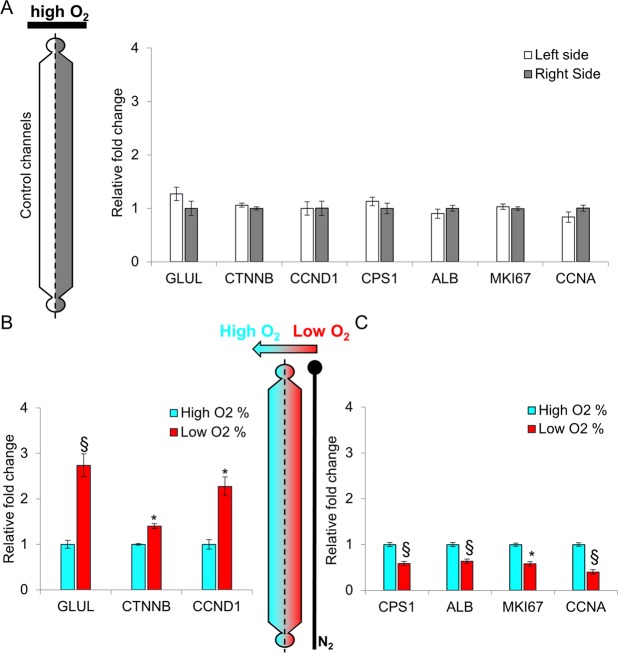
Among the multiple metabolic signals involved in the establishment of the hepatic zonation, oxygen could play a key role. Indeed, depending on hepatocyte position in the hepatic lobule, gene expression and metabolism are differently affected by the oxygen gradient present across the lobule. The aim of this study is to understand whether an oxygen gradient, generated in vitro in our developed device, is sufficient to instruct a functional metabolic zonation during the differentiation of human embryonic stem cells (hESCs) from endoderm toward terminally differentiated hepatocytes, thus mimicking the in vivo situation. For this purpose, a microfluidic device was designed for the generation of a stable oxygen gradient. The oxygen gradient was applied to differentiating hESCs at the pre-hepatoblast stage. The definitive endoderm and hepatic endoderm cells were characterized by the expression of the transcription factor SOX-17 and alpha-fetoprotein (AFP). Immature and mature hepatocytes were characterized by hepatocyte nuclear factor 4-alpha (HNF-4α) and albumin (ALB) expression and also analyzed for cytochrome P450 (CYP3A4) zonation and glycogen accumulation through PAS staining. Metabolic zonated genes expression was assessed through quantitative real time PCR. Application of the oxygen gradient during differentiation induced zonated glycogen storage, which was higher in the hepatocytes grown in high pO2 compared to those grown in low pO2. The mRNA levels of glutamine synthetase (GLUL), beta-catenin (CTNNB) and its direct target cyclin D1 (CCND1) showed significantly higher expression in the cells grown in low pO2 compared to those grown in high pO2. On the contrary, carbamoyl-phosphate synthetase 1 (CPS1), ALB, the proliferative marker ki67 (MKI67) and cyclin A (CCNA) resulted to be significantly higher expressed in cells cultured in high pO2 compared to those cultured in low pO2. These results indicate that the oxygen gradient generated in our device can instruct the establishment of a functional metabolic zonation in differentiating hESCs. The possibility to obtain differentiated hepatocytes in vitro may allow in the future to deepen our knowledge about the physiology/pathology of hepatocytes in relation to the oxygen content.
Overview
The claims and statistics of this paper haven’t been checked yet.
Free: it reads the open-access text and checks the first 5 claims that cite a source we can check. Create a free account to check every claim.
Integrity signals
Registry
Cites
Statistics
Figures
Verification
Claims the paper makes
The claims and statistics of this paper haven’t been checked yet.
Free: it reads the open-access text and checks the first 5 claims that cite a source we can check. Create a free account to check every claim.
Claims other papers make about this one
Each is checked against this paper’s own text: does it say what the citing paper says it does?
The cited source says what the claim attributes to it.
In the citing paper
“Depending on the hepatic cell position in the hepatic lobule and the corresponding differences in exposure to oxygen and nutrient gradients, heterogeneity and functional plasticity arose among the hepatic cells (Tonon et al., 2019).”
From Fast formation and maturation enhancement of human liver organoids using a liver-organoid-on-a-chip (2024) · cites this paper as Tonon et al., 2019
The cited source says what the claim attributes to it.
In the citing paper
“Although partially zonated metabolism has been established in vitro,[168], [169], [170]”
From Distinct hepatocyte identities in liver homeostasis and regeneration (2023) · cites this paper as [170]
Self-check
Percentages, sums and reported differences re-computed from the paper’s own numbers.
The self-check needs the paper’s full text.
Citations
Cites
Soft Lithography in Biology and Biochemistry
Whitesides, G. M., Ostuni, E., Takayama, S., Jiang, X., & Ingber, D. E. (2001) · Annual Review of Biomedical Engineering · doi:10.1146/annurev.bioeng.3.1.335 · Cited by 2,607
Godoy, P., Hewitt, N. J., Albrecht, U., Andersen, M. E., Ansari, N., Bhattacharya, S., Bode, J. G., Bolleyn, J., Borner, C., Böttger, J., et al. (2013) · Archives of Toxicology · doi:10.1007/s00204-013-1078-5 · Cited by 1,280
Optical methods for sensing and imaging oxygen: materials, spectroscopies and applications
Wang, X.-D., & Wolfbeis, O. S. (2014) · Chem. Soc. Rev. · doi:10.1039/c4cs00039k · Cited by 1,114
Functional specialization of different hepatocyte populations
Jungermann, K., & Katz, N. (1989) · Physiological Reviews · doi:10.1152/physrev.1989.69.3.708 · Cited by 653
Metabolic zonation of the liver: Regulation and implications for liver function
Gebhardt, R. (1992) · Pharmacology & Therapeutics · doi:10.1016/0163-7258(92)90055-5 · Cited by 607
Zonation of parenchymal and nonparenchymal metabolism in liver.
Jungermann, K., & Keitzmann, T. (1996) · Annual Review of Nutrition · doi:10.1146/annurev.nu.16.070196.001143 · Cited by 589
Huh, D., Fujioka, H., Tung, Y.-C., Futai, N., Paine, R., Grotberg, J. B., & Takayama, S. (2007) · Proceedings of the National Academy of Sciences · doi:10.1073/pnas.0610868104 · Cited by 492
Hay, D. C., Fletcher, J., Payne, C., Terrace, J. D., Gallagher, R. C. J., Snoeys, J., Black, J. R., Wojtacha, D., Samuel, K., Hannoun, Z., et al. (2008) · Proceedings of the National Academy of Sciences · doi:10.1073/pnas.0806522105 · Cited by 433
Production of hepatocyte-like cells from human pluripotent stem cells
Hannan, N. R. F., Segeritz, C.-P., Touboul, T., & Vallier, L. (2013) · Nature Protocols · doi:10.1038/nprot.2012.153 · Cited by 338
Microfluidic Endothelium for Studying the Intravascular Adhesion of Metastatic Breast Cancer Cells
Song, J. W., Cavnar, S. P., Walker, A. C., Luker, K. E., Gupta, M., Tung, Y.-C., Luker, G. D., & Takayama, S. (2009) · PLoS ONE · doi:10.1371/journal.pone.0005756 · Cited by 317
Research works printed but not linked: 1
- Stern OaV O. The extinction period of fluorescence Phys. Z 1919 20 183 188
Cited by
Microfluidic organ-on-a-chip models of human liver tissue
Moradi, E., Jalili-Firoozinezhad, S., & Solati-Hashjin, M. (2020) · Acta Biomaterialia · doi:10.1016/j.actbio.2020.08.041 · Cited by 204
Biofabrication methods for reconstructing extracellular matrix mimetics
Aazmi, A., Zhang, D., Mazzaglia, C., Yu, M., Wang, Z., Yang, H., Huang, Y. Y. S., & Ma, L. (2024) · Bioactive Materials · doi:10.1016/j.bioactmat.2023.08.018 · Cited by 130
“Several studies tried to recapitulate this zonation in vitro using PDMS microfluidics, which failed to assure long-term functional stability and continuous perfusion [289].”
BackgroundHuman biomimetic liver microphysiology systems in drug development and precision medicine
Gough, A., Soto-Gutierrez, A., Vernetti, L., Ebrahimkhani, M. R., Stern, A. M., & Taylor, D. L. (2021) · Nature Reviews Gastroenterology & Hepatology · doi:10.1038/s41575-020-00386-1 · Cited by 117
Lee, S. J., Jeong, W., & Atala, A. (2024) · Advanced Materials · doi:10.1002/adma.202408032 · Cited by 120
Functionally Graded Biomaterials for Use as Model Systems and Replacement Tissues
Lowen, J. M., & Leach, J. K. (2020) · Advanced Functional Materials · doi:10.1002/adfm.201909089 · Cited by 109
Organs-on-a-chip: a union of tissue engineering and microfabrication
Zhao, Y., Wang, E. Y., Lai, F. B. L., Cheung, K., & Radisic, M. (2023) · Trends in Biotechnology · doi:10.1016/j.tibtech.2022.12.018 · Cited by 93
Stem Cells for Next Level Toxicity Testing in the 21st Century
Fritsche, E., Haarmann‐Stemmann, T., Kapr, J., Galanjuk, S., Hartmann, J., Mertens, P. R., Kämpfer, A. A. M., Schins, R. P. F., Tigges, J., & Koch, K. (2021) · Small · doi:10.1002/smll.202006252 · Cited by 75
Hwang, D. G., Choi, Y., & Jang, J. (2021) · Frontiers in Bioengineering and Biotechnology · doi:10.3389/fbioe.2021.685507 · Cited by 81
Shroff, T., Aina, K., Maass, C., Cipriano, M., Lambrecht, J., Tacke, F., Mosig, A., & Loskill, P. (2022) · Open Biology · doi:10.1098/rsob.210333 · Cited by 68
Real-time monitoring of liver fibrosis through embedded sensors in a microphysiological system
Farooqi, H. M. U., Kang, B., Khalid, M. A. U., Salih, A. R. C., Hyun, K., Park, S. H., Huh, D., & Choi, K. H. (2021) · Nano Convergence · doi:10.1186/s40580-021-00253-y · Cited by 71
Liver-on-a-chip devices: the pros and cons of complexity
Dalsbecker, P., Adiels, C. B., & Goksör, M. (2022) · American Journal of Physiology-Gastrointestinal and Liver Physiology · doi:10.1152/ajpgi.00346.2021 · Cited by 64
Liver-on-chips for drug discovery and development
Mehta, V., Karnam, G., & Madgula, V. (2024) · Materials Today Bio · doi:10.1016/j.mtbio.2024.101143 · Cited by 35
“…survival and functional activity of hepatocytes [21,22], (2) accumulation of cell-secreted molecules (for autocrine and paracrine signaling) due to low volume to cell ratio in microchannels [23], and (3) various gradients including oxygen gradient to maintain in vivo-like metabolic conditions [24].”
BackgroundWesseler, M. F., Taebnia, N., Harrison, S., Youhanna, S., Preiss, L. C., Kemas, A. M., Vegvari, A., Mokry, J., Sullivan, G. J., Lauschke, V. M., et al. (2023) · Acta Biomaterialia · doi:10.1016/j.actbio.2023.09.022 · Cited by 39
In vitro assays for investigating the FLASH effect
Adrian, G., Ruan, J.-L., Paillas, S., Cooper, C. R., & Petersson, K. (2022) · Expert Reviews in Molecular Medicine · doi:10.1017/erm.2022.5 · Cited by 42
Hypoxia triggers collective aerotactic migration in Dictyostelium discoideum
Cochet‐Escartin, O., Demircigil, M., Hirose, S., Allais, B., Gonzalo, P., Mikaélian, I., Funamoto, K., Anjard, C., Calvez, V., & Rieu, J.-P. (2021) · eLife · doi:10.7554/elife.64731 · Cited by 44
Janani, G., & Mandal, B. B. (2021) · ACS Applied Materials & Interfaces · doi:10.1021/acsami.1c00719 · Cited by 31
Imaging microphysiological systems: a review
Peel, S. E., & Jackman, M. J. (2020) · American Journal of Physiology-Cell Physiology · doi:10.1152/ajpcell.00186.2020 · Cited by 34
Distinct hepatocyte identities in liver homeostasis and regeneration
Chen, F., Schönberger, K., & Tchorz, J. S. (2023) · JHEP Reports · doi:10.1016/j.jhepr.2023.100779 · Cited by 43
The role of DMPK science in improving pharmaceutical research and development efficiency
Mak, K., Epemolu, O., & Pichika, M. R. (2021) · Drug Discovery Today · doi:10.1016/j.drudis.2021.11.005 · Cited by 30
Hu, W., Wang, Y., Han, J., Zhang, W., Chen, J., Li, X., & Wang, L. (2025) · Biomaterials Science · doi:10.1039/d4bm01273a · Cited by 30
Leslie, J., Krishnamurthy, K. A., Gopalsamy, I. K., Inácio, P., Huch, M., Gallage, S., Oakley, F., & Vacca, M. (2026) · Nature Reviews Gastroenterology & Hepatology · doi:10.1038/s41575-025-01162-9 · Cited by 30
Microtechnology-based in vitro models: Mimicking liver function and pathophysiology
Lee, S. Y., Kim, D., Sung, J. H., & Sung, J. H. (2021) · APL Bioengineering · doi:10.1063/5.0061896 · Cited by 24
Oxygen Gradient Induced in Microfluidic Chips Can Be Used as a Model for Liver Zonation
Ghafoory, S., Stengl, C., Kopany, S., Mayadag, M., Mechtel, N., Murphy, B., Schattschneider, S., Wilhelmi, N., & Wölfl, S. (2022) · Cells · doi:10.3390/cells11233734 · Cited by 25
The hepatic microenvironment and regulatory T cells
Osei‐Bordom, D., Bozward, A. G., & Oo, Y. H. (2020) · Cellular Immunology · doi:10.1016/j.cellimm.2020.104195 · Cited by 24
Engineered Platforms for Maturing Pluripotent Stem Cell–Derived Liver Cells for Disease Modeling
Yuan, Y., Cotton, K., Samarasekera, D. N., & Khetani, S. R. (2023) · Cellular and Molecular Gastroenterology and Hepatology · doi:10.1016/j.jcmgh.2023.01.013 · Cited by 26
Tonon, F., Čemažar, M., Kamenšek, U., Zennaro, C., Pozzato, G., Caserta, S., Ascione, F., Grassi, M., Guido, S., Ferrari, C., et al. (2022) · Cancers · doi:10.3390/cancers14071630 · Cited by 23
“HLC were differentiated (from human embryonic stem cells) and grown as previously reported [39].”
Self-citationStrategies to control cellular spatial organization in microphysiological systems
Truong, H. D., Ge, Z., Chng, E., Tran, Y.-V., Zhang, Y., & Lim, C. T. (2026) · Microsystems & Nanoengineering · doi:10.1038/s41378-025-01141-9 · Cited by 21
Danoy, M., Poulain, S., Lereau, M., Kato, S., Scheidecker, B., Kido, T., Miyajima, A., Sakai, Y., Plessy, C., & Leclerc, É. (2020) · Biotechnology Progress · doi:10.1002/btpr.3013 · Cited by 23
“Recently, embryonic stem cells differentiated into hepatic lineage have been shown to assume zone-specific functionality when exposed to oxygen gradients.(16) However, complete mature phenotypes are yet to be obtained, even though they appear as a vital option for a realistic representation of those phenomena.”
BackgroundHepatocyte cultures: From collagen gel sandwiches to microfluidic devices with integrated biosensors
de Hoyos‐Vega, J. M., Hong, H. J., Stybayeva, G., & Revzin, A. (2021) · APL Bioengineering · doi:10.1063/5.0058798 · Cited by 22
Iwasawa, K., & Takebe, T. (2021) · Current Opinion in Cell Biology · doi:10.1016/j.ceb.2021.06.007 · Cited by 20
Oxygen Measurement in Microdevices
Grist, S. M., Bennewith, K. L., & Cheung, K. C. (2022) · Annual Review of Analytical Chemistry · doi:10.1146/annurev-anchem-061020-111458 · Cited by 20
hESCs‐derived Organoids Achieve Liver Zonation Features through LSEC Modulation
Zhang, Y., Huang, C., Sun, L., Zhou, L., Niu, Y., Liang, K., Wu, B., Zhao, P., Liu, Z.-Q., Zhou, X., et al. (2025) · Advanced Science · doi:10.1002/advs.202411667 · Cited by 24
Sanchez-Quant, E., Richter, M., Martinez‐Jimenez, C. P., & Colomé‐Tatché, M. (2022) · Genome biology · doi:10.1016/s0168-8278(22)01138-2 · Cited by 18
Tamargo-Rubio, I., Simpson, A. B., Hoogerland, J. A., & Fu, J. (2023) · Frontiers in Pharmacology · doi:10.3389/fphar.2023.1223108 · Cited by 22
“OoC systems with a focus on drug metabolism that fully recapitulate zonation are currently lacking, although attempts to address this are ongoing (Tonon et al., 2019; Danoy et al., 2020).”
BackgroundSae‐be, A., Wiwatpanit, T., Varatthan, T., Namporn, T., Laungkulldej, S., Thiabma, R., Jaiboonma, A., Sa‐ngiamsuntorn, K., Elson, D. S., Porter, A. E., et al. (2022) · Advanced Therapeutics · doi:10.1002/adtp.202200169 · Cited by 19
Fast formation and maturation enhancement of human liver organoids using a liver-organoid-on-a-chip
Byeon, J. H., Jung, D. J., Han, H.-J., Son, W.-C., & Jeong, G. S. (2024) · Frontiers in Cell and Developmental Biology · doi:10.3389/fcell.2024.1452485 · Cited by 15
“Depending on the hepatic cell position in the hepatic lobule and the corresponding differences in exposure to oxygen and nutrient gradients, heterogeneity and functional plasticity arose among the hepatic cells (Tonon et al., 2019).”
Fibrosis‐on‐Chip: A Guide to Recapitulate the Essential Features of Fibrotic Disease
Streutker, E. M., Devamoglu, U., Vonk, M. C., Verdurmen, W. P. R., & Gac, S. L. (2024) · Advanced Healthcare Materials · doi:10.1002/adhm.202303991 · Cited by 18
Mahdavi, R., Hashemi‐Najafabadi, S., Ghiass, M. A., Valaskivi, S., Välimäki, H., Kreutzer, J., Blomqvist, C. H., Romeo, S., Kallio, P. J., & Adiels, C. B. (2025) · Biomedical Microdevices · doi:10.1007/s10544-025-00738-1 · Cited by 14
Derivation and Differentiation of Human Pluripotent Stem Cells in Microfluidic Devices
Luni, C., Gagliano, O., & Elvassore, N. (2022) · Annual Review of Biomedical Engineering · doi:10.1146/annurev-bioeng-092021-042744 · Cited by 14
Self-citation96-Well Oxygen Control Using a 3D-Printed Device
Szmelter, A., Jacob, J., & Eddington, D. (2021) · Analytical Chemistry · doi:10.1021/acs.analchem.0c04627 · Cited by 14
Microfluidic design for in-vitro liver zonation—a numerical analysis using COMSOL Multiphysics
Mahdavi, R., Hashemi‐Najafabadi, S., Ghiass, M. A., & Adiels, C. B. (2023) · Medical & Biological Engineering & Computing · doi:10.1007/s11517-023-02936-6 · Cited by 13
“Various approaches have been explored, such as passive induction [10–12], introducing gaseous oxygen [13–16], and employing chemical oxygen scavengers [17, 18].”
Kim, M. K., Paek, K., 박, 경., Tak, S., Na, K., Choi, J. H., Woo, S.-M., Kim, H., Yoon, Y. M., Chung, S. H., et al. (2025) · Biofabrication · doi:10.1088/1758-5090/adde86 · Cited by 12
“Thus, the decrease in albumin production serves as an important indicator of in vivo relevancy in zonation-mimicking models that aim to replicate PC-specific functions [12, 32].”
Modeling Preclinical Cancer Studies under Physioxia to Enhance Clinical Translation
Adebayo, A. K., & Nakshatri, H. (2022) · Cancer Research · doi:10.1158/0008-5472.can-22-2311 · Cited by 12
Dalsbecker, P., Suominen, S., Faridi, M. A., Mahdavi, R., Johansson, J., Blomqvist, C. H., Goksör, M., Aalto‐Setälä, K., Viiri, L. E., & Adiels, C. B. (2025) · Lab on a Chip · doi:10.1039/d4lc00509k · Cited by 12
Danoy, M., Poulain, S., Jellali, R., Scheidecker, B., Tauran, Y., Leduc, M., Bruce, J., Kim, S. H., Kido, T., Miyajima, A., et al. (2023) · Hepatology Research · doi:10.1111/hepr.13893 · Cited by 10
Gut-on-chip and liver-on-chip platforms for pathophysiological modeling
Coricciati, C., Mello, E., Luca, E. D., Gigli, G., Rainer, A., & Mozetic, P. (2025) · Current Opinion in Biomedical Engineering · doi:10.1016/j.cobme.2025.100601 · Cited by 11
Yun, J., Jeon, T., & Kim, S. M. (2025) · Biomimetics · doi:10.3390/biomimetics10070443 · Cited by 10
Carvalho, V. M., Ferreira, M., Rodrigues, R. O., Teixeira, S. F. C. F., & Lima, R. A. (2024) · Biophysical Reviews · doi:10.1007/s12551-024-01260-z · Cited by 9
Wang, Y., Li, X., Han, J., Kong, F., Xu, Z., Hu, H., & Wang, L. (2025) · Acta Biomaterialia · doi:10.1016/j.actbio.2025.11.044 · Cited by 9
Pasqua, M., Gesù, R. D., Chinnici, C. M., Conaldi, P. G., & Francipane, M. G. (2021) · International Journal of Molecular Sciences · doi:10.3390/ijms22158227 · Cited by 7
A Purpose-Built System for Culturing Cells as In Vivo Mimetic 3D Structures
Wrzesinski, K., Alnøe, S., Jochumsen, H. H., Mikkelsen, K. L., Bryld, T. D., Vistisen, J. S., Alnøe, P. W., & Fey, S. J. (2021) · IntechOpen eBooks · doi:10.5772/intechopen.96091 · Cited by 9
“The oxygen gradient formed has also been shown to have a marked effect on the formation of hepatic zonation during the differentiation of human embryonic stem cells and thus there will be a gradient of differences in metabolic enzymes into the spheroid [10].”
BackgroundThe native liver as inspiration to create superior in vitro hepatic models
Carpentier, N., Urbani, L., Dubruel, P., & Vlierberghe, S. V. (2023) · Biomaterials Science · doi:10.1039/d2bm01646j · Cited by 7
Contato, A., Gagliano, O., Magnussen, M., Giomo, M., & Elvassore, N. (2022) · Frontiers in Bioengineering and Biotechnology · doi:10.3389/fbioe.2022.871867 · Cited by 5
“Indeed, they are well suited to control the selforganization and dynamic reciprocity between cell culture of the surrounding microenvironment (Giobbe et al., 2015; Park et al., 2015; Tonon et al., 2019).”
BackgroundSelf-citationPhysiomimetic In Vitro Human Models for Viral Infection in the Liver
McDuffie, D., Barr, D., Helm, M., Baumert, T. F., Agarwal, A., & Thomas, E. (2022) · Seminars in Liver Disease · doi:10.1055/a-1981-5944 · Cited by 5
“Chemical and functional gradients naturally form between the periportal and perivenous ends, creating zonation across the sinusoid(35).”
BackgroundKällén, A., Taebnia, N., Widhe, M., Lauschke, V. M., & Hedhammar, M. (2025) · Biotechnology and Bioengineering · doi:10.1002/bit.70002 · Cited by 5
“We further evaluated mRNA expression levels of key functional markers, including a secreted hepatic factor ( ALB ), the drug ‐ metabolizing enzyme (CYP3A4), and the oxygen ‐ sensitive gene glutamine synthetase (GLUL) (Halpern et al. 2017; Tonon et al. 2019).”
Temporal Dynamics of Metabolic Acquisition in Grafted Engineered Human Liver Tissue
Fortin, C. L., McCray, T., Saxton, S. H., Johansson, F., Andino, C. B., Mene, J., Wang, Y., & Stevens, K. R. (2022) · Advanced Biology · doi:10.1002/adbi.202200208 · Cited by 5
Scheidecker, B., Poulain, S., Sugimoto, M., Arakawa, H., Kim, S. H., Kawanishi, T., Kato, Y., Danoy, M., Nishikawa, M., & Sakai, Y. (2024) · Biotechnology and Bioengineering · doi:10.1002/bit.28653 · Cited by 5
“While the liver is generally viewed as a highly regenerative tissue (Deng et al., 2018) in vivo, culture systems of hepatocytes are instead considered to be terminal and not maintain-able for long ‐ term cultures (LeCluyse et al., 2012; Tonon et al., 2019).”
BackgroundPhysiologically relevant microsystems to study viral infection in the human liver
McDuffie, D., Barr, D., Agarwal, A., & Thomas, E. (2022) · Frontiers in Microbiology · doi:10.3389/fmicb.2022.999366 · Cited by 4
“patterning of metabolic modulators (Lee-Montiel et al., 2017; Kang et al., 2018; Li et al., 2018; Moya et al., 2018; Tonon et al., 2019).”
Recapitulating the liver niche in vitro
Yap, K. K., & Mitchell, G. M. (2022) · Advances in stem cells and their niches · doi:10.1016/bs.asn.2021.10.002 · Cited by 8
Opportunities and challenges for human microphysiological systems in drug development
Rahman, S. M., Krishna, A., Sullenberger, C., Jeong, Y. E., García, M., Bhardwaj, B., Geiger, R. M., Blinova, K., & Ford, K. A. (2024) · ALTEX · doi:10.14573/altex.2409221 · Cited by 17
“1) such as liver zonation (Deguchi and Takayama, 2022; Kang et al., 2018, 2020; Tonon et al., 2019; Wesseler et al., 2023), biliary networks (Ewart et al., 2022; Liu et al., 2016; Nakao et al., 2011; Rizki-Safitri et al., 2021; Wang et al., 2018b), and cell polarization (Deng et al., 2019; Liu et…”
Mirzababaei, S., Nigjeh, M. N., Abdollahi, M. R., & Shamloo, A. (2023) · Elsevier eBooks · doi:10.1016/b978-0-12-823536-2.00011-0 · Cited by 4
Biocompatibility of the oxygen carrier polymerized human hemoglobin towards HepG2/C3A cells
Chen, N., Belcher, D. A., Savla, C., Palmer, A. F., & Berthiaume, F. (2023) · Heliyon · doi:10.1016/j.heliyon.2023.e15878 · Cited by 3
“The 4-fold higher oxygen carrying capacity of media with PolyHb allows one to use lower and possibly near-physiological perfusion flow rates in bioartificial liver (BAL) systems and liver organ systems, thus preventing high fluid shear conditions and also allowing for metabolite concentration gradients to form, which…”
BackgroundExtracellular matrix cues as drivers of liver zonation: A framework for in vitro biomaterial design
Criel, H., Grootaert, C., & Camp, J. V. (2025) · Acta Biomaterialia · doi:10.1016/j.actbio.2025.12.015 · Cited by 2
From concept to context-of-use: A framework for Organ-on-Chip development
Araújo‐Gomes, N., Middelkamp, H. H. T., Loessberg-Zahl, J., Raaij, J. V. D. E., van der Meer, A. D., & Middendorp, S. (2026) · NAM journal. · doi:10.1016/j.namjnl.2026.100097 · Cited by 4
Lessons and Insights From the First Microphysiological World Summit
Ashammakhi, N. A., Nakipoğlu, M., & Härtung, T. (2023) · Journal of Craniofacial Surgery Open · doi:10.1097/sc9.0000000000000011 · Cited by 2
Inflammatory liver tissue formation using oxygen permeable membrane based culture platform
Shinohara, M., Lau, Q. Y., Torizal, F. G., Choi, H.-J., & Sakai, Y. (2023) · Journal of Bioscience and Bioengineering · doi:10.1016/j.jbiosc.2023.06.013 · Cited by 2
Strategic Replication of the Hepatic Zonation In Vitro Employing a Biomimetic Approach
Sasikumar, S., Chameettachal, S., Vijayasankar, K. N., Kingshott, P., Cromer, B. A., & Pati, F. (2023) · ACS Applied Bio Materials · doi:10.1021/acsabm.3c00481 · Cited by 2
Yan, K., Shi, B., Cheng, H., Chen, Y., Zhang, D., Dong, Y., Li, J., Zhao, X., & Tao, M. (2025) · Aquaculture · doi:10.1016/j.aquaculture.2025.742630 · Cited by 2
Aleman, J., Vernetti, L. A., Schurdak, M. E., DeBiasio, R., LaRocca, G., Yechoor, V. K., Taylor, D. L., Stern, A. M., & Miedel, M. T. (2026) · BMC Biotechnology · doi:10.1186/s12896-026-01158-6 · Cited by 1
“[56–60] Although gradients have been generated via passive oxygen diffusion [55, 56, 61–64], complex gas blends [65], or metabolite gradients [66–69], achieving stable and spatially defined recapitulation of sinusoidal metabolic zonation in multicellular human liver systems remains an active area…”
Valle-Encinas, E., Dawes, M., Martinez, C. V., McSweeney, K., Müller, M., Bird, T., & Dale, T. C. (2021) · bioRxiv (Cold Spring Harbor Laboratory) · doi:10.1101/2021.04.01.438073 · Cited by 1
The Conservation of Virulence in Anthrax Attenuated Vaccine.
Kujumgiev, J. (1940) · Giornale di Batteriologia e Immunologia
The physics and engineering of flow in organ-on-a-chip devices
Wilkinson, J. M. (2024) · Elsevier eBooks · doi:10.1016/b978-0-443-13782-2.00024-3
Role of Tumor Oxygen Tension in Signaling and Response to Targeted Therapies
Adebayo, A. K. (2024) · IUScholarWorks (Indiana University) · doi:10.7912/a8xv-5g73
Mise au point et développement de modèles hépatiques complexes par bio-impression 3D
Cuvellier, M. (2020) · theses.fr (ABES) · doi:10.70675/b6c577cdzcaffz460az8214z9681de8f3941
Demircigil, M. (2022) · theses.fr (ABES) · doi:10.70675/35017915zf68bz463az9f27z8666e3baf510
Hypoxia-on-chip : from technological developments to biological applications
Bouquerel, C. (2023) · theses.fr (ABES) · doi:10.70675/d7d58b5dzd927z4235z8c54z8dbb6fd4757e · Cited by 1
Liver-on-a-chip: Applications for clinical modeling of liver disease using microscale systems
Brooks, N. M., Peczak, A., & Schwartz, R. E. (2026) · Hepatology · doi:10.1097/hep.0000000000001829
Kamei, K. (2026) · Communications Biology · doi:10.1038/s42003-026-10887-5
“Concrete examples of such cues include staged presentation of developmental morphogens 28,31 , temporally controlled oxygen or perfusion gradients 87 , progressive programming of matrix mechanics or viscoelasticity 93 – 95 , and timed endothelial/angiocrine induction during hepatoblastexpansionand…”
Metabolic Structure: A Paradigm Revisited in Light of the Fundamental Parameters of Living Systems
Fantini, J. (2026) · BioEssays · doi:10.1002/bies.70193
“Experimental reconstitution of this gradient on microfluidic chips confirms that oxygen alone is sufficient to establish zonation in primary hepatocyte cultures [81].”
Metadata
- Authors
- Tonon, F., Giobbe, G. G., Zambon, A., Luni, C., Gagliano, O., Floreani, A., Grassi, G., & Elvassore, N.
- Affiliations
- University of Trieste (IT)
- University of Padua (IT)
- ShanghaiTech University (CN)
- Corresponding author
- Elvassore, Nicola
- ORCID
- Venue
- Scientific Reports
- Published
- 2019-09-19
- Volume
- 9
- Issue
- 1
- Pages
- 13557-13557
- ISSN
- 2045-2322 (ISSN-L)
- PMC
- PMC6753109
- OpenAlex
- W2974497812
- Semantic Scholar
- 7ae3b2c220c88e4ab296e8b6ce1edb9885d85b85
- Cited by
- 76
- References
- 29
- Citations by year
- 2026: 5 · 2025: 11 · 2024: 8 · 2023: 16 · 2022: 15 · 2021: 12 · 2020: 8
- FWCI
- 5.58
- Type
- journal article
- Language
- en
- Open access
- gold
- doi.org
- Licence
- cc-by
- creativecommons.org/licenses/by/4.0 (tdm)
- creativecommons.org/licenses/by/4.0 (vor)
- Locations
- Scientific Reports (publishedVersion, cc-by)
- PubMed Central (publishedVersion, cc-by)
- PubMed (publishedVersion)
- ArTS Archivio della ricerca di Trieste (University of Trieste https://www.units.it/) (submittedVersion, cc-by)
- Archivio istituzionale della ricerca (Alma Mater Studiorum Università di Bologna) (submittedVersion, cc-by)
- DOAJ (DOAJ: Directory of Open Access Journals) (submittedVersion)
- UCL Discovery (University College London) (submittedVersion)
- Padua Research Archive (University of Padova) (submittedVersion, cc-by)
- Funders
- Oak Foundation (W1095/OCAY-14-191)
- Universit&#x00E0; degli Studi di Padova (TRANSAC, PRAT)
- Fondazione Telethon (GGP15275)
- Fondazione Cassa di Risparmio di Padova e Rovigo
- Topics
- Health Sciences › Medicine › Hepatology › Liver physiology and pathology
- Physical Sciences › Engineering › Biomedical Engineering › 3D Printing in Biomedical Research
- Health Sciences › Medicine › Surgery › Tissue Engineering and Regenerative Medicine
- Keywords
- hepatic zonation, oxygen gradients, microfluidics, human embryonic stem cells, hepatocyte differentiation, glycogen accumulation, CYP3A4, glutamine synthetase, β-catenin, cyclin D1, HNF4α, SOX17, alpha-fetoprotein
- MeSH terms
- alpha-Fetoproteins, Cell Differentiation, Cell Line, Humans, Oxygen, Cell Culture Techniques, Gene Expression Profiling, Hepatocytes, Microfluidic Analytical Techniques, Cell Proliferation, Hepatocyte Nuclear Factor 4, Embryonic Stem Cells, SOXF Transcription Factors
About these checks
Registry, retraction, Cites and statistics results are computed, not judged, with one exception: a printed reference that no index lists is read once by a model before it counts as a citation error. Claims are extracted by a model and kept only when their quote appears verbatim in the text; each cited source is then checked, with a model’s help, for whether it says what the claim relies on. Those verdicts can be wrong — read the claim’s quote and the cited source before relying on one.
Statistics and arithmetic are recomputed, not judged.
Confidence bands are shown only for fields calibrated on our annotated test set. None is calibrated yet, so no band is shown.
What counts as a claim ›How we measure confidence ›How we check this ›
Are you an author, or do you see a problem with this page? Request a review
Data sources
Bibliographic data: Semantic Scholar, OpenAlex, Crossref.
Contains information from the Semantic Scholar Academic Graph Datasets, made available under the ODC Attribution License (ODC-BY 1.0).
Semantic Scholar’s data is described in: Kinney, R., et al. (2023). The Semantic Scholar Open Data Platform. arXiv:2301.10140.
