

The DOI matches its Crossref record; 68 of the 70 references it cites were found in a registry or an index.
Production of adeno-associated virus vectors for in vitro and in vivo applications
Open accessAbstract
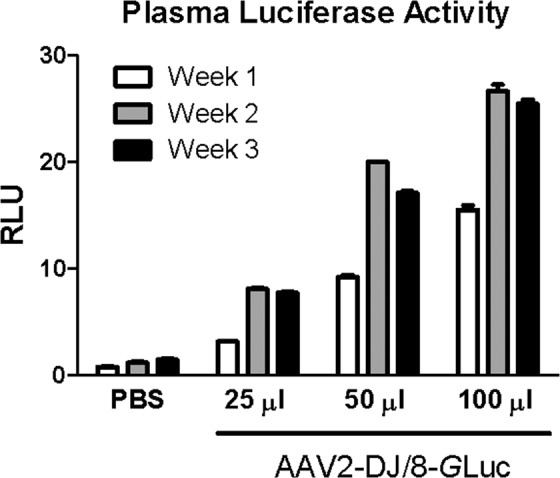
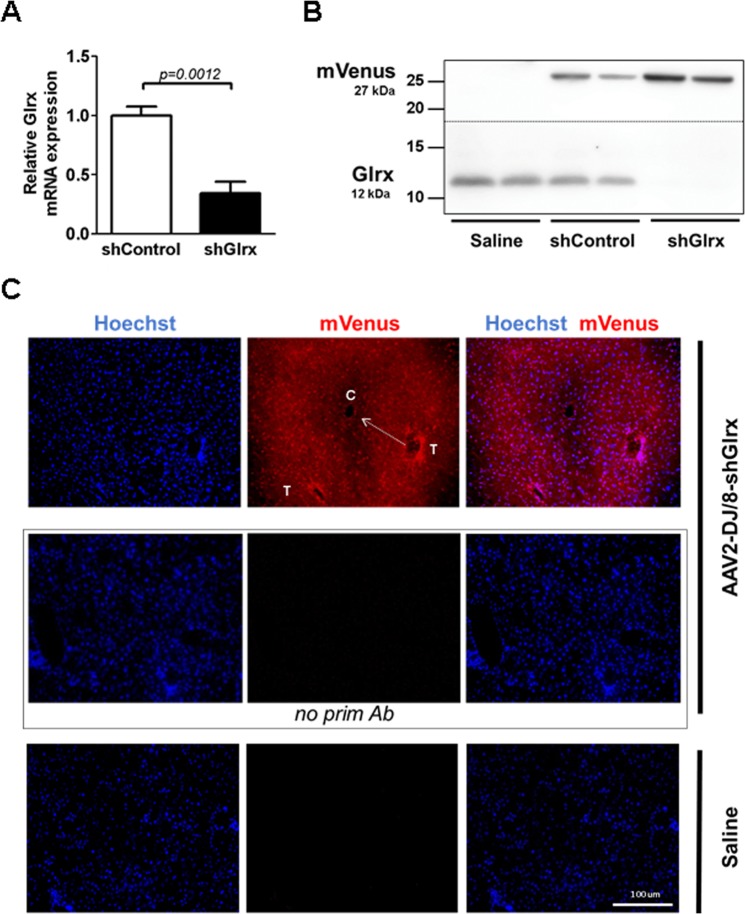
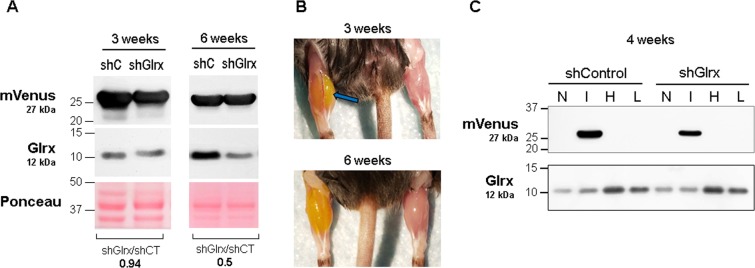
Delivering and expressing a gene of interest in cells or living animals has become a pivotal technique in biomedical research and gene therapy. Among viral delivery systems, adeno-associated viruses (AAVs) are relatively safe and demonstrate high gene transfer efficiency, low immunogenicity, stable long-term expression, and selective tissue tropism. Combined with modern gene technologies, such as cell-specific promoters, the Cre/lox system, and genome editing, AAVs represent a practical, rapid, and economical alternative to conditional knockout and transgenic mouse models. However, major obstacles remain for widespread AAV utilization, such as impractical purification strategies and low viral quantities. Here, we report an improved protocol to produce serotype-independent purified AAVs economically. Using a helper-free AAV system, we purified AAVs from HEK293T cell lysates and medium by polyethylene glycol precipitation with subsequent aqueous two-phase partitioning. Furthermore, we then implemented an iodixanol gradient purification, which resulted in preparations with purities adequate for in vivo use. Of note, we achieved titers of 10 10 –10 11 viral genome copies per µl with a typical production volume of up to 1 ml while requiring five times less than the usual number of HEK293T cells used in standard protocols. For proof of concept, we verified in vivo transduction via Western blot, qPCR, luminescence, and immunohistochemistry. AAVs coding for glutaredoxin-1 (Glrx) shRNA successfully inhibited Glrx expression by ~66% in the liver and skeletal muscle. Our study provides an improved protocol for a more economical and efficient purified AAV preparation.
Overview
The claims and statistics of this paper haven’t been checked yet.
Run the check — free, no account needed. It reads the open-access text and checks the sources it cites.
Integrity signals
Registry
Cites
Statistics
Figures
Verification
Claims the paper makes
The claims and statistics of this paper haven’t been checked yet.
Run the check — free, no account needed. It reads the open-access text and checks the sources it cites.
Claims other papers make about this one
Each is checked against this paper’s own text: does it say what the citing paper says it does?
The check wasn’t confident either way, so it gives no verdict — never disputed.
In the citing paper
“The ratio of full capsids to all capsids, termed content ratio, can vary from <1% to 30% in the production culture at the time of harvest and is inconsistent between production runs (Figure 1).6,28, 29, 30”
From Analytical methods for process and product characterization of recombinant adeno-associated virus-based gene therapies (2021) · cites this paper as [6]
Experimental — accuracy not yet measuredIn the citing paper
“At the same time, virus concentration in samples covers many orders of magnitude, from 1010 to 1011 vg/mL at raw culture harvest to 1013 to 1014 vg/mL in the purified product,6,7,18, 19, 20,24, 25, 26, 27”
From Analytical methods for process and product characterization of recombinant adeno-associated virus-based gene therapies (2021) · cites this paper as [6]
In the citing paper
“Commonly, laboratory-scale production yields only few milliliters (mL) of purified rAAV—equivalent to 1012–1014 vector genomes (vgs)—such that the required sample volumes for analysis can cause significant loss of product.6,7,20,23,24”
From Analytical methods for process and product characterization of recombinant adeno-associated virus-based gene therapies (2021) · cites this paper as [6]
Self-check
Percentages, sums and reported differences re-computed from the paper’s own numbers.
The self-check needs the paper’s full text.
Citations
Cites
Effect of gene therapy on visual function in Leber’s congenital amaurosis
Bainbridge, J. W. B., Smith, A. J., Barker, S. S., Robbie, S., Henderson, R., Balaggan, K., Viswanathan, A., Holder, G. E., Stockman, A., Tyler, N., et al. (2008) · New England Journal of Medicine · doi:10.1056/nejmoa0802268 · Cited by 1,924
Zolotukhin, S., Byrne, B. J., Mason, E. G., Zolotukhin, I., Potter, M., Chesnut, K. A., Summerford, C., Samulski, R. J., & Muzyczka, N. (1999) · Gene Therapy · doi:10.1038/sj.gt.3300938 · Cited by 1,321
Evidence that glutamine, not sugar, is the major energy source for cultured HeLa cells.
Reitzer, L. J., Wice, B. M., & Kennell, D. (1979) · Journal of Biological Chemistry · doi:10.1016/s0021-9258(17)30124-2 · Cited by 1,240
Kaplitt, M. G., Feigin, A., Tang, C., Fitzsimons, H. L., Mattis, P., Lawlor, P. A., Bland, R. J., Young, D., Strybing, K., Eidelberg, D., et al. (2007) · The Lancet · doi:10.1016/s0140-6736(07)60982-9 · Cited by 1,067
SIRT1 Regulates Hepatocyte Lipid Metabolism through Activating AMP-activated Protein Kinase
Hou, X., Xu, S., Maitland-Toolan, K. A., Sato, K., Jiang, B., Ido, Y., Lan, F., Walsh, K., Wierzbicki, M., Verbeuren, T. J., et al. (2008) · Journal of Biological Chemistry · doi:10.1074/jbc.m802187200 · Cited by 778
Self-citationEngineering adeno-associated viruses for clinical gene therapy
Kotterman, M. A., & Schaffer, D. V. (2014) · Nature Reviews Genetics · doi:10.1038/nrg3742 · Cited by 761
Grimm, D., Lee, J. S., Wang, L., Desai, T., Akache, B., Storm, T. A., & Kay, M. A. (2008) · Journal of Virology · doi:10.1128/jvi.00254-08 · Cited by 696
AAV5–Factor VIII Gene Transfer in Severe Hemophilia A
Rangarajan, S., Walsh, L., Lester, W., Perry, D., Madan, B., Laffan, M., Yu, H., Vettermann, C., Pierce, G. F., Wong, W. Y., et al. (2017) · New England Journal of Medicine · doi:10.1056/nejmoa1708483 · Cited by 694
Hosios, A. M., Hecht, V. C., Danai, L. V., Johnson, M. O., Rathmell, J. C., Steinhauser, M. L., Manalis, S. R., & Vander Heiden, M. G. (2016) · Developmental Cell · doi:10.1016/j.devcel.2016.02.012 · Cited by 641
Production and characterization of adeno-associated viral vectors
Grieger, J. C., Choi, V. W., & Samulski, R. J. (2006) · Nature Protocols · doi:10.1038/nprot.2006.207 · Cited by 580
Cited by
Sorted by citations
Yang, D., Zhang, W., Zhang, H., Zhang, F., Chen, L., Ma, L., Larcher, L. M., Chen, S., Liu, N., Zhao, Q., et al. (2020) · Theranostics · doi:10.7150/thno.41580 · Cited by 1,079
The use of viral vectors in vaccine development
Travieso, T., Li, J., Mahesh, S., Mello, J. D. F. R. E., & Blasi, M. (2022) · npj Vaccines · doi:10.1038/s41541-022-00503-y · Cited by 316
Adeno-associated virus capsid assembly is divergent and stochastic
Wörner, T. P., Bennett, A. D., Habka, S., Snijder, J., Friese, O. V., Powers, T. W., Agbandje‐McKenna, M., & Heck, A. J. R. (2021) · Nature Communications · doi:10.1038/s41467-021-21935-5 · Cited by 228
Maintaining hypoxia environment of subchondral bone alleviates osteoarthritis progression
Zhang, H., Wang, L., Cui, J., Wang, S., Han, Y., Shao, H., Wang, C., Hu, Y., Li, X., Zhou, Q., et al. (2023) · Science Advances · doi:10.1126/sciadv.abo7868 · Cited by 223
Viral Vector-Based Gene Therapy
Li, X., Le, Y., Zhang, Z., Nian, X., Лю, Б., & Yang, X. (2023) · International Journal of Molecular Sciences · doi:10.3390/ijms24097736 · Cited by 231
Metadata
- Authors
- Kimura, T., Ferran, B., Tsukahara, Y., Shang, Q., Desai, S., Fedoce, A., Pimentel, D. R., Luptak, I., Adachi, T., Ido, Y., Matsui, R., & Bachschmid, M. M.
- Affiliations
- Boston University (US)
- National Defense Medical College Hospital (JP)
- Corresponding author
- Matsui, Reiko
- Bachschmid, Markus Michael
- ORCID
- Venue
- Scientific Reports
- Published
- 2019-09-19
- Volume
- 9
- Issue
- 1
- Pages
- 13601-13601
- ISSN
- 2045-2322 (ISSN-L)
- PMC
- PMC6753157
- OpenAlex
- W2973390883
- Cited by
- 155
- References
- 70
- Citations by year
- 2026: 18 · 2025: 30 · 2024: 27 · 2023: 27 · 2022: 23 · 2021: 20 · 2020: 10
- FWCI
- 7.98
- Type
- journal article
- Language
- en
- Open access
- gold
- doi.org
- Locations
- Scientific Reports (publishedVersion, cc-by)
- PubMed Central (publishedVersion, cc-by)
- PubMed (publishedVersion)
- DOAJ (DOAJ: Directory of Open Access Journals) (submittedVersion)
- Funders
- American Heart Association (15FTF25890062, 16GRNT27660006)
- School of Medicine, Boston University (1UL1TR001430)
- National Defense Medical College
- Ministry of Education, Culture, Sports, Science and Technology
- Ministry of Defense
- National Institutes of Health (NIH T32, 15FTF25890062, UL1TR001430)
- Japan Society for the Promotion of Science (18H02815)
- National Institute on Aging (R03AG051857)
- National Heart, Lung, and Blood Institute (T32HL007224, R01HL133013)
- National Institute of Diabetes and Digestive and Kidney Diseases (R01DK103750)
- National Center for Advancing Translational Sciences
- Topics
- Life Sciences › Biochemistry, Genetics and Molecular Biology › Genetics › Virus-based gene therapy research
- Life Sciences › Biochemistry, Genetics and Molecular Biology › Molecular Biology › RNA Interference and Gene Delivery
- Life Sciences › Biochemistry, Genetics and Molecular Biology › Molecular Biology › Viral Infectious Diseases and Gene Expression in Insects
- Keywords
- adeno-associated virus vectors, AAV production, HEK293T cells, polyethylene glycol precipitation, aqueous two-phase extraction, viral titer, in vivo transduction, glutaredoxin 1, shRNA, liver, skeletal muscle, gene therapy
- MeSH terms
- Proof of Concept Study, Dependovirus, Animals, Cell Line, Genetic Vectors, Humans, Liver, Male, Polyethylenes, Chemical Precipitation, Transduction, Genetic, Down-Regulation, Muscle, Skeletal, Viral Load, RNA, Small Interfering, Glutaredoxins, HEK293 Cells
About these checks
Registry, retraction, Cites and statistics results are computed, not judged, with one exception: a printed reference that no index lists is read once by a model before it counts as a citation error. Claims are extracted by a model and kept only when their quote appears verbatim in the text; each cited source is then checked, with a model’s help, for whether it says what the claim relies on. Those verdicts can be wrong — read the claim’s quote and the cited source before relying on one.
Statistics and arithmetic are recomputed, not judged.
Confidence bands are shown only for fields calibrated on our annotated test set. None is calibrated yet, so no band is shown.
What counts as a claim ›How we measure confidence ›How we check this ›
Are you an author, or do you see a problem with this page? Request a review
