

Sleep stage classification from heart-rate variability using long short-term memory neural networks
Open accessThe DOI matches its Crossref record; 67 of the 67 references it cites were found in a registry or an index.
Abstract
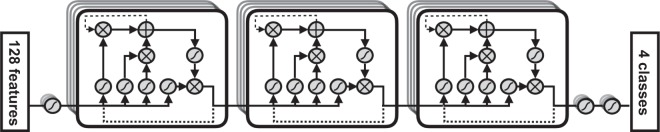
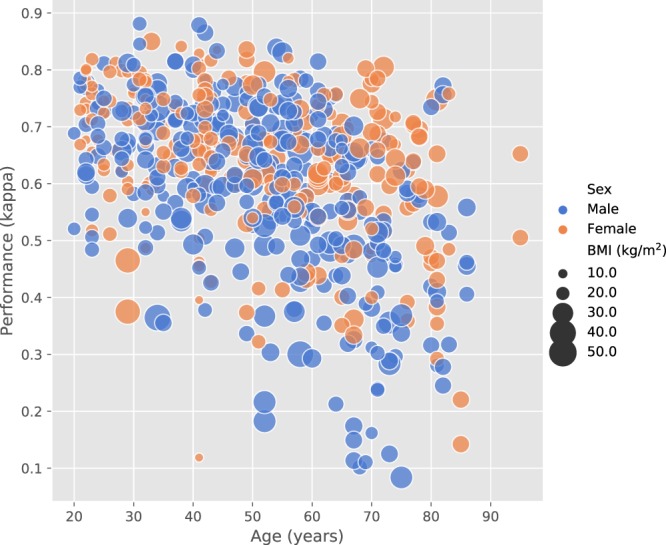
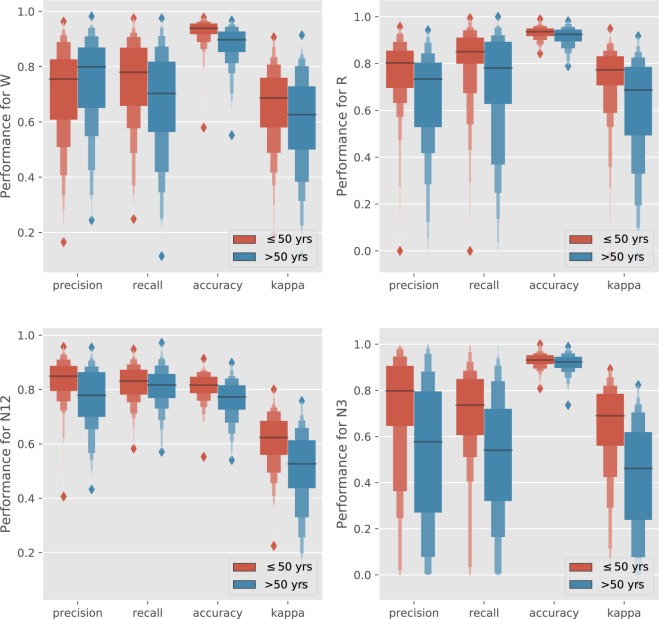
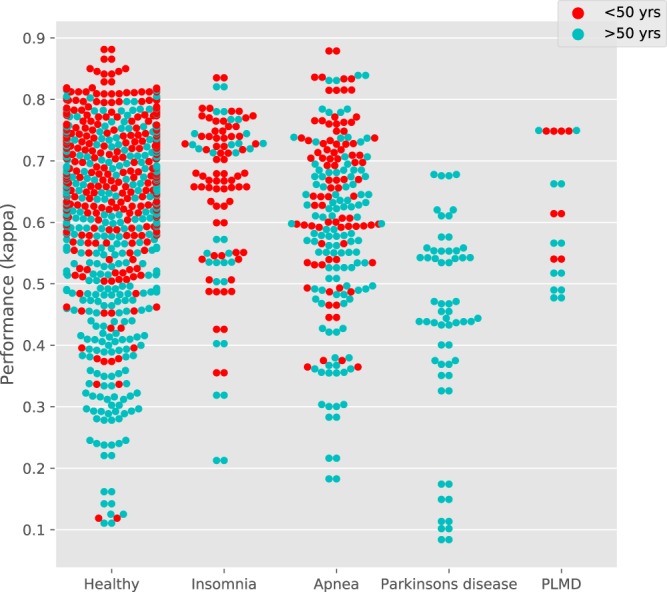
Automated sleep stage classification using heart rate variability (HRV) may provide an ergonomic and low-cost alternative to gold standard polysomnography, creating possibilities for unobtrusive home-based sleep monitoring. Current methods however are limited in their ability to take into account long-term sleep architectural patterns. A long short-term memory (LSTM) network is proposed as a solution to model long-term cardiac sleep architecture information and validated on a comprehensive data set (292 participants, 584 nights, 541.214 annotated 30 s sleep segments) comprising a wide range of ages and pathological profiles, annotated according to the Rechtschaffen and Kales (R&K) annotation standard. It is shown that the model outperforms state-of-the-art approaches which were often limited to non-temporal or short-term recurrent classifiers. The model achieves a Cohen’s k of 0.61 ± 0.15 and accuracy of 77.00 ± 8.90% across the entire database. Further analysis revealed that the performance for individuals aged 50 years and older may decline. These results demonstrate the merit of deep temporal modelling using a diverse data set and advance the state-of-the-art for HRV-based sleep stage classification. Further research is warranted into individuals over the age of 50 as performance tends to worsen in this sub-population.
Overview
The claims and statistics of this paper haven’t been checked yet.
Free: it reads the open-access text and checks the first 5 claims that cite a source we can check. Create a free account to check every claim.
Integrity signals
Registry
Cites
Statistics
Figures
Verification
Claims the paper makes
The claims and statistics of this paper haven’t been checked yet.
Free: it reads the open-access text and checks the first 5 claims that cite a source we can check. Create a free account to check every claim.
Claims other papers make about this one
Each is checked against this paper’s own text: does it say what the citing paper says it does?
The check wasn’t confident either way, so it gives no verdict — never disputed.
In the citing paper
“Such complementary fusion protocols have been shown to significantly improve the classification performance of sleep stages79,80.”
From The future of sleep health: a data-driven revolution in sleep science and medicine (2020) · cites this paper as [80]
Experimental — accuracy not yet measured
Self-check
Percentages, sums and reported differences re-computed from the paper’s own numbers.
The self-check needs the paper’s full text.
Citations
Cites
1 retracted
Uçar, M. K., Bozkurt, M. R., Bilgin, C., & Polat, K. (2018) · Neural Computing and Applications · doi:10.1007/s00521-016-2365-x · Cited by 106
RetractedHochreiter, S., & Schmidhuber, J. (1997) · Neural Computation · doi:10.1162/neco.1997.9.8.1735 · Cited by 102,318 · cited 2×
“A detailed description and equations of LSTM cells are given in the original paper 34 .”
BackgroundMethod(2014) · Cited by 33,419
Huang, N. E., Shen, Z., Long, S. R., Wu, M. C., Shih, H. H., Zheng, Q., Yen, N.-C., Tung, C. C., & Liu, H. H. (1998) · Proceedings of the Royal Society of London. Series A: Mathematical, Physical and Engineering Sciences · doi:10.1098/rspa.1998.0193 · Cited by 23,564
Heart Rate Variability: Standards of Measurement, Physiological Interpretation, and Clinical Use
Electrophysiology, T. F. O. T. E. S. O. C. T. N. A. (1996) · Circulation · doi:10.1161/01.cir.93.5.1043 · Cited by 17,159
Heart rate variability: Standards of measurement, physiological interpretation, and clinical use
Malik, M., Bigger, J. T., Camm, A. J., Kleiger, R. E., Malliani, A., Moss, A. J., & Schwartz, P. J. (1996) · European Heart Journal · doi:10.1093/oxfordjournals.eurheartj.a014868 · Cited by 15,289
Rechtschaffen, A. (1968) · Medical Entomology and Zoology · Cited by 12,675
Physiological time-series analysis using approximate entropy and sample entropy
Richman, J. S., & Moorman, J. R. (2000) · American Journal of Physiology-Heart and Circulatory Physiology · doi:10.1152/ajpheart.2000.278.6.h2039 · Cited by 7,880
(2007) · Cited by 6,530
ADADELTA: An Adaptive Learning Rate Method
Zeiler, M. D. (2012) · arXiv · doi:10.48550/arxiv.1212.5701 · Cited by 5,322
Research works printed but not linked: 3
- 36. Stephansen, J. B. et al. The use of neural networks in the analysis of sleep stages and the diagnosis of narcolepsy. arXiv preprint arXiv:1710.02094 (2017). · arXiv
- 38. Zhao, M., Yue, S., Katabi, D., Jaakkola, T. S. & Bianchi, M. T. Learning sleep stages from radio signals: a conditional adversarial architecture. In International Conference on Machine Learning, 4100-4109 (2017).
- 50. Tieleman, T. & Hinton, G. Lecture 6.5-rmsprop: Divide the gradient by a running average of its recent magnitude. COURSERA: Neural Networks for Machine Learning 4, 26-31 (2012).
Cited by
The future of sleep health: a data-driven revolution in sleep science and medicine
Perez-Pozuelo, I., Zhai, B., Palotti, J., Mall, R., Aupetit, M., Garcia-Gomez, J. M., Taheri, S., Guan, Y., & Fernandez-Luque, L. (2020) · npj Digital Medicine · doi:10.1038/s41746-020-0244-4 · Cited by 311
Deep learning for automated sleep staging using instantaneous heart rate
Sridhar, N., Shoeb, A. H., Stephens, P., Kharbouch, A. A., Shimol, D. B., Burkart, J., Ghoreyshi, A., & Myers, L. J. (2020) · npj Digital Medicine · doi:10.1038/s41746-020-0291-x · Cited by 171
Loh, H. W., Ooi, C. P., Vicnesh, J., Oh, S. L., Faust, O., Gertych, A., & Acharya, U. R. (2020) · Applied Sciences · doi:10.3390/app10248963 · Cited by 154
“[62] published the only study that was based on ECG signals from a private dataset that was collected as part of the European Union SIESTA project [100] as shown in Table 5.”
BackgroundA deep transfer learning approach for wearable sleep stage classification with photoplethysmography
Radha, M., Fonseca, P. M., Moreau, A., Ross, M., Cerny, A., Anderer, P., Long, X., & Aarts, R. M. (2021) · npj Digital Medicine · doi:10.1038/s41746-021-00510-8 · Cited by 158
Self-citationPapini, G. B., Fonseca, P., van Gilst, M. M., Bergmans, J. W. M., Vullings, R., & Overeem, S. (2020) · Scientific Reports · doi:10.1038/s41598-020-69935-7 · Cited by 90
Self-citationAttention-Based LSTM for Non-Contact Sleep Stage Classification Using IR-UWB Radar
Kwon, H. B., Choi, S. H., Lee, D., Son, D., Yoon, H., Lee, M. H., Lee, Y. J., & Park, K. S. (2021) · IEEE Journal of Biomedical and Health Informatics · doi:10.1109/jbhi.2021.3072644 · Cited by 101
Sensors Capabilities, Performance, and Use of Consumer Sleep Technology
de Zambotti, M., Cellini, N., Menghini, L., Sarlo, M., & Baker, F. C. (2020) · Sleep Medicine Clinics · doi:10.1016/j.jsmc.2019.11.003 · Cited by 82
Technologies for sleep monitoring at home: wearables and nearables
Yoon, H., & Choi, S. H. (2023) · Biomedical Engineering Letters · doi:10.1007/s13534-023-00305-8 · Cited by 95
Heyat, M. B. B., Lai, D., Wu, K., Akhtar, F., Sultana, A., Tumrani, S., Teelhawod, B. N., Abbasi, R., Kamal, M. A., & Muaad, A. Y. M. (2022) · Current Pharmaceutical Design · doi:10.2174/1381612829666221201161636 · Cited by 88
Zhai, B., Perez-Pozuelo, I., Clifton, E. A. D., Palotti, J., & Guan, Y. (2020) · Proceedings of the ACM on Interactive Mobile Wearable and Ubiquitous Technologies · doi:10.1145/3397325 · Cited by 95
“[37], we extracted features in four domains (time, geometrical, frequency and non-linear domains).”
BackgroundMethodResultInfluentialFonseca, P. M., van Gilst, M. M., Radha, M., Ross, M., Moreau, A., Cerny, A., Anderer, P., Long, X., van Dijk, J. P., & Overeem, S. (2020) · SLEEP · doi:10.1093/sleep/zsaa048 · Cited by 96
“In our earlier work [24], we achieved an average κ of 0.61 and accuracy of 77.0%, on a data set comprised of 195 healthy participants and 97 patients.”
BackgroundMethodInfluentialSelf-citationEEG-Based Neonatal Sleep-Wake Classification Using Multilayer Perceptron Neural Network
Abbasi, S. F., Ahmad, J. E., Tahir, A., Awais, M. A., Chen, C., Irfan, M., Siddiqa, H. A., Waqas, A. B., Long, X., Yin, B., et al. (2020) · IEEE Access · doi:10.1109/access.2020.3028182 · Cited by 78
“Deep learning algorithms for sleep staging include convolutional neural network (CNN) [21], recurrent neural network (RNN) [22], the combination of CNN or RNN [23-24]and Long Short-TermMemory (LSTM) [25,26].”
MethodSelf-citationWulterkens, B. M., Fonseca, P. M., Hermans, L. W., Ross, M., Cerny, A., Anderer, P., Long, X., van Dijk, J. P., Vandenbussche, N., Pillen, S., et al. (2021) · Nature and Science of Sleep · doi:10.2147/nss.s306808 · Cited by 78
Self-citationSurantha, N., Lesmana, T. F., & Isa, S. M. (2021) · Journal Of Big Data · doi:10.1186/s40537-020-00406-6 · Cited by 68
Bakker, J. P., Ross, M., Cerny, A., Vasko, R., Shaw, E., Kuna, S. T., Magalang, U. J., Punjabi, N. M., & Anderer, P. (2022) · SLEEP · doi:10.1093/sleep/zsac154 · Cited by 84
Self-citationHöhn, C., Hahn, M. A., Lendner, J. D., & Hoedlmoser, K. (2024) · eNeuro · doi:10.1523/eneuro.0259-23.2024 · Cited by 88
From Personalized Medicine to Population Health: A Survey of mHealth Sensing Techniques
Wang, Z., Xiong, H., Zhang, J., Yang, S., Boukhechba, M., Zhang, D., Barnes, L. E., & Dou, D. (2022) · IEEE Internet of Things Journal · doi:10.1109/jiot.2022.3161046 · Cited by 78
“For example, advances in machine learning algorithms help consider and incorporate user’s long-term historical status and clinical medical knowledge into health status modeling to achieve the goals above [282], [298].”
BackgroundYue, H., Chen, Z., Guo, W., Sun, L., Dai, Y., Wang, Y., Ma, W., Fan, X., Wen, W., & Lei, W. (2024) · Sleep Medicine Reviews · doi:10.1016/j.smrv.2024.101897 · Cited by 79
Huttunen, R., Leppänen, T., Duce, B., Arnardóttir, E. S., Nikkonen, S., Myllymaa, S., Töyräs, J., & Korkalainen, H. (2022) · IEEE Transactions on Biomedical Engineering · doi:10.1109/tbme.2022.3225268 · Cited by 78
“Since the EEG measurement setup is quite complex and requires expert assistance for both in-laboratory and home measurements, alternative signal sources for sleep staging, such as the electrocardiography (ECG) and body movements [13], [14], have been studied.”
BackgroundEvaluating consumer and clinical sleep technologies: an American Academy of Sleep Medicine update
Schutte-Rodin, S., Deak, M. C., Khosla, S., Goldstein, C. A., Yurcheshen, M. E., Chiang, A. A.-P., Gault, D., Kern, J., O’Hearn, D. J., Ryals, S. M., et al. (2021) · Journal of Clinical Sleep Medicine · doi:10.5664/jcsm.9580 · Cited by 60
Fazio, R. D., Mattei, V., Al-Naami, B. O., Vittorio, M. D., & Visconti, P. (2022) · Micromachines · doi:10.3390/mi13081335 · Cited by 57
Menghini, L., Yuksel, D., Goldstone, A., Baker, F. C., & de Zambotti, M. (2021) · Chronobiology International · doi:10.1080/07420528.2021.1903481 · Cited by 53
“In particular, HRV changes between epochs might be more informative of shifts between different sleep stages, compared to HR changes between epochs (for a recent discussion, see Radha et al. 2019).”
BackgroundCurrent status and prospects of automatic sleep stages scoring: Review
Gaiduk, M., Alarcón, Á. S., Seepold, R., & Madrid, N. M. (2023) · Biomedical Engineering Letters · doi:10.1007/s13534-023-00299-3 · Cited by 59
Bakker, J. P., Ross, M., Vasko, R., Cerny, A., Fonseca, P. M., Jasko, J., Shaw, E., White, D. P., & Anderer, P. (2021) · Journal of Clinical Sleep Medicine · doi:10.5664/jcsm.9192 · Cited by 48
Self-citationSleep classification using Consumer Sleep Technologies and AI: A review of the current landscape
Djanian, S., Bruun, A., & Nielsen, T. D. (2022) · Sleep Medicine · doi:10.1016/j.sleep.2022.09.004 · Cited by 63
A Hybrid Lightweight 1D CNN-LSTM Architecture for Automated ECG Beat-Wise Classification
Obeidat, Y., & Alqudah, A. M. (2021) · Traitement du signal · doi:10.18280/ts.380503 · Cited by 50
“Approaches based on hidden Markov models have shown good performance in analyzing cardiac arrhythmia [33, 34].”
BackgroundMethodOPTICAL+: a frequency-based deep learning scheme for recognizing brain wave signals
Kumar, S., Sharma, R., & Sharma, A. K. (2021) · PeerJ Computer Science · doi:10.7717/peerj-cs.375 · Cited by 48
“, 2017), sleep-stage classification (Radha et al., 2019; Xu et al., 2020), seizure detection (Gao et al.”
BackgroundContactless Camera-Based Sleep Staging: The HealthBed Study
van Meulen, F., Grassi, A., van den Heuvel, L., Overeem, S., van Gilst, M. M., van Dijk, J. P., Maass, H., van Gastel, M., & Fonseca, P. M. (2023) · Bioengineering · doi:10.3390/bioengineering10010109 · Cited by 53
“Sleep Stage Classifier A previously developed machine learning algorithm for automatic sleep staging was used to classify sleep stages [6,26].”
MethodSelf-citationA hybrid CNN-LSTM model for high resolution melting curve classification
Ozkok, F. O., & Çelik, M. (2021) · Biomedical Signal Processing and Control · doi:10.1016/j.bspc.2021.103168 · Cited by 43
Zhang, P., Hang, Y., Ye, X., Guan, P., Jiang, J. H., Tan, J.-C., & Hu, W. G. (2021) · IEEE Internet of Things Journal · doi:10.1109/jiot.2021.3067876 · Cited by 40
Olsen, M., Zeitzer, J. M., Nakase‐Richardson, R., Davidenko, P., Jennum, P., Sørensen, H. B. D., & Mignot, E. J.-M. (2022) · IEEE Transactions on Biomedical Engineering · doi:10.1109/tbme.2022.3187945 · Cited by 40
“The most recent and best performing sleep stage classification algorithms are temporal models that are either based on recurrent frameworks, e.g., long-short term memory (LSTM) [9], [19], [25] and gated recurrent units (GRU) [22], [26] or convolutional neural network (CNN) architectures, e.g., dilated convolutions [27…”
BackgroundMorokuma, S., Hayashi, T., Kanegae, M., Mizukami, Y., Asano, S., KIMURA, I., Tateizumi, Y., Ueno, H., Ikeda, S., & Niizeki, K. (2023) · Scientific Reports · doi:10.1038/s41598-023-45020-7 · Cited by 47
Entropy Analysis of Heart Rate Variability in Different Sleep Stages
Yan, C., Li, P., Yang, M., Li, Y., Li, J., Zhang, H., & Liu, C. (2022) · Entropy · doi:10.3390/e24030379 · Cited by 38
Alqahtani, E., Janbi, N. F., Sharaf, S. A., & Mehmood, R. (2022) · Sustainability · doi:10.3390/su142013534 · Cited by 42
Sleep Stage Estimation from Bed Leg Ballistocardiogram Sensors
Mitsukura, Y., Sumali, B., Nagura, M., Fukunaga, K., & Yasui, M. (2020) · Sensors · doi:10.3390/s20195688 · Cited by 33
“[29] proposed a deep learning approach for sleep stage classification, utilizing heart rate features.”
BackgroundTransferable Self-Supervised Instance Learning for Sleep Recognition
Zhao, A., Wang, Y., & Li, J. (2022) · IEEE Transactions on Multimedia · doi:10.1109/tmm.2022.3176751 · Cited by 33
AI-Driven sleep staging from actigraphy and heart rate
Song, T.-A., Chowdhury, S. R., Malekzadeh, M., Harrison, S. L., Blackwell-Hoge, T., Redline, S. S., Stone, K. L., Saxena, R., Purcell, S., & Dutta, J. (2023) · PLoS ONE · doi:10.1371/journal.pone.0285703 · Cited by 36
“The measurement of sleep transitions is intricately linked to temporal correlations in the data [63].”
BackgroundEstimation of Sleep Stages Analyzing Respiratory and Movement Signals
Gaiduk, M., Perea, J. J., Seepold, R., Madrid, N. M., Penzel, T., Glos, M., & Ortega, J. A. (2021) · IEEE Journal of Biomedical and Health Informatics · doi:10.1109/jbhi.2021.3099295 · Cited by 34
“(HRV) in [12] or EEG in [15]) are beyond the scope of this”
BackgroundWara, T. U., Fahad, A. H., Das, A. S., & Shawon, M. M. H. (2025) · Heliyon · doi:10.1016/j.heliyon.2025.e43576 · Cited by 43
“Figure 9 shows a clear idea about the parents and their corresponding children or the hybrid models used in different studies.”
Regalia, G., Gerboni, G., Migliorini, M., Lai, M., Pham, J., Puri, N., Pavlova, M. K., Picard, R. W., Sarkis, R. A., & Onorati, F. (2020) · Chronobiology International · doi:10.1080/07420528.2020.1835942 · Cited by 28
“…physiological monitoring coupled with novel machine learning models shows great potential in performing both sleep/wake and multi-stage sleep classification (Radha et al. 2019; Walch et al. 2019; Zhang et al. 2019), although extensive datasets are required for training and tuning of these models.”
BackgroundPini, N., Ong, J. L., Yılmaz, G., Chee, N. I. Y. N., Siting, Z., Awasthi, A., Biju, S., Kishan, K., Patanaik, A., Fifer, W. P., et al. (2022) · Frontiers in Neuroscience · doi:10.3389/fnins.2022.974192 · Cited by 30
“Another relevant architecture was proposed by Radha et al. (2019).”
A computationally efficient algorithm for wearable sleep staging in clinical populations
Fonseca, P. M., Ross, M., Cerny, A., Anderer, P., van Meulen, F., Janssen, H. C. J. P., Pijpers, A., Dujardin, S., van Hirtum, P. V., van Gilst, M. M., et al. (2023) · Scientific Reports · doi:10.1038/s41598-023-36444-2 · Cited by 36
“In previous work, we built a model based on 132 manually engineered ECG-based HRV features (ECG–HRV) 18,19 which we then applied directly on HRV features extracted from PPG recordings of a hold-out set 20 .”
InfluentialSelf-citationMulti-stage sleep classification using photoplethysmographic sensor
Motin, M. A., Karmakar, C. K., Palaniswami, M. S., Penzel, T., & Kumar, D. (2023) · Royal Society Open Science · doi:10.1098/rsos.221517 · Cited by 30
“Few studies have investigated single-lead ECG-derived instantaneous heart rate-based sleep stage classification [9,20].”
BackgroundSleepSmart: an IoT-enabled continual learning algorithm for intelligent sleep enhancement
Gamel, S. A., & Talaat, F. M. (2023) · Neural Computing and Applications · doi:10.1007/s00521-023-09310-5 · Cited by 35
Parlato, S. J., Centracchio, J., Esposito, D., Bifulco, P., & Andreozzi, E. (2023) · Sensors · doi:10.3390/s23198114 · Cited by 29
“HRV is also used in sleep studies [17], e.”
MethodDu, Y., Gu, J., Duan, S., Trueb, J. T., Tzavelis, A., Shin, H., Arafa, H., Li, X., Huang, Y. Y., Carr, A. N., et al. (2025) · Proceedings of the National Academy of Sciences · doi:10.1073/pnas.2501220122 · Cited by 28
A Systematic Review on Deep Learning Models for Sleep Stage Classification
Sri, T. R., Ravi Raja, A., Madala, J., Duddukuru, S. L., Reddipalli, R., & Polasi, P. K. (2022) · International Conference on Trends in Electronics and Informatics (ICOEI) · doi:10.1109/icoei53556.2022.9776965 · Cited by 26
“Another author, Mustafa et al. [28] proposed a LSTM model using private dataset (EU-SIESTA).”
MethodInternet of Things for Sleep Monitoring
Jaworski, D. J., Park, A., & Park, E. J. (2021) · IEEE Instrumentation & Measurement Magazine · doi:10.1109/mim.2021.9400950 · Cited by 23
“[22] with the most impactful features coming directly from the bed sensor device.”
BackgroundMethodInfluentialOverview of the hypnodensity approach to scoring sleep for polysomnography and home sleep testing
Anderer, P., Ross, M., Cerny, A., Vasko, R., Shaw, E., & Fonseca, P. M. (2023) · Frontiers in Sleep · doi:10.3389/frsle.2023.1163477 · Cited by 28
Self-citationAutomatic neonatal sleep stage classification: A comparative study
Abbasi, S. F., Abbas, A., Ahmad, I., Alshehri, M. S., Almakdi, S., Ghadi, Y. Y., & Ahmad, J. E. (2023) · Heliyon · doi:10.1016/j.heliyon.2023.e22195 · Cited by 26
“Profound learning methods for sleep classification include convolutional neural network (CNN) [44], recurrent neural network (RNN) [45], the combination of CNN or RNN [46,47] along with Long Short-Term Memory (LSTM) [48,49].”
MethodWan, C., Gao, S., Shang, X., Wu, Z., Li, T., Ling, W., Zhou, M., Huo, W., Guo, Y. F., & Huang, X. L. (2021) · Advanced Materials Technologies · doi:10.1002/admt.202100904 · Cited by 21
Frailty Identification Using Heart Rate Dynamics: A Deep Learning Approach
Eskandari, M., Parvaneh, S., Ehsani, H., Fain, M. J., & Toosizadeh, N. (2022) · IEEE Journal of Biomedical and Health Informatics · doi:10.1109/jbhi.2022.3152538 · Cited by 31
“inferences, and classification of HR time series for frailty assessment [23], [24], [25], [26], among which LSTM method have been outperformed other approaches [24], [27].”
MethodTopalidis, P. I., Heib, D. P. J., Baron, S., Eigl, E., Hinterberger, A., & Schabus, M. (2023) · Sensors · doi:10.3390/s23052390 · Cited by 26
“, in sleep staging the N − 1 epoch carries information about the N and N+1 epochs [51]).”
BackgroundFrom Pulses to Sleep Stages: Towards Optimized Sleep Classification Using Heart-Rate Variability
Topalidis, P. I., Baron, S., Heib, D. P. J., Eigl, E., Hinterberger, A., & Schabus, M. (2023) · Sensors · doi:10.3390/s23229077 · Cited by 23
Lee, M., Kang, H., Yu, S.-H., Cho, H., Oh, J., van der Lande, G., Gosseries, O., & Jeong, J.-H. (2024) · IEEE Transactions on Neural Systems and Rehabilitation Engineering · doi:10.1109/tnsre.2024.3420715 · Cited by 23
“However, within NREM, N3 has received special attention, as the most restorative period of sleep for metabolic function, associated with sleep maintenance and sleep quality, which makes it meaningful to divide NREM into a sleep classification system [15].”
BackgroundSleep staging algorithm based on smartwatch sensors for healthy and sleep apnea populations
Silva, F. B., Uribe, L. F. S., Cepeda, F. X., Alquati, V. F. S., Guimarães, J. P. S., Silva, Y. G. A., dos Santos, O. L., de Oliveira, A. A., de Aguiar, G. H. M., Andersen, M. L., et al. (2024) · Sleep Medicine · doi:10.1016/j.sleep.2024.05.033 · Cited by 23
Smart alarm based on sleep stages prediction
Slyusarenko, K., & Fedorin, I. V. (2020) · Annual International Conference of the IEEE Engineering in Medicine and Biology Society (EMBC) · doi:10.1109/embc44109.2020.9176320 · Cited by 23
“Recently RRN architectures based on Long Short–Term Memory (LSTM) showed accurate sleep stages classification of 77%-80%, [14], [15], [16].”
BackgroundMethodFedorin, I. V., & Slyusarenko, K. (2021) · Annual International Conference of the IEEE Engineering in Medicine and Biology Society (EMBC) · doi:10.1109/embc46164.2021.9629597 · Cited by 22
“In this case, RNN's are the most suitable due to the possibility of time sequence processing and hidden states analysis [10-15].”
BackgroundGanglberger, W., Krishnamurthy, P. V., Quadri, S. A., Tesh, R. A., Bucklin, A. A., Adra, N., Cardoso, M. D. S., Leone, M. J., Hemmige, A., Rajan, S., et al. (2023) · Frontiers in Network Physiology · doi:10.3389/fnetp.2023.1120390 · Cited by 26
“Although sleep states are commonly discerned through electroencephalogram (EEG) signals, they can also be decoded through analysis of non-EEG signals (Radha et al., 2019; Sun et al., 2019; Sridhar et al., 2020) since sleep modifies a variety of biosignals (Somers et al.”
BackgroundLiu, P.-K., Ting, N., Chiu, H.-C., Lin, Y.-C., Liu, Y., Ku, B.-W., & Lee, P. (2023) · Journal of Clinical Sleep Medicine · doi:10.5664/jcsm.10690 · Cited by 22
Jaworski, D. J., & Park, E. (2024) · Nature and Science of Sleep · doi:10.2147/nss.s464944 · Cited by 17
“50 The sleep cycle begins initially getting into bed wake, a middle section where the bulk of the sleep stages occur and ending with wake and getting out of bed.”
BackgroundMethodDeep Learning in the Healthcare Industry: Theory and Applications
Shirazi, Z. A., de Souza, C. P. E., Kashef, R. F., & Rodrigues, F. F. (2020) · Advances in healthcare information systems and administration book series · doi:10.4018/978-1-7998-2581-4.ch010 · Cited by 21
Automated Scoring of Sleep and Associated Events
Anderer, P., Ross, M., Cerny, A., & Shaw, E. (2022) · Advances in experimental medicine and biology · doi:10.1007/978-3-031-06413-5_7 · Cited by 18
Self-citationvan Gilst, M. M., Wulterkens, B. M., Fonseca, P. M., Radha, M., Ross, M., Moreau, A., Cerny, A., Anderer, P., Long, X., van Dijk, J. P., et al. (2020) · BMC Research Notes · doi:10.1186/s13104-020-05355-0 · Cited by 18
“Recently, we developed, trained and validated a sleep staging algorithm based on HRV derived from ECG data [3, 8].”
MethodInfluentialSelf-citationSharma, M. D., Makwana, P., Chad, R. S., & Acharya, U. R. (2023) · Applied Intelligence · doi:10.1007/s10489-022-04432-0 · Cited by 18
Improved sleep stage predictions by deep learning of photoplethysmogram and respiration patterns
Kazemi, K., Abiri, A., Zhou, Y., Rahmani, A. M., Khayat, R., Liljeberg, P., & Khine, M. (2024) · Computers in Biology and Medicine · doi:10.1016/j.compbiomed.2024.108679 · Cited by 19
Sharan, R. V., Takeuchi, H., Kishi, A., & Yamamoto, Y. (2024) · IEEE Transactions on Instrumentation and Measurement · doi:10.1109/tim.2024.3481551 · Cited by 21
“IHR can be computed from an electrocardiogram (ECG) signal, and its descriptors have shown promise in distinguishing between sleep and wake stages [11], [12], [13], [14].”
MethodInfluentialSanchez, R. E. A., Wrede, J. E., Watson, R. S., de la Iglesia, H. O., & Dervan, L. A. (2021) · Chronobiology International · doi:10.1080/07420528.2021.1987451 · Cited by 15
Multi-night home assessment of sleep structure in OSA with and without insomnia
Wulterkens, B. M., Teuling, N. D., Hermans, L. W., Asin, J., Duis, N., Overeem, S., Fonseca, P. M., & van Gilst, M. M. (2024) · Sleep Medicine · doi:10.1016/j.sleep.2024.03.031 · Cited by 16
Self-citationMicrocontroller-Based EdgeML: Health Monitoring for Stress and Sleep via HRV
Srivastava, P., Shah, N., & Jaiswal, K. (2024) · doi:10.3390/engproc2024078003 · Cited by 18
“For instance, Li et al. (2013) used wavelet analysis and a support vector machine classifier to detect driver drowsiness based on heart rate variability [9], while Radha et al. (2019) performed sleep stage classification from HRV using long short-term memory neural networks [10].”
Su, X., Wang, X., & Ge, H. (2025) · Electronics · doi:10.3390/electronics14020281 · Cited by 15
Krauss, D., Richer, R., Küderle, A., Jukic, J., German, A., Leutheuser, H., Regensburger, M., Winkler, J., & Eskofier, B. M. (2025) · SLEEP · doi:10.1093/sleep/zsaf091 · Cited by 20
“Radha et al. [24] provided a sleep-stage classification system based on HRV using long short-term memory (LSTM) networks.”
Sleep Diagnostics for Home Monitoring of Sleep Apnea Patients
Huysmans, D., Borzée, P., Buyse, B., Testelmans, D., Huffel, S. V., & Varon, C. (2021) · Frontiers in Digital Health · doi:10.3389/fdgth.2021.685766 · Cited by 13
“Stateof-the-art non-EEG sleep staging algorithms are aware of the decrease in prediction performance for a patient population, however the problem is not mitigated (8, 16).”
BackgroundThiesse, L., Staner, L., Bourgin, P., Roth, T. G., Fuchs, G., Kirscher, D., Schaffhauser, J.-Y., Saoud, J. B., & Viola, A. (2021) · SLEEP Advances · doi:10.1093/sleepadvances/zpab019 · Cited by 14
“[29] on a similar population: accuracy: 77%, κ: 0.”
Automation of classification of sleep stages and estimation of sleep efficiency using actigraphy
Kim, H., Kim, D., & Oh, J. (2023) · Frontiers in Public Health · doi:10.3389/fpubh.2022.1092222 · Cited by 17
“Pre-processing of accelerometry and ECG data .”
BackgroundInfluentialTrivedi, G. Y., Sharma, K. H., Saboo, B., Kathirvel, S., Konat, A., Zapadia, V., Prajapati, P. J., Benani, U., Patel, K., & Shah, S. D. (2023) · Cureus · doi:10.7759/cureus.37527 · Cited by 29
Automatic Sleep Staging Method Using EEG Based on STFT and Residual Network
Zhang, R., Jiang, R., Hu, H., Gao, Y. L., Xia, W., & Song, B. (2024) · IEEE Access · doi:10.1109/access.2024.3524267 · Cited by 14
Machine and Deep Learning in Molecular and Genetic Aspects of Sleep Research
Elgart, M., Redline, S. S., & Sofer, T. (2021) · Neurotherapeutics · doi:10.1007/s13311-021-01014-9 · Cited by 12
Rules-Based and SVM-Q Methods With Multitapers and Convolution for Sleep EEG Stages Classification
Zapata, I. A., Li, Y., & Wen, P. P. (2022) · IEEE Access · doi:10.1109/access.2022.3188286 · Cited by 15
Ross, M., Fonseca, P. M., Overeem, S., Vasko, R., Cerny, A., Shaw, E., & Anderer, P. (2023) · Frontiers in Physiology · doi:10.3389/fphys.2023.1254679 · Cited by 10
“Recently, artificial intelligence-based classifiers achieved remarkable results in classifying sleep from cardio-respiratory signals like photoplethysmography (PPG) and respiratory effort/flow or peripheral-arterial tonometry (PAT), effectively enabling the scoring of sleep inHSAT recordings without neurological signa…”
BackgroundSelf-citationYu, R., Li, Y., Zhao, K., & Fan, F. (2024) · Sleep and Biological Rhythms · doi:10.1007/s41105-024-00563-8 · Cited by 12
“In a study by Radha et al. [63], a novel approach to modeling sleep architecture was introduced using an LSTM network.”
Estrella, T., & Capdevila, L. (2025) · Sports · doi:10.3390/sports13020030 · Cited by 14
“Returning to the HRV analysis of our interest and regarding recovery behaviours, it has been found that it is a valuable parameter for classifying sleep stages closely linked to nocturnal recovery [29,30].”
Carter, J., Jorge, J., Venugopal, B., Gibson, O., & Tarassenko, L. (2023) · IEEE/CVF Conference on Computer Vision and Pattern Recognition Workshops (CVPRW) · doi:10.1109/cvprw59228.2023.00632 · Cited by 17
“Here we observe a clear negative correlation between age and the Cohen’s kappa statistic, findings which mirror those from prior ECG-based sleep staging work [31].”
ResultInterbeat interval-based sleep staging: work in progress toward real-time implementation
Garcia‐Molina, G., & Jiang, J. (2022) · Physiological Measurement · doi:10.1088/1361-6579/ac5a78 · Cited by 10
Trajectory planning in college football training using deep learning and the internet of things
Guan, Y., Qiu, Y., & Tian, C. (2022) · The Journal of Supercomputing · doi:10.1007/s11227-022-04619-9 · Cited by 10
Cardiorespiratory changes associated with micro-arousals during naps
Attoh-Mensah, E., Gaez, I. I., Vincent, L., Bessot, N., Nathou, C., & Etard, O. (2023) · Neurobiology of Sleep and Circadian Rhythms · doi:10.1016/j.nbscr.2023.100093 · Cited by 8
“attempting to use ANS activity as a surrogate for EEG recordings (Radha et al., 2019).”
BackgroundMethodWeaver, R. G., White, J., Finnegan, O., Yang, H., Zhong, Z., Kiely, K., Jones, C., Tong, Y., Nelakuditi, S., Ghosal, R., et al. (2025) · Journal of Sleep Research · doi:10.1111/jsr.70149 · Cited by 7
“…wake and sleep stages from data streams commonly included in PSG (e.g., electroencephalography, electrocardiogram, electrooculography) (Michielli et al. 2019; Phan et al. 2019; Radha et al. 2019), eliminating the need for manual scoring of PSG data that is time-consuming and therefore expensive.”
Smartphone-based and non-invasive sleep stage identification system with piezo-capacitive sensors
Pérez-Ávila, A. J., Herrera, N. R., Martínez-Olmos, A., Carvajal, M. A., Capitán-Vallvey, L. F., López-Ruiz, N., & Palma, A. J. (2024) · Sensors and Actuators A Physical · doi:10.1016/j.sna.2024.115659 · Cited by 6
“This algorithm is a computationally expensive technique; however, the obtained results are more reliable and unbiased in terms of performance [29 – 32].”
Wu, L., Ren, P., Zhao, Y., Lv, R., Ding, Q., & Zuo, Y. (2023) · International Conference on Imaging, Signal Processing and Communications (ICISPC) · doi:10.1109/icispc59567.2023.00020 · Cited by 6
Sleep Model: A Sequence Model for Predicting the Next Sleep Stage
Choi, I., & Sung, W. (2023) · IEEE Biomedical Circuits and Systems Conference (BioCAS) · doi:10.1109/biocas58349.2023.10388927 · Cited by 6
“However, these surrogate tests inevitably result in a drop in accuracy when compared to full PSG. Deep neural networks (DNN) provide new opportunities to significantly improve the accuracy of simple sleep tests [9]– [11].”
BackgroundLee, S., Park, U. K., Yun, S., Park, G., Cho, S. P., Kim, K. M., & Jeong, I. C. (2025) · Computers in Biology and Medicine · doi:10.1016/j.compbiomed.2025.110452 · Cited by 6
A Domain-Based, Adaptive, Multi-Scale, Inter-Subject Sleep Stage Classification Network
Zhang, Z., & Tang, M. (2023) · Applied Sciences · doi:10.3390/app13063474 · Cited by 5
Kranzinger, S., Baron, S., Kranzinger, C., Heib, D. P. J., & Borgelt, C. (2023) · Behaviormetrika · doi:10.1007/s41237-023-00199-x · Cited by 6
“Interestingly recent studies (Radha et al. 2019; Sridhar et al. 2020; Sun et al. 2020) have shown that basic physiological signals, such as heart rate variability (HRV) and respiration frequency, substantially change over sleep allowing reliably classifying sleep solely on these signals into three…”
Li, X., Ono, C., Warita, N., Shoji, T., Nakagawa, T., Usukura, H., Yu, Z., Takahashi, Y., Ichiji, K., Sugita, N., et al. (2023) · Frontiers in Psychiatry · doi:10.3389/fpsyt.2023.1104222 · Cited by 6
“Some studies (49, 50) have confirmed that a deep learning algorithm, long shortterm memory (LSTM), was an useful method for predicting different sleep conditions.”
Methodvan den Broek, N., van Meulen, F., Ross, M., Cerny, A., Anderer, P., van Gilst, M. M., Pillen, S., Overeem, S., & Fonseca, P. M. (2023) · Journal of Intellectual Disability Research · doi:10.1111/jir.13060 · Cited by 8
Self-citationWalter, Y., & Altorfer, A. (2023) · Religion Brain & Behavior · doi:10.1080/2153599x.2023.2217238 · Cited by 5
“…it possible to even classify a person’s sleep cycles with stunning accuracy through simple electrocardiogram (ECG) machinery that has traditionally required the use of more complex electroencephalogram (EEG) systems (Ako et al., 2003; Dumont et al., 2004; Radha et al., 2019; Zhuang et al., 2005).”
Single-Channel Ecg-Based Sleep Stage Classification With End-To-End Trainable Deep Neural Networks
Choi, I., & Sung, W. (2023) · Annual International Conference of the IEEE Engineering in Medicine and Biology Society (EMBC) · doi:10.1109/embc40787.2023.10340302 · Cited by 8
“Additionally, our 4-stage classification was comparable to the results of study [5].”
BackgroundResultIoannides, A. A., Orphanides, G. A., & Liu, L. (2022) · Current Research in Physiology · doi:10.1016/j.crphys.2022.02.003 · Cited by 5
Zhang, A., He-Mo, A., Yin, R., Li, C., Tang, Y., Gurve, D., van der Horst, V., Buchman, A. S., Ghahjaverestan, N. M., Goubran, M., et al. (2026) · SLEEP · doi:10.1093/sleep/zsag022 · Cited by 8
“For the most part, these have been trained and tested using the cardiopulmonary sensors of conventional PSG [21–27], which are typically artifact-free.”
Driver Drowsiness Classification using Machine Learning and Heart Rate Variability
Meneses, M. V. P. R., Antunes, A. R., & Gonçalves, J. J. (2023) · International Symposium on Digital Forensics and Security (ISDFS) · doi:10.1109/isdfs58141.2023.10131881 · Cited by 4
“In fact, the use of ML techniques to classify sleep pathologies and sleep phases has been the subject of investigation in recent years [4, 5].”
Background
Metadata
- Authors
- Radha, M., Fonseca, P., Moreau, A., Ross, M., Cerny, A., Anderer, P., Long, X., & Aarts, R. M.
- Affiliations
- Philips (Netherlands) (NL)
- Corresponding author
- Radha, Mustafa
- ORCID
- Venue
- Scientific Reports
- Published
- 2019-10-02
- Volume
- 9
- Issue
- 1
- Pages
- 14149-14149
- ISSN
- 2045-2322 (ISSN-L)
- PMC
- PMC6775145
- OpenAlex
- W2977759318
- Semantic Scholar
- d257cfb03ce52116657f8ef51272a9b8e76cd62e
- Cited by
- 186
- References
- 67
- Citations by year
- 2026: 19 · 2025: 29 · 2024: 21 · 2023: 38 · 2022: 29 · 2021: 32 · 2020: 18
- FWCI
- 14.27
- Type
- journal article
- Language
- en
- Open access
- gold
- doi.org
- Licence
- cc-by
- creativecommons.org/licenses/by/4.0 (tdm)
- creativecommons.org/licenses/by/4.0 (vor)
- Locations
- Scientific Reports (publishedVersion, cc-by)
- Europe PMC (PubMed Central) (publishedVersion, cc-by)
- PubMed Central (publishedVersion, cc-by)
- PubMed (publishedVersion)
- TU/e Research Portal (publishedVersion, other-oa)
- TU/e Research Portal (submittedVersion)
- DOAJ (DOAJ: Directory of Open Access Journals) (submittedVersion)
- TU/e Research Portal (submittedVersion, other-oa)
- Funders
- Royal Philips
- Topics
- Health Sciences › Medicine › Cardiology and Cardiovascular Medicine › Heart Rate Variability and Autonomic Control
- Physical Sciences › Engineering › Biomedical Engineering › Non-Invasive Vital Sign Monitoring
- Life Sciences › Neuroscience › Cognitive Neuroscience › EEG and Brain-Computer Interfaces
- Keywords
- sleep stage classification, heart rate variability, long short-term memory networks, home sleep monitoring, sleep architecture, aging and sleep, polysomnography alternative, unobtrusive sleep monitoring
- MeSH terms
- Adult, Aged, Female, Heart Rate, Humans, Male, Middle Aged, Models, Neurological, Sleep Stages, Neural Networks, Computer
About these checks
Registry, retraction, Cites and statistics results are computed, not judged, with one exception: a printed reference that no index lists is read once by a model before it counts as a citation error. Claims are extracted by a model and kept only when their quote appears verbatim in the text; each cited source is then checked, with a model’s help, for whether it says what the claim relies on. Those verdicts can be wrong — read the claim’s quote and the cited source before relying on one.
Statistics and arithmetic are recomputed, not judged.
Confidence bands are shown only for fields calibrated on our annotated test set. None is calibrated yet, so no band is shown.
What counts as a claim ›How we measure confidence ›How we check this ›
Are you an author, or do you see a problem with this page? Request a review
Data sources
Bibliographic data: Semantic Scholar, OpenAlex, Crossref.
Contains information from the Semantic Scholar Academic Graph Datasets, made available under the ODC Attribution License (ODC-BY 1.0).
Semantic Scholar’s data is described in: Kinney, R., et al. (2023). The Semantic Scholar Open Data Platform. arXiv:2301.10140.
