

Sleep stage classification from heart-rate variability using long short-term memory neural networks
Open accessThe DOI matches its Crossref record; 67 of the 67 references it cites were found in a registry or an index.
Abstract
Automated sleep stage classification using heart rate variability (HRV) may provide an ergonomic and low-cost alternative to gold standard polysomnography, creating possibilities for unobtrusive home-based sleep monitoring. Current methods however are limited in their ability to take into account long-term sleep architectural patterns. A long short-term memory (LSTM) network is proposed as a solution to model long-term cardiac sleep architecture information and validated on a comprehensive data set (292 participants, 584 nights, 541.214 annotated 30 s sleep segments) comprising a wide range of ages and pathological profiles, annotated according to the Rechtschaffen and Kales (R&K) annotation standard. It is shown that the model outperforms state-of-the-art approaches which were often limited to non-temporal or short-term recurrent classifiers. The model achieves a Cohen’s k of 0.61 ± 0.15 and accuracy of 77.00 ± 8.90% across the entire database. Further analysis revealed that the performance for individuals aged 50 years and older may decline. These results demonstrate the merit of deep temporal modelling using a diverse data set and advance the state-of-the-art for HRV-based sleep stage classification. Further research is warranted into individuals over the age of 50 as performance tends to worsen in this sub-population.
Overview
The claims and statistics of this paper haven’t been checked yet.
Free: it reads the open-access text and checks the first 5 claims that cite a source we can check. Create a free account to check every claim.
Integrity signals
Registry
Cites
Statistics
Figures
Verification
Claims the paper makes
The claims and statistics of this paper haven’t been checked yet.
Free: it reads the open-access text and checks the first 5 claims that cite a source we can check. Create a free account to check every claim.
Claims other papers make about this one
Each is checked against this paper’s own text: does it say what the citing paper says it does?
The check wasn’t confident either way, so it gives no verdict — never disputed.
In the citing paper
“Such complementary fusion protocols have been shown to significantly improve the classification performance of sleep stages79,80.”
From The future of sleep health: a data-driven revolution in sleep science and medicine (2020) · cites this paper as [80]
Experimental — accuracy not yet measured
Self-check
Percentages, sums and reported differences re-computed from the paper’s own numbers.
The self-check needs the paper’s full text.
Citations
Cites
1 retracted
Uçar, M. K., Bozkurt, M. R., Bilgin, C., & Polat, K. (2018) · Neural Computing and Applications · doi:10.1007/s00521-016-2365-x · Cited by 106
RetractedHochreiter, S., & Schmidhuber, J. (1997) · Neural Computation · doi:10.1162/neco.1997.9.8.1735 · Cited by 102,318 · cited 2×
“A detailed description and equations of LSTM cells are given in the original paper 34 .”
BackgroundMethod(2014) · Cited by 33,419
Huang, N. E., Shen, Z., Long, S. R., Wu, M. C., Shih, H. H., Zheng, Q., Yen, N.-C., Tung, C. C., & Liu, H. H. (1998) · Proceedings of the Royal Society of London. Series A: Mathematical, Physical and Engineering Sciences · doi:10.1098/rspa.1998.0193 · Cited by 23,564
Heart Rate Variability: Standards of Measurement, Physiological Interpretation, and Clinical Use
Electrophysiology, T. F. O. T. E. S. O. C. T. N. A. (1996) · Circulation · doi:10.1161/01.cir.93.5.1043 · Cited by 17,159
Heart rate variability: Standards of measurement, physiological interpretation, and clinical use
Malik, M., Bigger, J. T., Camm, A. J., Kleiger, R. E., Malliani, A., Moss, A. J., & Schwartz, P. J. (1996) · European Heart Journal · doi:10.1093/oxfordjournals.eurheartj.a014868 · Cited by 15,289
Rechtschaffen, A. (1968) · Medical Entomology and Zoology · Cited by 12,675
Physiological time-series analysis using approximate entropy and sample entropy
Richman, J. S., & Moorman, J. R. (2000) · American Journal of Physiology-Heart and Circulatory Physiology · doi:10.1152/ajpheart.2000.278.6.h2039 · Cited by 7,880
(2007) · Cited by 6,530
ADADELTA: An Adaptive Learning Rate Method
Zeiler, M. D. (2012) · arXiv · doi:10.48550/arxiv.1212.5701 · Cited by 5,322
Berry, R. B., Budhiraja, R., Gottlieb, D. J., Gozal, D., Iber, C., Kapur, V. K., Marcus, C. L., Mehra, R., Parthasarathy, S., Quan, S. F., et al. (2012) · Journal of Clinical Sleep Medicine · doi:10.5664/jcsm.2172 · Cited by 5,302
Multiscale Entropy Analysis of Complex Physiologic Time Series
Costa, M., Goldberger, A. L., & Peng, C.-K. (2002) · Physical Review Letters · doi:10.1103/physrevlett.89.068102 · Cited by 3,207
Approach to an irregular time series on the basis of the fractal theory
Higuchi, T. (1988) · Physica D: Nonlinear Phenomena · doi:10.1016/0167-2789(88)90081-4 · Cited by 2,160 · cited 1×
“Higuchi’s fractal dimension was also used as a measure of phase coordination 48 .”
MethodDetecting long-range correlations with detrended fluctuation analysis
Kantelhardt, J. W., Koscielny-Bunde, E., Rego, H. H. A., Havlin, S., & Bunde, A. (2001) · Physica A: Statistical Mechanics and its Applications · doi:10.1016/s0378-4371(01)00144-3 · Cited by 1,397
DeepSleepNet: a model for automatic sleep stage scoring based on raw single-channel EEG
Supratak, A., Dong, H., Wu, C., & Guo, Y. (2017) · IEEE Transactions on Neural Systems and Rehabilitation Engineering · doi:10.1109/tnsre.2017.2721116 · Cited by 1,376
Bidirectional LSTM Networks for Improved Phoneme Classification and Recognition
Graves, A., Fernández, S., & Schmidhuber, J. (2005) · Lecture Notes in Computer Science · doi:10.1007/11550907_126 · Cited by 925
The Appropriate Use of Approximate Entropy and Sample Entropy with Short Data Sets
Yentes, J. M., Hunt, N., Schmid, K. K., Kaipust, J. P., McGrath, D., & Stergiou, N. (2013) · Annals of Biomedical Engineering · doi:10.1007/s10439-012-0668-3 · Cited by 893
Sleep, Cognition, and Normal Aging: Integrating a Half Century of Multidisciplinary Research
Scullin, M. K., & Bliwise, D. L. (2015) · Perspectives on Psychological Science · doi:10.1177/1745691614556680 · Cited by 494 · cited 1×
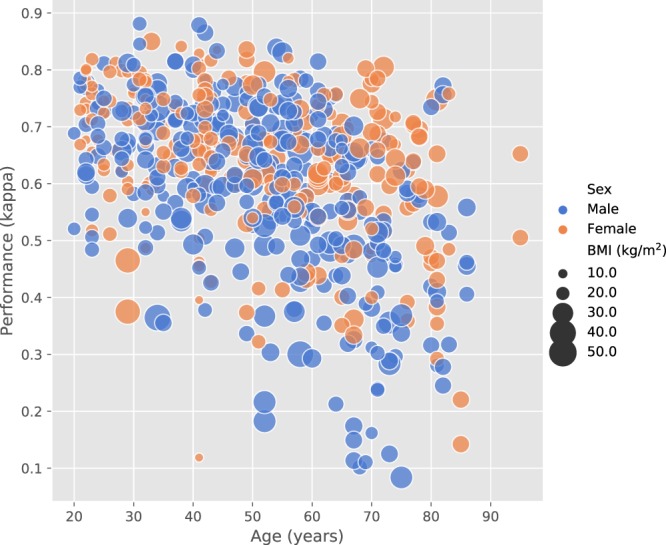
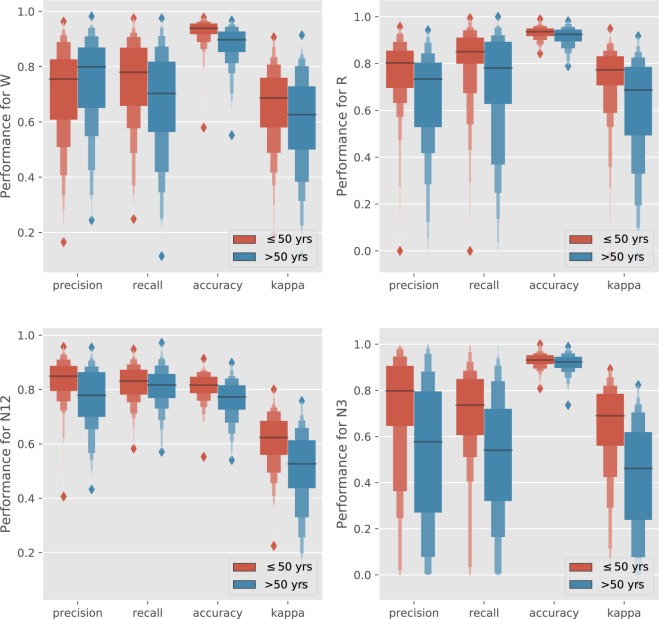
“The performance decrease for participants of higher age are likely caused by the changes in both autonomic function 54,55 as well as sleep architecture 56 with older age.”
BackgroundPenzel, T., Kantelhardt, J. W., Grote, L., Peter, J., & Bunde, A. (2003) · IEEE Transactions on Biomedical Engineering · doi:10.1109/tbme.2003.817636 · Cited by 492
A validation study of Fitbit Charge 2™ compared with polysomnography in adults
de Zambotti, M., Goldstone, A., Claudatos, S., Colrain, I. M., & Baker, F. C. (2018) · Chronobiology International · doi:10.1080/07420528.2017.1413578 · Cited by 413
Hamilton, P. (2003) · Computers in Cardiology · doi:10.1109/cic.2002.1166717 · Cited by 380 · cited 1×
“The algorithm was a modification 42 of the Hamilton-Tompkins beat detection algorithm 43 .”
MethodZiegler, D., Laux, G., Dannehl, K., Spüler, M., Mühlen, H., Mayer, P., & Gries, F. A. (1992) · Diabetic Medicine · doi:10.1111/j.1464-5491.1992.tb01754.x · Cited by 375 · cited 1×
“The performance decrease for participants of higher age are likely caused by the changes in both autonomic function 54,55 as well as sleep architecture 56 with older age.”
BackgroundEffect of Sleep Disruption on Sleep, Performance, and Mood
Bonnet, M. H. (1985) · Sleep · doi:10.1093/sleep/8.1.11 · Cited by 370 · cited 2×
“Lack of N3 may have considerable impact on well-being, e.g., loss of daytime performance 14 .”
BackgroundBerger, R. J., & Phillips, N. H. (1995) · Behavioural Brain Research · doi:10.1016/0166-4328(95)00002-b · Cited by 256 · cited 1×
“The N3 class represents the most restorative period of sleep for metabolic functioning 13 and is associated with maintenance of sleep and sleep quality 14 .”
BackgroundCardiorespiratory-Based Sleep Staging in Subjects With Obstructive Sleep Apnea
Redmond, S. J., & Heneghan, C. (2006) · IEEE Transactions on Biomedical Engineering · doi:10.1109/tbme.2005.869773 · Cited by 231 · cited 1×
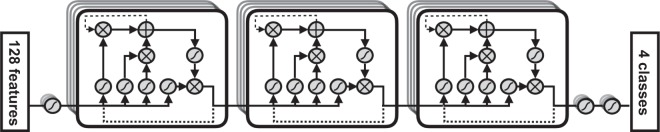
“Bi-directional multi-level LSTM networks34 are temporal models that could potentially overcome all the limitations outlined in the last subsection, because they (1) can model temporal context unlike feed-forward approaches17, (2) have a large temporal scope unlike Markovian models such as conditional random fields31,…”
MethodSpectral analysis of heart rate variability in sleep.
Bušek, P., Vaňková, J., Opavský, J., Salinger, J., & Nevšímalová, S. (2005) · Physiological Research · doi:10.33549/physiolres.930645 · Cited by 216
Beattie, Z., Oyang, Y., Statan, A., Ghoreyshi, A., Pantelopoulos, A., Russell, A., & Heneghan, C. (2017) · Physiological Measurement · doi:10.1088/1361-6579/aa9047 · Cited by 198
The SIESTA project polygraphic and clinical database
Klosh, G., Kemp, B., Penzel, T., Schlogl, A., Rappelsberger, P., Trenker, E., Gruber, G., Zeithofer, J., Saletu, B., Herrmann, W. M., et al. (2001) · IEEE Engineering in Medicine and Biology Magazine · doi:10.1109/51.932725 · Cited by 187 · cited 3×
“40 .”
MethodInfluentialSleep Staging Based on Autonomic Signals: A Multi-Center Validation Study
Hedner, J. A., White, D. P., Malhotra, A., Herscovici, S., Pittman, S. D., Zou, D., Grote, L., & Pillar, G. (2011) · Journal of Clinical Sleep Medicine · doi:10.5664/jcsm.1078 · Cited by 170 · cited 1×
“21 used actigraphy, pulse oximetry, and peripheral arterial tone data from 227 apnea patients, and achieved a moderate performance with a Cohen’s κ of 0.48.”
MethodInfluentialSleep stage classification with ECG and respiratory effort
Fonseca, P., Long, X., Radha, M., Haakma, R., Aarts, R. M., & Rolink, J. (2015) · Physiological Measurement · doi:10.1088/0967-3334/36/10/2027 · Cited by 168 · cited 1×
“Bi-directional multi-level LSTM networks34 are temporal models that could potentially overcome all the limitations outlined in the last subsection, because they (1) can model temporal context unlike feed-forward approaches17, (2) have a large temporal scope unlike Markovian models such as conditional random fields31,…”
MethodSelf-citationSleep stage and obstructive apneaic epoch classification using single-lead ECG
Yılmaz, B., Asyalı, M. H., Arıkan, E., Yetkin, S., & Özgen, F. (2010) · BioMedical Engineering OnLine · doi:10.1186/1475-925x-9-39 · Cited by 157
An Evaluation of Cardiorespiratory and Movement Features With Respect to Sleep-Stage Classification
Willemen, T., Van Deun, D., Verhaert, V., Vandekerckhove, M., Exadaktylos, V., Verbraecken, J., Van Huffel, S., Haex, B., & Vander Sloten, J. (2014) · IEEE Journal of Biomedical and Health Informatics · doi:10.1109/jbhi.2013.2276083 · Cited by 127 · cited 1×
“Bi-directional multi-level LSTM networks34 are temporal models that could potentially overcome all the limitations outlined in the last subsection, because they (1) can model temporal context unlike feed-forward approaches17, (2) have a large temporal scope unlike Markovian models such as conditional random fields31,…”
MethodAcharya, U. R., Joseph, K. P., Kannathal, N., Min, L. C., & Suri, J. S. (2007) · Springer eBooks · doi:10.1007/978-3-540-36675-1_5 · Cited by 113 · cited 1×
“HRV is a measure of autonomic nervous system activity 5 .”
BackgroundSignal processing using the Teager Energy Operator and other nonlinear operators
Kvedalen, E. (2003) · NORA - Norwegian Open Research Archives · Cited by 113
Sleep staging from Heart Rate Variability: time-varying spectral features and Hidden Markov Models
Mendez, M. O., Matteucci, M., Castronovo, V., Strambi, L. F., Cerutti, S., & Bianchi, A. M. (2010) · International Journal of Biomedical Engineering and Technology · doi:10.1504/ijbet.2010.032695 · Cited by 102
Entropies of short binary sequences in heart period dynamics
Cysarz, D., Bettermann, H., & van Leeuwen, P. (2000) · American Journal of Physiology-Heart and Circulatory Physiology · doi:10.1152/ajpheart.2000.278.6.h2163 · Cited by 100
Li, Q., Li, Q., Liu, C., Shashikumar, S. P., Nemati, S., & Clifford, G. D. (2018) · Physiological Measurement · doi:10.1088/1361-6579/aaf339 · Cited by 99 · cited 4×
“25 applied a deep convolutional neural network to ECG-derived spectrograms (as an alternative to hand-engineered feature extraction), and achieved a Cohen’s κ of 0.54/accuracy of 75.4% in a small validation hold-out (N = 18) and Cohen’s κ of 0.47/ accuracy of 65.9% in a large dataset containing…”
BackgroundMethodResultInfluentialNoncontact Sleep Stage Estimation Using a CW Doppler Radar
Hong, H., Zhang, L., Gu, C., Li, Y., Zhou, G., & Zhu, X. (2018) · IEEE Journal on Emerging and Selected Topics in Circuits and Systems · doi:10.1109/jetcas.2017.2789278 · Cited by 95 · cited 1×
“26 reported an accuracy of 81% using a Doppler radar system to capture cardiorespiratory activity; and Hwang et al .”
MethodSleep-wake classification via quantifying heart rate variability by convolutional neural network
Malik, J., Lo, Y.-L., & Wu, H. (2018) · Physiological Measurement · doi:10.1088/1361-6579/aad5a9 · Cited by 89
Cardiorespiratory Sleep Stage Detection Using Conditional Random Fields
Fonseca, P., den Teuling, N., Long, X., & Aarts, R. M. (2017) · IEEE Journal of Biomedical and Health Informatics · doi:10.1109/jbhi.2016.2550104 · Cited by 74 · cited 1×
“A large part of the feature set from these IBI sequences has been described in earlier work where a set of cardiac and respiratory features were evaluated 7 , however only the cardiac subset of the features is used in this work as no respiratory signal was included.”
MethodSelf-citationMultimodal Ambulatory Sleep Detection Using LSTM Recurrent Neural Networks
Sano, A., Chen, W., Lopez-Martinez, D., Taylor, S., & Picard, R. W. (2019) · IEEE Journal of Biomedical and Health Informatics · doi:10.1109/jbhi.2018.2867619 · Cited by 70 · cited 1×
“With non-EEG data, Sano et al .”
Sleep staging using nocturnal sound analysis
Dafna, E., Tarasiuk, A., & Zigel, Y. (2018) · Scientific Reports · doi:10.1038/s41598-018-31748-0 · Cited by 69 · cited 1×
“…requests for materials should be addressed to M. Radha (email: mustafa.radha@philips.com ) classification 6–9 and wake-REM-NREM classification 4,10–12 while only a few have developed methods that separate light non-REM sleep (N1 and N2) from slow wave sleep (N3), i.e. wake-REM-N1/N2-N3…”
The research of sleep staging based on single-lead electrocardiogram and deep neural network
Wei, R., Zhang, X., Wang, J., & Dang, X. (2017) · Biomedical Engineering Letters · doi:10.1007/s13534-017-0044-1 · Cited by 68
Aging as a Modulator of Respiratory Sinus Arrhythmia
De Meersman, R. E. (1993) · Journal of Gerontology · doi:10.1093/geronj/48.2.b74 · Cited by 60
Sleep-Wake Evaluation from Whole-Night Non-Contact Audio Recordings of Breathing Sounds
Dafna, E., Tarasiuk, A., & Zigel, Y. (2015) · PLoS ONE · doi:10.1371/journal.pone.0117382 · Cited by 60
Basner, M., Griefahn, B., Müller, U., Plath, G., & Samel, A. (2007) · Sleep · doi:10.1093/sleep/30.10.1349 · Cited by 58
Cysarz, D., Bettermann, H., Lange, S., Geue, D., & Leeuwen, P. V. (2004) · BioMedical Engineering OnLine · doi:10.1186/1475-925x-3-44 · Cited by 54 · cited 1×
“The dominant rate is determined, as well as short-and long-term coordination in terms of presence and duration of synchronized heart beats 46,47 .”
BackgroundJost, W. H. (2017) · International review of neurobiology · doi:10.1016/bs.irn.2017.04.003 · Cited by 43 · cited 1×
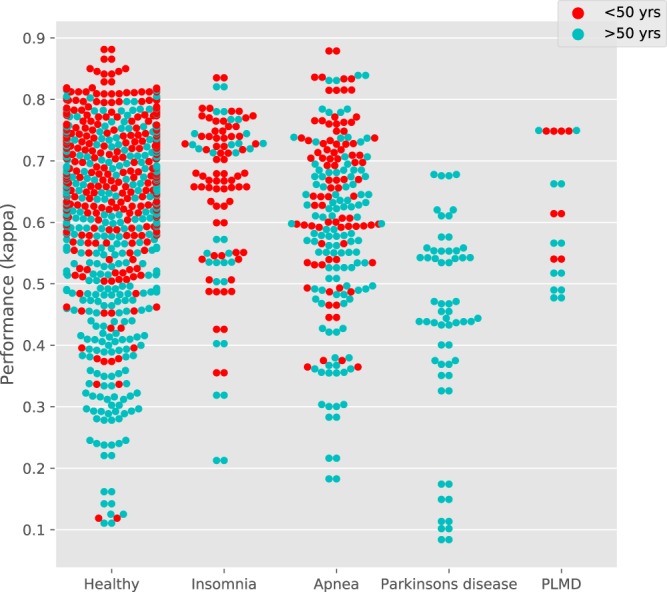
“However a different explanation for the decrease in performance for Parkinson’s disease patients could be the autonomic dysfunction associated with the disease 53 .”
BackgroundHypnogram and Sleep Parameter Computation From Activity and Cardiovascular Data
Domingues, A., Paiva, T., & Sanches, J. M. (2014) · IEEE Transactions on Biomedical Engineering · doi:10.1109/tbme.2014.2301462 · Cited by 40 · cited 1×
“…and requests for materials should be addressed to M. Radha (email: mustafa.radha@philips.com ) classification 6–9 and wake-REM-NREM classification 4,10–12 while only a few have developed methods that separate light non-REM sleep (N1 and N2) from slow wave sleep (N3), i.e. wake-REM-N1/N2-N3…”
A comparison of probabilistic classifiers for sleep stage classification
Fonseca, P., den Teuling, N., Long, X., & Aarts, R. M. (2018) · Physiological Measurement · doi:10.1088/1361-6579/aabbc2 · Cited by 39 · cited 2×
“…and showed that a conditional random field classifier outperformed classifiers based on linear discriminant and hidden Markov models, with a Cohen’s κ and accuracy of 0.53 and 70.8% respectively for 100 healthy participants and of 0.45 and 69.7% respectively for 51 sleep apnea patients 30 .”
BackgroundMethodInfluentialSelf-citationSpectral Boundary Adaptation on Heart Rate Variability for Sleep and Wake Classification
Long, X., Fonseca, P. M., Haakma, R., Aarts, R. M., & Foussier, J. (2014) · International Journal of Artificial Intelligence Tools · doi:10.1142/s0218213014600021 · Cited by 37 · cited 1×
“Correspondence and requests for materials should be addressed to M. Radha (email: mustafa.radha@philips.com ) classification 6–9 and wake-REM-NREM classification 4,10–12 while only a few have developed methods that separate light non-REM sleep (N1 and N2) from slow wave sleep (N3), i.e.…”
BackgroundSelf-citationA novel low-complexity post-processing algorithm for precise QRS localization
Fonseca, P. M., Aarts, R. M., Foussier, J., & Long, X. (2014) · SpringerPlus · doi:10.1186/2193-1801-3-376 · Cited by 37 · cited 1×
“The algorithm was a modification 42 of the Hamilton-Tompkins beat detection algorithm 43 .”
MethodSelf-citationNoviyanto, A., Isa, S. M., Wasito, I., Arymurthy, A. M., & Barat, J. (2011) · Cited by 36
Telser, S., Staudacher, M., Ploner, Y., Amann, A., Hinterhuber, H., & Ritsch‐Marte, M. (2004) · Somnologie - Schlafforschung und Schlafmedizin · doi:10.1111/j.1439-054x.2004.00016.x · Cited by 35
Modeling cardiorespiratory interaction during human sleep with complex networks
Long, X., Fonseca, P. M., Aarts, R. M., Haakma, R., & Foussier, J. (2014) · Applied Physics Letters · doi:10.1063/1.4902026 · Cited by 31 · cited 2×
“Finally, visibility graphs were used to model cardiorespiratory interaction in the IBI series 49 and used to calculate the assortativity mixing coefficient, the mean and standard deviation of the clustering coefficients and degrees, slope of the power-law fit to the degree distribution and…”
MethodSelf-citationBettermann, H., Cysarz, D., & Leeuwen, P. V. (2000) · International Journal of Bifurcation and Chaos · doi:10.1142/s021812740000150x · Cited by 28
Optical wrist-worn device for sleep monitoring
Renevey, P., Delgado-Gonzalo, R., Lemkaddem, A., Proença, M., Lemay, M., Solà, J., Tarniceriu, A., & Bertschi, M. (2017) · World Congress on Medical Physics and Biomedical Engineering, September 7 - 12, 2009, Munich, Germany · doi:10.1007/978-981-10-5122-7_154 · Cited by 28 · cited 1×
“Several studies validated photoplethys-mography (PPG)-based approaches in identifying wake, sleep or REM sleep with acceptable performance 18–20 .”
BackgroundThe occurrence of individual slow waves in sleep is predicted by heart rate
Mensen, A., Zhang, Z., Qi, M., & Khatami, R. (2016) · Scientific Reports · doi:10.1038/srep29671 · Cited by 25 · cited 1×
“23 conducted a study including 44 adults to evaluate a commercially available device (Fitbit Charge 2), where REM sleep and Light sleep can be detected more reliably than wake and deep sleep.”
BackgroundUlke, C., Huang, J., Schwabedal, J. T. C., Surova, G., Mergl, R., & Hensch, T. (2017) · Scientific Reports · doi:10.1038/s41598-017-09513-6 · Cited by 23 · cited 1×
“For example, they can capture the sleep stage dependent time-delay between cortical and autonomic nervous activities during transitions between some sleep stages (e.g. between light and deep sleep) 28,29 .”
BackgroundA Structured Learning Approach with Neural Conditional Random Fields for Sleep Staging
Aggarwal, K., Khadanga, S., Joty, S., Kazaglis, L., & Srivastava, J. (2018) · 2018 IEEE International Conference on Big Data (Big Data) · doi:10.1109/bigdata.2018.8622286 · Cited by 20 · cited 2×
“A structured learning approach with a neural conditional random field algorithm was recently proposed to identify sleep stages from nasal flow signals, where a Cohen’s κ of 0.57 was achieved 31 .”
BackgroundMethodInfluentialUnconstrained Sleep Stage Estimation Based on Respiratory Dynamics and Body Movement
Hwang, S. H., Lee, Y. J., Jeong, D. U., & Park, K. S. (2016) · Methods of Information in Medicine · doi:10.3414/me15-01-0140 · Cited by 19 · cited 1×
“27 reported a Cohen’s κ of 0.48 and an accuracy of 70.9% using body movement and respiratory dynamics.”
MethodInfluentialSleep stage detection using a wristwatch-type physiological sensing device
Fujimoto, K., Ding, Y., & Takahashi, E. (2018) · Sleep and Biological Rhythms · doi:10.1007/s41105-018-0175-5 · Cited by 11 · cited 1×
“24 attempted to classify sleep stages using a PPG sensor combined with a 3D accelerometer and they showed a classification accuracy of 68.5% based on data from 100 healthy volunteers.”
MethodInfluentialSleep stage classification using the combination of SVM and PSO
Surantha, N., Isa, S. M., Lesmana, T. F., & Setiawan, I. M. A. (2017) · International Conference on Informatics and Computational Sciences (ICICoS) · doi:10.1109/icicos.2017.8276358 · Cited by 10 · cited 2×
“…potentially overcome all the limitations outlined in the last subsection, because they (1) can model temporal context unlike feed-forward approaches 17 , (2) have a large temporal scope unlike Markovian models such as conditional random fields 31 , (3) do not model class probabilities as a…”
BackgroundMethodClassification of sleep and wake using a novel minimal-contact single-channel device
Terjung, S., Geldmacher, J., Brato, S., Werther, S., Teschler, H., Taube, C., Götze, J., & Weinreich, G. (2017) · Somnologie - Schlafforschung und Schlafmedizin · doi:10.1007/s11818-017-0139-z · Cited by 9 · cited 1×
“Several studies validated photoplethys-mography (PPG)-based approaches in identifying wake, sleep or REM sleep with acceptable performance 18–20 .”
BackgroundEstimation of a priori probabilities of sleep stages: A cycle-based approach
Tataraidze, A., Anishchenko, L. N., Коростовцева, Л. С., Викторович, Б. М., Sviryaev, Y. V., & Ivashov, S. I. (2017) · Annual International Conference of the IEEE Engineering in Medicine and Biology Society (EMBC) · doi:10.1109/embc.2017.8037671 · Cited by 8 · cited 1×
“33 proposed to tackle time-varying patterns in sleep architecture through a cycle-based approach that adapts a priori probabilities over time for different sleep stages.”
BackgroundProbabilistic characterization of sleep architecture: Home Based study on healthy volunteers
Garcia‐Molina, G., Vissapragada, S., Mahadevan, A., Goodpaster, R. L., Riedner, B. A., Bellesi, M., & Tononi, G. (2016) · Annual International Conference of the IEEE Engineering in Medicine and Biology Society (EMBC) · doi:10.1109/embc.2016.7591320 · Cited by 5 · cited 1×
“…in performance, these approaches motivate the investigation of better temporal models that can take into account a wider temporal context, especially given the variance in sleep architecture as the night progresses 32 , making the relationship between X t − 1 and Y t variable throughout the night.”
Background
Research works printed but not linked: 3
- 36. Stephansen, J. B. et al. The use of neural networks in the analysis of sleep stages and the diagnosis of narcolepsy. arXiv preprint arXiv:1710.02094 (2017). · arXiv
- 38. Zhao, M., Yue, S., Katabi, D., Jaakkola, T. S. & Bianchi, M. T. Learning sleep stages from radio signals: a conditional adversarial architecture. In International Conference on Machine Learning, 4100-4109 (2017).
- 50. Tieleman, T. & Hinton, G. Lecture 6.5-rmsprop: Divide the gradient by a running average of its recent magnitude. COURSERA: Neural Networks for Machine Learning 4, 26-31 (2012).
Cited by
The future of sleep health: a data-driven revolution in sleep science and medicine
Perez-Pozuelo, I., Zhai, B., Palotti, J., Mall, R., Aupetit, M., Garcia-Gomez, J. M., Taheri, S., Guan, Y., & Fernandez-Luque, L. (2020) · npj Digital Medicine · doi:10.1038/s41746-020-0244-4 · Cited by 311
Deep learning for automated sleep staging using instantaneous heart rate
Sridhar, N., Shoeb, A. H., Stephens, P., Kharbouch, A. A., Shimol, D. B., Burkart, J., Ghoreyshi, A., & Myers, L. J. (2020) · npj Digital Medicine · doi:10.1038/s41746-020-0291-x · Cited by 171
Loh, H. W., Ooi, C. P., Vicnesh, J., Oh, S. L., Faust, O., Gertych, A., & Acharya, U. R. (2020) · Applied Sciences · doi:10.3390/app10248963 · Cited by 154
“[62] published the only study that was based on ECG signals from a private dataset that was collected as part of the European Union SIESTA project [100] as shown in Table 5.”
BackgroundA deep transfer learning approach for wearable sleep stage classification with photoplethysmography
Radha, M., Fonseca, P. M., Moreau, A., Ross, M., Cerny, A., Anderer, P., Long, X., & Aarts, R. M. (2021) · npj Digital Medicine · doi:10.1038/s41746-021-00510-8 · Cited by 158
Self-citationPapini, G. B., Fonseca, P., van Gilst, M. M., Bergmans, J. W. M., Vullings, R., & Overeem, S. (2020) · Scientific Reports · doi:10.1038/s41598-020-69935-7 · Cited by 90
Self-citation
Metadata
- Authors
- Radha, M., Fonseca, P., Moreau, A., Ross, M., Cerny, A., Anderer, P., Long, X., & Aarts, R. M.
- Affiliations
- Philips (Netherlands) (NL)
- Corresponding author
- Radha, Mustafa
- ORCID
- Venue
- Scientific Reports
- Published
- 2019-10-02
- Volume
- 9
- Issue
- 1
- Pages
- 14149-14149
- ISSN
- 2045-2322 (ISSN-L)
- PMC
- PMC6775145
- OpenAlex
- W2977759318
- Semantic Scholar
- d257cfb03ce52116657f8ef51272a9b8e76cd62e
- Cited by
- 186
- References
- 67
- Citations by year
- 2026: 19 · 2025: 29 · 2024: 21 · 2023: 38 · 2022: 29 · 2021: 32 · 2020: 18
- FWCI
- 14.27
- Type
- journal article
- Language
- en
- Open access
- gold
- doi.org
- Licence
- cc-by
- creativecommons.org/licenses/by/4.0 (tdm)
- creativecommons.org/licenses/by/4.0 (vor)
- Locations
- Scientific Reports (publishedVersion, cc-by)
- Europe PMC (PubMed Central) (publishedVersion, cc-by)
- PubMed Central (publishedVersion, cc-by)
- PubMed (publishedVersion)
- TU/e Research Portal (publishedVersion, other-oa)
- TU/e Research Portal (submittedVersion)
- DOAJ (DOAJ: Directory of Open Access Journals) (submittedVersion)
- TU/e Research Portal (submittedVersion, other-oa)
- Funders
- Royal Philips
- Topics
- Health Sciences › Medicine › Cardiology and Cardiovascular Medicine › Heart Rate Variability and Autonomic Control
- Physical Sciences › Engineering › Biomedical Engineering › Non-Invasive Vital Sign Monitoring
- Life Sciences › Neuroscience › Cognitive Neuroscience › EEG and Brain-Computer Interfaces
- Keywords
- sleep stage classification, heart rate variability, long short-term memory networks, home sleep monitoring, sleep architecture, aging and sleep, polysomnography alternative, unobtrusive sleep monitoring
- MeSH terms
- Adult, Aged, Female, Heart Rate, Humans, Male, Middle Aged, Models, Neurological, Sleep Stages, Neural Networks, Computer
About these checks
Registry, retraction, Cites and statistics results are computed, not judged, with one exception: a printed reference that no index lists is read once by a model before it counts as a citation error. Claims are extracted by a model and kept only when their quote appears verbatim in the text; each cited source is then checked, with a model’s help, for whether it says what the claim relies on. Those verdicts can be wrong — read the claim’s quote and the cited source before relying on one.
Statistics and arithmetic are recomputed, not judged.
Confidence bands are shown only for fields calibrated on our annotated test set. None is calibrated yet, so no band is shown.
What counts as a claim ›How we measure confidence ›How we check this ›
Are you an author, or do you see a problem with this page? Request a review
Data sources
Bibliographic data: Semantic Scholar, OpenAlex, Crossref.
Contains information from the Semantic Scholar Academic Graph Datasets, made available under the ODC Attribution License (ODC-BY 1.0).
Semantic Scholar’s data is described in: Kinney, R., et al. (2023). The Semantic Scholar Open Data Platform. arXiv:2301.10140.
