

Sleep stage classification from heart-rate variability using long short-term memory neural networks
Open accessThe DOI matches its Crossref record; 67 of the 67 references it cites were found in a registry or an index.
Abstract
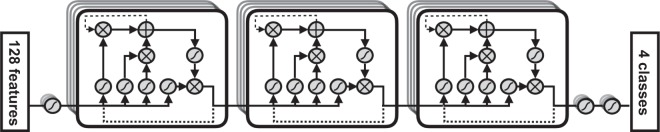
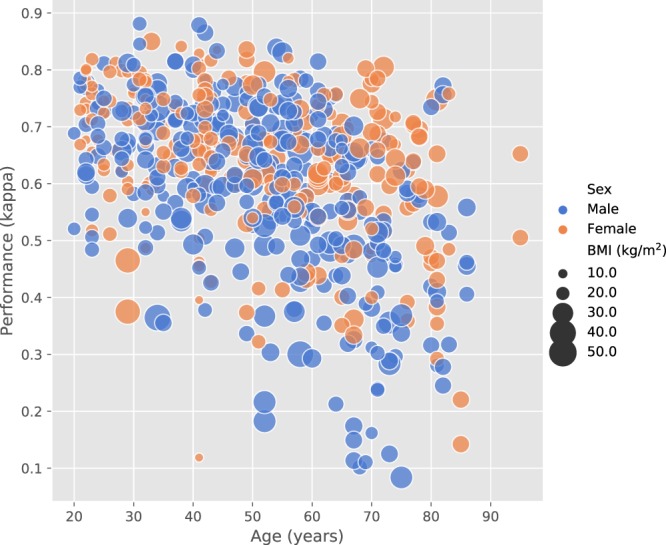
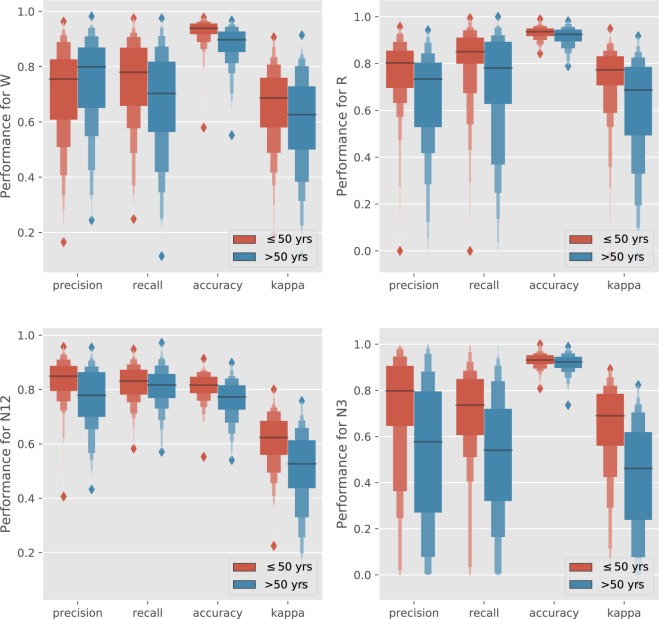
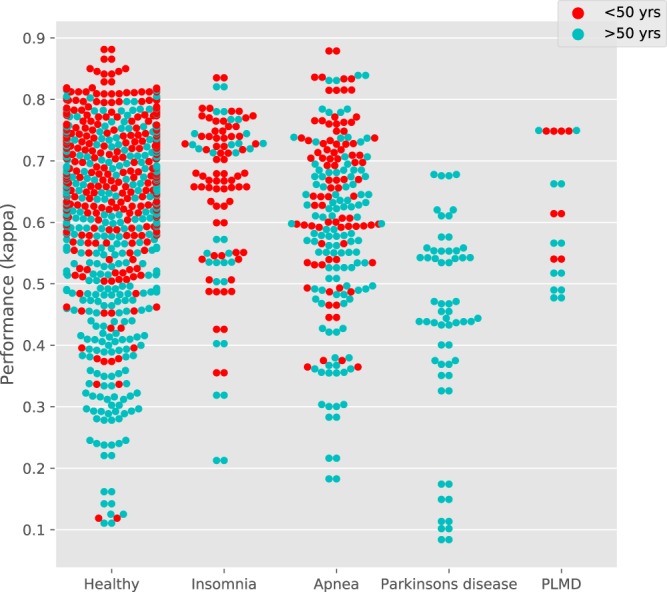
Automated sleep stage classification using heart rate variability (HRV) may provide an ergonomic and low-cost alternative to gold standard polysomnography, creating possibilities for unobtrusive home-based sleep monitoring. Current methods however are limited in their ability to take into account long-term sleep architectural patterns. A long short-term memory (LSTM) network is proposed as a solution to model long-term cardiac sleep architecture information and validated on a comprehensive data set (292 participants, 584 nights, 541.214 annotated 30 s sleep segments) comprising a wide range of ages and pathological profiles, annotated according to the Rechtschaffen and Kales (R&K) annotation standard. It is shown that the model outperforms state-of-the-art approaches which were often limited to non-temporal or short-term recurrent classifiers. The model achieves a Cohen’s k of 0.61 ± 0.15 and accuracy of 77.00 ± 8.90% across the entire database. Further analysis revealed that the performance for individuals aged 50 years and older may decline. These results demonstrate the merit of deep temporal modelling using a diverse data set and advance the state-of-the-art for HRV-based sleep stage classification. Further research is warranted into individuals over the age of 50 as performance tends to worsen in this sub-population.
Overview
The claims and statistics of this paper haven’t been checked yet.
Free: it reads the open-access text and checks the first 5 claims that cite a source we can check. Create a free account to check every claim.
Integrity signals
Registry
Cites
Statistics
Figures
Verification
Claims the paper makes
The claims and statistics of this paper haven’t been checked yet.
Free: it reads the open-access text and checks the first 5 claims that cite a source we can check. Create a free account to check every claim.
Claims other papers make about this one
Each is checked against this paper’s own text: does it say what the citing paper says it does?
The check wasn’t confident either way, so it gives no verdict — never disputed.
In the citing paper
“Such complementary fusion protocols have been shown to significantly improve the classification performance of sleep stages79,80.”
From The future of sleep health: a data-driven revolution in sleep science and medicine (2020) · cites this paper as [80]
Experimental — accuracy not yet measured
Self-check
Percentages, sums and reported differences re-computed from the paper’s own numbers.
The self-check needs the paper’s full text.
Citations
Cites
1 retracted
Uçar, M. K., Bozkurt, M. R., Bilgin, C., & Polat, K. (2018) · Neural Computing and Applications · doi:10.1007/s00521-016-2365-x · Cited by 106
RetractedHochreiter, S., & Schmidhuber, J. (1997) · Neural Computation · doi:10.1162/neco.1997.9.8.1735 · Cited by 102,318 · cited 2×
“A detailed description and equations of LSTM cells are given in the original paper 34 .”
BackgroundMethod(2014) · Cited by 33,419
Huang, N. E., Shen, Z., Long, S. R., Wu, M. C., Shih, H. H., Zheng, Q., Yen, N.-C., Tung, C. C., & Liu, H. H. (1998) · Proceedings of the Royal Society of London. Series A: Mathematical, Physical and Engineering Sciences · doi:10.1098/rspa.1998.0193 · Cited by 23,564
Heart Rate Variability: Standards of Measurement, Physiological Interpretation, and Clinical Use
Electrophysiology, T. F. O. T. E. S. O. C. T. N. A. (1996) · Circulation · doi:10.1161/01.cir.93.5.1043 · Cited by 17,159
Heart rate variability: Standards of measurement, physiological interpretation, and clinical use
Malik, M., Bigger, J. T., Camm, A. J., Kleiger, R. E., Malliani, A., Moss, A. J., & Schwartz, P. J. (1996) · European Heart Journal · doi:10.1093/oxfordjournals.eurheartj.a014868 · Cited by 15,289
Rechtschaffen, A. (1968) · Medical Entomology and Zoology · Cited by 12,675
Physiological time-series analysis using approximate entropy and sample entropy
Richman, J. S., & Moorman, J. R. (2000) · American Journal of Physiology-Heart and Circulatory Physiology · doi:10.1152/ajpheart.2000.278.6.h2039 · Cited by 7,880
(2007) · Cited by 6,530
ADADELTA: An Adaptive Learning Rate Method
Zeiler, M. D. (2012) · arXiv · doi:10.48550/arxiv.1212.5701 · Cited by 5,322
Research works printed but not linked: 3
- 36. Stephansen, J. B. et al. The use of neural networks in the analysis of sleep stages and the diagnosis of narcolepsy. arXiv preprint arXiv:1710.02094 (2017). · arXiv
- 38. Zhao, M., Yue, S., Katabi, D., Jaakkola, T. S. & Bianchi, M. T. Learning sleep stages from radio signals: a conditional adversarial architecture. In International Conference on Machine Learning, 4100-4109 (2017).
- 50. Tieleman, T. & Hinton, G. Lecture 6.5-rmsprop: Divide the gradient by a running average of its recent magnitude. COURSERA: Neural Networks for Machine Learning 4, 26-31 (2012).
Cited by
Items 101–186 of 186
Sleep-stage dependence and co-existence of cardio-respiratory coordination and phase synchronization
Ma, Y. J. X., Zschocke, J., Glos, M., Kluge, M., Penzel, T., Kantelhardt, J. W., & Bartsch, R. P. (2024) · Chaos An Interdisciplinary Journal of Nonlinear Science · doi:10.1063/5.0177552 · Cited by 5
PixleepFlow: A Pixel-Based Lifelog Framework for Predicting Sleep Quality and Stress Level
Na, Y., Oh, S.-H., Ko, S., & Lee, H.-K. (2024) · International Conference on Information and Communication Technology Convergence (ICTC) · doi:10.1109/ictc62082.2024.10826866 · Cited by 5
“Conversely, accelerometer (ACC) channels, particularly the Y and Z axis sensors and heart rate were frequently utilized as pivotal features [8], [13].”
Coon, W. G., & Punjabi, N. M. (2021) · International IEEE/EMBS Conference on Neural Engineering · doi:10.1109/ner49283.2021.9441432 · Cited by 4
“, motion tracking and snore sensing (but see [13] on heart-rate variability (HRV) measurement).”
BackgroundPerformance Assessment of Automatic Sleep Stage Classification Using Only Partial PSG Sensors
Choi, I., & Sung, W. (2022) · IEEE Biomedical Circuits and Systems Conference (BioCAS) · doi:10.1109/biocas54905.2022.9948578 · Cited by 5
Automatic Sleep Stage Classification Using Deep Learning Algorithm for Multi-Institutional Database
Woo, Y., Kim, D., Jeong, J., Lee, W., Lee, J., & Kim, D. (2023) · IEEE Access · doi:10.1109/access.2023.3275087 · Cited by 6
“Recent studies analyzing and classifying sleep stages have used deep learning models [6], [7], [8], [9], [10], [11], [12], [13], [14], [15], [16], [17], although models like random forest [18], [19], [20] and SVM [21], [22], [23], [24] have been widely used before deep learning became popular.”
BackgroundSpecializing CNN Models for Sleep Staging Based on Heart Rate
Goldammer, M., Zaunseder, S., Malberg, H., & Gräßer, F. (2020) · Computing in cardiology · doi:10.22489/cinc.2020.105 · Cited by 4
“59 for 5 classes) and feature engineering ([2] with κ 0.”
BackgroundModified scoring criteria to improve the accuracy of the home sleep apnea test
Cushman, P., Radtke, A., Kang, J., Burch, A., Tchopev, Z. N., Brock, M. S., & Scheuller, H. S. (2026) · Sleep And Breathing · doi:10.1007/s11325-026-03598-y · Cited by 4
Data-driven sleep structure deciphering based on cardiorespiratory signals
Huang, M., Iwata, O., Yokoyama, K., & TAMURA, T. (2025) · Computer Methods and Programs in Biomedicine · doi:10.1016/j.cmpb.2025.108769 · Cited by 3
Müller, B., & Lengelle, R. (2021) · Computer Methods and Programs in Biomedicine · doi:10.1016/j.cmpb.2021.106280 · Cited by 3
Deep Learning Bio–Signal Analysis from a Wearable Device
Skubisz, M., & Jeleń, Ł. (2021) · Lecture notes in computer science · doi:10.1007/978-3-030-84340-3_28 · Cited by 3
Weber, L., Gaiduk, M., Seepold, R., Madrid, N. M., Glos, M., & Penzel, T. (2021) · Annual International Conference of the IEEE Engineering in Medicine and Biology Society (EMBC) · doi:10.1109/embc46164.2021.9630743 · Cited by 3
“Radha et al. [9] use ten times more features and eight times the amount of patients to achieve their extraordinary results of κ = 0 .”
BackgroundSingle-channel EEG automatic sleep staging based on transition optimized HMM
Huang, J., Ren, L., Ji, Z., & Yan, K. (2022) · Multimedia Tools and Applications · doi:10.1007/s11042-022-12551-6 · Cited by 5
“For example, Radha et al. [38] proposed a scoring algorithm based on ECG, while Ghimatgar et al. [13] conducted a study on single-channel EEG.”
BackgroundMethodEEG aided boosting of single-lead ECG based sleep staging with Deep Knowledge Distillation
Joshi, V., Sricharan, V. V. S., Preejith, S. P., & Sivaprakasam, M. (2022) · IEEE International Symposium on Medical Measurements and Applications (MeMeA) · doi:10.1109/memea54994.2022.9856508 · Cited by 3
“[6] used a temporal model approach, LSTM for sleep staging on 132 HRV features”
MethodClassification System of National Music Rhythm Spectrogram Based on Biological Neural Network
Mi, D., & Qin, L. (2022) · Computational Intelligence and Neuroscience · doi:10.1155/2022/2047576 · Cited by 6
“It can be seen that the classification of music emotion has been fully concerned by the academic community [9].”
BackgroundFrailty identification using a sensor-based upper-extremity function test: a deep learning approach
Asghari, M., Ehsani, H., & Toosizadeh, N. (2025) · Scientific Reports · doi:10.1038/s41598-024-73854-2 · Cited by 7
Cardiovascular Risk Assessment via Sleep Patterns and ECG-Based Biological Age Estimation
Manimaran, G., Puthusserypady, S. K., Domínguez, H., & Bardram, J. E. (2025) · Journal of Clinical Medicine · doi:10.3390/jcm14103339 · Cited by 6
“While these sleep stages are directly provided in the dataset, they can also be estimated via electroencephalography (EEG) or ECG data [21,22].”
Sleep-Wake Classification for Home Monitoring of Sleep Apnea Patients
Huysmans, D., Castro, I. D., Heffinck, E., Deviaene, M., Borzée, P., Buyse, B., Testelmans, D., Huffel, S. V., & Varon, C. (2020) · Computing in cardiology · doi:10.22489/cinc.2020.147 · Cited by 3
“37 [3] Feature ( 30s) 51 >5 960 ± 60 19 ± 13 0.”
MethodWang, Z., Yang, Z., Lan, K., Li, P., Hao, Y., Duan, Y., She, Y., Li, Y., & Zhang, Z. (2022) · Lecture notes of the Institute for Computer Sciences, Social Informatics and Telecommunications Engineering · doi:10.1007/978-3-031-06368-8_12 · Cited by 3
TrustSleepNet: A Trustable Deep Multimodal Network for Sleep Stage Classification
Huang, G., & Ma, F. (2022) · IEEE-EMBS International Conference on Biomedical and Health Informatics (BHI ...) · doi:10.1109/bhi56158.2022.9926875 · Cited by 4
“The PSG recording contains seven sensor modalities: EEG, EOG, EMG, ECG, nasal-oral airflow (NEWAIR), thoracic (THOR), and abdominal (ABDO) movement.”
BackgroundGanglberger, W., Krishnamurthy, P. V., Quadri, S. A., Tesh, R. A., Bucklin, A. A., Adra, N., Cardoso, M. D. S., Leone, M. J., Hemmige, A., Rajan, S., et al. (2021) · medRxiv · doi:10.1101/2021.09.23.21264039 · Cited by 4
Towards a Toolkit for Free Living Wearable Development
Rothrock, B., Curtiss, A., Bai, J., & Hester, J. D. (2022) · ACM International Joint Conference on Pervasive and Ubiquitous Computing (UbiComp) · doi:10.1145/3544793.3560399 · Cited by 2
“[10] propose a long short-term memory (LSTM) network to model long-term cardiac sleep architecture based on heart rate variability.”
BackgroundSupporting Elderly Care Through an AI-Driven and FHIR-Based Remote Monitoring System
Martins, R., Pereira, H., Corrente, G. A., Xavier, W., Conceição, L., Freitas, A., & Marreiros, G. (2025) · Lecture notes in networks and systems · doi:10.1007/978-3-031-80946-0_22 · Cited by 2
EEG Sleep Stages Classification using Transformer-based Models: A Review
Yew, Y. T., Puah, J. H., Chan, C. K., Zain, N. M., Toa, C. K., & Goh, S. K. (2024) · International Conference on Computing Innovation, Intelligence, Technologies and Education (CIITE) · doi:10.1109/ciite62244.2024.10987610 · Cited by 2
“Characteristics include slow eye movements, decreased heart rate and breathing, muscle relaxation, and low amplitude brain waves in the theta range (4 to 7 Hz) [17].”
Deep Learning-Based Sleep Stage Classification: A Systematic Review
Satapathy, S. K., Patel, T., Modi, M., Davra, H., Brahma, B., Tripathy, S. K., & Bhoi, A. K. (2025) · Journal of The Institution of Engineers (India) Series B · doi:10.1007/s40031-025-01275-4 · Cited by 4
“13 Basic architecture of LSTM approach, following single-channel EEG inputs, due to their effectiveness [57–62].”
Sleep stage classification from ECG using machine learning: Evaluating the impact of signal duration
Iravani, M., & Moharreri, S. (2025) · Neurobiology of Sleep and Circadian Rhythms · doi:10.1016/j.nbscr.2025.100140 · Cited by 2
“By comparison, ECG-derived HRV studies targeting full five-stage classification have generally demonstrated lower accuracy than EEG-based approaches, although they consistently show that multi-minute windows enhance HRV discriminability (Radha et al., 2019).”
Automatic Sleep Stage Classification Based on Deep Learning for Multi-channel Signals
Huh, Y., Kim, R., Koo, J. H., Kim, Y. K., Lee, K., & Lee, M. (2024) · International Winter Conference on Brain-Computer Interface (BCI) · doi:10.1109/bci60775.2024.10480477 · Cited by 2
“…developing 3-class sleep stage models (i.e., wake, REM, and NREM), but recently, 4-class sleep stage classification models have also been widely used due to the importance of NREM3, which is the most restorative for metabolic functions and is closely related to sleep maintenance and quality [5].”
Teacher-Student Domain Adaptation for Biosensor ModelsPreprint
Phillips, L., Grimes, D. B., & Li, Y. J. (2020) · arXiv (Cornell University) · doi:10.48550/arxiv.2003.07896 · Cited by 3
“As input to the model we use sequences of heart rate variability (HRV) features, a representation of ECG and PPG data that is used widely in machine learning, and in automated analysis generally (Radha et al, 2018; Vandecasteele et al, 2017; Fonseca et al, 2017; Radha et al, 2019).”
A Multi-task Deep Learning Algorithm for Sleep Stage Scoring and Sleep Arousal DetectionPreprint
Huo, J., Li, H., Roveda, J. M., Quan, S. F., & Li, A. (2023) · doi:10.36227/techrxiv.24078252.v2 · Cited by 2
Maresh, S. A., Athikumar, A. K., Ahmed, N., Chandu, S., Prowting, J. L., Tumah, L., Najjar, A. A., Khan, H. A., Sankari, M., Lasisi, O., et al. (2023) · Frontiers in Sleep · doi:10.3389/frsle.2023.1162652 · Cited by 1
“In previous studies in individuals with sleep apnea, changes in electrocardiogram (ECG) signal modeling was utilized to detect with high accuracy the presence of apnea (Radha et al., 2019; Iwasaki et al., 2021).”
Performance of cardiorespiratory-based sleep staging in patients using beta blockers
Hermans, L. W., van Meulen, F., Anderer, P., Ross, M., Cerny, A., van Gilst, M. M., Overeem, S., & Fonseca, P. M. (2023) · Journal of Clinical Sleep Medicine · doi:10.5664/jcsm.10938 · Cited by 2
Self-citationTsiouris, Κ. Μ., Zelilidou, S. P., Kanellos, F. S., Tsimperis, I., Rigas, G., Florou, E., Kosmas, E., Vagiakis, E., & Fotiadis, D. I. (2023) · IEEE International Conference on Bioinformatics and Biomedicine (BIBM) · doi:10.1109/bibm58861.2023.10385492 · Cited by 1
“Better performance was reached using a Long Short-Term Memory (LSTM) network and HRV features as input in [6], reaching an accuracy of 77.00%.”
MethodInfluentialA U-Sleep Model for Sleep Staging Using Electrocardiography and Respiration Signals
Si, K., Dong, K., Lu, J., Zhao, L., Xiang, W., Li, J., & Liu, C. (2024) · World Congress on Medical Physics and Biomedical Engineering, September 7 - 12, 2009, Munich, Germany · doi:10.1007/978-3-031-51455-5_54 · Cited by 1
Amelia, V. L., Wang, C.-H., Yulianti, N. J., Suroso, J., & Chung, M. (2025) · Preventive Medicine Reports · doi:10.1016/j.pmedr.2025.103029 · Cited by 4
“A 1-min epoch size is considered sufficient for accurately representing HRV indices (Melo et al., 2021) and is commonly used in sleep research (Radha et al., 2019).”
Chen, W., Chen, H., Ruan, H., Jiang, W., Cheng, C., Xu, M., Xu, Y.-F., Chen, H., Yu, Z., & Chen, S. (2025) · Psychophysiology · doi:10.1111/psyp.70049 · Cited by 1
“This potential may stem from the ability of nocturnal HRV to integrate two critical dimensions: impaired vagal activity, which has been observed during daytime resting states in clinically depressed adolescents (Chen et al. 2023), and the physiological dynamics of sleep (Radha et al. 2019).”
Fang, Q., Cui, X., Ning, H., Zhao, H., & Chen, X. (2025) · Water · doi:10.3390/w17101525 · Cited by 1
Yadav, V. P., Aswathy, M. A., Karaddi, S. H., Reddy, S. P., Reddy, G. P., & Kumar, A. (2025) · IEEE Access · doi:10.1109/access.2025.3585963 · Cited by 1
Vjotosh, A. N., Петров, А. Б., Djubenkov, S. A., & Тихомирова, О. В. (2025) · Human Physiology · doi:10.1134/s036211972570029x · Cited by 1
“…are currently focused either on implementing artificial intelligence algorithms for processing heart rate variability data in sleeping subjects [12], or on returning from minimally invasive monitoring of autonomic parameters to at least single-channel electroencephalogram recording to increase…”
Morokuma, S., Hayashi, T., MOTOMURA, N., Kanegae, M., Mizukami, Y., ASANO, S., KIMURA, I., Fujita, K., KOHDA, Y., Hiroshi, I. M. A. I., et al. (2025) · Proceedings of the Japan Academy Series B · doi:10.2183/pjab.101.032 · Cited by 1
Energy-efficient real-time 4-stage sleep classification at 10-second resolution
Mohammadi, Z., Fazel, P., & Mohammadi, S. (2026) · Medical & Biological Engineering & Computing · doi:10.1007/s11517-026-03616-x · Cited by 1
“For instance, a Deep Convolu-tional Recurrent (DCR) model achieved 74.2% accuracy for five-stage classification using single-lead ECG signals [24], while another study applying an LSTM to HRV data reported 77% accuracy for 4-stage classification [25].”
InfluentialChen, H.-Y., Ahsan, M., Zinchuk, A. V., Husain, A. M., Yaggi, H. K., Wu, H., & Chen, C. (2026) · Physiological Measurement · doi:10.1088/1361-6579/ae60df · Cited by 1
Non-Intrusive Sleep Staging with Integration of Ballistocardiography and Audio Signals
Jaworski, D. J., & Park, E. J. (2025) · Annual International Conference of the IEEE Engineering in Medicine and Biology Society (EMBC) · doi:10.1109/embc58623.2025.11252681 · Cited by 1
Schieder, L., Demme, N., Shadaydeh, M., Doerfel, C., Jähkel, S., Denzler, J., Holthoff, K., Proquitté, H., & Graf, J. (2026) · Somnologie - Schlafforschung und Schlafmedizin · doi:10.1007/s11818-026-00540-y · Cited by 1
Heart rate variability as a predictor of migraine: Sleep-time data analysis of pre-migraine nights
Jankevičiūtė, R., Kapustynska, V., Andruškevičius, S., Ryliškienė, K., & Abromavičius, V. (2026) · Technology and Health Care · doi:10.1177/09287329251412968 · Cited by 1
Azam, M. B., & Singh, S. I. (2026) · BMC Medical Informatics and Decision Making · doi:10.1186/s12911-026-03455-8 · Cited by 3
“Radha et al. (2019) further demonstrated that HRV features alone can achieve accurate sleep stage classification, enabling sleep-aware analysis without polysomnography [31].”
Jaworski, D. J., Kim, T.-H., 최보형, & Park, E. J. (2026) · Frontiers in Network Physiology · doi:10.3389/fnetp.2026.1779111 · Cited by 1
“Although LSTM models can be effective for long-term modeling, their performance may decline in later portions of the sleep cycle due to the influence of the long-term memory (Rahda et al., 2019).”
James, B. P., Karuthapandian, M., & Vaithiyanathan, D. (2021) · Advances in medical technologies and clinical practice book series · doi:10.4018/978-1-7998-8018-9.ch012 · Cited by 1
Detecting, Predicting, and Preventing Driver Drowsiness with Wrist-Wearable Devices
Rodrigues, C., Faria, B. M., & Reis, L. P. (2021) · Lecture notes in computer science · doi:10.1007/978-3-030-86230-5_9 · Cited by 2
A DEEP LEARNING BASED SLEEPNESS AND WAKEFULNESS DETECTION FOR DRIVERS
Işık, Ş., & Anagün, Y. (2021) · Eskişehir Osmangazi Üniversitesi mühendislik ve mimarlık fakültesi dergisi :/Osmangazi Üniversitesi Mühendislik-Mimarlık Fakültesi dergisi · doi:10.31796/ogummf.891255 · Cited by 3
Kumar, Y., Garg, S., Agarwal, P., Chand, K., Bhavsar, A. V., & Dutt, V. (2025) · IEEE Sensors Journal · doi:10.1109/jsen.2025.3593819 · Cited by 2
“…deployment on boards like ESP32-S3 [46]; 3) include multi-modal sensing (e.g., movement, breathing) for context-aware HRV estimation [43]; 4) explore deep temporal models (TCNs, LSTM) for enhanced sequential learning [48]; and 5) employ federated learning in order to maintain user…”
Digital Fiat Currency (DFC): A Taxonomy for Automatic Sleep Stage Classification
Kaur, A., Alsadoon, O. H., & Aloussi, S. A. (2020) · International Conference on Innovative Technologies in Intelligent Systems and Industrial Applications (CITISIA) · doi:10.1109/citisia50690.2020.9371800 · Cited by 1
“This segmentation is basically implemented with the help of filters and encoders.[31-33] In Feature Extraction component, the unwanted data signals are removed and required data signals are used for training, validating and for testing.”
MethodNopember, I. T. S., & Purnomo, M. (2021) · International journal of intelligent engineering and systems · doi:10.22266/ijies2021.0430.33 · Cited by 1
Sleep Monitoring in Adults Using Wearables and Unobtrusive Technology
Deviaene, M., Huysmans, D., Castro, I. D., Borzée, P., Testelmans, D., Buyse, B., Huffel, S. V., & Varon, C. (2021) · Springer eBooks · doi:10.1007/978-981-16-5324-7_8 · Cited by 2
Anderer, P., Ross, M., Cerny, A., & Fonseca, P. M. (2024) · Springer optimization and its applications · doi:10.1007/978-3-031-68263-6_3 · Cited by 3
Self-citationThe potential of personal devices in large-scale sleep studies
Roomkham, S. (2020) · Queensland University of Technology · doi:10.5204/thesis.eprints.203907 · Cited by 2
Emerging technologies and their potential role in sleep medicine
Cheng, H., Bandyopadhyay, A., & Shelgikar, A. V. (2022) · Elsevier eBooks · doi:10.1016/b978-0-12-822963-7.00290-5 · Cited by 1
A machine learning approach for automatic sleep staging using heart rate variabilityPreprint
Chakraborty, S., Goyal, M. K., Goyal, P., & Mishra, P. (2022) · bioRxiv (Cold Spring Harbor Laboratory) · doi:10.1101/2022.05.13.491872 · Cited by 1
“Very few studies have classified sleep into 4 stages [18,27], 5 stages [31] and 6 stages [27] using various classification models.”
BackgroundMethodInfluentialManimaran, G., Puthusserypady, S. K., Domínguez, H., & Bardram, J. E. (2024) · medRxiv · doi:10.1101/2024.04.09.24305561 · Cited by 1
“This is obtained via the ground-truth annotation of sleep stages in the dataset, but can also be estimated to a reasonable accuracy via EEG and/or ECG data [17,18].”
MethodThree-level Sleep Stage Classification Based on Wrist-worn Accelerometry Data AlonePreprint
Hu, J., & Shou, H. (2021) · bioRxiv (Cold Spring Harbor Laboratory) · doi:10.1101/2021.08.10.455812
Image-based Sleep Stage Classification Model for Multi-Institutional Dataset
Woo, Y., Kim, D., Jeong, J., Kim, D., & Lee, J. (2021) · International Conference on Information and Communication Technology Convergence (ICTC) · doi:10.1109/ictc52510.2021.9621045
Garcia‐Molina, G. (2021) · Annual International Conference of the IEEE Engineering in Medicine and Biology Society (EMBC) · doi:10.1109/embc46164.2021.9630006
“This is in line with recent research showing that automatic sleep staging can be accomplished using the instantaneous HR [23] or features derived thereof [24].”
ResultCorrelation between Heart Rate Variability and Sleep Stage in OSA patient
Liou, J., Chen, C., Liu, W., & Lin, S. (2022) · IEEE International Conference on Consumer Electronics - Taiwan (ICCE-Taiwan) · doi:10.1109/icce-taiwan55306.2022.9869190
An Efficient Feature Selection Scheme for Big Data Based on GOA and LSTM
Kamble, S., Venkataravana Nayak, K., Arunalatha, J. S., & Venugopal, K. R. (2022) · IEEE International Conference on Recent Advances and Innovations in Engineering (ICRAIE) · doi:10.1109/icraie56454.2022.10054185
Machine Learning-based Feature Extraction Method for Sleep Stage Classification
Tagimae, H., Kumar, S., Groza, V. F., Rakaria, J., Assaf, M. H., Kumar, R., & Petriu, E. M. (2023) · IEEE International Symposium on Medical Measurements and Applications (MeMeA) · doi:10.1109/memea57477.2023.10171878
“Likewise, for models and architectures of CNN proposed in [5], [9], [10], [11], [12], [13] have given the group an ideal architecture and structure to build upon our CNN structures since they range from training to extract time invariant features, to frequency information from raw EEG signals for…”
BackgroundA Multi-task Deep Learning Algorithm for Sleep Stage Scoring and Sleep Arousal DetectionPreprint
Huo, J., Li, H., Roveda, J. M., Quan, S. F., & Li, A. (2023) · doi:10.36227/techrxiv.24078252.v1 · Cited by 2
A Multi-task Deep Learning Algorithm for Sleep Stage Scoring and Sleep Arousal DetectionPreprint
Huo, J., Li, H., Roveda, J. M., Quan, S. F., & Li, A. (2023) · doi:10.36227/techrxiv.24078252 · Cited by 2
An Ample Review of Various Deep Learning Skills for Identifying the Stages of Sleep
Jayalakshmi, P. K., Manimegalai, P., & Sankar, J. S. (2024) · Communications in computer and information science · doi:10.1007/978-3-031-54547-4_5
Prediction of Sleep Disorder From Actigraphy Data Using Deep Learning
Kim, K., Park, J., Yook, S., Kim, H. S., & Joo, E. Y. (2024) · Journal of Sleep Medicine · doi:10.13078/jsm.230028
Driver Drowsiness Detection Using Real-Time Heart Rate Variability Data
Rabbi, R. I., Em, P. P., & Hossen, M. J. (2025) · IEEE Symposium on Computer Applications & Industrial Electronics (ISCAIE) · doi:10.1109/iscaie64985.2025.11081139
“Specifically, different clinical areas typically employ supervised learning algorithms due to their favourable outcomes [5].”
Aktaruzzaman, M., & Everett, T. H. (2025) · Scientific Reports · doi:10.1038/s41598-025-20282-5 · Cited by 1
“If we compare the performance of our proposed model with similar studies 11,13,24,27,30 , that used features from HRV analysis and 4-fold cross validation for training a long short-term memory (LSTM) model, we obtained a similar performance using a very light SVM model with 17 features.”
Sleep Stage Classification with CNN-Transformer-combined Structure Using Single-Channel Raw ECG
Kim, M., Lee, S., Ha, S., Kweon, S.-J., & Lee, M. (2025) · Annual International Conference of the IEEE Engineering in Medicine and Biology Society (EMBC) · doi:10.1109/embc58623.2025.11252866
Sound-Based Sleep Staging using Pretrained Speech Foundation Models
Xu, X., Brown, G. J., & Ma, N. (2025) · Annual International Conference of the IEEE Engineering in Medicine and Biology Society (EMBC) · doi:10.1109/embc58623.2025.11253429
Automatic sleep stage classification via non-contact BCG and dual-layer modeling
Wu, J., Zhu, B., Liu, B., & Wang, K. (2026) · Scientific Reports · doi:10.1038/s41598-026-68002-x
Supto, N. P. (2025) · SSRN Electronic Journal · doi:10.2139/ssrn.5936725
Asymmetric U-shaped association between hypertension and wearable-derived sleep duration
Song, H., Huang, Y., Fang, X., Lin, F., Luo, B., Wu, M., Liao, X., Shen, C., & Yang, R. (2026) · Frontiers in Public Health · doi:10.3389/fpubh.2025.1724251
Detecting sleep stages after stroke using wearable sensors: machine learning design and challenges
Sindorf, J., O’Brien, M. K., Sunderrajan, A., Arora, V., & Jayaraman, A. (2026) · BMJ Digital Health & AI · doi:10.1136/bmjdhai-2025-000164
“► Detrended features (from HR-ECG, RR-ECG) 42 : mean, RMS, MAD on a 10-segment piecewise linear detrended signal.”
InfluentialA Sleep Staging Algorithm for Children Using PPG and IMU Sensors Based on the Imoo Watch Phone
Liang, J., Yang, Y., Feng, S., Chang, H., Peng, Z., Wang, X., & Cheng, H. (2025) · International Conference on Information Communication and Signal Processing (ICICSP) · doi:10.1109/icicsp66564.2025.11338472
“The automated classification of sleep stages can be performed through the training of machine learning algorithms that translate HRV and CPC features into sleep stages using techniques such as long and short-term memory (LSTM) and multi-feature learning [13][14].”
Rapid Eye Movement Sleep Detection: A Machine Learning Approach Using Vital Signs
Tseng, T.-I., Jui, C.-Y., & Hung, S. H. (2026) · IEEE Eurasia Conference on Biomedical Engineering, Healthcare and Sustainability (ECBIOS) · doi:10.3390/engproc2026129006
Mechanistically Interpretable Wearable-Based Sleep Staging
Kadem, M., & Zheng, R. Y. (2025) · IEEE Annual Congress on Artificial Intelligence of Things (AIoT) · doi:10.1109/aiot66900.2025.00055 · Cited by 1
“The model successfully identifies clinically relevant decision paths, including the importance of cardiac features that align with established literature [10], [11].”
Heart rate and sleep history encode ultradian REM sleep timing
Hao, L., Woolley, J., Yin, Z., Jin, X., Stucynski, J. A., Ortega, R. A. S., Corder, G. F., Chung, S., & Weber, F. (2026) · Current Biology · doi:10.1016/j.cub.2026.02.034
Cantón, E., Tavella, F., Drake, C. L., Walch, O., & Cheng, P. (2026) · SLEEP Advances · doi:10.1093/sleepadvances/zpag051 · Cited by 1
Predicting Sleep Disorders in Late Sleepers Using Supervised Machine Learning
Ahmed, M. J., Hossain, M. A., Talha, F. F., Huda, M. S. A., Shaharum, S. M., & Ali, M. A. (2025) · IEEE International Women in Engineering (WIE) Conference on Electrical and Computer Engineering (WIECON-ECE) · doi:10.1109/wiecon-ece69386.2025.11526705
“LSTM networks have been applied by [4] to HRV signals to carry out sleep stage classification, with the accuracy achieving 77%.”
Mogavero, M. P., Bruni, O., Lanza, G., Faraguna, U., Silvani, A., & Ferri, R. (2026) · SLEEP · doi:10.1093/sleep/zsag149
Chakraborty, S., Goyal, M., Goyal, P., & Mishra, P. (2026) · The National Medical Journal of India · doi:10.25259/nmji_397_2024 · Cited by 1
Automated Detection of Shockable Ventricular Arrhythmias Using ECG Signals
Chung, C. T., Lee, S., Lee, B., Huang, H., Liu, H., Liu, T., & Tse, G. (2026) · Springer eBooks · doi:10.1007/978-3-032-19984-3_7
Tallal, U., Agrawal, R., & Kshirsagar, S. (2026) · Sensors · doi:10.3390/s26185746
“Radha et al. [28] instead applied an LSTM directly to HRV features across a large, diverse dataset, and found that modeling long-term cardiac sleep architecture outperformed non-temporal and short-term recurrent classifiers.”
Comparative Analysis of Classical Sleep Staging Classifiers on in-Ear EEG Dataset
Yazdanifar, A., Elahi, F., Mehrtash, S., Akhavanpour, A., & Ebrahimpour, R. (2026) · doi:10.1109/icee70628.2026.11710417
“These studies typically rely on handcrafted features combined with lightweight classifiers and demonstrate that competitive performance can still be achieved without deep architectures, particularly in scenarios where computational and memory constraints favor simpler models [8, 13, 14].”
Metadata
- Authors
- Radha, M., Fonseca, P., Moreau, A., Ross, M., Cerny, A., Anderer, P., Long, X., & Aarts, R. M.
- Affiliations
- Philips (Netherlands) (NL)
- Corresponding author
- Radha, Mustafa
- ORCID
- Venue
- Scientific Reports
- Published
- 2019-10-02
- Volume
- 9
- Issue
- 1
- Pages
- 14149-14149
- ISSN
- 2045-2322 (ISSN-L)
- PMC
- PMC6775145
- OpenAlex
- W2977759318
- Semantic Scholar
- d257cfb03ce52116657f8ef51272a9b8e76cd62e
- Cited by
- 186
- References
- 67
- Citations by year
- 2026: 19 · 2025: 29 · 2024: 21 · 2023: 38 · 2022: 29 · 2021: 32 · 2020: 18
- FWCI
- 14.27
- Type
- journal article
- Language
- en
- Open access
- gold
- doi.org
- Licence
- cc-by
- creativecommons.org/licenses/by/4.0 (tdm)
- creativecommons.org/licenses/by/4.0 (vor)
- Locations
- Scientific Reports (publishedVersion, cc-by)
- Europe PMC (PubMed Central) (publishedVersion, cc-by)
- PubMed Central (publishedVersion, cc-by)
- PubMed (publishedVersion)
- TU/e Research Portal (publishedVersion, other-oa)
- TU/e Research Portal (submittedVersion)
- DOAJ (DOAJ: Directory of Open Access Journals) (submittedVersion)
- TU/e Research Portal (submittedVersion, other-oa)
- Funders
- Royal Philips
- Topics
- Health Sciences › Medicine › Cardiology and Cardiovascular Medicine › Heart Rate Variability and Autonomic Control
- Physical Sciences › Engineering › Biomedical Engineering › Non-Invasive Vital Sign Monitoring
- Life Sciences › Neuroscience › Cognitive Neuroscience › EEG and Brain-Computer Interfaces
- Keywords
- sleep stage classification, heart rate variability, long short-term memory networks, home sleep monitoring, sleep architecture, aging and sleep, polysomnography alternative, unobtrusive sleep monitoring
- MeSH terms
- Adult, Aged, Female, Heart Rate, Humans, Male, Middle Aged, Models, Neurological, Sleep Stages, Neural Networks, Computer
About these checks
Registry, retraction, Cites and statistics results are computed, not judged, with one exception: a printed reference that no index lists is read once by a model before it counts as a citation error. Claims are extracted by a model and kept only when their quote appears verbatim in the text; each cited source is then checked, with a model’s help, for whether it says what the claim relies on. Those verdicts can be wrong — read the claim’s quote and the cited source before relying on one.
Statistics and arithmetic are recomputed, not judged.
Confidence bands are shown only for fields calibrated on our annotated test set. None is calibrated yet, so no band is shown.
What counts as a claim ›How we measure confidence ›How we check this ›
Are you an author, or do you see a problem with this page? Request a review
Data sources
Bibliographic data: Semantic Scholar, OpenAlex, Crossref.
Contains information from the Semantic Scholar Academic Graph Datasets, made available under the ODC Attribution License (ODC-BY 1.0).
Semantic Scholar’s data is described in: Kinney, R., et al. (2023). The Semantic Scholar Open Data Platform. arXiv:2301.10140.
