

The DOI matches its Crossref record; 3 of the 3 references it cites were found in a registry or an index.
Targeted multiplex proteomics for molecular prescreening and biomarker discovery in metastatic colorectal cancer
Open accessAbstract
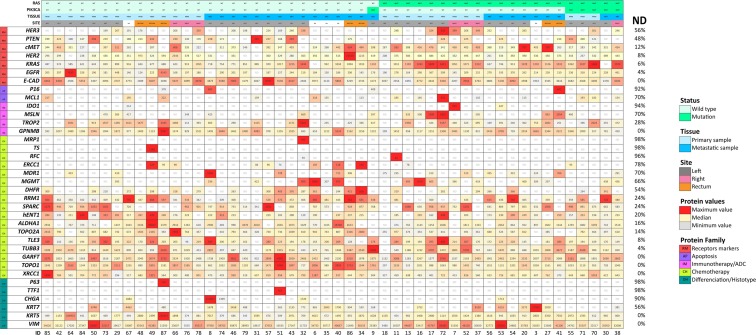
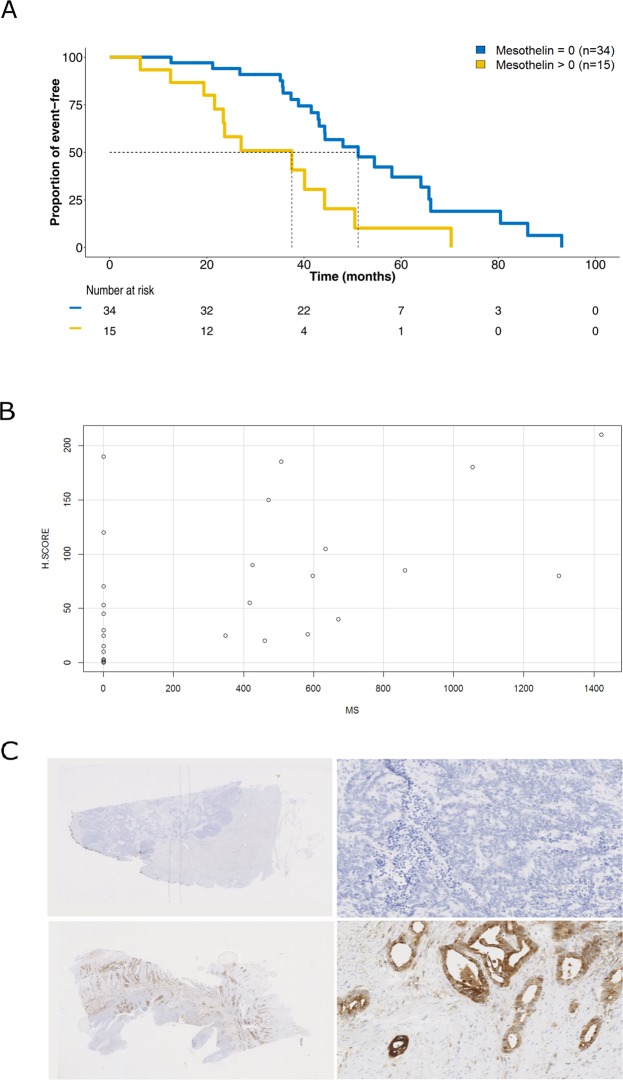
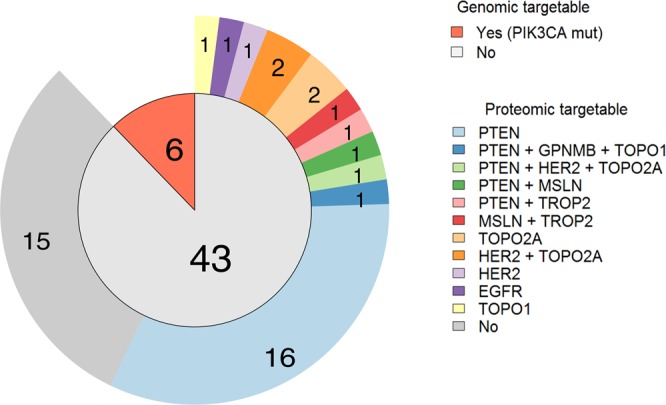
Protein biomarkers are widely used in cancer diagnosis, prognosis, and prediction of treatment response. Here we introduce the use of targeted multiplex proteomics (TMP) as a tool to simultaneously measure a panel of 54 proteins involved in oncogenic, tumour suppression, drug metabolism and resistance, in patients with metastatic colorectal cancer (mCRC). TMP provided valuable diagnostic information by unmasking an occult neuroendocrine differentiation and identifying a misclassified case based on abnormal proteins phenotype. No significant differences in protein levels between unpaired primary and metastatic samples were observed. Four proteins were found differentially expressed in KRAS-mutant as compared to wild-type tumours (overexpressed in mutant: KRAS, EGFR; overexpressed in wild-type: TOPO1, TOP2A). Survival analyses revealed the association between mesothelin expression and poor overall survival, whereas lack of PTEN protein expression associated with lower progression-free survival with anti-EGFR-based therapy in the first-line setting for patients with RAS wild-type tumour. Finally, outlier analysis identified putative targetable proteins in 65% of patients lacking a targetable genomic alteration. Our data show that TMP constitutes a promising, novel molecular prescreening tool in mCRC to identify protein expression alterations that may impact on patient outcomes and more precisely guide patient eligibility to clinical trials with novel targeted experimental therapies.
Overview
The claims and statistics of this paper haven’t been checked yet.
Run the check — free, no account needed. It reads the open-access text and checks the sources it cites.
Integrity signals
Registry
Cites
Statistics
Figures
Verification
Claims the paper makes
The claims and statistics of this paper haven’t been checked yet.
Run the check — free, no account needed. It reads the open-access text and checks the sources it cites.
Claims other papers make about this one
Each is checked against this paper’s own text: does it say what the citing paper says it does?
The cited source says what the claim attributes to it.
In the citing paper
“Basal EGFR expression, as measured by immunohistochemistry or mass spectrometry(28, 29), has not been associated with EGFR inhibitor sensitivity in CRC”
From EGFR Blockade Reverts Resistance to KRASG12C Inhibition in Colorectal Cancer. (2020) · cites this paper as [28]
Self-check
Percentages, sums and reported differences re-computed from the paper’s own numbers.
The self-check needs the paper’s full text.
Citations
Cites
Sartore-Bianchi, A., Trusolino, L., Martino, C., Bencardino, K., Lonardi, S., Bergamo, F., Zagonel, V., Leone, F., Depetris, I., Martinelli, E., et al. (2016) · The Lancet Oncology · doi:10.1016/s1470-2045(16)00150-9 · Cited by 1,016
PTEN loss of expression predicts cetuximab efficacy in metastatic colorectal cancer patients
Frattini, M., Saletti, P., Romagnani, E., Martin, V, Molinari, F., Ghisletta, M., Camponovo, A., Etienne, L. L., Cavalli, F., & Mazzucchelli, L. (2007) · British Journal of Cancer · doi:10.1038/sj.bjc.6604009 · Cited by 540
Rudnick, P. A., Clauser, K. R., Kilpatrick, L. E., Tchekhovskoi, D. V., Neta, P., Blonder, N., Billheimer, D. D., Blackman, R. K., Bunk, D. M., Cardasis, H. L., et al. (2010) · Molecular & Cellular Proteomics · doi:10.1074/mcp.m900223-mcp200 · Cited by 183
Research works printed but not linked: 41
- Addona, T. A. et al. Multi-site assessment of the precision and reproducibility of multiple reaction monitoring–based measurements of proteins in plasma. Nat. Biotechnol. 27, 633–641 (2009). · DOI · Paper page
- Nilsson, T. et al. Mass spectrometry in high-throughput proteomics: ready for the big time. Nat. Methods 7, 681–685 (2010). · DOI · Paper page
- Prieto, D. A. et al. Liquid Tissue: proteomic profiling of formalin-fixed tissues. Biotechniques Suppl, 32–5 (2005). · DOI
- Bateman, N. W. et al. Differential Proteomic Analysis of Late-Stage and Recurrent Breast Cancer from Formalin-Fixed Paraffin-Embedded Tissues. J. Proteome Res. 10, 1323–1332 (2011). · DOI
- Hood, B. L. et al. Proteomic Analysis of Formalin-fixed Prostate Cancer Tissue. Mol. Cell. Proteomics 4, 1741–1753 (2005). · DOI
- Hembrough, T. et al. Application of Selected Reaction Monitoring for Multiplex Quantification of Clinically Validated Biomarkers in Formalin-Fixed, Paraffin-Embedded Tumor Tissue. J. Mol. Diagnostics 15, 454–465 (2013). · DOI
- Huang, S. K. et al. LC/MS-Based Quantitative Proteomic Analysis of Paraffin-Embedded Archival Melanomas Reveals Potential Proteomic Biomarkers Associated with Metastasis. PLoS One 4, e4430 (2009). · DOI
- DeSouza, L. V. et al. mTRAQ-based quantification of potential endometrial carcinoma biomarkers from archived formalin-fixed paraffin-embedded tissues. Proteomics 10, 3108–3116 (2010). · DOI
- Hembrough, T. et al. Selected Reaction Monitoring (SRM) Analysis of Epidermal Growth Factor Receptor (EGFR) in Formalin Fixed Tumor Tissue. Clin. Proteomics 9, 5 (2012). · DOI
- Nuciforo, P. et al. High HER2 protein levels correlate with increased survival in breast cancer patients treated with anti-HER2 therapy. Mol. Oncol. 10, 138–147 (2016). · DOI
- Catenacci, D. V. T. et al. Absolute Quantitation of Met Using Mass Spectrometry for Clinical Application: Assay Precision, Stability, and Correlation with MET Gene Amplification in FFPE Tumor Tissue. PLoS One 9, e100586 (2014). · DOI
- Catenacci, D. V. T. et al. Mass-spectrometry-based quantitation of Her2 in gastroesophageal tumor tissue: comparison to IHC and FISH. Gastric Cancer 19, 1066–1079 (2016). · DOI
- Maron, S. B. et al. Targeted Therapies for Targeted Populations: Anti-EGFR Treatment for EGFR -Amplified Gastroesophageal Adenocarcinoma. Cancer Discov. 8, 696–713 (2018). · DOI
- Moldvay, J. et al. The role of TTF-1 in differentiating primary and metastatic lung adenocarcinomas. Pathol. Oncol. Res. 10, 85–8 (2004). · DOI
- Compérat, E. et al. Variable sensitivity and specificity of TTF-1 antibodies in lung metastatic adenocarcinoma of colorectal origin. Mod. Pathol. 18, 1371–1376 (2005). · DOI
- Harbaum, L. et al. Keratin 7 expression in colorectal cancer - freak of nature or significant finding? Histopathology 59, 225–234 (2011). · DOI
- Choueiri, M. B. et al. ERCC1 and TS Expression as Prognostic and Predictive Biomarkers in Metastatic Colon Cancer. PLoS One 10, e0126898 (2015). · DOI
- Grimminger, P. P. et al. TS and ERCC-1 mRNA expressions and clinical outcome in patients with metastatic colon cancer in CONFIRM-1 and −2 clinical trials. Pharmacogenomics J. 12, 404–411 (2012). · DOI
- Li, P. et al. ERCC1, defective mismatch repair status as predictive biomarkers of survival for stage III colon cancer patients receiving oxaliplatin-based adjuvant chemotherapy. Br. J. Cancer 108, 1238–1244 (2013). · DOI
- Shirota, Y. et al. ERCC1 and Thymidylate Synthase mRNA Levels Predict Survival for Colorectal Cancer Patients Receiving Combination Oxaliplatin and Fluorouracil Chemotherapy. J. Clin. Oncol. 19, 4298–4304 (2001). · DOI
- Li, Z. et al. Predictive value of APE1, BRCA1, ERCC1 and TUBB3 expression in patients with advanced non-small cell lung cancer (NSCLC) receiving first-line platinum–paclitaxel chemotherapy. Cancer Chemother. Pharmacol. 74, 777–786 (2014). · DOI
- Motulsky, H. J. & Brown, R. E. Detecting outliers when fitting data with nonlinear regression-a new method based on robust nonlinear regression and the false discovery rate, https://doi.org/10.1186/1471-2105-7-123 (2006). · DOI · Paper page
- Hong, D. S. et al. Phase IB Study of Vemurafenib in Combination with Irinotecan and Cetuximab in Patients with Metastatic Colorectal Cancer with BRAFV600E Mutation. Cancer Discov. 6, 1352–1365 (2016). · DOI · Paper page
- Hainsworth, J. D. et al. Targeted Therapy for Advanced Solid Tumors on the Basis of Molecular Profiles: Results From MyPathway, an Open-Label, Phase IIa Multiple Basket Study. J. Clin. Oncol. 36, 536–542 (2018). · DOI · Paper page
- Poulsen, T. T. et al. Sym015: A Highly Efficacious Antibody Mixture against MET -Amplified Tumors. Clin. Cancer Res. 23, 5923–5935 (2017). · DOI
- El-Deiry, W. S. et al. Molecular profiling of 6,892 colorectal cancer samples suggests different possible treatment options specific to metastatic sites. Cancer Biol. Ther. 16, 1726–1737 (2015). · DOI
- Dienstmann, R. et al. Analysis of mutant allele fractions in driver genes in colorectal cancer - biological and clinical insights. Mol. Oncol. 11, 1263–1272 (2017). · DOI
- Overman, M. J. et al. Utility of a molecular prescreening program in advanced colorectal cancer for enrollment on biomarker-selected clinical trials. Ann. Oncol. 27, 1068–1074 (2016). · DOI
- Morello, A., Sadelain, M. & Adusumilli, P. S. Mesothelin-Targeted CARs: Driving T Cells to Solid Tumors. Cancer Discov. 6, 133–46 (2016). · DOI
- Foda, A. A. M., El-Hawary, A. K. & Hamed, H. Aberrant Expression of Calretinin, D2–40 and Mesothelin in Mucinous and Non-Mucinous Colorectal Carcinomas and Relation to Clinicopathological Features and Prognosis. Pathol. Oncol. Res. 22, 725–732 (2016). · DOI
- Li, S. et al. Plasma Mesothelin as a Novel Diagnostic and Prognostic Biomarker in Colorectal Cancer. J. Cancer 8, 1355–1361 (2017). · DOI
- Loupakis, F. et al. PTEN Expression and KRAS Mutations on Primary Tumors and Metastases in the Prediction of Benefit From Cetuximab Plus Irinotecan for Patients With Metastatic Colorectal Cancer. J. Clin. Oncol. 27, 2622–2629 (2009). · DOI · Paper page
- Sartore-Bianchi, A. et al. PIK3CA Mutations in Colorectal Cancer Are Associated with Clinical Resistance to EGFR-Targeted Monoclonal Antibodies. Cancer Res. 69, 1851–1857 (2009). · DOI · Paper page
- Razis, E. et al. Potential value of PTEN in predicting cetuximab response in colorectal cancer: An exploratory study. BMC Cancer 8, 234 (2008). · DOI
- Sawai, H. et al. Loss of PTEN expression is associated with colorectal cancer liver metastasis and poor patient survival. BMC Gastroenterol. 8, 56 (2008). · DOI
- Laurent-Puig, P. et al. Analysis of PTEN, BRAF, and EGFR Status in Determining Benefit From Cetuximab Therapy in Wild-Type KRAS Metastatic Colon Cancer. J. Clin. Oncol. 27, 5924–5930 (2009). · DOI · Paper page
- Personeni, N. et al. FOLFIRI and Cetuximab Every Second Week for First-Line Treatment of KRAS Wild-Type Metastatic Colorectal Cancer According to Phosphatase and Tensin Homolog Expression: A Phase II Study. Clin. Colorectal Cancer 14, 162–169 (2015). · DOI
- Takashima, A. & Faller, D. V. Targeting the RAS oncogene. Expert Opin. Ther. Targets 17, 507–531 (2013). · DOI
- Desmedt, C. et al. Multifactorial Approach to Predicting Resistance to Anthracyclines. J. Clin. Oncol. 29, 1578–1586 (2011). · DOI
- Bartlett, J. M. S. et al. Predicting Anthracycline Benefit: TOP2A and CEP17—Not Only but Also. J. Clin. Oncol. 33, 1680–1687 (2015). · DOI
- Thress, K. S. et al. Acquired EGFR C797S mutation mediates resistance to AZD9291 in non–small cell lung cancer harboring EGFR T790M. Nat. Med. 21, 560–562 (2015). · DOI · Paper page
Cited by
Sorted by citations
EGFR Blockade Reverts Resistance to KRASG12C Inhibition in Colorectal Cancer.
Amodio, V., Yaeger, R., Arcella, P., Cancelliere, C., Lamba, S., Lorenzato, A., Arena, S., Montone, M., Mussolin, B., Bian, Y., et al. (2020) · Cancer Discovery · doi:10.1158/2159-8290.cd-20-0187 · Cited by 504
“Basal EGFR expression, as measured by IHC or mass spectrometry (28, 29), has not been associated with EGFR inhibitor sensitivity in colorectal cancer, and indeed we find no clear difference between receptor expression levels by lineage or in the subset of patients with colorectal cancer and NSCLC treated with AMG510.”
BackgroundSelf-citation
Metadata
- Authors
- Serna, G., Ruiz-Pace, F., Cecchi, F., Fasani, R., Jimenez, J., Thyparambil, S., Landolfi, S., Elez, E., Vivancos, A., Hembrough, T., Tabernero, J., Dienstmann, R., & Nuciforo, P.
- Affiliations
- Vall d'Hebron Institute of Oncology (ES)
- NantOmics LLC (United States) (US)
- Vall d'Hebron Hospital Universitari (ES)
- Corresponding author
- Nuciforo, Paolo
- ORCID
- Venue
- Scientific Reports
- Published
- 2019-09-19
- Volume
- 9
- Issue
- 1
- Pages
- 13568-13568
- ISSN
- 2045-2322 (ISSN-L)
- PMC
- PMC6753065
- OpenAlex
- W2974810552
- Cited by
- 16
- References
- 3
- Citations by year
- 2024: 1 · 2023: 6 · 2021: 3 · 2020: 6
- FWCI
- 0.94
- Type
- journal article
- Language
- en
- Open access
- gold
- doi.org
- Locations
- Scientific Reports (publishedVersion, cc-by)
- PubMed Central (publishedVersion, cc-by)
- PubMed (publishedVersion)
- DOAJ (DOAJ: Directory of Open Access Journals) (submittedVersion)
- RECERCAT (Consorci de Serveis Universitaris de Catalunya) (submittedVersion, cc-by)
- Funders
- Fundación Cellex
- Topics
- Health Sciences › Medicine › Oncology › Colorectal Cancer Treatments and Studies
- Physical Sciences › Chemistry › Spectroscopy › Advanced Proteomics Techniques and Applications
- Life Sciences › Biochemistry, Genetics and Molecular Biology › Molecular Biology › Advanced Biosensing Techniques and Applications
- Keywords
- metastatic colorectal cancer, protein biomarkers, neuroendocrine differentiation, KRAS mutation, EGFR, TOP2A, mesothelin, PTEN, anti-EGFR therapy, progression-free survival, overall survival, drug resistance, drug metabolism, inclusion and exclusion criteria
- MeSH terms
- Mesothelin, Adult, Aged, Female, Humans, Male, Middle Aged, Mutation, Neoplasm Metastasis, Prognosis, Colorectal Neoplasms, Biomarkers, Gene Expression Regulation, Neoplastic, Survival Analysis, Proto-Oncogene Proteins p21(ras), Proteomics, PTEN Phosphohydrolase, GPI-Linked Proteins
About these checks
Registry, retraction, Cites and statistics results are computed, not judged, with one exception: a printed reference that no index lists is read once by a model before it counts as a citation error. Claims are extracted by a model and kept only when their quote appears verbatim in the text; each cited source is then checked, with a model’s help, for whether it says what the claim relies on. Those verdicts can be wrong — read the claim’s quote and the cited source before relying on one.
Statistics and arithmetic are recomputed, not judged.
Confidence bands are shown only for fields calibrated on our annotated test set. None is calibrated yet, so no band is shown.
What counts as a claim ›How we measure confidence ›How we check this ›
Are you an author, or do you see a problem with this page? Request a review
