

Tissue-engineered blood-brain barrier models via directed differentiation of human induced pluripotent stem cells
Open accessThe DOI matches its Crossref record; 69 of the 69 references it cites were found in a registry or an index.
Abstract
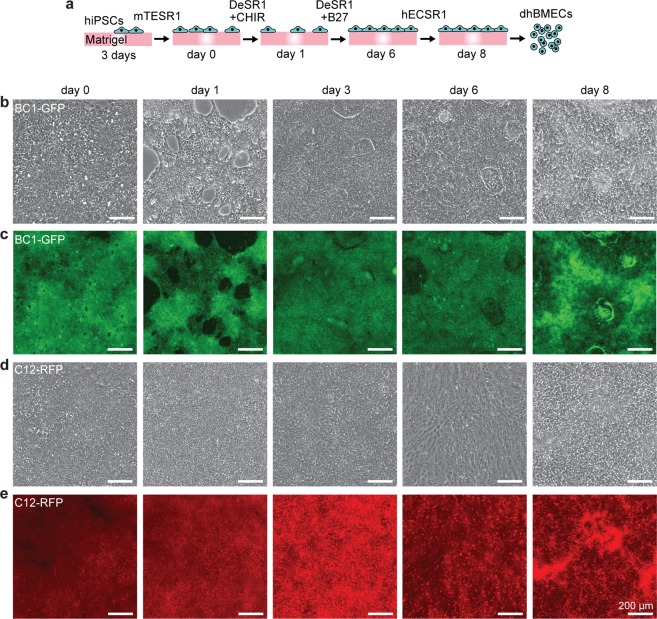
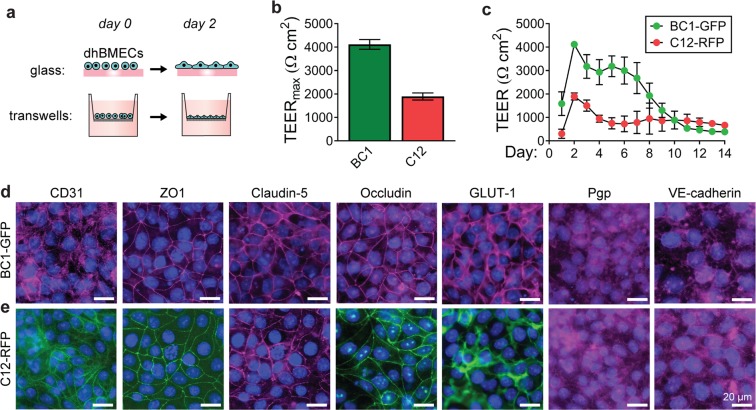
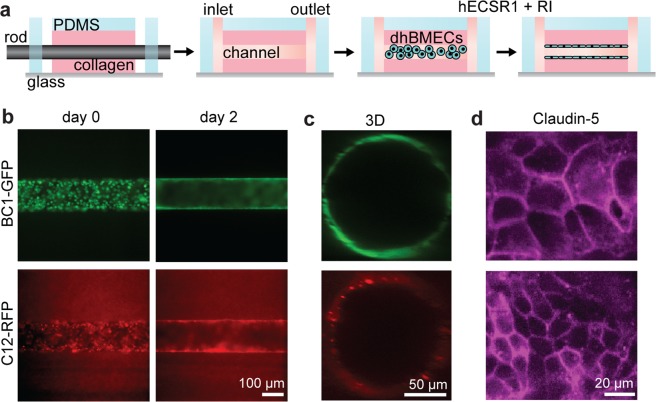
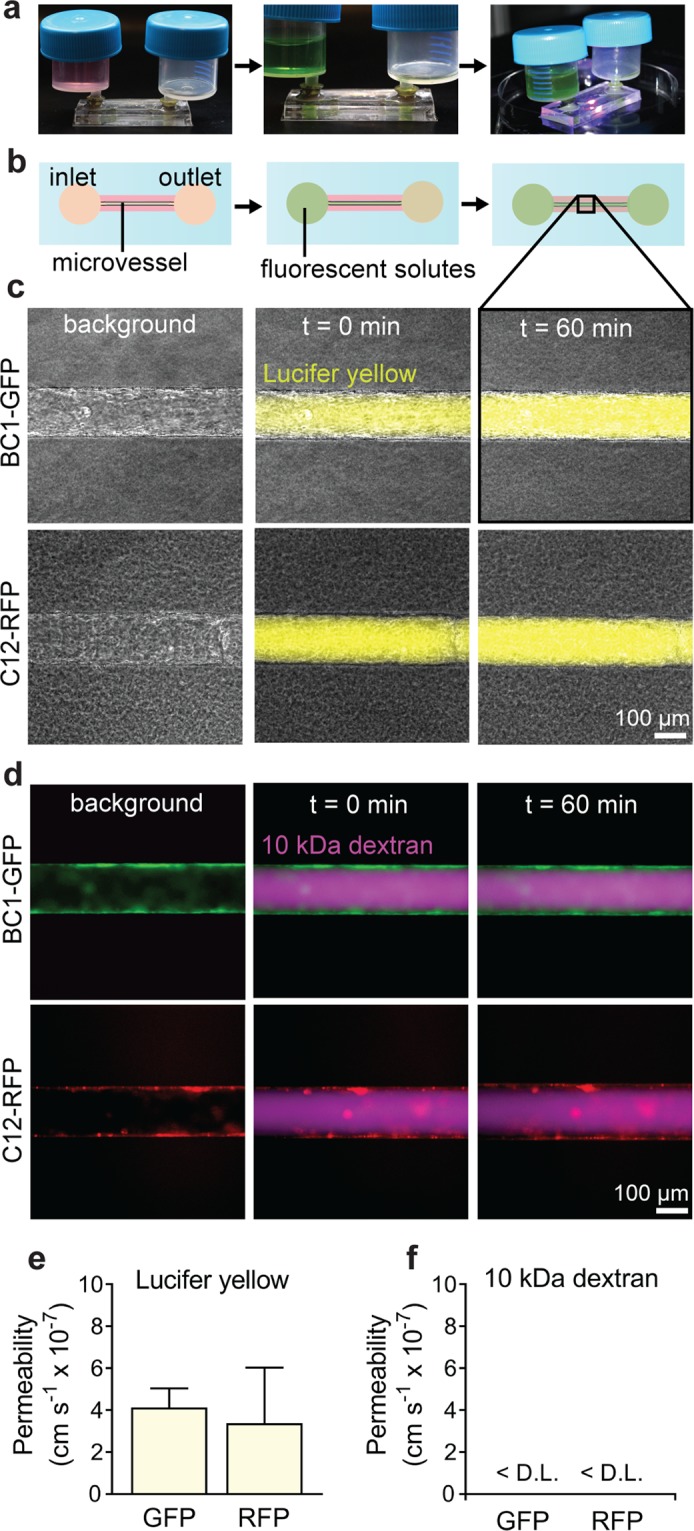
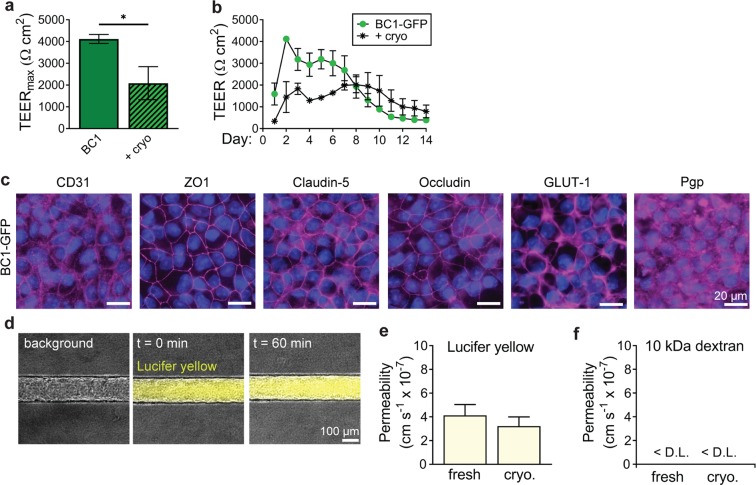
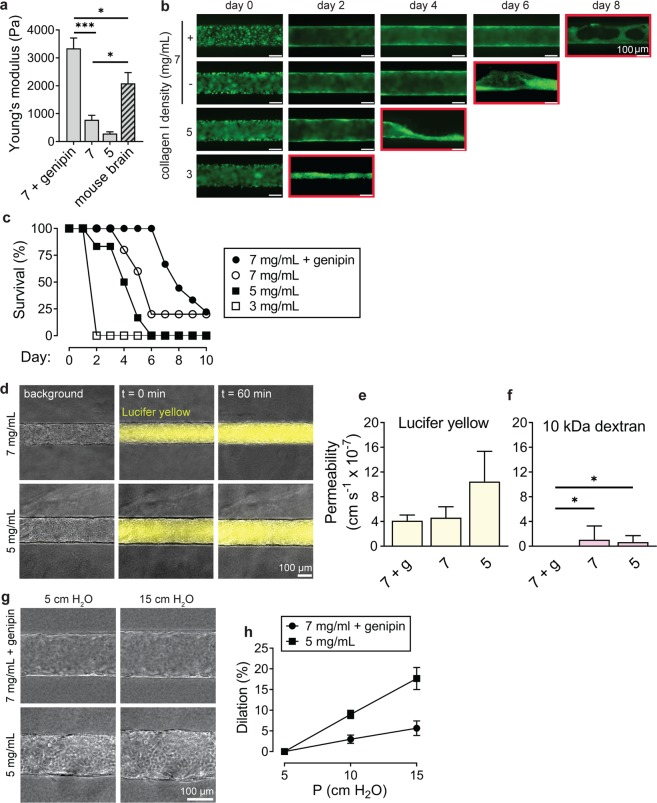
Three-dimensional (3D) tissue-engineered models of the blood-brain barrier (BBB) recapitulate in vivo shear stress, cylindrical geometry, and cell-ECM interactions. Here we address four issues associated with BBB models: cell source, barrier function, cryopreservation, and matrix stiffness. We reproduce a directed differentiation of brain microvascular endothelial cells (dhBMECs) from two fluorescently labeled human induced pluripotent stem cell lines (hiPSCs) and demonstrate physiological permeability of Lucifer yellow over six days. Microvessels formed from cryopreserved dhBMECs show expression of BBB markers and maintain physiological barrier function comparable to non-cryopreserved cells. Microvessels displaying physiological barrier function are formed in collagen I hydrogels with stiffness matching that of human brain. The dilation response of microvessels was linear with increasing transmural pressure and was dependent on matrix stiffness. Together these results advance capabilities for tissue-engineered BBB models.
Overview
The claims and statistics of this paper haven’t been checked yet.
Free: it reads the open-access text and checks the first 5 claims that cite a source we can check. Create a free account to check every claim.
Integrity signals
Registry
Cites
Statistics
Figures
Verification
Claims the paper makes
The claims and statistics of this paper haven’t been checked yet.
Free: it reads the open-access text and checks the first 5 claims that cite a source we can check. Create a free account to check every claim.
Claims other papers make about this one
Each is checked against this paper’s own text: does it say what the citing paper says it does?
The source backs part of the claim, not all of it — or backs it for a different population, condition or comparison.
In the citing paper
“To overcome this weakness and to achieve physiological barrier function, three-dimensional self-organized microvascular models of the BBB containing endothelial cells, pericytes and astrocytes have been recently developed [225–228].”
From Mechanisms of fungal dissemination (2021) · cites this paper as [227]
Experimental — accuracy not yet measured
Self-check
Percentages, sums and reported differences re-computed from the paper’s own numbers.
The self-check needs the paper’s full text.
Citations
Cites
Blood–brain barrier breakdown in Alzheimer disease and other neurodegenerative disorders
Sweeney, M. D., Sagare, A. P., & Zlokovic, B. V. (2018) · Nature Reviews Neurology · doi:10.1038/nrneurol.2017.188 · Cited by 3,076
The blood-brain barrier: Bottleneck in brain drug development
Pardridge, W. M. (2005) · NeuroRX · doi:10.1602/neurorx.2.1.3 · Cited by 2,798
The Neurovascular Unit Coming of Age: A Journey through Neurovascular Coupling in Health and Disease
Iadecola, C. (2017) · Neuron · doi:10.1016/j.neuron.2017.07.030 · Cited by 2,480
Hydrogels with tunable stress relaxation regulate stem cell fate and activity
Chaudhuri, O., Gu, L., Klumpers, D., Darnell, M., Bencherif, S. A., Weaver, J. C., Huebsch, N., Lee, H.-P., Lippens, E., Duda, G. N., et al. (2016) · Nature Materials · doi:10.1038/nmat4489 · Cited by 2,443
Self-citationSize-selective loosening of the blood-brain barrier in claudin-5–deficient mice
Nitta, T., Hata, M., Gotoh, S., Seo, Y., Sasaki, H., Hashimoto, N., Furuse, M., & Tsukita, S. (2003) · The Journal of Cell Biology · doi:10.1083/jcb.200302070 · Cited by 1,917
On the local reactions of the arterial wall to changes of internal pressure
Bayliss, W. M. (1902) · The Journal of Physiology · doi:10.1113/jphysiol.1902.sp000911 · Cited by 1,519
Diffusion in Brain Extracellular Space
Syková, E., & Nicholson, C. (2008) · Physiological Reviews · doi:10.1152/physrev.00027.2007 · Cited by 1,481
Ultrafast ultrasound localization microscopy for deep super-resolution vascular imaging
Errico, C., Pierre, J., Pezet, S., Desailly, Y., Lenkei, Z., Couture, O., & Tanter, M. (2015) · Nature · doi:10.1038/nature16066 · Cited by 1,349
Paulson, O. B., Strandgaard, S., & Edvinsson, L. (1990) · PubMed · Cited by 1,111
Derivation of blood-brain barrier endothelial cells from human pluripotent stem cells
Lippmann, E. S., Azarin, S. M., Kay, J. E., Nessler, R. A., Wilson, H. K., Al-Ahmad, A., Palecek, S. P., & Shusta, E. V. (2012) · Nature Biotechnology · doi:10.1038/nbt.2247 · Cited by 800
Cited by
Items 101–112 of 112
Chung, T. D., Linville, R. M., Guo, Z., Ye, R., Jha, R., Grifno, G. N., & Searson, P. C. (2022) · Figshare · doi:10.6084/m9.figshare.19759518
Self-citationYamada, S., Hashita, T., Yanagida, S., Sato, H., Yasuhiko, Y., Okabe, K., Noda, T., Nishida, M., Matsunaga, T., & Kanda, Y. (2024) · Figshare · doi:10.6084/m9.figshare.26703184
Yamada, S., Hashita, T., Yanagida, S., Sato, H., Yasuhiko, Y., Okabe, K., Noda, T., Nishida, M., Matsunaga, T., & Kanda, Y. (2024) · Figshare · doi:10.6084/m9.figshare.25560906
Yamada, S., Hashita, T., Yanagida, S., Sato, H., Yasuhiko, Y., Okabe, K., Noda, T., Nishida, M., Matsunaga, T., & Kanda, Y. (2024) · Figshare · doi:10.6084/m9.figshare.26703181
Linville, R. M., Maressa, J. C., Guo, Z., Chung, T. D., Farrell, A. M., Jha, R., & Searson, P. C. (2024) · Figshare · doi:10.6084/m9.figshare.26635395
Self-citationWeber, C. M., Moiz, B., Zic, S. M., Vargas, V. A., Li, A., & Clyne, A. M. (2024) · Figshare · doi:10.6084/m9.figshare.26552689
Yamada, S., Hashita, T., Yanagida, S., Sato, H., Yasuhiko, Y., Okabe, K., Noda, T., Nishida, M., Matsunaga, T., & Kanda, Y. (2024) · Figshare · doi:10.6084/m9.figshare.25560872
Yamada, S., Hashita, T., Yanagida, S., Sato, H., Yasuhiko, Y., Okabe, K., Noda, T., Nishida, M., Matsunaga, T., & Kanda, Y. (2024) · Figshare · doi:10.6084/m9.figshare.26703190
Chung, T. D., Liang, L. R., Wang, L., Kim, E. G., Gupta, S., Pandey, I., & Searson, P. C. (2026) · Fluids and Barriers of the CNS · doi:10.1186/s12987-026-00773-x
Self-citationDinamarca, M. C., Ševarika, B., & McNeil, S. (2026) · Pharmaceutics · doi:10.3390/pharmaceutics18050619 · Cited by 1
“Our differentiation scheme is shown in Figure 1A, where 6 µ M of CHIR99021 [31] was added during the differentiation process and after hiPSC-BMEC progenitors have formed.”
InfluentialLee, C., Park, D. H., Lee, E. J., Kim, S. H., Seong, Y.-J., Hwang, Y., Won, H., Choi, S. B., Ku, B., Lee, D. W., et al. (2026) · Expert Opinion on Drug Delivery · doi:10.1080/17425247.2026.2676068
“…physiologically relevant platforms for evaluating drug responses in the presence of an intact BBB. Collectively, planar designs based on rectangular channels facilitate observation and analysis [86], whereas cylindrical channels provide more uniform shear stress and vascular-like geometry [85,87].”
Yuzbasic, A. D., Yesil, B. Y., Arslantunali, D., & Ayan, B. (2026) · NAM journal. · doi:10.1016/j.namjnl.2026.100138
Metadata
- Authors
- Grifno, G. N., Farrell, A. M., Linville, R. M., Arevalo, D., Kim, J. H., Gu, L., & Searson, P. C.
- Affiliations
- Johns Hopkins University (US)
- Corresponding author
- Searson, Peter C.
- Venue
- Scientific Reports
- Published
- 2019-09-27
- Volume
- 9
- Issue
- 1
- Pages
- 13957-13957
- ISSN
- 2045-2322 (ISSN-L)
- PMC
- PMC6764995
- OpenAlex
- W2977123826
- Semantic Scholar
- 8c5f27b75b333636691ecef5580d5d54b09dbd3a
- Cited by
- 112
- References
- 69
- Citations by year
- 2026: 7 · 2025: 18 · 2024: 18 · 2023: 13 · 2022: 24 · 2021: 18 · 2020: 12 · 2019: 2
- FWCI
- 6.16
- Type
- journal article
- Language
- en
- Open access
- gold
- doi.org
- Licence
- cc-by
- creativecommons.org/licenses/by/4.0 (tdm)
- creativecommons.org/licenses/by/4.0 (vor)
- Locations
- Scientific Reports (publishedVersion, cc-by)
- Europe PMC (PubMed Central) (publishedVersion, cc-by)
- PubMed Central (publishedVersion, cc-by)
- PubMed (publishedVersion)
- DOAJ (DOAJ: Directory of Open Access Journals) (submittedVersion)
- Funders
- United States Department of Defense | Defense Threat Reduction Agency (HDTRA1-15-1-0046)
- Topics
- Life Sciences › Neuroscience › Neurology › Barrier Structure and Function Studies
- Physical Sciences › Engineering › Biomedical Engineering › 3D Printing in Biomedical Research
- Health Sciences › Medicine › Surgery › Tissue Engineering and Regenerative Medicine
- Keywords
- blood-brain barrier, human induced pluripotent stem cells, directed differentiation, brain microvascular endothelial cells, cryopreservation, extracellular matrix stiffness, collagen I hydrogel, barrier permeability, transmural pressure
- MeSH terms
- Blood-Brain Barrier, Brain, Capillary Permeability, Cell Differentiation, Humans, Platelet Endothelial Cell Adhesion Molecule-1, Tissue Engineering, Endothelial Cells, Microvessels, Induced Pluripotent Stem Cells, Claudin-5, Occludin, Zonula Occludens-1 Protein
About these checks
Registry, retraction, Cites and statistics results are computed, not judged, with one exception: a printed reference that no index lists is read once by a model before it counts as a citation error. Claims are extracted by a model and kept only when their quote appears verbatim in the text; each cited source is then checked, with a model’s help, for whether it says what the claim relies on. Those verdicts can be wrong — read the claim’s quote and the cited source before relying on one.
Statistics and arithmetic are recomputed, not judged.
Confidence bands are shown only for fields calibrated on our annotated test set. None is calibrated yet, so no band is shown.
What counts as a claim ›How we measure confidence ›How we check this ›
Are you an author, or do you see a problem with this page? Request a review
Data sources
Bibliographic data: Semantic Scholar, OpenAlex, Crossref.
Contains information from the Semantic Scholar Academic Graph Datasets, made available under the ODC Attribution License (ODC-BY 1.0).
Semantic Scholar’s data is described in: Kinney, R., et al. (2023). The Semantic Scholar Open Data Platform. arXiv:2301.10140.
