

A unique olfactory bulb microcircuit driven by neurons expressing the precursor to glucagon-like peptide 1
Open accessThe DOI matches its Crossref record; 49 of the 49 references it cites were found in a registry or an index.
Abstract
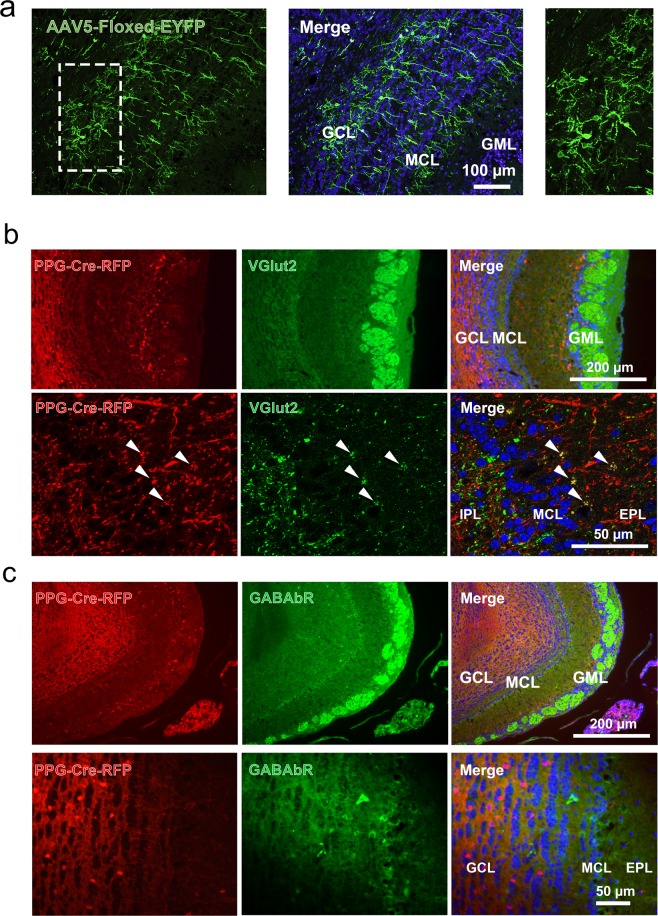
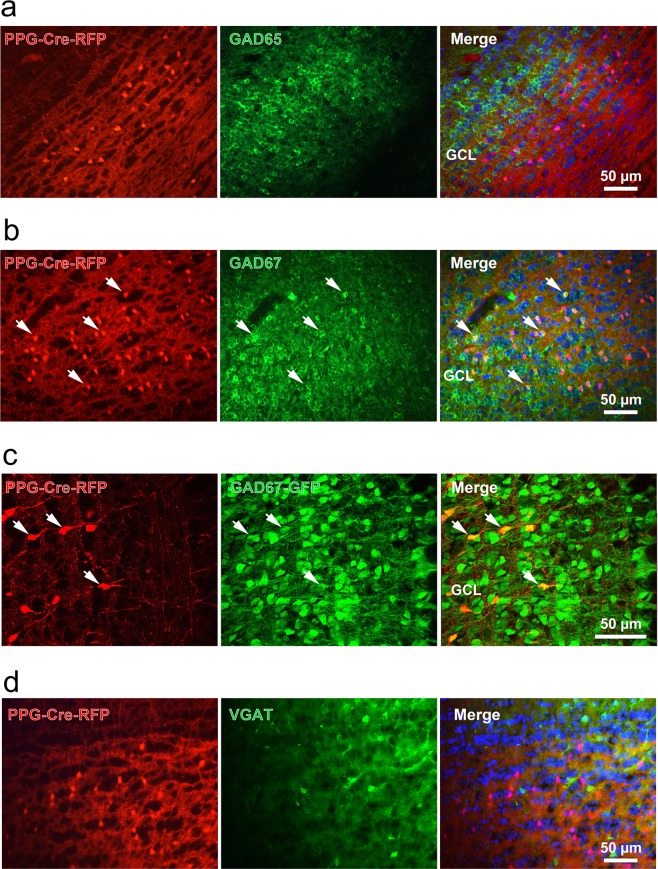
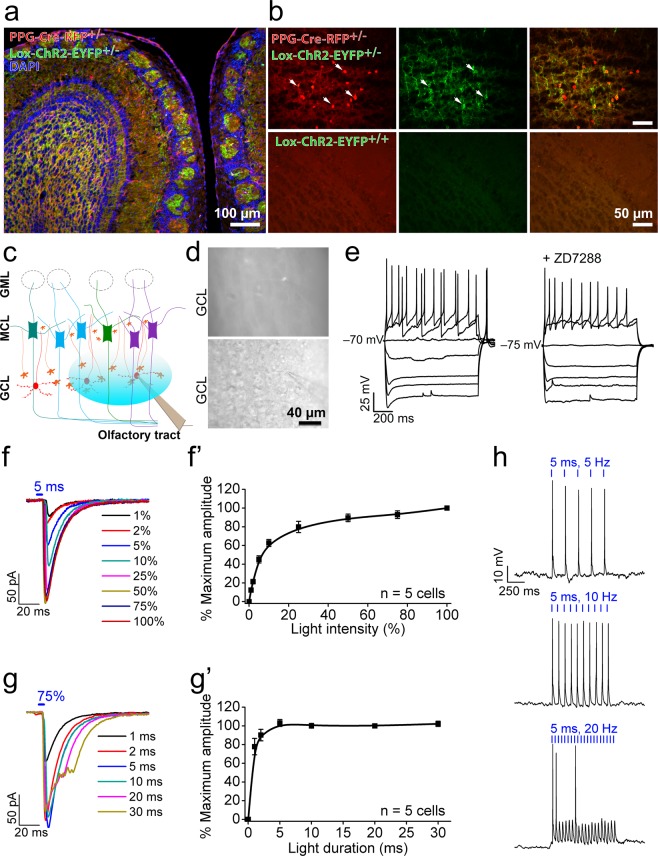
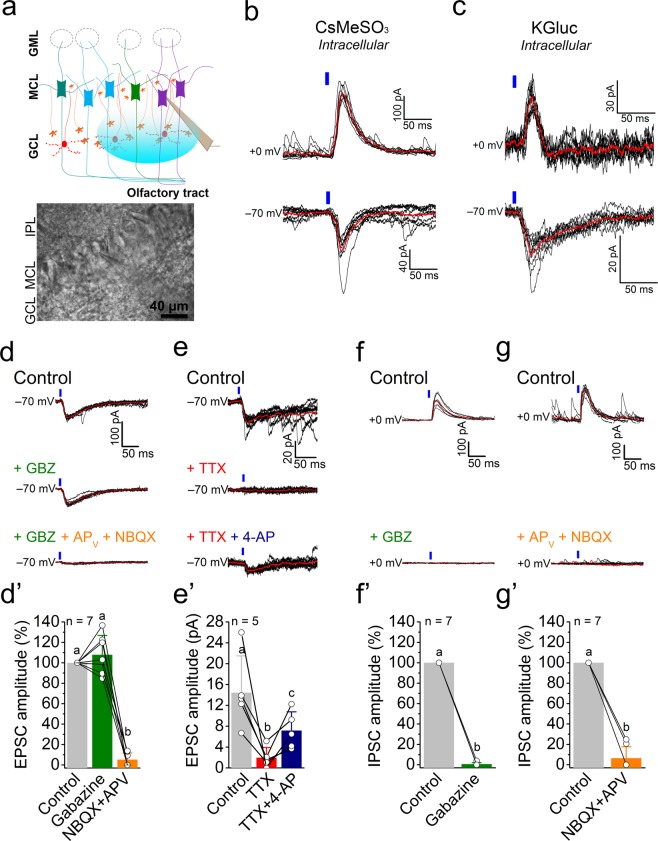
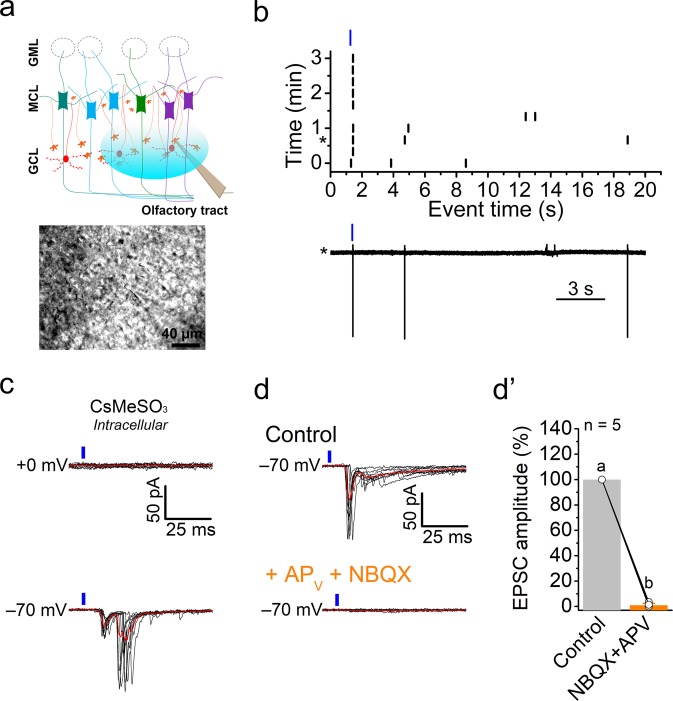
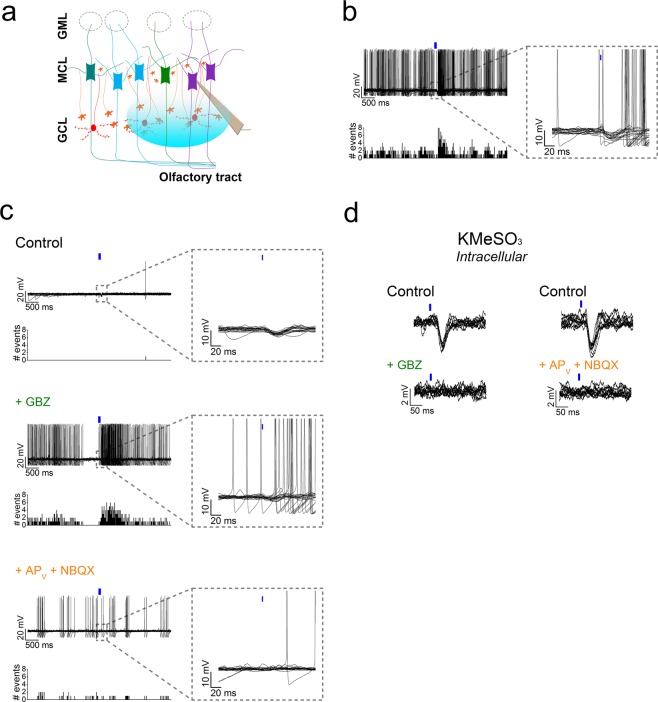
The presence of large numbers of local interneurons in the olfactory bulb has demonstrated an extensive local signaling process, yet the identification and purpose of olfactory microcircuits is poorly explored. Because the discrimination of odors in a complex environment is highly dependent on the tuning of information by local interneurons, we studied for the first time the role of preproglucagon (PPG) neurons in the granule cell layer of the olfactory bulb. Combining electrophysiological recordings and confocal microscopy, we discovered that the PPG neurons are a population of cells expressing the precursor of glucagon-like peptide 1 and are glutamatergic; able to modulate the firing pattern of the mitral cells (M/TCs). Optogenetic activation of PPG neurons resulted in a mixed excitation and inhibition that created a multiphasic response shaping the M/TCs firing pattern. This suggests that PPG neurons could drive neuromodulation of the olfactory output and change the synaptic map regulating olfactory coding.
Overview
The claims and statistics of this paper haven’t been checked yet.
Free: it reads the open-access text and checks the first 5 claims that cite a source we can check. Create a free account to check every claim.
Integrity signals
Registry
Cites
Statistics
Figures
Verification
Claims the paper makes
The claims and statistics of this paper haven’t been checked yet.
Free: it reads the open-access text and checks the first 5 claims that cite a source we can check. Create a free account to check every claim.
Claims other papers make about this one
Each is checked against this paper’s own text: does it say what the citing paper says it does?
The source backs part of the claim, not all of it — or backs it for a different population, condition or comparison.
In the citing paper
“In addition to the peripheral source of GLP-1, this peptide is also produced and released from a small population of PPG neurons in the brainstem nucleus tractus solitarius (NTS) and adjacent intermediate reticular nucleus (19‐21), along with a small microcircuit population in the olfactory bulb (16, 55, 56).”
From GLP-1 and the Neurobiology of Eating Control: Recent Advances (2025) · cites this paper as [55]
Experimental — accuracy not yet measured
Self-check
Percentages, sums and reported differences re-computed from the paper’s own numbers.
The self-check needs the paper’s full text.
Citations
Cites
Nagai, T., Ibata, K., Park, E. S., Kubota, M., Mikoshiba, K., & Miyawaki, A. (2002) · Nature Biotechnology · doi:10.1038/nbt0102-87 · Cited by 2,753
A toolbox of Cre-dependent optogenetic transgenic mice for light-induced activation and silencing
Madisen, L., Mao, T., Koch, H., Zhuo, J.-M., Berenyi, A., Fujisawa, S., Hsu, Y.-W. A., Garcia, A. J., Gu, X., Zanella, S., et al. (2012) · Nature Neuroscience · doi:10.1038/nn.3078 · Cited by 1,398
Tamamaki, N., Yanagawa, Y., Tomioka, R., Miyazaki, J., Obata, K., & Kaneko, T. (2003) · Journal of Comparative Neurology · doi:10.1002/cne.10905 · Cited by 1,277
Channelrhodopsin-2-assisted circuit mapping of long-range callosal projections
Petreanu, L., Huber, D., Sobczyk, A., & Svoboda, K. (2007) · Nature Neuroscience · doi:10.1038/nn1891 · Cited by 930
Glucose Sensing in L Cells: A Primary Cell Study
Reimann, F., Habib, A. M., Tolhurst, G., Parker, H. E., Rogers, G. J., & Gribble, F. M. (2008) · Cell Metabolism · doi:10.1016/j.cmet.2008.11.002 · Cited by 733
Self-citationFunctional organization of olfactory system
Shipley, M. T., & Ennis, M. (1996) · Journal of Neurobiology · doi:10.1002/(sici)1097-4695(199605)30:1<123::aid-neu11>3.0.co;2-n · Cited by 573
Luche, H., Weber, O., Nageswara Rao, T., Blum, C., & Fehling, H. J. (2007) · European Journal of Immunology · doi:10.1002/eji.200636745 · Cited by 482
DNA cloning by homologous recombination in Escherichia coli
Zhang, Y., Muyrers, J. P. P., Testa, G., & Stewart, A. F. (2000) · Nature Biotechnology · doi:10.1038/82449 · Cited by 432
The synaptology of the granule cells of the olfactory bulb
Price, J. L., & Powell, T. P. S. (1970) · Journal of Cell Science · doi:10.1242/jcs.7.1.125 · Cited by 421
Neuronal organization of olfactory bulb circuits
Nagayama, S., Homma, R., & Imamura, F. (2014) · Frontiers in Neural Circuits · doi:10.3389/fncir.2014.00098 · Cited by 411
Cited by
Revisiting the Complexity of GLP-1 Action from Sites of Synthesis to Receptor Activation
McLean, B. A., Wong, C. K., Campbell, J. E., Hodson, D. J., Trapp, S., & Drucker, D. J. (2021) · Endocrine Reviews · doi:10.1210/endrev/bnaa032 · Cited by 289
Self-citationTrapp, S., & Brierley, D. I. (2022) · British Journal of Pharmacology · doi:10.1111/bph.15638 · Cited by 154
“Additionally, GLP-1 is produced and acts within the olfactory bulb (Merchenthaler et al., 1999; Thiebaud et al., 2016, 2019).”
BackgroundSelf-citationAnti-Inflammatory Effects of GLP-1 Receptor Activation in the Brain in Neurodegenerative Diseases
Diz-Chaves, Y., Mastoor, Z., Spuch, C., González-Matías, L. C., & Mallo, F. (2022) · International Journal of Molecular Sciences · doi:10.3390/ijms23179583 · Cited by 148
Glucagon-Like Peptide-1 (GLP-1) in the Integration of Neural and Endocrine Responses to Stress
Diz-Chaves, Y., Herrera-Pérez, S., González-Matías, L. C., Lamas, J. A., & Mallo, F. (2020) · Nutrients · doi:10.3390/nu12113304 · Cited by 84
Extrinsic neuromodulation in the rodent olfactory bulb
Brunert, D., & Rothermel, M. (2020) · Cell and Tissue Research · doi:10.1007/s00441-020-03365-9 · Cited by 60
Holt, M. K., & Rinaman, L. (2021) · British Journal of Pharmacology · doi:10.1111/bph.15576 · Cited by 58
Olfaction in the context of obesity and diabetes: Insights from animal models to humans
Faour, M., Magnan, C., Gurden, H., & Martin, C. (2021) · Neuropharmacology · doi:10.1016/j.neuropharm.2021.108923 · Cited by 56
Chen, X.-Y., Chen, L., Yang, W., & Xie, A.-M. (2021) · Frontiers in Molecular Neuroscience · doi:10.3389/fnmol.2021.793004 · Cited by 52
Old Paradoxes and New Opportunities for Appetite Control in Obesity
Montégut, L., López-Otín, C., Magnan, C., & Kroemer, G. (2021) · Trends in Endocrinology and Metabolism · doi:10.1016/j.tem.2021.02.005 · Cited by 48
Glucagon-like peptide 1 receptor activation: anti-inflammatory effects in the brain
Diz-Chaves, Y., Mastoor, Z., Spuch, C., Lamas, J. A., González-Matías, L. C., & Mallo, F. (2023) · Neural Regeneration Research · doi:10.4103/1673-5374.389626 · Cited by 46
The olfactory bulb: A neuroendocrine spotlight on feeding and metabolism
Stark, R. (2024) · Journal of Neuroendocrinology · doi:10.1111/jne.13382 · Cited by 46
GLP-1 and the Neurobiology of Eating Control: Recent Advances
Jones, L. A., & Brierley, D. I. (2025) · Endocrinology · doi:10.1210/endocr/bqae167 · Cited by 43
“…to the peripheral source of GLP-1, this peptide is also produced and released from a small population of PPG neurons in the brainstem nucleus tractus solitarius (NTS) and adjacent intermediate reticular nucleus (19–21), along with a small microcircuit population in the olfactory bulb (16, 55, 56).”
A neuronal circuit driven by GLP-1 in the olfactory bulb regulates insulin secretion
Montaner, M., Denom, J., Simon, V., Jiang, W., Holt, M. K., Brierley, D. I., Rouch, C., Foppen, E., Kassis, N., Jarriault, D., et al. (2024) · Nature Communications · doi:10.1038/s41467-024-51076-4 · Cited by 36
Self-citationEffects of Glucagon-like peptide 1 (GLP-1) analogs in the hippocampus
Diz-Chaves, Y., Herrera-Pérez, S., González-Matías, L. C., & Mallo, F. (2022) · Vitamins and hormones · doi:10.1016/bs.vh.2021.12.005 · Cited by 35
NIH Workshop Report: sensory nutrition and disease
Reed, D. R., Alhadeff, A. L., Beauchamp, G. K., Chaudhari, N., Duffy, V. B., Dus, M., Fontanini, A., Glendinning, J. I., Green, B. G., Joseph, P. V., et al. (2020) · American Journal of Clinical Nutrition · doi:10.1093/ajcn/nqaa302 · Cited by 34
Schwartz, A. B., Kapur, A., Huang, Z., Anangi, R., Spear, J. M., Stagg, S. M., Fardone, E., Dekan, Z., Rosenberg, J. T., Grant, S. C., et al. (2020) · Journal of Neurochemistry · doi:10.1111/jnc.15200 · Cited by 30
Self-citationMontaner, M., Denom, J., Jiang, W., Magnan, C., Trapp, S., & Gurden, H. (2023) · Molecular Metabolism · doi:10.1016/j.molmet.2023.101738 · Cited by 29
Self-citationObesity‐ and diet‐induced plasticity in systems that control eating and energy balance
Ferrario, C. R., Muenzberg, H., Rinaman, L., Betley, J. N., Borgland, S. L., Dus, M., Fadool, D. A., Medler, K. F., Morton, G. J., Sandoval, D. A., et al. (2024) · Obesity · doi:10.1002/oby.24060 · Cited by 26
Self-citationKolling, L. J., Khan, K. M., Wang, R., Pierson, S. R., Hartman, B., Balasubramanian, N., Guo, D., Rahmouni, K., & Marcinkiewcz, C. A. (2024) · Psychiatry Research · doi:10.1016/j.psychres.2024.115951 · Cited by 17
Role of Olfaction for Eating Behavior
Fadool, D. A., & Kolling, L. J. (2019) · Elsevier eBooks · doi:10.1016/b978-0-12-809324-5.23770-x · Cited by 16
Self-citationZheng, H., López‐Ferreras, L., Krieger, J.-P., Fasul, S., Salazar, V. C., Pena, N. V., Skibicka, K. P., & Rinaman, L. (2022) · Molecular Metabolism · doi:10.1016/j.molmet.2022.101631 · Cited by 14
GLP-1 Receptor Agonists and Research to Treat Overeating and Substance Use Disorders
Guo, J. S., Hayes, M. R., Leggio, L., Oru, E., & Rinaman, L. (2025) · Journal of Neuroscience · doi:10.1523/jneurosci.1375-25.2025 · Cited by 13
Trapp, S., & Skoug, C. (2025) · Endocrinology · doi:10.1210/endocr/bqaf169 · Cited by 12
Self-citationWang, X.-Y., Liu, Y., Cao, L.-X., Li, Y.-Z., Wan, P., & Qiu, D. (2023) · Scientific Reports · doi:10.1038/s41598-023-34070-6 · Cited by 12
Linking COVID-19 and Parkinson's disease: Targeting the role of Vitamin-D
Behl, T., Kumar, S., Sehgal, A., Singh, S., Sharma, N., Chirgurupati, S., Aldubayan, M. A., Alhowail, A. H., Bhatia, S., & BUNGAU, S. G. (2021) · Biochemical and Biophysical Research Communications · doi:10.1016/j.bbrc.2021.10.042 · Cited by 11
Modulation of Neural Microcircuits That Control Complex Dynamics in Olfactory Networks
Huang, Z., Tatti, R., Loeven, A. M., Conde, D. R. L., & Fadool, D. A. (2021) · Frontiers in Cellular Neuroscience · doi:10.3389/fncel.2021.662184 · Cited by 9
Self-citationGLP‐1 Receptor Agonists and Weight Loss: A Critical Review of Mechanisms
Rutigliani, G., Cross, T.-W., de Jong, E., Glover, E. S., Mendoza, I. D., Adisa, M., Tomoo, K., Zhou, X., & Mattes, R. D. (2026) · Obesity Reviews · doi:10.1111/obr.70148 · Cited by 5
Ryu, V., Gumerova, A. A., Pevnev, G., Yuen, T., & Zaidi, M. (2026) · Brain medicine : · doi:10.61373/bm026a.0006 · Cited by 5
The Nose Knows: Olfaction as a Metabolic Gatekeeper in Health and Disease
Manoel, D., Moussa, E. A., Al-Naama, A., & Saraiva, L. R. (2025) · Physiology · doi:10.1152/physiol.00007.2025 · Cited by 5
The metabolic status and olfactory function
Baly, C., Kuczewski, N., Badonnel, K., & Duchamp‐Viret, P. (2022) · Elsevier eBooks · doi:10.1016/b978-0-323-89903-1.00008-6 · Cited by 4
GLP-1 enhances hyperpolarization-activated currents of mouse cerebellar Purkinje cell in vitro
Liu, Y., Cao, L.-X., Wang, W., Piao, Y.-R., Wang, J.-Y., Chu, C., Bing, Y.-H., & Qiu, D. (2023) · Frontiers in Molecular Neuroscience · doi:10.3389/fnmol.2023.1126447 · Cited by 3
Olfactory dysfunction in obesity and type 2 diabetes: mechanistic insights from preclinical models
Bulk, J., Reimon, L. C., & Steculorum, S. M. (2026) · Diabetologia · doi:10.1007/s00125-026-06755-w · Cited by 1
Kolling, L. J., Mitra, S., Marcinkiewcz, C. A., & Fadool, D. A. (2025) · Journal of Cell Science · doi:10.1242/jcs.264088 · Cited by 1
Self-citationTransgenic animal models for diagnosis of Disease: A hypothesis
Kafil, V., Sreenan, B., Eshratabad, F. N., & Zhu, X. (2024) · Medical Hypotheses · doi:10.1016/j.mehy.2024.111521 · Cited by 1
Wittmann, G., Kádár, A., Mohácsik, P., Rasch, M. G., Ruska, Y., Várkonyi, I. Z., Dorogházi, B., Horváth, A., Liposits, Z., Gereben, B., et al. (2026) · bioRxiv (Cold Spring Harbor Laboratory) · doi:10.64898/2026.08.10.743428
Mitra, S., Pacheco, F. A., & Fadool, D. A. (2026) · bioRxiv (Cold Spring Harbor Laboratory) · doi:10.64898/2026.09.28.755029
Self-citation
Metadata
- Authors
- Thiebaud, N., Gribble, F., Reimann, F., Trapp, S., & Fadool, D. A.
- Affiliations
- Florida State University (US)
- University of Cambridge (GB)
- University College London (GB)
- Corresponding author
- Fadool, Debra Ann
- Venue
- Scientific Reports
- Published
- 2019-10-29
- Volume
- 9
- Issue
- 1
- Pages
- 15542-15542
- ISSN
- 2045-2322 (ISSN-L)
- PMC
- PMC6820565
- OpenAlex
- W2982512000
- Semantic Scholar
- c0c3dc539d81d3dff0135c3e34ddad1bb37e3bcf
- Cited by
- 34
- References
- 49
- Citations by year
- 2026: 2 · 2025: 4 · 2024: 6 · 2023: 4 · 2022: 5 · 2021: 8 · 2020: 5
- FWCI
- 2.55
- Type
- journal article
- Language
- en
- Open access
- gold
- doi.org
- Licence
- cc-by
- creativecommons.org/licenses/by/4.0 (tdm)
- creativecommons.org/licenses/by/4.0 (vor)
- Locations
- Scientific Reports (publishedVersion, cc-by)
- Europe PMC (PubMed Central) (publishedVersion, cc-by)
- PubMed Central (publishedVersion, cc-by)
- PubMed (publishedVersion)
- DOAJ (DOAJ: Directory of Open Access Journals) (submittedVersion)
- UCL Discovery (University College London) (submittedVersion)
- Apollo (University of Cambridge) (submittedVersion, cc-by)
- Apollo (cc-by)
- Funders
- U.S. Department of Health & Human Services | NIH | National Institute on Deafness and Other Communication Disorders (R03 DC013988, R01 DC013080)
- Wellcome Trust (106262/Z/14/Z, 106263/Z/14/Z)
- RCUK | Medical Research Council (MRC_MC_UU_12012/3, MR/N02589X/1)
- Nancy Marcus Professorship, Florida State University Foundation Grant Award
- Topics
- Life Sciences › Neuroscience › Sensory Systems › Olfactory and Sensory Function Studies
- Life Sciences › Neuroscience › Cellular and Molecular Neuroscience › Neuroscience and Neuropharmacology Research
- Life Sciences › Neuroscience › Cellular and Molecular Neuroscience › Neurobiology and Insect Physiology Research
- Keywords
- olfactory bulb, local interneurons, granular layer, mitral cells, tufted cells, glutamatergic neurons, neuromodulation, odor coding, optogenetic stimulation
- MeSH terms
- Animals, Interneurons, Mice, Transgenic, Olfactory Bulb, Excitatory Postsynaptic Potentials, Mice, Glucagon-Like Peptide 1
About these checks
Registry, retraction, Cites and statistics results are computed, not judged, with one exception: a printed reference that no index lists is read once by a model before it counts as a citation error. Claims are extracted by a model and kept only when their quote appears verbatim in the text; each cited source is then checked, with a model’s help, for whether it says what the claim relies on. Those verdicts can be wrong — read the claim’s quote and the cited source before relying on one.
Statistics and arithmetic are recomputed, not judged.
Confidence bands are shown only for fields calibrated on our annotated test set. None is calibrated yet, so no band is shown.
What counts as a claim ›How we measure confidence ›How we check this ›
Are you an author, or do you see a problem with this page? Request a review
Data sources
Bibliographic data: Semantic Scholar, OpenAlex, Crossref.
Contains information from the Semantic Scholar Academic Graph Datasets, made available under the ODC Attribution License (ODC-BY 1.0).
Semantic Scholar’s data is described in: Kinney, R., et al. (2023). The Semantic Scholar Open Data Platform. arXiv:2301.10140.
