

Response of the human gut and saliva microbiome to urbanization in Cameroon
Open accessThe DOI matches its Crossref record; 89 of the 91 references it cites were found in a registry or an index.
Abstract
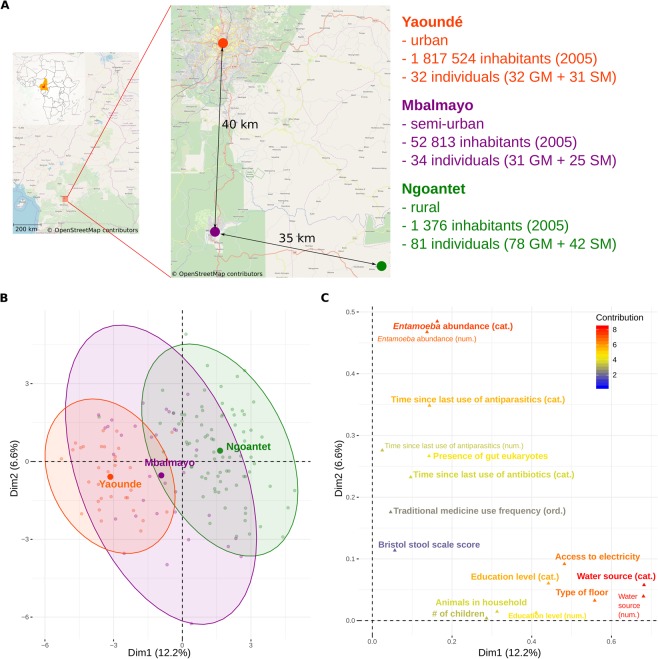
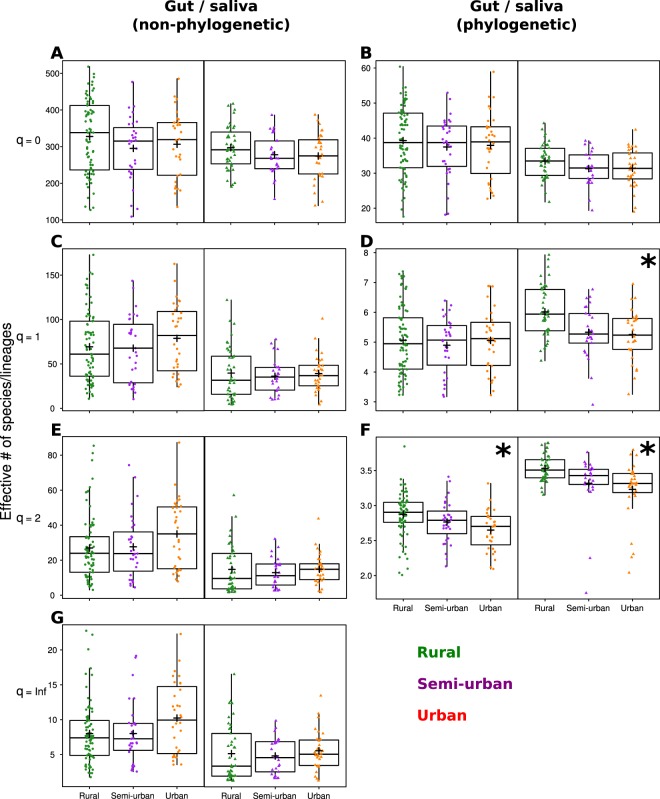
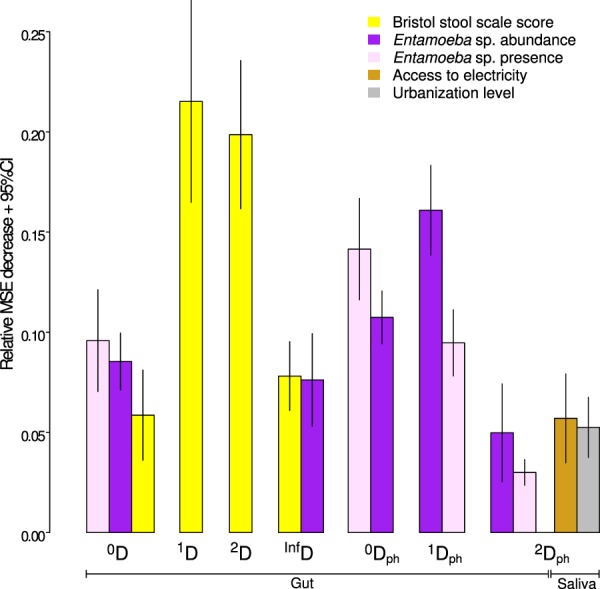
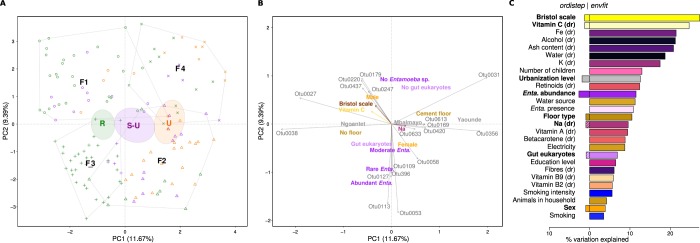
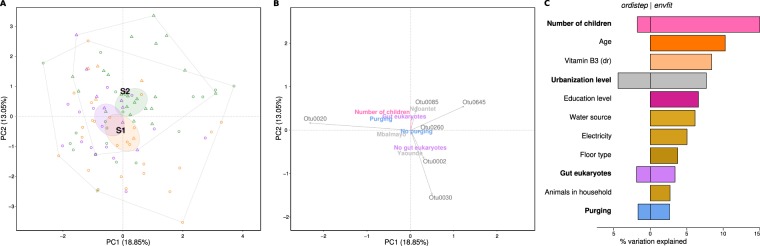
Urban populations from highly industrialized countries are characterized by a lower gut bacterial diversity as well as by changes in composition compared to rural populations from less industrialized countries. To unveil the mechanisms and factors leading to this diversity loss, it is necessary to identify the factors associated with urbanization-induced shifts at a smaller geographical scale, especially in less industrialized countries. To do so, we investigated potential associations between a variety of dietary, medical, parasitological and socio-cultural factors and the gut and saliva microbiomes of 147 individuals from three populations along an urbanization gradient in Cameroon. We found that the presence of Entamoeba sp., a commensal gut protozoan, followed by stool consistency, were major determinants of the gut microbiome diversity and composition. Interestingly, urban individuals have retained most of their gut eukaryotic and bacterial diversity despite significant changes in diet compared to the rural areas, suggesting that the loss of bacterial microbiome diversity observed in industrialized areas is likely associated with medication. Finally, we observed a weak positive correlation between the gut and the saliva microbiome diversity and composition, even though the saliva microbiome is mainly shaped by habitat-related factors.
Overview
The claims and statistics of this paper haven’t been checked yet.
Free: it reads the open-access text and checks the first 5 claims that cite a source we can check. Create a free account to check every claim.
Integrity signals
Registry
Cites
Statistics
Figures
Verification
Claims the paper makes
The claims and statistics of this paper haven’t been checked yet.
Free: it reads the open-access text and checks the first 5 claims that cite a source we can check. Create a free account to check every claim.
Claims other papers make about this one
Each is checked against this paper’s own text: does it say what the citing paper says it does?
The source backs part of the claim, not all of it — or backs it for a different population, condition or comparison.
In the citing paper
“analyses of ancient dental calculus suggest that changes in bacterial diversity correlate with dietary shifts and variations in social environments8.”
From Recent advances in the pathogenesis and prevention strategies of dental calculus (2024) · cites this paper as [8]
Experimental — accuracy not yet measured
Self-check
Percentages, sums and reported differences re-computed from the paper’s own numbers.
The self-check needs the paper’s full text.
Citations
Cites
DADA2: High–resolution sample inference from Illumina amplicon data
Callahan, B. J., McMurdie, P. J., Rosen, M. J., Han, A. W., Johnson, A. J. A., & Holmes, S. P. (2016) · Nature Methods · doi:10.1038/nmeth.3869 · Cited by 35,698
RAxML version 8: a tool for phylogenetic analysis and post-analysis of large phylogenies
Stamatakis, A. (2014) · Bioinformatics · doi:10.1093/bioinformatics/btu033 · Cited by 32,291
phyloseq: An R Package for Reproducible Interactive Analysis and Graphics of Microbiome Census Data
McMurdie, P. J., & Holmes, S. (2013) · PLoS ONE · doi:10.1371/journal.pone.0061217 · Cited by 21,322
Naïve Bayesian Classifier for Rapid Assignment of rRNA Sequences into the New Bacterial Taxonomy
Wang, Q., Garrity, G. M., Tiedje, J. M., & Cole, J. R. (2007) · Applied and Environmental Microbiology · doi:10.1128/aem.00062-07 · Cited by 19,885
Schloss, P. D., Westcott, S. L., Ryabin, T., Hall, J. R., Hartmann, M., Hollister, E. B., Lesniewski, R. A., Oakley, B. B., Parks, D. H., Robinson, C. J., et al. (2009) · Applied and Environmental Microbiology · doi:10.1128/aem.01541-09 · Cited by 19,549
FactoMineR : An R Package for Multivariate Analysis
Lê, S., Josse, J., & Husson, F. (2008) · Journal of Statistical Software · doi:10.18637/jss.v025.i01 · Cited by 11,603
Human gut microbiome viewed across age and geography
Yatsunenko, T., Rey, F. E., Manary, M. J., Trehan, I., Dominguez-Bello, M. G., Contreras, M., Magris, M., Hidalgo, G., Baldassano, R. N., Anokhin, A. P., et al. (2012) · Nature · doi:10.1038/nature11053 · Cited by 7,815
Enterotypes of the human gut microbiome
MetaHIT Consortium (additional members), Arumugam, M., Raes, J., Pelletier, E., Le Paslier, D., Yamada, T., Mende, D. R., Fernandes, G. R., Tap, J., Bruls, T., et al. (2011) · Nature · doi:10.1038/nature09944 · Cited by 7,548
Bootstrap Methods and their Application
Davison, A. C., & Hinkley, D. V. (1997) · doi:10.1017/cbo9780511802843 · Cited by 7,350
Kozich, J. J., Westcott, S. L., Baxter, N. T., Highlander, S. K., & Schloss, P. D. (2013) · Applied and Environmental Microbiology · doi:10.1128/aem.01043-13 · Cited by 7,112
Cited by
Reynoso-García, J., Miranda-Santiago, A. E., Meléndez-Vázquez, N. M., Acosta-Pagán, K. T., Rosado, M. R. S., Díaz-Rivera, J., Rosado-Quiñones, A. M., Acevedo-Márquez, L., Cruz-Roldán, L., Tosado-Rodríguez, E. L., et al. (2022) · Frontiers in Systems Biology · doi:10.3389/fsysb.2022.951403 · Cited by 125
“microbial loss, as documented by studies evaluating rural and urban lifestyles (Lokmer et al., 2020) (Figure 4).”
BackgroundAllali, I., Abotsi, R. E., Tow, L. A., Thabane, L., Zar, H. J., Mulder, N., & Nicol, M. P. (2021) · Microbiome · doi:10.1186/s40168-021-01195-7 · Cited by 96
Gut microbiome-mediated metabolism effects on immunity in rural and urban African populations
Stražar, M., Temba, G. S., Vlamakis, H., Kullaya, V. I., Lyamuya, F., Mmbaga, B. T., Joosten, L. A. B., van der Ven, A. J. A. M., Netea, M. G., de Mast, Q., et al. (2021) · Nature Communications · doi:10.1038/s41467-021-25213-2 · Cited by 91
Even, G., Lokmer, A., Rodrigues, J., Audebert, C., Viscogliosi, É., Ségurel, L., & Chabé, M. (2021) · Frontiers in Cellular and Infection Microbiology · doi:10.3389/fcimb.2021.533528 · Cited by 81
“In this study, we used the 16S rRNA gene amplicon sequencing data from 134 Cameroonians generated in a previous survey (Lokmer et al., 2020) to profile the bacterial composition and diversity of their gut microbiota.”
BackgroundMethodSelf-citationIntegrating the human microbiome in the forensic toolkit: Current bottlenecks and future solutions
López, C. D., Vidaki, A., & Kayser, M. (2021) · Forensic Science International Genetics · doi:10.1016/j.fsigen.2021.102627 · Cited by 56
Humanization of wildlife gut microbiota in urban environments
Dillard, B. A., Chung, A. K., Gunderson, A. R., Campbell-Staton, S. C., & Moeller, A. H. (2022) · eLife · doi:10.7554/elife.76381 · Cited by 55
“Each panel (A–C) contains results derived from comparisons including a single wildlife species, and each plot within each panel contains results derived from comparisons including a single human datasets (Lokmer et al., 2020; Li et al., 2018; or Yatsunenko et al., 2012).”
BackgroundInfluentialRecent advances in the pathogenesis and prevention strategies of dental calculus
Wei, Y., Dang, G.-P., Ren, Z.-Y., Wan, M.-C., Wang, C.-Y., Li, H.-B., Zhang, T., Tay, F. R., & Niu, L.-N. (2024) · npj Biofilms and Microbiomes · doi:10.1038/s41522-024-00529-1 · Cited by 43
Gancz, A. S., Farrer, A. G., Nixon, M. P., Wright, S., Arriola‐Martinez, L., Adler, C. J., Davenport, E., Gully, N. J., Cooper, A., Britton, K., et al. (2023) · Nature Microbiology · doi:10.1038/s41564-023-01527-3 · Cited by 42
Liang, X., Han, X., Liu, C., Du, W., Zhong, P., Huang, M., Huang, M., Fu, L., Liu, C., & Chen, L. (2022) · International Journal of Legal Medicine · doi:10.1007/s00414-022-02831-z · Cited by 38
Dwiyanto, J., Ayub, Q., Lee, S. M., Foo, S. C., Chong, C. W., & Rahman, S. (2021) · Microbial Genomics · doi:10.1099/mgen.0.000619 · Cited by 35
“Additionally, information on the socioeconomic [14] and urbanization level [48] of the participants was largely unavailable, which could have influenced the outcome of this metaanalysis.”
BackgroundAbange, W. B., Martin, C. G., Nanfack, A. J., Yatchou, L. G., Nusbacher, N. M., Nguedia, C. A., Kamga, H. G., Fokam, J., Kennedy, S., Ndjolo, A., et al. (2021) · Scientific Reports · doi:10.1038/s41598-021-87368-8 · Cited by 34
The structure of Brazilian Amazonian gut microbiomes in the process of urbanisation
Schaan, A. P., Sarquis, D. P., Cavalcante, G. C., de Magalhães, L. L., Sacuena, E. R. P., Costa, J. M. F., Fonseca, D. L. M., de Mello, V. J., Guerreiro, J. F., & Ribeiro‐dos‐Santos, Â. (2021) · npj Biofilms and Microbiomes · doi:10.1038/s41522-021-00237-0 · Cited by 29
McDonough, L. K., Meredith, K., Nikagolla, C., Middleton, R. J., Tan, J. K., Ranasinghe, A. V., Sierro, F., & Banati, R. B. (2020) · Scientific Reports · doi:10.1038/s41598-020-75336-7 · Cited by 29
Adaptive and metabolic convergence in rhizosphere and gut microbiomes
Ilyaskina, D., Altveş, S., Dong, L., Bouwmeester, H. J., & Aidy, S. E. (2025) · Microbiome · doi:10.1186/s40168-025-02179-7 · Cited by 27
“Both ecosystems depend on chemical signaling and resource exchange.”
Zhou, J., Liao, Z., Liu, Z., Guo, X., Zhang, W., & Chen, Y. F. (2023) · Frontiers in Microbiology · doi:10.3389/fmicb.2022.1108662 · Cited by 28
“Because of the difficulty of finding suitable habitats for animal host species in cities, microbial communities of the hosts are also greatly selected and modulated by urban environments in comparison to those in rural and wild habitats (Lokmer et al., 2020; Barnes et al., 2021).”
BackgroundGuo-yun, M., Qiao, Y., Shi, H. Y., Zhou, J., & Li, Y. (2022) · BioMed Research International · doi:10.1155/2022/6544497 · Cited by 25
“This is consistent with the results of previous studies [35, 48].”
Colorado, A. S. B., Lazzaro, A., Neff, C. P., Nusbacher, N. M., Boyd, K., Fiorillo, S. P., Martin, C. G., Siebert, J., Campbell, T., Borok, M. Z., et al. (2024) · Microbiome · doi:10.1186/s40168-023-01718-4 · Cited by 20
“Individuals living near urban centers versus in rural areas of SSA have differences in environmental exposures such as water source or diet that may impact their gut microbiome composition and immune response to microbes [19, 20].”
BackgroundResultBoullerne, A. I., Adami, G. R., SCHWARTZ, J. L., Skias, D. D., Maienschein‐Cline, M., Green, S. J., & Feinstein, D. L. (2020) · Journal of Neuroimmunology · doi:10.1016/j.jneuroim.2020.577237 · Cited by 18
Urbanization gradient, diet, and gut microbiota in Sub-Saharan Africa: a systematic review
Paulo, L. S., Bwire, G. M., Klipstein‐Grobusch, K., Kamuhabwa, A. A. R., Kwesigabo, G., Chillo, P., Asselbergs, F. W., & Lenters, V. C. (2023) · Frontiers in Microbiomes · doi:10.3389/frmbi.2023.1208166 · Cited by 16
“…across an urbanization gradient whereby one study compared urban and rural (Oduaran et al., 2020), the second compared urban, semi-urban, and rural (Lokmer et al., 2020), and the third one compared hunter-gatherers versus rural communities-pastoralists and subsistence farmers (Rubel et al., 2020).”
InfluentialVelsko, I. M., Gallois, S., Stahl, R., Henry, A. G., & Warinner, C. (2023) · Molecular Ecology · doi:10.1111/mec.16988 · Cited by 16
“The di-chotomy of industrialized/non-industrialized populations is a mis-representation of continuous scales of integration into the market economy, consumption of industrially processed foods, and level of urbanization (Mangola et al., 2022 ).”
A Scoping Review Evaluating the Current State of Gut Microbiota Research in Africa
Pheeha, S. M., Tamuzi, J. L., Chale-Matsau, B., Manda, S., & Nyasulu, P. S. (2023) · Microorganisms · doi:10.3390/microorganisms11082118 · Cited by 15
Nepali oral microbiomes reflect a gradient of lifestyles from traditional to industrialized
Ryu, E. P., Gautam, Y., Proctor, D. M., Bhandari, D., Tandukar, S., Gupta, M., Gautam, G. P., Relman, D. A., Shibl, A. A., Sherchand, J. B., et al. (2024) · Microbiome · doi:10.1186/s40168-024-01941-7 · Cited by 13
“While different lifestyle factors independently associated with the oral and gut micro-biomes, the compositional similarity between the two sites within an individual increases with the extent of urbanization [25].”
The economics of microbiodiversity
Han, K. Y., Kröger, L., Buchholz, F., Dewan, I., Quaas, M. F., Schulenburg, H., & Reusch, T. B. H. (2022) · Ecological Economics · doi:10.1016/j.ecolecon.2022.107664 · Cited by 13
Normal Gut Microbiomes in Diverse Populations: Clinical Implications
Shete, O., & Ghosh, T. S. (2024) · Annual Review of Medicine · doi:10.1146/annurev-med-051223-031809 · Cited by 12
Geographically diverse canid sampling provides novel insights into pre-industrial microbiomes
Yarlagadda, K., Zachwieja, A., de Flamingh, A., Phungviwatnikul, T., Rivera‐Colón, A. G., Roseman, C. C., Shackelford, L., Swanson, K. S., & Malhi, R. S. (2022) · Proceedings of the Royal Society B Biological Sciences · doi:10.1098/rspb.2022.0052 · Cited by 12
Araújo, V., Fehn, A., Phiri, A., Wills, J., Rocha, J., & Gayà‐Vidal, M. (2023) · BMC Microbiology · doi:10.1186/s12866-023-02970-2 · Cited by 12
“Several studies have attempted to relate the high diversity of saliva microbiome profiles with distinct diets, lifestyles, environmental conditions, and host genetics [11–21].”
BackgroundPoyet, M., Rühlemann, M. C., Schaan, A. P., Ma, Y., Moitinho‐Silva, L., Wacker, E. M., Jebens, H., Patel, L., Nguyen, L. T. T., Zimmer, A., et al. (2026) · Cell · doi:10.1101/2025.10.20.683358 · Cited by 10
Self-citationBickler, S. W., Prieto, J. M., Cauvi, D. M., de Cos, V. A., Nasamran, C. A., Ameh, E. A., Amin, S., Nicholson, S. I., Din, H. N., Mocumbi, A. O., et al. (2020) · Cell Stress and Chaperones · doi:10.1007/s12192-020-01108-x · Cited by 10
Jamaluddin, N. F., Brovkina, O., Rashid, N. N., Al‐Maleki, A. R., Lim, Y. A. L., Tan, M. P., Lee, S. C., Duvallet, C., Corzett, C. H., Alm, E. J., et al. (2025) · Scientific Reports · doi:10.1038/s41598-025-07117-z · Cited by 9
Self-citationKaktcham, P. M., Kujawska, M., Kouam, E. M. F., Piame, L. T., Tientcheu, M. L. T., Mueller, J., Felsl, A., Truppel, B.-A., Ngoufack, F. Z., & Hall, L. J. (2025) · Microbial Genomics · doi:10.1099/mgen.0.001354 · Cited by 10
García-Bayona, L., Said, N., Coyne, M. J., Flores, K., Elmekki, N. M., Sheahan, M. L., Gutiérrez-Camacho, A., Hutt, K., Yildiz, F. H., Kovács, Á. T., et al. (2024) · bioRxiv (Cold Spring Harbor Laboratory) · doi:10.1101/2024.04.29.590671 · Cited by 7
Microbiomes as Modulators of Human and Planetary Health: A Relational and Cross‐Scale Perspective
Handte-Reinecker, A., & Sardeshpande, M. (2025) · Global Change Biology · doi:10.1111/gcb.70152 · Cited by 6
“This is seen in the fact that the microbiomes of people living in rural areas differ notably from those in urban areas (Kisuse et al. 2018; Lokmer et al. 2020).”
A comprehensive atlas of the bonobo gut bacteriome and its associated host and exposome factors
Torfs, J. R. R., Kreyer, M., Wittouck, S., Ahannach, S., Fruth, B., Lebeer, S., Eens, M., & Staes, N. (2025) · Cell Reports · doi:10.1016/j.celrep.2025.116128 · Cited by 6
The Gut Microbiome May Help Address Mental Health Disparities in Hispanics: A Narrative Review
Vera-Urbina, F., Santos-Torres, M. F. D., Godoy‐Vitorino, F., & Torres-Hernández, B. A. (2022) · Microorganisms · doi:10.3390/microorganisms10040763 · Cited by 6
“Lastly, the most important shift seen in the gut microbiota has resulted from urbanization [87].”
BackgroundUrban Allergic Diseases Are Exacerbated by Adverse Environmental Factors
Shi, J., Zhang, R., Zhang, L., Wang, Y., Xu, Y. J., Wang, Y., Raghavan, V., & Wang, J. (2025) · Environmental Science & Technology · doi:10.1021/acs.est.5c09233 · Cited by 5
Gut microbiota and brain aging: a comparative review of African and western populations
Ortutu, B. F., Okin, A. O., Darkwah, K. O., Onuorah, U. M., Maigoro, A. Y., & Iheme, G. O. (2026) · Frontiers in Aging Neuroscience · doi:10.3389/fnagi.2026.1740408 · Cited by 5
“African cohorts with nutrient-deficient, metabolic, or infectious conditions (Allali et al., 2018; Doumatey et al., 2020; Fassatoui et al., 2019; Lokmer et al., 2020; Oduaran et al., 2020; Ordiz et al., 2015, 2020; Osakunor et al., 2020; Parbie et al., 2021; Rubel et al., 2020; Salah et al., 2019;…”
The Oral Microbiome of King Richard III of England
Velsko, I. M., Hübner, A., Fagernäs, Z., Yates, J. A. F., Mann, A. E., Hofman, C. A., Ozga, A. T., Lewis, C. M., Speller, C., Fiddyment, S., et al. (2026) · American Journal of Biological Anthropology · doi:10.1002/ajpa.70350 · Cited by 3
McDonnell, K. (2025) · Journal of Clinical Medicine · doi:10.3390/jcm14062040 · Cited by 2
From forest to farm: the impact of a broad spectrum of lifestyles on the porcine gut microbiota
Comer, L., Huo, P., Colleluori, C., Zhao, H., Akram, M. Z., Kpossou, R. F., Sureda, E. A., Aerts, J., & Everaert, N. (2026) · Current Research in Microbial Sciences · doi:10.1016/j.crmicr.2026.100576 · Cited by 2
“…in pigs (Sebasti ` a et al., 2024), other parameters such as faecal water content, which have gained traction in the human field as an important influence (Falony et al., 2016; Lokmer et al., 2020; Proch ´ azkov ´ a et al., 2023), remain relatively unexplored in pigs outside of disease contexts.”
Colorado, A. S. B., Nusbacher, N. M., O’Connor, J., Marden, T. J., HIGGINS, J. A., Neff, C. P., Fiorillo, S. P., Campbell, T., Borok, M. Z., Boyd, K., et al. (2026) · Microbiome · doi:10.1186/s40168-026-02410-z · Cited by 2
“Our finding that individuals in the urban area were eating a more Western diet (PC2: WA FF/Drinks vs Fruit/Veg/Gr), is consistent with studies showing a shift towards a more western diet with urbanization in SSA [10, 39].”
RNA Sequencing Reveals Widespread Transcription of Natural Antisense RNAs in Entamoeba Species
Mornico, D., Hon, C.-C., Koutero, M., Weber, C., Coppée, J., Clark, C. G., Dillies, M., & Guillén, N. (2022) · Microorganisms · doi:10.3390/microorganisms10020396 · Cited by 2
“There has been a renewed interest in commensal intestinal amoebae because, being members of the human eukaryome, these microorganisms can be an important component in the establishment and functioning of intestinal homeostasis [2,3].”
BackgroundAssociations between the infant gut microbiota and the living environment
Hickman, B., Salonen, A., Kolho, K., de Vos, W. M., & Korpela, K. (2025) · Gut Microbes Reports · doi:10.1080/29933935.2025.2603823 · Cited by 1
“15,36,37 The proximity to forests or forest-related biodiversity near the home, which represent the largest natural environment in Finland covering 67% of the total land area, were not significantly related to the gut microbial composition during the first 2 y and only associated with any a small…”
Gut microbiota and parasite dynamics in an Amazonian community undergoing urbanization in Colombia
Díaz, S., Eisfeld, A. J., Palma-Cuero, M., Dinguirard, N., Owens, L. A., Ciuoderis, K. A., Perez‐Restrepo, L. S., Chan, J. D., Goldberg, T. L., Hite, J. L., et al. (2026) · mSphere · doi:10.1128/msphere.00788-25 · Cited by 1
Microbiomes and Health of the Orang Asli
YEO, L.-F. (2021) · Figshare · doi:10.26180/16585622 · Cited by 1
Forensic Microbiome: Novel applications of the human microbiome in forensic science
López, C. D. (2021) · RePub (Erasmus University Rotterdam) · Cited by 1
Araújo, V., Fehn, A., Phiri, A., Wills, J., Rocha, J., & Gayà‐Vidal, M. (2023) · Figshare · doi:10.6084/m9.figshare.23993157
Araújo, V., Fehn, A.-M., Phiri, A., Wills, J., Rocha, J., & Gayà‐Vidal, M. (2023) · Figshare · doi:10.6084/m9.figshare.23993160
Colorado, A. S. B., Lazzaro, A., Neff, C. P., Nusbacher, N. M., Boyd, K., Fiorillo, S. P., Martin, C. G., Siebert, J., Campbell, T., Borok, M. Z., et al. (2024) · Figshare · doi:10.6084/m9.figshare.26676563
Yarlagadda, K. (2021) · Illinois Digital Environment for Access to Learning and Scholarship (University of Illinois at Urbana-Champaign)
Jo, J.-W., Park, J.-Y., Lee, J.-J., Lee, M.-J., & Kim, B. S. (2026) · Frontiers in Microbiology · doi:10.3389/fmicb.2026.1817344
“…reported in both large gut microbiome cohort studies and host-associated marine microbiome studies (Zhernakova et al., 2016; Gobet et al., 2018; Lokmer et al., 2020), supporting the interpretation that biologically meaningful associations may still occur despite limited effect sizes of single…”
Brain Health Across the Lifespan: Nutritional Interventions and Physical Exercise for Healthy Aging
(2026) · Frontiers research topics · doi:10.3389/978-2-8325-8456-9
Cities as Biological Systems: An Ontology of Urban Exposure, Health, and Evolutionary Change
Gramatikoff, K. (n.d.) · PhilPapers (PhilPapers Foundation)
de Carvalho, L. A. L., Thorp, M., Ciers, M., Callewaert, C., Good, D., Allen‐Vercoe, E., Vereecke, L., & Paulino, L. C. (2026) · bioRxiv (Cold Spring Harbor Laboratory) · doi:10.64898/2026.10.27.762328
The Urban Exposome: Genomic, Epigenomic, and Evolutionary Consequences Across Species
Gökçe, N., Şahin, İ. O., Hrončeková, Š., Gramatikoff, K., Akalın, H., Prakash, S., Judge, E., Vešelényiová, D., Koller, M., Beccari, T., et al. (2026) · The EuroBiotech Journal · doi:10.2478/ebtj-2026-0026
Chen, Y., Luo, Q., Li, Y., Chen, H., Liu, J., Zhuang, X., Lin, Y., He, W., Li, X., Li, Y., et al. (2026) · Materials & Design · doi:10.1016/j.matdes.2026.117433
Zhou, J., Liao, Z., Liu, Z., Guo, X., Zhang, W., & Chen, Y. (2023) · doi:10.3389/fmicb.2022.1108662.s002
Paulo, L. S., Bwire, G. M., Klipstein-Grobusch, K., Kamuhabwa, A., Kwesigabo, G., Chillo, P., Asselbergs, F. W., & Lenters, V. C. (2023) · doi:10.3389/frmbi.2023.1208166.s001
Metadata
- Authors
- Lokmer, A., Aflalo, S., Amougou, N., Lafosse, S., Froment, A., Tabe, F. E., Poyet, M., Groussin, M., Said-Mohamed, R., & Ségurel, L.
- Affiliations
- Centre National de la Recherche Scientifique (FR)
- Université de Yaoundé I (CM)
- Broad Institute (US)
- Corresponding author
- Lokmer, Ana
- Ségurel, Laure
- Venue
- Scientific Reports
- Published
- 2020-02-18
- Volume
- 10
- Issue
- 1
- Pages
- 2856-2856
- ISSN
- 2045-2322 (ISSN-L)
- PMC
- PMC7028744
- OpenAlex
- W3008893064
- Cited by
- 46
- References
- 91
- Citations by year
- 2026: 6 · 2025: 9 · 2024: 6 · 2023: 7 · 2022: 8 · 2021: 7 · 2020: 3
- FWCI
- 2.11
- Type
- journal article
- Language
- en
- Open access
- gold
- doi.org
- Licence
- cc-by
- creativecommons.org/licenses/by/4.0 (tdm)
- creativecommons.org/licenses/by/4.0 (vor)
- Locations
- Scientific Reports (publishedVersion, cc-by)
- Europe PMC (PubMed Central) (publishedVersion, cc-by)
- PubMed Central (publishedVersion, cc-by)
- PubMed (publishedVersion)
- Apollo (University of Cambridge) (submittedVersion, cc-by)
- HAL (submittedVersion, other-oa)
- Apollo (cc-by)
- Funders
- Strong
- Agence Nationale de la Recherche (ANR-15-CE02-0003)
- Centre National de la Recherche Scientifique
- Muséum National d'Histoire Naturelle
- Institut écologie et environnement
- Topics
- Life Sciences › Biochemistry, Genetics and Molecular Biology › Molecular Biology › Gut microbiota and health
- Physical Sciences › Environmental Science › Ecology › Microbial Community Ecology and Physiology
- Health Sciences › Dentistry › Periodontics › Oral microbiology and periodontitis research
- Keywords
- gut microbiota, saliva microbiota, urban-rural gradient, gut microbiota diversity, Entamoeba, stool consistency, diet, medication use, Cameroon, urban-rural differences, sociocultural factors
- MeSH terms
- Gastrointestinal Microbiome, Adolescent, Adult, Aged, Bacteria, Cameroon, Diet, Entamoeba, Feces, Female, Humans, Male, Middle Aged, Saliva, Urban Population, Urbanization, Young Adult
About these checks
Registry, retraction, Cites and statistics results are computed, not judged, with one exception: a printed reference that no index lists is read once by a model before it counts as a citation error. Claims are extracted by a model and kept only when their quote appears verbatim in the text; each cited source is then checked, with a model’s help, for whether it says what the claim relies on. Those verdicts can be wrong — read the claim’s quote and the cited source before relying on one.
Statistics and arithmetic are recomputed, not judged.
Confidence bands are shown only for fields calibrated on our annotated test set. None is calibrated yet, so no band is shown.
What counts as a claim ›How we measure confidence ›How we check this ›
Are you an author, or do you see a problem with this page? Request a review
Data sources
Bibliographic data: Semantic Scholar, OpenAlex, Crossref.
Contains information from the Semantic Scholar Academic Graph Datasets, made available under the ODC Attribution License (ODC-BY 1.0).
Semantic Scholar’s data is described in: Kinney, R., et al. (2023). The Semantic Scholar Open Data Platform. arXiv:2301.10140.
