

Response of the human gut and saliva microbiome to urbanization in Cameroon
Open accessThe DOI matches its Crossref record; 89 of the 91 references it cites were found in a registry or an index.
Abstract
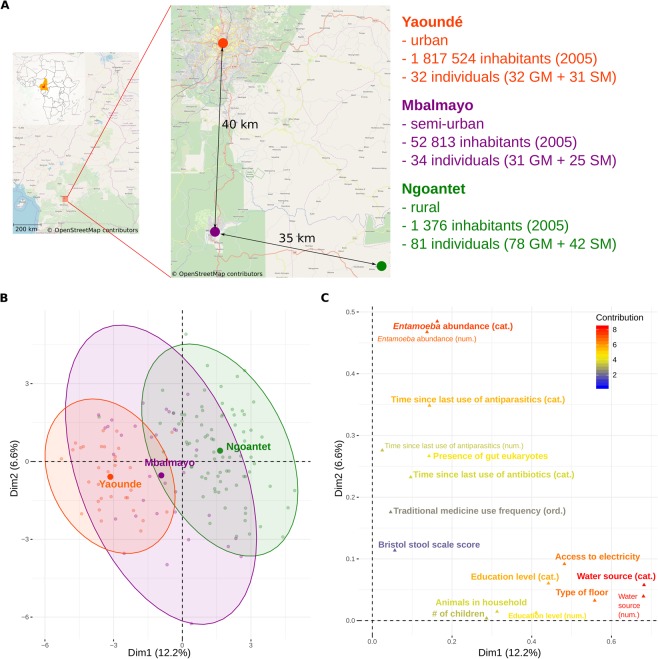
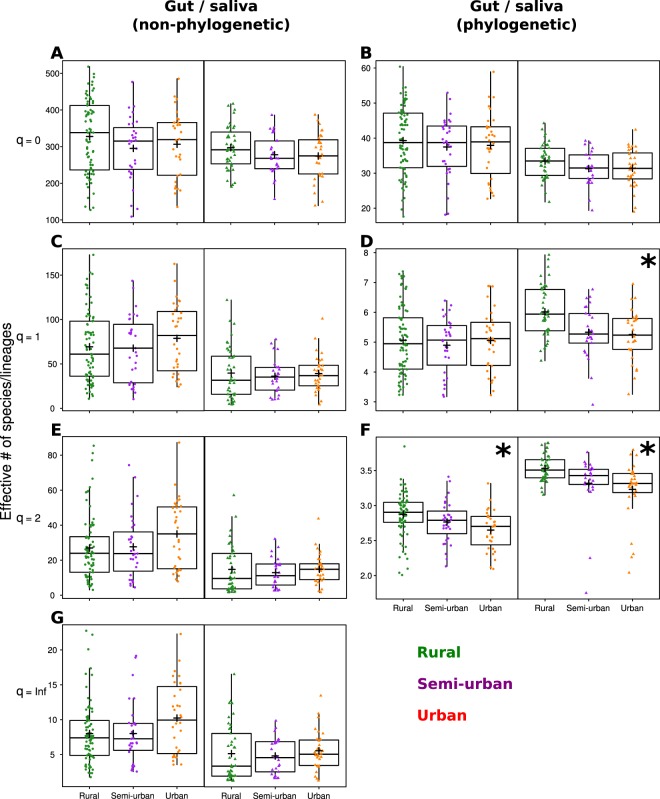
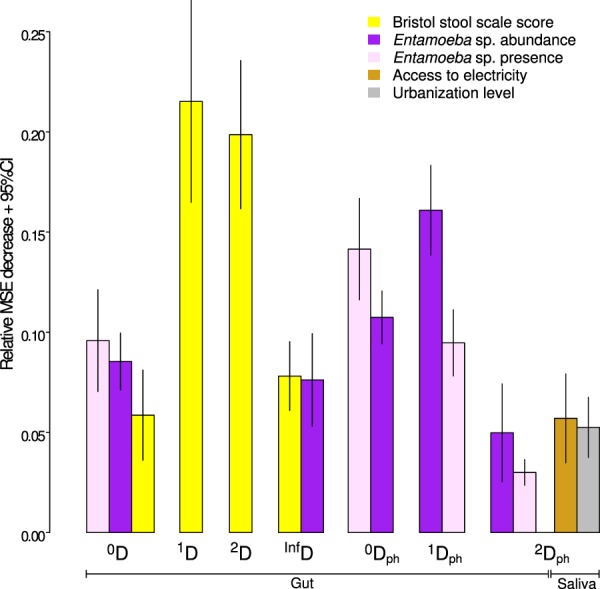
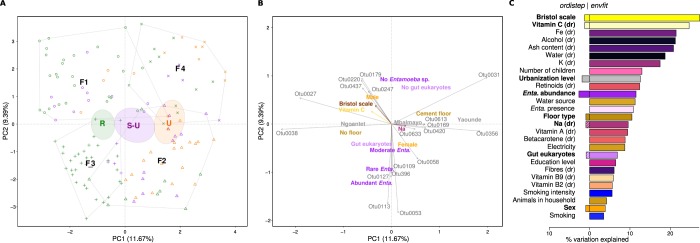
Urban populations from highly industrialized countries are characterized by a lower gut bacterial diversity as well as by changes in composition compared to rural populations from less industrialized countries. To unveil the mechanisms and factors leading to this diversity loss, it is necessary to identify the factors associated with urbanization-induced shifts at a smaller geographical scale, especially in less industrialized countries. To do so, we investigated potential associations between a variety of dietary, medical, parasitological and socio-cultural factors and the gut and saliva microbiomes of 147 individuals from three populations along an urbanization gradient in Cameroon. We found that the presence of Entamoeba sp., a commensal gut protozoan, followed by stool consistency, were major determinants of the gut microbiome diversity and composition. Interestingly, urban individuals have retained most of their gut eukaryotic and bacterial diversity despite significant changes in diet compared to the rural areas, suggesting that the loss of bacterial microbiome diversity observed in industrialized areas is likely associated with medication. Finally, we observed a weak positive correlation between the gut and the saliva microbiome diversity and composition, even though the saliva microbiome is mainly shaped by habitat-related factors.
Overview
The claims and statistics of this paper haven’t been checked yet.
Free: it reads the open-access text and checks the first 5 claims that cite a source we can check. Create a free account to check every claim.
Integrity signals
Registry
Cites
Statistics
Figures
Verification
Claims the paper makes
The claims and statistics of this paper haven’t been checked yet.
Free: it reads the open-access text and checks the first 5 claims that cite a source we can check. Create a free account to check every claim.
Claims other papers make about this one
Each is checked against this paper’s own text: does it say what the citing paper says it does?
The source backs part of the claim, not all of it — or backs it for a different population, condition or comparison.
In the citing paper
“analyses of ancient dental calculus suggest that changes in bacterial diversity correlate with dietary shifts and variations in social environments8.”
From Recent advances in the pathogenesis and prevention strategies of dental calculus (2024) · cites this paper as [8]
Experimental — accuracy not yet measured
Self-check
Percentages, sums and reported differences re-computed from the paper’s own numbers.
The self-check needs the paper’s full text.
Citations
Cites
DADA2: High–resolution sample inference from Illumina amplicon data
Callahan, B. J., McMurdie, P. J., Rosen, M. J., Han, A. W., Johnson, A. J. A., & Holmes, S. P. (2016) · Nature Methods · doi:10.1038/nmeth.3869 · Cited by 35,698
RAxML version 8: a tool for phylogenetic analysis and post-analysis of large phylogenies
Stamatakis, A. (2014) · Bioinformatics · doi:10.1093/bioinformatics/btu033 · Cited by 32,291
phyloseq: An R Package for Reproducible Interactive Analysis and Graphics of Microbiome Census Data
McMurdie, P. J., & Holmes, S. (2013) · PLoS ONE · doi:10.1371/journal.pone.0061217 · Cited by 21,322
Naïve Bayesian Classifier for Rapid Assignment of rRNA Sequences into the New Bacterial Taxonomy
Wang, Q., Garrity, G. M., Tiedje, J. M., & Cole, J. R. (2007) · Applied and Environmental Microbiology · doi:10.1128/aem.00062-07 · Cited by 19,885
Schloss, P. D., Westcott, S. L., Ryabin, T., Hall, J. R., Hartmann, M., Hollister, E. B., Lesniewski, R. A., Oakley, B. B., Parks, D. H., Robinson, C. J., et al. (2009) · Applied and Environmental Microbiology · doi:10.1128/aem.01541-09 · Cited by 19,549
FactoMineR : An R Package for Multivariate Analysis
Lê, S., Josse, J., & Husson, F. (2008) · Journal of Statistical Software · doi:10.18637/jss.v025.i01 · Cited by 11,603
Human gut microbiome viewed across age and geography
Yatsunenko, T., Rey, F. E., Manary, M. J., Trehan, I., Dominguez-Bello, M. G., Contreras, M., Magris, M., Hidalgo, G., Baldassano, R. N., Anokhin, A. P., et al. (2012) · Nature · doi:10.1038/nature11053 · Cited by 7,815
Enterotypes of the human gut microbiome
MetaHIT Consortium (additional members), Arumugam, M., Raes, J., Pelletier, E., Le Paslier, D., Yamada, T., Mende, D. R., Fernandes, G. R., Tap, J., Bruls, T., et al. (2011) · Nature · doi:10.1038/nature09944 · Cited by 7,548
Bootstrap Methods and their Application
Davison, A. C., & Hinkley, D. V. (1997) · doi:10.1017/cbo9780511802843 · Cited by 7,350
Kozich, J. J., Westcott, S. L., Baxter, N. T., Highlander, S. K., & Schloss, P. D. (2013) · Applied and Environmental Microbiology · doi:10.1128/aem.01043-13 · Cited by 7,112
MissForest—Non-parametric missing value imputation for mixed-type data
Stekhoven, D. J., & Bühlmann, P. (2012) · Bioinformatics · doi:10.1093/bioinformatics/btr597 · Cited by 6,156
Bootstrap Methods and Their Application
Loughin, T. M., Davison, A. C., & Hinkley, D. V. (1999) · Journal of the American Statistical Association · doi:10.2307/2669707 · Cited by 5,418
Jost, L. (2006) · Oikos · doi:10.1111/j.2006.0030-1299.14714.x · Cited by 4,669
Ribosomal Database Project: data and tools for high throughput rRNA analysis
Cole, J. R., Wang, Q., Fish, J. A., Chai, B., McGarrell, D. M., Sun, Y., Brown, C. T., Porras-Alfaro, A., Kuske, C. R., & Tiedje, J. M. (2014) · Nucleic Acids Research · doi:10.1093/nar/gkt1244 · Cited by 4,367
Multiple Comparisons of Log-Likelihoods with Applications to Phylogenetic Inference
Shimodaira, H., & Hasegawa, M. (1999) · Molecular Biology and Evolution · doi:10.1093/oxfordjournals.molbev.a026201 · Cited by 4,237
Unbiased Recursive Partitioning: A Conditional Inference Framework
Hothorn, T., Hornik, K., & Zeileis, A. (2006) · Journal of Computational and Graphical Statistics · doi:10.1198/106186006x133933 · Cited by 4,021
Bias in random forest variable importance measures: Illustrations, sources and a solution
Strobl, C., Boulesteix, A.-L., Zeileis, A., & Hothorn, T. (2007) · BMC Bioinformatics · doi:10.1186/1471-2105-8-25 · Cited by 3,688
The Statistical Analysis of Compositional Data
Aitchison, J. (1982) · Journal of the Royal Statistical Society Series B: Statistical Methodology · doi:10.1111/j.2517-6161.1982.tb01195.x · Cited by 3,405
Conditional variable importance for random forests
Strobl, C., Boulesteix, A.-L., Kneib, T., Augustin, T., & Zeileis, A. (2008) · BMC Bioinformatics · doi:10.1186/1471-2105-9-307 · Cited by 3,254
Stool form scale as a useful guide to intestinal transit time
Lewis, S. J., & Heaton, K. W. (1997) · Scandinavian Journal of Gastroenterology · doi:10.3109/00365529709011203 · Cited by 3,244
Microbiome Datasets Are Compositional: And This Is Not Optional
Gloor, G. B., Macklaim, J. M., Pawlowsky-Glahn, V., & Egozcue, J. J. (2017) · Frontiers in Microbiology · doi:10.3389/fmicb.2017.02224 · Cited by 3,044
The impact of dietary fiber on gut microbiota in host health and disease
Makki, K., Deehan, E. C., Walter, J., & Bäckhed, F. (2018) · Cell Host & Microbe · doi:10.1016/j.chom.2018.05.012 · Cited by 2,517
Population-level analysis of gut microbiome variation
Falony, G., Joossens, M., Vieira-Silva, S., Wang, J., Darzi, Y., Faust, K., Kurilshikov, A., Bonder, M. J., Valles-Colomer, M., Vandeputte, D., et al. (2016) · Science · doi:10.1126/science.aad3503 · Cited by 2,400 · cited 4×
“In this regard, the work of Falony et al.25 represents a pioneer study, aiming to identify the factors associated with the variation in the gut microbiome composition in two large cohorts (1106 Flemish and 1135 Dutch subjects) among a large number (503) of covariates.”
BackgroundInfluentialPARTITIONING DIVERSITY INTO INDEPENDENT ALPHA AND BETA COMPONENTS
Jost, L. (2007) · Ecology · doi:10.1890/06-1736.1 · Cited by 2,265
Fernandes, A. D., Reid, J. N., Macklaim, J. M., McMurrough, T. A., Edgell, D. R., & Gloor, G. B. (2014) · Microbiome · doi:10.1186/2049-2618-2-15 · Cited by 1,329
Gut microbiome of the Hadza hunter-gatherers
Schnorr, S. L., Candela, M., Rampelli, S., Centanni, M., Consolandi, C., Basaglia, G., Turroni, S., Biagi, E., Peano, C., Severgnini, M., et al. (2014) · Nature Communications · doi:10.1038/ncomms4654 · Cited by 1,317
Segata, N., Haake, S. K., Mannon, P., Lemon, K. P., Waldron, L., Gevers, D., Huttenhower, C., & Izard, J. (2012) · Genome Biology · doi:10.1186/gb-2012-13-6-r42 · Cited by 1,076
Partykit: a modular toolkit for recursive partytioning in RPreprint
Hothorn, T., & Zeileis, A. (2014) · RePEc: Research Papers in Economics · Cited by 1,059
Vandeputte, D., Falony, G., Vieira-Silva, S., Tito, R. Y., Joossens, M., & Raes, J. (2016) · Gut · doi:10.1136/gutjnl-2015-309618 · Cited by 1,028
Palarea-Albaladejo, J., & Martín-Fernández, J. A. (2015) · Chemometrics and Intelligent Laboratory Systems · doi:10.1016/j.chemolab.2015.02.019 · Cited by 965
25 years of serving the community with ribosomal RNA gene reference databases and tools
Glöckner, F. O., Yilmaz, P., Quast, C., Gerken, J., Beccati, A., Ciuprina, A., Bruns, G., Yarza, P., Peplies, J., Westram, R., et al. (2017) · Journal of Biotechnology · doi:10.1016/j.jbiotec.2017.06.1198 · Cited by 947
Seasonal cycling in the gut microbiome of the Hadza hunter-gatherers of Tanzania
Smits, S. A., Leach, J., Sonnenburg, E. D., Gonzalez, C. G., Lichtman, J. S., Reid, G., Knight, R., Manjurano, A., Changalucha, J., Elias, J. E., et al. (2017) · Science · doi:10.1126/science.aan4834 · Cited by 886
Dynamics and associations of microbial community types across the human body
Ding, T., & Schloss, P. D. (2014) · Nature · doi:10.1038/nature13178 · Cited by 885
Dirichlet Multinomial Mixtures: Generative Models for Microbial Metagenomics
Holmes, I., Harris, K., & Quince, C. (2012) · PLoS ONE · doi:10.1371/journal.pone.0030126 · Cited by 857
What are the consequences of the disappearing human microbiota?
Blaser, M. J., & Falkow, S. (2009) · Nature Reviews Microbiology · doi:10.1038/nrmicro2245 · Cited by 855
The microbiome of uncontacted Amerindians
Clemente, J. C., Pehrsson, E. C., Blaser, M. J., Sandhu, K., Gao, Z., Wang, B., Magris, M., Hidalgo, G., Contreras, M., Noya-Alarcón, Ó., et al. (2015) · Science Advances · doi:10.1126/sciadv.1500183 · Cited by 851
US immigration westernizes the human gut microbiome
Vangay, P., Johnson, A. J., Ward, T. L., Al-Ghalith, G. A., Shields-Cutler, R. R., Hillmann, B. M., Lucas, S. K., Beura, L. K., Thompson, E. A., Till, L. M., et al. (2018) · Cell · doi:10.1016/j.cell.2018.10.029 · Cited by 794
Role of the microbiome in human development
Dominguez-Bello, M. G., Godoy-Vitorino, F., Knight, R., & Blaser, M. J. (2019) · Gut · doi:10.1136/gutjnl-2018-317503 · Cited by 783
Subsistence strategies in traditional societies distinguish gut microbiomes
Obregon-Tito, A. J., Tito, R. Y., Metcalf, J., Sankaranarayanan, K., Clemente, J. C., Ursell, L. K., Zech Xu, Z., Van Treuren, W., Knight, R., Gaffney, P. M., et al. (2015) · Nature Communications · doi:10.1038/ncomms7505 · Cited by 587
Martínez, I., Stegen, J. C., Maldonado-Gómez, M. X., Eren, A. M., Siba, P. M., Greenhill, A. R., & Walter, J. (2015) · Cell Reports · doi:10.1016/j.celrep.2015.03.049 · Cited by 576
Unraveling the processes shaping mammalian gut microbiomes over evolutionary time
Groussin, M., Mazel, F., Sanders, J. G., Smillie, C. S., Lavergne, S., Thuiller, W., & Alm, E. J. (2017) · Nature Communications · doi:10.1038/ncomms14319 · Cited by 508
Self-citationThe ancestral and industrialized gut microbiota and implications for human health
Sonnenburg, E. D., & Sonnenburg, J. L. (2019) · Nature Reviews Microbiology · doi:10.1038/s41579-019-0191-8 · Cited by 489
Westcott, S. L., & Schloss, P. D. (2017) · mSphere · doi:10.1128/mspheredirect.00073-17 · Cited by 420
Phylogenetic diversity measures based on Hill numbers
Chao, A., Chiu, C.-H., & Jost, L. (2010) · Philosophical Transactions of the Royal Society B: Biological Sciences · doi:10.1098/rstb.2010.0272 · Cited by 413
A Review of the Global Burden, New Diagnostics, and Current Therapeutics for Amebiasis
Shirley, D.-A. T., Farr, L., Watanabe, K., & Moonah, S. (2018) · Open Forum Infectious Diseases · doi:10.1093/ofid/ofy161 · Cited by 406
Poyet, M., Groussin, M., Gibbons, S. M., Avila-Pacheco, J., Jiang, X., Kearney, S. M., Perrotta, A. R., Berdy, B., Zhao, S., Lieberman, T. D., et al. (2019) · Nature Medicine · doi:10.1038/s41591-019-0559-3 · Cited by 376
Self-citationCompositional analysis: a valid approach to analyze microbiome high-throughput sequencing data
Gloor, G. B., & Reid, G. (2016) · Canadian Journal of Microbiology · doi:10.1139/cjm-2015-0821 · Cited by 373
Can oral bacteria affect the microbiome of the gut?
Olsen, I., & Yamazaki, K. (2019) · Journal of Oral Microbiology · doi:10.1080/20002297.2019.1586422 · Cited by 328
hillR: taxonomic, functional, and phylogenetic diversity and similarity through Hill Numbers
Li, D. (2018) · Journal of Open Source Software · doi:10.21105/joss.01041 · Cited by 294
Audebert, C., Even, G., Cian, A., The Blastocystis Investigation Group, Safadi, D. E., Certad, G., Delhaes, L., Pereira, B., Nourrisson, C., Poirier, P., et al. (2016) · Scientific Reports · doi:10.1038/srep25255 · Cited by 284
Human gut microbiota community structures in urban and rural populations in Russia
Tyakht, A. V., Kostryukova, E. S., Popenko, A. S., Belenikin, M. S., Pavlenko, A. V., Larin, A. K., Karpova, I. Y., Selezneva, O. V., Semashko, T. A., Ospanova, E. A., et al. (2013) · Nature Communications · doi:10.1038/ncomms3469 · Cited by 282
De Filippo, C., Di Paola, M., Ramazzotti, M., Albanese, D., Pieraccini, G., Banci, E., Miglietta, F., Cavalieri, D., & Lionetti, P. (2017) · Frontiers in Microbiology · doi:10.3389/fmicb.2017.01979 · Cited by 270
Gomez, A., Petrzelkova, K. J., Burns, M. B., Yeoman, C. J., Amato, K. R., Vlckova, K., Modry, D., Todd, A., Jost Robinson, C. A., Remis, M. J., et al. (2016) · Cell Reports · doi:10.1016/j.celrep.2016.02.013 · Cited by 248
Using RAxML to infer phylogenies
Stamatakis, A. (2015) · Current Protocols in Bioinformatics · doi:10.1002/0471250953.bi0614s51 · Cited by 243
Blastocystis in Health and Disease: Are We Moving from a Clinical to a Public Health Perspective?
Andersen, L. O., & Stensvold, C. R. (2016) · Journal of Clinical Microbiology · doi:10.1128/jcm.02520-15 · Cited by 235
Morton, E. R., Lynch, J., Froment, A., Lafosse, S., Heyer, E., Przeworski, M., Blekhman, R., & Ségurel, L. (2015) · PLOS Genetics · doi:10.1371/journal.pgen.1005658 · Cited by 231
Self-citationOn criteria for measures of compositional difference
Aitchison, J. (1992) · Mathematical Geology · doi:10.1007/bf00891269 · Cited by 230
Tito, R. Y., Chaffron, S., Caenepeel, C., Lima-Mendez, G., Wang, J., Vieira-Silva, S., Falony, G., Hildebrand, F., Darzi, Y., Rymenans, L., et al. (2019) · Gut · doi:10.1136/gutjnl-2018-316106 · Cited by 227
The theory of disappearing microbiota and the epidemics of chronic diseases
Blaser, M. J. (2017) · Nature Reviews Immunology · doi:10.1038/nri.2017.77 · Cited by 212
Large-scale comparative metagenomics of Blastocystis, a common member of the human gut microbiome
Beghini, F., Pasolli, E., Truong, T. D., Putignani, L., Cacciò, S. M., & Segata, N. (2017) · The ISME Journal · doi:10.1038/ismej.2017.139 · Cited by 201
Evaluation of saliva as a source of human DNA for population and association studies
Quinque, D., Kittler, R., Kayser, M., Stoneking, M., & Nasidze, I. (2006) · Analytical Biochemistry · doi:10.1016/j.ab.2006.03.021 · Cited by 191
Gut Protozoa: Friends or Foes of the Human Gut Microbiota?
Chabé, M., Lokmer, A., & Ségurel, L. (2017) · Trends in Parasitology · doi:10.1016/j.pt.2017.08.005 · Cited by 188
Self-citationInfant and Adult Gut Microbiome and Metabolome in Rural Bassa and Urban Settlers from Nigeria
Ayeni, F. A., Biagi, E., Rampelli, S., Fiori, J., Soverini, M., Audu, H. J., Cristino, S., Caporali, L., Schnorr, S. L., Carelli, V., et al. (2018) · Cell Reports · doi:10.1016/j.celrep.2018.05.018 · Cited by 187
Gut microbiome transition across a lifestyle gradient in Himalaya
Jha, A. R., Davenport, E. R., Gautam, Y., Bhandari, D., Tandukar, S., Ng, K. M., Fragiadakis, G. K., Holmes, S., Gautam, G. P., Leach, J., et al. (2018) · PLOS Biology · doi:10.1371/journal.pbio.2005396 · Cited by 186
Are Human Intestinal Eukaryotes Beneficial or Commensals?
Lukeš, J., Stensvold, C. R., Jirků-Pomajbíková, K., & Wegener Parfrey, L. (2015) · PLOS Pathogens · doi:10.1371/journal.ppat.1005039 · Cited by 185
Li, J., Quinque, D., Horz, H.-P., Li, M., Rzhetskaya, M., Raff, J. A., Hayes, M. G., & Stoneking, M. (2014) · BMC Microbiology · doi:10.1186/s12866-014-0316-1 · Cited by 184 · cited 1×
“Li et al.(16) proposed that high abundance of Enterobacteriaceae could be due to high temperatures, but this does not explain the absence of Enterobacteriaceae in hunter-gatherer and traditional agriculturist populations from Phillipines(17).”
BackgroundDisplaying Variation in Large Datasets: Plotting a Visual Summary of Effect Sizes
Gloor, G. B., Macklaim, J. M., & Fernandes, A. D. (2016) · Journal of Computational and Graphical Statistics · doi:10.1080/10618600.2015.1131161 · Cited by 177
Meta‐analysis of the human gut microbiome from urbanized and pre‐agricultural populations
Mancabelli, L., Milani, C., Lugli, G. A., Turroni, F., Ferrario, C., van Sinderen, D., & Ventura, M. (2017) · Environmental Microbiology · doi:10.1111/1462-2920.13692 · Cited by 173
Das, B., Ghosh, T. S., Kedia, S., Rampal, R., Saxena, S., Bag, S., Mitra, R., Dayal, M., Mehta, O., Surendranath, A., et al. (2018) · Scientific Reports · doi:10.1038/s41598-018-28550-3 · Cited by 169 · cited 1×
“found no association between Prevotella and carbohydrate intake and Das et al.(26) actually observed higher relative abundance of Prevotella in non-vegetarians compared to vegetarians in India.”
ResultWillis, J. R., González-Torres, P., Pittis, A. A., Bejarano, L. A., Cozzuto, L., Andreu-Somavilla, N., Alloza-Trabado, M., Valentín, A., Ksiezopolska, E., Company, C., et al. (2018) · Microbiome · doi:10.1186/s40168-018-0592-3 · Cited by 158 · cited 2×
“Ding & Schloss(3) identified four different saliva bacterial community types, whereas Willis et al.(4) found two.”
BackgroundResultMongolians core gut microbiota and its correlation with seasonal dietary changes
Zhang, J., Guo, Z., Lim, A. A. Q., Zheng, Y., Koh, E. Y., Ho, D., Qiao, J., Huo, D., Hou, Q., Huang, W., et al. (2014) · Scientific Reports · doi:10.1038/srep05001 · Cited by 123
Population structure of human gut bacteria in a diverse cohort from rural Tanzania and Botswana
Hansen, M. E. B., Rubel, M. A., Bailey, A. G., Ranciaro, A., Thompson, S. R., Campbell, M. C., Beggs, W., Dave, J. R., Mokone, G. G., Mpoloka, S. W., et al. (2019) · Genome Biology · doi:10.1186/s13059-018-1616-9 · Cited by 110
Lassalle, F., Spagnoletti, M., Fumagalli, M., Shaw, L., Dyble, M., Walker, C., Thomas, M. G., Bamberg Migliano, A., & Balloux, F. (2018) · Molecular Ecology · doi:10.1111/mec.14435 · Cited by 107
High Diversity of the Saliva Microbiome in Batwa Pygmies
Nasidze, I., Li, J., Schroeder, R., Creasey, J. L., Li, M., & Stoneking, M. (2011) · PLoS ONE · doi:10.1371/journal.pone.0023352 · Cited by 105
Winglee, K., Howard, A. G., Sha, W., Gharaibeh, R. Z., Liu, J., Jin, D., Fodor, A. A., & Gordon-Larsen, P. (2017) · Microbiome · doi:10.1186/s40168-017-0338-7 · Cited by 103
Oral Microbiota: Microbial Biomarkers of Metabolic Syndrome Independent of Host Genetic Factors
Si, J., Lee, C., & Ko, G. (2017) · Frontiers in Cellular and Infection Microbiology · doi:10.3389/fcimb.2017.00516 · Cited by 86
Sharma, S., Cade, J. E., Jackson, M. D., Mbanya, J. C., Chungong, S., Forrester, T. E., Bennett, F. I., Wilks, R., Balkau, B., & Cruickshank, J. K. (1996) · PubMed · Cited by 86
Distinct composition of the oral indigenous microbiota in South Korean and Japanese adults
Takeshita, T., Matsuo, K., Furuta, M., Shibata, Y., Fukami, K., Shimazaki, Y., Akifusa, S., Han, D.-H., Kim, H.-D., Yokoyama, T., et al. (2014) · Scientific Reports · doi:10.1038/srep06990 · Cited by 82
Salivary microbial profiles in relation to age, periodontal, and systemic diseases
Lira-Junior, R., Åkerman, S., Klinge, B., Boström, E. A., & Gustafsson, A. (2018) · PLOS ONE · doi:10.1371/journal.pone.0189374 · Cited by 78
PERFect: PERmutation Filtering test for microbiome data
Smirnova, E., Huzurbazar, S. V., & Jafari, F. (2018) · Biostatistics · doi:10.1093/biostatistics/kxy020 · Cited by 74
Lokmer, A., Cian, A., Froment, A., Gantois, N., Viscogliosi, E., Chabé, M., & Ségurel, L. (2019) · PLOS ONE · doi:10.1371/journal.pone.0211139 · Cited by 71
Self-citationCATCh, an Ensemble Classifier for Chimera Detection in 16S rRNA Sequencing Studies
Mysara, M., Saeys, Y., Leys, N., Raes, J., & Monsieurs, P. (2015) · Applied and Environmental Microbiology · doi:10.1128/aem.02896-14 · Cited by 65
Washburne, A. D., Silverman, J. D., Morton, J. T., Becker, D. J., Crowley, D., Mukherjee, S., David, L. A., & Plowright, R. K. (2019) · Ecological Monographs · doi:10.1002/ecm.1353 · Cited by 65 · cited 1×
“In order to address this issue, Washburne et al.(21) developed a method called phylofactorization (implemented in the R package phylofactor), based on a graph-partitioning algorithm that cuts the phylogenetic tree into groups of lineages (“phylofactors”) whose relative abundance changes the most in response to the stu…”
MethodGut Microbiome of the Canadian Arctic Inuit
Girard, C., Tromas, N., Amyot, M., & Shapiro, B. J. (2017) · mSphere · doi:10.1128/msphere.00297-16 · Cited by 63
Stagaman, K., Cepon‐Robins, T. J., Liebert, M. A., Gildner, T. E., Urlacher, S. S., Madimenos, F. C., Guillemin, K. J., Snodgrass, J. J., Sugiyama, L. S., & Bohannan, B. J. M. (2018) · mSystems · doi:10.1128/msystems.00122-17 · Cited by 45
Oral microbiome diversity among Cheyenne and Arapaho individuals from Oklahoma
Ozga, A. T., Sankaranarayanan, K., Tito, R. Y., Obregón-Tito, A. J., Foster, M. W., Tallbull, G., Spicer, P., Warinner, C., & Lewis, C. M. (2016) · American Journal of Physical Anthropology · doi:10.1002/ajpa.23033 · Cited by 35
Latitude as a co‐driver of human gut microbial diversity?
Dikongué, E., & Ségurel, L. (2017) · BioEssays · doi:10.1002/bies.201600145 · Cited by 33
Self-citationGut microbiome transition across a lifestyle gradient in HimalayaPreprint
Jha, A. R., Davenport, E., Gautam, Y., et al. (2018) · bioRxiv (Cold Spring Harbor Laboratory) · doi:10.1101/253450 · Cited by 32
rdist: Calculate Pairwise Distances
Blaser, N. (2017) · doi:10.32614/cran.package.rdist · Cited by 3
Cited by
Reynoso-García, J., Miranda-Santiago, A. E., Meléndez-Vázquez, N. M., Acosta-Pagán, K. T., Rosado, M. R. S., Díaz-Rivera, J., Rosado-Quiñones, A. M., Acevedo-Márquez, L., Cruz-Roldán, L., Tosado-Rodríguez, E. L., et al. (2022) · Frontiers in Systems Biology · doi:10.3389/fsysb.2022.951403 · Cited by 125
“microbial loss, as documented by studies evaluating rural and urban lifestyles (Lokmer et al., 2020) (Figure 4).”
BackgroundAllali, I., Abotsi, R. E., Tow, L. A., Thabane, L., Zar, H. J., Mulder, N., & Nicol, M. P. (2021) · Microbiome · doi:10.1186/s40168-021-01195-7 · Cited by 96
Gut microbiome-mediated metabolism effects on immunity in rural and urban African populations
Stražar, M., Temba, G. S., Vlamakis, H., Kullaya, V. I., Lyamuya, F., Mmbaga, B. T., Joosten, L. A. B., van der Ven, A. J. A. M., Netea, M. G., de Mast, Q., et al. (2021) · Nature Communications · doi:10.1038/s41467-021-25213-2 · Cited by 91
Even, G., Lokmer, A., Rodrigues, J., Audebert, C., Viscogliosi, É., Ségurel, L., & Chabé, M. (2021) · Frontiers in Cellular and Infection Microbiology · doi:10.3389/fcimb.2021.533528 · Cited by 81
“In this study, we used the 16S rRNA gene amplicon sequencing data from 134 Cameroonians generated in a previous survey (Lokmer et al., 2020) to profile the bacterial composition and diversity of their gut microbiota.”
BackgroundMethodSelf-citationIntegrating the human microbiome in the forensic toolkit: Current bottlenecks and future solutions
López, C. D., Vidaki, A., & Kayser, M. (2021) · Forensic Science International Genetics · doi:10.1016/j.fsigen.2021.102627 · Cited by 56
Metadata
- Authors
- Lokmer, A., Aflalo, S., Amougou, N., Lafosse, S., Froment, A., Tabe, F. E., Poyet, M., Groussin, M., Said-Mohamed, R., & Ségurel, L.
- Affiliations
- Centre National de la Recherche Scientifique (FR)
- Université de Yaoundé I (CM)
- Broad Institute (US)
- Corresponding author
- Lokmer, Ana
- Ségurel, Laure
- Venue
- Scientific Reports
- Published
- 2020-02-18
- Volume
- 10
- Issue
- 1
- Pages
- 2856-2856
- ISSN
- 2045-2322 (ISSN-L)
- PMC
- PMC7028744
- OpenAlex
- W3008893064
- Cited by
- 46
- References
- 91
- Citations by year
- 2026: 6 · 2025: 9 · 2024: 6 · 2023: 7 · 2022: 8 · 2021: 7 · 2020: 3
- FWCI
- 2.11
- Type
- journal article
- Language
- en
- Open access
- gold
- doi.org
- Licence
- cc-by
- creativecommons.org/licenses/by/4.0 (tdm)
- creativecommons.org/licenses/by/4.0 (vor)
- Locations
- Scientific Reports (publishedVersion, cc-by)
- Europe PMC (PubMed Central) (publishedVersion, cc-by)
- PubMed Central (publishedVersion, cc-by)
- PubMed (publishedVersion)
- Apollo (University of Cambridge) (submittedVersion, cc-by)
- HAL (submittedVersion, other-oa)
- Apollo (cc-by)
- Funders
- Strong
- Agence Nationale de la Recherche (ANR-15-CE02-0003)
- Centre National de la Recherche Scientifique
- Muséum National d'Histoire Naturelle
- Institut écologie et environnement
- Topics
- Life Sciences › Biochemistry, Genetics and Molecular Biology › Molecular Biology › Gut microbiota and health
- Physical Sciences › Environmental Science › Ecology › Microbial Community Ecology and Physiology
- Health Sciences › Dentistry › Periodontics › Oral microbiology and periodontitis research
- Keywords
- gut microbiota, saliva microbiota, urban-rural gradient, gut microbiota diversity, Entamoeba, stool consistency, diet, medication use, Cameroon, urban-rural differences, sociocultural factors
- MeSH terms
- Gastrointestinal Microbiome, Adolescent, Adult, Aged, Bacteria, Cameroon, Diet, Entamoeba, Feces, Female, Humans, Male, Middle Aged, Saliva, Urban Population, Urbanization, Young Adult
About these checks
Registry, retraction, Cites and statistics results are computed, not judged, with one exception: a printed reference that no index lists is read once by a model before it counts as a citation error. Claims are extracted by a model and kept only when their quote appears verbatim in the text; each cited source is then checked, with a model’s help, for whether it says what the claim relies on. Those verdicts can be wrong — read the claim’s quote and the cited source before relying on one.
Statistics and arithmetic are recomputed, not judged.
Confidence bands are shown only for fields calibrated on our annotated test set. None is calibrated yet, so no band is shown.
What counts as a claim ›How we measure confidence ›How we check this ›
Are you an author, or do you see a problem with this page? Request a review
Data sources
Bibliographic data: Semantic Scholar, OpenAlex, Crossref.
Contains information from the Semantic Scholar Academic Graph Datasets, made available under the ODC Attribution License (ODC-BY 1.0).
Semantic Scholar’s data is described in: Kinney, R., et al. (2023). The Semantic Scholar Open Data Platform. arXiv:2301.10140.
